• 10 Reasons to Remember…
  • A Brief Word About…
  • About
  • For One Week Only
  • Happy Birthday
  • Monthly Roundup
  • Old-Time Crime
  • Other Posts
  • Poster of the Week
  • Question of the Week
  • Reviews
  • Trailers

thedullwoodexperiment

~ Viewing movies in a different light

thedullwoodexperiment

Tag Archives: Casual sex

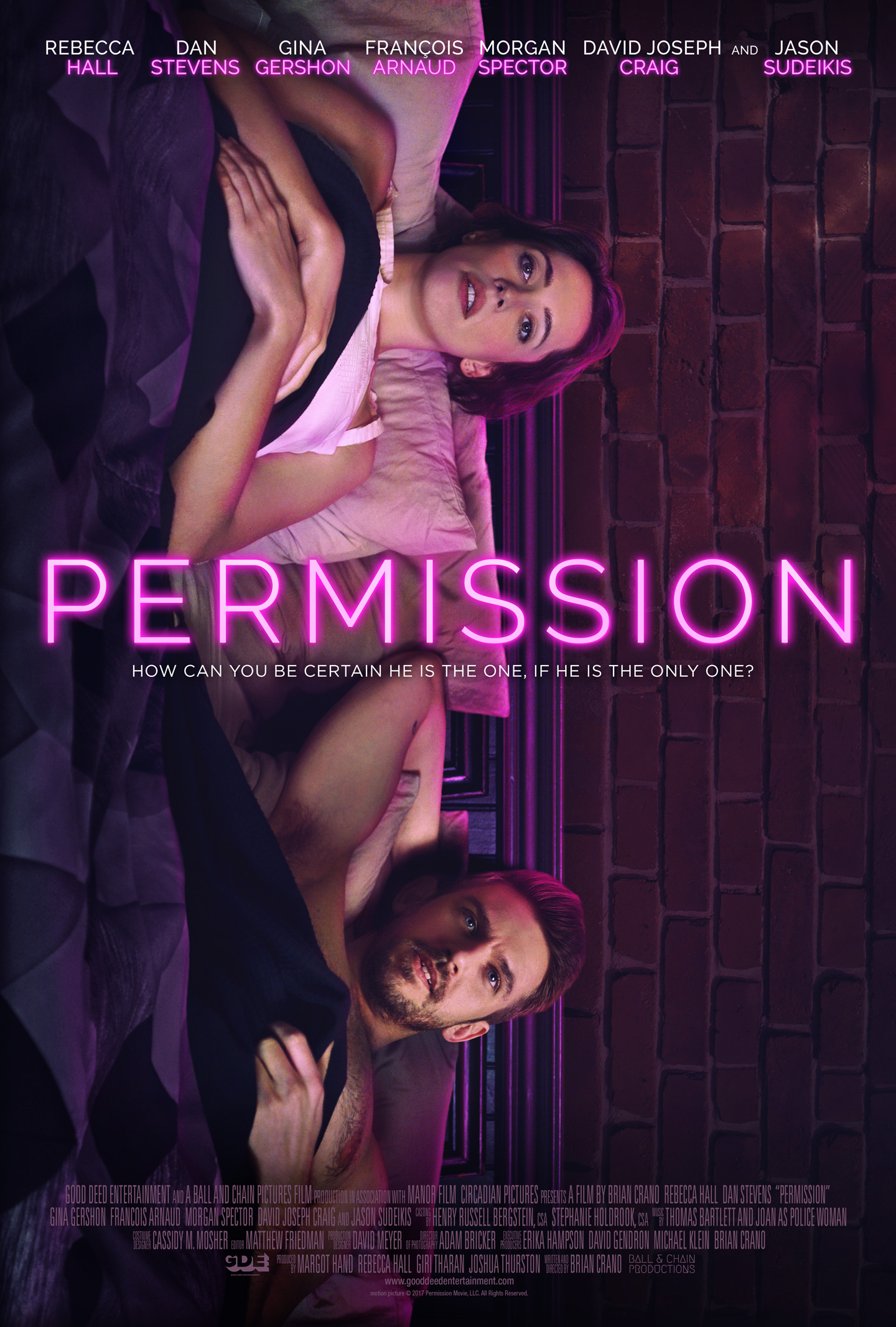
Permission (2017)

14 Tuesday Aug 2018

Posted by dullwood68 in Movies

≈ Leave a comment

Tags

Affairs, Brian Crano, Casual sex, Dan Stevens, Drama, François Arnaud, Gina Gershon, Rebecca Hall, Relationships, Review, Romance

D: Brian Crano / 98m

Cast: Rebecca Hall, Dan Stevens, Gina Gershon, François Arnaud, Morgan Spector, David Joseph Craig, Jason Sudeikis

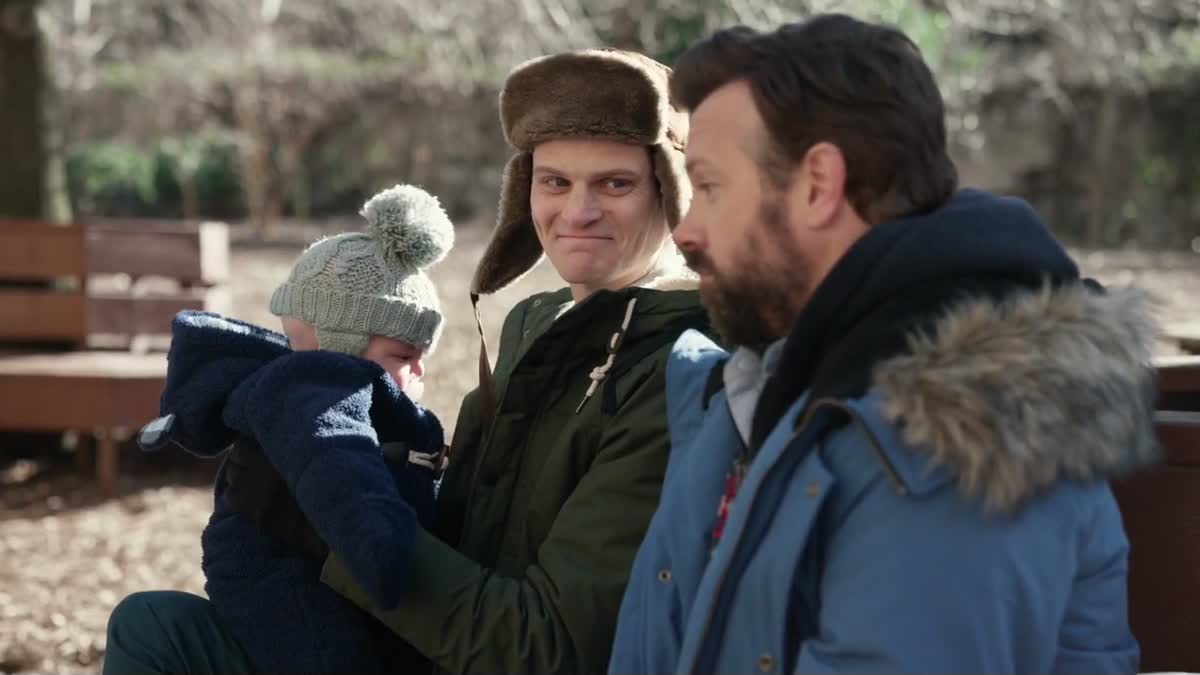
Anna (Hall) and Will (Stevens) have been together since forever, a couple with no other relationship experience except their own. They’ve never lived as a couple with anyone else, never had sex with anyone else, and never felt that they’ve missed out on anything as a result. In short, they live in a state of blissful monogamy. Will is an artisan who makes furniture and is renovating a house for he and Anna to move into, while Anna is finishing up her music thesis. Will has begun to believe that it’s the perfect time to propose, but at the same dinner in which he plans to pop the question, another one is raised by Reece (Spector), the partner of Anna’s brother, Hale (Craig): how can either of them be sure each is “the one” when they’ve never “been” with anyone else? Will holds off on proposing, and it isn’t long before both of them are contemplating the idea of sleeping with other people. Soon an agreement is reached whereby Anna meets musician Dane (Arnaud), and Will meets wealthy divorcée, Lydia (Gershon). But their agreement soon starts to cause problems between them…

It’s not immediately obvious while watching Permission, but Brian Crano’s second feature after the more easy-going A Bag of Hammers (2011), has a secret agenda that it doesn’t reveal until at the very end. You could say it’s in the nature of a twist, something that the viewer won’t see coming, but with any good twist the clues should be woven into the narrative from the start so that even if the twist really does come as a complete surprise then at least the viewer can look back and – hopefully – spot those moments where they were hoodwinked. Unfortunately, writer/director Crano doesn’t do this, so when one of his two main characters does pitch that curveball, it’s likely to provoke more headscratching than nodding in agreement. But before then, Crano is already sending the viewer mixed messages, so perhaps it shouldn’t be so surprising. Anna and Will are set up initially as the poster couple for committed monogamy, but the speed with which they allow Reece’s poser to have them throwing away their commitment to each other is as unseemly as Anna’s later encounter with a gallery owner.

Of course, this is the thrust of the movie: is Anna and Will’s specific kind of monogamy healthy enough for a relationship to succeed? But the material is too uneven to provide any kind of definitive answer (though it does decide that casual hook-ups are a no-no), and so instead of having Anna and Will explore other sexual experiences and then bring those experiences back to their own relationship, both engage in new relationships that test their own commitment in different ways. Crano can’t resist throwing in some clichés – Will asks if Dane is bigger than him, Dane falls in love with Anna – but too often the script fails to relate things back to Will and Anna except in the most perfunctory of ways. Hall is as spiky and watchable as ever, while Stevens has more of a comic role that feels at odds with the intended drama of the material. As the objects of Will and Anna’s new affections, Gershon is breezy and likeable while Arnaud is left high and dry by his character having nowhere to go. There’s an intriguing sub-plot involving Hale’s desire to have a baby (which isn’t shared by Reece), and at times this is more interesting, but overall this is a movie that puts its central characters into a number of uncomfortable situations and then gifts them a convenient way out almost every time – so where’s the lesson there?

Rating: 6/10 – if monogamy is your thing and “well-meaning” affairs are the antithesis of what you believe is right, then Permission won’t be the movie for you; even as a potential comedy of errors and/or manners it falls short, and if the movie has any kind of message it’s that you actually don’t have to be careful what you wish for.

Share this:

  • Click to share on X (Opens in new window) X
  • Click to share on Facebook (Opens in new window) Facebook
  • More
  • Click to print (Opens in new window) Print
  • Click to email a link to a friend (Opens in new window) Email
Like Loading...

Two Shorts by François Ozon: A Summer Dress (1996) and X2000 (1998)

19 Wednesday Nov 2014

Posted by dullwood68 in Movies

≈ Leave a comment

Tags

Ants, Bruno Slagmulder, Casual sex, Drama, François Ozon, Frédéric Mangenot, Gay couple, Holiday, Lucia Sanchez, New Year's Eve, Review, Short films, Une robe d'été, Y2K

François Ozon is one of the most interesting writer/directors working currently in movies. He makes socially astute, emotionally complex features, and infuses them with wit and style. He writes great roles for women – Charlotte Rampling, Swimming Pool (2003); Romola Garai, Angel (2007); Catherine Deneuve, Potiche (2010) – and isn’t afraid to tackle themes surrounding sexuality and sexual identity. Early in his career Ozon made a number of short movies, and unusually, they’re all intriguing for one reason or another. The two movies reviewed here show a marked difference in style and tone, but taken as examples of a writer/director who’s discovering just what he can do, they make for beguiling viewing.

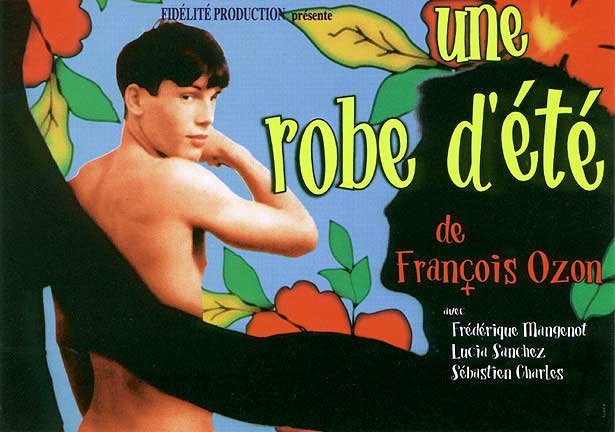
A Summer Dress (1996)

Summer Dress

Original title: Une robe d’été

D: François Ozon / 15m

Cast: Frédéric Mangenot, Lucia Sanchez, Sébastien Charles

Luc (Mangenot) and Lucien (Charles) are young, gay and on holiday together. Lucien is the more extroverted of the two and likes dancing along to Sheila’s version of Bang Bang. Luc, on the other hand, wants to enjoy the peace and quiet and concentrate on getting a tan. When Lucien refuses to stop enjoying himself, Luc heads off to the beach where he strips off and goes for a swim before settling back down to sunbathe. There he meets a young girl, Lucia (Sanchez), who asks him if he wants to go into the nearby woods and make love. Luc agrees and they find a spot in the woods and have sex. When they return to the beach, Luc’s clothes are gone. Lucia lends him her dress so that he can get home without having to travel naked. When he gets back to Lucien, the sight of Luc in a dress arouses him and they have sex as well. The next day, Luc returns the dress to Lucia.

Summer Dress - scene

If that all sounds too slight, even for a fifteen minute movie, then in some ways you’d be right, but then it’s also the point. A Summer Dress is interested in capturing a small series of moments in a twenty-four hour period, but moments that aren’t necessarily profound or destined to have a prolonged effect on its main characters. It’s the cinematic equivalent of a summer fling, a fleeting holiday romance that happens on its own terms and comes without any emotional baggage. As such, the movie is a treat to watch, its young protagonists experiencing life on their own terms and without the judgement of others (a lifestyle we might all like to have). There’s an openness and honesty in their approach to sex that is both carefree and naïve, but so redolent of youth that it’s refreshing to be reminded of it (if you’re well clear of your teens). A Summer Dress is an ode to the time in our lives when there are endless possibilities and life is bright and beautiful and full of promise.

Rating: 8/10 – a simple yet elegantly filmed tale of sexual liberation, A Summer Dress is Ozon at his most playful; with winning performances and the lightest of touches, this is a movie that provides a perfect capsule of time and place and incident.

X2000 (1998)

X2000

D: François Ozon / 8m

Cast: Denise Schropfer-Aron, Bruno Slagmulder, Lucia Sanchez, Flavien Coupeau, Lionel Le Guevellou, Olivier Le Guevellou

Waking up in his apartment the morning after the New Year’s Eve celebrations for the year 2000, a man (Slagmulder) goes into his kitchen and makes himself a glass of water with two Alka Seltzers in it. Then he’s puzzled to find twins in a sleeping bag in his lounge. When he looks out of the window he sees a couple making love in the apartment opposite. Meanwhile, his wife (Schropfer-Aron) also wakes up and decides to take a bath. The man falls from his perch at the window and breaks the glass with the Alka Seltzer in it. When he puts the broken glass in the bin he finds ants crawling over and around something underneath the bin. He then goes into the bathroom where he tells his wife that the ants are attacking.

X2000 - scene

Where A Summer Dress sees Ozon taking a somewhat lighthearted approach to the material, X2000 sees him in a more formal, meditative mood, using heavily stylised, static shots to represent notions of time and space and distance and perception. The man is continually surprised and/or bemused by what he sees, either within the flat or without. It’s as if he’s learning about everything from scratch, his reactions more childlike than that of an experienced adult (when he sees the couple making love he climbs up onto a unit in order to get a better view). His wife, meanwhile, keeps her head under the water, retreating from the world, prolonging the silence in the flat, even when her husband breaks all the glass. It’s a very clinical piece, dialogue-free until the very end, and shows Ozon working with limited resources to great effect. The elliptical nature of the storyline – such as it is – is clearly meant to be left to the viewer to interpret, but that doesn’t stop X2000 from being compelling in its own way.

Rating: 8/10 – with so much going on under the surface, X2000 is open to so many interpretations it’s almost confounding, but this makes it all the more rewarding; the brief running time merely reinforces the quality of Ozon’s perspective on the material and the cleverness of its construction.

Share this:

  • Click to share on X (Opens in new window) X
  • Click to share on Facebook (Opens in new window) Facebook
  • More
  • Click to print (Opens in new window) Print
  • Click to email a link to a friend (Opens in new window) Email
Like Loading...

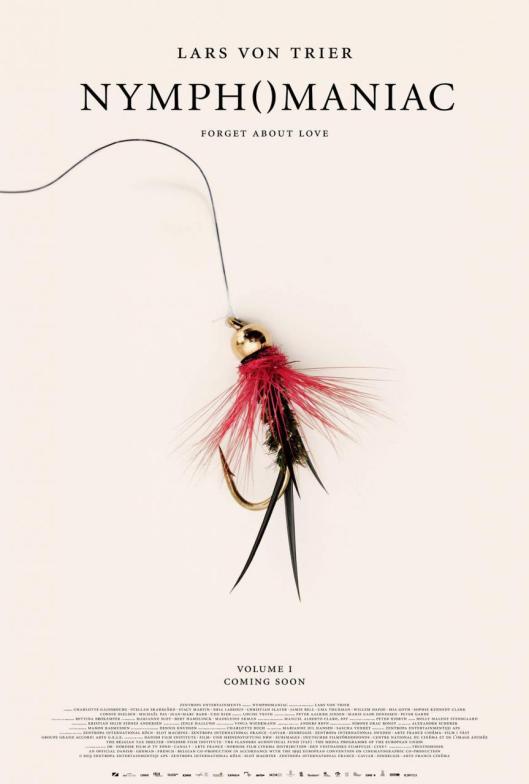
Nymph()maniac Vol. I (2013)

27 Friday Jun 2014

Posted by dullwood68 in Movies

≈ 1 Comment

Tags

Ash trees, Casual sex, Charlotte Gainsbourg, Joe, Lars von Trier, Masturbation, Nymphomania, Sex, Sexuality, Shia LaBeouf, Stacy Martin, Stellan Skarsgård

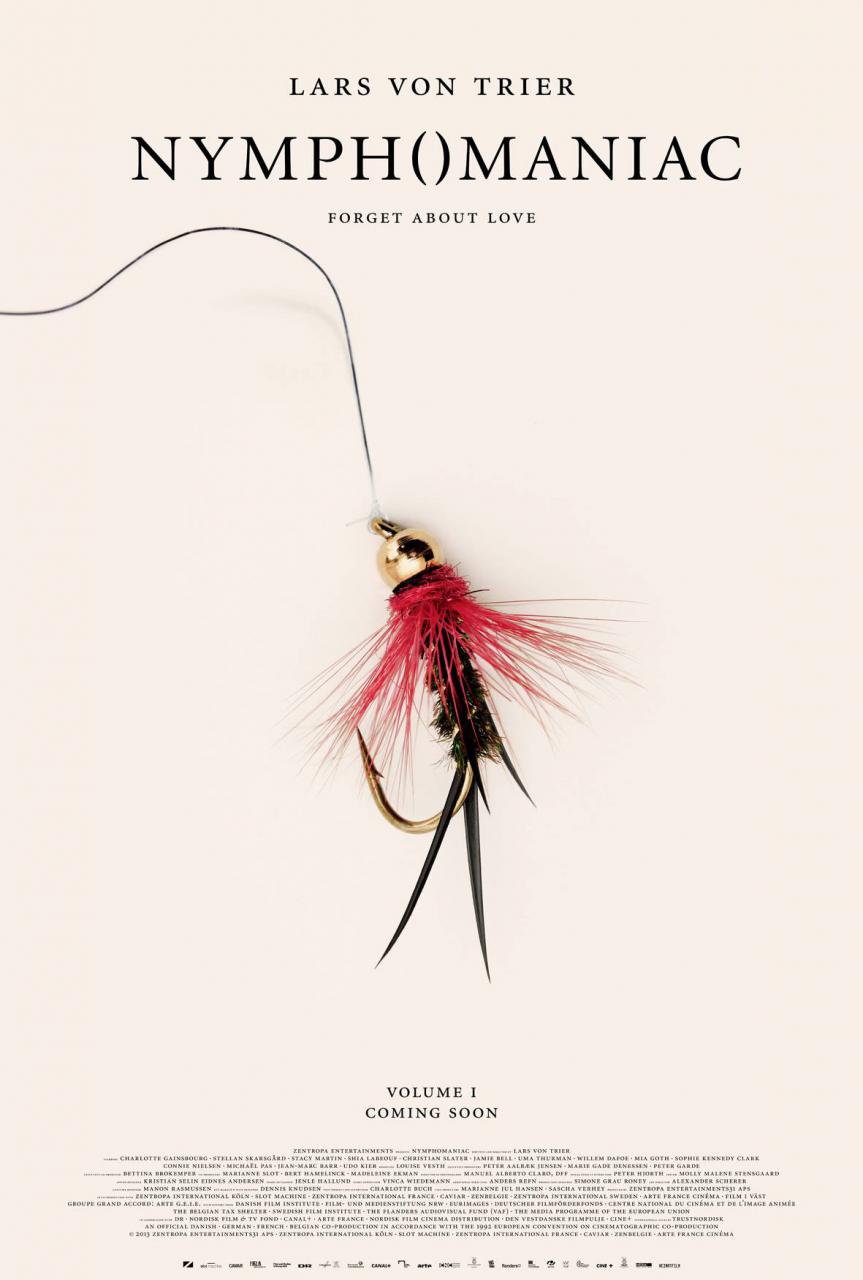
Nymphomaniac Vol. I

D: Lars von Trier / 118m

Cast: Charlotte Gainsbourg, Stellan Skarsgård, Stacy Martin, Shia LaBeouf, Christian Slater, Uma Thurman, Sophie Kennedy Clark, Hugo Speer, Connie Nielsen, Ananya Berg, Jesper Christensen, Nicolas Bro

In a secluded alleyway, a man called Seligman (Skarsgård) finds a woman (Gainsbourg) lying unconscious on the ground; she’s been attacked.  He takes her back to his home, where she tells him the story of her life, and how she came to be in the alleyway where he found her.  The woman’s name is Joe, and she tells Seligman that from a very young age she was aware of her vagina and the pleasure it could give her.  She relates a number of instances from her childhood, and mentions her father, a doctor (Slater) whom she loved very much.  As a teenager (Martin) she chooses a boy, Jerôme (LaBeouf), to take her virginity, and so, begins a relationship with him that will continue off and on for the rest of her life.

Joe relates her time having sex with strangers on trains as a game she played with her friend B (Clark), and the club they subsequently form where members are not allowed to have sex more than once with the same person.  However, B falls in love and Joe ends their friendship in disgust.  Some time later, Joe applies for a job at a printing house, and despite having no skills or experience, is taken on.  This proves to be because her boss is the same Jerôme who took her virginity.  Jerôme wants to have sex with her but she refuses his advances, while at the same time she has sex with all the other men in the office.  But her willingness to see Jerôme suffer has a different effect and Joe stops having sex altogether; like B she too has fallen in love.  She builds up the courage to tell him but takes too long: when she arrives at work one day prepared to tell Jerôme how she feels about him, she finds he’s now married and travelling abroad.

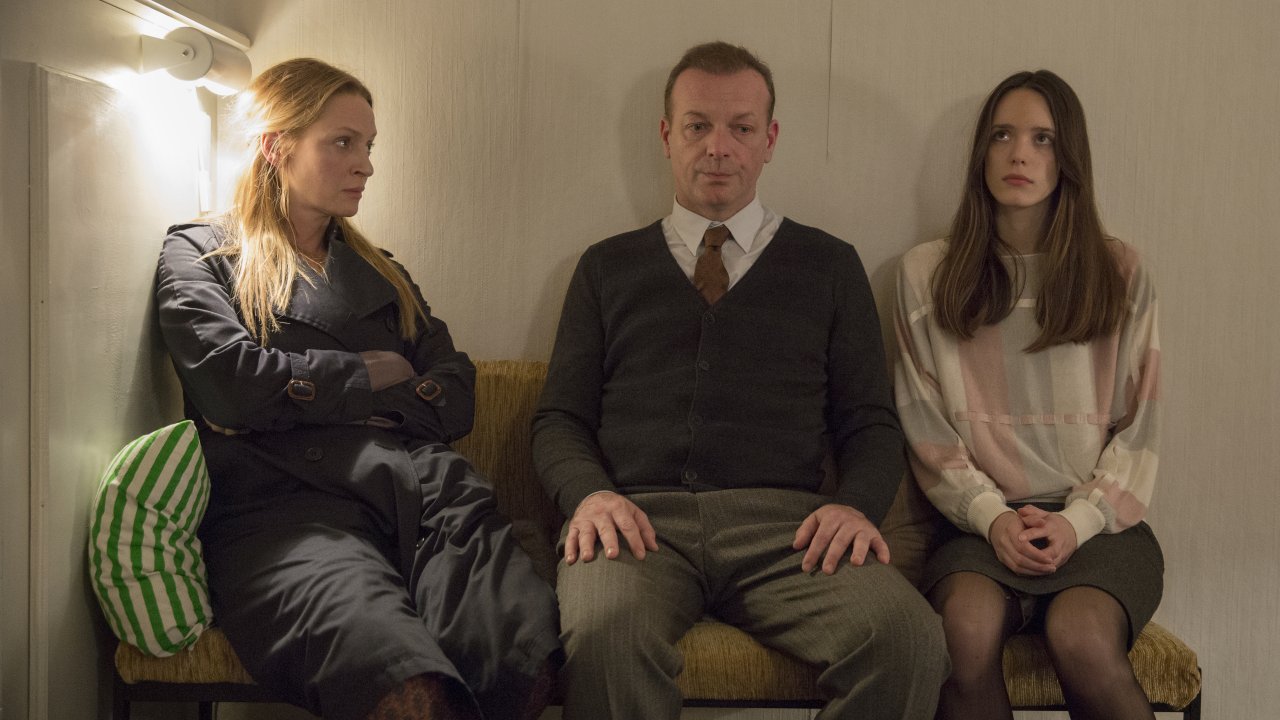
Joe’s reaction is to have sex with as many men as possible, and to keep a string of lovers.  She tells of one man, H (Speer), who she tried to break up with by telling him he’ll never leave his wife and family, but this is exactly what he does, and it leads to an uncomfortable visit by his wife (Thurman) and their children.  But Joe admits the whole thing left her unmoved.  It’s only when her father dies in hospital that Joe is moved at all.  Continuing to juggle both work and several lovers, Joe finds herself feeling sad at times and while walking in a park one day, she is reunited with Jerôme.  He tells her his marriage isn’t working, and they go back to Joe’s place and have sex, but partway through she realises that she can’t feel anything physically.
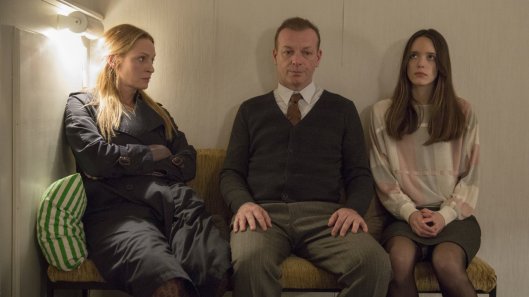
Nymphomaniac Vol. I - scene

With all the hype surrounding von Trier’s Nymph()maniac duology (particularly the explicit sex scenes – always guaranteed to draw people’s attention), the casual viewer might be put off by a movie that revels in its bad taste highlights and caustic humour, but with Vol. I that would be a mistake.  After the dreary, depressing Antichrist (2009) and the mock-opera bombast of Melancholia (2011), the wily old fox of arthouse cinema has decided to make a comedy about sex, and not just about sex itself, but a vast array of preconceptions about sex, and its relationship with pain, betrayal, neglect, lust, sacrifice, and perhaps worst of all, love.

As a young child, Joe is presented as thoughtful, intelligent, acquisitive and precocious.  Her relationship with her father appears to hold the key to her future behaviour – Joe seeks what her father can’t give her – and on a basic psychological level it’s obvious why Joe behaves in the way she does.  But Joe isn’t interested in the emotional mechanics of sex but in the overriding physical need that pushes her to seek out so many men and so many sexual experiences.  Joe wants to be true to herself – to her vagina – but what she learns, and resolutely pushes to one side, is that emotion can enhance her encounters.  And yet, as her relationship with Jerôme shows, feelings and emotions can augment her experiences and enrich them.  It’s her refusal to admit this, or even trust it, that makes Joe such a sad figure: she’ll never find true happiness unless she allows herself to love.

In telling her story, Joe and Seligman indulge in some philosophical game-playing as Joe keeps referring to herself as sinful, while Seligman refutes her assertions at every turn. These interludes often find von Trier at his most mischievous as Joe seeks to justify her behaviour where clearly she has no need to.  Alluding to various topics, such as fly fishing and Fibonacci numbers, Seligman acts as the audience’s representative, taking Joe’s revelations in his stride and remaining unaffected throughout.  Some of the connections von Trier comes up with hail from the wrong side of contrivance, but despite this they have a certain élan to them that keeps them amusing even if they do sound pretentious.

Again, it’s the humour that counts, whether it’s Joe and B trying to be sophisticated while seducing men on the train, or Joe and Seligman arguing over the attributes of a cake fork, or even LaBeouf’s horrendous English accent (even worse than Dick Van Dyke’s Cockney horror in Mary Poppins).  Joe’s bed-hopping behaviour has its own in-built jocosity, appearing in stark contrast to the laboured protestations of guilt that the older Joe regales Seligman with.  It’s fun to see her treat men in the same way that men often treat women – as objects there to provide pleasure and little else – and even the tirade offered up by Mrs H. is entertaining with its desperate, cloying sarcasm projected as barely disguised venom.  There’s also a nice line in visual humour – Jerôme stopping an elevator in order to seduce Joe and finding out when he’s rebuffed that it’s stopped between floors; Seligman envisioning Joe’s somewhat different approach to “education”; the penis montage – although the equivalent verbal humour isn’t quite as prominent.

On the dramatic side, Joe’s encounter with Mrs H is the movie’s highlight, while Joe’s (one-sided) romance with Jerôme appears more of a plot device to keep Joe shagging lots of men than a real development for either character.  That she meets up with him again at the end isn’t much of a surprise – there’s unfinished business to be dealt with, after all – but the movie’s cliffhanger ending successfully pulls the rug out from under the audience’s feet with aplomb.  Her relationship with her father is honest and straightforward, and the scenes where he’s in hospital are genuinely moving (thanks largely to the playing of Messrs Slater and Martin).

As the younger Joe, Martin gives a stand-out performance, Joe’s initial enjoyment of sex before it becomes more and more of an addiction is so well depicted that it comes as a bit of a shock that this is her first movie.  But even when things begin to get darker, Martin keeps her focus and keeps the audience watching: it’s a bravura turn and easily award-worthy.  As the older Joe, Gainsbourg is mesmerising, her care-worn face telling of hardships that not even she can adequately talk about.  She dominates her scenes with Skarsgård, his nervous, twitchy style of acting at odds with her confident, self-assured determinism.  Skarsgård makes the most of Seligman’s “learned” naiveté, while there’s sterling support from Slater, Thurman and Clark.  Sadly, the same can’t be said for LaBeouf, who provides the worst performance in the movie, his attempts at creating a realistic character continually being undermined by his limitations as an actor.

Von Trier’s direction, as you might expect, is controlled and tightly focused, and he uses a variety of shots – often in the same scene – to show the fractured nature of Joe’s unique view of the world.  He’s on less solid ground with his script, with Joe’s often brittle approach to other people and her own feelings going some way to making her a little less sympathetic than expected.  Having said that, there are plenty of clever touches, and von Trier has a sure knack of cutting away from a scene at the right moment.  His cinematographer, Manuel Alberto Claro, gives the movie an appropriately clinical look that reflects the sense of detachment that Joe feels with regard to her life and history.

Rating: 7/10 – brimming with ideas (not all of which are effectively rendered), Nymph()maniac Vol. I is a cinematic confection dressed up in serious attire; an intriguing movie for the most part, but hampered by its unnecessary lack of an ending.



Share this:

  • Click to share on X (Opens in new window) X
  • Click to share on Facebook (Opens in new window) Facebook
  • More
  • Click to print (Opens in new window) Print
  • Click to email a link to a friend (Opens in new window) Email
Like Loading...

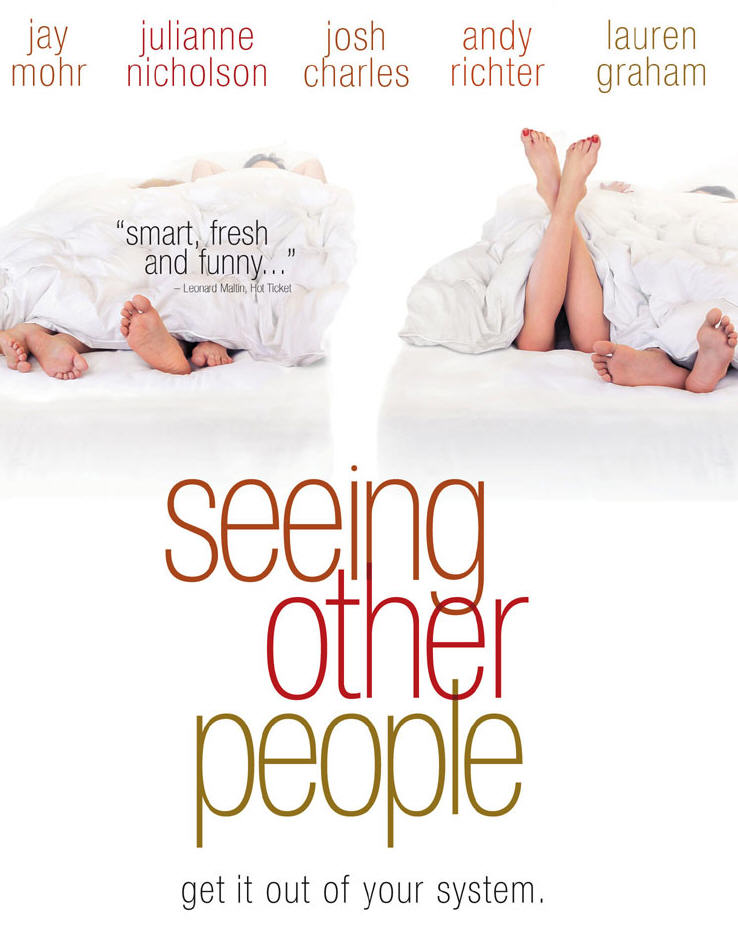
Seeing Other People (2004)

31 Friday Jan 2014

Posted by dullwood68 in Movies

≈ Leave a comment

Tags

Bryan Cranston, Casual sex, Dating, Jay Mohr, Julianne Nicholson, Lauren Graham, Pre-marital nerves, Relationships, Review, Romantic drama, Wally Wolodarsky

Seeing Other People

D: Wally Wolodarsky / 90m

Cast: Jay Mohr, Julianne Nicholson, Josh Charles, Andy Richter, Lauren Graham, Bryan Cranston, Matthew Davis, Helen Slater

Seeing Other People begins with Ed (Mohr) and Alice (Nicholson) head over heels in love and recently engaged.  Everything is going well… until Alice spies one of her friends having sex with a waiter at their engagement party.  This leads to Alice wondering if her relationship with Ed would be stronger if they were able to sleep with other people before they get married, in a kind of “let’s get it out of our systems” kind of way.  Alice also believes that she has missed out on a wider range of sexual experiences, and feels a little disadvantaged.  Ed is initially reluctant but agrees to go ahead with Alice’s plan, and they both begin to date other people.

At first, it all goes smoothly, with Alice seeing, but not sleeping with, Donald (Davis), and Ed also finding it difficult to actually have sex with someone else.  Their own sex life improves as a result, but soon Alice’s intimacy with Donald becomes a wedge that drives them apart.  Alice and Ed’s growing estrangement has a knock-on effect on Alice’s sister, Claire (Graham) and her husband, Peter (Cranston). Both unhappy with their marriage, they begin to search for their own fulfilment, using Ed and Alice’s example as either a guide or a warning of how to proceed.  Meanwhile, Alice and Ed’s friend, Carl (Richter) is so lovelorn he doesn’t believe he will ever find the woman of his dreams.  It’s only when he meets Penelope (Slater) that he begins to believe otherwise.  What follows for all is a somewhat bittersweet look at the perils of getting what you wish for.

Seeing Other People - scene

Seeing Other People starts off well, and once you get past the basic implausibility of the idea that two committed people would deflect to such a course of action – and the scene in which Alice convinces Ed her plan will work struggles to maintain a real sense of “this could happen” – there’s a certain amount of fun in trying to work out how things will progress, and what the eventual outcome will be.  Partly this is because the script by husband and wife team Wolodarsky and Maya Forbes shies away from the standard rom-com tropes and tries hard to make the situations its leading characters find themselves in as difficult to extract themselves from as possible.  It also creates an environment where the way each character expresses him- or herself is rarely pain-free, but is equally humorous at the same time.  This is a difficult juggling act, and Wolodarksy gets it right most of the time (he also contributes a funny cameo as a pushy salesman).

He’s helped by an enthusiastic cast led by Mohr and Nicholson.  Mohr has a boyish vulnerability that is pushed to the fore here, while Nicholson’s gamine appearance underscores Alice’s naïve willingness to put her relationship with Ed in jeopardy.  The supporting cast shine too, with Graham and Cranston on great form as a warring couple whose dislike of each other borders on the pathological.  On a warmer front, the developing relationship between Carl and Penelope is handled sweetly without it becoming too saccharine.

On the production side, the photography by Mark Doering-Powell matches the main characters’ moods throughout, while the music – the usual mix of contemporary songs and original score – highlights each prevailing mood to good effect.  Wolodarsky directs with a great eye for the foibles of modern relationships, and manages his cast, and the material, with aplomb.

Rating: 7/10 – an adroit romantic drama that overcomes the absurdity of its central premise by focusing instead on the pros and cons of getting what you want… and regretting it; well-acted and with a script that heads off predictability with ease.

Originally posted on thedullwoodexperiment website.

Share this:

  • Click to share on X (Opens in new window) X
  • Click to share on Facebook (Opens in new window) Facebook
  • More
  • Click to print (Opens in new window) Print
  • Click to email a link to a friend (Opens in new window) Email
Like Loading...

Don Jon (2013)

05 Sunday Jan 2014

Posted by dullwood68 in Movies

≈ 2 Comments

Tags

Casual sex, Comedy, Drama, Joseph-Gordon-Levitt, Julianne Moore, One-night stands, Porn, Relationships, Review, Scarlett Johansson

Don Jon

D: Joseph Gordon-Levitt / 90m

Cast: Joseph Gordon-Levitt, Scarlett Johansson, Julianne Moore, Tony Danza, Glenne Headly, Brie Larson, Rob Brown, Jeremy Luke

Jon (Gordon-Levitt) is young, brash, cocky, and with his buddies, more comfortable rating women out of ten than engaging with them on a more meaningful level.  Although Jon has a lot of one-night stands, he finds the sex unfulfilling; often, once the women he’s with are asleep, he’ll go and fire up his laptop and masturbate to online porn.  For Jon, this kind of sexual activity is more rewarding than the real thing, and it dominates his life and his attitude to relationships.

When he meets Barbara (Johansson) in a club and she rebuffs his advances, he finds himself intrigued by her, and what begins as a chase to get her to sleep with him soon becomes more serious as Jon realises he has stronger feelings for Barbara than he would have thought possible.  When Barbara agrees to go out with him, she tells Jon the only thing she asks for is complete honesty; if he lies to her their relationship will be over.  Unable or unwilling to give up online porn, it’s only a matter of time before Jon slips up.  Will their relationship survive?  Will Jon change his ways to keep Barbara in his life, or will Jon’s addiction to porn continue to hamper his emotional growth?

The answers to these questions are all answered by a film that is only notionally edgy, and wants to argue the question of men’s use of porn from the perspective of both camps: the one where it’s okay (but not in a relationship), and the one where it is completely wrong altogether.  There’s a middle ground but for the purposes of this movie, first-time writer/director Gordon-Levitt focuses on the absolute wrongs and rights of the issue.  It makes for a starker, more clear-cut approach to the material and the characters reactions to porn, but at the same time, makes anticipating the outcome a little too easy.  Jon sees porn as the answer to all those unhappy fumbles one night stands often end up becoming, where a lack of awareness of each other’s likes and dislikes can lead to disappointment all round.  Jon wants solid, satisfying sex every time; once actual people are involved, well, there’s the problem.

Don Jon - scene

As a critique of modern sexual etiquette, Don Jon takes a mainly male point of view and leaves the female perspective largely undeveloped.  While Jon – thanks to well-written and conceived voice overs – expresses his feelings, however stunted, Barbara is less accessible.  She believes in love, that much is obvious, and she relishes the type of romantic chick flick where true love conquers everything, but aside from the need for honesty she remains the deus ex machina required to bring Jon up short and get him to rethink his approach to women and sex.  And to further help him, Jon meets Esther (Moore) at night school.  She catches him watching porn on his phone, but isn’t fazed by it; instead, the next time she sees him, she brings him some porn DVDs to watch.  As their relationship begins to broaden, the audience is left to wonder if Esther will free Jon of his predilection for porn, thus allowing him to grow as a person and begin to trust in relationships.

Putting aside the issue of porn and its mass consumption by men whether in or out of a relationship, Gordon-Levitt’s main focus seems to be on the emotional distancing that can arise out of such a dependency.  When we first meet Jon he’s not actually that likeable.  He has a boyish charm, sure, but his attitude is off-putting and offensive.  He works hard, goes to the gym where he works even harder, meets his buddies at the weekend, goes to church each Sunday with his family (and where he confesses the number of sexual liaisons he’s had), and all the while treats women like accessories.  As the movie progresses, and his relationship with Barbara becomes more and more important to him, his weakness for porn proves too much.  It’s at this point that, much as the audience might not realise it, Jon becomes more sympathetic.  We’ve all been in situations where we can’t help ourselves and we do the wrong thing even though we know it’ll get us in trouble, and it’s the same for Jon.  He just can’t resist the lure of unattached, unemotional sex.  When Barbara discovers he’s been lying about porn, you can’t help but feel sorry for the guy, but only because you begin to realise that, thanks to his avoiding commitment for all this time, he just doesn’t have a clue.

It’s a clever twist on Gordon-Levitt’s part and offsets the likelihood that Don Jon is going to be pro-porn all the way through.  As it is, the porn on display is unlikely to upset any but the most prurient of viewers, and the movie is far from explicit.  On an emotional level, Gordon-Levitt’s script provides the necessary number of beats to show Jon’s burgeoning awareness of the benefits of a fully committed relationship, and the performances are effective and well-judged (Danza, as Jon’s father, is a stand-out).  (Though as already noted, Johansson isn’t given a great deal to work with.)  The script is clever, laugh-out-loud funny in places, and each scene is tooled to produce the maximum effect.  As a director, Gordon-Levitt displays a confident approach to his own material, and handles the cast with supportive aplomb; he also knows when to keep the camera on a particular character, something of a lost art these days.  The movie is attractive to look at, boasts a great score courtesy of Nathan Johnson, and while it ends somewhat abruptly, certainly doesn’t outstay its welcome.

Rating: 8/10 – uneven in places but awash with good intentions, Don Jon isn’t quite the challenging movie it might appear; it is heartfelt though, and marks Gordon-Levitt as a writer/director to watch out for.  Oh, and despite what you might believe, this is a perfect date movie.

Share this:

  • Click to share on X (Opens in new window) X
  • Click to share on Facebook (Opens in new window) Facebook
  • More
  • Click to print (Opens in new window) Print
  • Click to email a link to a friend (Opens in new window) Email
Like Loading...

Blog Stats

  • 486,619 hits

Recent Posts

  • 10 Reasons to Remember Bibi Andersson (1935-2019)
  • Fantasia (1940)
  • Dances With Wolves (1990) – The Special Edition
  • Kiss of the Spider Woman (1985)
  • The Three Musketeers (1973)

Top Posts & Pages

  • Lost for Life (2013) - Another Look
    Lost for Life (2013) - Another Look
  • Lost for Life (2013)
    Lost for Life (2013)
  • About
    About
  • Mr. Topaze (1961)
    Mr. Topaze (1961)
  • Shock and Awe (2017)
    Shock and Awe (2017)
  • Hunt for the Wilderpeople (2016)
    Hunt for the Wilderpeople (2016)
  • Cardboard Boxer (2016)
    Cardboard Boxer (2016)
  • Billy Lynn's Long Halftime Walk (2016)
    Billy Lynn's Long Halftime Walk (2016)
  • Winter's Tale (2014)
    Winter's Tale (2014)
  • Exposed (2016)
    Exposed (2016)
Follow thedullwoodexperiment on WordPress.com

Blogs I Follow

  • Rubbish Talk
  • Film 4 Fan
  • Fast Film Reviews
  • The Film Blog
  • All Things Movies UK
  • Interpreting the Stars
  • Let's Go To The Movies
  • Movie Reviews 101
  • TMI News
  • Dan the Man's Movie Reviews
  • Film History
  • Jordan and Eddie (The Movie Guys)

Archives

  • April 2019 (13)
  • March 2019 (28)
  • February 2019 (28)
  • January 2019 (32)
  • December 2018 (28)
  • November 2018 (30)
  • October 2018 (29)
  • September 2018 (29)
  • August 2018 (29)
  • July 2018 (30)
  • June 2018 (28)
  • May 2018 (24)
  • April 2018 (21)
  • March 2018 (31)
  • February 2018 (25)
  • January 2018 (30)
  • December 2017 (30)
  • November 2017 (27)
  • October 2017 (27)
  • September 2017 (26)
  • August 2017 (32)
  • July 2017 (32)
  • June 2017 (30)
  • May 2017 (29)
  • April 2017 (29)
  • March 2017 (30)
  • February 2017 (27)
  • January 2017 (32)
  • December 2016 (30)
  • November 2016 (28)
  • October 2016 (30)
  • September 2016 (27)
  • August 2016 (30)
  • July 2016 (30)
  • June 2016 (31)
  • May 2016 (34)
  • April 2016 (30)
  • March 2016 (30)
  • February 2016 (28)
  • January 2016 (35)
  • December 2015 (34)
  • November 2015 (31)
  • October 2015 (31)
  • September 2015 (34)
  • August 2015 (31)
  • July 2015 (33)
  • June 2015 (12)
  • May 2015 (31)
  • April 2015 (32)
  • March 2015 (30)
  • February 2015 (37)
  • January 2015 (39)
  • December 2014 (34)
  • November 2014 (34)
  • October 2014 (36)
  • September 2014 (25)
  • August 2014 (29)
  • July 2014 (29)
  • June 2014 (28)
  • May 2014 (23)
  • April 2014 (21)
  • March 2014 (42)
  • February 2014 (38)
  • January 2014 (29)
  • December 2013 (28)
  • November 2013 (34)
  • October 2013 (4)

Create a free website or blog at WordPress.com.

Rubbish Talk

Film 4 Fan

A Movie Blog

Fast Film Reviews

The Film Blog

The official blog of everything in film

All Things Movies UK

Movie Reviews and Original Articles

Interpreting the Stars

Dave Examines Movies

Let's Go To The Movies

Film and Theatre Lover!

Movie Reviews 101

Daily Movie Reviews

TMI News

Latest weather, crime and breaking news

Dan the Man's Movie Reviews

All my aimless thoughts, ideas, and ramblings, all packed into one site!

Film History

Telling the story of film

Jordan and Eddie (The Movie Guys)

Movie Reviews & Ramblings from an Australian Based Film Fan

Privacy & Cookies: This site uses cookies. By continuing to use this website, you agree to their use.
To find out more, including how to control cookies, see here: Cookie Policy
  • Subscribe Subscribed
    • thedullwoodexperiment
    • Join 481 other subscribers
    • Already have a WordPress.com account? Log in now.
    • thedullwoodexperiment
    • Subscribe Subscribed
    • Sign up
    • Log in
    • Report this content
    • View site in Reader
    • Manage subscriptions
    • Collapse this bar
 

Loading Comments...
 

    %d