• 10 Reasons to Remember…
  • A Brief Word About…
  • About
  • For One Week Only
  • Happy Birthday
  • Monthly Roundup
  • Old-Time Crime
  • Other Posts
  • Poster of the Week
  • Question of the Week
  • Reviews
  • Trailers

thedullwoodexperiment

~ Viewing movies in a different light

thedullwoodexperiment

Tag Archives: Edgar Allan Poe

D. W. Griffith Triple Bill: The Sealed Room (1909) / The Golden Louis (1909) / Politician’s Love Story (1909)

07 Saturday Jun 2014

Posted by dullwood68 in Movies

≈ Leave a comment

Tags

Adele DeGarde, Arthur V. Johnson, Beggar girl, Billy Bitzer, Cartoonist, Cask of Amontillado, Crooked politician, D.W. Griffith, Edgar Allan Poe, Gambler, Lovers, Mack Sennett, Marion Leonard, Period film, Silent film

NOTE: All three movies were viewed courtesy of http://www.archive.org – go check it out!

The Sealed Room (1909)
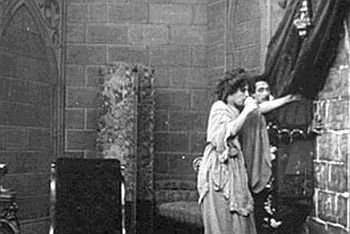
Sealed Room, The

D: D.W. Griffith / 11m

Cast: Arhur V. Johnson, Marion Leonard, Henry B. Walthall

Based on “The Cask of Amontillado” by Edgar Allan Poe, The Sealed Room is a period piece involving a count (Johnson), his wife (Leonard), and her minstrel lover (Walthall).  The count is madly in love with his wife, and while she returns his affections in public, in private she has eyes only for the lute-playing minstrel.  When the count arranges for a room in his apartments to be sealed – apart from one of the doors – so that only he and his wife can have access to it, he doesn’t envisage his wife and the minstrel using it themselves for some “alone” time.  He discovers them in mid-tryst, and in a fit of rage, has the remaining doorway blocked up, sealing them inside.

Using just two adjoining sets, Griffith populates the outer room with as many people as he can while foregrounding the main characters.  It’s here that his background in the theatre is most obvious, with his attention to blocking and everyone having something to do (Walthall’s facial expressions, combined with his lute playing while the count and his wife hug and kiss, are an unexpected viewing bonus.)  The cod-theatrical acting style, all declamatory arm-waving and brash physical posturing, is all present and correct, and while Griffith does very little to rein in the hysterics, he still manages to elicit good performances from his leading actors (bearing in mind the acting style of the times).

There are some lapses – the lovers fail to hear the doorway being sealed up, and when it’s done the count is clearly enjoying listening to their cries of horror – but The Sealed Room is an entertaining, if overly dramatic, movie that makes the most of its two-camera set up and basic structure.

Rating: 7/10 – straightforward adaptation of the Poe tale and told with plenty of enthusiasm; a lively endeavour with Griffith’s direction providing much of the movie’s flair.

The Golden Louis (1909)

Golden Louis, The

D: D.W. Griffith / 6m

Cast: Adele DeGarde, Charles Inslee, Owen Moore, Anita Hendrie

A young girl (DeGarde) is begging in the snow-covered streets but she is so frail and underfed she only manages to make it as far as some nearby steps before collapsing.  While she sleeps a passing stranger (Moore) sees her and, taking pity on her plight, places a gold coin in the shoe she’s been using as a collection plate.  Nearby, a gambler (Inslee) is having bad luck at the tables.  Leaving the gambling den he spies the coin and, convinced his finding it is providential, takes it and returns to the gambling den.  There the coin does indeed prove a godsend, and he wins a lot of money.

While the gambler congratulates himself, the young girl wakes.  She returns to where she first began begging.  Meanwhile, the gambler, wanting to repay the young girl for her unwitting kindness, returns to the steps and finds her missing.  He looks for her, while the girl, still having no luck with her begging, retraces her steps and collapses again on the steps.  The gambler eventually finds her and takes her up in his arms (thereby, presumably saving her).

The Golden Louis shows Griffith working again in a studio, but using the usual static camera placements in such a way that there’s a sense of space and depth to the images throughout.  As usual, Griffith’s compositional skills are highly effective, and the set dressing makes it look convincingly cold.  The acting is less histrionic than usual, and the editing complements the action more judiciously than many of Griffith’s other works from the same year.  There’s even room for some social commentary in the plight of the young girl, a theme that Griffith would return to often in his career.  On the downside, the girl’s waking and wandering off, while adding an element of tension to the story, is undermined by her returning to the very same spot (and by the gambler searching in the same circular manner).

Rating: 8/10 – some contrivance at the end aside, The Golden Louis entertains throughout and shows Griffith making better use of the physical aspects of the production; ultimately redemptive, the movie succeeds on more than one level, and is a must-see for silent movie fans.

Politician’s Love Story (1909)
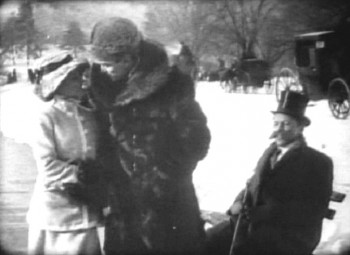
Politician's Love Story

D: D.W. Griffith / 6m

Cast: Mack Sennett, Marion Leonard, Herbert Prior, Arthur V. Johnson

When crooked politician Boss Crogan (Sennett) is shown a satirical caricature of himself in the newspaper, his outrage is such that he grabs a gun and races to the newspaper’s offices to shoot the cartoonist, called Peter.  After threatening what seems like half the newsroom he is directed to Peter’s Corner, only to find the cartoonist is a woman (Leonard).  Shocked by this unexpected turn of events, Crogan refrains from shooting her, and instead becomes besotted by her.  He tries to get her to go out with him but she refuses his offer.

Crogan returns home but finds himself restless.  This time leaving his gun behind he goes back out, and ends up at a nearby park.  He sits down on a bench and looking lost and forlorn, watches as a succession of loving couples walk past.  In time he gets up and is leaving the park when he spies “Peter”.  As he approaches, “Peter” is stopped by another man.  Crogan warns the man off, and finds “Peter” grateful for his intervention.  They walk back into the park, and the previously rebuffed politician gets a kiss.

Half filmed in the studio and half on location, Politician’s Love Story sees Griffith try his hand at an early romantic comedy, with mixed results.  The comic elements – which consist largely of Sennett waving a gun around the newsroom and having the staff all duck down repeatedly – are heavy-handed and suffer from the repetition.  The romantic elements are too fleeting, and the parade of lovestruck couples in the park serves only to pad out the running time; it’s clear Crogan is a sad figure at this point (it also gives Griffith a chance to appear on screen as well – he and Dorothy West are the first couple to pass Crogan).  “Peter”‘s change of heart is a little too sudden also.

That said, the wintry location photography, credited to regulars Billy Bitzer and Arthur Marvin, is a bonus, and gives Griffith a chance to spread his wings beyond the confines of the studio.  His positioning of the camera in these shots though is slightly tentative, and as expected there’s no attempt to break away from the standard medium shot that characterised Griffith – and many other silent film directors’ – approach during this period.  But as a possible experiment, the movie retains some interest.

Rating: 4/10 – minor Griffith, and indicative of the perils associated with making one hundred and forty-nine short films in the same year; one for completists only.

Share this:

  • Click to share on X (Opens in new window) X
  • Click to share on Facebook (Opens in new window) Facebook
  • More
  • Click to print (Opens in new window) Print
  • Click to email a link to a friend (Opens in new window) Email
Like Loading...

Twixt (2011)

16 Saturday Nov 2013

Posted by dullwood68 in Movies

≈ 1 Comment

Tags

Bruce Dern, Drama, Edgar Allan Poe, Elle Fanning, Francis Ford Coppola, Horror, Murder investigation, Murders, Old Chickering hotel, Psychological thriller, Review, Swann Valley, Thriller, Val Kilmer

D: Francis Ford Coppola / 88m

Cast: Val Kilmer, Bruce Dern, Elle Fanning, Ben Chaplin, Joanne Whalley, David Paymer, Anthony Fusco, Alden Ehrenreich, Bruce A. Miroglio

Several years ago, Francis Ford Coppola announced he would be making only personal films, and since then we’ve had Youth Without Youth (2007), Tetro (2009), and now Twixt, ostensibly a horror movie but one that veers off down several different paths before its conclusion.

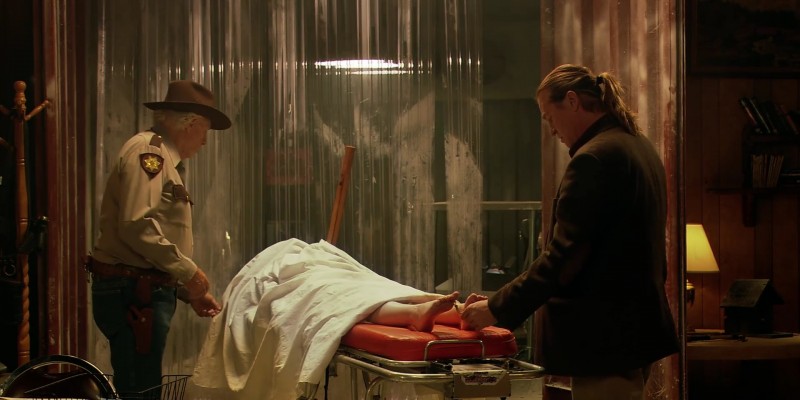
Hall Baltimore (Kilmer) is a moderately successful writer of witchcraft-themed horror novels.  He’s also in a bit of a creative slump.  While on a book tour, he finds himself in the small town of Swann Valley. He meets Sheriff Bobby LeGrange (Dern) who tells him about a mystery that involves a dead girl and a group of teens camped out across the lake. The girl is recently deceased, “obviously the victim of a serial killer”, according to LaGrange, and still in the sheriff’s office-cum-morgue with a stake through her heart. That night, Baltimore falls asleep and dreams of walking through town and out into the surrounding woods. There he meets V (Fanning), a young girl who looks drained of blood. They go to the Old Chickering Hotel where Baltimore learns that the bodies of twelve children are buried under the floor. This adds to the mystery, and when Baltimore wakes up he realises the answers to both his creative slump and the murder of the dead girl are to be found in his dreams.

To give a fuller description of the plot would take a while as Coppola, serving as writer, producer and director, piles layer upon layer of story onto the already overloaded plotting.  There’s several appearances by Edgar Allan Poe (Chaplin) who helps Baltimore in his dreams but also provides some literary allusions to the main plot. There’s a sub-plot involving a seven-sided clock tower where each clock face tells a different time. The twelve children were the charge of Pastor Allan Floyd (Fusco); there’s a protracted sequence involving a Jim Jones-style massacre. LaGrange acts strangely throughout, at one point knocking Baltimore unconscious out of anger (but also as a handy device for getting him to the next dream sequence). Baltimore is also mourning the death of his teenage daughter, while fending off the financial needs of his wife Denise (Whalley). The teens across the river, led by Beaudelaire-quoting Flamingo (Ehrenreich), provide temporary relief from the increasing pretentiousness of all the other proceedings. Oh, and there’s a scene involving a Ouija board, and Baltimore fighting writer’s block by impersonating Marlon Brando (with a near-quote from Apocalypse Now) and James Mason amongst others, and an ending so abrupt you might wonder if you’ve nodded off and missed a few minutes.

Twixt - scene

From all this you could be forgiven for thinking that Twixt is a bit of a mess, and largely it is. Coppola has applied a kind of kitchen sink approach to the movie, and it would be a dedicated viewer – one prepared to watch it several times in fact – who could find a strict, coherent storyline that runs through the movie, and who could adequately explain the various diversions that Coppola includes. However, it’s unclear if Coppola himself knows exactly what’s going on, or why, and if he doesn’t, then the rest of us don’t stand a chance.

Visually, though, the movie is often stunning to look at, the initial dream sequences – at the Old Chickering hotel, Baltimore’s chat with Poe in the same location – all have a weird, surreal quality that suits the action that’s unfolding. The characters speak with a slight hollowness, and the colour scheme, all grey, metallic hues, looks wonderfully unsettling. This is where Twixt works best, in the dreamworld that Baltimore inhabits as often as he can. Coppola pulls out all the stops in these sequences, imbuing them with a sense of predatory menace that elevates them from perfunctory scenes of exposition to something more disquieting. Alas, the scenes in the real world lack any kind of sense or coherence, and as a result, bog down the movie unnecessarily.

The cast do their best under the circumstances, Kilmer injecting some humour when he can at the absurdity of LaGrange’s eccentricities, but otherwise going with the flow and committing to the script’s vagaries. Dern adds another oddball character to his repertoire, while Fanning plays the girl who may or may not have gotten away from the pastor (it’s never made clear) with an appropriate detachment. Chaplin copes well with some really dense, literary dialogue, and rest of the supporting cast do the best they can as well, particularly Miroglio as Deputy Arbus.

Ultimately, the best that can be said about Twixt is that it’s no better or worse than a lot of other horror movies made in the last five years, but definitely a step up visually.  Coppola still knows how to construct a scene and have it play out – even if the internal logic is skewed – and he still has the confidence borne out of his many years as a director.  He may not have made the best decision in working from his own script, and if truth be told, this may not be the best version of that script (some of the cast have apparently seen an earlier, different version), but despite the absurdities and the incoherent plot, Twixt still has enough going for it to make it worth watching, even if it’s just to say you have.

Rating: 6/10 – Coppola delivers what appears to be a train wreck of a movie, but on closer inspection, there’s still a few carriages on the track to rescue things; worth seeing for its hallucinogenic visuals and Kilmer back on form after too many low-budget thrillers.

Share this:

  • Click to share on X (Opens in new window) X
  • Click to share on Facebook (Opens in new window) Facebook
  • More
  • Click to print (Opens in new window) Print
  • Click to email a link to a friend (Opens in new window) Email
Like Loading...

Blog Stats

  • 486,784 hits

Recent Posts

  • 10 Reasons to Remember Bibi Andersson (1935-2019)
  • Fantasia (1940)
  • Dances With Wolves (1990) – The Special Edition
  • Kiss of the Spider Woman (1985)
  • The Three Musketeers (1973)

Top Posts & Pages

  • Lost for Life (2013) - Another Look
    Lost for Life (2013) - Another Look
  • Lost for Life (2013)
    Lost for Life (2013)
  • About
    About
  • Exposed (2016)
    Exposed (2016)
  • Cardboard Boxer (2016)
    Cardboard Boxer (2016)
  • A Brief Word About La La Land (2016)
    A Brief Word About La La Land (2016)
  • My Top 10 Guilty Pleasures
    My Top 10 Guilty Pleasures
  • The Monuments Men (2014)
    The Monuments Men (2014)
  • Removal (2010)
    Removal (2010)
  • BFI London Film Festival 2015
    BFI London Film Festival 2015
Follow thedullwoodexperiment on WordPress.com

Blogs I Follow

  • Rubbish Talk
  • Film 4 Fan
  • Fast Film Reviews
  • The Film Blog
  • All Things Movies UK
  • Interpreting the Stars
  • Let's Go To The Movies
  • Movie Reviews 101
  • TMI News
  • Dan the Man's Movie Reviews
  • Film History
  • Jordan and Eddie (The Movie Guys)

Archives

  • April 2019 (13)
  • March 2019 (28)
  • February 2019 (28)
  • January 2019 (32)
  • December 2018 (28)
  • November 2018 (30)
  • October 2018 (29)
  • September 2018 (29)
  • August 2018 (29)
  • July 2018 (30)
  • June 2018 (28)
  • May 2018 (24)
  • April 2018 (21)
  • March 2018 (31)
  • February 2018 (25)
  • January 2018 (30)
  • December 2017 (30)
  • November 2017 (27)
  • October 2017 (27)
  • September 2017 (26)
  • August 2017 (32)
  • July 2017 (32)
  • June 2017 (30)
  • May 2017 (29)
  • April 2017 (29)
  • March 2017 (30)
  • February 2017 (27)
  • January 2017 (32)
  • December 2016 (30)
  • November 2016 (28)
  • October 2016 (30)
  • September 2016 (27)
  • August 2016 (30)
  • July 2016 (30)
  • June 2016 (31)
  • May 2016 (34)
  • April 2016 (30)
  • March 2016 (30)
  • February 2016 (28)
  • January 2016 (35)
  • December 2015 (34)
  • November 2015 (31)
  • October 2015 (31)
  • September 2015 (34)
  • August 2015 (31)
  • July 2015 (33)
  • June 2015 (12)
  • May 2015 (31)
  • April 2015 (32)
  • March 2015 (30)
  • February 2015 (37)
  • January 2015 (39)
  • December 2014 (34)
  • November 2014 (34)
  • October 2014 (36)
  • September 2014 (25)
  • August 2014 (29)
  • July 2014 (29)
  • June 2014 (28)
  • May 2014 (23)
  • April 2014 (21)
  • March 2014 (42)
  • February 2014 (38)
  • January 2014 (29)
  • December 2013 (28)
  • November 2013 (34)
  • October 2013 (4)

Create a free website or blog at WordPress.com.

Rubbish Talk

Film 4 Fan

A Movie Blog

Fast Film Reviews

The Film Blog

The official blog of everything in film

All Things Movies UK

Movie Reviews and Original Articles

Interpreting the Stars

Dave Examines Movies

Let's Go To The Movies

Film and Theatre Lover!

Movie Reviews 101

Daily Movie Reviews

TMI News

Latest weather, crime and breaking news

Dan the Man's Movie Reviews

All my aimless thoughts, ideas, and ramblings, all packed into one site!

Film History

Telling the story of film

Jordan and Eddie (The Movie Guys)

Movie Reviews & Ramblings from an Australian Based Film Fan

Privacy & Cookies: This site uses cookies. By continuing to use this website, you agree to their use.
To find out more, including how to control cookies, see here: Cookie Policy
  • Subscribe Subscribed
    • thedullwoodexperiment
    • Join 481 other subscribers
    • Already have a WordPress.com account? Log in now.
    • thedullwoodexperiment
    • Subscribe Subscribed
    • Sign up
    • Log in
    • Report this content
    • View site in Reader
    • Manage subscriptions
    • Collapse this bar
 

Loading Comments...
 

    %d