• 10 Reasons to Remember…
  • A Brief Word About…
  • About
  • For One Week Only
  • Happy Birthday
  • Monthly Roundup
  • Old-Time Crime
  • Other Posts
  • Poster of the Week
  • Question of the Week
  • Reviews
  • Trailers

thedullwoodexperiment

~ Viewing movies in a different light

thedullwoodexperiment

Tag Archives: Emily Browning

Legend (2015)

18 Friday Sep 2015

Posted by dullwood68 in Movies

≈ 2 Comments

Tags

"Nipper" Read, Brian Helgeland, Christopher Eccleston, Crime, David Thewlis, Drama, Emily Browning, Gangsters, London's East End, Murder, Protection, Reggie Kray, Review, Ronnie Kray, The Kray Twins, Tom Hardy, True story, Violence
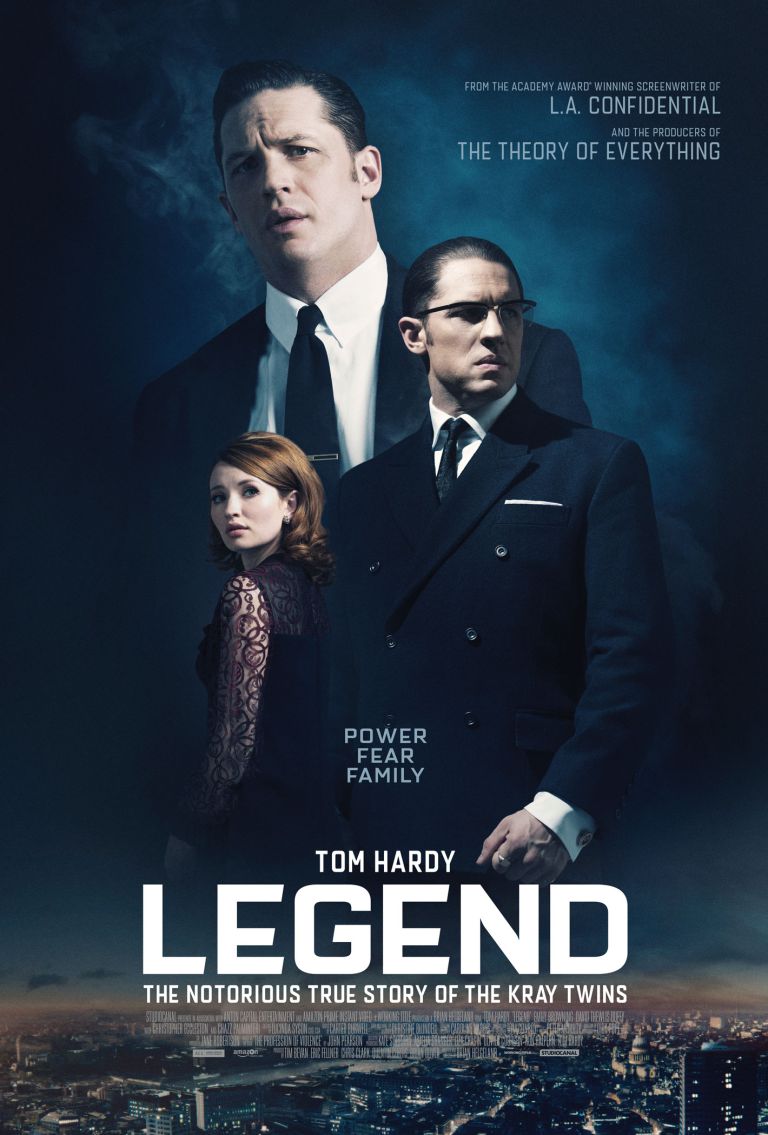
Legend

D: Brian Helgeland / 131m

Cast: Tom Hardy, Emily Browning, David Thewlis, Christopher Eccleston, Paul Anderson, Taron Egerton, Colin Morgan, Tara Fitzgerald, Sam Spruell, John Sessions, Chazz Palminteri, Paul Bettany, Kevin McNally, Shane Attwooll, Jane Wood

London, the 1960’s. The East End is home to two brothers, the confident, ambitious Reggie Kray (Hardy), and his psychotic twin Ronnie (Hardy). Together they run a criminal network based around providing protection to local businesses, while Reggie owns a club that attracts celebrities and politicians who like to mingle with London’s criminal element. The pair are well-liked in their local neighbourhood, and are both feared and respected. Reggie is continually followed by Detective Superintendent “Nipper” Read (Eccleston) who has been given the task of bringing the twins to justice. But they’re always one step ahead of him.

One morning, Reggie’s regular driver, Frankie Shea (Morgan) hasn’t shown up. Reggie goes to his house; the door is opened by Frankie’s sister, Frances (Browning). He’s immediately attracted to her and he asks her out. She agrees to go out with him, despite her mother’s misgivings, and despite Reggie’s reputation. Meanwhile, one of the Krays’ gang has been caught “working” on the south side of the river, an area run by the Richardson family. This infraction leads to a meeting between the Krays and the Richardsons on neutral ground, but the Richardsons send some of their men instead to get rid of Reggie and Ronnie once and for all. But the twins prove too much for the men, and are all viciously beaten up.

With no other serious rivals, the Krays’ criminal empire spreads further afield. With the aid and advice of their accountant, Leslie Payne (Thewlis) – whom Ronnie dislikes and is suspicious of – they take over a casino in an attempt to earn some legitimate money (while still maintaining their regular criminal activities). An old warrant sees Reggie spend six months in prison, during which time he and Frances grow closer, though she seeks reassurances that he’ll be more honest when he gets out. But it doesn’t happen, and even with her hopes dashed, Reggie and Frances get married. Ronnie is welcoming at first, but their marriage leads him to think that Reggie is trying to move on without him. At the same time, Read’s investigation is sidelined when he allows himself to be photographed with the Krays in their casino.

Frances finds herself isolated, and begins to rely more and more on medication to ease her growing sense of anguish. Reggie is oblivious, and has more urgent matters to attend to when Ronnie kills one of the Richardsons’ men, George Cornell (Attwooll) in a pub in front of witnesses. In order to protect his brother, Reggie must intimidate the witnesses, which he does, but when Ronnie hatches another plan to eliminate a perceived enemy, and hires Jack “The Hat” McVitie (Spruell) to do the job, it leads to the end of their criminal careers and the empire they’ve built up.
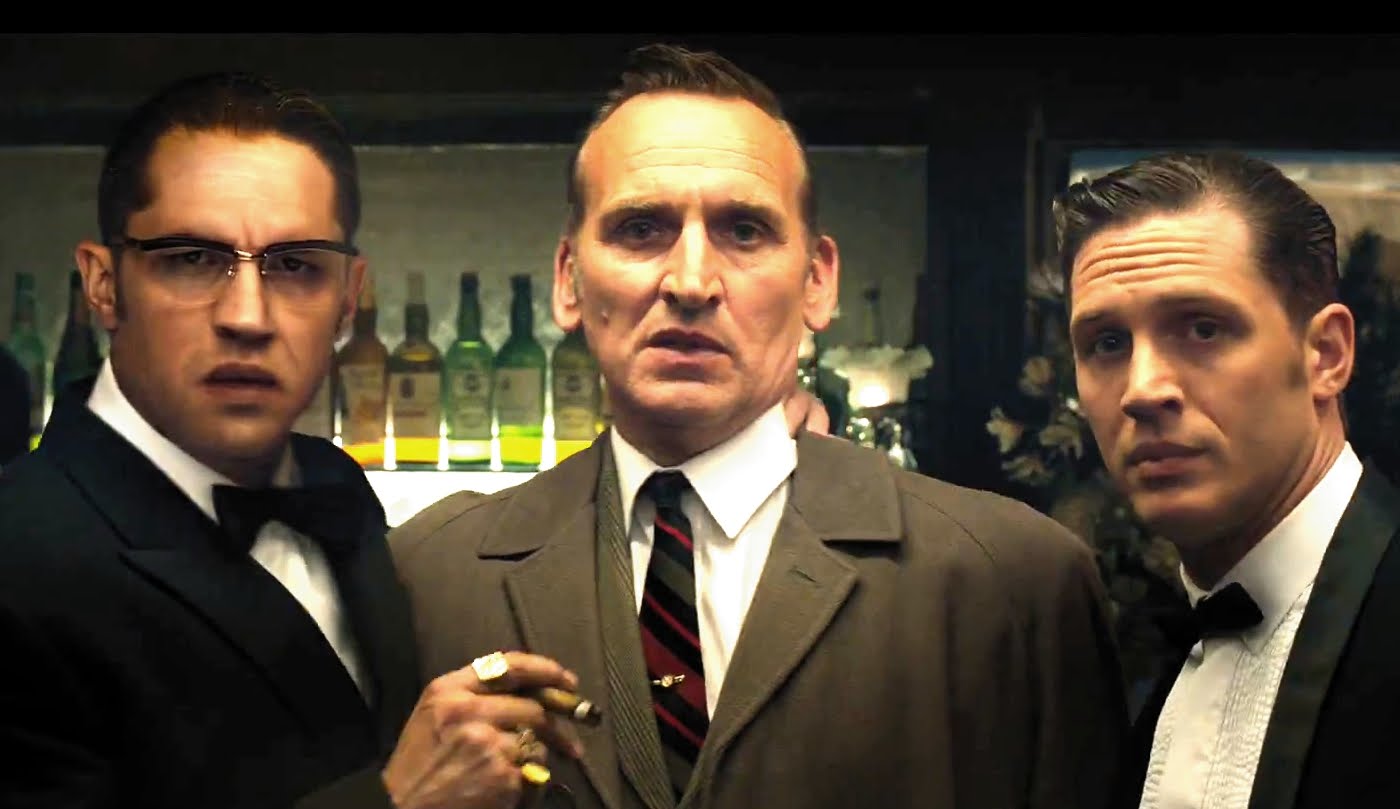
Legend - scene

Adapted from the book The Profession of Violence: The Rise and Fall of the Kray Twins by John Pearson (who was once an assistant to Ian Fleming), Legend is a curious movie in that it takes the two most notorious criminals known in Britain in the last sixty years, and tells their story in such a way that, on the whole, they don’t seem that bad. Sure they use intimidation and violence as a way of getting what they want from people, but we don’t see any of this, so the viewer has to take it for granted that they were as nasty as their “legend” would have it. Instead, writer/director Helgeland shows us the Kray twins as entrepreneurs, buying into legitimate businesses and making inroads into so-called polite society, including the patronage of Lord Boothby (Sessions), a predatory homosexual whose relationship with Ronnie leads to the Krays being acquitted at trial for fear of a government scandal. What’s given scant attention is their youth and how they got to where they were in the mid-Sixties, and how they actually attained the powerful position they enjoyed.

Then there’s the relationship between Reggie and Frances, which at first follows an almost predictable girl-meets-bad-boy scenario before settling down into something much darker and terrible. It’s hard to pick out just why Frances stays with Reggie for so long, because Helgeland doesn’t provide very many clues to help explain it all, and it’s equally unclear why Reggie wants Frances. It’s all very superficial, and though it’s based on real events etc., it doesn’t quite gel on screen, leaving the viewer with the feeling that whatever the truth about their marriage – and the movie makes some strong claims – there’s more to it than meets the eye (or is included in Helgeland’s script).

The same is true of the movie as a whole, with the sense that Helgeland’s adaptation isn’t concerned with providing any depth or subtext, leaving the poor viewer (again) suspecting that they just have to go along with everything and accept it all for what it is. It makes for a frustrating viewing experience as the characters – and there are a lot of them – all appear to lack an inner life (with the possible exception of Ronnie, whose inner life seems entirely weird and deranged). The movie also lacks a sense of time, its events and occurrences sometimes feeling like they’re happening in the absence of any  recognisable timescale, or have been cherry-picked from Pearson’s book at random (one example: Frances meets Reggie when she’s sixteen but doesn’t marry him until she’s twenty-two). And that’s without mentioning that as a retelling of the Krays’ activities and lives, it’s not very faithful or accurate.

The period of the Krays’ infamy is, however, extremely well-realised, with the East End of London looking as foreboding and shadowy as it did back in the Sixties, and with the period detail proving impressive. In terms of the time and the place, Tom Conroy’s incredibly detailed production design is enhanced by Dick Pope’s sharply focused cinematography, and further augmented by Carter Burwell’s appropriately Sixties-style score. The costumes are also a plus, with the fashions of the time recreated in fine style by Caroline Harris, an underrated costume designer who has provided equally fine work on movies as varied as An Ideal Husband (1999), A Knight’s Tale (2001), and And When Did You Last See Your Father? (2007).

Legend - scene2

As to the performances, it’s either a one-man or a two-man show, depending on how you look at it. Hardy is magnificent in roles that it would be difficult now to imagine any other actor attempting. As the charming, urbane-sounding Reggie, Hardy does more with a glance than some actors can manage with a long speech and an unwavering close up. He’s magnetic in most of his scenes, grabbing the attention as firmly as if he had the viewer in a headlock, and making it difficult to look away from him. And as Ronnie it’s like watching a human shark, his dark eyes staring out from behind the character’s glasses with vicious intent, just waiting for the chance to explode, and speaking with the delusional belief that his ideas are as sane as he thinks they sound (at one point he comes out with a plan to protect the homeless children of Nigeria). In both cases, Hardy is superb, even if he’s let down by the material, but he’s such a good actor that he overcomes Helgeland’s negligence and commands the audience’s attention throughout.

In support, Browning is captivating and sincere as Frances, and finds layers in the role that aren’t so evident from the script, while Thewlis gives one of his best recent performances as Payne, the accountant who earns Ronnie’s enmity. Anderson is quietly effective as Reggie’s right-hand man Alby, Fitzgerald is a scornful Mrs Shea (she wears black to her daughter’s wedding), Sessions is suitably slimy as Lord Boothby, and Palminteri, as the Mafia representative who wants the Krays to run London as part of a criminal franchise overseen by Meyer Lansky, exudes a rough Italian charm that hides a more dangerous persona. Alas, Eccleston is given little to do beyond looking exasperated, and Spruell’s McVitie is required to “grow a pair” just when the script needs him to; up ’til then he’s the very definition of compliant.

Ultimately, Helgeland the writer undermines Helgeland the director, focusing on Reggie to the detriment of Ronnie, and trying to make this about Reggie’s loyalty to his brother, rather than the exploits that made them infamous (which are almost incidental here). Some scenes lack the intensity they deserve, as if Helgeland didn’t have the nerve to show some things as they actually occurred (McVitie’s murder was much more vicious than what is shown in the movie), and though the emphasis is quite rightly on the Krays, more time with some of the other characters would have added some richness to the material and kept it from feeling (on occasion) somewhat uninspired. Perhaps there’s a longer cut waiting to be released on DVD/Blu ray, and it fills in a lot of the gaps, but at this length, Helgeland’s scattershot approach to the Krays’ lives is too much of a hindrance to make it anything more than just okay.

Rating: 6/10 – missing the vital spark that would have elevated it into the realm of the truly great gangster movies, Legend instead squanders its chance and remains a mostly pedestrian account of the lives of two men who meant to rule London’s criminal underworld with four iron fists; not as violent as you might expect, but with two standout performances from Hardy to help compensate, this is one “real life” movie that feels like it could have, and should have, been a whole lot better.
Share this:

  • Click to share on X (Opens in new window) X
  • Click to share on Facebook (Opens in new window) Facebook
  • More
  • Click to print (Opens in new window) Print
  • Click to email a link to a friend (Opens in new window) Email
Like Loading...

Pompeii (2014)

09 Friday May 2014

Posted by dullwood68 in Movies

≈ Leave a comment

Tags

Ancient Rome, Celts, Emily Browning, Eruption, Gladiator, Kiefer Sutherland, Kit Harington, Londinium, Molten lava, Paul W.S. Anderson, Review, Tidal wave, Volcano

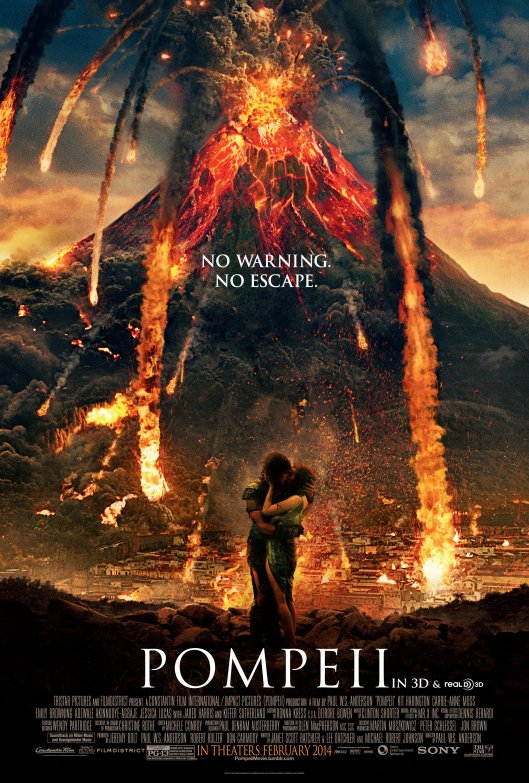
pompeii_1e897365

D: Paul W.S. Anderson / 105m

Cast: Kit Harington, Emily Browning, Kiefer Sutherland, Carrie-Anne Moss, Adewale Akinnuoye-Agbaje, Jared Harris, Jessica Lucas, Joe Pingue, Currie Graham, Sasha Roiz

Beginning in AD62 with the sacking of a Celtic village by Roman soldiers led by Senator Corvus (Sutherland), Pompeii uses this back story to illustrate the determination to survive of young Milo (Dylan Schombing). Having witnessed the deaths of his parents, Milo hides amongst a pile of dead bodies; in doing so he escapes the Romans’ detection.

Seventeen years later, Milo (Harington) is now in Londinium, fighting in the gladiatorial arena and gaining a reputation for himself. His owner, Graecus (Pingue), sees the potential in taking Milo to Rome. On the journey, Milo and the rest of the gladiators travel with Princess Cassia (Browning) and her friend Ariadne (Lucas). One of the horses is injured and at Cassia’s bidding, Milo is allowed to put the animal out of its misery… and so, in these oddest of circumstances, their romance is born. Arriving in Pompeii, Cassia travels on to her family’s home on the lower slopes of Mount Vesuvius where she is welcomed by her parents, Severus (Harris) and Aurelia (Moss). Severus has a plan to rebuild large parts of Pompeii and bring greater wealth to the area; he’s also expecting the arrival of a representative of the new Emperor, Titus, to discuss the necessary investment the plan requires. Cassia is shocked to learn the representative is Senator Corvus; when she was in Rome he made clear his liking for her, though it isn’t reciprocated.

Meanwhile, Milo acquaints himself with the dungeons below the arena, where he meets Atticus (Akinnuoye-Agbaje), an African gladiator whose freedom is assured if he wins his next fight. After another slave attempts to kill Milo during a training session, and Atticus saves his life, the two men strike up an uneasy friendship. That evening, Milo and Atticus are taken to Cassia’s home where a celebration is taking place. Cassia’s horse, which has been missing since the morning, returns, clearly frightened by something and without the steward that was attending him. Milo calms the horse and he and Cassia ride off into the nearby hills to be alone. They are pursued by Corvus’ men. Corvus wants Milo killed but Cassia intervenes, and making herself beholden to the senator, saves the young Celt’s life.

In the arena the next day, Atticus and Milo are amongst a group of slaves that are pitted against superior forces in a recreation of the sacking of Milo’s village. He turns the tables on Corvus’s plan to have him meet his end in the fighting, but before Corvus can retaliate further, the mountain begins to erupt. Parts of the arena collapse, leaving Corvus and Cassia’s parents unconscious in the wreckage. Milo attempts to find Cassia who fled the arena just before the eruption; when Severus and Aurelia come to they try to kill Corvus but he survives, and he too goes after Cassia. While the city is destroyed around them, Milo, Corvus and Cassia try to avoid being killed before a final showdown becomes inevitable.

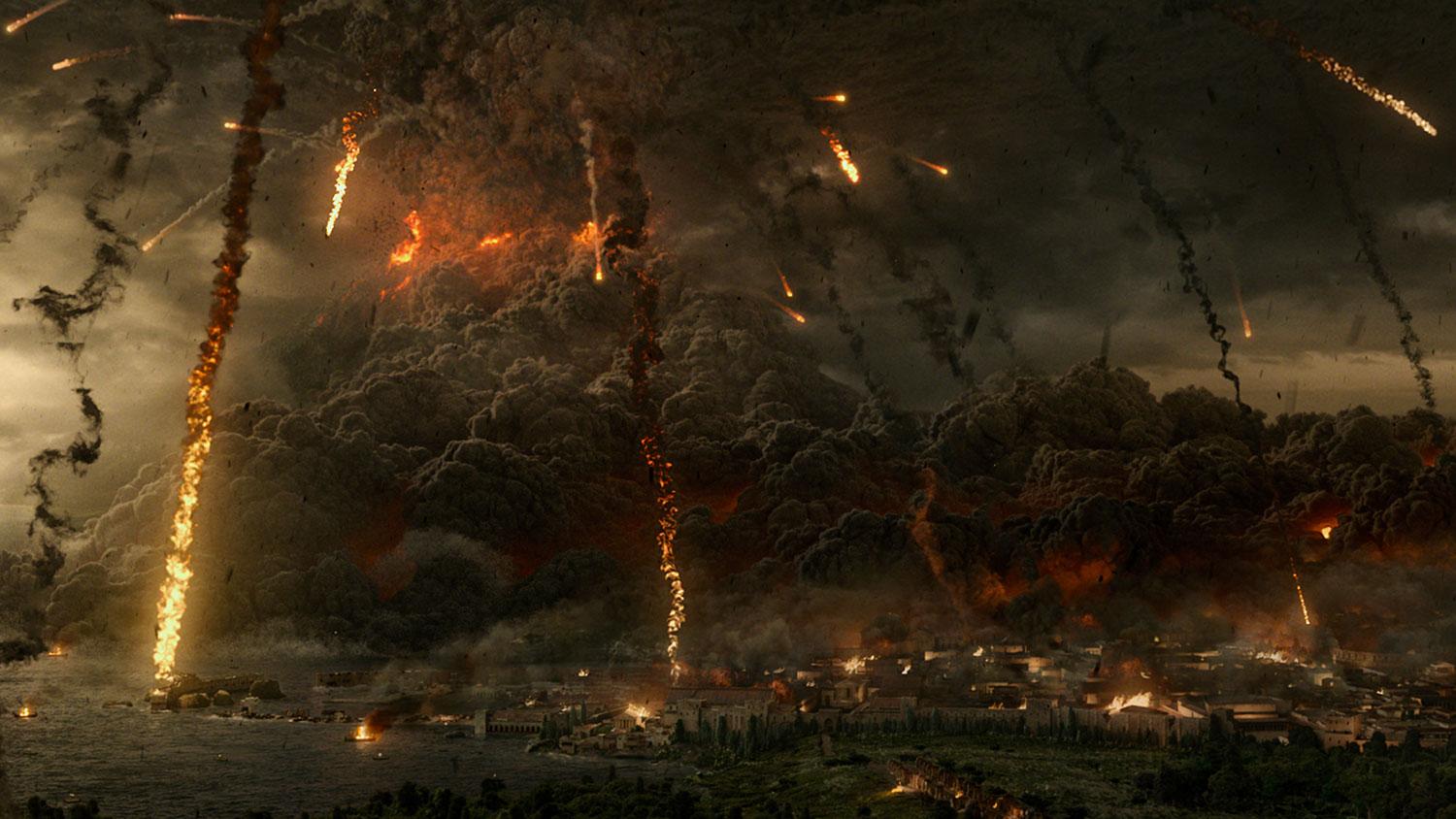
Pompeii - scene

There’s a grim inevitability about the subject matter that makes Pompeii a hard movie to review. It’s a disaster movie, and while that’s as apt a description of things as you’re ever likely to get, the movie does have a compelling visual style, and Anderson, while not exactly the most subtle or dramatically creative of writer/directors, marshals the final third’s fireworks with an aggressive brio that suits the material perfectly. And therein lies the problem for any reviewer of a movie such as this one: ultimately, we’re only here to see the mountain do its worst and satisfy the devastation junkie within all of us.

But before all that, though, there’s the lead-up, an hour of uninteresting, derivative anti-dramatics that keep the characters busy until they have to start running and screaming and avoid being covered in molten lava. Milo and Cassia’s romance is lukewarm at best and is played with the same level of intensity by Harington and Browning as if they were choosing a mortgage provider. Sutherland makes a great villain but his accent is a weird mix of public school English and mid-American vowel mangling; it’s a mesmerising performance, and almost transcends the rest of the movie, as if the actor had the measure of the movie from the very beginning and chose to just have fun with it (if so, he more than succeeds). Harris and Moss are wasted in their secondary roles, Lucas’ role is one step up from the customary maid in waiting, and Akinnuoye-Agbaje does his best as the noble savage who’s naïve enough to believe he can win his freedom in the arena, and is called upon to refer to the mountain in hushed tones whenever there’s even the slightest rumble or disturbance.

On the plot side of things, there’s too much lifted from Gladiator (2000) for Pompeii to be anything other than – for the first hour at least – a pale imitation of that movie and its easily more credible heroics (and Harington is definitely no Russell Crowe), and the whole idea of a plan to regenerate Pompeii before the mountain erupts is either a gloriously ironic move on the filmmakers’ part, or just incredibly crass – and it’s hard to tell which is the more likely. As mentioned before, Anderson is less than gifted in the subtlety stakes, and he piles contrivance atop uninspiring dialogue atop simplistic character motivations with the giddy abandon of someone who can’t believe he’s been given an estimated $100,000,000 to make a movie in the first place. (Yes, you read that right: $100,000,000. Where did it all go to?)

But when it comes, the destruction – what we’ve all been waiting for – is magnificent. Anderson doesn’t skimp on the pyrotechnics and the flaming rocks and the mini tsunami and the exploding buildings and the suddenly yawning chasms, and after the fallout from the initial eruption, gives us the truly impressive sight of Mount Vesuvius blowing its top and then some. Forget Volcano (1997) and Dante’s Peak (1997), hell, even Mount Yosemite going up in 2012 (2009) – Pompeii gives us the eruption to end all eruptions, a staggering special effect that will take some beating, and which is easily worth waiting for. It’s the one moment the movie had to get right, and it does so, spectacularly.

Rating: 5/10 – yes it’s extremely silly in places, and yes it’s full of historical inaccuracies, but Pompeii brushes all that aside by piling on the destructive spectacle and providing plenty of “wow” moments; event cinema for the critically unconcerned and in some ways, all the better for it.

Share this:

  • Click to share on X (Opens in new window) X
  • Click to share on Facebook (Opens in new window) Facebook
  • More
  • Click to print (Opens in new window) Print
  • Click to email a link to a friend (Opens in new window) Email
Like Loading...

Magic Magic (2013)

30 Wednesday Apr 2014

Posted by dullwood68 in Movies

≈ Leave a comment

Tags

Arthouse thriller, Chile, Emily Browning, Holiday, Hypnosis, Insomnia, Juno Temple, Michael Cera, Review, Sebastián Silva

Magic Magic

D: Sebastián Silva / 97m

Cast: Juno Temple, Michael Cera, Emily Browning, Catalina Sandino Moreno, Agustín Silva

Shot entirely in Chile, Magic Magic is a slow-burn thriller that begins with Alicia (Temple) travelling outside the US for the first time to stay with her friend Sara (Browning).  Alicia is a little shy and unsure of herself, and looks to Sara for support when she fails to impress Sara’s boyfriend Agustín (Silva), and his two friends Barbara (Moreno) and Brink (Cera).  Leaving Santiago for a cabin in the countryside, they get so far when Sara receives a call saying she has to go back to resit one of her exams.  Against Alicia’s wishes, Sara travels back alone, promising to be back the next day.

At the cabin, Alicia repeatedly tries to contact Sara but there’s no signal.  She becomes increasingly restless and that night has trouble sleeping.  The next day, Alicia, Agustín and Brink go hunting with a rifle; Brink shoots a parrot, leaving Alicia disturbed by his cruelty.  Later, Alicia manages to contact Sara, who tells her she now won’t be back until the next day.  Alicia has another bad night, and in the morning is offered pills by Barbara to help her sleep.  Sara arrives and the group (minus Barbara) take a boat to a nearby place called The Rock where there is an outcrop that can be jumped off into the water.  Alicia freezes and, although she is reassured by the others, her behaviour begins to cause them serious concern.  Alicia, maybe through lack of sleep, is erratic, and prone to emotional outbursts; she also has fugue moments.

That night she is hypnotised by Agustín and responds directly to suggestions, even when Brink tells her to put her hand in the fire.  Later, Alicia sleepwalks and causes a disturbance before being found.  The next day there is an altercation between her and Brink which later leads to the discovery that Alicia is taking a lot of medication.  And then that evening, Alicia disappears…

Magic Magic - scene

From the start, Magic Magic takes pains to show us the emotional fragility that Alicia suffers from.  But while we see this time after time (until it becomes annoying – we get it, okay?), there’s no clear explanation for her behaviour, nor if the things that are happening are largely in her head because of some psychological issue, or the side effects of her medication, or even a mixture of both.  The lack of consistency in her behaviour, and in her attitude towards the rest of the group, doesn’t help either, and there are too many occasions when she behaves weirdly, it’s briefly commented on, then it’s on to the next weird moment.  And it doesn’t help that the culmination of all these events makes for a final ten minutes that shoves the movie into a whole different territory.

With the main character acting so strangely – and with little or no explanation to guide the viewer – Magic Magic suffers mightily from being a combination of arthouse and thriller that panders more to arthouse conventions than thriller ones.  In the hands of a more skilled writer/director, this might not have been a problem, but Silva overplays Alicia’s reticence and odd behaviour rather than developing the mystery of what’s happening and why.  Fortunately, the director has a strong ally in Temple, who despite the limitations of her character, puts in a brave, instinctive performance that helps the movie immeasurably.  There’s a moment when she’s walking through a field and encounters a couple of horses.  The moment is infused with a low-key tension – why though, is again left unanswered – but Alicia’s sense of uneasiness is portrayed credibly despite the lack of reasoning behind it.  It’s Temple’s ability to elevate the material in this way that saves the movie from being too diffident and removed.

Cera is the other main draw here, and fares reasonably well as Brink, but again the script has him behave in such a bullying, cowardly manner that his continual taunts and digs at Alicia become more annoying than anything else.  It’s good to see him play such an awful person – aside from his brilliant turn in This Is the End (2013) – but there’s little depth here and it’s hard to see why Agustín and Barbara would put up with him.  Browning fares badly, with the underwritten role of best friend whose return trip to Santiago turns out to be for other reasons but when they are revealed, prove to have no relation or effect on what’s going on with Alicia.  Moreno has little to do except moan about Alicia throughout, while Silva is almost a bystander with little to do except continually apologise for Brink’s bad behaviour.

With so much going on that is left unexplained and/or undeveloped, Magic Magic is a frustrating experience, and the title doesn’t provide any clues either (though it does relate to the movie’s denouement).  It also ends abruptly, leaving the audience even more in the dark than they were at the beginning.  The cast do the best they can under the circumstances and there’s some pleasure to be had from the beautiful Chilean locations, but as an evening’s entertainment you’d be hard pressed to find something less enervating.

Rating: 5/10 – with its writer/director denying his audience a way in to what’s happening, Magic Magic fails to engage or provide a character to sympathise with; good performances aside, this is a disappointing movie that seems happy to be obscure for its own sake.

Share this:

  • Click to share on X (Opens in new window) X
  • Click to share on Facebook (Opens in new window) Facebook
  • More
  • Click to print (Opens in new window) Print
  • Click to email a link to a friend (Opens in new window) Email
Like Loading...

Blog Stats

  • 486,761 hits

Recent Posts

  • 10 Reasons to Remember Bibi Andersson (1935-2019)
  • Fantasia (1940)
  • Dances With Wolves (1990) – The Special Edition
  • Kiss of the Spider Woman (1985)
  • The Three Musketeers (1973)

Top Posts & Pages

  • Lost for Life (2013) - Another Look
    Lost for Life (2013) - Another Look
  • Lost for Life (2013)
    Lost for Life (2013)
  • About
    About
  • Exposed (2016)
    Exposed (2016)
  • Cardboard Boxer (2016)
    Cardboard Boxer (2016)
  • A Brief Word About La La Land (2016)
    A Brief Word About La La Land (2016)
  • The Monuments Men (2014)
    The Monuments Men (2014)
  • BFI London Film Festival 2015
    BFI London Film Festival 2015
  • A Brief Word About Netflix Original Comedies
    A Brief Word About Netflix Original Comedies
  • Removal (2010)
    Removal (2010)
Follow thedullwoodexperiment on WordPress.com

Blogs I Follow

  • Rubbish Talk
  • Film 4 Fan
  • Fast Film Reviews
  • The Film Blog
  • All Things Movies UK
  • Interpreting the Stars
  • Let's Go To The Movies
  • Movie Reviews 101
  • TMI News
  • Dan the Man's Movie Reviews
  • Film History
  • Jordan and Eddie (The Movie Guys)

Archives

  • April 2019 (13)
  • March 2019 (28)
  • February 2019 (28)
  • January 2019 (32)
  • December 2018 (28)
  • November 2018 (30)
  • October 2018 (29)
  • September 2018 (29)
  • August 2018 (29)
  • July 2018 (30)
  • June 2018 (28)
  • May 2018 (24)
  • April 2018 (21)
  • March 2018 (31)
  • February 2018 (25)
  • January 2018 (30)
  • December 2017 (30)
  • November 2017 (27)
  • October 2017 (27)
  • September 2017 (26)
  • August 2017 (32)
  • July 2017 (32)
  • June 2017 (30)
  • May 2017 (29)
  • April 2017 (29)
  • March 2017 (30)
  • February 2017 (27)
  • January 2017 (32)
  • December 2016 (30)
  • November 2016 (28)
  • October 2016 (30)
  • September 2016 (27)
  • August 2016 (30)
  • July 2016 (30)
  • June 2016 (31)
  • May 2016 (34)
  • April 2016 (30)
  • March 2016 (30)
  • February 2016 (28)
  • January 2016 (35)
  • December 2015 (34)
  • November 2015 (31)
  • October 2015 (31)
  • September 2015 (34)
  • August 2015 (31)
  • July 2015 (33)
  • June 2015 (12)
  • May 2015 (31)
  • April 2015 (32)
  • March 2015 (30)
  • February 2015 (37)
  • January 2015 (39)
  • December 2014 (34)
  • November 2014 (34)
  • October 2014 (36)
  • September 2014 (25)
  • August 2014 (29)
  • July 2014 (29)
  • June 2014 (28)
  • May 2014 (23)
  • April 2014 (21)
  • March 2014 (42)
  • February 2014 (38)
  • January 2014 (29)
  • December 2013 (28)
  • November 2013 (34)
  • October 2013 (4)

Blog at WordPress.com.

Rubbish Talk

Film 4 Fan

A Movie Blog

Fast Film Reviews

The Film Blog

The official blog of everything in film

All Things Movies UK

Movie Reviews and Original Articles

Interpreting the Stars

Dave Examines Movies

Let's Go To The Movies

Film and Theatre Lover!

Movie Reviews 101

Daily Movie Reviews

TMI News

Latest weather, crime and breaking news

Dan the Man's Movie Reviews

All my aimless thoughts, ideas, and ramblings, all packed into one site!

Film History

Telling the story of film

Jordan and Eddie (The Movie Guys)

Movie Reviews & Ramblings from an Australian Based Film Fan

Privacy & Cookies: This site uses cookies. By continuing to use this website, you agree to their use.
To find out more, including how to control cookies, see here: Cookie Policy
  • Subscribe Subscribed
    • thedullwoodexperiment
    • Join 481 other subscribers
    • Already have a WordPress.com account? Log in now.
    • thedullwoodexperiment
    • Subscribe Subscribed
    • Sign up
    • Log in
    • Report this content
    • View site in Reader
    • Manage subscriptions
    • Collapse this bar
 

Loading Comments...
 

    %d