• 10 Reasons to Remember…
  • A Brief Word About…
  • About
  • For One Week Only
  • Happy Birthday
  • Monthly Roundup
  • Old-Time Crime
  • Other Posts
  • Poster of the Week
  • Question of the Week
  • Reviews
  • Trailers

thedullwoodexperiment

~ Viewing movies in a different light

thedullwoodexperiment

Tag Archives: Finland

The Happiest Day in the Life of Olli Mäki (2016)

25 Saturday Feb 2017

Posted by dullwood68 in Movies

≈ Leave a comment

Tags

1962, Biography, Boxing, Championship bout, Drama, Eero Milonoff, Finland, Hymyilevä mies, Jarkko Lahti, Juho Kuosmanen, Oona Airola, Review, Romance, True story

images-w1400

Original title: Hymyilevä mies

D: Juho Kuosmanen / 92m

Cast: Jarkko Lahti, Oona Airola, Eero Milonoff, Joanna Haartti, Esko Barquero, Elma Milonoff, Leimu Leisti, Hilma Milonoff, John Bosco Jr

Shot in gorgeous black and white, The Happiest Day in the Life of Olli Mäki opens in Finland in 1962. Olli (Lahti) is an amateur boxer turned professional whose manager, Elis Ask (Milonoff), is on the verge of clinching a deal that will see Olli fight in a bout against the World Boxing Association featherweight champion, Davey Moore (Bosco Jr). If it goes ahead, it will be the biggest sporting event in Finnish history. But Olli has other things on his mind, particularly his friend Raija Jänkä (Airola). At a wedding they both attend, Olli discovers he’s attracted to her, but at first he doesn’t know what to do or say about his new feelings. When the bout is agreed, Olli finds himself too busy to spend much time with Raija, who is reduced to the role of onlooker by Elis’s insistence that Olli focus on the bout and nothing else.

There’s also the issue of Olli’s weight, which needs to come down in order for him to be able to fight, but which he doesn’t seem to be concentrating on. With Elis arranging for a documentary film crew to record Olli’s preparations, it’s a further distraction for the boxer, and adds to the dissociation he feels with Raija. She too begins to feel the same thing, as Elis’ behaviour pushes her further and further away from Olli, almost to the point where she feels that she’s in the way. Meanwhile, Olli is forced to attend various dinners and promotional photo-shoots, adding to the disenchantment he’s feeling about the whole process. As the bout draws nearer, Raija returns to her home town, while Olli becomes increasingly withdrawn.

the-happiest-day-in-the-life-of-olli-maki-1

Unable to train any further, Olli follows Raija and declares his feelings for her. Giving Elis no option, he stays with Raija and trains at his own pace, even fighting to get his weight down. At the weigh-in he just comes in under the required weight, and afterwards he proposes to Raija. Buoyed by this he approaches the bout with a renewed sense of optimism. And as he enters the ring, the stage is set for a career- and life-defining moment – but will it prove to be the happiest day of his life?

If you’re not Finnish, and more specifically, up to speed on Finland’s boxing history, then it’s unlikely that you’ll have heard of Olli Mäki. His career was a succession of ups and downs, beginning with his winning the European lightweight title as an amateur in 1959, his bout with Moore, and his European Boxing Union light welterweight title win in 1964. He continued boxing until 1973 when he retired to become a boxing coach and manager. At first glance, his life doesn’t seem to warrant a biopic being made out of one particular period in his life, even if it does include a championship title bout. But this is a boxing movie that isn’t about boxing, even though it inhabits that world. Instead, director Kuosmanen (making his full-length feature debut) and co-writer Mikko Myllylahti have turned their attention onto Mäki himself, his doubts and fears and longings outside the ring, and in doing so, have wrought an accomplished, intelligent, and compassionate portrait of a man fighting for more than just a title.

the_happiest_day_in_the_life_of_olli_maki_36000515_st_8_s-high

From the beginning, Mäki seems bemused and oh-so-bored by all the media circus that surrounds him, a necessary evil he must endure on his way to the title bout. But he knows the ropes as it were, and goes along with Elis’ conditions and demands, trusting in the man who’s got him to this point. But the eagle-eyed viewer will soon spot that Elis is working as much to his own agenda as he is for Olli, and a scene late on where Elis is forced to take his children (and Mäki) with him on a rainy night to visit some of his backers, leaves the distinct feeling that there’s some form of corruption going on behind the scenes. But it’s enough to know that it’s there, because wisely, Kuosmanen doesn’t let this side trip upset the delicate balance he’s established by focusing on Mäki’s warring emotions.

Mäki’s dilemma revolves around whether he should be a lover or a fighter, or whether he can be both. It’s clear that he wants to be both, but if he has to make a choice – and an irrevocable one at that – then it’s obvious that he’ll be a lover. But boxing still has a hold over him, one that’s stronger than his loyalty to Elis, and letting go isn’t as easy as he may have believed. It takes Raija’s complete absence from his training camp to push him in the right direction, and for a moment the movie teeters on the edge of discarding the title fight altogether in favour of a happy ending. But Raija, despite her reservations about the world of boxing, believes in Mäki, and it’s this that allows him to return to his training and make the weigh-in. What happens next may not be entirely unpredictable, and definitely not if you’re familiar with Mäki’s career, but it has a pleasing symmetry with what’s gone before.

170209_film_thehappiestdayinthelifeofollimaki_5-912x513

As the eponymous boxer, Lahti wears a worn-down expression for the most part, but it’s in keeping with Mäki’s bemused resignation, and the actor inhabits the role with a weary sincerity. He also makes Mäki’s coiled physicality a part of his performance, as if the character is waiting for the right moment to explode but isn’t quite sure – outside of the ring at least – when that should be. As Raija, Airola (who in certain shots looks like Marion Cotillard’s younger sister) has an air of detachment and melancholy that again suits the movie’s mood and her character’s dwindling sense of importance when measured against Mäki’s training regime. But she also gets a chance to explore Raija’s more winsome, frivolous side in a party scene that fully explains why Mäki falls in love with her. As the main rival for Mäki’s “affections”, Milonoff is equally as good as his co-stars, portraying Elis as a man desperately trying to hide how much this fight means to him both professionally and personally. It could have been a two-dimensional role in comparison to Lahti and Airola’s, but Milonoff takes the bare bones of what appears to be a stock character and fleshes him out with sympathy and understanding.

Kuosmanen’s decision to make The Happiest Day in the Life of Olli Mäki in black and white proves to be a perfect choice for the material, and the depth and the richness of the images is further ensured by his use of a Kodak film stock that was never meant for feature length movies. The result is a movie that is frequently beautiful to watch, and which offers the viewer a variety of arresting images. Kuosmanen makes a number of other, equally important decisions, from the movie’s disciplined, elegant framing to the careful way in which he teases out each of the main characters’ feelings and desires in such a way that leaves them vulnerable and yet still secure. Add in themes around personal sacrifice and professional responsibility, as well as the pressures of an entire country’s expectations of an individual, and you have a movie that quietly and effortlessly draws in the viewer and rewards them in a variety of unexpected ways, not the least of which is a dry, diffident sense of humour.

Rating: 9/10 – a movie that speaks to the heart and tells a wonderful love story in the process, The Happiest Day in the Life of Olli Mäki is a modest, yet enthralling movie that somehow failed to be nominated for an Oscar this year (though it did win the Prize Un Certain Regard at Cannes last year); putting all that aside, this should be on everyone’s list of must-see movies, and a welcome reminder that sometimes it’s the movies that receive the least fanfare that can often be the ones to have the most impact.
Share this:

  • Click to share on X (Opens in new window) X
  • Click to share on Facebook (Opens in new window) Facebook
  • More
  • Click to print (Opens in new window) Print
  • Click to email a link to a friend (Opens in new window) Email
Like Loading...

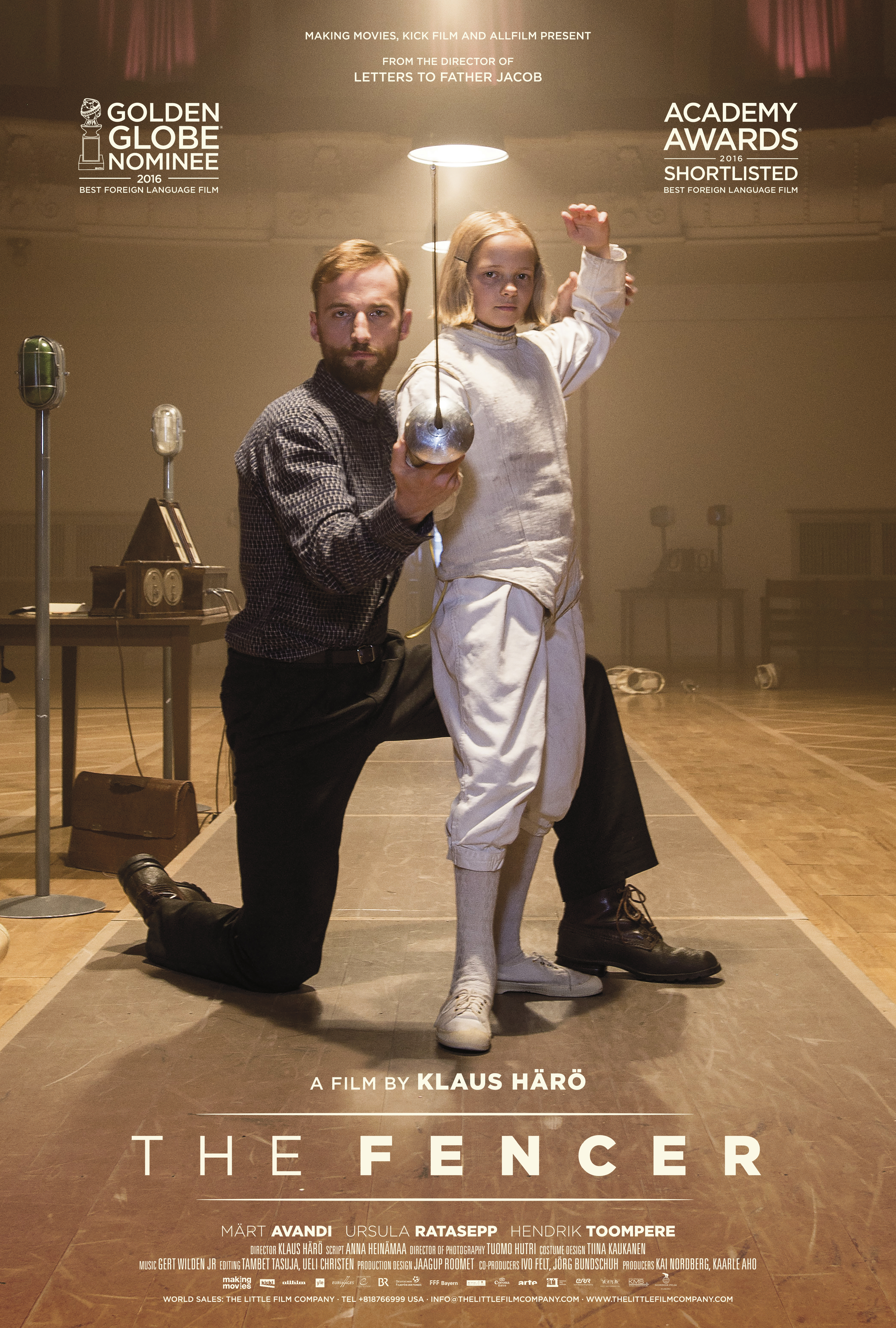
The Fencer (2015)

17 Tuesday May 2016

Posted by dullwood68 in Movies

≈ Leave a comment

Tags

Drama, Endel Nelis, Estonia, Fencing, Finland, Haapsalu, Hendrik Toompere Sr, Klaus Härö, Leningrad, Märt Avandi, Review, Soviet Union, Sports Club, Tournament, True story, Ursula Ratasepp, World War II

The Fencer

Original title: Miekkailija

D: Klaus Härö / 98m

Cast: Märt Avandi, Ursula Ratasepp, Hendrik Toompere Sr, Liisa Koppel, Joonas Koff, Ann-Lisett Rebane, Elbe Reiter, Egert Kadastu, Lembit Ulfsak, Kirill Käro

The Fencer begins with a brief – but necessary – history lesson: during World War II, Estonia was occupied by Nazi Germany; most of the men were conscripted into the German army. When Estonia was absorbed into the Soviet Union, it regarded all members of the German army as war criminals, regardless of any extenuating circumstances. In the years following the war, Estonians who were known to have been a part of the German forces were tracked down by the Soviets and imprisoned.

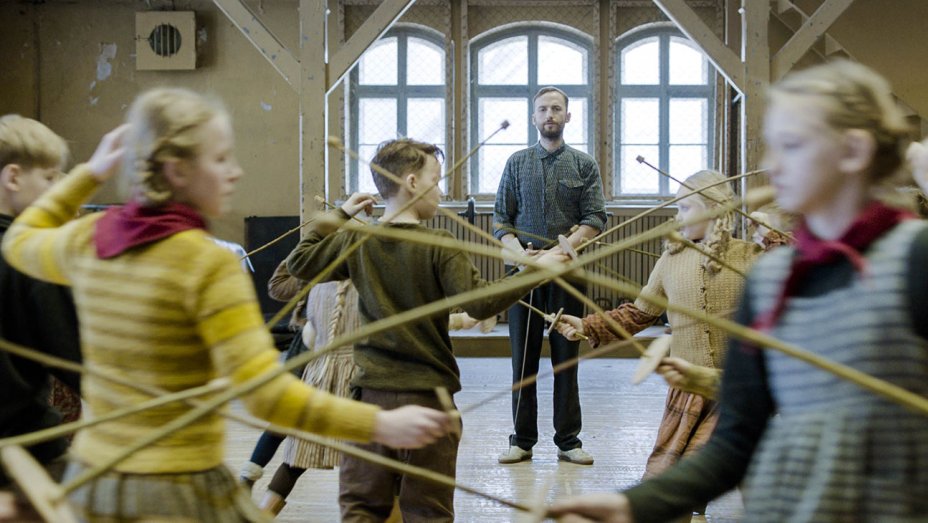
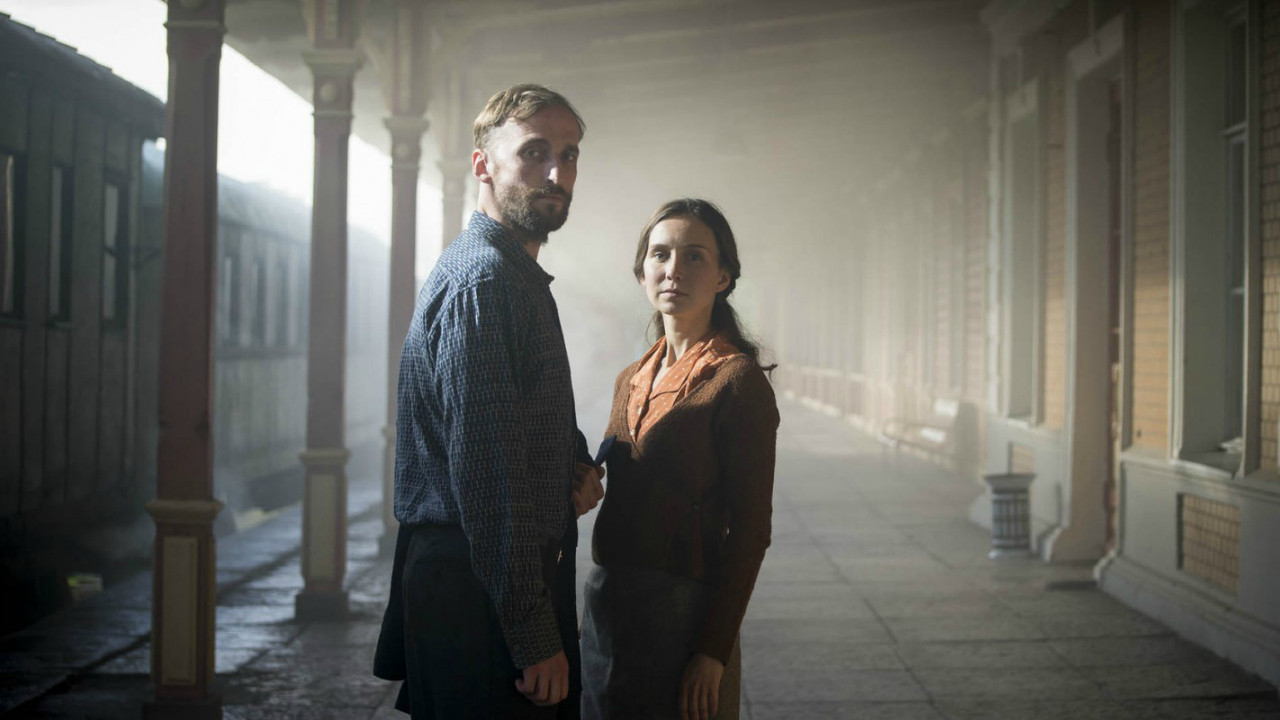
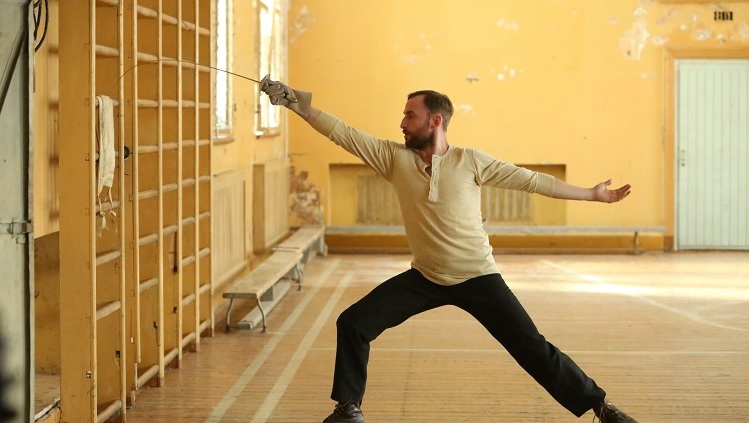
Against this backdrop, the movie tells the story of Endel Nelis (Avandi), an Estonian and former championship fencer who was himself drafted into the German army, and who is now trying to avoid capture by the Soviets. He arrives in the small Estonian town of Haapsalu to take up a position as a teacher. His arrival is greeted with disdain by the school principal (Toompere Sr), and Endel soon finds that one of his extra duties, running the sports club, is paid lip service to by the principal, and his initial attempt to get the club up and running is undermined accordingly. But when he decides to teach fencing as part of the sports club, he finds nearly all the students turning up for the first session.

TF - scene3

The principal is disconcerted by this show of enthusiasm, and mistrusts it, choosing instead to try and undermine its popularity at a parents meeting. While he alludes to dire consequences if the parents vote for the fencing to continue, the grandfather (Ulfsak) of one of the boys in the club, Jaan (Koff), encourages the rest of the parents to vote to keep it going. While all this is going on, Endel is visited by his best friend, Aleksei (Käro) who warns him that people are looking for him in Leningrad (where he’s come from). And Endel begins a tentative relationship with another teacher, Kadri (Ratasepp).

As time goes on, the children make enough progress that when one of them, Marta (Koppel), learns of a national fencing tournament to be held in Leningrad, and she wants Endel to enter them, it provides him with a diffcult decision: should he risk taking some of the students to Leningrad and being caught, or should he risk losing the faith the children have in him, and with it, witness the end of the club? (As if there’s any doubt as to what decision he’ll make.) Once at the tournament, the four pupils he’s chosen to compete – Marta, Jaan, Lea (Rebane), and Toomas (Kadastu) – show that the skills they’ve developed have a good chance of seeing them win the tournament outright. But the increased presence of armed guards throughout the building points to Endel’s chances of returning to Haapsalu as being even slimmer than he’d expected.

TF - scene1

Directed by Härö from a script by Anna Heinämaa, The Fencer is a melancholy rumination on individualism and patriotic duty, with Endel as the protagonist seeking the kind of quiet life that everyone on the run wishes for, yet rarely attains. It’s a stately, deliberately paced movie that still manages to be impactful and modestly gripping. It has a keen sense of the story it’s telling, and makes its points about the Soviet Union’s totalitarian approach to socialism with understated precision, preferring to acknowledge small instances of the system’s control rather than focus on the larger examples that most other movies fall back on. It paints a broad picture of the times, the early Fifties, but adds sufficient detail to be both impressive and insightful. (This is best evidenced in the scene with the parents’ meeting, where the principal’s officious and condescending nature is contrasted by what is effectively the “will of the people”. His attempt at intimidation almost works, but Heinämaa and Härö ramp up the tension through the slow awareness of the parents that they have more power than the principal wants them to realise.)

Endel’s relationship with the pupils is developed naturally and without resorting to the kind of sentimental clichés that a Hollywood version might fall back on without thinking. Jaan looks up to Endel because his father is missing, while even the majority of the other children look upon him as a father figure, someone they can trust. But it’s Endel’s trust in them, his belief that they can be good, if not great, fencers that buoys their affection for him, and provides the movie with a great deal of its heart and soul. Even though he confides in Kadri that he’s not good with kids, that he doesn’t know how to deal with them, Endel still has an instinctive feel for dealing with them that allows him to forge such great relationships with them (though he’s not exactly the kind of teacher who maintains boundaries; instead he appears to make it up as he goes along).

At its heart, The Fencer is about doing the right thing, and doing it for all the right reasons, even if it comes with a personal price attached. Endel turns down the chance of moving on and hiding out in Novosibirsk, and it’s here that you begin to get the sense that Endel is finished with running, that with the sports club he’s found a place where he belongs (not to mention the love of a good woman). Endel can be seen putting his life and its value in perspective, and when he makes his choice near the movie’s end, he can be applauded for being true to himself and no one else.

TF - scene2

As the beleaguered teacher, Avandi has a weary yet subtly engaged manner about him that is heartwarming and sympathetic. Endel is trying to do the best he can, and it’s easy for the viewer to root for him. Avandi’s sad, doleful features tell you more about how the character is feeling than any amount of exposition, and Härö takes every opportunity to focus on those features and weave a bit of acting magic. As the “villain” of the piece, Toompere Sr is a mean-spirited pedagogue stranded in a small town and seeking affirmation through adhering to the demands of the state. He’s a low man made even lower by his actions, but thanks to Toompere Sr he’s not a man to be hated (or even despised) but pitied instead; he’s as much a prisoner of fate as Endel is.

Once the movie arrives in Leningrad, and the tournament begins, Härö wisely drops the political and social elements for a solid, ever-so-slightly-gripping batch of fencing bouts that add a bit of zest to the pacing. The final bout is played out with élan, even if the outcome goes from being unpredictable to downright obvious halfway through, and the final coda provides a bittersweet ending that smacks of wish fulfillment on the makers’ part but at least gives the viewer the happy ending they’ve been hoping for.

Rating: 8/10 – a beautifully lensed movie that features a succinct, unpretentious yet absorbing screenplay, The Fencer can best be described as the kind of movie that sneaks up on you and takes you by surprise; it’s a quietly impressive movie that only falters when it tries to up the pace and be visually more dramatic, but this is a minor concern when weighed against the many, many, many things the movie gets right.

Share this:

  • Click to share on X (Opens in new window) X
  • Click to share on Facebook (Opens in new window) Facebook
  • More
  • Click to print (Opens in new window) Print
  • Click to email a link to a friend (Opens in new window) Email
Like Loading...

Big Game (2014)

13 Wednesday May 2015

Posted by dullwood68 in Movies

≈ Leave a comment

Tags

Action, Air Force One, Drama, Finland, Hunting, Jalmari Helander, Manhunt, Onni Tommila, President, Ray Stevenson, Review, Rite of passage, Samuel L. Jackson, Thriller

Big Game

D: Jalmari Helander / 90m

Cast: Samuel L. Jackson, Onni Tommila, Ray Stevenson, Victor Garber, Jim Broadbent, Mehmet Kurtulus, Ted Levine, Felicity Huffman, Jorma Tommila

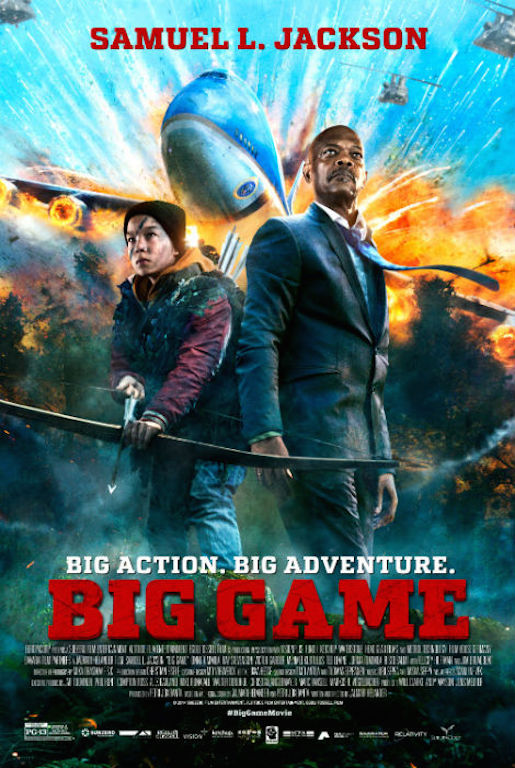
On the eve of his thirteenth birthday, and following the tradition of his Finnish community, Oskari (Onni Tommila) must go alone into the mountains and hunt down and kill a wild animal such as a deer. If he succeeds, as his father (Jorma Tommila) did, he will be regarded as a man. But when Oskari chooses a bow as his weapon of choice, he proves less than capable with it, and he heads off uncertain as to how well he will do. Meanwhile, the President of the United States, William Moore (Jackson), is aboard Air Force One heading for a conference in Helsinki. Travelling with him is his senior security officer, Morris (Stevenson), who once took a bullet intended for the President. When the plane is targeted by mercenaries led by Hazar (Kurtulus), Morris gets Moore into an escape pod and jettisons it. As he parachutes to safety, missiles strike the plane and it explodes. Below, Oskari is tracking through the forest when Air Force One careens through the trees above him and crashes. Oscar discovers the escape pod and releases Moore.

At the Pentagon, the Vice President (Garber), along with General Underwood (Levine) and the director of the CIA (Huffman), are made aware of the situation. Using satellite feeds they begin to track the President’s whereabouts, and are aided by terrorism expert Herbert (Broadbent). He correctly identifies Hazar as the culprit responsible for the attack on Air Force One, though the mercenary’s true reason for doing so, to hunt the President for sport, remains a mystery to them. In time, they also learn that Morris  is working with Hazar and his job is to deliver the President so that Hazar can hunt him.

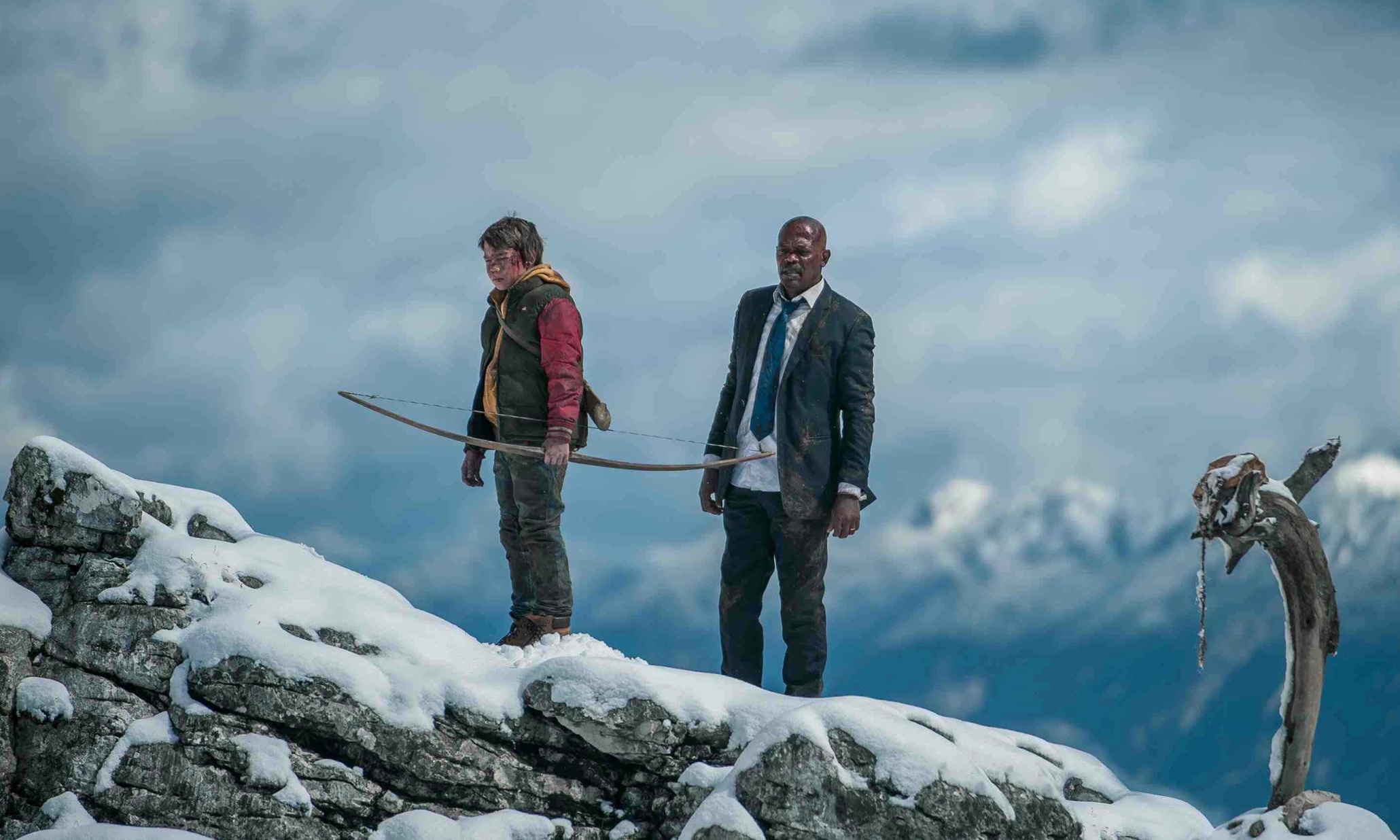
While Hazar and his men begin to track the President, Oskari tells Moore about the rite of passage he’s on. They make camp for the night and the next morning press on with Oskari’s hunt. It’s not long, however, before Hazar finds them both and takes the President hostage, though only temporarily, as Oskari rescues him (though not in the most conventional of manners). In the process they discover that Air Force One has come to rest in a lake, and that their best hope for survival lies within it. But once they’re aboard they find themselves trapped, and with a bomb that is quickly counting down…

Big Game - scene

The most expensive movie yet produced in Finland, Big Game is a throwback to those action thrillers from the Eighties and Nineties where one lone hero took on a whole slew of bad guys and offed them in various inventive ways. Here the twist is that the lone hero is a thirteen year old boy, and the location – while reminiscent of Cliffhanger (1993) – is the stunning Bavarian Alps (that’s right, it’s not Finland). Though he naturally has top billing, Jackson is actually a supporting player in a movie that keeps its focus firmly on the path to manhood being taken by Oskari.

This allows the movie to rise – briefly – above the usual run-of-the-mill heroics expected of this sort of thing, but at the same time, to minimise the amount of risk or danger both Oskari and Moore find themselves in. At one point they find themselves in a fridge hurtling down the side of a mountain and then plunging into a river. But Hazar and his men make only a token effort to chase them, and they both emerge from the fridge with minor abrasions. It’s meant to be a man hunt (and the title is a pretty big clue as well), but it’s more like a polite ramble with the occasional burst of distracting gunfire. And it ends with a gloriously explosive finale that feels rushed, even if it is immensely satisfying. There’s a specific target audience here – aside from Hollywood producers – and it’s early teenage boys. It’s a boys’ own adventure, but devoid of real threats or real pain.

But despite the long-winded beginning, and the lack of any appreciable tension, Big Game is still straightforward, enjoyable stuff that ticks a variety of boxes while sidestepping some others. Jackson’s slightly pompous President is soon taken down a peg and learns a lot from his young rescuer; Stevenson’s loyal agent has a secret agenda and an Achilles heel of a health condition; Hazar is a predictably urbane psychopath; the location photography is often breathtaking; the Pentagon seems to be staffed by only ten people; and Levine and Huffman’s characters seem so inept it’s a wonder they’re in the positions they’ve reached. Add to all that a performance from Broadbent that feels like it should be in another movie entirely, and you have a movie that falls back on some tried and (not to be) trusted plot devices and stereotypical characterisations.

However, Helander – adapting an original story by himself and producer Petri Jokiranta – does invest the movie with a sharp line in humour (Oskari doesn’t recognise Moore at all; Hazar tells a helicopter pilot his best chance is to run as the mercenary doesn’t have a gun yet), and even allows Jackson to get in a carefully edited “motherf-“. It’s good to see the star of so many low-grade thrillers in recent years play against type (Moore gets beaten up twice), and even better to see that he’s enjoying himself. But it’s Onni Tommila who steals the show, his narrow gaze and determined features giving perfect expression to a boy who won’t give up, despite the odds against him (and the fact that he’s terrible with a bow and arrow). With Helander adding some family issues to the mix as well, and making Oskari resourceful but not impossibly so, the movie retains a core focus that serves it immeasurably.

Rating: 7/10 – while not as violent as audiences might expect (or want it to be), Big Game is still an enjoyable, though lightweight, piece of high concept entertainment; Jackson and Onni Tommila make a great team, and if, as it seems, the way is left open for some kind of sequel, then that’s not such a bad thing either.

Share this:

  • Click to share on X (Opens in new window) X
  • Click to share on Facebook (Opens in new window) Facebook
  • More
  • Click to print (Opens in new window) Print
  • Click to email a link to a friend (Opens in new window) Email
Like Loading...

Blog Stats

  • 486,705 hits

Recent Posts

  • 10 Reasons to Remember Bibi Andersson (1935-2019)
  • Fantasia (1940)
  • Dances With Wolves (1990) – The Special Edition
  • Kiss of the Spider Woman (1985)
  • The Three Musketeers (1973)

Top Posts & Pages

  • Lost for Life (2013) - Another Look
    Lost for Life (2013) - Another Look
  • Lost for Life (2013)
    Lost for Life (2013)
  • About
    About
  • Exposed (2016)
    Exposed (2016)
  • Cardboard Boxer (2016)
    Cardboard Boxer (2016)
  • A Brief Word About La La Land (2016)
    A Brief Word About La La Land (2016)
  • My Top 10 Guilty Pleasures
    My Top 10 Guilty Pleasures
  • The Monuments Men (2014)
    The Monuments Men (2014)
  • Removal (2010)
    Removal (2010)
  • BFI London Film Festival 2015
    BFI London Film Festival 2015
Follow thedullwoodexperiment on WordPress.com

Blogs I Follow

  • Rubbish Talk
  • Film 4 Fan
  • Fast Film Reviews
  • The Film Blog
  • All Things Movies UK
  • Interpreting the Stars
  • Let's Go To The Movies
  • Movie Reviews 101
  • TMI News
  • Dan the Man's Movie Reviews
  • Film History
  • Jordan and Eddie (The Movie Guys)

Archives

  • April 2019 (13)
  • March 2019 (28)
  • February 2019 (28)
  • January 2019 (32)
  • December 2018 (28)
  • November 2018 (30)
  • October 2018 (29)
  • September 2018 (29)
  • August 2018 (29)
  • July 2018 (30)
  • June 2018 (28)
  • May 2018 (24)
  • April 2018 (21)
  • March 2018 (31)
  • February 2018 (25)
  • January 2018 (30)
  • December 2017 (30)
  • November 2017 (27)
  • October 2017 (27)
  • September 2017 (26)
  • August 2017 (32)
  • July 2017 (32)
  • June 2017 (30)
  • May 2017 (29)
  • April 2017 (29)
  • March 2017 (30)
  • February 2017 (27)
  • January 2017 (32)
  • December 2016 (30)
  • November 2016 (28)
  • October 2016 (30)
  • September 2016 (27)
  • August 2016 (30)
  • July 2016 (30)
  • June 2016 (31)
  • May 2016 (34)
  • April 2016 (30)
  • March 2016 (30)
  • February 2016 (28)
  • January 2016 (35)
  • December 2015 (34)
  • November 2015 (31)
  • October 2015 (31)
  • September 2015 (34)
  • August 2015 (31)
  • July 2015 (33)
  • June 2015 (12)
  • May 2015 (31)
  • April 2015 (32)
  • March 2015 (30)
  • February 2015 (37)
  • January 2015 (39)
  • December 2014 (34)
  • November 2014 (34)
  • October 2014 (36)
  • September 2014 (25)
  • August 2014 (29)
  • July 2014 (29)
  • June 2014 (28)
  • May 2014 (23)
  • April 2014 (21)
  • March 2014 (42)
  • February 2014 (38)
  • January 2014 (29)
  • December 2013 (28)
  • November 2013 (34)
  • October 2013 (4)

Blog at WordPress.com.

Rubbish Talk

Film 4 Fan

A Movie Blog

Fast Film Reviews

The Film Blog

The official blog of everything in film

All Things Movies UK

Movie Reviews and Original Articles

Interpreting the Stars

Dave Examines Movies

Let's Go To The Movies

Film and Theatre Lover!

Movie Reviews 101

Daily Movie Reviews

TMI News

Latest weather, crime and breaking news

Dan the Man's Movie Reviews

All my aimless thoughts, ideas, and ramblings, all packed into one site!

Film History

Telling the story of film

Jordan and Eddie (The Movie Guys)

Movie Reviews & Ramblings from an Australian Based Film Fan

Privacy & Cookies: This site uses cookies. By continuing to use this website, you agree to their use.
To find out more, including how to control cookies, see here: Cookie Policy
  • Subscribe Subscribed
    • thedullwoodexperiment
    • Join 481 other subscribers
    • Already have a WordPress.com account? Log in now.
    • thedullwoodexperiment
    • Subscribe Subscribed
    • Sign up
    • Log in
    • Report this content
    • View site in Reader
    • Manage subscriptions
    • Collapse this bar
 

Loading Comments...
 

    %d