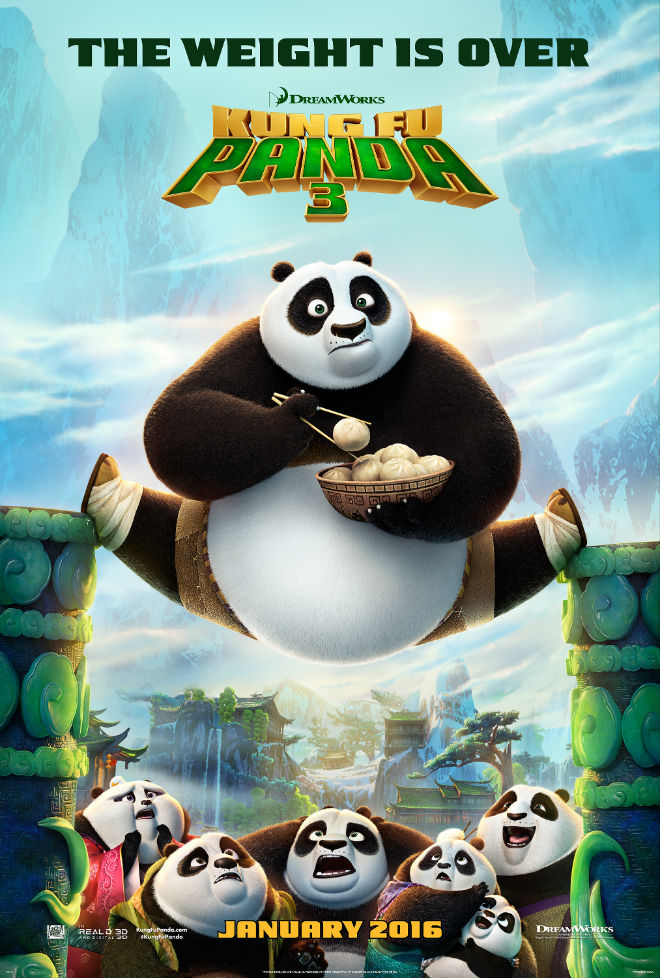
Cast: Jack Black, Bryan Cranston, Dustin Hoffman, Angelina Jolie, J.K. Simmons, Seth Rogen, James Hong, Lucy Liu, David Cross, Jackie Chan, Kate Hudson, Randall Duk Kim
In the Spirit World, Master Oogway (Kim) has his chi stolen from him by the villainous Kai (Simmons). With Oogway’s chi and those of the other denizens of the Spirit World, Kai can regain his human form and seek out the only warrior who can defeat him, the Dragon Warrior, aka Po the panda (Black). Meanwhile, Po has his own problems. Master Shifu (Hoffman) has given him the role of teaching the Famous Five, and subsequently he meets his real father, Li (Cranston). When Kai sends his emissaries to challenge Po, the Famous Five intervene but aren’t strong enough to defeat them; one by one they have their chi’s taken from them. Only Po has the strength and skill to best Kai, but first he must travel with his father to the village of his birth, and take instruction in how to become a Chi master; only then will he be able to defeat Kai and banish him back to the Spirit World.
Sequels with 3 in the title are often tired, limited affairs that trade on former glories while lacking the energy and freshness of their predecessors. However, Kung Fu Panda 3 bucks the trend and delivers a movie that is as energetic as 1 and 2, and proves to be just as entertaining. The kung fu moves are as impressive as ever, and the animated stylings that go with them are particularly exciting, especially in the Spirit World, where physics is a concept that’s easily ignored. In the real world, Po’s dilemma at discovering his real father after being raised so faithfully by Mr Ling (Hong) is played out amidst a strong mix of comedy and pathos, and the depiction of the panda village is bursting with wonderful characters and visual humour.
Kai is a villain in the mold of the first movie’s Tai Lung, and as a result is the movie’s weakest link, but Simmons is obviously having fun with the role (as is everyone else), and in comparison with the rest of the story, the character’s familiarity is not a major flaw. The burgeoning relationship between Po and Li is a definite bonus and has been handled well by scriptwriters Jonathan Aibel and Glenn Berger, their inclusion of Mr Ling doing justice to the relationship established in parts one and two. The visuals are as stunning as ever, and the colours have a photo-realistic sheen to them that haven’t been seen in previous outings, making it all the more superb than before.
Rating: 8/10 – a treat for the eyes (and as rewarding for the mind), Kung Fu Panda 3 is something of a retread of the first movie but in this case, it’s not a bad thing; with a superb voice cast and stunning animation throughout, this sequel proves that putting a lot of heart and soul into a movie pays off every time.
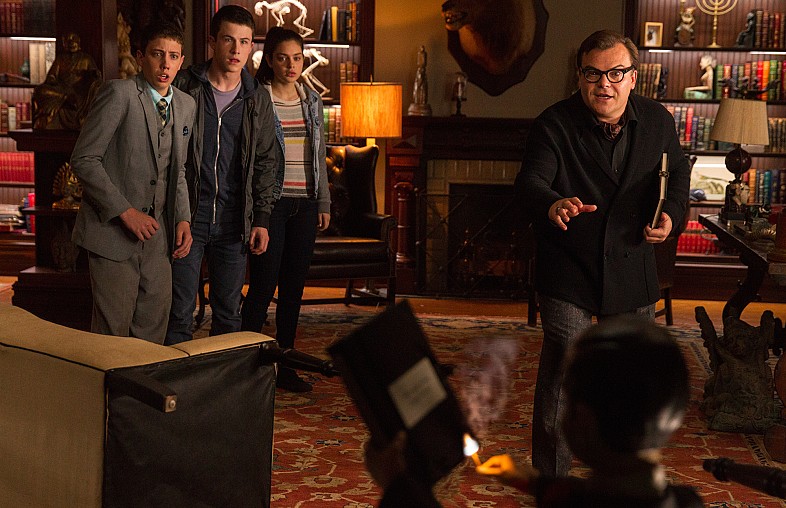
Cast: Jack Black, Dylan Minnette, Odeya Rush, Amy Ryan, Ryan Lee, Jillian Bell, Halston Sage, Ken Marino, Timothy Simons, Amanda Lund
There’s a moment in Goosebumps when Mr Shivers (Black), having already been rumbled as the writer R.L. Stine, tries to maintain his cover. Not believing him for a second, new neighbour Zach (Minnette) goads him by saying that he’s not as good a writer as Stephen King. Shivers/Stine rounds on Zach and in the process mentions that he’s sold way more books than “Steve”. It’s an odd moment in an otherwise straightforward, enjoyable imagining of Stine’s fictional world of monsters, and while it may be true, you can’t help but wonder if it’s there to give Stine some extra credibility now that he’s been adapted for the movies (not that he needs it). (And maybe it’s an issue for him.)
On the strength of this outing, Stine has little to be worried about. Although Goosebumps is a steadfastly homogenised horror fantasy for children – the zombies aren’t at all frightening, and the abominable snowman is played mostly for laughs – it has enough in the way of heavily stylised fantasy elements to keep its target audience happy for an hour and a half or so, and has been lucky enough to secure the services of Black as the “cursed” author. Black strikes just the right tone as an anxious, over-protective father-cum-author whose creations will spring fully formed and alive from the pages of his books if they’re opened (this doesn’t explain how his books have been published up til now, but it’s a great idea for a fantasy movie).
With Zach believing that his reclusive neighbour is mistreating his daughter, Hannah (Rush), he convinces a school friend, Champ (Lee) to help him break in to the house next door and ensure that Hannah is okay. Along the way, they discover bear traps in the basement and a bookcase full of Goosebumps novels that have locks on them. And in true children’s fantasy style, one of the books is opened, while the others all fall to the floor, leaving at least one of the books unlocked. The trouble is, this particular book features Slappy the ventriloquist’s dummy, and he’s the one monster that Stine doesn’t want to let out at all… and Slappy knows it.
Soon the town of Madison, Delaware is home to all sorts of rampaging monsters and creatures, and it’s down to Stine, Hannah, Zach and Champ to save the day by getting all of the author’s creations back in their books. But Slappy is one step ahead of them, and is making sure each book is burnt once the creature in it is released. This leaves the quartet with only one option: to make sure Stine has the time he needs to write a new story that involves all the monsters so that they can be returned to the new pages en masse.
There are the usual obstacles to their doing this, and the usual action sequences when they encounter any of the monsters – the lawn gnomes are particularly good – but it’s all done with an energy and a sense of fun that carries the movie along and doesn’t allow it to get bogged down by too many distractions. As mentioned before, Black is great as the author whose sense of responsibility has kept him moving from place to place and isolated his daughter in the process (though a plot twist two thirds in unfortunately cancels this out), while Rush, Minnette and Lee all play their standard teen characters with verve if not too much depth. Ryan is continually sidelined as Zach’s mother and high school vice principal, and Simons and Lund are given brief exposure as the town’s (apparently) lone law enforcement officers, with Lund’s gung ho approach bagging quite a few laughs.
In the hands of screenwriter Darren Lemke, Goosebumps sets out its stall quite early on and sticks to what is a safe formula: kids accidentally release monsters, team up with concerned adult, and find a way to save the day. But the movie avoids outstaying its welcome, though it does takes each new monstrous development in its stride, which is at a cost to the drama and the tension that should be inherent in the storyline. By ensuring that its target audience isn’t too frightened or worried, there’s no real sense of danger or peril, and each “threat” is neatly or quickly dealt with.
As you’d expect the special effects are woven seamlessly into the physical action, and there’s a pleasing sense of spectacle when the high school is besieged by all the creatures. Keeping things moving with an eye for the quirkier moments, Letterman allows his cast, both human and CGI, their individual moments to shine – Champ rescues the girl he likes from the wolfman, Slappy acknowledges his driving Stine’s car is compromised by not being able to reach the brakes – and includes enough adult humour to keep older viewers happy. And most of all, he manages to keep Zach and Hannah’s blossoming romance from becoming too mawkish or saccharine.
Rating: 7/10 – straying too close to formula to make it stand out from similar fare, Goosebumps is nevertheless a fun ride that can be enjoyed by children and adults alike; if there are to be any more adaptations of Stine’s work then that won’t be such a bad thing at all.
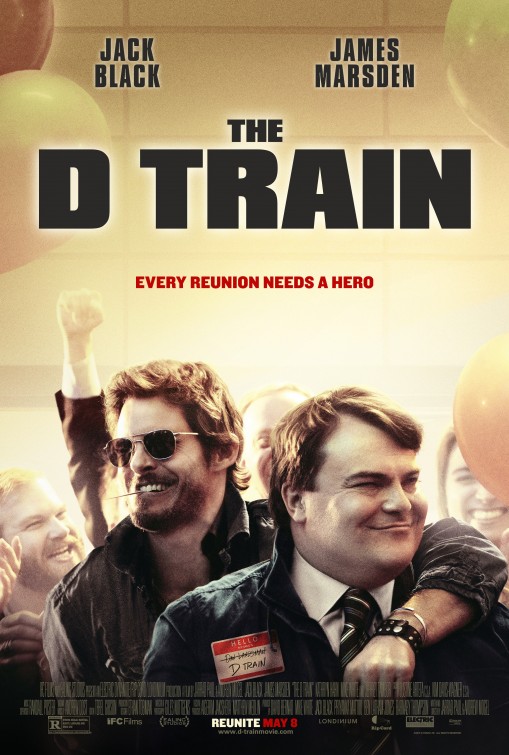
Cast: Jack Black, James Marsden, Kathryn Hahn, Jeffrey Tambor, Russell Posner, Mike White, Henry Zebrowski, Kyle Bornheimer
Dan Landsman (Black) is the self-styled chairman of his high school reunion committee. He enjoys what limited prestige comes with the position (which isn’t much), but can’t get the respect from his fellow committee members that he thinks he deserves. This is due to his overbearing, self-important approach to organising the reunion, and the fact that he was never popular in high school. As he and the rest of the committee call up their peers and are continually let down, Dan finds a solution in the unlikeliest of places: a Banana Boat commercial. The “star” of the commercial is none other than Oliver Lawless (Marsden), the most popular guy in high school. Dan reasons that if he can get Oliver to attend the reunion, everyone will.
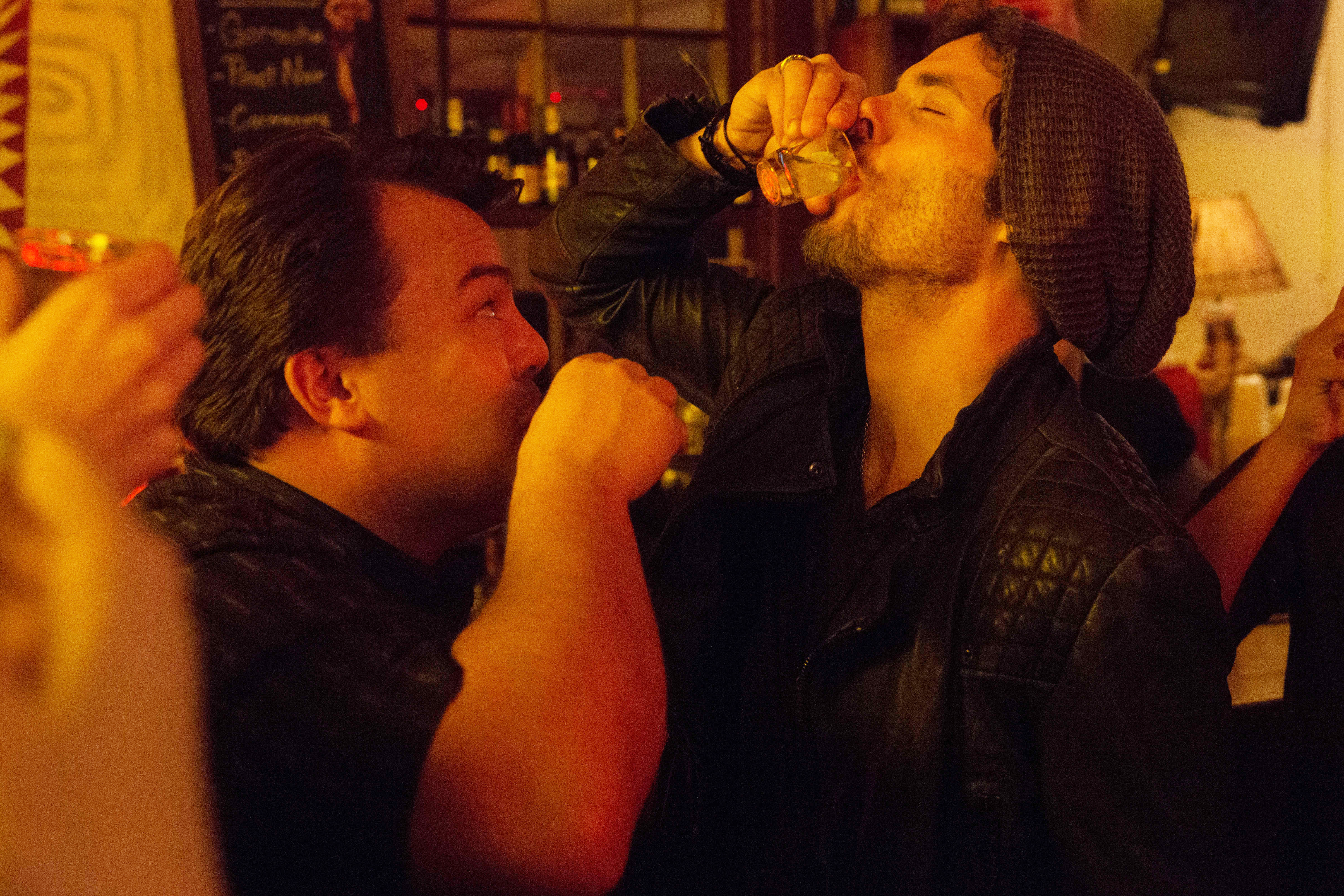
Dan determines that a face-to-face approach is needed, but Oliver lives in L.A., while he lives in Pittsburgh. Under the pretence of going there for an important business meeting, Dan books a flight and gets ready to go. But his boss, Mr Schurmer (Tambor), insists on coming with him to help facilitate the deal that Dan has supposedly set up. Unable to persuade his boss to stay in Pittsburgh, he has no choice but to make it seem as if the deal has fallen through. Dan tracks down Oliver and they spend the night on the town, going from club to club and bar to bar and getting drunk and high. Dan goes back to his hotel room but in the early hours, Oliver, feeling down, pays him a visit. Dan reveals the true reason for his visit, and even tells Oliver about the so-called business deal; Oliver agrees to attend the reunion.
The next morning, Oliver poses as the businessman Dan has been dealing with, but instead of killing the deal as Dan needs him to, he tells Schurmer that it’s a go. Oliver apologises, but tells Dan he can easily put a stop to things when he’s back in Pittsburgh. That night they go out on the town again, but this time they end up back at Oliver’s apartment. To Dan’s surprise, Oliver makes a pass at him. What happens next leaves Dan bewildered and confused. Back home he finds his boss spending lots of money on the business in expectation of the deal going through, his fourteen year old son Zach (Posner) experiencing problems of the heart, and his wife Stacey (Hahn) pleased for him for landing the deal and Oliver’s attendance at the reunion.
But when Oliver arrives for the reunion and stays at Dan’s home, Dan begins behaving erratically, and he starts to alienate his wife and son, and the members of the committee (who don’t like him that much anyway). As the reunion draws nearer, he tries his best to behave normally but the events in L.A. have had a greater impact on him than even he’s aware of. And it’s at the reunion itself that Dan’s behaviour causes the greatest upset as he and Oliver confront each other over what happened, and Dan is left feeling isolated and alone, and wondering what he can do to make things right with the people he cares about.
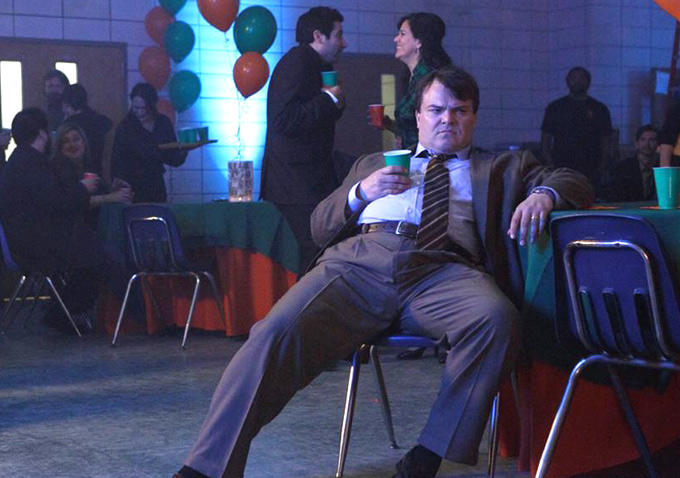
Having previously worked on the script for Yes Man (2008), writers/directors Jarrad Paul and Andrew Mogel have upped their game somewhat for The D Train, and the result is a clever, sometimes very funny comedy drama that gives Black his best role since Bernie (2011) (though to be fair he has only made two other movies in that time). It’s also smart, knowing and occasionally tragic in its look at its main character’s constant need for respect and approbation, and the lengths he’ll go to in order to be acknowledged.
The social misfit is perhaps Black’s niche role (it can only be a matter of time before he plays a serial killer), and as in Bernie he’s uncomfortably comfortable in the role of a man whose social standing is based on his lack of popularity in high school (when we see him calling his fellow alumni not one of them appears to remember him without the benefit of some heavy prompting). Away from the reunion committee he’s in a respected position at work, with his boss happy to defer to Dan’s judgement on matters, while his home life appears secure as well. But it’s his lack of social presence that bothers him, and why he’s never fit in. Meeting Oliver in L.A. reminds him he can be a fun guy, that he can be good company, and more importantly, that those traits have always been inside him; it’s just needed someone of Oliver’s carefree nature to bring them out of him.
But with freedom comes (no, not great responsibility) a complete misunderstanding of the nature of friendship and many of the unspoken rules that go with it. Back in Pittsburgh, Dan displays all the signs of someone who’s been abandoned or had their favourite toy taken away from them; he just doesn’t know how to deal with all the raw feelings he’s experiencing. He overcompensates in the bedroom (not that Stacey minds), but then rudely ignores Zach when he needs some fatherly advice. The situation at work becomes unmanageable, and when Oliver shows himself to be a better father figure, Dan over-reacts and tells him to leave. It’s in these moments when Dan’s insecurities and jealousy of Oliver’s “cool” attitude shows him for the desperately needy person that he is.
Black is superb in the role, and he’s matched by Marsden who portrays Oliver’s shallow lifestyle with a thread of sadness lurking beneath the rampant hedonism. Hahn, who goes from strength to strength with each movie she makes, delivers a polished if largely restrained performance that makes for an effective counterpoint to Black’s anguished social walrus. And Tambor is terrific as Dan’s boss, a confirmed Luddite whose puppy-dog adoption of computers and the Internet contributes to Dan’s downfall.
But while the performances are all above average, and while the basic premise is a sound one given enough room for considered examination, the movie does have its faults, and in the same way that Paul and Mogel’s script is on solid ground when dissecting Dan’s motives and behaviour, it’s less so when it introduces moments and scenes of crass humour. One scene in particular stands out, when Oliver gives Zach advice on how to manage in a threesome. Despite the obvious humour to be had from such a scene, it’s still at odds with the tone of the rest of the movie, and there’s nothing the directors can do to offset the awkwardness of having a man in his late Thirties giving sex advice to a fourteen year old (it’s also strange that the script thinks it’s entirely likely that Zach would ask his dad about such a subject while at the dinner table). And at the reunion, Dan snorts cocaine in the bathroom before being discovered by Jerry (White), one of the committee members. Dan rambles on and Jerry’s surprise at Dan’s behaviour evaporates as quickly as it occurs. And Mr Schurmer’s subdued reaction to the potential loss of his company is meant to be quietly tragic but seems instead to be a case of the script not wanting to follow that particular plot thread any further (the same goes for Stacey’s reaction to the revelation of what happened in L.A.).
With the characters routinely involved in scenes that don’t always have a logical follow-on, or betray the emotion of a scene (e.g. when Oliver leaves for L.A. and says goodbye to two of the committee members), the movie tries for hard-edged adult humour too often at the expense of the more important dramatic aspects. While the humour is mostly very funny indeed, a lot of it feels shoe-horned in, as if they were added to the script somewhere in the pre-production phase. As a result the movie feels disjointed at times, and lacks the overall focus afforded the drama, leaving audiences to wonder if the humour is there to provide some relief from the themes of social inequality, self respect, alienation, and personal inadequacy. If it is, then unfortunately the way in which it’s been done lacks authority.
Rating: 7/10 – deficiencies in the script leave The D Train feeling like it’s falling short of its original intentions; Black is on terrific form however, keeping the movie afloat through some of its more unlikely moments, and perfectly judging the pathos needed to avoid Dan being completely unlikeable.





 thedullwoodexperiment