• 10 Reasons to Remember…
  • A Brief Word About…
  • About
  • For One Week Only
  • Happy Birthday
  • Monthly Roundup
  • Old-Time Crime
  • Other Posts
  • Poster of the Week
  • Question of the Week
  • Reviews
  • Trailers

thedullwoodexperiment

~ Viewing movies in a different light

thedullwoodexperiment

Tag Archives: Life sentences

Lost for Life (2013) – Another Look

25 Sunday Oct 2015

Posted by dullwood68 in Movies

≈ 25 Comments

Tags

Abuse, Brian Lee Draper, Documentary, Jacob Ind, Joshua Rofé, Josiah Ivy, Life sentences, Murder, Review, Sean Taylor, Torey Adamczik, Update
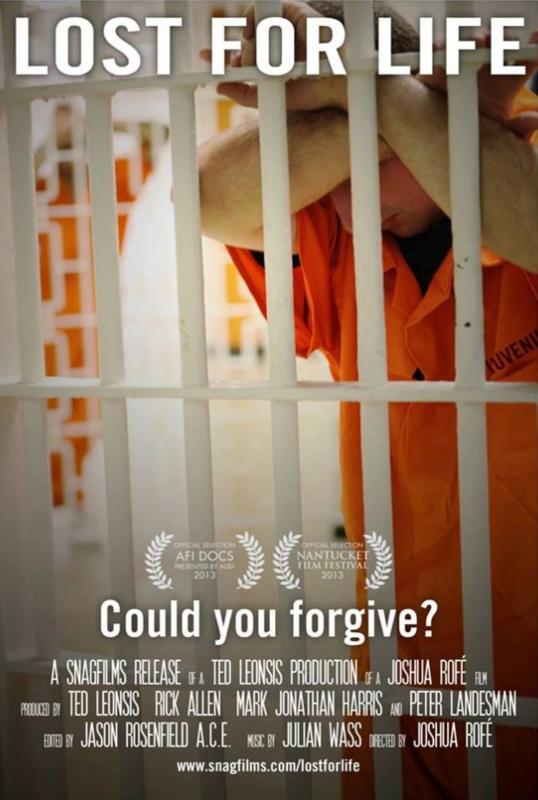
Lost for Life

On 7 August 2014 I posted a review of the documentary, Lost for Life. It was a movie that I’d discovered by accident, but it looked interesting, and the subject matter – a look at five teen killers and whether they should be forgiven for their homicidal actions – was certainly compelling. I watched the movie and found it both horrific and uplifting in equal measure.

Over time, Lost for Life has become thedullwoodexperiment‘s most viewed post. It’s also the post I’ve had the most feedback about. A lot of that feedback has concerned Jacob Ind (see picture below), whose story makes up the second part of the movie. Along with his brother Charles, Jacob was regularly abused by his mother and stepfather, both physically and emotionally, and he had nursed ideas of killing them for two or three years before they were murdered. His defenders state that his actions were the result of the abuse he’d suffered, but what helps to muddy the waters for anyone paying even the slightest attention to Jacob’s case, is his decision to persuade a classmate, Gabrial Adams to kill his parents for him (and for $2,000 Jacob didn’t have). A loner, Adams botched the job, and Jacob took over from him, successfully shooting and killing Pamela and Kermode Jordan.

In my review, I said that there was “something not quite right about his responses and the moments when he closes his eyes – which happen quite a lot – it’s as if he’s reliving the memories of killing his mother and stepfather”. Having watched the movie again, I still have that same feeling, that Jacob is so divorced from the concepts of personal responsibility and guilt that it’s all a puzzle to him – and one he has no interest in trying to decipher. Looking further into all the surrounding arguments I found a quote made by Jacob after the killings: “I thought that when they were gone, my whole world was going to be better. I thought all the weight was going to be off my shoulders, all the misery would be gone. But it wasn’t, and I said, ‘Man, I screwed up.'” Reading this, it’s not hard to think that Jacob’s only regret is that he didn’t get away with it.
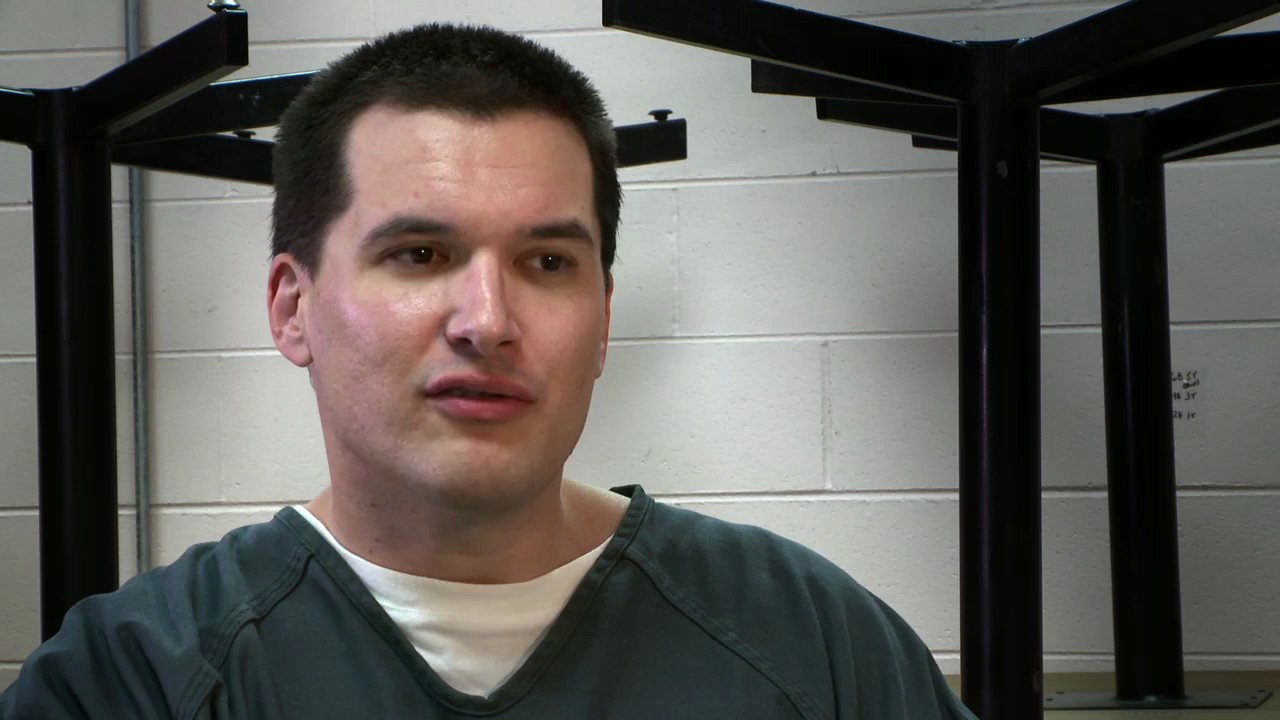
Jacob Ind

The person I most felt sorry for was Josiah Ivy (see picture below), an abused teenager whose level of disconnection from those around him prompted him to kill two strangers “just to see what it felt like”. Josiah suffered abuse as a child, but where Jacob Ind looks unfazed and unconcerned by his crime, Josiah looks adrift in his own mind, a victim of mental ill health who’ll never quite manage to acclimatise to society (even if by some miracle he’s ever allowed out). Josiah, like Jacob and co-murderers Brian Lee Draper and Torey Adamczik, has an awareness of the magnitude of what he’s done, but it seems so overwhelming to him he doesn’t know how to properly express himself.

Josiah Ivy

Of course, the question of individual responsibility is one the movie tackles throughout, and whether or not the teen killers in question were cognisant of what they were doing at the time. Some commentators argue that teenage minds aren’t as sharply defined in their thinking as an adult’s, but to me that’s a specious argument; everyone learns from an early age that it’s wrong to kill someone, but it’s an awareness that means nothing when placed up against a greater driver: that person’s level of self-interest. Aside from the final story involving ex-gang member Sean Taylor, whose random firing of a gun led to the death of a rival gang member, these are all stories of teens who deliberately set out to kill someone: random strangers, a friend, family members. You could argue that the victims were “convenient”, such was their murderers’ feelings about them at the time, and such was the brutality levelled at them. The question isn’t whether or not we should feel sorry for them – clearly the answer is No – nor is it whether they should be given a second chance as adults. The real question is how can we stop these types of killings from happening again.

Murder in any form is abhorrent, but what Joshua Rofé’s thought-provoking movie also does is to make the viewer doubt whether or not murder is ever so clear-cut. By focusing on three such horrific cases – Taylor’s story acts as a necessary rebuttal to the idea that rehabilitation is a waste of time – the movie broaches the possibility that murder can be understood and forgiven, even murders as heinous as the ones recorded here. This is true, but it’s down to the individual to decide, and is a brave choice to make with such an emotive issue. This is why the participation of Jennifer Bishop-Jenkins and Sharletta Evans is so important: without them (and Taylor) the movie would be unremittingly bleak, and wouldn’t fairly reflect the ways in which the human spirit can overcome the darkness that often blights people’s lives (it’s all about personal empowerment, but that’s a whole different movie).

At this moment in time, Draper, Adamczik, Ind and Ivy are all still in prison, and all still living out their very steep sentences. Ind’s accomplice, Gabrial Adams committed suicide in prison in March 2014, while the families of the victims still struggle to come to terms with what happened to their loved ones, and why. But again, the why is the easy bit: it’s because Draper, Adamczik, Ind and Ivy all wanted to do what they did. For the underlying reasons that drove them to murder, well, those are things we’re never likely to know for definite – but it would be fascinating if we did.

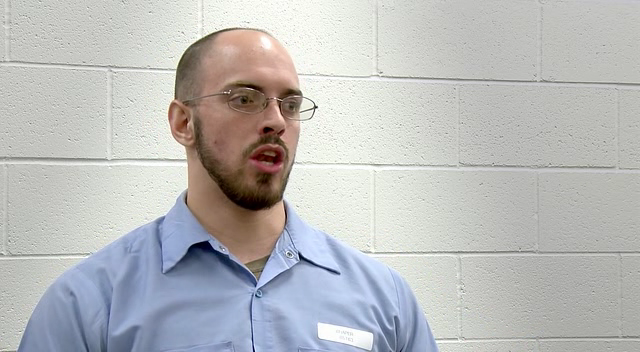
Brian Lee Draper

Share this:

  • Click to share on X (Opens in new window) X
  • Click to share on Facebook (Opens in new window) Facebook
  • More
  • Click to print (Opens in new window) Print
  • Click to email a link to a friend (Opens in new window) Email
Like Loading...

Lost for Life (2013)

07 Thursday Aug 2014

Posted by dullwood68 in Movies

≈ 18 Comments

Tags

Brian Draper, Documentary, Jacob Ind, Joshua Rofé, Josiah Ivy, Juvenile killers, Life sentences, Murder, Review, Sean Taylor, teenkillers.org, Torey Adamcik

Lost for Life

D: Joshua Rofé / 75m

A candid, often unsettling look at juvenile killers, Lost for Life looks at four cases where teenagers have committed murder and are currently serving life sentences in US prisons.

The first case is that of Brian Draper and Torey Adamcik, a couple of sixteen year olds who convinced each other it would be a good idea to kill their classmate, Cassie Stoddart.  One night they went to her home and stabbed her to death.  The second case involves Jacob Ind, who at fifteen, killed his mother and stepfather by shooting them.  Third is the case of Josiah Ivy, who at sixteen killed two strangers, Stacy Dahl and Gary Alflen, at their home.  And lastly, there’s Sean Taylor, who at seventeen killed a rival gang member in a drive-by shooting.

Each case features the juvenile killers several years on from when they committed their crimes, and explores their reasons for killing and how they’ve dealt with the repercussions of their actions, and how  – or if – they’ve come to terms with what they did.  There’s also input from their families as well as some of the relatives of the victims, and the movie also takes in the recent Supreme Court decision relating to whether or not minors who commit murder should be sentenced to life without parole.

Lost for Life - scene

All four stories are potent in their own way, and initially it’s hard to understand just how any one of these murders could have come about, but thanks to the involvement of the perpetrators, it becomes clearer and clearer as the movie goes on that there’s never just one factor that sets things in motion, and that the reasons for these dreadful acts are often complex and unpredictable.  What makes these cases all the more interesting is the distance in time and attitude that these “teen killers” have travelled in their own efforts to recognise and grasp both the enormity of what they’ve down, and how their deeds have affected others.

Brian is perhaps the most balanced – if that word can be applied to someone who deliberately set out to kill a girl he was attracted to – of the group, and despite an intermittent stutter, is quite articulate as he talks about what he did and how he’s come to terms with his guilt and how “broken” he was as a teenager.  By contrast, his accomplice in the crime, Torey, is shown evincing an almost complete denial of his actions, and he’s supported by his parents who in one uncomfortable moment – both for Torey and the viewer – state his innocence as if it was the most obvious thing imaginable.  (And this in spite of the fact that the pair filmed themselves planning the murder, and then again after they’d committed it.)

Jacob is equally articulate but there’s something not quite right about his responses and the moments when he closes his eyes – which happen quite a lot – it’s as if he’s reliving the memories of killing his mother and stepfather.  It’s an unnerving possibility, and he’s almost casual about the effect killing them has had on him.  He’s aware of the wickedness of his crime, but it all comes across as if it had happened to someone else, and he talks dispassionately about the events that led up to the crime, including his persuasion of a friend to carry out the murders first of all, and his equally worrying admission that he shot both parents almost as if it was a fait accompli (his friend having failed to do the “job” properly).

The saddest case is that of Josiah, abused as a child and seen as a withdrawn adult, his emotions and his ability to talk about the random killings that will see him spend the rest of his life in prison so suppressed that his lawyer has to instruct him in how to respond from off camera.  To compensate, the movie spends more time with his sister Amber.  She proves to be an eloquent interviewee, but even she struggles to completely understand how her brother could have killed two complete strangers “just to see what it felt like”.  From this we meet Jennifer Bishop-Jenkins, who founded the website www.teenkillers.org following the deaths of her sister and brother-in-law and their unborn baby, and Sharletta Evans who has forgiven the killers of her three year old son and thinks other teen “lifers” should be given a “first chance”.  Seeing the two women together is inspiring – albeit for different reasons – and adds a layer of emotion that helps show the effect that these crimes have on the victims’ families.

Sean’s story shows how redemption can be achieved.  In prison he became interested in Islam and eventually became a Muslim, changing not only his religion but his approach to life, rejecting his gang background and lifestyle, and forging a new life for himself.  His moving account of his rehabilitation offers hope for all those teenagers who have killed without giving due consideration of the effect their actions will have on others, and the way in which self-respect can be regained.  Without him the movie would have been painfully pessimistic, but thanks to Rofé’s considered approach to the material and the careful assembly of the various interviews, Lost for Life is a captivating, intriguing, and necessarily thought-provoking documentary that wisely avoids looking for definitive answers as to why these terrible crimes happened, but asks if we can ever forgive the people who commit them.  It’s a difficult question, and as mentioned before, the candour the movie invokes goes some way to increasing the difficulty in deciding, but without this challenge, the movie would not be as rewarding or as stimulating as it is.

Rating: 8/10 – a tough subject given fair treatment, and very pertinent in terms of what’s happened recently in US law, Lost for Life paints a terrifying portrait of youth gone awry; by shying away from a more sensationalist approach, this is an impressive, often haunting documentary that is both horrific and uplifting.

Share this:

  • Click to share on X (Opens in new window) X
  • Click to share on Facebook (Opens in new window) Facebook
  • More
  • Click to print (Opens in new window) Print
  • Click to email a link to a friend (Opens in new window) Email
Like Loading...

Blog Stats

  • 486,544 hits

Recent Posts

  • 10 Reasons to Remember Bibi Andersson (1935-2019)
  • Fantasia (1940)
  • Dances With Wolves (1990) – The Special Edition
  • Kiss of the Spider Woman (1985)
  • The Three Musketeers (1973)

Top Posts & Pages

  • Lost for Life (2013) - Another Look
    Lost for Life (2013) - Another Look
  • Lost for Life (2013)
    Lost for Life (2013)
  • About
    About
  • Mr. Topaze (1961)
    Mr. Topaze (1961)
  • Shock and Awe (2017)
    Shock and Awe (2017)
  • Billy Lynn's Long Halftime Walk (2016)
    Billy Lynn's Long Halftime Walk (2016)
  • Winter's Tale (2014)
    Winter's Tale (2014)
  • Hunt for the Wilderpeople (2016)
    Hunt for the Wilderpeople (2016)
  • Spider-Man: Homecoming (2017)
    Spider-Man: Homecoming (2017)
  • BFI London Film Festival 2015
    BFI London Film Festival 2015
Follow thedullwoodexperiment on WordPress.com

Blogs I Follow

  • Rubbish Talk
  • Film 4 Fan
  • Fast Film Reviews
  • The Film Blog
  • All Things Movies UK
  • Interpreting the Stars
  • Let's Go To The Movies
  • Movie Reviews 101
  • TMI News
  • Dan the Man's Movie Reviews
  • Film History
  • Jordan and Eddie (The Movie Guys)

Archives

  • April 2019 (13)
  • March 2019 (28)
  • February 2019 (28)
  • January 2019 (32)
  • December 2018 (28)
  • November 2018 (30)
  • October 2018 (29)
  • September 2018 (29)
  • August 2018 (29)
  • July 2018 (30)
  • June 2018 (28)
  • May 2018 (24)
  • April 2018 (21)
  • March 2018 (31)
  • February 2018 (25)
  • January 2018 (30)
  • December 2017 (30)
  • November 2017 (27)
  • October 2017 (27)
  • September 2017 (26)
  • August 2017 (32)
  • July 2017 (32)
  • June 2017 (30)
  • May 2017 (29)
  • April 2017 (29)
  • March 2017 (30)
  • February 2017 (27)
  • January 2017 (32)
  • December 2016 (30)
  • November 2016 (28)
  • October 2016 (30)
  • September 2016 (27)
  • August 2016 (30)
  • July 2016 (30)
  • June 2016 (31)
  • May 2016 (34)
  • April 2016 (30)
  • March 2016 (30)
  • February 2016 (28)
  • January 2016 (35)
  • December 2015 (34)
  • November 2015 (31)
  • October 2015 (31)
  • September 2015 (34)
  • August 2015 (31)
  • July 2015 (33)
  • June 2015 (12)
  • May 2015 (31)
  • April 2015 (32)
  • March 2015 (30)
  • February 2015 (37)
  • January 2015 (39)
  • December 2014 (34)
  • November 2014 (34)
  • October 2014 (36)
  • September 2014 (25)
  • August 2014 (29)
  • July 2014 (29)
  • June 2014 (28)
  • May 2014 (23)
  • April 2014 (21)
  • March 2014 (42)
  • February 2014 (38)
  • January 2014 (29)
  • December 2013 (28)
  • November 2013 (34)
  • October 2013 (4)

Create a free website or blog at WordPress.com.

Rubbish Talk

Film 4 Fan

A Movie Blog

Fast Film Reviews

The Film Blog

The official blog of everything in film

All Things Movies UK

Movie Reviews and Original Articles

Interpreting the Stars

Dave Examines Movies

Let's Go To The Movies

Film and Theatre Lover!

Movie Reviews 101

Daily Movie Reviews

TMI News

Latest weather, crime and breaking news

Dan the Man's Movie Reviews

All my aimless thoughts, ideas, and ramblings, all packed into one site!

Film History

Telling the story of film

Jordan and Eddie (The Movie Guys)

Movie Reviews & Ramblings from an Australian Based Film Fan

Privacy & Cookies: This site uses cookies. By continuing to use this website, you agree to their use.
To find out more, including how to control cookies, see here: Cookie Policy
  • Subscribe Subscribed
    • thedullwoodexperiment
    • Join 481 other subscribers
    • Already have a WordPress.com account? Log in now.
    • thedullwoodexperiment
    • Subscribe Subscribed
    • Sign up
    • Log in
    • Report this content
    • View site in Reader
    • Manage subscriptions
    • Collapse this bar
 

Loading Comments...
 

    %d