• 10 Reasons to Remember…
  • A Brief Word About…
  • About
  • For One Week Only
  • Happy Birthday
  • Monthly Roundup
  • Old-Time Crime
  • Other Posts
  • Poster of the Week
  • Question of the Week
  • Reviews
  • Trailers

thedullwoodexperiment

~ Viewing movies in a different light

thedullwoodexperiment

Tag Archives: Matthew Goode

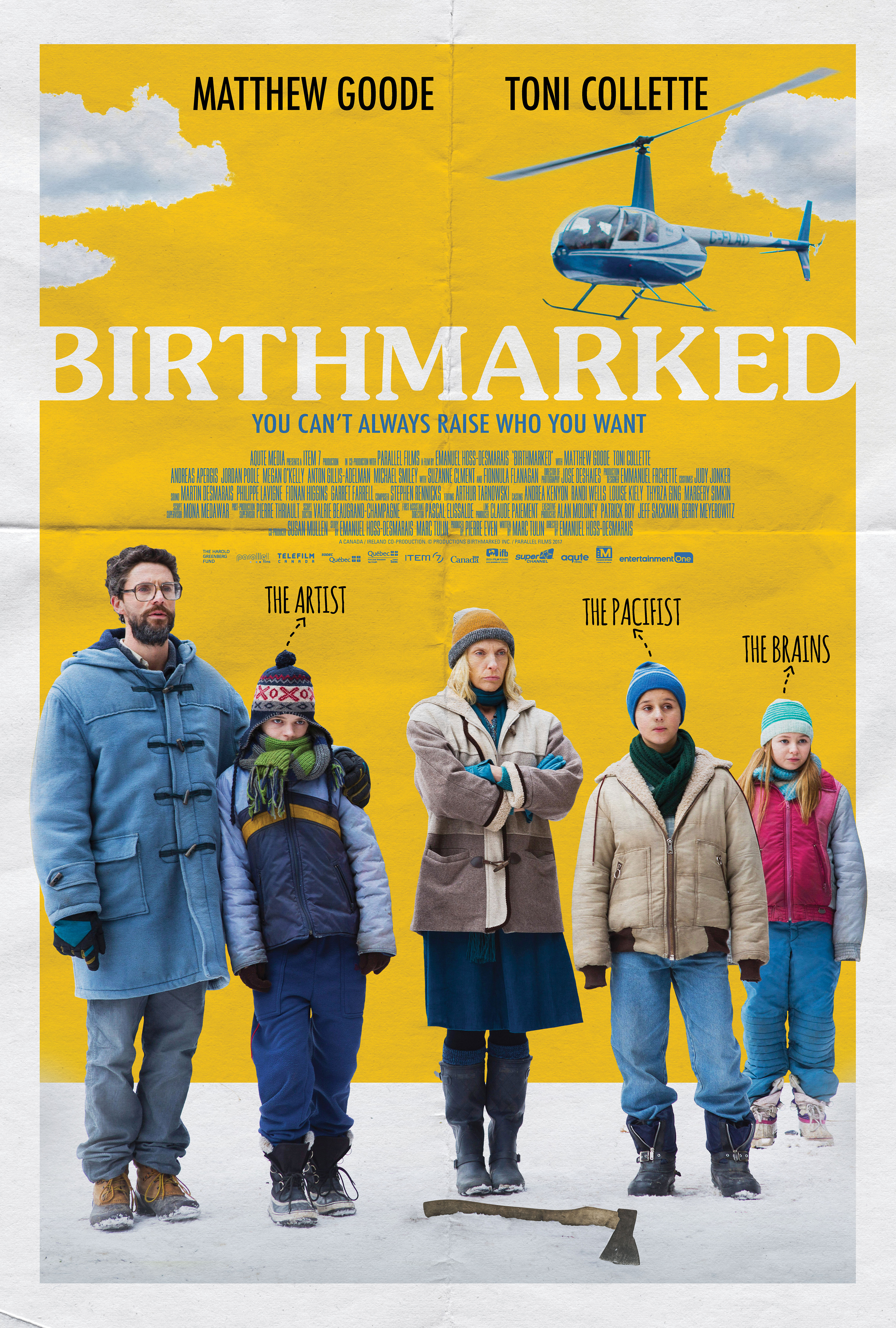
Birthmarked (2018)

17 Wednesday Oct 2018

Posted by dullwood68 in Movies

≈ Leave a comment

Tags

Andreas Apergis, Comedy, Drama, Emanuel Hoss-Desmarais, Experiment, Marital problems, Matthew Goode, Michael Smiley, Nature vs Nurture, Review, Toni Collette

D: Emanuel Hoss-Desmarais / 90m

Cast: Toni Collette, Matthew Goode, Andreas Apergis, Jordan Poole, Megan O’Kelly, Anton Gillis-Adelman, Michael Smiley, Fionnula Flanagan, Suzanne Clément

Ben (Goode) and Catherine (Collette) are two scientists who are interested in examining the whole Nature vs Nurture debate through an idea for an experiment they have. Newly married and with a baby on the way, their idea is to raise their own child and two adopted babies against their genetic predispositions. They’re lucky enough to find a backer for their experiment, Randolph Gertz (Smiley), and they raise the children in a remote cabin in the woods, home-schooling them as well and focusing their minds on becoming an artist (their own son, Luke), an intellectual (their adopted daughter, Maya), and a pacifist (their adopted son, Maurice). They’re aided by an ex-Olympic level Russian marksman called Samsonov (Apergis) who defected to the West in the Seventies. With twelve years of a thirteen year experiment having passed, Gertz’s assessment that the children aren’t extraordinary examples of Nurture over Nature prompts Ben and Catherine to try harder to get the results they need, but their efforts come at a cost to their marriage, their professional relationship, and the needs of the children…

Somewhere in the midst of Birthmarked there’s the germ of a good idea struggling to be noticed. Like the children that are the subject of Ben and Catherine’s slightly less than ethical experiment, the movie wants to be something it’s not allowed to be: sprightly, perceptive, and engaging. It is funny in places, though in a law of averages kind of fashion that only highlights how much of Marc Tulin’s screenplay doesn’t gel cohesively, and it has an appealing cast who are at least trying their best to put over the material, but thanks to some poor decisions along the way, the movie coasts on too many occasions, and never hits a consistent stride. A great deal of what hampers the movie from being more successful is its inability to focus on one storyline over the rest, with Ben and Catherine’s marriage drawing more and more attention during the latter half, while each individual child receives occasional turns in the spotlight, but not in such a way that we get to know them. Then there’s Gertz, the obvious bad guy of the piece, and his equally obvious machinations (revealed late on but easily guessed at long before). Add in Samsonov’s presence – friend or foe? – and you have too many characters who lack substance, and who only occasionally drive the movie forward.

All this has the misfortune of making the movie uneven and feeling like the cinematic equivalent of a patchwork quilt that has several panels missing. Hoss-Desmarais, making only his second feature, has no answers for any of this, and though some scenes work better than others, often this is due to the cast’s efforts instead of his. Goode plays Ben as a rather blinkered, the-experiment-is-all character who behaves badly for no other reason than that the script needs him to, while Collette goes from entirely reasonable to inexplicably depressed over the course of a couple of scenes in order to provide the last third with some unneeded secondary drama. The young cast are often the best thing about the movie, and that’s largely due to their playing their roles like ordinary children (which they are, despite the intention of the experiment), and there’s some beautifully austere winter photography by Josée Deshaies that at least provides the action with a backdrop that reflects the muted dramatics. In the same way that Ben and Catherine’s experiment lacks coherence in the way they deal with any problems that arise, the movie also struggles to offer a consistency of tone or content. Maybe the movie, like the experiment it’s exploring, needed a longer nurturing period before committing itself to audiences.

Rating: 5/10 – sporadically amusing, with a cast that play their roles as capably as possible, Birthmarked is moderately appealing for the most part, but is mainly frustrating thanks to the opportunities it wastes; too wayward then to work effectively, it’s a movie that should be watched under proviso, or maybe as an experiment in itself.

Share this:

  • Click to share on X (Opens in new window) X
  • Click to share on Facebook (Opens in new window) Facebook
  • More
  • Click to print (Opens in new window) Print
  • Click to email a link to a friend (Opens in new window) Email
Like Loading...

Monthly Roundup – July 2017

01 Tuesday Aug 2017

Posted by dullwood68 in Movies

≈ 2 Comments

Tags

47 Meters Down, Action, Alain Desrochers, Animation, Antonio Banderas, Ben Kingsley, Brian Fee, Cars 3, Claire Holt, Comedy, Crime, Cristela Alonzo, Daniel Brühl, Danny Glover, Day of the Mummy, Drama, Girls Trip, Horror, Jessica Chastain, Johannes Roberts, Johnny Tabor, Lesley Selander, Malcolm D. Lee, Mandy Moore, Matthew Goode, Niki Caro, Owen Wilson, Peggie Castle, Phil Daniels, Queen Latifah, Quincannon Frontier Scout, Regina Hall, Reviews, Robbery, Ronnie Thompson, Security, Sharks, The Hatton Garden Job, The Zookeeper's Wife, Thriller, Tony Martin, True story, Warsaw Zoo, Western, William McNamara

The Hatton Garden Job (2017) / D: Ronnie Thompson / 93m

Cast: Matthew Goode, Phil Daniels, Larry Lamb, Clive Russell, David Calder, Joely Richardson, Stephen Moyer, Mark Harris, Jack Doolan

Rating: 6/10 – a group of aging ex-cons decide to rob an underground safe deposit facility in London’s Hatton Garden, but find that too many interested parties want in on the job, and the proceeds; based on the actual robbery that occurred in April 2015, The Hatton Garden Job is a light-hearted, and often lightweight version of actual events, but gets by thanks to some winning performances, a sense that it’s all too, too implausible, and a broad sense of humour that suits the material well enough despite its low budget origins.

The Zookeeper’s Wife (2017) / D: Niki Caro / 126m

Cast: Jessica Chastain, Johan Heldenbergh, Daniel Brühl, Michael McElhatton, Timothy Radford, Val Maloku, Efrat Dor, Iddo Goldberg, Shira Haas

Rating: 4/10 – at the outbreak of World War II, the Warsaw Zoo, run by Antonina and Jan Zabinski (Chastain, Heldenbergh), is commandeered by the Nazis, but it becomes a hiding place for Jews, and an even more dangerous place without its animals; a true story undone by telling it across the whole course of the war, The Zookeeper’s Wife is a turgid, painfully dull movie that is only sporadically interesting and which wastes the talents of its cast by making their characters’ plight seem like its been lifted from an unsuccessful soap opera.

Day of the Mummy (2014) / D: Johnny Tabor / 77m

Cast: Danny Glover, William McNamara, Andrea Monier, Eric Young, Philip Marlatt, Michael Cortez, Brandon deSpain

Rating: 4/10 – an archaeological trip into the Egyptian desert in search of a lost tomb sees its members at the mercy of a mummy, while they try and find a sacred stone said to be worth millions; a found-footage movie that like most doesn’t know how to make the most of the format, Day of the Mummy stretches its audience’s patience at every turn, and literally reduces Glover’s role to the bottom left hand corner of the screen, something that could be construed as “video-phoning” in his performance.

Security (2017) / D: Alain Desrochers / 92m

Cast: Antonio Banderas, Ben Kingsley, Liam McIntyre, Gabriella Wright, Chad Lindberg, Cung Le, Katharine de la Rocha, Jiro Wang

Rating: 5/10 – ex-Army veteran Eddie (Banderas) takes a night security job at a mall, and on his first night, finds himself fighting off a band of mercenaries hired to kill the teenage girl who’s taken refuge there; another Die Hard rip-off (when will they stop coming?), Security does have committed performances from Banderas and Kingsley as hero and villain respectively, but lacks sufficient invention to make this anything other than a pale echo of similar and better movies.

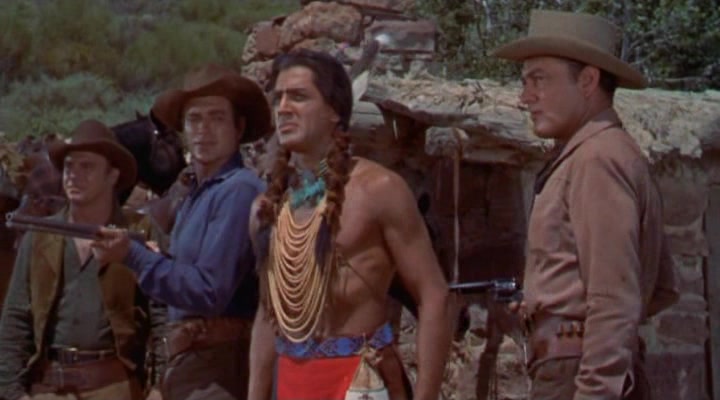
Quincannon, Frontier Scout (1956) / D: Lesley Selander / 84m

aka Frontier Scout

Cast: Tony Martin, Peggie Castle, John Bromfield, John Smith, Ron Randell, John Doucette, Morris Ankrum, Peter Mamakos, Edmund Hashim

Rating: 6/10 – when the Army discovers someone is selling rifles to the Indians, it’s down to experienced scout Quincannon (Martin) to get to the bottom of it all; while there’s nothing new here, thanks to Selander’s astute direction, Quincannon, Frontier Scout zips along at a decent pace and delivers on its basic premise, but not even Selander can mitigate for a pretty awful performance from Martin, a singer who really should have ignored his agent on this one.

Cars 3 (2017) / D: Brian Fee / 102m

Cast: Owen Wilson, Cristela Alonzo, Chris Cooper, Nathan Fillion, Larry the Cable Guy, Armie Hammer, Ray Magliozzi, Tony Shalhoub, Bonnie Hunt

Rating: 6/10 – Lightning McQueen’s days on the race track are numbered, but only he doesn’t get it, until racing for a new team begins to show him that there’s more to life than being Number One; Pixar redeem themselves somewhat after the complete and utter disaster that was Cars 2, but this is still tepid stuff that struggles to make the impact it needs, leaving Cars 3 looking nostalgic for the first movie, and trading on that movie’s glories to make itself look good.

Girls Trip (2017) / D: Malcolm D. Lee / 122m

Cast: Regina Hall, Queen Latifah, Jada Pinkett Smith, Tiffany Haddish, Mike Colter, Kate Walsh, Larenz Tate, Deborah Ayorinde

Rating: 6/10 – self-help guru Ryan (Hall) decides it’s time that she and her three best friends (Latifah, Smith, Haddish) should reconnect while in New Orleans for the annual Essence Festival, but having a good time proves more difficult than she, or they, could have ever imagined; yet another female-centric variation of The Hangover, Girls Trip wants to be raunchy and out there (the urination scene), but ends up instead as a warm and fuzzy ode to sisterhood that conforms to expectations, but is rescued by the committed performances of the “girls” themselves.

47 Meters Down (2017) / Johannes Roberts / 89m

Cast: Mandy Moore, Claire Holt, Matthew Modine, Chris Johnson, Yani Gellman, Santiago Segura

Rating: 6/10 – two sisters (Moore, Holt) on vacation in Mexico find themselves stranded in a shark cage at the titular depth, and they only have an hour to save themselves before their oxygen runs out; better than it sounds thanks to Roberts’ hand on the tiller, 47 Meters Down isn’t beyond making some silly mistakes (let’s have Modine’s captain recite the perils of nitrogen narcosis – twice), being too repetitive once on the sea bed, and building up tension only to allow it to dissipate to no great effect.

Share this:

  • Click to share on X (Opens in new window) X
  • Click to share on Facebook (Opens in new window) Facebook
  • More
  • Click to print (Opens in new window) Print
  • Click to email a link to a friend (Opens in new window) Email
Like Loading...

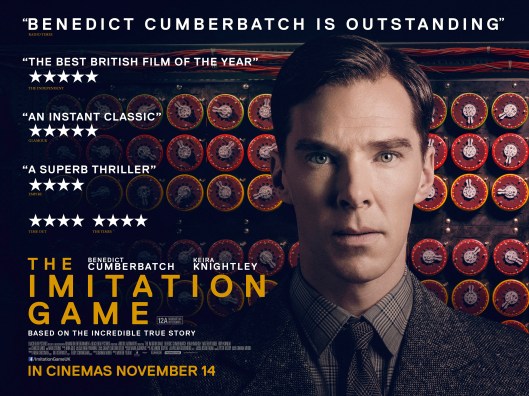
The Imitation Game (2014)

11 Sunday Jan 2015

Posted by dullwood68 in Movies

≈ 1 Comment

Tags

Alan Turing, Benedict Cumberbatch, Bletchley Park, Christopher, Code breaking, Drama, Enigma, History, Homosexuality, Joan Clarke, Keira Knightley, Matthew Goode, Morten Tyldum, Review, True story, World War II

Imitation Game, The

D: Morten Tyldum / 114m

Cast: Benedict Cumberbatch, Keira Knightley, Matthew Goode, Rory Kinnear, Allen Leech, Matthew Beard, Charles Dance, Mark Strong, James Northcote, Tom Goodman-Hill, Steven Waddington, Alex Lawther, Jack Bannon, Tuppence Middleton

Manchester, 1951. A robbery at the home of maths professor Alan Turing (Cumberbatch) leads to the police, particularly Detective Robert Nock (Kinnear), having suspicions that he is hiding something.

1939. Turing arrives for a job interview at Bletchley Park. He is aloof, humourless, arrogant, and quickly stirs the ire of his interviewer, Naval Commander Denniston (Dance). On the verge of being thrown out because of his behaviour, Turing mentions Enigma, the “unbreakable” encryption device being used by the Germans; if it can be cracked, it will turn the tide of the war in Britain’s favour. Impressed, but still against his better judgment, Denniston hires Turing. He becomes part of a team that is headed by chess prodigy Hugh Alexander (Goode), and includes cryptographers John Cairncross (Leech) and Peter Hilton (Beard), though there is friction from the start as Turing prefers to work alone; instead of trying to decipher the hundreds of messages they intercept each day in the hope of breaking the code, Turing works at constructing a machine that will be able to analyse and decode the 159 million million million possible settings the Enigma machine uses.

Denied the funds to build his machine by Alexander, Turing approaches Denniston but is rebuffed. He gets a letter to Winston Churchill via MI6 overseer Stewart Menzies (Strong) and ends up in charge of the programme at Bletchley Park. He fires part of the team but then realises they need more staff. He has a difficult crossword puzzle published in the newspapers; anyone who solves it is asked to attend a further test/interview at Bletchley. Through this he meets Joan Clarke (Knightley), who proves to be a match for him intellectually, and despite some resistance from her parents, he arranges for her to work on the project.

1951. Nock gains a copy of Turing’s military file, only to find there’s nothing in it. He tells his superior, Superintendent Smith (Waddington) that he believes Turing could be a Communist spy. Smith allows Nock to investigate further.

1940. Turing arrives at the hut the team uses to find Denniston and some MPs going through his desk. Apparently there is a spy at Bletchley, but the search reveals nothing out of the ordinary, though Denniston makes it clear his suspicions lie firmly with Turing. Tensions between the group are heightened as Turing spends more and more time building his machine and isolating himself. Joan tells him he needs to be more friendly otherwise he won’t get the help he needs. He does so, and a little while later receives a suggestion from Alexander that is beneficial. A confrontation between Turing and Denniston leads to the rest of the team backing him and his machine (against the threat of being fired); Denniston tells them they have a month to prove it works.

With the month nearly up and no progress made with the machine (named Christopher after Turing’s schoolboy friend), Turing finds himself talking to Helen (Middleton), one of Joan’s friends, and someone who intercepts the German messages. She reveals that her German counterpart always uses the same phrase in their messages. It proves to be the breakthrough Turing and the team have needed. Now, instead of searching through all the possible settings, Christopher only has to search for ones that contain words that they know will be in the messages. They test their theory… and it works. But that isn’t the end of it, and a terrible decision has to be made. And in 1951, Nock discovers that what Turing is trying to hide isn’t that he’s a Communist spy, but that he’s a homosexual.
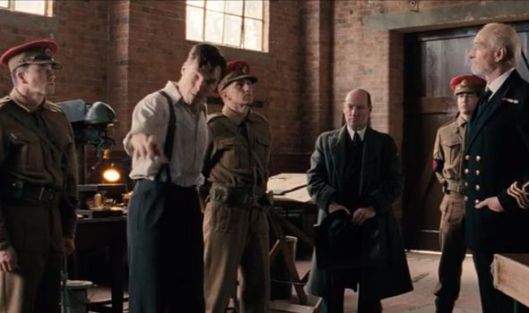
Imitation Game, The - scene1

There are two things that can be said about Alan Turing: that without him the Germans could well have won the war, and the circumstances of his post-war life led to a terrible tragedy. It’s to The Imitation Game‘s credit that it explores these aspects of his life with both candour and a lack of sentimentality. Exploring for the most part his work at Bletchley Park, the movie doesn’t ignore his formative years, nor the events that led to his untimely death in 1954, but its the way in which each part of his life is integrated that makes the movie so effective. The different periods dovetail with precision, Graham Moore’s intelligent, well-constructed screenplay – albeit one that contains a great deal of invention (the character of Nock and his investigation for example) – picking out the highs and lows of Turing’s life with exemplary attention to detail.

The importance of Turing’s work during the war can’t be stressed enough; historians have gauged that breaking the Enigma code shortened the war by at least two years. The size of the problem, the sheer enormity of it all, is given due importance, and the various setbacks add to the tension, but it’s the movie’s focus on Turing and his team that adds immeasurably to the drama. Turing is portrayed as an arrogant boor, dismissive of anyone less intelligent than himself (and that’s most people), and so single-minded in his pursuit of a solution to the Enigma code that his arrogance increases tenfold. His interaction with Alexander is initially antagonistic, but the growing respect they gain for each other is handled with care and sincerity, and brings Turing out of his shell. As well there’s his relationship with Joan, as unlikely a collaboration as could be imagined during the war, but as richly rewarding for each other as it is for the viewer (and beautifully played by Cumberbatch and Knightley).

Turing is brought to life by an amazing performance from Cumberbatch, immersing himself completely in the role and proving mesmerising to watch. Moore’s script allows for a lot of humour in the movie’s early scenes, mostly at the expense of Turing’s humourlessness (and Denniston’s apprehension at his behaviour). Both actors relish their sharp, witty dialogue, and while it all helps to make Turing more sympathetic than he would be otherwise, it also serves to introduce the Enigma project in such a way that the seriousness of the situation, when it becomes more pronounced, doesn’t leave the audience missing the humour. And the drama reaches a peak in a scene where the terrible consequences of cracking the code means a heart-rending decision has to be made that affects Hilton’s brother. It’s a chilling moment, with victory swiftly replaced by despair, and perfectly highlights some of the difficult decisions that have to be made during wartime.

In terms of biographical continuity, the movie flits between 1926, the war and 1951. Turing’s time at Sherborne School, where his friendship with Christopher Morcom leads to the first intimation of his homosexuality, is given weight by the later use of “Christopher” as the name of the code-breaking machine. It also paints a rather amiable picture of boarding school life and shows the younger Turing struggling to come to terms with his own emotions and the love he feels for his friend. These scenes are the equivalent of the kind of rosy childhood memories we all think we experienced but which in actuality were probably worse than we remember, but they serve as a way of showing how disappointment and regret have allowed the older Turing to become so haughty and withdrawn. The post-war sequences, almost entirely invented for the movie, give a passing hint at how Turing may have died but then states at the end that he committed suicide, which was the official cause of death at the time, but which has since been revealed to be not entirely conclusive.

It’s these distortions and fabrications of the historical period that, inevitably, do the most harm to the movie, and while a degree of dramatic licence is to be expected in a drama “based” on true events, the range and number of historical inaccuracies is worrying.  In truth, Turing was not as disliked as the movie shows, and he did have a recognised sense of humour. He didn’t lead the team at Bletchley Park, nor did he write a letter to Churchill asking for funds to build his machine (which in reality had already been designed in 1938 by Marian Rejewski, a Polish cryptographer). Clarke’s involvement was not as pronounced as shown in the movie, and Hilton had no brother, while the character of Helen is entirely fictional too. It’s understandable that these aspects of Moore’s script are there to enhance the drama, but when you have a true story of wartime heroics to tell, the need for such embellishments – or falsehoods if you will – seems unnecessary. And Turing’s homosexuality, while not overplayed, is treated somewhat like an unfortunate character trait, with everyone at Bletchley aware of it but ever so respectful at the same time – one wonders if that would really have been the case.
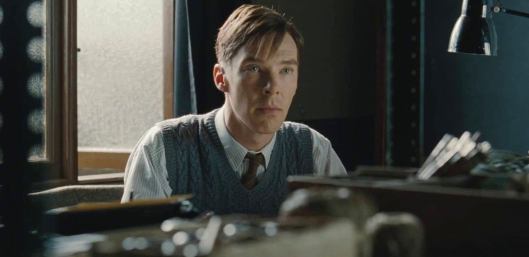
Imitation Game, The - scene3

Despite issues with the script, the cast are uniformly excellent. As mentioned above, Cumberbatch is mesmerising, portraying Turing’s strength of will and sense of purpose with such skill and confidence that the character’s quirks and odd physicality seem entirely natural. He dominates every scene he’s in, causing his co-stars to up their game considerably; as a result The Imitation Game contains a raft of performances that are so good it may well be the best acted movie of 2014. Knightley is appealing as Joan (even if she bears no resemblance to the real Joan Clarke), and plays her with a determination and inner strength that matches Turing’s irascibility and overcomes it. Goode, Leech and Beard, as Turing’s main collaborators, all get their chance to shine but it’s their group scenes and their interaction with each other that work best. Kinnear has an awkward role that he copes well with, as a detective representing our modern approach to the adversity that Turing suffered after the war; it’s the one role that doesn’t entirely convince and seems shoehorned into the movie to make the point about how badly Turing – a war hero – was treated after hostilities ceased. And Dance and Strong, as the twin faces of the Establishment, provide effortless support throughout (as you’d expect).

Fresh from his adaptation of Jo Nesbø’s Headhunters (2011), Tyldum displays an appreciation for recent British history, and handles the complexities of the story in such a way that nothing seems too intellectual to understand. He keeps the action very contained, focusing instead on the characters and their personalities, showing how people from often very different backgrounds could, and did, make such a vital difference in how the war was eventually won. The various periods of Turing’s are recreated with admirable authenticity (some wartime scenes were actually shot at Bletchley Park), and are lensed to very good effect by Oscar Faura. There’s also a subtly evocative score by Alexandre Desplat that enriches each scene it plays over or supports.

Rating: 9/10 – despite taking a huge number of historical liberties, The Imitation Game is gripping, thought-provoking, ambitious movie making, and one of the finest dramas of recent years; with stellar performances from all concerned – including Cumberbatch’s career-defining turn – this (mostly) true story scales new heights in the genre of historical drama, and can’t be recommended highly enough.

Share this:

  • Click to share on X (Opens in new window) X
  • Click to share on Facebook (Opens in new window) Facebook
  • More
  • Click to print (Opens in new window) Print
  • Click to email a link to a friend (Opens in new window) Email
Like Loading...

Blog Stats

  • 486,624 hits

Recent Posts

  • 10 Reasons to Remember Bibi Andersson (1935-2019)
  • Fantasia (1940)
  • Dances With Wolves (1990) – The Special Edition
  • Kiss of the Spider Woman (1985)
  • The Three Musketeers (1973)

Top Posts & Pages

  • Lost for Life (2013) - Another Look
    Lost for Life (2013) - Another Look
  • Lost for Life (2013)
    Lost for Life (2013)
  • About
    About
  • Mr. Topaze (1961)
    Mr. Topaze (1961)
  • Hunt for the Wilderpeople (2016)
    Hunt for the Wilderpeople (2016)
  • BFI London Film Festival 2015
    BFI London Film Festival 2015
  • Shock and Awe (2017)
    Shock and Awe (2017)
  • Cardboard Boxer (2016)
    Cardboard Boxer (2016)
  • Billy Lynn's Long Halftime Walk (2016)
    Billy Lynn's Long Halftime Walk (2016)
  • Winter's Tale (2014)
    Winter's Tale (2014)
Follow thedullwoodexperiment on WordPress.com

Blogs I Follow

  • Rubbish Talk
  • Film 4 Fan
  • Fast Film Reviews
  • The Film Blog
  • All Things Movies UK
  • Interpreting the Stars
  • Let's Go To The Movies
  • Movie Reviews 101
  • TMI News
  • Dan the Man's Movie Reviews
  • Film History
  • Jordan and Eddie (The Movie Guys)

Archives

  • April 2019 (13)
  • March 2019 (28)
  • February 2019 (28)
  • January 2019 (32)
  • December 2018 (28)
  • November 2018 (30)
  • October 2018 (29)
  • September 2018 (29)
  • August 2018 (29)
  • July 2018 (30)
  • June 2018 (28)
  • May 2018 (24)
  • April 2018 (21)
  • March 2018 (31)
  • February 2018 (25)
  • January 2018 (30)
  • December 2017 (30)
  • November 2017 (27)
  • October 2017 (27)
  • September 2017 (26)
  • August 2017 (32)
  • July 2017 (32)
  • June 2017 (30)
  • May 2017 (29)
  • April 2017 (29)
  • March 2017 (30)
  • February 2017 (27)
  • January 2017 (32)
  • December 2016 (30)
  • November 2016 (28)
  • October 2016 (30)
  • September 2016 (27)
  • August 2016 (30)
  • July 2016 (30)
  • June 2016 (31)
  • May 2016 (34)
  • April 2016 (30)
  • March 2016 (30)
  • February 2016 (28)
  • January 2016 (35)
  • December 2015 (34)
  • November 2015 (31)
  • October 2015 (31)
  • September 2015 (34)
  • August 2015 (31)
  • July 2015 (33)
  • June 2015 (12)
  • May 2015 (31)
  • April 2015 (32)
  • March 2015 (30)
  • February 2015 (37)
  • January 2015 (39)
  • December 2014 (34)
  • November 2014 (34)
  • October 2014 (36)
  • September 2014 (25)
  • August 2014 (29)
  • July 2014 (29)
  • June 2014 (28)
  • May 2014 (23)
  • April 2014 (21)
  • March 2014 (42)
  • February 2014 (38)
  • January 2014 (29)
  • December 2013 (28)
  • November 2013 (34)
  • October 2013 (4)

Create a free website or blog at WordPress.com.

Rubbish Talk

Film 4 Fan

A Movie Blog

Fast Film Reviews

The Film Blog

The official blog of everything in film

All Things Movies UK

Movie Reviews and Original Articles

Interpreting the Stars

Dave Examines Movies

Let's Go To The Movies

Film and Theatre Lover!

Movie Reviews 101

Daily Movie Reviews

TMI News

Latest weather, crime and breaking news

Dan the Man's Movie Reviews

All my aimless thoughts, ideas, and ramblings, all packed into one site!

Film History

Telling the story of film

Jordan and Eddie (The Movie Guys)

Movie Reviews & Ramblings from an Australian Based Film Fan

Privacy & Cookies: This site uses cookies. By continuing to use this website, you agree to their use.
To find out more, including how to control cookies, see here: Cookie Policy
  • Subscribe Subscribed
    • thedullwoodexperiment
    • Join 481 other subscribers
    • Already have a WordPress.com account? Log in now.
    • thedullwoodexperiment
    • Subscribe Subscribed
    • Sign up
    • Log in
    • Report this content
    • View site in Reader
    • Manage subscriptions
    • Collapse this bar
 

Loading Comments...
 

    %d