• 10 Reasons to Remember…
  • A Brief Word About…
  • About
  • For One Week Only
  • Happy Birthday
  • Monthly Roundup
  • Old-Time Crime
  • Other Posts
  • Poster of the Week
  • Question of the Week
  • Reviews
  • Trailers

thedullwoodexperiment

~ Viewing movies in a different light

thedullwoodexperiment

Tag Archives: Steve Coogan

Stan & Ollie (2018)

18 Tuesday Dec 2018

Posted by dullwood68 in Movies

≈ Leave a comment

Tags

British tour, Comedy, Drama, John C. Reilly, Jon S. Baird, Laurel & Hardy, Nina Arianda, Review, Shirley Henderson, Steve Coogan

D: Jon S. Baird / 97m

Cast: Steve Coogan, John C. Reilly, Nina Arianda, Shirley Henderson, Danny Huston, Rufus Jones

In 1937, Stan Laurel (Coogan) and Oliver Hardy (Reilly) are at the height of their fame: beloved the world over, they are in the midst of making their latest movie, Way Out West, when Stan’s determination to get them more money doesn’t go as well as he’d hoped. Sixteen years later, the duo are embarking on a British comedy tour, beginning in Newcastle. They’re playing small venues to small audiences under the guidance of impresario Bernard Delfont (Jones), and missing their wives, Ida (Arianda) and Lucille (Henderson). They’re also hoping to begin filming a new version of Robin Hood once the tour has finished, and Stan spends much of his spare time fine-tuning the script. As the tour progresses, the sales improve, and by the time they reach London, the tour is a critical and commercial success. But long held animosities begin to surface, and the pair have a falling out. With public appearances and further shows to be carried out, Stan and Ollie continue at loggerheads until Ollie is taken ill, and the rest of the tour is threatened. Stan is persuaded to carry on with an English comedian in place of Ollie, but Laurel and Cook just isn’t the same…
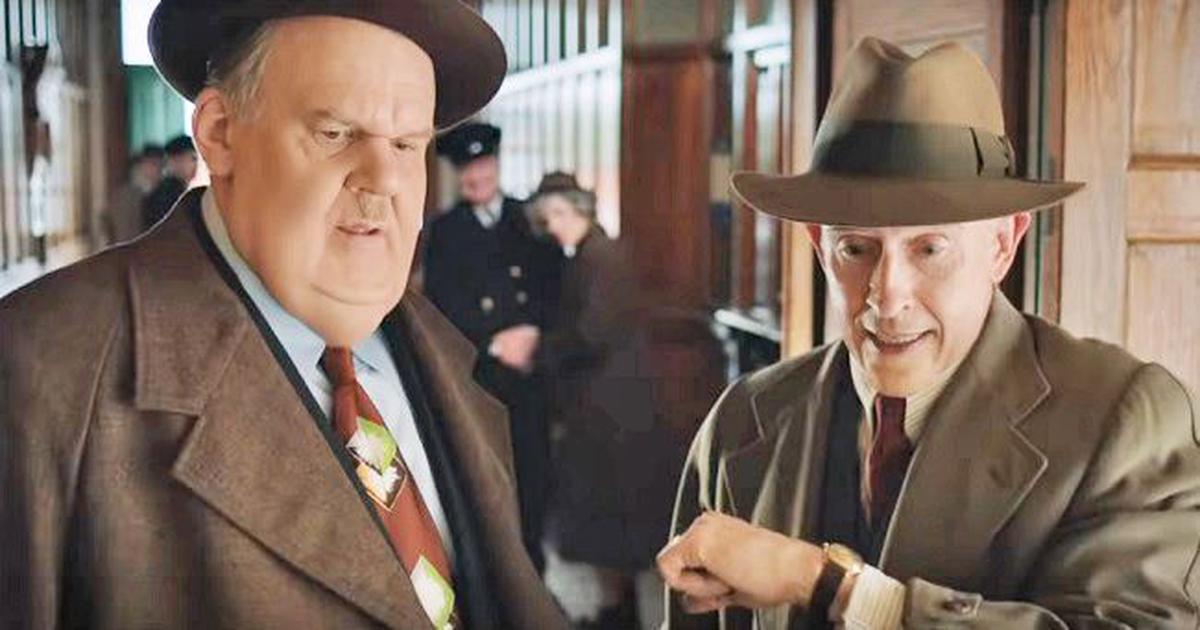
An entertaining, affectionate, and beautifully played tribute to the comedy genius of Stan Laurel and Oliver Hardy, Stan & Ollie offers fans of the duo a chance to revel in some of the best loved comedy routines ever created, and to share in the limelight they enjoyed for around forty years. The movie acknowledges that they had their personal ups and downs – Stan antagonising Hal Roach (Huston) and getting fired after Way Out West (effectively ending their success at the box office), Ollie going off and doing “the elephant picture” (1939’s Zenobia) – and it isn’t afraid to highlight just how often their professionalism kept them going during these periods. But through all the disagreements and the disappointments that followed in the wake of their severed ties from Roach, what shines through is the enduring, unassailable nature of their partnership. Jeff Pope’s nostalgic and emotionally redolent screenplay shows just how strong a bond the pair had, and through the exceptional performances of Coogan and Reilly, we see that bond expressed through shared moments of happiness and contentment where, whatever else is going on around them, they’re able to find solace and strength in each other.
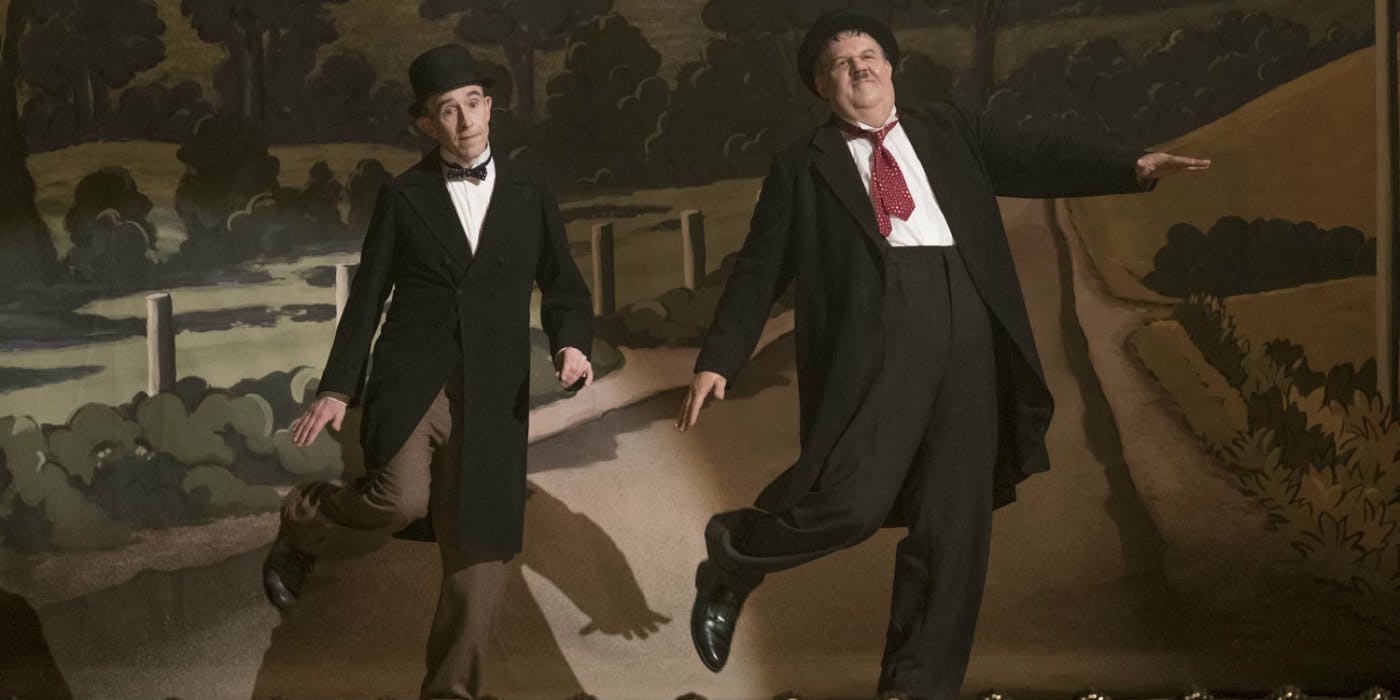
So this is as much a love story as it is a fictionalised record of a British tour that didn’t include plans to make a Robin Hood movie (that occurred during their European tour of 1947), and which conflates several other incidents from the time. But for once, historical fidelity isn’t the issue, instead it’s about being true to the legacy of Laurel & Hardy, and the joy they brought to millions. As portrayed by Coogan, Stan is the restless creator, always thinking up new ideas, new jokes, or tinkering with old ones to make them better. Laurel’s facial expressions have kept impressionists in work for decades, and Coogan does an excellent job of recreating them, but there’s also heart and passion in his performance, and he perfectly captures the quiet melancholy beneath all the laughs. Reilly is also excellent as Ollie, consumed by a fat suit, but more than capable of relaying Hardy’s own doubts and concerns, while retaining his sense of joy and his surprising physicality. Though the illusion is dispelled in close ups, when viewed at a distance and when they’re replicating the pair’s routines, it’s almost as if a veil has been lifted, and for a moment, you can believe you’re seeing the real thing. Now that would have been truly wonderful…

Rating: 9/10 – a moving, delightful, and above all, joyous celebration of Laurel & Hardy’s unique personal and professional relationships, Stan & Ollie could be accused of lacking depth, but as a snapshot of a surprisingly successful period in the duo’s lives it’s winning stuff, and packed with charm; with a number of classic L&H routines on display, and terrific supporting performances from Arianda and Henderson (sometimes they’re funnier than Stan and Ollie themselves), this is Baird’s best movie to date, and for fans, an absolute delight.
Share this:

  • Click to share on X (Opens in new window) X
  • Click to share on Facebook (Opens in new window) Facebook
  • More
  • Click to print (Opens in new window) Print
  • Click to email a link to a friend (Opens in new window) Email
Like Loading...

Ideal Home (2018)

02 Monday Jul 2018

Posted by dullwood68 in Movies

≈ Leave a comment

Tags

Allison Pill, Andrew Fleming, Comedy, Gay couple, Homosexuality, Jack Gore, Jake McDorman, Parenting, Paul Rudd, Review, Steve Coogan

D: Andrew Fleming / 91m

Cast: Steve Coogan, Paul Rudd, Allison Pill, Jake McDorman, Jack Gore, Evan Bittencourt, Kate Walsh, Jesse Luken

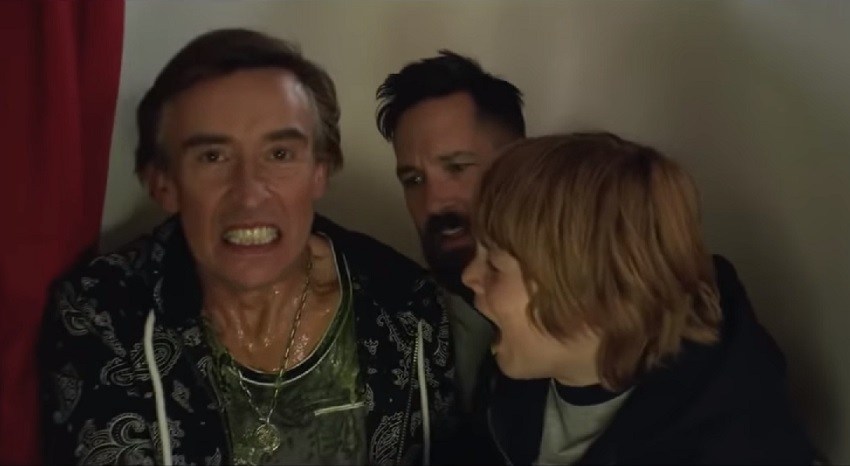
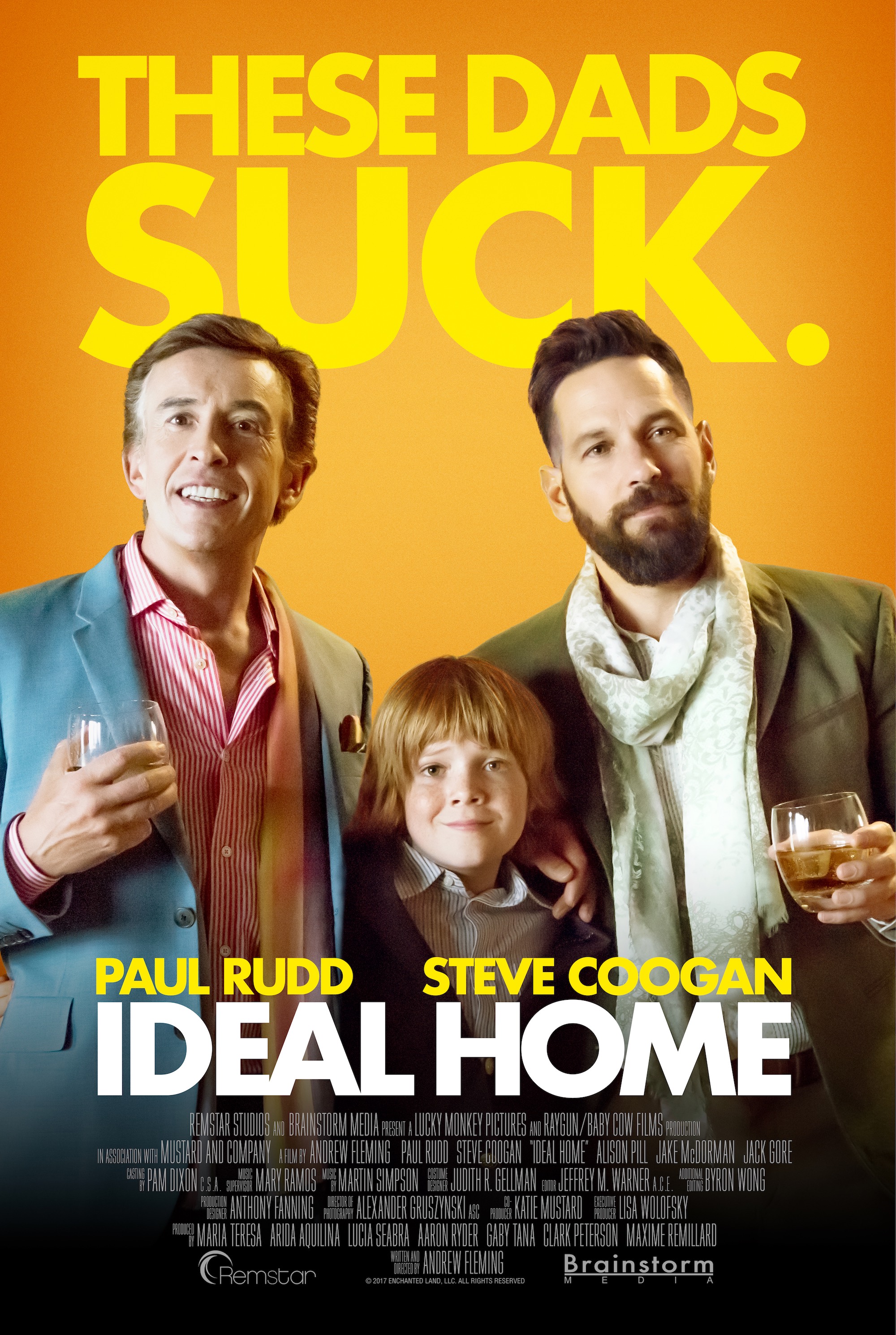
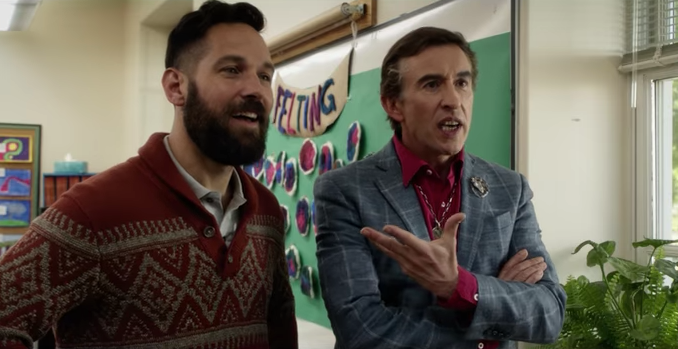
Erasmus Brumble (Coogan) is a well-known TV culinary expert. He’s also vain, self-centred, self-aggrandising, emotionally obtuse, and gay. His partner, Paul (Rudd), is also the producer of his TV show. They bicker, they argue, they fight, and they treat each other with as little respect as possible. When a ten year old boy (Gore) turns up at their home unexpectedly, they’re both surprised to learn that he’s Erasmus’s grandson. The boy is there because his father, Beau (McDorman), has been arrested, and despite the fact that Beau and Erasmus are estranged, Beau has sent his son there because it’s better than the boy being with social services. Unprepared for being parents, even for a potentially temporary period, the trio find themselves bonding into a family unit, even though Paul does all the work, Erasmus takes all the credit, and the boy will only eat at Taco Bell. As they adjust to each other, they learn things that allow them to grow as individuals (well, not so much with Erasmus). But when Beau is released from prison and wants his son back, what was meant to be temporary, now feels like it should be permanent…

Existing in a broad, farcical fantasy world where parenting roles are fluid and ill-defined (and yet somehow they work), Ideal Home is not a movie to be taken at all seriously. It has a positive message to make about the aptitude or suitability of gay couples to raise children, but it’s a message that’s buried below a welter of crass humour, egregious stereotyping (Erasmus’s caricature nature is only rescued by the quality of Coogan’s performance), a healthy/unhealthy (you decide) disregard for authority, and the idea that the nuclear family unit is something that’s become a bit old-fashioned. It’s not a movie that’s trying to blaze a trail for same-sex parenting, but in its own blink-and-you’ll-miss-it way, it is putting forward the idea that it’s no longer something for certain people to be afraid of. That said, if you’re easily offended by references to homosexuality in the context of raising a child (or at all), then this isn’t the movie for you. Maybe go and see Hereditary (2018) if you don’t want to watch a dysfunctional couple trying to make sense of being parents… oh, wait a minute…

Cutely delivered message aside, what this movie is most definitely about is making its audience laugh, and this it achieves with ease thanks to the quality of Fleming’s script, the boisterous partnership of Coogan and Rudd, and a kind of subdued anarchy that suits the material well. But most of all it’s laugh out loud funny: coarse, irreverent, near the knuckle on occasions, and unapologetically profane. The bickering between Erasmus and Paul is beautifully constructed, with the kind of wounding remarks made on both sides that can only come out of a long-term relationship, and Coogan and Rudd deliver these broadsides with gusto, dismantling the couple’s bond while maintaining the deep love they have for each other. In the middle of all this, Gore is a moppet with quiet attitude, deadpan for long stretches and more than a match for his two more experienced co-stars. Alas, the same can’t be said for McDorman, whose role as the boy’s father is more deus ex machina than fully developed character, and Pill, whose portrayal of a social worker is restricted to three short scenes. Otherwise it’s all about Erasmus’s annoying man-child, and Paul’s long-suffering semi-adult fighting and challenging each other and being won over by the growing appreciation for their “efforts” by a de facto orphan. And here, that’s no bad thing at all…

Rating: 7/10 – the drama that props up the comedy is too straightforward to make any impact, so it’s a good job that Fleming and his stars are on such good form in the laughs department; avoiding the kind of icky sentimentality that can so easily scupper a movie of this kind, Ideal Home is often lightweight in tone and lightweight in terms of the material, but when it’s funny, oh boy is it funny.

Share this:

  • Click to share on X (Opens in new window) X
  • Click to share on Facebook (Opens in new window) Facebook
  • More
  • Click to print (Opens in new window) Print
  • Click to email a link to a friend (Opens in new window) Email
Like Loading...

Night at the Museum: Secret of the Tomb (2014)

14 Wednesday Jan 2015

Posted by dullwood68 in Movies

≈ Leave a comment

Tags

Akhmenrah, Ben Stiller, British Museum, Drama, Fantasy, Father/son relationship, Golden tablet, History, Lancelot, Owen Wilson, Review, Robin Williams, Sequel, Shawn Levy, Steve Coogan

Night at the Museum Secret of the Tomb

D: Shawn Levy / 98m

Cast: Ben Stiller, Robin Williams, Owen Wilson, Steve Coogan, Ricky Gervais, Dan Stevens, Rebel Wilson, Skyler Gisondo, Rami Malek, Patrick Gallagher, Mizuo Peck, Ben Kingsley, Dick Van Dyke, Mickey Rooney, Bill Cobbs

Egypt, 1938. A team of archaeologists discover the tomb of Akhmenrah (Malek). They also find a golden tablet, but are warned that “the end will come” if the tablet is removed.

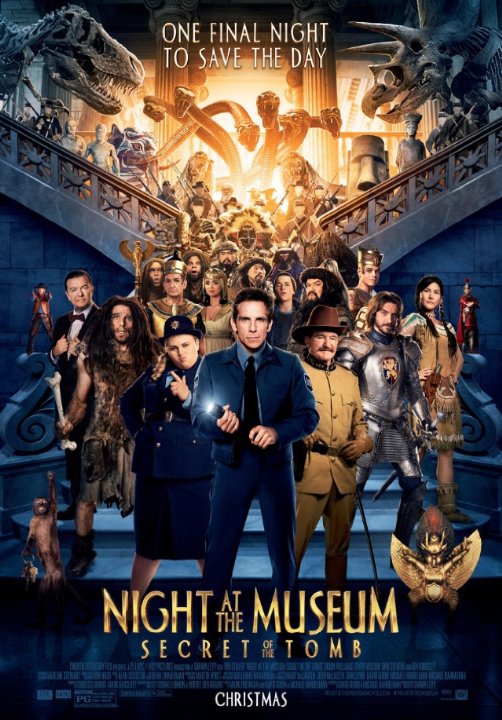
New York, present day. The Museum of Natural History is having an evening gala. Night security guard Larry Daley (Stiller) has arranged for some of the exhibits, including Teddy Roosevelt (Williams), Attila the Hun (Gallagher), and Sacagawea (Peck), to take part. Aware that the golden tablet that brings them all to life is showing signs of corrosion, Larry is unprepared for how it affects the exhibits during the gala; they run amok and the event is a disaster. Larry learns that the prophecy, that “the end will come”, means an end to the magic that brings the exhibits to life, and that the only way to stop it is to take the tablet to the British Museum in London. The museum holds the bodies of Akhmenrah’s parents, and it’s his father, Merenkahre (Kingsley), who can stop the tablet from losing its magic.

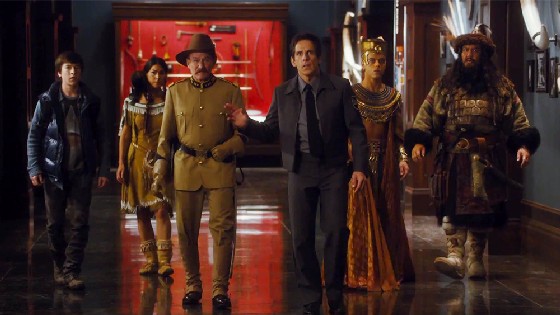
Larry arranges for the tablet and Akhmenrah to be shipped to the British Museum and takes his son, Nick (Gisondo), along with him. When they reach the museum they find that Teddy, Attila and Sacagawea have stowed away on the journey, along with Dexter the monkey, Jedediah (Wilson), Octavius (Coogan), and Laa (Stiller), a neanderthal who looks like Larry. As the museum’s exhibits start to come to life, they head for the Egyptian exhibition, but find themselves attacked by the skeleton of a triceratops. Luckily, they’re saved by Sir Lancelot (Stevens) who agrees to help them. An encounter with a nine-headed Xiangliu statue provides some unwanted danger, but eventually they reach Akhmenrah’s parents, where Merenkahre reveals that the tablet needs to be exposed to moonlight to restore its powers. However, believing it to be the Holy Grail, Lancelot steals the tablet and flees the museum in search of Camelot. Larry et al chase after him, but the tablet is close to losing its power altogether.

Night at the Museum Secret of the Tomb - scene

And so, the law of diminishing returns rears its predictable head and helps bury yet another fantasy franchise. While no one would say that the Night at the Museum movies are anything other than pleasantly diverting, what this second sequel lacks is the manic energy of the first two, and a script that makes the barest attempt at providing a credible storyline. Hardly any of it makes sense, from the idea that “the end will come” if the tablet is removed from the Akhmenrah family tomb in the first place, to the idea that Larry would take his son along with him to London (they’re having “issues”), to the conceit that the British Museum has only the one guard (who is stationed in a gatehouse and not inside the actual building), to the notion that Lancelot would mistake the tablet for the Holy Grail, to the judgment that everyone can get back to New York before the sun rises – from London… in the middle of the night… It’s like someone chucked a whole sticky mess of ideas at a wall and these were the ones that didn’t slip to the floor.

With the script having gone AWOL from the beginning, it’s left to director Shawn Levy to make the most of a bad set up, but for the most part he’s AWOL as well. The opening sequence in Egypt has a sub-Raiders of the Lost Ark feel that makes it the most interesting part of the movie, but it’s probably because it doesn’t take place inside a museum. Still, it has an intensity that’s missing from the rest of the movie, and Levy at least ensures a minimal sense of wonder at the tomb’s discovery. From then on it’s business as usual, with Gervais’ museum head acting all prissy, Coogan highlighting Octavius’s homosexual leanings, Dexter getting to urinate on someone (this time Jedediah and Octavius), Williams dispensing kind words and wisdom as if Roosevelt was the sagest exhibit of them all, the Easter Island head saying “dum-dum” as if that was still funny by itself, and a set of dinosaur bones that just want to play if given the right encouragement. It’s lazy with a capital L-A-Z-Y.

The same is true of the performances. It would be foolish to expect the cast of a second sequel to bring their ‘A’ game to things, but watching some of them going through the motions is not only dispiriting, but embarrassing as well. Stiller all but sleepwalks through his role as Larry, bringing not one new quirk or character trait to the table, and mugging for all he’s worth as Laa, the comedy neanderthal. In support it’s business as usual for all concerned, with Williams smiling from beneath his moustache at every opportunity, Gallagher playing Attila as a great big softie, Peck kept on the sidelines as Sacagawea, Wilson and Coogan reprising their “good buddy” relationship (and which sorely needs some antagonism added back into it), and Malek remaining as bland as ever. Even Crystal the Monkey is subdued this time around, as if even she can’t be bothered. Only Stevens rises above the paucity of the material, his preening, carefree Lancelot proving an unexpected treat. (As for Rebel Wilson’s in-all-ways frustrated security guard, well, the less said the better.)

A bittersweet farewell to Teddy Roosevelt aside – and would that even be true if it weren’t for the sad death of Robin Williams last year? – Night at the Museum: Secret of the Tomb scampers along like a young child wanting to be noticed but not really knowing how to go about it. Lacking in anything resembling a “wow” factor, even the special effects don’t have the same impact as before. But thanks to some splendid cinematography by Guillermo Navarro, the movie does look good, which is something at least.

Rating: 3/10 – poorly executed, and as devoid of life as the exhibits it animates, Night at the Museum: Secret of the Tomb is yet another unnecessary sequel that tries too hard to make up for its deficiencies; when the level of humour is to have an Egyptian pharaoh ask someone to “kiss my staff” then it’s time to let the golden tablet corrode for good.

Share this:

  • Click to share on X (Opens in new window) X
  • Click to share on Facebook (Opens in new window) Facebook
  • More
  • Click to print (Opens in new window) Print
  • Click to email a link to a friend (Opens in new window) Email
Like Loading...

The Look of Love (2013)

12 Thursday Jun 2014

Posted by dullwood68 in Movies

≈ Leave a comment

Tags

Anna Friel, Biopic, Debbie Raymond, Drugs, Fiona Richmond, Imogen Poots, Jean Bradley, Men Only, Michael Winterbottom, Paul Raymond, Pornography, Review, Revue Bar, Sex, Steve Coogan

Look of Love, The

D: Michael Winterbottom / 100m

Cast: Steve Coogan, Anna Friel, Imogen Poots, Tamsin Egerton, Chris Addison, James Lance, Shirley Henderson, David Walliams

Presented as a series of flashbacks as Paul Raymond (Coogan) reflects on his life in the wake of his daughter Debbie’s death, The Look of Love takes us back to his early years as part of a mind-reading act, his early attempts at providing a show including static nudes, and the founding in 1958 of the infamous Revue Bar strip club in London’s Soho.  From there he ventures into publishing, though it isn’t until 1971 that the publication of Men Only brings him success in that field.  With pornography proving such a lucrative business, he stages risqué plays, and in the early Seventies branches out into real estate, mostly in Soho (there’s a scene early on in the movie where Raymond and his granddaughter Fawn are being driven through London and she has to pick out the properties he owns; later the scene is repeated but with a young Debbie).

Raymond is a somewhat mercurial man, adept at persuading those around him to follow in his wake, though his more personal relationships don’t fare so well.  As he builds his empire his marriage to Jean (Friel) begins to show signs of falling apart, his affairs with other women proving too much for her (it’s a sign of the times that is cleverly subverted, this was the Swinging Sixties after all).  His time with Fiona Richmond (Egerton) shows him at possibly his happiest, even when it leads to his taking drugs, but it’s a relationship that is doomed to failure, especially when her fame begins to outstrip his.  And his daughter Debbie (Poots), who he hopes will take over his empire, has dreams of being a performer but she lacks enough talent, and he has to close the show he’s set her up in.  From there, Debbie’s insecurities take hold and Raymond’s inability to support her leads us back to the movie’s beginning.

Look of Love, The - scene

The Look of Love takes a conventional approach to the biopic format, and charts Raymond’s life with obvious respect, but in many ways it feels as if there’s too much of a distance between the movie and its audience for it to be completely effective.  Despite the often challenging subject matter, and Raymond’s role in what was as much a cultural revolution as a sexual one, the movie is often like watching a mildly interested TV documentary, one that wants to say something about its subject but never quite manages it.  Under the auspices of its very talented director, The Look of Love is still an intriguing viewing experience, and its success in recreating the Sixties and Seventies and the vibe that was around during those times helps bolster the sense of a period when society was changing (though for better or worse is another matter).

Winterbottom is aided by a clutch of great performances.  Coogan, not a naturally gifted actor, works hard at presenting the various aspects of Raymond’s often contradictory nature, and – bad wigs aside – does an impressive, if at times awkward, job.  Raymond is still a character (albeit one that really lived), and Coogan displays a remarkable intuition at times that offsets any doubts about the man’s behaviour.  But there are also too many occasions when he affects a range of comic expressions that come across less as character detail and more as Coogan falling back on tried and tested habits.  The actor is clearly having fun in the role, but perhaps a little too much fun.

As his long-suffering wife, Jean, Friel manages to avoid being pushed to the sidelines, and imbues her with a no-nonsense determination that makes the poignancy of her (later) photo-shoot all the more effective.  Jean’s relationship with Raymond was mostly one-sided and her pragmatism in the face of so much “meaningless adultery” highlights the fortitude she had, and Friel brings these traits to the fore with an unshowy display that grounds her character completely.  As porn icon Fiona Richmond, Egerton expertly navigates the character’s transition from eager free spirit to self-publicising brand name with persuasive ease.  Her early scenes, as Raymond becomes more and more besotted with her, show both the carefree willingness to push boundaries alongside the more measured awareness of the benefits of doing so.  It’s a much more subtle performance than it appears, and Egerton never puts a foot wrong throughout.  As the emotionally wayward Debbie, Poots delivers an assured combination of vulnerability and self-destructive neediness, and her scenes with Coogan show the depth of their emotional co-dependency.  It’s an assured performance, and Poots displays a maturity and depth that belies her years.

There’s the requisite amount of nudity throughout, though nothing that would embarrass anyone – this isn’t 9 Songs (2004) – and the casual sexism of the times is adequately reflected in the attitude of Raymond’s advertising associate Tony Power (Addison).  The awkwardness and the inappropriate relationship between Raymond and Debbie is shown by their taking cocaine together, and there’s a perfectly judged moment at Debbie’s funeral where Jean accuses Raymond of failing their daughter by wanting her to be like him.  The emotional fallout from all this leaves Raymond adrift, and although the movie doesn’t cover his final years, he spent most of them as a recluse.

Rating: 7/10 – an absorbing look at the life of Paul Raymond, The Look of Love recreates the times of his rise to fame in an earnest yet thoughtful manner, yet doesn’t quite manage to be impassioned about its subject; the supporting characters prove to be more interesting, and there’s a great deal of misguided humour that only serves to undermine the tragicomic atmosphere.


Share this:

  • Click to share on X (Opens in new window) X
  • Click to share on Facebook (Opens in new window) Facebook
  • More
  • Click to print (Opens in new window) Print
  • Click to email a link to a friend (Opens in new window) Email
Like Loading...

Philomena (2013)

07 Friday Mar 2014

Posted by dullwood68 in Movies

≈ 1 Comment

Tags

Abuse, Adoption, Catholic Church, Judi Dench, Martin Sixsmith, Michael Hess, Nuns, Philomena Lee, Review, Roscrea, Sean Ross Abbey, Stephen Frears, Steve Coogan, True story

Philomena

D: Stephen Frears / 98m

Cast: Judi Dench, Steve Coogan, Michelle Fairley, Sophie Kennedy Clark, Mare Winningham, Barbara Jefford, Ruth McCabe, Peter Hermann, Sean Mahon, Anna Maxwell Martin

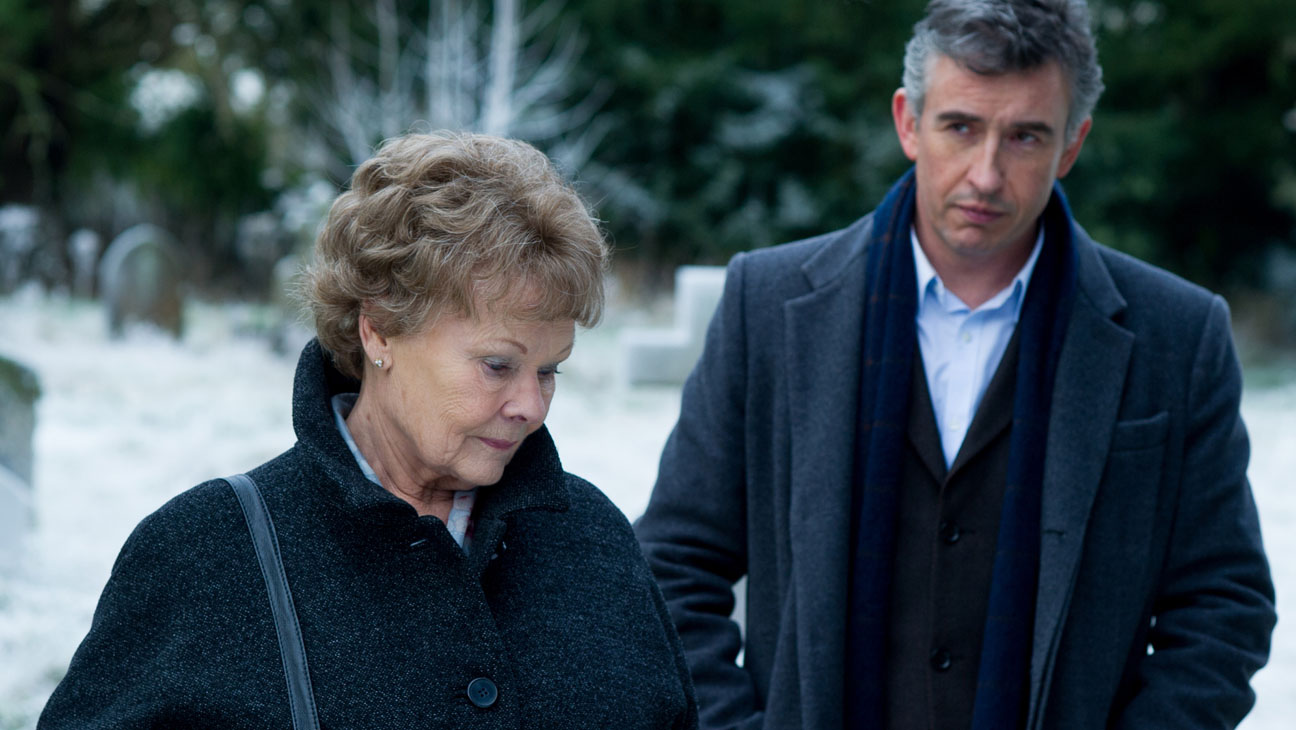
In 2004, and finding himself at a bit of a loss as to what to do after losing his job as a Labour government advisor, ex-journalist Martin Sixsmith (Coogan) is approached by the daughter of Philomena Lee (Dench) who suggests he writes a story about her.  Fifty years before, Philomena was forced to give up her baby boy, Anthony, by the nuns she was staying with at Sean Ross Abbey in Roscrea.  She has been trying to find him ever since but the nuns have always said they are unable to provide any information as to his whereabouts.

Intrigued, Sixsmith agrees to pursue the story after he meets Philomena, and they travel to Roscrea to see if they can find out anything further.  Advised by Mother Barbara (McCabe) that the records relating to Philomena were lost in a fire, they later discover that the records were destroyed by the nuns in a bonfire.  They also learn that the nuns were selling the children under their care, and mostly to Americans.

Martin and Philomena follow Anthony’s trail to the US.  Through Martin’s contacts, he discovers that Anthony was adopted by Doc and Marge Hess, and that they renamed him Michael; they also adopted another child, Mary, the daughter of one of Philomena’s friends at the abbey.  Michael grew up to be a lawyer and senior official in both the Reagan and Bush administrations, but sadly, he died in 1995.  Philomena decides she wants to meet some of the people who knew Michael, including his adopted sister, Mary (Winningham).  This leads to revelations about Michael’s life, and his death, that lead Philomena and Martin back to Roscrea.

_D3S1363.NEF

With such an emotive subject, the script by Coogan and Jeff Pope, combines drama and humour and outrage in (nearly) equal measure.  The early scenes, showing some of the experiences the young Philomena (Clark) endured at the abbey are quite disturbing, and while we’ve seen a more systematic, and horrifying, appraisal of this type of religious “care” in Peter Mullen’s The Magdalene Sisters, they’re still distressing enough to get across the unfeeling and harsh approach of the nuns to the young women’s “sin of fornication”.  As their attempts to find out what happened to Anthony are blocked by the nuns, the movie deftly sidesteps the wider issue of Church-sanctioned neglect, and focuses on Philomena’s story instead.  It’s a wise move, and allows the movie to progress almost as a mystery, with discoveries made that add to the depth of the nuns’ deception.

Once in the US, the script adds elements of Philomena’s naïveté, at the same time as revealing she knows more about certain subjects than might be expected.  While there’s a certain amount of gentle mockery in these moments – she refers to several people as being “one in a million” – they’re offset by Philomena’s certainty in her own behaviour and outlook.  As played by Dench, Philomena is by turns, sad, angry, resourceful, determined, resigned, grieving, and ultimately, quite heroic.  There are several moments where Dench, in close-up, displays a range of emotions, and the viewer is left in no doubt as to what those emotions are, thanks to Dench’s skill as an actress.  There’s not one false note in her whole performance.

Thankfully, she’s matched by Coogan, whose performance begins more as a comic turn but soon develops into a dramatic one, his character finding his way into the story more and more and becoming as determined to discover the truth as Philomena.  As depicted here, Sixsmith is a bit ill-mannered, very dismissive of religion, and at times, manipulative.  His attitude compliments the more open and receptive nature that Philomena displays, and as a “team” their respective strengths make them both resourceful and disarming.  As they discover more and more about Michael, their reactions compliment each other as well.

Philomena is also buoyed up by confident, often impressive direction courtesy of Stephen Frears.  Frears is one of the most consistently thought-provoking directors working today, and he’s particularly good at taking complex material and making it accessible to audiences.  He’s helped here by the script, and by the wonderful performances, and orchestrates the various developments with great skill, making Philomena a particular pleasure to watch.  In many ways, it’s British filmmaking at its best: thoughtful, intelligent, humorous, well-mounted and inspiring.

Rating: 9/10 – aside from some deviations to the actual course of events, Philomena is a poignant, uplifting tale that can raise a tear as often as a smile; a triumph for all concerned and entirely deserving of the awards it’s won so far.

Share this:

  • Click to share on X (Opens in new window) X
  • Click to share on Facebook (Opens in new window) Facebook
  • More
  • Click to print (Opens in new window) Print
  • Click to email a link to a friend (Opens in new window) Email
Like Loading...

Alan Partridge: Alpha Papa (2013)

21 Saturday Dec 2013

Posted by dullwood68 in Movies

≈ 1 Comment

Tags

Alan Partridge, Colm Meaney, Comedy, Declan Lowney, North Norfolk Radio, Pat Farrell, Radio presenter, Review, Siege movie, Steve Coogan, TV series

Alan Partridge Alpha Papa

D: Declan Lowney / 90m

Cast: Steve Coogan, Colm Meaney, Felicity Montagu, Simon Greenall, Simon Delaney, Sean Pertwee, Tim Key, Monica Dolan, Phil Cornwell, Anna Maxwell Martin, Darren Boyd

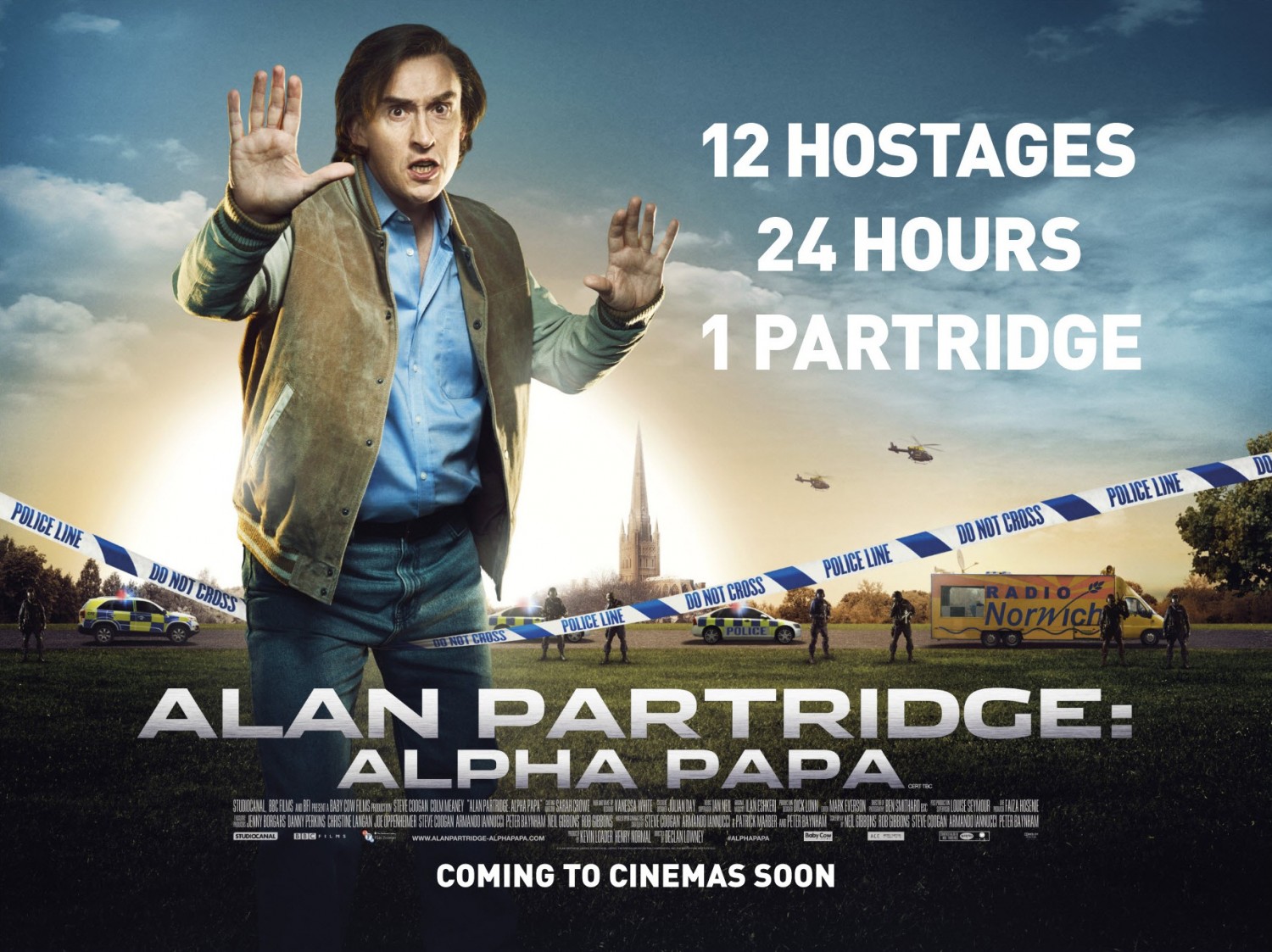
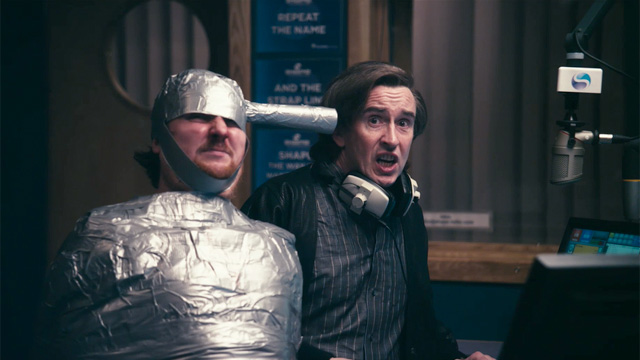
When North Norfolk Radio is taken over by an American who wants to revamp the schedules and weed out the below-par presenters, Alan Partridge (Coogan) suggests they get rid of fellow presenter Pat Farrell (Meaney).  Pat doesn’t take too kindly to being fired and returns to the radio station armed with a shotgun.  Soon he’s taken the rest of the staff hostage and Partridge finds himself helping the police by being their “man on the inside”.  What follows are several attempts by Partridge to get Pat to surrender, interspersed with scenes where Partridge seeks to boost his profile via the media attention surrounding the siege.

Alan Partridge Alpha Papa - scene

It was only a matter of time, and presumably the right script, before the TV legend that is Alan Partridge would be given his cinematic debut.  Big screen incarnations of small screen successes don’t always get it right, though, and Coogan’s monstrous creation is another example to add to the pile.  Too often the humour is forced by either circumstance or the need to inject a big laugh every ten minutes or so; it doesn’t arise organically so much from the characters, as from the situation they find themselves in.  That’s not to say that the movie isn’t funny, it’s just that the jokes lack the inventiveness of Partridge’s TV outings, and the parts that do work are unpredictable and inconsistent.  The script, by Coogan, Peter Baynham,  Armando Iannucci, and Neil and Rob Gibbons, is a bit of a patchwork, with some scenes struggling and/or failing to make much of an impact.

Despite the script’s obvious shortcomings, Coogan is excellent – as expected – as the repellent yet strangely likeable Partridge, while Meaney is given little to do other than act menacing and wax lyrical about the “good old days” of radio broadcasting.  Of the other cast members, Key shines as Partridge’s producer/assistant, Simon, and there are returning faces from the TV series’ such as Montagu as Lynn Benfield.  There’s also a running joke involving the drummer of Marillion.

Lowney’s direction is flat and unrewarding, while the photography by Ben Smithard is drab and unremarkable.  The confines of the radio station seem larger than the building appears from the outside, and the whole movie has that contrasting claustrophobic low budget feel of so many TV-to-movie adaptations.  Partridge is a brilliant creation, spitting egotistical soundbites and ill-considered personal comments at every move, but on this occasion the feature-length format fails to add anything to  the character and serves only to illustrate the strengths of the TV shows.

Rating: 5/10 – a misfire, and one that remains fitfully amusing; one for the fans, certainly, but newcomers to the world of Alan Partridge should beware: there’s less here than meets the eye.

Share this:

  • Click to share on X (Opens in new window) X
  • Click to share on Facebook (Opens in new window) Facebook
  • More
  • Click to print (Opens in new window) Print
  • Click to email a link to a friend (Opens in new window) Email
Like Loading...

Blog Stats

  • 486,721 hits

Recent Posts

  • 10 Reasons to Remember Bibi Andersson (1935-2019)
  • Fantasia (1940)
  • Dances With Wolves (1990) – The Special Edition
  • Kiss of the Spider Woman (1985)
  • The Three Musketeers (1973)

Top Posts & Pages

  • Lost for Life (2013) - Another Look
    Lost for Life (2013) - Another Look
  • Lost for Life (2013)
    Lost for Life (2013)
  • About
    About
  • Exposed (2016)
    Exposed (2016)
  • Cardboard Boxer (2016)
    Cardboard Boxer (2016)
  • A Brief Word About La La Land (2016)
    A Brief Word About La La Land (2016)
  • My Top 10 Guilty Pleasures
    My Top 10 Guilty Pleasures
  • The Monuments Men (2014)
    The Monuments Men (2014)
  • A Brief Word About Netflix Original Comedies
    A Brief Word About Netflix Original Comedies
  • Removal (2010)
    Removal (2010)
Follow thedullwoodexperiment on WordPress.com

Blogs I Follow

  • Rubbish Talk
  • Film 4 Fan
  • Fast Film Reviews
  • The Film Blog
  • All Things Movies UK
  • Interpreting the Stars
  • Let's Go To The Movies
  • Movie Reviews 101
  • TMI News
  • Dan the Man's Movie Reviews
  • Film History
  • Jordan and Eddie (The Movie Guys)

Archives

  • April 2019 (13)
  • March 2019 (28)
  • February 2019 (28)
  • January 2019 (32)
  • December 2018 (28)
  • November 2018 (30)
  • October 2018 (29)
  • September 2018 (29)
  • August 2018 (29)
  • July 2018 (30)
  • June 2018 (28)
  • May 2018 (24)
  • April 2018 (21)
  • March 2018 (31)
  • February 2018 (25)
  • January 2018 (30)
  • December 2017 (30)
  • November 2017 (27)
  • October 2017 (27)
  • September 2017 (26)
  • August 2017 (32)
  • July 2017 (32)
  • June 2017 (30)
  • May 2017 (29)
  • April 2017 (29)
  • March 2017 (30)
  • February 2017 (27)
  • January 2017 (32)
  • December 2016 (30)
  • November 2016 (28)
  • October 2016 (30)
  • September 2016 (27)
  • August 2016 (30)
  • July 2016 (30)
  • June 2016 (31)
  • May 2016 (34)
  • April 2016 (30)
  • March 2016 (30)
  • February 2016 (28)
  • January 2016 (35)
  • December 2015 (34)
  • November 2015 (31)
  • October 2015 (31)
  • September 2015 (34)
  • August 2015 (31)
  • July 2015 (33)
  • June 2015 (12)
  • May 2015 (31)
  • April 2015 (32)
  • March 2015 (30)
  • February 2015 (37)
  • January 2015 (39)
  • December 2014 (34)
  • November 2014 (34)
  • October 2014 (36)
  • September 2014 (25)
  • August 2014 (29)
  • July 2014 (29)
  • June 2014 (28)
  • May 2014 (23)
  • April 2014 (21)
  • March 2014 (42)
  • February 2014 (38)
  • January 2014 (29)
  • December 2013 (28)
  • November 2013 (34)
  • October 2013 (4)

Blog at WordPress.com.

Rubbish Talk

Film 4 Fan

A Movie Blog

Fast Film Reviews

The Film Blog

The official blog of everything in film

All Things Movies UK

Movie Reviews and Original Articles

Interpreting the Stars

Dave Examines Movies

Let's Go To The Movies

Film and Theatre Lover!

Movie Reviews 101

Daily Movie Reviews

TMI News

Latest weather, crime and breaking news

Dan the Man's Movie Reviews

All my aimless thoughts, ideas, and ramblings, all packed into one site!

Film History

Telling the story of film

Jordan and Eddie (The Movie Guys)

Movie Reviews & Ramblings from an Australian Based Film Fan

Privacy & Cookies: This site uses cookies. By continuing to use this website, you agree to their use.
To find out more, including how to control cookies, see here: Cookie Policy
  • Subscribe Subscribed
    • thedullwoodexperiment
    • Join 481 other subscribers
    • Already have a WordPress.com account? Log in now.
    • thedullwoodexperiment
    • Subscribe Subscribed
    • Sign up
    • Log in
    • Report this content
    • View site in Reader
    • Manage subscriptions
    • Collapse this bar
 

Loading Comments...
 

    %d