• 10 Reasons to Remember…
  • A Brief Word About…
  • About
  • For One Week Only
  • Happy Birthday
  • Monthly Roundup
  • Old-Time Crime
  • Other Posts
  • Poster of the Week
  • Question of the Week
  • Reviews
  • Trailers

thedullwoodexperiment

~ Viewing movies in a different light

thedullwoodexperiment

Tag Archives: Tim Roth

The Liability (2012)

21 Thursday Jun 2018

Posted by dullwood68 in Movies

≈ Leave a comment

Tags

Catch Up movie, Comedy, Craig Viveiros, Drama, Jack O'Connell, Murder, Northumberland, Peter Mullan, Review, Sex trafficking, Tallulah Riley, The Handyman, Thriller, Tim Roth
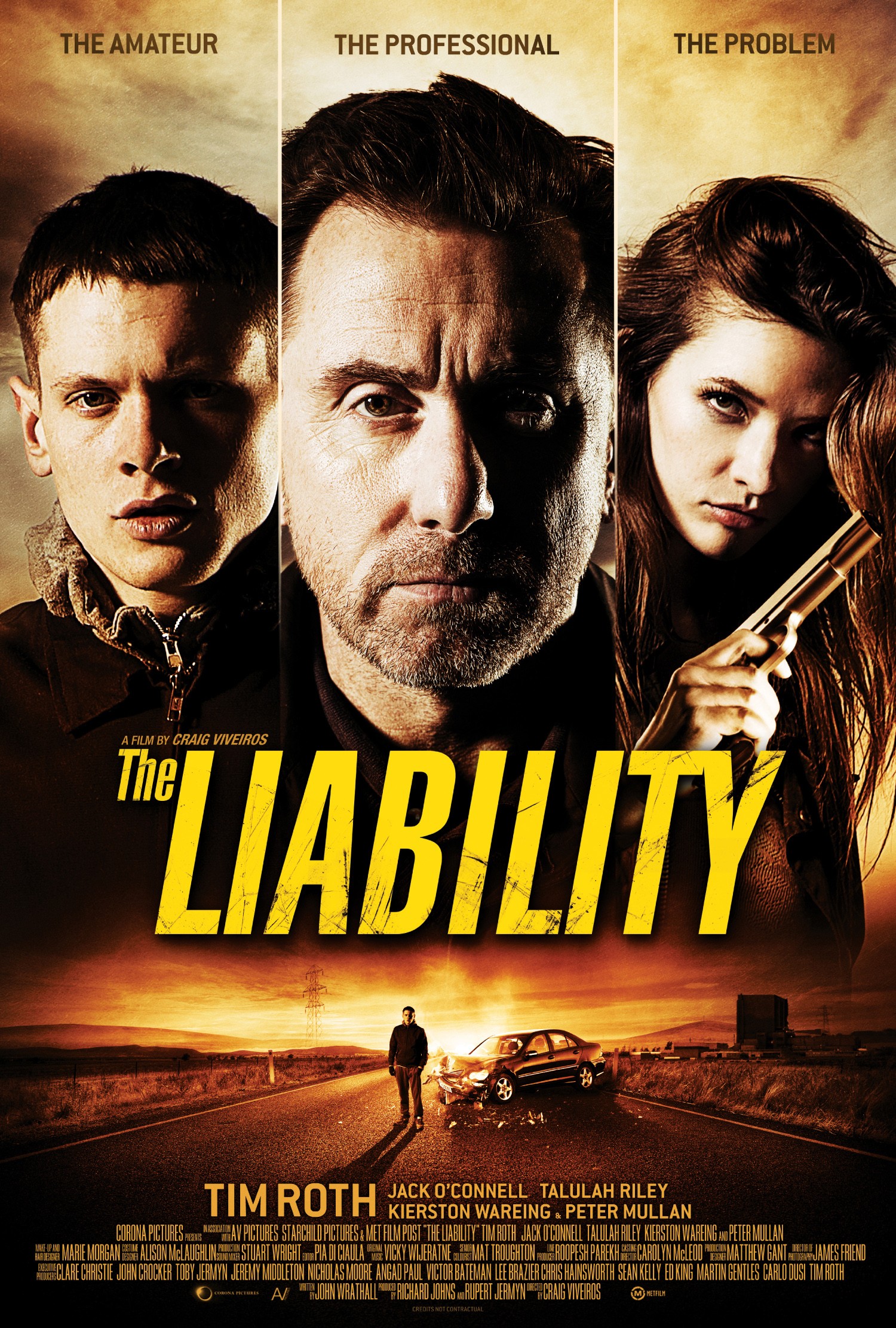
aka The Hitman’s Apprentice

D: Craig Viveiros / 86m

Cast: Tim Roth, Jack O’Connell, Tallulah Riley, Peter Mullan, Kierston Wareing, Tomi May

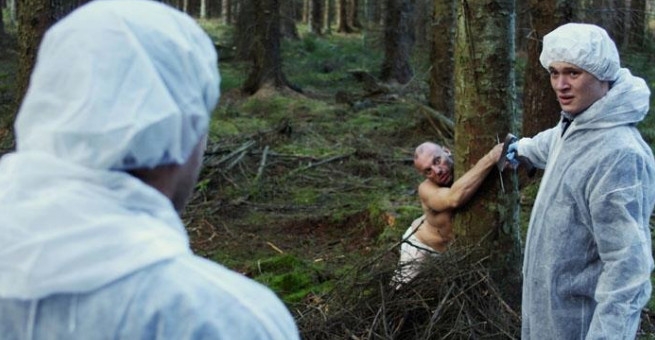
Adam (O’Connell) is a nineteen year old Jack-the-lad who lives with his mum, Nicky (Wareing), and her shady businessman boyfriend, Peter (Mullan). When Adam totals one of Peter’s cars, he’s offered a chance to pay the debt he owes: he’s to drive one of Peter’s associates, Roy (Roth), around for a day. They journey to Northumberland, where, deep in the woods they find a caravan where a man called Danil (May) is hiding out. Roy kills him, but as they attempt to make his death look like the work of local serial killer, the Handyman, a young woman (Riley) comes along. She manages to get away from them, and with a bag that contains evidence of what Roy and Adam have done. What follows is a game of cat and mouse that sees the pair trying to retrieve the bag, while the young woman stays ahead of them every step of the way. Before long, Adam learns things about Roy, Peter, and the young woman, that cause him to realise that not everything is as it seems, and that his future depends on the decisions he makes when the truth reveals itself…
A deliberately low-key crime thriller with an acerbic sense of humour, The Liability begins with a subtle clue as to the criminal activity that sits at the heart of the narrative. A man watches as a container is washed out; moments later he’s attacked and killed in his car. He’s the latest victim of the Handyman, and it’s a testament to the efficiency of John Wrathall’s economical screenplay that the identity of this killer and Roy’s despatching of Danil is connected by a generous helping of unexpected irony. It’s surprising moments such as these, where the material plumbs unforeseen depths, that help make The Liability a much more entertaining movie than might be expected. Add in the material’s quirky, often droll line in mirth (Roth and O’Connell do more with a glance than some actors can manage with a three-page monologue), and you have a black comedy thriller that knows when to be serious, when to be uncomfortable, and when to be slyly humorous. It’s not a balancing act that the movie pulls off every time, but it succeeds more than it fails.

The central relationship between the garrulous, over-eager Adam and the more taciturn, fatalistic Roy drives the movie forward, as mutual respect is established, and a degree of inter-dependency grows between them. Roth and O’Connell are a terrific combination, and the way they play off each other, especially in their early scenes together, ensures their characters’ relationship carries a greater weight later on in the movie. Alas, while Adam and Roy grow as characters and invite sympathy and compassion (despite their actions), the same can’t be said for the likes of Mullan’s one-note bad guy, or Riley’s less than innocent backpacker. Both roles suffer thanks to being painted with too broad brush strokes, and their presence offers little in relation to the material featuring Adam and Roy. That said, Viveiros (making only his second feature) shows a deftness of touch that aids the movie tremendously, and he maintains a consistently weary, yet effective tone throughout. The natural beauty of the Northumberland and Teesside locations are muted in order to match the mood of the piece, and James Friend’s cinematography – all dark hues and glowering skies – complements the darker aspects of the narrative. The ending, though, lacks the punch that’s needed to make it work properly – which is disappointing – and it’s further hampered by feeling rushed. But up until then, this is one movie that provides plenty of cinematic nourishment.

Rating: 8/10 – sombre and mournful in places, and yet funny and warm-hearted in others, The Liability isn’t just the standard crime thriller with jokes that it appears to be; an under-rated gem, it’s well worth checking out as an alternative to the East End gangster movies that populate so much of the UK’s crime-based output.

Share this:

  • Click to share on X (Opens in new window) X
  • Click to share on Facebook (Opens in new window) Facebook
  • More
  • Click to print (Opens in new window) Print
  • Click to email a link to a friend (Opens in new window) Email
Like Loading...

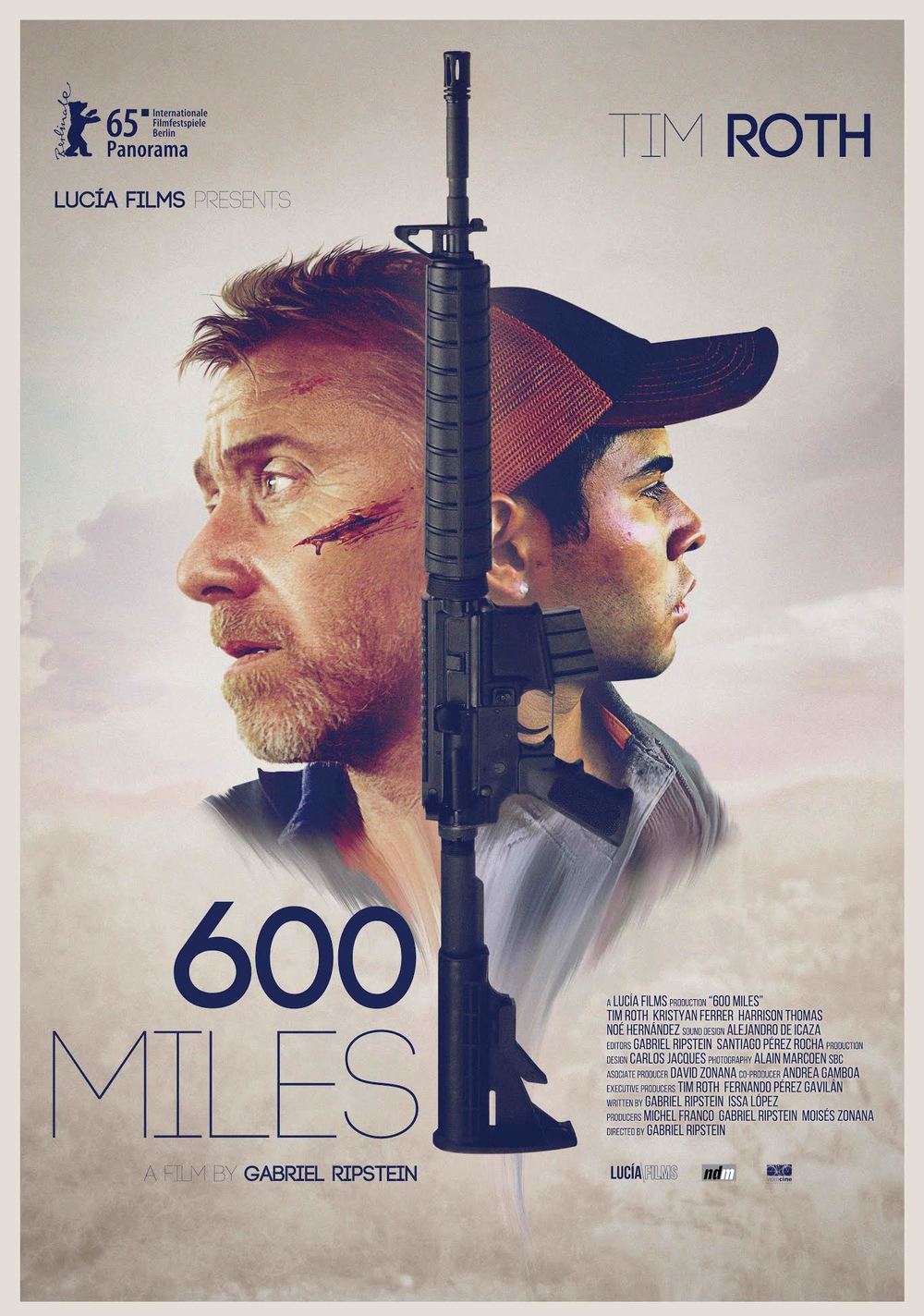
600 Miles (2015)

16 Tuesday Aug 2016

Posted by dullwood68 in Movies

≈ Leave a comment

Tags

ATF, Crime, Drama, Gabriel Ripstein, Gun running, Hostage, Kristyan Ferrer, Mexican cartel, Mexico, Review, Thriller, Tim Roth

600 Miles

Original title: 600 Millas

D: Gabriel Ripstein / 84m

Cast: Tim Roth, Kristyan Ferrer, Noé Hernández, Harrison Thomas, Armando Hernández, Mónica Del Carmen, Orlando Moguel, Gilberto Barraza, Harris Kendall, Ángel Sosa

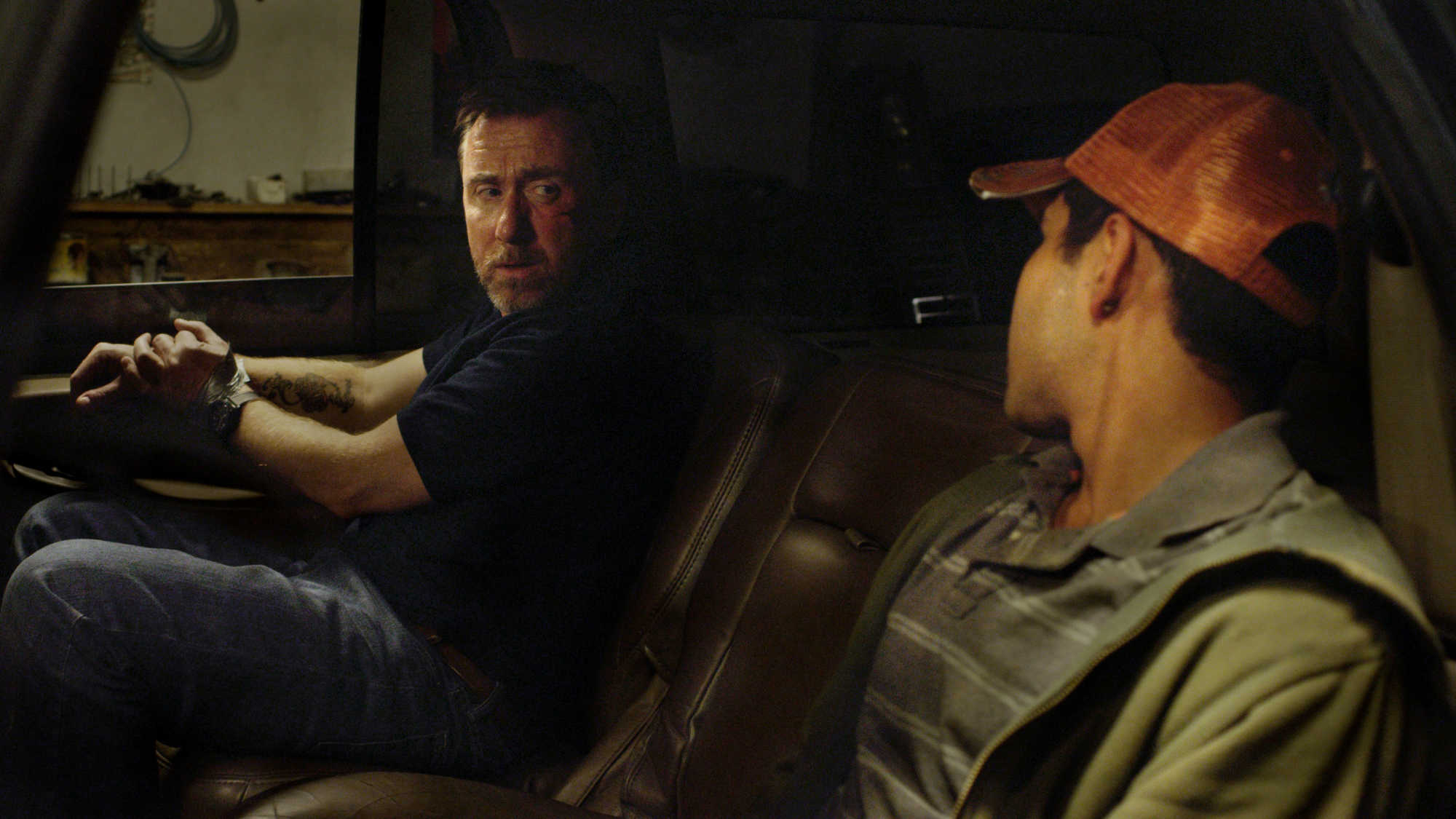
Trading on long static shots and a stately pace in which to anchor its two leading characters, first-time writer/director Gabriel Ripstein has made a movie that takes an interesting (if not original) idea and transforms it into a movie that moves bluntly from scene to scene, and rarely seeks to engage with its audience. It’s a crime drama where the crime is incidental, a road trip movie where the journey is nothing more than a journey, and a buddy movie which lacks any real sense that its two main protagonists have really bonded (this is particularly thrown into sharp relief thanks to the movie’s final two scenes, the second of which has a real sting in the tale).

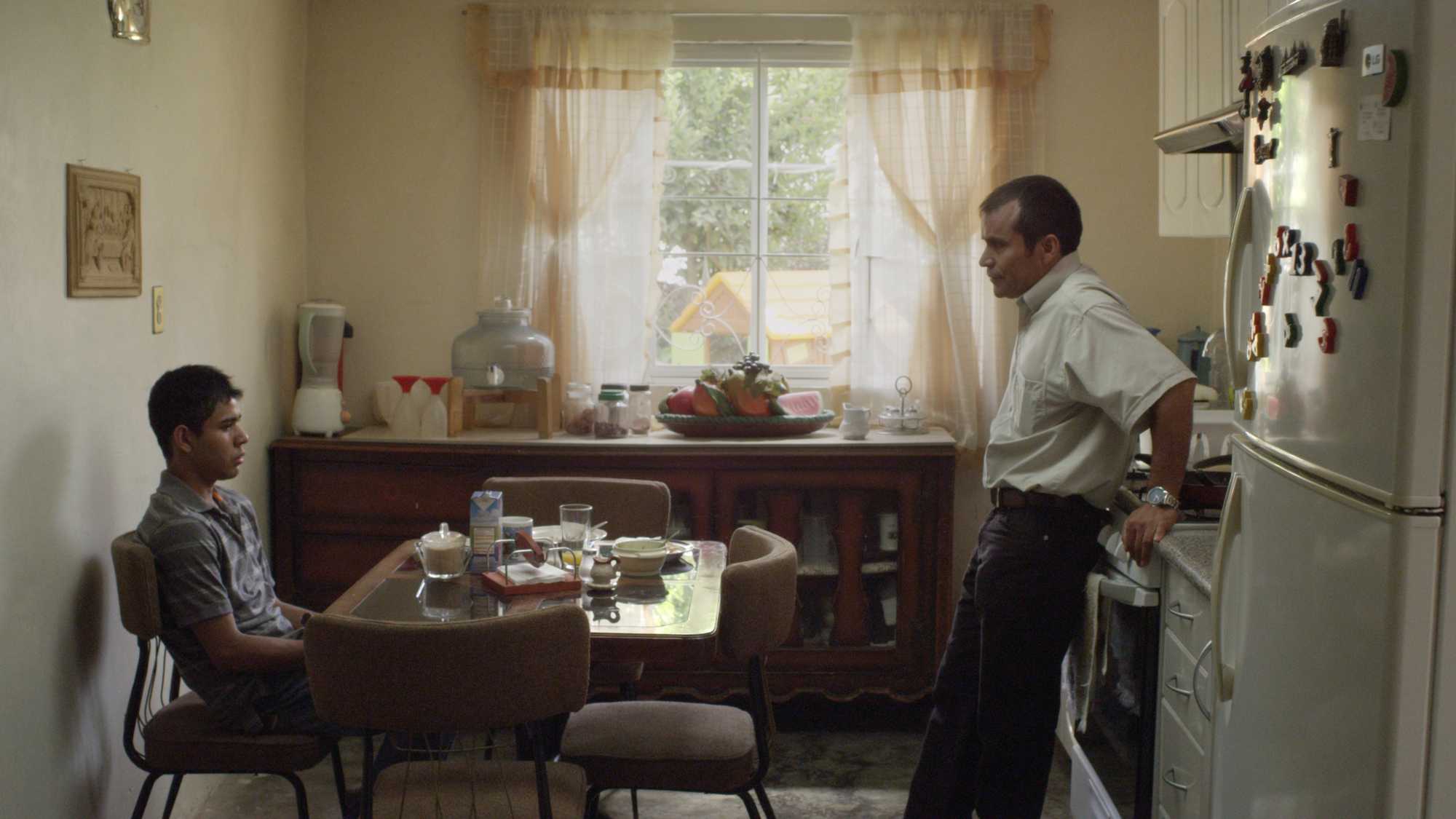
It also takes a long while to bring its two central characters together. Arnulfo (Ferrer), along with his bully of a friend, Carson (Thomas), smuggles guns into Mexico for a cartel. He’s a young man who lacks self-confidence, and he wants to impress his bosses, but he’s awkward and unsure of himself when he’s around them. Several runs go without incident, and Arnulfo begins to feel more confident. He meets a girl he likes and begins a (very) tentative romance.

600 Miles - scene3

What Arnulfo is unaware of is that his activities are being monitored by ATF agent Hank Harris (Roth). Every time he and Carson buy guns to take into Mexico, Harris is right there to collect the details of their purchases. When he finally has enough evidence to arrest them, Harris approaches Arnulfo’s truck while he waits outside a gunsmith’s for Carson to come out. Carson manages to overpower Harris before leaving Arnulfo with the problem of what to do with him. Panicked by the whole thing, Arnulfo puts Harris in the back of the truck, and not knowing what else to do, decides to drive the six hundred miles to the cartel’s base. He believes that the cartel will be able to use Harris for information.

But six hundred miles is a long way, and though Harris is stuck in a hidden section of the truck until they cross the Mexican border, once in Mexico, Arnulfo lets him ride up front, albeit tied up. And so begins a long, drawn-out section of the movie where Harris and Arnulfo get to know each other a bit better – but not in such a way that they can call themselves newfound friends. In fact, if anything, their relationship (such as it is) has the feel of a fait accompli, a way for Ripstein to pass the time until he can get to the inevitable showdown at cartel HQ. (There’s also an attempt at emotional confliction due to the fact that one of the cartel bosses is Arnulfo’s uncle.)

600 Miles - scene1

Alas, for all of Ripstein’s efforts, 600 Miles is as arid as the Mexican desert vistas we see in the movie. By taking an almost documentary approach to the material, and by stripping back the narrative to almost bare minimum levels, Ripstein has ensured that the movie looks good but is scarce on incident, and his characters seem to be devoid of an inner life. As a result, it’s difficult to care what happens to Harris and Arnulfo, and it’s even harder to imagine their journey together as being anything other than a chore for both to get through. Even though Arnulfo is trying to do “the right thing” as he sees it, his naïve decision has potential consequences that even he should be able to foresee. That he doesn’t is too ingenuous for the movie’s own good, and there are further instances where Ripstein’s dramatic needs – such as they are – mean that Arnulfo undergoes too many emotional transformations for them to work effectively.

As the troubled young man, Ferrer adopts a shy, deferential demeanour that fits well with the character’s insecurity and lack of worldly experience. By contrast, Roth is all silent stares and dishevelled authority. He’s a weary man in a weary job, as inured by ennui as Arnulfo is by immaturity. He’s not even very good at his job, pointing a gun at Arnulfo and not announcing his ATF status, and allowing himself to be kidnapped in broad daylight. Roth is good at playing understated characters, but he has so little to work with, not even a basic character arc, that even he can’t give the kind of magnetic, internalised performance the movie needs from the role.

600 Miles - scene2

What the viewer is left with is a movie that promises much in the way of well-judged characterisations, clever insights into the male psyche, and occasional outbursts of violence, but which fails to engage except on a superficial level. It’s a symptom of low budget, arthouse fare that we get interminable scenes of people staring out of or through windows, or lapsing into prolonged silence as if the mere fact of their being silent was evidence enough of some inner turmoil or struggle. In most cases this muted behaviour feels more like padding than incisive direction, and Ripstein’s efforts to convince us that these two characters are more than what we see never ring true.

Sadly, the movie is also let down (though not quite as badly) by Ripstein’s involvement in the editing, along with Santiago Pérez Rocha León. Between them, both men have shaped the style and rhythm of the movie in such a way that instead of feeling languid and somewhat pastoral in nature (which would have helped), it instead feels sluggish and lacking in passion. Certain scenes end abruptly, while others go on beyond their natural lifespan; it’s hard to know which way each scene will go. What is undeniably a plus for the production is Alain Marcoen’s simple yet highly effective cinematography, a great example of how to make a movie look dazzling even when using natural or low-level lighting.

Rating: 4/10 – audiences may well feel that 600 Miles is a triumph of style over substance, and while they might have a case, it’s Ripstein’s lack of directorial experience that hampers the movie and stops it from fulfilling its potential; Roth and Ferrer do their best to elevate the material, but they have so little to work with that ultimately, their efforts are in vain.

Share this:

  • Click to share on X (Opens in new window) X
  • Click to share on Facebook (Opens in new window) Facebook
  • More
  • Click to print (Opens in new window) Print
  • Click to email a link to a friend (Opens in new window) Email
Like Loading...

Mr. Right (2015)

29 Friday Apr 2016

Posted by dullwood68 in Movies

≈ 2 Comments

Tags

Action, Anna Kendrick, Clown nose, Comedy, Crime mystery, Drama, Hitman, James Ransone, Murder, Paco Cabezas, Romance, Sam Rockwell, Thriller, Tim Roth

Mr Right

D: Paco Cabezas / 95m

Cast: Sam Rockwell, Anna Kendrick, Tim Roth, James Ransone, Anson Mount, Dennis Eklund, RZA, Katie Nehra

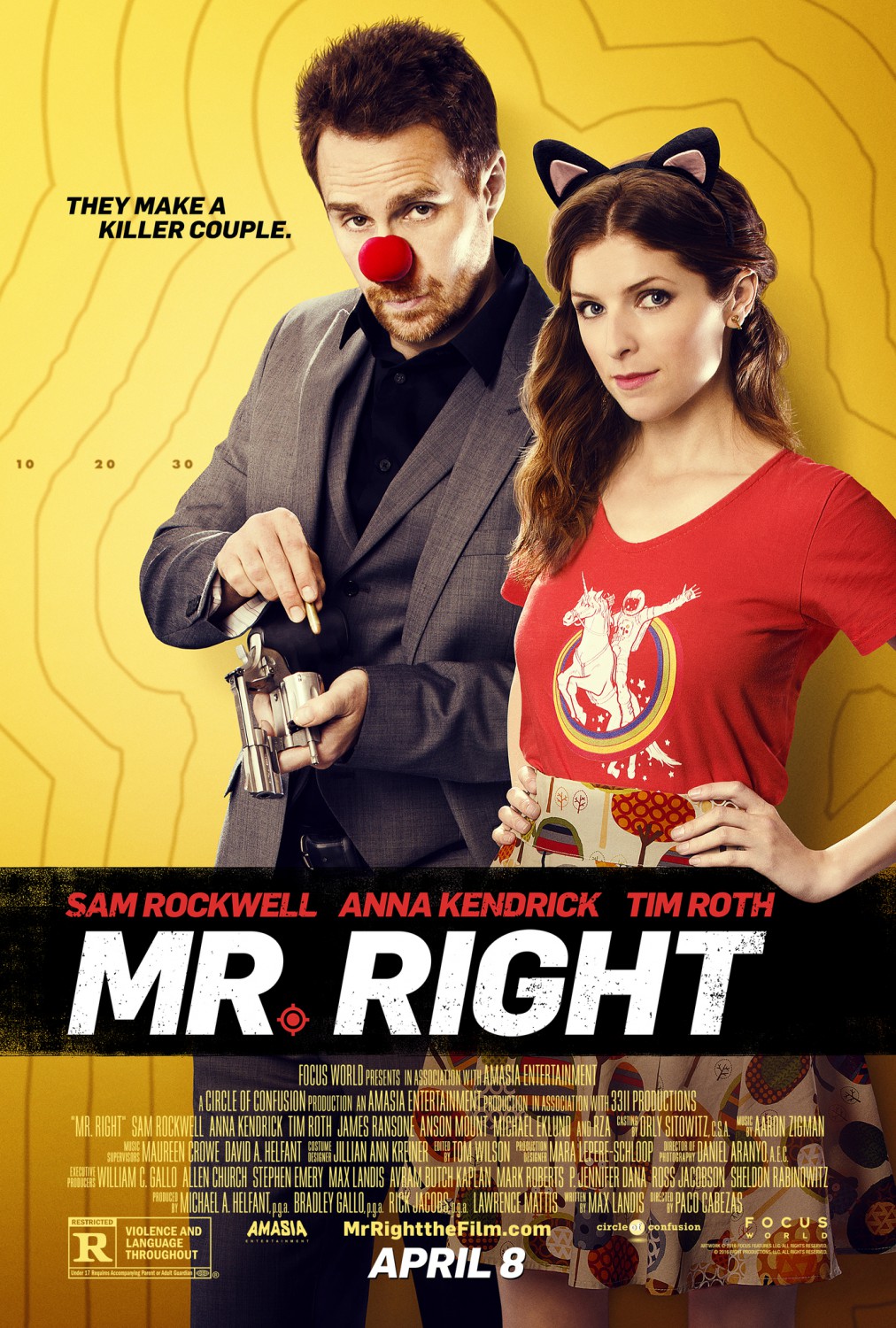
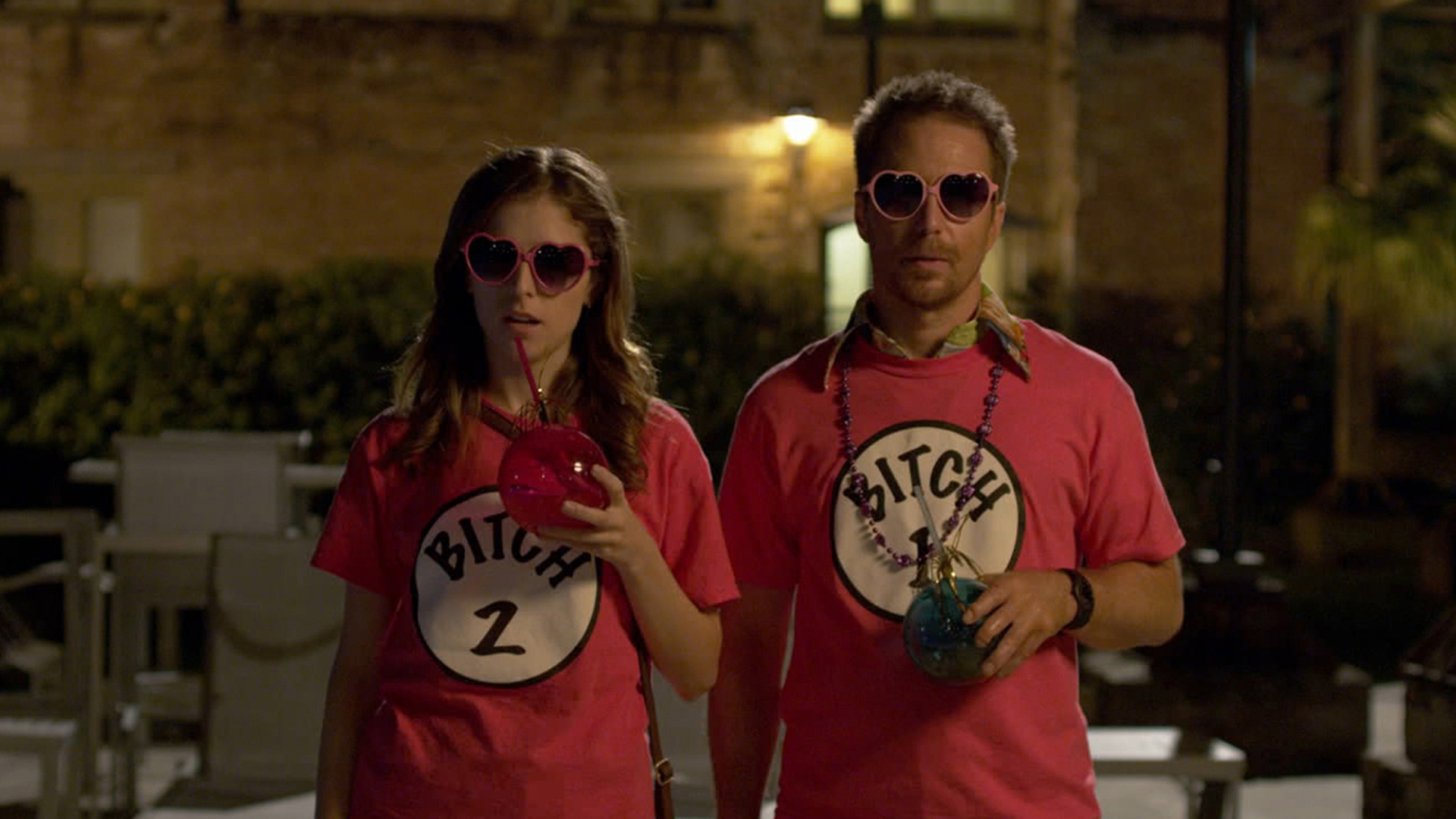
There were two movies released in 2015 with the title Mr. Right… and this isn’t the other one (which, to clarify, stars Columbus Short and Erica Tazel, and doesn’t have a screenplay by Max Landis). This one is definitely the wackier of the two, a broad mix of comedy, action and romance that exists in the same universe as American Ultra (2015), and which allows Sam Rockwell to do what he does best and ooze more charm than any leading man has a right to.

The set up is a simple one. Martha (Kendrick) dumps her boyfriend when she finds out he’s seeing someone else. Depressed and turning to alcohol for comfort she lacks the confidence to believe that she’ll ever find that elusive Mr. Right. But a chance encounter in a convenience store leads to her going on an impulsive date with a guy (Rockwell) whose name she doesn’t even find out (and not until much later). Their relationship soon blossoms into a romance that is surprising to both of them, even when the guy makes apparently flippant remarks about killing people. It’s only when Martha actually sees him kill someone that she returns to believing there isn’t one man on the planet who’s right for her.

Mr Right - scene2

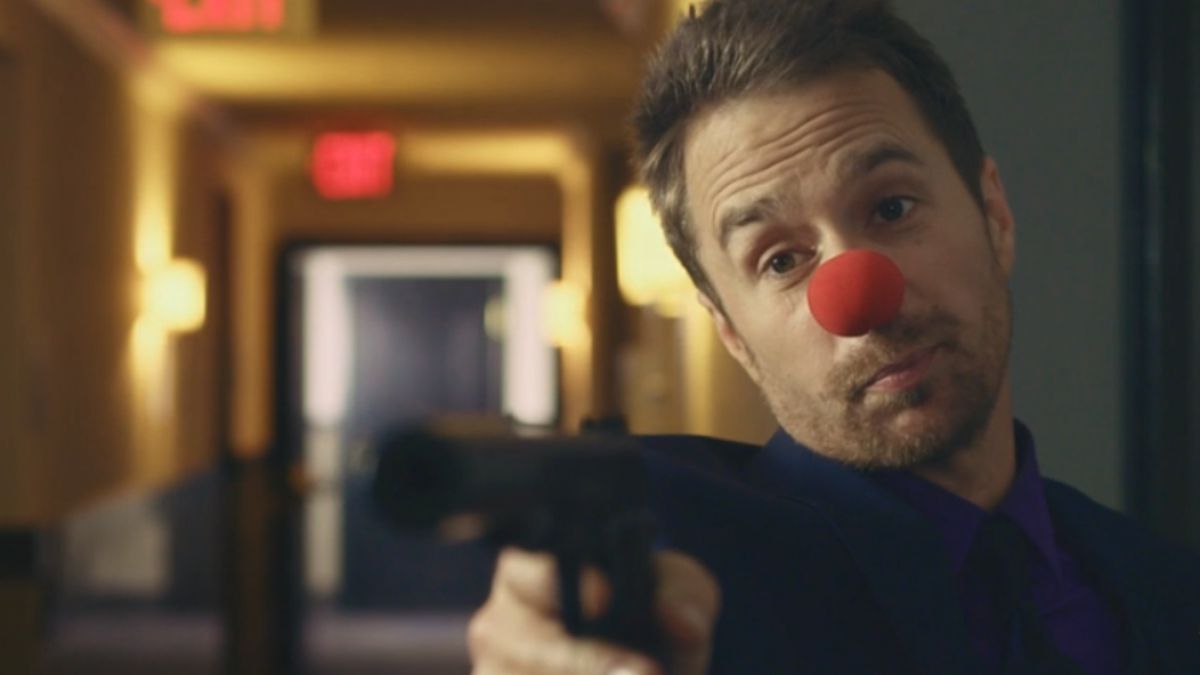
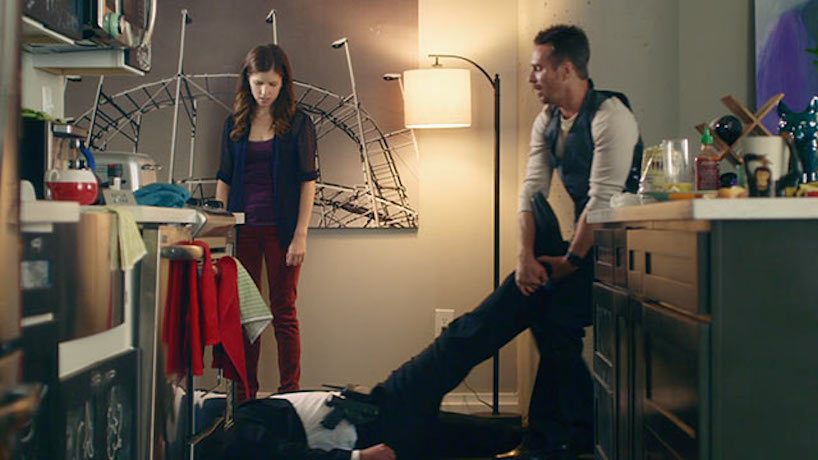
Now the guy is a hitman (as you may have suspected). But he’s kind of reformed. He still kills people, but in a neat moral turnaround, he kills the ones who hire him (and tells them that murder is wrong before he does). Martha’s guy is also being tracked by his former mentor, Hopper (Roth), who is pretending to be an FBI agent. Hopper’s bosses want Martha’s guy dead, but they may have to wait in line, as the man Martha sees him kill is connected to a Mafia family, and they now want him dead as well. With her new beau being shot at and attacked by what appears to be all-comers, Martha has a decision to make: does she walk away and settle for someone half as interesting and special, or does she take a chance on love?

(Well, we all know the answer to that one, don’t we?)

There are two reasons to watch Mr. Right, and they’re the script by Max Landis, and the performance by Sam Rockwell. Landis is making quite the reputation for himself, and with scripts for this, American Ultra, Chronicle (2012) and errr… Victor Frankenstein (2015) under his belt, he’s certainly a writer to watch, and while the basic conceit of a hitman who kills the people who hire him is a novel one, where Landis scores highly is with the romantic portions of the movie. As Rockwell’s off-centre hitman and Kendrick’s semi-doofus pet store worker get to know each other and fall hopelessly in love, Landis provides both actors with the kind of snappy, winning dialogue that makes each scene they share a pleasure to watch. Where else are you going to find lines such as, “That’s a lot of condoms. You’ve got enough to choke a goat”, or “And Martha Agatha, it’s just a double menopause punch in the… it’s brutal”?

Mr Right - scene1

With Landis making the most of the romantic aspect of the movie, and creating such a winning relationship, it’s almost a shame that the murderous actions of Roth’s determined ex-colleague and Ransone’s duplicitous Mafia scion, Von, have to take over for the obligatory action-packed second half. It’s a stroke of genius then that Landis introduces the character of Steve (RZA), ostensibly a disposable gun for hire who proves to be a match for Mr. Right and earns his respect. It’s a funny, unexpected role, and RZA plays it perfectly. But this is Rockwell’s movie, and as the titular anti-hero he brings his A game, infusing his character with a joie de vivre that is both infectious and  charming in equal measure. He brings so much to the role of Mr. Right that it’s almost impossible to keep up with everything he’s doing in any given scene. It’s the kind of portrayal that won’t win any awards but is breathtaking in its effortless simplicity – and completely makes up for his sleepwalking turn in Poltergeist (2015).

With Rockwell firing on all cylinders and fully engaged with the material, it’s good to see Kendrick having fun as well as Martha. It’s not a role that’s any kind of a stretch for her, but she’s funny and adorable, and a great foil for Rockwell (and despite the obvious difference in their ages). Roth shows off his comic chops as well, imbuing Hopper with a studied insouciance that pays dividends throughout (look out for an early scene as he accurately predicts the fates of a group of guns for hire as they try to take down Mr. Right in a hotel). Less satisfactory however are the performances of Ransone and Eklund as the Mafia heavyweights who pick the wrong assassin to off their in-charge brother (Mount). Whenever they’re on screen, caricature and enforced stupidity aren’t far away, and their characters are almost cartoon-like. It’s hard to tell if the root cause is Landis’s screenplay, Cabezas’ direction, or the actors’ performances. Maybe it’s a combination of all three, but whatever the reason, they’re the movie’s only real disappointment.

Mr Right - scene3

In the end, Mr. Right is lightweight, enjoyable stuff that doesn’t require too much thought but still manages to entertain consistently and with a fair degree of brio. Cabezas’ last outing was the less than stellar Rage (2014) with Nicolas Cage, and like Rockwell with Poltergeist, he’s on better form here, showing a confidence in his handling of what is effectively a genre mash-up that yields sterling results, and stops the movie from straying in any one direction at the expense of the others. He’s ably supported by DoP Daniel Aranyó, who finds some unusual angles to make the action sequences more invigorating, and an exuberant score by Aaron Zigman.

Rating: 8/10 – there’s so much to enjoy in Mr. Right that it’s tempting to watch it again straight after seeing it for the first time; with an on-form turn from Rockwell and a great script by Landis, the movie is a minor outing that rewards above its weight and will keep you smiling throughout, even when it’s being patently absurd.

Share this:

  • Click to share on X (Opens in new window) X
  • Click to share on Facebook (Opens in new window) Facebook
  • More
  • Click to print (Opens in new window) Print
  • Click to email a link to a friend (Opens in new window) Email
Like Loading...

The Hateful Eight (2015)

18 Thursday Feb 2016

Posted by dullwood68 in Movies

≈ 1 Comment

Tags

Bounty hunter, Bruce Dern, Demián Bichir, Drama, Jennifer Jason Leigh, Kurt Russell, Michael Madsen, Minnie's Haberdashery, Mystery, Quentin Tarantino, Review, Samuel L. Jackson, Thriller, Tim Roth, Walton Goggins, Western, Wyoming

The Hateful Eight

D: Quentin Tarantino / 167m

Cast: Samuel L. Jackson, Kurt Russell, Jennifer Jason Leigh, Walton Goggins, Tim Roth, Demián Bichir, Michael Madsen, Bruce Dern, James Parks, Channing Tatum

It’s post-Civil War Wyoming, and a stagecoach trying to outrun a fast approaching snowstorm (in already treacherous weather) is stopped by an unexpected encounter with a bounty hunter, Major Marquis Warren (Jackson), stranded on the road to the nearest safe haven, a staging post named Minnie’s Haberdashery. On board the stagecoach is another bounty hunter, John “The Hangman” Ruth (Russell) and his prisoner, Daisy Domergue (Leigh), heading for the town of Red Rock so she can face trial. Once bona fides are established between the two men, Warren is allowed to journey on aboard the stagecoach. Later they pick up another stranded man, Chris Mannix (Goggins), who tells them he’s also heading to Red Rock where he is to take up the post of sheriff.

At Minnie’s Haberdashery, they find that an earlier stagecoach has taken shelter there, and there are four men waiting out the impending snowstorm. One is a Southern general, Sanford Smithers (Dern), who’s come to Wyoming in search of his missing son. Another is Joe Gage (Madsen), a cowboy heading home after being away on a lengthy cattle trail. The third introduces himself as Oswaldo Mobray (Roth), on his way to Red Rock to act as hangman should Daisy Domergue be found guilty at her trial. And then there’s Bob (Bichir), a Mexican who tells Warren that Minnie and her husband, Sweet Dave, have gone to see her mother, and that they’ve entrusted the upkeep of the staging post to him. But Warren is unconvinced.

Once everyone is inside and introduced to each other, Ruth is quick to make it clear that he believes at least one person there isn’t who he says he is, and that it’s likely they’re going to try and free Daisy (though he doesn’t say why, or how he knows). Warren believes him, and they agree to join forces and keep an eye on the other men. But things begin to go wrong when Warren recognises Smithers, and he realises why the old man is there, and so far from home.

THE - scene1

The eighth movie by Quentin Tarantino is ostensibly a Western, but thanks to its writer/director’s penchant for being a movie magpie, it’s also a thriller, a revenge drama, an old dark house-style mystery, and yet another movie where he assembles a great cast only to give preference to some – Jackson, Russell, Goggins – while neglecting others – Leigh, Bichir, Madsen. That Tarantino wants to stuff his movie with references to other movies has always been a part of his movie making raison d’être, so it shouldn’t come as any surprise that The Hateful Eight isn’t just a Western. But this time around, the end result is a movie that struggles to find its identity, and thanks to the novel-style approach of Tarantino’s script – it’s made up of six Chapters – it feels much more artificial than it should be.

As Tarantino nudges along his characters in the wake of Jackson’s central character, and takes in issues of racism and post-War guilt, and a very occasional stab at the morality behind the execution of women, it becomes clear that these characters are mere cyphers, lacking in development and free from any real, appreciable insight into their motives. Given this lack of investment by Tarantino’s script, and despite the detailed and often hypnotic rhythms of the dialogue he grants them, it’s left to his very talented cast to make up the shortfall. Some achieve this with aplomb – Goggins in particular – but even the likes of Russell and Leigh can’t elevate the shallow nature of their characters. Russell bellows like an absurdist bully, while Leigh at one point is reduced to the kind of playground boasting that was outmoded even in the 1860’s.

Spare a thought then for Tarantino regular Jackson. Having landed the lead role in the movie, and been given the kind of back story that most actors would relish getting their hands on (or teeth into), it must have been dispiriting to see the final product and realise that for all the blood and thunder involved, it was all for nought given how the character is treated in the movie’s final chapter. There’s a lot to be said for a movie of this length when it exposes some of its maker’s more crueller narrative decisions and forces its audience to wonder if its wunderkind creator is quite the impressive writer/director he’s reputed to be. And this is where The Hateful Eight is most successful: in showing that the hype surrounding Tarantino isn’t always deserved.

THE - scene2

Take one scene in particular, the beginning of Chapter Four, entitled Domergue’s Got a Secret. Unable to introduce a major plot development in any other way (apparently), Tarantino resorts to the use of an offscreen narrator (voiced by himself) who not only explains what Daisy’s secret is, but clearly signposts for those in the audience who may be hard of understanding, what this means in terms of what follows. It’s like someone stopping a theatre production of Macbeth and stepping forward to explain that when Shakespeare says Macbeth can’t be “killed by man born of woman” he actually means he can be killed by someone born via Caesarean. Got it? Then let’s move on.

From there on The Hateful Eight swiftly unravels in a welter of violence and bloodshed that throws out all the groundwork made to get this far, and concentrates instead on bumping off its cast of characters. But any fascination or sympathy the viewer may have had for anyone is eroded by Tarantino’s decision to go for a bloodbath rather than a tense showdown. And then there’s the final chapter, so awkward and clunkily written that the viewer can’t help but wonder if Tarantino didn’t know how to end his movie, and settled on the first thought that came to him – and then didn’t even bother to polish the finished script. For once, Tarantino relinquishes control over the material, and the camerawork by Robert Richardson – up til then one of the few consistent positives about the movie – is undermined by the kind of reckless scissor-happy editing that you’d expect from someone having to deal with far less filmed material and an impossible deadline (and the movie’s editor, Fred Raskin, is a much better editor than that – check out his work on another 2015 Western, Bone Tomahawk, for proof).

THE - scene3

When all is said and done, The Hateful Eight isn’t a movie that works; at least, not entirely. If anything, the movie never proceeds to anywhere successful once Chris Mannix boards the stagecoach and they arrive at Minnie’s Haberdashery. Up til then, Tarantino does what he does best: he introduces his characters through his trademark intricate dialogue, and he sets the scene for the rest of the movie. But once in Minnie’s Haberdashery, the plot has to take over, and it soon runs out of steam. The addition of a flashback in Chapter Five feels even more awkward than the revelation that Daisy has a secret, and makes scant use of Channing Tatum into the bargain.

And finally, as if to rub salt into the movie’s wounds, we have a score by Ennio Morricone that has no impact throughout, and isn’t in any way memorable (there are times when it doesn’t even feel suited to the material). When your favourite movie composer can’t even make a difference then you just know that it’s not going to work. Sometimes – and this applies to anyone who writes and directs their own movies, or who have carte blanche from the studio that writes the cheques – having an idea isn’t enough. And building on that idea isn’t enough. And writing a screenplay isn’t enough. Sometimes you just have to let an idea go. Often it’s the kindest thing you can do for everyone.

Rating: 6/10 – narrative glitches aside, Tarantino’s eighth movie proves lacklustre both in terms of its visuals and its attention to its characters, leaving the viewer without anyone to sympathise with or warm to; The Hateful Eight is also the first of the writer/director’s movies to feel incomplete in terms of his investment in the project, and while he may argue otherwise, there’s a distance between him and the final product that hasn’t been there in any of his other, seven movies.

Share this:

  • Click to share on X (Opens in new window) X
  • Click to share on Facebook (Opens in new window) Facebook
  • More
  • Click to print (Opens in new window) Print
  • Click to email a link to a friend (Opens in new window) Email
Like Loading...

Trailer – Mr. Right (2015)

17 Wednesday Feb 2016

Posted by dullwood68 in Movies

≈ Leave a comment

Tags

Action, Anna Kendrick, Comedy, Hitman, Preview, Romance, Sam Rockwell, Tim Roth, Trailer

The kind of “edgy” romantic comedy that we all know is going to be both mushy and appealingly sentimental at heart, Mr. Right is the latest from the pen of Max Landis – Chronicle (2012), American Ultra (2015), and, uh, Victor Frankenstein (2015) – and brings together Sam Rockwell (the title character) and Anna Kendrick in a tale that promises lots of comedy and some well-choreographed fight scenes. Rockwell is the hitman who’s developed a moral code (he kills the people who hire him instead of the intended victims) and who meets Kendrick’s Martha, a young woman whose last relationship ended badly. Their romance is hopefully the heart of the movie, but there’s bound to be plenty of action as Mr. Right finds himself being hunted down by his employers. With a supporting cast that includes Tim Roth, RZA, James Ransone and Michael Eklund, the only concern is the director, Paco Cabezas, whose last movie was the less than inspiring Rage (2014) starring Nicolas Cage. But festival audiences have taken to the movie so perhaps this will prove as entertaining and endearing as its makers intended.

Share this:

  • Click to share on X (Opens in new window) X
  • Click to share on Facebook (Opens in new window) Facebook
  • More
  • Click to print (Opens in new window) Print
  • Click to email a link to a friend (Opens in new window) Email
Like Loading...

Mini-Review: Chronic (2015)

16 Friday Oct 2015

Posted by dullwood68 in Movies

≈ Leave a comment

Tags

Assisted suicide, Drama, Father/daughter relationship, Michael Cristofer, Michel Franco, Nurse, Palliative care, Review, Robin Bartlett, Sarah Sutherland, Tim Roth

Chronic

D: Michel Franco / 92m

Cast: Tim Roth, Robin Bartlett, Michael Cristofer, Sarah Sutherland, Rachel Pickup, Angela Bullock, Nailea Norvind, David Dastmalchian, Maribeth Monroe

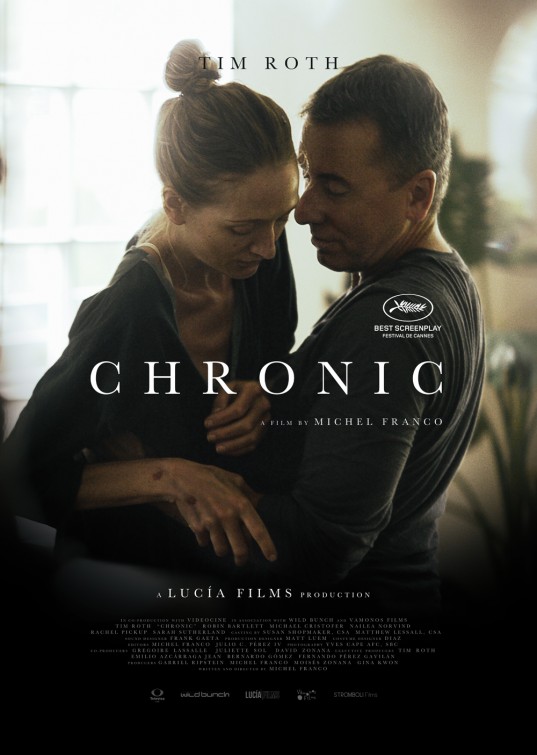
David (Roth) is a male nurse who provides palliative care for terminally ill or seriously disabled people living in their own homes. When his latest patient, Sarah (Pickup), dies, her family are surprised to see him at the funeral, and when Sarah’s neice (Monroe) tries to ask David some questions about Sarah’s final weeks, he is uncooperative and avoids talking to her. At home, he checks the social media page of a young woman named Nadia (Sutherland), focusing on the pictures she’s posted.

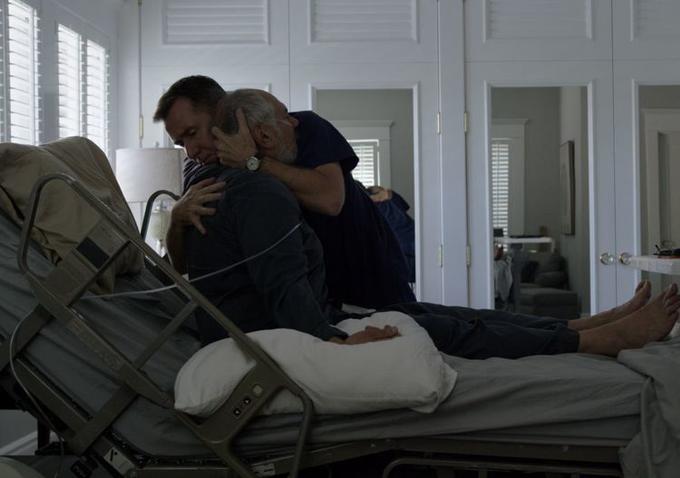
Later, David is given another patient to look after, an architect called John (Cristofer), who’s had a stroke. As John recovers, he and David become friends of sorts, even to the point where David turns a blind eye to John watching porn on his laptop. But when one of John’s family walks in on David giving him a bed bath, the situation is misread, and David finds himself being told by his boss that he can’t continue as John’s carer – or indeed anyone’s – because he’s about to be sued for sexual misconduct. While he waits for another job to come up, David tracks down the young woman from the social media page, who it turns out is his daughter.

They haven’t seen each other in a while due to a family tragedy that David blames himself for, and which caused him to have a breakdown. As he gets to know Nadia again, and begins to mend his relationship with her mother, Laura (Norvind), David is offered a job looking after a woman called Marta (Bartlett) who has cancer. All is going well until one day she asks David to help her commit suicide…

Chronic - scene

A measured, sometimes agonisingly slow drama about one man’s attempt to redeem himself by caring for others, Chronic is always going to be a tough sell for potential viewers, mostly because of the subject matter, and partly because it’s paced so deliberately and so precisely. It’s like a chamber piece made for the big screen, with a restrained, honest performance from Roth that is so internalised it makes David seem removed from everything – and everyone – around him. And while he does keep his distance (except when it comes to his patients), the legacy of that tragedy has left very deep and lasting scars that he can deal with only by focusing his energies on people he can help; he’s trying to make amends in the only way he knows how.

It’s a fairly straightforward tale made up of long static shots where the action is kept firmly within the boundaries of the frame, and where David’s attempts to reconnect with his daughter offer the only evidence that he’s not entirely subsumed by the lives of his patients (when he learns John is an architect he does his homework on the matter, even going so far as to visit one of the houses John built). This way of identifying with his patients could have been presented as creepy or unhealthy, but it’s yet another way that David is trying to find a place for himself in the world he’s been absent from.

Franco directs his own script with a clear idea of what he wants to achieve, but makes the mistake of distancing not only David from others, but the audience from David, leaving the viewer to decide for themselves if David’s plight is affecting enough for them to bother. And there’s a final scene that’s likely to alienate viewers who’ve made it that far. With the decision to skip having a musical score or songs to act as emotional cues for the audience, the movie relies on its talented cast to highlight the various ambiguities of each character’s relationship with David, while its ideas of what it’s like to care about others when it’s difficult to care about oneself, are handled with care and sensitivity.

Rating: 8/10 – not for all tastes, not least because of Franco’s slow-burn, reflective approach to the narrative, Chronic is a showcase for Roth’s acting abilities, and the ways in which personal pain creates barriers between people; too plainly rendered for many, it’s a movie that is uncompromising in terms of the narrative, but rewards upon closer inspection.

Share this:

  • Click to share on X (Opens in new window) X
  • Click to share on Facebook (Opens in new window) Facebook
  • More
  • Click to print (Opens in new window) Print
  • Click to email a link to a friend (Opens in new window) Email
Like Loading...

Selma (2014)

10 Tuesday Feb 2015

Posted by dullwood68 in Movies

≈ 2 Comments

Tags

Alabama, André Holland, Ava DuVernay, Carmen Ejogo, David Oyelowo, Drama, Edmund Pettus Bridge, Lyndon B. Johnson, Martin Luther King Jr, Racial equality, Review, Tim Roth, Tom Wilkinson, True story, Violence, Voting rights

Selma

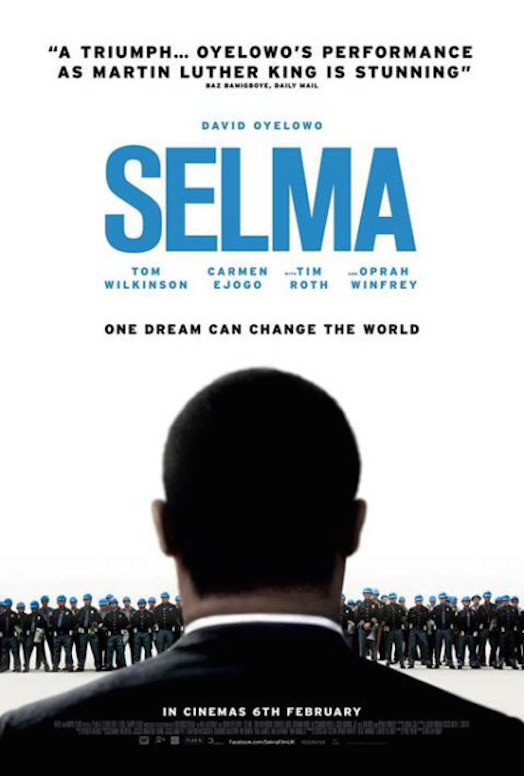
D: Ava DuVernay / 128m

Cast: David Oyelowo, Tom Wilkinson, Carmen Ejogo, André Holland, Stephan James, Common, Lorraine Toussaint, Giovanni Ribisi, Tim Roth, Wendell Pierce, Alessandro Nivola, Stephen Root, Oprah Winfrey, Dylan Baker, Cuba Gooding Jr, Martin Sheen

1964. Martin Luther King Jr (Oyelowo) receives the Nobel Peace Prize, mere weeks after the deaths of four children in an explosion at the 16th Street Baptist Church in Birmingham, Alabama. Also in Alabama, Annie Lee Cooper (Winfrey) tries to register to vote but has her application denied. King visits President Lyndon B. Johnson (Wilkinson) at the White House to ask for federal legislation that will allow black citizens to register without being impeded. Johnson tells him that, while he agrees with  King about the issue, it’s not one that he’ll be focusing on any time soon. Having already decided to march on the courthouse in Selma, Alabama if the President refuses to help, King sets things in motion.

Joined by members of the Southern Christian Leadership Conference (SCLC) and the Student Nonviolent Coordinating Committee (SNCC), King and his followers march on the courthouse where they’re confronted by the town sheriff and his men. A brawl ensues during which Clark is assaulted by Annie Lee Cooper and King and several others are jailed. Alabama’s governor, George Wallace (Roth) is angered by the protest, and when a night march in Marion is planned, he takes steps to have it dispersed. The march ends in violence and leads to the death of a young protester, shot while trying to avoid trouble in a restaurant. Following this, King receives criticism for his beliefs but he continues to insist that people should be fighting for their rights.

Another march is planned, this time from Selma to the state capital, Montgomery, a distance of fifty miles. Leaving Selma, the march crosses the Edmund Pettus Bridge where it is met by state troopers who instruct everyone to disperse. When they don’t, the troopers put on gas masks and start hurling tear gas into the crowd; they also attack the march using clubs and other weapons, as well as riding people down. It’s all witnessed by TV news crews and broadcast live across the nation, leaving Johnson angry at Wallace’s actions. He sends John Doar (Nivola), the Assistant Attorney General for Civil Rights to try and persuade King to call off the next attempt at marching to Montgomery, while he personally attempts to coerce Wallace into resolving the issue of registration and the use of state troopers if the march goes ahead.

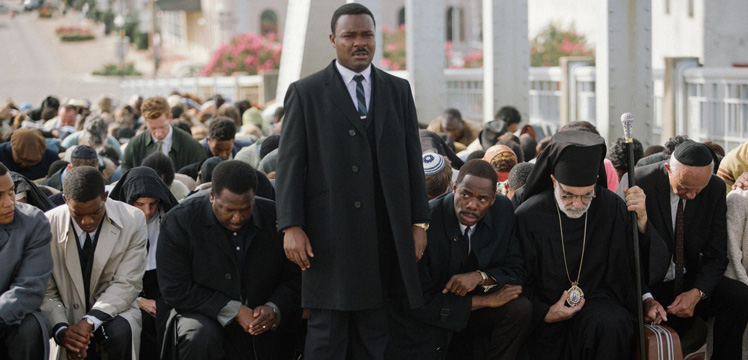
White Americans who support King’s cause and civil rights in general, arrive to take part in the march. Again they cross the bridge, but this time King is leading. When they see the state troopers, they’re surprised to see them step aside. King kneels and prays for a few minutes, then heads back into Selma, effectively cancelling the march. More political manoeuvrings go on, including Johnson asking Congress for the quick passing of a bill to eliminate restrictions on registering, and the march to Montgomery finally goes ahead.

Selma - scene

For America, the Sixties were a turbulent decade, one that saw a variety of freedoms and rights enshrined in law, and the beginning of a transition from the kind of post-War conservatism that saw danger in any type of change, to a more free-minded liberalism that challenged the old order on almost every front. Racial issues were high on the agenda, if not for the politicians, then certainly for black people, and not just in the South. It was a time when people from all walks of life began to stand up and say, “enough is enough” (or to paraphrase Howard Beale in Network (1976): “We’re mad as hell, and we’re not going to take it anymore!”). But as ever, the battle was an uphill one, and there were plenty of people, equally, who were prepared to see it fail.

The determination and the will to succeed that existed in Martin Luther King Jr is shown here as forceful and impassioned, but there’s a measure of self-doubt as well, and it’s this rounding of the man that helps make the movie as commanding as it is. Avoiding any attempts at mythologising King, Selma gives us a portrait of a man fully aware of his mission in life and confident enough to second-guess himself when needed. It’s a balance that could have been lost on several occasions during the course of the movie, not least in its depiction of his troubled marriage, where the script so neatly sidesteps any possibility of descending into soap opera that it makes for a refreshing change. And the complexities of the organisations involved and how they all interact with King, are also well handled, showing the figurehead but not the leader. The movie shows King making decisions based both on his own ideas and those of others, and if his opponents – such as Wallace – appear too one-dimensional in comparison, well, maybe that’s because they just were.

King is played with tremendous gravitas and skill by Oyelowo, imbuing King with a pride and a sensitivity that never seem at odds with each other. It’s an impressive achievement, sharply detailed, perfectly pitched, and one of the finest acting performances you’re likely to see in a long while. It helps that he has a passing resemblance to King, but it’s the voice that he captures so well, that distinctive, low cadence that could rise to a crescendo so effortlessly in the middle of a sentence. It’s not far from the truth to say that Oyelowo inhabits the man rather than impersonates or mimics him (listen to the speech the real King made when the march reached Montgomery, and then listen to Oyelowo’s version and see how close he is), and he’s just as effective in the movie’s more pensive moments as he is when called upon to be the fiery orator.

Good as Oyelowo’s performance – and it is very good – he wouldn’t have been anywhere near as imposing if it weren’t for an extremely well-structured and heavily nuanced script, courtesy of Paul Webb (his first). He makes the politics easy to understand, the characters easy to empathise with or condemn (as necessary), and he doesn’t rein in on the complexities of the issues concerned. It’s a great screenplay, and the rest of the cast, aided and abetted by DuVernay’s strong, sanguine direction, relish every scene and line at their disposal. (If there is one area, though, where Webb fails to convince, it’s in Johnson’s refusal to address the issue of voting registration; his arguments are spurious at best, though they may have been so at the time – it’s hard to tell.)

DuVernay, making only her third feature, emphasises the various relationships that develop between the different factions, and never loses sight of the human factor in amongst all the politicking. She uses the camera with aplomb, particularly with medium shots, imparting a level of detail some more experienced directors fail to achieve ever. And there’s a richness about the movie that speaks of carefully considered choices made ahead of filming, of everyone involved knowing exactly what’s required and everyone involved having the conviction to carry it off. The mood of the times, and the look of the times, are tellingly rendered, and the atmosphere surrounding the planning of each march is palpable, taking the movie – unwittingly perhaps – into thriller territory. But the drama remains throughout, and by the movie’s end, the audience is rejoicing almost as much as the characters are.

Rating: 9/10 – a rewarding look at a particular place and time in American history, Selma takes a flashpoint that resonates far beyond its happening, and makes it as compelling and vital as if it were happening today; a triumph for all concerned and buoyed by Oyelowo’s superb performance, DuVernay’s apposite approach to the material, and Webb’s rewarding screenplay.

Share this:

  • Click to share on X (Opens in new window) X
  • Click to share on Facebook (Opens in new window) Facebook
  • More
  • Click to print (Opens in new window) Print
  • Click to email a link to a friend (Opens in new window) Email
Like Loading...

Blog Stats

  • 486,963 hits

Recent Posts

  • 10 Reasons to Remember Bibi Andersson (1935-2019)
  • Fantasia (1940)
  • Dances With Wolves (1990) – The Special Edition
  • Kiss of the Spider Woman (1985)
  • The Three Musketeers (1973)

Top Posts & Pages

  • Lost for Life (2013) - Another Look
    Lost for Life (2013) - Another Look
  • Lost for Life (2013)
    Lost for Life (2013)
  • About
    About
  • Irrational Man (2015)
    Irrational Man (2015)
  • Pixels (2015)
    Pixels (2015)
  • The Rider (2017)
    The Rider (2017)
  • Cardboard Boxer (2016)
    Cardboard Boxer (2016)
  • Homefront (2013)
    Homefront (2013)
  • Mini-Review: Knock Knock (2015)
    Mini-Review: Knock Knock (2015)
  • Spotlight (2015)
    Spotlight (2015)
Follow thedullwoodexperiment on WordPress.com

Blogs I Follow

  • Rubbish Talk
  • Film 4 Fan
  • Fast Film Reviews
  • The Film Blog
  • All Things Movies UK
  • Interpreting the Stars
  • Let's Go To The Movies
  • Movie Reviews 101
  • TMI News
  • Dan the Man's Movie Reviews
  • Film History
  • Jordan and Eddie (The Movie Guys)

Archives

  • April 2019 (13)
  • March 2019 (28)
  • February 2019 (28)
  • January 2019 (32)
  • December 2018 (28)
  • November 2018 (30)
  • October 2018 (29)
  • September 2018 (29)
  • August 2018 (29)
  • July 2018 (30)
  • June 2018 (28)
  • May 2018 (24)
  • April 2018 (21)
  • March 2018 (31)
  • February 2018 (25)
  • January 2018 (30)
  • December 2017 (30)
  • November 2017 (27)
  • October 2017 (27)
  • September 2017 (26)
  • August 2017 (32)
  • July 2017 (32)
  • June 2017 (30)
  • May 2017 (29)
  • April 2017 (29)
  • March 2017 (30)
  • February 2017 (27)
  • January 2017 (32)
  • December 2016 (30)
  • November 2016 (28)
  • October 2016 (30)
  • September 2016 (27)
  • August 2016 (30)
  • July 2016 (30)
  • June 2016 (31)
  • May 2016 (34)
  • April 2016 (30)
  • March 2016 (30)
  • February 2016 (28)
  • January 2016 (35)
  • December 2015 (34)
  • November 2015 (31)
  • October 2015 (31)
  • September 2015 (34)
  • August 2015 (31)
  • July 2015 (33)
  • June 2015 (12)
  • May 2015 (31)
  • April 2015 (32)
  • March 2015 (30)
  • February 2015 (37)
  • January 2015 (39)
  • December 2014 (34)
  • November 2014 (34)
  • October 2014 (36)
  • September 2014 (25)
  • August 2014 (29)
  • July 2014 (29)
  • June 2014 (28)
  • May 2014 (23)
  • April 2014 (21)
  • March 2014 (42)
  • February 2014 (38)
  • January 2014 (29)
  • December 2013 (28)
  • November 2013 (34)
  • October 2013 (4)

Create a free website or blog at WordPress.com.

Rubbish Talk

Film 4 Fan

A Movie Blog

Fast Film Reviews

The Film Blog

The official blog of everything in film

All Things Movies UK

Movie Reviews and Original Articles

Interpreting the Stars

Dave Examines Movies

Let's Go To The Movies

Film and Theatre Lover!

Movie Reviews 101

Daily Movie Reviews

TMI News

Latest weather, crime and breaking news

Dan the Man's Movie Reviews

All my aimless thoughts, ideas, and ramblings, all packed into one site!

Film History

Telling the story of film

Jordan and Eddie (The Movie Guys)

Movie Reviews & Ramblings from an Australian Based Film Fan

Privacy & Cookies: This site uses cookies. By continuing to use this website, you agree to their use.
To find out more, including how to control cookies, see here: Cookie Policy
  • Subscribe Subscribed
    • thedullwoodexperiment
    • Join 481 other subscribers
    • Already have a WordPress.com account? Log in now.
    • thedullwoodexperiment
    • Subscribe Subscribed
    • Sign up
    • Log in
    • Report this content
    • View site in Reader
    • Manage subscriptions
    • Collapse this bar
 

Loading Comments...
 

    %d