• 10 Reasons to Remember…
  • A Brief Word About…
  • About
  • For One Week Only
  • Happy Birthday
  • Monthly Roundup
  • Old-Time Crime
  • Other Posts
  • Poster of the Week
  • Question of the Week
  • Reviews
  • Trailers

thedullwoodexperiment

~ Viewing movies in a different light

thedullwoodexperiment

Tag Archives: D.W. Griffith

D.W. Griffith Double Bill – The House of Darkness (1913) and The Mothering Heart (1913)

24 Thursday Sep 2015

Posted by dullwood68 in Movies

≈ Leave a comment

Tags

Affair, Asylum, Charles Hill Mailes, Claire McDowell, D.W. Griffith, Drama, Lillian Gish, Lionel Barrymore, Marriage, Mental illness, Review, Silent movies, Walter Miller

House of Darkness, The

The House of Darkness (1913)

D: D.W. Griffith / 17m

Cast: Lionel Barrymore, Claire McDowell, Charles Hill Mailes, Lillian Gish, Christy Cabanne, Robert Harron, William Elmer

In an asylum for people with “disordered minds”, a young nurse (McDowell) is wooed by one of the doctors (Barrymore). Their courtship leads to marriage, and a happy one at that. Meanwhile, one of the inmates, an older man (Mailes) who has clearly seen better times, wanders around quite calmly and with a dazed expression that speaks of his confusion. But when he suddenly turns violent, and for no apparent reason, he has to be physically restrained. As he struggles against the orderlies restraining him, the sound of a piano being played nearby by one of the other nurses (Gish), proves successful in calming down the old man, and returning him to his former docile state.

The hospital staff make a note of this, and the nurse is encouraged to play the piano whenever the man shows signs of aggression. However, it isn’t long before the man has another psychotic episode; in the process he escapes from the grounds of the asylum. He attacks two men in a park, and manages to wrest a gun from one of them. With orderlies and the police in pursuit, he flees the park and eventually finds himself outside the home of the recently married nurse and doctor. He breaks in, and discovers the nurse there by herself…
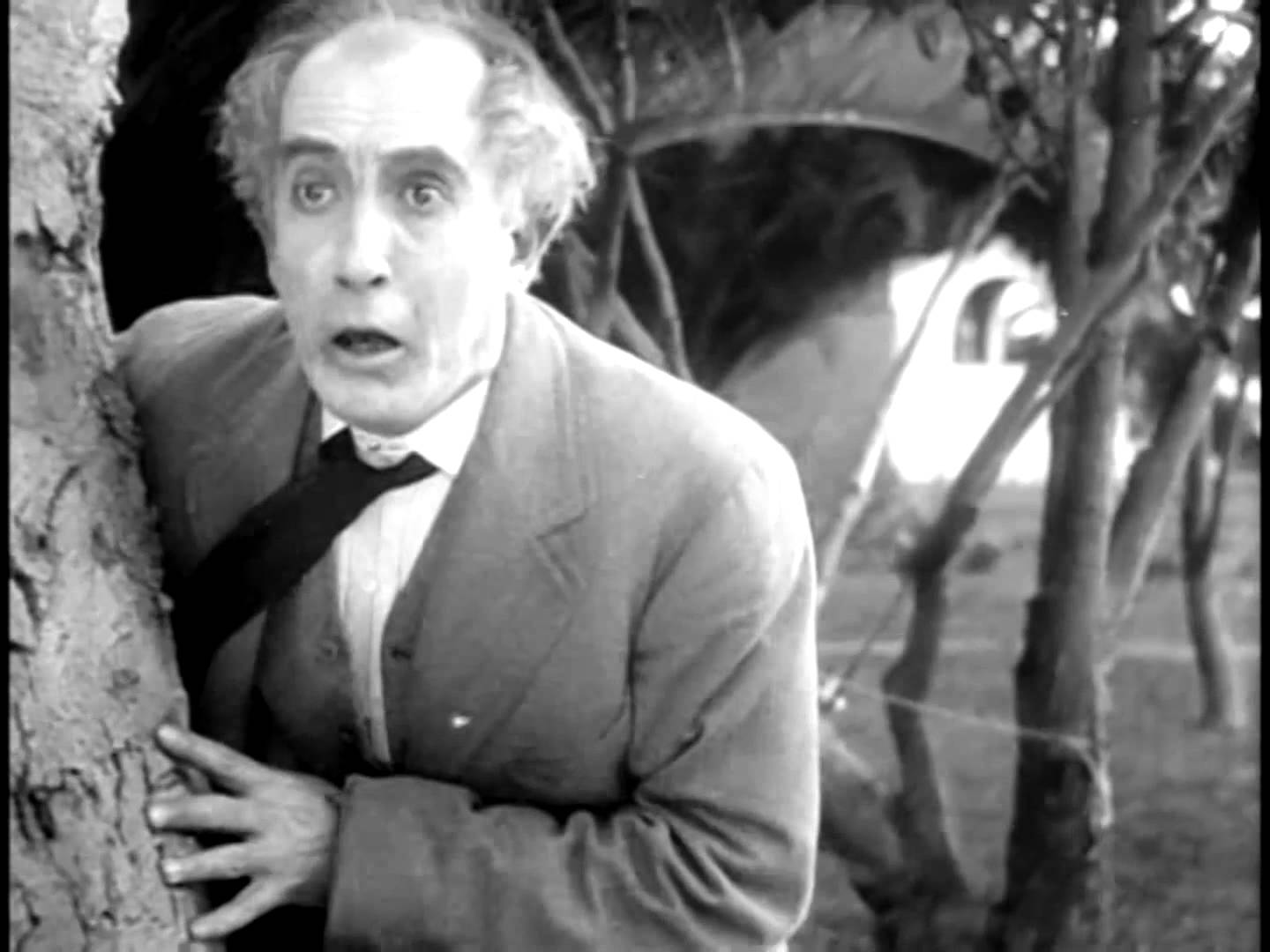
House of Darkness, The - scene

An interesting, well-made movie that shines an unexpectedly sympathetic spotlight on the mentally ill, Griffith’s even-paced, non-melodramatic portrayal of the “insane” (only once is the old man referred to as a lunatic), The House of Darkness is a perfect metaphor for the mind of a man with mental health problems. Without a strait-jacketed or gibbering madman in sight, this is still a powerful cry for a better understanding of those whose minds have betrayed them, and is remarkably “modern” in the way in which the old man’s mania is dealt with (even if it is based on the idea that “music hath charms to soothe the savage breast”).

With Barrymore and McDowell reduced to supporting players once their marriage is established it falls to Mailes to be the focus of the movie, and he gives a poignant, affecting performance that belies his usual role as a patrician elder, and also serves as a reminder that silent movie acting wasn’t always all declamatory hand gestures and facial gurning. Mailes has the viewer’s sympathy from the start, and even when he goes berserk, there’s always the sense that he can’t help what he’s doing and that he still deserves our understanding. Griffith, by now such an assured presence behind the camera that every shot and every camera placement provides information for the viewer to react to, keeps things from being too dramatic, and lets the story unfold with a grim fatalism that is thankfully derailed in the movie’s climax.

With the script having been written by the appropriately named Jere F. Looney (or unfortunately named, depending on your point of view), The House of Darkness is a solid, unspectacular yet moving account of madness and the burden it bestows on those affected by it. And in its own way, it’s as much an affecting drama as it is a gripping thriller.

Rating: 8/10 – a good example of Griffith subverting his audience’s expectations in terms of the movie’s approach to the subject matter, and bolstered by a great performance by Mailes, The House of Darkness is both illuminating and inspiring; a small-scale triumph and as relevant now as it was back then.
Mothering Heart, The

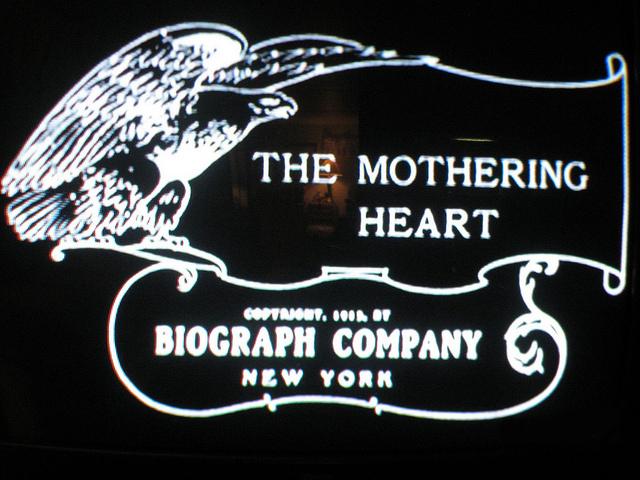
The Mothering Heart (1913)

D: D.W. Griffith / 29m

Cast: Walter Miller, Lillian Gish, Kate Bruce, Viola Barry, Charles West

A young woman (Gish), romantically involved with a young man called Joe (Miller), allows herself to be persuaded to marry him. They move into their new home but money is tight, and Joe is weighed down by his lack of success at work. His new bride earns extra money taking in ironing, and she’s pleased to do so, believing that it will only be a matter of time before her husband begins to earn better money. After a period where he returns home each night feeling more melancholy than the last, he finally has some good news: a welcome bonus. Joe wants to celebrate, and he tells his wife to get dressed to go out, but what she has to wear is neither new nor fashionable.

They go to a nightclub where Joe attracts the attention of a woman (Barry) sitting at the next table. His wife becomes aware of this and insists they leave, but a chance encounter with the woman leads to Joe neglecting his wife and spending more and more time with her, and in the same nightclub. When she finds out what he’s doing, she resolves to leave him. When she does, Joe is only momentarily upset, and continues to spend time with his new flame. His wife, meanwhile, goes back to living with her mother (Bruce), and without telling her husband that she’s expecting their child…
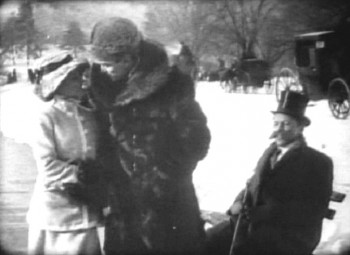
Mothering Heart, The - scene

By the time of The Mothering Heart, Griffith was looking ahead to making feature length movies, but this didn’t mean that he was restless or putting any less of an effort into his short features. Here he pulls no punches in highlighting the pitiful surroundings of the young married couple, and contrasting them with the gaudy excesses of the nightclub, with its ornate furnishings and impeccably attired clientele. Through this juxtaposition he shows just how easy it is for young men to forget what’s really important in their lives, and how it can just as easily drain the love of a young bride for her husband. It’s a simple tale, and while Griffith’s approach is simple as well, he also makes Joe’s deception and its consequences tremendously emotive.

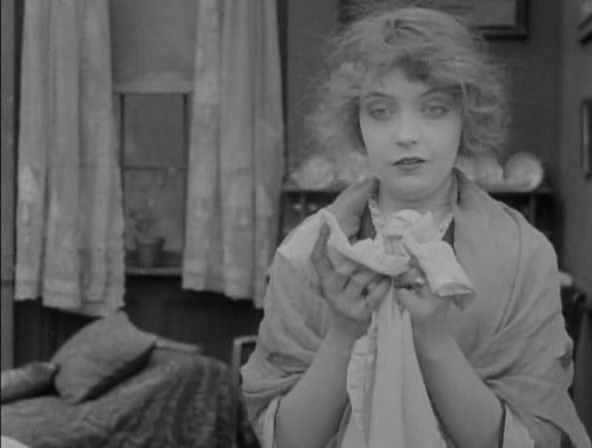
Of course, he’s aided immeasurably by Gish. It’s a little hard to credit, but at the time the movie was made, Gish was still only twenty, but in the scene where she first suspects her husband is deceiving her, she finds a glove in his coat pocket. At first she’s glad to find it, thinking it’s a present from him, but when she realises there’s only one, her expression begins to change from happiness to disappointment, all there for the audience to see as she stares into the camera. It’s a bravura moment, and beautifully crafted, as her faith in her husband is taken from her in a matter of seconds.

For all its passion and heartfelt melancholy, The Mothering Heart is also quite a restrained movie in terms of its look and the way in which Griffith uses fixed camera set ups throughout. This is a movie that is content to observe its characters and their actions, and its no frills approach adds beautifully to the carefully constructed mise en scene, the simple story allowed to be the focus and with little in the way of any distractions or irrelevancies (except for the nightclub dancers, that is).

Rating: 8/10 – with a tremendous performance by Gish, and assured, impressive direction from Griffith, The Mothering Heart is one of the very best of his American Biograph movies; powerful and moving, and visually striking, it’s a movie that rewards on far more levels than you’d expect, and paints a sobering portrait of young love undone.
Share this:

  • Click to share on X (Opens in new window) X
  • Click to share on Facebook (Opens in new window) Facebook
  • More
  • Click to print (Opens in new window) Print
  • Click to email a link to a friend (Opens in new window) Email
Like Loading...

D. W. Griffith Triple Bill: The Sealed Room (1909) / The Golden Louis (1909) / Politician’s Love Story (1909)

07 Saturday Jun 2014

Posted by dullwood68 in Movies

≈ Leave a comment

Tags

Adele DeGarde, Arthur V. Johnson, Beggar girl, Billy Bitzer, Cartoonist, Cask of Amontillado, Crooked politician, D.W. Griffith, Edgar Allan Poe, Gambler, Lovers, Mack Sennett, Marion Leonard, Period film, Silent film

NOTE: All three movies were viewed courtesy of http://www.archive.org – go check it out!

The Sealed Room (1909)

Sealed Room, The

D: D.W. Griffith / 11m

Cast: Arhur V. Johnson, Marion Leonard, Henry B. Walthall

Based on “The Cask of Amontillado” by Edgar Allan Poe, The Sealed Room is a period piece involving a count (Johnson), his wife (Leonard), and her minstrel lover (Walthall).  The count is madly in love with his wife, and while she returns his affections in public, in private she has eyes only for the lute-playing minstrel.  When the count arranges for a room in his apartments to be sealed – apart from one of the doors – so that only he and his wife can have access to it, he doesn’t envisage his wife and the minstrel using it themselves for some “alone” time.  He discovers them in mid-tryst, and in a fit of rage, has the remaining doorway blocked up, sealing them inside.

Using just two adjoining sets, Griffith populates the outer room with as many people as he can while foregrounding the main characters.  It’s here that his background in the theatre is most obvious, with his attention to blocking and everyone having something to do (Walthall’s facial expressions, combined with his lute playing while the count and his wife hug and kiss, are an unexpected viewing bonus.)  The cod-theatrical acting style, all declamatory arm-waving and brash physical posturing, is all present and correct, and while Griffith does very little to rein in the hysterics, he still manages to elicit good performances from his leading actors (bearing in mind the acting style of the times).

There are some lapses – the lovers fail to hear the doorway being sealed up, and when it’s done the count is clearly enjoying listening to their cries of horror – but The Sealed Room is an entertaining, if overly dramatic, movie that makes the most of its two-camera set up and basic structure.

Rating: 7/10 – straightforward adaptation of the Poe tale and told with plenty of enthusiasm; a lively endeavour with Griffith’s direction providing much of the movie’s flair.

The Golden Louis (1909)

Golden Louis, The

D: D.W. Griffith / 6m

Cast: Adele DeGarde, Charles Inslee, Owen Moore, Anita Hendrie

A young girl (DeGarde) is begging in the snow-covered streets but she is so frail and underfed she only manages to make it as far as some nearby steps before collapsing.  While she sleeps a passing stranger (Moore) sees her and, taking pity on her plight, places a gold coin in the shoe she’s been using as a collection plate.  Nearby, a gambler (Inslee) is having bad luck at the tables.  Leaving the gambling den he spies the coin and, convinced his finding it is providential, takes it and returns to the gambling den.  There the coin does indeed prove a godsend, and he wins a lot of money.

While the gambler congratulates himself, the young girl wakes.  She returns to where she first began begging.  Meanwhile, the gambler, wanting to repay the young girl for her unwitting kindness, returns to the steps and finds her missing.  He looks for her, while the girl, still having no luck with her begging, retraces her steps and collapses again on the steps.  The gambler eventually finds her and takes her up in his arms (thereby, presumably saving her).

The Golden Louis shows Griffith working again in a studio, but using the usual static camera placements in such a way that there’s a sense of space and depth to the images throughout.  As usual, Griffith’s compositional skills are highly effective, and the set dressing makes it look convincingly cold.  The acting is less histrionic than usual, and the editing complements the action more judiciously than many of Griffith’s other works from the same year.  There’s even room for some social commentary in the plight of the young girl, a theme that Griffith would return to often in his career.  On the downside, the girl’s waking and wandering off, while adding an element of tension to the story, is undermined by her returning to the very same spot (and by the gambler searching in the same circular manner).

Rating: 8/10 – some contrivance at the end aside, The Golden Louis entertains throughout and shows Griffith making better use of the physical aspects of the production; ultimately redemptive, the movie succeeds on more than one level, and is a must-see for silent movie fans.

Politician’s Love Story (1909)

Politician's Love Story

D: D.W. Griffith / 6m

Cast: Mack Sennett, Marion Leonard, Herbert Prior, Arthur V. Johnson

When crooked politician Boss Crogan (Sennett) is shown a satirical caricature of himself in the newspaper, his outrage is such that he grabs a gun and races to the newspaper’s offices to shoot the cartoonist, called Peter.  After threatening what seems like half the newsroom he is directed to Peter’s Corner, only to find the cartoonist is a woman (Leonard).  Shocked by this unexpected turn of events, Crogan refrains from shooting her, and instead becomes besotted by her.  He tries to get her to go out with him but she refuses his offer.

Crogan returns home but finds himself restless.  This time leaving his gun behind he goes back out, and ends up at a nearby park.  He sits down on a bench and looking lost and forlorn, watches as a succession of loving couples walk past.  In time he gets up and is leaving the park when he spies “Peter”.  As he approaches, “Peter” is stopped by another man.  Crogan warns the man off, and finds “Peter” grateful for his intervention.  They walk back into the park, and the previously rebuffed politician gets a kiss.

Half filmed in the studio and half on location, Politician’s Love Story sees Griffith try his hand at an early romantic comedy, with mixed results.  The comic elements – which consist largely of Sennett waving a gun around the newsroom and having the staff all duck down repeatedly – are heavy-handed and suffer from the repetition.  The romantic elements are too fleeting, and the parade of lovestruck couples in the park serves only to pad out the running time; it’s clear Crogan is a sad figure at this point (it also gives Griffith a chance to appear on screen as well – he and Dorothy West are the first couple to pass Crogan).  “Peter”‘s change of heart is a little too sudden also.

That said, the wintry location photography, credited to regulars Billy Bitzer and Arthur Marvin, is a bonus, and gives Griffith a chance to spread his wings beyond the confines of the studio.  His positioning of the camera in these shots though is slightly tentative, and as expected there’s no attempt to break away from the standard medium shot that characterised Griffith – and many other silent film directors’ – approach during this period.  But as a possible experiment, the movie retains some interest.

Rating: 4/10 – minor Griffith, and indicative of the perils associated with making one hundred and forty-nine short films in the same year; one for completists only.

Share this:

  • Click to share on X (Opens in new window) X
  • Click to share on Facebook (Opens in new window) Facebook
  • More
  • Click to print (Opens in new window) Print
  • Click to email a link to a friend (Opens in new window) Email
Like Loading...

An Arcadian Maid (1910)

12 Tuesday Nov 2013

Posted by dullwood68 in Movies

≈ Leave a comment

Tags

D.W. Griffith, Drama, Gambling, Mack Sennett, Mary Pickford, Peddler, Review, Romance, Silent film, Stolen money

Arcadian Maid, An

D: D.W. Griffith / 16m

Cast: Mary Pickford, Mack Sennett, George Nichols, Kate Bruce

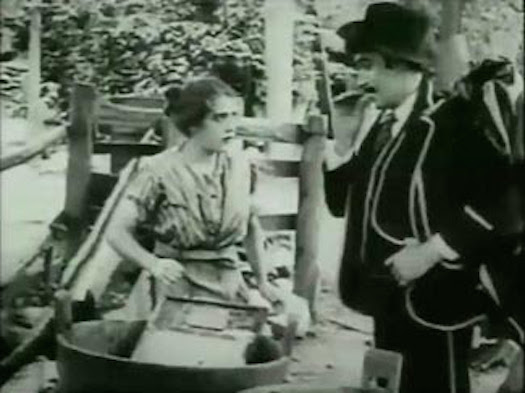
An engaging tale of romantic deception, An Arcadian Maid sees Priscilla (Pickford) finding work on a farm run by a farmer (Nichols) and his wife (Bruce). Shortly after, Priscilla is approached by a peddler (Sennett) who pays attention to her before showing his wares to the farmer’s wife. Unable to make a sale, the peddler speaks again to Priscilla. Before he takes his leave he gives her a ring, and declares them betrothed. Later, in town, the peddler loses what money he has in a gambling den. Aware that the farmer and his wife are in possession of a large sum of money, and determined to clear his gambling debts, the peddler persuades Priscilla to steal the money for him.

An Arcadian Maid was one of 96 short films D.W. Griffith made in 1910 – that’s one movie nearly every four days – and it plays simply and effectively. Pickford may throw her arms in the air a few times to show agitation, and Sennett play with the ends of his moustache a little too often, but this is a pretty straightforward tale of petty larceny and shattered romantic dreams. The pleasure to be had from a lot of movies of this period is the very brevity that forced filmmakers to focus on what was necessary and important to the storyline (here the work of Stanner E.V. Taylor); it wouldn’t be unfair to say this is as lean a piece of filmmaking as you’re likely to see under any circumstances. Griffith marshals his cast to good effect, and keeps a tight grip on proceedings.  G.W. Bitzer’s photography is sharp and well-lit (not always the case with movies of this period), while the two leads work well together, lending an air of credibility that, as with the photography, wasn’t always the case.

Arcadian Maid, An - scene

The ending rounds off proceedings satisfactorily, with the villain punished and the heroine redeemed. Griffith’s strengths as a director are in evidence: the affecting nature of the peddler’s wooing of the naive Priscilla; the tension created when Priscilla steals the couples’ money; the peddler’s dramatic comeuppance; and Priscilla’s redemption thanks to the intervention of Fate. Griffith was a very “proper” director, even for the time, and his moral fables were popular; An Arcadian Maid gives a good indication why.

Rating: 8/10 – an involving and rewarding tale that cements Pickford’s rising stardom, and also gives a clue as to why Sennett moved into the production side of things; a small, rarely seen gem that bolsters the importance of the silent short film.

Share this:

  • Click to share on X (Opens in new window) X
  • Click to share on Facebook (Opens in new window) Facebook
  • More
  • Click to print (Opens in new window) Print
  • Click to email a link to a friend (Opens in new window) Email
Like Loading...

Blog Stats

  • 486,633 hits

Recent Posts

  • 10 Reasons to Remember Bibi Andersson (1935-2019)
  • Fantasia (1940)
  • Dances With Wolves (1990) – The Special Edition
  • Kiss of the Spider Woman (1985)
  • The Three Musketeers (1973)

Top Posts & Pages

  • Lost for Life (2013) - Another Look
    Lost for Life (2013) - Another Look
  • Lost for Life (2013)
    Lost for Life (2013)
  • About
    About
  • BFI London Film Festival 2015
    BFI London Film Festival 2015
  • Mr. Topaze (1961)
    Mr. Topaze (1961)
  • Winter's Tale (2014)
    Winter's Tale (2014)
  • Hunt for the Wilderpeople (2016)
    Hunt for the Wilderpeople (2016)
  • Shock and Awe (2017)
    Shock and Awe (2017)
  • Cardboard Boxer (2016)
    Cardboard Boxer (2016)
  • Billy Lynn's Long Halftime Walk (2016)
    Billy Lynn's Long Halftime Walk (2016)
Follow thedullwoodexperiment on WordPress.com

Blogs I Follow

  • Rubbish Talk
  • Film 4 Fan
  • Fast Film Reviews
  • The Film Blog
  • All Things Movies UK
  • Interpreting the Stars
  • Let's Go To The Movies
  • Movie Reviews 101
  • TMI News
  • Dan the Man's Movie Reviews
  • Film History
  • Jordan and Eddie (The Movie Guys)

Archives

  • April 2019 (13)
  • March 2019 (28)
  • February 2019 (28)
  • January 2019 (32)
  • December 2018 (28)
  • November 2018 (30)
  • October 2018 (29)
  • September 2018 (29)
  • August 2018 (29)
  • July 2018 (30)
  • June 2018 (28)
  • May 2018 (24)
  • April 2018 (21)
  • March 2018 (31)
  • February 2018 (25)
  • January 2018 (30)
  • December 2017 (30)
  • November 2017 (27)
  • October 2017 (27)
  • September 2017 (26)
  • August 2017 (32)
  • July 2017 (32)
  • June 2017 (30)
  • May 2017 (29)
  • April 2017 (29)
  • March 2017 (30)
  • February 2017 (27)
  • January 2017 (32)
  • December 2016 (30)
  • November 2016 (28)
  • October 2016 (30)
  • September 2016 (27)
  • August 2016 (30)
  • July 2016 (30)
  • June 2016 (31)
  • May 2016 (34)
  • April 2016 (30)
  • March 2016 (30)
  • February 2016 (28)
  • January 2016 (35)
  • December 2015 (34)
  • November 2015 (31)
  • October 2015 (31)
  • September 2015 (34)
  • August 2015 (31)
  • July 2015 (33)
  • June 2015 (12)
  • May 2015 (31)
  • April 2015 (32)
  • March 2015 (30)
  • February 2015 (37)
  • January 2015 (39)
  • December 2014 (34)
  • November 2014 (34)
  • October 2014 (36)
  • September 2014 (25)
  • August 2014 (29)
  • July 2014 (29)
  • June 2014 (28)
  • May 2014 (23)
  • April 2014 (21)
  • March 2014 (42)
  • February 2014 (38)
  • January 2014 (29)
  • December 2013 (28)
  • November 2013 (34)
  • October 2013 (4)

Blog at WordPress.com.

Rubbish Talk

Film 4 Fan

A Movie Blog

Fast Film Reviews

The Film Blog

The official blog of everything in film

All Things Movies UK

Movie Reviews and Original Articles

Interpreting the Stars

Dave Examines Movies

Let's Go To The Movies

Film and Theatre Lover!

Movie Reviews 101

Daily Movie Reviews

TMI News

Latest weather, crime and breaking news

Dan the Man's Movie Reviews

All my aimless thoughts, ideas, and ramblings, all packed into one site!

Film History

Telling the story of film

Jordan and Eddie (The Movie Guys)

Movie Reviews & Ramblings from an Australian Based Film Fan

Privacy & Cookies: This site uses cookies. By continuing to use this website, you agree to their use.
To find out more, including how to control cookies, see here: Cookie Policy
  • Subscribe Subscribed
    • thedullwoodexperiment
    • Join 481 other subscribers
    • Already have a WordPress.com account? Log in now.
    • thedullwoodexperiment
    • Subscribe Subscribed
    • Sign up
    • Log in
    • Report this content
    • View site in Reader
    • Manage subscriptions
    • Collapse this bar
 

Loading Comments...
 

    %d