• 10 Reasons to Remember…
  • A Brief Word About…
  • About
  • For One Week Only
  • Happy Birthday
  • Monthly Roundup
  • Old-Time Crime
  • Other Posts
  • Poster of the Week
  • Question of the Week
  • Reviews
  • Trailers

thedullwoodexperiment

~ Viewing movies in a different light

thedullwoodexperiment

Tag Archives: Dane DeHaan

Valerian and the City of a Thousand Planets (2017)

08 Tuesday Aug 2017

Posted by dullwood68 in Movies

≈ 1 Comment

Tags

Action, Alpha, Cara Delevingne, Clive Owen, Dane DeHaan, Drama, Ethan Hawke, Fantasy, Luc Besson, Review, Rihanna, Sci-fi

D: Luc Besson / 137m

Cast: Dane DeHaan, Cara Delevingne, Clive Owen, Rihanna, Ethan Hawke, Herbie Hancock, Kris Wu, Sam Spruell, Alain Chabat, John Goodman, Elizabeth Debicki, Rutger Hauer

There’s a phrase, “Beware of Greeks bearing gifts”, that needs an update. It should now read, “Beware of French movie directors making vanity projects”. A project that’s been on his mind to make since The Fifth Element (1997), Luc Besson’s Valerian and the City of a Thousand Planets arrives trailing a cosmos-worth of hype and anticipation, but somehow manages to land with a massive, resounding thud. This is a movie that looks continuously busy, but at the same time it feels like it’s leaden and ponderous. It’s another loud barrage of a sci-fi movie driven by mounds of uninteresting exposition, and supported by empty visuals that look amazing but offer as much refreshment as an empty bottle of water. It’s a mess, and one that never lets up in its efforts to impress you with its meticulously detailed sets and costumes, and its tired characterisations. There’s a love story too, between two charismatic military operatives, Valerian (DeHaan) and Laureline (Delevingne), that offers occasional and all too brief periods of respite from the CGI onslaught, and which feels as organic as the pixelated backgrounds it plays in front of. And there’s a villain, one so obvious that they might as well stomp around yelling, “I’m the bad guy!” (in case the viewer isn’t sure).

There’s more, lots more, lots and lots and lots of it, with Besson aiming to include a veritable kitchen sink’s worth of alien species, high-tech weaponry, dazzling backdrops, vibrant colours, impressive make up designs, and specious action scenes. There’s a story in there too – somewhere – but it’s overwhelmed by the movie’s need to keep moving from one breakneck-paced scene to another. There are long stretches where the viewer might find themselves wondering if they’ve transitioned into watching the video game version of Valerian… and other stretches where they might also be wondering if Besson actually knows what’s supposed to happen next. Too often, things happen for no better reason than that Besson wants them to, and the pacing seems relentless, as the writer/director flings his lead characters into danger after danger, but without once actually putting them in danger.

The cast suffer almost as often and as much as the viewer. As the titular hero, DeHaan tackles the role with enthusiasm and a fair degree of commitment, but is hampered by Besson’s decision to make Valerian look and sound like a high school kid on his first day at an entry-level job. DeHaan is a talented actor but fantasy sci-fi is not his forte, and he rarely seems comfortable with all the running and leaping about and firing guns. Delevingne, meanwhile, appears to be far more in tune with Besson’s ambitions for the movie, and her knowing, unimpressed demeanour works well for the character, and acts as a subtle commentary on the movie as a whole. But too often, Laureline has to play second fiddle to Valerian, an unhappy circumstance that gives rise to the idea that in the 28th century, sexism still hasn’t been consigned to the dustbin of history.

There’s a great supporting cast, too, used to occasional good effect, but too often required to stand around waiting for the next clunking shift in the storyline to get them moving again. Owen’s character is an angry clown in a self-consciously big hat, Rihanna is a shapeshifting cabaret artist whose admittedly enjoyable stage routine still stops the movie dead in its tracks, Hawke (as Jolly the Pimp no less!) seems to be acting in another movie altogether, while Hauer gets off lightly with a Presidential address at the start of the movie that has all the hallmarks of being a favour to the director. Only Spruell as an harassed general seems to have grasped Besson’s intentions for his character, and as a result, his appearances are a godsend.

In case you’re wondering if there’s anything remotely good about Valerian and the City of a Thousand Planets, then rest assured there is, but unfortunately it’s all packed into the first fifteen to twenty minutes. Here we see the International Space Station grow in size as several countries from Earth send representatives in space vehicles that attach themselves to the station. As time goes by, alien life-forms also visit the station, and the same welcoming rituals are observed: a handshake, a bemused smile/grimace from the human in charge, and a succession of impressively realised aliens who seemed equally bemused by the idea of said handshake. As more and more ships arrive and attach themselves, the space station becomes – ta-da! – Alpha, the city of a thousand planets. It’s a terrific idea, well executed, and bodes well for the rest of the movie. Things look even better when the narrative shifts to the planet Mül, and we’re introduced to the race that live there, a peaceful, pearl-cultivating civilisation that becomes central to the plot later on (as expected), and which is apparently wiped out by events happening nearby in space. But with that prologue out of the way, we’re thrust thirty years on and forced to put up with the romantic aspirations of Valerian, and the machinations of a plot that serves as a second cousin retread of Besson’s earlier work on The Fifth Element (watch that movie now and you’ll see how inter-connected they are).

When a director announces that they’re finally going to make a long-cherished project, and one that they’ve delayed making due to the limitations of existing technology, it should be a cause for celebration. After all, it wouldn’t be wrong to believe that as they have such a passion for the project, that they’d make every effort to ensure the finished product was a vast cut above their other movies, the pinnacle of their career perhaps. But somewhere along the way, Besson has settled for making a movie that is plodding and uninspired. Scenes and characters come and go without making the slightest impact, and Besson makes the same basic error that so many other fantasy/sci-fi directors make: they mistake a distinct visual style for substance. This leaves Valerian… feeling like it’s only half the movie Besson envisaged, and with a generic genre score by the usually reliable Alexandre Desplat to add to the misery, this is a strong contender for Most Disappointing Movie of 2017.

Rating: 4/10 – technical wizardry aside, Valerian and the City of a Thousand Planets is an unabashed dud, content to make as little effort as possible, and trading on its writer/director’s past glories; with its €197 million budget making it the most expensive European and independent movie ever made, it’s a shame that all that money has been used to such undemanding and underwhelming effect.

Share this:

  • Click to share on X (Opens in new window) X
  • Click to share on Facebook (Opens in new window) Facebook
  • More
  • Click to print (Opens in new window) Print
  • Click to email a link to a friend (Opens in new window) Email
Like Loading...

A Cure for Wellness (2016)

10 Friday Mar 2017

Posted by dullwood68 in Movies

≈ 3 Comments

Tags

Celia Imrie, Cure, Dane DeHaan, Drama, Gore Verbinski, Jason Isaacs, Mia Goth, Mystery, Review, Swiss Alps, Thriller, Water

D: Gore Verbinski / 146m

Cast: Dane DeHaan, Jason Isaacs, Mia Goth, Ivo Nandi, Adrian Schiller, Celia Imrie, Harry Groener, Tomas Norström, Ashok Mandanna, Magnus Krepper, Peter Benedict

An early contender for Most Disappointing Movie of the Year, A Cure for Wellness held so much promise that it was perhaps inevitable that it wouldn’t hold up under close scrutiny. The return to live action moviemaking of Gore Verbinski after the less-than-stellar The Lone Ranger (2013), the movie looked like it could be many different things all at once, and while that’s not usually a good sign, Verbinski’s skill as a director meant that the movie had a better than average chance of being a success. And with no other feature in 2017 looking as if it could match the movie’s style and sense of mysterious intrigue, it seemed equally inevitable that, whatever reaction it received, it was destined for cult status.

While it’s a little early to be certain if A Cure for Wellness will achieve cult status, right now one thing that can be said is that if you make it all the way through to the end, then your own status as a tenacious, determined individual is assured. Put simply, the movie has a similar effect that a stay at the mysterious wellness centre has on its patients: it slowly drains the life out of anyone watching it, and they end up a dried out husk (it’s one of the movie’s more clumsy revelations: that patients at the spa are dying from dehydration). Verbinski has attempted to make a gothic mystery, but in doing so, has forgotten that if you’re going to put people in mortal jeopardy, then the mortal jeopardy has got to be very frightening indeed, and the nature of the mystery has got to be fully explained and not rendered unintelligible thanks to its being unintelligible in the first place.

The mystery itself is quite a simple one: what’s going on at a secluded spa in the Swiss Alps? But on the back of this, Verbinski and screenwriter Justin Haythe have fashioned a tepid melodrama that twists and turns in an effort to be intriguing, but which unfortunately, is more likely to leave viewers irretrievably puzzled instead of satisfied. As the viewer slowly learns the deep, dark, terrible history of the area, and how its legacy is still being felt two hundred years later, the movie hints at even darker, more disturbing things going on behind the spa’s public façade. And to help the viewer unravel the mystery, we have DeHaan’s venal financial consultant, a man we know almost from the start to be duplicitous and corrupt. He’s our anti-hero, unsympathetic for the most part, and someone we wouldn’t want to identify with in a million years. It seems, though, that DeHaan knows this, and he doesn’t try to make the character likeable, or misunderstood, or deserving of anything other than our immediate mistrust. But that’s at the beginning; sadly though, very little of that changes as the movie wearyingly moves on.

In making DeHaan’s character, Lockhart, so unappealing, the movie lacks a central figure for the audience to care about (even when he’s strapped into a dentist’s chair with a drill about to do something horrible to him; the audience won’t be cringing because he’s the one in the chair, but because they’re imagining themselves in the chair). Lockhart is the intended fall guy, the patsy, and for long periods – and this is a movie that delights in long periods – his fate seems assured. Sent to retrieve his firm’s AWOL CEO, Pembroke (Groener), Lockhart encounters obstacle after obstacle until he’s reassured he can see his boss later that day. But a car crash leaves him with a broken leg and no immediate way of leaving the spa. And when he finally sees Pembroke, the man is initially reluctant to leave, though he does eventually agree he should return (there’s some nonsense about an imminent business merger and financial irregularities to be pinned on the CEO, but it’s all irrelevant to the main plot and serves merely as a contrived way of getting Lockhart to Switzerland).

The best laid plans rule comes into play at this point, and Pembroke is supposed to have suffered a relapse and retracted his decision. Lockhart becomes intrigued by the spa’s history – aided by a conveniently interested and knowledgeable patient, Victoria Watkins (Imrie) – and begins to piece together its tortuous past. He also becomes intrigued by the presence of Hannah (Goth), the youngest patient there by at least thirty years, and in the words of the spa’s director, Dr Volmer (Isaacs), “a special case”. Lockhart begins to suspect that Volmer is conducting clandestine experiments on the so-called patients, and that the water everyone drinks is contributing to the ill health that they’re all experiencing. As he begins to piece together the truth of what is happening, and Hannah’s role in it all, he makes another, more startling discovery, and soon finds his own life is in serious jeopardy.

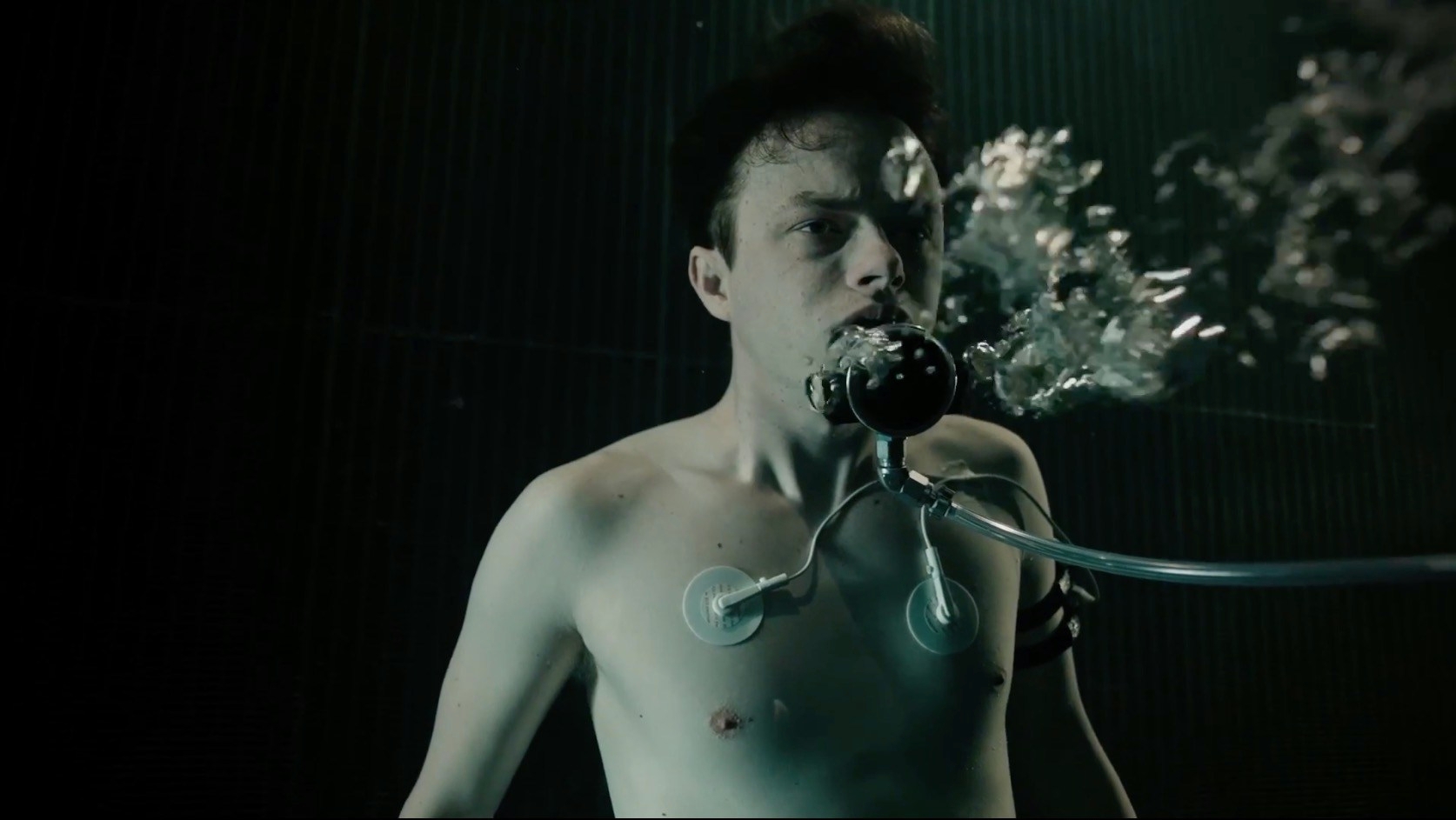
There’s a lot more to the movie than the previous two paragraphs can cover, and that’s part of the problem; it tries to be so many different things, and never settles on one thing for good. As the plot unfolds, stranger and stranger things occur and are witnessed, but not with any sense that said stranger things might be meaningful, or dangerous necessarily to Lockhart’s health. There’s a scene late on where Lockhart is trapped (barring his head) in what looks like a reconstituted iron lung. He’s roughly intubated and live eels flow down into his body. If this was a normal, reality-based incident, Lockhart would die from the experience; in the aftermath however, Verbinski has DeHaan play him like he’s experiencing time dilation, or has taken one too many downers. And then, just as suddenly, he’s over it, because the movie needs a rousing climax – not that it gets it; it gets perverse body horror instead – rather than its anti-hero staring into space until he dies.

A Cure for Wellness is a movie that its creators have made inaccessible and obscure in terms of its narrative, and the tangled history of the spa and what happened on its site two hundred years before. Some viewers will manage to work out what’s going on and why, but it won’t make any difference if they’re right or wrong. Verbinski and Haythe are less concerned with making it all appear real than they are in trying to instill a palpable sense of dread into the material. But with too many scenes outstaying their welcome, or failing to advance the plot in any way, what the viewer is left with is a movie that often looks stunning – Eve Stewart’s production design deserves every superlative you can think of – but which doesn’t know when to shut up shop and say “that’s enough already”. By the time it reaches its faux-Hammer finale, the movie has lost any intensity it may have had, and Verbinski’s handling of the last ten to fifteen minutes lacks the necessary impact to make it work properly. It’s less “Oh my God!” and more “Oh my, is that the time?”

On the performance side, DeHaan enters into the spirit of things with obvious commitment (and no small amount of personal discomfort in some scenes), but even though he brings a great deal of sincerity to his role, it doesn’t help the viewer connect with Lockhart in any meaningful way, and when he does suffer at the hands of Volmer or others, there’s no emotional investment there on the viewer’s part. As the probably devious Volmer, Isaacs is a calmer presence than DeHaan, his urbane manner contrasting with DeHaan’s more aggressive portrayal, but all that is thrown away by the demands of the finale’s Gothic excesses. And as the ethereal Hannah, Goth gets to act all mysterious and coy in a performance that matches the part, but which isn’t allowed to develop beyond Hannah’s being a very curious damsel in distress. All three make the movie more palatable thanks to their involvement, but ultimately all three are just pawns moved about in awkward ways by Verbinski’s unconvincing approach to the material.

Rating: 5/10 – bloated and stagnant for long stretches, A Cure for Wellness looks impressive from the outside, but is fatally hollow on the inside; part psychological drama, part horror, it’s a movie whose storyline never really gels or feels organic, and which relies too heavily on its visuals to be anywhere near as effective as the thriller it’s meant to be.

Share this:

  • Click to share on X (Opens in new window) X
  • Click to share on Facebook (Opens in new window) Facebook
  • More
  • Click to print (Opens in new window) Print
  • Click to email a link to a friend (Opens in new window) Email
Like Loading...

Life After Beth (2014)

30 Thursday Oct 2014

Posted by dullwood68 in Movies

≈ Leave a comment

Tags

Aubrey Plaza, Black comedy, Dane DeHaan, Jeff Baena, John C. Reilly, Molly Shannon, Review, Rom-zom-com, Romantic comedy, Undead, Zombie

Life After Beth

D: Jeff Baena / 89m

Cast: Aubrey Plaza, Dane DeHaan, John C. Reilly, Molly Shannon, Cheryl Hines, Paul Reiser, Matthew Gray Gubler, Anna Kendrick

Zach Orfman (DeHaan) has been devastated by the unexpected death of his girlfriend, Beth Slocum (Plaza).  Unable to fully come to terms with her passing, Zach spends time after the funeral with her parents, Maury (Reilly) and Geenie (Shannon).  His behaviour concerns his own parents, Judy (Hines) and Noah (Reiser), as well as his brother Kyle (Gubler).  When Zach goes to see the Slocums but they don’t answer the door, or return his phone calls he’s initially upset.  He decides to try one last time to see them but when he does they still don’t answer the door.  Knowing they’re inside, Zach looks in through one of the windows… and sees Beth.

Forcing his way in, Zach confronts the Slocums who tell him that Beth came home on the night of the wake and seems fine, but she has no memory of dying; as far as she’s concerned she has a test at school the next day even though it’s summer break.  The Slocums allow Zach to visit Beth but insist he doesn’t tell her what’s happened to her.  Zach reluctantly agrees and the two resume dating, but Beth’s behaviour is erratic and demanding.  As time goes on it becomes more difficult to hide the fact that Beth has come back from the dead.  She begins to deteriorate, but her parents continue to reject Zach’s pleas to tell her the truth.

Things come to a head when Zach bumps into an old schoolfriend, Erica (Kendrick) at a restaurant.  He tells her about Beth’s death (but not her resurrection).  When he leaves he (literally) runs over Beth who is unharmed.  Erica appears and is surprised by Beth’s appearance.  Beth realises Zach is keeping something from her, and forces him to tell her what it is.  He shows Beth her grave and the hole in it where she got out.  She runs off.  Zach returns home to find his dead grandfather has returned as well; it becomes clear that the dead are returning in droves and the town becomes a disaster zone, with vigilante groups culling the undead.  Still in love with Beth he races to the Slocums to rescue her, but now Beth is constantly in need of food, preferably human flesh.  Zach is faced with a terrible choice: to travel far away with Beth and keep her safe, or send her back to the grave.

Life After Beth - scene

A rom-zom-com with plenty of heart (and other body parts), Life After Beth is a deftly funny diversion that treats its central character with dignity and affection, even when she is trying to devour someone or has degenerated into a snarling zombie.  It walks a fine line between horror and comedy, and adds romance to the mix with surprising ease, making its absurd premise all the more believable.  It’s all cleverly done, and though it would have been easy to do so, doesn’t rely on self-reflexive in-jokes or knowing nods to the camera.  Life After Beth is played largely straight, incorporating humour with a relaxed confidence, and making the horror elements as gruesome as the material needs (which isn’t very gruesome).

The partly traditional romantic tale is well catered for – boy loses girl, boy gets girl back, girl turns into ravenous monster, boy still loves her – and is handled with assurance by Plaza and DeHaan.  Plaza effects Beth’s transformation from slightly confused corpse to psychotic girlfriend to the aforementioned ravenous monster with a surprising amount of charm, investing Beth with an unexpected warmth that offsets the cruel trajectory her character takes as the movie progresses.  With her pinched features and wide eyes, Plaza makes Beth both dangerous and (relatively) innocent at the same time.  As the bewildered and conflicted Zach, DeHaan shows an aptitude for comedy that might not have been readily apparent from his previous movie roles, and is a delight to watch as he struggles with his feelings for Beth in the face of her rapidly deteriorating behaviour.  Together, they’re a winning team, sparking off each other and making Zach and Beth’s relationship entirely credible – even if one of them is dead.

Writer/director Baena’s only previous credit is the script for David O. Russell’s I ♥ Huckabees (2004).  With such an assured movie as this it’s a shame he hasn’t had any other projects produced since then.  He gets the tone just right, even when he throws in some awkward necrophilia, and as mentioned already, obtains strong performances from his two leads while allowing his supporting cast to do what they do best: almost steal the movie.  Reilly is on great form, turning self-denial into a personal mantra, and Shannon is terrific as well, her offbeat screen persona a perfect match for Geenie, a woman who responds to life just a second or two too late (watch out for how she feeds Beth at one point).

The movie extracts so much good will in its relatively short running time it’s almost embarrassing, but Life After Beth is that enjoyable; at times it’s a romp, at other times  it’s a sly meditation on love’s permanence and the sacrifices we make to hold onto it.  Baena even finds time to add one of the year’s funniest moments as Beth leaves home strapped to a cooker.  It’s laugh out loud funny and worthy of an award all on its own.

Rating: 8/10 – everything a good rom-zom-com should be, Life After Beth is a small-scale delight; witty, with plenty of pathos and charm, it’s refreshingly mounted and seductively light-hearted – in short, an absolute joy.

Share this:

  • Click to share on X (Opens in new window) X
  • Click to share on Facebook (Opens in new window) Facebook
  • More
  • Click to print (Opens in new window) Print
  • Click to email a link to a friend (Opens in new window) Email
Like Loading...

The Amazing Spider-Man 2 (2014)

28 Monday Apr 2014

Posted by dullwood68 in Movies

≈ 1 Comment

Tags

Andrew Garfield, Aunt May, Dane DeHaan, Electro, Emma Stone, Gwen Stacy, Harry Osborn, Jamie Foxx, Marc Webb, Marvel, Oscorp, Peter Parker, Review, Superhero, The Rhino

Amazing Spider-Man 2, The

D: Marc Webb / 142m

Cast: Andrew Garfield, Emma Stone, Jamie Foxx, Dane DeHaan, Sally Field, Colm Feore, Felicity Jones, Paul Giamatti, Campbell Scott, Embeth Davidtz, Marton Csokas, Chris Cooper

With this instalment – number two of four – the Spider-Man reboot continues to enervate and aggravate at the same time, and in many ways that are similar to the first movie.  The movie opens with a flashback to Peter Parker (Garfield) as a young child being left with his Uncle Ben (a non-returning Martin Sheen) and Aunt May (Field) while his parents, Richard (Scott) and Mary (Davidtz) head off for parts unknown.  So far, so retread of the opening of the first movie, but this time we discover what happened to Peter’s parents, and are given a brief glimpse into its importance in the series’ overall plot.  From there we pick up with Peter and Gwen Stacy (Stone) in the aftermath of The Lizard’s rampage and the resultant death of her father.  Peter’s promise to keep Gwen away from danger prompts him to end their relationship, despite Gwen’s protests.

At Oscorp, prodigal son Harry (DeHaan) returns from abroad at the request of his dying father, Norman (Cooper).  Given control of the company, and its secrets, Harry also discovers that the illness that is killing his father will also kill him.  When Norman dies, Peter hears about it and goes to see Harry to offer his condolences.  They pick up their old friendship, while back at Oscorp, loner employee Max Dillon (Foxx) – whose life Spider-Man saved in the opening chase sequence involving future-Rhino Aleksei Sytsevich (Giamatti) – ends up electrocuted in a tank full of electric eels.  When he awakens some time afterward he discovers he can control electricity.  Still adjusting to his new-found power, Max and Spider-Man have a showdown where Max is captured and sent to the Ravencroft Institute, a facility for the criminally insane that is run by Oscorp.  Under the instruction of Oscorp lawyer and bigwig Donald Menken (Feore), Max is “studied” by Dr Kafka (Csokas).

Harry learns that the research conducted by his father and Richard Parker may be the key to stopping his illness.  He asks Peter to contact Spider-Man with the intention of securing some of the web-slinger’s blood.  When Peter (as Spider-Man) refuses to help him, Harry is enraged, and vows to put an end to Spider-Man.  Meanwhile, Peter and Gwen try to be friends (but without much success), and Aunt May gives Peter a clue that might help him discover the truth about his parents’ disappearance.  This leads to an abandoned underground station, and a revelation that reinforces Peter’s decision not to help Harry.

When Harry tries to access certain Special Projects files, he’s unceremoniously dumped from Oscorp by Menken, but not before he finds out about Max and his incarceration at Ravencroft.  He frees Max – who now calls himself Electro – and they take back control of Oscorp.  Harry forces Menken to inject him with the spider serum but it has the predictable adverse effect.  He makes it to an exo-skeleton that has restorative and battle-focused properties and he survives, just as Electro and Spider-Man face off against each other again.

Spider-Man at GMA

There’s a lot more to the story, but surprisingly, the movie copes well with it all, even if at times it does throw off the pacing (some of the quieter scenes seem to drag in comparison with the more kinetic moments).  The tagline “No More Secrets” is only partly apt, as while we do get to know what Richard Parker was working on, its importance to Peter and his alter-ego, and the effect it’s had on Aunt May (not quite as important in the grand scheme of things but thanks to Field’s performance, effectively realised), we don’t get to know the full extent of Oscorp’s Special Projects (look out though for glimpses of Dr Octopus’s tentacles and the Vulture’s outfit), and any wider plan they’re being prepared for.  (In many ways, parts three and four look to be about developing these projects further, and while the prospect of Spider-Man versus the Sinister Six looks to be on the cards, it’s going to have to be very well thought out in order to work as well as it needs to.)

Where the movie works best is in its widening of the Spider-Man universe, and adding an extra layer of depth to the main characters that doesn’t always happen in sequels.  Peter’s ambivalence towards his relationship with Gwen is well-played, and Aunt May gets perhaps the best scene in the movie, while newcomers Harry and Max are painted with broad but effective brush strokes, although Max’s temerity and innate humility are jettisoned half way through to enable a more threatening second encounter with Spider-Man.  As the main villains, Foxx is on impressive form, particularly in his pre-Ravencroft scenes (including a suitably awkward elevator encounter with Gwen), while DeHaan does more than enough to prove that he’s not just replicating his performance as Andrew in Chronicle (2012), despite the similarities in the two characters.  Sadly though, the dreadful faux-Nazi/Dr Strangelove caricature that is Dr Kafka is the one character that will have everyone asking themselves, Really? and is the movie’s biggest misstep.

Tonally the movie flits between standard romantic drama, broad comedy (witness Sytsevich’s humiliating capture), overly stylised and over the top action sequences (with the by-now dramatically redundant but seemingly unavoidable mass destruction of property), cautious morality piece, and less than low-key father/son entanglements.  Some aspects don’t work as well as others – Spider-Man’s saving of a small child from bullies that leads to a very unlikely moment later on; Harry’s mastery of the exo-skeleton and its systems in about five minutes flat – while Webb’s direction, slightly off in the first movie, doesn’t improve here, leading to the movie having a surprisingly listless quality, where the highs don’t have the impact they should have, and the lows all operate at the same level.  There’s a lot going on but for a Spider-Man movie there really isn’t any “wow” factor; even Spider-Man’s aerial acrobatics, though better filmed than ever before, still have that “seen it too many times before” feel to them.

As the movie progresses into its final third there are some narrative lapses that undermine a lot of what’s gone before, especially considering the care that’s gone into the movie’s structure up til then, and one character’s emotional crisis is resolved in pretty much the blink of an eye, but it’s not enough to completely ruin things.  There’s one climax too many – and particularly as the last one is a bit of a throwaway – and too much is left unexplained in terms where certain characters end up (and how).  It makes for a disappointing ending and seems more about prepping audiences for part three than rounding off part two.

Rating: 7/10 – a solid sequel that builds on its predecessor by consolidating that movie’s strengths, The Amazing Spider-Man 2 still isn’t as invigorating or rewarding as it would like to be but is certainly more confident; not the best Spider-Man sequel but considering its collision of villains, not the worst either.

Share this:

  • Click to share on X (Opens in new window) X
  • Click to share on Facebook (Opens in new window) Facebook
  • More
  • Click to print (Opens in new window) Print
  • Click to email a link to a friend (Opens in new window) Email
Like Loading...

Mini-Review: Kill Your Darlings (2013)

13 Thursday Mar 2014

Posted by dullwood68 in Movies

≈ 1 Comment

Tags

Allen Ginsberg, Beat poets, Ben Foster, Columbia University, Dane DeHaan, Daniel Radcliffe, David Kemmerer, Elizabeth Olsen, Infatuation, Jack Huston, John Krokidas, Love, Lucien Carr, Michael C. Hall, Murder, Review, William Burroughs

Kill Your Darlings

D: John Krokidas / 104m

Cast: Daniel Radcliffe, Dane DeHaan, Michael C. Hall, Jack Huston, Ben Foster, David Cross, Jennifer Jason Leigh, Elizabeth Olsen, John Cullum, David Rasche

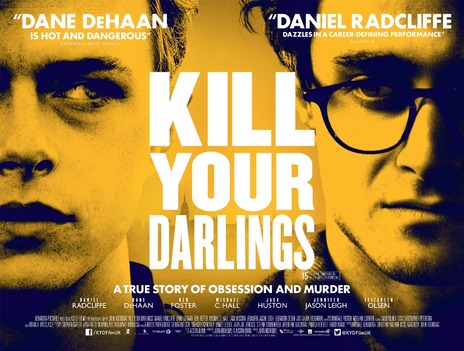
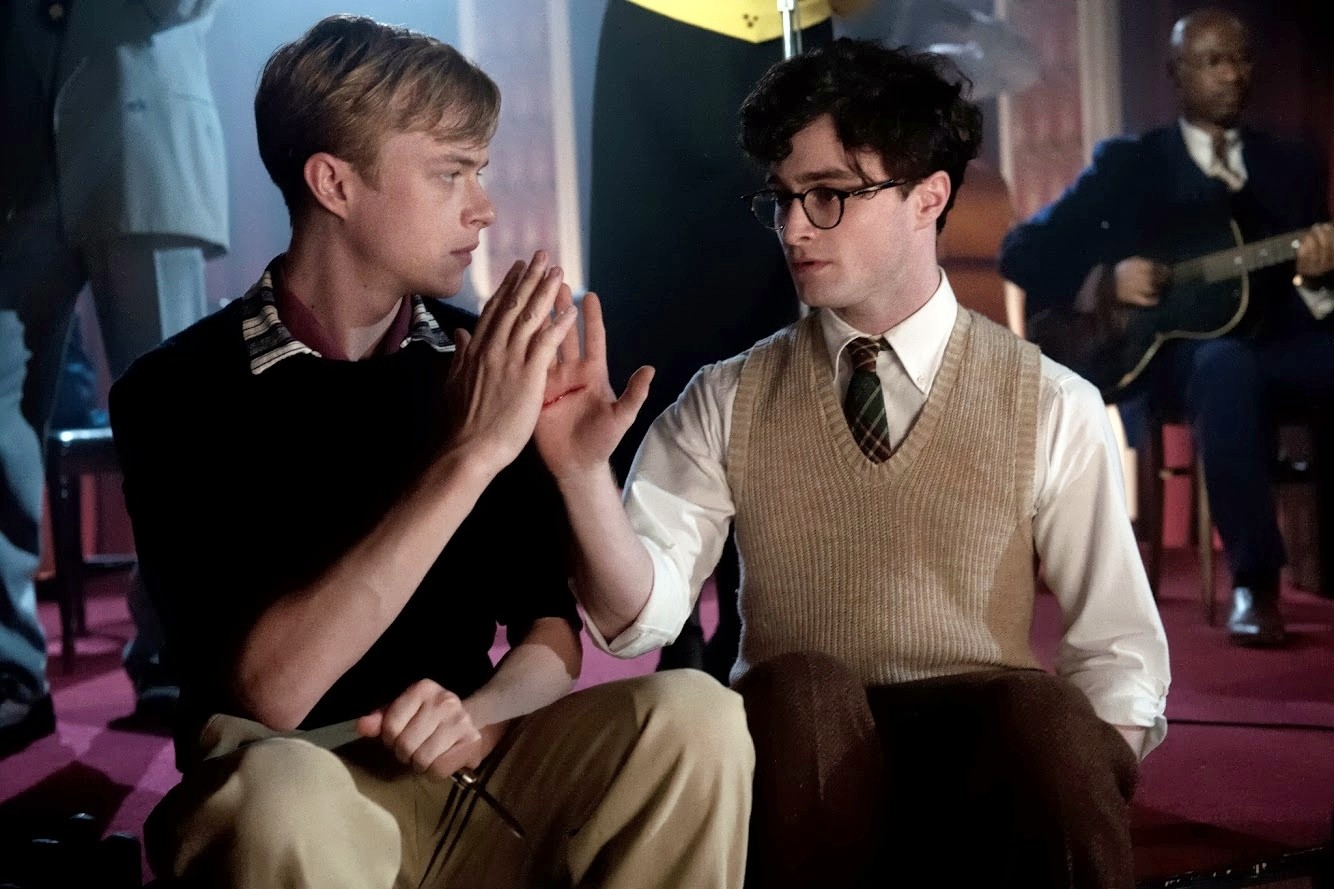
Covering the years 1943-45 while fledgling poet Allen Ginsberg (Radcliffe) was at Columbia University, Kill Your Darlings – a reference to William Faulkner – charts the growing infatuation between Ginsberg and fellow student Lucien Carr (Chronicle‘s DeHaan), their relationships with William Burroughs (Foster) and Jack Kerouac (Huston), and eventually, their roles in the murder of Dr David Kemmerer (Hall).

This is a slow burn movie, where the script strives to paint the characters as boldly as possible and with as much honesty as possible. Carr is shown as manipulative, pretentious and ultimately callow, while Ginsberg comes across as incredibly naive. As played by Radcliffe, Ginsberg is all grinning confusion and slow-on-the-uptake reactions. Unfortunately, this means that neither of them are particularly likeable (though Ginsberg edges it); as a result the movie suffers because it’s difficult to root for any of them, and when the details of the murder are revealed, any sympathies built up during the movie are swept away in a moment (though maybe that was the filmmakers’ intention).

Kill Your Darlings - scene

Like a lot of so-called “free thinkers” with plans to change the world, they’re more adept at ruining the world they live in than creating a new one. When it becomes clear that they’re no better than the system they despise, the movie starts to falter and first-timer Krokidas loses his previously sure grip on proceedings. Of the cast, Radcliffe and DeHaan acquit themselves well, while Foster exudes an icy menace as Burroughs. Hall, though, is miscast, and struggles as the doomed Kammerer. That said, Krokidas makes good use of a great cast, and allowing for the odd stumble, shows a great deal of promise. The 40’s recreation is done well, and Reed Morano’s cinematography recalls other movies from the same period. An interesting story, then, and well-mounted but it’s difficult to tell an interesting story when the main characters are so hollow inside.

Rating: 7/10 – a minor slice of history given a fair-minded treatment that doesn’t quite achieve its aims; absorbing though and another good performance from Radcliffe.

Share this:

  • Click to share on X (Opens in new window) X
  • Click to share on Facebook (Opens in new window) Facebook
  • More
  • Click to print (Opens in new window) Print
  • Click to email a link to a friend (Opens in new window) Email
Like Loading...

Blog Stats

  • 486,528 hits

Recent Posts

  • 10 Reasons to Remember Bibi Andersson (1935-2019)
  • Fantasia (1940)
  • Dances With Wolves (1990) – The Special Edition
  • Kiss of the Spider Woman (1985)
  • The Three Musketeers (1973)

Top Posts & Pages

  • Lost for Life (2013) - Another Look
    Lost for Life (2013) - Another Look
  • Lost for Life (2013)
    Lost for Life (2013)
  • About
    About
  • Mr. Topaze (1961)
    Mr. Topaze (1961)
  • Billy Lynn's Long Halftime Walk (2016)
    Billy Lynn's Long Halftime Walk (2016)
  • Winter's Tale (2014)
    Winter's Tale (2014)
  • The Hitman's Bodyguard (2017)
    The Hitman's Bodyguard (2017)
  • 5 Famous Movie Roles That Nearly Went to Someone Else
    5 Famous Movie Roles That Nearly Went to Someone Else
  • The Layover (2017)
    The Layover (2017)
  • Transcendence (2014)
    Transcendence (2014)
Follow thedullwoodexperiment on WordPress.com

Blogs I Follow

  • Rubbish Talk
  • Film 4 Fan
  • Fast Film Reviews
  • The Film Blog
  • All Things Movies UK
  • Interpreting the Stars
  • Let's Go To The Movies
  • Movie Reviews 101
  • TMI News
  • Dan the Man's Movie Reviews
  • Film History
  • Jordan and Eddie (The Movie Guys)

Archives

  • April 2019 (13)
  • March 2019 (28)
  • February 2019 (28)
  • January 2019 (32)
  • December 2018 (28)
  • November 2018 (30)
  • October 2018 (29)
  • September 2018 (29)
  • August 2018 (29)
  • July 2018 (30)
  • June 2018 (28)
  • May 2018 (24)
  • April 2018 (21)
  • March 2018 (31)
  • February 2018 (25)
  • January 2018 (30)
  • December 2017 (30)
  • November 2017 (27)
  • October 2017 (27)
  • September 2017 (26)
  • August 2017 (32)
  • July 2017 (32)
  • June 2017 (30)
  • May 2017 (29)
  • April 2017 (29)
  • March 2017 (30)
  • February 2017 (27)
  • January 2017 (32)
  • December 2016 (30)
  • November 2016 (28)
  • October 2016 (30)
  • September 2016 (27)
  • August 2016 (30)
  • July 2016 (30)
  • June 2016 (31)
  • May 2016 (34)
  • April 2016 (30)
  • March 2016 (30)
  • February 2016 (28)
  • January 2016 (35)
  • December 2015 (34)
  • November 2015 (31)
  • October 2015 (31)
  • September 2015 (34)
  • August 2015 (31)
  • July 2015 (33)
  • June 2015 (12)
  • May 2015 (31)
  • April 2015 (32)
  • March 2015 (30)
  • February 2015 (37)
  • January 2015 (39)
  • December 2014 (34)
  • November 2014 (34)
  • October 2014 (36)
  • September 2014 (25)
  • August 2014 (29)
  • July 2014 (29)
  • June 2014 (28)
  • May 2014 (23)
  • April 2014 (21)
  • March 2014 (42)
  • February 2014 (38)
  • January 2014 (29)
  • December 2013 (28)
  • November 2013 (34)
  • October 2013 (4)

Blog at WordPress.com.

Rubbish Talk

Film 4 Fan

A Movie Blog

Fast Film Reviews

The Film Blog

The official blog of everything in film

All Things Movies UK

Movie Reviews and Original Articles

Interpreting the Stars

Dave Examines Movies

Let's Go To The Movies

Film and Theatre Lover!

Movie Reviews 101

Daily Movie Reviews

TMI News

Latest weather, crime and breaking news

Dan the Man's Movie Reviews

All my aimless thoughts, ideas, and ramblings, all packed into one site!

Film History

Telling the story of film

Jordan and Eddie (The Movie Guys)

Movie Reviews & Ramblings from an Australian Based Film Fan

Privacy & Cookies: This site uses cookies. By continuing to use this website, you agree to their use.
To find out more, including how to control cookies, see here: Cookie Policy
  • Subscribe Subscribed
    • thedullwoodexperiment
    • Join 481 other subscribers
    • Already have a WordPress.com account? Log in now.
    • thedullwoodexperiment
    • Subscribe Subscribed
    • Sign up
    • Log in
    • Report this content
    • View site in Reader
    • Manage subscriptions
    • Collapse this bar
 

Loading Comments...
 

    %d