• 10 Reasons to Remember…
  • A Brief Word About…
  • About
  • For One Week Only
  • Happy Birthday
  • Monthly Roundup
  • Old-Time Crime
  • Other Posts
  • Poster of the Week
  • Question of the Week
  • Reviews
  • Trailers

thedullwoodexperiment

~ Viewing movies in a different light

thedullwoodexperiment

Tag Archives: Demián Bichir

Oh! the Horror! – The Nun (2018) and Strange Nature (2018)

11 Tuesday Sep 2018

Posted by dullwood68 in Movies

≈ Leave a comment

Tags

Corin Hardy, Deformed frogs, Demián Bichir, Drama, Horror, Jim Ojala, Lisa Sheridan, Minnesota, Mutations, Review, Romania, Series, Taissa Farmiga, Thriller

The Nun (2018) / D: Corin Hardy / 96m

Cast: Demián Bichir, Taissa Farmiga, Jonas Bloquet, Bonnie Aarons, Charlotte Hope, Ingrid Bisu, Sandra Teles

The fifth entry in the mega-successful Conjuring series, The Nun sees the franchise try to take a previously minor character and expand on them to make a stand-alone movie that fits in with the established mythos, while also providing the requisite scares and universe building that we’ve come to expect. But this is a horrible mis-step, a movie that makes absolutely no sense from beginning to end, but which does make you wonder if all this universe building is being as carefully planned and worked out in advance as it should be. On this evidence, the answer has to be a resounding No, because The Nun is truly terrible, with the slackest plotting seen so far, characters who barely register as recognisable human beings, a setting that seems arbitrary rather than necessary, a number of poorly executed paranormal effects sequences that are both narratively redundant and tiresome, and an overall vibe that says, “we did this because we could, not because we should”. And that’s without dialogue of the calibre of, “I’m afraid there is something very wrong with this place.”

In many ways, James Wan and co should be congratulated for the success they’ve had in creating the Conjuring universe, but this should be the point where they stop and take stock of where they’re taking the franchise, and why. The Nun is like the movie that quality control forgot. Watching it is akin to seeing a cinematic car crash happening in slow motion, but instead of bodies in the road it’s the makers’ reputations. Hardy, making his second feature after The Hallow (2015), appears to have been a director for hire only on this occasion, as he brings none of the visual flourishes he brought to that first feature, and his direction is largely anonymous. The cast don’t have a chance thanks to the banal nature of regular scribe Gary Dauberman’s screenplay, and Bichir in particular looks uncomfortable and/or wishing he’d taken another gig altogether. The set pieces rely on roving camera work to hide the so-called scares (which are astonishingly predictable), but worst of all, the title character remains a bystander in her own movie, brought out occasionally for a cheap jolt, and at the end for what amounts to a showdown. Anyone expecting to learn more about Valak and his origins (and why a nun) will be looking in the wrong place, as this is so badly constructed as to be completely nun-sensical.

Rating: 3/10 – The Nun‘s box office performance – $133 million so far – proves that you can fool a lot of the people (initially), but this is far from being a good movie, or one that deserves to do so well; a chore to sit through and woeful on so many levels – and just having a character called Frenchie is bad enough – this is movie making without thinking or conviction.


Strange Nature (2018) / D: Jim Ojala / 99m

Cast: Lisa Sheridan, Jonah Beres, Bruce Bohne, Faust Checho, Stephen Tobolowsky, John Hennigan, Carlos Alazraqui, Justen Overlander, David Mattey, Chalet Lizette Brannan, Angela Duffy, Tiffany Shepis

In Strange Nature, the world we’re introduced to is one that we can more easily recognise than in The Nun, but it’s not without its own unexplained phenomena. Based on a mystery that dates back to the mid-Nineties, when deformed frogs began appearing in ponds throughout Minnesota, the movie takes this as a jumping off point (excuse the pun) for a tale of mutations that begin with said frogs and which then makes its way up through the biological food chain until it starts to affect humans. Working with a limited budget, first-time feature writer/director Ojala has created a horror movie that trades on established genre tropes but which does so while doing its best to focus on a small town community that finds itself under attack from both outside and within. Ojala uses the character of Kim (Sheridan) as our guide to the ensuing developments, as stories of people going missing slowly become forgotten as the potential reason for their disappearances becomes more obvious. As Kim delves deeper into the mystery of the deformed frogs, various culprits – agricultural fertilisers, waterborne parasites, nature gone haywire – are explored, but as with real life (where the problem has since spread to India and China), the movie doesn’t settle for one easy explanation over the rest.

The movie wears its horror credentials on its sleeve, and peppers the narrative with various examples of body horror (a deformed puppy, skin sloughing away from flesh), but the effectiveness of these scenes is hampered by the budget, and though Ojala opts for practical, in-camera effects wherever possible, many of them betray the lack of funds available (editor David Mattey does what he can, but in trying to obscure the lacklustre effects he actually draws attention to them even more). Away from the more overt horror elements, Ojala does a good job of developing the sense of a small town whose initial scepticism soon gives way to fear and paranoia, and adds a layer of tragedy when one character’s pregnancy doesn’t end in the blessed event she was expecting. The performances are adequate, with Tobolowsky suitably oily as the town mayor, and the Duluth, Minnesota locations add a degree of verisimilitude that works well as a backdrop for the action. There’s nothing inherently wrong with Strange Nature, and it’s certainly not as bad as some other horror movies out there (see above), but it does suffer from a surfeit of ideas that it doesn’t have the wherewithal to explore fully, and refreshingly, keeps any unnecessary melodramatics to a minimum.

Rating: 6/10 – though its narrative arc is entirely predictable, and some of the characters remain stereotypes throughout, Strange Nature works exceedingly well as a cautionary tale, and is well worth a look; with a sense of ambition often missing from low budget horror movies, Ojala’s feature debut unfolds confidently, and more importantly, with a purpose that is often missing from some of its bigger budgeted brethren.
Share this:

  • Click to share on X (Opens in new window) X
  • Click to share on Facebook (Opens in new window) Facebook
  • More
  • Click to print (Opens in new window) Print
  • Click to email a link to a friend (Opens in new window) Email
Like Loading...

7:19 (2016)

12 Sunday Aug 2018

Posted by dullwood68 in Movies

≈ Leave a comment

Tags

Demián Bichir, Disaster, Drama, Earthquake, Héctor Bonilla, Jorge Michel Grau, Mexico, Mexico City, Review, Survival, True story

D: Jorge Michel Grau / 94m

Cast: Demián Bichir, Héctor Bonilla, Óscar Serrano, Azalia Ortiz, Octavio Michel Grau, Carmen Beato

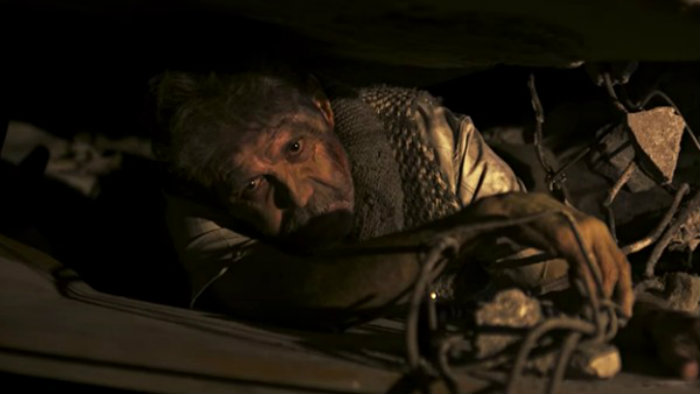
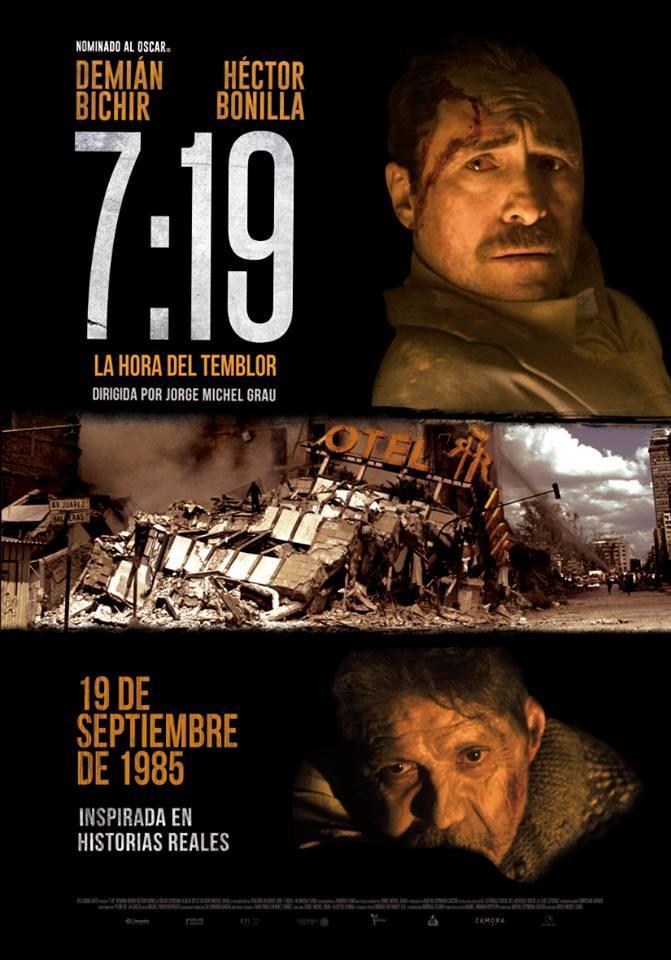
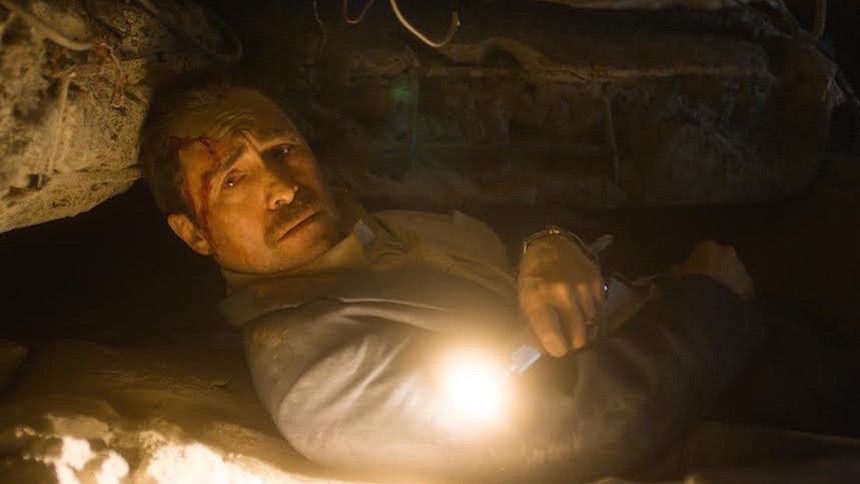
On the morning of 19 September 1985, the staff at an office building in Mexico City begin arriving for work. Already there is the building’s caretaker, Martin Soriano (Bonilla), who is waiting to go home having been there overnight. As he waits, the building becomes busier and busier, with cleaners and maintenance workers getting on with their tasks while people who work in the various offices arrive and chat at the beginning of their day. It’s an average Thursday, until at 7:19 am precisely, an earthquake registering 8.0 on the Richter Scale hits the seven storey building and brings it crumbling to the ground. Once the debris has settled, there are survivors, but they’re trapped beneath tons of rubble. There’s Dr Fernando Pellicer (Bichir), who’s a lawyer as well as a doctor, and who’s legs are trapped. He discovers a flashlight that’s just within reach. When he turns it on, he finds that Martin is trapped several feet away. As time passes, other survivors in other parts of the rubble make themselves known, and as they wait to be rescued, they all try to keep each other from despairing or losing hope…

In terms of its timing, this shortlisted entry for the Academy Award for Best Foreign Language Film at the 89th Academy Awards (it wasn’t selected), appears to be a movie that’s arrived at too far a remove from the original event to make much of an impact. It’s a simple, straightforward movie as well, devoid of any major special effects sequences – the earthquake itself is depicted from within the lobby of the building, and is effectively handled if brief – and focusing on Pellicer and Martin as they struggle to maintain their composure and their strength while trapped under a building that has collapsed on top of them. Anyone familiar with Oliver Stone’s World Trade Center (2006) will recognise the basic set up, as Bichir and Serrano (until very late on), are the only people we can see. We hear others, and one character has a radio that keeps everyone in touch with what’s happened and what is happening, but otherwise this is a two-man show. As the beleaguered pair, Bichir and Serrano acquit themselves well, and display mixed feelings of courage and fear that highlight the uncertainty of their situation. For them, every shudder and shift of the debris around them could mean a crushing death.

With the decision made to concentrate on Pellicer and Martin, Grau and co-scripter Alberto Chimal opt for a visual conceit post-quake to emphasise the horrible nature of their circumstances. The frame is reduced considerably, almost to an Academy ratio, as we focus closely on Pellicer. As he comes to terms with his plight, so the screen widens and expands to encompass the two men and the apparent unlikelihood of their being rescued. It’s a move designed to put the audience in the thick of things, to help them feel as helpless as the characters, but it’s also oddly distracting, a visual motif that keeps you watching for the changes in scope rather than the inevitable issues that Martin has with Pellicer. Grau switches back and forth between the two men in an unfussy, severe style that plays down the chances of any visual flourishes, and the disembodied voices, along with a number of distinct sound effects, illustrate the range of emotions felt by those who have been trapped. There’s little in the way of subtext or broader social themes, just a no frills, stripped back exploration of the will to survive against overwhelming odds in a seemingly impossible situation.

Rating: 7/10 – simply told, and with a minimum of artifice or glamour, 7:19 is a sobering, grimly effective story of quiet heroism and strength in adversity; dour for the most part – but deliberately so – this doesn’t always carry the emotional wallop that might be expected, but it is a finely tuned, true-to-life drama nevertheless.

NOTE: Alas, there isn’t a trailer with English subtitles available for 7:19.

Share this:

  • Click to share on X (Opens in new window) X
  • Click to share on Facebook (Opens in new window) Facebook
  • More
  • Click to print (Opens in new window) Print
  • Click to email a link to a friend (Opens in new window) Email
Like Loading...

The Hateful Eight (2015)

18 Thursday Feb 2016

Posted by dullwood68 in Movies

≈ 1 Comment

Tags

Bounty hunter, Bruce Dern, Demián Bichir, Drama, Jennifer Jason Leigh, Kurt Russell, Michael Madsen, Minnie's Haberdashery, Mystery, Quentin Tarantino, Review, Samuel L. Jackson, Thriller, Tim Roth, Walton Goggins, Western, Wyoming

The Hateful Eight

D: Quentin Tarantino / 167m

Cast: Samuel L. Jackson, Kurt Russell, Jennifer Jason Leigh, Walton Goggins, Tim Roth, Demián Bichir, Michael Madsen, Bruce Dern, James Parks, Channing Tatum

It’s post-Civil War Wyoming, and a stagecoach trying to outrun a fast approaching snowstorm (in already treacherous weather) is stopped by an unexpected encounter with a bounty hunter, Major Marquis Warren (Jackson), stranded on the road to the nearest safe haven, a staging post named Minnie’s Haberdashery. On board the stagecoach is another bounty hunter, John “The Hangman” Ruth (Russell) and his prisoner, Daisy Domergue (Leigh), heading for the town of Red Rock so she can face trial. Once bona fides are established between the two men, Warren is allowed to journey on aboard the stagecoach. Later they pick up another stranded man, Chris Mannix (Goggins), who tells them he’s also heading to Red Rock where he is to take up the post of sheriff.

At Minnie’s Haberdashery, they find that an earlier stagecoach has taken shelter there, and there are four men waiting out the impending snowstorm. One is a Southern general, Sanford Smithers (Dern), who’s come to Wyoming in search of his missing son. Another is Joe Gage (Madsen), a cowboy heading home after being away on a lengthy cattle trail. The third introduces himself as Oswaldo Mobray (Roth), on his way to Red Rock to act as hangman should Daisy Domergue be found guilty at her trial. And then there’s Bob (Bichir), a Mexican who tells Warren that Minnie and her husband, Sweet Dave, have gone to see her mother, and that they’ve entrusted the upkeep of the staging post to him. But Warren is unconvinced.

Once everyone is inside and introduced to each other, Ruth is quick to make it clear that he believes at least one person there isn’t who he says he is, and that it’s likely they’re going to try and free Daisy (though he doesn’t say why, or how he knows). Warren believes him, and they agree to join forces and keep an eye on the other men. But things begin to go wrong when Warren recognises Smithers, and he realises why the old man is there, and so far from home.

THE - scene1

The eighth movie by Quentin Tarantino is ostensibly a Western, but thanks to its writer/director’s penchant for being a movie magpie, it’s also a thriller, a revenge drama, an old dark house-style mystery, and yet another movie where he assembles a great cast only to give preference to some – Jackson, Russell, Goggins – while neglecting others – Leigh, Bichir, Madsen. That Tarantino wants to stuff his movie with references to other movies has always been a part of his movie making raison d’être, so it shouldn’t come as any surprise that The Hateful Eight isn’t just a Western. But this time around, the end result is a movie that struggles to find its identity, and thanks to the novel-style approach of Tarantino’s script – it’s made up of six Chapters – it feels much more artificial than it should be.

As Tarantino nudges along his characters in the wake of Jackson’s central character, and takes in issues of racism and post-War guilt, and a very occasional stab at the morality behind the execution of women, it becomes clear that these characters are mere cyphers, lacking in development and free from any real, appreciable insight into their motives. Given this lack of investment by Tarantino’s script, and despite the detailed and often hypnotic rhythms of the dialogue he grants them, it’s left to his very talented cast to make up the shortfall. Some achieve this with aplomb – Goggins in particular – but even the likes of Russell and Leigh can’t elevate the shallow nature of their characters. Russell bellows like an absurdist bully, while Leigh at one point is reduced to the kind of playground boasting that was outmoded even in the 1860’s.

Spare a thought then for Tarantino regular Jackson. Having landed the lead role in the movie, and been given the kind of back story that most actors would relish getting their hands on (or teeth into), it must have been dispiriting to see the final product and realise that for all the blood and thunder involved, it was all for nought given how the character is treated in the movie’s final chapter. There’s a lot to be said for a movie of this length when it exposes some of its maker’s more crueller narrative decisions and forces its audience to wonder if its wunderkind creator is quite the impressive writer/director he’s reputed to be. And this is where The Hateful Eight is most successful: in showing that the hype surrounding Tarantino isn’t always deserved.

THE - scene2

Take one scene in particular, the beginning of Chapter Four, entitled Domergue’s Got a Secret. Unable to introduce a major plot development in any other way (apparently), Tarantino resorts to the use of an offscreen narrator (voiced by himself) who not only explains what Daisy’s secret is, but clearly signposts for those in the audience who may be hard of understanding, what this means in terms of what follows. It’s like someone stopping a theatre production of Macbeth and stepping forward to explain that when Shakespeare says Macbeth can’t be “killed by man born of woman” he actually means he can be killed by someone born via Caesarean. Got it? Then let’s move on.

From there on The Hateful Eight swiftly unravels in a welter of violence and bloodshed that throws out all the groundwork made to get this far, and concentrates instead on bumping off its cast of characters. But any fascination or sympathy the viewer may have had for anyone is eroded by Tarantino’s decision to go for a bloodbath rather than a tense showdown. And then there’s the final chapter, so awkward and clunkily written that the viewer can’t help but wonder if Tarantino didn’t know how to end his movie, and settled on the first thought that came to him – and then didn’t even bother to polish the finished script. For once, Tarantino relinquishes control over the material, and the camerawork by Robert Richardson – up til then one of the few consistent positives about the movie – is undermined by the kind of reckless scissor-happy editing that you’d expect from someone having to deal with far less filmed material and an impossible deadline (and the movie’s editor, Fred Raskin, is a much better editor than that – check out his work on another 2015 Western, Bone Tomahawk, for proof).

THE - scene3

When all is said and done, The Hateful Eight isn’t a movie that works; at least, not entirely. If anything, the movie never proceeds to anywhere successful once Chris Mannix boards the stagecoach and they arrive at Minnie’s Haberdashery. Up til then, Tarantino does what he does best: he introduces his characters through his trademark intricate dialogue, and he sets the scene for the rest of the movie. But once in Minnie’s Haberdashery, the plot has to take over, and it soon runs out of steam. The addition of a flashback in Chapter Five feels even more awkward than the revelation that Daisy has a secret, and makes scant use of Channing Tatum into the bargain.

And finally, as if to rub salt into the movie’s wounds, we have a score by Ennio Morricone that has no impact throughout, and isn’t in any way memorable (there are times when it doesn’t even feel suited to the material). When your favourite movie composer can’t even make a difference then you just know that it’s not going to work. Sometimes – and this applies to anyone who writes and directs their own movies, or who have carte blanche from the studio that writes the cheques – having an idea isn’t enough. And building on that idea isn’t enough. And writing a screenplay isn’t enough. Sometimes you just have to let an idea go. Often it’s the kindest thing you can do for everyone.

Rating: 6/10 – narrative glitches aside, Tarantino’s eighth movie proves lacklustre both in terms of its visuals and its attention to its characters, leaving the viewer without anyone to sympathise with or warm to; The Hateful Eight is also the first of the writer/director’s movies to feel incomplete in terms of his investment in the project, and while he may argue otherwise, there’s a distance between him and the final product that hasn’t been there in any of his other, seven movies.

Share this:

  • Click to share on X (Opens in new window) X
  • Click to share on Facebook (Opens in new window) Facebook
  • More
  • Click to print (Opens in new window) Print
  • Click to email a link to a friend (Opens in new window) Email
Like Loading...

Blog Stats

  • 486,528 hits

Recent Posts

  • 10 Reasons to Remember Bibi Andersson (1935-2019)
  • Fantasia (1940)
  • Dances With Wolves (1990) – The Special Edition
  • Kiss of the Spider Woman (1985)
  • The Three Musketeers (1973)

Top Posts & Pages

  • Lost for Life (2013) - Another Look
    Lost for Life (2013) - Another Look
  • Lost for Life (2013)
    Lost for Life (2013)
  • About
    About
  • Mr. Topaze (1961)
    Mr. Topaze (1961)
  • Billy Lynn's Long Halftime Walk (2016)
    Billy Lynn's Long Halftime Walk (2016)
  • Winter's Tale (2014)
    Winter's Tale (2014)
  • The Hitman's Bodyguard (2017)
    The Hitman's Bodyguard (2017)
  • 5 Famous Movie Roles That Nearly Went to Someone Else
    5 Famous Movie Roles That Nearly Went to Someone Else
  • The Layover (2017)
    The Layover (2017)
  • Transcendence (2014)
    Transcendence (2014)
Follow thedullwoodexperiment on WordPress.com

Blogs I Follow

  • Rubbish Talk
  • Film 4 Fan
  • Fast Film Reviews
  • The Film Blog
  • All Things Movies UK
  • Interpreting the Stars
  • Let's Go To The Movies
  • Movie Reviews 101
  • TMI News
  • Dan the Man's Movie Reviews
  • Film History
  • Jordan and Eddie (The Movie Guys)

Archives

  • April 2019 (13)
  • March 2019 (28)
  • February 2019 (28)
  • January 2019 (32)
  • December 2018 (28)
  • November 2018 (30)
  • October 2018 (29)
  • September 2018 (29)
  • August 2018 (29)
  • July 2018 (30)
  • June 2018 (28)
  • May 2018 (24)
  • April 2018 (21)
  • March 2018 (31)
  • February 2018 (25)
  • January 2018 (30)
  • December 2017 (30)
  • November 2017 (27)
  • October 2017 (27)
  • September 2017 (26)
  • August 2017 (32)
  • July 2017 (32)
  • June 2017 (30)
  • May 2017 (29)
  • April 2017 (29)
  • March 2017 (30)
  • February 2017 (27)
  • January 2017 (32)
  • December 2016 (30)
  • November 2016 (28)
  • October 2016 (30)
  • September 2016 (27)
  • August 2016 (30)
  • July 2016 (30)
  • June 2016 (31)
  • May 2016 (34)
  • April 2016 (30)
  • March 2016 (30)
  • February 2016 (28)
  • January 2016 (35)
  • December 2015 (34)
  • November 2015 (31)
  • October 2015 (31)
  • September 2015 (34)
  • August 2015 (31)
  • July 2015 (33)
  • June 2015 (12)
  • May 2015 (31)
  • April 2015 (32)
  • March 2015 (30)
  • February 2015 (37)
  • January 2015 (39)
  • December 2014 (34)
  • November 2014 (34)
  • October 2014 (36)
  • September 2014 (25)
  • August 2014 (29)
  • July 2014 (29)
  • June 2014 (28)
  • May 2014 (23)
  • April 2014 (21)
  • March 2014 (42)
  • February 2014 (38)
  • January 2014 (29)
  • December 2013 (28)
  • November 2013 (34)
  • October 2013 (4)

Blog at WordPress.com.

Rubbish Talk

Film 4 Fan

A Movie Blog

Fast Film Reviews

The Film Blog

The official blog of everything in film

All Things Movies UK

Movie Reviews and Original Articles

Interpreting the Stars

Dave Examines Movies

Let's Go To The Movies

Film and Theatre Lover!

Movie Reviews 101

Daily Movie Reviews

TMI News

Latest weather, crime and breaking news

Dan the Man's Movie Reviews

All my aimless thoughts, ideas, and ramblings, all packed into one site!

Film History

Telling the story of film

Jordan and Eddie (The Movie Guys)

Movie Reviews & Ramblings from an Australian Based Film Fan

Privacy & Cookies: This site uses cookies. By continuing to use this website, you agree to their use.
To find out more, including how to control cookies, see here: Cookie Policy
  • Subscribe Subscribed
    • thedullwoodexperiment
    • Join 481 other subscribers
    • Already have a WordPress.com account? Log in now.
    • thedullwoodexperiment
    • Subscribe Subscribed
    • Sign up
    • Log in
    • Report this content
    • View site in Reader
    • Manage subscriptions
    • Collapse this bar
 

Loading Comments...
 

    %d