• 10 Reasons to Remember…
  • A Brief Word About…
  • About
  • For One Week Only
  • Happy Birthday
  • Monthly Roundup
  • Old-Time Crime
  • Other Posts
  • Poster of the Week
  • Question of the Week
  • Reviews
  • Trailers

thedullwoodexperiment

~ Viewing movies in a different light

thedullwoodexperiment

Tag Archives: Diane Kruger

Welcome to Marwen (2018)

05 Saturday Jan 2019

Posted by dullwood68 in Movies

≈ Leave a comment

Tags

Diane Kruger, Drama, Fantasy, Leslie Mann, Mark Hogancamp, Marwen, PTSD, Review, Robert Zemeckis, Steve Carell, True story, World War II

D: Robert Zemeckis / 116m

Cast: Steve Carell, Leslie Mann, Diane Kruger, Janelle Monáe, Gwendoline Christie, Merritt Wever, Eiza González, Leslie Zemeckis, Stefanie von Pfetten, Neil Jackson, Falk Hentschel, Conrad Coates

Following a vicious beating by five white supremacists that robbed him of any personal memories he had before the attack, illustrator Mark Hogancamp (Carell) has managed to rebuild much of his life, but he’s no longer able to draw. Instead, he has created the fictional Belgian town of Marwen, a one-sixth scale model of which he’s built in his yard. Populated by dolls that represent some of the people who have been important to him since the attack, Mark has created a World War II storyline for the dolls of Marwen, and he takes photographs of them in carefully staged positions. These photographs have become regarded as art, and an exhibition of his work is due to take place in the near future. Also due to take place is the sentencing hearing of the men who attacked him, something that Mark’s lawyer (Coates) is pressing him to attend. But with Mark suffering from PTSD, and the Marwen stories occupying so much of his time, it’s only the sympathetic attention of a new neighbour, Nicol (Mann), that starts to bring Mark back to reality…
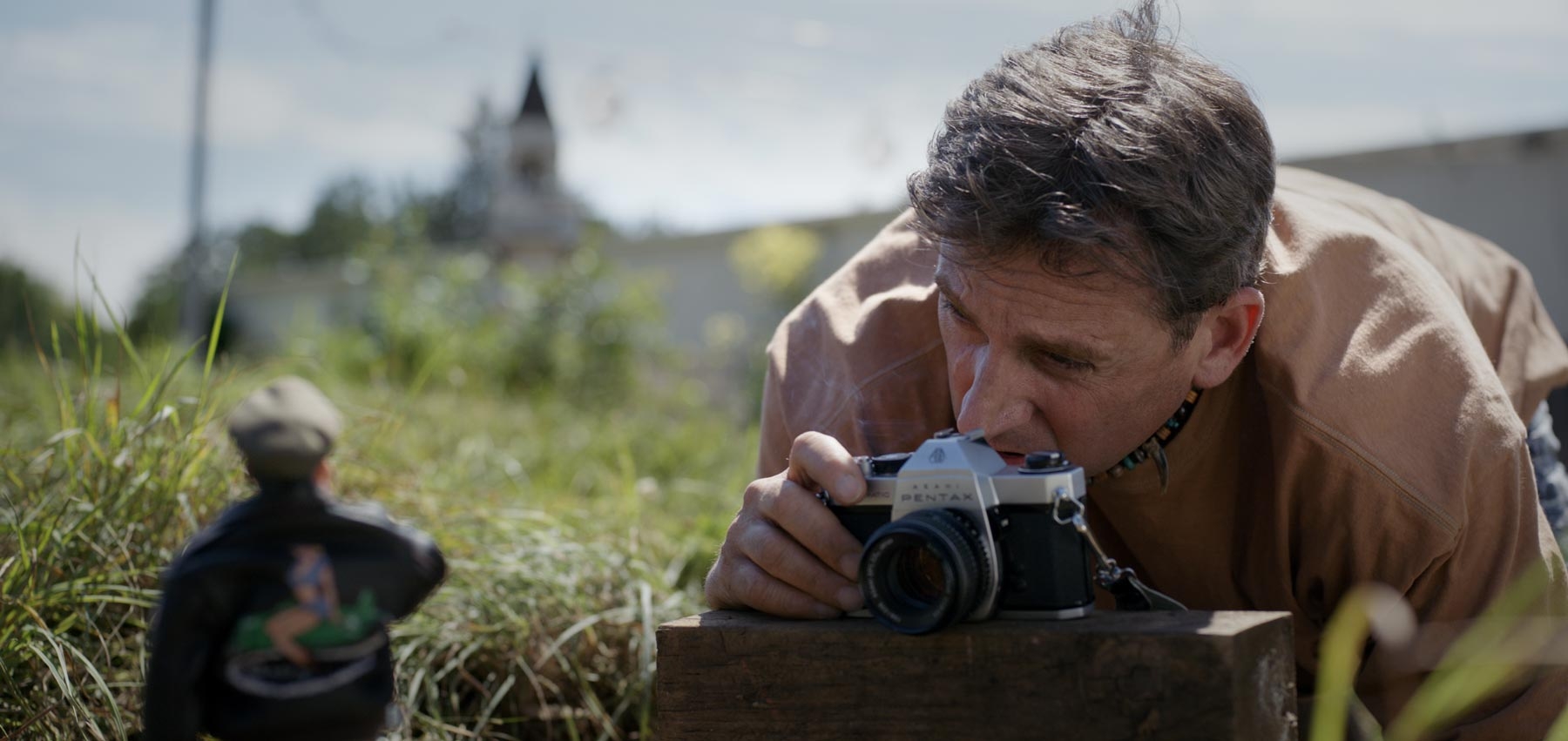
They say that truth is stranger than fiction, and that’s certainly the case with Mark Hogancamp, a man so violently assaulted that his attackers literally “kicked the memory” out of him. In creating the fictional village of Marwen, Hogancamp gave himself a way back to “normality”, even if it was through the use of an alternate, fantasy world populated by revamped Barbie dolls and Nazi soldiers who never die. It’s this aspect of the movie, with its model sets and plastic toy figures and props that makes the most impression, and Zemeckis – no stranger to giving life to CGI characters based on real people and performances – gives these scenes an urgency and a vibrancy that makes Marwen the kind of place we’d all like to visit (even if we’re likely to be shot at by marauding Nazis). With a great deal of charm, and visual wit, Zemeckis and co-scripter Caroline Thompson have created a cinematic variation of Hogancamp’s imagination and story-telling that is in its own way, brave and affecting, and which touches on more serious themes such as gender identity, persistent emotional trauma, drug addiction, and social isolation. There’s plenty of humour here too, but it’s more knowing than it is overt, and there’s a sadness behind it that make it all the more effective.

But while the scenes with Cap’n Hogie and his female coterie are the backbone of the movie and its MVP, the rest of the movie feels more fanciful and fictitious than the idea of dolls toting sub-machine guns and wearing stilettoes during wartime (look it up). Hogancamp is portrayed as a lovable yet tormented man who is personable yet reserved, and socially awkward, yet the introduction of Nicol, whose character feels like a stock idea lifted wholesale from Screenplay 101, grates with every scene she appears in (despite the best efforts of both Carell and Mann), while Hogancamp’s PTSD is laid on with the thickest of dramatic trowels. Carell at least has the measure of the character, but is hampered by the script’s insistence on making him depth-free, and something of a perennial man-child. Elsewhere in the “real world”, there are a number of stodgy contrivances – Nicol’s ex-boyfriend and nasty piece of work, Kurt (Jackson), exists only so he can double for the chief Nazi in Marwen, Nicol is completely unfazed and unconcerned by Hogancamp’s liking for wearing women’s shoes – and after a while any excuse to return to Marwen is likely to be gratefully accepted by the viewer, because that’s where the movie’s true heart and soul resides.

Rating: 6/10 – immensely enjoyable when the action is based in and around Marwen, but stilted and perfunctory when set away from there, Welcome to Marwen is a movie that struggles to balance both halves of its necessarily fractured narrative; Zemeckis directs with his usual flair and gift for visual flamboyance (and gets to include a clever nod to Back to the Future), but is let down by his own decision to make the real world look and sound like a bad soap opera, and by making the dolls more human than the humans.


Share this:

  • Click to share on X (Opens in new window) X
  • Click to share on Facebook (Opens in new window) Facebook
  • More
  • Click to print (Opens in new window) Print
  • Click to email a link to a friend (Opens in new window) Email
Like Loading...

In the Fade (2017)

03 Thursday Jan 2019

Posted by dullwood68 in Movies

≈ Leave a comment

Tags

Bombing, Denis Moschitto, Diane Kruger, Drama, Fatih Akin, Germany, Grief, Neo-Nazis, Revenge, Review, Thriller

Original title: Aus dem Nichts

D: Fatih Akin / 106m

Cast: Diane Kruger, Denis Moschitto, Henning Peker, Johannes Krisch, Samia Muriel Chancrin, Numan Acar, Hanna Hilsdorf, Ulrich Brandhoff, Ulrich Tukur, Yannis Economides, Rafael Santana

Katja (Kruger) is married to reformed Kurdish drug dealer Nuri (Acar), and they have a precocious six year old son, Rocco (Santana). Having put his criminal past behind him, Nuri runs a small travel agency in Hamburg. One day, Katja drops off Rocco at Nuri’s office and heads off to meet her best friend, Birgit (Chancrin). When she returns later to meet them, she finds that a nail bomb has gone off outside the office and Nuri and Rocco have both been killed. She identifies a woman (Hilsdorf) she saw earlier who left a bike outside the office, and eventually the woman is identified as a Neo-Nazi, and with her husband (Brandhoff), is arrested and charged with the bombing. A trial ensues, but despite the best efforts of Katja’s lawyer, Danilo (Moschitto), enough doubt is raised about the couple’s guilt that the court is forced to acquit them. Distraught by this unexpected decision, Katja retreats into despair, until an idea presents itself as to how she can avenge the deaths of her son and husband…

Taking the 2004 Cologne bombing as its inspiration, which also saw Neo-Nazis detonating a nail bomb in a busy commercial street, In the Fade is a stylish and fascinating thriller that is also a tough, uncompromising examination of one woman’s grief in the aftermath of a horrible tragedy. Featuring a superb performance from Kruger, the movie paints an uncomfortable picture of both the emotional despair that Katja feels and the physical impact it has on her as well. Katja’s bright, confident manner in the movie’s opening scenes is soon replaced by a withdrawn, cynical veneer that (barely) hides the pain that she’s feeling. Even the drugs she takes to help her cope (a decision that has dire consequences later on) aren’t enough to numb the sadness that she’s feeling. As the trial steers ever closer to its unhappy conclusion, Katja’s anger at the injustice that’s taking place builds and builds, and remains in waiting as she recovers from the court’s decision, until it can be refocused into a steely determination to take matters into her own hands. All of this is portrayed by Kruger in a career-best performance, as she plumbs the depths of Katja’s misery in a way that is both urgent and persuasive.

However, without Kruger’s passionate and powerful performance, In the Fade isn’t quite as well constructed or purposeful as it might seem. Akin is a fiercely political movie maker, and his movies are often full of political statements, but here the message isn’t as clear cut or as concisely made as they would be normally. True, he takes potshots at the perceived indolence of the German authorities in reining in the activities of Neo-Nazi groups in modern day Deutschland, and the endemic racism of a police force that would rather focus on the criminal past of a bombing victim than catching the actual bombers, but these don’t have the impact that would make viewers become as outraged as Katja does. The movie is at its best in the immediate aftermath of the bombing, when the only point it wants to make is about the unbearable weight that grief can impose on a person, and then during the courtroom scenes, the inexorable turning of the tide of guilt is played out with a grim fascination that is horrifying, albeit in a different way. But the post-trial scenes – set in Greece, and providing a beautiful contrast to the constantly overcast, rainy environs of Hamburg – prove to be something of a let-down, and the momentum the movie has built up until then is squandered by poor narrative choices and giving Katja unconvincing motivations for her actions. It’s another movie whose ending undermines the good work that’s gone before, and for some viewers, being denied their own catharsis may prove a deal breaker all by itself.

Rating: 7/10 – with an unsettling score courtesy of Queens of the Stone Age frontman Josh Homme, and good supporting turns from Krisch and Tukur (as the father of one of the bombers), In the Fade is an urgent, often uncompromising thriller that’s let down by some flaccid plotting and a final section that is more frustrating than rewarding; Kruger is excellent in only her first German-speaking lead role, and there’s a sparseness to the production design that plays well with the rigour of Kruger’s tightly wound presence, but all in all this doesn’t succeed as a whole but is instead an exercise in (unfulfilled) anticipation.

Share this:

  • Click to share on X (Opens in new window) X
  • Click to share on Facebook (Opens in new window) Facebook
  • More
  • Click to print (Opens in new window) Print
  • Click to email a link to a friend (Opens in new window) Email
Like Loading...

The Infiltrator (2016)

04 Saturday Feb 2017

Posted by dullwood68 in Movies

≈ 3 Comments

Tags

Benjamin Bratt, Brad Furman, Bryan Cranston, Diane Kruger, Drama, Drug cartel, John Leguizamo, Literary adaptation, Money laundering, Review, Robert Mazur, Thriller, True story

infiltrator

D: Brad Furman / 127m

Cast: Bryan Cranston, Diane Kruger, John Leguizamo, Benjamin Bratt, Juliet Aubrey, Yul Vazquez, Elena Anaya, Rubén Ochandiano, Simón Andreu, Joseph Gilgun, Juan Cely, Art Malik, Saïd Taghmaoui, Amy Ryan, Jason Isaacs, Olympia Dukakis, Michael Paré

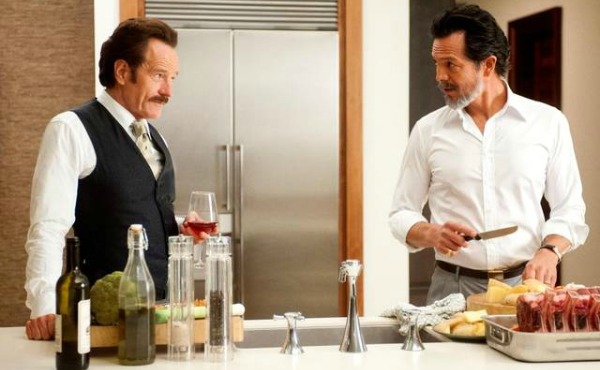
Number four hundred and twenty-nine in what feels like 2016’s never-ending list of true stories – or movies based on true stories – The Infiltrator is a throwback to the kind of crime dramas made in the Seventies, with the main character going undercover  and putting their life on the line in order to expose the mob boss/cartel leader/fiendish criminal mastermind who has so far remained untouchable. Here the main character is Robert ‘Bobby’ Mazur, a veteran US Customs special agent nearing retirement, but who takes on one more undercover case when another agent, Emir Abreu (Leguizamo), asks for his help. Abreu’s case involves an informant (Cely) with ties to a Colombian drug cartel, and the aim, at first, is to follow the drug trail from America back to Colombia and catch the cartel leaders red-handed. But Mazur has a better idea: instead of following the drugs, why not follow the money?

Assuming an alias, Bob Musella, Mazur poses as a businessman who can launder the cartel’s money through the companies he owns, effectively making it clean and untraceable. He and Abreu are put in contact with a couple of the cartel’s men (Ochandiano, Andreu), who in turn introduce them to Javier Espina (Vazquez), a high-level enforcer whose job it is is to assess whether or not Musella can be trusted, and his claims for the cartel’s money are true. Reassured that they are, Espina gives the go ahead for Musella to start laundering the cartel’s money, but when Mazur is put in a compromising situation with a lap dancer – he’s happily married with two children – he invents a fiancée to get himself out of it. Mazur’s boss, Bonni Tischler (Ryan), is less than happy with this, but arranges for a female agent, Kathy Ertz (Kruger), to step into the role.

infiltrator-2

With his “credentials” proving satisfactory, Mazur cites a problem with the way the cartel currently moves its money as an excuse for meeting with the person who runs it all. This leads him to both the Bank of Credit and Commerce International, which will help him launder larger quantities of the cartel’s money than he can make look legal, and the acquaintance of Roberto Alcaino (Bratt), whose role is to facilitate both the movement of the cartel’s money and the distribution of its drug shipments through an entry point in Miami. Alcaino welcomes Mazur and Ertz into his home, and they become friendly with both him and his wife, Gloria (Anaya). Using a tape recorder hidden in a briefcase, Mazur is able to gain evidence on all the parties concerned, but needs just one more thing to happen before he can have everyone arrested: the release of funds belonging to Pablo Escobar which the US government has frozen. Without these funds, Escobar, who is the head of the cartel, will not commit to using Mazur exclusively, and the undercover work he’s done will only cause so much damage.

In the hands of director Brad Furman and screenwriter Ellen Sue Brown (Furman’s wife), Robert Mazur’s tale of deception and intrigue becomes a tale of patience and deferment for the audience, as any likely tension or nail-biting moments are kept to a minimum, and Mazur’s scam on the cartel moves along slowly and relentlessly to its expected denouement. Along the way, there are lots of scenes where Mazur as Musella insists on doing things his way and the cartel almost meekly agrees. His cover remains intact throughout, as does Ertz’s, and only Espina suspects they’re not who they say they are. At this point, the viewer will be grateful for something going wrong, as up til now it’s all gone along too smoothly (it may well have been this way, but it doesn’t make for compelling viewing). But not for long; Espina’s potential threat is removed before it’s even had time to get going, and the viewer is left wondering if anything is ever going to upset Mazur’s carefully balanced apple cart.

mv5bnjrjmde0odytzwm1zs00n2e0lwi2otatzjizmgi0y2m5yjkwxkeyxkfqcgdeqxvynjuwnzk3ndc-_v1_

The movie also struggles to maintain a consistent focus, with subplots that come and go without advancing the main narrative, and scenes surrounding Mazur’s home life that feel tacked on and derivative. His wife, Evelyn (Aubrey), is supportive of his work even though she wishes he’d retired when he could have, but is inexplicably jealous of Ertz and their fake relationship (she even asks Ertz if she’s sleeping with him). Elsewhere, Mazur is followed by someone who turns out to be a CIA agent, but you have to be paying attention to the end credits to learn why. And both Mazur and Ertz appear to bond with Alcaino and his wife to the point where they feel sympathy for them. These and other aspects of what should be a fairly straightforward storyline may well be meant to add depth and complexity to proceedings, but instead they only show just how bland that storyline really is.

As for the performances, Cranston plays Mazur with a great deal of charm (and a quite impressive wig), but we never really get to know him as a person. He’s good at his job, but we don’t know what motivates him to be so good, or what makes him so effective as an undercover agent. Kruger comes on board halfway through and her character’s (quickly ignored) inexperience proves a good foil for Cranston’s taciturn dedication, though viewers may well be surprised by the number of times they hug. Leguizamo offers good value for the viewer’s time (as always), portraying Abreu as a thrill-hungry agent with an attitude to match; whenever he’s on screen the movie livens up a little. As a second tier kingpin, Bratt exudes a glossy menace that is much more effective for being delivered with a reluctance born out of long experience of the life he leads, while from the supporting cast, Dukakis has a ball as Mazur’s aunt, Vazquez is unnerving as the camp yet deadly Espina, and Aubrey expresses more in a look than seems entirely feasible.

infiltrator-3

With its slow but steady pacing and attention to period detail, the movie doesn’t lack for sincerity, but it doesn’t quite know how to pick up the pace when it’s needed. Furman concentrates on explaining how the cartel’s money can be laundered, but it’s exposition that only needs confirming once, whereas it’s explained on at least four separate occasions. There are twists and turns here and there, some entirely predictable, others less so but lacking in impact. And there’s one scene, in a restaurant involving an unlucky waiter and an anniversary – no, birthday – cake that appears out of nowhere (and context) and tries to make Mazur something he’s not: a hardass.

With so many angles to cover, and not all of them as effective as needed, The Infiltrator relies more and more on Cranston to pull it through the weeds, but it’s an uphill struggle even for him. With Leguizamo given less and less to do thanks to Kruger’s involvement, and her role almost entirely (and deliberately) superficial at times, it’s only Bratt’s urbane take on Alcaino that keeps the final third interesting. It’s all given a rosy patina of sophistication by DoP Joshua Reis, though, and the movie benefits greatly from the way in which Furman uses composition to establish mood. But this particular tale eschews mood too often for it to work as a tense, engaging thriller, and in doing so, manages to downplay the enormity of Mazur’s achievement. And when it comes, it comes at a wedding that looks like it’s been put together for a reality TV show rather than a Customs Office sting operation.

Rating: 6/10 – moderately absorbing, yet banal in execution, The Infiltrator suffers from being too much on an even keel, and not loosening up in its approach at telling Robert Mazur’s amazing story; Cranston is a pleasure to watch, even if you think Mazur was inordinately lucky in what he did, and he keeps things from disintegrating too quickly, leaving a movie that wants to be topical (despite being set in the late Eighties), but lacks the modern day relevance that could be assigned to it.

Share this:

  • Click to share on X (Opens in new window) X
  • Click to share on Facebook (Opens in new window) Facebook
  • More
  • Click to print (Opens in new window) Print
  • Click to email a link to a friend (Opens in new window) Email
Like Loading...

Disorder (2015)

26 Tuesday Jul 2016

Posted by dullwood68 in Movies

≈ 2 Comments

Tags

Alice Winocour, Bodyguard, Diane Kruger, Drama, French Riviera, Home invasion, Maryland, Matthias Schoenaerts, PTSD, Review, Thriller

Disorder

Original title: Maryland

D: Alice Winocour / 98m

Cast: Matthias Schoenaerts, Diane Kruger, Paul Hamy, Zaïd Errougui-Demonsant, Percy Kemp

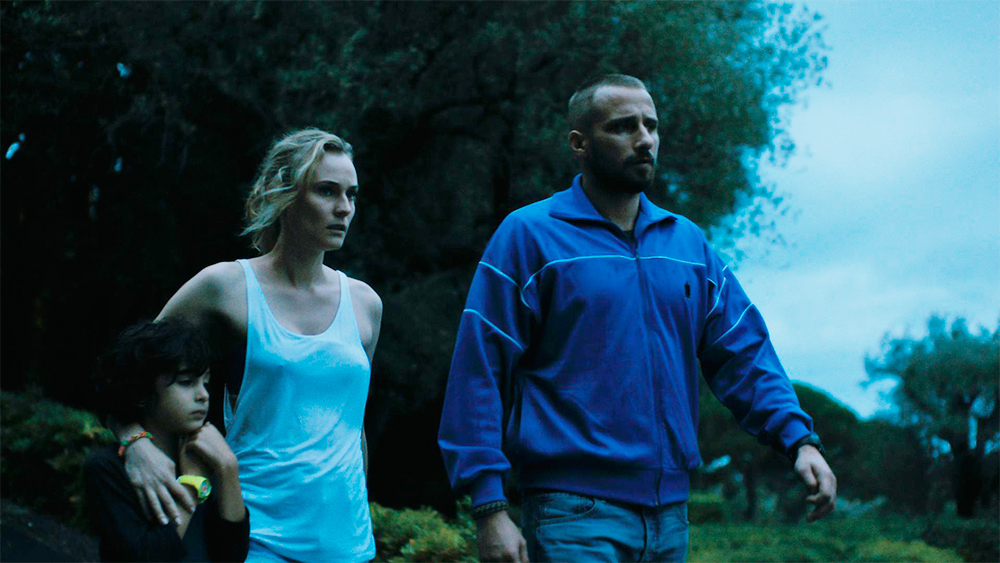
Vincent (Schoenaerts) is a soldier suffering from post traumatic stress disorder following a tour in Afghanistan. A medical reveals a variety of associated problems, all of which mean he’s unable to remain in the army. Given a medical discharge, he goes back home but struggles to make sense out of being there. Soon, though, he accepts a job from his friend and ex-comrade, Denis (Hamy). Working as part of a security detail at a party held at a villa called Maryland on the French Riviera, Vincent’s suspicions about the host, Imad Whalid (Kemp), and at least one of his guests – allied with an interest in the host’s wife, Jessie (Kruger) – lead nowhere (albeit initially). It’s a surprise then that the next day, Denis advises Vincent that he’s been chosen to play bodyguard to Whalid’s wife and child, Ali (Errougui-Demonsant), while Whalid is away on business for a couple of days.

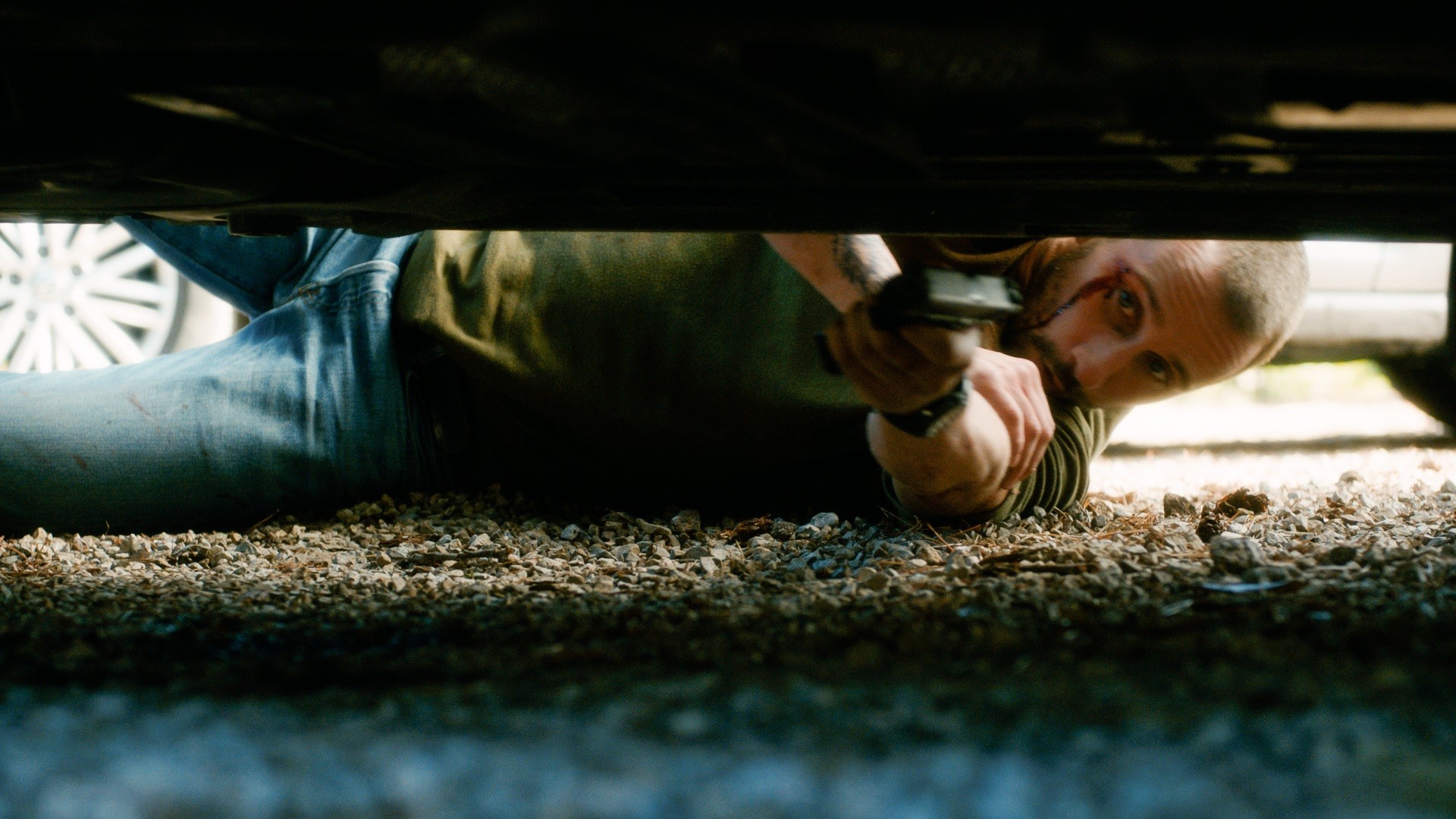
Vincent takes his new assignment seriously but finds Jessie barely acknowledges that he’s there. Ali seems more intrigued by Vincent’s presence but is a shy child who doesn’t say much. A trip to the beach passes without incident until the trio begin to make their way back to Maryland. Their car is rammed and masked men attempt to abduct Jessie. Vincent fights them off, killing one and wounding another before they take flight. Afterwards, at a police station, he and Jessie are both interviewed about the attack but Vincent is convinced by their line of questioning that the police are more interested in Whalid than they are in the attempted abduction. Back at the villa, he and Jessie find it’s been ransacked and the staff are no longer there.

Disorder - scene2

Matters are made more complicated by the news that Whalid has been arrested. His lawyer advises Jessie to stay at the villa, but Vincent believes they should go somewhere else. Jessie overrules him, and even though the police have arranged for officers to keep watch outside the front gates, Vincent decides to call Denis and get him to come over. Feeling more confident with his old army buddy there, Vincent is still sure that the house will come under attack before long. And then the police detail is removed, and Vincent’s worst fears begin to come true…

Alice Winocour’s first (and previous) movie was the erotically charged Augustine (2012), based on the relationship between a pioneering 19th Century French neurologist and his star patient, a partially paralyzed kitchen maid. If bets had been taken as to the content of her follow-up feature, it’s unlikely anyone would have chosen this dour contemplation on the effects of PTSD on an already withdrawn ex-soldier. But thanks to a committed and largely internalised performance from Schoenaerts, the character of Vincent is dependable instead of unreliable, and focused on keeping his charges safe. Winocour and co-screenwriter Jean-Stéphane Bron have taken what seems to be an odd tack at first, using Vincent’s PTSD to define the character and set up audience expectations.

Disorder - scene1

But Winocour doesn’t allow Vincent to tread an obvious path in terms of how the narrative develops. As it becomes clear that he and Jessie, Ali and Denis are going to come under siege, Vincent’s paranoid suspicions prove all too real, enabling him to deal with the situation effectively and, at one point, quite brutally. That one moment of brutality aside, Vincent acts swiftly and purposefully, leading the viewer to realise that his PTSD is what is going to keep them all alive, and that without it he may not be as resolute as he needs to be. It’s an interesting approach to what is essentially a mental illness, and though both Winocour and Schoenaerts downplay this aspect of the material – and certainly it’s jettisoned once the police detail is called off – there are enough echoes and quietly realised moments to remind the viewer that Vincent is always going to be just that little bit “damaged”.

Ultimately, Disorder is a mix of European arthouse character study and recognisably French thriller tropes. As you might expect, Winocour employs lots of close ups to help establish Vincent’s thoughts and feelings, and Schoenaerts’ often blank expression is betrayed by what’s going on with his eyes. He’s the movie’s focus, and we learn everything we need to know from an assortment of frowns and glances. The camera records them all, and soon we have a visual lexicon to refer to, as Vincent reveals more and more of himself (and possibly without his being aware he’s doing so). It’s in these moments that Schoenaerts excels, combining his imposing physical presence with a complex, sympathetic portrait of a man struggling, and finding, a reason not to be defined by his illness.

Disorder - scene3

Opposite Schoenaerts, Kruger has much less to do, but this is due mainly to the script’s decision to focus on Vincent at the expense of the other characters. Jessie is a woman who turns a blind eye to her husband’s business activities, content to look after their child and reap the obvious benefits. When Vincent confronts her with the reality of Whalid’s occupation, her reaction is hardly any reaction at all, and Vincent’s distaste washes over her with little effect. Kruger handles this convenient apathy with ease, but still manages to retain the audience’s sympathy for the situation she finds herself in. The actress has made some great choices in recent years – her performance in The Better Angels (2014) is a good example – and this is another quietly impressive portrayal from someone who could so easily have remained typecast because of her looks.

It’s also good to report that the thriller elements of Disorder are also well executed, particularly the attack on the car, which is filmed for the most part from within the car and which has an immediacy and an urgency that a lot of so-called out-and-out thrillers fail to achieve. While Vincent, Jessie, Ali and Denis wait in the villa for something to happen, the script allows them a brief interlude for laughter, but even then there’s a sense of foreboding, a certainty that the home invasion we all know is coming could happen right then and there. Again, Winocour shows a confidence in the material that for once doesn’t rely heavily on the same old tired thriller elements (even though she can’t resist having one of the intruders pass by in the background at one point), and there’s an understated tension to the final half an hour that’s maintained with a great deal of patience and aplomb.

Rating: 8/10 – part character study, part taut thriller, Disorder manages to unite both elements to impressive effect, and features a superb, well-modulated performance from Schoenaerts; a little slow to start with, but full of clever touches that enhance the material, the movie is both conventional and surprisingly unconventional at the same time, a rare feat these days and a very welcome one at that.

Share this:

  • Click to share on X (Opens in new window) X
  • Click to share on Facebook (Opens in new window) Facebook
  • More
  • Click to print (Opens in new window) Print
  • Click to email a link to a friend (Opens in new window) Email
Like Loading...

The Better Angels (2014)

16 Monday Mar 2015

Posted by dullwood68 in Movies

≈ 4 Comments

Tags

A.J. Edwards, Abraham Lincoln, Biography, Braydon Denney, Brit Marling, Diane Kruger, Drama, History, Indiana, Jason Clarke, Review, True story, Wes Bentley

Better Angels, The

D: A.J. Edwards / 95m

Cast: Jason Clarke, Diane Kruger, Braydon Denney, Brit Marling, Wes Bentley, Cameron  Mitchell Williams, McKenzie Blankenship

Indiana, 1817. Eight year old Abe Lincoln (Denney) lives with his father Tom (Clarke), mother Nancy (Marling), and younger sister Sarah (Blankenship) in an area of “unbroken forest”. They are joined by Nancy’s orphaned cousin, Dennis Hanks (Williams) who becomes an older brother to Abe. Abe’s father works as a farmer and a carpenter; he’s a taciturn man who doesn’t drink alcohol, gamble or curse, but he is a harsh disciplinarian, and Abe often finds himself being punished for some misbehaviour or minor infraction.

Abe has a better relationship with his mother, who is kind-hearted and supportive of his attempts to educate himself. She is a nurturing influence, one he thrives under, and the time he spends with her helps offset the onerous chores he has to do on the farm. But Abe is left adrift when Nancy contracts milk sickness and dies. His father tries to carry on but it doesn’t last long. He leaves Abe, Sarah and Dennis to manage the farm while he goes off to find another wife. When his father returns, it is with a new bride, Sarah “Sally” Bush Johnston (Kruger), a widow from Kentucky who has three children of her own. In her own way she proves as supportive and nurturing of Abe as Nancy was, and despite some initial reservations, Abe warms to her.

As their relationship deepens and strengthens, Abe’s relationship with his father remains the same, with an added emphasis on Abe’s “toughening up”. It’s around this time that Abe’s honesty becomes more noticeable (even if it leads to his being caned by his father), and his education receives a boost from the attention of local schoolteacher Mr Crawford (Bentley). Crawford seeks Tom’s permission to provide Abe with extra tutoring; as he tells Sally, Abe won’t be a backwoodsman for very much longer. Tom agrees, and Abe is set on the path to securing his future.

Better Angels, The - scene

An idyllic looking reminiscence on the early life of Abraham Lincoln, The Better Angels is a deliberately slow-paced meditation on the influences that helped the young Lincoln grow up to be the man he became. Taking as its focus the period of his life when he lost and gained a mother, the movie is a studied, thoughtful examination of the trials and joys of growing up in a wooded wilderness.

Shot in glorious, lustrous black and white, the movie paints a compelling portrait of a time and a place where life was certainly difficult, and sometimes harsh: the family’s cows get sick and die from eating poisonous weeds, and Nancy dies as a result of drinking their infected milk. When Tom Lincoln goes off to find a wife, it seems uncaring and thoughtless to leave his children and Dennis to cope until he returns, but this was part and parcel of life in America during that period, where a normal childhood had to be grabbed whenever possible. It’s to Edwards’ credit that he’s able to show that the young Lincoln was able to be a child as well as a farm labourer, and that he was able to find beauty in his surroundings, both in his two mothers and via the ever-changing natural habitat he was a part of.

Abe’s relationships with Nancy and Sarah are the heart and soul of the movie, delicate and affectionate and heartfelt, with both Marling and Kruger providing very different, yet very intuitive performances. Marling behaves almost like a wood nymph, her love of nature and the way in which she embraces it allowing Abe’s mind to embrace it too. Kruger is equally effective, imbuing Sarah with a quiet determination that Abe will realise his full potential, and unsupportive of her new husband’s strict approach to parenting. (It could be argued that without these two women in his life at such a formative time, then Abraham Lincoln’s future would have been entirely different.) As his stern, reticent father, Clarke is a stoic figure seemingly bereft of feeling and only able to connect with his son when correcting him. Indeed, the nearest he gets to showing any tenderness is when he’s teaching Abe how to wrestle, but it’s an awkward tenderness and borders on uncomfortable – for both of them.

The young Abe is played with quiet composure and assurance by Denney (making his movie debut), and he’s a great find, matching his adult co-stars for sincerity and skill. He has a natural ability that allows the viewer to engage and understand Abe instantly. Nancy mentions at one point that Abe is asking her questions she can’t answer; looking at Denney you can believe it. He’s also effective in scenes where he and his mothers bond through learning and their mutual appreciation of nature, his expressions of curiosity and understanding perfectly shaped and naturalistic. It’s a tremendous performance, and anchors the movie superbly.

With a quartet of understated yet superb performances at its centre, The Better Angels‘ glowing black and white cinematography emphasises the poetry and the beauty of the seasons, and is exhilarating to experience. Edwards’ use of shade and light, executed with tremendous precision by DoP Matthew J. Lloyd, is hugely impressive, immersing the viewer in shots of extraordinary seductiveness. Rarely has unspoilt countryside looked so alluring or captivating, and rarely has it looked so beautiful as it does here, in black and white. With every scene captured with breathtaking attention to period detail and highlighted by some of the most exquisite framing and composition seen in recent years, the movie is a visual treat par excellence.

Rating: 9/10 – some viewers may bemoan the slow pace and emphasis on recurring shots of natural beauty, but The Better Angels presents a fully realised world that is immersive and often deeply profound; with Edwards in full control of both the script and the world he’s recreating, this is a movie that resonates long after it’s been seen.

Share this:

  • Click to share on X (Opens in new window) X
  • Click to share on Facebook (Opens in new window) Facebook
  • More
  • Click to print (Opens in new window) Print
  • Click to email a link to a friend (Opens in new window) Email
Like Loading...

Blog Stats

  • 486,619 hits

Recent Posts

  • 10 Reasons to Remember Bibi Andersson (1935-2019)
  • Fantasia (1940)
  • Dances With Wolves (1990) – The Special Edition
  • Kiss of the Spider Woman (1985)
  • The Three Musketeers (1973)

Top Posts & Pages

  • Lost for Life (2013) - Another Look
    Lost for Life (2013) - Another Look
  • Lost for Life (2013)
    Lost for Life (2013)
  • About
    About
  • Mr. Topaze (1961)
    Mr. Topaze (1961)
  • Shock and Awe (2017)
    Shock and Awe (2017)
  • Hunt for the Wilderpeople (2016)
    Hunt for the Wilderpeople (2016)
  • Cardboard Boxer (2016)
    Cardboard Boxer (2016)
  • Billy Lynn's Long Halftime Walk (2016)
    Billy Lynn's Long Halftime Walk (2016)
  • Winter's Tale (2014)
    Winter's Tale (2014)
  • Exposed (2016)
    Exposed (2016)
Follow thedullwoodexperiment on WordPress.com

Blogs I Follow

  • Rubbish Talk
  • Film 4 Fan
  • Fast Film Reviews
  • The Film Blog
  • All Things Movies UK
  • Interpreting the Stars
  • Let's Go To The Movies
  • Movie Reviews 101
  • TMI News
  • Dan the Man's Movie Reviews
  • Film History
  • Jordan and Eddie (The Movie Guys)

Archives

  • April 2019 (13)
  • March 2019 (28)
  • February 2019 (28)
  • January 2019 (32)
  • December 2018 (28)
  • November 2018 (30)
  • October 2018 (29)
  • September 2018 (29)
  • August 2018 (29)
  • July 2018 (30)
  • June 2018 (28)
  • May 2018 (24)
  • April 2018 (21)
  • March 2018 (31)
  • February 2018 (25)
  • January 2018 (30)
  • December 2017 (30)
  • November 2017 (27)
  • October 2017 (27)
  • September 2017 (26)
  • August 2017 (32)
  • July 2017 (32)
  • June 2017 (30)
  • May 2017 (29)
  • April 2017 (29)
  • March 2017 (30)
  • February 2017 (27)
  • January 2017 (32)
  • December 2016 (30)
  • November 2016 (28)
  • October 2016 (30)
  • September 2016 (27)
  • August 2016 (30)
  • July 2016 (30)
  • June 2016 (31)
  • May 2016 (34)
  • April 2016 (30)
  • March 2016 (30)
  • February 2016 (28)
  • January 2016 (35)
  • December 2015 (34)
  • November 2015 (31)
  • October 2015 (31)
  • September 2015 (34)
  • August 2015 (31)
  • July 2015 (33)
  • June 2015 (12)
  • May 2015 (31)
  • April 2015 (32)
  • March 2015 (30)
  • February 2015 (37)
  • January 2015 (39)
  • December 2014 (34)
  • November 2014 (34)
  • October 2014 (36)
  • September 2014 (25)
  • August 2014 (29)
  • July 2014 (29)
  • June 2014 (28)
  • May 2014 (23)
  • April 2014 (21)
  • March 2014 (42)
  • February 2014 (38)
  • January 2014 (29)
  • December 2013 (28)
  • November 2013 (34)
  • October 2013 (4)

Blog at WordPress.com.

Rubbish Talk

Film 4 Fan

A Movie Blog

Fast Film Reviews

The Film Blog

The official blog of everything in film

All Things Movies UK

Movie Reviews and Original Articles

Interpreting the Stars

Dave Examines Movies

Let's Go To The Movies

Film and Theatre Lover!

Movie Reviews 101

Daily Movie Reviews

TMI News

Latest weather, crime and breaking news

Dan the Man's Movie Reviews

All my aimless thoughts, ideas, and ramblings, all packed into one site!

Film History

Telling the story of film

Jordan and Eddie (The Movie Guys)

Movie Reviews & Ramblings from an Australian Based Film Fan

Privacy & Cookies: This site uses cookies. By continuing to use this website, you agree to their use.
To find out more, including how to control cookies, see here: Cookie Policy
  • Subscribe Subscribed
    • thedullwoodexperiment
    • Join 481 other subscribers
    • Already have a WordPress.com account? Log in now.
    • thedullwoodexperiment
    • Subscribe Subscribed
    • Sign up
    • Log in
    • Report this content
    • View site in Reader
    • Manage subscriptions
    • Collapse this bar
 

Loading Comments...
 

    %d