
Tags
Alexander Hammid, At Land, Avant garde, Chao Li Chi, Døden er et kjærtegn, Edith Carlmar, Experimental movies, France, Jacqueline Audry, Japan, Kinuyo Tanaka, Love Letter, Maya Deren, Meditation on Violence, Meshes in the Afternoon, Norway, Olivia (1951), Shirley Clarke, The Fifties, Women directors
Introduction
Women directors had been prevalent during the Silent Era, but with the advent of sound, many prominent careers foundered or were unable to continue. In Hollywood, only Dorothy Arzner maintained a career within the male-dominated heirarchy that viewed women directors as “box office poison”, and she did so by making moderately successful, conservative movies that weren’t transgressive in any way at all. In 1943, she made her last movie before making the switch to television. But while Hollywood showed no interest in encouraging would-be women directors to replace her, elsewhere, there were women who, like Ida Lupino at the end of the decade, weren’t letting Hollywood tell them how to make movies…
Maya Deren (1917-1961)
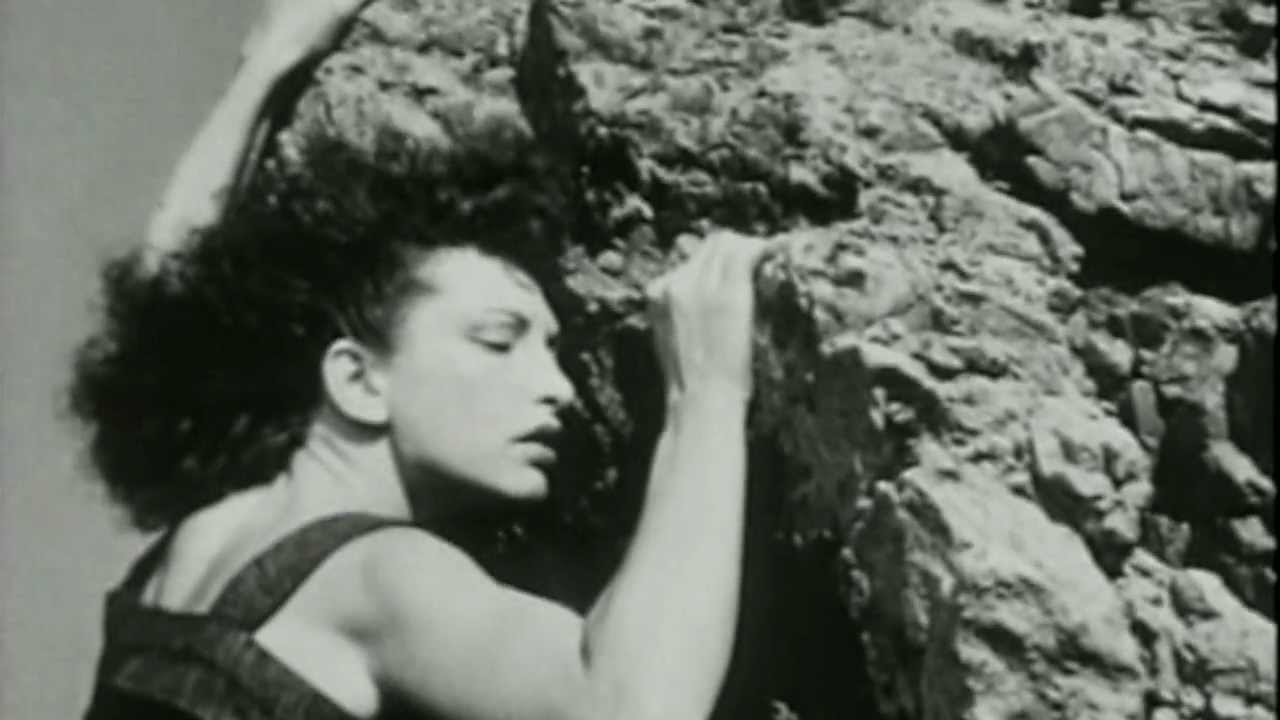
An experimental movie maker, Deren made a series of short, avant garde experimental movies between 1943 and 1948 that remain some of the most impressive movies of their type ever made. Her first movie, Meshes in the Afternoon (1943) is a surreal tale of a woman whose dreams may or may not be happening in reality, and is technically astonishing for the scene where there are multiple Derens at a table (the movie was filmed using a 16mm Bolex camera). It’s dreamlike (naturally) and enigmatic, but fascinating to watch nevertheless.
She followed this with Witch’s Cradle (1944), a collection of images and static shots that wasn’t as well received, and in the same year she and her husband Alexander Hammid collaborated on a documentary short The Private Life of a Cat. She ended the year by making At Land, a haunting study of a woman’s trek through various foreign environments that she encounters; her sense of herself in these environments and her reaction to them makes for an intriguing study of isolationism and the need to belong.
In 1945 she made A Study in Choreography for Camera, a movie that packs so much about time and motion through the movement of a dancer in its four minutes that it’s almost dizzying how much Deren has managed to include in that time. It’s a movie that confronts ideas about space and time and motion that are so stimulating, it makes the viewer wonder why there aren’t more movies like it. Dance was also the main feature of her next project, Ritual in Transfigured Time (1946); its blend of dance and surrealism, allied to notions of freedom of expression, makes for some very eloquent and poetic imagery.
In 1946 her work was acknowledged with a Guggenheim Fellowship for “Creative Work in the Field of Motion Pictures”. She also won the Grand Prix Internationale for 16mm experimental film at the Cannes Film Festival (for Meshes in the Afternoon). Deren’s last movie in the Forties was Meditation on Violence (1948), a collaboration with martial arts expert Chao Li Chi that looks at the ideals of the Wu Tang philosophy. It’s a cloistered affair with the movie being rewound part way through, thus obscuring the message (unfortunately). It’s still an intriguing look at a way of living life in a particular fashion, and Chao is a mesmerising figure.

The 50’s
At the same time that Ida Lupino made her last independent movie, The Bigamist (1953), a member of the New York avant garde modern dance movement called Shirley Clarke made her first short movie, Dance in the Sun. Clarke had wanted to be a choreographer, but she was unsuccessful at this, and on the advice of her psychiatrist, followed her interest in movies instead. She made several more shorts in the Fifties, including A Moment in Love (1957) and Bridges-Go-Round (1958). All were well-received, and Clarke continued to make her own kind of experimental movies in the Sixties.
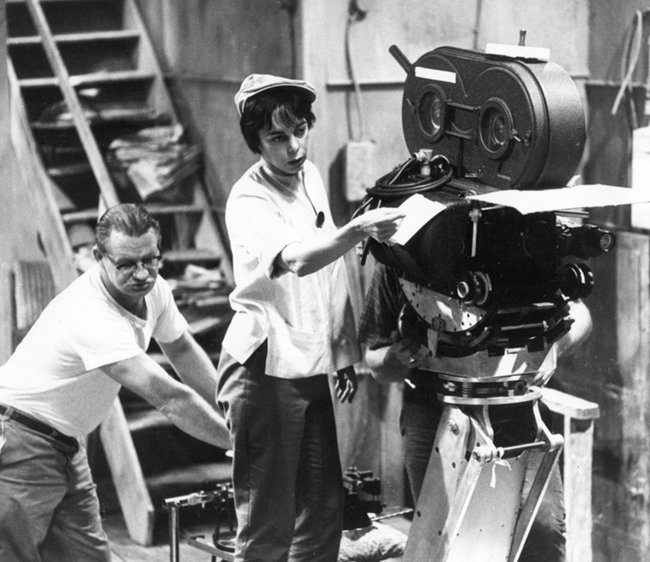
Maya Deren made two more short movies in the Fifties, Ensemble for Somnambulists (1951) and The Very Eye of Night (1958), two similar explorations of dance form and composition that also looked at ritual and expression as shown through movement. Deren stayed true to her beliefs about the nature of film, and her sudden death in 1961 was a tragedy in every sense of the word. She once said, “I make my pictures for what Hollywood spends on lipstick”; but what she achieved in such a short directorial career was nothing short of miraculous, and she remains a tremendous influence on experimental movie makers the world over.
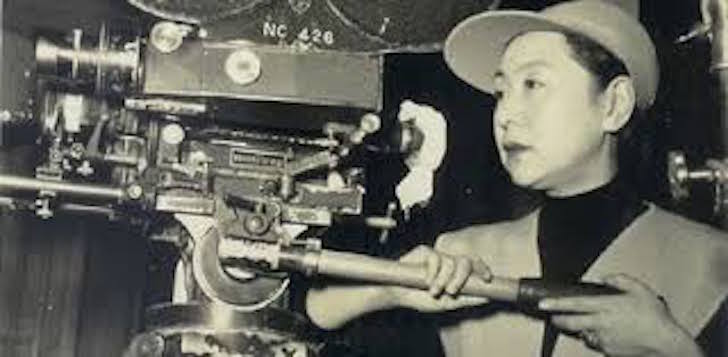
1953 was also the year that saw Japanese actress Kinuyo Tanaka make her debut as a director with Love Letter. Only the second woman to have a career as a director – after Tazuko Sakane – Tanaka’s romantic drama was entered into the 1954 Cannes Film Festival. She made five further movies between 1955 and 1962, one of which, The Moon Has Risen (1955) was co-scripted by Yasujirô Ozu. Tanaka had a surety of touch behind the camera and her visual style was eloquent and disarming. She maintained her career as an actress, and won several awards later on, but her movies, though hard to find now, show a smart, capable movie maker who was comfortable behind the camera because of how comfortable she was in front of it.
In France, the career of Jacqueline Audry, which had begun with the short Le Feu de paille (1943), flourished in the Fifties, and she had particular success with a series of adaptations of novels by Colette, Gigi (1949), Minne (1950), and Mitsou (1956). Audry often tackled topics that were considered controversial, such as the relationship between a schoolmistress and one of her pupils in Olivia (1951), a movie that has come to be regarded as a “landmark of lesbian representation”. With the rise of the French New Wave her more traditional style was at odds with the prevailing trends in French cinema, and she only made three movies in the Sixties, but overall her career shows she was a woman who wasn’t afraid to challenge conventional notions of sexuality and female submissiveness (even if it meant her movies were often heavily censored).
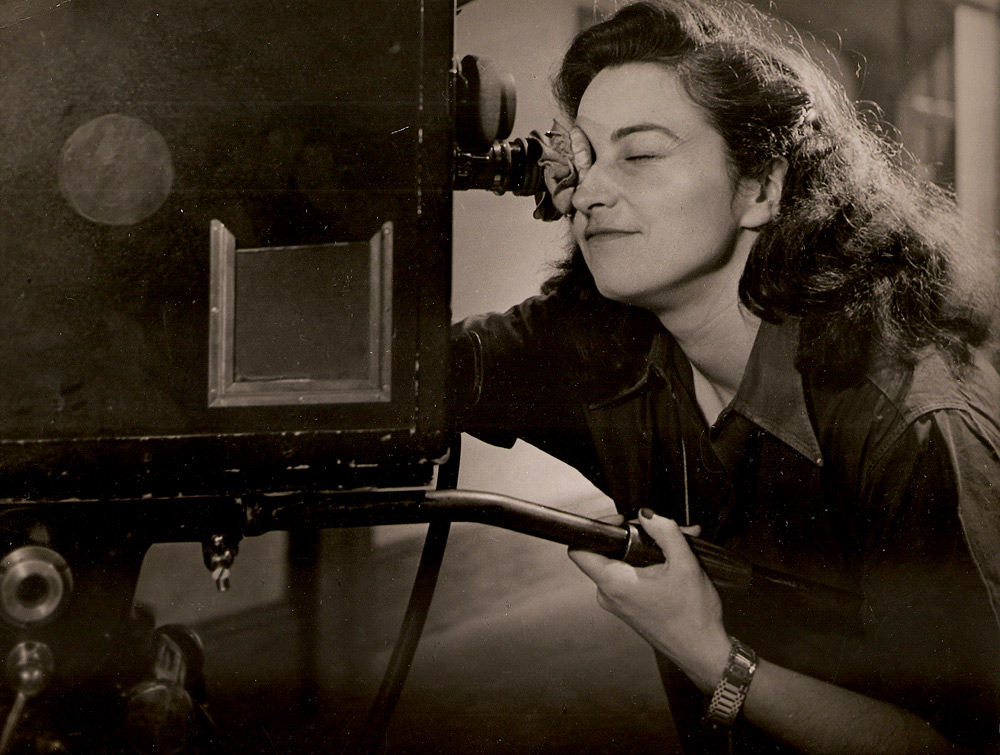
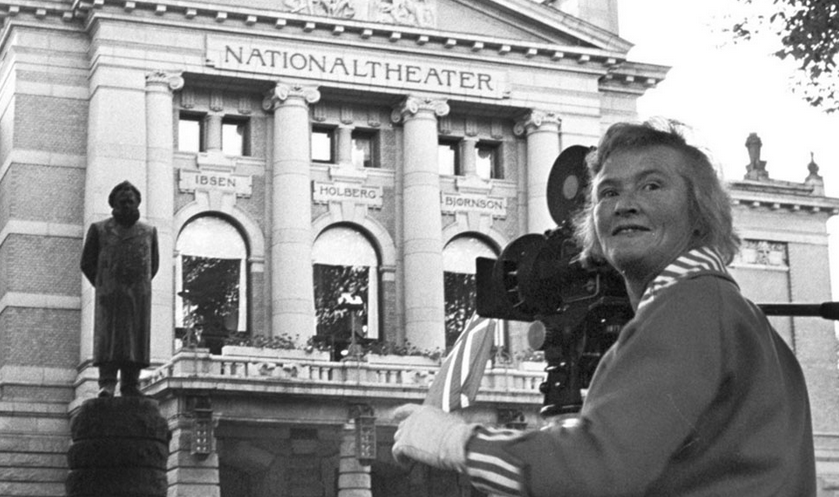
Another actress who made the transition to directing was Norway’s Edith Carlmar. In 1949 she made what is regarded as the very first film noir directed by a woman, Døden er et kjærtegn. It was a success, and she followed it up with a drama about mental illness called Skadeskutt (1951). Another female director who wasn’t afraid to tackle serious issues that most mainstream (male) directors wouldn’t go near, Carlmar made a total of ten movies between 1949 and 1959, and each one was both a box office success and critically well-received, a remarkable achievement for the period, and one that makes her one of the most successful female movie directors of the last seventy years.
Even though these women were forging careers for themselves, and were making sometimes controversial, challenging and experimental movies, they remained a minority in an international industry that still didn’t trust women to be successful or able to attract audiences in the first place. But this misogyny was about to face its first real, and proper, challenge, as the movement towards female empowerment that began to express itself in the Sixties encouraged women movie makers to become bolder and to demand more of an equal place in cinema.
 thedullwoodexperiment