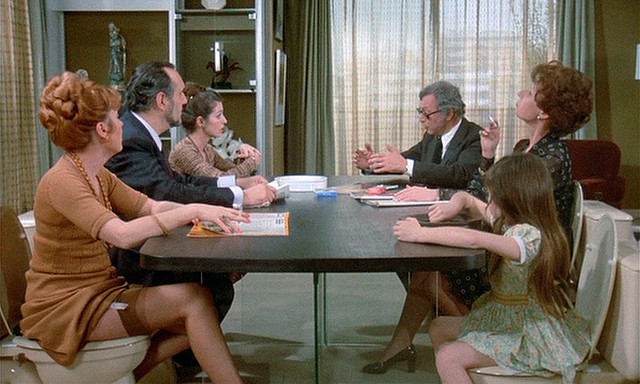
• 10 Reasons to Remember…
  • A Brief Word About…
  • About
  • For One Week Only
  • Happy Birthday
  • Monthly Roundup
  • Old-Time Crime
  • Other Posts
  • Poster of the Week
  • Question of the Week
  • Reviews
  • Trailers

thedullwoodexperiment

~ Viewing movies in a different light

thedullwoodexperiment

Tag Archives: Dustin Hoffman

The Meyerowitz Stories (New and Selected) (2017)

19 Sunday Nov 2017

Posted by dullwood68 in Movies

≈ 2 Comments

Tags

Adam Sandler, Art, Ben Stiller, Comedy, Drama, Dustin Hoffman, Emma Thompson, Family, Netflix, Noah Baumbach, Relationships, Review

D: Noah Baumbach / 112m

Cast: Adam Sandler, Ben Stiller, Dustin Hoffman, Emma Thompson, Elizabeth Marvel, Grace Van Patten, Judd Hirsch, Rebecca Miller, Candice Bergen, Adam Driver, Matthew Shear, Sakina Jaffrey, Gayle Rankin, Michael Chernus

Harold Meyerowitz (Hoffman) is a semi-famous sculptor who hasn’t had a show in years, and who has become somewhat marginalised within the New York art world. His work is admired by those that know of it, but his contemporaries, such as L.J. Shapiro (Hirsch), are still exhibiting and still getting the recognition that Harold thinks they don’t deserve. Harold is on his fourth marriage – to Maureen (Thompson) – and has two children from his first, Danny (Sandler) and Jean (Marvel). Danny is in the midst of separating from his wife, and has a precocious teenage daughter, Eliza (Van Patten), who is about to leave for college. Jean is a spinster but leads an otherwise happy life. Harold has another child from his third marriage, Matthew (Stiller), but he lives in LA, and works as a financial consultant. He’s successful, and has a young son he would like to spend more time with. This is the family Meyerowitz, and despite outward appearances, many of which they foster themselves, they all need help (oh boy, do they need help).

What’s impressive about Noah Baumbach’s latest feature is that he takes a stereotypical dysfunctional family, and spins that stereotype ever so slightly off its axis, so that each nugget of information about any of the characters seems fresh and unexpected, even though a closer inspection reveals tropes and metaphors that we’ve seen countless times before. This is due to Baumbach’s very eloquent and very astute screenplay, a piece of writing that manages to include a number of complex and yet succinct observations on the nature of father-son relationships and the effect that an inwardly scared parent can have on their children. It’s no surprise that Baumbach has chosen to examine the issue of what children need from their parents as this has formed the basis of much of his work in the past, from The Squid and the Whale (2005) to While We’re Young (2014). But this is easily his most impressive and most fully realised project, and it has a smoothness and an ease about it that makes it all the more enjoyable to watch.
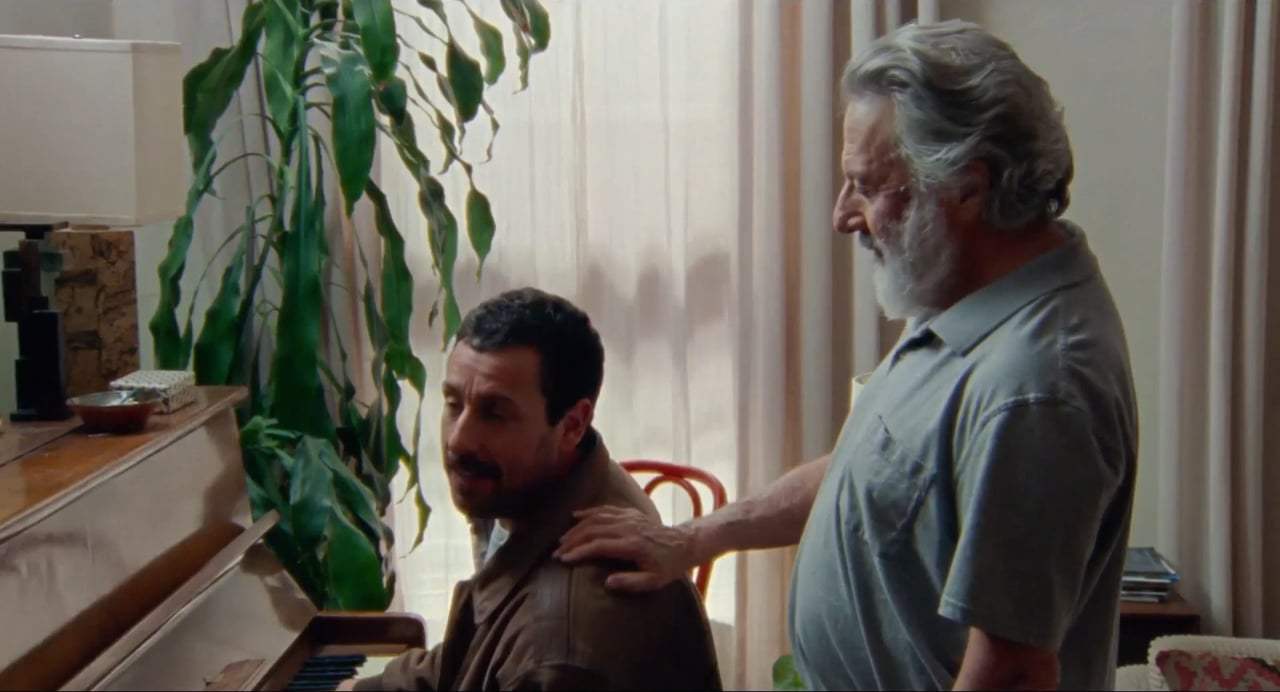
The main focus is, at first, on Danny. With his marriage coming to an end and Eliza going off to college, Danny has to reassess what he’s going to do with his life (he’s been a house husband up until now, having chosen that as his “career” instead of being a musician). He and Jean get involved in arranging a retrospective of Harold’s career, but Baumbach is quick to make the viewer realise that this isn’t being done out of love or affection, and not even necessarily out of respect for their father’s work. Like so many other things connected to Harold that they do, it’s done because they view it as the right thing to do; it’s a familial obligation. But Harold is obsessed with how his work is perceived, because his work is the only thing that, to him, makes him stand out from the crowd. He’s constantly seeking approbation from everyone around him, and insists he receives it from his kids. But if they don’t, then he’s oblivious to both them and their needs. Such is their lives as adults, such was their lives as children.

Harold’s narcissistic expressions about himself, and his short-fuse dismissal of anyone he deems unimportant, has had an unpleasant effect on all three of his children. Danny has spent an enormous amount of time and energy in raising Eliza so that they’re more like friends instead of father and daughter. As a result he’s a better father than Harold was to him, but the irony is that in its own way, it’s as unhealthy as the relationship Danny had with him as a child. Baumbach makes the point well: too little attention or love can be just as bad as too much. But while that may seem obvious (and it is), it’s the way in which Danny tries to strike a balance between the two, and without necessarily being aware that he’s doing it, that makes all the difference. Jean has her own reasons for keeping her life separate, and though it seems that she’s perhaps the most “adjusted” of the three, this later proves to be incorrect. And then there’s Matthew, who professes to be “over” his father’s ability to make him angry for having a successful life (Harold is almost as obsessed by money as he is by maintaining his reputation). Matthew, like Danny, is trying to be a better father than Harold was, but he can’t seem to connect with his son, despite his best efforts.
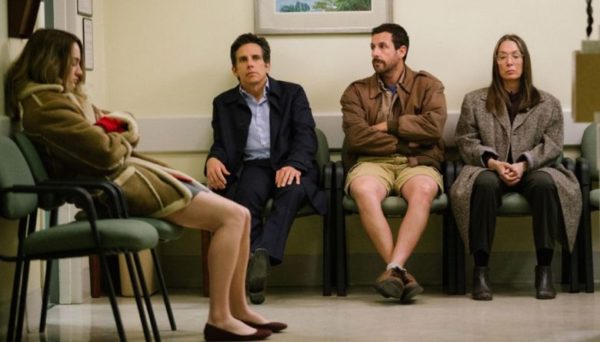
Watching these four people struggle to communicate with each other, and struggle to find the answers that are often in front of them, should be frustrating for the viewer,  but Baumbach, and the sharpness of his script, helps avoid all that. The family dynamic is entirely credible and perfectly judged, with superb performances from all concerned. Sandler has only been better once before, in Punch-Drunk Love (2002), and here he proves that he can be a fine dramatic actor when he wants to be (which isn’t often enough). Sandler displays a warmth and a heartfelt sincerity as Danny that allows the viewer a way in to the Meyerowitz family and its myriad issues. He’s a sweet, caring guy trying to do his best, and he has enough self-awareness to know that he doesn’t always get it right. Stiller is equally as good, channelling Matthew’s anger at being unfairly singled out for Harold’s praise as a child when the praise, and what it related to, wasn’t important to Matthew at all. In support, Marvel, Thompson and Van Patten offer touching performances, while there are a clutch of more minor roles that allow for a few scene-stealing moments (Chernus as a snippy nurse is a treat). But this, perhaps expectedly, is Hoffman’s movie, his portrayal of Harold as a manipulative, emotionally remote artist one of the best things he’s done in years.

Baumbach approaches the material and the characters with a great deal of care and attention, and it’s this that makes the movie so effortlessly dramatic, and so effortlessly funny. Nobody behaves in a manner that might seem odd or inappropriate because that’s how they’ve always behaved. With some questions there’s an answer provided, but many’s the time when Baumbach keeps the viewer in the dark, as if to say, “these characters still need time to figure things out, and it’s not going to happen before the movie’s over”. It all adds up to a remarkably humane and sympathetic look at expectations between the generations, and how personal legacies can hamper the growth of those who are raised in the shadow of them. Thoughtful and considerate of its characters’ foibles and muted aspirations, Baumbach’s latest is a sprightly mix of drama and comedy that succeeds on both fronts, and is his best work yet.

Rating: 9/10 – that rarity: a comedy-drama with heart as well as intelligence, The Meyerowitz Stories (New and Selected) is a cautionary tale that never once feels forced or that it’s struggling to find its own voice; the characters linger in the memory, along with Baumbach’s clever script and fluid direction, and a number of quality performances, making this a movie that everyone should try and see, and especially as an alternative to more mainstream, big-budget moviemaking.
Share this:

  • Click to share on X (Opens in new window) X
  • Click to share on Facebook (Opens in new window) Facebook
  • More
  • Click to print (Opens in new window) Print
  • Click to email a link to a friend (Opens in new window) Email
Like Loading...

Mini-Review: Kung Fu Panda 3 (2016)

11 Friday Mar 2016

Posted by dullwood68 in Movies

≈ 1 Comment

Tags

Alessandro Carloni, Angelina Jolie, Bryan Cranston, Chi, China, Comedy, Dragon Warrior, Dustin Hoffman, Famous Five, J.K. Simmons, Jack Black, Jennifer Yuh Nelson, Kai, Master Shifu, Po, Praying Mantis, Review, Sequel, Seth Rogen, Spirit Warrior, Spirit World, Tiger

Kung Fu Panda 3

D: Jennifer Yuh Nelson, Alessandro Carloni / 95m

Cast: Jack Black, Bryan Cranston, Dustin Hoffman, Angelina Jolie, J.K. Simmons, Seth Rogen, James Hong, Lucy Liu, David Cross, Jackie Chan, Kate Hudson, Randall Duk Kim

In the Spirit World, Master Oogway (Kim) has his chi stolen from him by the villainous Kai (Simmons). With Oogway’s chi and those of the other denizens of the Spirit World, Kai can regain his human form and seek out the only warrior who can defeat him, the Dragon Warrior, aka Po the panda (Black). Meanwhile, Po has his own problems. Master Shifu (Hoffman) has given him the role of teaching the Famous Five, and subsequently he meets his real father, Li (Cranston). When Kai sends his emissaries to challenge Po, the Famous Five intervene but aren’t strong enough to defeat them; one by one they have their chi’s taken from them. Only Po has the strength and skill to best Kai, but first he must travel with his father to the village of his birth, and take instruction in how to become a Chi master; only then will he be able to defeat Kai and banish him back to the Spirit World.

KFP3 - scene1

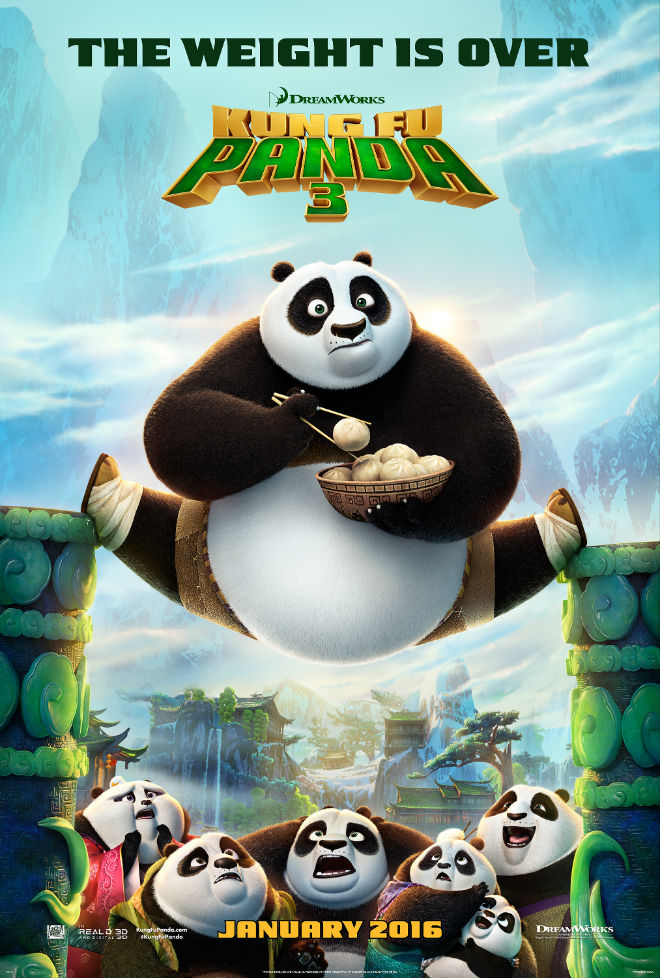
Sequels with 3 in the title are often tired, limited affairs that trade on former glories while lacking the energy and freshness of their predecessors. However, Kung Fu Panda 3 bucks the trend and delivers a movie that is as energetic as 1 and 2, and proves to be just as entertaining. The kung fu moves are as impressive as ever, and the animated stylings that go with them are particularly exciting, especially in the Spirit World, where physics is a concept that’s easily ignored. In the real world, Po’s dilemma at discovering his real father after being raised so faithfully by Mr Ling (Hong) is played out amidst a strong mix of comedy and pathos, and the depiction of the panda village is bursting with wonderful characters and visual humour.

Kai is a villain in the mold of the first movie’s Tai Lung, and as a result is the movie’s weakest link, but Simmons is obviously having fun with the role (as is everyone else), and in comparison with the rest of the story, the character’s familiarity is not a major flaw. The burgeoning relationship between Po and Li is a definite bonus and has been handled well by scriptwriters Jonathan Aibel and Glenn Berger, their inclusion of Mr Ling doing justice to the relationship established in parts one and two. The visuals are as stunning as ever, and the colours have a photo-realistic sheen to them that haven’t been seen in previous outings, making it all the more superb than before.

KFP3 - scene2

Rating: 8/10 – a treat for the eyes (and as rewarding for the mind), Kung Fu Panda 3 is something of a retread of the first movie but in this case, it’s not a bad thing; with a superb voice cast and stunning animation throughout, this sequel proves that putting a lot of heart and soul into a movie pays off every time.

Share this:

  • Click to share on X (Opens in new window) X
  • Click to share on Facebook (Opens in new window) Facebook
  • More
  • Click to print (Opens in new window) Print
  • Click to email a link to a friend (Opens in new window) Email
Like Loading...

The Program (2015)

12 Friday Feb 2016

Posted by dullwood68 in Movies

≈ 1 Comment

Tags

Ben Foster, Blood doping, Chris O'Dowd, Cycling, David Walsh, Drama, Dustin Hoffman, EPO, Floyd Landis, Jesse Plemons, Journalist, Lance Armstrong, Performance enhancing drugs, Review, Stephen Frears, Team Postal, Testicular cancer, The Sunday Times, Tour de France, True story

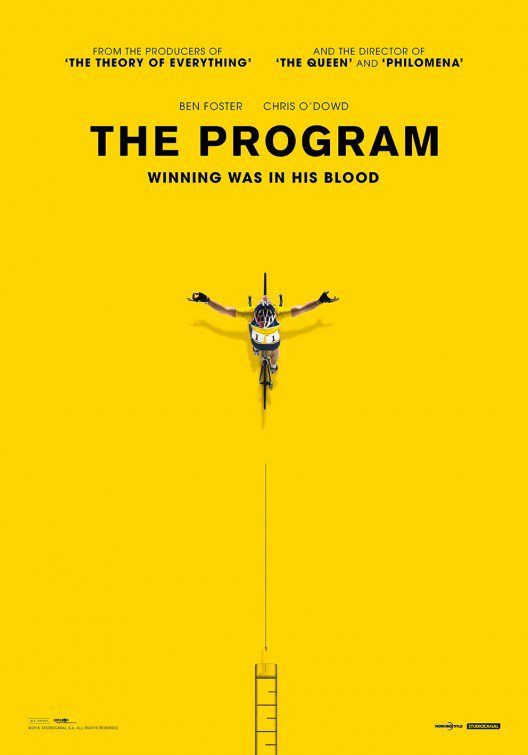
The Program

D: Stephen Frears / 103m

Cast: Ben Foster, Chris O’Dowd, Guillaume Canet, Jesse Plemons, Lee Pace, Denis Ménochet, Dustin Hoffman, Edward Hogg, Elaine Cassidy, Laura Donnelly, Peter Wight

In 1993, Irish sports journalist David Walsh (O’Dowd) met and interviewed Lance Armstrong (Foster) for the first time. Armstong was a newcomer to the Tour de France, and when asked by Walsh what he hoped to achieve, the young rider’s answer was, “to finish”. He did, but so far down the field that he made next to no impact on his rivals. Armstorng became aware that his stronger, faster adversaries were able to beat him because their blood was more richly oxygenated than his… and that there was a reason for this.

The reason was a banned substance called erythropoietin – EPO. It was administered by the advising doctor of the team winning all the Tour de France stages (and the tournament over all). Armstrong persuaded the team’s doctor, Michele Ferrari (Canet), to provide him with EPO as well. But before his “treatment” could make a distinct difference in his performance, Armstrong was diagnosed with stage three testicular cancer in October 1996. He underwent an intensive series of treatments that involved the removal of a diseased testicle, four cycles of chemotherapy, and surgery to remove several brain lesions. Amazingly, in February 1997, Armstrong was given the all clear. And he was determined to return to professional cycling.

The Program - scene3

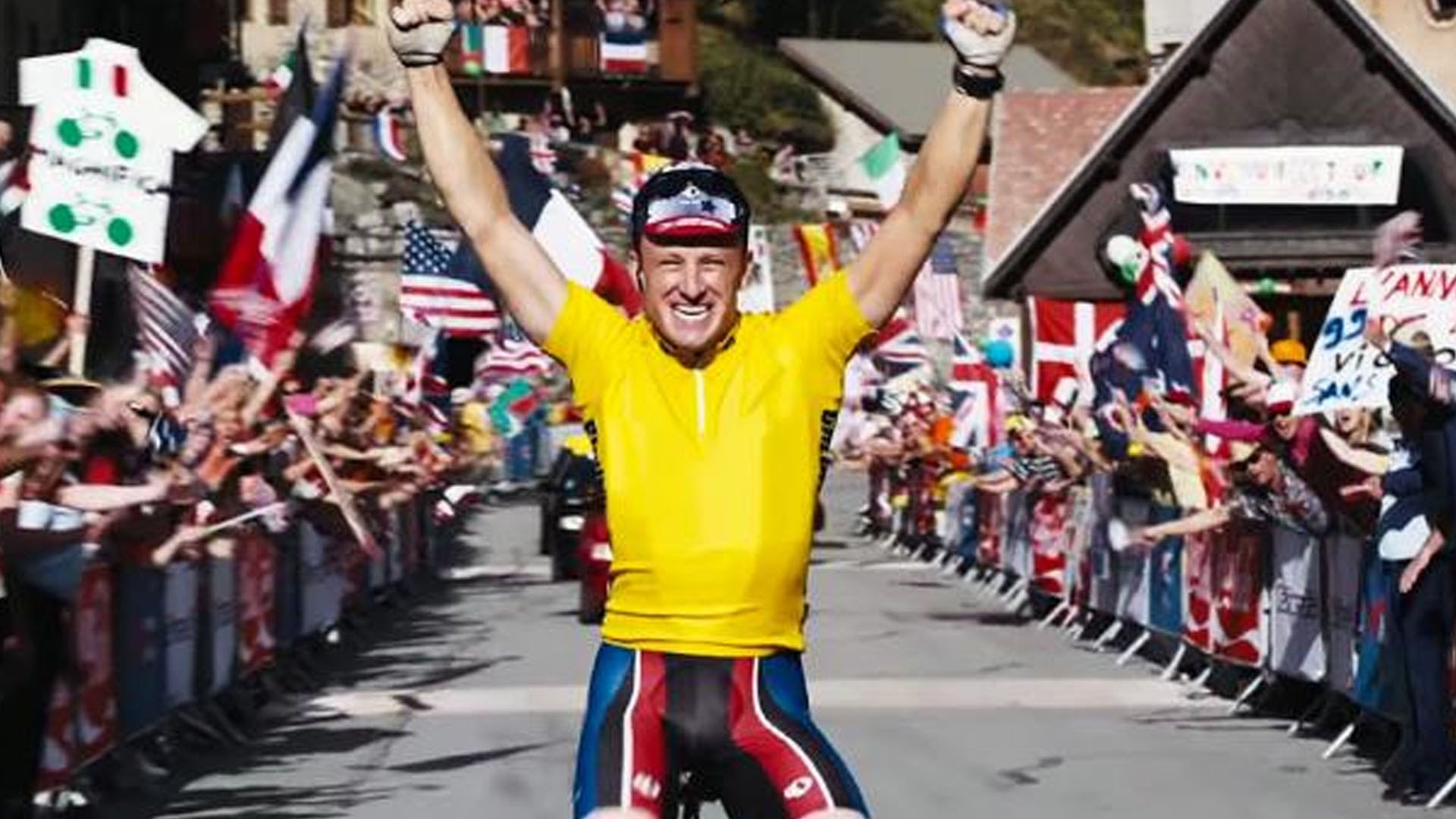
But he had no team to come back to. Eventually he hooked up with the American Team Postal, and soon he was winning races, and impressively so. And two years later, in 1999, he won the Tour de France for the first in what would be seven consecutive years. But while everyone celebrated Armstrong’s tenacious comeback and fierce will to win, it was journalist David Walsh who suspected that something wasn’t quite right. How, he asked, had a middling rider with unimpressive riding times, and after an albeit short battle with cancer, returned to cycling only fitter, faster, and stronger, and been able to win the Tour de France so easily (he won by seven minutes and thirty-seven seconds)? And why wasn’t anyone else asking the question? And, more importantly, why wasn’t anyone asking the question when Armstrong kept winning year after year?

There are many reasons, as it happens, but the main one was that Armstrong became so successful, so famous as the face of cycling, that no one within the industry was able (or willing) to challenge him, even the officials in charge of the Cycling Federation. So powerful was he that when he tested positive for corticosteroids he was able to get his personal team to supply backdated prescriptions for cortisone as a treatment for saddle sores, and so avoid any charges of drug taking. Throughout his career, Armstrong was able to bluff and bully and wriggle his way out of any accusations of drug taking, blood doping or any other form of cheating. He became famous for avoiding the question of whether he’d taken drugs by saying he’d “never tested positive for performance enhancing drugs”.

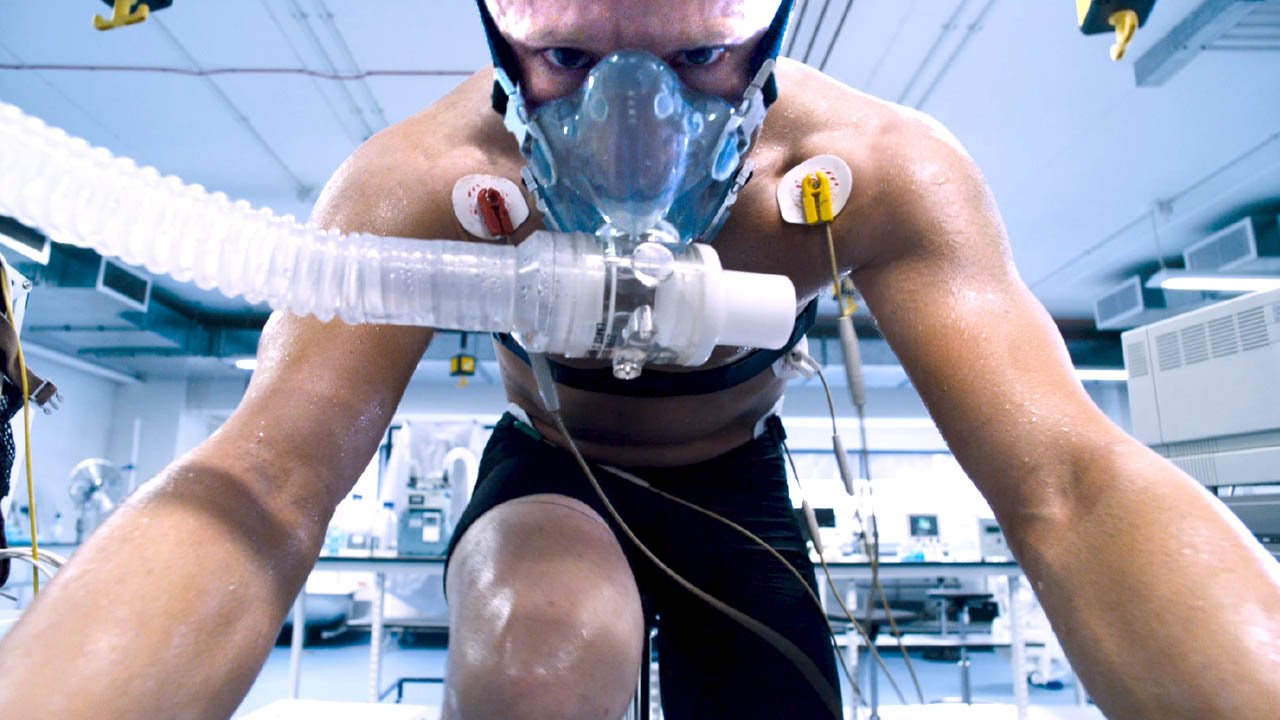
As Armstrong did take EPO on many occasions, so The Program shows him doing it over and over as well. In fact it shows Armstrong shooting up or drawing off his own blood on several more occasions than is absoutely necessary. We know it’s endemic to the sport because we’re told this almost right away, and it loses its dramatic effectiveness very quickly. It’s a problem the movie suffers from throughout, a lack of dramatic effectiveness, and this in turn leads to the movie becoming perfunctory, and in places quite dull. It also makes the mistake of focusing too much on Armstrong – an obvious mistake, but one the makers should have avoided.

The Program - scene1

The problem with Armstrong as your main character is that no matter how much you try and shade his character with visits to a children’s cancer ward, or have him ride out  into the Texas desert to stare meaningfully at naturally occurring pools of water, he’s still the villain of the piece and the architect of his own downfall. And yes, sometimes that’s enough, but even David Walsh, in his book on which the movie is partly based, Seven Deadly Sins: My Pursuit of Lance Armstrong, couldn’t answer the one question that the average viewer is likely to be asking all the way through: just why did he do it? Because, without an answer, Armstrong just goes from ambitious cyclist to arrogant, self-serving bastard in the drop of a hat.

And once he’s there the script by John Hodge stops looking for answers and becomes a braodly faithful retelling of the facts as they transpired once Floyd Landis (Plemons) joined Team Postal and everything began to unravel. The complexities of Armstrong’s story are smoothed over and/or ignored, Walsh’s tenacity in the face of almost everyone in his profession treating him like a pariah is given short shrift, and the nature of cycling’s unspoken acceptance of the cheating going on under its nose – these are all passed over in favour of following Armstrong from one non-illuminating scene to another. Even Foster, normally a more than capable actor, can’t stop his performance from becoming tedious by the end; it’s almost as if even he’s recognised that he can’t make any more out of Lance’s character as written.

With the script continually taking a backward step when it should have been ploughing forward, and with no sense of outrage at what Armstrong did – and encouraged others to do – the movie lacks passion and feels remote from its subject matter. There are a number of people who played a large part in Walsh’s investigation into doping in cycling, and while they are represented, they’re also marginalised along with the very important knowledge they have about Armstrong’s activities. It was a very big thing when Armstrong admitted that he took performance enhancing drugs when asked by a doctor during his cancer treatment, but here it’s referenced and then ignored as if of little or no importance. And then there’s Armstrong’s appearance on The Oprah Winfrey Show, a move he thought would help him retain the public’s admiration for him, but which backfired on him spectacularly when Oprah wouldn’t accept that he was remorseful.

It’s when moments like these are not given their due place in proceedings that The Program stumbles and fails to achieve any relevance as a recounting of Armstrong’s career. He was a lot more manipulative and a lot less caring of others, even his closest confidantes, and he had no qualms about trying to ruin the lives of those he thought weren’t being “team players”. His antipathy towards Walsh, at least, is given some expression, particularly when his one of his colleagues stops him from travelling between Tour de France stages with them as they used to, a good example of how Lance got what Lance wanted. But otherwise, the movie manages only to keep Armstrong at a remove from others, and in consequence from the audience.

The Program - scene2

Unable to find a way around the sedate nature of the script, Frears is left with trying to coax good performances out of his cast, and make the cycling sequences exciting to watch. As mentioned above, Foster can only do so much, but he’s very good in the earlier, pre-cancer scenes, showing Armstrong’s determination and will to succeed to very good effect. O’Dowd has a limited number of scenes in which to make an impression, and two of those involve him answering a phone and acting surprised. As the doping Doctor Ferrari, Canet is the movie’s liveliest, most effusive character, but his appearance and his demeanour make him look like he’s stepped out of a Seventies porn movie. Pace struts and swaggers his way through as Armstrong’s lawyer, and Ménochet makes the most of playing Armstrong’s righ hand man on the team, Johan Bruyneel. Only Plemons makes any kind of an impact, as the morally confused farmboy who joins the team but finds himself cut adrift when he gets “caught” taking testosterone.

On a visual level the movie works better when it’s out of doors, and by and large it successfully recreates the buzz of the races, though it can be off-putting when you realise you’re watching archival footage instead of a re-enactment. Foster looks persuasive in these scenes (even if you’re pretty sure the other cyclists have been told to go slower), and there’s at least a sense that this isn’t “fun” but quite punishing in its own unique way. Inside however, and the movie seems cramped – sometimes stifled – as if Frears’ visual creativity had deserted him. But by the time you notice all this, you probably won’t care too much, what with all the other deficiencies on display.

Rating: 5/10 – a middling, disappointing examination of one man’s renunciation of professional ethics and personal morality, The Program rarely succeeds in raising any indignation at Armstrong’s attitude or behaviour; for a more fastidious, much more involving look at Armstrong’s fall from grace, you’d be far better off watching The Armstrong Lie (2013) than this pallid endeavour.

Share this:

  • Click to share on X (Opens in new window) X
  • Click to share on Facebook (Opens in new window) Facebook
  • More
  • Click to print (Opens in new window) Print
  • Click to email a link to a friend (Opens in new window) Email
Like Loading...

10 Movies That Are 40 Years Old This Year – 2014

22 Wednesday Oct 2014

Posted by dullwood68 in Movies

≈ 1 Comment

Tags

1974, A Woman Under the Influence, Al Pacino, Biography, Bob Fosse, Chinatown, Comedy, Crime, Drama, Dustin Hoffman, Fear Eats the Soul, Francis Ford Coppola, Gena Rowlands, Gene Hackman, Gene Wilder, Gunnar Hansen, Horror, John Cassavetes, Lenny, Luis Buñuel, Mel Brooks, Movies, Rainer Werner Fassbinder, Reviews, Robert De Niro, Roman Polanski, The Conversation, The Godfather Part II, The Phantom of Liberty, The Taking of Pelham One Two Three, The Texas Chain Saw Massacre, Walter Matthau, Young Frankenstein

Pick any year and you’re likely to find ten really good films that were released during that year, but 1974 is a year when there were ten really great films released.  It’s not a year that stands out when first thought about, but upon closer inspection it seems like a banner year, when movie makers pulled out all the stops and gave us a succession of impressive movies that even now, still resonate and attract viewers in high numbers.  (And if truth be told, this list could have been stretched a little further, but 13 Movies That Are 40 Years Old This Year didn’t sound right.)  So, in no particular order, here are those ten movies we’re all still talking about.

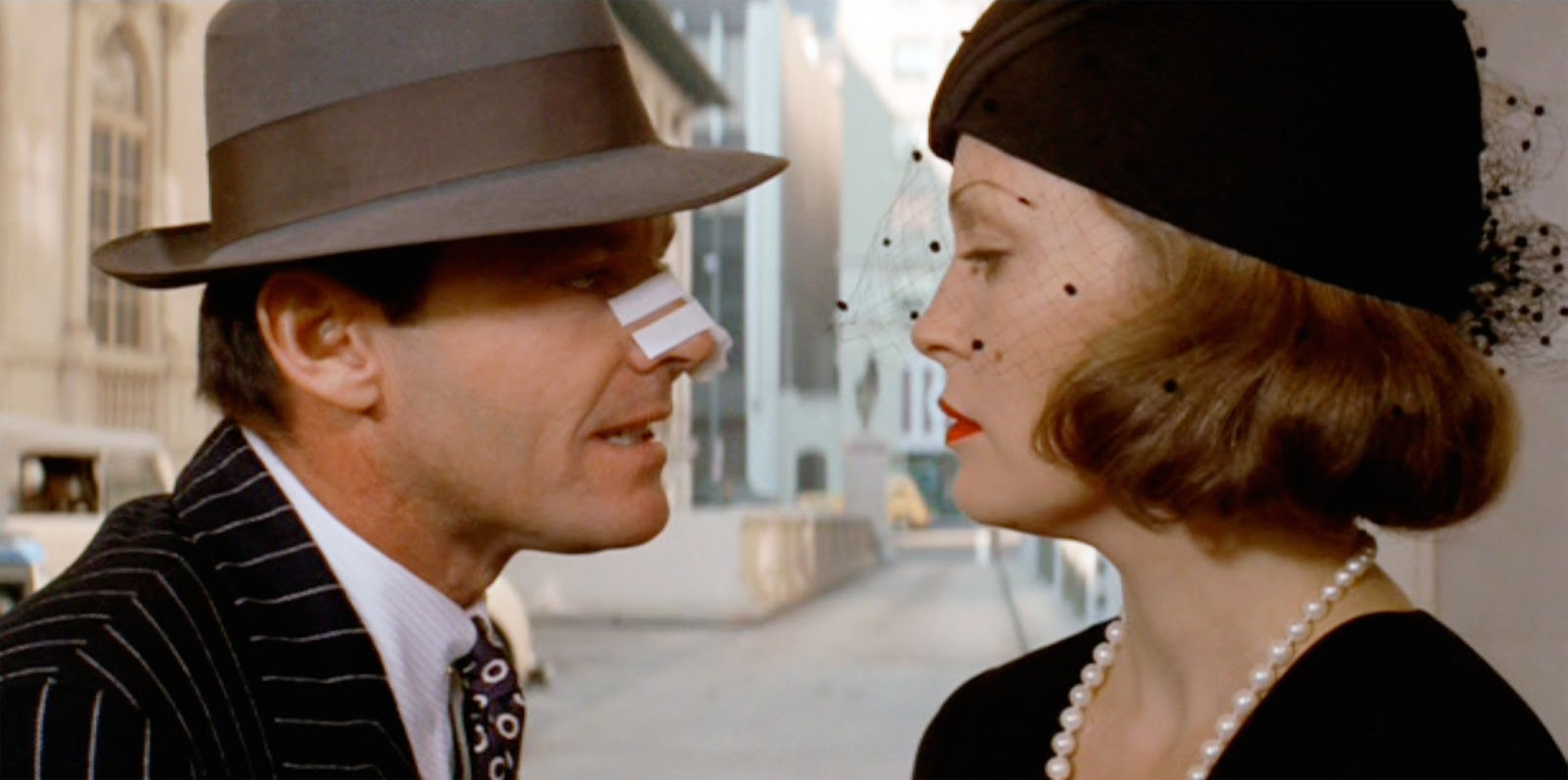
1) Chinatown – Roman Polanski’s stunning neo-noir thriller transformed Jack Nicholson into a superstar and made Robert Towne’s elaborate, gripping screenplay – one of the most compelling, intelligent screenplays ever written – the main reason for seeing the movie.  With superb performances from Faye Dunaway and John Huston, this incredible movie still has the power to unnerve and startle with its story of corruption and greed in 40’s Los Angeles, and that tragic revelation.

Chinatown - scene

2) Lenny – Revisiting the life of counter-culture, angst-ridden comic Lenny Bruce was always going to depend on the actor playing him, but Dustin Hoffman turns in an amazing, detailed performance that is possibly his best ever.  With a career best turn from Valerie Perrine, deft, sympathetic direction from Bob Fosse, and a grimy, authentic recreation of the clubs where Bruce vented his anger at the hypocrisies of society, Lenny still has the potential to shock and surprise, and takes no prisoners (just like Bruce himself).

3) Fear Eats the Soul – German auteur Rainer Werner Fassbinder had made a number of excursions into movies for TV before he wrote and directed this vital, important tale of the relationship between a Moroccan migrant worker (the soulful El Hadi ben Salem) and a German woman in her mid-sixties (the affecting Brigitte Mira). Ageism and racism are given short shrift by Fassbinder’s script, and the growing relationship is portrayed naturally and with little sentiment.  It’s a dour movie, to be sure, but uplifting at the same time.

4) The Godfather Part II – The crowning glory of Francis Ford Coppola’s career and a movie that’s nigh on faultless, The Godfather Part II is the classic example of a sequel that is better than its predecessor… so, so much better.  Even Brando’s presence isn’t missed.  With its flashback sequences detailing the origin of Vito Corleone’s role as Godfather conflated with the inexorable rise of his son Michael to the same position, this has tragedy and triumph in equal measure, and features astonishing achievements in directing, scripting, acting, cinematography, sound, editing, costumes, art direction, and set design.  In short, it’s a masterpiece.

Godfather Part II, The - scene

5) The Texas Chain Saw Massacre – With its fierce, tension-wringing set up and feral, nightmarish family of cannibals, Tobe Hooper’s second feature still has the power to shock, and leave audiences feeling drained by the end.  The iconic image of Gunnar Hansen with a literal “face”-mask and revving a chainsaw – once seen, never forgotten – sums up the movie’s terrifying approach to its subject matter, and confirms (if anyone needed reminding) that low budget horror can be startling, original and a once in a lifetime experience.

6) A Woman Under the Influence – Possibly the finest examination of mental illness within the family, John Cassavetes’ stinging, heart-rending drama features a tour-de-force performance from Gena Rowlands as the emotionally downtrodden Mabel, a woman whose ill treatment by her husband and children leads her to suppress any positive feelings for fear of being judged as “unbalanced”.  Not a movie for everyone but one that isn’t afraid to confront a complex, contentious issue with poise and a piercing intelligence.

7) The Phantom of Liberty – If you like your movies chock-full of symbolism, surrealism and absurdist humour, then Luis Buñuel’s collection of barely connected episodes will capture your attention and never let go.  It’s a modern masterpiece of (mis)direction and subversive behaviour, and features a seasoned cast that includes Jean Rochefort, Monica Vitti and Adolfo Celi, all of whom enter into the spirit of things with undisguised gusto.

Phantom of Liberty, The - scene

8) The Conversation – It’s that man Coppola again, this time with an introspective low-key look at the self-contained life of a surveillance expert (the superb Gene Hackman) who finds himself drawn – against his better judgment – into a perfectly weighted mystery.  The chilly, withdrawn mise-en-scene is expertly crafted, and Coppola’s script delivers more and more as the movie heads toward its incredible denouement.  To release both this and The Godfather Part II in the same year – well, that’s just insane.

9) Young Frankenstein – Mel Brooks’ finest hour, even though Blazing Saddles was also released in ’74, this grand homage to the Universal horrors of the 30’s and 40’s is an undeniable treat, full of terrific one-liners – “To the lumber yard!” – and wonderful visual flourishes.  Co-writers Brooks and Gene Wilder are on top form, and their affection for the Fronkensteen movies made by Universal adds to the joy of watching Mary Shelley’s classic tale unfold in its own, very unique manner.  And the “Puttin’ on the Ritz” sequence is just inspired.

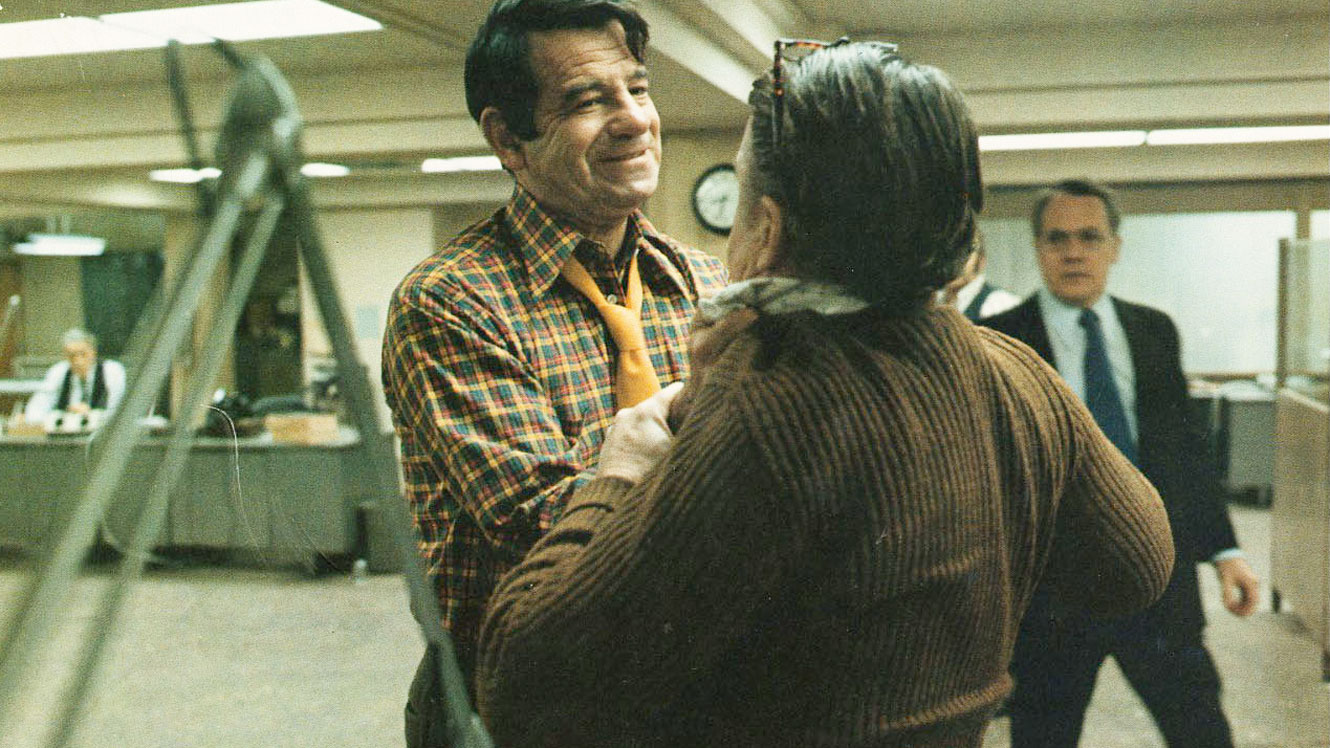
10) The Taking of Pelham One Two Three – Ignore the turgid remake with Denzel Washington and John Travolta, this is ten times as good and ten times as gripping.  Walter Matthau is the grizzled cop engaged in a battle of wits with train hijacker Robert Shaw, and as the movie ratchets up the tension, audiences are treated to one of the finest thrillers ever made.  Bravura movie making from all concerned but anchored by a fantastic job of direction by the underrated Joseph Sargent.

Taking of Pelham One Two Three, The - scene

If you agree or disagree with my choices, feel free to let me know.  And if there’s another year with an equally brilliant selection of movies released, feel free to let me know as well.  But more importantly, if you haven’t seen some or all of the movies listed above, then what are you doing reading this?  Get out there and watch them!

Share this:

  • Click to share on X (Opens in new window) X
  • Click to share on Facebook (Opens in new window) Facebook
  • More
  • Click to print (Opens in new window) Print
  • Click to email a link to a friend (Opens in new window) Email
Like Loading...

Chef (2014)

02 Wednesday Jul 2014

Posted by dullwood68 in Movies

≈ Leave a comment

Tags

Comedy, Cooking, Cuban food, Dustin Hoffman, Food blogger, Food truck, John Leguizamo, Jon Favreau, Robert Downey Jr, Scarlett Johansson, Sofía Vergara, Twitter, Vine, Viral video


Chef

D: Jon Favreau / 114m

Cast: Jon Favreau, John Leguizamo, Sofía Vergara, Emjay Anthony, Scarlett Johansson, Bobby Cannavale, Oliver Platt, Dustin Hoffman, Amy Sedaris, Robert Downey Jr

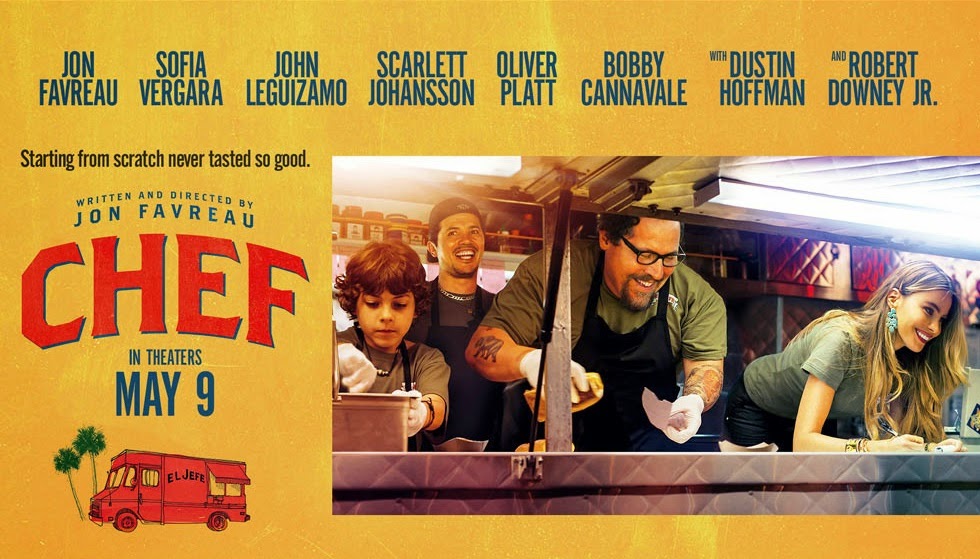
Chef Carl Casper (Favreau) has been working at the same restaurant for ten years.  The food he cooks is well liked but when the movie opens he’s been cooking the same menu for the last five years, so when word gets out that influential food blogger Ramsey Michel (Platt) has booked a table, Carl wants to do something different to impress him.  However, Carl’s boss, Riva (Hoffman) wants him to stick to the existing menu and give Michel what Carl is famous for.  Carl reluctantly agrees.  In his review, Michel slams Carl’s efforts and wonders what happened to the culinary genius he first encountered ten years before.  The next day, with Michel’s review trending on Twitter, Carl – with the help of his son, Percy (Anthony) – sends Michel an angry tweet that he doesn’t realise will be seen by everyone.  A brief war of words leads to a challenge: if Michel comes back to the restaurant, he’ll cook food that will make Michel eat his words (excuse the pun).

This time, with the restaurant fully booked (thanks to Twitter), and with Riva even more concerned that Carl’s attempts to do something different will backfire on the restaurant’s reputation, he forces Carl to make a choice: either cook the established menu or leave.  Carl leaves.  Michel is bemused by receiving the same food again and assumes Carl has backed down on the challenge.  Carl reads Michel’s tweet and heads back to the restaurant where he lambasts the critic in front of everyone; unfortunately a customer films Carl’s rant and the video goes viral.  While all this has been going on, Carl has been trying to maintain an amicable relationship with his ex-wife, Inez (Vergara), and spend time with Percy, but his work has always gotten in the way.  Now out of a job, Inez suggests he start afresh with a food truck, making the food he wants to make, and being his own boss.  Carl isn’t keen on the idea, but with getting another job at a restaurant proving more and more unlikely, and while on a trip to Miami with Inez and Percy, he eventually agrees.  Given the truck by Inez’ other ex-husband, Marvin (Downey Jr), and helped by Percy and his friend and colleague from the restaurant, Martin (Leguizamo), Carl gets it up and running and the three of them embark on a cross country journey selling food that reinspires Carl’s love for his work, and goes a long way to improving his relationship with Percy.

Chef - scene

Each year, there’s always one movie that serves as an antidote or an alternative to the usual fare of summer blockbusters, a modestly budgeted, small-scale movie that entertains, moves, and delights audiences, and leaves them feeling that they’ve actually experienced something.  Last year that movie was Before Midnight, this year it’s Chef.  It’s one of those movies that inspires audiences to go home and take up whatever it is the central character does, and here it’s to make food that looks so mouth-wateringly delicious you want to jump into the screen and devour it (even the fried breakfast Carl makes Percy at one point looks heavenly).  Carl’s passion for food is his life, and while other parts of his life don’t fare so well, it’s his faith in food that keeps him going, even when his professional life goes into meltdown.  As played by Favreau, Carl is an outwardly positive man apparently in a good place in his life, but inwardly he’s stifled and lacking the drive to take his career to a new level.  Losing his job turns out to be the best thing that could have happened to him, and it sees him reconnect with the other important parts of his life.

In particular, this means his son Percy.  Carl is oblivious to Percy’s need for a proper relationship with him, and he doesn’t see his son’s unhappiness each time he lets him down.  Even when they do spend time together, such as when Percy shows Carl how to use Twitter, Carl can’t wait to get back to cooking.  The road trip from Miami back to California, where Carl teaches Percy how to cook, and father and son bond more effectively, helps Carl focus outside of being a chef, and brings him back to being the young(ish) tyro he was ten years before.  It’s these scenes that give the movie it’s heart, and a couple of minor lapses aside, make for often touching viewing.  There’s plenty of humour here too, with Favreau’s script hitting the funny bone with impressive ease.  There’s a pleasing mix of situational comedy, quirky one-liners (“Come here, amuse-douche”), and visual gags, all seamlessly integrated into the whole, and the cast judge their performances accordingly, the obvious fun they’re having with the material easily transferring itself to the audience; it’s just infectious.

There are some minor quibbles – Johansson’s character is jettisoned halfway through without a backward glance, Carl behaves stupidly towards his son until his behaviour appears stupid for the sake of it, Riva is unnecessarily antagonistic towards Carl (especially the second time) – but for the most part Favreau gets it just right, balancing the comedy and the light drama with aplomb, engaging the audience from the outset with likeable characters and familiar situations that leave the viewer smiling in affectionate recognition.  He’s also an unselfish director, knowing when to let his cast take the lead in a scene, and giving a largely unshowy performance himself.  Leguizamo and Cannavale make a great double act in the restaurant kitchen, Vergara adds just the right amount of sophisticated glamour, and Downey Jr almost steals the movie with his portrayal of an entrepreneur with cleanliness issues.

It would be easy to dismiss Chef as a feel good movie that never really makes Carl’s situation too dramatic, and there’s certainly large swathes of the movie that are both predictable and overly familiar, but again, it’s Favreau’s adept handling of the material that makes Chef so enjoyable, so much so that any reservations are swiftly cancelled (excuse the pun).

Rating: 8/10 – to borrow a title from Queens of the Stone Age, Chef is “the feel good hit of the summer”, a warmly funny celebration of food and its overriding importance in one man’s life; a treat indeed and one that should be returned to as often as possible.

Share this:

  • Click to share on X (Opens in new window) X
  • Click to share on Facebook (Opens in new window) Facebook
  • More
  • Click to print (Opens in new window) Print
  • Click to email a link to a friend (Opens in new window) Email
Like Loading...

Blog Stats

  • 490,512 hits

Recent Posts

  • 10 Reasons to Remember Bibi Andersson (1935-2019)
  • Fantasia (1940)
  • Dances With Wolves (1990) – The Special Edition
  • Kiss of the Spider Woman (1985)
  • The Three Musketeers (1973)

Top Posts & Pages

  • The Dark Tower (2017)
    The Dark Tower (2017)
  • The White Orchid (2018)
    The White Orchid (2018)
  • Central Intelligence (2016)
    Central Intelligence (2016)
  • Taken (2008)
    Taken (2008)
  • Lost for Life (2013) - Another Look
    Lost for Life (2013) - Another Look
  • Captain Fantastic (2016)
    Captain Fantastic (2016)
  • Miss Baek (2018)
    Miss Baek (2018)
  • Two Shorts by François Ozon: A Summer Dress (1996) and X2000 (1998)
    Two Shorts by François Ozon: A Summer Dress (1996) and X2000 (1998)
  • Cardboard Boxer (2016)
    Cardboard Boxer (2016)
  • A Brief Word About Cineworld Unlimited
    A Brief Word About Cineworld Unlimited
Follow thedullwoodexperiment on WordPress.com

Blogs I Follow

  • Rubbish Talk
  • Film 4 Fan
  • Fast Film Reviews
  • The Film Blog
  • All Things Movies UK
  • Interpreting the Stars
  • Let's Go To The Movies
  • Movie Reviews 101
  • TMI News
  • Dan the Man's Movie Reviews
  • Film History
  • Jordan and Eddie (The Movie Guys)

Archives

  • April 2019 (13)
  • March 2019 (28)
  • February 2019 (28)
  • January 2019 (32)
  • December 2018 (28)
  • November 2018 (30)
  • October 2018 (29)
  • September 2018 (29)
  • August 2018 (29)
  • July 2018 (30)
  • June 2018 (28)
  • May 2018 (24)
  • April 2018 (21)
  • March 2018 (31)
  • February 2018 (25)
  • January 2018 (30)
  • December 2017 (30)
  • November 2017 (27)
  • October 2017 (27)
  • September 2017 (26)
  • August 2017 (32)
  • July 2017 (32)
  • June 2017 (30)
  • May 2017 (29)
  • April 2017 (29)
  • March 2017 (30)
  • February 2017 (27)
  • January 2017 (32)
  • December 2016 (30)
  • November 2016 (28)
  • October 2016 (30)
  • September 2016 (27)
  • August 2016 (30)
  • July 2016 (30)
  • June 2016 (31)
  • May 2016 (34)
  • April 2016 (30)
  • March 2016 (30)
  • February 2016 (28)
  • January 2016 (35)
  • December 2015 (34)
  • November 2015 (31)
  • October 2015 (31)
  • September 2015 (34)
  • August 2015 (31)
  • July 2015 (33)
  • June 2015 (12)
  • May 2015 (31)
  • April 2015 (32)
  • March 2015 (30)
  • February 2015 (37)
  • January 2015 (39)
  • December 2014 (34)
  • November 2014 (34)
  • October 2014 (36)
  • September 2014 (25)
  • August 2014 (29)
  • July 2014 (29)
  • June 2014 (28)
  • May 2014 (23)
  • April 2014 (21)
  • March 2014 (42)
  • February 2014 (38)
  • January 2014 (29)
  • December 2013 (28)
  • November 2013 (34)
  • October 2013 (4)

Create a free website or blog at WordPress.com.

Rubbish Talk

Film 4 Fan

A Movie Blog

Fast Film Reviews

The Film Blog

The official blog of everything in film

All Things Movies UK

Movie Reviews and Original Articles

Interpreting the Stars

Dave Examines Movies

Let's Go To The Movies

Film and Theatre Lover!

Movie Reviews 101

Daily Movie Reviews

TMI News

Latest weather, crime and breaking news

Dan the Man's Movie Reviews

All my aimless thoughts, ideas, and ramblings, all packed into one site!

Film History

Telling the story of film

Jordan and Eddie (The Movie Guys)

Movie Reviews & Ramblings from an Australian Based Film Fan

Privacy & Cookies: This site uses cookies. By continuing to use this website, you agree to their use.
To find out more, including how to control cookies, see here: Cookie Policy
  • Subscribe Subscribed
    • thedullwoodexperiment
    • Join 481 other subscribers
    • Already have a WordPress.com account? Log in now.
    • thedullwoodexperiment
    • Subscribe Subscribed
    • Sign up
    • Log in
    • Report this content
    • View site in Reader
    • Manage subscriptions
    • Collapse this bar
 

Loading Comments...
 

    %d