• 10 Reasons to Remember…
  • A Brief Word About…
  • About
  • For One Week Only
  • Happy Birthday
  • Monthly Roundup
  • Old-Time Crime
  • Other Posts
  • Poster of the Week
  • Question of the Week
  • Reviews
  • Trailers

thedullwoodexperiment

~ Viewing movies in a different light

thedullwoodexperiment

Tag Archives: French movie

Two Days, One Night (2014)

22 Sunday Feb 2015

Posted by dullwood68 in Movies

≈ Leave a comment

Tags

Belgium, Colleagues, Depression, Drama, Fabrizio Rongione, French movie, Jean-Pierre Dardenne, Luc Dardenne, Marion Cotillard, Review, Secret ballot, Seraing, The Dardenne Brothers, Weekend
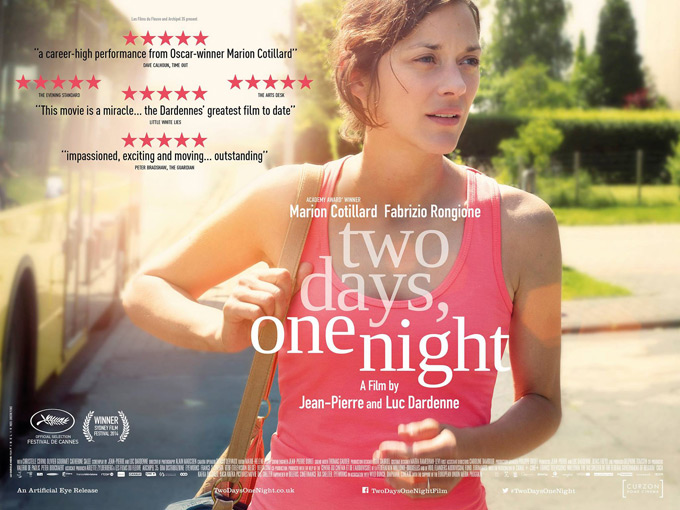
Two Days, One Night

Original title: Deux jours, une nuit

D: Jean-Pierre Dardenne, Luc Dardenne / 95m

Cast: Marion Cotillard, Fabrizio Rongione, Catherine Salée, Batiste Sornin, Simon Caudry, Alain Eloy, Myriem Akeddiou, Fabienne Sciascia, Timur Magomedgadzhiev, Hicham Slaoui, Philippe Jeusette, Yohan Zimmer, Christelle Cornil, Laurent Caron, Serge Koto, Morgan Marinne, Gianni La Rocca, Ben Hamidou, Carl Jadot, Olivier Gourmet

In Seraing, a small Belgian industrial town, Sandra (Cotillard) works at a solar panel factory. The workforce consists of seventeen people, but Sandra has recently been off sick due to a bout of depression. During her absence, her boss, Monsieur Dumont (Sornin) has realised that the work can be done just as well by sixteen people instead of seventeen. As a result, she has fallen foul of machinations orchestrated by her foreman, Jean-Marc (Gourmet), and Dumont has given the rest of the staff a choice: they can have a €1000 bonus or keep Sandra in her job. Thanks to Jean-Marc’s scare tactics and bullying, the staff have voted for the bonus. Sandra has all but given up on her job when her co-worker Juliette (Salée) calls to say Dumont has agreed to meet with them. He agrees to a secret ballot, to be held on the Monday morning (it’s currently Friday afternoon).

All Sandra has to do is visit the rest of her colleagues over the weekend, explain about Jean-Marc’s role in things, and ask if they will vote for her to keep her job at the secret ballot. But Sandra hasn’t fully recovered from her illness, and her confidence is at such a low that she just wants to curl up in bed and ignore everything going on around her. Urged on by her husband, Manu (Rongione), and furnished with a list of addresses by Juliette, she sets out on Saturday morning by public transport to persuade her colleagues to vote for her. Some agree readily, others inform her that the money will ease their own problems. She manages to change the minds of a few, but by the end of the day she’s only halfway to getting the numbers she needs.

Driven round by her husband, she continues on Sunday but although she makes further headway, by the afternoon the whole thing begins to look even bleaker when she suffers a setback. Filled with despair, she takes a whole bottle of Xanax but when a colleague changes her mind and visits Sandra to tell her, her hope returns. With the pills flushed out of her system at the hospital, Sandra resumes her visits to her remaining colleagues. But by the time of the secret ballot on Monday morning, it’s too close to call and she has an agonising wait to hear the result.

Two Days, One Night - scene

The latest from the Dardenne Brothers, after their wonderfully simple and affecting The Kid With a Bike (2011), Two Days, One Night is another simply told, emotionally honest drama that features a strong central performance, and tells its story with a minimum of artifice and a maximum amount of intelligence.

Its tale of a woman fighting to retain both her job and what little self-confidence she’s managed to keep following her illness, Two Days, One Night takes a straightforward storyline and imbues it with such emotional depth, and makes such an impact, that it lingers in the memory long after it’s ended. This is due in no small part to Cotillard’s superb portrayal of Sandra, a role that she inhabits so completely and so effortlessly that if you started watching the movie from just two minutes in, you could be forgiven for thinking you were watching a documentary. As the movie progresses, Cotillard’s beautifully shows the depth of despair and terror that Sandra is feeling about her situation, and the way in which she clings to each small victory with undeniable relief. By the time Monday morning arrives, she’s still nervous and she’s still unsure how the vote will go, but she’s gained so much confidence in herself, and so much more courage than she had on the Friday that you’re praying the ballot will go her way.

Cotillard gives such a brilliant performance that it’s a testament to the abilities of the Dardenne Brothers that she doesn’t dominate the movie to the point where the other characters and their stories are overwhelmed. Each of her colleagues has their own story to tell and each is indelibly presented, with special mention going to Cornil as a woman with an abusive husband (and who tips the balance when Sandra takes her overdose), and Magomedgadzhiev as a male colleague who doesn’t react in anything like the way Sandra expects when she catches up with him.

The Dardennes show a clear appreciation for the rhythms and symmetries of daily life, with Sandra’s home and family life and their importance for her naturally presented. It’s contrasted with the homes of her colleagues, none of which she sees except from the doorstep. Even when someone is home she’s never invited inside, as if she were an outsider, and this unspoken rejection adds to Sandra’s struggle, as she has to go further almost every time in tracking someone down (at one point she bumps into one of her colleagues by accident). It all adds to her sense of impending failure and shows just how difficult such a simple “exercise” can become when so much rides on it. The Dardennes capture every high and low of Sandra’s journey and by setting it in such a familiar, provincial environment, they reinforce how perilous ordinary life can be when something unexpected happens.

Alain Marcoen’s exquisite photography breathes added life into the movie’s mise en scène, and is complemented and enhanced by Marie-Hélène Dozo’s confident, precise editing (some scenes were filmed in a single take, adding to the verisimilitude). With the Dardenne Brothers free to weave their magic on the material, the movie becomes a spirited, uplifting look at one woman’s dark journey to personal redemption.

Rating: 9/10 – a quietly effective, quietly rousing tale of an underdog finding strength in the unlikeliest of circumstances, Two Days, One Night is a triumph for the Dardennes and a delight for the viewer; Cotillard is superb, and confirms her place as one of the finest actresses working in movies today (as if we needed reminding).

Share this:

  • Click to share on X (Opens in new window) X
  • Click to share on Facebook (Opens in new window) Facebook
  • More
  • Click to print (Opens in new window) Print
  • Click to email a link to a friend (Opens in new window) Email
Like Loading...

The Red Balloon (1956)

10 Saturday Jan 2015

Posted by dullwood68 in Movies

≈ Leave a comment

Tags

Albert Lamorisse, Belleville, Blue balloon, Drama, French movie, Magical realism, Ménilmontant, Paris, Pascal Lamorisse, Red balloon, Review, Short film

Red Balloon, The

Original title: Le ballon rouge

D: Albert Lamorisse / 34m

Cast: Pascal Lamorisse, Georges Sellier, Wladimir Popov, Paul Perey, Sabine Lamorisse, Michel Pezin

On his way to school one morning, a little boy, Pascal (Lamorisse), finds a red balloon tied to a railing. He takes it with him to school where he asks the caretaker to look after it for him until classes are over. The boy then takes the balloon home with him, but his mother releases it out of the window. However, instead of floating away, the balloon (which seems to have a mind of its own) merely hovers outside the window where the boy can see it.

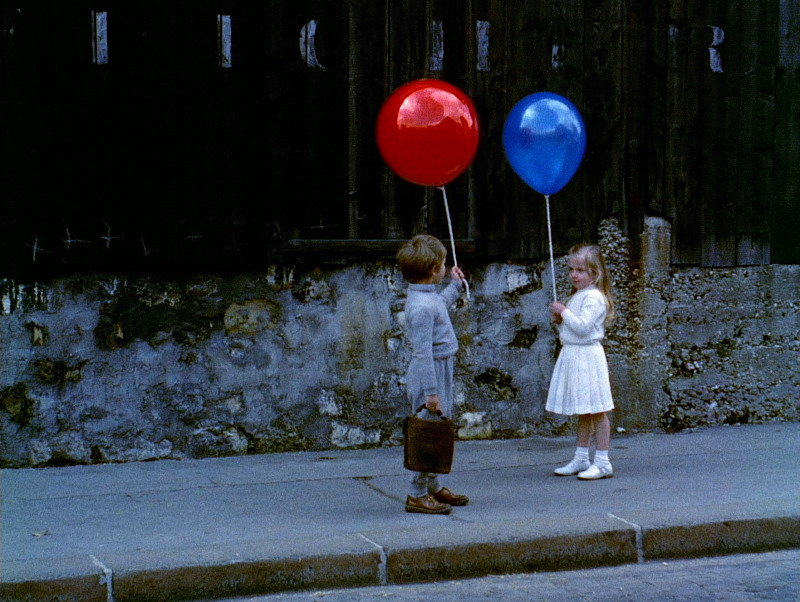
The next morning Pascal calls to the balloon and it follows him as he heads off to school. He makes several attempts to grab the balloon but it keeps itself just out of reach. At school the balloon manages to get into his classroom which causes an uproar and the principal locks Pascal in his office; the balloon meanwhile has floated off. Reunited at the end of the school day, Pascal and the balloon head home, and encounter a little girl (Sabine Lamorisse) who has a blue balloon. The blue balloon reacts in a similar way to the red one, and follows Pascal until he can elude it. But then he encounters a group of boys who, urged on by jealousy, chase Pascal and try to destroy the red balloon.

Red Balloon, The - scene

A simple yet wonderfully filmed piece of magical realism, The Red Balloon is a movie that appeals to the child in all of us. Made in the post-war Belleville area of Paris, the movie serves as a record of the area during the Fifties before it was torn down and redeveloped. As Pascal travels from home to school and back again, the often austere backgrounds serve to highlight the enchanting nature of the story and the unlikely possibility of a red balloon with a mind of its own. It’s a tribute to Lamorisse’s vision though, that the balloon doesn’t feel out of place, even when you can clearly see various Parisians reacting to it with amusement and surprise.

Whimsical it may be, but the movie is also a poignant reminder of the innocence of youth and the power of the imagination. Pascal represents the inner child we all cling on to as adults, his acceptance of the balloon as natural as breathing. Seeing him being followed by the balloon and stopping every now and then to try and catch it is like seeing two friends playing a game together. It’s carefree and irreproachable, a gentle yet effective expression of the simple joys childhood can bring when everything around us excites our curiosity. It’s also no surprise that Pascal’s headmaster doesn’t view it in the same way, punishing him for what he sees as insubordination instead of youthful exuberance. Lamorisse is saying – quite rightly – that we should hold on to as much of that youthful exuberance as we can as adults; otherwise, how terrible will our lives become?

With the introduction of the gang (which leads to the balloon’s ultimate fate), the tale darkens, but necessarily so. Lamorisse is clever enough to realise that the innocence of youth doesn’t always last, and that some children lose it sooner than others. The gang are youth corrupted, their mean-spirited actions and envious behaviour the flipside to Pascal’s purity of mind and heart. They want to destroy the red balloon out of malicious spite, to see Pascal as defrauded of his decency as much as they have been. It’s one of Life’s hard lessons, that not everyone is as nice as you’d like them to be. And for a child like Pascal it’s possibly the hardest lesson to learn.

Lamorisse isn’t prepared to leave Pascal downhearted and dejected, though. As if further proof were needed that there is indeed magic – real magic – in the world, Pascal is given succour in such a wonderful, compassionate way that the movie’s conclusion gives the viewer no option but to grin with shared happiness (and maybe shed a tear or two as well). It’s one of the most uplifting endings to a movie ever, and a perfect finale for a tale that is honest and affecting throughout.

The Red Balloon carries such an emotional charge in its short running time that at times it’s hard to reconcile its faux-documentary presentation with the lyricism it displays at every turn. It’s a fascinating mix, and a spectacular achievement by Lamorisse that is a potent now as it was when it was first released. Belleville is filmed with such a candid eye for the decay of its surroundings that the area is almost a secondary character in itself, and Edmond Séchan’s photography is striking and evocative in equal measure.

Red Balloon, The - scene2

But all this, finally, is underpinned by a sincere, genuine performance by Lamorisse’s son, Pascal. There’s a moment where he’s looking up at the balloon as it floats away from him. His gaze is querulous but unperturbed, as if he can’t quite work out why the balloon is behaving the way it is, but isn’t worried in the least that it won’t return to him. It’s like he’s trying to decipher the inner workings of the balloon’s “mind’ or the mechanics of the game they’re playing. It’s a peaceful moment of natural reflection that Pascal carries off as if he’s not even trying – he’s that good.

Rating: 9/10 – a sublime piece of movie making that warms the heart and reminds us what it is to be young and without a care in the world, The Red Balloon is a jewel to be treasured with every viewing; heartfelt, touching and inspirational, this is a bona fide classic that shouldn’t be missed.

Share this:

  • Click to share on X (Opens in new window) X
  • Click to share on Facebook (Opens in new window) Facebook
  • More
  • Click to print (Opens in new window) Print
  • Click to email a link to a friend (Opens in new window) Email
Like Loading...

My Top 10 Movies – Part Two

18 Wednesday Dec 2013

Posted by dullwood68 in Movies

≈ Leave a comment

Tags

Abel Gance, Albert Dieudonné, Drama, French movie, History, Kevin Brownlow, Napoleon, Review, Silent film, Triptych, True story

Napoléon (1927)

Napoleon

D: Abel Gance / 330m

Cast: Albert Dieudonné, Vladimir Roudenko, Edmond Van Daële, Gina Manès, Antonin Artaud, Alexandre Koubitzky, Marguerite Gance, Yvette Dieudonné, Philippe Hériat, Abel Gance

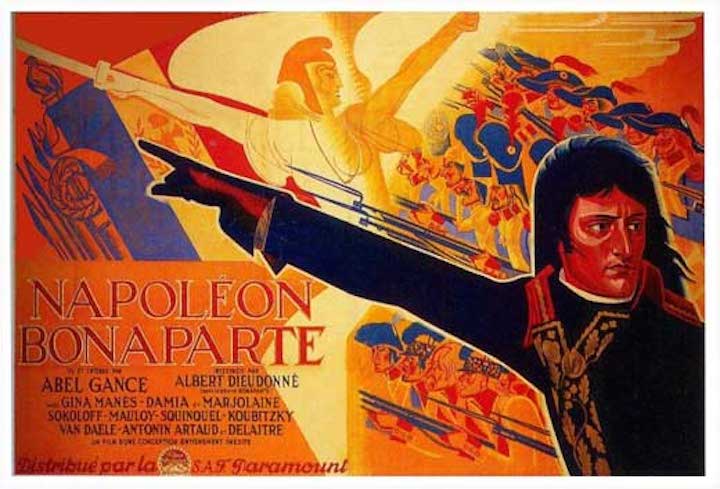
A five and a half hour silent movie?  One that’s unavailable in any home video format, and is unlikely to be for the very foreseeable future?  A rich visual spectacle that impresses from its opening snow fight sequence to its stunning triptych finale?  I have only one word as my answer: Absolutely!

Before I saw Napoléon, my exposure to silent movies had been restricted largely to comedies featuring the likes of Charlie Chaplin, Buster Keaton, Larry Semon etc.  The Keystone Kops were a favourite, and Harold Lloyd impressed me even more when I discovered he’d lost his right thumb and forefinger in an accident involving a bomb prop (I know, it’s a bit shallow, but in mitigation I was around nine or ten).  I remember seeing most of The Iron Horse (1924) on TV, and it had the effect of making me realise that silent movies could last longer than twenty minutes, but UK TV wasn’t in the habit of showing anything other than the short films already mentioned.  When Napoléon was shown as part of a nationwide tour in 1980 at my local arts theatre – with live piano accompaniment – I saw the advert for it and took out my trusty copy of Halliwell’s Film Guide to find out more about it.

It was the length of the movie that intrigued me.  At that time – and my memory is a bit hazy on this – the available print ran to just over five hours.  The idea of sitting in a theatre for that length of time, plus interval, was daunting, but equally an attractive one.  It’s a little shallow (again) but I wanted to see if I could “stay the course” and be able to say – if anyone I knew had even cared! – that I had seen, all the way through, the five hour plus silent movie set during the French Revolution and beyond.  It was like having a badge of honour.

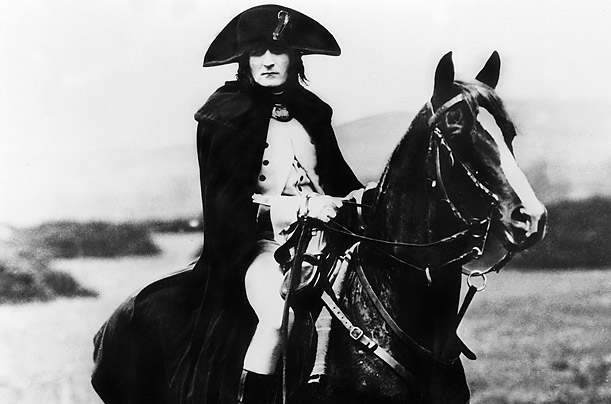
Napoleon - scene

Imagine my surprise (and delight) when the movie began and I found myself swept up by the depth and breadth of Gance’s technical mastery of the silent medium.  By the intensity of the performances, the sweep of the narrative, the visual panache of the battle scenes – Gance put his camera in the middle of the action, unheard of up until then – and the effectiveness of the quieter moments against the stirring swirl of historical events.  Those five hours flew by.  At the interval, I can remember coming out of the auditorium (and into the light) and feeling overwhelmed.  Aside from 2001: A Space Odyssey (1968), I’d never been affected as much by a movie, and definitely not by a silent movie.  I was seeing techniques and a visual language that were truly amazing; this was breathtaking stuff and I couldn’t wait to go back in and see if the rest of the movie was as incredible.  And, of course, it was.

Since then I’ve seen Napoléon four more times.  (Sadly, I was out of the country for its most recent UK screening, on 30 November 2013.)  Each time I’ve revelled in its complexity and the sheer joy it provides, and each time I’ve come away wanting someone, anyone – but preferably Kevin Brownlow – to come along and say, “We’ve found all the missing footage, and will be presenting the original premiere version of Napoléon in just a few months’ time”.  I know this is unlikely, and Brownlow has said himself that the current version is probably the longest it will be for some time to come.  (But, what’s the world without a little hope, eh?)  Perhaps the best screening was the premiere of Carl Davis’s score for the movie shown at the Royal Festival Hall on London’s south bank.  The addition of an orchestra made the whole event even more wonderful and fulfilling.

Napoléon was the first movie that really engaged my heart and my mind and wouldn’t let go.  It holds a special place for me as the one movie that remains an event each time I see it.  In these days of instant streaming and fast downloads and blu ray discs, the notion of only being able to see a film at a cinema or a concert hall is somehow reassuring, that we haven’t lost that true element of spectacle that we take now for granted.  This was how audiences were first exposed to movies, not with ads for the latest trainers or holiday destinations, but with a sense of scale and excitement, a palpable tension at being swept away by what was unfolding on screen.  The language of cinema was being created by these movies, and it’s this aspect that shouldn’t be overlooked or forgotten.  Without trailblazers such as Gance, a lot of what we take for granted about movies today (or don’t even notice), would be missing.  That we’ve lost some of that grandeur is simply disappointing.

Sadly, it will be some time before Napoléon will be seen again on the big screen.  But when it is, you can rest assured that I’ll be there (if it’s in the UK), and ready to be enthralled and transported and amazed all over again.

Share this:

  • Click to share on X (Opens in new window) X
  • Click to share on Facebook (Opens in new window) Facebook
  • More
  • Click to print (Opens in new window) Print
  • Click to email a link to a friend (Opens in new window) Email
Like Loading...

Un prince (presque) charmant (2013)

04 Wednesday Dec 2013

Posted by dullwood68 in Movies

≈ Leave a comment

Tags

Comedy, French movie, Jacques Weber, Luc Besson, Philippe Lellouche, Review, Road trip, Romance, Romantic comedy, Vahina Giocante, Vincent Perez

Un Prince (Presque) Charmant

aka A Prince (Not Very) Charming

D: Philippe Lellouche / 88m

Cast: Vincent Perez, Vahina Giocante, Jérôme Kircher, Chloé Coulloud, Jacques Weber, Nicole Calfan, Côme Levin, Judith Siboni, Astrid Veillon

Businessman Jean-Marc (Perez), along with his partner Bertrand (Kircher), has clinched an important deal with a Russian company, but at the expense of a small, family-run business he’s dealt with for years. Incensed by his attitude, and the fact that her father’s company won’t survive without Jean-Marc’s patronage, Marie (Giocante) heads to Paris to confront him. However, Jean-Marc is heading out of Paris for his daughter’s wedding; her name is also Marie (Coulloud), and she is sure her father won’t make it, so focused is he on his work. A general strike doesn’t help matters, and with one mishap after another – including having to abandon his car and use an electric car instead – Jean-Marc and Marie end up travelling together, he to the wedding, she back to her home town and her parents’ farmhouse. When they arrive at Marie’s parents’, Jean-Marc discovers who Marie is but keeps quiet about his own identity, having begun to realise he is in love with her. With the wedding getting ever closer, and still more hold-ups to come, can Jean-Marc get there on time, and can he find a way to keep his budding romance with Marie from failing when she, inevitably, finds out who he is.

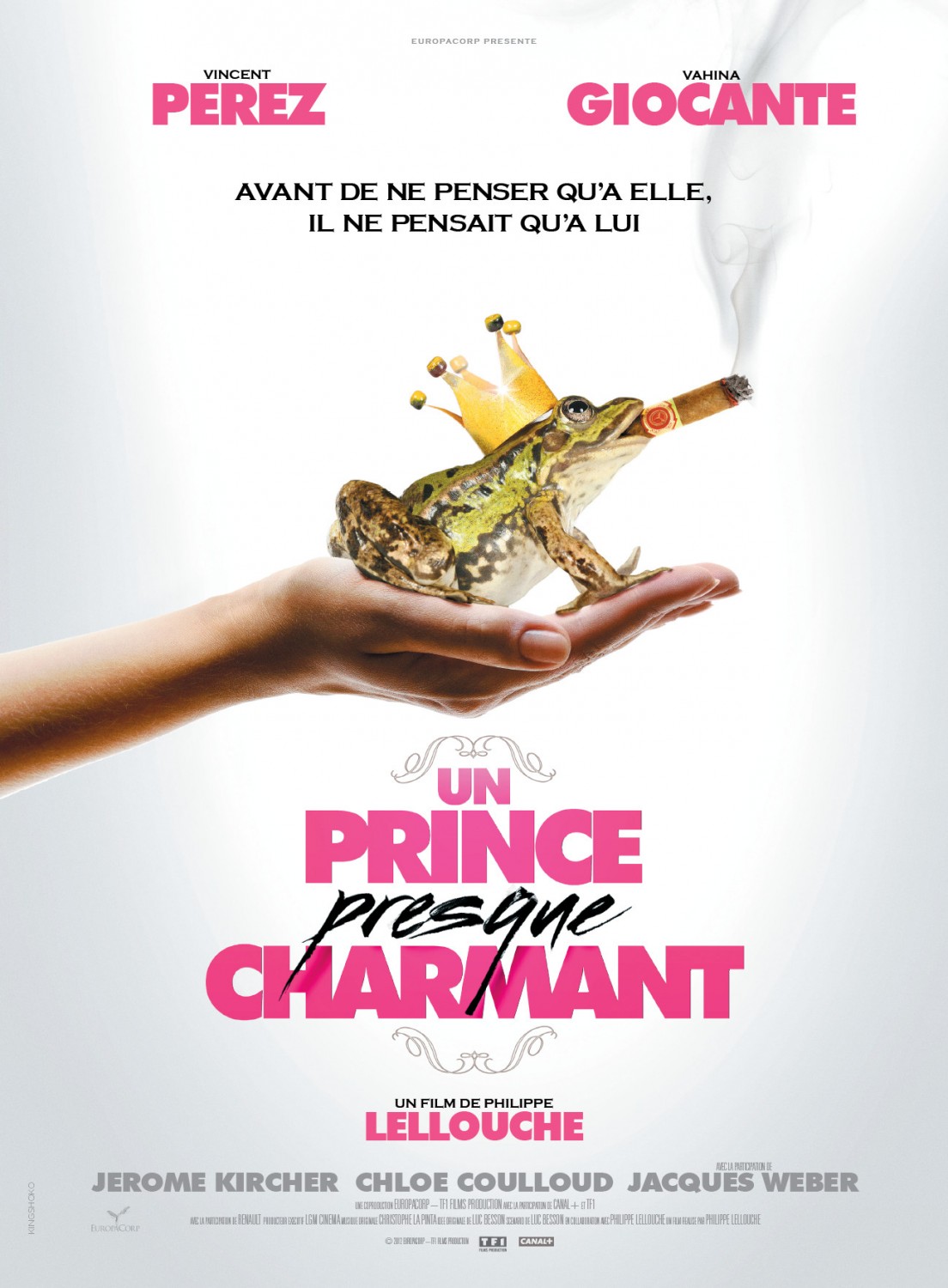
Un Prince (Presque) Charmant - scene

With a script by Luc Besson, this is a charming romantic comedy with a modicum of  dramatic moments dotted here and there. Besson packs a lot in to the short running time, and the story is ably realised by Lellouche, showing off the French countryside to beautiful effect, and his two leads in the same manner. Perez is wonderful, arrogant and egotistical at the beginning but gradually coming to terms with what he’s missed by being so fixated on his work. Giocante matches Perez in the performance stakes, and makes her aggrieved daughter a more fully-rounded character than at first might be expected. The dialogue, while not really that original or sparkling, is still affecting in places and Besson is clever enough to avoid the potential pitfalls from such a clichéd scenario. The supporting cast provide much of the laughs, but it’s a gentle humour that runs throughout the movie, and it never overwhelms the romantic storyline.

To be fair, this is the kind of movie the French can do in their sleep, and if it’s not the most original of storylines or plots, it doesn’t really matter. The familiar set up, the predictable outcome, the warmth even estranged characters have for each other – Jean-Marc and his ex-wife Liliane (Veillon) – all these things act to reassure the viewer that there won’t be any nasty surprises, and the course of true love, while never quite running smooth, will have a satisfactory ending, whatever the obstacles in its way.

Rating: 6/10 – a minor but enjoyable effort, heart-warming and inoffensive at the same time; perfect for a romantic evening in with your partner of choice.

Share this:

  • Click to share on X (Opens in new window) X
  • Click to share on Facebook (Opens in new window) Facebook
  • More
  • Click to print (Opens in new window) Print
  • Click to email a link to a friend (Opens in new window) Email
Like Loading...

Blog Stats

  • 486,528 hits

Recent Posts

  • 10 Reasons to Remember Bibi Andersson (1935-2019)
  • Fantasia (1940)
  • Dances With Wolves (1990) – The Special Edition
  • Kiss of the Spider Woman (1985)
  • The Three Musketeers (1973)

Top Posts & Pages

  • Lost for Life (2013) - Another Look
    Lost for Life (2013) - Another Look
  • Lost for Life (2013)
    Lost for Life (2013)
  • About
    About
  • Mr. Topaze (1961)
    Mr. Topaze (1961)
  • Billy Lynn's Long Halftime Walk (2016)
    Billy Lynn's Long Halftime Walk (2016)
  • Winter's Tale (2014)
    Winter's Tale (2014)
  • The Hitman's Bodyguard (2017)
    The Hitman's Bodyguard (2017)
  • 5 Famous Movie Roles That Nearly Went to Someone Else
    5 Famous Movie Roles That Nearly Went to Someone Else
  • The Layover (2017)
    The Layover (2017)
  • Transcendence (2014)
    Transcendence (2014)
Follow thedullwoodexperiment on WordPress.com

Blogs I Follow

  • Rubbish Talk
  • Film 4 Fan
  • Fast Film Reviews
  • The Film Blog
  • All Things Movies UK
  • Interpreting the Stars
  • Let's Go To The Movies
  • Movie Reviews 101
  • TMI News
  • Dan the Man's Movie Reviews
  • Film History
  • Jordan and Eddie (The Movie Guys)

Archives

  • April 2019 (13)
  • March 2019 (28)
  • February 2019 (28)
  • January 2019 (32)
  • December 2018 (28)
  • November 2018 (30)
  • October 2018 (29)
  • September 2018 (29)
  • August 2018 (29)
  • July 2018 (30)
  • June 2018 (28)
  • May 2018 (24)
  • April 2018 (21)
  • March 2018 (31)
  • February 2018 (25)
  • January 2018 (30)
  • December 2017 (30)
  • November 2017 (27)
  • October 2017 (27)
  • September 2017 (26)
  • August 2017 (32)
  • July 2017 (32)
  • June 2017 (30)
  • May 2017 (29)
  • April 2017 (29)
  • March 2017 (30)
  • February 2017 (27)
  • January 2017 (32)
  • December 2016 (30)
  • November 2016 (28)
  • October 2016 (30)
  • September 2016 (27)
  • August 2016 (30)
  • July 2016 (30)
  • June 2016 (31)
  • May 2016 (34)
  • April 2016 (30)
  • March 2016 (30)
  • February 2016 (28)
  • January 2016 (35)
  • December 2015 (34)
  • November 2015 (31)
  • October 2015 (31)
  • September 2015 (34)
  • August 2015 (31)
  • July 2015 (33)
  • June 2015 (12)
  • May 2015 (31)
  • April 2015 (32)
  • March 2015 (30)
  • February 2015 (37)
  • January 2015 (39)
  • December 2014 (34)
  • November 2014 (34)
  • October 2014 (36)
  • September 2014 (25)
  • August 2014 (29)
  • July 2014 (29)
  • June 2014 (28)
  • May 2014 (23)
  • April 2014 (21)
  • March 2014 (42)
  • February 2014 (38)
  • January 2014 (29)
  • December 2013 (28)
  • November 2013 (34)
  • October 2013 (4)

Create a free website or blog at WordPress.com.

Rubbish Talk

Film 4 Fan

A Movie Blog

Fast Film Reviews

The Film Blog

The official blog of everything in film

All Things Movies UK

Movie Reviews and Original Articles

Interpreting the Stars

Dave Examines Movies

Let's Go To The Movies

Film and Theatre Lover!

Movie Reviews 101

Daily Movie Reviews

TMI News

Latest weather, crime and breaking news

Dan the Man's Movie Reviews

All my aimless thoughts, ideas, and ramblings, all packed into one site!

Film History

Telling the story of film

Jordan and Eddie (The Movie Guys)

Movie Reviews & Ramblings from an Australian Based Film Fan

Privacy & Cookies: This site uses cookies. By continuing to use this website, you agree to their use.
To find out more, including how to control cookies, see here: Cookie Policy
  • Subscribe Subscribed
    • thedullwoodexperiment
    • Join 481 other subscribers
    • Already have a WordPress.com account? Log in now.
    • thedullwoodexperiment
    • Subscribe Subscribed
    • Sign up
    • Log in
    • Report this content
    • View site in Reader
    • Manage subscriptions
    • Collapse this bar
 

Loading Comments...
 

    %d