• 10 Reasons to Remember…
  • A Brief Word About…
  • About
  • For One Week Only
  • Happy Birthday
  • Monthly Roundup
  • Old-Time Crime
  • Other Posts
  • Poster of the Week
  • Question of the Week
  • Reviews
  • Trailers

thedullwoodexperiment

~ Viewing movies in a different light

thedullwoodexperiment

Tag Archives: George Clooney

Money Monster (2016)

10 Wednesday Aug 2016

Posted by dullwood68 in Movies

≈ 1 Comment

Tags

Algorithms, Caitriona Balfe, Dominic West, Drama, FNN, Fraud, George Clooney, Hostage, IBIS Clear Capital, Jack O'Connell, Jodie Foster, Julia Roberts, Review, Shares, Thriller, TV show

Money Monster

D: Jodie Foster / 98m

Cast: George Clooney, Julia Roberts, Jack O’Connell, Dominic West, Caitriona Balfe, Giancarlo Esposito, Christopher Denham, Lenny Venito, Chris Bauer, Dennis Boutsikaris, Emily Meade, Condola Rashad, Aaron Yoo

Lee Gates (Clooney) is the host of TV show, Money Monster. Gates acts as an advisor for anyone looking to invest their money in stocks and shares, but he does so in a hyped-up, devil-may-care fashion that makes him seem sharp and ahead of the game. From the opening dance routines to his frequently ad hoc approach to any scripted segments, Gates talks and behaves as if he can’t ever be wrong. As he gears up to present the latest edition of the show, Gates is expecting to interview Walt Camby (West), the CEO of IBIS Clear Capital, an investment company whose main trading algorithm has developed a glitch and “lost” $800 million, leaving some of their investors high and dry. But Camby is off the grid, and his chief communications officer, Diane Lester (Balfe), is left to field Gates’s questions.

Once on air, the show is interrupted by a delivery man (O’Connell) who appears on set and reveals he has a gun. He forces Gates to put on a vest that’s crammed with C4, and threatens to detonate the explosives unless he gets some answers as to why IBIS’ algorithm went so badly wrong. The delivery man, whose name is Kyle Budwell, is appalled that Gates, and everyone else, is just accepting Camby’s line that it was all just a glitch. Why, he asks, isn’t anyone asking how it could have happened, and why is everyone not as angry as he is, especially as Gates, on a previous edition of the show, told his viewers that investing in IBIS was safer than investing in savings bonds.

MM - scene2

The police are quick to arrive, and the show is allowed to carry on broadcasting live. Gates’s producer, Patty Fenn (Roberts), is stuck in the unenviable position of having to keep both Gates and Kyle calm, and to keep the on-set camera and sound team from being hurt as well. Soon the police – and Gates – learn that Kyle inherited $60,000 when his mother died and he invested it all in IBIS shares; now he has virtually nothing except a job that pays fourteen dollars an hour and a pregnant girlfriend, Molly (Meade). Meanwhile, Diane begins to suspect that all isn’t as it seems at IBIS when her senior colleagues prove less than helpful as she tries to piece together what happened to make the company lose so much money in one hit. And as she begins to work out what happened, so too does Patty and Gates. As the mounting evidence points to fraud on a massive scale, Camby resurfaces, and he and Gates and Kyle find themselves on a collision course to reveal the truth.

If you’re thinking that Money Monster sounds like a fast-paced financial thriller where Wall Street is the bad guy, and Clooney portrays a champion for the little guy who exposes fraud and corruption wherever they rear their ugly heads, then you’re going to be disappointed. It is a financial thriller, that much is true, but the pacing is a little haphazard, and any tension inherent in the material is worn down by director Jodie Foster’s unwillingness to have the movie edited appropriately (and it’s not as if her editor, Matt Chessé, hasn’t any experience in this area – he’s worked on both World War Z (2013) and Quantum of Solace (2008) before now). This is best expressed in a horribly lengthy sequence that sees Gates and Kyle walk from the TV studios to Federal Hall, surrounded by armed police and baying crowds. With precious little happening apart from Clooney looking anxious and O’Connell looking like he can’t work out what’s going on, the sequence comes to a contrived end long after you’ve begun hoping that they’ll get there already.

MM - scene1

With the movie’s thriller elements lacking energy or defined purpose, there’s the small matter of the McGuffin, the $800 million. Such is the muddled approach to the story as a whole, that the script – by Jamie Linden, Alan DiFiore and Jim Rouf – never really decides if it’s important or not. That Camby is behind its disappearance is never in doubt, but Kyle’s motivations for challenging its public perception as a glitch manage to change from scene to scene. One minute he wants the money back so all the investors who’ve lost out can be remunerated, the next he wants an explanation as to how the money could have vanished in the first place, and then he’s looking for an admission of guilt. With the script unable to decide what Kyle wants, it leaves O’Connell adrift and having to do the best he can with a character who keeps telling Gates he’s not stupid, but who is then outed by his girlfriend as being exactly that (and when she does, it’s harsh).

Clooney is left stranded a lot of the time, especially in the twenty minutes or so after Kyle’s arrival on set. But when Gates is given stuff to do – argue about the state of his life against Kyle’s, plead with the public to buy IBIS shares in order to save his life – he’s stuck with dialogue that feels and sounds clunky and unconvincing. Clooney is a very good actor, but not even he can do anything with lines such as, “We take care of each other. It’s in our DNA. Not because an equation tells you to do it, but because it’s the right thing to do.” Roberts is likewise hampered by a role that requires her to be too many things at once: TV producer, hostage negotiator, amateur detective, and grudging friend (to Gates). She does her best but in the end has to coast along with the vagaries of the script like everyone else.

MM - scene3

The script tries to make the apparent complacency of ordinary investors as much to blame for financial disasters as it does the banks, the investment companies and the government, an argument that sounds edgy but is quickly shelved once Camby’s apparent perfidy is placed front and centre, and there are some Gosh No! moments when Kyle trots out a few financial conspiracy theories, but on the whole this is a movie with a script that doesn’t know exactly what it wants to say, and sadly, a director who doesn’t quite know how to get it into better shape. There are stretches where Money Monster is quite listless, content to cruise along in neutral and wait until the next plot development hoves into view. What that means for the viewer though, is a movie that never grips as it should, and never engages consistently with its audience.

Rating: 5/10 – only moderately rewarding, Money Monster lacks discernible energy and stumbles around trying too hard to be an efficient thriller (without quite knowing how to be one); a disappointment then given the talent involved, this could have been a lot more interesting, and a lot more entertaining, if it hadn’t been so rambling in its approach and its execution.
 

Share this:

  • Click to share on X (Opens in new window) X
  • Click to share on Facebook (Opens in new window) Facebook
  • More
  • Click to print (Opens in new window) Print
  • Click to email a link to a friend (Opens in new window) Email
Like Loading...

Hail, Caesar! (2016)

06 Monday Jun 2016

Posted by dullwood68 in Movies

≈ 3 Comments

Tags

"The Future", Actors, Alden Ehrenreich, Capitol Pictures, Comedy, Communists, Drama, Ethan Coen, George Clooney, Hollywood, Joel Coen, Josh Brolin, Kidnapping, Musical number, Religion, Review, Scarlett Johansson, Tilda Swinton

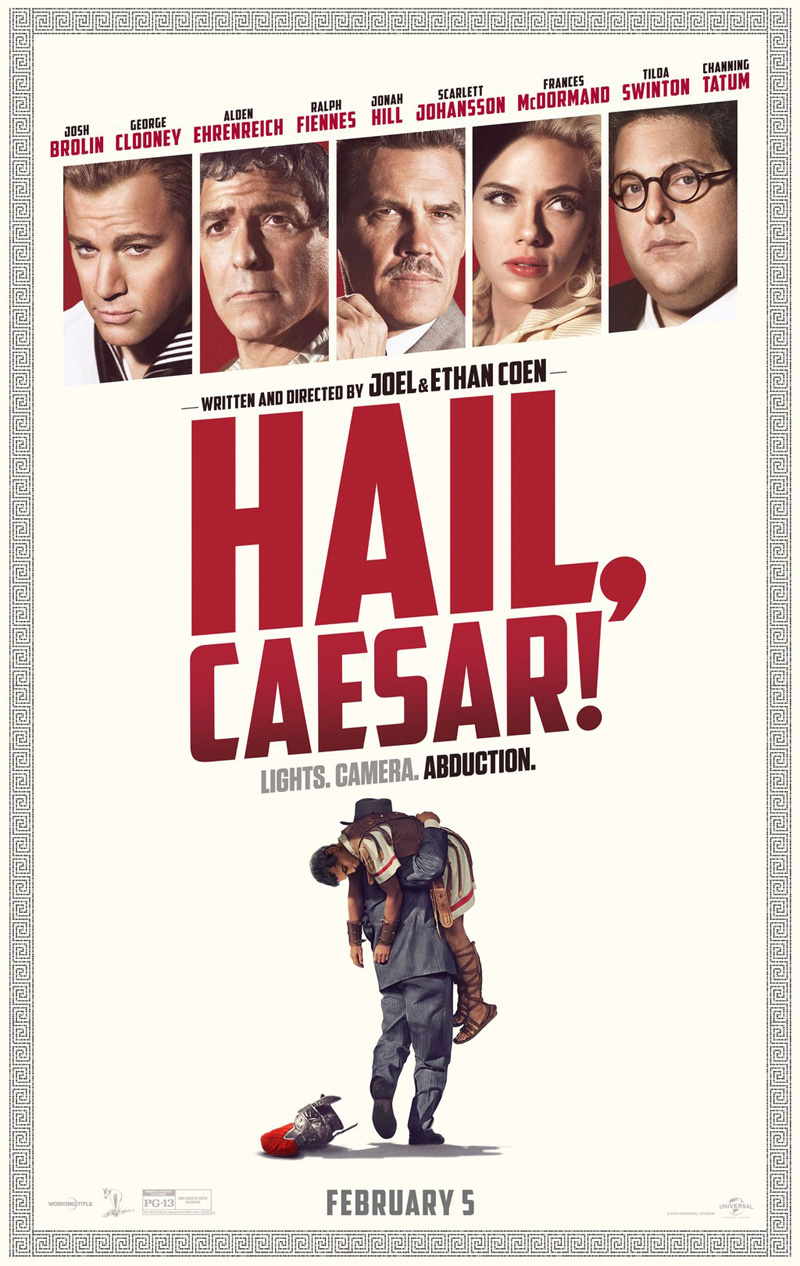
Hail, Caesar!

D: Joel Coen, Ethan Coen / 106m

Cast: Josh Brolin, George Clooney, Alden Ehrenreich, Ralph Fiennes, Scarlett Johansson, Tilda Swinton, Channing Tatum, Frances McDormand, Jonah Hill, Veronica Osorio, Heather Goldenhersh, Alison Pill, Max Baker, Ian Blackman, Christopher Lambert, Clancy Brown, Michael Gambon

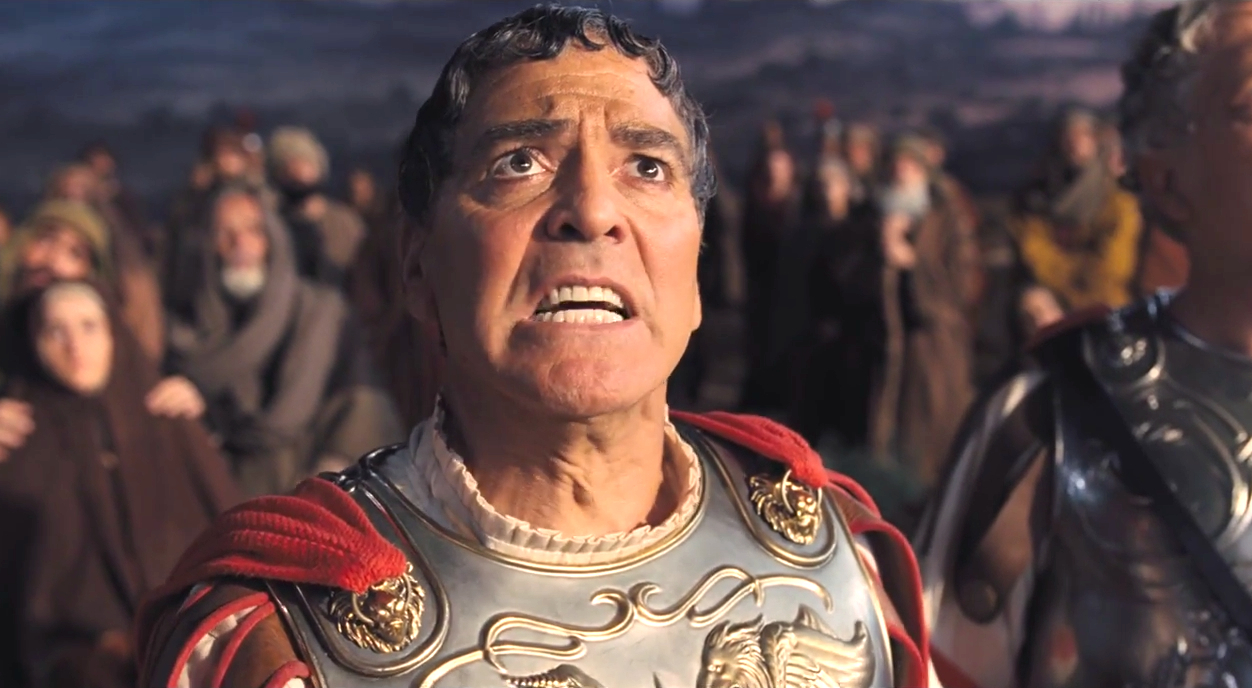
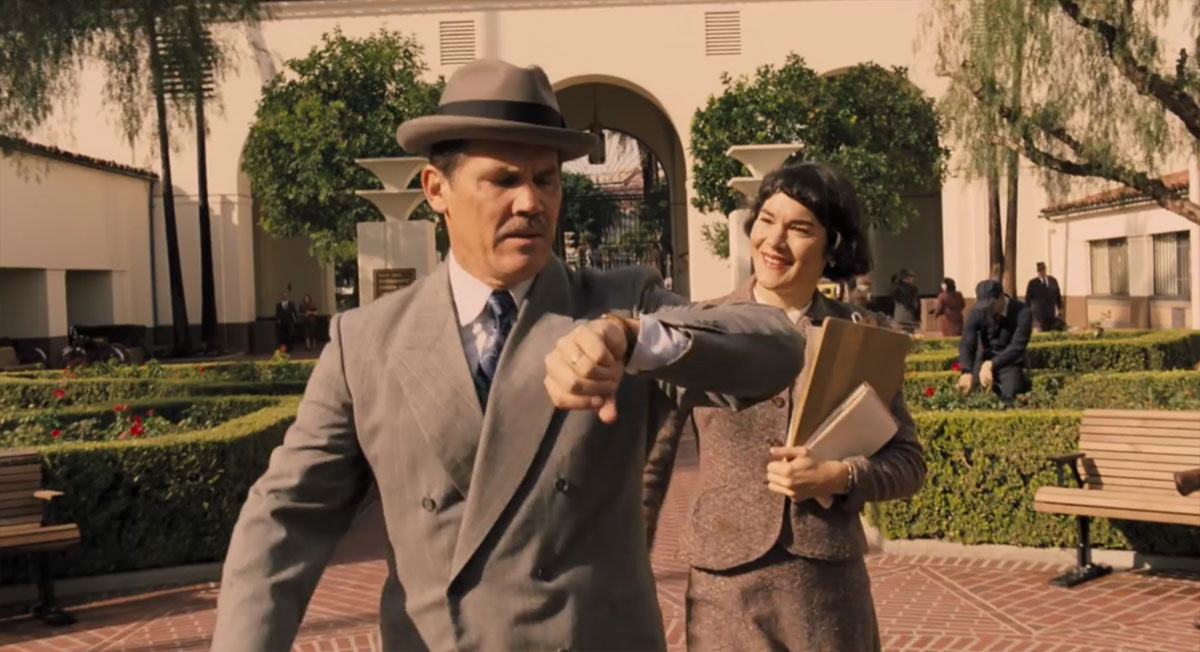
Hollywood, 1951. Eddie Mannix (Brolin) is the head of production at Capitol Pictures; he’s also the studio “fixer’, the man who keeps all the stars in line and out of the gossip columns. It’s an average day for Eddie: one of his stars, unmarried DeeAnna Moran (Johansson), reveals she’s pregnant, his boss back in New York wants to take a young Western actor called Hobie Doyle (Ehrenreich) and put him in a period drama directed by European emigre Laurence Laurentz (Fiennes), he’s being headhunted by the Lockheed Company with the promise of a ten-year contract and early retirement, and by lunchtime he’s aware that the star of Capitol’s latest, prestige picture, Hail, Caesar! A Tale of the Christ, Baird Whitlock (Clooney) is missing.

Hail, Caesar! is an important movie for the studio, and Eddie is keen to ensure that nothing goes wrong with its production. When he receives a note from “The Future”, the group claiming responsibility for Whitlock’s disappearance, his day is further complicated by rival gossip columnists (and twin sisters) Thora and Thessaly Thacker (both Swinton) who are planning to run stories about Whitlock and want to interview him that afternoon. Eddie fends them off, promising them both exclusive access to Whitlock the next day. Meanwhile, Hobie Doyle’s portrayal of a dapper gentleman in Laurentz’s latest movie, Merrily We Sing, is proving to be disastrous. Laurentz wants Hobie off the picture, while Hobie thinks he’s not doing so well in the role. Eddie tells both of them that there will be no changes.

HC - scene3

A ransom call from “The Future” has Eddie placing $100,000 of the studio’s money in a valise that he can’t close properly. Doyle, who is meeting with Eddie when the call comes through, lends him his belt to keep it shut, and Eddie hides it in one of the sound stages. Later, after attending the premiere of his latest movie, Hobie sees the valise in the possession of song and dance star Burt Gurney (Tatum). Hobie decides to follow him. Back on the lot, Eddie has to make a final decision about the Lockheed offer, while also finding a solution to the problem of DeeAnna’s pregnancy. And as midnight ushers in another twenty-four hours, it’s still another average day for Eddie.

First touted back in 1999, though originally to be set in the Twenties and focusing on a troupe of actors performing a play set in Ancient Rome, the Coen Brothers’ latest has sat on the shelf for a while now, but what was originally a “thought experiment” has developed into a deceptively simple, endlessly endearing movie about the frivolous nature of entertainment and the serious efforts that go into making all that frivolity seem important. There’s also a political element in the form of “The Future”, the group of Communist screenwriters who kidnap Whitlock, and enough affectionate pastiches of Fifties movie making to keep fans of the period more than happy (a song and dance number called No Dames! and featuring Channing Tatum is a particular highlight).

HC - scene2

But look closely and you’ll also find a number of religious references, from DeeAnna’s out-of-wedlock pregnancy and need for a husband reminiscent of the Virgin Mary’s situation, to the Lockheed Company’s pursuit of Eddie being a clear ringer for Satan tempting Jesus in the desert. Contentious? Probably, but the symbolism is there, and the Coens have a lot of fun with it, adding unexpected layers to a movie that appears quite lightweight on the surface. But then there are the clever Hitchcock references as well, the idea of good versus evil, sinning and redemption, and suddenly Hail, Caesar! is more than the fluffy confection that it looks and sounds like.

And yet it is also determinedly simplistic in its approach, almost offhandedly so. Eddie faces each problem with an equanimity that seems out of place given the potential for career-ending disaster that faces him at every turn, but then there’s that Lockheed offer he can fall back on if he needs to, so why should he be worried all the time. (It’s actually really simple: he’s that good at his job.) Whitlock embraces the Communist rhetoric of “The Future” because he’s an idiot, an empty vessel who soaks up their ideas in the same way that he soaks up the lines of dialogue in a script – and then parrots them verbatim. It’s no wonder he’s unfazed by his having been kidnapped; like Eddie he lives in a protected bubble: along as he does what he’s supposed to, everything will be all right.

HC - scene1

Brolin and Clooney both give wonderful performances but in different ways. Brolin displays a gift for understated comedy he doesn’t get the chance to show too often, while Clooney channels the ghost of Cary Grant with every double take and concerted bit of mugging he can squeeze in (“Squint at the grandeur. It’s blinding! It’s blinding!”). Not far behind them is Swinton as the warring gossip twins, exasperated and credulous, while the likes of Johansson, Hill, Tatum, and Lambert are given small but lovingly crafted supporting turns. As the dramatically talent-free Hobie, Ehrenreich is angel-faced yet crafty, and Fiennes is perfectly cast as the despairing Laurentz. The two share a scene devoted to having Hobie say the line, “Would that it were so simple” that is a marvel of linguistic dexterity and comic timing; it’s one of the movie’s many comic highlights.

Bolstered by gorgeous cinematography courtesy of DoP Roger Deakins, and allied to the kind of pin-sharp recreation of the period that the Coens are so good at providing, Hail, Caesar! – like a lot of their work – isn’t as straightforward as it seems, and rewards on all kinds of different levels. It seems to be common practice with their movies, to only look at what’s going on on the surface, and dismiss the notion that there’s more going on underneath, as if the Coens were journeyman movie makers, or new to the industry. But this is yet another movie of theirs that is clever throughout and cleverly constructed for maximum effect and enjoyment.

Rating: 9/10 – it may appear slight and lacking in depth, but Hail, Caesar! is a movie that never lets up in its desire to entertain by poking gentle fun at the movies of a bygone era; with a great script and winning performances, the Coen brothers have shown once again that when it comes to their own unique way of movie making, what you see is just the tip of what you get… and it’s damn funny too.

Share this:

  • Click to share on X (Opens in new window) X
  • Click to share on Facebook (Opens in new window) Facebook
  • More
  • Click to print (Opens in new window) Print
  • Click to email a link to a friend (Opens in new window) Email
Like Loading...

Trailer – Hail, Caesar! (2016)

09 Friday Oct 2015

Posted by dullwood68 in Movies

≈ Leave a comment

Tags

1950's, George Clooney, Hollywood, Josh Brolin, Preview, The Coen Brothers, Trailer

You’ve got to hand it to the Coen Brothers, they sure know how to make a period movie shine. Watching the trailer for their latest movie is like opening a window onto an older but seemingly more vibrant time, with the colour design and the lighting making the whole thing look lit up from within. Even if the story isn’t up to much – and who am I kidding? – Hail, Caesar! looks certain to be one of 2016’s most beautifully lensed movies (thanks to the estimable Roger Deakins), uproariously funny, and with its affectionate recreation of Hollywood in the 1950’s, looks certain to be in the running for an Oscar or two come 2017. And if you think the cast highlighted in the trailer is pretty good, that’s without Dolph Lundgren, David Krumholtz, Clancy Brown, Christopher Lambert, Fred Melamed, and Robert Picardo being included as well.

Share this:

  • Click to share on X (Opens in new window) X
  • Click to share on Facebook (Opens in new window) Facebook
  • More
  • Click to print (Opens in new window) Print
  • Click to email a link to a friend (Opens in new window) Email
Like Loading...

Tomorrowland: A World Beyond (2015)

23 Saturday May 2015

Posted by dullwood68 in Movies

≈ 1 Comment

Tags

1964 World's Fair, Brad Bird, Britt Robertson, Drama, End of the world, Fantasy, George Clooney, Hugh Laurie, Jet pack, Pin, Raffey Cassidy, Review, Sci-fi, Tomorrowland

Tomorrowland

aka Tomorrowland

D: Brad Bird / 130m

Cast: George Clooney, Hugh Laurie, Britt Robertson, Raffey Cassidy, Tim McGraw, Kathryn Hahn, Keegan-Michael Key, Thomas Robinson, Pierce Gagnon, Matthew MacCaull

At the 1964 World’s Fair, a boy named Frank Walker (Robinson) takes his latest invention, a jet pack, to the science tent in the hopes of winning a $50 prize. But as his jet pack doesn’t actually work properly, the presiding judge, David Nix (Laurie), tells him to come back when it does. As he leaves he’s approached by a young girl called Athena (Cassidy), who gives him a pin with a bright blue T on it, and tells him to follow her when she gets on one of the rides. When he does he finds himself transported to a strange futuristic world where there are tall, shining buildings, trains and vehicles that travel on air, and a launch site for spaceships. There, his jet pack is adjusted to work properly and he’s accepted as a member of Tomorrowland, a world where the brightest and the best – the geniuses of Earth – have gone to create a utopian world devoid of war, social inequality, famine, natural disasters and greed.

Fifty years later, teenager Casey Newton (Robertson) lives near Cape Canaveral with her dad, Eddie (McGraw), and younger brother Nate (Gagnon). Eddie is an engineer working for NASA, and helping to dismantle the nearby Apollo launch site. Casey “knows how things work”, but is using her skills to delay the site’s demolition. When she’s caught and arrested, she finds a pin with a bright blue T on it in amongst her belongings when she’s released. She touches it and is immediately transported to a wheat field where, in the distance, is a city of tall gleaming spires. She drops the pin and is back in her own world. Unable to convince her father that the pin is special, she looks for information about it online, and learns that there is a store in Texas that will buy them.

She travels there but the store owners, Ursula (Hahn) and Hugo (Key), try to take the pin from her by force. Casey is rescued by Athena, who doesn’t look a day older than when she met Frank. Athena explains a little about Tomorrowland but not enough to fully satisfy Casey’s questions. They travel to a remote farmhouse where Casey is left to meet the owner, a now older Frank Walker (Clooney). When agents from Tomorrowland arrive and try to abduct Casey, Frank and Casey manage to escape, and both are reunited with Athena. From there they head for Paris and the Eiffel Tower, which, aside from being a national monument, is also the launch site for a hidden rocket ship. The ship takes them to Tomorrowland, but when they arrive, the trio find it in ruins, and Nix in charge of everything. And it becomes very clear that our world is on the brink of complete destruction, unless Casey can “fix” it, something that Nix doesn’t want her to do…

Disney's TOMORROWLAND..Casey (Britt Robertson) ..Ph: Film Frame..©Disney 2015

The movie that Bird passed on directing Star Wars Episode VII for, Tomorrowland: A World Beyond arrives with no small amount of hype attached to it, and an appropriately high level of anticipation. And up until we meet Casey it’s exactly the movie we’ve been expecting: a richly detailed, nostalgic look back at a time when the future seemed brighter than ever, and technological miracles were being produced that were poised to make our lives all the better. There’s a wistfulness about these early scenes, and a joy in the discovery of Tomorrowland that is infectious and intoxicating, and Bird and his co-writer Damon Lindelof give us an unforgettable introduction to the unforgettable world they’ve created.

And then it all goes horribly wrong. In placing our world in peril, but with the solution located in Tomorrowland, Bird and Lindelof have managed to come up with one of the murkiest, most unconvincing – or clearly explained – storylines in recent years. So much happens that doesn’t make sense, and so much happens that isn’t followed through, that the movie becomes unwieldy and bogged down by too many scenes that fail to advance the plot or deepen the characters. It’s like being given a box of assorted chocolates, only to find that they all have the same centre. For a movie that touches on so many different aspects and themes – nostalgia, individualism, collectivism, fate, unfulfilled love, the benefits of technology, looking to the future, nihilism, hope, manifest destiny – it develops not into a thrilling adventure that matches the joie de vivre of its opening section, but a tired, downbeat, dystopian odyssey that squeezes the life out of its characters and its plot.

What this leads to is an impending worldwide catastrophe that you just can’t care about, and if filmmakers of the calibre of Bird and Clooney can’t make an audience care about the end of the world then there’s definitely something wrong (although, ironically, the idea fits neatly with Nix’s disparaging remarks about everyone else on Earth). It’s as if the initial idea was settled on, but fleshing it out proved too difficult, so any way the story could be continued was seized upon and no further development took place. There’s no tension, an abstract sense of impending doom, and too much reliance on Athena to bail out Frank and Casey when they get in trouble.

The cast struggle gamely with characters who lack shading and depth, though Cassidy is a minor revelation as Athena, her poise and command of her dialogue helping her performance immeasurably (and showing the others how it should be done). Hahn and Key provide some much needed respite (though too early on) from the drudgery, and Robinson is so cute he shouldn’t be allowed. But it’s still not enough to offset the awkward miscalculations made by Messrs. Bird and Lindelof, and the strangely disaffected tone the movie adopts when it returns to Tomorrowland. However, the movie does have a wonderful sheen to it, Claudio Miranda’s cinematography proving an exquisite treat, his mix of light and colour at the World’s Fair being particularly gratifying. If only as much attention had gone into the script.

Rating: 5/10 – with just enough on display to keep it from being a complete disappointment, Tomorrowland: A World Beyond starts out fresh and engaging and ends like a lame athlete finally crossing the finishing line; Bird directs as if he were absent from the set, and it all has the air of a movie that “will just do for now”.

Share this:

  • Click to share on X (Opens in new window) X
  • Click to share on Facebook (Opens in new window) Facebook
  • More
  • Click to print (Opens in new window) Print
  • Click to email a link to a friend (Opens in new window) Email
Like Loading...

The Monuments Men (2014)

21 Friday Feb 2014

Posted by dullwood68 in Movies

≈ 7 Comments

Tags

Bill Murray, Bob Balaban, Cate Blanchett, George Clooney, Ghent Altarpiece, Hidden treasures, Hugh Bonneville, Jean Dujardin, John Goodman, Madonna of Bruges, Matt Damon, Nazis, Review, Stolen art, True story, World War II

Monuments Men, The

D: George Clooney / 118m

Cast: George Clooney, Matt Damon, Bill Murray, Cate Blanchett, John Goodman, Jean Dujardin, Hugh Bonneville, Bob Balaban, Dimitri Leonidas, Justus von Dohnányi, Holger Handtke

When you see the phrase “Based on a true story” at the beginning of a movie, there’s an expectation that what you’re about to see really happened, and in the way that it’s portrayed.  But the key word is “based”.  The word serves as a get-out clause for filmmakers the world over, so that when anyone criticises a movie for its accuracy they can say it’s not meant to be taken as a de facto retelling of events but as an interpretation.

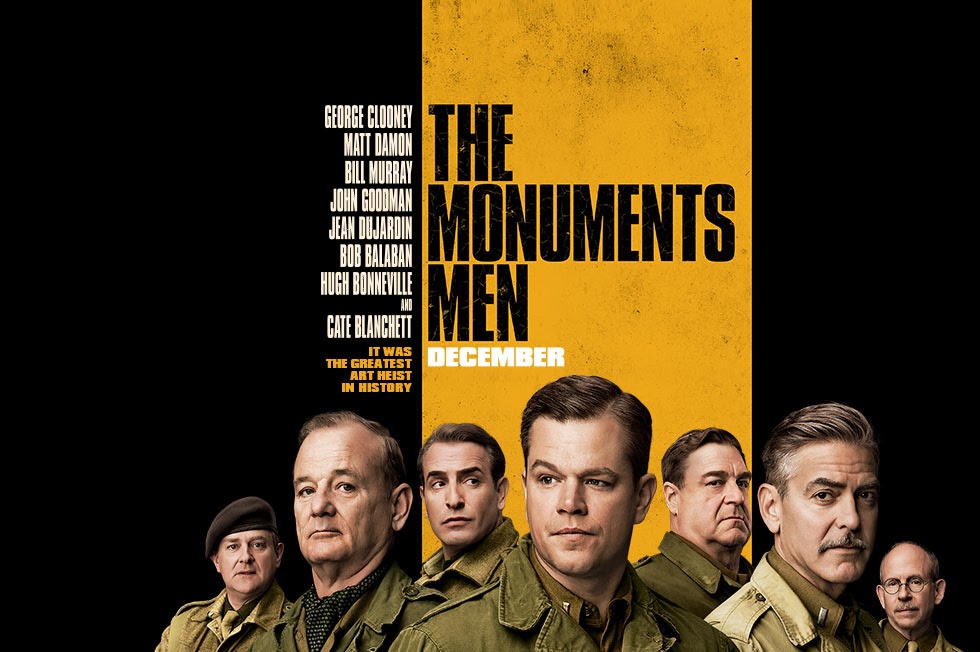
With The Monuments Men, actor/director and co-scripter Clooney has taken a relatively unknown tale from World War II and – forgive the clumsy analogy – used broad brush strokes to bring it to the screen.  Playing Frank Stokes, we first see him in 1943 canvassing President Roosevelt about the importance of finding and safeguarding the huge amount of art that the Nazis are plundering across Europe, as well as asking for the military’s cooperation in avoiding unnecessary damage to important historical buildings and monuments.  Asked by Roosevelt how many men he needs, Stokes tells him six.

The six men are Americans James Granger (Damon), Richard Campbell (Miurray), Walter Garfield (Goodman), and Preston Savitz (Balaban), plus Brit Donald Jeffries (Bonneville), and Frenchman Jean Claude Clermont (Dujardin).  All six have the skills and the experience Stokes needs to identify, trace and recover the stolen art, and two pieces in particular: Michelangelo’s Madonna of Bruges and Jan van Eyck’s Ghent Altarpiece.  Splitting up to cover as much ground as possible the men set about tracing various treasures and seeking the cooperation necessary to avoid the continued ruinous bombing of buildings such as Monte Cassino.  In this respect, and despite clear orders from Roosevelt, they find themselves rebuffed at every turn.  They have better luck tracing the routes the Nazis are using to hide everything, but they still always seem to be one step behind.

In Paris, Granger is put in touch with Claire Simone (Blanchett).  She has a detailed list of all the artwork and treasures that were stolen by the Nazis in Paris, as well as who they belonged to and where they were to be taken.  Using this list, Stokes and co are able to discover the locations the Nazis chose to hide everything.  With the war now drawing to a close they face a race against time to reach the treasures before the approaching Russians.

Monuments Men, The - scene

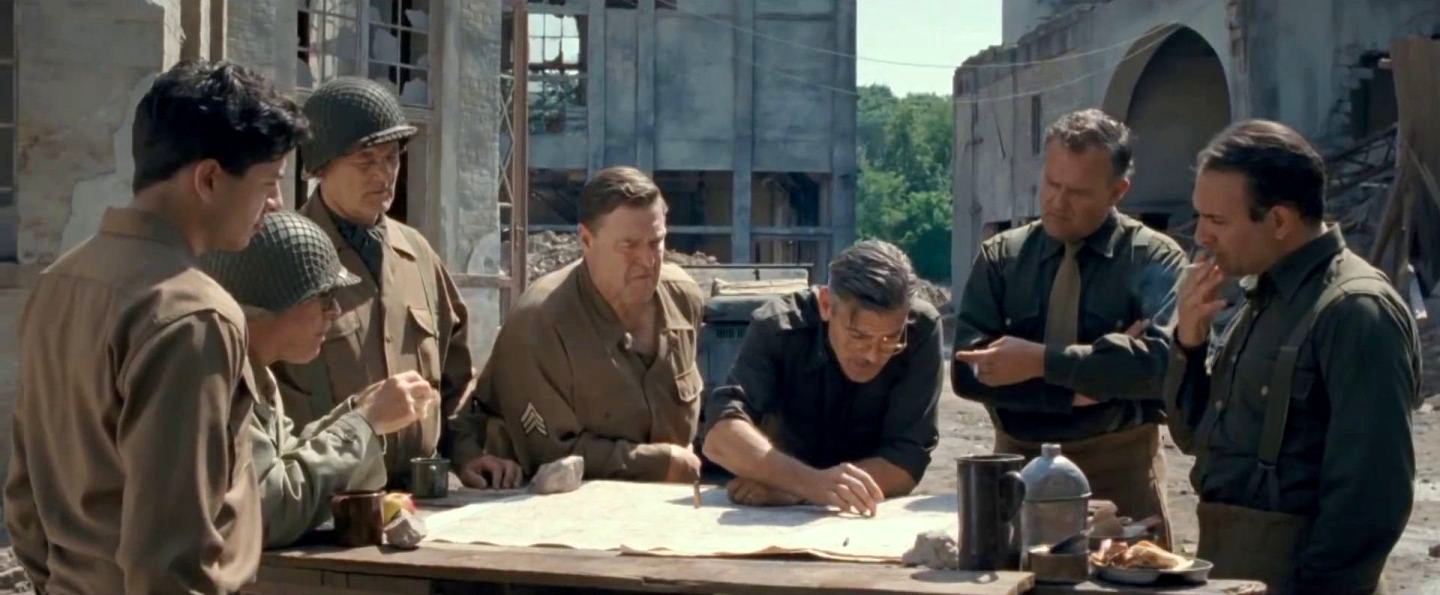
The story of the Monuments Men and their achievements makes for a thrilling read but on screen it’s a different matter.  Clooney and co-scripter (and long-time collaborator) Grant Heslov have fashioned a story from the facts that has all the hallmarks of a rush job.  Character development is perfunctory and relies on the actors to fill in the gaps by using established traits: Dujardin flashes the winning smile seen in The Artist, Murray rehashes his bucolic approach to Lost in Translation, and Goodman continues to play the same role he’s played for the last ten years.  In a way it’s a clever approach, a kind of cinematic shorthand to help introduce the characters quickly and then get on with things, but other than the fact that these men all knew (or knew of) each other before coming together, we don’t really get to know them.  As Stokes, Clooney takes a back seat, giving himself a couple of rousing, authoritative speeches, and generally directing traffic – that’s not a criticism, there is an awful lot of poring over maps and working out which direction to take.  Damon and Blanchett struggle to make her initial distrust of Granger credible, while Bonneville’s turn as the plucky Brit using the mission to overcome his drink problem, though one of the (slightly) better performances, is undermined when you realise his drink problem isn’t going to reoccur and jeopardise things.

The movie also jumps about quite a bit as it attempts to cover both time and distance.  The events shown take place between 1943 and the end of the war.  Some scenes, particularly Garfield and Clermont’s encounter with a sniper, seem included for no other reason than they might prove exciting, but this rarely works out.  Clooney tries to instil a sense of urgency, but the timescale defeats him every time.  Even towards the end with the Russians right around the corner and the Madonna of Bruges to be rescued, there’s just no excitement to be had.  And when the team are put in harm’s way, it’s hard to be concerned because a) you don’t care enough them (see previous paragraph) and Clooney’s direction doesn’t stretch itself enough to provide any tension.

What you have then is a strangely flat movie that never really takes off but which, thanks to both the art and Phedon Papamichael’s wonderful photography, looks good and is handsomely mounted.  Clooney does have a good eye for composition, and he uses the camera to good effect throughout but by the end it’s not enough to distract from the disappointment that will have already been felt.  There’s also some misguided humour, along with a few too many one-liners (there are times when the movie skirts perilously close to coming across as a kind of Ocean’s Seven).  One moment, though, that does deserve a mention: Campbell, having received a recording from his daughter, hears it played over the camp tannoy system while in the shower.  As his tears mingle with the water from the shower, it’s an instance of emotional beauty in amongst all that glorious art.

Rating: 6/10 – a missed opportunity, too lacking in focus and without a cohesive script; a great story that will hopefully be revisited at a later date.

Share this:

  • Click to share on X (Opens in new window) X
  • Click to share on Facebook (Opens in new window) Facebook
  • More
  • Click to print (Opens in new window) Print
  • Click to email a link to a friend (Opens in new window) Email
Like Loading...

Gravity (2013)

09 Saturday Nov 2013

Posted by dullwood68 in Movies

≈ Leave a comment

Tags

Action, Alfonso Cuarón, Astronauts, Drama, Emmanuel Lubezki, George Clooney, Hubble telescope, Outer space, Review, Sandra Bullock, Satellite debris, Sci-fi, Shuttle, Tim Webber

D: Alfonso Cuarón / 91m / 3D

Cast: Sandra Bullock, George Clooney, Ed Harris

Several years in the making, Gravity arrives with a tremendous amount of expectation attached to it, its cutting-edge visuals hinted at in both trailers that preceded it. What wasn’t given as much emphasis was the storyline. Having seen Gravity there’s a good reason why…

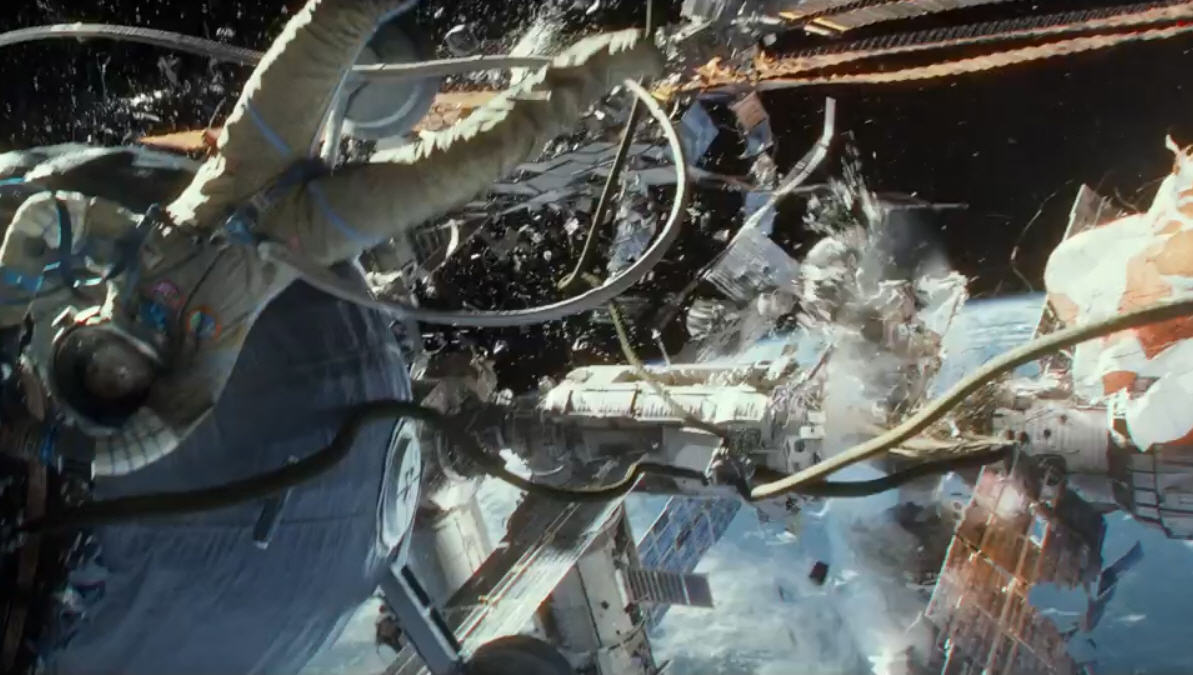
Towards the end of a shuttle mission to service the Hubble telescope, mission specialist Dr Ryan Stone (Bullock) and retiring astronaut Matt Kowalski (Clooney) are working outside the shuttle when they’re advised by Houston Mission Control (Harris) that debris from a Russian satellite (recently destroyed by the Russians) is heading towards them. Before they can get back inside the shuttle, the debris hits, killing another member of the team and disabling the shuttle altogether.  After Kowalski saves Stone from spiralling off into space, they head for the nearby International Space Station in the hopes of using one of its landing modules. But things don’t go according to plan…

Gravity - scene

There’s more to the story than that, but to mention any more would be a shame in terms of spoiling things, even if what does follow is disappointing in terms of the plot and Stone’s development as a character. Suffice it to say there follows a series of cliffhangers, and even though you can probably guess that Stone makes it back to Earth – doesn’t she? – it’s the way in which it’s arrived at that stops Gravity from being better than expected.

Thankfully, the visuals are superb, with space represented, if not accurately, then with a verve and a verisimilitude than adds to the (mock-)realism. The scenes where Stone is tumbling through space after the debris strike, where Earth seems to be tumbling around her as much as she is, are breathtaking, as is the opening sequence where the camera appears to be roving around the Hubble telescope in a dizzying whirl of images. As the movie continues, each scene is a feast for the eyes, with a standout moment coming when Stone reaches the ISS and the camera’s point of view – roving around Stone at first – suddenly becomes her point of view from inside her helmet (in 3D this effect is even more impressive). The technical advancement on view is nothing short of incredible and come the awards season, Gravity should be a shoo-in for pretty much every technical award going. The amount of work director Cuarón, director of photography Emmanuel Lubezki and visual effects supervisor Tim Webber have put into creating “space” as it’s never been seen before, close-up and frequently terrifying, has resulted in a movie that is both beautiful and astonishing to look at.

But still there’s Stone’s character and back story, neither of which inspire much of a connection, and stops the audience from empathising with her as much as needed. She remains a fairly reticent, removed character from beginning to end, and while Bullock does her best to project a degree of steely vulnerability, she never quite manages it; Stone only “steps up” in the final ten minutes and even then it seems forced rather than the organic conclusion of her journey for survival. Equally, Clooney isn’t best served by the character of Kowalski, a glib would-be raconteur with a story for every occasion that belies, and even undermines, his experience as an astronaut.

Rating: 7/10 – seen in 3D, Gravity is a genuine cinematic experience, and all the more impressive for being converted in post-production. There hasn’t been such an exceptional 3D movie since Avatar. It’s a shame then about the muted characters and the undercooked storyline.

Share this:

  • Click to share on X (Opens in new window) X
  • Click to share on Facebook (Opens in new window) Facebook
  • More
  • Click to print (Opens in new window) Print
  • Click to email a link to a friend (Opens in new window) Email
Like Loading...

Blog Stats

  • 486,704 hits

Recent Posts

  • 10 Reasons to Remember Bibi Andersson (1935-2019)
  • Fantasia (1940)
  • Dances With Wolves (1990) – The Special Edition
  • Kiss of the Spider Woman (1985)
  • The Three Musketeers (1973)

Top Posts & Pages

  • Lost for Life (2013) - Another Look
    Lost for Life (2013) - Another Look
  • Lost for Life (2013)
    Lost for Life (2013)
  • About
    About
  • Exposed (2016)
    Exposed (2016)
  • Cardboard Boxer (2016)
    Cardboard Boxer (2016)
  • A Brief Word About La La Land (2016)
    A Brief Word About La La Land (2016)
  • My Top 10 Guilty Pleasures
    My Top 10 Guilty Pleasures
  • The Monuments Men (2014)
    The Monuments Men (2014)
  • A Brief Word About Netflix Original Comedies
    A Brief Word About Netflix Original Comedies
  • Removal (2010)
    Removal (2010)
Follow thedullwoodexperiment on WordPress.com

Blogs I Follow

  • Rubbish Talk
  • Film 4 Fan
  • Fast Film Reviews
  • The Film Blog
  • All Things Movies UK
  • Interpreting the Stars
  • Let's Go To The Movies
  • Movie Reviews 101
  • TMI News
  • Dan the Man's Movie Reviews
  • Film History
  • Jordan and Eddie (The Movie Guys)

Archives

  • April 2019 (13)
  • March 2019 (28)
  • February 2019 (28)
  • January 2019 (32)
  • December 2018 (28)
  • November 2018 (30)
  • October 2018 (29)
  • September 2018 (29)
  • August 2018 (29)
  • July 2018 (30)
  • June 2018 (28)
  • May 2018 (24)
  • April 2018 (21)
  • March 2018 (31)
  • February 2018 (25)
  • January 2018 (30)
  • December 2017 (30)
  • November 2017 (27)
  • October 2017 (27)
  • September 2017 (26)
  • August 2017 (32)
  • July 2017 (32)
  • June 2017 (30)
  • May 2017 (29)
  • April 2017 (29)
  • March 2017 (30)
  • February 2017 (27)
  • January 2017 (32)
  • December 2016 (30)
  • November 2016 (28)
  • October 2016 (30)
  • September 2016 (27)
  • August 2016 (30)
  • July 2016 (30)
  • June 2016 (31)
  • May 2016 (34)
  • April 2016 (30)
  • March 2016 (30)
  • February 2016 (28)
  • January 2016 (35)
  • December 2015 (34)
  • November 2015 (31)
  • October 2015 (31)
  • September 2015 (34)
  • August 2015 (31)
  • July 2015 (33)
  • June 2015 (12)
  • May 2015 (31)
  • April 2015 (32)
  • March 2015 (30)
  • February 2015 (37)
  • January 2015 (39)
  • December 2014 (34)
  • November 2014 (34)
  • October 2014 (36)
  • September 2014 (25)
  • August 2014 (29)
  • July 2014 (29)
  • June 2014 (28)
  • May 2014 (23)
  • April 2014 (21)
  • March 2014 (42)
  • February 2014 (38)
  • January 2014 (29)
  • December 2013 (28)
  • November 2013 (34)
  • October 2013 (4)

Blog at WordPress.com.

Rubbish Talk

Film 4 Fan

A Movie Blog

Fast Film Reviews

The Film Blog

The official blog of everything in film

All Things Movies UK

Movie Reviews and Original Articles

Interpreting the Stars

Dave Examines Movies

Let's Go To The Movies

Film and Theatre Lover!

Movie Reviews 101

Daily Movie Reviews

TMI News

Latest weather, crime and breaking news

Dan the Man's Movie Reviews

All my aimless thoughts, ideas, and ramblings, all packed into one site!

Film History

Telling the story of film

Jordan and Eddie (The Movie Guys)

Movie Reviews & Ramblings from an Australian Based Film Fan

Privacy & Cookies: This site uses cookies. By continuing to use this website, you agree to their use.
To find out more, including how to control cookies, see here: Cookie Policy
  • Subscribe Subscribed
    • thedullwoodexperiment
    • Join 481 other subscribers
    • Already have a WordPress.com account? Log in now.
    • thedullwoodexperiment
    • Subscribe Subscribed
    • Sign up
    • Log in
    • Report this content
    • View site in Reader
    • Manage subscriptions
    • Collapse this bar
 

Loading Comments...
 

    %d