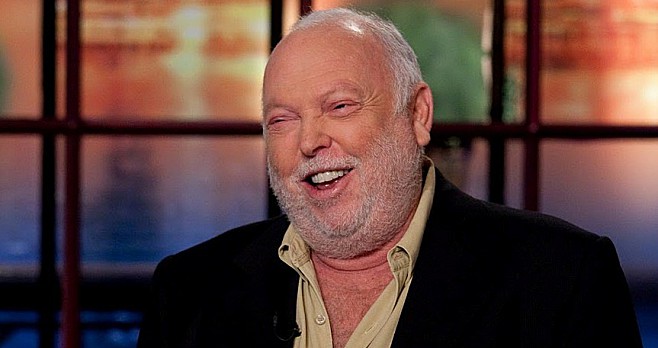
For someone who became internationally famous through making movies, it’s perhaps something of a puzzle as to why Andrew G. Vajna’s own childhood never became the subject of a movie. At the age of twelve and supported by the Red Cross, Vajna travelled from his home in Budapest to Canada, He made the trip alone, and arrived with no friends to meet him, and unable to speak a word of English. Despite this, Vajna flourished, and later on he was studying cinematography at the University of California, before he joined the university’s Educational Motion Picture Department. A brief stint running his own photo studio was curtailed by a ski accident, and from there Vajna became a hairdresser. Eventually he teamed with an old friend, Gábor Koltai, and they founded a successful high quality wig company. Vajna moved to Hong Kong and ran his own wig company there before selling it in 1973 for a handsome profit.
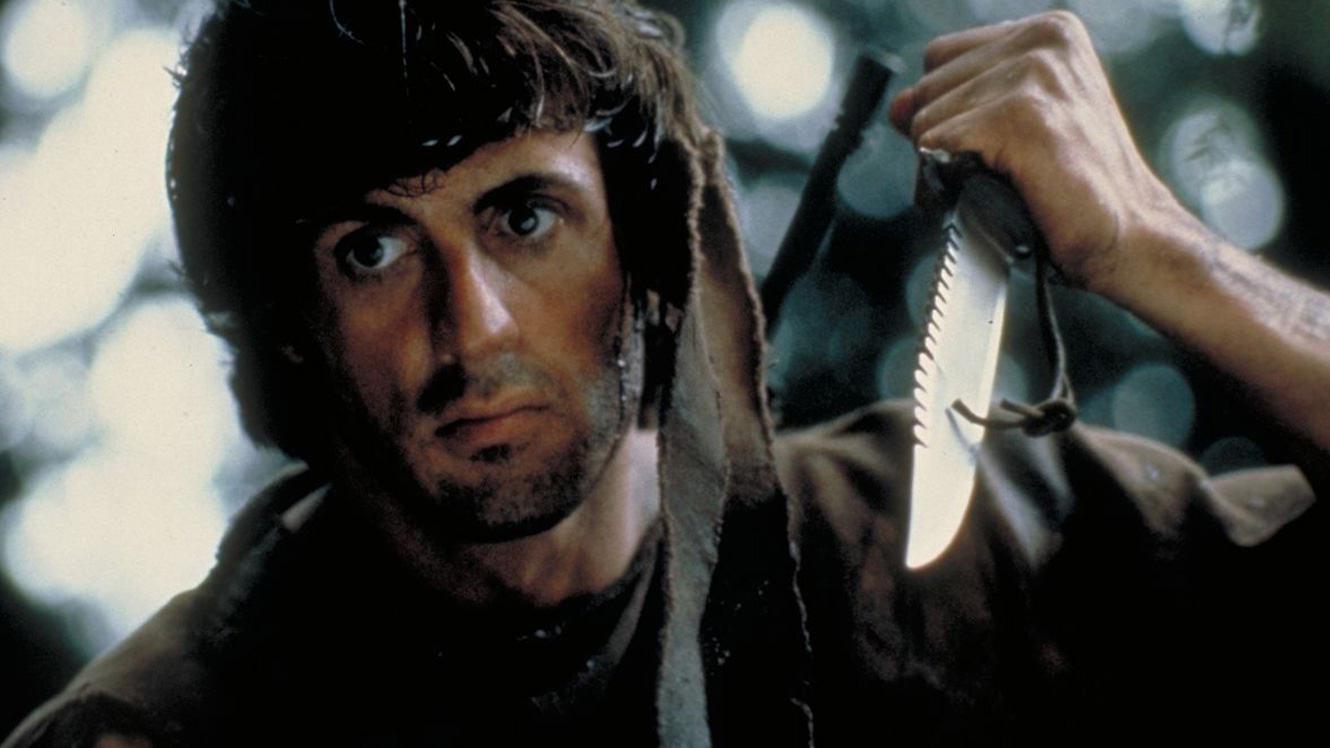
Following a brief period as a cinema owner and distributor in the Far East, Vajna met Mario Kassar at the 1975 Cannes Film Festival, and together the pair formed distribution company, Carolco. In less than three years, Carolco had become one of the top three foreign sales organisations worldwide, with movies such as Futureworld (1976), The Eagle Has Landed (1977), and Winter Kills (1979) being distributed under the Carolco banner. But it wasn’t until 1982, when Vajna and Kassar took a risk in acquiring the rights to David Morrell’s novel, First Blood, that Carolco became a production company as well as a distributor. First Blood‘s success prompted Vajna and Kassar to expand their empire, and further Rambo sequels, along with a wide range of other projects, saw the company continue to build on its successes. But differences between the two men saw Vajna sell his stake in Carolco, and in 1989, he formed Cinergi Productions, Inc. Vajna continued to make successful movies until the mid-90’s when a string of box office flops caused Cinergi to fold.
Despite the high level of success he experienced as a producer/distributor, Vajna never forgot his Hungarian roots, and he did a lot to support the Hungarian movie industry, from arranging for productions such as Evita (1996) to be shot there, to founding DIGIC Pictures, an animation studio. In 2011 he took his support a step further by creating the Hungarian National Film Fund, an organisation dedicated to providing financial and practical support to Hungarian movie projects. The most successful recipient of support from the fund was Son of Saul (2015); without the fund’s backing it’s unlikely László Nemes’ movie would have been made. And in recent years, Vajna expanded his influence by venturing into telecommunications. A man who proved successful in almost everything he turned his hand to, Vajna was also a true enthusiast in everything he did. His influence stretched beyond the boundaries of being a distributor or producer, and without him, Hungary’s reputation as a source of artistically and financially successful movies would certainly not be as healthy as it is today.
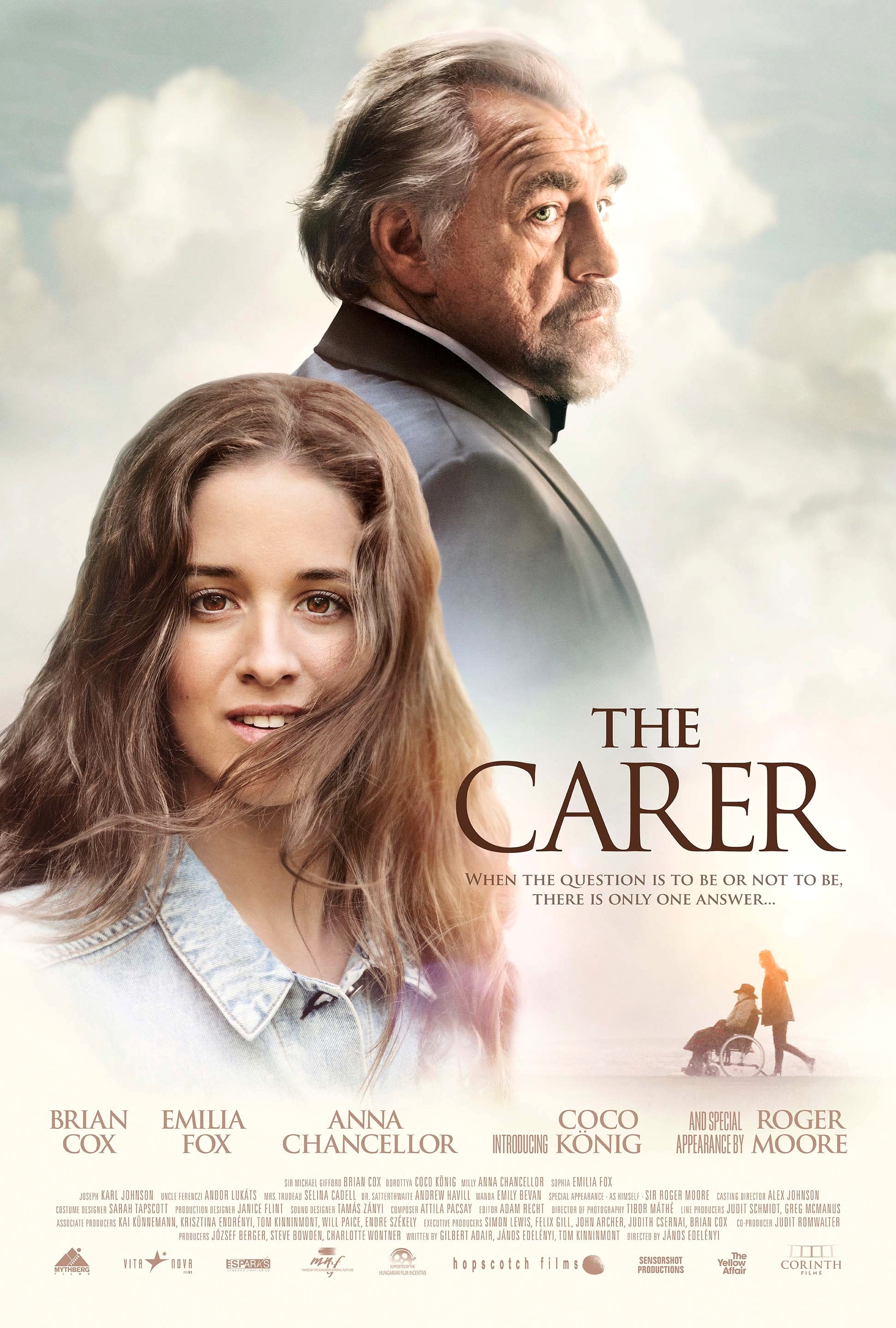
Cast: Brian Cox, Coco König, Emilia Fox, Anna Chancellor, Karl Johnson, Andrew Havill, Selina Cadell, Emily Bevan, Roger Moore
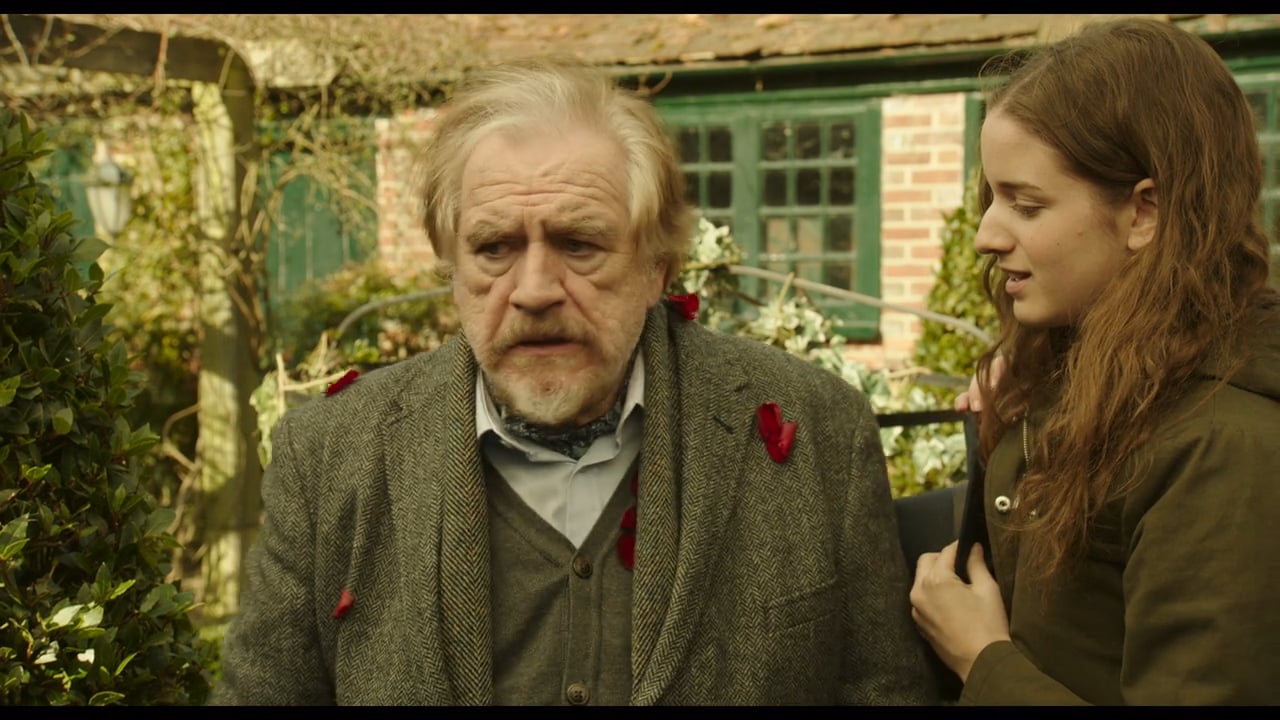
Sir Michael Gifford (Cox) is a British acting legend, equally at home in movies and on television, but mostly on the stage. Now retired and suffering from the early onset of Parkinson’s disease, Sir Michael is being urged to accept having a full-time carer by his daughter, Sophia (Fox), and his housekeeper (and ex-lover) Milly (Chancellor). Resistant to the idea, Sir Michael finds that the introduction of Dorottya (König), a Hungarian care worker who has applied to study drama in the UK, isn’t quite the imposition he expects it to be. With her love of, and ability to quote, Shakespeare, Sir Michael finds Dorottya’s sympathetic approach and youthful enthusiasm something of a tonic – though he reserves his usual dyspeptic disposition for everyone else. However, when he’s put forward for a Lifetime Achievement Award, it causes friction between him and Sophia (who thinks he’s too infirm to attend), and Sophia and Dorottya (who thinks it would be good for him). Sir Michael decides he’s going to go, whether his daughter agrees or not, but before he does he has to recconnect with Dorottya, who has been sacked by Sophia…
In a similar vein to Venus (2006), The Carer is about a crusty, cantankerous old thespian who finds an unexpected kinship with a much younger carer, and in doing so, learns a number of valuable life lessons. And… that’s it. There are Shakespeare quotes a-plenty (with King Lear getting the lion’s share for obvious, though, undercooked thematic reasons), occasional nods to the indignities of getting old (adult nappies), regrets and recriminations flying thick and fast from all sides, and a tendency to soft-pedal any really serious issues through the use of ill-focused humour. Nothing about the movie is surprising or unexpected. It ticks along in time-honoured fashion, hitting each required beat with almost metronomic regularity, and relying on its talented albeit under-served (and undeserved) cast to rescue it from the doldrums of its own making. At no point do you feel that this could be happening in real life, or that you might meet any of the characters while walking down the street. With the action largely taking place at Sir Michael’s baronial hall of a home, a grim sense of claustrophobia soon settles in as Sir Michael takes profanity flecked inconstancy to new levels of banality; he’s the least disagreeable misanthrope you’re ever likely to encounter.
More problematical is the character of Dorottya. The Carer is a Hungarian/British co-production, with a Hungarian director, and dozens of Hungarian crew members, and so the inclusion of König as the title character is, like much else, unsurprising. But Dorottya doesn’t ring true on any level. She’s so one-dimensional you half expect her to disappear when she turns sideways. With the barest of motivations for what she does, and not even the required knowledge that medicaton and alcohol don’t mix, Dorottya is a lumpen plot device designed to allow Sir Michael to play to one last appreciative audience before popping his theatrical clogs. Making her feature debut, König does her best but hasn’t got a hope of imbuing the character with any meaningful traits or mannerisms, thanks to a script that makes very little effort to add depth or texture at any stage of the proceedings. There are misguided attempts at pathos, scattered instances of poorly judged poignancy, and an acceptance speech from Sir Michael that is part ramble, part soliloquy, and all contrived; it’s the musings of an actor who really can’t improvise. Cox is fine despite all this, and it’s fun to see him in his younger days through movies and posters, but if this was a role that was written with him in mind, he shouldn’t feel so flattered.
Rating: 4/10 – visually as bland and uninviting as the storyline proves to be, The Carer strives for emotional resonance and comes up short every time; acceptable only on a very basic level, and even then with reservations, this is a misguided and unconvincing movie that wastes the time and efforts of its cast, and never appears to be aspiring to anything other than being merely perfunctory.
Cast: Géza Röhrig, Levente Molnár, Urs Rechn, Todd Charmont, Jerzy Walczak, Sándor Zsótér, Marcin Czarnik, Levente Orbán, Kamil Dobrowolski, Uwe Lauer, Christian Harting
Having claimed a number of awards, including an Oscar for Best Foreign Language Film, since its debut at the 2015 Cannes Film Festival, Son of Saul has also been extremely well received by critics and was in many Top 10 lists at the end of last year. Through its central character of Saul Ausländer (Röhrig), we’re introduced to the Sonderkommandos, concentration camp work units that were usually comprised of Jews, and whose job it was to assist in the disposal of the people (and their belongings) who had been killed in the gas chambers. A Sonderkommando was never given a choice about their role, and though they had slightly better living conditions than the rest of the camp inmates, it was inevitable that they would be “retired” after three or four months of working.
Against this backdrop, and the events that took place at Auschwitz in October 1944, first-time writer/director László Nemes has fashioned a grim, harrowing, and remarkable movie debut that acknowledges the horrors of the Holocaust while also allowing for rare moments of peace and beauty and hope amidst all the despair of life in a concentration camp. How Nemes does this is perhaps the most impressive aspect of the movie, as the camera – formidably handled by DoP Mátyás Erdély – sticks close to the character of Saul and rarely strays further than a foot away from his head or shoulders. When it does, though, and the larger picture of life in the camp is revealed, it has an impact that Nemes quite carefully cultivates for maximum effect.
With the camera being so close to Saul, Nemes also distances the background by keeping it out of focus, a decision that fits with the world as Saul sees it. There will be viewers who will find this approach annoying, and perhaps less dramatic than if the wider “world” around Saul had been revealed in all its ugly wretchedness. But this would be to miss the point of Saul’s involvement with the rest of the camp. Even before he discovers the boy who survives the gas chamber – and then only to be summarily suffocated by a Nazi doctor – and takes him to be his son, Saul has chosen to survive in the camp by cutting himself off from everyone else, and only interacting with others when he needs to. So the movie’s visual design, where events happen around Saul and without his direct involvement, are kept fuzzy and indistinct, and where Saul has chosen to keep them.
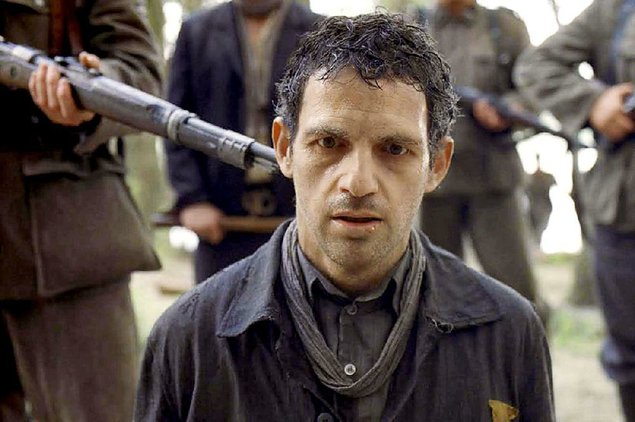
To mitigate against this distancing effect, however, Nemes has also made the movie’s sound design an integral part of the drama, as through the various sounds and noises of the camp, and those made by the inmates and the guards, the things that Saul chooses to ignore are made vividly obvious and given a chilling reality that offsets the visual composition. As the continual blurring of background images occurs so too does the sharpness of dialogue and sound effects, perhaps most effectively realised in the sequence where, with one of the gas chambers not ready to be used, the latest arrivals are taken out to the nearby woods and stripped and shot. It’s an incredible sequence, shot in a cinéma vérité style that reinforces the horrible expediency that cost so many people their lives.
Away from the visual and aural decisions that make the movie look and sound like no other Holocaust movie before it, Saul’s story is a simple one: he wants to give the boy he believes to be his son a proper burial, and the attendant service given by a rabbi (Saul is not a practising religious man; as a result he doesn’t realise that a rabbi isn’t necessary for what he wants to do). Saul becomes obsessed with making his plan happen, but it proves harder to achieve than he thought. He’s unable to find a rabbi who will perform the ceremony, and his efforts to find one are constantly interrupted or foiled by the demands of some of the other Sonderkommandos. They’re planning an uprising, and want Saul to help them. His attempts to please them and also satisfy his own needs form the basis of the narrative, but Nemes makes it clear that Saul’s need to bury the boy is his first priority.
Again, some viewers may have an issue with the single-mindedness that Saul adopts here, as he jeopardises both his own life and those of his fellow Sonderkommandos as he seeks out a rabbi. His determination is such that he acts recklessly, and seemingly without regard for his own safety or the safety of others. An attempt to photograph some of the atrocities carried out at the camp is nearly discovered thanks to Saul’s unthinking behaviour, and later, when he finds someone he believes to be a rabbi (Charmont), Saul nearly ends up being mistaken for a new arrival (and killed). And when circumstances dictate that the uprising needs to happen sooner than planned, Saul’s only concern is ensuring that the boy’s body is kept safe enough to be buried still. But it’s this dogged refusal to give up that enables Saul to keep going, it’s his way of retaining some humanity in the face of the wanton cruelty he sees each and every day.
As Saul, Röhrig gives an incredible, melancholy performance that is built on telling expressions and a minimal amount of dialogue. Saul is a man consumed by reticence and detachment, focused on whatever he himself is doing at any given moment, and Röhrig, whose only previous acting experience was in a Hungarian TV show in 1989, shows the character’s distance from his surroundings as both a blessing and a curse. It’s a finely nuanced and controlled performance, intelligent and surprisingly emotive, and his ability to display a variety of emotions through the mask-like appearance Saul adopts in the camp is a masterclass in screen acting.
In addressing the issue of the Sonderkommandos and their place in the concentration camps, Nemes is also giving a voice to the people who didn’t survive the camps. It’s a fine distinction to make when so many other Holocaust movies celebrate the survivors over the ones who met their fates in a gas chamber. It makes the movie a bleaker experience than most, and its haunting, distressing tone is all the more forceful and compelling because of it. Son of Saul may not be a comfortable movie to watch, and it may not be rewarding in the traditional sense, but it is a testament to the tenacity and the courage of those who found themselves in one of the worst predicaments ever: that of aiding in the deaths of millions of people like themselves.
Rating: 9/10 – expertly handled, and refusing to indulge in any kind of melodrama, Son of Saul is one of the finest Holocaust movies ever made; intense, horrible (and horrifying), disturbing, and brilliant, there are moments that will linger in the memory, but in shining a light on a rarely discussed aspect of “life” in the camps, the movie earns its place in cinema history as an important historical record.





 thedullwoodexperiment