• 10 Reasons to Remember…
  • A Brief Word About…
  • About
  • For One Week Only
  • Happy Birthday
  • Monthly Roundup
  • Old-Time Crime
  • Other Posts
  • Poster of the Week
  • Question of the Week
  • Reviews
  • Trailers

thedullwoodexperiment

~ Viewing movies in a different light

thedullwoodexperiment

Tag Archives: Jacob Tremblay

Wonder (2017)

04 Monday Dec 2017

Posted by dullwood68 in Movies

≈ 2 Comments

Tags

Drama, Facial disfigurement, Izabela Vidovic, Jacob Tremblay, Julia Roberts, Literary adaptation, Owen Wilson, R.J. Palacio, Review, Stephen Chbosky, Treacher Collins syndrome
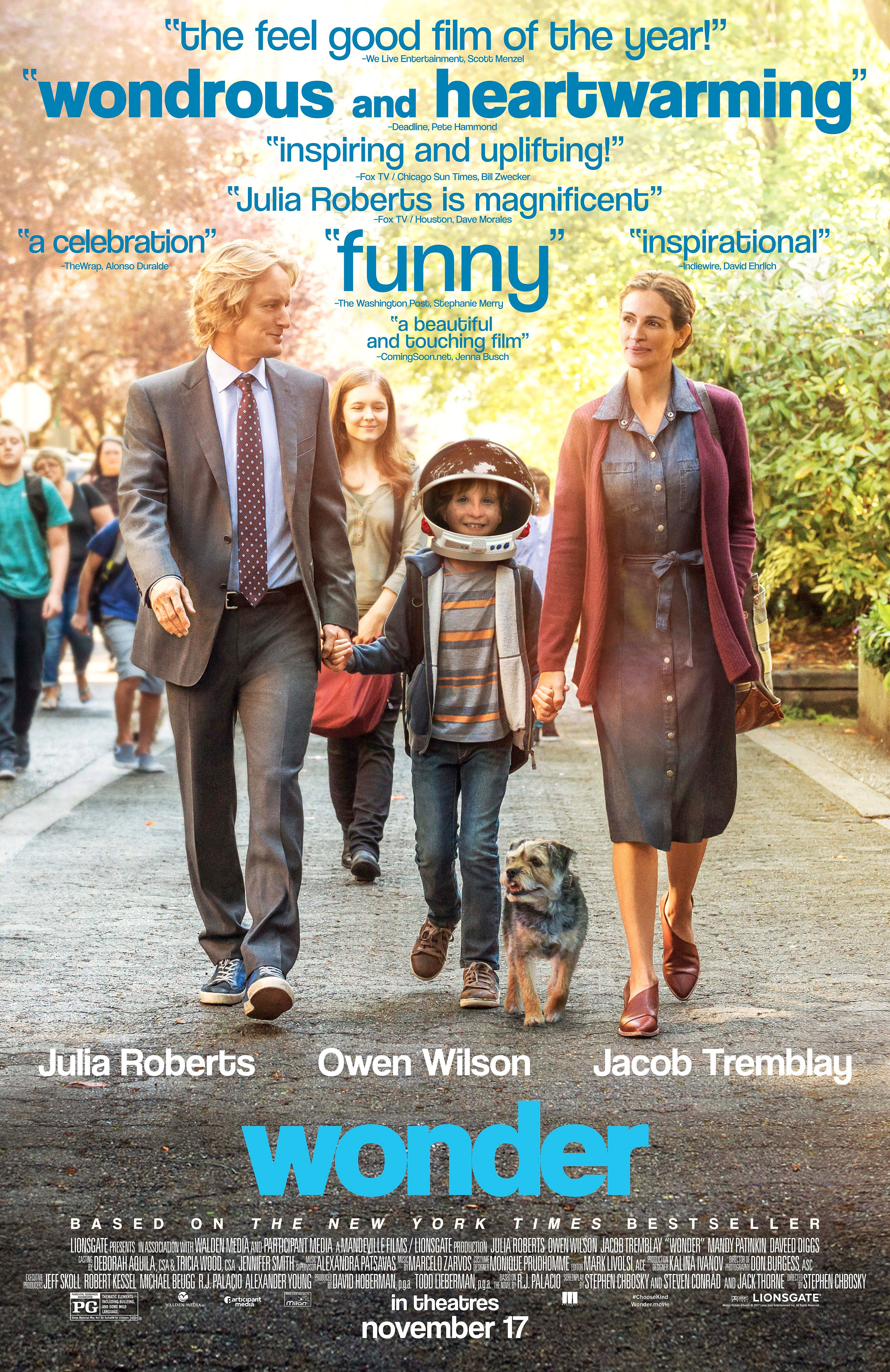
D: Stephen Chbosky / 113m

Cast: Julia Roberts, Owen Wilson, Jacob Tremblay, Izabela Vidovic, Mandy Patinkin, Noah Jupe, Bryce Gheisar, Elle McKinnon, Daveed Diggs, Millie Davis, Danielle Rose Russell, Nadji Jeter, Sonia Braga

Imagine you’re at a restaurant and pancakes are on the menu. Now imagine that you’ve ordered said pancakes and they’ve just arrived at your table. The waiter (or waitress; let’s keep this fair) offers you maple syrup. You say please, and they begin to pour the maple syrup over the pancakes. And they continue pouring… and pouring… and pouring… Soon, the pancakes are swimming in maple syrup, and just the mere thought of tucking into them has become as desirable as if the waiter or waitress had poured an okra smoothie over them. This is the gourmet version of Wonder, a movie so glutinously nice, and so determinedly uplifting that it should come with a health warning. It not only tugs unashamedly at the heartstrings, but inspires lashings of sympathetic responses and unabashed sentimentality. It’s a massive sugar rush for fans of emotionalism and softheartedness.

For once, though, all this wistful sensitivity actually works – although you’d still be wise to wear waist-high waders in order to combat the rising tide of persistent romanticism that the movie fosters. In adapting R.J. Palacio’s novel, director Chbosky, along with co-screenwriters Steve Conrad and Jack Thorne, have retained the book’s wholesome dramatics, and tried extra hard to ensure there isn’t a dry eye in the house by the time they’ve finished. What this means for the movie as a whole, is that August “Auggie” Pullman (Tremblay somewhere under all the prosthetics), and his first time in school at the age of ten, becomes an exercise in survival for him, and a precautionary tale for the viewer who must overcome several instances where the script goes for the emotional jugular in its efforts to “hit home”.
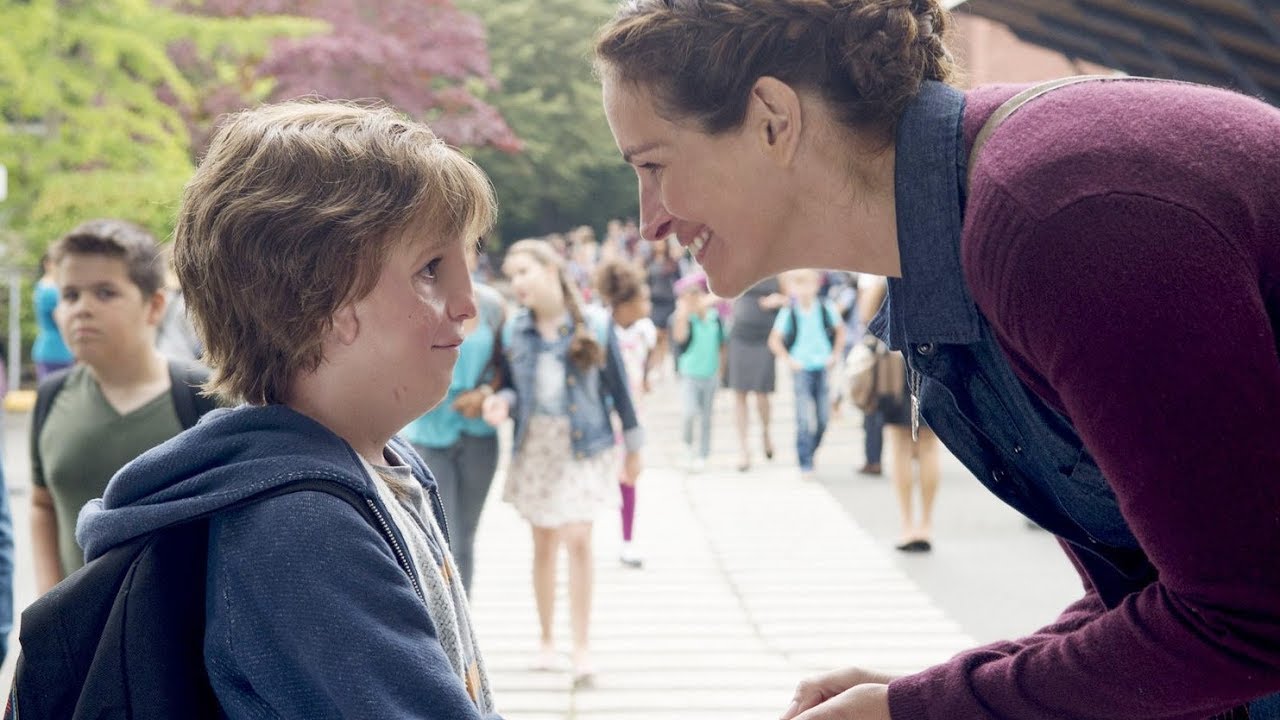
August “Auggie” Pullman (Tremblay) suffers from Treacher Collins syndrome, a genetic disorder that is characterised by deformities affecting the eyes, ears, cheekbones and chin. It’s incurable, but the symptoms can be managed, and life expectancy is normal. Auggie has been home-schooled by his mother, Isabel (Roberts), but now it’s time for him to attend a school where there are other pupils and other teachers. Isabel insists everything will be alright, and Auggie wants to believe her, but inevitably he’s treated differently by all the other children. He’s bullied by one child, Julian (Gheisar), but finds a friend in another, Jack Will (Jupe). As the school year continues, Auggie learns that being different has both its ups and downs, and he grows in confidence as a result. Meanwhile, his older sister, Via (short for Olivia) (Vidovic), has problems of her own: her best friend, Miranda (Russell), isn’t talking to her, and her first day in high school has her feeling lost and alone.

Wonder‘s appealing sense of family dynamics makes the Pullmans seem impervious to external harm or misfortune; they even argue amongst each other with good grace. No problem is too big for them to overcome, and no issue is allowed to stop them from remaining as tight-knit and loving a family as you could ever wish for. And that’s the beauty of the narrative: it’s a fairy tale where the frog prince is welcomed into the fold despite never being able to turn into a handsome prince. It’s a wish fulfilment fantasy where everyone – even those who are initially horrible to Auggie and bully him at every turn – comes to be his friend and appreciates him for who he is and not what he looks like. Let’s be serious about this. This is a movie that has no grounding in any reality that any child with Treacher Collins syndrome would experience. Instead it’s a movie whose reality seems based on what that child would wish for. It’s a dubious conceit, but because the script is unequivocal in its approach – Auggie will triumph over all his adversities – there’s little room to manoeuvre. Either you go with the flow of the movie and give yourself over to its ultra-positive nature, or you struggle against it and allow yourself to be weighed down by its unabashed mawkishness.

If you choose the former, then thankfully there’s much to enjoy, not least from the performances. We haven’t really seen enough of Julia Roberts in recent years, but here she gives an impressive portrayal of a mother who has willingly put her career on hold to look after her son, and who has found a tremendous sense of purpose in doing so. Roberts is the movie’s anchor, her role the one that stabilises it and gives it meaning in the face of so much untrammelled sensitivity. Without her, Wonder would have a hollow centre where Isabel should be. Alongside her is Wilson, essaying much the same character he played in Marley & Me (2008), and offering a comic foil to Roberts’ more serious portrayal. He’s the light relief when things threaten to become too serious and the movie needs to right itself. Under all the make up, Tremblay continues to impress as the smart but emotionally smarting Auggie, and the young actor plays the role as the natural that he is. Sometimes it’s hard to express appropriate emotions from under a layer of latex, but Tremblay has no such problem, and he’s perhaps the perfect choice for the role.

Kudos too to Vidovic, who invests Via with an independence that allows the character to operate separately from the Pullman family dynamic, and Jeter as Via’s eventual boyfriend, Justin, a role that requires him to hang around and be nice a lot, something he pulls off without making it seem too weird. There’s plenty of weird going on elsewhere, but in a good way, as the movie allows Auggie triumph after triumph and keeps him away from any drama that might affect his slow rise to middle school stardom. The movie is with him all the way, knocking down obstacles and pushing aside unwanted nuisances. By the movie’s (slightly preposterous) end, Auggie’s luck will be left unchallenged and his family will remain as good-natured and eternally supportive as they were at the beginning. But this is still a good thing, and though the movie does look and sound as if it’s deliberately trying to induce tears in its audience, going against such a thing is, ultimately, too tiring and too much of a struggle to keep up for nearly two hours. As the Borg would say, “resistance is futile”.

Rating: 7/10 – an immensely appealing slice of unreality, Wonder is completely uninterested in making any of its characters suffer for very long, and by extension its viewers too, as it strives to make itself the feelgood movie of 2017; you’ll laugh, you’ll cry, you’ll laugh and cry some more, but in the hands of Chbosky and his talented cast, and despite some very high levels of romanticism and unrestrained poignancy, this is something of an unexpected treat.

Share this:

  • Click to share on X (Opens in new window) X
  • Click to share on Facebook (Opens in new window) Facebook
  • More
  • Click to print (Opens in new window) Print
  • Click to email a link to a friend (Opens in new window) Email
Like Loading...

The Book of Henry (2017)

29 Wednesday Nov 2017

Posted by dullwood68 in Movies

≈ 2 Comments

Tags

Brain tumour, Child abuse, Colin Trevorrow, Comedy, Drama, Jacob Tremblay, Jaeden Lieberher, Naomi Watts, Review, Sarah Silverman

D: Colin Trevorrow / 103m

Cast: Naomi Watts, Jaeden Lieberher, Jacob Tremblay, Sarah Silverman, Dean Norris, Lee Pace, Maddie Ziegler, Bobby Moynihan, Tonya Pinkins, Geraldine Hughes

A movie that inspires audiences to stare at it with the phrase, “say what?” firmly embedded at the forefront of their minds, The Book of Henry is both shockingly bad and hugely enjoyable at the same time (though it’s not quite the kind of movie that’s “so bad it’s good”). This may seem like a contradiction, but this could easily be many people’s idea of a guilty pleasure, a movie that you know from the start is pretty awful but which you can still derive an awful lot of pleasure from. The first draft was written in 1998 by author and screenwriter Gregg Hurwitz, and you can believe that the final screenplay as used in the movie, is exactly the same draft. And on this evidence, you can perhaps understand also why director Colin Trevorrow isn’t going to be at the helm of Star Wars Episode IX.

Shying away – perhaps deliberately – from creating a tonally consistent narrative, The Book of Henry sets itself up initially as a bucolic drama dealing with the ups and downs of the Carpenter family: single mother Susan (Watts), eleven year old whizzkid Henry (Lieberher), and younger son Peter (Tremblay). Susan works at a diner and dreams of writing and illustrating children’s books. Henry acts as the de facto man of the house, and is something of a financial genius, having invested very successfully in the stock market (Susan literally has no idea how wealthy they are as a family which is why she continues to work at the diner). And Peter is bullied at school, though Henry always comes to his rescue. Add their neighbour’s stepdaughter, Christina (Ziegler), into the mix as a kind of surrogate daughter/sister, and you have a family bordering on dysfunctional but in a winning, adorable way that makes you want to ruffle their hair and remark on how winning and adorable they are.

So far, so cute. But into every sunny life some shadows must appear, and it’s not long before Henry realises that Christina is being abused by her stepdad, Glenn (Norris). However, he’s the local police commissioner, and he has connections within social services, so Henry’s attempts to involve them and save Christina fail at the first hurdle. And before he can do anything more, he’s struck down by a brain tumour and promptly dies. But Henry being such a whizzkid (and apparently having had far more time on his hands than most eleven year olds), he’s not about to let Glenn off the hook. Before he dies, he compiles a book in which he leaves instructions for his mother to… contact and convince social services to investigate Glenn? Gather further evidence to prove her case? Put Glenn on notice that if he continues he’ll be exposed for the paedophile he is? Well, actually, no. As Peter so aptly puts it when he first looks at the book, “Henry wants us to kill Glenn!”

And so the movie lurches from bucolic family drama to child in danger drama to disease of the week melodrama, and all the way to vigilante thriller in little over an hour. Except none of these tonal shifts work as an organic whole. It’s as if the movie feels compelled to hit the restart button every fifteen minutes or so. And while it does so, it drops a handful of sub-plots and characters in and out of the mix at random, from Susan’s co-worker, Sheila (Silverman) and her problems with alcohol, to the bullying Peter experiences at school (which happens once… and that’s it). Hurwitz’s script is like a melting pot of ideas and themes and narrative devices all shoehorned into the smallest space available and then left to fight it out amongst themselves for the best amount of breathing space. One classic example: the school principal (Pinkins) dismisses Henry’s concerns about Christina when he raises them, but later is convinced by the interpretative power of dance (no, really). And then there’s the sight of Susan in a treehouse with a sniper rifle…

So absurd and so silly is The Book of Henry, the only way to approach it is as a drama that forgot it was meant to be a comedy. If you do, and it really is the best way to approach it, then the movie can be enjoyed despite its being a terrible mess that’s only on nodding terms with credibility. There are laughs to be had – deliberate and otherwise – and a whole raft of scenes that feel like filler (see how many times Susan covers over Peter, or the leaves in her yard are mentioned), but still the movie exerts a strange fascination, like a road traffic accident that you just can’t look away from. Hurwitz’s script, combined with Trevorrow’s meandering sense of direction, leaves the movie high and dry and static in its efforts to be effective, and the only area in which it does succeed is in its use of its Hudson Valley locations, all beautifully rendered by John Schwartzman’s richly autumnal cinematography.

The performances are a mixed bunch also. Watts has a good grasp of her character’s interior life, but it’s a shame that Susan’s exterior life is so bland and uninteresting. Aspects of Lieberher’s performance might prompt viewers to believe that Henry is on the spectrum, while Tremblay, the go-to child actor right now, is otherwise kept firmly in the background, good for a couple of scenes of emotional poignancy but little else. Spare a thought too for Silverman playing blowsy with a heart of gold, and Pace as the doctor who keeps popping up and may, at some distant point when the movie is over and done, prove to be Susan’s next love interest. The cast as a whole are admirably committed to the material, and it is fun watching them trying to legitimise some of the more absurdist moments in the script, but when there’s more enjoyment to be had from watching them fail than succeed then it’s time to ‘fess up and admit that things just haven’t worked out in the way that the producers would have hoped for.

Rating: 4/10 – silly, funny, and endlessly entertaining in all the wrong ways, The Book of Henry has at least one unfulfilled potential: that of being a cult midnight movie where the audience interacts with it a la The Rocky Horror Picture Show (1975); such a misfire that it has to be seen to be believed, it’s a movie that doesn’t know when to rein in its ridiculous nature, but in failing to do so (and entirely against the odds), makes itself into perhaps the most unlikeliest must-see movie of 2017.

Share this:

  • Click to share on X (Opens in new window) X
  • Click to share on Facebook (Opens in new window) Facebook
  • More
  • Click to print (Opens in new window) Print
  • Click to email a link to a friend (Opens in new window) Email
Like Loading...

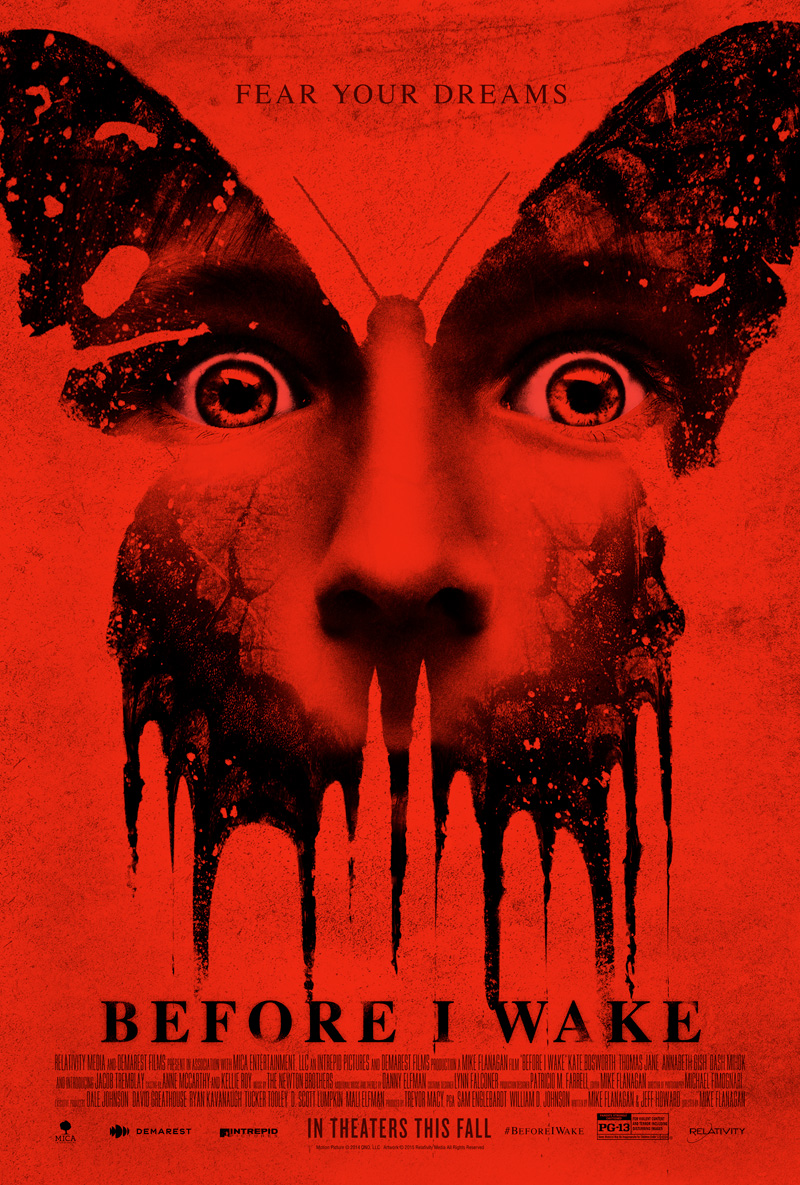
Before I Wake (2016)

14 Sunday Aug 2016

Posted by dullwood68 in Movies

≈ 4 Comments

Tags

Canker Man, Drama, Dreams, Foster parents, Horror, Jacob Tremblay, Kate Bosworth, Mike Flanagan, Nightmares, Review, Thomas Jane, Thriller

Before I Wake

D: Mike Flanagan / 97m

Cast: Kate Bosworth, Thomas Jane, Jacob Tremblay, Annabeth Gish, Dash Mihok, Antonio Evan Romero

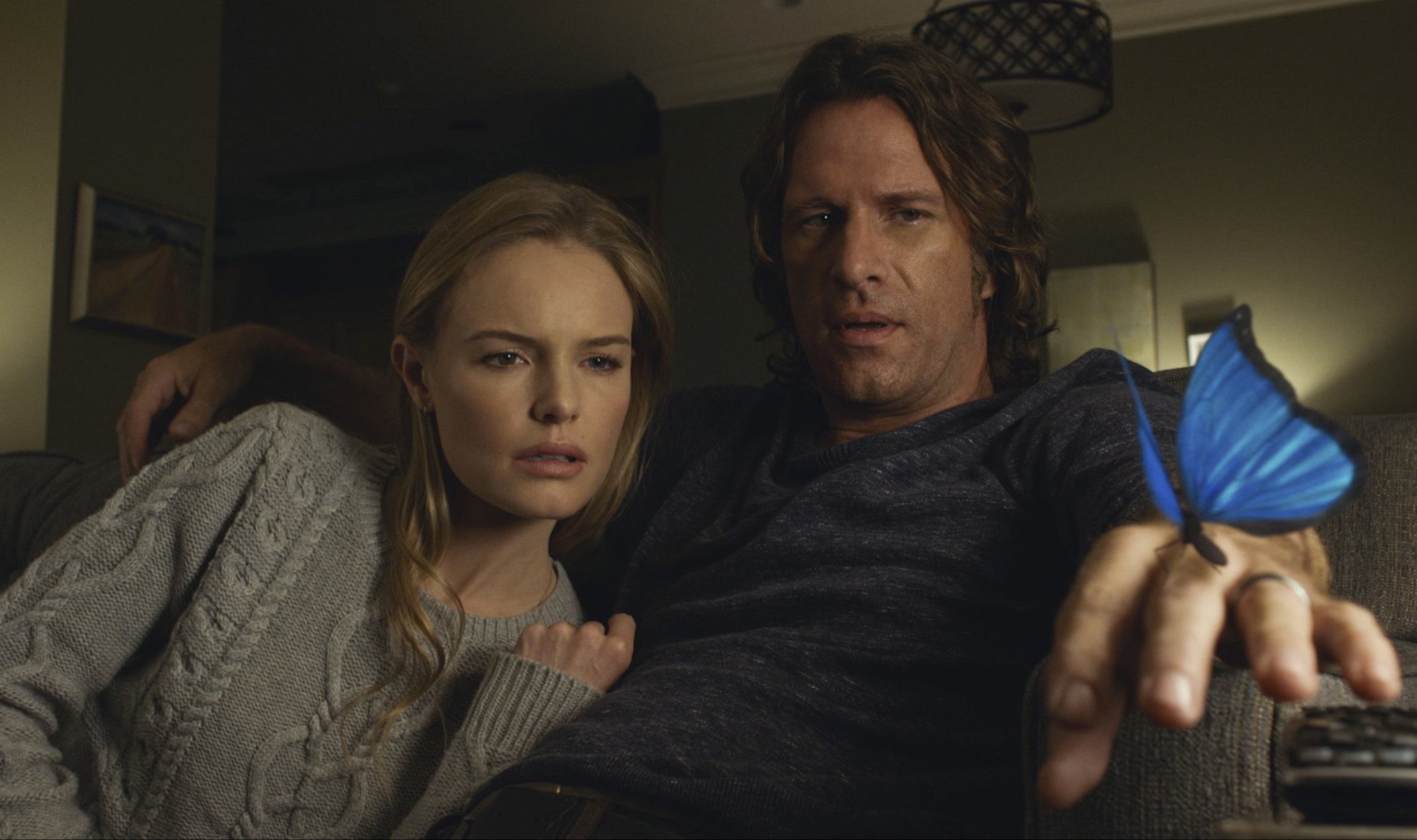
Made in 2014 but only released now thanks to its US distributor, Relativity Media, filing for bankruptcy last year – which explains the credit “and introducing Jacob Tremblay” – Before I Wake is a horror thriller that takes the idea of dreams (and nightmares) that are able to come to life, and have a lasting physical effect on the “real” world. The focus is on a young boy, Cody (Tremblay), who has the ability to, literally, make dreams come true. After a string of foster placements break down because of this ability, Cody is placed with Jessie and Mark (Bosworth, Jane), a couple who have decided to foster following the death of their young son, Sean (Romero).

Kate Bosworth and Thomas Jane star in Relativity Media's "Before I Wake". Photo: Courtesy of Relativity Media Copyright: © 2014 QNO, LLC

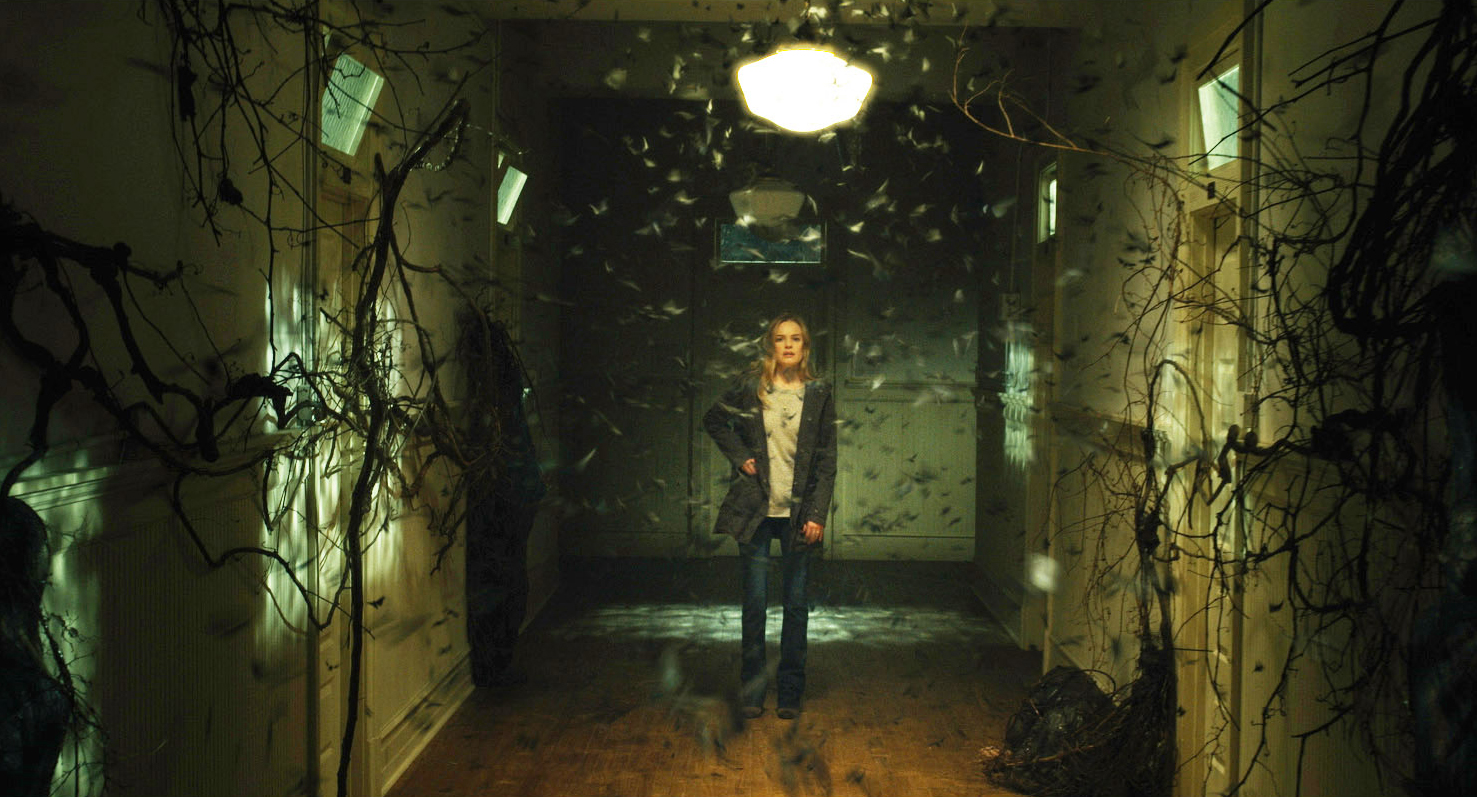
Cody settles in and at first all is well, despite his unwillingness to get a good night’s sleep. Instead he uses caffeinated drinks to stay awake, all so he can ensure that he doesn’t have a nightmare and summon the Canker Man, a force for evil that devours its victims. Cody believes the Canker Man killed his mother, and is responsible for the disappearance of some of his previous foster carers. But while he may have nightmares that bring the Canker Man to life, Cody also has regular dreams, and ones that give life to Cody’s chief interest: butterflies. Soon, Jessie and Mark are revelling in the appearance of dozens of these magnificent creatures; at least, until Cody wakes up – then they disappear in a puff of smoke.

Cody’s interest in Sean leads to his appearing one night, and as real as when he was alive. Jessie is quicker to associate Sean’s “return” with Cody’s dreams than Mark is, and she soon takes advantage of the situation, ensuring Cody sleeps so that she can spend more time with Sean. Once Mark becomes aware of what she’s doing, and highlights how inappropriate her behaviour is, it proves to be too late. Cody has a nightmare, and the couple have their first experience of the Canker Man, a terrifying creature that threatens them both. Following on from this, Jessie decides to find out more about Cody’s life before she and Mark began fostering him, and to see if his past holds any clues that will help deal with the threat of the Canker Man.

BIW - scene3

There are lots of horror movies that take place in a dream world, or in the realm of waking dreams, but very few where dreams are allowed to manifest themselves outside of these arenas. The beauty of Before I Wake – at least in its first thirty to forty minutes – is that it patiently sets up the rules of its scenario and does its best to adhere to them. During this period we see a particular cause and effect to Cody’s dreams that shows writer/director Mike Flanagan, and co-writer Jeff Howard, have thought their movie through, and have done their best to ground it from the start. However… once Jessie begins looking into Cody’s past, all that patient build up and attention to detail is abandoned, and the movie loses its identity to become yet another generic horror thriller (Flanagan refutes the idea that this is a horror movie, preferring the term “supernatural drama”; he has a point but it only goes so far).

This leaves the movie feeling dramatically rich and engaging in its first half, tackling as it does issues of grief, dependency, overwhelming sadness, and the deliberate exploitation of a child. Jessie may well be grieving still for Sean (the movie takes place six months after his death), but the way in which she so readily accepts Cody’s gift and uses it for her own needs, is in many ways more horrifying than the Canker Man himself. Mark calls it abuse, and he’s right. It’s such a breach of trust that the script runs the risk of making Jessie unlikeable as well as selfish, but thanks to Bosworth’s sympathetic performance, this is avoided. There are moments, though, when it looks as if the Canker Man is going to have a run for his money in the villain stakes. (And what a different movie it would have been if Jessie’s motivation had remained the same throughout; how would the audience have felt about her then?)

Kate Bosworth stars in Relativity Media's "Before I Wake". Photo: Courtesy of Relativity Media Copyright: © 2014 QNO, LLC

But as already mentioned, the script hives off from this approach into much more familiar, and prevalent, territory as Jessie delves into Cody’s past. This involves the easy theft of his social services file (complete with the location of the children’s home he’s sent to once things have escalated beyond the point where Jessie and Mark can deal with everything themselves), a visit to a mental institution to talk to a previous foster parent, Whelan (Mihok), and a confrontation at the children’s home where all the staff appear to have gone home for the night. Again, the credibility built up until now is left to drift off by itself, discarded in favour of a showdown between Jessie and the Canker Man that is thankfully brief, and true to the nature of, and reason for, Cody’s dreams.

Flanagan is a talented rising star, and while Before I Wake has its problems, he’s still able to show a confidence in the material, as well as the visual design, that bode well for any future endeavours. He’s also able to coax a good performance from the criminally under-used Bosworth, and shepherds Tremblay through his first lead role in fine style (even if his sing-song voice can be a bit grating at times). Sadly, Jane gets sidelined by the script too many times for comfort, but at least he’s in good company, with Gish (as a harried social worker) and Mihok allowed just enough time to move things forward when necessary. Some viewers may find themselves struggling to connect the dots once Jessie relates Cody’s unfortunate history, and some may even feel that it’s all too contrived, but at least Flanagan doesn’t pitch a special effects laden  climax at his audience. There are a few scares along the way, but none that will trouble anyone who’s seen any recent scary movies, and no last minute idea for a sequel (hallelujah!).

Rating: 6/10 – a bunch of narrative inconsistencies and moments where the movie goes “off reservation” aside, Before I Wake is a hybrid horror/thriller that provides enough tension in its first half to help overlook the failings of the second; Bosworth is good value as always, and there are genuine moments of beauty thanks to Flanagan’s use of a kaleidoscope of butterflies as a potent indicator of Cody’s dream state.


//ws-eu.amazon-adsystem.com/widgets/q?ServiceVersion=20070822&OneJS=1&Operation=GetAdHtml&MarketPlace=GB&source=ss&ref=as_ss_li_til&ad_type=product_link&tracking_id=thedullwoodex-21&marketplace=amazon&region=GB&placement=B01M9I55OE&asins=B01M9I55OE&linkId=6a0e4e136852b9fd9468616f5391c5c9&show_border=true&link_opens_in_new_window=true

Share this:

  • Click to share on X (Opens in new window) X
  • Click to share on Facebook (Opens in new window) Facebook
  • More
  • Click to print (Opens in new window) Print
  • Click to email a link to a friend (Opens in new window) Email
Like Loading...

Room (2015)

13 Saturday Feb 2016

Posted by dullwood68 in Movies

≈ Leave a comment

Tags

Abduction, Brie Larson, Drama, Emma Donoghue, Escape, Jack, Jacob Tremblay, Joan Allen, Lenny Abrahamson, Literary adaptation, Ma, Old Nick, Review, Sean Bridgers

Room

D: Lenny Abrahamson / 118m

Cast: Brie Larson, Jacob Tremblay, Sean Bridgers, Joan Allen, Tom McCamus, William H. Macy, Amanda Brugel

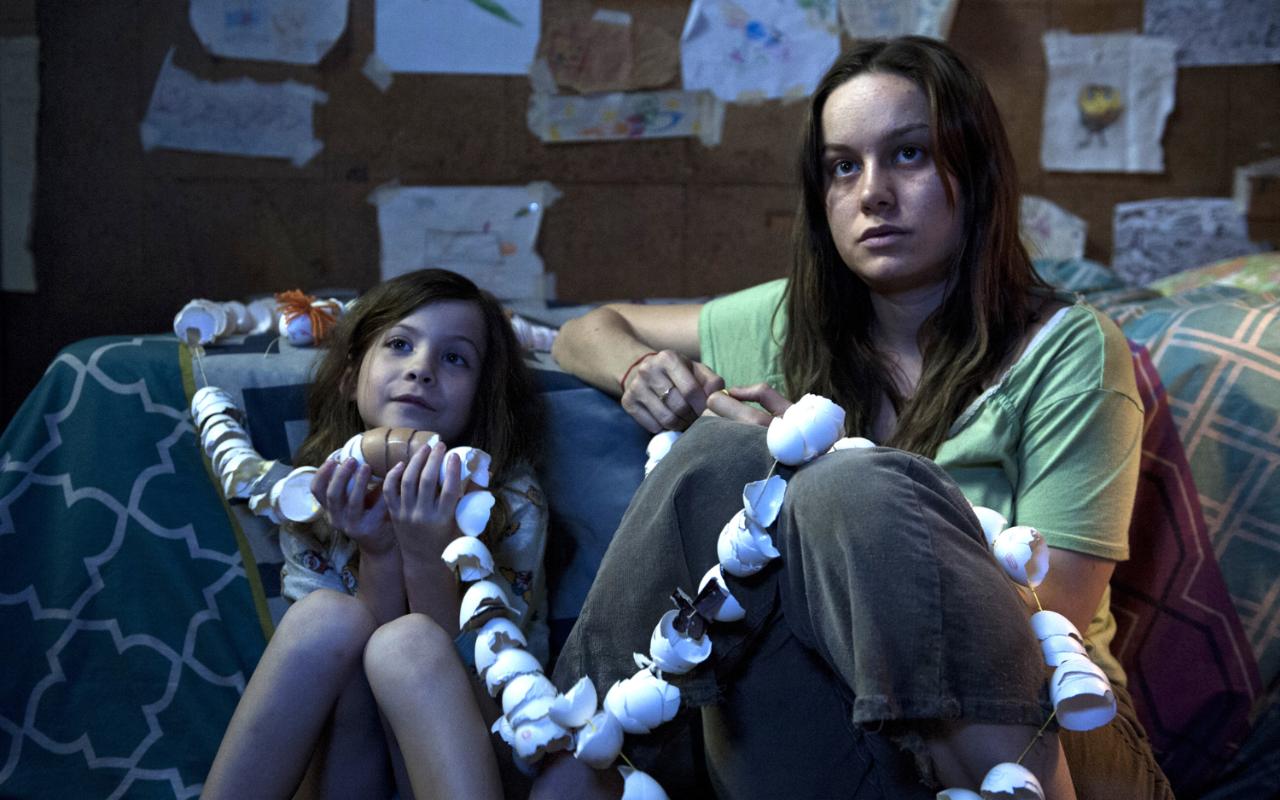
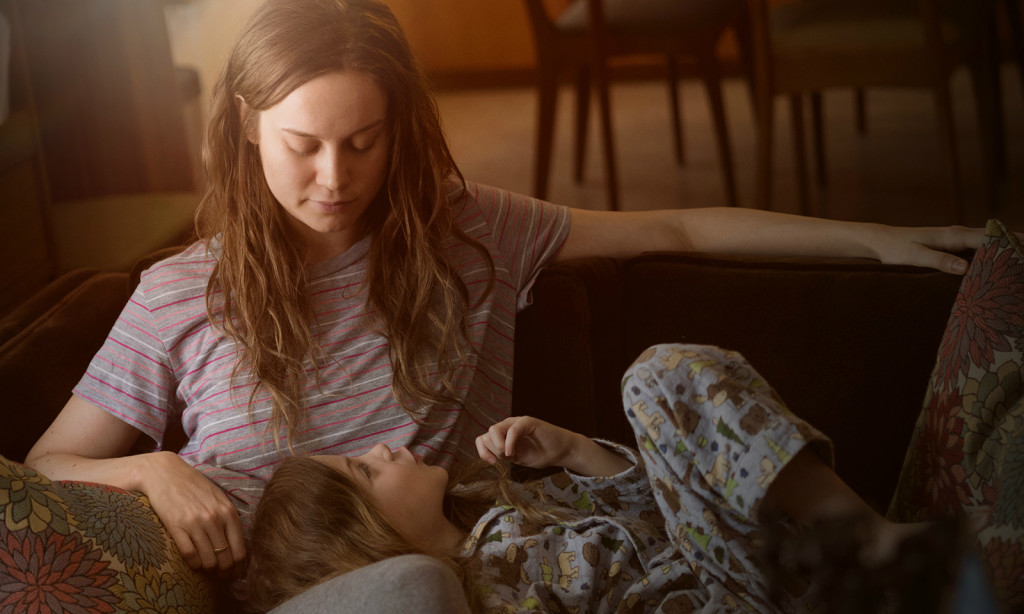
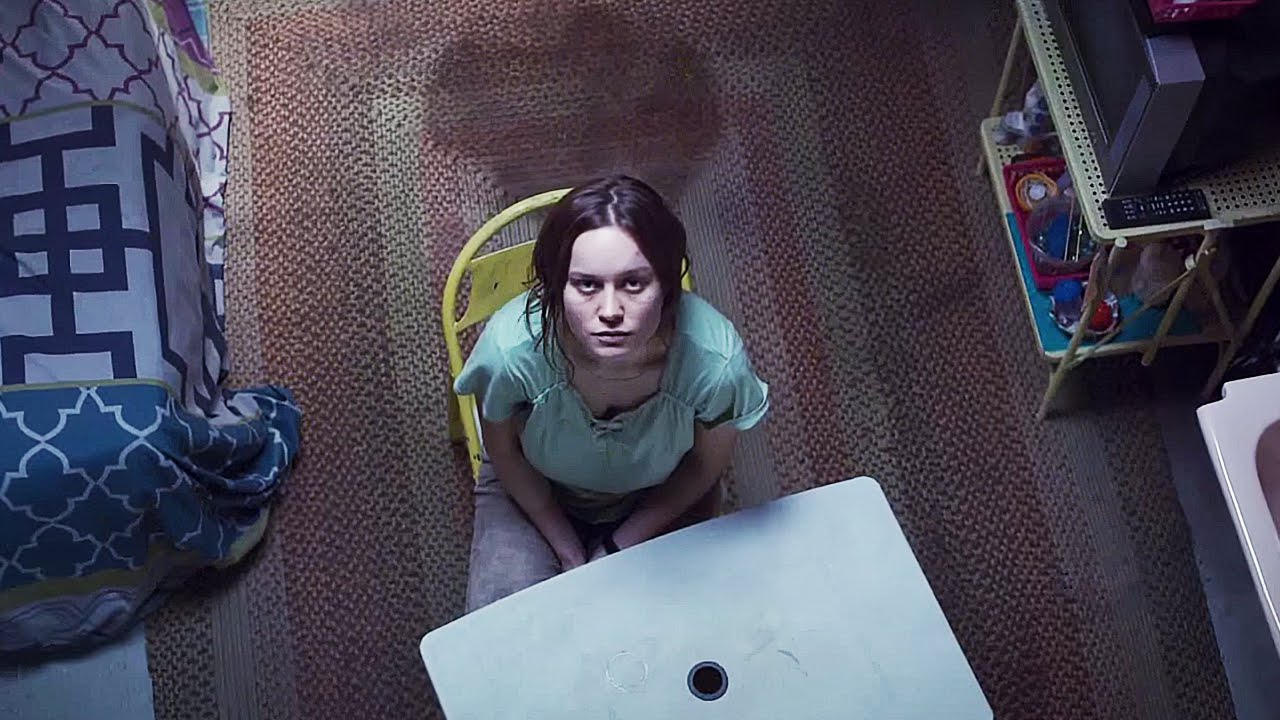
Ma (Larson) and Jack (Tremblay) live in what they refer to as Room, literally a single room environment that they haven’t been outside of since Ma was abducted and brought there seven years before, and Jack’s birth five years ago. Everything in Room is functional or adapted to be functional. There’s a TV but Ma has told Jack that the people and places and things he sees there aren’t real, and that there isn’t any outside world, only space. This doesn’t quite explain the visits of Old Nick (Bridgers) who brings supplies and ensures the power stays on, but as a constant in their lives, Jack doesn’t question his appearances, or why he has to sleep in the closet when Old Nick pays Ma “special attention”.

The door to Room is always locked; Old Nick uses a combination keypad to get in and out, and Ma doesn’t know the code. With Jack now five years old, and of an age where he can begin to understand the concept of a larger world outside Room – even if he doesn’t believe it can be true – Ma decides it’s time for them to leave and begin to lead a normal life. One night when Old Nick pays them a visit she arranges for Jack to appear sick. Old Nick refuses to do anything more than bring more painkillers the next night. But Ma persuades Jack to play dead and be wrapped up in a rug – her idea is that Old Nick will take Jack’s body somewhere to bury it; when he stops his truck at a road junction, Jack is to jump out and run to the first person he sees and ask for help.

Room - scene1

Old Nick is fooled by Ma’s assertion that Jack has died, and takes out the rug with Jack inside it. In the back of Old Nick’s truck, Jack frees himself from the rug, and after a few missed opportunities, jumps from the truck. Old Nick chases him but they encounter a man walking his dog. Seeing that something is wrong, the man challenges Old Nick who throws Jack to the ground and speeds off in his truck. The police are called, and a supportive officer (Brugel) manages to work out from what Jack tells her, just where Ma is. The two are reunited, and at last they can begin to build a new life for themselves.

Without spoiling anything for anyone who hasn’t seen Room yet, it’s a movie of two unequal parts, both in running time and in content. For the first forty-five minutes (approximately), we’re sequestered in Room with Ma and Jack, stuck like they are within four unforgiving walls. But while you might be expected to feel confined or claustrophobic, it’s rarely the case because Ma and Jack don’t see it that way – Jack because he’s never known anything else, and Ma because she’s adapted after seven years to her environment. Neither feels trapped (or at least Ma never gives any indication that she does), and neither appears unhappy with their lot. They have each other, and live in a world that, Old Nick aside, is theirs alone. For Jack it’s a normal life given the parameters Ma has made for him, and for Ma it’s the only life she can have because she wants to protect Jack.

Once Jack and Ma are free of Room, and free to go wherever they wish (once the media has lost interest in them at least), they find themselves confined in a different environment, Ma’s childhood home, now inhabited by her mother, Nancy (Allen) and her new partner, Leo (McCamus) (her father, Robert (Macy) lives abroad, though he returns when he learns Ma – whose real name is Joy – has been rescued). The remaining hour and a quarter finds Joy and Jack finding their way in this new world. There are clever moments of adjustment, such as Jack learning to navigate stairs, but Joy retreats from everyone. And while this may seem like an unexpected turn of events – that Joy should have the most trouble adapting to being back in the “real world” – it’s actually entirely predictable.

Room - scene2

This lessens the drama of the second part, as we watch Jack assimilate slowly but surely, and with much more inner confidence than his mother. While Joy becomes dissociative and withdrawn, Jack begins to blossom, aided by his grandmother and Leo (and a very cute dog called Seamus). In fact, it’s the way in which Jack adapts so quickly to his new life that causes the movie to lose some of the dramatic intensity it’s built up until that point. And with Joy missing for a while, the movie has little choice but to show just how Jack’s bonding with Leo and his grandmother is replacing his formerly rock-solid relationship with his mother. It’s a natural progression, perhaps – Jack makes his first friend during this period as well – but given the vigour and the power of the movie’s first part, it also feels like a bit of a letdown. Just how easily can Jack and Joy be separated from each other? As it turns out, quite easily.

Room has been adapted by Emma Donoghue from her novel of the same name, but what works on the page doesn’t translate so well to the screen. Jack provides random smatterings of narration to explain his feelings, but while these interior monologues work in the novel, here they’re another example of insecurities built in to the script. Far more effective is Jack’s wide-eyed astonishment at seeing an impossibly vast sky as he lies in the back of Old Nick’s truck. Inside Room we’re seeing this insular world almost entirely from Jack’s perspective, and thanks to the strength of the material, and Abrahamson’s masterly direction, these scenes have a depth and a profundity that the outside world lacks. Once we’re out of Room the movie loses its way and never recovers the compelling aspect that propels those first forty-five minutes.

Room - scene3

Thankfully, the two central performances, despite being hamstrung by the change in narrative direction, are uniformly superb. Larson is possibly the finest actress in her age group working today, and here she’s simply breathtaking, finding aspects and nuances of her character that aren’t always apparent from the script, and making Joy’s eventual struggle with “normality” less formulaic than it is as written. Matching her is Tremblay, giving the kind of honest, uninhibited performance that only a child actor can give. He provides such an intelligent, forthright portrayal that the viewer can only look on in wonder at how effortlessly he does it all. Just watch his reactions to being asked questions by the police officer: they’re a mini-masterclass in conflicting emotions forcing themselves past overwhelming shock.

In the director’s chair, Abrahamson (thankfully not calling himself Leonard anymore) excels at portraying the insular world of Room, and maintains an uneasy tension throughout these scenes and Jack’s escape. And with the aid of Danny Cohen’s exemplary camerawork, he allows the viewer to prowl in and around Room as if they were living there too. But once the movie settles down at Nancy’s home, his confidence and control over the material lessens and leads to several scenes lacking any kind of resonance at all. And as a result, newcomers to the story such as Allen and McCamus are left largely to fend for themselves. It’s clear that Abrahamson and Donoghue have forged a good working partnership, but it’s also clear that they couldn’t recognise or overcome the deficiencies that so hurt the movie’s second act. In the end, the relationship the viewer has built up with Ma and Jack in their captivity is ruined by their freedom, and in essence, that’s too much of a price to pay when that relationship has been so immediate and so powerful.

Rating: 7/10 – let down by an injudicious approach to its second part, Room wastes the tremendous amount of goodwill it acquires during the first part, and becomes a movie that sinks under the weight of its own capitulation; however, it does boast two hugely impressive performances from Larson and Tremblay, and an opening forty-five minutes that are among the most remarkable of any movie in recent years – so see it just for them.

Share this:

  • Click to share on X (Opens in new window) X
  • Click to share on Facebook (Opens in new window) Facebook
  • More
  • Click to print (Opens in new window) Print
  • Click to email a link to a friend (Opens in new window) Email
Like Loading...

Blog Stats

  • 486,537 hits

Recent Posts

  • 10 Reasons to Remember Bibi Andersson (1935-2019)
  • Fantasia (1940)
  • Dances With Wolves (1990) – The Special Edition
  • Kiss of the Spider Woman (1985)
  • The Three Musketeers (1973)

Top Posts & Pages

  • Lost for Life (2013) - Another Look
    Lost for Life (2013) - Another Look
  • Lost for Life (2013)
    Lost for Life (2013)
  • About
    About
  • Mr. Topaze (1961)
    Mr. Topaze (1961)
  • Billy Lynn's Long Halftime Walk (2016)
    Billy Lynn's Long Halftime Walk (2016)
  • Winter's Tale (2014)
    Winter's Tale (2014)
  • Hunt for the Wilderpeople (2016)
    Hunt for the Wilderpeople (2016)
  • Irrational Man (2015)
    Irrational Man (2015)
  • Transcendence (2014)
    Transcendence (2014)
  • Kubo and the Two Strings (2016)
    Kubo and the Two Strings (2016)
Follow thedullwoodexperiment on WordPress.com

Blogs I Follow

  • Rubbish Talk
  • Film 4 Fan
  • Fast Film Reviews
  • The Film Blog
  • All Things Movies UK
  • Interpreting the Stars
  • Let's Go To The Movies
  • Movie Reviews 101
  • TMI News
  • Dan the Man's Movie Reviews
  • Film History
  • Jordan and Eddie (The Movie Guys)

Archives

  • April 2019 (13)
  • March 2019 (28)
  • February 2019 (28)
  • January 2019 (32)
  • December 2018 (28)
  • November 2018 (30)
  • October 2018 (29)
  • September 2018 (29)
  • August 2018 (29)
  • July 2018 (30)
  • June 2018 (28)
  • May 2018 (24)
  • April 2018 (21)
  • March 2018 (31)
  • February 2018 (25)
  • January 2018 (30)
  • December 2017 (30)
  • November 2017 (27)
  • October 2017 (27)
  • September 2017 (26)
  • August 2017 (32)
  • July 2017 (32)
  • June 2017 (30)
  • May 2017 (29)
  • April 2017 (29)
  • March 2017 (30)
  • February 2017 (27)
  • January 2017 (32)
  • December 2016 (30)
  • November 2016 (28)
  • October 2016 (30)
  • September 2016 (27)
  • August 2016 (30)
  • July 2016 (30)
  • June 2016 (31)
  • May 2016 (34)
  • April 2016 (30)
  • March 2016 (30)
  • February 2016 (28)
  • January 2016 (35)
  • December 2015 (34)
  • November 2015 (31)
  • October 2015 (31)
  • September 2015 (34)
  • August 2015 (31)
  • July 2015 (33)
  • June 2015 (12)
  • May 2015 (31)
  • April 2015 (32)
  • March 2015 (30)
  • February 2015 (37)
  • January 2015 (39)
  • December 2014 (34)
  • November 2014 (34)
  • October 2014 (36)
  • September 2014 (25)
  • August 2014 (29)
  • July 2014 (29)
  • June 2014 (28)
  • May 2014 (23)
  • April 2014 (21)
  • March 2014 (42)
  • February 2014 (38)
  • January 2014 (29)
  • December 2013 (28)
  • November 2013 (34)
  • October 2013 (4)

Create a free website or blog at WordPress.com.

Rubbish Talk

Film 4 Fan

A Movie Blog

Fast Film Reviews

The Film Blog

The official blog of everything in film

All Things Movies UK

Movie Reviews and Original Articles

Interpreting the Stars

Dave Examines Movies

Let's Go To The Movies

Film and Theatre Lover!

Movie Reviews 101

Daily Movie Reviews

TMI News

Latest weather, crime and breaking news

Dan the Man's Movie Reviews

All my aimless thoughts, ideas, and ramblings, all packed into one site!

Film History

Telling the story of film

Jordan and Eddie (The Movie Guys)

Movie Reviews & Ramblings from an Australian Based Film Fan

Privacy & Cookies: This site uses cookies. By continuing to use this website, you agree to their use.
To find out more, including how to control cookies, see here: Cookie Policy
  • Subscribe Subscribed
    • thedullwoodexperiment
    • Join 481 other subscribers
    • Already have a WordPress.com account? Log in now.
    • thedullwoodexperiment
    • Subscribe Subscribed
    • Sign up
    • Log in
    • Report this content
    • View site in Reader
    • Manage subscriptions
    • Collapse this bar
 

Loading Comments...
 

    %d