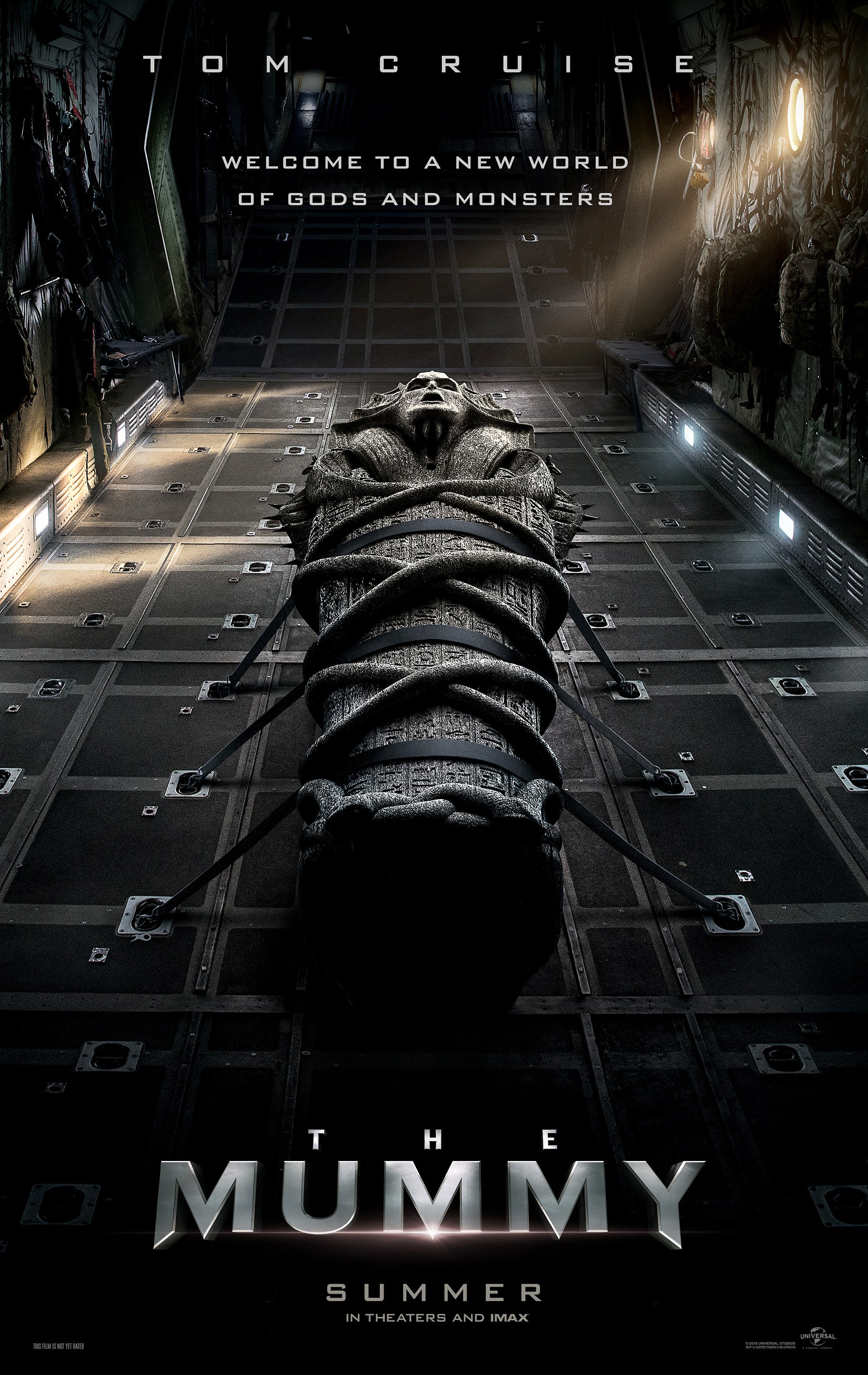
Cast: Tom Cruise, Annabelle Wallis, Sofia Boutella, Russell Crowe, Jake Johnson, Courtney B. Vance, Marwan Kenzari
The first in Universal’s Dark Universe series of movies featuring all the old horror villains from the Thirties and Forties – Dracula Untold (2014) can be ignored – The Mummy arrives with all the hoopla and advertising overkill of a movie designed to put as many bums on seats in its first week before audiences realise just how much they’ve been duped into thinking it might be any good. There were clues in the trailers, but nothing as bad as the finished product, a dispiriting mishmash of better ideas already well executed elsewhere, and lesser ideas propped up by a script that needed three screenwriters to work on it. If this is an example of what we can “look forward” to, then it would be best if Universal gave up now and saved us all the pain and anguish of further entries.
The main problem with The Mummy is that it’s clearly not a horror movie, and it’s just as obvious that at no point have Universal ever considered making it into one. Rebooting those movies from seventy, eighty years ago isn’t such a bad idea, but at least those outings for Dracula and Frankenstein’s Monster and the Wolf Man were meant to be horror movies. This is a bloodless, scare-free action adventure movie that pays lip service to its series tagline “Welcome to a world of gods and monsters”, and relies on big CGI-enhanced action set pieces to provide what little entertainment it can muster. Somehow, the big studios have decided that these big set pieces are what audiences want, but that’s just wishful thinking. What audiences want are stories that make sense, characters they can relate to or sympathise with, moments that make them sit up and take notice, or any combination of all three. What audiences don’t want is to be force fed the same tired, formulaic rubbish over and over.
The Mummy arrives at a point in the year where the annual blockbuster season is well under way, but there’s very little chance that this is going to be as successful as Universal may have hoped. The presence of Tom Cruise (in another franchise role) would normally help sell a movie, but here he’s playing the same kind of cocky, rule-breaking maverick that he’s been playing for the last thirty years. As a result, his character, a US army sergeant called Nick Morton with a sideline in stealing antiquities, looks and feels tired right from the start, and Cruise is unable to inject more than a basic energy into his performance. He’s not helped by the script, which requires him to look puzzled, confused, bewildered and all the way back to puzzled with each and every scene once Sofia Boutella’s evil Egyptian princess, Ahmanet, is freed from her ancient prison.
Away from the action and the garbled storyline, it falls to Crowe’s role as Dr Henry Jekyll, head of the Prestigium (“We recognize, examine, contain, destroy.”), to provide a link to any future Dark Universe movies. But instead of keeping Dr Jekyll in the forefront, and Mr Hyde under wraps until a potential solo movie, The Mummy takes a detour around the halfway mark and reveals Hyde in all his ashen-faced, grumpy glory, and with a horrible Cockney accent to boot. It’s a prime example of the makers not knowing how to maintain a consistent tone. There’s much more that doesn’t make sense, or feels as if it wasn’t fully explored or worked out ahead of shooting, but the movie doesn’t concern itself with telling a coherent story, or treating its audience with respect. This is a big, dumb action movie with mild horror moments that are about as scary as watching Sesame Street. The next in the series is meant to be Bride of Frankenstein (2019), with Bill Condon in the director’s chair. Let’s hope – if the movie goes ahead as planned – that he has better luck than Alex Kurtzman in creating a world where gods and monsters really do have an impact that goes beyond massive indifference, or exacting criticism.
Rating: 3/10 – meh, meh, meh; the movie equivalent of oxygen – colourless and odourless – The Mummy is yet another abject blockbuster lacking a heart, a soul, and a sense of its own stupidity, and is a waste of its cast and crew’s time and effort – with the same going for its audience as well.
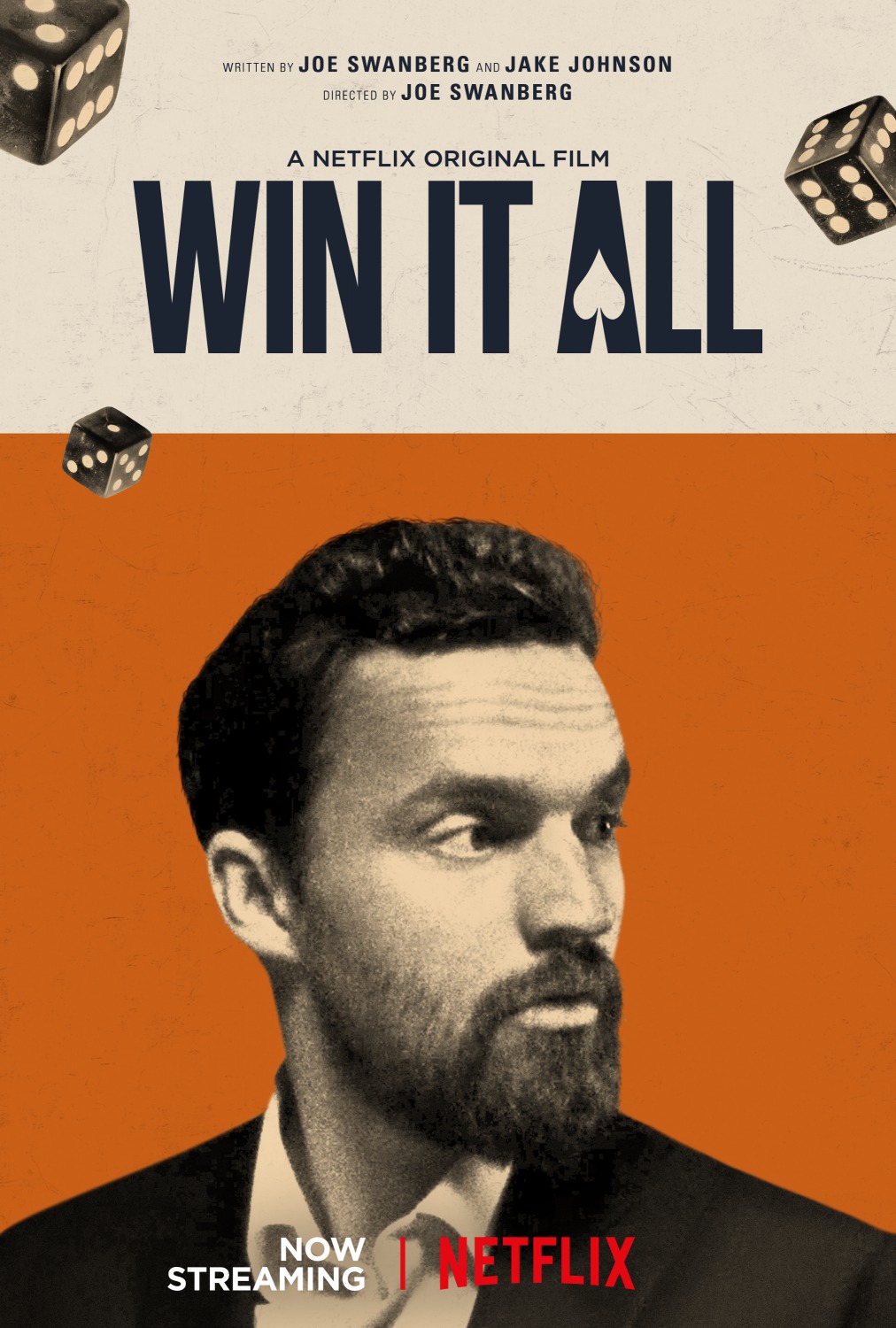
Cast: Jake Johnson, Aislinn Derbez, Joe Lo Truglio, Keegan-Michael Key, Nicky Excitement, Kris Swanberg, Jude Swanberg, Steve Berg, Arthur Agee, José Antonio García
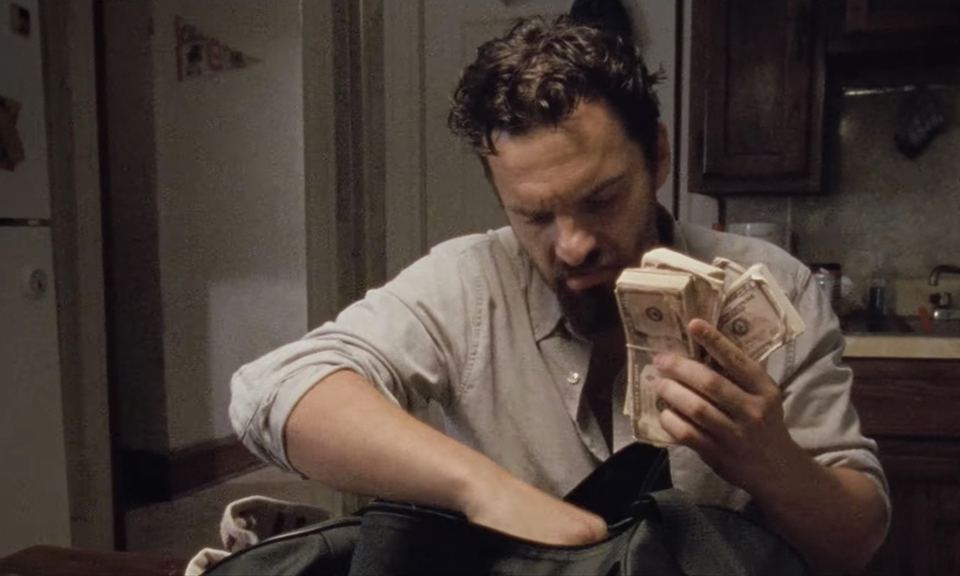
Eddie Garrett (Johnson) is a compulsive gambler. He supports his addiction by working at odd jobs such as parking cars at a sports stadium. He’s in his thirties, isn’t in a relationship, and has no ambition beyond having enough money to bet at his local casino each night. One day an acquaintance of his called Michael (García) makes him a proposition: if Eddie can look after a bag for him while Michael spends time in gaol, there’ll be $10,000 for him when Michael gets out. The only proviso is that Eddie doesn’t look in the bag. Believing himself entirely able to look after the bag, Eddie accepts, but it’s not long before he looks inside it and discovers it contains a lot of money. Eddie convinces himself that it’s okay to take $500 from the bag and use it to gamble. He does so, and he wins over $2,000.
While he’s out celebrating his good fortune, Eddie meets a nurse called Eva (Derbez) and they hit it off. But while they tentatively begin a relationship, Eddie’s gambling addiction leads to him losing the money he’s won, and then using even more of Michael’s money until he’s lost over $21,000. At this point, Eddie decides to turn things around. He goes to work for his brother, Ron (Lo Truglio), at his landscaping business, starts attending GA meetings under the supervision of his sponsor, Gene (Key), and stays away from gambling. He and Eva grow closer and closer, but just as it looks as if everything is going to be okay, Michael calls to say he’s going to be released early. With no other way of recouping the money he’s lost, Eddie takes the rest of Michael’s money and gambles on winning big at a high stakes game…
The directorial career of Joe Swanberg is one that has been consistently entertaining and enjoyable, from early low-budget features such as Hannah Takes the Stairs (2007), and Uncle Kent (2011), through to more polished outings such as Drinking Buddies (2013) and Digging for Fire (2015). The common component in those last two movies and Win It All is Jake Johnson, an actor for whom Swanberg’s off centre, idiosyncratic style of moviemaking (albeit heading toward a more mainstream vibe with each release) seems a perfect match for the actor’s ability to play the careworn, loveable loser with humanity and disarming depth. Such is the case here, with Johnson and Swanberg’s collaboration on the screenplay giving the movie a rough charm that belies the darker themes of addiction and personal dysfunction. Eddie is a classic indie loser: he’s a good person with everyone except himself, and he can’t always understand why Life treats him so badly.
With Eddie being such a recognisable character, it’s not a surprise to learn that the movie as a whole is predictable, although it’s a benign predictability that actually serves the movie well. Win It All is awash with honesty and charm, and it tells its familiar story with a great deal of sincerity. Swanberg has a way of exploring well worn themes with a fresh eye, and with Johnson’s input has made a movie that speaks of redemption in terms of doing what is best and not necessarily what is right. It’s a refreshing angle, and it isn’t delivered in a preachy, patronising manner, but instead it arises naturally out of the situations that Eddie finds himself in. Johnson is ably supported by Derbez and Lo Truglio while Key contributes yet another terrific supporting turn as Eddie’s credulous sponsor. Swanberg and Johnson cram a lot in, but it’s all delivered at a considered, effective pace that suits the narrative well… until the end, that is, which is rushed and feels out of sorts with what’s gone before. But then, just as you think the story is over, a mid-credits scene flips the ending on its head and reveals that the price of redemption is much higher than Eddie, or the viewer, could have expected.
Rating: 8/10 – a winning look at the efforts of a gambling addict trying to go straight, Win It All has plenty to lure in the viewer and reward them for their attention; the movie makes a virtue of its simple plot and flawed central character – and the milieu he inhabits – allowing the material to shine in often unexpected but very, very enjoyable ways.
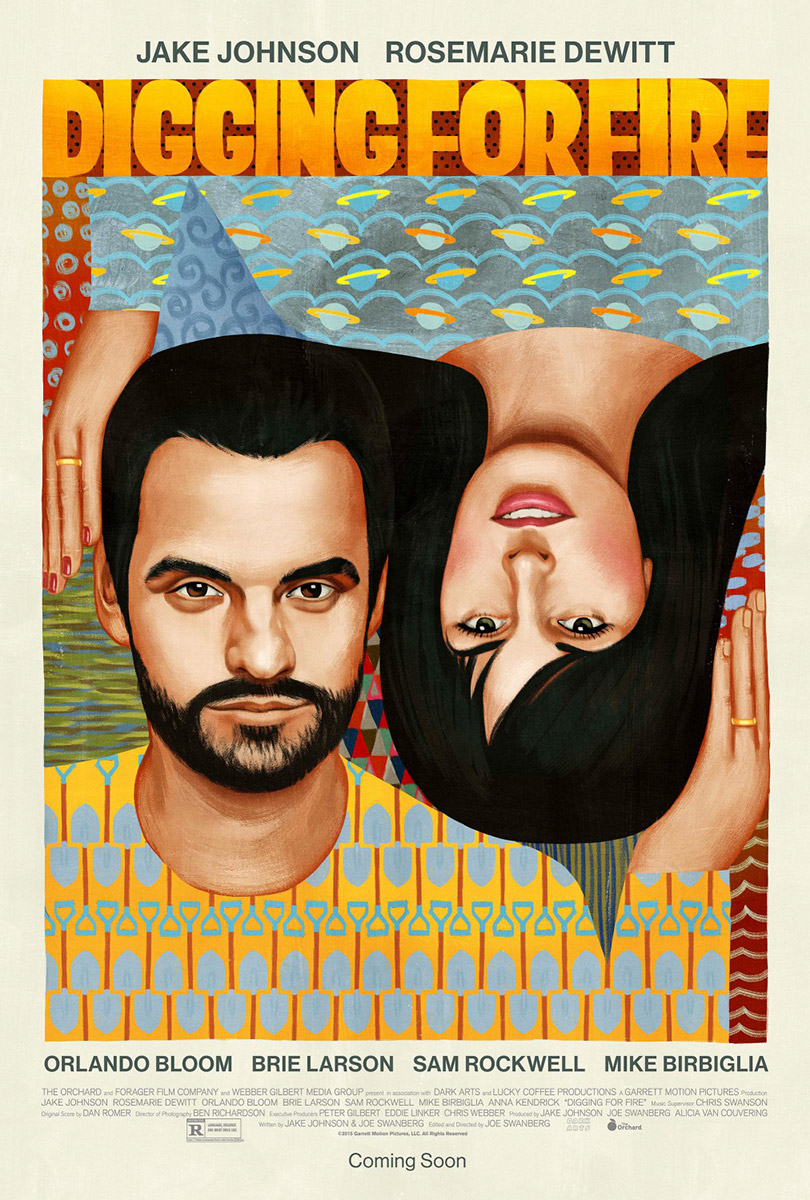
Cast: Jake Johnson, Rosemarie DeWitt, Brie Larson, Orlando Bloom, Sam Rockwell, Anna Kendrick, Mike Birbiglia, Chris Messina, Tom Bower, Sam Elliott, Judith Light, Steve Berg, Ron Livingston, Melanie Lynskey, Jane Adams
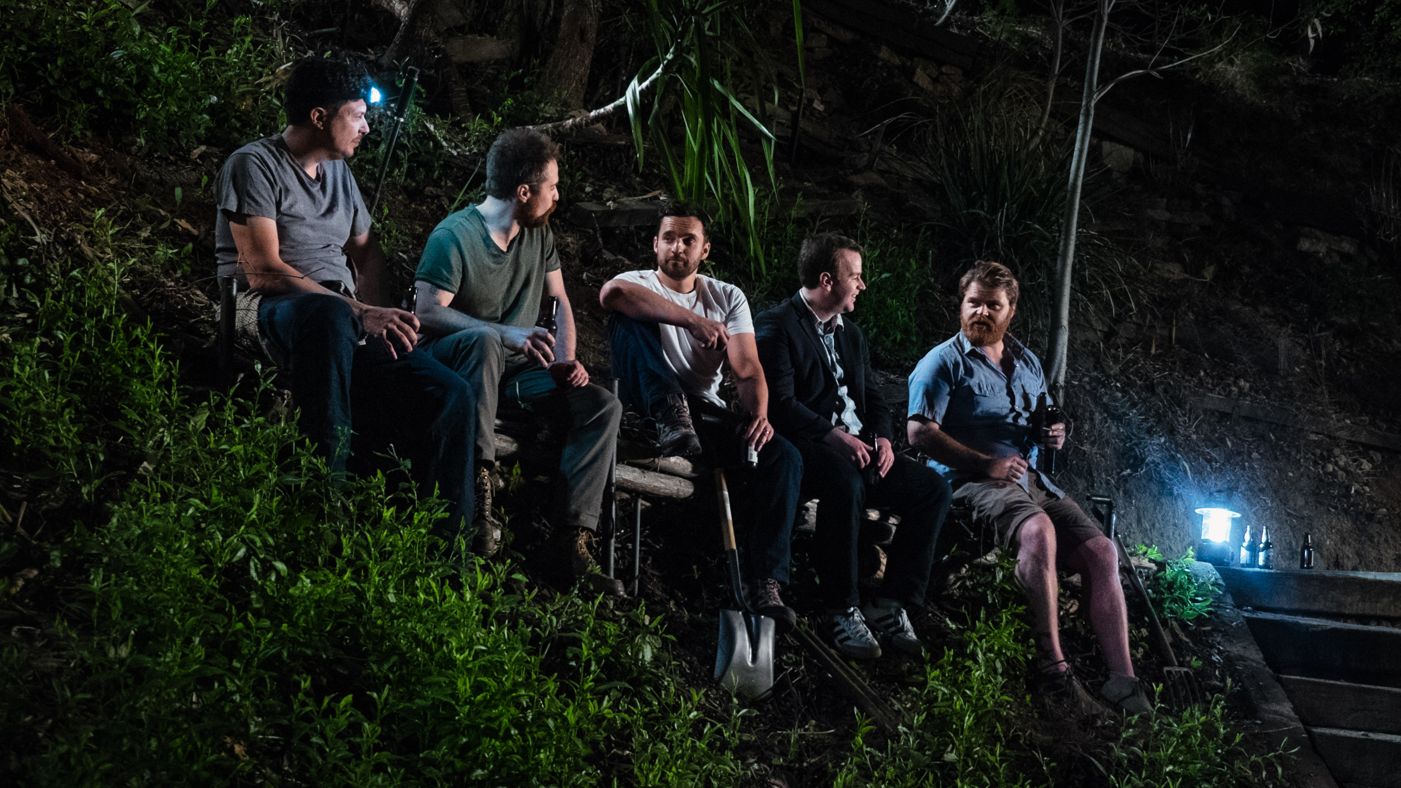
Tim (Johnson) and Lee (DeWitt) are a young-ish couple with a three year old son who agree to housesit for one of Lee’s clients while they’re away. On their first day there, while doing some gardening, Tim unearths what looks like a human bone, and a handgun. Lee is all for putting them back and forgetting about them, reasoning that the two items don’t have to be linked. Tim is brimming over with curiosity and wants to do more digging, but nevertheless he calls the police; when they prove uninterested Tim lets himself be persuaded not to pursue it further.
The weekend begins the next day. Lee has made arrangements to take their son to visit her mother (Light) and stepfather (Elliott), while Tim is tasked with completing their tax returns. But both have other plans for their respective weekends: Tim has invited several of his friends for a barbecue and beers, while Lee is looking forward to a girls’ night out with her friend Squiggy (Lynskey). Neither knows of the other’s plans, and neither of them has any intention of letting the other know what they’ve been up to.
That nothing goes quite as either of them expect shouldn’t come as any surprise. Tim’s excitement about his discovery leads to his roping his friends into helping him dig for further remains, while Lee’s friend, too busy warring with her husband Bob (Livingston) to leave him alone with their children’s nanny for the evening, backs out of their arrangement. More of Tim’s friends turn up, with one of them, Billy Tango (Messina), bringing with him two women, Max and Alicia (Larson, Kendrick). While Tim finds himself digging alone, he’s joined by Max who shows an interest in what he’s doing, and digs with him. Meanwhile, Lee resigns herself to a quiet night at her mother’s.
The next day sees Tim making a half-hearted attempt to do the taxes before resuming his digging. Lee goes shopping and buys herself a leather jacket before returning to her mother’s and deciding that this evening she’s going to go out, even if it is by herself. Tim finds himself rejoined by Max and together they continue looking for more evidence of foul play. When he calls it a day he offers to take Max out for a bite to eat as a thank you for helping him. With her own clothes dirty from all the digging, Tim tells her to choose from Lee’s clothes. And while Tim’s evening heads in one direction, Lee’s heads in another as she meets Ben (Bloom) in a restaurant bar.
Right about now, anyone watching Digging for Fire will be sizing up each situation and deciding which one of Tim and Lee will make the classic mistake of sleeping with someone else. But co-writers Swanberg and Johnson don’t make it so easy, and deftly pull the rug out from under the viewer’s feet. This may seem like a movie whose focus is on what happens when both halves of a married couple experience some much longed-for freedom, but it’s a much cleverer movie than that, and despite all the drinking and drug-taking and sexual tensions that occur, this is a staunchly conservative movie that reinforces marriage, fidelity and parenthood as truly desirous states to be in.
With temptation placed firmly in the way of both Tim and Lee, it’s interesting to see how the script has them react. Tim wants to party like he used to before he got married but he’s only really comfortable when he’s focused on his digging; when he calls it a night he barely receives any acknowledgment from any of his friends, so keen are they to carry on partying. And when he’s joined by Max the next day he’s so pleased that someone wants to help him it doesn’t matter to him if that someone is male or female. For Tim, discovering further evidence of foul play – if indeed there is any – has added an extra layer of blinkers to the way he views other women anyway, and despite Max’s obvious good looks and equally obvious liking for him, he can only view her as a friend.
Lee, however, becomes seduced by Ben’s carefree nature, a world away from her life as a wife and mother, tied down by responsibilities (even though she tells their son they’re down to his father to deal with – or mommy will be angry), and a belief that her life as an individual is over with. Call it post-natal depression, or a post-marital fugue, but Lee sees herself as having lost touch with herself, while Tim tells anyone who’ll listen how much his life has changed for the good through being a parent. Neither is wrong, and their feelings are true for each of them, but it’s whether or not they really need to recapture their lives before marriage and parenthood “tied them down” that counts.
Swanberg has been making smart, subtly sophisticated comedy dramas like this one for some time now – Drinking Buddies (2013), also with Johnson, is a gem that should be tracked down immediately if you haven’t seen it already – and while you could level an accusation of naïvete at the way in which Tim and Lee behave around their “prospective partners”, it’s the way in which they recognise the strength and durability of their marriage, and how it enhances their individual lives as well as their commitment to each other that makes it all work so well. And Swanberg is aided by two generous central performances from Johnson and DeWitt, wonderful supporting turns from Birbiglia, Larson and Lynskey, and rounds it all off with a carefully chosen soundtrack that perfectly complements the events happening on screen.
Rating: 8/10 – full of indie charm and a raft of likeable characters we can all relate to, Digging for Fire is another winner from Swanberg; smart, funny, emotional and knowing, it’s a movie that many married couples will find themselves relating to, and never once gives in to the temptation of being self-conscious or patronising.
The third and fourth sequels in their respective franchises, Jurassic World and Terminator Genisys are that rare combination: reboots that feed off the original movies. And you could argue that they’re also remakes, in that they take the basic plots of those original movies and put their own – hopefully – nifty spins on them. But while there’s a definite fan base for both series, which means both movies should do well at the box office (enough to generate further sequels), is there enough “new stuff” in these movies to actually warrant seeing them in the first place, or getting excited about any future releases that are in the pipeline? (And let me say just now, that both movies have ensured that the possibility of further entries in both franchises will be an absolute certainty.)
Jurassic World (2015) / D: Colin Trevorrow / 124m
Cast: Chris Pratt, Bryce Dallas Howard, Vincent D’Onofrio, Irrfan Khan, Ty Simpkins, Nick Robinson, Jake Johnson, Omar Sy, BD Wong, Judy Greer, Lauren Lapkus
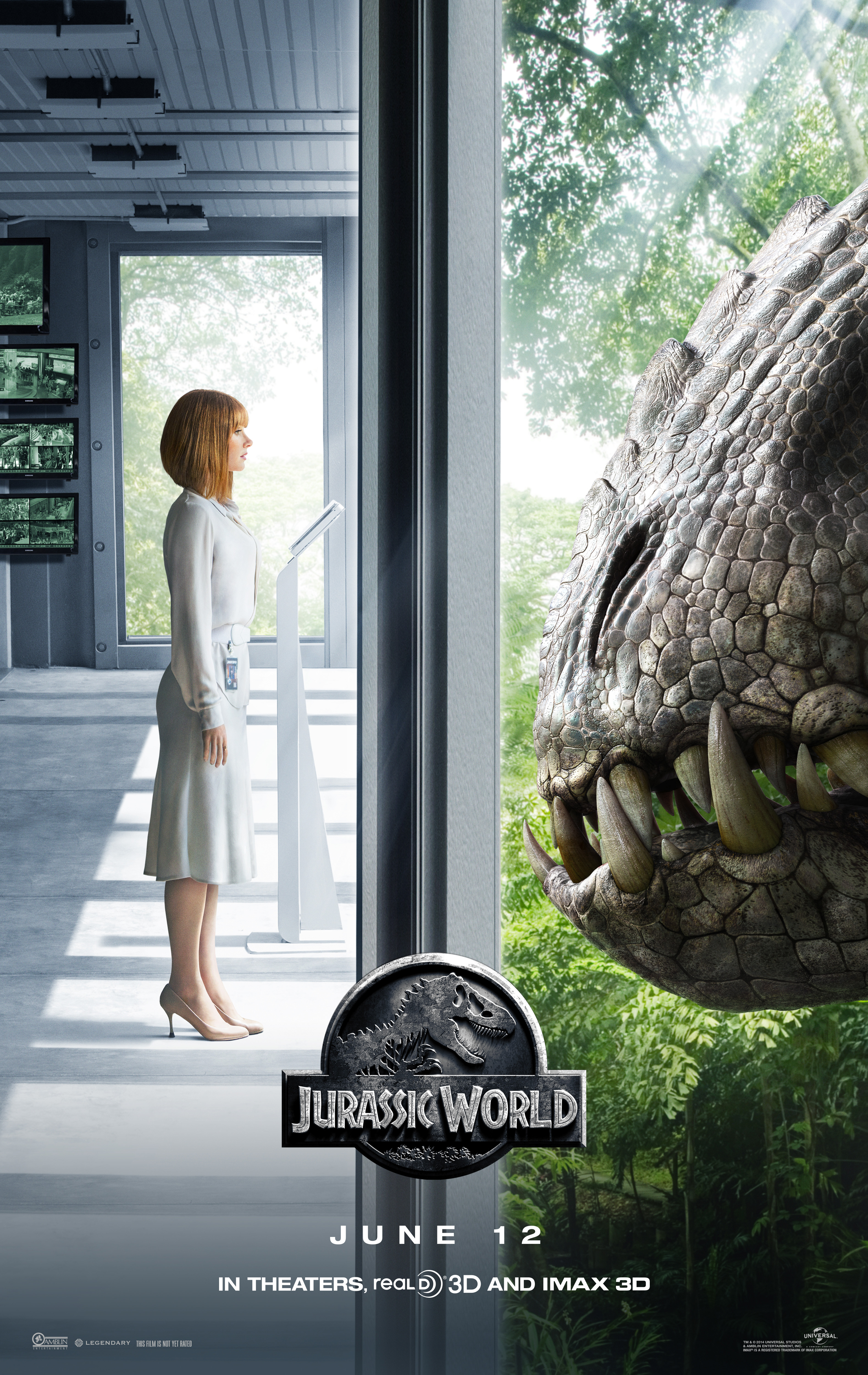
Twenty-two years on from the disastrous attempt by John Hammond to open the world’s first dinosaur theme park, his dream has become a paying reality, but one that needs ever more impressive dinosaurs to keep visitors coming. Thanks to the backing of the park’s owner, Masrani (Khan), and the scientists responsible for cloning the park’s main attractions – led by Dr Henry Wu (Wong) – each new attraction strays further and further from the original concept of replicating the dinosaurs everyone is aware of. Now, Wu and his team have designed a new dinosaur, the so-called Indominus Rex, an intelligent, über-predator that is taller than a T. Rex and even more deadly.
When animal behavioural specialist Owen Grady (Pratt) is called in to assess the new dinosaur’s readiness for being shown to the public, he and park manager Claire (Howard) are unprepared for just how intelligent the Indominus Rex is; soon it escapes and begins to wreak havoc across the island. With an evacuation of over twenty thousand tourists going ahead, including Claire’s nephews Gray (Simpkins) and Zach (Robinson) who have strayed off the normal tourist track, Grady and Claire must try to keep everyone safe, as well as dealing with parent company InGen’s local representative, Hoskins (D’Onofrio), who sees Indominus Rex’s escape as a chance to prove that raptors – who have been trained by Grady – can be used as militarised weapons. But his strategy backfires, leaving everyone at risk from Indominus Rex and the raptors.
Given that Jurassic Park III (2001) was pretty much dismissed as so much dino guano on its release, the idea of making a fourth movie always seemed like a triumph of optimism over experience. And yet, Jurassic World is a triumph – albeit a small scale one – and while it doesn’t offer us anything really new (aside from Grady’s instinctive, respect-driven relationship with the raptors), it does make a lot of things feel fresher than they have any right to be. This is essentially a retread of the first movie, with Gray and Zach as our guides to the park’s wonders (and perils), the fiercest dinosaur in the park getting loose, and the humans relying on other dinosaurs to take down the big bad and save the day. It’s not a bad concept – after all, it worked the first time around – but despite how well the movie has been put together, it’s still a fun ride that just misses out on providing that much needed wow factor.
Part of the problem is that the movie makers have taken the bits of Jurassic Park (1993) that worked and added some stuff that doesn’t. Do we really need to see yet another misogynistic portrayal of a relationship, where the woman changes for the man and not the other way round? Do we really need to hear a scientist blame the moneyman for not paying attention when the scientist created something unethical? And do we really need to hear deathless lines such as “We have an asset out of containment” or “It can camouflage!” (a trick the Indominus Rex pulls off just the once, by the way, when it’s convenient to the narrative). Of course we don’t, but because this isn’t a straight remake, but a reboot/update/witting homage, that’s what we get. For all that the movie is technically well made, and looks fantastic in IMAX 3D, it’s still a retread, and lacks the thrills we need to invest in it properly (and that’s without the paper-thin characters, from the stereotypically neanderthal Hoskins, to the annoying dweeb in the park’s Control Centre (Johnson). In short, the movie lacks the depth necessary to make us care about it, and without that depth, it just becomes another superficial ride the viewer will forget without realising it.
Rating: 6/10 – another summer blockbuster that doesn’t do enough to justify its budget or hype, Jurassic World is like an old friend regaling you with a story you’ve heard a thousand times before; maybe this will work better as the intro to a bigger story and plot, but if not, then this is just another disappointing entry in that ever growing cache of movies known as the Unnecessary Sequel.
Terminator Genisys (2015) / D: Alan Taylor / 126m
Cast: Arnold Schwarzenegger, Jason Clarke, Emilia Clarke, Jai Courtney, J.K. Simmons, Dayo Okeniyi, Matt Smith, Courtney B. Vance, Byung-hun Lee, Michael Gladis, Sandrine Holt
In 2029, the human resistance, led by John Connor (Clarke), is on the verge of defeating Skynet and its machines. But it also needs to destroy Skynet’s last chance of avoiding defeat: a time displacement machine. When John reaches the site, though, he learns that Skynet has sent a terminator back to 1984 in order to kill his mother, Sarah Connor (Clarke); with her dead, John won’t be born and won’t be able to lead the resistance to victory. Knowing his past and what needs to be done, he agrees to let Kyle Reese (Courtney) travel back as well and keep Sarah safe. As the machine begins to work, though, Kyle sees John being attacked by a terminator.
When Kyle arrives in 1984 he finds himself being hunted by a T-1000 (Lee) before being rescued by Sarah – and a T-800 (Schwarzenegger). Sarah tells Kyle that the T-800 was sent to protect her when she was nine years old, but that she doesn’t know who sent it. With the T-1000 in constant pursuit, the trio do their best to work out why this timeline is now so different from the one that John has always known. Kyle is sure that it has something to with visions he’s been having of a future that hasn’t been destroyed by Skynet, a future that will still exist in 2017, the year that Skynet – in this timeline – launches the nuclear missiles that will seal Man’s fate. He persuades Sarah to travel with him to 2017 using a time displacement machine that she has built with the T-800’s aid.
However, their arrival in 2017 leads to their being arrested. But at the police station, an even greater surprise awaits them: the arrival of John…
As Arnold Schwarzenegger has said all along, “I’ll be back”, and here he is, older, greyer, slower, with a few motor skills issues, but as he also says, “not obsolete”. It’s a clever distinction that says as much about the actor as it does the character of the T-800, giving us an aging Terminator and providing a perfectly acceptable reason for the Austrian Oak to be involved. But while he’s the star of the show, it’s also noticeable that he’s sidelined a lot of the time, giving both Clarkes, and Courtney, the chance to carry the movie in their iconic star’s absence. That they don’t is down to a script that, as with Jurassic World, wants to be as much as a retread of its progenitor as it does an entirely new instalment. As a result, the need to include what might be generously termed “fan moments” – “Come with me if you want to live” – often means a narrative that struggles to find its own identity.
There’s the germ of a great idea here, predicated on the series’ idea that “the future isn’t set”, but its revisionist version of 1984, complete with Schwarzenegger taking on his younger self (one of the movie’s better ideas), devolves into an extended chase sequence that rehashes elements from Terminator 2: Judgment Day (1991), and acts as a kind of Terminator Greatest Hits. It’s all effectively staged by director Alan Taylor, but the sense of déjà vu persists throughout, making the screenwriters’ efforts to give us something new all the more disappointing. Even moving the action to 2017 is less than inspiring, not even allowing for a change of scenery or approach, but canny enough to include J.K. Simmons’ light relief, and change the thrilling truck chase from T2 to an unexciting helicopter pursuit. As with the trip to Isla Nubar, it’s all very professionally done, but with that one all-important ingredient still missing: something to make the viewer go “wow”.
Rating: 6/10 – as fourth sequels go, Terminator Genisys is a vast improvement on the last two instalments but remains very much a missed opportunity; with the way open for another sequel it’s to be hoped that it’ll be more original than this, and will take the kind of risks that the first movie made in order to be successful.







 thedullwoodexperiment