• 10 Reasons to Remember…
  • A Brief Word About…
  • About
  • For One Week Only
  • Happy Birthday
  • Monthly Roundup
  • Old-Time Crime
  • Other Posts
  • Poster of the Week
  • Question of the Week
  • Reviews
  • Trailers

thedullwoodexperiment

~ Viewing movies in a different light

thedullwoodexperiment

Tag Archives: Jean-Marc Vallée

Demolition (2015)

28 Tuesday Jun 2016

Posted by dullwood68 in Movies

≈ Leave a comment

Tags

Bereavement, Car accident, Champion Vending Company, Chris Cooper, Drama, Grief, Jake Gyllenhaal, Jean-Marc Vallée, Judah Lewis, Mother/son relationship, Naomi Watts, Review, Vending machine
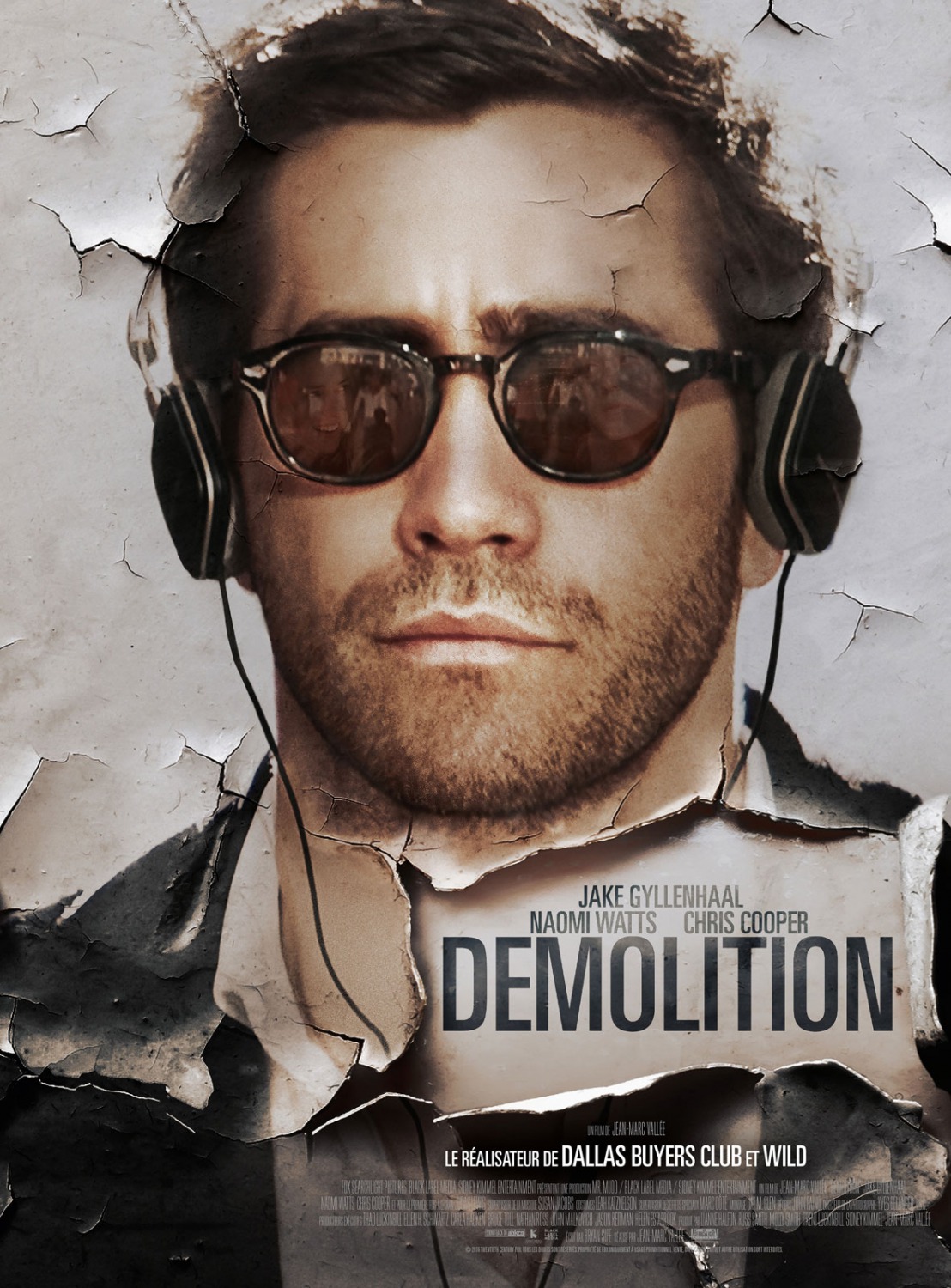
Demolition

D: Jean-Marc Vallée / 102m

Cast: Jake Gyllenhaal, Naomi Watts, Chris Cooper, Judah Lewis, C.J. Wilson, Polly Draper, Heather Lind

There’s a scene early on in Demolition, the latest feature from the director of Wild (2014) and Dallas Buyers Club (2013), where Jake Gyllenhaal’s character, an investment banker named Davis Mitchell, attempts to get some M&M’s from a hospital vending machine, but the M&M’s don’t drop down. He hits it a couple of times, then asks one of the hospital staff if they can open it; the answer is no, because it’s not owned by the hospital. This prompts Davis to write a letter of complaint to the Champion Vending Company, which begins, “Dear Champion Vending Company: I put five quarters in your machine and proceeded to push B2, which should have given me peanut M&M’s. Regrettably, it did not. I found this upsetting, as I was very hungry, and also my wife had died ten minutes earlier.”

Now, on the face of it, this is a great way in which to begin exploring the mindset of a recently bereaved husband, but Bryan Sipe’s unconvincing screenplay hasn’t told us enough about Davis so far for the audience to make a judgment as to whether or not this is funny, sad, poignant, or revealing. Instead, it invites the viewer into Davis’s world by getting him to expand on his relationship and marriage with his recently deceased wife, Julia (Lind), but through the medium of letters to the vending company. It’s an awkward plot device because we don’t know if this is a legitimate way for Davis to deal – initially – with his grief at losing his wife in a tragic car accident. It’s awkward because, outside of these letters, Davis acts like he’s okay and he’s dealing with it all pretty well.
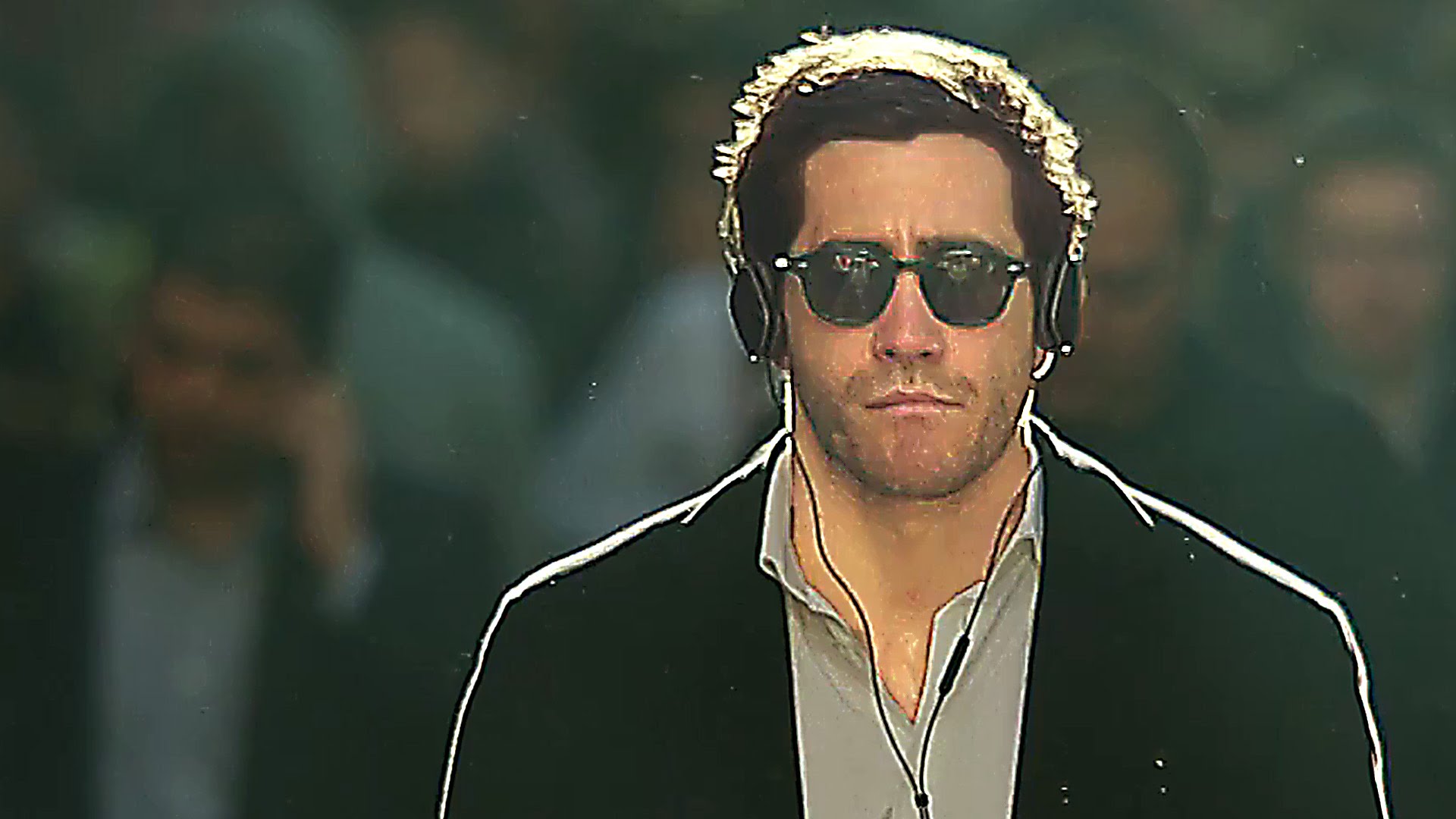
Demolition - scene1

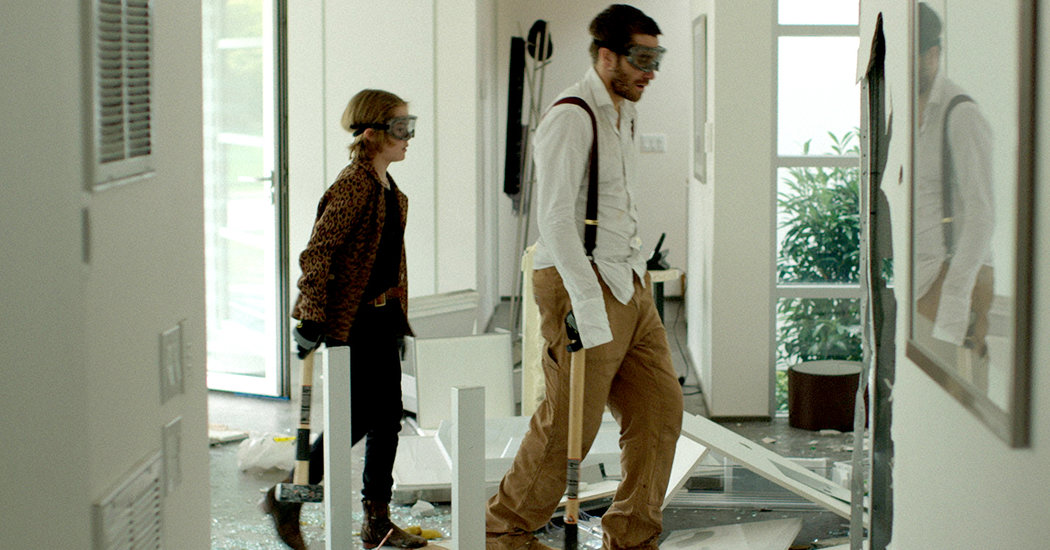
At first, at least. Something his father-in-law, and boss, Phil (Cooper), says to him sends Davis off on another tack, that of dismantling things to see what they’re made of, and how they work. To this end he dismantles light fixtures and bathroom stalls at his place of work, along with his computer, and at home, a coffee machine. He takes these things apart, lines the various component parts in neat groups, and then leaves them where they are. At work it all leads to Davis being told to take some time off, while at home it leaves him restless and unfocused. When he receives a late night call from a woman called Karen Moreno (Watts), the vending company’s customer service manager and someone who has read and connected with his letters, Davis is intrigued enough by her call to want to learn more about her.

Again, though, Sipe’s screenplay – and Vallée’s direction – doesn’t make it clear just why Karen connects with Davis, and vice versa. It’s true that Davis is behaving oddly, and it’s true that Karen is a needy single mother who has the ability to behave in an equally odd manner (she stalks him until he talks to her on a train), but just why these two people find support and a degree of comfort in each other is left floating in the wind. You could argue that the script requires them to, and that would be a reasonable enough answer, but the script doesn’t legitimise their relationship, even as it develops, and especially with the introduction of Karen’s fifteen year old son, Chris (Lewis). Here, Davis is pared away from Karen and inxplicably, takes on the role of father figure to Chris.
Demolition - scene2

It’s another decision made by the movie that takes Davis further and further away from the grief and (implied) despair he’s meant to be feeling following Julia’s death, and into an area where he becomes an unofficial member of Karen and Chris’s disjointed family. Meanwhile, Phil decides to use Julia’s memory to start a foundation and needs Davis to sign off on it. But Davis drags his heels, and again, the script doesn’t provide any ready answers as to why. By the two thirds mark, most viewers would be forgiven for wondering if any of Davis’s decisions have a point to them or are based on any recognisable emotions. This is because the movie is a frustrating exercise in character development and emotional withdrawal that coasts along with little regard for cause and effect, or the demands of a cohesive narrative.

It will come as no surprise that Demolition ends with everything wrapped up neatly (and with a pretty bow on top), and viewers who do manage to make it this far will be asking themselves what all the fuss was about in terms of the storyline and a handful of subplots that pop up every so often but don’t add anything to the overall narrative (a revelation regarding Julia comes out of nowhere and goes back there pretty quickly without having any real effect whatsoever). It’s hard to engage with any of the characters except on a superficial level, and the quality of the characterisations is such that even Gyllenhaal and Watts – two extremely capable actors – can only do so much with them before repetition sets in and their efforts fail to have any impact.
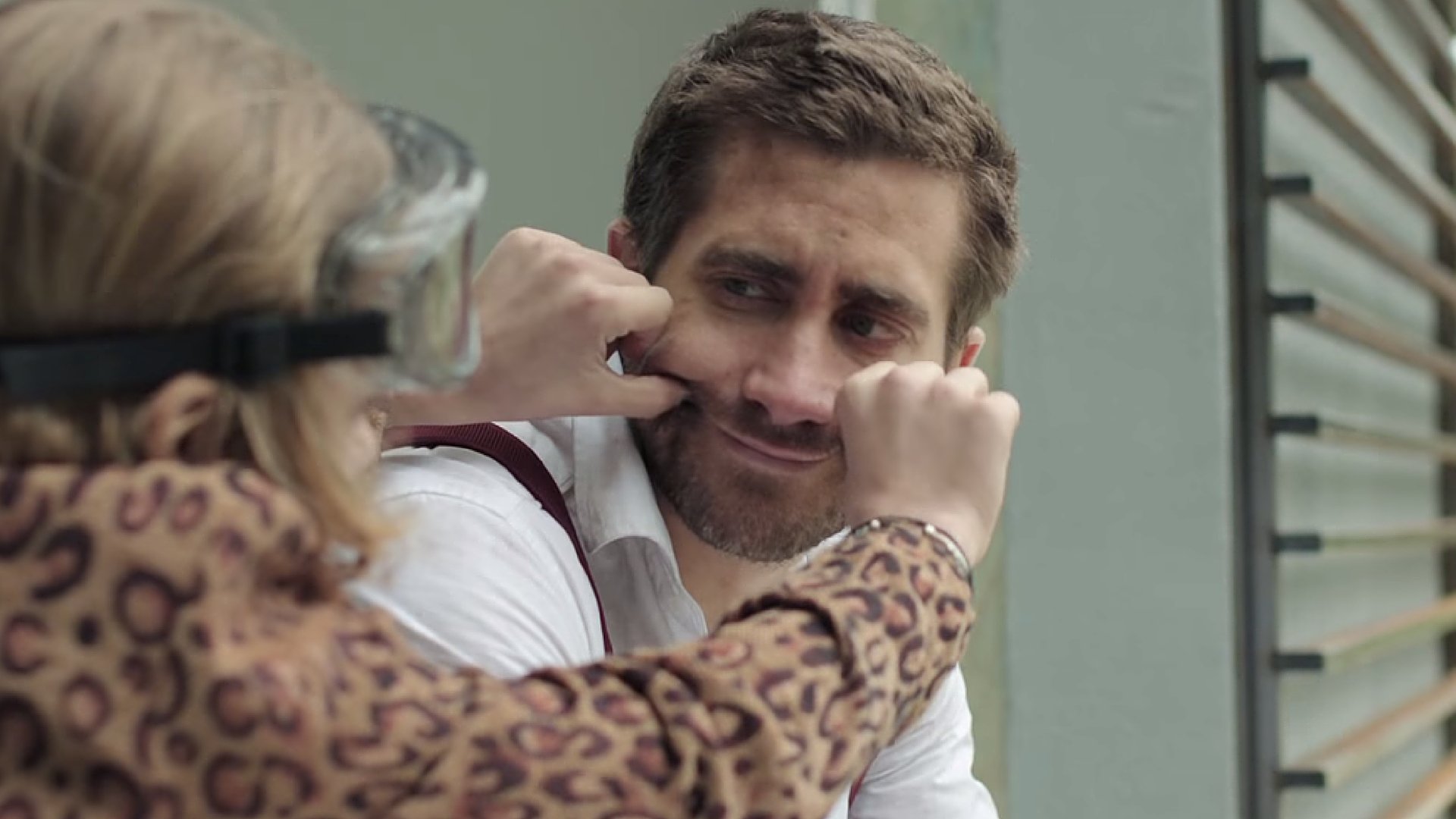
Demolition - scene3

Vallée’s direction is also a problem. While there’s a kernel of a great idea here – widower tries to make sense of his own grief by rebuilding his life from the ground up – Vallée doesn’t have any answers to the problems that are inherent in the script. This leaves the movie plodding along for several stretches (particularly when Davis enlists Chris in the demolition of his home), and any emotional high points lacking punch or dramatic intensity. It’s a visually well-constructed movie, however, with Vallée proving once again that he has an eye for composition and filling a frame with relevant information in support of the story, and he’s ably supported by his regular DoP Yves Bélanger. But it’s not enough to hide the ways in which Sipe and his wayward screenplay fails to explore Davis’s grief and Karen’s lack of confidence.

Rating: 5/10 – given Vallée’s previous movies (and their success), his work on Demolition and partnership with Gyllenhaal seems like a guarantee of quality, but there are too many problems with the script for even this combination to improve things; the movie aims for a kind of heightened realism at times, and while this is an admirable ambition, the fact that it doesn’t even come near is a good indication of how difficult it’s been to translate Sipe’s undercooked screenplay for the screen.

Share this:

  • Click to share on X (Opens in new window) X
  • Click to share on Facebook (Opens in new window) Facebook
  • More
  • Click to print (Opens in new window) Print
  • Click to email a link to a friend (Opens in new window) Email
Like Loading...

Wild (2014)

22 Thursday Jan 2015

Posted by dullwood68 in Movies

≈ 1 Comment

Tags

1100 miles, Cheryl Strayed, Drama, Hiking, Jean-Marc Vallée, Laura Dern, Literary adaptation, Pacific Crest Trail, Reese Witherspoon, Review, True story

Wild

D: Jean-Marc Vallée / 115m

Cast: Reese Witherspoon, Laura Dern, Thomas Sadoski, Keene McRae, Michiel Huisman, W. Earl Brown, Gaby Hoffmann, Kevin Rankin, Brian Van Holt, Cliff De Young, Mo McRae

While resting at the top of a hill and seeing to an injured toe, Cheryl Strayed (Witherspoon) sees one of her boots tumble to the bottom of the hill. Angry at this unfortunate event, she picks up her other boot and throws it after the first one. From there we flashback to her arrival at a motel and her preparations for the beginning of the 1,100 mile walk that is the Pacific Crest Trail. Setting out alone as a way of healing herself following the end of her marriage to Paul (Sadoski), the death of her mother, Bobbi (Dern), and years of promiscuous, drug-related behaviour, Cheryl’s pack is too heavy, and she needs a ride to the start of the trail, which she finds at a gas station. Once on the trail she begins to relive memories of her childhood, her mother, and her adult life, all jumbled together in a way that confuses her or makes her sad.

Along the trail she meets a variety of people, all of whom help her in some way, either by passing on good advice – fellow hiker Greg (Rankin) – by helping to lighten her pack – Ed (De Young) – or by giving her food – Frank (Brown) and Annette (Hoag). As she tries to make sense of her memories, and the events that have led her to walking the trail, Cheryl becomes more and more proficient at hiking, and more and more aware of how much her life has seemed to lack control. She remembers precious times with her mother, a free spirit who remained positive despite an abusive marriage. And she begins to remember the illness that caused her mother’s death and the effects it had on her, and her brother, Leif (Keene McRae).

The hike throws up some obstacles and encounters that Cheryl has to overcome. A detour due to heavy snowfall proves to be just as awkward as the actual trail, while an encounter with two hunters leads to an uncomfortably tense confrontation with one of them, and the loss of her boots leads to her walking fifty miles in sandals wrapped in duct tape. The hike also throws up emotional problems surrounding the period after her mother’s death, and her marriage, as well as the events that led to her deciding to walk the trail in the hope of putting her life back together.

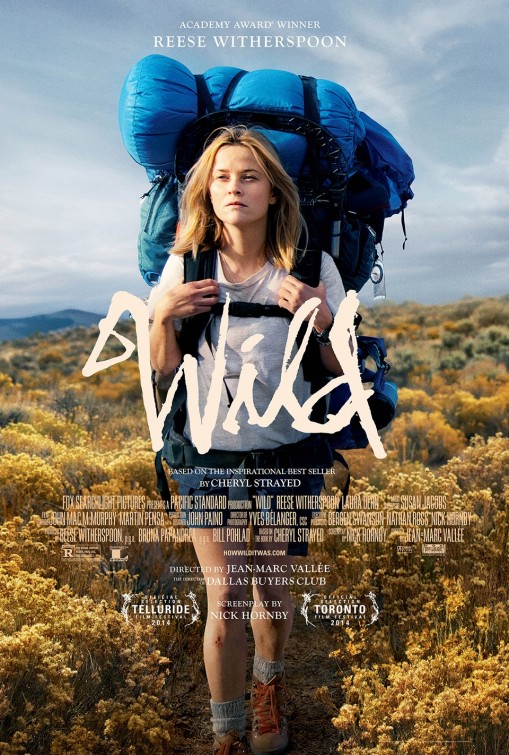
Wild - scene

At first glance, Wild is a collection of disjointed, disconnected, randomly assembled scenes that fail to resonate with each other, and which appear to have been put together by someone whose idea of editing is to chuck each scene up in the air, see where they all land, and then connect them by virtue of which one is closest to another. But to presume that is to miss out on the virtues of one the best edited movies of 2014 – or any year – and which creates its own rhythm, a steady rise and fall that takes each stretch of the trail and cleverly complements Cheryl’s progress on the journey with the progress she makes in dealing with the issues that have brought her there.

It’s a breathtaking accomplishment, with Cheryl the touchstone connecting it all, as her initially frayed and jumbled thoughts gradually straighten themselves out and she – along with the audience – begins to understand the motives and emotions that saw her life crumble and shatter and become self-destructive. As she comes to terms with all the emotional baggage she’s carrying with her (and on top of her “monster” of a rucksack), Cheryl gains an inner strength she’s never had before, and an inner resolve that will ensure she reaches the end of the trail, and a new beginning. In the hands of screenwriter Nick Hornby, this is powerful stuff, with few punches pulled and fewer trite explanations given for Cheryl’s behaviour after Bobbi’s death.

Witherspoon is on fine form here, portraying Cheryl in a way that’s moving and sensitive throughout, imbuing pre- and post-hike Cheryl with two distinct personalities, the first of which is best summed up as unwittingly hostile in her scenes with Bobbi, and self-deprecating in her scenes with Jonathan (Huisman), who she has a one night stand with at the end of the trail (it’s almost like she’s giving herself a reward). As well as an impressive emotional performance, Witherspoon also puts in a tremendous physical performance, making it seem as if she really has walked 1,100 miles in search of the answers to Cheryl’s problems. Witherspoon is a seriously underrated actress, despite her Oscar win for Walk the Line (2004), but here she shows just how effective she can be, juggling grief, sorrow, pain, frustration, regret and anger with a studied intelligence that is quite remarkable.

Making Wild after the success of Dallas Buyers Club (2013), Vallée takes the linear narrative rulebook and throws it out of the window, creating a rich, evocative tapestry of scenes that dovetail and flex around each other with a precision and accuracy that few other directors would attempt, let alone succeed in pulling off. It’s virtuoso stuff, ambitious and bold in its construction, and it makes watching the movie like putting together a jigsaw puzzle: at times frustrating because some of the pieces won’t fit, but when they finally do, everything is that much clearer and precise. Vallée also draws a superb performance from Dern, another actress who has become underrated in recent years, but who plays Bobbi with passion, subtlety and a sound understanding of her failings as a wife and a mother.

The Pacific Coast Trail itself is beautifully filmed by Yves Bélanger, the California, Oregon and Washington locations providing a vivid background to Cheryl Strayed’s trek, and as mentioned before, the whole thing is edited with incredible exactitude by John Mac McMurphy and Martin Pensa. Vallée orchestrates everything with skill, and a visual dexterity that makes Cheryl’s journey so mesmerising to watch.

Rating: 8/10 – Witherspoon and Dern are superb, and the construction of the movie, and its visual splendour, make Wild a fantastic achievement; heartfelt, and demanding of the viewer’s close attention, it’s a movie that weaves its hypnotic spell in scene after scene and proves completely rewarding.

Share this:

  • Click to share on X (Opens in new window) X
  • Click to share on Facebook (Opens in new window) Facebook
  • More
  • Click to print (Opens in new window) Print
  • Click to email a link to a friend (Opens in new window) Email
Like Loading...

Dallas Buyers Club (2013)

15 Saturday Feb 2014

Posted by dullwood68 in Movies

≈ 2 Comments

Tags

AIDS, AZT, Craig Borten, Drama, FDA, HIV+, Jared Leto, Jean-Marc Vallée, Jennifer Garner, Matthew McConaughey, Review, Ron Woodroof, True story

Dallas Buyers Club

D: Jean-Marc Vallée / 117m

Cast: Matthew McConaughey, Jennifer Garner, Jared Leto, Denis O’Hare, Steve Zahn, Michael O’Neill, Dallas Roberts, Griffin Dunne, Kevin Rankin

It’s 1985. Rock Hudson has recently died from a new, mostly unheard of disease called AIDS. Quickly attributed as a “homosexual” disease, and with all the accumulated prejudice that goes with it, what would you do if you were told you were HIV+, that it was too far advanced, and you had only thirty days to live? Live on in denial? Put together a bucket list and work your way through it? Admit yourself into hospital and let the doctors do their best? Or would you do something completely unexpected?  Say, bribe a hospital employee to get you an experimental drug called AZT?  And if you did, what would you do if that drug was cut off from you?  Would you then travel to Mexico to get some more?  And all in the last two days of your predicted remaining lifespan?

Well, if you were Ron Woodroof you’d do all that, and more.  As played by Matthew McConaughey, Ron finds salvation (of sorts) in Mexico thanks to Dr Vass (Dunne).  Vass treats Ron with a combination of ddC and the protein peptide T, and lets him know that AZT isn’t effective if a patient has other health issues e.g. drug addiction.  With AZT being pushed by the US medical establishment, Ron decides to bring Vass’s drugs into the US – where they are unapproved but not illegal – and distribute them to fellow AIDS sufferers.  Back in Texas, he sets up the Dallas Buyers Club; for a monthly membership fee of $400, anyone who is HIV+ can get the same drugs that are keeping Ron alive, and for free.  However, it’s not long before the FDA begins to look into what Ron is up to, and tries to stop him from supplying the drugs, even though they are proven to be non-toxic and beneficial to both Ron and the people he provides them for.

Also during this time, Ron meets a transgender AIDS sufferer called Rayon (Leto).  Ron is initially guarded around Rayon but in time comes to view her as a friend as well as a partner in the club (Rayon’s contacts help boost the club’s membership).  With support from his former physician, Dr Saks (Garner), but antipathy from her boss, Dr Sevard (O’Hare), as well as FDA agent Barkley (O’Neill), Ron continues to find loophole after loophole to allow him to supply the drugs his members need.  It’s only when the FDA gets the law changed so that unapproved drugs are also illegal, that Ron faces an uphill struggle to keep the Dallas Buyers Club going.

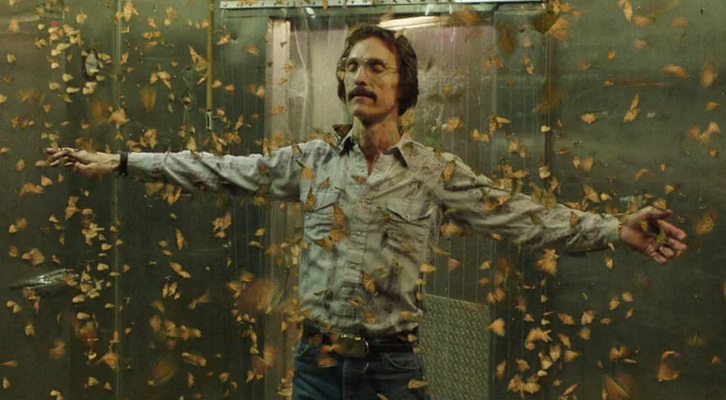
Dallas Buyers Club - scene

Dallas Buyers Club does what a lot of really good movies do: it starts off slow, is a little bit predictable, and makes you wonder if all the hype isn’t unfounded; it’s good but it’s not that good.  The acting is good, the direction is more than proficient, the script is several notches above the usual level, and then… somehow, the movie just takes off like a rocket.  In cinematic terms this is what happens once Ron wakes up in Mexico and finds himself still alive after thirty days.  The movie not only moves up a gear, it maintains that level of excellence throughout the rest of its running time.  Make no mistake, Dallas Buyers Club is one of those movies that grabs your attention and then doesn’t let go.

High praise, indeed, and all thanks to screenwriter Craig Borten, who interviewed Woodroof for the purpose of writing a screenplay, and who had access to Woodroof’s personal journals.  As a result, the script is compelling, dramatic, humorous when necessary, sad, affecting, stirring, compassionate, aggressive, and at times, disturbing.  Co-written with Melisa Wallack, Borten’s script keeps the focus tightly on Ron and his constant struggle to stay alive, and the transformation he undergoes from being an opportunist selling drugs to fellow sufferers, to the modest philanthropist he becomes when providing the drugs becomes more important than making a profit.  It’s a gradual process, and because there’s no overnight road-to-Damascus epiphany involved, it makes it all the more credible.

Of course, none of the above would have been possible if not for the amazing performance given by McConaughey.  McConaughey just keeps getting better and better at the moment, and Dallas Buyers Club proves – if you weren’t already convinced by his work in Killer Joe (2011), Mud and Magic Mike (both 2012) – that his range and skills as an actor are broader and more focused than most people would have expected.  He dominates the screen, displaying a maturity and conviction that most actors wouldn’t even get within a thousand yards of.  His performance is awe-inspiring.  He doesn’t miss an emotional beat, never once takes a misstep in terms of how his character would behave or react, and is always believable.  It’s an acting tour-de-force, one of those times you forget there’s an actor playing a role.

He’s matched for commitment and credibility by Leto, who turns in a career best performance.  At first, he’s unrecognisable, such is the transformation he undergoes in the movie, but the commitment and the emotional vulnerability he brings to the role is staggering.  For a movie to have one such performance in it is amazing enough; when there’s two, it’s astounding.

There is a downside, however.  With McConaughey and Leto on such incredible form, it leaves their fellow cast members left way behind.  It’s not their fault, as the script keeps Ron at its centre, and he is the focus of almost every scene.  Against the pyrotechnics McConaughey brings to the role, actors such as Garner and O’Hare, and the underused Zahn, can’t help but seem a little less interesting or appear less worthy of our time.  Garner’s character, in particular, seems only there to allow us to get to know Ron a little bit better, as if we don’t know him well enough already, or as if we need to see his casual, more relaxed, more charming side, instead of the determined, tenacious side we see throughout the rest of the movie.

But while the performances and the script are first-class, what about the direction?  Well, Vallée does an impressive job here, his confidence in the material and his cast showing through in every scene.  He has a wonderful sense of space as well; watch the  scenes set in the motel rooms where the club is set up and see if the framing doesn’t allow for more to be going on than there should be.  It’s a delicate touch, and keeps the movie continually interesting from a visual perspective.  He also knows when to switch from one character to another in a scene – something some directors never get right – and when to place a reaction shot at just the right moment.  Vallée’s intuitive style works well here, and it’s hard to imagine another director getting it as right as he does.

Rating: 9/10 – If I’d seen this at the cinema in 2013, it would have been in my Top 10 for the year, and probably in my Top 5; a thought-provoking, emotionally draining drama that amuses, inspires, and educates in equal measure, and which – thankfully – doesn’t feel the need to descend into crowd-pleasing.

Share this:

  • Click to share on X (Opens in new window) X
  • Click to share on Facebook (Opens in new window) Facebook
  • More
  • Click to print (Opens in new window) Print
  • Click to email a link to a friend (Opens in new window) Email
Like Loading...

Blog Stats

  • 491,410 hits

Recent Posts

  • 10 Reasons to Remember Bibi Andersson (1935-2019)
  • Fantasia (1940)
  • Dances With Wolves (1990) – The Special Edition
  • Kiss of the Spider Woman (1985)
  • The Three Musketeers (1973)

Top Posts & Pages

  • Cardboard Boxer (2016)
    Cardboard Boxer (2016)
  • I Origins (2014)
    I Origins (2014)
  • Carrie (2013)
    Carrie (2013)
  • Hickey (2016)
    Hickey (2016)
  • Lone Survivor (2013)
    Lone Survivor (2013)
  • Iris (2016)
    Iris (2016)
  • Happy Hunting (2017)
    Happy Hunting (2017)
  • The Inner Circle (1946)
    The Inner Circle (1946)
  • Death in High Heels (1947)
    Death in High Heels (1947)
  • Speak (2004)
    Speak (2004)
Follow thedullwoodexperiment on WordPress.com

Blogs I Follow

  • Rubbish Talk
  • Film 4 Fan
  • Fast Film Reviews
  • The Film Blog
  • All Things Movies UK
  • Interpreting the Stars
  • Let's Go To The Movies
  • Movie Reviews 101
  • TMI News
  • Dan the Man's Movie Reviews
  • Film History
  • Jordan and Eddie (The Movie Guys)

Archives

  • April 2019 (13)
  • March 2019 (28)
  • February 2019 (28)
  • January 2019 (32)
  • December 2018 (28)
  • November 2018 (30)
  • October 2018 (29)
  • September 2018 (29)
  • August 2018 (29)
  • July 2018 (30)
  • June 2018 (28)
  • May 2018 (24)
  • April 2018 (21)
  • March 2018 (31)
  • February 2018 (25)
  • January 2018 (30)
  • December 2017 (30)
  • November 2017 (27)
  • October 2017 (27)
  • September 2017 (26)
  • August 2017 (32)
  • July 2017 (32)
  • June 2017 (30)
  • May 2017 (29)
  • April 2017 (29)
  • March 2017 (30)
  • February 2017 (27)
  • January 2017 (32)
  • December 2016 (30)
  • November 2016 (28)
  • October 2016 (30)
  • September 2016 (27)
  • August 2016 (30)
  • July 2016 (30)
  • June 2016 (31)
  • May 2016 (34)
  • April 2016 (30)
  • March 2016 (30)
  • February 2016 (28)
  • January 2016 (35)
  • December 2015 (34)
  • November 2015 (31)
  • October 2015 (31)
  • September 2015 (34)
  • August 2015 (31)
  • July 2015 (33)
  • June 2015 (12)
  • May 2015 (31)
  • April 2015 (32)
  • March 2015 (30)
  • February 2015 (37)
  • January 2015 (39)
  • December 2014 (34)
  • November 2014 (34)
  • October 2014 (36)
  • September 2014 (25)
  • August 2014 (29)
  • July 2014 (29)
  • June 2014 (28)
  • May 2014 (23)
  • April 2014 (21)
  • March 2014 (42)
  • February 2014 (38)
  • January 2014 (29)
  • December 2013 (28)
  • November 2013 (34)
  • October 2013 (4)

Blog at WordPress.com.

Rubbish Talk

Film 4 Fan

A Movie Blog

Fast Film Reviews

The Film Blog

The official blog of everything in film

All Things Movies UK

Movie Reviews and Original Articles

Interpreting the Stars

Dave Examines Movies

Let's Go To The Movies

Film and Theatre Lover!

Movie Reviews 101

Daily Movie Reviews

TMI News

Latest weather, crime and breaking news

Dan the Man's Movie Reviews

All my aimless thoughts, ideas, and ramblings, all packed into one site!

Film History

Telling the story of film

Jordan and Eddie (The Movie Guys)

Movie Reviews & Ramblings from an Australian Based Film Fan

Privacy & Cookies: This site uses cookies. By continuing to use this website, you agree to their use.
To find out more, including how to control cookies, see here: Cookie Policy
  • Subscribe Subscribed
    • thedullwoodexperiment
    • Join 481 other subscribers
    • Already have a WordPress.com account? Log in now.
    • thedullwoodexperiment
    • Subscribe Subscribed
    • Sign up
    • Log in
    • Report this content
    • View site in Reader
    • Manage subscriptions
    • Collapse this bar
 

Loading Comments...
 

    %d