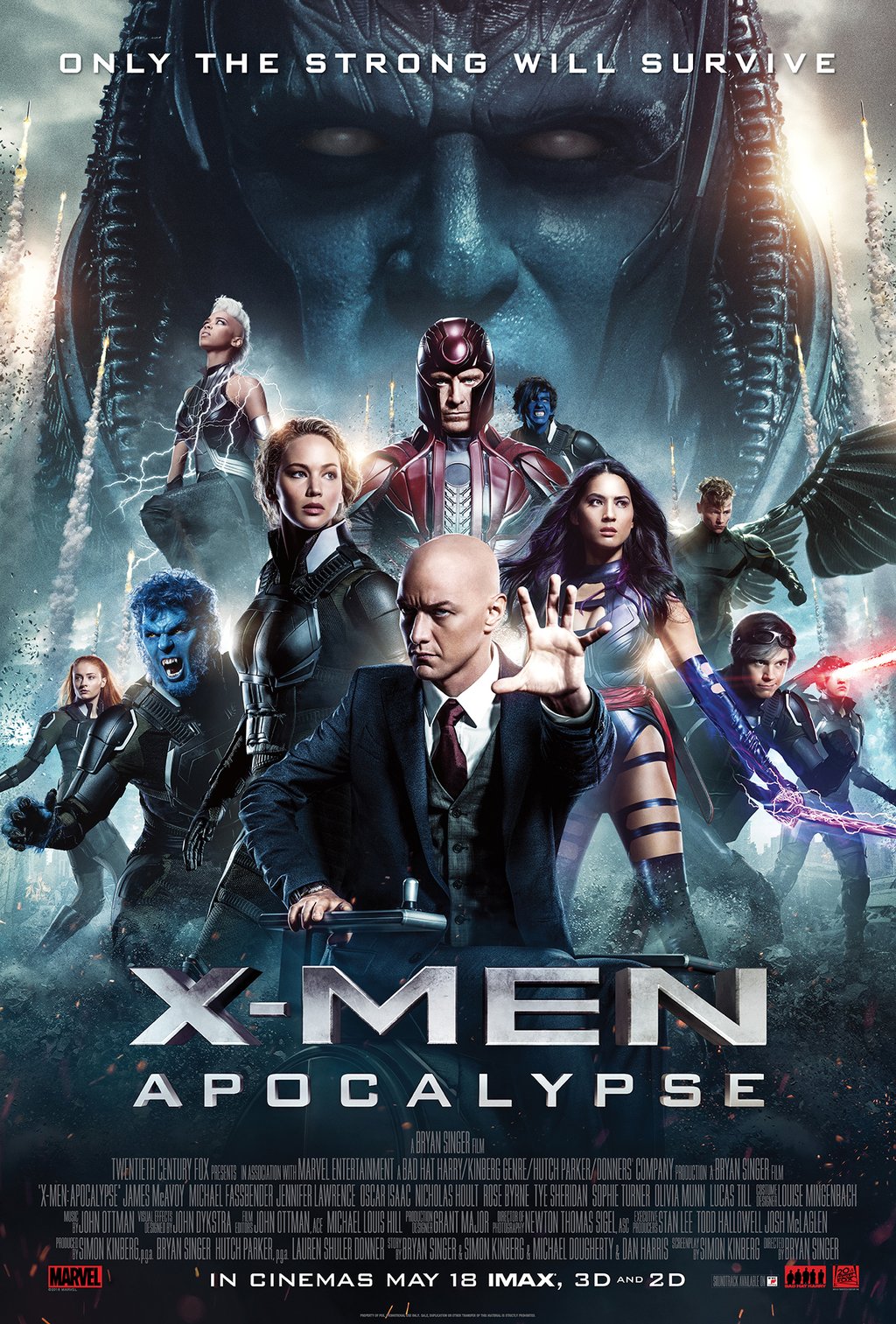
Cast: James McAvoy, Michael Fassbender, Jennifer Lawrence, Oscar Isaac, Nicholas Hoult, Rose Byrne, Evan Peters, Sophie Turner, Tye Sheridan, Kodi Smit-McPhee, Lucas Till, Olivia Munn, Ben Hardy, Alexandra Shipp, Josh Helman, Ally Sheedy
It’s okay.
Rating: 6/10 – an average sequel that offers a muddled storyline complete with yet more disaster porn, the best thing you can say about X-Men: Apocalypse is that it’s competently made; without a strong emotional core to help the audience care about the characters, or a real sense of impending apocalypse to make the stakes all the more gripping, this is a sequel that fails to build on the good work achieved in the previous two instalments.
Cast: Kodi Smit-McPhee, Michael Fassbender, Ben Mendelsohn, Caren Pistorius, Rory McCann, Andrew Robertt
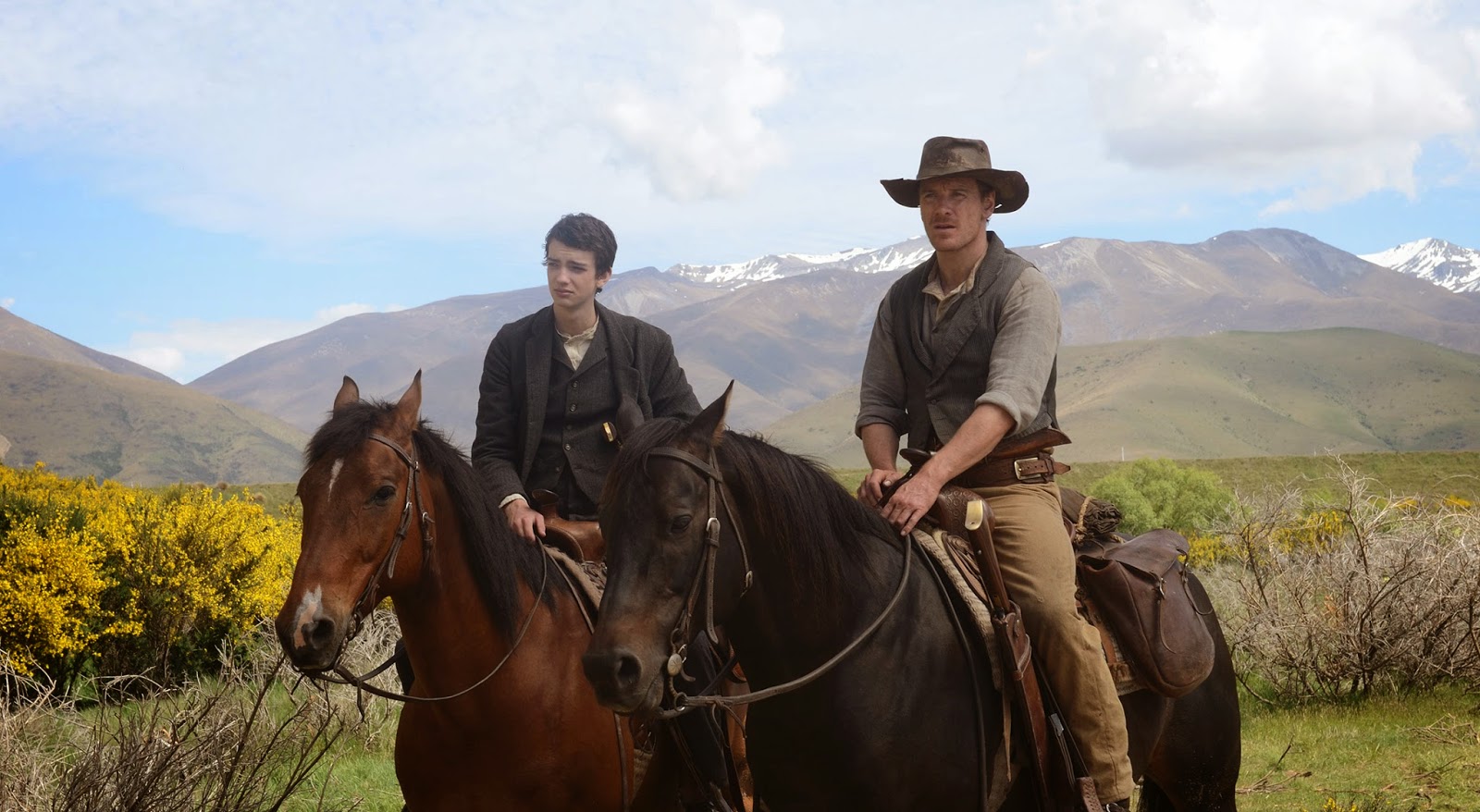
In the 1870’s, a young Scotsman by the name of Jay Cavendish (Smit-McPhee) is travelling alone across the American Mid-West in search of his true love, Rose Ross (Pistorius). Rose has fled to America with her father (McCann) after he accidentally killed a Scottish nobleman. As he passes through a burnt-out Indian settlement he meets Silas Selleck (Fassbinder), a loner who knows the territory and is willing to act as Jay’s escort and keep him safe until he finds Rose – for a price.
Jay has romantic notions that he and Rose will be able to resume the relationship they had back in Scotland, but what he doesn’t know is that her father’s crime has followed them across the Atlantic, and there is a bounty on their heads of $2,000, dead or alive. He’s also unaware that Silas is using Jay to find Rose and her father so he can collect the reward. And he’s further unaware that the gang Silas used to be a member of, led by Payne (Mendelsohn), are tracking them both in hopes of getting the bounty as well.
Along the way they stop at a trading post but a young couple try to rob the place. It leads to Jay shooting the woman, the first time he’s ever used a gun. When he and Silas leave, Jay discovers the couple’s two young children outside; he gives them the supplies he’s carried out by way of recompense. Jay later becomes distrustful of Silas and early one morning, leaves their camp and sets off alone again. On a barren plain he meets Werner (Robertt) who is hospitable and glad of the company, but when Jay wakes the next morning, Werner is gone and so are all of Jay’s possessions. Heading on in what he thinks is the right direction he’s eventually rejoined by Silas, who has everything that Werner stole.
As they find themselves getting nearer to where Rose and her father are living, they receive a visit from Payne who brings absinthe. The three men proceed to get drunk, yet when Jay goes off to relieve himself, Payne confronts Silas over his plans to claim the bounty. The next day, and with Payne and his gang close behind them, Jay and Silas set off on the last leg of their trek. But when they reach their destination, it’s not only Payne they have to worry about, but another bounty hunter, one who has got there before them.
A sombre, often downbeat Western, Slow West is nevertheless an engrossing, visually striking movie that tells a very simple tale with a great deal of panache. It’s a coming of age tale and a rite of passage movie as well as a journey of discovery, and is superbly acted by its talented cast.
It works best by focusing on the dreams and hopes of fish-out-of-water Jay, and how he matures over the course of his travels. In the hands of Smit-McPhee, and writer/director Maclean, Jay is one of the most fully rounded and believable characters of recent years (and any genre). His fervent belief that he and Rose are fated to be together is so compellingly drawn that what happens when they finally meet is like a punch to the heart. Jay is so focused on finding Rose that it colours his recollections of their time together in Scotland, and Maclean inserts flashbacks to those days at key moments in the narrative. As well as filling in Jay’s back story, these flashbacks serve to show how Jay’s romantic idealism has reached the point where he has travelled all the way from Scotland to find Rose – and that there’s every possibility that she won’t be as excited to see him as he hopes. It’s a feeling that develops as the movie progresses, and makes Jay’s naïve nature all the more credible, and all the more endearing.
Jay’s potentially misplaced confidence acts as a catalyst for Silas’s reassessment of his own life and needs. It’s a subtle transformation, handled expertly by Fassbender, and shows that it’s not just Jay who is on a journey of discovery, however unexpected it might be for Silas, or ultimately advantageous. His taciturn, withdrawn nature is slowly eroded by Jay’s determination, and in the end he behaves unselfishly and with a newfound purpose, and not just for Jay but for Rose as well, someone he doesn’t even know. Though this change of heart is rushed to make way for the traditional final third shootout – which is skilfully choreographed and assembled by Maclean and editors Roland Gallois and Jon Gregory – it’s still a sign of Maclean’s bold approach to his own script that it never feels like a contrivance but more of a well constructed fait accompli.
With both lead actors on such impressive form, it’s possibly one of the few movies where Mendelsohn is overshadowed, but he does play a secondary role and has far less screen time. As Jay’s romantic ideal, Pistorius plays Rose as an intelligent young woman who is more than aware of her place in the world, and Jay’s as well. Her scenes with Smit-McPhee have a charming quality to them that helps the viewer understand just what drives Jay to find Rose.
The movie’s strong, deceptively detailed script is enhanced by Robbie Ryan’s often stunning photography, its New Zealand locations (while not quite standing in for the Mid-West that convincingly) so beautifully depicted it’s hard not to stare in awe at the mountains that can be seen rising majestically in various backgrounds, or the clear, achingly blue skies above them. Aa a result, Maclean’s visual compositions range from dazzling to spectacular, and the landscapes that Jay and Silas travel through can be seen as characters in their own right (the ashen atmosphere surrounding the Indian settlement is a case in point). Add an evocative, mood-sensitive score from Jed Kurzel and you have a rare Western that speaks from the heart as well as from the mind.
Rating: 9/10 – one of the (so far) must-see movies of 2015, Slow West could have been another fifteen or twenty minutes longer, but that’s a very minor quibble; hugely impressive all round, this is a bona fide modern classic.
Cast: Kodi Smit-McPhee, Virginia Madsen, Isabelle Fuhrman, Evan Ross, Danny DeVito
Following the death of his father, James Charm (Smit-McPhee) has become emotionally isolated and withdrawn. While his mother, Abigail (Madsen) relies increasingly on extra glasses of wine to cope with her loss, James takes to roaming the nearby woods and sketching the dead animals and insects that he finds there. He attends therapy sessions with Dr Pembry (DeVito) but is largely uncommunicative when it comes to talking about his father. Before a session, James meets Val (Fuhrman); there’s an immediate connection, one that’s cemented when she catches him sneaking out during the session. As he heads home he sees a young man (Ross) playing an abandoned piano in an alleyway.
Later on he bumps into the young man while on a bus. The young man’s name is Harmon, and along with a friend, he invites James to tag along with him for the night. At a food area, James finds Val selling doughnuts out of a van. They have an awkward exchange but Val is pleased to see him. Harmon then takes James to a party, afterwards they head back to Harmon’s place where James smokes his first weed and, unwittingly, begins to open up about his problems. The next night he goes back to the food area and sees Val again. She writes an address on his palm and tells him to meet her there the next day.
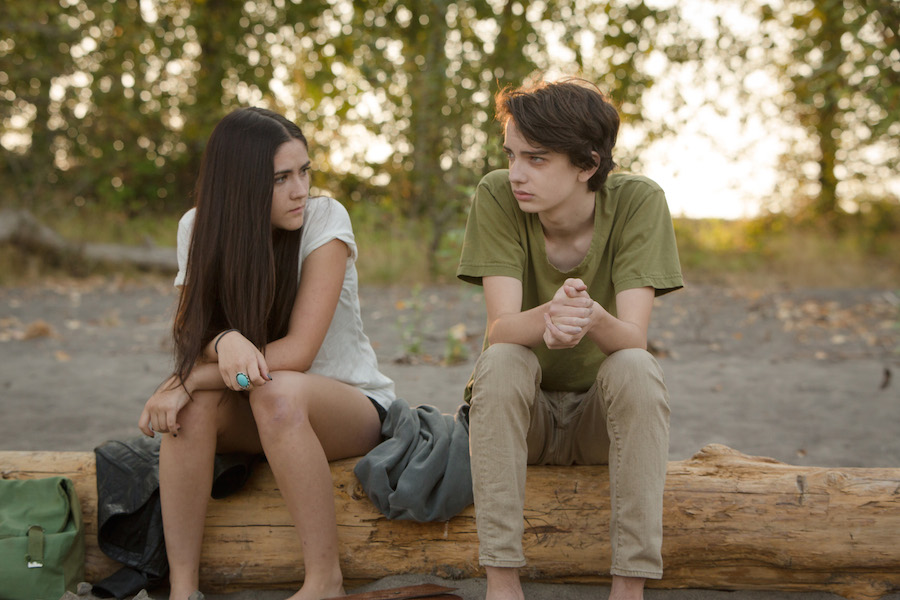
Feeling unsure about their burgeoning relationship, James meets Val and they head out of the city to a lake where they spend time getting to know each other. Back in the city they meet up with Harmon at another party. But James witnesses Val and Harmon kissing and he leaves. At his next therapy session, Dr Pembry challenges James as to why he sees him. When he tells James he thinks it’s because he feels guilty for not being able to support his mother, and that he should just get on with life, James begins to see things differently. He confronts Harmon and patches things up with Val before heading home to speak to his mother and revealing something about his father’s death that nobody else knows.
A lyrical coming of age tale from first-time writer/director Johnson, All the Wilderness is a slow, mood- rather than plot-driven movie that has a strong visual flair and does its best to be different in a genre with (perhaps) too many antecedents. Taking the basic idea of a teenager torn between clinging to his father’s memory (albeit in an unusual way) and finding a way out of his grief, the movie covers mostly typical territory, but thanks to a good central performance by Smit-McPhee, never seems forced or too over familiar.
James is initially an intriguing character, though his obsession with recording – and predicting – death does seem a little heavy-handed, especially when you add his fondness for Chopin into the mix, as well as his choice of reading material, Moby Dick. But Johnson’s script is smart enough to introduce these embellishments and then not play on them too much except to provide some occasional flashes of humour later on. As we get to know him, James’ uncertainty and social awkwardness gives way, and we see someone taking their first tentative steps in growing up. Again, the script does a good job in balancing the difficulties of dealing with grief and the need to leave it behind, and as James begins to do so, Smit-McPhee’s physicality and demeanour become more confident, and his emotions fall into place, allowing him to realise that the wilderness his father spoke of – a slightly clumsy metaphor for life and death – is not something he has to be a part of.
While James isn’t particularly self-destructive, his relationship with his mother is tested by his going AWOL to see Harmon and Val, and though the ensuing confrontations between them feel perfunctory, and Madsen is required to step back almost throughout, it’s the actors approach to them that stops them from being entirely redundant. It’s the same with James and Val’s trip to the lake: they exchange personal information, mess around in the water, and establish a bond that, despite what happens between Val and Harmon, won’t be broken. It’s thanks to Smit-McPhee and Fuhrman that this fairly brief sequence works so well, and makes their later talk in the wake of that kiss all the more credible.
Johnson does make some mistakes though. Pembry’s “resolution/advice” comes at the end of approximately six months of sessions, and appears to be so simple (and obvious) that you have to wonder why it’s taken him so long to say it. And James’s reaction to it is also too expedient to be taken entirely seriously; all of a sudden he’s focused and determined and knows exactly what he needs to do. James also imagines hooded assailants chasing him through the streets, and while this idea adds some much needed energy to the movie, their appearance is never properly explained (and in one case seems designed only to get James on the bus where he properly meets Harmon).
Where the movie scores highly is in its look and feel, with DoP Adam Newport-Berra giving the viewer the sense of how James sees the world around him, with all its sights and sounds either slightly distorted or given heightened emphasis. There’s also a good use of space and lighting that makes some of the images seem more original in their framing and composition than you’d expect. And there’s a great mix of classical and indie music on the soundtrack too.
Rating: 7/10 – a solid debut by Johnson, All the Wilderness deals with themes of loss, fear and personal responsibility and, by and large, makes them seem fresh; but with too much that’s familiar, not every attempt to subvert the formula works, leading to a movie that works for the most part but not entirely.



 thedullwoodexperiment