When you’re making a version of a novel by Octave Mirbeau that’s been filmed before by the likes of Jean Renoir (in 1946), and Luis Buñuel (in 1964), then you need to bring something special to the mix. Alas, from the looks of the trailer for this latest incarnation of Diary of a Chambermaid, it seems as if director and co-writer Benoît Jacquot has somehow mishandled things to the point of making Léa Seydoux’s title character more pouting and hostile than sympathetic. Combined with elements that make it look like it will descend into thriller territory, this adaptation looks as if it’s doomed from the start, but with Vincent Lindon in support it may yet redeem itself, although to do so, it’s really got to outshine a trailer that doesn’t do the movie any justice. Unless…
Morgan is the first feature from Luke Scott (son of Ridley), whose short movie Loom (2012) showed considerable promise. The tale of a corporate risk assessment consultant (played by Kate Mara) who is tasked with deciding if an artificial being that’s been created in a laboratory should be terminated, it looks stylish, creepy and tense, and the trailer holds back from revealing what the artificial being looks like – even though Morgan is played by Anya Taylor-Joy, Thomasin in The Witch (2015). By adding a touch of mystery, and not revealing too much about the movie’s scenario, the trailer does better than most in making Morgan a movie that might just be better than other Frankenstein-inspired efforts released in recent years.
In Len and Company, Rhys Ifans is the washed-up rock star turned in-demand producer trying to get away from it all by imposing a voluntary exile on himself. But the peace and quiet and booze-assisted reflection he seeks is interrupted first by his son (played by Jack Kilmer, son of Val Kilmer and Joanne Whalley), and then by the pop star he helped create (played by Juno Temple). With director Tim Godsall’s drama leavened by some moments of bittersweet humour, the movie has a knowing attitude toward its characters, and serves as a reminder that Ifans can be a remarkable actor when necessary. It may not make it onto many people’s Ten Best lists for 2016, but this looks as if it has the potential to surprise anyone who sees it.
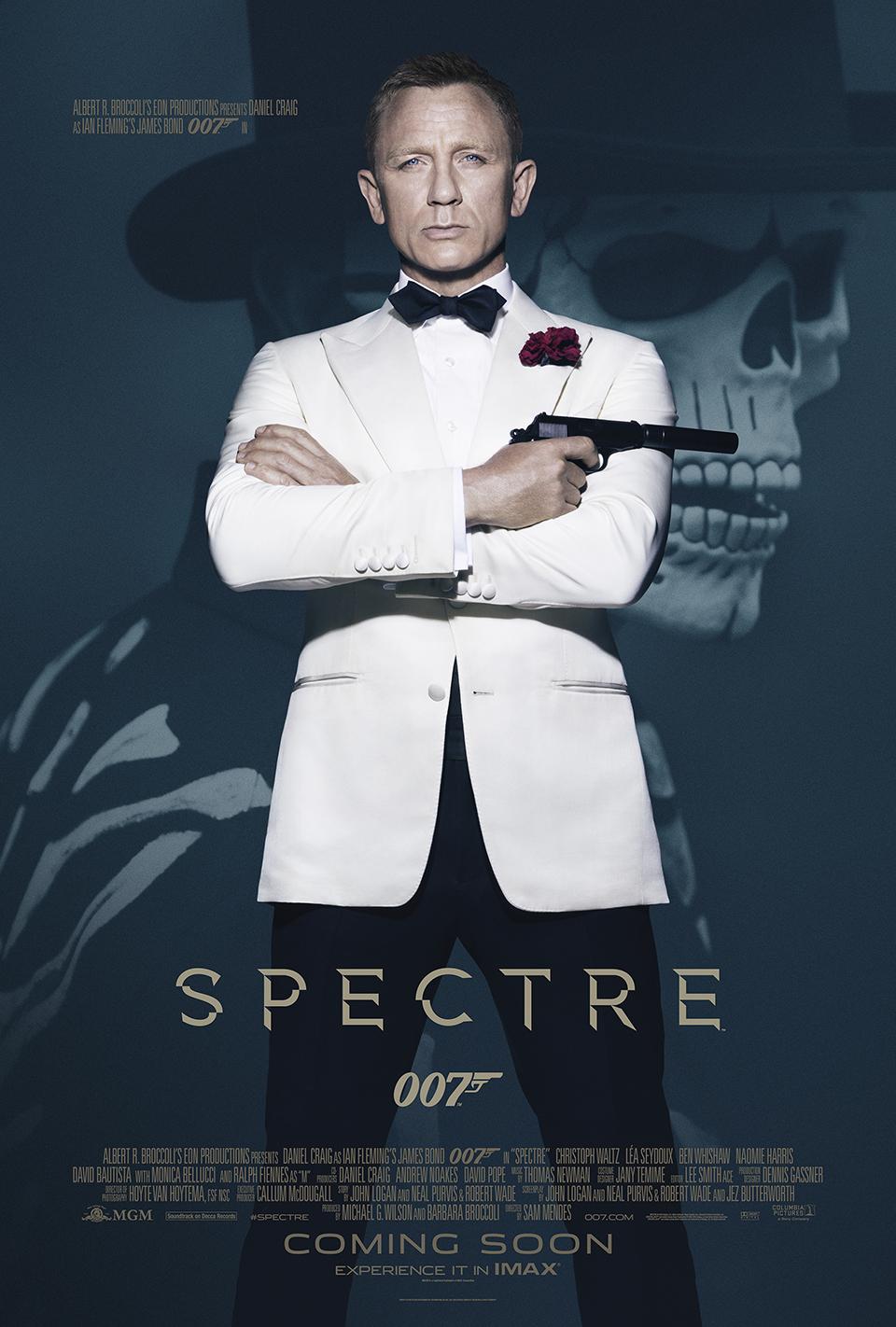
Cast: Daniel Craig, Christoph Waltz, Léa Seydoux, Ralph Fiennes, Ben Whishaw, Naomie Harris, Monica Bellucci, Dave Bautista, Andrew Scott, Rory Kinnear, Jesper Christensen, Alessandro Cremona
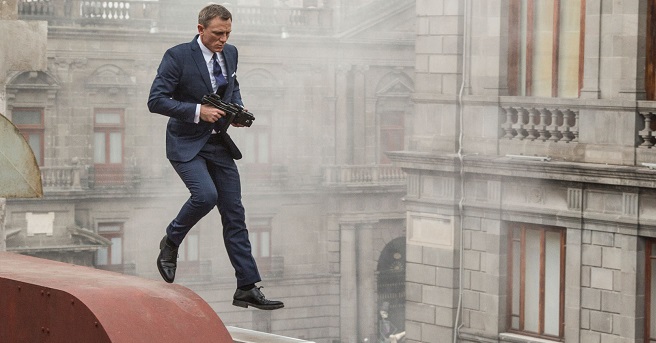
And so, here we are again, back in familiar territory: after a run of three movies with a new actor playing James Bond, and with the material getting worse and worse, we arrive at a fourth movie that neither grips or excites, boasts a decent script or direction, and which labours through its extended running time like an asthmatic running a half-marathon. We could be talking about Die Another Day (2002), but instead we’re talking about Spectre, the latest in the oft-rebooted franchise, and possibly Daniel Craig’s last outing as Bond (he may do one more but nothing’s definite yet).
It’s been a relatively short nine years since Casino Royale exploded onto our screens in a welter of frenzied, punishing action sequences, and one of the best Bond scripts ever. It was everything you could ever hope for from a Bond movie, and then some, and for many fans it went straight to the top of their favourite Bond movie list. There were some psychological aspects to it in terms of Bond’s behaviour, the best Bond villain for an age, and as an “origin story” it worked much better than most. But most of all it was fun with a capital F.
And then there came the inevitable stumble with Quantum of Solace (2008). A straight-out revenge flick but with James Bond as the central character, it was basically a direct follow-up to Casino Royale that suffered from a weak villain and a mid-section that dragged as if the writers had lost focus on the story they were telling. But it did have some great action sequences, just as tough and brutal as before, and a great performance from Craig. (If you watch it back to back with Casino Royale as a four hour movie it plays a lot better than on its own.)
Now at this stage, the producers brought on board Sam Mendes to helm the third outing for Craig, and he delivered the most successful Bond movie to date: Skyfall (2012). But while critics and fans heaped praise on the first Bond movie to make over a billion dollars at the box office, less easily swayed viewers could see the cracks starting to show as the writers tried to include a mystery relating to Bond’s past. And there were problems elsewhere, where the script showed signs of laziness (the train crash – how could Silva have “known” that he and Bond would meet at that particular place and time for the train to come crashing through the ceiling?).
That laziness has been extended to Spectre, with its tired action sequences (only the fight on the train between Bond and Mr Hinx has any energy or verve about it), eggshell thin characterisations (why does it seem as if Vesper Lynd is the only female character in the Bond franchise with any depth?), nonsensical reason for the villain’s actions (whatever happened to blackmailing the world’s leaders into not killing them with hijacked nukes?), and nods to previous entries in the franchise that only serve to remind audiences of the good old days when Bond just got on with the job and didn’t have to deal with questions about his lifestyle or any emotional scarring arising out of his childhood.
There’s also the absurd plot about linking all the world’s security systems under one (though it looks as if Waltz’s character is already doing that anyway), and then there’s Christoph Waltz’s ersatz-Blofeld scampering around like an escaped inmate from Bellevue, and providing none of the menace required to make his character a match for Bond’s determination and drive; in fact, he has more in common with Elliot Carver, Jonathan Pryce’s crazed media tycoon in Tomorrow Never Dies (1997) (but that’s still not a recommendation). Waltz is a good actor, but he’s all too often an actor making his own decisions about playing a role, and without, it seems, much instruction from the director. Here he tries the playful über-villain too often for comfort, and for the head of an organisation that included Le Chiffre and Raoul Silva as mere agents, looks entirely like someone’s younger brother who finally gets to play with his bigger brother’s toys.
Once again, the female characters are there for decoration, with Seydoux going to sleep in a hotel room fully clothed and then waking up some time later in her slip, and Bellucci wasted as the wife of a man Bond kills in the opening sequence. Harris though, does get more to do as Miss Moneypenny (we even get a glimpse of her home life), but beyond that it’s business as usual, with no other female roles of note, and the focus firmly on the macho posturing that occurs elsewhere throughout (even Whishaw gets a moment out in the field where he encounters some danger). Fiennes is a grumpy-looking M (though he does get the movie’s best line), Scott is a slimy-looking C, and Bautista is all the more imposing for being dressed in bespoke tailoring throughout. The returning Christensen is a welcome sight but he’s only there to reiterate what he said in Quantum of Solace (though “we have people everywhere” now becomes “he’s everywhere”), and his one scene is over far too quickly.
Returning as well, of course, is Mendes, whose handling of Skyfall meant he was always going to be asked to return, but perhaps it would have been better to go with someone who could inject some much needed energy into proceedings. Mendes is good at the MI6 stuff, prowling the corridors of power and highlighting the power games surrounding the shake up of the security services that serves as the political backdrop for the movie, but “out in the field” he’s less confident, and on this evidence, less engaged. There are too many scenes that go by without making much of an impact, and too many scenes that could have been more judiciously pruned in the editing suite. Instead, Mendes does just enough to make Spectre a facsimile of Skyfall, but without the emotional ending (here Bond rides off into the sunset with Seydoux’s character, but you know she won’t be back for the next movie).
If Craig decides not to play Bond one more time then the producers will need to go back to square one and start afresh – again. If they do, then let’s hope this whole let’s-give-Bond-an-origin-story-he-doesn’t-need angle is dropped in favour of seeing him do what he does best: being a one-man wrecking crew with no time for niceties. In many ways, Ian Fleming’s creation is a “sexist, misogynist dinosaur”, but it’s what we’ve loved about him for over fifty years now, and in their efforts to give us a “new” Bond for contemporary times, the producers have lost sight of what makes him truly Bond: he doesn’t do introspection or guilt, and because of that he’s good at his job. (And if a reboot is in order, then let’s get Martin Campbell back in the director’s chair – he seems to know what he’s doing.)
Rating: 5/10 – not a complete stinker – it’s production values, along with Craig’s still committed performace see to that – but not the best Bond outing you’re likely to see either, and proof that the series, in this stretch at least, is heading downhill fast; when even the action sequences in Spectre feel tired and lacklustre, then it’s time for the producers to take a step back and work out where they really want to take Bond next, because right now, it doesn’t look as if they know.


 thedullwoodexperiment