• 10 Reasons to Remember…
  • A Brief Word About…
  • About
  • For One Week Only
  • Happy Birthday
  • Monthly Roundup
  • Old-Time Crime
  • Other Posts
  • Poster of the Week
  • Question of the Week
  • Reviews
  • Trailers

thedullwoodexperiment

~ Viewing movies in a different light

thedullwoodexperiment

Tag Archives: Lupita Nyong’o

Queen of Katwe (2016)

26 Wednesday Oct 2016

Posted by dullwood68 in Movies

≈ Leave a comment

Tags

Chess, David Oyelowo, Grandmaster, Katwe, Literary adaptation, Lupita Nyong'o, Madina Nalwanga, Mira Nair, Phiona Mutesi, True story, Uganda

qok

D: Mira Nair / 124m

Cast: Madina Nalwanga, David Oyelowo, Lupita Nyong’o, Martin Kabanza, Taryn Kyaze, Ronald Ssemaganda, Ethan Nazario Lubega, Nikita Waligwa, Edgar Kanyike, Esther Tebandeke

It may not be obvious at first glance but Disney like to make true stories into movies. Even better is if it’s an inspirational true story. Which is why their production of the true story of Phiona Mutesi isn’t as odd a project as it might seem at first glance. Based on the book, The Queen of Katwe: A Story of Life, Chess, and One Extraordinary Girl’s Dream of Becoming a Grandmaster by Tim Crothers, Mira Nair’s latest movie holds steady to the usual tenets stipulated by Disney when they make a true story into a movie, and the result is a polished but depth-free look at one young girl’s rise from the slums of Uganda to prominence within the world of African chess players.

Phiona (Nalwanga) lives with her mother, Harriet (Nyong’o), her older sister Night (Kyaze), and her two younger brothers, Brian (Kabanza) and Richard. They make a living from selling maize and sweetcorn on the streets of Katwe, one of eight slums in Kampala, Uganda. Early on, Night leaves home to live with her affluent boyfriend. As if her leaving wasn’t enough, Phiona realises that Brian isn’t spending much time selling maize and sweetcorn; instead he’s heading off to do something else. One day, Phiona follows him, and finds that he’s going to a project run by the Sports Outreach Institute, a Christian sports mission. Run by Robert Katende (Oyelowo), the children there are learning how to play chess. Phiona joins the group and it soon becomes obvious that she has a natural aptitude for the game.

queen-of-katwe-1

Robert encourages her, and when a local tournament is held, he enters some of the children, including Phiona and Brian. Phiona wins the tournament and she finds she has a degree of fame back in Katwe. Robert wants her to improve her game, but Harriet is suspicious of both chess and Robert’s assertion that Phiona can succeed as a future grandmaster. Initially reluctant to let Phiona follow her destiny, she eventually becomes supportive and proud of her youngest daughter. But Phiona’s increasing confidence leads to complacency and she loses another competition. What follows is a crisis of confidence that sees Phiona believe that the future within her grasp is no longer hers to achieve.

Queen of Katwe has several things going for it. One is the relative unfamiliarity of its location and its characters. Another is the quality of the performances. There’s also Nair’s attentive, confident direction. And there’s Sean Bobbitt’s rich, detailed, vibrant cinematography. All these elements come together and enhance the movie in ways that are entirely felicitous and sometimes unexpectedly profound. As Phiona’s story unfolds, the hardships and the setbacks she faces, while not exactly as grim-looking or -sounding as they probably were in real life, are given enough emphasis that when she and her family are evicted, the audience is likely to be concerned as to what they’ll do next, and where they will go. Their journey has become the viewer’s journey.

null

But Nair’s admirable direction, Nalwanga’s easy-going, likeable performance (allied to the more polished performances of Oyelowo and Nyong’o), the beautiful but desperate locations, and Bobbitt’s tremendous depictions of them, all of these wonderful components somehow lack the ability to offset the one major problem the movie has at its core: an over-reliance on predictability. Each development in the story is signposted with almost clockwork regularity, from Phiona’s first tournament loss, to Harriet’s eventual unconditional support for her daughter, to Robert’s decision in relation to a much longed for job opportunity. It’s as if the movie can’t help itself: it has to stick to formula, and it can’t be too imaginative.

What this leaves the viewer with is a further problem: how to adequately qualify their feelings about Phiona’s story, and how much of it is kept from being even more effective (and affecting) by this decision to keep things static. Whole scenes go by where their importance is tenuous to what follows, or indeed, to what’s gone before. It’s even more difficult to lay this weird displacement at the door of the screenwriter, William Wheeler. Wheeler has done a good job in making Phiona’s story both appealing and inspiring, but even when he strays too close to cliché and melodrama he’s still not strayed close enough for those two “bad guys” to have the kind of impact that slows a movie down or makes it seem like too much effort is required.

queen-katwe-movie-2016-reviews

In real terms, Queen of Katwe is a story we’ve seen too many times before, and because of this, it’s told in a way that is, at best, a comfortable one for the viewer, but also a desultory one for the movie. Phiona’s family dynamic offers nothing new, and nor does the way in which her story unfolds, from the unexpected success on the lower rungs of the Angolan chess ladder to the here-again-gone-again antics of Night. Even the section where Phiona doubts herself and becomes (somewhat) depressed is approached with a kind of bland decisiveness that adds little or no drama to what’s unfolding. Instead of feeling undue and unnecessary pressure, all it takes is a pep talk from Robert and she’s okay again – and the viewer will know in advance that this will be all she will need to start playing again.

There are many more moments like that one, and the movie is so reliant on them, it’s as if the makers decided to include as much movie shorthand as possible during Queen of Katwe‘s filming, and then they imbedded the idea even further during the editing process. It doesn’t make the movie unwatchable, or a bad movie that could have been better; rather it’s a movie that won’t surprise anyone, and it’s a movie that hits each emotional highpoint with all the skill and precision of someone pushing a dart into a bullseye from a foot away. It’s movie making by rote, and sadly, it lessens the impact of Phiona’s story, and her achievements – which can’t be right, can it?

Rating: 7/10 – a good movie that rescues outright victory from the jaws of averageness too often for its own good, Queen of Katwe has a lot that works but only in the context of its lack of narrative ambition; an odd movie then, one that can be liked and disliked in equal measure, and which will leave many viewers wondering if it’s as good as they think it is.


Share this:

  • Click to share on X (Opens in new window) X
  • Click to share on Facebook (Opens in new window) Facebook
  • More
  • Click to print (Opens in new window) Print
  • Click to email a link to a friend (Opens in new window) Email
Like Loading...

The Jungle Book (2016)

20 Wednesday Apr 2016

Posted by dullwood68 in Movies

≈ 3 Comments

Tags

Baloo, Ben Kingsley, Bill Murray, Christopher Walken, Disney, Drama, Fantasy, Idris Elba, Jon Favreau, Kaa, Live action, Lupita Nyong'o, Neel Sethi, Remake, Review, Scarlett Johansson, Shere Khan

The Jungle Book

D: Jon Favreau / 105m

Cast: Neel Sethi, Bill Murray, Ben Kingsley, Idris Elba, Lupita Nyong’o, Scarlett Johansson, Giancarlo Esposito, Christopher Walken, Garry Shandling, Brighton Rose, Jon Favreau, Sam Raimi

The first of two live action versions of Rudyard Kipling’s classic tale – the other, just called Jungle Book and directed by Andy Serkis, is due in 2018 – Disney’s remake of their own beloved animated classic arrives with much fanfare and enough hype to stop even Shere Khan in his bloodthirsty tracks. It’s taken over $300 million at the international box office already, and the House of Mouse is keen to get director Jon Favreau and writer Justin Marks back for a sequel (surprise, surprise). The CGI environment created for the characters, and against which token human Mowgli (Sethi) interacts, is incredibly detailed and realistic, while the final showdown between tiger and man-cub is… well… it’s okay.

And that’s the problem with the movie as a whole: it’s okay. When the best thing you can say about a movie is that the backgrounds look realistic, then it’s a sure sign that whatever Favreau and co were aiming for, they didn’t actually achieve it. And yet the material is there to be taken advantage of, as Disney did nearly fifty years ago when they made the animated version. But this version makes some significant changes to the original, and while you don’t want an exact carbon copy of what went before, there’s too much that’s different for the movie to work as well as its predecessor.

TJB - scene2

First, there’s the musical elements. Shoehorned into the movie are two of the animated version’s most enjoyable songs, The Bare Necessities and I Wanna Be Like You. This isn’t a musical version of the story, and yet these two songs are included, and awkwardly at that. There’s no reason for them to be there, unless Disney felt that modern audiences, perhaps weaned on the animated version, would feel upset if they weren’t included. As it is, The Bare Necessities is given a nostalgic feel that helps offset the oddness of its inclusion, but the same can’t be said of I Wanna Be Like You, an uncomfortable rendition of which is given by Christopher Walken as King Louie, a giant orang-utan you half suspect has been eating his tribe in order to get so big. Some viewers may well be happy to see these songs included, but in terms of the movie itself they’re interruptions to the flow of the movie and the narrative.

But the flow of the movie is also a problem. Favreau is a capable director but he doesn’t always get the pace of a movie right – check out Iron Man 2 (2010) as a prime example. Here he connects each scene as if they were part of a larger puzzle and he’s got too much time to put it all together. This leads to stretches where The Jungle Book pads along like Shere Khan at the watering hole, full of intention but held back by an unwanted need for restraint. It makes for a choppy, uneven movie that holds the attention completely in certain scenes, but then abandons that attention in favour of just moving on.

TJB - scene3

And then there’s the ending, changed from the animated version – where Mowgli heads off to the man village because that’s where his future lies – to reflect… well, it’s not altogether clear. Mowgli has clearly found his true place in the jungle, but it’s at odds with what Shere Khan and even Bagheera have been saying all along: that Mowgli will grow up to be a man, and man has no place in the jungle (it’s even part of the jungle law, but the script ignores this practically the moment it’s been brought up). Back in 1968 this bittersweet ending was the perfect conclusion to Mowgli’s story, but here it seems like a cynical decision to help set up and ensure the sequel(s) that Disney are looking for. In a weird way, the script’s decision to integrate Mowgli more fully with the jungle environment makes him seem like another Tarzan in the making.

On the plus side, Favreau has assembled a great cast to give vocal life to the animal characters, with Murray on fine form as Baloo, and Johansson proving especially effective as Kaa. Kingsley is somewhat swamped by the script’s decision to make Bagheera almost entirely like a resigned schoolmaster, Nyong’o and Esposito make the most of their underwritten wolf parts, while Walken does his best to make King Louie frightening, but weirdly, sounds more like Kevin Spacey doing an impression of Christopher Walken than Walken himself. And then there’s Idris Elba, cast as Shere Khan; somehow his gruff tones don’t seem to suit the role, and his scenes have an awkwardness to them in terms of his voice not fitting the look of the character. In effect, it’s as if his voice has been badly dubbed.

TJB - scene1

As the only human in the movie, a lot rides on the abilities of Sethi, and while he’s certainly proficient, his performance isn’t as effective as it could be. In the scene where Mowgli decides to leave the jungle and go to the man village, his lack of experience leaves the scene feeling perfunctory rather than highly emotive, and you get the sense that Favreau was unable to get more from him. If Sethi is to take part in any further movies as Mowgli then it’s to be hoped that his experience this time round proves to be the bedrock for better performances in the future.

All in all, The Jungle Book isn’t a bad movie per se, it’s just that it doesn’t have that spark that would have made it a truly enjoyable movie. And despite its evident popularity with audiences worldwide, it’s likely that its success is due to brand recognition rather than any inherent quality. Remakes are a tricky business to get right, as any studio or production company should know, but with Disney – and it shouldn’t be the case – you somehow expect something a little bit better, and a little bit more entertaining. That it’s just okay is perhaps worse than its being just bad.

Rating: 5/10 – nowhere near the live action remake audiences really needed, The Jungle Book suffers from being too clinical and too respectful of itself (if not Kipling’s original tale); with too many moments that pass without emphasis or emotion, it remains a beautiful movie to watch, but an empty one as well.

Share this:

  • Click to share on X (Opens in new window) X
  • Click to share on Facebook (Opens in new window) Facebook
  • More
  • Click to print (Opens in new window) Print
  • Click to email a link to a friend (Opens in new window) Email
Like Loading...

Non-Stop (2014)

11 Tuesday Mar 2014

Posted by dullwood68 in Movies

≈ 3 Comments

Tags

Air marshal, Bomb, Hijacking, Iceland, Jaume Collet-Serra, Julianne Moore, Liam Neeson, Lupita Nyong'o, Michelle Dockery, Ransom demand, Review, Scoot McNairy, Secure network, Transatlantic flight

Non-Stop

D: Jaume Collet-Serra / 106m

Cast: Liam Neeson, Julianne Moore, Scoot McNairy, Michelle Dockery, Nate Parker, Corey Stoll, Lupita Nyong’o, Omar Metwally, Jason Butler Harner, Linus Roache, Shea Whigham, Anson Mount

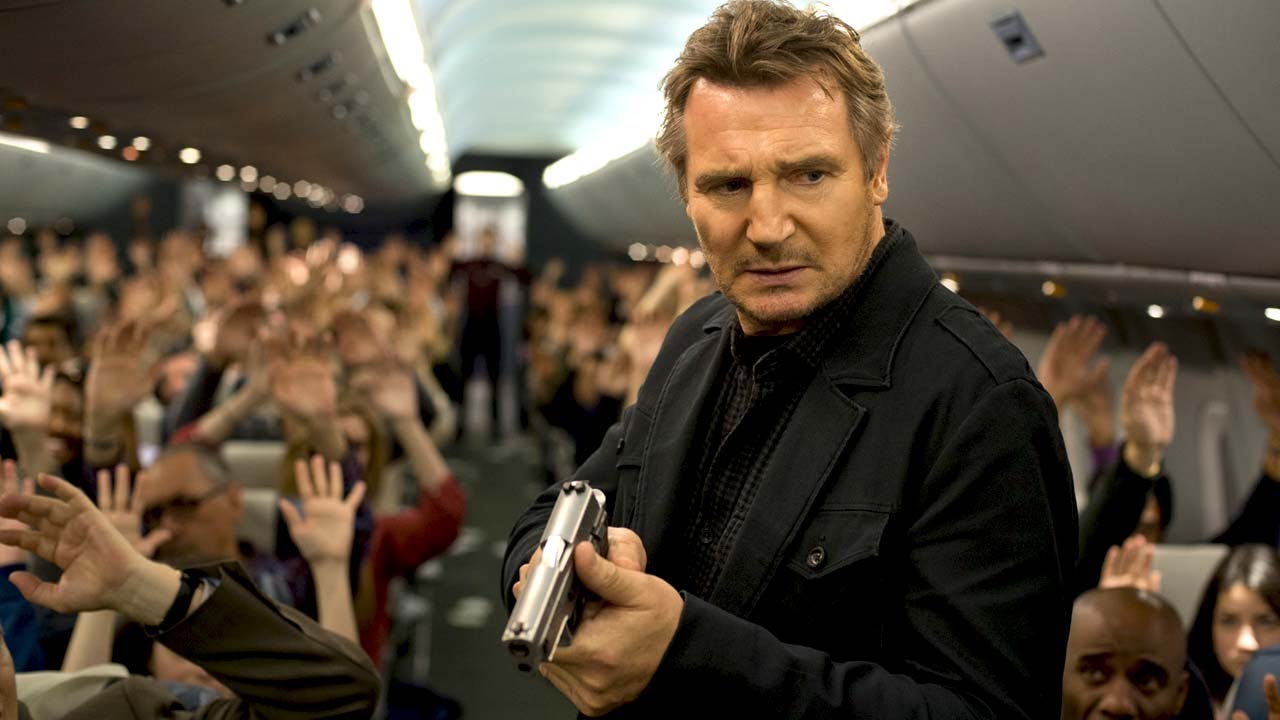
Non-Stop – or the continuing adventures of Liam Neeson in action movie land – starts off promisingly enough with air marshal Bill Marks (Neeson) preparing to board a flight to London from New York.  He looks a mess, he’s drinking, he’s obviously got problems, and he has a gun.  Once the flight is underway, Marks begins to get text messages over the air marshal network, which should be secure.  If the mystery person sending the texts isn’t paid $150 million dollars then someone on the plane will die every twenty minutes until it is.  Marks thinks it’s probably some kind of elaborate practical joke, and challenges the other air marshal on the plane, Hammond (Mount) about it, but it’s soon made clear Hammond didn’t send the messages.  He alerts the captain and the cabin staff as a precaution, and also his boss at the Transport Security Administration (TSA).  Only Marks takes the threat seriously.  As the first twenty minute marker nears, Marks finds himself attacked by Hammond (who, it turns out, is being coerced by the texter) and is forced to kill him, thereby doing the texter’s work for him.  Marks also discovers that Hammond was carrying a briefcase full of cocaine.

With Marks attempting to keep Hammond’s death from the crew and passengers – and no one making any attempt to use the toilet Hammond’s body is in – the plot thickens as it’s revealed that the account the texter wants the money transferred into is in Marks’ name.  With suspicion mounting against him, Marks attempts to discover the texter’s identity by checking the passengers’ cell phones.  Some of the passengers take umbrage at this, particularly NY cop Reilly (Stoll), and communications tech White (Parker).  When another murder takes place after forty minutes, Marks’ behaviour becomes increasingly more desperate as he attempts to locate the texter, alienating both the crew and passengers further, and as events unfold, putting himself in the frame for what is now being seen by the outside world as a hijacking.  Even the TSA believe he’s gone bad.  And when he discovers there’s a bomb on the plane, Marks must do all he can to save the plane and himself.

Non-Stop - scene

A movie like Non-Stop can be taken (no pun intended), in one of two ways: as a leave-your-brain-at-the-door-and-go-with-it type of movie that could end up being a fun ride, or as yet another dire attempt by Hollywood to provide thrills and spills but without any kind of focus on logic or credibility – still a fun ride perhaps, but one that coasts on its high concept and promise of seeing Neeson doing what he (currently) does best: kick ass.  In either circumstance, though, Non-Stop is a let-down, a polished yet soulless piece of work that is, seriously, a real piece of work.

The fault here lies squarely with the script by John W. Richardson, Christopher Roach and Ryan Engle, which piles on absurdity after absurdity and never lets you forget that credibility isn’t an issue.  As Marks gets ever more desperate to discover the texter’s identity, and he violates the passengers’ rights with ever-increasing enthusiasm, the script never pauses to wonder if there might be any actual protocols involved in dealing with such an admittedly unusual situation.  When Marks tells everyone about the bomb and a “damage limitation” procedure, you’re not sure if the script has made it up or it does exist in the real world.  Two fighters are scrambled to fly alongside the airliner and with instructions to shoot down the plane if it drops to 8,000 feet or below because then it becomes a civilian threat.  But the plane is flying over the Atlantic and is being directed to land in Iceland, not exactly the most populous of locations.  Two of the victims are killed by poison dart; neither could have happened in the way they do and the script doesn’t even challenge itself to come up with anything more clever; it settles far too often for a “well, this happens, and then this happens, and it just does” kind of approach.

When the texter’s identity and his or her reasons for doing all this are revealed, it’s such a weak excuse the viewer can only shake their head in dismay and move on to the rapidly approaching finale.  It’s also a pretty woolly excuse, and delivered with all the earnestness and conviction of someone trying to explain why they’ve just done something so stupid they’re terminally embarrassed about it (like signing on to be the villain in Non-Stop).

As the script is so poor, and character motivations almost on the nearly extinct list, the cast fare badly, unable to do anything other than say the lines and hit their marks.  Neeson tries valiantly to make his role work but he’s hampered by having to be a hero when it would have been so much more effective if there had been some real doubt as to his involvement in the hijacking.  Moore is on hand to provide support as the passenger who never doubts Marks for a moment, while McNairy, Stoll, Parker, Metwally and others are trotted out as potential hijackers as the guessing game continues.  Dockery, escaping from Downton Abbey (and maybe changing agents at this very moment) is only required to look shocked and surprised at various moments, while Nyong’o, after her triumph in 12 Years a Slave, is saddled with the role of stewardess-most-required-to-scream-and-panic-a-lot.

Collet-Serra directs with ambition and a certain flair, keeping the visual side of things interesting, and making good use of the cramped conditions.  However, even he can’t make much of the dire script, and as a result, the cast suffer even further, some, like Dockery, seemingly cast adrift.  The action sequences are casually brutal yet effective, though the crash landing at the end won’t be the best use of CGI seen this year.  If there is to be a Non-Stop 2 – and we can only pray there won’t be – it will have to be a great deal better than this to warrant a return flight.

Rating: 5/10 – as a popcorn movie, Non-Stop just about makes it, but with serious reservations; laughable in places, frustrating to watch, and just too dumb for its own good.

Share this:

  • Click to share on X (Opens in new window) X
  • Click to share on Facebook (Opens in new window) Facebook
  • More
  • Click to print (Opens in new window) Print
  • Click to email a link to a friend (Opens in new window) Email
Like Loading...

12 Years a Slave (2013)

10 Friday Jan 2014

Posted by dullwood68 in Movies

≈ 1 Comment

Tags

Benedict Cumberbatch, Chiwetel Ejiofor, Edwin Epps, Lupita Nyong'o, Michael Fassbender, Patsey, Paul Dano, Plantation, Review, Sarah Paulson, Slavery, Solomon Northup, Steve McQueen, True story, US history, Whipping

12 Years a Slave

D: Steve McQueen / 134m

Cast: Chiwetel Ejiofor, Michael Fassbender, Lupita Nyong’o, Benedict Cumberbatch, Paul Dano, Sarah Paulson, Adepero Oduye, Paul Giamatti, Garret Dillahunt, Brad Pitt, Alfre Woodard, Scoot McNairy, Taran Killam

In 2013 the movie that drew most people to the cinema was the third solo outing for Marvel’s high-tech reboot of the Tin Man, Iron Man 3. That movie was fun, a well-made piece of confectionery that was hyped, trailed and previewed to within an inch of its life. Enjoyable as it was though, it was still the equivalent of a Big Mac and fries, offering a quick fix for the Geek Squads and providing little or no nourishment for anyone not au fait with Marvel’s plan for Cinematic World Domination. But if 2013 is to be remembered as the year a man in a can was seen by more people than any other movie, what of that other way of remembering any given year: by the movie that was easily the best the year had to offer.

In some years, that “choice” has been easy. In 1930, All Quiet on the Western Front. In 1945, Les enfants du paradis. In 1962, Lawrence of Arabia. In 1974, The Godfather Part II. In 1993, Schindler’s List. And in 2013…a movie most of us won’t see until 2014. A movie called 12 Years a Slave.

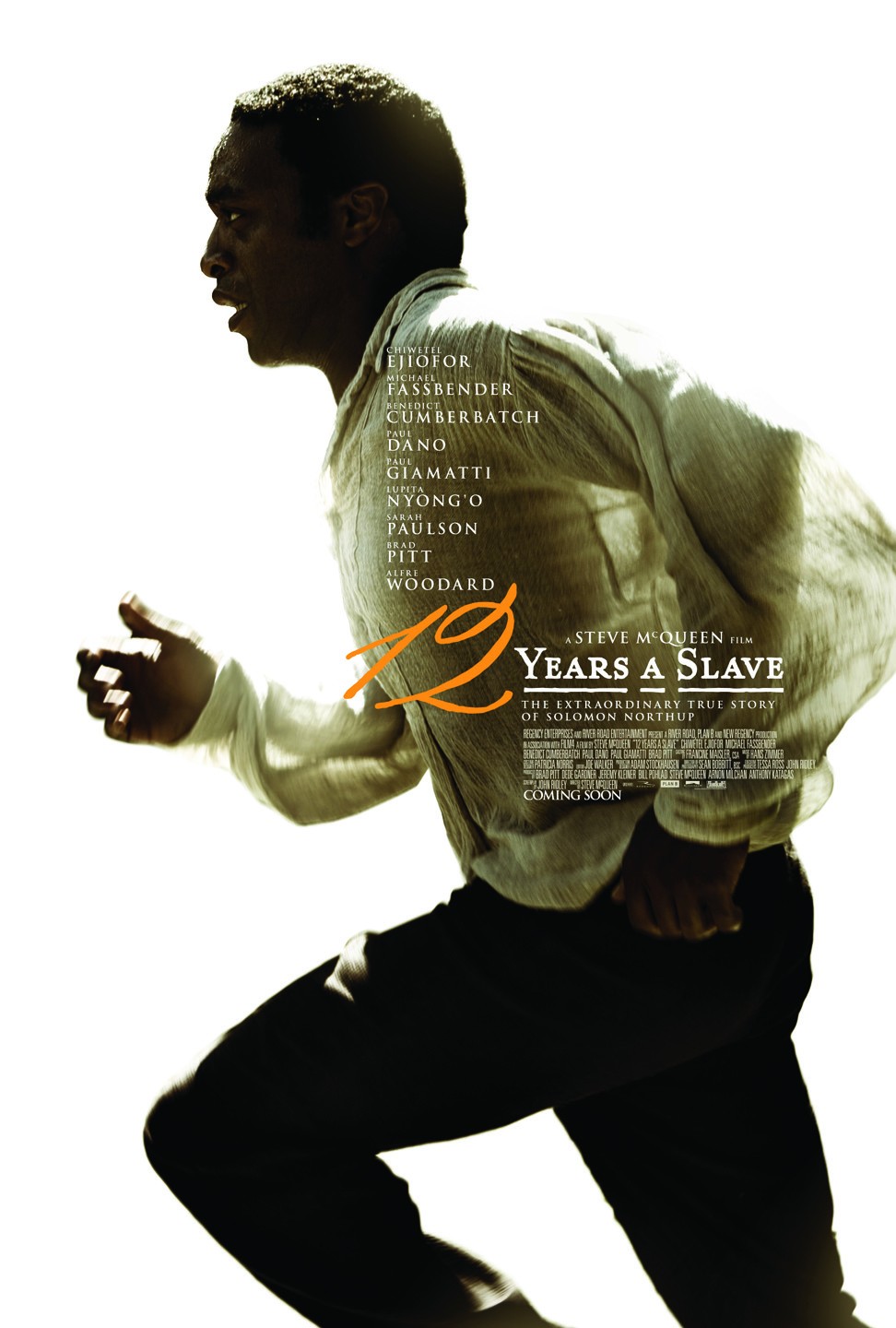
Directed by McQueen from the account written by Solomon Northup, a free man living in New York with his wife and two children in 1841, 12 Years a Slave is a devastating account of one man’s abduction into slavery, and his subsequent experiences on the plantations of Louisiana. Northup is an accomplished musician, well-respected, and flattered when two members of a circus troupe approach him to join their company.  He journeys from New York to Washington with them only to wake up after a night’s drinking to find himself in chains and told he is now a slave; his name is also denied him and he is told he is to answer to Platt.  At first he finds himself at the mercy of (the ironically named) slave trader Freeman (Giamatti), until he is sold, along with a woman called Eliza (Oduye), to plantation owner Mr Ford (Cumberbatch).  Ford is in the process of adding extra buildings to his land, and has a master carpenter Tibeats (Dano) who oversees the construction. Northup impresses Ford with his engineering skills but soon makes an enemy of Tibeats.  Before long, Tibeats pushes Northup too far and Northup beats him with his own whip. Tibeats swears revenge against Northup and returns with two men; they proceed to hang Northup but are stopped by Ford’s overseer, Chapin (J.D. Evermore).  Although Chapin stops Northup from being killed, he leaves him hanging from the tree with his toes barely touching the ground to save himself from being strangled; it’s only when Ford returns at the end of the day that he is cut down.  But Ford’s leniency comes at a price: he must sell Northup on in order to save his plantation from Tibeats’ wrath.

Where Ford has been a considerate and compassionate man, Northup’s new owner, Edwin Epps is anything but.  He has his slaves  whipped if they don’t make the daily quota for picking cotton, and when his wife complains that he is paying too much attention to one of the female slaves, Patsey (Nyong’o), he tells her coldly that he will see the back of her before he will rid himself of Patsey.  Northup becomes Patsey’s confidante, and he does his best to keep Epps from bothering her, but it doesn’t always work.  It’s only when a carpenter named Bass (Pitt) comes to work on the plantation, and speaks of equality, that Northup takes courage and explains his situation.  Bass agrees to help him, and some time later, Northup is freed and reunited with his family.

12 Years a Slave - scene

From the outset, 12 Years a Slave grabs the attention and keeps its audience riveted.  The topic of slavery is one that has been only fitfully addressed in cinema, and while movies such as Amistad (1997), and Amazing Grace (2006) have taken a political approach to the issue, there hasn’t been a movie that has looked at it from both the financial side of things, and the actual day-to-day living experience.  Throughout the movie it’s made clear that slavery is a business, and a lucrative one for people such as the trader Freeman, and for the plantation owners who invest in slaves as a means of reaping huge profits.  Against this wellspring of money, a slave’s life is worth nothing at all, and the movie delivers this message on several occasions.  When Northup is on tiptoe trying not to hang, it’s heartbreaking to see the other slaves carry on with their tasks as if he isn’t there; only by going about their business can they add value to their lives.

12 Years a Slave is also quite graphic in its depiction of the violence endemic in slavery, with one on-screen whipping being truly horrifying, and its the casual nature of it all that the movie depicts so well, along with the hateful racism that fuelled so much of it.  Early on, before Northup is placed with Freeman, he is beaten with a paddle.  The scene is shocking both for what happens to Northup, and for the sustained nature of the beating.  Epps’s wife throws a decanter in Patsey’s face, her racism mixed with jealousy and injured pride.  There are other moments where violence escalates from nothing, and there is a palpable sense of the violent undercurrents that were prevalent during this period.  If the movie presents these aspects unflinchingly, then it is to show the full horror of the constant threat of injury or death that slaves experienced.  (And to anyone who feels these scenes were unnecessary or uncomfortable to watch, then you are missing the point.  The life of a slave was far worse than anything depicted here, and by showing us the things that we do see, the movie reinforces the fact that, so far removed from both those times and those circumstances as we are in our daily lives, we can easily fail to realise how terrible slavery actually was.)

Thankfully, in amongst the brutal violence and the despair there are quiet moments of hope to offset the horror.  Northup’s relationship with Patsey is affecting and desperately sad at the same time, and shows how two people can still retain a measure of their humanity despite existing under appalling conditions.  Thanks to both Ejiofor and Nyong’o, their scenes together are both emotionally charged and riveting viewing.

The heart of the film is Ejiofor’s towering performance, a career best that is breathtaking to watch as he depicts a man who somehow retains his dignity and his sense of self through twelve years of degradation and terror.  Ejiofor holds the attention in every scene he’s in, deflecting focus even from Fassbender, whose performance as Epps is mesmerising in its intensity.  The audience is drawn to Ejiofor as their moral compass and guide; without him, the movie would be a series of vignettes without a central point of reference.  He displays a clear understanding of the emotions that governed Northup’s reactions and response to his situation: the despair, the anger, the resignation to his plight, the fear, the barely acknowledged hope of regaining his freedom, the sadness, the sense of loss, and most effective of all, the will to survive.  It’s a magnificent achievement.

As already mentioned, Fassbender is on brilliant form as the tortured, torturing Epps, adding layers to a character who could have been portrayed more matter-of-factly and with less attention to nuance and interpretation.  His performance is mercurial, adding a sense of uncertainty to Epps that makes his unpredictable nature more dangerous.  His scenes with Ejiofor are akin to an acting masterclass.  In the various supporting roles, Dano stands out as the mealy-mouthed, insecure Tibeats, all puffed-up pride and coiled hostility, while Cumberbatch continues to impress as the fair-minded, socially conscious Ford.  Paulson also impresses as Mistress Epps, her eyes never once betraying any emotion other than disgust.  And making her feature debut, Nyong’o is superb as the object of Epps’s lust, imbuing Patsey with an inner strength and determination that offsets the cruelty she receives at the hands of Epps and his wife.

This is McQueen’s third feature – after Hunger (2008) and Shame (2011) – and serves to reinforce how talented a director he is.  His control of the material is confident and assured, and he elicits strong performances from everyone in the cast.  In conjunction with cinematographer Sean Bobbitt, McQueen places the camera in exactly the right place in each scene, framing the action expertly and with close attention to the physical and emotional requirements of each set-up.  His decision to make 12 Years a Slave has proved to be a wise one, and the way in which he’s overcome the difficulties inherent in telling such a complex story is compelling.

12 Years a Slave is a harrowing, disturbing look at a shameful period in US history, and while some people might say that we don’t need to see the barbarity of the times to know it was evil, a reminder as powerful as this one is should always be welcome.  With stand-out performances, an insightful, intricate script courtesy of John Ridley, and a score by Hans Zimmer that perfectly supports the emotional and dramatic moments in the film, 12 Years a Slave is a movie deserving of everyone’s attention.

Rating: 9/10 – a modern masterpiece, with much to say about the nature of evil as the will to survive it; an engrossing, deeply moving account of one man’s journey through a contemporary hell and his eventual salvation.

Share this:

  • Click to share on X (Opens in new window) X
  • Click to share on Facebook (Opens in new window) Facebook
  • More
  • Click to print (Opens in new window) Print
  • Click to email a link to a friend (Opens in new window) Email
Like Loading...

Blog Stats

  • 486,575 hits

Recent Posts

  • 10 Reasons to Remember Bibi Andersson (1935-2019)
  • Fantasia (1940)
  • Dances With Wolves (1990) – The Special Edition
  • Kiss of the Spider Woman (1985)
  • The Three Musketeers (1973)

Top Posts & Pages

  • Lost for Life (2013) - Another Look
    Lost for Life (2013) - Another Look
  • Lost for Life (2013)
    Lost for Life (2013)
  • About
    About
  • Mr. Topaze (1961)
    Mr. Topaze (1961)
  • Hunt for the Wilderpeople (2016)
    Hunt for the Wilderpeople (2016)
  • Shock and Awe (2017)
    Shock and Awe (2017)
  • Billy Lynn's Long Halftime Walk (2016)
    Billy Lynn's Long Halftime Walk (2016)
  • Winter's Tale (2014)
    Winter's Tale (2014)
  • BFI London Film Festival 2015
    BFI London Film Festival 2015
  • 10 Reasons to Remember Arthur Hiller (1923-2016)
    10 Reasons to Remember Arthur Hiller (1923-2016)
Follow thedullwoodexperiment on WordPress.com

Blogs I Follow

  • Rubbish Talk
  • Film 4 Fan
  • Fast Film Reviews
  • The Film Blog
  • All Things Movies UK
  • Interpreting the Stars
  • Let's Go To The Movies
  • Movie Reviews 101
  • TMI News
  • Dan the Man's Movie Reviews
  • Film History
  • Jordan and Eddie (The Movie Guys)

Archives

  • April 2019 (13)
  • March 2019 (28)
  • February 2019 (28)
  • January 2019 (32)
  • December 2018 (28)
  • November 2018 (30)
  • October 2018 (29)
  • September 2018 (29)
  • August 2018 (29)
  • July 2018 (30)
  • June 2018 (28)
  • May 2018 (24)
  • April 2018 (21)
  • March 2018 (31)
  • February 2018 (25)
  • January 2018 (30)
  • December 2017 (30)
  • November 2017 (27)
  • October 2017 (27)
  • September 2017 (26)
  • August 2017 (32)
  • July 2017 (32)
  • June 2017 (30)
  • May 2017 (29)
  • April 2017 (29)
  • March 2017 (30)
  • February 2017 (27)
  • January 2017 (32)
  • December 2016 (30)
  • November 2016 (28)
  • October 2016 (30)
  • September 2016 (27)
  • August 2016 (30)
  • July 2016 (30)
  • June 2016 (31)
  • May 2016 (34)
  • April 2016 (30)
  • March 2016 (30)
  • February 2016 (28)
  • January 2016 (35)
  • December 2015 (34)
  • November 2015 (31)
  • October 2015 (31)
  • September 2015 (34)
  • August 2015 (31)
  • July 2015 (33)
  • June 2015 (12)
  • May 2015 (31)
  • April 2015 (32)
  • March 2015 (30)
  • February 2015 (37)
  • January 2015 (39)
  • December 2014 (34)
  • November 2014 (34)
  • October 2014 (36)
  • September 2014 (25)
  • August 2014 (29)
  • July 2014 (29)
  • June 2014 (28)
  • May 2014 (23)
  • April 2014 (21)
  • March 2014 (42)
  • February 2014 (38)
  • January 2014 (29)
  • December 2013 (28)
  • November 2013 (34)
  • October 2013 (4)

Blog at WordPress.com.

Rubbish Talk

Film 4 Fan

A Movie Blog

Fast Film Reviews

The Film Blog

The official blog of everything in film

All Things Movies UK

Movie Reviews and Original Articles

Interpreting the Stars

Dave Examines Movies

Let's Go To The Movies

Film and Theatre Lover!

Movie Reviews 101

Daily Movie Reviews

TMI News

Latest weather, crime and breaking news

Dan the Man's Movie Reviews

All my aimless thoughts, ideas, and ramblings, all packed into one site!

Film History

Telling the story of film

Jordan and Eddie (The Movie Guys)

Movie Reviews & Ramblings from an Australian Based Film Fan

Privacy & Cookies: This site uses cookies. By continuing to use this website, you agree to their use.
To find out more, including how to control cookies, see here: Cookie Policy
  • Subscribe Subscribed
    • thedullwoodexperiment
    • Join 481 other subscribers
    • Already have a WordPress.com account? Log in now.
    • thedullwoodexperiment
    • Subscribe Subscribed
    • Sign up
    • Log in
    • Report this content
    • View site in Reader
    • Manage subscriptions
    • Collapse this bar
 

Loading Comments...
 

    %d