
Tags
Barbara Kopple, Barbara Loden, Catherine Breillat, Chantal Akerman, Elaine May, For One Week Only, Gillian Armstrong, Independent, Jane Arden, Joan Micklin Silver, Liliana Cavani, Lina Wertmüller, Margarethe von Trotta, Safi Faye, Sarah Maldoror, Wanda, Women directors
Introduction
After a long period where female directors were working outside the mainstream and making experimental movies, the Sixties had started to see more women making movies that were accessible to a wider audience. This new generation of women directors wanted to tell stories that featured strong female characters, and as they garnered more and more recognition within the industry, so they also gained awareness with the general movie-going public. One movie, and its director, showed exactly what could be done on a small budget, and how powerful a story could be when told simply, and without resorting to accepted ideas about how a movie should look and feel.
Barbara Loden (1932-1980)
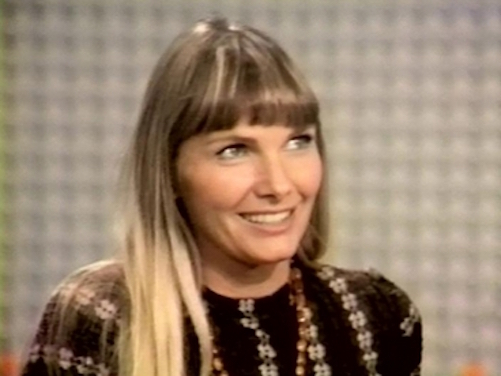
Loden began her career as a model and pin-up girl, but in the Fifties she decided to study acting and by the decade’s end she was appearing on Broadway. She was discovered by Elia Kazan who cast her in a minor role in the Montgomery Clift movie Wild River (1960). She followed it with Splendor in the Grass (1961) in which she played Warren Beatty’s wayward sister. Further movie roles failed to come along, and she did some work in television, but in 1964 she won a Tony award for her performance in Arthur Miller’s After the Fall (playing a fictionalised version of Marilyn Monroe). She continued with theatre roles, though in 1966 she was cast opposite Burt Lancaster in the movie version of The Swimmer. However, a dispute between the director Frank Perry and the producer Sam Spiegel over her scene with Lancaster – Loden apparently out-performed her more experienced co-star with ease – led to Perry being fired and several of the movie’s scenes being re-cast and re-shot. Loden’s role went to Janice Rule and it’s her performance that is seen in the finished movie.
In 1967 she married Kazan, and the following year appeared in the unsuccessful Fade-In (1968) with Burt Reynolds. At first she decided to go into semi-retirement, but out of the blue she wrote, directed and starred in a movie that was so innovative and so emotionally detailed (despite the main character’s disaffection with her life) that it took critics and audiences alike by surprise. The movie was Wanda (1970), and at that time it was one of the few American movies directed by a woman, independently or through a studio, to be released theatrically.
Loden’s tale of a coal miner’s wife who hooks up with a petty criminal was filmed in a cinéma vérité style that matched its melancholy subect matter; it’s so haunting at times that the viewer’s sympathy for Wanda is assured from the start. It’s an incredibly matter-of-fact movie, without a false note to it anywhere, and in all three capacities – writer/director/actress – Loden is supremely confident in what she’s doing, and the movie casts an hypnotic spell that’s hard to shake. You root for Wanda even though you know her life is heading in a downward spiral and the likelihood of her being saved is slim, but Loden’s pessimistic outlook allows for hope as well. It’s a fine line that Loden treads but she proves more than up to the task.

Her efforts were rewarded when Wanda won the International Critics’ Prize at the 1970 Venice Film Festival. Rightly regarded as a masterpiece of independent movie making, Wanda cemented Loden’s place in cinema history, but instead of following it up, she withdrew altogether from making movies and returned to the semi-retirement she’d begun two years before (some say Kazan expressed doubts about Wanda that led Loden to question her ability). Eventually she made two short movies, The Frontier Experience and The Boy Who Liked Deer (both 1975), but they proved to be the final projects that Loden worked on. In 1978 she was diagnosed with breast cancer, and she died two years later.
Loden’s impact on the women directors who followed her can’t be stressed enough. Although she only made one movie, and even though it went virtually unseen for the best part of forty years before being restored for the 2010 Venice International Film Festival, it’s a touchstone movie that is as influential now as it was in 1970. Loden was an assured actress who could be glamorous and confident on screen, but her real talent lay behind the camera, dissecting the lives of ordinary people who are trying to find their place in Life. Whatever the reasons for her not making any more movies, ultimately they’re unimportant, because in Wanda she left us something very special indeed.
The Seventies
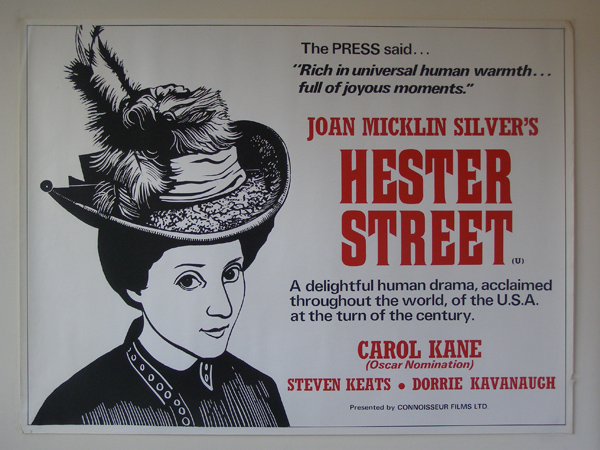
The new decade saw an increase in the presence of women directors across the globe. In America, Elaine May began her directing career with A New Leaf (1971), and after making two short movies, Joan Micklin Silver came to prominence with Hester Street (1975). They were followed by Barbara Kopple, a documentarian who won an Oscar for her first movie, Harlan County, USA (1976). In the UK, feminist filmmaker Jane Arden became the first British female director to gain a solo credit on the movie The Other Side of the Underneath (1972). Down Under, after spending most of the decade making shorts and a documentary, Gillian Armstrong broke into the mainstream with My Brilliant Career (1979) (it was also the first Australian movie to be directed by a woman in forty-six years).
In Europe, female directors seemed to be everywhere as the decade drew on. Even though she had begun her career in the Sixties it wasn’t until the release of The Night Porter (1974) that Liliana Cavani came to the attention of a wider audience. Her fellow Italian, Lina Wertmüller, also started her career in the Sixties, but also didn’t find fame and a wider audience until the release of The Seduction of Mimi (1971). Germany’s Margarethe von Trotta made two movies with Volker Schlondorff, including the hugely influential The Lost Honor of Katharina Blum (1975), before she made her first solo feature The Second Awakening of Christa Klages (1978). In France, Catherine Breillat began her often controversial directing career with A Real Young Girl (1976), and in neighbouring Belgium, Chantal Akerman secured her position as one of the most influential female directors working at the time with Jeanne Dielman, 23 Quai du Commerce, 1080 Bruxelles (1975).
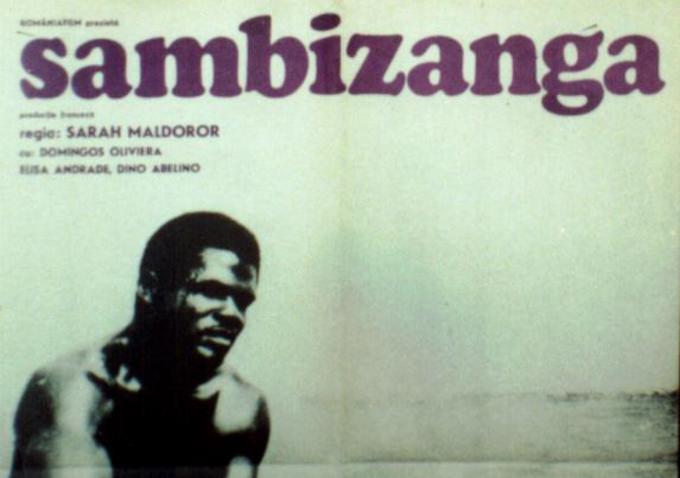
In Africa, Senegalese movie maker Safi Faye became the first female Sub-Saharan director to have a movie commercially distributed. The movie was Letter from My Village (1975) and it gained her international recognition. In Angola, Sarah Maldoror’s examination of the Angolan struggle for liberation, Sambizanga (1972) was a powerful movie that showed the tragedies caused by war, and the despair those tragedies trigger.
As the decade drew to a close, the establishment of so many different women directors from all around the globe had the sense of “At last!” about it. It wouldn’t be long before female directors began to be heard from in South America and the Middle East as well, and they would bring even more ways of telling stories and entertaining audiences. In the Eighties the ratio of women directors to their male counterparts would still be minimal, percentage-wise at least, but they would definitely enjoy as much commercial and critical success as their male colleagues, a situation that had been long overdue. And as they headed into the Nineties, those barriers were lowered even further. Women directors were here, and they were here to stay.
 thedullwoodexperiment