• 10 Reasons to Remember…
  • A Brief Word About…
  • About
  • For One Week Only
  • Happy Birthday
  • Monthly Roundup
  • Old-Time Crime
  • Other Posts
  • Poster of the Week
  • Question of the Week
  • Reviews
  • Trailers

thedullwoodexperiment

~ Viewing movies in a different light

thedullwoodexperiment

Tag Archives: Michael Almereyda

Marjorie Prime (2017)

09 Monday Oct 2017

Posted by dullwood68 in Movies

≈ 1 Comment

Tags

Artificial intelligence, Drama, Geena Davis, Humour, Jon Hamm, Lois Smith, Memory, Michael Almereyda, Review, Tim Robbins
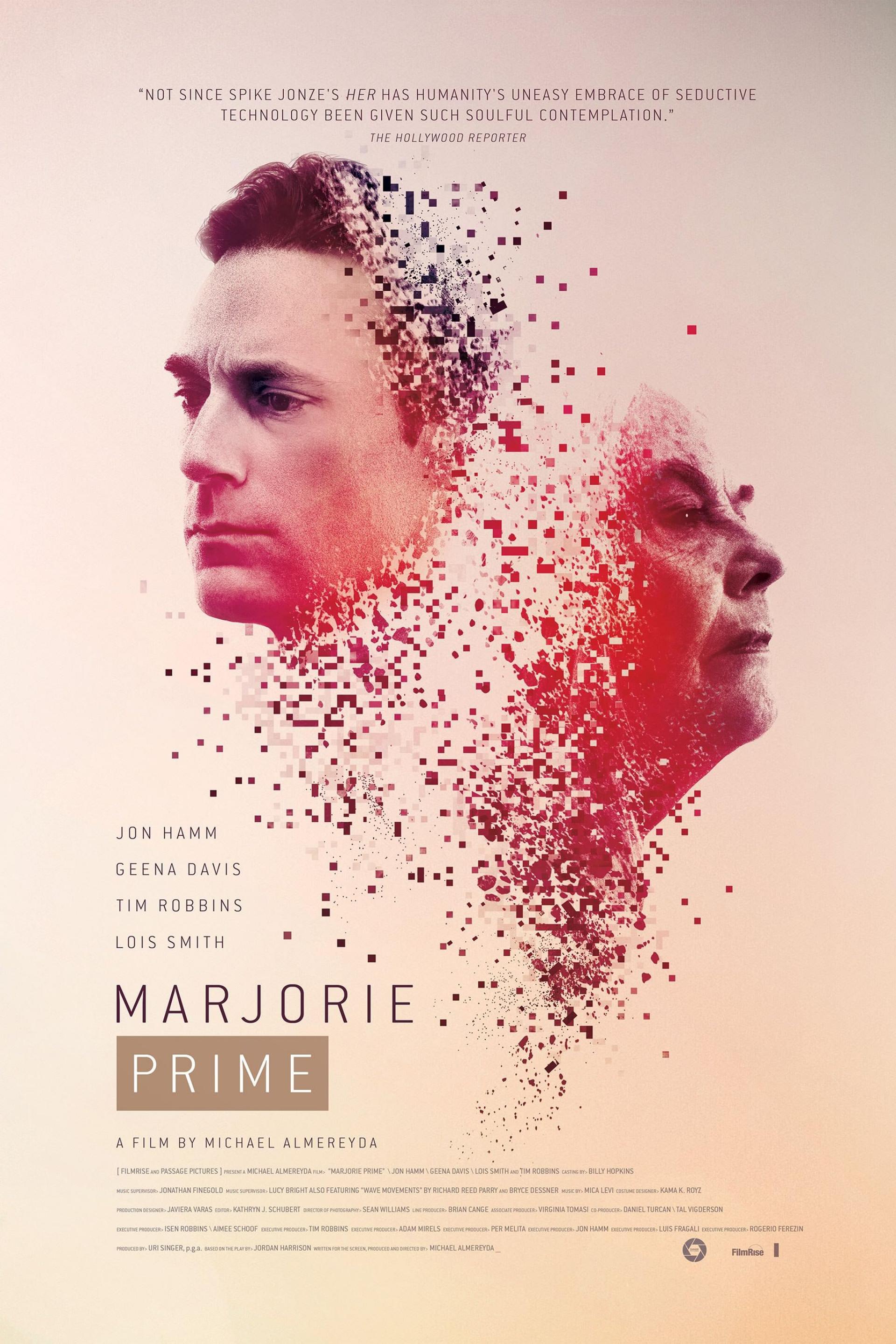
D: Michael Almereyda / 99m

Cast: Jon Hamm, Lois Smith, Geena Davis, Tim Robbins, Stephanie Andujar, Hannah Gross

How much do you trust your memories? Or rather, how much can you trust your memories? And where do they come from? Are they exclusively made up of your own recollections, or are they a combination of what you can remember and the recollections of others? And can they ever be really regarded as true memories, an accurate representation of something that happened in the past? These are just some of the questions that Marjorie Prime asks as it ponders the nature of memory, its provenance, and its importance in our lives.

Michael Almereyda’s latest movie is a challenging examination of how we remember things, and why. The why is perhaps more important than the how, but it’s how our memories shape our character and our personalities, and help us connect our past and present lives that seems to be more important. But if memory can be elusive, if it can be confusing, or contrary, or unreliable, then how can we know if a memory carries the weight that it should do? How can it retain the meaning it relies on to be an accurate memory? Almereyda’s answer – adapted from the Pulitzer Prize-nominated play by Jordan Harrison – is that, ultimately, we can’t be sure of anything related to memory because there are just too many variables. And many of those variables are the memories of other people.

The movie begins with Marjorie (Smith) having a conversation with a younger facsimile of her late husband, Walter (Hamm) (Walter is a computer programme, an example of artificial intelligence used as memory therapy). Together they probe various memories and attitudes towards memory that are largely to do with Marjorie’s attempts at building a coherent narrative out of her past. Walter is a computer-driven replica of Marjorie’s husband at the time of their engagement. He already knows a lot about Marjorie and the man he represents, but his knowledge is far from complete. In order to further his knowledge, and his usefulness to Marjorie – whose own memory is under threat from the early onset of Alzheimer’s – he discusses their shared past and allows her to correct him whenever he gets something wrong. Walter at first believes that they were watching My Best Friend’s Wedding (1997) when he proposed to her, but Marjorie is eqaully sure that it was Casablanca (1942), or at least that Michael Curtiz’s perennial classic seems more likely. Marjorie’s memory of that event is eluding her, so she creates a memory that sounds like it could be true, and once it’s accepted by the programme acting as Walter, then it passes into memory, and into truth.

And then there’s the input from Marjorie’s daughter, Tess (Davis), and her husband, Jon (Robbins). Both talk to Walter and both express their own feelings and views on events that happened to Marjorie during her life, and they don’t confine themselves to moments that they have direct knowledge or recollection of. Walter accepts what they tell him without verification or any kind of fact-checking being carried out. And when he relays their recollections to Marjorie – like him – she accepts these as having really happened. But how can such memories truly be “real” when they’re an amalgam of various sources?  With the frailty of the human mind being explored in this way, Almereyda shows us how unreliable our memories really are, and how our need to provide context for them can often mean we overlook any contentious issues that may arise from remembering them. The more we remember, Almereyda seems to be saying, the more we actually forget.
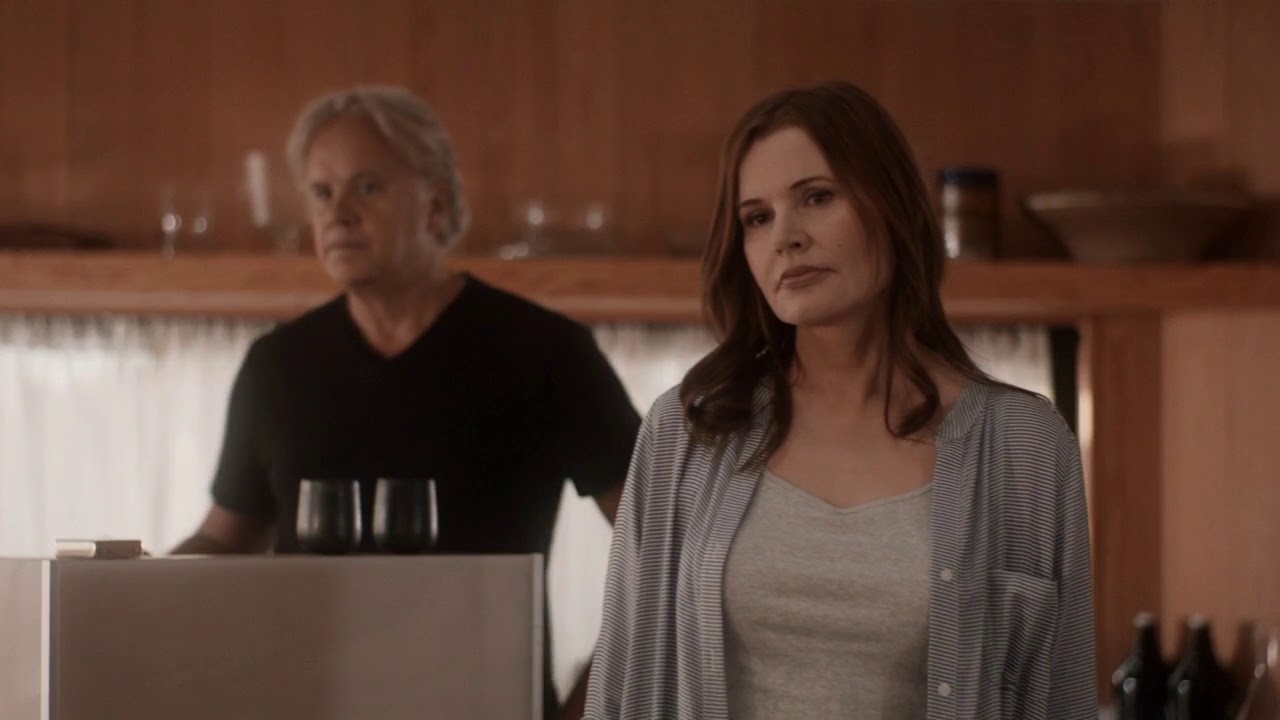
By showing the pitfalls of allowing future technology to “guide” us through the labyrinth of our reminiscences, Marjorie Prime highlights just how memory and truth can be ephemeral and an unreliable witness to our own experiences. Tess refers to the way in which we remember the emotion of an experience rather than the fact of it, and how this informs the details of that experience. From this we can understand that feelings and emotions are often more important than the facts, and can help us to derive a better appreciation or understanding of what we’re trying to remember. But these impressions can be just as subjective or erroneous as the memory itself, and as the movie progresses, and focuses more and more on Tess and Jon’s relationship and their own recollections, Almereyda uses the shift in perspective to show how relative memory really is. And there are further narrative shifts that provide even more examples of how memory can collude with us in providing the kind of recollections that help us make sense of our world and the world around us (and especially, other people). Layer upon layer upon layer, and soon the source can no longer be recognised. But is that a good thing or a bad thing?

Sensibly, Almereyda doesn’t provide the viewer with any conclusions, merely more and more questions, some of which can be answered within the narrative itself, and others that remain a mystery, fleeting notions of recognition that may or may not be reliable. The movie regards these questions as components in a kind of mental jigsaw puzzle, and in trying to piece them together, the characters all behave as though their own memories are more credible than others. Even Marjorie, whose moments of lucid behaviour grow fewer and further apart, believes what she remembers, and when she discusses with Walter their shared history, there are moments where she is creating rather than looking back. The same can be said for Tess and Jon, who want to help Marjorie retain her memory for as long as possible, but who also create incidents and details out of a misguided sense of being supportive. As in so many areas of life, lies become truth, and the boundaries between the two become irrevocably blurred, no matter how good the original intention.

Marjorie Prime is a small movie about big ideas, but important ones nevertheless, and the dialogue is smart, funny and precise in its statements and observations. The cast all give measured, thoughtful performances, with Smith (reprising her role in the original stage production) offering a particularly sprightly portrayal of Marjorie that is both sympathetic and endearing. Against this, Hamm has the more challenging role as Walter, a synthetic approximation of a person who has no life experience except that which is given to him by others. As the sometimes feuding Tess and Jon, Davis and Robbins give expression to the rituals that they go through in order to provide certainty for their own memories, and then Marjorie’s as well, but without seeing the problems inherent in doing this. All four actors are mesmerising, especially Davis, who plays a character who’s increasingly conflicted over the benefits of (re-)constructed memories, and who is stricken by memories of her own that are unwanted.

Viewers may find the opening exchange between Marjorie and Walter a little slow going, and the introduction of several minor characters later on may make the movie feel a little fragmented, but otherwise this is intelligent, thought-provoking stuff that isn’t afraid to tackle big ideas head on. It has a wintry, melancholy feel to it, highlighted by the starkly beautiful cinematography of Sean Price Williams, and a deftly supportive, and unobtrusive score by Mica Levi that provides an effective counterpoint to the emotional turmoil experienced by the characters. But it’s Almereyda’s confident, assured direction that remains the movie’s most impressive element, and proof – if it were needed – that he is one of the most distinctive and talented voices working in movies today.

Rating: 9/10 – an award winner at this year’s Sundance Film Festival, few movies made at the moment have the rigorousness or the attention to detail that infuses Marjorie Prime and which make it a movie to admire and to lose oneself in; if you’re a fan of cinema as a reflection of real life and all its flaws and imperfections, then this is a movie that will reward you over and over again.
Share this:

  • Click to share on X (Opens in new window) X
  • Click to share on Facebook (Opens in new window) Facebook
  • More
  • Click to print (Opens in new window) Print
  • Click to email a link to a friend (Opens in new window) Email
Like Loading...

Cymbeline (2014)

18 Wednesday Mar 2015

Posted by dullwood68 in Movies

≈ Leave a comment

Tags

Anton Yelchin, Biker gang, Crime, Dakota Johnson, Delroy Lindo, Drama, Ed Harris, Ethan Hawke, Iachimo, Imogen, John Leguizamo, Literary adaptation, Michael Almereyda, Milla Jovovich, Mistaken identity, Murder, Penn Badgley, Posthumus, Review, Shakespeare, Thriller

Cymbeline

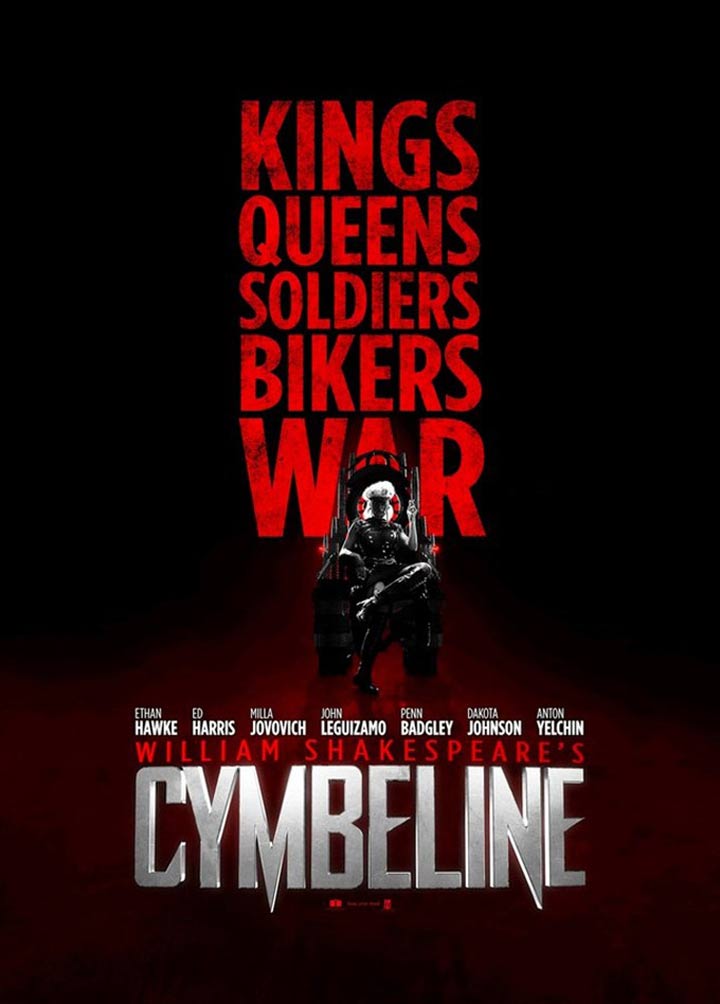
D: Michael Almereyda / 98m

Cast: Ethan Hawke, Ed Harris, Milla Jovovich, John Leguizamo, Penn Badgley, Dakota Johnson, Anton Yelchin, Peter Gerety, Kevin Corrigan, Vondie Curtis-Hall, Delroy Lindo, James Ransone, Spencer Treat Clark, Harley Ware, Bill Pullman

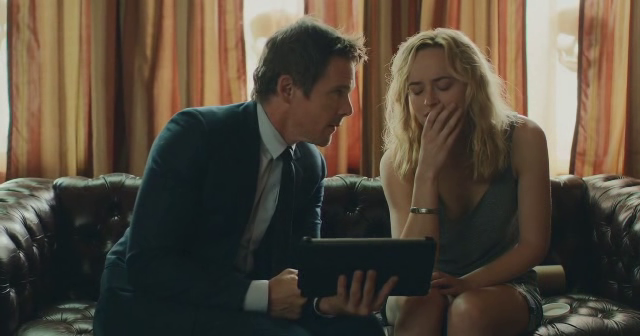
Imogen (Johnson) and Posthumus (Badgley) are young lovers who have married in secret and exchanged gifts of a ring (for Posthumus) and a bracelet (for Imogen). Their marriage is not to the liking of Imogen’s father, biker king Cymbeline (Harris). He banishes Posthumus, and so paves the way for his second wife, the Queen (Jovovich) to advance her own son, Cloten (Yelchin) as Imogen’s husband, in an attempt to secure control of the biker gang when Cymbeline is dead. Aided by his servant, Pisanio (Leguizamo), Posthumus goes to stay with his friend Philario (Ransone). There he meets Iachomo (Hawke) who wagers that he can seduce Imogen to prove that she isn’t as virtuous as Posthumus believes. The wager accepted, Iachomo visits Imogen and when a direct assault on her virtue backfires, he portrays it as a test of her commitment to Posthumus – which she accepts. Before he leaves he asks her to look after an item for him overnight, which she also agrees to.

The item is a chest, one that Iachomo has hidden himself inside. While Imogen sleeps he climbs out of the chest and puts together evidence that he has slept with her. He takes this evidence back to Posthumus who, enraged by Imogen’s seeming duplicity, sends two letters: one to Imogen asking her to meet him at Milford Haven, the other to Pisanio asking him to take her there and when they arrive, to kill her. Pisanio, however, is unable to carry out his order and shows Imogen his letter. He has her disguise herself as a boy and tells her to travel on to Milford Haven; he also gives her what he believes to be a remedy for travel sickness that he has taken from the Queen, but which is a potion that will mimic death.

Meanwhile, Cloten discovers Posthumus’ plan to meet Imogen and heads to Milford Haven himself with the intention of killing Posthumus and bringing Imogen back to marry him. Imogen has reached the town already and fallen in with Belarius (Lindo) and his two “sons” Guiderius (Clark) and Arviragus (Ware). She tells them her name is Fidele. While they are out hunting, they encounter Cloten who insults and then threatens Guiderius, who in turn kills him and then beheads him. Imogen, feeling unwell, takes the remedy and becomes as dead. Belarius decides to bury her with Cloten’s body; when she wakes she believes Cloten to be Posthumus as he is wearing similar clothes. With both she and Posthumus believing themselves lost to each other, an impending war between Cymbeline’s gang and the Rome police – to whom they pay a tribute – proves to be the unlikely cause of their reconciliation.

Cymbeline - scene

In adapting the play by William Shakespeare, writer/director Almereyda has done two things very well, and two things not so well. The first is to employ an incredibly talented cast, all of whom are able to take Shakespeare’s lines and make them sound as natural as modern day speech, fully understandable and with clear purpose in their meaning. The likes of Hawke – reuniting with Almereyda for the first time since Hamlet (2000) – Harris, Leguizamo and Lindo provide convincing interpretations of the prose and help the casual viewer through some of the more confusing aspects of the plot (mistaken identities are key here). The second is to condense the play’s final third into a more manageable “wrapping up” of things, even if it all feels rushed and at the expense of the movie’s previously more measured pace.

But where Almereyda gets those things absolutely right, where he gets it absolutely wrong proves too damaging for the movie to recover from. The first is to set the action in a modern day setting, mostly Brooklyn, and to flavour the movie as if it were a version of Shakespeare meets Sons of Anarchy. This backdrop, given that it should enhance the drama – the Queen persuades Cymbeline to back out of his arrangement with the Rome police in the hope that war between them will see him dead – instead seems ponderous and ill-considered, more of a budgetary consideration than a narrative one. It leads to some incongruous moments, such as Cloten pushing a motorbike along a gravel road, Imogen choosing her nom-de-plume thanks to a T-shirt worn by Guiderius, and Posthumus getting about on a skateboard. While some of these tweaks may have appeared sound in the pre-production phase, on screen they’re not as effective as was probably hoped for.

The second problem is with Almereyda’s direction itself. The movie plods along from scene to scene with little energy or flair displayed, and struggles to provide any momentum to take the audience with it. There’s a signal lack of connection between scenes that makes for a stop/start experience, the narrative appearing jumbled and ill at ease with itself, like a story that needs more cohesion. With so many subplots and supporting characters, Cymbeline looks and feels like a movie that can’t quite get a grip on what it’s trying to say, or even how to say it. Again, if it weren’t for the very talented cast, the movie would founder even more, and the audience would be left adrift, waiting – unsuccessfully – for Almereyda to place his authority on the material and make it work with more style and verve.

Generally regarded as one of Shakespeare’s weaker plays (written at a time when he seemed to be bored with them), Cymbeline is a strange choice for a movie adaptation, its tale of thwarted lovers and political machinations proving not quite as amenable to the translation as might be expected. It also looks very much as if it were shot too quickly – some of the set ups look rushed or improvised. Still, it’s a brave choice by Almereyda, but if he has any plans to adapt any more of Shakespeare’s works, he might be better off securing a bigger budget, and concentrating on the script rather than directing. After all, “the play’s the thing…”

Rating: 5/10 – a dour, unimpressive adaptation, Cymbeline is rescued by a set of strong performances and an astute conflation of the plot; not as engrossing as it should have been, but not as awful as the early scenes seem to indicate.

Share this:

  • Click to share on X (Opens in new window) X
  • Click to share on Facebook (Opens in new window) Facebook
  • More
  • Click to print (Opens in new window) Print
  • Click to email a link to a friend (Opens in new window) Email
Like Loading...

Blog Stats

  • 486,528 hits

Recent Posts

  • 10 Reasons to Remember Bibi Andersson (1935-2019)
  • Fantasia (1940)
  • Dances With Wolves (1990) – The Special Edition
  • Kiss of the Spider Woman (1985)
  • The Three Musketeers (1973)

Top Posts & Pages

  • Lost for Life (2013) - Another Look
    Lost for Life (2013) - Another Look
  • Lost for Life (2013)
    Lost for Life (2013)
  • About
    About
  • Mr. Topaze (1961)
    Mr. Topaze (1961)
  • Billy Lynn's Long Halftime Walk (2016)
    Billy Lynn's Long Halftime Walk (2016)
  • Winter's Tale (2014)
    Winter's Tale (2014)
  • The Hitman's Bodyguard (2017)
    The Hitman's Bodyguard (2017)
  • 5 Famous Movie Roles That Nearly Went to Someone Else
    5 Famous Movie Roles That Nearly Went to Someone Else
  • The Layover (2017)
    The Layover (2017)
  • Transcendence (2014)
    Transcendence (2014)
Follow thedullwoodexperiment on WordPress.com

Blogs I Follow

  • Rubbish Talk
  • Film 4 Fan
  • Fast Film Reviews
  • The Film Blog
  • All Things Movies UK
  • Interpreting the Stars
  • Let's Go To The Movies
  • Movie Reviews 101
  • TMI News
  • Dan the Man's Movie Reviews
  • Film History
  • Jordan and Eddie (The Movie Guys)

Archives

  • April 2019 (13)
  • March 2019 (28)
  • February 2019 (28)
  • January 2019 (32)
  • December 2018 (28)
  • November 2018 (30)
  • October 2018 (29)
  • September 2018 (29)
  • August 2018 (29)
  • July 2018 (30)
  • June 2018 (28)
  • May 2018 (24)
  • April 2018 (21)
  • March 2018 (31)
  • February 2018 (25)
  • January 2018 (30)
  • December 2017 (30)
  • November 2017 (27)
  • October 2017 (27)
  • September 2017 (26)
  • August 2017 (32)
  • July 2017 (32)
  • June 2017 (30)
  • May 2017 (29)
  • April 2017 (29)
  • March 2017 (30)
  • February 2017 (27)
  • January 2017 (32)
  • December 2016 (30)
  • November 2016 (28)
  • October 2016 (30)
  • September 2016 (27)
  • August 2016 (30)
  • July 2016 (30)
  • June 2016 (31)
  • May 2016 (34)
  • April 2016 (30)
  • March 2016 (30)
  • February 2016 (28)
  • January 2016 (35)
  • December 2015 (34)
  • November 2015 (31)
  • October 2015 (31)
  • September 2015 (34)
  • August 2015 (31)
  • July 2015 (33)
  • June 2015 (12)
  • May 2015 (31)
  • April 2015 (32)
  • March 2015 (30)
  • February 2015 (37)
  • January 2015 (39)
  • December 2014 (34)
  • November 2014 (34)
  • October 2014 (36)
  • September 2014 (25)
  • August 2014 (29)
  • July 2014 (29)
  • June 2014 (28)
  • May 2014 (23)
  • April 2014 (21)
  • March 2014 (42)
  • February 2014 (38)
  • January 2014 (29)
  • December 2013 (28)
  • November 2013 (34)
  • October 2013 (4)

Blog at WordPress.com.

Rubbish Talk

Film 4 Fan

A Movie Blog

Fast Film Reviews

The Film Blog

The official blog of everything in film

All Things Movies UK

Movie Reviews and Original Articles

Interpreting the Stars

Dave Examines Movies

Let's Go To The Movies

Film and Theatre Lover!

Movie Reviews 101

Daily Movie Reviews

TMI News

Latest weather, crime and breaking news

Dan the Man's Movie Reviews

All my aimless thoughts, ideas, and ramblings, all packed into one site!

Film History

Telling the story of film

Jordan and Eddie (The Movie Guys)

Movie Reviews & Ramblings from an Australian Based Film Fan

Privacy & Cookies: This site uses cookies. By continuing to use this website, you agree to their use.
To find out more, including how to control cookies, see here: Cookie Policy
  • Subscribe Subscribed
    • thedullwoodexperiment
    • Join 481 other subscribers
    • Already have a WordPress.com account? Log in now.
    • thedullwoodexperiment
    • Subscribe Subscribed
    • Sign up
    • Log in
    • Report this content
    • View site in Reader
    • Manage subscriptions
    • Collapse this bar
 

Loading Comments...
 

    %d