• 10 Reasons to Remember…
  • A Brief Word About…
  • About
  • For One Week Only
  • Happy Birthday
  • Monthly Roundup
  • Old-Time Crime
  • Other Posts
  • Poster of the Week
  • Question of the Week
  • Reviews
  • Trailers

thedullwoodexperiment

~ Viewing movies in a different light

thedullwoodexperiment

Tag Archives: Norfolk

The Goob (2014)

21 Friday Jul 2017

Posted by dullwood68 in Movies

≈ Leave a comment

Tags

Catch Up movie, Diner, Drama, Guy Myhill, Liam Walpole, Marama Corlett, Norfolk, Review, Sean Harris, Sienna Guillory

D: Guy Myhill / 84m

Cast: Liam Walpole, Sean Harris, Sienna Guillory, Marama Corlett, Oliver Kennedy, Hannah Spearritt, Paul Popplewell, Joe Copsey

Watching The Goob, it’s tempting to ask the question, just how many disaffected, aimless teenagers are there in the world? And following on from that question, it’s equally as tempting to ask: why is it that their mothers all seem to take up with violent, reprehensible boyfriends? Sometimes it seems that when it comes to teenagers navigating the ups and downs of trying to find their way in the world, the movies rely on too many clichés to get the story told. Cliché no 1: have the teenager sulk a lot and look miserable. Cliché no 2: make sure the teenager has very little dialogue, and that when he or she does speak, it’s in monosyllables. Cliché no 2a: and if they do speak, make sure they don’t articulate any feelings or emotions. Cliché no 3: make sure the teenager is shown walking or running or riding a bicycle or moped in a generally aimless direction (and more than once). Cliché no 4: give the teenager a chance at a meaningful relationship with a person of the opposite sex, but then ensure that something happens to ruin it. And cliché no 5: always, always, have the teenager do something that will alienate them even further.

Guy Myhill’s debut feature ticks all these boxes and more in its attempt to tell the story of Goob Taylor, a sixteen year old living in the wilds of rural Norfolk who we meet on a school bus heading home after his last day in full-time education. Home is a weather-worn diner run by his mother, Janet (Guillory), somewhere on a main road but only able to attract the custom of the local residents (which is strange, as aside from the odd building here and there, and a custom car race track, housing seems to be in very short supply). Janet and Goob have a strong, loving relationship, but recently she’s started seeing Gene (Harris), a local beet farmer and would-be race car champion who’s also a vindictive bully. Gene seems only interested in Janet for sex, while he treats Goob and his older brother, Rod (Copsey), with complete disdain. A joy ride in Gene’s race car ends in a crash that sees Rod ending up in hospital, but Goob barely suffering a scratch. This leads to Goob having to help Gene on his beet farm, holed up in a pit overnight to watch out for anyone trying to steal the crop.
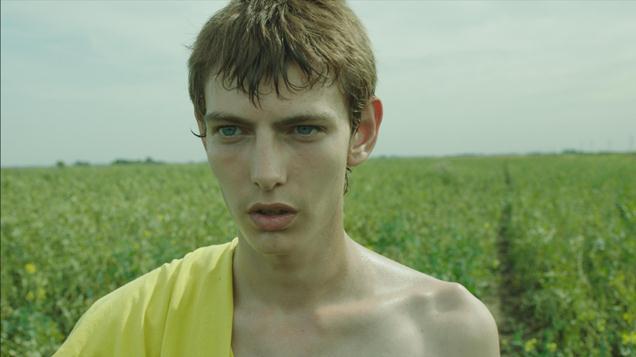
The arrival of help in the form of Elliott (Kennedy), an upbeat, continually smiling young man a little older than Goob hints at a potential gay love interest, but Myhill avoids this by introducing instead a field worker called Eva (Corlett), whom Goob takes a shine to. As their relationship develops, it starts to provoke an envious response in Gene, who watches the pair from a distance, and with the intention of interfering. At a party where all the field workers are invited, Eva and one of Gene’s friends head off to play snooker but it’s not long before Gene interrupts their game in order to be alone with Eva and try his luck. When she rejects his advances he’s less than gentle in his response. Goob appears to rescue Eva and confront Gene, but whatever plan Goob has, Gene isn’t remotely aware of it, and their confrontation doesn’t go as Goob would like…

As well as the clichés listed above, there are several more that could be added. While the movie paints a melancholy tale of a life headed nowhere, literally and figuratively, this would be fine if there was any likelihood that Goob’s situation would be any different at the end of the movie from what it is at the beginning. Goob is not just stuck in the middle of nowhere, he’s stuck with no ambition and no willingness to improve his life in any meaningful way. His relationship with his mother constantly hints at being inappropriate – they play wrestle on her bed, she hugs him tightly and tells him he’ll still be her “boy” even when he’s forty-six – and she appears to gain more emotional support from him than the other way round. But while Myhill signposts this sort of thing with the appearance that it’s all relevant and will be explored later in the movie, this subplot and several others fall by the wayside with increasing frequency. The same is true of a scene where Goob discovers Gene having sex with Mary (Spearritt), a young girl who helps out in the diner. You’d be willing to bet that Goob will use this at some point to expose Gene in front of his mother, but it’s not even referred to. In The Goob, it’s surprising how many blind alleys there are lurking in the rural vastness of the Norfolk countryside.

With much of the plot lacking development, and less exploration of the characters’ states of mind than benefits the material, Myhill is rescued by Simon Tindall’s impressive cinematography, and sterling performances from Harris (convincing as always; now give this man a comedy, for God’s sake) and newcomer Walpole, whose glum demeanour and pouty stare adds to the sense of Goob’s isolation from those around him. But neither can detract from the pervading sense of familiarity that watching the movie provokes, nor the idea that Myhill has opted for style over substance in his efforts to tell Goob’s story – such as it is.

Rating: 5/10 – containing too many elements that don’t add up or are just ignored as the movie progresses, The Goob looks more persuasive than it is, and only occasionally proves as compelling as it should be; an occasion where less is just that, it’s a movie that looks good on the surface, but which tells its story without stopping to convince the audience how its main character feels about anything that’s happening to him or around him. (19/31)
Share this:

  • Click to share on X (Opens in new window) X
  • Click to share on Facebook (Opens in new window) Facebook
  • More
  • Click to print (Opens in new window) Print
  • Click to email a link to a friend (Opens in new window) Email
Like Loading...

45 Years (2015)

12 Tuesday Jan 2016

Posted by dullwood68 in Movies

≈ 4 Comments

Tags

Andrew Haigh, Anniversary party, Charlotte Rampling, David Constantine, Drama, Glacier, In Another Country, Literary adaptation, Marriage, Norfolk, Review, Switzerland, Tom Courtenay, Wedding anniversary

45 Years

D: Andrew Haigh / 95m

Cast: Charlotte Rampling, Tom Courtenay, Geraldine James, Dolly Wells, David Sibley

Geoff and Kate Mercer (Courtenay, Rampling) are near to celebrating forty-five years of married life with a big party. As their party planner remarks, it’s an odd year to celebrate, but it’s because their fortieth had to be cancelled thanks to Geoff needing a heart bypass. They live outside a small village in Norfolk with their dog Max and appear to have a tranquil, reclusive existence.

On the Monday before the party, Geoff receives a letter from Switzerland that contains a surprise. Back in 1962, Geoff and his then girlfriend, Katya, were hiking through the Swiss Alps when she fell into a crevasse. Now, with the snowline having retreated due to global warming, Katya’s body has been found embedded in a glacier. The news startles Geoff, and unnerves Kate, especially when it occurs to her that it seems odd that Geoff would have been contacted. When he tells her that on occasion during their trip he and Katya pretended to be married to get a hotel room, and because of this he’s regarded as her next of kin, it further unnerves Kate.

45 Years - scene3

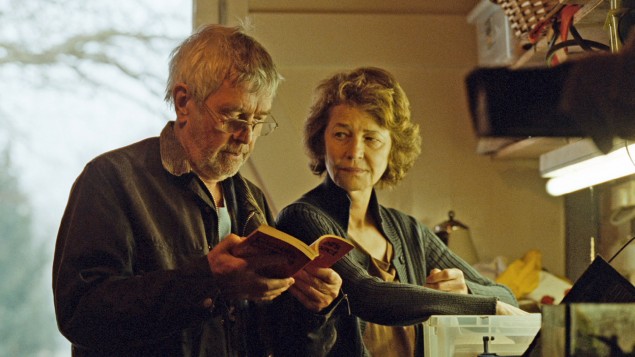
As the week progresses and Kate spends her time organising the party, she begins to realise that Geoff is spending his time reliving memories of his time with Katya. There arre questions she wants to ask him but is afraid to. When she discovers that Geoff has been going up into the loft and looking at old slides, she also discovers something that proves shocking. Kate becomes distant from Geoff, and angry with him for what she sees as a betrayal of their own relationship, that he should want to spend so much time thinking about a woman he knew before he and Kate even met.

With the party looming ever nearer, Kate confronts Geoff over his behaviour but she can’t quite bring herself to fully explain her feelings. All she wants is for Geoff to make it look like he wants to be there. But even with his assurance that he does want to be there, and he does love her, on the day, Kate is wracked with unresolved emotions as the celebration of their life together gets under way.

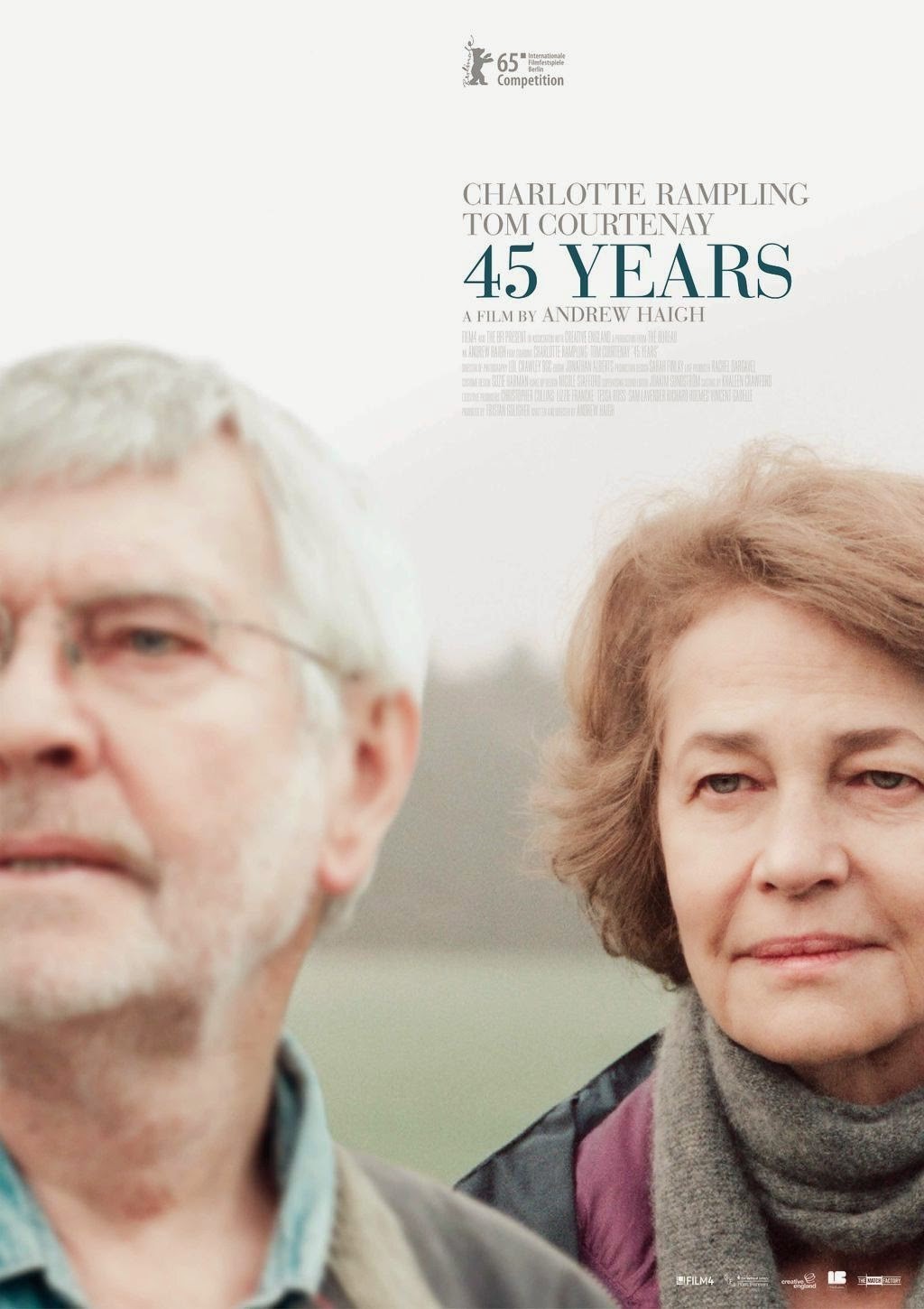
Adapted from the short story In Another Country by British author David Constantine, 45 Years is a subtle, intelligent movie about perceived betrayal and the jealousy resulting from it that features tremendous performances from both Rampling and Courtenay, and confident, assured direction from Andrew Haigh. It’s a movie that relies heavily on the stillness of contemplation to explore the surprisingly strong emotions felt by its central character, Kate, and it quietly and effectively makes those emotions resonate with a power that is equally unexpected for their intensity.

45 Years - scene1

Haigh, who also wrote the screenplay, postions Kate and Geoff at a point where their contentment with each other is so ingrained that it brooks no question – from us at least. But when the letter from Switzerland arrives and we see their quite different reactions to it – Geoff retreats into a world of memory and introspection, Kate sees a challenge to the comfort she’s found in their marriage – that contentment is sure to be disrupted. But where some movies might explore the ways in which both characters are affected by this kind of news, Haigh does something a little unusual: he makes Geoff a silent mourner who talks about Katya in generalities, and brings Kate’s fears and concerns to the fore.

Kate is governed by an irrational but entirely understandable need to know that Katya isn’t Geoff’s great lost love, the woman he has missed for all these years, and also that their marriage hasn’t been a case of Geoff settling for second best. She wants to know that she matters, that Geoff loves her more than he did Katya, that their marriage hasn’t been one of convenience on Geoff’s part. But she cannot find the courage to ask the question directly or with any conviction that she wants to know the answer. And by doing so she makes her situation all the worse, as her assumptions and worries about her place in Geoff’s life are amplified by her insecurities.

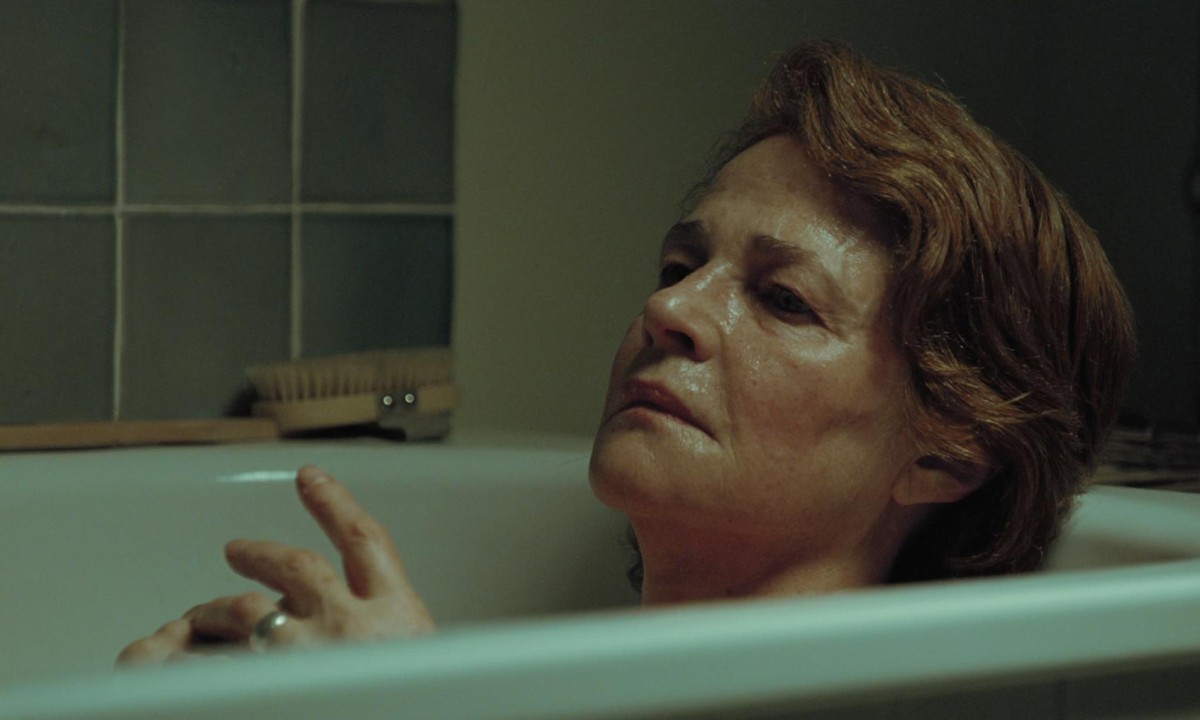
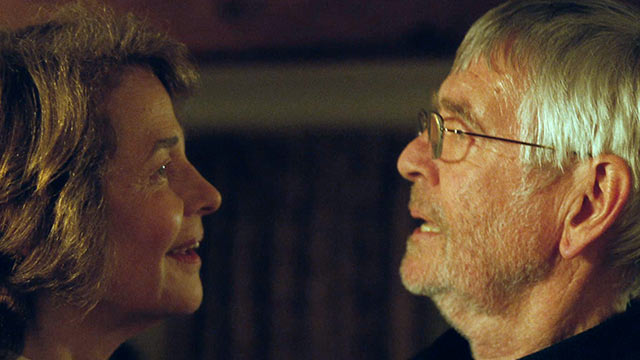
As Kate, Rampling is simply incredible. She gives an impressive, astonishing performance, one of contained desperation, as Kate appears to allow herself to give in to the emotions she feels in the wake of the letter’s arrival. In several scenes and shots Rampling’s features are a mask behind which you can see a swirling cauldron of emotional confusion and dismay. There’s a scene where she plays the piano, and in her playing there’s a release of emotion that is so terrible for its restrained violence; as she hits the keys each note is like a plea for exculpation of her feelings. And at the party, as Kate and Geoff dance together in what should be a joyous moment for them both – a recreation of the first dance at their wedding – Rampling’s body language tells the viewer everything they need to know about how Kate is dealing with it all.

45 Years - scene2

By contrast, Courtenay is required to remain – comparatively – in the shadows. Geoff’s behaviour at the news of Katya’s discovery is largely poignant, an inadequate response given his age and his physical infirmity. Geoff looks frail throughout, and there’s always the possibility the news will prove too much for him, but Haigh is canny enough to make Geoff stronger than he seems, at least emotionally, and there’s a handsome payoff for this at the party. Courtenay is a terrific match for Rampling, his naturally far-off gaze used to good effect as someone remembering another time in their life when they were happy. When he recounts the circumstances of Katya’s death, it’s with a heartfelt sense of acknowledgment for the happiness of that time in his life. For the viewer, it’s clear that Geoff doesn’t feel his relationship with Kate is of lesser importance. Oh that Kate could feel the same way.

45 Years excels at portraying the way in which someone can so easily and quickly feel that the relationship they’ve invested so much time in can feel so false (even if it’s probably not the case; though the movie doesn’t commit itself either way). Haigh shows complete control over the material and the narrative, even in the scenes where Kate is wandering aimlessly about a nearby town and her uncertainty is clear by the random directions she takes. The action is also beautifully framed and shot by DoP Lol Crawley, and the movie revels in its autumnal colour scheme (a perfect metaphor for the characters’ time of life and expectations). It’s a rich, sometimes lyrical movie that rewards in scene after scene, and features two actors at the top of their game. And it all ends with a final shot that is devastating for the way in which it leaves the viewer to decide how, or even if, Geoff and Kate continue their marriage.

Rating: 9/10 – a moving, emotionally astute portrait of a marriage plunged into crisis by the insecurities of one partner, 45 Years is a poignant look at how easy a long-term relationship can be undermined by simple suspicion; Rampling once again shows why she’s still one of the best actresses working today, and Haigh cements his position as one of Britain’s brightest directing talents.

Share this:

  • Click to share on X (Opens in new window) X
  • Click to share on Facebook (Opens in new window) Facebook
  • More
  • Click to print (Opens in new window) Print
  • Click to email a link to a friend (Opens in new window) Email
Like Loading...

The Haunting of Harry Payne (2014)

16 Wednesday Apr 2014

Posted by dullwood68 in Movies

≈ 4 Comments

Tags

Crime, Gangster, Ghosts, Graham Cole, Horror, John Mangan, Martyn Pick, Norfolk, P.H. Moriarty, Rayleton, Review, Sickle, Tony Scannell, White Lady

Haunting of Harry Payne, The

aka Evil Never Dies

D: Martyn Pick / 73m

Cast: Tony Scannell, Graham Cole, Anouska Mond, Fliss Walton, Katy Manning, P.H. Moriarty, Neil Maskell, John Mangan, Louis Selwyn

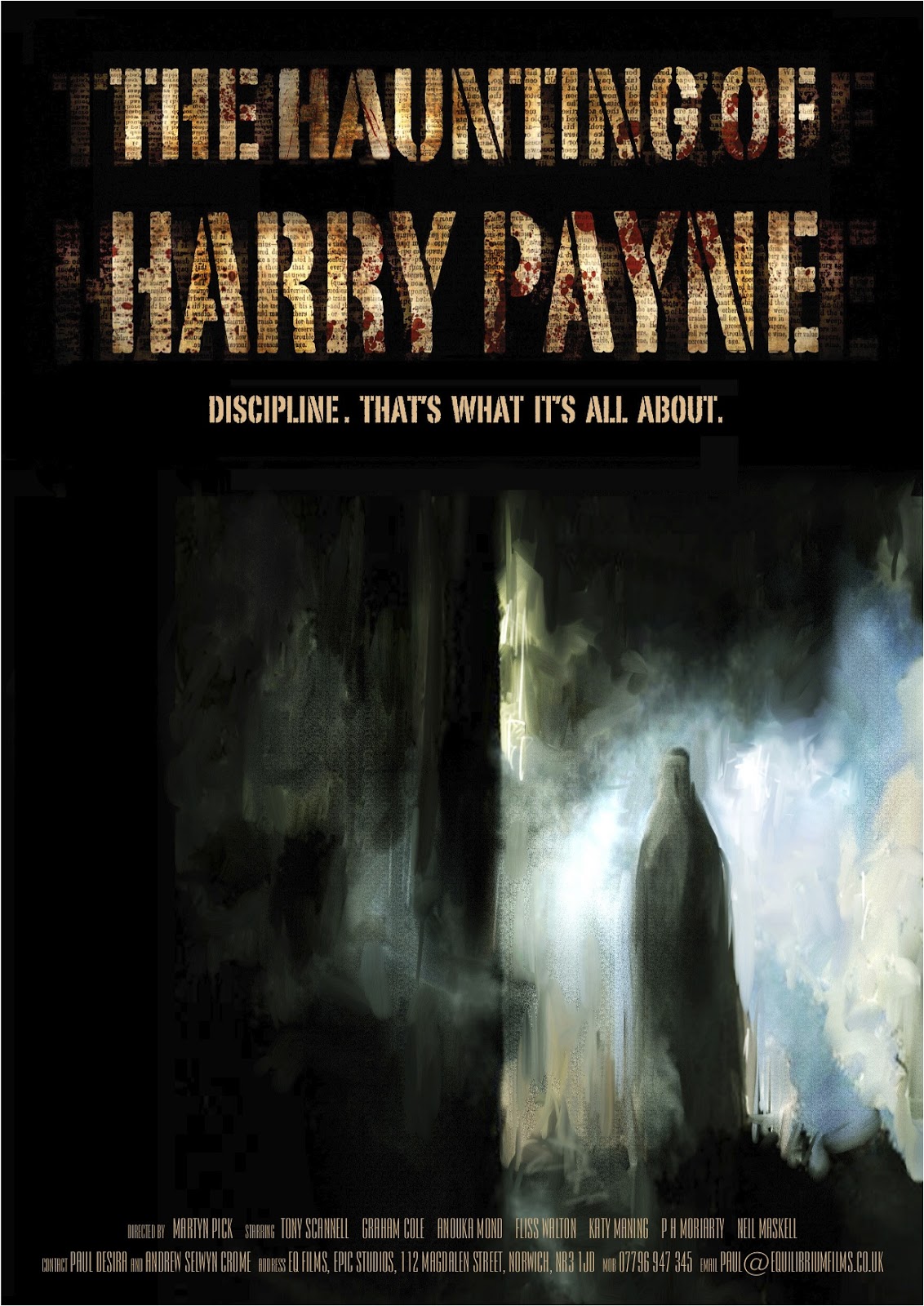
These days, British horror – Hammer’s recent resurgence aside – is almost entirely the preserve of low-budget filmmakers.  Within the broad spectrum of horror movies that are being made, there is a sub-genre involving a rural setting and a lot of blood-letting.  The Haunting of Harry Payne fits the mould quite nicely, and adds a gangster back story for its troubled title character.  It’s an awkward mash-up, but it is at least an attempt to do something a little different, even if the end results are as unstable as the movie’s chief villain.

Harry Payne (Scannell) is released from prison after serving ten years for the murder of his friend and gang boss, Eugene McCann (Moriarty).  He leaves London for the Norfolk countryside and the sleepy village of Rayleton, where he is the new owner of the pub.  He’s also able to visit his wife, Susan (Manning), who lives at a nearby sanitarium.  On his first night in Rayleton a young woman is brutally killed and dismembered.  Payne is immediately accused of the crime by Detective Inspector Bracken (Cole) who knows about Payne’s gangster past.  Along with Detective Sergeant Churchill (Walton), Bracken does his best to implicate Payne in the murder but doesn’t even have circumstantial evidence to proceed, just an intense dislike for Payne and his history.  When another murder occurs, Payne becomes embroiled in both the murders and the local legend of a Lady in White, a ghostly apparition that may or may not be responsible for the deaths.

To complicate matters, Payne has violent headaches that leave him with no memory of what he’s done, and flashbacks to his days working for McCann.  McCann was an extremely vicious gangster with a penchant for torture and cold-blooded murder.  This back story impacts on the events at Rayleton in a surprising fashion and leads to revelations that affect Payne and his wife, Bracken and Churchill and local occult store owner, Angela (Mond).  There’s a further twist to proceedings which I won’t spoil by revealing here, but it adds a little depth to the storyline, and gives Payne an extra layer of characterisation.

Haunting of Harry Payne, The - scene

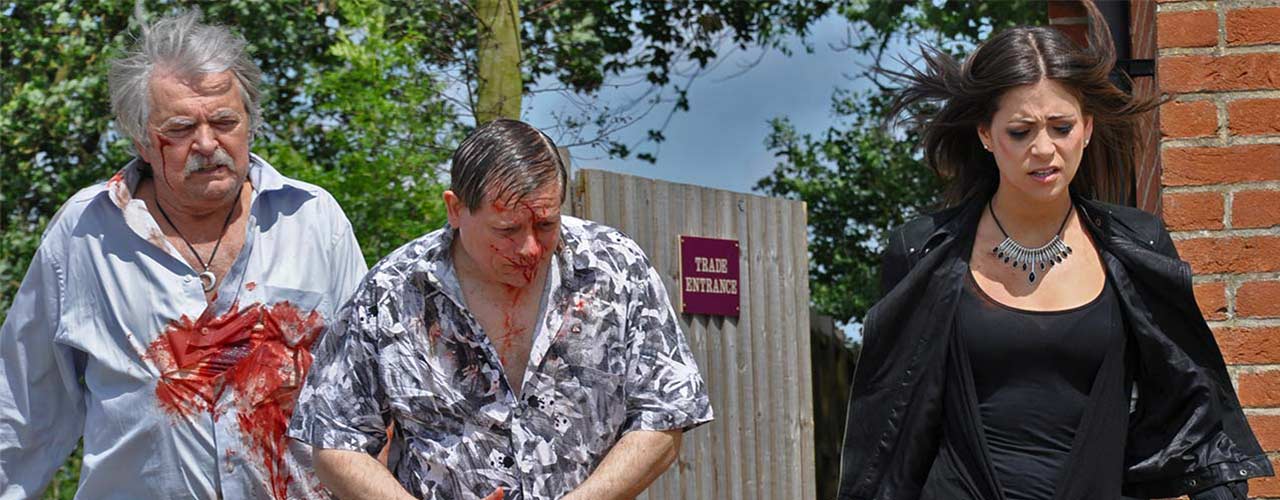
From the outset, The Haunting of Harry Payne shows evidence of its low-budget origins and continues to do so throughout.  The flashbacks to Payne working with McCann are shot in large, open warehouse spaces that feature little or no props or set design.  The roads outside Rayleton are actually the same road through the woods each time, plus the same village road is used (but is shot from different angles).  There’s too much footage of a predatory presence prowling through the woods at ankle height, replaying the roving camerawork from The Evil Dead (1983) and dozens of other horror movies from the last thirty years.  And the gore effects are reduced to the results or after affects of an attack, making the various blood spurts that are seen almost abstract in their presentation.  The painfully short running time is another clear indicator of the movie’s low budget, though it does mean that the movie doesn’t outstay its (potential) welcome.

The script, by Mangan (who also appears as pub manager Tark), packs a lot in, but sacrifices characterisation and effective dialogue for a melange of ideas and plot contrivances in an effort to hold the audience’s attention.  Events happen quickly, almost overlapping themselves at times, with Payne striving to make sense of what’s going on, and in particular, how the Lady in White fits into everything.  The filmmakers’  ambition should be rewarded; however, in its execution the movie falls flat, and it’s like watching an am-dram attempt at making a gangster/horror movie.

Director Martyn Pick (better known as an animator), fails to rein in his cast’s preference for hamming it up – Moriarty and Cole are the worst offenders while Manning misjudges her role completely – and his inexperience leaves the movie looking distinctly ramshackle and visually unappealing.  He’s aided by John Fensom’s scattershot editing – some scenes look and feel like they’ve been taken from a work print – and an overbearing score courtesy of Alex Ball.  As Payne, Scannell looks uncomfortable throughout, as if he’s having second thoughts about being in the movie, and leaves what little acting kudos there is to Mond, who takes a severely malnourished character and makes more of her than would seem possible from the script.

With so much of contemporary British horror lying in the doldrums, The Haunting of Harry Payne could have been a welcome addition to the rural terror sub-genre, but its botched attempts at creating menace, and its awkward shoe-horning of McCann’s evil nature into the scheme of things serve only to show – once again – that horror is incredibly difficult to get right, and especially on a low budget.

Rating: 3/10 – with so much crammed in, it’s no surprise that The Haunting of Harry Payne lacks focus, or that it often looks rushed; at best an interesting failure, at worst a terrible mess that ought to be missed off everyone’s CV.

Share this:

  • Click to share on X (Opens in new window) X
  • Click to share on Facebook (Opens in new window) Facebook
  • More
  • Click to print (Opens in new window) Print
  • Click to email a link to a friend (Opens in new window) Email
Like Loading...

Blog Stats

  • 486,544 hits

Recent Posts

  • 10 Reasons to Remember Bibi Andersson (1935-2019)
  • Fantasia (1940)
  • Dances With Wolves (1990) – The Special Edition
  • Kiss of the Spider Woman (1985)
  • The Three Musketeers (1973)

Top Posts & Pages

  • Lost for Life (2013) - Another Look
    Lost for Life (2013) - Another Look
  • Lost for Life (2013)
    Lost for Life (2013)
  • About
    About
  • Mr. Topaze (1961)
    Mr. Topaze (1961)
  • Shock and Awe (2017)
    Shock and Awe (2017)
  • Billy Lynn's Long Halftime Walk (2016)
    Billy Lynn's Long Halftime Walk (2016)
  • Winter's Tale (2014)
    Winter's Tale (2014)
  • Hunt for the Wilderpeople (2016)
    Hunt for the Wilderpeople (2016)
  • Spider-Man: Homecoming (2017)
    Spider-Man: Homecoming (2017)
  • BFI London Film Festival 2015
    BFI London Film Festival 2015
Follow thedullwoodexperiment on WordPress.com

Blogs I Follow

  • Rubbish Talk
  • Film 4 Fan
  • Fast Film Reviews
  • The Film Blog
  • All Things Movies UK
  • Interpreting the Stars
  • Let's Go To The Movies
  • Movie Reviews 101
  • TMI News
  • Dan the Man's Movie Reviews
  • Film History
  • Jordan and Eddie (The Movie Guys)

Archives

  • April 2019 (13)
  • March 2019 (28)
  • February 2019 (28)
  • January 2019 (32)
  • December 2018 (28)
  • November 2018 (30)
  • October 2018 (29)
  • September 2018 (29)
  • August 2018 (29)
  • July 2018 (30)
  • June 2018 (28)
  • May 2018 (24)
  • April 2018 (21)
  • March 2018 (31)
  • February 2018 (25)
  • January 2018 (30)
  • December 2017 (30)
  • November 2017 (27)
  • October 2017 (27)
  • September 2017 (26)
  • August 2017 (32)
  • July 2017 (32)
  • June 2017 (30)
  • May 2017 (29)
  • April 2017 (29)
  • March 2017 (30)
  • February 2017 (27)
  • January 2017 (32)
  • December 2016 (30)
  • November 2016 (28)
  • October 2016 (30)
  • September 2016 (27)
  • August 2016 (30)
  • July 2016 (30)
  • June 2016 (31)
  • May 2016 (34)
  • April 2016 (30)
  • March 2016 (30)
  • February 2016 (28)
  • January 2016 (35)
  • December 2015 (34)
  • November 2015 (31)
  • October 2015 (31)
  • September 2015 (34)
  • August 2015 (31)
  • July 2015 (33)
  • June 2015 (12)
  • May 2015 (31)
  • April 2015 (32)
  • March 2015 (30)
  • February 2015 (37)
  • January 2015 (39)
  • December 2014 (34)
  • November 2014 (34)
  • October 2014 (36)
  • September 2014 (25)
  • August 2014 (29)
  • July 2014 (29)
  • June 2014 (28)
  • May 2014 (23)
  • April 2014 (21)
  • March 2014 (42)
  • February 2014 (38)
  • January 2014 (29)
  • December 2013 (28)
  • November 2013 (34)
  • October 2013 (4)

Blog at WordPress.com.

Rubbish Talk

Film 4 Fan

A Movie Blog

Fast Film Reviews

The Film Blog

The official blog of everything in film

All Things Movies UK

Movie Reviews and Original Articles

Interpreting the Stars

Dave Examines Movies

Let's Go To The Movies

Film and Theatre Lover!

Movie Reviews 101

Daily Movie Reviews

TMI News

Latest weather, crime and breaking news

Dan the Man's Movie Reviews

All my aimless thoughts, ideas, and ramblings, all packed into one site!

Film History

Telling the story of film

Jordan and Eddie (The Movie Guys)

Movie Reviews & Ramblings from an Australian Based Film Fan

Privacy & Cookies: This site uses cookies. By continuing to use this website, you agree to their use.
To find out more, including how to control cookies, see here: Cookie Policy
  • Subscribe Subscribed
    • thedullwoodexperiment
    • Join 481 other subscribers
    • Already have a WordPress.com account? Log in now.
    • thedullwoodexperiment
    • Subscribe Subscribed
    • Sign up
    • Log in
    • Report this content
    • View site in Reader
    • Manage subscriptions
    • Collapse this bar
 

Loading Comments...
 

    %d