In 2013 I saw 106 movies at the cinema, from Gangster Squad to Frozen. On the whole I think it’s been a good year, just above average in fact, and a definite improvement on 2012 (you could say I was far more choosy back then).
There have been some turkeys – I Give It a Year and The Hangover Part III spring to mind – and some nice surprises: Danny Boyle’s Trance (as gleefully misleading a movie as you’re ever likely to see); Warm Bodies (a rom-zom that makes a virtue out of its sweet nature); and Kill Your Darlings (the treacherous early days of the Beat Generation featuring Daniel Radcliffe as Allen Ginsberg).
There were movies I wanted to see but missed through bad timing and/or lack of opportunity: Carrie, The Way Way Back, Only God Forgives, and a couple I actively avoided: the Coen Brothers-scripted Gambit, and R.I.P.D.
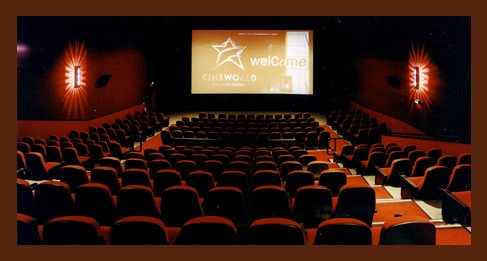
The actual cinema-going experience improved during 2013, at least for me personally. Here in the UK there’s a cinema chain called Cineworld (see image above). They operate a monthly subscription service. For a fixed fee each month (currently £18.90) you get a membership card that guarantees you a free ticket to as many movies as you can manage each month, and a healthy discount on food and drink purchases. It’s a great idea, and without it I definitely wouldn’t have seen 106 movies (probably nearer 60-70). For me, a trip to the cinema can mean seeing 4-5 movies in one day (and all the hot dogs I can eat).
I also travelled quite regularly to the British Film Institute’s IMAX screen in London. The IMAX screen is approximately 20 metres high by 26 metres wide and is easily the best way to see a movie, particularly a blockbuster like The Wolverine or Pacific Rim. It’s also a great way to treat someone for their birthday: I took one of my friends five times during 2013 (to see Iron Man 3, Star Trek: Into Darkness, Man of Steel, Thor: The Dark World, and The Hobbit: The Desolation of Smaug), and enjoyed a couple of visits with my daughter as well (The Lone Ranger and The Hunger Games: Catching Fire).
Working out which were the best and the worst of 2013 hasn’t been too difficult, although I will admit that one movie could have fallen into either camp; I don’t know if it’s just me but each year there’s always one movie that I can’t decide whether I love or hate. This year it was Frances Ha. Thankfully, other movies have come along to ensure it doesn’t end up in either list, and ultimately I’m glad because my final feeling on the movie is that it’s neither very good nor very bad, just okay (which is almost a condemnation in and of itself, I know).
Anyway, here they are then, the Best and Worst of 2013. If I’ve trashed a movie you thought was wonderful, then please accept my apologies here and now. If I’ve praised a movie you thought was a total pile of what Americans call “horse puckey”, then that’s easier to deal with: get over it, it’s just my opinion. Now, where’s that 20th Century fanfare…?
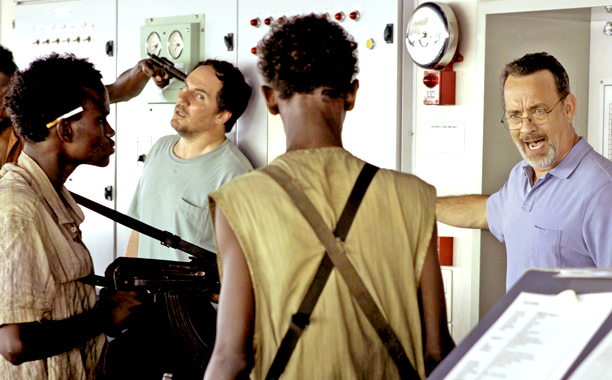
So, there you have it, two seafaring tales at the top of the 10 Best, and three sequels in the 10 Worst (that’s as much analysing as I’m prepared to do). I like preparing end of year lists, but this is the first time I’ve shared them with a wider audience. I hope they stimulate some discussion, even an argument or two (that’s healthy, right?), and if you feel the need to comment, please do.
Taking place at the Empire cinema in Basildon, Essex here in the UK, the Film4 Frightfest All Night Special 2013 started at approx. 11:00pm on 2 November and finished at approx. 6:15am on 3 November. The following four films were shown.
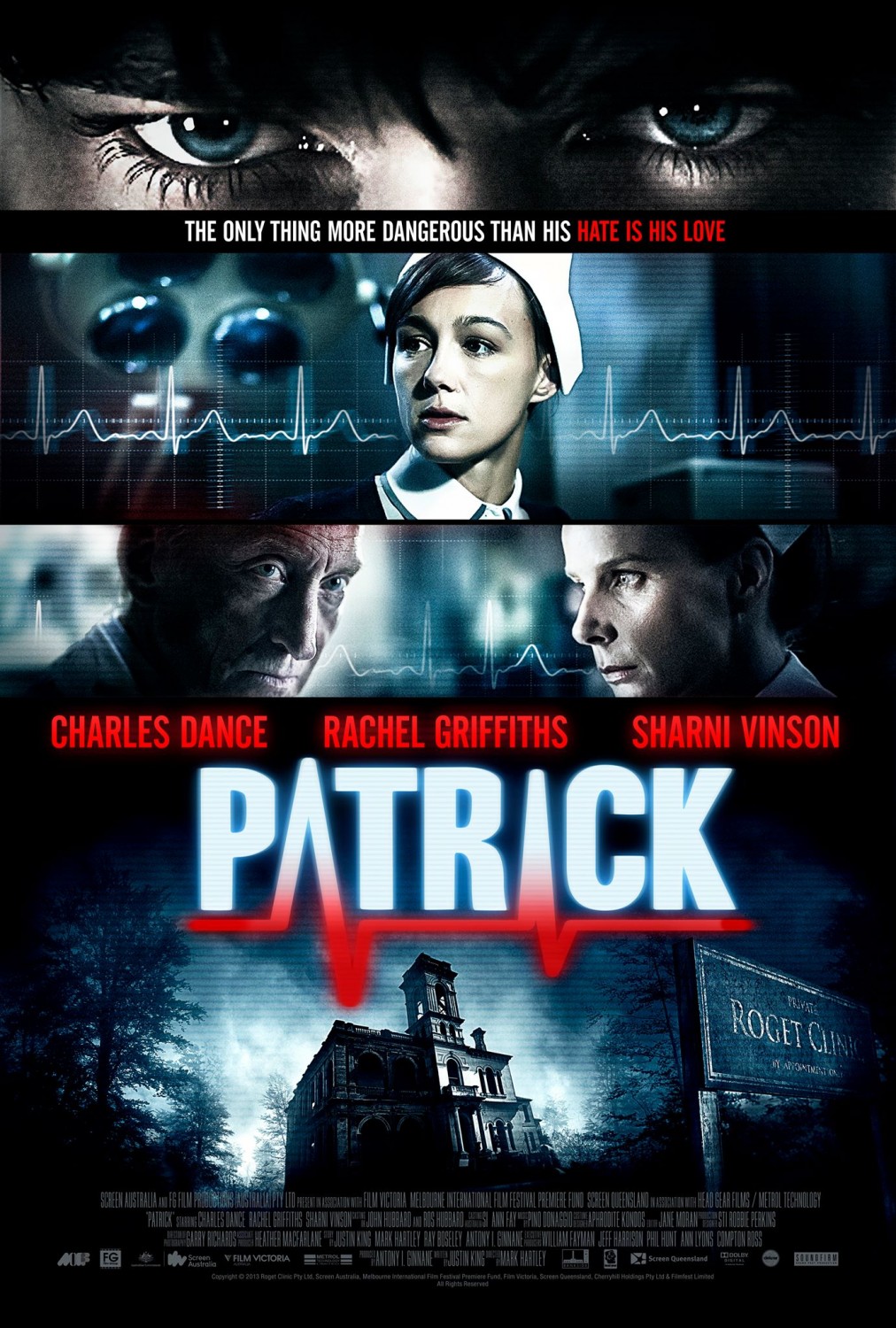
Patrick (2013)
D: Mark Hartley / 90m
Cast: Charles Dance, Rachel Griffith, Sharni Vinson, Peta Sergeant, Damon Gameau, Martin Crewes, Jackson Gallagher
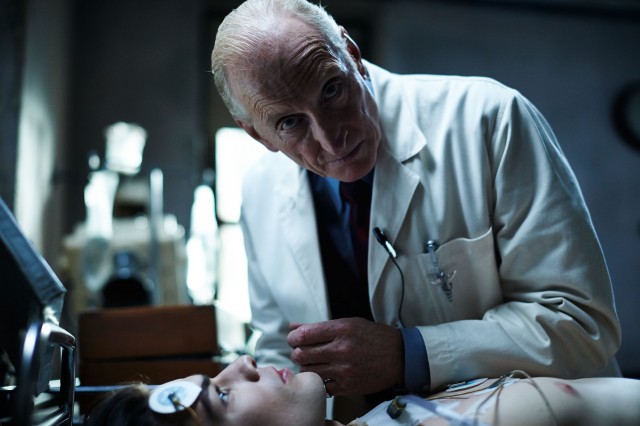
A remake of the 1978 movie of the same name, Patrick is the first feature from documentary filmmaker Mark Hartley. Taking the same basic premise as the original – coma patient uses telekinesis to manipulate and murder those around him – Hartley’s version is a grim yet stylish offering that sits comfortably alongside its predecessor. Dr Roget (Dance) runs a private clinic where he is attempting to “re-awaken” coma patients. Following the disappearance of one of his nurses, he employs Kathy Jacquard (Vinson) to take her place. Under the watchful eye of Matron Cassidy (Griffith) and the helpful ministrations of Nurse Williams (Sergeant), Kathy soon finds herself assisting Dr Roget in his treatment of “the patient in room 15”, a young man named Patrick (Gallagher). As time passes, Kathy begins to realise that Patrick is capable of communicating with her… at the same time that strange things start happening to those around her, in particular, prospective love interest Brian (Crewes), and recently separated husband Ed (Gameau). And so begins a cat-and-mouse game between Kathy and Patrick as she fights to keep those around her safe from harm, and Patrick becomes increasingly homicidal.
Patrick is an effective shocker, solidly done with a serious approach that works well (no jokey one-liners here). Justin King’s script provides straightforward motivations for each character and ramps up the tension until the final showdown. There are some narrative lapses along the way, and some of the dialogue sounds a little contrived, but on the whole Patrick delivers an often brutally efficient retake on the classic original. The cast help immeasurably, everybody giving committed performances and proving that a little Grand Guignol can go a long way. Patrick also benefits from a great score by Pino Donaggio, and splendidly nasty gore effects courtesy of the makeup department. Aside from the aforementioned narrative lapses, it’s Patrick’s back story that strikes the only false note in the movie, an unnecessary sequence of flashbacks that would have been better presented as a suitably chilling piece of exposition by Dr Roget or Matron Cassidy.
Rating: 7/10 – gloomy interiors and deliberately low-tech effects work bolster this first feature from Hartley; and as the very last credit has it: Patrick vive.
Discopath (2013)
Original title: Discopathe
D: Renaud Gauthier / 81m
Cast: Jérémie Earp-Lavergne, Katherine Cleland, Ingrid Falaise, Pierre Lenoir, Ivan Freud, François Aubin
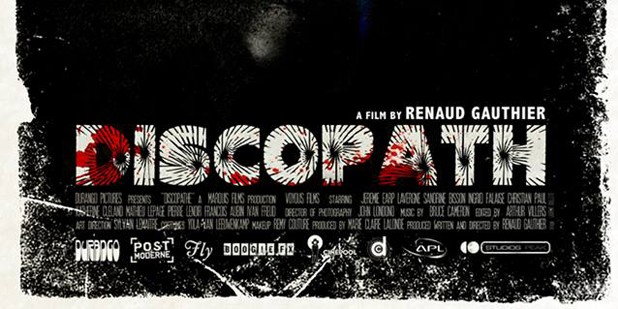
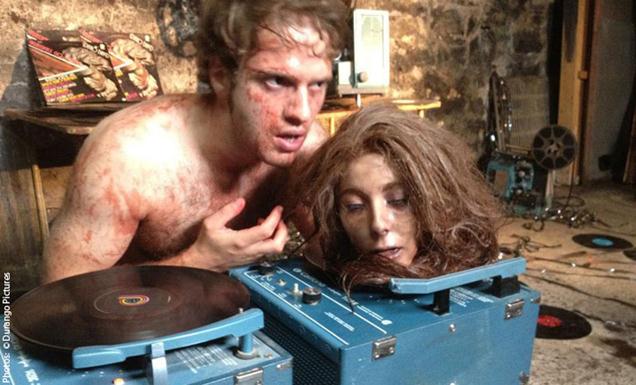
This Canadian-lensed homage to the heady days of low-budget 80’s slasher flicks is so on the money it’s scary all by itself. The movie opens in 1976. Duane Lewis (Earp-Lavergne) is fired from the New York diner where he (badly) flips burgers. On his way home he meets Valerie (Cleland). They hook up, and later that evening she takes Duane to Seventh Heaven, a trendy nightclub that plays disco music. The music triggers a murderous rage in Duane and soon he’s fleeing the country, heading for Montreal before the cops, led by Detective Stephens (Freud), can arrest him. The movie then skips forward to 1980. Duane is now working in a Catholic girls’ college as a sound and video engineer. He wears hearing aids that block out any music that might trigger one of his murderous outbursts. But when two of the girls decide to stay in their room one weekend while everyone else is away, the music they play causes Duane to revert to his homicidal urges.
Psychopath is a loving recreation of all those cheesy, hard-to-believe shockers that somehow found themselves “Banned in Britain” and whose video covers usually featured a girl in chains being approached by a maniac wielding his weapon of choice. It’s a cheerfully ‘bad’ movie, with deliberately ‘bad’ acting, stilted dialogue, awkward scene transitions, off-kilter camera compositions, and plenty of gratuitous gore effects. Writer/director Gauthier has crafted the kind of grindhouse movie that both Planet Terror and Death Proof should have been but weren’t. It also throws a linguistic curveball when the action moves from New York (all dialogue in English) to Montreal (all dialogue in French-Canadian), and amps up the exploitation angle by throwing in some nudity and a tasteless slo-mo moment involving a female corpse tumbling out of a coffin. Great fun, but not for everyone.
Rating: 7/10 – outrageous, awful (but deliberately so), corny, hammy, gory, stupid – all these things are true…and it’s great!
The Station (2013)
Original title: Blutgletscher
D: Marvin Kren / 98m
Cast: Gerhard Liebmann, Edita Malovcic, Hille Beseler, Peter Knaack, Felix Römer, Brigitte Kren
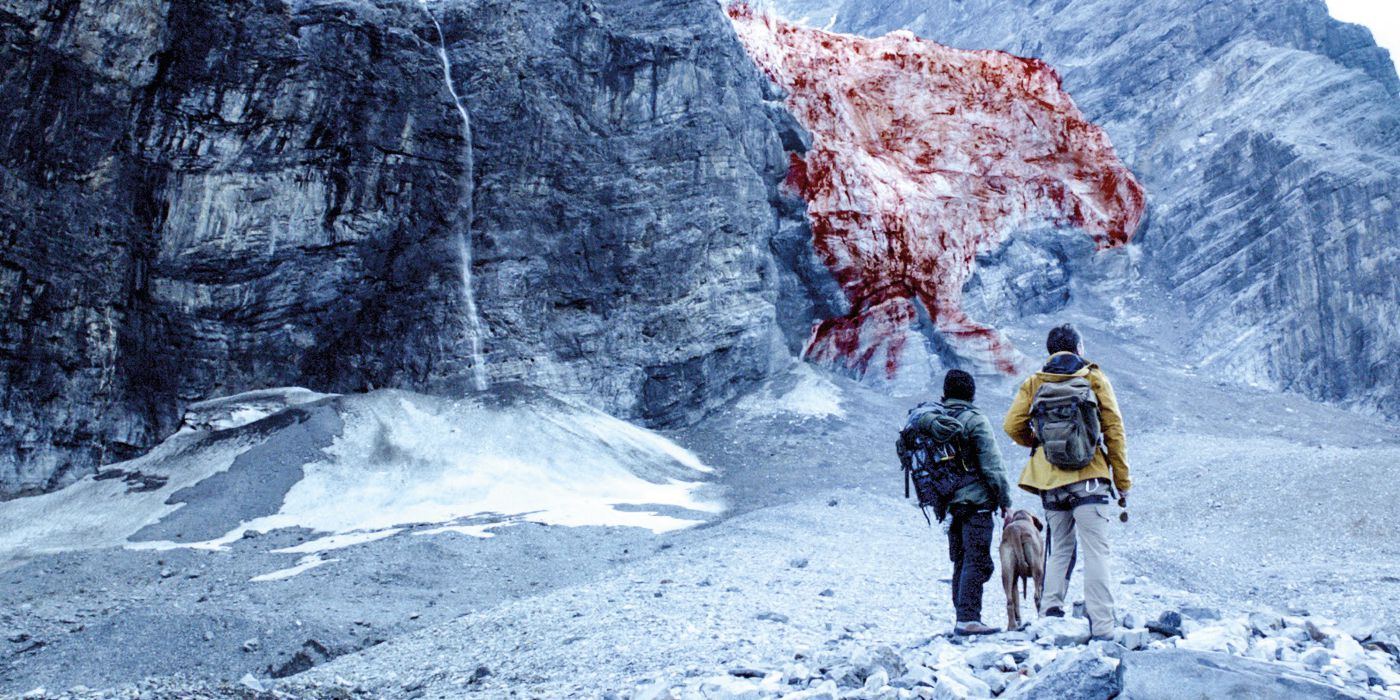
Scientists working in the German Alps discover a mysterious red substance that acts as a mutating parasite when it comes into contact with living creatures. As the team comes under increasing attack from a variety of mutated creatures, a party of visitors including Minister Bodicek (Kren) are hiking towards them, unaware of what awaits them. The Station is a clever, intriguing movie that creates a fair amount of tension without quite making you grip the edge of your seat. The characters are well-drawn despite being standard archetypes – a rugged loner who just sees the creatures as needing to be killed (Liebmann), doubtful scientists who see value in the creatures’ existence (Beseler, Römer), a resourceful Minister and her assistant (Malovcic) who also had a previous relationship with the rugged loner, and the usual creature fodder – and the cast acquit themselves well.
The location photography is often spectacular without undermining the insular nature of the narrative, and director Kren marshals everything to good effect. What lets the movie down however is the incredibly shoddy creature design and execution; they’re largely puppets and look like it. This leaves the attack sequences bereft of any real menace and it’s up to the cast to sell it all. There’s also a “Bond-in-the-shower” moment when the Minister, forced to remove a parasite from a young girl’s thigh, opens her up with an ordinary pair of scissors! These problems aside, The Station works largely because of the committed cast, and the underlying subtext relating to climate and eco-change, giving the movie a depth and resonance most creature features lack.
Rating: 7/10 – a big step-up from Kren’s first feature, Rammbock, The Station is a fine addition to the roster of movies where Nature turns against Man.
Nothing Left to Fear (2013)
D: Anthony Leonardi III / 100m
Cast: Anne Heche, James Tupper, Clancy Brown, Rebekah Brandes, Jennifer Stone, Ethan Peck, Carter Cabassa
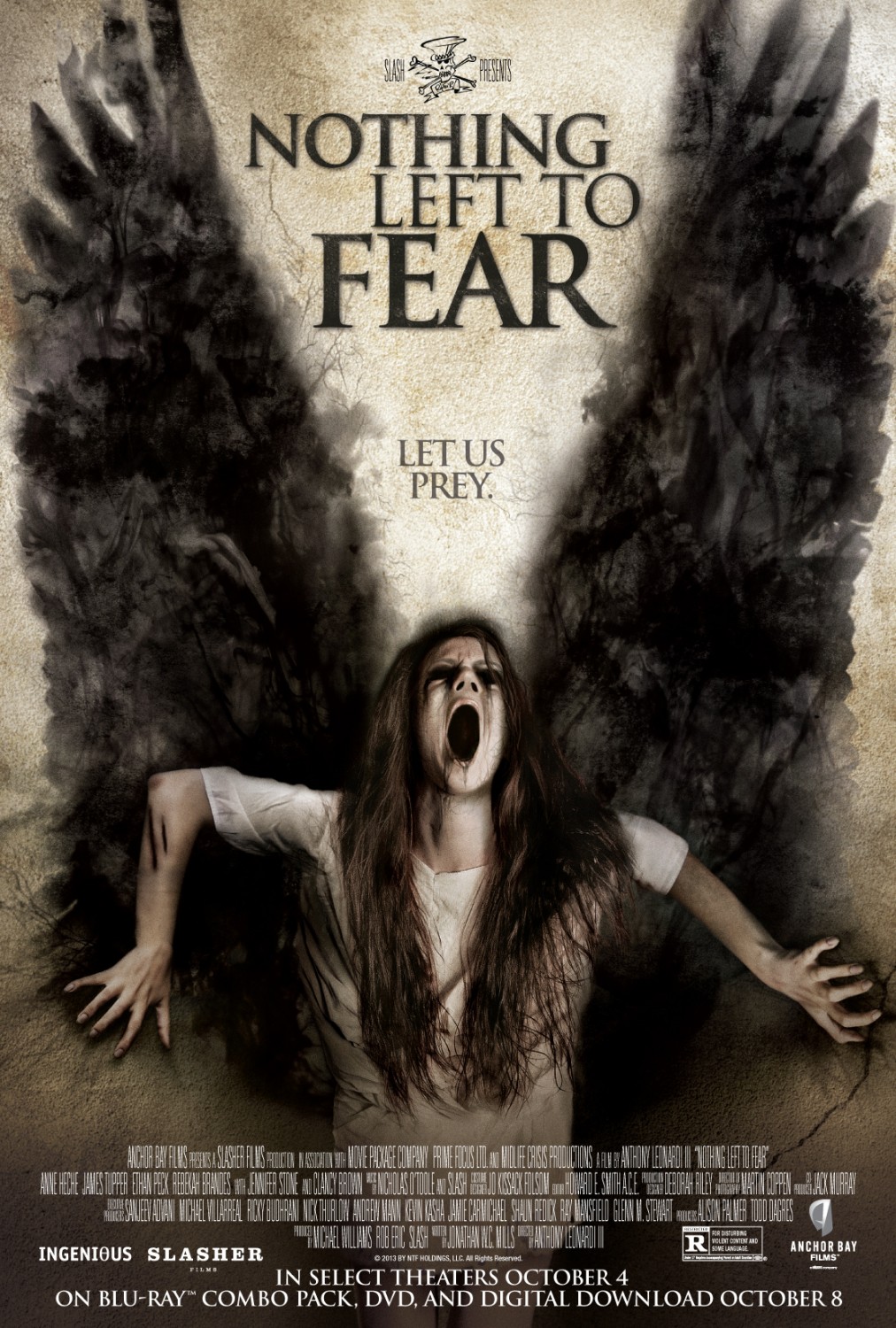
Based in part on the true-life legend of Stull, Kansas, Nothing Left to Fear sees new pastor in town Dan (Tupper) and his family, wife Wendy (Heche), daughters Mary (Stone) and Rebecca (Brandes), and son Christopher (Cabassa) become the focus of a satanic ritual set in motion by on-the-point-of-retiring pastor Kingsman (Brown). As strange events and incidents begin to happen around them it’s only Rebecca who realises that not all is what it seems and that the smiling, welcoming faces of the townspeople hide a deeper, disturbing secret. And that secret is… well, frankly, a mess. In the hands of first-time screenwriter Jonathan W.C. Mills, Nothing Left to Fear staggers under the weight of lacklustre plotting, hazy motivations, perfunctory characterisations and unconvincing dialogue.
By the movie’s end it’s given up altogether, bogged down by an over-reliance on demonic movie tropes and all-too-familair CGI effects. And the movie’s basic premise is further undermined by the movie’s coda, which sees another pastor and his family on their way to Stull… (For anyone now thinking, Oh great, that’s a spoiler and a half, don’t worry, you’ll be more annoyed with the movie by then than you’ll ever be with this review.) Of the cast, Heche and Brown should have known better, while Brandes and Stone at least make an effort, as does Peck as Rebecca’s love interest Noah. Director Leonardi III, whose first feature this is, seems unable to generate any real tension or sense of impending horror, and badly mishandles an extended sequence where one of the children becomes possessed and attacks their siblings: what should be a terrifying experience for the audience becomes a game of cat-and-mouse that cries out for a quicker, more shocking resolution. On the plus side, the score by Slash (also a producer) and Nicholas O’Toole is effective without being intrusive, and the production design by Deborah Riley adds a level of charm to small-town life that becomes pleasingly distorted by the movie’s denouement.
Rating: 4/10 – a muddled, narratively incoherent movie that promises much but fails to deliver almost entirely; there’s nothing left to fear except the movie itself.



 thedullwoodexperiment