• 10 Reasons to Remember…
  • A Brief Word About…
  • About
  • For One Week Only
  • Happy Birthday
  • Monthly Roundup
  • Old-Time Crime
  • Other Posts
  • Poster of the Week
  • Question of the Week
  • Reviews
  • Trailers

thedullwoodexperiment

~ Viewing movies in a different light

thedullwoodexperiment

Tag Archives: Nymphomania

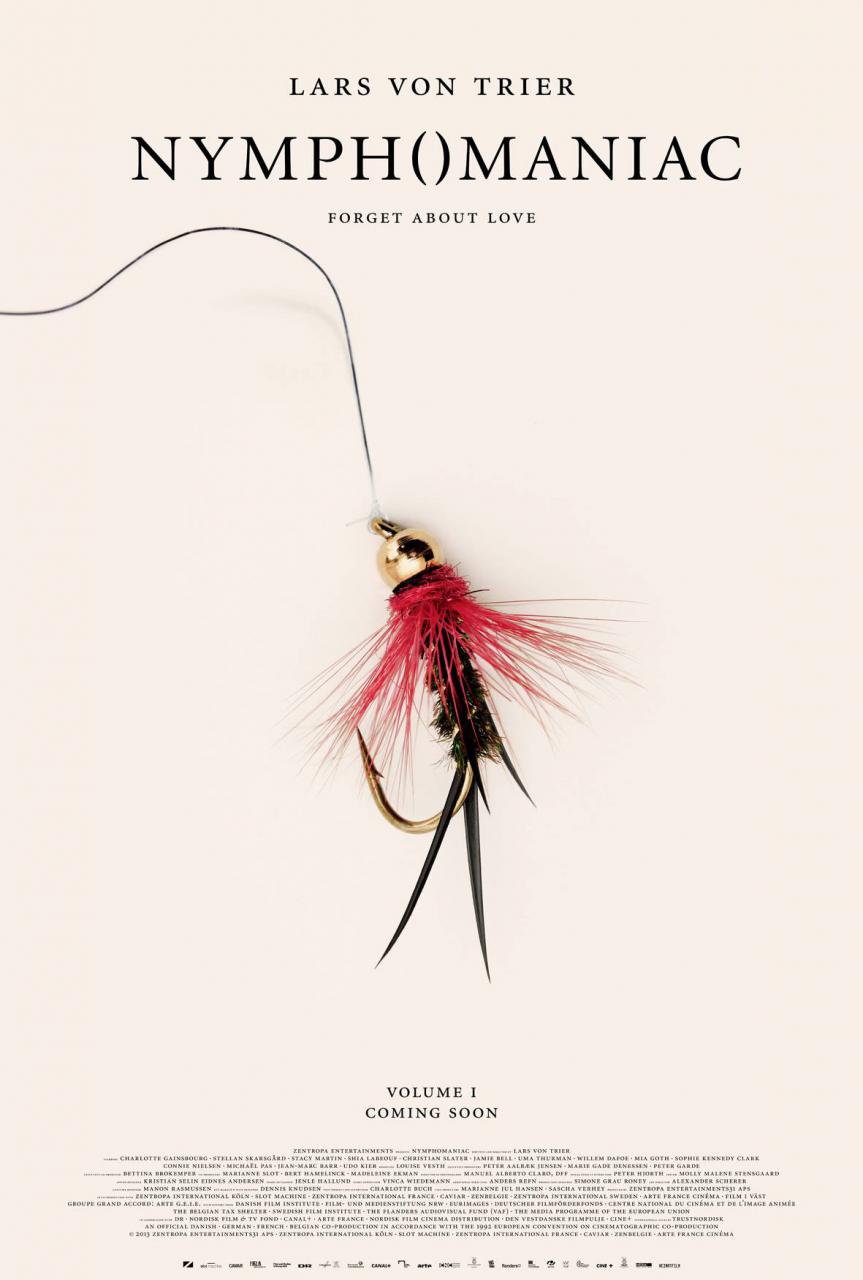
Nymph()maniac Vol. II (2013)

28 Saturday Jun 2014

Posted by dullwood68 in Movies

≈ 1 Comment

Tags

Charlotte Gainsbourg, Jamie Bell, Joe, Lars von Trier, Nymphomania, Sado-masochism, Sex, Sexuality, Shia LaBeouf, Stellan Skarsgård

Nymphomaniac Vol. II

D: Lars von Trier / 123m

Cast: Charlotte Gainsbourg, Stellan Skarsgård, Stacy Martin, Shia LaBeouf, Jamie Bell, Mia Goth, Willem Dafoe, Michael Pas, Jean-Marc Barr, Kate Ashfield, Christian Slater, Udo Kier, Caroline Goodall, Sophie Kennedy Clark, Ananya Berg

Now living with Jerôme but still unable to achieve orgasm, Joe falls pregnant; she has a son, Marcel, but her maternal instincts are dulled by her efforts to reclaim her ability to orgasm.  Her sexual demands begin to alienate Jerôme, who suggests she takes other lovers as it’s clear he can’t give her what she wants.  She does so but it triggers a jealous reaction in Jerôme and proves unsatisfactory as well.  Joe then learns about K (Bell), a sadist, and visits him in the hope that by exploring this aspect of sexuality it might help her.  Her visits require the services of a babysitter while she is gone, and one afternoon the sitter fails to show up; Joe leaves to see K anyway, leaving Marcel alone in their apartment.  When she returns, Marcel is safe but Jerôme is aware of her desertion, and eventually he challenges her: be a better mother or he will leave with Marcel, and Joe will never see them again.  Unable to stop seeing K, Joe visits him again; when she returns home, Jerôme and Marcel are gone.

Having stopped seeing K, Joe reverts to having sex with any man she wants, particularly at work.  Told by her boss that her behaviour is unacceptable, Joe is pressured into attending a therapy group for sex addicts.  The counsellor (Goodall) tells Joe that in order to control her sexual addiction she must first remove anything that might provoke a sexual response; this will make controlled abstinence that much easier.  This proves impossible and Joe realises she is denying her true nature.  When she next attends the group, she rails against them before leaving for good.

The next part of Joe’s story sees her working for a man called L (Dafoe).  She works for him as a debt collector, using her knowledge of the darker aspects of men’s natures to get them to pay up.  Joe is successful in her work, but as the years go by, L suggests she takes on and train a successor.  L has a candidate for her, a fifteen year old girl called P (Goth) who comes from a family of hardened criminals and who is lonely and shy.  Unconvinced at first, Joe takes P under her wing.  Their relationship deepens over the years until, when P is of age, Joe reveals the work she does and P’s planned part in it.  P isn’t put off and begins to take a more active role in Joe’s work, though when she pulls out a gun and threatens to shoot a debtor, Joe is angry with her.  This leads to an estrangement between the two that leads to disaster when P is given her first solo assignment.  The debtor proves to be Jerôme (Pas).  Unbeknownst to Joe, they begin a relationship, seeing each other whenever P has to collect a payment for the debt Jerôme owes.  On the night of the last collection, Joe follows P to Jerôme’s house and sees them together.  She is unsure at first at what to do, but decides to kill Jerôme and is making her way through the alleyway where Seligman found her when she hears Jerôme’s voice.  He is with P.  Joe tries to shoot him but the gun doesn’t work and he beats her up, thus bringing the story full circle.

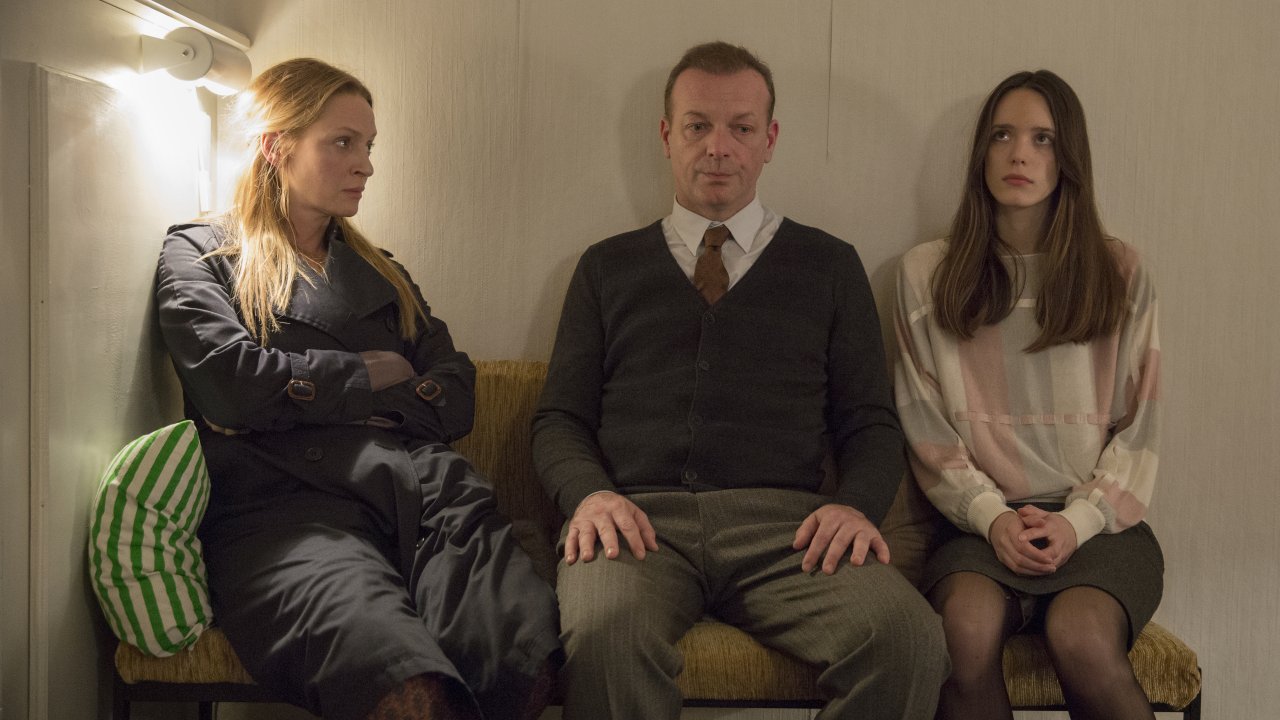
Nymphomaniac Vol. II - scene

With the playfulness and abundant humour of Vol. I toned down from the outset, Nymph()maniac Vol. II is a different movie altogether, darker, more austere, less spirited (there is still humour to be found, though).  Joe’s quest to reclaim her orgasm makes her more sexually adventurous, but it also makes her more vulnerable, and her brief foray into motherhood shows how self-destructive she really is, placing her physical needs over the needs of her child.  The correlation between drug addict and sex addict is also given its strongest expression through her visits to K, as Joe desperately seeks a solution to her predicament.  In the same way that a drug addict will take stronger and stronger drugs in an effort to boost their being high, so too does Joe seek more extreme sexual experiences in her attempt to feel again.  (There’s an argument that Joe is also punishing herself during this period but as she finds release by manipulating the mode of K’s sadism, it doesn’t really hold true.)

If Joe’s addiction leads her into more and more “dangerous” territory, it also leads her to the re-confirmed belief that her sexual appetite is validated by her refusal to love.  But, in truth, it’s a defence mechanism, and shows just how scared Joe is of commitment; her inability to feel anything is brought about through Jerôme’s return and their relationship becoming more meaningful.  By reinforcing Joe’s avoidance of her emotions, von Trier shows the loneliness that she tries to hide, and how it distances her from the people around her.  Having her become a debt collector makes a certain kind of sense, as her neutrality in the face of others’ fear or pain makes her a perfect enforcer.

But as with all the best melodramas – and ultimately this is exactly that – Joe falls in love again, unexpectedly, with P.  But it’s a brief, not too convincing affair, with Joe seemingly ambushed by P’s feelings for her.  As P begins to assert her own identity, it becomes inevitable that Joe will not survive the encounter emotionally, and P’s betrayal of her with Jerôme sees her become an avenging angel, determined to destroy forever whatever fragile happiness she’s ever had.  It’s inevitable though that Joe’s plan will backfire because she’s only ever had control over her own body, and her distance from others precludes any influence she thinks she might have (except when she’s backed up by two heavies collecting money).

In the end, the viewer will find Joe’s emotional detachment either difficult to appreciate – it makes her hard to like, particularly in Vol. II – or a necessary conceit without which the movie would struggle to maintain any sense of coherence.  Either way, her selfish attitude to those around her, and her efforts to control them, make Joe a bold but regrettably galling human being to spend four hours with.  Some of her assertions during her badinage with Seligman are so pompous as to defy von Trier’s obvious intelligence: anyone who knows even the slightest bit about organised religion will know that the statement, “the Western church is the church of suffering and the Eastern church is the church of happiness” is so far from the truth to be almost (in its own way) heretical.  With quotes like these weighing things down, Joe’s assertions serve only to highlight just how remote she is from the rest of society, and even though von Trier champions her need to be true to herself, her lack of real introspection makes her appear, by the movie’s end (or beginning), shallow and intransigent.

There have been complaints that Vol. II, by being darker etc., is less of a movie than Vol. I.  But Joe’s story is one that follows a natural progression and the decision to split the movie in two appears to be more of a commercial decision than a creative one.  It is better to see both volumes in succession so as to retain the natural flow of what was always meant to be one four-hour movie, but, ultimately, von Trier’s decision to split the narrative makes no difference to the effect of the overall story.

On the performance side, Gainsbourg’s fearless approach to the material benefits the movie enormously and there’s rarely a moment where her conviction is in doubt.  She does her best to make Joe a sympathetic character but is equally unafraid to show her in a less than pleasant light, her commitment to the role going some way to mitigating the missteps in von Trier’s script.  As the outwardly concerned Seligman, Skarsgård maintains his inquisitive, supportive stance in the light of Joe’s revelations, but is given an horrendous final scene that destroys everything the character has come to stand for.  Martin’s presence, despite Gainsbourg’s proficiency, is not as missed as might be expected, while LaBeouf remains as hard to watch as in Vol. I.  The newcomers to the tale – Dafoe, Goth, Bell – acquit themselves well (Bell in particular is unexpectedly creepy as K), and it’s nice to see Slater and Berg (ten year old Joe) in flashback.

As before, von Trier’s technical control over the material remains in place, though some of the aforementioned missteps make it difficult to give him the benefit of the doubt when some scenes appear included merely for effect (the restaurant scene involving a number of spoons is a case in point, but it redeems itself by being very, very funny).  He’s on less firmer ground with the philosophical digressions that occupy Joe’s time with Seligman, and they become more and more contrived as the movie develops.  And the photography by Manuel Alberto Claro is as beautiful and decorous as in the first movie (which shouldn’t be a surprise).

Rating: 7/10 – no better or worse than Vol. I, Nymph()maniac Vol. II concludes Joe’s story in semi-triumphant style but maintains the faults found in the first movie; archly effective in places, and dismaying in others, von Trier’s conclusion to his Trilogy of Depression shows the wily old fox of arthouse cinema still as infuriating and entertaining (in equal measure) as he’s always been.
Share this:

  • Click to share on X (Opens in new window) X
  • Click to share on Facebook (Opens in new window) Facebook
  • More
  • Click to print (Opens in new window) Print
  • Click to email a link to a friend (Opens in new window) Email
Like Loading...

Nymph()maniac Vol. I (2013)

27 Friday Jun 2014

Posted by dullwood68 in Movies

≈ 1 Comment

Tags

Ash trees, Casual sex, Charlotte Gainsbourg, Joe, Lars von Trier, Masturbation, Nymphomania, Sex, Sexuality, Shia LaBeouf, Stacy Martin, Stellan Skarsgård

Nymphomaniac Vol. I

D: Lars von Trier / 118m

Cast: Charlotte Gainsbourg, Stellan Skarsgård, Stacy Martin, Shia LaBeouf, Christian Slater, Uma Thurman, Sophie Kennedy Clark, Hugo Speer, Connie Nielsen, Ananya Berg, Jesper Christensen, Nicolas Bro

In a secluded alleyway, a man called Seligman (Skarsgård) finds a woman (Gainsbourg) lying unconscious on the ground; she’s been attacked.  He takes her back to his home, where she tells him the story of her life, and how she came to be in the alleyway where he found her.  The woman’s name is Joe, and she tells Seligman that from a very young age she was aware of her vagina and the pleasure it could give her.  She relates a number of instances from her childhood, and mentions her father, a doctor (Slater) whom she loved very much.  As a teenager (Martin) she chooses a boy, Jerôme (LaBeouf), to take her virginity, and so, begins a relationship with him that will continue off and on for the rest of her life.

Joe relates her time having sex with strangers on trains as a game she played with her friend B (Clark), and the club they subsequently form where members are not allowed to have sex more than once with the same person.  However, B falls in love and Joe ends their friendship in disgust.  Some time later, Joe applies for a job at a printing house, and despite having no skills or experience, is taken on.  This proves to be because her boss is the same Jerôme who took her virginity.  Jerôme wants to have sex with her but she refuses his advances, while at the same time she has sex with all the other men in the office.  But her willingness to see Jerôme suffer has a different effect and Joe stops having sex altogether; like B she too has fallen in love.  She builds up the courage to tell him but takes too long: when she arrives at work one day prepared to tell Jerôme how she feels about him, she finds he’s now married and travelling abroad.

Joe’s reaction is to have sex with as many men as possible, and to keep a string of lovers.  She tells of one man, H (Speer), who she tried to break up with by telling him he’ll never leave his wife and family, but this is exactly what he does, and it leads to an uncomfortable visit by his wife (Thurman) and their children.  But Joe admits the whole thing left her unmoved.  It’s only when her father dies in hospital that Joe is moved at all.  Continuing to juggle both work and several lovers, Joe finds herself feeling sad at times and while walking in a park one day, she is reunited with Jerôme.  He tells her his marriage isn’t working, and they go back to Joe’s place and have sex, but partway through she realises that she can’t feel anything physically.

Nymphomaniac Vol. I - scene

With all the hype surrounding von Trier’s Nymph()maniac duology (particularly the explicit sex scenes – always guaranteed to draw people’s attention), the casual viewer might be put off by a movie that revels in its bad taste highlights and caustic humour, but with Vol. I that would be a mistake.  After the dreary, depressing Antichrist (2009) and the mock-opera bombast of Melancholia (2011), the wily old fox of arthouse cinema has decided to make a comedy about sex, and not just about sex itself, but a vast array of preconceptions about sex, and its relationship with pain, betrayal, neglect, lust, sacrifice, and perhaps worst of all, love.

As a young child, Joe is presented as thoughtful, intelligent, acquisitive and precocious.  Her relationship with her father appears to hold the key to her future behaviour – Joe seeks what her father can’t give her – and on a basic psychological level it’s obvious why Joe behaves in the way she does.  But Joe isn’t interested in the emotional mechanics of sex but in the overriding physical need that pushes her to seek out so many men and so many sexual experiences.  Joe wants to be true to herself – to her vagina – but what she learns, and resolutely pushes to one side, is that emotion can enhance her encounters.  And yet, as her relationship with Jerôme shows, feelings and emotions can augment her experiences and enrich them.  It’s her refusal to admit this, or even trust it, that makes Joe such a sad figure: she’ll never find true happiness unless she allows herself to love.

In telling her story, Joe and Seligman indulge in some philosophical game-playing as Joe keeps referring to herself as sinful, while Seligman refutes her assertions at every turn. These interludes often find von Trier at his most mischievous as Joe seeks to justify her behaviour where clearly she has no need to.  Alluding to various topics, such as fly fishing and Fibonacci numbers, Seligman acts as the audience’s representative, taking Joe’s revelations in his stride and remaining unaffected throughout.  Some of the connections von Trier comes up with hail from the wrong side of contrivance, but despite this they have a certain élan to them that keeps them amusing even if they do sound pretentious.

Again, it’s the humour that counts, whether it’s Joe and B trying to be sophisticated while seducing men on the train, or Joe and Seligman arguing over the attributes of a cake fork, or even LaBeouf’s horrendous English accent (even worse than Dick Van Dyke’s Cockney horror in Mary Poppins).  Joe’s bed-hopping behaviour has its own in-built jocosity, appearing in stark contrast to the laboured protestations of guilt that the older Joe regales Seligman with.  It’s fun to see her treat men in the same way that men often treat women – as objects there to provide pleasure and little else – and even the tirade offered up by Mrs H. is entertaining with its desperate, cloying sarcasm projected as barely disguised venom.  There’s also a nice line in visual humour – Jerôme stopping an elevator in order to seduce Joe and finding out when he’s rebuffed that it’s stopped between floors; Seligman envisioning Joe’s somewhat different approach to “education”; the penis montage – although the equivalent verbal humour isn’t quite as prominent.

On the dramatic side, Joe’s encounter with Mrs H is the movie’s highlight, while Joe’s (one-sided) romance with Jerôme appears more of a plot device to keep Joe shagging lots of men than a real development for either character.  That she meets up with him again at the end isn’t much of a surprise – there’s unfinished business to be dealt with, after all – but the movie’s cliffhanger ending successfully pulls the rug out from under the audience’s feet with aplomb.  Her relationship with her father is honest and straightforward, and the scenes where he’s in hospital are genuinely moving (thanks largely to the playing of Messrs Slater and Martin).

As the younger Joe, Martin gives a stand-out performance, Joe’s initial enjoyment of sex before it becomes more and more of an addiction is so well depicted that it comes as a bit of a shock that this is her first movie.  But even when things begin to get darker, Martin keeps her focus and keeps the audience watching: it’s a bravura turn and easily award-worthy.  As the older Joe, Gainsbourg is mesmerising, her care-worn face telling of hardships that not even she can adequately talk about.  She dominates her scenes with Skarsgård, his nervous, twitchy style of acting at odds with her confident, self-assured determinism.  Skarsgård makes the most of Seligman’s “learned” naiveté, while there’s sterling support from Slater, Thurman and Clark.  Sadly, the same can’t be said for LaBeouf, who provides the worst performance in the movie, his attempts at creating a realistic character continually being undermined by his limitations as an actor.

Von Trier’s direction, as you might expect, is controlled and tightly focused, and he uses a variety of shots – often in the same scene – to show the fractured nature of Joe’s unique view of the world.  He’s on less solid ground with his script, with Joe’s often brittle approach to other people and her own feelings going some way to making her a little less sympathetic than expected.  Having said that, there are plenty of clever touches, and von Trier has a sure knack of cutting away from a scene at the right moment.  His cinematographer, Manuel Alberto Claro, gives the movie an appropriately clinical look that reflects the sense of detachment that Joe feels with regard to her life and history.

Rating: 7/10 – brimming with ideas (not all of which are effectively rendered), Nymph()maniac Vol. I is a cinematic confection dressed up in serious attire; an intriguing movie for the most part, but hampered by its unnecessary lack of an ending.


Share this:

  • Click to share on X (Opens in new window) X
  • Click to share on Facebook (Opens in new window) Facebook
  • More
  • Click to print (Opens in new window) Print
  • Click to email a link to a friend (Opens in new window) Email
Like Loading...

Blog Stats

  • 486,528 hits

Recent Posts

  • 10 Reasons to Remember Bibi Andersson (1935-2019)
  • Fantasia (1940)
  • Dances With Wolves (1990) – The Special Edition
  • Kiss of the Spider Woman (1985)
  • The Three Musketeers (1973)

Top Posts & Pages

  • Lost for Life (2013) - Another Look
    Lost for Life (2013) - Another Look
  • Lost for Life (2013)
    Lost for Life (2013)
  • About
    About
  • Mr. Topaze (1961)
    Mr. Topaze (1961)
  • Winter's Tale (2014)
    Winter's Tale (2014)
  • Billy Lynn's Long Halftime Walk (2016)
    Billy Lynn's Long Halftime Walk (2016)
  • The Hitman's Bodyguard (2017)
    The Hitman's Bodyguard (2017)
  • Shock and Awe (2017)
    Shock and Awe (2017)
  • 5 Famous Movie Roles That Nearly Went to Someone Else
    5 Famous Movie Roles That Nearly Went to Someone Else
  • The Layover (2017)
    The Layover (2017)
Follow thedullwoodexperiment on WordPress.com

Blogs I Follow

  • Rubbish Talk
  • Film 4 Fan
  • Fast Film Reviews
  • The Film Blog
  • All Things Movies UK
  • Interpreting the Stars
  • Let's Go To The Movies
  • Movie Reviews 101
  • TMI News
  • Dan the Man's Movie Reviews
  • Film History
  • Jordan and Eddie (The Movie Guys)

Archives

  • April 2019 (13)
  • March 2019 (28)
  • February 2019 (28)
  • January 2019 (32)
  • December 2018 (28)
  • November 2018 (30)
  • October 2018 (29)
  • September 2018 (29)
  • August 2018 (29)
  • July 2018 (30)
  • June 2018 (28)
  • May 2018 (24)
  • April 2018 (21)
  • March 2018 (31)
  • February 2018 (25)
  • January 2018 (30)
  • December 2017 (30)
  • November 2017 (27)
  • October 2017 (27)
  • September 2017 (26)
  • August 2017 (32)
  • July 2017 (32)
  • June 2017 (30)
  • May 2017 (29)
  • April 2017 (29)
  • March 2017 (30)
  • February 2017 (27)
  • January 2017 (32)
  • December 2016 (30)
  • November 2016 (28)
  • October 2016 (30)
  • September 2016 (27)
  • August 2016 (30)
  • July 2016 (30)
  • June 2016 (31)
  • May 2016 (34)
  • April 2016 (30)
  • March 2016 (30)
  • February 2016 (28)
  • January 2016 (35)
  • December 2015 (34)
  • November 2015 (31)
  • October 2015 (31)
  • September 2015 (34)
  • August 2015 (31)
  • July 2015 (33)
  • June 2015 (12)
  • May 2015 (31)
  • April 2015 (32)
  • March 2015 (30)
  • February 2015 (37)
  • January 2015 (39)
  • December 2014 (34)
  • November 2014 (34)
  • October 2014 (36)
  • September 2014 (25)
  • August 2014 (29)
  • July 2014 (29)
  • June 2014 (28)
  • May 2014 (23)
  • April 2014 (21)
  • March 2014 (42)
  • February 2014 (38)
  • January 2014 (29)
  • December 2013 (28)
  • November 2013 (34)
  • October 2013 (4)

Blog at WordPress.com.

Rubbish Talk

Film 4 Fan

A Movie Blog

Fast Film Reviews

The Film Blog

The official blog of everything in film

All Things Movies UK

Movie Reviews and Original Articles

Interpreting the Stars

Dave Examines Movies

Let's Go To The Movies

Film and Theatre Lover!

Movie Reviews 101

Daily Movie Reviews

TMI News

Latest weather, crime and breaking news

Dan the Man's Movie Reviews

All my aimless thoughts, ideas, and ramblings, all packed into one site!

Film History

Telling the story of film

Jordan and Eddie (The Movie Guys)

Movie Reviews & Ramblings from an Australian Based Film Fan

Privacy & Cookies: This site uses cookies. By continuing to use this website, you agree to their use.
To find out more, including how to control cookies, see here: Cookie Policy
  • Subscribe Subscribed
    • thedullwoodexperiment
    • Join 481 other subscribers
    • Already have a WordPress.com account? Log in now.
    • thedullwoodexperiment
    • Subscribe Subscribed
    • Sign up
    • Log in
    • Report this content
    • View site in Reader
    • Manage subscriptions
    • Collapse this bar
 

Loading Comments...
 

    %d