• 10 Reasons to Remember…
  • A Brief Word About…
  • About
  • For One Week Only
  • Happy Birthday
  • Monthly Roundup
  • Old-Time Crime
  • Other Posts
  • Poster of the Week
  • Question of the Week
  • Reviews
  • Trailers

thedullwoodexperiment

~ Viewing movies in a different light

thedullwoodexperiment

Tag Archives: Orson Welles

They’ll Love Me When I’m Dead (2018)

04 Sunday Nov 2018

Posted by dullwood68 in Movies

≈ Leave a comment

Tags

Director, Documentary, John Huston, Morgan Neville, Movie making, Oja Kodar, Orson Welles, Peter Bogdanovich, Review, The Other Side of the Wind

D: Morgan Neville / 98m

With: Orson Welles, John Huston, Gary Graver, Peter Bogdanovich, Oja Kodar, Rich Little, Danny Huston, Cybill Shepherd, Beatrice Welles

In 1970, Orson Welles began shooting a movie that he had been thinking about as far back as 1961, about an aging movie director making his latest feature against a backdrop of the changing social, political, and sexual mores of the period. The Other Side of the Wind was intended to be an experimental movie for the most part, with scenes from the movie the director is making woven into the larger story – a movie within a movie. But as with many of Welles’ later projects, money proved to be a problem, from the lack of consistent funding to his own tax problems (which required him to take breaks from production while he took various other jobs to raise money). There were also casting problems: Rich Little was replaced by Peter Bogdanovich after filming nearly all his scenes, and John Huston was only brought on as the fictional director in early 1974. Forced to contend with an intermittent shooting schedule, Welles’ didn’t complete principal photography until 1976. But his problems didn’t end there. The editing process proved difficult as well, and by 1979, Welles had only forty minutes of finished footage out of a planned two hour movie. Would it ever get released…?

The first thing to say about They’ll Love Me When I’m Dead (a quote made by Welles to Bogdanovich), is that it’s all about the production of The Other Side of the Wind, and the remaining years before Welles died with the project uncompleted. It’s not about what happened to the movie after Welles’s death in 1985, and how it came to be released in 2018. If you’re interested in that aspect of the movie’s history, then this isn’t the documentary for you. What it is, however, is a fascinating look at Welles himself and his approach to movie making during a period when he was still fighting to get projects made on his own terms, and had learnt how to circumnavigate many of the issues and problems that were put in his way (there’s a great example of Welles’ skill as a director from Chimes at Midnight (1965), where a punch is thrown – and we learn the reaction shot was filmed two years later; and the two shots are seamless). What the documentary makes clear is that Welles knew what he was doing in his head, but it also makes the point through contemporary interview footage that Welles wasn’t always able to articulate what was in his head. Watching this, you might be hard pressed to work out just what The Other Side of the Wind is all about.
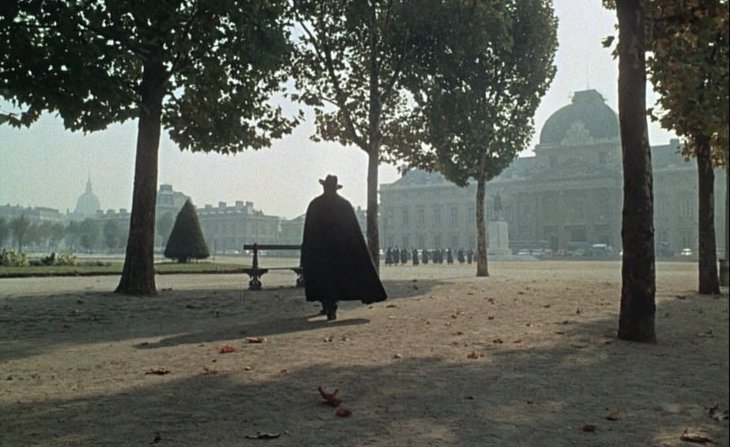
One of the key strengths of Morgan Neville’s admirable documentary is its cast of characters, the people who worked with Welles on the project, some of whom have vastly different recollections of what happened, how, and why. Little’s departure from the movie is a case in point, with the man himself somewhat reticent on the matter, while Oja Kodar’s influence (she co-wrote the movie with Welles and appeared in it) is regarded as either essential, restrictive of Welles’ talent, or isn’t understood at all. These differences in memory prove strangely illuminating. As Welles himself would always state, “everything is a lie” (and he does so at the beginning of the documentary), so whether one person is right or wrong soon becomes irrelevant. What Neville teases out is the mystery of a movie that, until recently, no one has seen in its finished form. As a companion piece to The Other Side of the Wind, this is required viewing, an apéritif if you will, before the main course, and a terrific reminder of Welles’ skill as a movie maker, something Neville does through the equally skilful use of clips from Welles’s career and revealing clips of the man himself.

Rating: 8/10 – thanks to lively contributions from those who were there, and a wealth of archive footage shot at the time, They’ll Love Me When I’m Dead is an enthralling look at a movie maker who was still willing to take risks, and the perils of independent movie making; best watched before seeing The Other Side of the WInd, this isn’t just for cinéastes or fans of Welles, but anyone with an interest in how movies can get made despite any number of adversities.

Share this:

  • Click to share on X (Opens in new window) X
  • Click to share on Facebook (Opens in new window) Facebook
  • More
  • Click to print (Opens in new window) Print
  • Click to email a link to a friend (Opens in new window) Email
Like Loading...

RKO 281 (1999)

19 Wednesday Jul 2017

Posted by dullwood68 in Movies

≈ Leave a comment

Tags

Benjamin Ross, Catch Up movie, Drama, History, James Cromwell, John Malkovich, Liev Schreiber, Melanie Griffith, Orson Welles, Review, RKO Pictures, True story, William Randolph Hearst

D: Benjamin Ross / 87m

Cast: Liev Schreiber, James Cromwell, Melanie Griffith, John Malkovich, Brenda Blethyn, Roy Scheider, Liam Cunningham, David Suchet, Fiona Shaw, Anastasia Hille

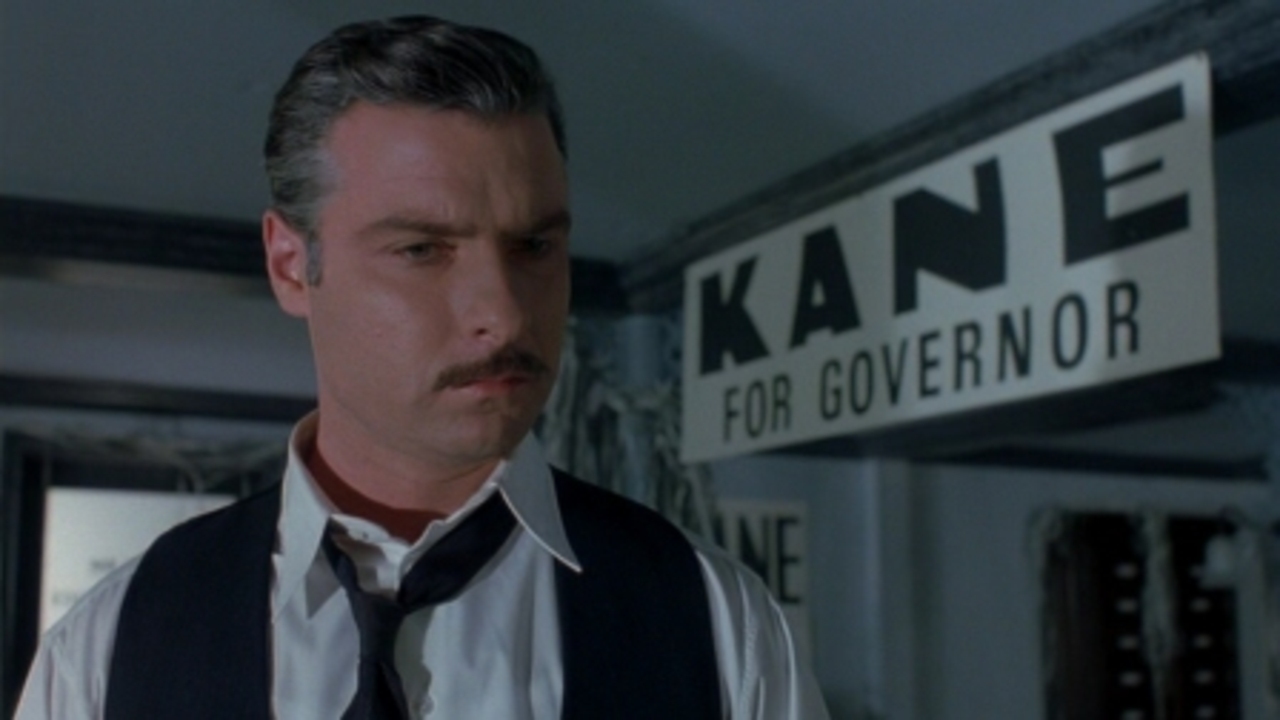
In 1939, Orson Welles (Schreiber), the “boy wonder”, signed a movie contract with RKO Pictures. He was given unprecedented freedom to make whatever movie he wanted (though RKO hoped he would make a movie version of his infamous War of the Worlds radio broadcast). After two attempts at making his first picture, Welles, along with old friend and writer Herman J. Mankiewicz (Malkovich) came up with the idea of making a loosely fictionalised version of the life of publishing magnate William Randolph Hearst (Cromwell). Welles regarded Hearst as a hypocrite and a monster, a man richly deserving of being exposed in much the same way that Hearst’s newspapers had done to others. Welles considered he had nothing to lose by making such a movie, but before long it became something much more personal, and with a great deal of meaning for him. RKO 281 – Citizen Kane‘s production number – shows how the movie came to be made, some of the pitfalls along the way, and the pressure Hearst tried to exert in order to make the movie disappear without the public ever seeing it.

Like many an acknowledged classic, Citizen Kane didn’t just appear out of nowhere. In RKO 281, we see the genesis of both the myth and the legend, and the movie itself. After a year in Hollywood, and with nothing to show for his efforts, Welles was already being looked upon as a failure, a circumstance that didn’t bother him in the slightest, but which would spur him on to make a movie that is generally regarded as the best American movie ever made. Based in part on the documentary The Battle Over Citizen Kane (1996), RKO 281 begins with Welles’ arrival in Hollywood, his fame preceeding him. Persuaded to come out there by RKO head George J. Schaefer (Scheider), Welles attends a dinner held by Hearst and is appalled by the man’s attitude and takes immediate offence. Soon he’s telling Mankiewicz that Hearst is the perfect subject for his first movie. But Mankiewicz isn’t so sure and tries to warn Welles of the trouble he’ll face if he goes ahead with his plan.

Soon, however, they have a screenplay, and though the two men have a falling out over Mankiewicz’s name being removed from the final script, the movie goes ahead and production begins in earnest. But Welles is soon behind, his quest for perfection causing delays and production overspends. The industry, still unaware of the content of Welles’ movie, predicts it will be a disaster. It’s only when news of its focus reaches the ears of Hearst that the possibility of its truly being a disaster becomes more likely. Determined to ensure that the movie, originally titled American, is never shown in cinemas, Hearst brings pressure to bear on the heads of the other studios, partly by playing the race card – that the heads were all Jewish wasn’t widely known or acknowledged – and partly by threatening to expose the immoral activities of their stars. While everyone else around him views Hearst as being entirely capable of destroying Welles’ career, and their own if he so wishes, it’s left to Welles to fight for his movie. Help, though, comes in an unexpected form…

The story behind the making of Citizen Kane is often as fascinating as the actual movie itself, and though RKO 281 uses The Battle Over Citizen Kane as its template for John Logan’s vigorous screenplay, there’s still a sense that this is a movie going over old ground, and without achieving the same effect. Logan certainly hits his mark as it were, and there are some priceless lines of dialogue – Mankiewicz on San Simeon, the massive estate where Hearst lived: “it’s the place God would have built if he had the money” – but once Hearst becomes aware of just how much of his life Welles has appropriated for Citizen Kane, the movie makes an unjustified attempt at becoming a thriller, with Welles’ career on the line versus Hearst’s reputation. And despite a passionate performance by Schreiber, and with the outcome already known in advance, the movie struggles to make Hearst’s threats as worrying as they must have been at the time, and he comes across as a petulant control freak. The same can be said for Welles also, and the movie makes the point several times over that the two men were very similar, but in doing this so often, it lessens the impact of what the movie is trying to say.

Before then, the movie focuses on the making of Citizen Kane, and here the movie is on firmer ground, replicating the ups and downs of the production with a great deal of enthusiasm, and recreating events such as the time that Welles had a massive hole dug in the studio floor to facilitate a particular low-level shot he wanted (apparently he never thought of raising the set instead). His relationship with the cinematographer, Gregg Toland (Cunningham) is also explored, but ultimately it’s his friendship with Mankiewicz that gets the most screen time, and the ways in which Welles exploited his friend’s talent. Both Schreiber and Malkovich relish the dialogue they’re given in their scenes together, and these scenes are some of the best in the movie, with both men sparking and feeding off each other to very good effect. Cromwell injects a little bit of pathos into his portrayal of Hearst, but it’s not enough to offset the idea that here is a man whose monomania – himself – has become a lifestyle choice. As the former silent actress Marion Davies, Griffith gives a sympathetic and sincere performance, while Scheider is equally good as the put-upon studio head who puts his career on the line to ensure Welles succeeds in getting his own off the ground.

The movie is attractively shot and lit by DoP Mike Southon, and there are some well chosen contemporary numbers on the soundtrack, but though the script is good enough to tell the story in a slightly lumbering fashion (there are very few highs and lows to help capture the intensity of the production itself), Ross’s direction is too pedestrian to elevate the material above that of solid and dependable. Too many scenes lack the energy to push the narrative forward with any real conviction, while others are repetitive in nature, as if the audience wouldn’t understand things the first time. And that’s without the scene near the end where the story contrives to have Welles and Hearst alone in an elevator – let the verbal sparring commence! It’s an unnecessary cinematic cliché that’s included in a movie about another movie that was anything but clichéd.

Rating: 7/10 – a mixed bag of a movie, with good performances overcoming several narrative slip-ups, RKO 281 is mostly intriguing if you don’t know the story, and fairly run of the mill if you do; still, it’s a movie that’s largely entertaining despite itself, and as a passive recreation of the making of one of the most influential features of all time, it’s effective without being too demanding. (18/31)

Share this:

  • Click to share on X (Opens in new window) X
  • Click to share on Facebook (Opens in new window) Facebook
  • More
  • Click to print (Opens in new window) Print
  • Click to email a link to a friend (Opens in new window) Email
Like Loading...

Blog Stats

  • 486,768 hits

Recent Posts

  • 10 Reasons to Remember Bibi Andersson (1935-2019)
  • Fantasia (1940)
  • Dances With Wolves (1990) – The Special Edition
  • Kiss of the Spider Woman (1985)
  • The Three Musketeers (1973)

Top Posts & Pages

  • Lost for Life (2013) - Another Look
    Lost for Life (2013) - Another Look
  • Lost for Life (2013)
    Lost for Life (2013)
  • About
    About
  • Exposed (2016)
    Exposed (2016)
  • Cardboard Boxer (2016)
    Cardboard Boxer (2016)
  • A Brief Word About La La Land (2016)
    A Brief Word About La La Land (2016)
  • The Monuments Men (2014)
    The Monuments Men (2014)
  • A Brief Word About Netflix Original Comedies
    A Brief Word About Netflix Original Comedies
  • Removal (2010)
    Removal (2010)
  • My Top 10 Guilty Pleasures
    My Top 10 Guilty Pleasures
Follow thedullwoodexperiment on WordPress.com

Blogs I Follow

  • Rubbish Talk
  • Film 4 Fan
  • Fast Film Reviews
  • The Film Blog
  • All Things Movies UK
  • Interpreting the Stars
  • Let's Go To The Movies
  • Movie Reviews 101
  • TMI News
  • Dan the Man's Movie Reviews
  • Film History
  • Jordan and Eddie (The Movie Guys)

Archives

  • April 2019 (13)
  • March 2019 (28)
  • February 2019 (28)
  • January 2019 (32)
  • December 2018 (28)
  • November 2018 (30)
  • October 2018 (29)
  • September 2018 (29)
  • August 2018 (29)
  • July 2018 (30)
  • June 2018 (28)
  • May 2018 (24)
  • April 2018 (21)
  • March 2018 (31)
  • February 2018 (25)
  • January 2018 (30)
  • December 2017 (30)
  • November 2017 (27)
  • October 2017 (27)
  • September 2017 (26)
  • August 2017 (32)
  • July 2017 (32)
  • June 2017 (30)
  • May 2017 (29)
  • April 2017 (29)
  • March 2017 (30)
  • February 2017 (27)
  • January 2017 (32)
  • December 2016 (30)
  • November 2016 (28)
  • October 2016 (30)
  • September 2016 (27)
  • August 2016 (30)
  • July 2016 (30)
  • June 2016 (31)
  • May 2016 (34)
  • April 2016 (30)
  • March 2016 (30)
  • February 2016 (28)
  • January 2016 (35)
  • December 2015 (34)
  • November 2015 (31)
  • October 2015 (31)
  • September 2015 (34)
  • August 2015 (31)
  • July 2015 (33)
  • June 2015 (12)
  • May 2015 (31)
  • April 2015 (32)
  • March 2015 (30)
  • February 2015 (37)
  • January 2015 (39)
  • December 2014 (34)
  • November 2014 (34)
  • October 2014 (36)
  • September 2014 (25)
  • August 2014 (29)
  • July 2014 (29)
  • June 2014 (28)
  • May 2014 (23)
  • April 2014 (21)
  • March 2014 (42)
  • February 2014 (38)
  • January 2014 (29)
  • December 2013 (28)
  • November 2013 (34)
  • October 2013 (4)

Blog at WordPress.com.

Rubbish Talk

Film 4 Fan

A Movie Blog

Fast Film Reviews

The Film Blog

The official blog of everything in film

All Things Movies UK

Movie Reviews and Original Articles

Interpreting the Stars

Dave Examines Movies

Let's Go To The Movies

Film and Theatre Lover!

Movie Reviews 101

Daily Movie Reviews

TMI News

Latest weather, crime and breaking news

Dan the Man's Movie Reviews

All my aimless thoughts, ideas, and ramblings, all packed into one site!

Film History

Telling the story of film

Jordan and Eddie (The Movie Guys)

Movie Reviews & Ramblings from an Australian Based Film Fan

Privacy & Cookies: This site uses cookies. By continuing to use this website, you agree to their use.
To find out more, including how to control cookies, see here: Cookie Policy
  • Subscribe Subscribed
    • thedullwoodexperiment
    • Join 481 other subscribers
    • Already have a WordPress.com account? Log in now.
    • thedullwoodexperiment
    • Subscribe Subscribed
    • Sign up
    • Log in
    • Report this content
    • View site in Reader
    • Manage subscriptions
    • Collapse this bar
 

Loading Comments...
 

    %d