• 10 Reasons to Remember…
  • A Brief Word About…
  • About
  • For One Week Only
  • Happy Birthday
  • Monthly Roundup
  • Old-Time Crime
  • Other Posts
  • Poster of the Week
  • Question of the Week
  • Reviews
  • Trailers

thedullwoodexperiment

~ Viewing movies in a different light

thedullwoodexperiment

Tag Archives: Outrage

Can We Take a Joke? (2015)

20 Monday Mar 2017

Posted by dullwood68 in Movies

≈ Leave a comment

Tags

Comedy, Documentary, Free Speech, Gilbert Gottfried, Humour, Jim Norton, Lisa Lampanelli, Obscenity, Offense, Outrage, Penn Jillette, Ted Balaker

D: Ted Balaker / 75m

Narrator: Christina Pazsitzky

With: Jim Norton, Lisa Lampanelli, Gilbert Gottfried, Karith Foster, Penn Jillette, Heather McDonald, Christopher Lee, Noam Dworman, Greg Lukianoff, Jonathan Rauch, Adam Carolla, Jon Ronson

They say that humour is subjective, that what one person finds funny is likely to leave another person unmoved. But what if a joke is deemed offensive? And what if that joke, or comment, is deemed so offensive that the person making the joke is condemned by an audience member, or perhaps the whole audience, or worse still, thousands (perhaps millions) of social media users? How does that work, and why is it happening so often in the United States? Why has free speech come under so much threat, and why is one person’s idea of free speech more important than someone else’s? Why, in short, are so many people now quick to be or feel offended?

This is the central conundrum of Can We Take a Joke?, a documentary that explores the notion that if you tell a joke that’s offensive, and someone takes offence against that joke, then they’re right to do so, and it’s the comedian’s fault for stepping over the line – deliberately or not. It seems outrage is all the rage now, as jokes have to pass a kind of cultural litmus test of what’s acceptable and what’s not. And woe betide you if you’re the one stepping over that line, because you will be pilloried. And don’t think that you’ll find support from the liberals in America, because in reality, they’ve become even more stringent than the conservatives. What’s a comedian to do? The answer’s easy: keep on doing what you’re doing.

The movie takes us back to the early Sixties and the rise to prominence of Lenny Bruce, the godfather of modern comedy. Bruce was uncompromising and he regularly skewered the fascist tendencies of a heirarchy that ensured the police were in attendance at his shows, waiting to arrest him if he said anything the authorities deemed offensive or inflammatory or obscene. The point here is that no one in the audience at a Lenny Bruce gig ever complained or said they were outraged or offended. The end result of Bruce’s several arrests? Since then, not one comedian has been arrested for being offensive, inflammatory or obscene. Progress, then. Except, as Can We Take a Joke? shows, in the years since, there has been a sea change, a growing reluctance by some people to accept that comedians can, and will, use offensive material in their routines.

Unfortunately, the movie doesn’t ask why this has happened. It makes the point – and it’s rightly a bit of a blow to realise – that some audiences are now less tolerant of political satire, or attacks on sexist and racist attitudes, or just about anything that they don’t like. And they are increasingly vocal about it, whether they’re heckling performers (sometimes they’re organised, as at a college show that was advertised as deliberately offensive), or taking to social media outlets such as Facebook and/or Twitter in order to make their intolerance known. The movie shows just how pervasive this intolerance can be through the restrictions put on comedians when they do campus gigs – some, like Chris Rock and Jerry Seinfeld won’t perform at campuses because they have to self-censor their material – and the unfortunate tale of Justine Sacco, who in 2013 tweeted, “Going to Africa. Hope I don’t get AIDS. Just kidding. I’m white!” She tweeted this while at Heathrow Airport, then turned off her mobile phone. Eleven-and-a-half hours later, she arrived in South Africa, turned her mobile back on, and discovered that her tweet had generated enough online outrage that she lost her job.

Sacco’s tweet was clearly ill-considered, but the sheer scale of the backlash against her was also clearly disproportionate. So why is comedy targeted in this way, and why do the complainers and the outraged respond with such venom? Again, the movie doesn’t have an answer. What it does have is a roster of comedians who are recognised for their use of offensive material in their acts. The movie’s quick to make the point: what do audiences expect if they go to see comedians like Lisa Lampanelli or Gilbert Gottfried? These are comedians who are renowned for the offensive nature of their material, for the challenging, uncomfortable mirror they hold up to the rest of society. And they’re condemned for doing so, and all because it seems that modern audiences have no idea about context, or perversely, won’t tolerate the idea of free speech if it goes against their own ideas about what’s funny and what isn’t.

So, with the battle lines drawn, what’s a comedian to do? The answer appears to be, go on the offensive (no pun intended). None of the interviewees are prepared to back down, and some, like comedian and podcaster Adam Carolla are actively attempting to challenge the anti-free speech brigade while continuing to engage in the kind of comedy routines that are likely to rile said brigade in the first place. There’s a hint that Carolla is just as militant in his opinions as the people who take exception to offensive jokes or routines or shows. But the movie skirts round this particular possibility, and provides a succession of comic talking heads who espouse their own distaste with the people who don’t like their material. There’s an irony here that seems lost on director Balaker and his production team, and which allows for a certain amount of mirth as we see nominally thick-skinned comedians criticise the people who criticise them.

In the end, the movie asks a lot of questions, makes several relevant points, provides a few clever insights (mostly thanks to author and activist Jonathan Rauch), but lacks both balance and answers. That the movie lacks balance isn’t necessarily a negative, as it’s clear that Can We Take a Joke? is intended as a riposte to the very hyperbolic hysteria that seems to follow in the wake of offensive material being aired. That it doesn’t offer the “other side” a voice is likely to upset some viewers, but the idea that a fair-minded approach should be mandatory in documentaries is ridiculous; how would any debate on any issue ever get started? And as for answers, the movie’s relatively short running time and plethora of questions doesn’t allow for too many answers, and those that it includes are all from the comedians getting to air their views unchallenged.

If there is one answer that the movie does accept (and wholeheartedly at that) is the one to its title. That answer is definitely: no. But if it’s no because tastes have changed, or because society is less tolerant of so-called taboo subjects (for some reason), or because of some hidden agenda within society itself – well, these are the questions that aren’t addressed but could have been. The movie’s one over-riding consensus is that offensive comedy is good and venomous criticism is bad. This may be true (if a little trite), but then we’re back to the same point made at the beginning of this review: that humour is subjective, and that will always be the case.

Rating: 7/10 – a documentary that has a tendency to waste too much of its short running time on repeating the same claims re: the necessity for offensive comedy, Can We Take a Joke? is nevertheless a caustic response to those who feel it isn’t; by accepting that there is a need (though without explaining why), the movie doesn’t always do justice to the questions it asks, but as a platform for debate, it’s much more successful.
Share this:

  • Click to share on X (Opens in new window) X
  • Click to share on Facebook (Opens in new window) Facebook
  • More
  • Click to print (Opens in new window) Print
  • Click to email a link to a friend (Opens in new window) Email
Like Loading...

For One Week Only: Women Directors – 2. Ida Lupino

07 Saturday Nov 2015

Posted by dullwood68 in Movies

≈ 1 Comment

Tags

Actress, Career, Collier Young, Director, Elmer Clifton, Hard Fast and Beautiful, Ida Lupino, Independent, Movies, Never Fear, Nicholas Ray, Not Wanted, On Dangerous Ground, Outrage, Producer, Screen Directors Guild, The Bigamist, The Filmakers, The Hitch-Hiker, The Trouble With Angels, Warner Bros., Women directors

Introduction

The Golden Age of Hollywood, regarded as the years between 1928 and 1943, was also the period in which there was only one female director working in Hollywood, and that was Dorothy Arzner. Although she never made a movie that was a complete box office and/or critical success, Arzner was respected by her male peers, and worked with some of the biggest stars of the era. But she made her last feature in 1943, after which there were no female directors working in Hollywood. Until 1949 that is…

Ida Lupino (1918-1995)

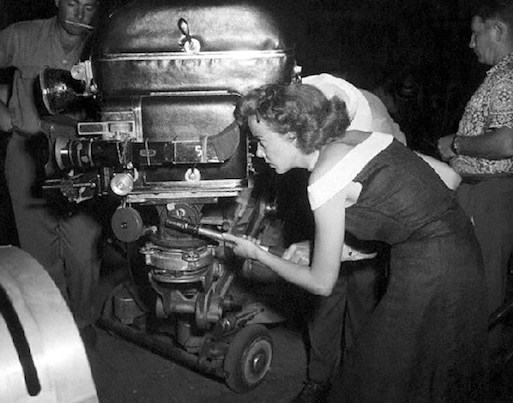
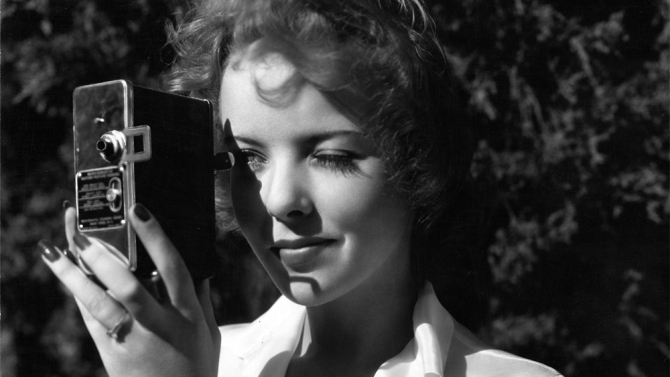
Hollywood, Los Angeles, California, USA --- Hollywood, CA: Ida Lupino directs one of the scenes from her latest picture, "Mother of a Champion." She is shown peering through the movie camera. Undated photograph. --- Image by © Bettmann/CORBIS

Ida Lupino’s importance as a female director can’t be downplayed. Although she only made eight movies (two of which she didn’t receive an on-screen credit for), Lupino’s rise from studio starlet to challenging actress – at Warner Bros. she was often suspended for refusing roles she was offered – to respected director came about by a strange combination of happenstance and good/bad luck.

During the occasions when she was suspended, Lupino would spend her free time observing other directors as they worked on set, and also how movies were edited. To her it seemed as if everyone else was “doing the interesting work” on a movie while she sat around bored between takes. She learnt the basics of directing throughout the Forties, but still didn’t attempt to get a directing job. When she left Warner Bros. in 1947, it was to become a freelance artist, and while she continued to work as an actress, she and her husband, Collier Young, formed a production company called The Filmakers.

In 1949, she and Paul Jarrico collaborated on a script for the company’s first production, a (for the time) searing drama about pregnancy out of wedlock and the psychological impact on the young mother when she gives up her baby. The movie was called Not Wanted and it was to be directed by Elmer Clifton. But when Clifton suffered a heart attack part way through filming, Lupino stepped in to finish the movie (Lupino refused a screen credit out of respect for Clifton). The result was a controversial movie that drew attention to the problem of unwed mothers, garnered a huge amount of public debate, and made people aware of Lupino’s role behind the camera.

Ida Lupino 2

In the same year, Lupino co-wrote, co-produced and directed Never Fear, another drama, but this time about an aspiring dancer who contracts polio. It was a modest movie, effective in its way, and enough for the Screen Directors Guild to offer her membership in 1950, which she accepted, becoming only the second female director in its ranks (after Dorothy Arzner). Her acceptance within the industry as a director was rapid though well-deserved, and Lupino continued to make challenging social dramas that cemented her reputation and were successful both commercially and critically.

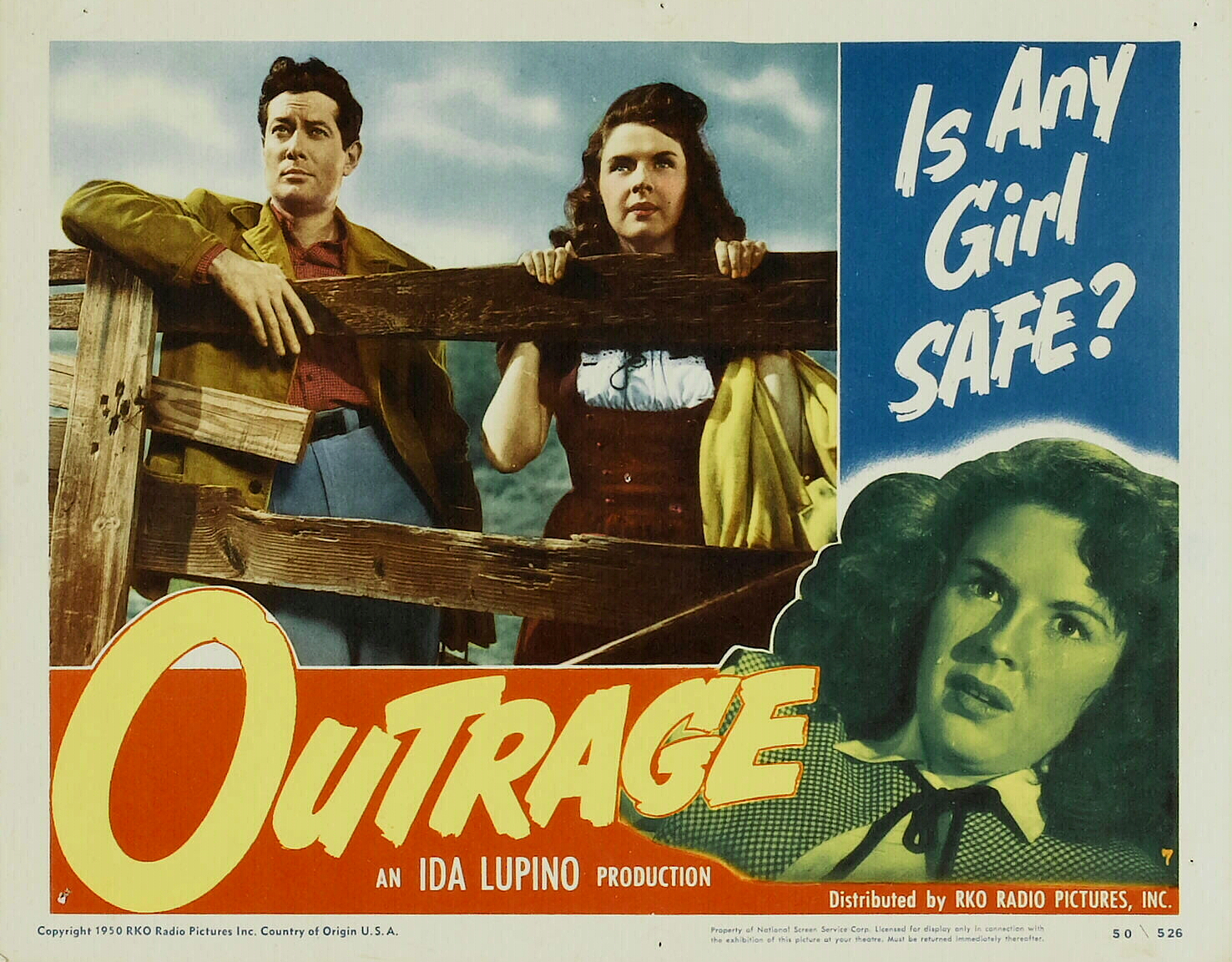
Lupino’s attraction to “difficult” subject matters was confirmed with the release of Outrage (1950), about the rape of a young woman and the problems that arise because she doesn’t tell anyone what’s happened to her. It shows Lupino still learning her craft as a director, but also growing in confidence, and her decision to tackle such a topic is entirely laudable: it’s a movie that Hollywood would never have made at the time, and which was only possible because of Lupino’s independence from the studio system. (By coincidence, Akira Kurosawa tackled the same subject, but from a different angle, in the same year’s Rashômon.)

Outrage

Lupino’s next movie seemed, at first glance, to be a step back from the powerful social dramas she’d already made, but Hard, Fast and Beautiful (1951) was a deceptively intriguing look at female jealousy and longing as experienced by the mother of a tennis prodigy. It features a great performance from Claire Trevor, and shows that Lupino was entirely capable of making the subtext of a movie more interesting than the main storyline. It was also Lupino’s first time directing a movie that was written by someone else.

Lupino’s next directorial stint was filling in for Nicholas Ray when he fell ill during the filming of film noir thriller On Dangerous Ground (1951), a movie Lupino had a role in. It’s a measure of Lupino’s regard within the industry at that time that she was asked to do this, and though it’s difficult when watching the movie to work out which scenes she shot specifically, that in itself is a tribute to Lupino’s skill as a director in that she was able to mimic Ray’s idiosyncratic style of directing.

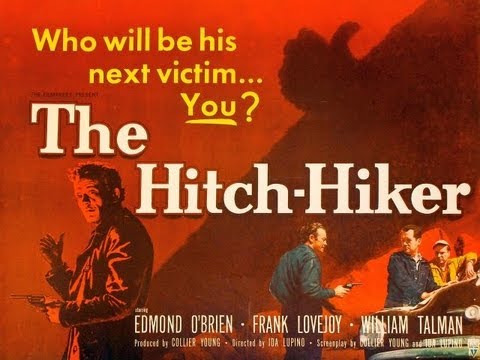
The film noir approach of On Dangerous Ground may well have prompted Lupino to seek out a similar project for her next movie as a director. If so, the result was perhaps her most well-received movie yet, the tense and menacing The Hitch-Hiker (1953). With its claustrophobic car interiors and bleak desert vistas, Lupino’s strong visual style served as a compelling background to the psychological battle occurring between fishermen Edmond O’Brien and Frank Lovejoy, and psychotic William Talman (never better). It may be a short movie, a lean seventy-one minutes, but it’s one of the most compelling crime dramas of the Fifties, and Lupino’s grip on the material is so assured that her increasing skill behind the camera can no longer be questioned.

Hitch-Hiker, The

With audiences and critics alike impressed by The Hitch-Hiker, their response to Lupino’s next movie should have been even more emphatic, but despite being widely regarded now as her masterpiece, The Bigamist (1953) was coolly received. And yet it’s a movie that addresses its subject matter head on and is still as uncompromising in its approach even today. It was a first for Lupino in that she directed herself – as the object of the main character’s bigamous relationship – but her confidence as a director ensures that each character gets the screen exposure they need. The ending is particularly impressive, and has an emotional impact that is as unexpected as it is effective.

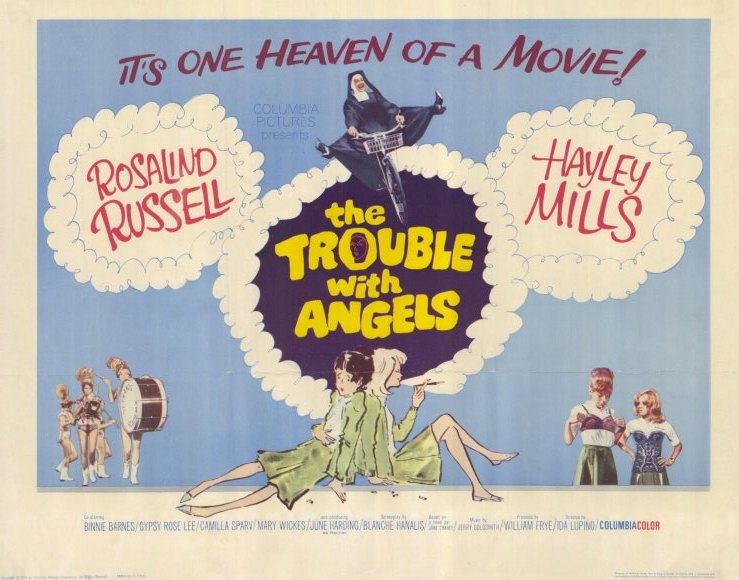
Sadly, Lupino’s short career as an independent producer/director came to an end after The Bigamist. Budgets had always been tight, and though Lupino was always well prepared and planned ahead on all her movies, the returns on her movies weren’t enough to keep The Filmakers going. Fortunately, in 1952, Lupino had been approached by Dick Powell who had started up a television production company called Four Star Productions; he wanted her to replace Joel McCrea and Rosalind Russell after they’d dropped out. Lupino began working in television in earnest, and it wasn’t until 1966 that Lupino made what would be her final movie as a director, The Trouble With Angels. A comedy about the students at an all-girls’ school who challenge the nuns that run it (including, ironically, Rosalind Russell), the movie received a mixed to negative reaction, but viewed today holds up remarkably well. Afterwards, Lupino continued acting and directing in television until her death, and along the way took supporting roles in horror movies such as The Devil’s Rain (1975) and The Food of the Gods (1976) (as many of her contemporaries did in the Seventies).

Trouble With Angels, The

Lupino’s importance in the history of women directors is due to the fact that she did it all by herself: she founded the production company to make the movies she wanted to make, she wrote (at first) the screenplays for those movies, and she tackled topics that her male peers would have run a mile from (or just not been allowed to make). If she couldn’t completely undermine the conservative values of the time, it was enough that she challenged them and held a mirror up to some of the more uncomfortable social issues of the day. She was a tough, determined director who didn’t short change her audience, and she achieved industry and public approval on her own terms, as well as long-lasting respect. And more importantly, she helped inspire a new generation of female movie makers, a generation that would tackle many of the same issues Lupino had, and with the same sense of propriety.

Share this:

  • Click to share on X (Opens in new window) X
  • Click to share on Facebook (Opens in new window) Facebook
  • More
  • Click to print (Opens in new window) Print
  • Click to email a link to a friend (Opens in new window) Email
Like Loading...

Blog Stats

  • 486,537 hits

Recent Posts

  • 10 Reasons to Remember Bibi Andersson (1935-2019)
  • Fantasia (1940)
  • Dances With Wolves (1990) – The Special Edition
  • Kiss of the Spider Woman (1985)
  • The Three Musketeers (1973)

Top Posts & Pages

  • Lost for Life (2013) - Another Look
    Lost for Life (2013) - Another Look
  • Lost for Life (2013)
    Lost for Life (2013)
  • About
    About
  • Mr. Topaze (1961)
    Mr. Topaze (1961)
  • Winter's Tale (2014)
    Winter's Tale (2014)
  • Shock and Awe (2017)
    Shock and Awe (2017)
  • Billy Lynn's Long Halftime Walk (2016)
    Billy Lynn's Long Halftime Walk (2016)
  • The Hitman's Bodyguard (2017)
    The Hitman's Bodyguard (2017)
  • BFI London Film Festival 2015
    BFI London Film Festival 2015
  • Spider-Man: Homecoming (2017)
    Spider-Man: Homecoming (2017)
Follow thedullwoodexperiment on WordPress.com

Blogs I Follow

  • Rubbish Talk
  • Film 4 Fan
  • Fast Film Reviews
  • The Film Blog
  • All Things Movies UK
  • Interpreting the Stars
  • Let's Go To The Movies
  • Movie Reviews 101
  • TMI News
  • Dan the Man's Movie Reviews
  • Film History
  • Jordan and Eddie (The Movie Guys)

Archives

  • April 2019 (13)
  • March 2019 (28)
  • February 2019 (28)
  • January 2019 (32)
  • December 2018 (28)
  • November 2018 (30)
  • October 2018 (29)
  • September 2018 (29)
  • August 2018 (29)
  • July 2018 (30)
  • June 2018 (28)
  • May 2018 (24)
  • April 2018 (21)
  • March 2018 (31)
  • February 2018 (25)
  • January 2018 (30)
  • December 2017 (30)
  • November 2017 (27)
  • October 2017 (27)
  • September 2017 (26)
  • August 2017 (32)
  • July 2017 (32)
  • June 2017 (30)
  • May 2017 (29)
  • April 2017 (29)
  • March 2017 (30)
  • February 2017 (27)
  • January 2017 (32)
  • December 2016 (30)
  • November 2016 (28)
  • October 2016 (30)
  • September 2016 (27)
  • August 2016 (30)
  • July 2016 (30)
  • June 2016 (31)
  • May 2016 (34)
  • April 2016 (30)
  • March 2016 (30)
  • February 2016 (28)
  • January 2016 (35)
  • December 2015 (34)
  • November 2015 (31)
  • October 2015 (31)
  • September 2015 (34)
  • August 2015 (31)
  • July 2015 (33)
  • June 2015 (12)
  • May 2015 (31)
  • April 2015 (32)
  • March 2015 (30)
  • February 2015 (37)
  • January 2015 (39)
  • December 2014 (34)
  • November 2014 (34)
  • October 2014 (36)
  • September 2014 (25)
  • August 2014 (29)
  • July 2014 (29)
  • June 2014 (28)
  • May 2014 (23)
  • April 2014 (21)
  • March 2014 (42)
  • February 2014 (38)
  • January 2014 (29)
  • December 2013 (28)
  • November 2013 (34)
  • October 2013 (4)

Blog at WordPress.com.

Rubbish Talk

Film 4 Fan

A Movie Blog

Fast Film Reviews

The Film Blog

The official blog of everything in film

All Things Movies UK

Movie Reviews and Original Articles

Interpreting the Stars

Dave Examines Movies

Let's Go To The Movies

Film and Theatre Lover!

Movie Reviews 101

Daily Movie Reviews

TMI News

Latest weather, crime and breaking news

Dan the Man's Movie Reviews

All my aimless thoughts, ideas, and ramblings, all packed into one site!

Film History

Telling the story of film

Jordan and Eddie (The Movie Guys)

Movie Reviews & Ramblings from an Australian Based Film Fan

Privacy & Cookies: This site uses cookies. By continuing to use this website, you agree to their use.
To find out more, including how to control cookies, see here: Cookie Policy
  • Subscribe Subscribed
    • thedullwoodexperiment
    • Join 481 other subscribers
    • Already have a WordPress.com account? Log in now.
    • thedullwoodexperiment
    • Subscribe Subscribed
    • Sign up
    • Log in
    • Report this content
    • View site in Reader
    • Manage subscriptions
    • Collapse this bar
 

Loading Comments...
 

    %d