• 10 Reasons to Remember…
  • A Brief Word About…
  • About
  • For One Week Only
  • Happy Birthday
  • Monthly Roundup
  • Old-Time Crime
  • Other Posts
  • Poster of the Week
  • Question of the Week
  • Reviews
  • Trailers

thedullwoodexperiment

~ Viewing movies in a different light

thedullwoodexperiment

Tag Archives: Paddy Considine

Funny Cow (2017)

18 Thursday Oct 2018

Posted by dullwood68 in Movies

≈ Leave a comment

Tags

Adrian Shergold, Comedienne, Comedy, Domestic abuse, Drama, Maxine Peake, Paddy Considine, Review, Stand-up, Tony Pitts

D: Adrian Shergold / 102m

Cast: Maxine Peake, Paddy Considine, Tony Pitts, Alun Armstrong, Macy Shackleton, Stephen Graham, Kevin Eldon, Lindsey Coulson

Growing up in Yorkshire in relative poverty, ‘Funny Cow’ (Peake – we never learn the character’s real name) experiences physical abuse from her father (Graham), indifference from her mother, and suffers attempts at bullying from other children. Through it all she remains defiant, using humour to help her through the worst of occasions. As a young woman, she meets and marries Bob, but although he’s loving and attentive at first, soon he reveals a violent nature that resembles her father’s. A night out at a local working men’s club offers an unlikely escape route: a comedian (Armstrong) helps ‘Funny Cow’ realise that this is something she can do, and which could offer her some form of independence. Meanwhile, she meets a bookshop owner, Angus (Considine), and a relationship develops between them. But Angus wants more from her than she is able to give, and her first attempt at taking to the stage falters due to her nervousness. While she tries to pull her life together, and make something positive out of it, another chance to prove her skill as a comedienne unexpectedly presents itself…
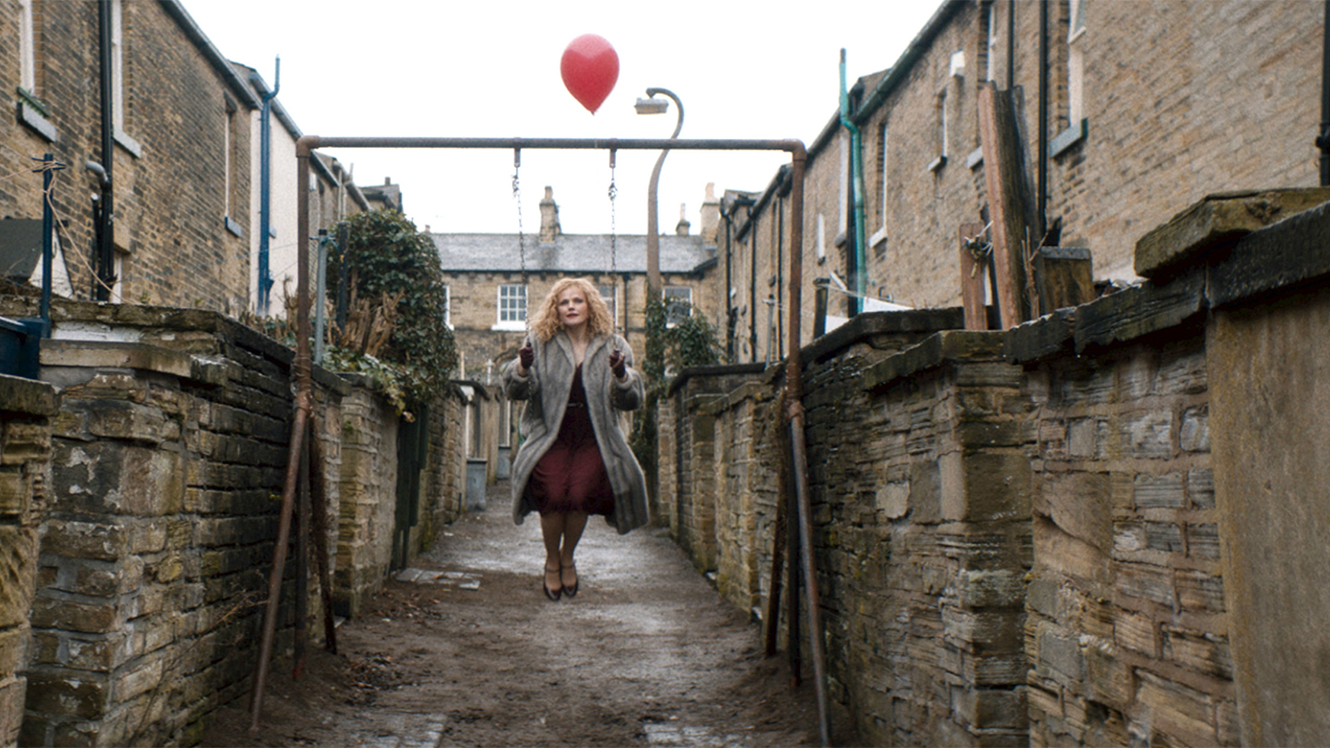
Told through a stage performance by its main character when it appears she’s reached a period of success, Funny Cow recounts her life more as a form of therapy than as a part of an established routine (if you were in the audience you’d be wondering when the jokes are going to start). Starting with her childhood and moving through the various stages and relationships that have brought her to this point, ‘Funny Cow’s story is one that proffers a dispiriting look at the life of a woman struggling to find happiness, and a true sense of her place in the world. It’s a harsh movie about a harsh life, relentless in the way it portrays domestic abuse and the psychological effects it has on ‘Funny Cow’, and unforgiving of the Northern working class background that she comes from. Almost everyone is either violent, depressed, selfish, abusive, or a mix of all four. Only Angus is different, but it’s his difference from all the other men she’s known that makes him unacceptable; she just doesn’t trust that he can be so naturally kind. With happiness feeling like a dream that’s not just out of reach but completely unobtainable, co-star Tony Pitts’ screenplay keeps ‘Funny Cow’ firmly in her place, trapped by her past and fearful of the future.

Of course, she has a wilful streak that gets her into trouble, and during her first stand up performance, out of it as well. But even her humour is harsh and unrelenting. A heckler suffers for his efforts, ‘Funny Cow’ using him as catharsis for all the abuse she’s suffered in the past. But she’s suffered too much for this to be anything but a temporary release. She’s angry too, and by using her stand up routine to express her anger, ‘Funny Cow’ finds a part of her life where she finally has some measure of control. As the unnamed title character, Peake is on superb form, audacious, brash, haunting, and fearless in her exploration of someone whose past is inextricably entwined wth her present, and to deleterious effect. Whether ‘Funny Cow’ is being mournful of her relationship with Angus, or laughing manically after having her nose broken by Bob, Peake is nothing less than outstanding. Making only his second feature, director Shergold adds poignancy to proceedings by having the older ‘Funny Cow’ cross paths with younger versions of herself, and he ensures that the humour is often pitch black – but still as devastating as the violence that’s depicted.

Rating: 8/10 – though as far from being a feelgood movie as you’re likely to find, conversely there is much to enjoy in Funny Cow, from Peake’s stellar performance, to a truly scabrous stand up routine, and flashes of magical realism in amongst all the tragedy; challenging and compelling, it also takes a sharp look at sexist attitudes of the period (the Seventies), and offers audiences an unflinching look at one woman’s attempt to break free from the patriarchal society that has continually aimed to hold her back.
Share this:

  • Click to share on X (Opens in new window) X
  • Click to share on Facebook (Opens in new window) Facebook
  • More
  • Click to print (Opens in new window) Print
  • Click to email a link to a friend (Opens in new window) Email
Like Loading...

Journeyman (2017)

03 Friday Aug 2018

Posted by dullwood68 in Movies

≈ Leave a comment

Tags

Anthony Welsh, Boxing, Brain injury, Drama, Jodie Whittaker, Paddy Considine, Rehabilitation, Review

D: Paddy Considine / 92m

Cast: Paddy Considine, Jodie Whittaker, Anthony Welsh, Tony Pitts, Paul Popplewell

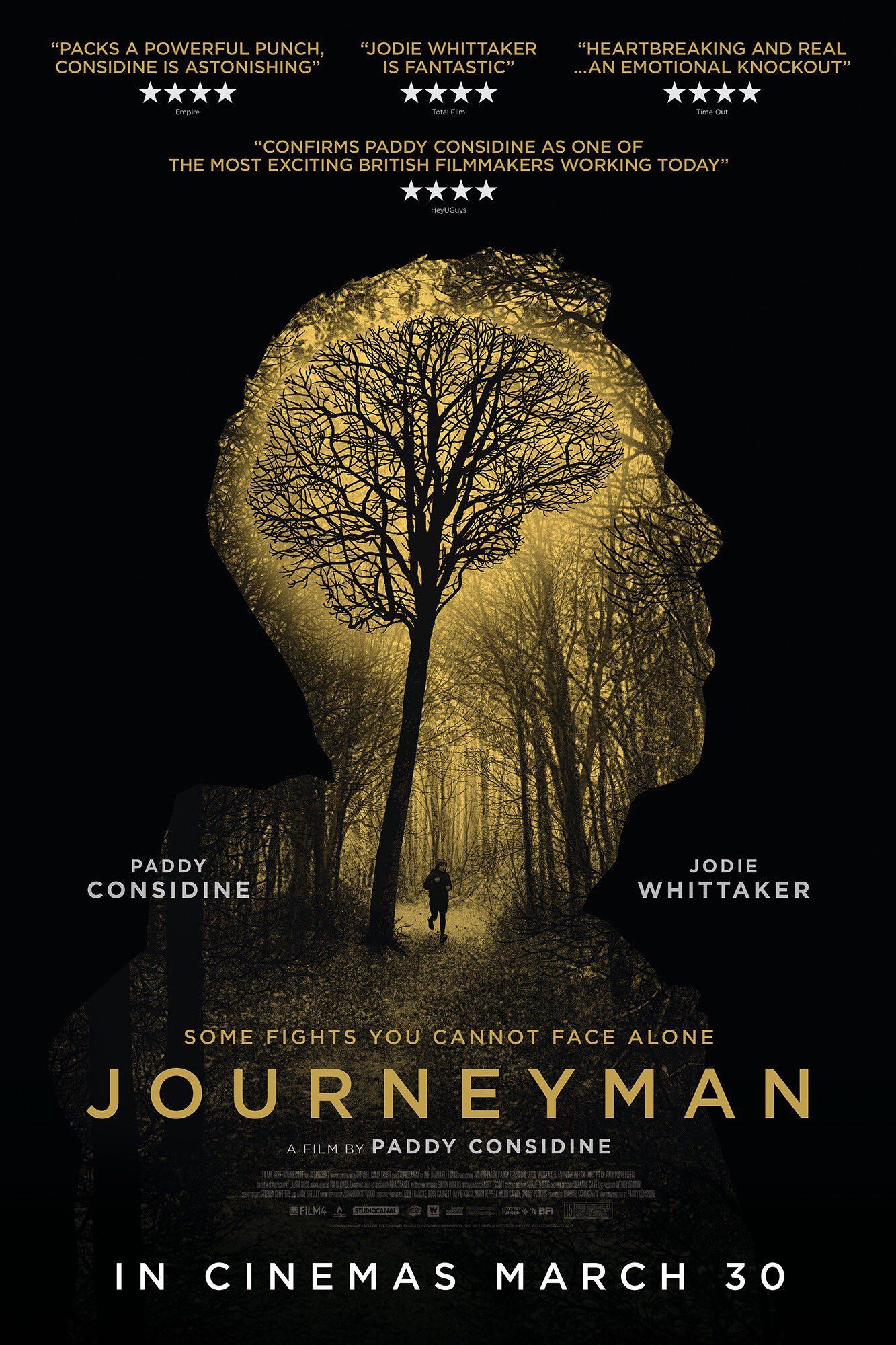
For Matty Burton (Considine), his upcoming defence of his newly attained WBO World Middleweight Championship title, will be his last fight. He’s an average boxer who has become champion by default, and his best years are behind him. But his pride is pushing him to take up the challenge of rising star Andre Bryte (Welsh) and despite the younger boxer’s considerable talent, hope to win the fight. The bout is a bruising, punishing encounter, and Matty endures several traumatic blows to the head. Back home after the fight, he collapses. When he wakes, his memory is impaired and his personality is changed. His wife, Emma (Whittaker), does her best to help him with his rehabilitation, but when Matty becomes prone to violent outbursts when he doesn’t get what he wants, this and an incident involving their baby daughter, Mia, prompts her to leave him, for the safety of both of them. Another traumatising experience leads Matty back to the gym where his former trainers, Richie (Pitts) and Jackie (Popplewell), decide to take over his rehabilitation, and help him do enough to win Emma back – but will be able to fight back against the brain injury that has changed him so drastically…?

A powerful and uncompromising movie, Journeyman is Paddy Considine’s second outing as writer/director – after the equally impressive Tyrannosaur (2011) – and a showcase for his considerable talents both behind and in front of the camera. As a writer, Considine has a knack for keeping dialogue to a minimum while still allowing his characters to express so much of how they’re feeling. Here, the challenge is to ensure that Matty, despite his memory loss and personality change, is still fundamentally the same man, and Considine achieves this by the slow reveal of key phrases from pre-injury moments that show a mind in turmoil, but one that’s also able to lock onto those important phrases. It’s an emotional process as well, one that highlights Matty’s progress, and which gives hope for his eventual rehabilitation. As a director, Considine pays close attention to the small details that help in Matty’s recovery, such as remembering his father’s name, while also showing just how difficult it is through things such as Matty leaving tea bags in people’s drinks. He never romanticises Matty’s struggle, either, keeping the drama of his situation entirely credible, and the pitfalls and setbacks he experiences are often heart-rending.

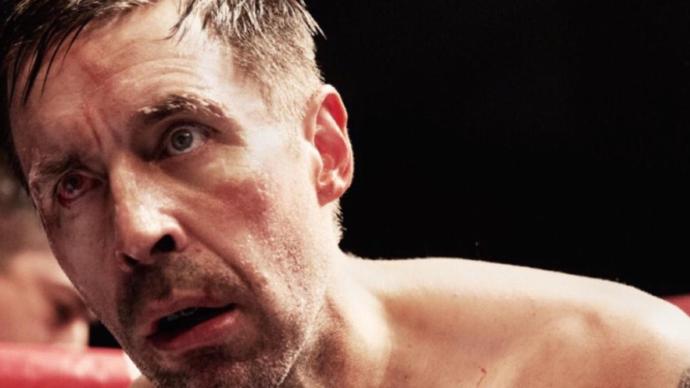
But it’s Considine’s work as an actor that is the most impressive here. As Matty, he gives a tour-de-force portrayal of a proud man brought low by a traumatic experience, and the problems he faces in regaining everything he’s lost. It’s an unsentimental, sobering performance, flecked with moments of quiet yet affecting pathos and unsparing emotional simplicity. You can sense the pain behind Matty’s seemingly vacant gaze, and the depth of that pain. Considine is in a class of his own, wringing every last piece of poignancy and heartfelt regret from Matty’s journey back to himself. Alongside him, Whittaker – in what is effectively a secondary role – is a worried presence as Emma, anxious enough before the fight, and then increasingly so afterwards as her marriage begins to implode, and it becomes clear there’s nothing she can do in the short term to stop it. The future Doctor Who has perhaps the less “difficult” role, but Considine is such an unselfish actor that Whittaker is given the room to make Emma an equally integral part of Matty’s story. If there’s one moment of mild controversy it’s when Considine lets boxing off the hook for Matty’s injury – would he have sustained it otherwise? – but otherwise this is a fiercely intelligent, tough, and demanding movie that, thankfully, doesn’t pull its punches.

Rating: 9/10 – a sincere and credible story told incredibly well by its writer/director/star, Journeyman lands knockout after knockout in its unflinching tale of a boxer’s struggle to reboot his life; Considine’s performance is simply astonishing, and is the beating heart of a movie that packs an emotional wallop over and over again.

Share this:

  • Click to share on X (Opens in new window) X
  • Click to share on Facebook (Opens in new window) Facebook
  • More
  • Click to print (Opens in new window) Print
  • Click to email a link to a friend (Opens in new window) Email
Like Loading...

The Girl With All the Gifts (2016)

28 Wednesday Sep 2016

Posted by dullwood68 in Movies

≈ Leave a comment

Tags

Colm McCarthy, Drama, Fungal infection, Gemma Arterton, Glenn Close, Horror, Hungries, Literary adaptation, M.R. Carey, Paddy Considine, Review, Sennia Nanua, Thriller

the-girl-with-all-the-gifts

D: Colm McCarthy / 111m

Cast: Sennia Nanua, Gemma Arterton, Paddy Considine, Glenn Close, Anamaria Marinca, Fisayo Akinade, Anthony Welsh, Dominique Tipper

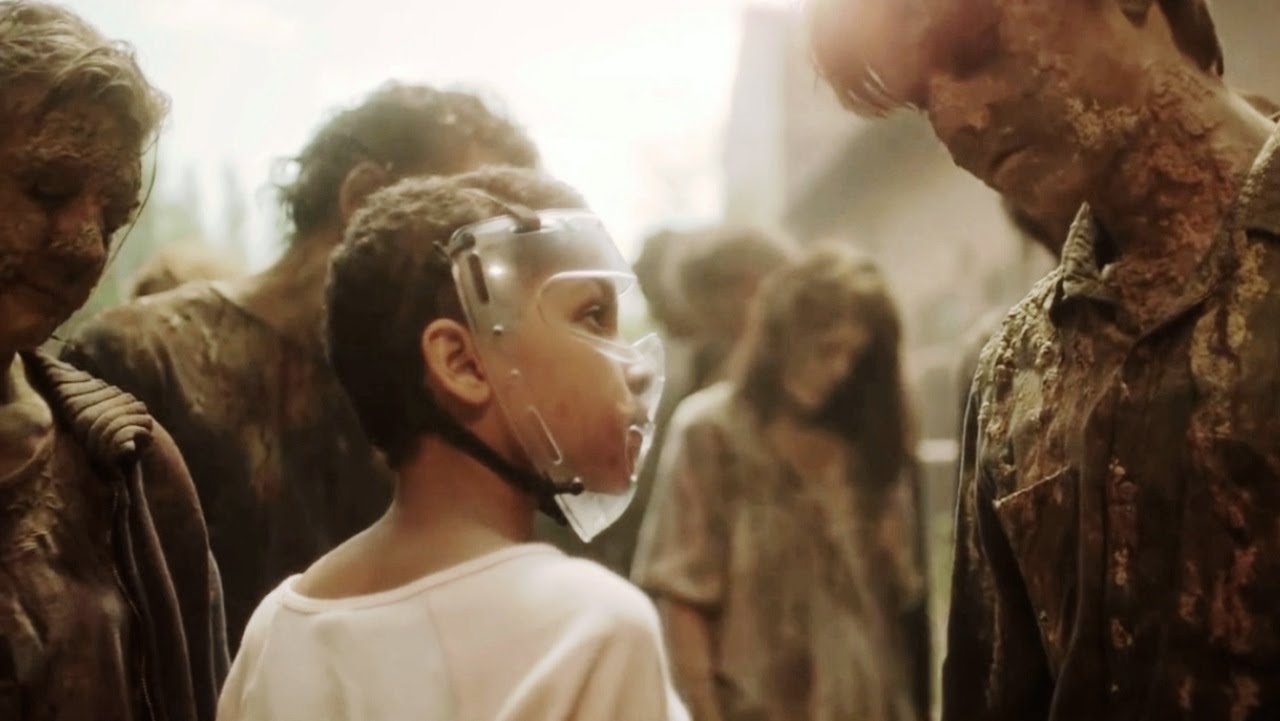
In the future, humanity has been infected by a variety of fungus known as Ophiocordyceps unilateralis. Victims lose the power to think and reason, and the basic need to eat living flesh becomes paramount. For this reason, the victims are called Hungries. But they won’t eat each other, only those who aren’t infected, and with the infection being passed on through blood and saliva, it’s even more important not to get bitten. Civilisation is in ruins, and what few survivors there are, are holed up in places like the army base located somewhere outside London. It’s here that the army, apparently under the command of Sgt. Parks (Considine), is working with a scientific team led by Dr Caroline Caldwell (Close), in an effort to find a cure for the fungal infection. Their best hope? Synthesizing an antidote from the brains and spinal columns of children who are second generation Hungries.

Second generation Hungries – children born with the infection – are able to think and reason but still hunger for flesh. There’s around twenty of them at the base, all kept in cells, and all kept in restraints when they attend their “schooling”. Their teacher, Helen Justineau (Arterton), is well-liked but naïve. She has a “class” favourite, Melanie (Nanua). Melanie is ten years old and very intelligent, even though she has no experience of the outside world, and she dotes on Helen as a surrogate mother. Meanwhile, Dr Caldwell is working her way through the children, using them (and then disposing of them) in her efforts to find a cure.

tgwatg-scene2

Inevitably, the base is overrun. In the melee that follows, Melanie saves Helen from being attacked, and they in turn are saved, unwittingly, by Sgt. Parks in an armoured vehicle. They, along with Dr Caldwell and two privates, Dillon (Welsh) and Gallagher (Akinade), escape into the nearby countryside. Their aim is to get to another base called the Beacon, but in order to do so, they find themselves having to travel through a Hungry-infested London, and having to rely on Melanie to help get them through…

At no point in The Girl With All the Gifts is the word zombie used or referred to. But this is clearly a movie featuring zombies, and there’s a significant amount of zombie carnage going on, but M.R. Carey’s adaptation of his novel of the same name isn’t really interested in all that. It’s an important part of the narrative, certainly, but the focus here is on watching Melanie become self-aware, and what that will ultimately mean for the non-Hungries she’s travelling with. As she learns more and more about the world she’s a part of, Carey’s best trick is to let Caldwell – so intent on doing good and saving the world – provide the impetus for the irrevocable choice that Melanie makes at the end of the movie (you’ll have to see the movie to find out what that is).

tgwatg-scene3

Along the way, Melanie’s interactions with Parks and Helen – her default step-parents, if you like – allows her to become more emotionally aware as well. Her initial doting on Helen, a young child’s needy infatuation, becomes more intense and more meaningful. Likewise, Parks’ simmering mistrust of Melanie and her motives gives way to mutual respect and trust, and Melanie learns from this as well. And when Gallagher is in danger from a group of feral Hungry children, it’s Melanie’s liking for him as an older brother that prompts her to insist they rescue him. All Melanie wants is to have a family around her, and even Caldwell fits into the mix as a grandmother figure. And thanks to the clarity and consideration found in Carey’s script, this need is defined without coming across as too laboured or too obvious.

It’s the personal relationships that anchor the movie, along with McCarthy’s strong, confident direction (all the more impressive for this being only his second feature), Kristian Milsted’s bleak yet arresting production design, and an eerie, unsettling score courtesy of Cristobal Tapia de Veer. With zombie movies virtually ten a penny these days, and with most looking to stand out from the crowd by virtue of any gimmicky concept they can come up with e.g. Zoombies (2016), The Girl With All the Gifts avoids such narrative and structural conceits by playing it completely straight and by applying studious attention to the details (though that’s not to say the script gets it right all the time; there are a handful of decisions made by the characters that don’t always add up).

tgwatg-scene4

The performances too are a major plus. Arterton, an actress whose career has never really taken off in the way that may have been expected, plays Helen with a quiet, sincere focus that gives the character a surprising depth. Considine is on equally fine form, Parks’ initial animosity toward Melanie giving way to the already mentioned respect, and the actor revealing an emotional quality to the character that could so easily have been overlooked. Close has the toughest role, as Caldwell’s single-minded pursuit of a cure creates more problems than it does answers, and leaves the character perilously near to being one-dimensional. But Close avoids this by imbuing Caldwell with an awareness of the cost to herself from her actions.

But this is Nanua’s movie. She gives such a finely nuanced performance that it’s hard to believe that this is her feature debut. As Melanie develops both emotionally and in terms of her relationships with the adults around her, Nanua displays a maturity that is quite impressive for her age, and her understanding of Melanie’s needs and desires is often very affecting. She tempers this with a no-nonsense, direct approach that matches the mood of the movie, and which allows her to dominate the scenes she’s in, making her more than a match for her more experienced co-stars. Wherever her career takes her, Nanua is off to a very good start, and her portrayal here is award worthy.

Rating: 8/10 – a post-apocalyptic thriller that boasts a clutch of very good performances and a tremendous sense of time and place, The Girl With All the Gifts is a surprisingly effective, and affecting, movie that breathes new life into a mostly moribund genre; it may not be the prettiest movie to watch, and it doesn’t shy away from being uncompromising when needed, but this is a genuinely rewarding movie that shouldn’t be missed.

Share this:

  • Click to share on X (Opens in new window) X
  • Click to share on Facebook (Opens in new window) Facebook
  • More
  • Click to print (Opens in new window) Print
  • Click to email a link to a friend (Opens in new window) Email
Like Loading...

Macbeth (2015)

06 Tuesday Oct 2015

Posted by dullwood68 in Movies

≈ 1 Comment

Tags

Banquo, Drama, Elizabeth Debicki, Justin Kurzel, Lady Macbeth, Literary adaptation, Macduff, Madness, Marion Cotillard, Michael Fassbender, Murder, Paddy Considine, Prophecy, Regicide, Review, Scotland, Sean Harris, Shakespeare, Three Witches

Macbeth

D: Justin Kurzel / 113m

Cast: Michael Fassbender, Marion Cotillard, Paddy Considine, Sean Harris, David Thewlis, Jack Reynor, Elizabeth Debicki

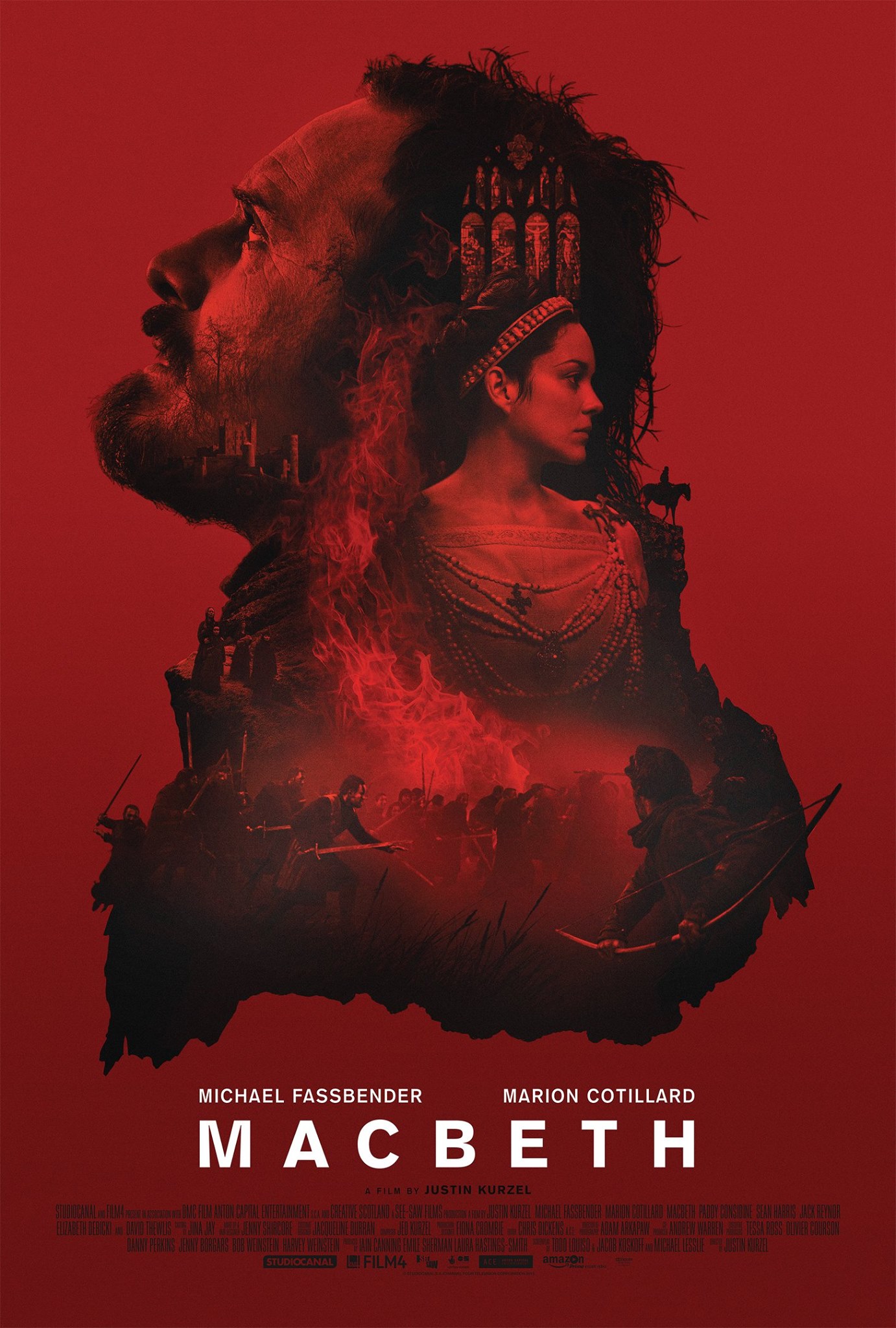
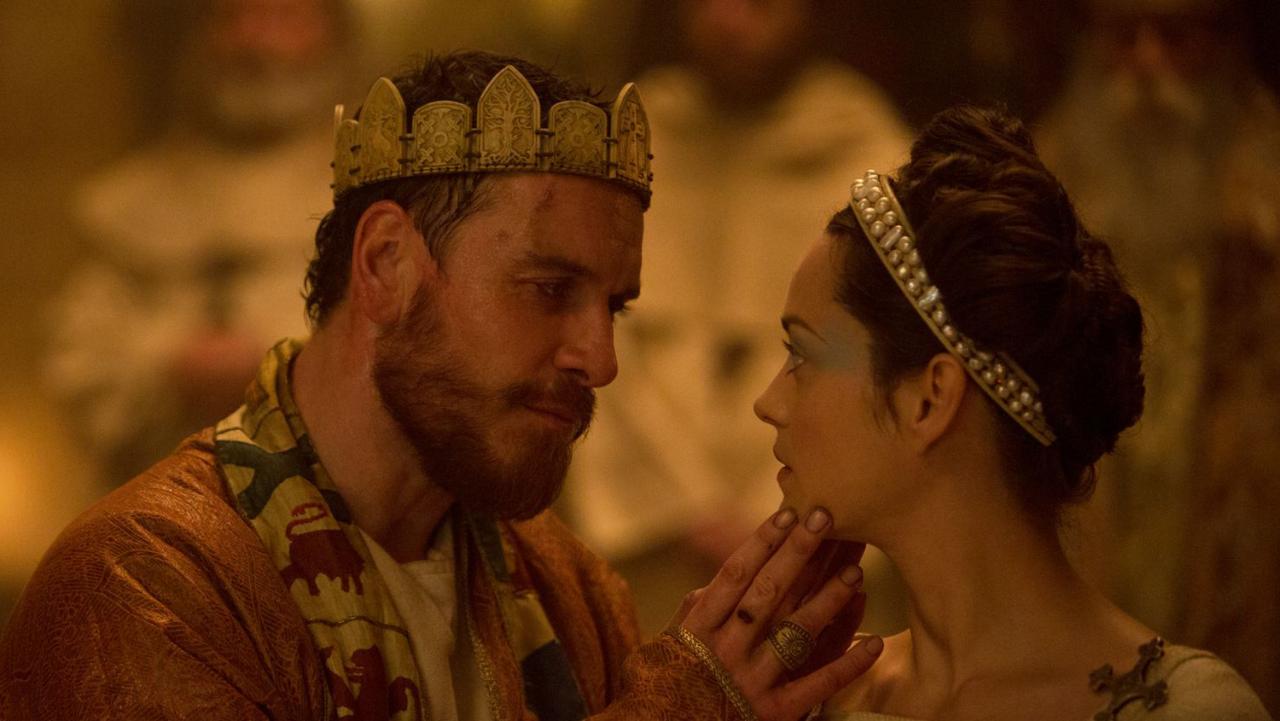
With Scotland ruled by King Duncan (Thewlis), his throne comes under threat from a Scottish lord seeking to overthrow him. Duncan’s depleted army is led by Macbeth (Fassbender), the Thane of Glamis, and thanks to his savagery and skill on the battlefield, Duncan’s forces win the fight and rout the opposition. On the fringes of the battle, Macbeth sees three women who stand watching him. When he approaches them, along with his trusted servant Banquo (Considine), they prophesy his rise to become Thane of Cawdor as well as Glamis, and his future role as King. They also tell Banquo that his offspring will provide a line of kings to come.

Soon after, Macbeth receives word that Duncan has awarded him the title of Thane of Cawdor (as predicted), and that the King wishes to spend the night at Macbeth’s home. News sent by Macbeth to his wife (Cotillard) of the day’s strange events prompts her to plot Duncan’s death so that her husband can ascend to the throne, though Macbeth is in need of her persuasion to even consider the idea. But when Duncan proclaims his successor will be Malcolm (Reynor), Macbeth sees no option but to go ahead with his wife’s plan. He kills Duncan, but Malcolm flees for his life, allowing Macbeth to blame him for Duncan’s death.

Macbeth is crowned king but he frets over the prophecy’s assertion that Banquo is the head of a line of future kings. Unwilling to see his reign usurped by Banquo’s inheritors, he charges two men to kill him and his son. Banquo is killed but his son escapes. At a feast later that night, Macbeth sees the murdered Banquo amongst the guests, and becomes maddened by the sight of him. Lady Macbeth does her best to calm him, but the actions of Macduff (Harris), who leaves in disgust at the new king’s erratic behaviour, lead Macbeth to have his family – his wife (Debicki) and three children – apprehended and put to death. Macduff has already left for England, and when he hears of his family’s fate, determines to have his revenge on Macbeth, and joins the army Malcolm has assembled to take back the crown. But while they plan their assault, Macbeth relies on his belief that “no man of woman born” can ever harm him, and is invincible. Lady Macbeth, though, seeing how much her husband’s mind has deteriorated begins to see that their futures have become heavily fore-shortened.

Macbeth - scene

In a year that has seen any number of disappointing big-budget, action-stuffed, plot-lite, spectacle-driven adventure movies, it’s a pleasure to finally watch a movie that is the whole package – the real deal, if you like – and doesn’t pander in any way to any one particular audience demographic; in short, Macbeth is simply stunning. Thanks to a concise, yet exacting adaptation of Shakespeare’s play by Todd Louiso, Jacob Koskoff and Michael Lesslie, and Justin Kurzel’s robust, instinctive direction, this is a movie that sizzles with energy and fire and passion, and grips from its opening, dreamlike battle, shot and edited to perfection as Macbeth becomes aware of the three witches watching from the battle’s edge and the fighting rages around him. It’s a virtuoso sequence, visually arresting and exotically violent, and gives the audience a firm idea of the approach that Kurzel is taking with the material.

Indelible image follows indelible image as the wilds of Scotland are photographed to highlight both their inherent beauty and the eeriness that can be sensed within them, while the interiors, hemming in the passions that motivate Macbeth and his manipulative wife, act as a melting pot for the murderous intentions and descent into madness that erodes the new king’s grip on his throne. Rarely has a movie used its locations to such striking effect, with mist-shrouded hills and candle-strewn rooms becoming just as fervid and foreboding as each other. Kurzel’s eye for a powerful, arresting image is maintained throughout, whether it’s a church emerging from out of the highland mist, or the overhead shot of the King’s throne (almost lost in the emptiness of the great hall it resides in). Kurzel’s innovative style reaches its zenith in the way he presents the moment when “Birnam Wood doth come to Dunsinane”, a blazing wall of flame that reflects the ferocity of the attack and the intensity of Macduff’s thirst for revenge.

But while the movie is often a thing of beauty (and cruelly so), it’s the depth and richness of the performances that stands out most. Fassbender is a tightly coiled Macbeth, his conscience unravelling with ever increasing speed as his attempts to thwart the prophecy drive him to ever more desperate measures. Fassbender plays him at first as a reluctant conspirator, reliant on his wife to persuade him that killing Duncan is the “right” thing to do, but once he becomes King his sense of regal propriety gives way to paranoia and madness and prideful arrogance. These are aspects of Macbeth’s character that could easily be overplayed by the wrong actor but Fassbender is more than up to the challenge; when he tells Lady Macbeth his mind is full of scorpions, the smile he offers her is chilling in its murderous intent, and all the more effective for being fleeting and unexpected.

Matching Fassbender for intensity and the intelligence of their portrayal is Cotillard. The French actress is superb here, her cold-hearted determination and rejection of moral rectitude as unnerving as it is coolly self-justified. The scene where she realises she’s lost control of Macbeth and can do nothing to prevent his madness consuming him (and her) is magnificently handled, the character’s sudden awareness that everything is about to crumble around her, and that she’s misjudged her husband’s actions, is affecting and credibly realised. And later, Cotillard provides what is perhaps the movie’s best scene, as she delivers the “Out, damned spot” soliloquy with such an emotional wallop that it’s almost uncomfortable to watch (it’s also possibly the best single scene in any movie this year).

Macbeth - scene2

Of the rest of the cast, Considine is quietly commanding as Banquo, his taciturn visage used to best effect when placed among the unsuspecting guests at the feast, and Harris’s Macduff swirls with uncontrolled hostility, as maddened in his own way as Macbeth. Thewlis is an avuncular Duncan, Debicki and Reynor minor presences due to the adaptation’s focus on the key characters, and there are smaller roles for the likes of Maurice Roëves and David Hayman. The violence is stylised, though not as bloody as you might expect, and the make up team have done a great job adding various scars and cuts where needed (and excel themselves with Macduff’s broken nose). The costumes are functional rather than ornate – though Duncan sports what looks like a scarf made by a favoured child – and it’s photographed with rigorous style and impressive use of filters by Adam Arkapaw, Kurzel’s cinematographer on Snowtown (2011). There’s also a terrifically mournful, plaintive score supplied by Jed Kurzel that acts as a character in its own right, and underscores the tragedy of events with such conviction that it’s ultimately haunting.

Rating: 9/10 – easily the best Shakespeare adaptation in a very long time, Macbeth is a triumph of casting, directing, scripting, filming, and every other aspect required to make this one of the films of the year; an oft-told tale given a new lease of life through its presentation of the title character enduring a semi-lucid fever dream of grandeur, madness and inevitable tragedy, this is a tour-de-force of modern movie making and not to be missed.

Share this:

  • Click to share on X (Opens in new window) X
  • Click to share on Facebook (Opens in new window) Facebook
  • More
  • Click to print (Opens in new window) Print
  • Click to email a link to a friend (Opens in new window) Email
Like Loading...

Blog Stats

  • 486,646 hits

Recent Posts

  • 10 Reasons to Remember Bibi Andersson (1935-2019)
  • Fantasia (1940)
  • Dances With Wolves (1990) – The Special Edition
  • Kiss of the Spider Woman (1985)
  • The Three Musketeers (1973)

Top Posts & Pages

  • Lost for Life (2013) - Another Look
    Lost for Life (2013) - Another Look
  • Lost for Life (2013)
    Lost for Life (2013)
  • About
    About
  • BFI London Film Festival 2015
    BFI London Film Festival 2015
  • Mr. Topaze (1961)
    Mr. Topaze (1961)
  • Shock and Awe (2017)
    Shock and Awe (2017)
  • Hunt for the Wilderpeople (2016)
    Hunt for the Wilderpeople (2016)
  • Cardboard Boxer (2016)
    Cardboard Boxer (2016)
  • Billy Lynn's Long Halftime Walk (2016)
    Billy Lynn's Long Halftime Walk (2016)
  • Winter's Tale (2014)
    Winter's Tale (2014)
Follow thedullwoodexperiment on WordPress.com

Blogs I Follow

  • Rubbish Talk
  • Film 4 Fan
  • Fast Film Reviews
  • The Film Blog
  • All Things Movies UK
  • Interpreting the Stars
  • Let's Go To The Movies
  • Movie Reviews 101
  • TMI News
  • Dan the Man's Movie Reviews
  • Film History
  • Jordan and Eddie (The Movie Guys)

Archives

  • April 2019 (13)
  • March 2019 (28)
  • February 2019 (28)
  • January 2019 (32)
  • December 2018 (28)
  • November 2018 (30)
  • October 2018 (29)
  • September 2018 (29)
  • August 2018 (29)
  • July 2018 (30)
  • June 2018 (28)
  • May 2018 (24)
  • April 2018 (21)
  • March 2018 (31)
  • February 2018 (25)
  • January 2018 (30)
  • December 2017 (30)
  • November 2017 (27)
  • October 2017 (27)
  • September 2017 (26)
  • August 2017 (32)
  • July 2017 (32)
  • June 2017 (30)
  • May 2017 (29)
  • April 2017 (29)
  • March 2017 (30)
  • February 2017 (27)
  • January 2017 (32)
  • December 2016 (30)
  • November 2016 (28)
  • October 2016 (30)
  • September 2016 (27)
  • August 2016 (30)
  • July 2016 (30)
  • June 2016 (31)
  • May 2016 (34)
  • April 2016 (30)
  • March 2016 (30)
  • February 2016 (28)
  • January 2016 (35)
  • December 2015 (34)
  • November 2015 (31)
  • October 2015 (31)
  • September 2015 (34)
  • August 2015 (31)
  • July 2015 (33)
  • June 2015 (12)
  • May 2015 (31)
  • April 2015 (32)
  • March 2015 (30)
  • February 2015 (37)
  • January 2015 (39)
  • December 2014 (34)
  • November 2014 (34)
  • October 2014 (36)
  • September 2014 (25)
  • August 2014 (29)
  • July 2014 (29)
  • June 2014 (28)
  • May 2014 (23)
  • April 2014 (21)
  • March 2014 (42)
  • February 2014 (38)
  • January 2014 (29)
  • December 2013 (28)
  • November 2013 (34)
  • October 2013 (4)

Blog at WordPress.com.

Rubbish Talk

Film 4 Fan

A Movie Blog

Fast Film Reviews

The Film Blog

The official blog of everything in film

All Things Movies UK

Movie Reviews and Original Articles

Interpreting the Stars

Dave Examines Movies

Let's Go To The Movies

Film and Theatre Lover!

Movie Reviews 101

Daily Movie Reviews

TMI News

Latest weather, crime and breaking news

Dan the Man's Movie Reviews

All my aimless thoughts, ideas, and ramblings, all packed into one site!

Film History

Telling the story of film

Jordan and Eddie (The Movie Guys)

Movie Reviews & Ramblings from an Australian Based Film Fan

Privacy & Cookies: This site uses cookies. By continuing to use this website, you agree to their use.
To find out more, including how to control cookies, see here: Cookie Policy
  • Subscribe Subscribed
    • thedullwoodexperiment
    • Join 481 other subscribers
    • Already have a WordPress.com account? Log in now.
    • thedullwoodexperiment
    • Subscribe Subscribed
    • Sign up
    • Log in
    • Report this content
    • View site in Reader
    • Manage subscriptions
    • Collapse this bar
 

Loading Comments...
 

    %d