• 10 Reasons to Remember…
  • A Brief Word About…
  • About
  • For One Week Only
  • Happy Birthday
  • Monthly Roundup
  • Old-Time Crime
  • Other Posts
  • Poster of the Week
  • Question of the Week
  • Reviews
  • Trailers

thedullwoodexperiment

~ Viewing movies in a different light

thedullwoodexperiment

Tag Archives: Paul Greengrass

22 July (2018)

12 Friday Oct 2018

Posted by dullwood68 in Movies

≈ Leave a comment

Tags

Anders Danielsen Lie, Bombing, Drama, Jonas Strand Gravli, Literary adaptation, Norway, Paul Greengrass, Review, Terrorist attack, True story, Utøya Island
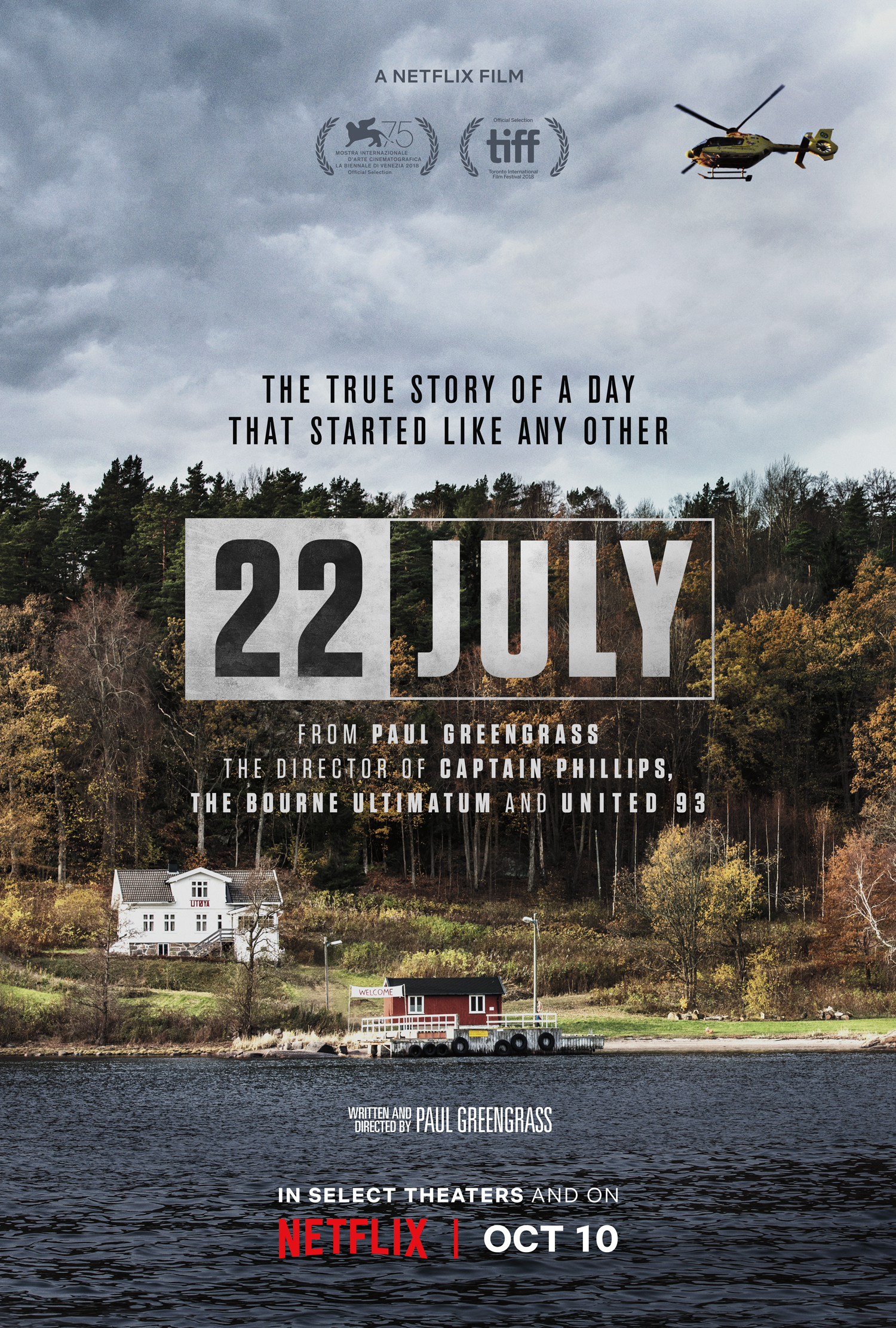
D: Paul Greengrass / 144m

Cast: Anders Danielsen Lie, Jonas Strand Gravli, Jon Øigarden, Maria Bock, Thorbjørn Harr, Seda Witt, Isak Bakli Algen, Ola G. Furuseth

On 22 July 2011, a right-wing extremist named Anders Behring Breivik (Lie) carried out two acts of domestic terrorism in Norway. In the first, he set off a bomb outside the executive government quarter in Oslo. Less than two hours later, at a summer camp on Utøya Island, he shot and killed dozens of the people there, most of whom were teenagers. With the two attacks, Breivik killed a total of seventy-seven people and injured over three hundred others. Breivik surrendered to police on Utøya, and was soon charged with carrying out both attacks. His lawyer, Geir Lippestad (Øigarden), suggested that Breivik opt for a defense based on insanity, and Breivik was assessed by psychiatrists who diagnosed him as being a “paranoid schizophrenic”. But at trial, and even though the prosecution had to accept the diagnosis (which would potentially have seen Breivik committed to an institution rather than prison), Breivik realised this would blunt the message he wanted to make. Insisting that he wasn’t insane, Breivik made it clear he was fully cognisant of his actions, and that he carried out the attacks out of a sense of necessity…

Any retelling of a tragedy of the scale of the 2011 Norway attacks needs a sensitive approach, and it’s no suprise that when the movie was first announced, a campaign to stop its production was raised, and 20,000 signatures were generated. But those who didn’t want to see the movie made needn’t have worried, because 22 July is as restrained and as unsensational as you could possibly get. Thanks to an intelligent, well-constructed script (by Paul Greengrass), and equally intelligent, perceptive direction, this adaptation of Åsne Seierstad’s book, One of Us: The Story of a Massacre in Norway – and Its Aftermath, is less about the terrorist attacks and more about what happened in their wake, from the trial of Breivik and its conclusion, to the physical, mental and emotional rehabilitation of a (fictional) survivor of the Utøya shootings, Viljar Hanssen (Gravli), to the ways in which Norway as a country dealt with the horror of such events happening on its native soil. Successfully mixing the broader details of this last with the personal details of Viljar’s struggle to regain his sense of self, and Breivik’s self-aggrandising polemical references, Greengrass avoids any potential accusations of unnecessary melodrama, and opts instead for a quiet sincerity that permeates the whole movie.

What this gives us is a movie that approaches the material in a patient matter-of-fact way that eschews the need for tension or more traditional thriller elements, but which does pack several emotional punches into its structure. Like much of the movie, these moments are quietly devastating, often coming out of the characters’ need to understand what happened and, more importantly, why it happened to them. To his credit, Greengrass doesn’t offer very many answers, and it’s this sense of confusion that carries much of the movie’s middle section, as conversely, it becomes clear that whatever larger motivations Breivik may have had, notoriety seems to be the one that he’s most comfortable with (there’s a horrible moment where he complains casually about a cut to his finger caused by a “skull fragment” from one of his victims). Lie is excellent in the role: smug, condescending, without an ounce of remorse, and chillingly banal; Breivik might not be a paranoid schizophrenic, but in Lie’s interpretation, he’s definitely got some kind of dissociative disorder. Gravli is equally compelling as the good-natured teen forced into some very dark corners through being a survivor, and Øigarden displays Lippestad’s patient forbearance of his client with great skill and diplomacy. In fact, this is that rare cast where everyone is on top form, and as they’re all Norwegian, that’s something that couldn’t have been better.

Rating: 8/10 – with only a tendency to drag during a middle section that repeats a number of encounters and narrative discursions to be held against it, 22 July is further proof that Paul Greengrass is one of the best writer/directors currently making movies; insightful and incisive, he’s crafted a movie that does full justice to the terrible events of that fateful day, and he does so with great skill and an abundance of straightforward honesty, something that should placate all those who didn’t want the movie made in the first place.


Share this:

  • Click to share on X (Opens in new window) X
  • Click to share on Facebook (Opens in new window) Facebook
  • More
  • Click to print (Opens in new window) Print
  • Click to email a link to a friend (Opens in new window) Email
Like Loading...

A Brief Word About Cannes 2018 and Netflix

09 Monday Apr 2018

Posted by dullwood68 in Movies

≈ Leave a comment

Tags

Alfonso Cuarón, Cannes Film Festival, Jeremy Saulnier, Netflix, Official Competition, Opinion piece, Paul Greengrass

In what sounds like the reaction of a spoilt child when told by its parents that it can only have one slice of birthday cake and not the whole thing, Netflix is threatening to pull five of its movies from this year’s Cannes Film Festival. Cannes has decided that only movies that receive a theatrical release in France will be eligible for entry to the prestigious Official Competition. The five movies are: Alfonso Cuarón’s Roma, Jeremy Saulnier’s Hold the Dark, Paul Greengrass’s Norway, and two Orson Welles related features, Morgan Neville’s documentary, They’ll Love Me When I’m Dead, and The Other Side of the Wind, Welles’s own movie that has recently been completed after being believed lost.

Cannes have apparently changed the rules in relation to the Official Competition, and it’s this that Netflix are protesting against. While many see it as a snub by the Old Guard – Cannes is seventy-one this year – against the new kids on the block, this is actually a clash of “business models”. Cannes believes it’s important that movies be seen on a big screen, in cinemas, as part of a shared cultural experience. The festival also highlights the range and diversity of cinema from around the world, and despite its elitist standing, always seeks to present what would be regarded as more mainstream movies throughout its yearly run. Already confirmed this year is the latest Star Wars offshoot, Solo, and when the full line up is revealed on 12 April, there’s little doubt that other more mainstream movies will be present.

Netflix, however, have no interest in releasing its movies in cinemas. It’s not their distribution model, and they’re just as inflexible in their approach as Cannes is. Some people are saying that Netflix and their streaming services are the future of movies, that home viewing, whether on sixty-inch plus TV screens, or computer monitors, or tablets, will see an end to theatrical distribution. Perhaps. But if television, once heralded as the inevitable cause of the demise of movie-going, hasn’t done the job after all this time, then Netflix isn’t going to make a difference either. And while it’s true that people want a wider choice of access based on their own terms and needs, the shared experience of a visit to the cinema is still the way to see a movie. As the makers of Godzilla (1998) put it, Size Does Matter.

But should this divide between Cannes and Netflix be considered as anything more than a falling out amongst uneasy friends? Possibly, but in the end it’s unlikely to affect the potential success or failure of any of the movies being withheld, and Cannes and Netflix will continue to prosper in their own unique ways. And as long as that continues, then we, the audience, will continue to be well served by both organisations.

Share this:

  • Click to share on X (Opens in new window) X
  • Click to share on Facebook (Opens in new window) Facebook
  • More
  • Click to print (Opens in new window) Print
  • Click to email a link to a friend (Opens in new window) Email
Like Loading...

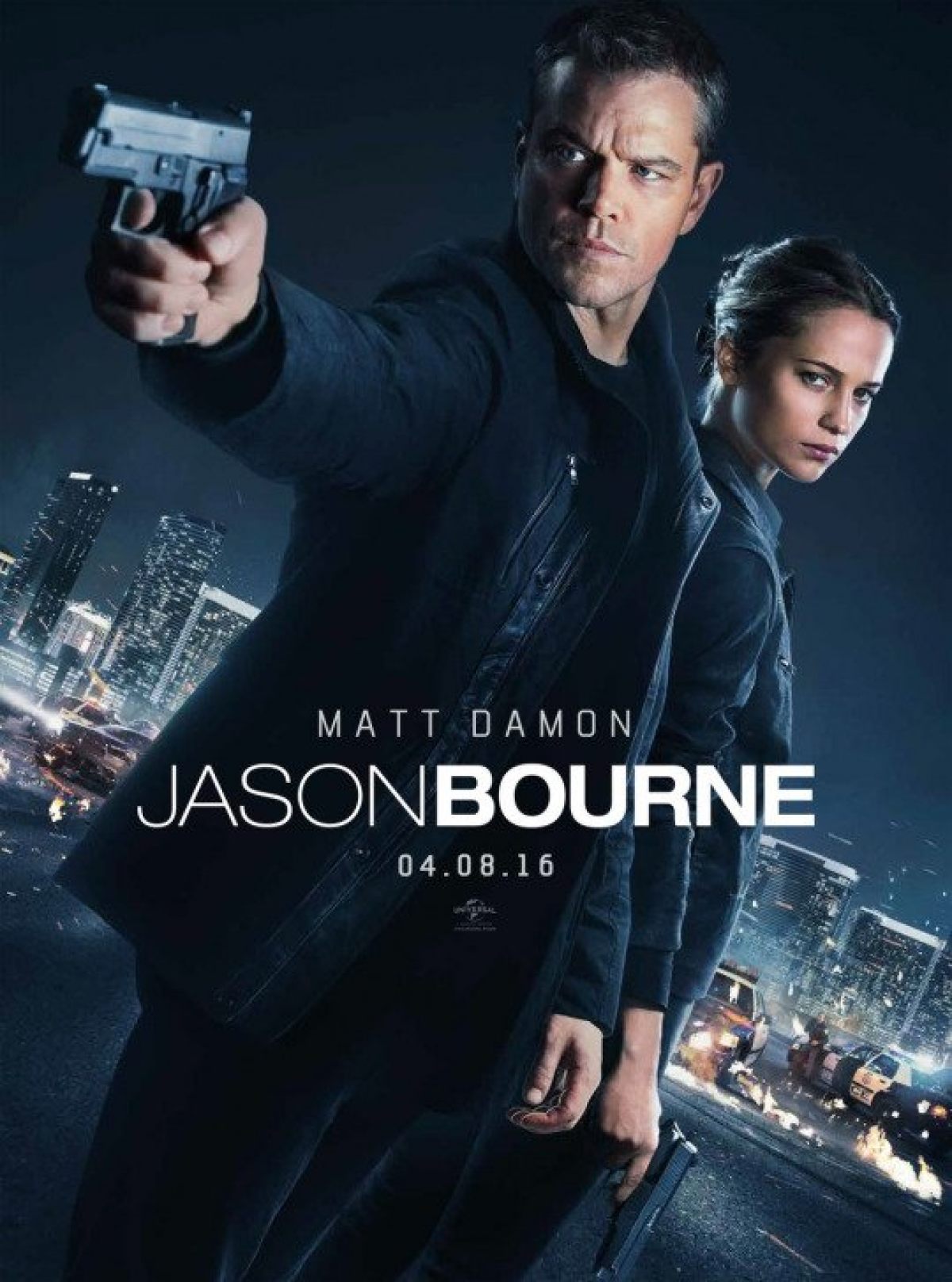
Jason Bourne (2016)

20 Saturday Aug 2016

Posted by dullwood68 in Movies

≈ 1 Comment

Tags

Action, Alicia Vikander, Asset, Athens, Berlin, Black ops, CIA, Drama, Iron Hand, Las Vegas, London, Matt Damon, Paul Greengrass, Review, Sequel, Thriller, Tommy Lee Jones, Vincent Cassel

Jason Bourne

D: Paul Greengrass / 123m

Cast: Matt Damon, Tommy Lee Jones, Alicia Vikander, Vincent Cassel, Julia Stiles, Riz Ahmed, Ato Essandoh, Scott Shepherd, Bill Camp, Vinzenz Kiefer, Stephen Kunken, Gregg Henry

The original Bourne movie trilogy was smart, inventive, thrilling, and a massive boost for the ailing spy genre. It made an action hero of Matt Damon, featured action sequences that were fresh and exciting, and had an emotionally complex through-line that bolstered the already intense plotting. At the end of The Bourne Ultimatum, David Webb had gained the answers to questions that had plagued him ever since he’d been saved from a watery grave by the crew of a fishing boat.

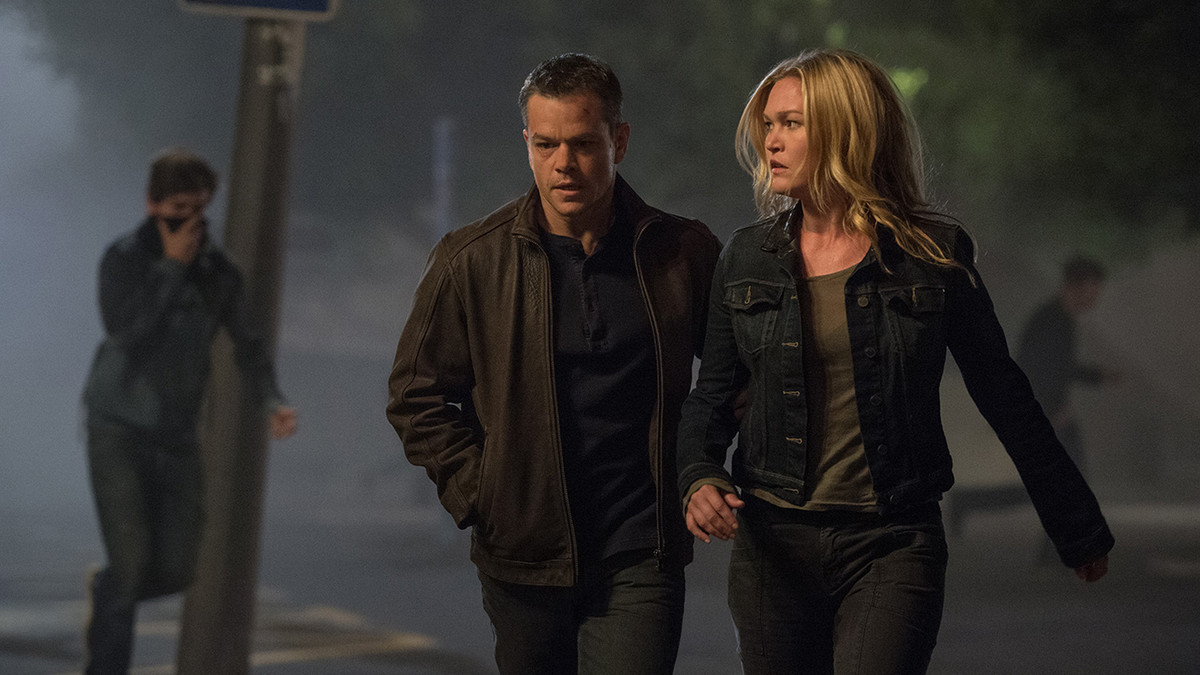
Except… he hasn’t, not really. The closing lines from The Bourne Ultimatum – “I remember. I remember everything.” – are repeated here at the movie’s beginning, and are followed by a montage of scenes from the original trilogy (as far as this movie is concerned, The Bourne Legacy (2012) never happened). But in amongst these memories are flashes of scenes we haven’t seen before. And when Jason Bourne snaps out of his reverie, we find him in the back of a truck and heading for an illegal fight ground in Greece. Clearly the years since he took down Treadstone and Blackbriar haven’t been good to him: despite his fighting prowess he still looks lost. And the bad dreams, or reveries, he’s experiencing aren’t helping. For someone who “remembers everything”, he’s having some of the most spectacularly disturbing and disorienting dreams ever. And he can’t make sense of them, especially the ones that involve his father, Richard Webb (Henry).

Jason Bourne - scene1

Help comes in the familiar but unexpected form of ex-CIA analyst Nicky Parsons (Stiles). Having hacked into the CIA mainframe, she’s done so with the aim of helping Bourne learn more about his past, and has discovered that his father had a greater role in the Treadstone programme than Bourne has been led to believe. But in hacking the CIA, Nicky has become a target and her contacting Bourne in Athens leads to his getting “back in the game”. With CIA operatives on their trail, as well as an Asset (Cassel), Bourne gains access to the information Nicky hacked, and once he becomes aware of his father’s involvement, he finds his enrolment in the Treadstone program wasn’t as clear cut as he thought. But as before, his reappearance has senior members of the CIA, including Director Robert Dewey (Jones), unwilling to let Bourne expose their Black Ops programs. Using a combination of the Asset and the head of the Cyber Crimes Division, Heather Lee (Vikander), to track down Bourne and eliminate him once and for all, Dewey plots to keep the CIA’s secrets as hidden as ever.

Fans of the Bourne Trilogy are generally dismissive of The Bourne Legacy, the Jeremy Renner starring addition to the series that failed to add anything new to the mix, and which felt like an uninspired retread of everything that had gone before. Matt Damon famously turned down the chance to cameo in Legacy, and made it clear that he wouldn’t return to the franchise unless Paul Greengrass was back on board as well. Well, Damon got his wish, and Greengrass is back as the movie’s director. But perhaps Damon should have made another stipulation: that Greengrass didn’t write the script.

Jason Bourne has many of the same attributes that The Bourne Supremacy and The Bourne Ultimatum share. There’s the generous use of “shaky cam”, Christopher Rouse’s exemplary editing, excellent location work, and a series of intense and very well-staged action sequences (one of the series major strengths). But there’s one aspect that’s missing this time round, and aside from Greengrass’s muscular directorial style, it’s perhaps the series’ most important component: the contribution of Tony Gilroy. As screenwriter of the first two movies, and co-screenwriter of the third (though his input was drastically reduced), as well as Legacy‘s writer/director, Gilroy helped guide the series from its inauspicious beginnings to a position of critical and commercial success worldwide. His scripts had intelligence, depth and subtlety, and his villains were drawn with a vividness and care that made them worthy adversaries.

Jason Bourne - scene3

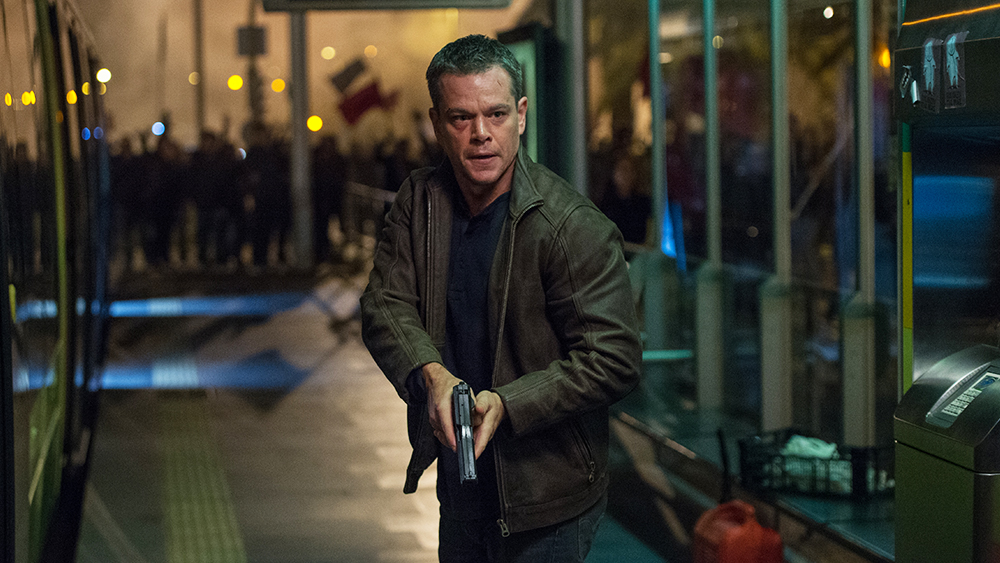
But without Gilroy (no doubt a casualty of The Bourne Legacy‘s poor reception), Jason Bourne proves just as disappointing as its unacknowledged predecessor. Nearly ten years on from the events of Ultimatum, Bourne is still an emotional mess, haunted by memory fragments that cause him pain and regret. He looks awful, and Damon plays him like a man besieged. For a man who found all the answers he needed, Bourne looks even more tormented than when he was in the dark. The movie never really attempts to explain why this is the case, preferring instead to give audiences a tortured Bourne without expanding on his back story. As a result, his decision to jump back in, prompted by some spurious nonsense involving his father, seems perfunctory instead of necessary.

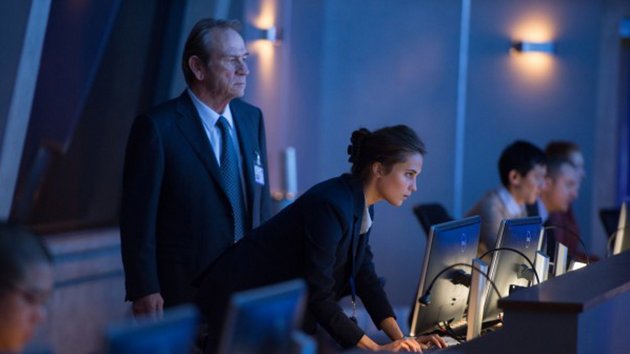
With Bourne himself treated in such a cavalier fashion – he’s really just a one-man wrecking crew here – the other characters fare just as badly. Dewey is a stock villain, one step removed from twirling an invisible moustache and muttering “mwah-ha-ha!” whenever the script has him do something nefarious. Jones has no chance with the role, and there are times when his awareness of this comes through loud and clear; just watch his scenes with Vikander, and ask yourself if he looks committed. Cassel’s Asset is fuelled by revenge for the torture he suffered through Bourne’s exposure of the Blackbriar program, but as the character spends an inordinate amount of time running around chasing Bourne without actually catching him, his anger (and his back story) gets shoved to the side. And then there’s Heather Lee, the Cyber Crimes head who acts as this movie’s Pamela Landy. There’s supposed to be some mystery as to which side she’s on (she helps Bourne in various ways while pushing a separate CIA agenda), but thanks to Greengrass’s less than subtle direction, Vikander never looks anything other than extremely distrustful.

Film Title: Jason Bourne

And then there’s the small but important matter of how Bourne gets about. From Greece he travels to Berlin, then to London. He does so on his own, without any help from anyone, and manages to elude detection at every turn (a facet of the series that was usually, and very cleverly explained away – but not here). And yet when he travels from London to Las Vegas he does so by commercial aircraft, and though he receives assistance from Lee in getting through US Customs, it still begs the question how UK Customs didn’t flag him up in the first place. (Also, it seems that outside of Athens and Las Vegas there’s not the CCTV infrastructure to allow the CIA to track Bourne efficiently anywhere else.) And stop and think about this: in Las Vegas, at an expo for a communications platform that Dewey wants to appropriate – don’t ask – Bourne picks up various conveniently placed bugging devices that he uses to get to Dewey, all of which begs the question, what plan did he have originally (as he couldn’t have known they were there beforehand)?

Gaping plot holes like these only add to the realisation that Jason Bourne is a less than rewarding, less than necessary sequel to four previous movies (three of which had already told the story effectively and with impressive style), that throws in a handful of rousing action sequences, makes Bourne indestructible, has a subplot involving a communications platform – actually, still don’t ask – and features some of the blandest characters in the whole series. Greengrass is a mercurial director, with a great visual style, but he’s not as good a screenwriter as he might think, and along with Rouse, he makes things too simplistic for the movie’s own good. The end result? A movie that only takes off when it’s throwing punches or chasing SWAT vehicles.

Rating: 5/10 – a missed opportunity to enhance and expand on the series, Jason Bourne trades on nostalgia instead of bringing something new to the franchise; Bourne looks tired throughout, as does Jones, and by the movie’s end the viewer will feel exactly the same way.

Share this:

  • Click to share on X (Opens in new window) X
  • Click to share on Facebook (Opens in new window) Facebook
  • More
  • Click to print (Opens in new window) Print
  • Click to email a link to a friend (Opens in new window) Email
Like Loading...

Mini-Review: Captain Phillips (2013)

12 Wednesday Mar 2014

Posted by dullwood68 in Movies

≈ 2 Comments

Tags

Barkhad Abdi, Billy Ray, Hijacking, Maersk Alabama, Paul Greengrass, Review, Somali pirates, Tom Hanks, True story

Captain Phillips

D: Paul Greengrass / 134m

Cast: Tom Hanks, Barkhad Abdi, Barkhad Abdirahman, Faysal Ahmed, Mahat M. Ali, Michael Chernus, Catherine Keener, David Warshofsky, Corey Johnson, Chris Mulkey

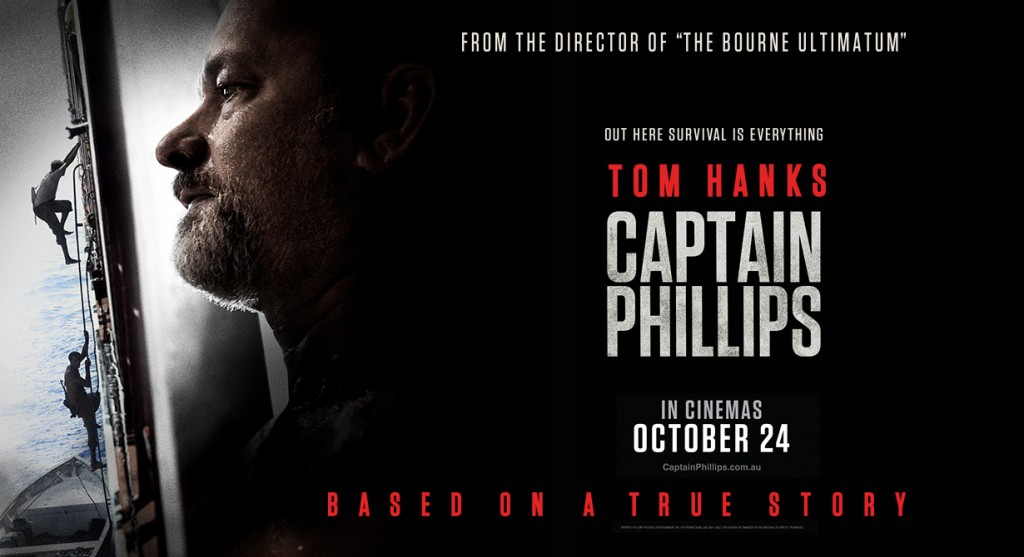
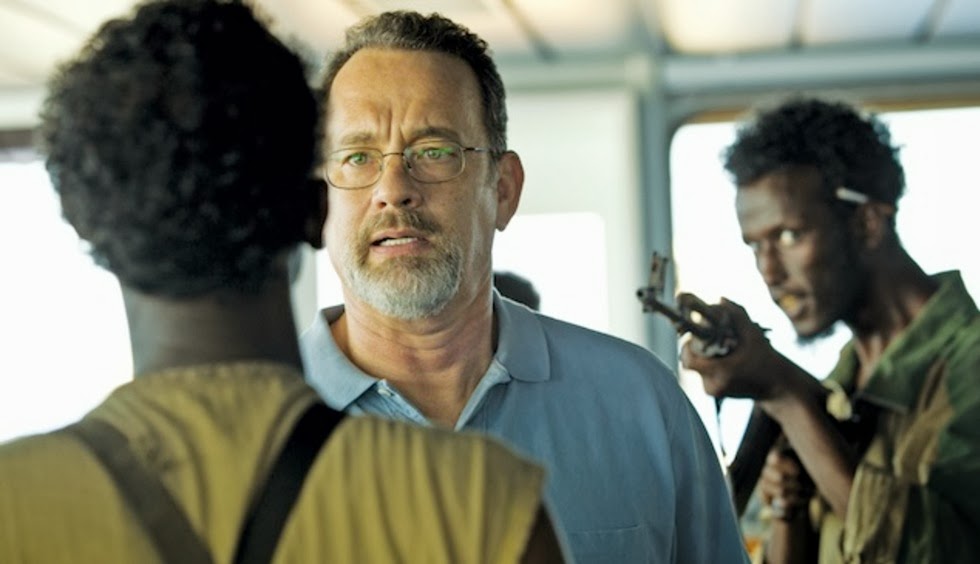
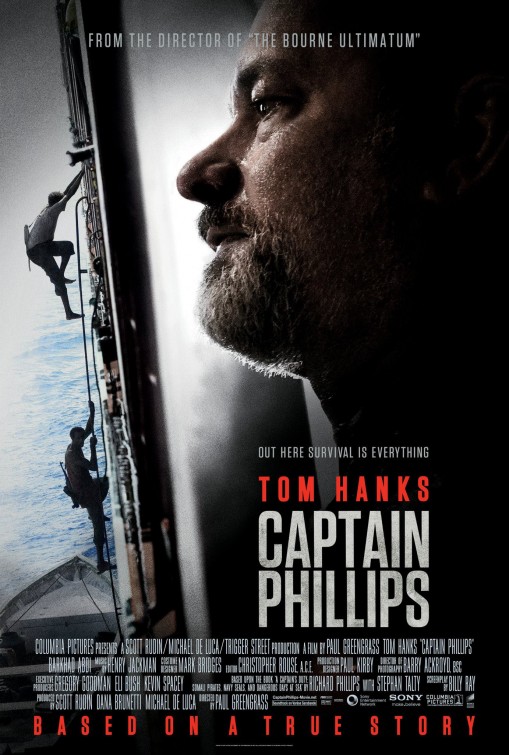
Based on the attempted hijacking of the freighter ship Maersk Alabama in 2009 by Somali pirates, Captain Phillips is a heart-stopping, adrenaline-charged powerhouse of a movie that grabs hold of its audience from the moment two ominous blips are seen on the Alabama’s radar screen, and doesn’t let go until nearly two hours later. The first time the Somalis attack they are unsuccessful, but the ship’s crew know they’ll be back; it’s just a question of how long. When they do, and they manage to board the ship, so begins a game of cat and mouse between the titular Captain Phillips (Hanks) and the Somali leader Muse (Abdi), a game that escalates when Phillips, Muse and Muse’s three compatriots, end up in the Alabama’s lifeboat heading for Somalia. The navy is called in – will they be able to rescue Phillips unscathed, or will the Somalis reach their home shores instead?

Captain Phillips - scene

The answer to both questions is not exactly, and maybe. This is high drama played out at such a pitch that it keeps the audience on the edge of its seat not daring to breathe. Through each twist and turn of the narrative, Greengrass keeps a tight hold on proceedings, ratcheting up the tension until it’s almost unbearable. He’s aided immeasurably by incredible performances by Hanks and Abdi, both equally mesmerising, and both deserving of every accolade they receive. Hanks’ final scene is incredible to watch, a wrenching, pitiless depiction of a man who has gone through so much he’s fighting to remain on top of things and not succeeding; while Abdi convinces as a Somali fisherman who is complex and threatening and naive and proud all at the same time. Of course, all this is down to Billy Ray’s incredible script, by turns thrilling, emotional, nerve-wracking and detailed. The photography by Barry Ackroyd and editing by Christopher Rouse are superb, but this is Greengrass’s towering achievement: his best film yet and easily the most kinetic, charged movie of 2013 – never has the word “execute” been the trigger for an audience to be able to release so much pent-up emotion.

Rating: 9/10 – my movie of the year for 2013 and easily the most exciting thriller of recent years; a powerful experience that lingers long in the memory.

Share this:

  • Click to share on X (Opens in new window) X
  • Click to share on Facebook (Opens in new window) Facebook
  • More
  • Click to print (Opens in new window) Print
  • Click to email a link to a friend (Opens in new window) Email
Like Loading...

X-Men: Apocalypse and Cinema’s Dependency on Superheroes

10 Tuesday Dec 2013

Posted by dullwood68 in Movies

≈ 1 Comment

Tags

Batman, Bryan Singer, Captain Phillips, DC, DC Universe, Iron Man, Marvel, Marvel Cinematic Universe, Opinion piece, Paul Greengrass, Review, Superhero movies, Superman, Thor, Tom Hanks, X-Men

The announcement a couple of days ago that Bryan Singer would be directing another X-Men movie, due to be released in 2016, seemed equally exciting and dispiriting at the same time.  When I first heard the news, my reaction was mixed: if the forthcoming Days of Future Past is as good as it looks then another X-Men movie, especially if it involves Apocalypse (a fan favourite), will be worth looking forward to.  But then I also thought, they’re talking about a movie that won’t be here for another three years.  Three years!  Can anyone really be that excited by the prospect?  And then I realised that yes, there probably was: that rare breed of upright ape, studio executives.

Apocalypse

Ever since Marvel went all Phase One on us and released Iron Man (2008), the big studios have lagged behind in their efforts to match the  returns that Marvel have made at the box office (at time of writing, the eight Marvel movies that have made it out of the gate so far – Iron Man, The Incredible Hulk (2008), Iron Man 2 (2010), Thor (2011), Captain America: The First Avenger (2011), Marvel’s The Avengers (2012), Iron Man 3 (2013), and Thor: The Dark World (2013), have amassed over five and a half billion dollars).  That level of success has definitely got the suits at Warner Bros., Sony and Fox practically scrambling to catch up.  So now, in various stages of development we have the follow-up to Man of Steel (2013) which we now know will also feature Batman and Wonder Woman as well as Superman, reboots of Fantastic Four, Daredevil, and the upcoming X-Men movies, as well as the Spider-Man franchise which is going to run to at least four movies and may even spawn some off-shoot movies featuring characters from that particular strand of the Marvel Cinematic Universe.

With Marvel committed to a Phase Three that will begin in 2015 with Ant Man, and continue with two movies in 2016 and one in 2017, it seems that we’ll be wading through big-budget superhero movies for some time to come.  And while it’s true Marvel has been canny enough to attract the right talent both behind and in front of the camera – Kenneth Branagh? Did anyone see that coming? – and as a result have garnered a degree of critical acclaim, the fact is that the movies that the majority of people on the planet want to go and see at the moment involve weird men and women in weirder costumes.  Now, I’m not some cineaste who thinks the only good movie is one that examines the plight of the dispossessed or that one ten minute static shot of an actor’s face eclipses any CGI-fuelled spectacle hands down, but I do have to question whether or not we’re losing some kind of perspective here.  Don’t get me wrong, I look forward to seeing a Marvel movie as much as the next person (providing they’re not still living with their mum at the age of forty), but what are we missing when the adventures of a man in a high-tech tin suit, or an ex-wimp with a shiny shield command so much of our attention and excite us so much?

Is it the grand scale on which this particular brand of escapism is served up?  Is it a combination of seeing characters previously only seen to good effect in comic books, now looking incredibly real on the big screen, and having them do all the things we’ve had to settle for seeing in flat old 2D?  Perhaps.  Or is it because the rest of the movies out there are pale and uninteresting in comparison, the skinny kid on the beach to Marvel’s Charles Atlas?  I think it’s all these things, plus one more, one very important part of the whole package that Marvel have done, and continue to do, since Tony Stark first stomped out of that cave in 2008: tell the audience what they can expect next time…and then the time after that.  Not in detail, but just enough to keep their attention from waning, and carefully spaced out between movies so that it’s always there, that knowledge that, like the legendary bus of English urban mythology, there’ll be another one along soon.

Which brings us back to the announcement that in 2016 we can all head down to our local multiplex and revel in the antics of a wheelchair-bound mind reader, a psychotic spoon bender, and their merry bands of malcontents.  If I’m being a bit facetious with my descriptions of Professor Xavier and Magneto, it’s because I can’t help but think it comes back to perspective.  The best film I’ve seen so far this year – by a nautical mile – is Captain Phillips.  It is one of the most gripping, emotional, tension-filled dramas you’re ever likely to see, and despite the high drama depicted, it’s a relatively small-scale movie (until the US Navy arrives).  It’s filmed with an emphasis on tight close-ups and even tighter locations: the bridge of the ship and its confines, and most of all, the lifeboat that houses Phillips and the four Somali pirates for about an hour.  It’s tour-de-force filmmaking, bravura in its style and scope, and an emotional rollercoaster ride to boot; it’s quite simply, breathtaking.  And yet, despite glowing reviews, an Oscar-worthy performance from Tom Hanks, and the exceptional directing talents of Paul Greengrass, more attention will have been paid to some blond bloke with a hammer and his sneaky adopted brother than to the real life story of a captain forced to engage tactically with Somali pirates.

Captain Phillips

Yes, but Marvel are making “entertainment”, I hear you say, their movies don’t have be deep and/or meaningful.  And I would agree with you, except that Marvel themselves are trying their best to make sure their movies have some depth and/or meaning to them.  These are largely tragic heroes, each trapped by fate or destiny into being the heroes that they are, and yet longing for peace, and mostly for themselves.  But ultimately, and in spite of Marvel’s good intentions, the focus will always remain on blowing things up, or knocking things down, or fighting.  The spectacle is what matters most.  Imagine turning up to see the next Thor movie, only to find it’s two hours of Thor and Jane Foster discussing their relationship à la Before Midnight (2013).  The fans would stay away in their millions. Ultimately, Marvel are giving people what they want, and the other studios will follow suit until the sight of yet another superhero crashing unscathed through yet another building is considered passé, and we all move on to the next big genre, whether it’s Westerns, or musicals, or play-doh animation.

For me, the news that Bryan Singer will be directing X-Men: Apocalypse for release in 2016 is neither good nor bad.  At this stage it’s very much an unknown quantity; it may not even happen.  What frightens me most, I guess, is that, already, too many people care about the announcement and the proposed movie for it to be a truly good thing.  Call me an old curmudgeon but if you’re excited by a movie that you won’t see for three years, and you can’t wait for it to get here, then the marketers and the sales guys and the executives and the CEOs have all won the jackpot in advance… only you’ll be providing the winnings.  Opt for a kind of studied indifference instead.  Damn it, make them work really hard for your attention!

Agree?  Disagree?  Feel free to let me know.

Share this:

  • Click to share on X (Opens in new window) X
  • Click to share on Facebook (Opens in new window) Facebook
  • More
  • Click to print (Opens in new window) Print
  • Click to email a link to a friend (Opens in new window) Email
Like Loading...

Blog Stats

  • 486,826 hits

Recent Posts

  • 10 Reasons to Remember Bibi Andersson (1935-2019)
  • Fantasia (1940)
  • Dances With Wolves (1990) – The Special Edition
  • Kiss of the Spider Woman (1985)
  • The Three Musketeers (1973)

Top Posts & Pages

  • Lost for Life (2013) - Another Look
    Lost for Life (2013) - Another Look
  • Lost for Life (2013)
    Lost for Life (2013)
  • About
    About
  • A Brief Word About La La Land (2016)
    A Brief Word About La La Land (2016)
  • Exposed (2016)
    Exposed (2016)
  • Cardboard Boxer (2016)
    Cardboard Boxer (2016)
  • The Monuments Men (2014)
    The Monuments Men (2014)
  • Irrational Man (2015)
    Irrational Man (2015)
  • BFI London Film Festival 2015
    BFI London Film Festival 2015
  • A Brief Word About Netflix Original Comedies
    A Brief Word About Netflix Original Comedies
Follow thedullwoodexperiment on WordPress.com

Blogs I Follow

  • Rubbish Talk
  • Film 4 Fan
  • Fast Film Reviews
  • The Film Blog
  • All Things Movies UK
  • Interpreting the Stars
  • Let's Go To The Movies
  • Movie Reviews 101
  • TMI News
  • Dan the Man's Movie Reviews
  • Film History
  • Jordan and Eddie (The Movie Guys)

Archives

  • April 2019 (13)
  • March 2019 (28)
  • February 2019 (28)
  • January 2019 (32)
  • December 2018 (28)
  • November 2018 (30)
  • October 2018 (29)
  • September 2018 (29)
  • August 2018 (29)
  • July 2018 (30)
  • June 2018 (28)
  • May 2018 (24)
  • April 2018 (21)
  • March 2018 (31)
  • February 2018 (25)
  • January 2018 (30)
  • December 2017 (30)
  • November 2017 (27)
  • October 2017 (27)
  • September 2017 (26)
  • August 2017 (32)
  • July 2017 (32)
  • June 2017 (30)
  • May 2017 (29)
  • April 2017 (29)
  • March 2017 (30)
  • February 2017 (27)
  • January 2017 (32)
  • December 2016 (30)
  • November 2016 (28)
  • October 2016 (30)
  • September 2016 (27)
  • August 2016 (30)
  • July 2016 (30)
  • June 2016 (31)
  • May 2016 (34)
  • April 2016 (30)
  • March 2016 (30)
  • February 2016 (28)
  • January 2016 (35)
  • December 2015 (34)
  • November 2015 (31)
  • October 2015 (31)
  • September 2015 (34)
  • August 2015 (31)
  • July 2015 (33)
  • June 2015 (12)
  • May 2015 (31)
  • April 2015 (32)
  • March 2015 (30)
  • February 2015 (37)
  • January 2015 (39)
  • December 2014 (34)
  • November 2014 (34)
  • October 2014 (36)
  • September 2014 (25)
  • August 2014 (29)
  • July 2014 (29)
  • June 2014 (28)
  • May 2014 (23)
  • April 2014 (21)
  • March 2014 (42)
  • February 2014 (38)
  • January 2014 (29)
  • December 2013 (28)
  • November 2013 (34)
  • October 2013 (4)

Blog at WordPress.com.

Rubbish Talk

Film 4 Fan

A Movie Blog

Fast Film Reviews

The Film Blog

The official blog of everything in film

All Things Movies UK

Movie Reviews and Original Articles

Interpreting the Stars

Dave Examines Movies

Let's Go To The Movies

Film and Theatre Lover!

Movie Reviews 101

Daily Movie Reviews

TMI News

Latest weather, crime and breaking news

Dan the Man's Movie Reviews

All my aimless thoughts, ideas, and ramblings, all packed into one site!

Film History

Telling the story of film

Jordan and Eddie (The Movie Guys)

Movie Reviews & Ramblings from an Australian Based Film Fan

Privacy & Cookies: This site uses cookies. By continuing to use this website, you agree to their use.
To find out more, including how to control cookies, see here: Cookie Policy
  • Subscribe Subscribed
    • thedullwoodexperiment
    • Join 481 other subscribers
    • Already have a WordPress.com account? Log in now.
    • thedullwoodexperiment
    • Subscribe Subscribed
    • Sign up
    • Log in
    • Report this content
    • View site in Reader
    • Manage subscriptions
    • Collapse this bar
 

Loading Comments...
 

    %d