• 10 Reasons to Remember…
  • A Brief Word About…
  • About
  • For One Week Only
  • Happy Birthday
  • Monthly Roundup
  • Old-Time Crime
  • Other Posts
  • Poster of the Week
  • Question of the Week
  • Reviews
  • Trailers

thedullwoodexperiment

~ Viewing movies in a different light

thedullwoodexperiment

Tag Archives: Pia Tjelta

90 Minutes (2012)

04 Saturday Apr 2015

Posted by dullwood68 in Movies

≈ Leave a comment

Tags

Abuse, Aksel Hennie, Bjørn Floberg, Drama, Eva Sørhaug, Mads Ousdal, Marital problems, Norway, Pia Tjelta, Relationships, Review
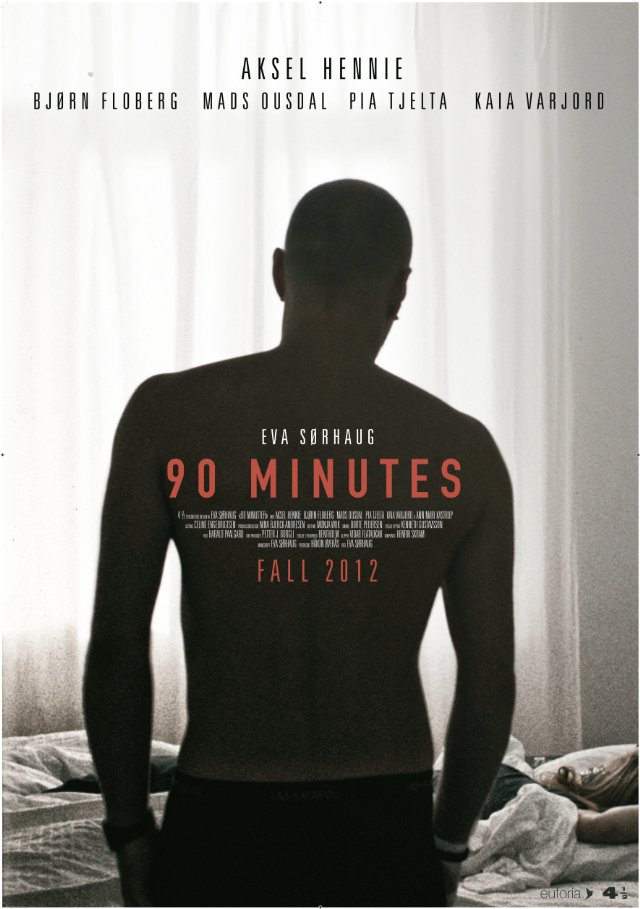
90 Minutes

Original title: 90 minutter

D: Eva Sørhaug / 89m

Cast: Bjørn Floberg, Mads Ousdal, Pia Tjelta, Aksel Hennie, Annmari Kastrup, Kaia Varjord

Johan (Floberg) has reached a point in his life where he’s made a profound decision as to his immediate future. He’s determined to put several aspects of his life behind him, such as the room he rents and a subscription he’s taken out. As he makes these changes, he’s goes about them with a sense of finality and sadness. Fred (Ousdal) is a cop who’s marriage to Elin (Tjelta) has ended in divorce. They have two young children, both girls, and Fred’s presence in their home while Elin plans a party is being tolerated by his ex-wife. When she takes a call from someone who is coming to the party and is currently playing golf, Fred assumes the man is the new love in her life, something that he isn’t happy about. Trond (Hennie) is a young man who appears to be living alone in a sparsely furnished apartment. He listens to the radio and tapes up his right hand but otherwise seems unmotivated. He goes into his bedroom, where he strips and has sex with a woman (Varjord) who is gagged and tied to the bed. Also in the room is a baby, which starts crying.

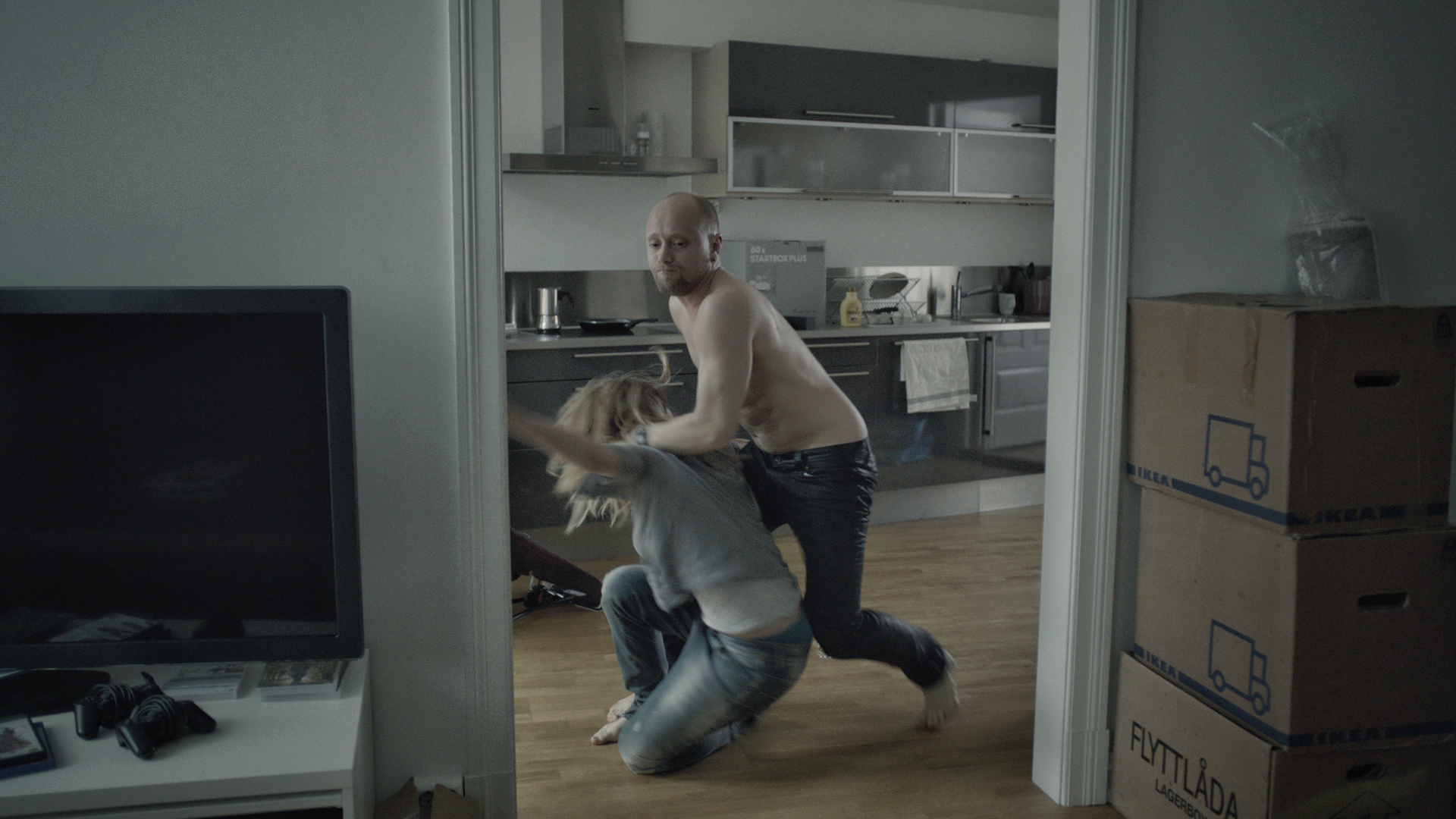
Johan arrives back home from a trip out. His wife, Hanna (Kastrup), is there. He begins to prepare dinner for them while Hanna has a shower. He is methodical and precise and makes sure that everything is just so. Fred begins to antagonise Elin by refusing to leave when she asks him to, and by complaining that she never seemed interested in golf before. He also finds excuses to remain there that involve either their children, or a neighbour. Elin loses her patience and insists that he leave. He eventually does so, and drives off angrily. Trond releases the woman tied to his bed to see to the baby. She is his partner, Karianne, and the baby is theirs. With the baby seen to, she begins to cook for them both, but when she looks out of the window, Trond becomes angry and attacks her. He drags her back into the bedroom and reties her to the bed. He snorts some cocaine, then arranges to meet a friend in order to get some more.

During their dinner, Johan prepares some gravy that he lets his wife try first. She becomes woozy and soon passes out. Fred drives around until he ends up back at his old home. He gets out of his car and goes inside to confront his family. Trond is visited by his friend and another man, who assault him and take his TV as repayment for his drug debts. Angry at being humiliated he decides to take it out on Karianne. He forces her to have sex and in the process nearly suffocates her, but stops just short of doing so. All three men find themselves on the verge of having their lives changed forever.
90 Minutes - scene

Only the second feature by talented director Sørhaug after Cold Lunch (2008), 90 Minutes is a bleak, uncompromising slice of Norwegian angst that gives the barest amount of detail for each man’s behaviour, and is coldly judgmental when it comes to the outcomes of each story. We meet each man at a stage where their individual journeys have reached a point of no return (though Trond’s is a little less cut and dried).

Johan’s actions are calculated and, in their own way, heartless and cruel. There may be an element of love involved in his actions toward Hanna, but the absence of any concrete reason for his actions doesn’t allow for any sympathy from the viewer. It’s clear he does have a reason for doing what he’s doing but Sørhaug is clever enough to make that reason irrelevant; his sadness tells us enough, and as we watch Johan carry out his plan, the sense of foreboding that builds is carefully orchestrated to the point where inevitability and hope collide, leaving a melancholy chill over the storyline that is quietly and unquestionably effective. Floberg is subdued, almost absent throughout, his careworn face providing all the information we need as to what he’s feeling. Of the three men he’s the most restrained and the most agonised, and Floberg gives perhaps the best performance as a result.

Fred is a man with unresolved marital issues and a simmering layer of anger lurking beneath an outwardly pleasant façade. Of the three men he’s the most recognisable and understandable, his jealous possessiveness a staple of marital dramas the world over. Sadly, this very familiarity stops Sørhaug from making his and Elin’s storyline from being anything more than entirely predictable, and his return to their home has all the surprise of presents at Xmas, especially after we learn he’s “taking a break” from active duty as a cop and is behind a desk. Nevertheless, Ousdal steers clear of making Fred too obvious, and makes his face almost mask-like when around other people. It’s only when he’s in his car that we see the full range of the emotions he’s feeling and realise just where those emotions will take him. As a transformation it’s unnerving and unexpectedly affecting.

As for Trond, he’s perhaps the most tormented of the three, his drug dependency exacerbating his paranoia and abusive behaviour towards Karianne. He’s an ogre, pitiless and self-absorbed, a rapist whose abusive nature has robbed him of every last ounce of decency. His actions are abominable, and it’s a measure of Sørhaug’s script, and Hennie’s abilities as an actor, that Trond isn’t allowed even the faintest hint of understanding or redemption; he’s unlikeable all the way through. Of the three storylines, Trond’s is the most difficult to watch, with its moments of domestic violence and sexual assault, and Sørhaug (again) is clever enough to thwart the audience’s expectations. The ultimate fate of Trond and Karianne and the baby is one that allows the movie to end on a note of cautious hope, but a note that nevertheless comes without any guarantees.

90 Minutes is a hard movie to like as such, its unremittingly grim mise en scene and examination of extreme misogynistic behaviour making it tough to engage with. But Fred’s story aside, Sørhaug’s script is still intrepid enough to make the other two storylines surprisingly engrossing. She also makes the camera more of an observer than a participant, allowing a more dispassionate approach to the material that offsets the horrors being witnessed. Henrik Skram’s icy score adds another dimension to the austere proceedings, and there’s sterling camera work from Harald Gunnar Paalgard, particularly in Trond’s apartment.

Rating: 7/10 – by making Johan, Fred and Trond so unsympathetic, writer/director Sørhaug runs the risk of making 90 Minutes too unpalatable for the average viewer, but there’s enough to admire in the stringent, uncompromising set ups to make up for any distaste at the characters’ actions; one that will linger in the memory and with a cathartic moment that remains appropriately unsatisfying.

Share this:

  • Click to share on X (Opens in new window) X
  • Click to share on Facebook (Opens in new window) Facebook
  • More
  • Click to print (Opens in new window) Print
  • Click to email a link to a friend (Opens in new window) Email
Like Loading...

Cold Lunch (2008)

12 Saturday Jul 2014

Posted by dullwood68 in Movies

≈ 2 Comments

Tags

Aksel Hennie, Ane Dahl Torp, Chain reaction, Drama, Eva Sørhaug, Loneliness, Marital problems, Norway, Oslo, Pia Tjelta, Selfishness

Cold Lunch

Original title: Lønsj

D: Eva Sørhaug / 90m

Cast: Ane Dahl Torp, Pia Tjelta, Aksel Hennie, Bjørn Floberg, Nicolai Cleve Broch, Anneke von der Lippe, Kyrre Haugen Sydness, Birgitte Victoria Svendson, Ingar Helge Gimle, Jan Gunnar Røise

A Norwegian drama focusing on the lives of five people who all live and (mostly) work in the same small section of Oslo, Cold Lunch introduces us to Leni (Torp), a forty-something woman who has spent the majority of her life in an apartment with her father; Christer (Hennie), a young man who can’t pay his rent; Heidi (Tjelta), a young mother whose husband, Odd (Sydness) is controlling and abusive; Turid (Svendson), a fifty-something woman who does her best to live an active, fulfilling lifestyle; and Kildahl (Floberg), whose disabled wife hates and despises him.  When Christer leaves for work one morning and he gets bird poo on his clothes, the “accident” sets in motion a chain reaction that brings these characters into each other’s orbits.

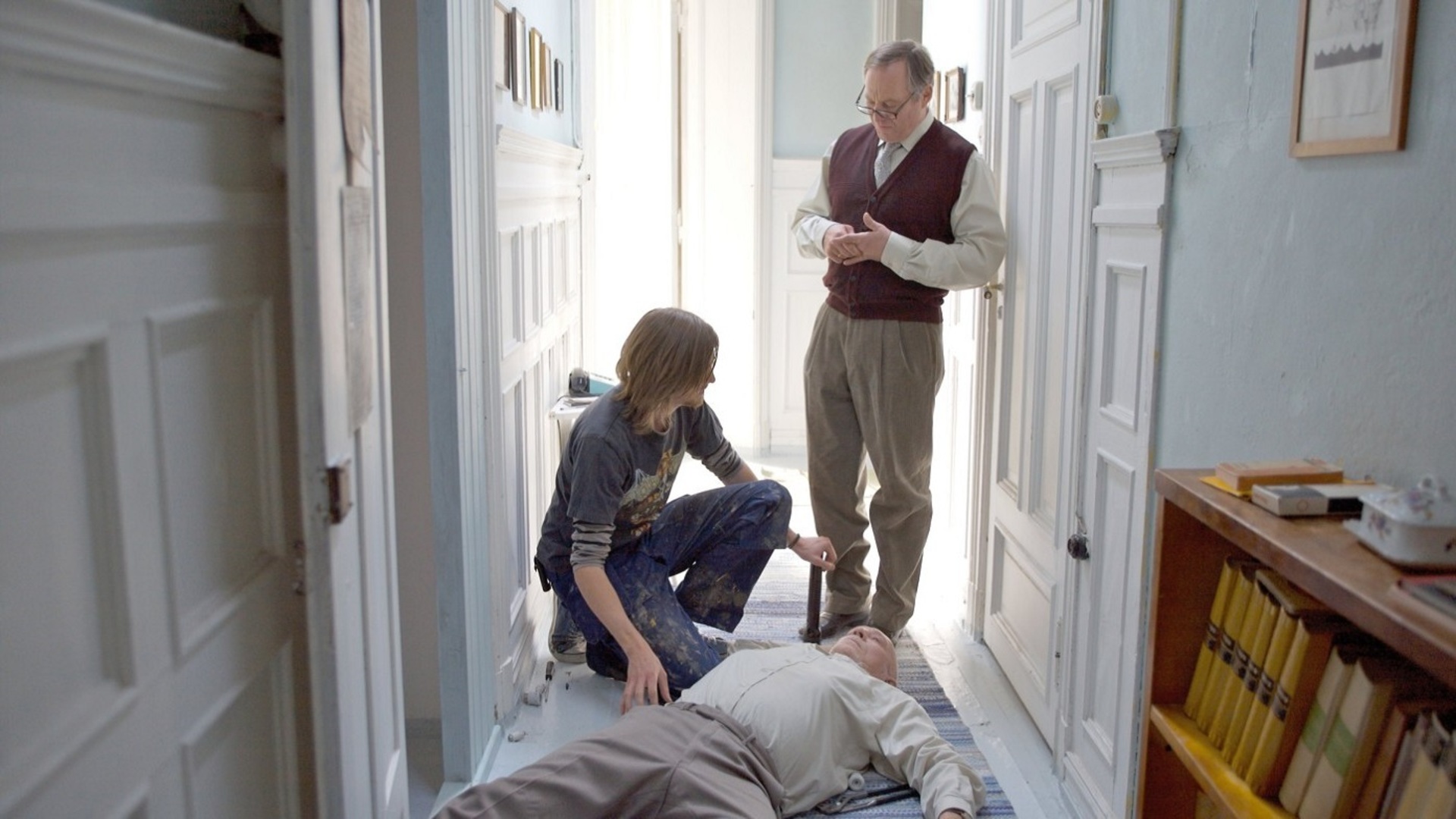
Using the washing machine of the building next door to his, Christer realises his money is in the pocket of his waistcoat.  Unable to open the washing machine, he finds the fuse box and pulls out the main fuse.  As he retrieves his money, Kildahl appears and challenges Christer, who promptly leaves (without apologising for causing everyone in the building an inconvenience).  Upstairs, Leni’s father has been killed as he attempts to restore power to his flat using his own fuse box.  Leni sees his body but does nothing; eventually Kildahl and an electrician visit the flat and find the old man.  In another apartment, Heidi is looking after her infant son.  With the power having been cut off, some of her husband’s clothes aren’t washed or ironed; he gets angry and when Heidi pleads for his understanding, Odd slaps her across the face before leaving.  Nearby, Christer quits his job because the store owner he works for won’t lend him the money he needs to pay his rent.  Odd works for a property management company; he finds Leni at the flat and informs her that her father’s contract for the flat ended when he died, and she must leave within the next two days.  Later, Kildahl is having dinner with his wife; angry with him and her condition she urinates while sitting at the dinner table.

Over the next couple of days, their lives intersect and new bonds are forged, while others are strengthened (or made to endure), and one is curtailed almost as soon as it’s begun, and one more remains unchanged.  Leni learns how to cope in the outside world, Christer gets an offer to join a small crew taking a boat to the Caribbean, Heidi tries her best to become a better partner to Odd, and mother to their son (with terrible consequences), and Kildahl and Turid both take each day as it comes in the hope that their lives will improve in some way, however small.

Cold Lunch - scene

The writer and philosopher Henry David Thoreau once wrote, “The mass of men lead lives of quiet desperation”.  And so it is with Cold Lunch, its characters seeking ways out of their individual predicaments, and not knowing how to find them.  It’s a bleak, unforgiving kind of movie, intent on showing what can happen when we all have a bad day, and the repercussions that, often, we’re not even aware of.  Happiness, the movie seems to say, is fleeting, and by no means guaranteed, even if you work hard for it, or deserve it.  By chance, Leni finds a job but she is still all alone in the world – a scene in a cafe sees her nodding in acknowledgement to a woman at the next table.  When she does it again, the woman is unimpressed and turns away.  Unable to connect with the world around her on a meaningful level, Leni (who appears to be the movie’s one “success” story) will always turn inward for comfort and peace of mind.

Likewise, Christer and Heidi find it difficult to connect with others.  Christer is almost entirely dependent on the people around him but he has a fundamental distrust of everyone.  He has a moment of self-awareness that seems to bring about a kind of personal salvation, but how long it will last is uncertain.  Heidi’s life is even more wretched, her proclivity for self-denial dictating her behaviour at every turn.  She too has a moment of self-awareness (mixed with a burst of self-confidence), but it’s fleeting and she renounces any chance of changing her life almost straight away.  Her future is the bleakest, and has a grim inevitability.  The same can be said for Kildahl, his relationship with his wife entirely one-sided, his attitude toward her more as a parent with a disabled child than as a husband to his wife.  They are both locked in a loveless marriage of co-dependency, and as both are middle-aged, they will continue to make each other miserable for some time to come.  And Turid, whose life, at least, is governed by principles, doesn’t realise just how these principles will continue to keep her alone.

From all this it could be assumed that Cold Lunch is a dark, depressing movie, but despite its subject matter, it’s an oddly positive movie that makes you root for the characters even when you know there’s very little hope for them.  Per Schreiner’s script also has quirky moments of dry humour and unexpected levity amongst all the gloom.  There are good performances all round – Torp and Hennie are particularly effective – and the photography by John Andreas Andersen is understated while also emphasising the bright, airy rooms and outdoor spaces the characters inhabit (which reinforce how alone they are).  Making her feature debut, director Sørhaug shows sound judgment in her approach to the material and alleviates the doom and gloom with carefully constructed moments of hope, along with the aforementioned levity.  At times, she walks a bit of a tightrope in getting the balance right, and there are moments when the movie stumbles under the weight of its ambition – an homage to Hitchcock’s The Birds is clumsily done, and leads to an accident that no one responds to in anything resembling an appropriate manner – but all in all, Cold Lunch is quirky, and oddly affirmative despite its characters trials and tribulations.

Rating: 8/10 – darkly humorous at times, and in a way that only the Scandinavians can pull off, Cold Lunch is not for everyone; too downbeat for its own good at times, it’s nevertheless a movie well worth seeking out and rewards on closer inspection.

Share this:

  • Click to share on X (Opens in new window) X
  • Click to share on Facebook (Opens in new window) Facebook
  • More
  • Click to print (Opens in new window) Print
  • Click to email a link to a friend (Opens in new window) Email
Like Loading...

Blog Stats

  • 486,731 hits

Recent Posts

  • 10 Reasons to Remember Bibi Andersson (1935-2019)
  • Fantasia (1940)
  • Dances With Wolves (1990) – The Special Edition
  • Kiss of the Spider Woman (1985)
  • The Three Musketeers (1973)

Top Posts & Pages

  • Lost for Life (2013) - Another Look
    Lost for Life (2013) - Another Look
  • Lost for Life (2013)
    Lost for Life (2013)
  • About
    About
  • Exposed (2016)
    Exposed (2016)
  • Cardboard Boxer (2016)
    Cardboard Boxer (2016)
  • A Brief Word About La La Land (2016)
    A Brief Word About La La Land (2016)
  • My Top 10 Guilty Pleasures
    My Top 10 Guilty Pleasures
  • The Monuments Men (2014)
    The Monuments Men (2014)
  • BFI London Film Festival 2015
    BFI London Film Festival 2015
  • A Brief Word About Netflix Original Comedies
    A Brief Word About Netflix Original Comedies
Follow thedullwoodexperiment on WordPress.com

Blogs I Follow

  • Rubbish Talk
  • Film 4 Fan
  • Fast Film Reviews
  • The Film Blog
  • All Things Movies UK
  • Interpreting the Stars
  • Let's Go To The Movies
  • Movie Reviews 101
  • TMI News
  • Dan the Man's Movie Reviews
  • Film History
  • Jordan and Eddie (The Movie Guys)

Archives

  • April 2019 (13)
  • March 2019 (28)
  • February 2019 (28)
  • January 2019 (32)
  • December 2018 (28)
  • November 2018 (30)
  • October 2018 (29)
  • September 2018 (29)
  • August 2018 (29)
  • July 2018 (30)
  • June 2018 (28)
  • May 2018 (24)
  • April 2018 (21)
  • March 2018 (31)
  • February 2018 (25)
  • January 2018 (30)
  • December 2017 (30)
  • November 2017 (27)
  • October 2017 (27)
  • September 2017 (26)
  • August 2017 (32)
  • July 2017 (32)
  • June 2017 (30)
  • May 2017 (29)
  • April 2017 (29)
  • March 2017 (30)
  • February 2017 (27)
  • January 2017 (32)
  • December 2016 (30)
  • November 2016 (28)
  • October 2016 (30)
  • September 2016 (27)
  • August 2016 (30)
  • July 2016 (30)
  • June 2016 (31)
  • May 2016 (34)
  • April 2016 (30)
  • March 2016 (30)
  • February 2016 (28)
  • January 2016 (35)
  • December 2015 (34)
  • November 2015 (31)
  • October 2015 (31)
  • September 2015 (34)
  • August 2015 (31)
  • July 2015 (33)
  • June 2015 (12)
  • May 2015 (31)
  • April 2015 (32)
  • March 2015 (30)
  • February 2015 (37)
  • January 2015 (39)
  • December 2014 (34)
  • November 2014 (34)
  • October 2014 (36)
  • September 2014 (25)
  • August 2014 (29)
  • July 2014 (29)
  • June 2014 (28)
  • May 2014 (23)
  • April 2014 (21)
  • March 2014 (42)
  • February 2014 (38)
  • January 2014 (29)
  • December 2013 (28)
  • November 2013 (34)
  • October 2013 (4)

Create a free website or blog at WordPress.com.

Rubbish Talk

Film 4 Fan

A Movie Blog

Fast Film Reviews

The Film Blog

The official blog of everything in film

All Things Movies UK

Movie Reviews and Original Articles

Interpreting the Stars

Dave Examines Movies

Let's Go To The Movies

Film and Theatre Lover!

Movie Reviews 101

Daily Movie Reviews

TMI News

Latest weather, crime and breaking news

Dan the Man's Movie Reviews

All my aimless thoughts, ideas, and ramblings, all packed into one site!

Film History

Telling the story of film

Jordan and Eddie (The Movie Guys)

Movie Reviews & Ramblings from an Australian Based Film Fan

Privacy & Cookies: This site uses cookies. By continuing to use this website, you agree to their use.
To find out more, including how to control cookies, see here: Cookie Policy
  • Subscribe Subscribed
    • thedullwoodexperiment
    • Join 481 other subscribers
    • Already have a WordPress.com account? Log in now.
    • thedullwoodexperiment
    • Subscribe Subscribed
    • Sign up
    • Log in
    • Report this content
    • View site in Reader
    • Manage subscriptions
    • Collapse this bar
 

Loading Comments...
 

    %d