• 10 Reasons to Remember…
  • A Brief Word About…
  • About
  • For One Week Only
  • Happy Birthday
  • Monthly Roundup
  • Old-Time Crime
  • Other Posts
  • Poster of the Week
  • Question of the Week
  • Reviews
  • Trailers

thedullwoodexperiment

~ Viewing movies in a different light

thedullwoodexperiment

Tag Archives: PTSD

Welcome to Marwen (2018)

05 Saturday Jan 2019

Posted by dullwood68 in Movies

≈ Leave a comment

Tags

Diane Kruger, Drama, Fantasy, Leslie Mann, Mark Hogancamp, Marwen, PTSD, Review, Robert Zemeckis, Steve Carell, True story, World War II

D: Robert Zemeckis / 116m

Cast: Steve Carell, Leslie Mann, Diane Kruger, Janelle Monáe, Gwendoline Christie, Merritt Wever, Eiza González, Leslie Zemeckis, Stefanie von Pfetten, Neil Jackson, Falk Hentschel, Conrad Coates

Following a vicious beating by five white supremacists that robbed him of any personal memories he had before the attack, illustrator Mark Hogancamp (Carell) has managed to rebuild much of his life, but he’s no longer able to draw. Instead, he has created the fictional Belgian town of Marwen, a one-sixth scale model of which he’s built in his yard. Populated by dolls that represent some of the people who have been important to him since the attack, Mark has created a World War II storyline for the dolls of Marwen, and he takes photographs of them in carefully staged positions. These photographs have become regarded as art, and an exhibition of his work is due to take place in the near future. Also due to take place is the sentencing hearing of the men who attacked him, something that Mark’s lawyer (Coates) is pressing him to attend. But with Mark suffering from PTSD, and the Marwen stories occupying so much of his time, it’s only the sympathetic attention of a new neighbour, Nicol (Mann), that starts to bring Mark back to reality…
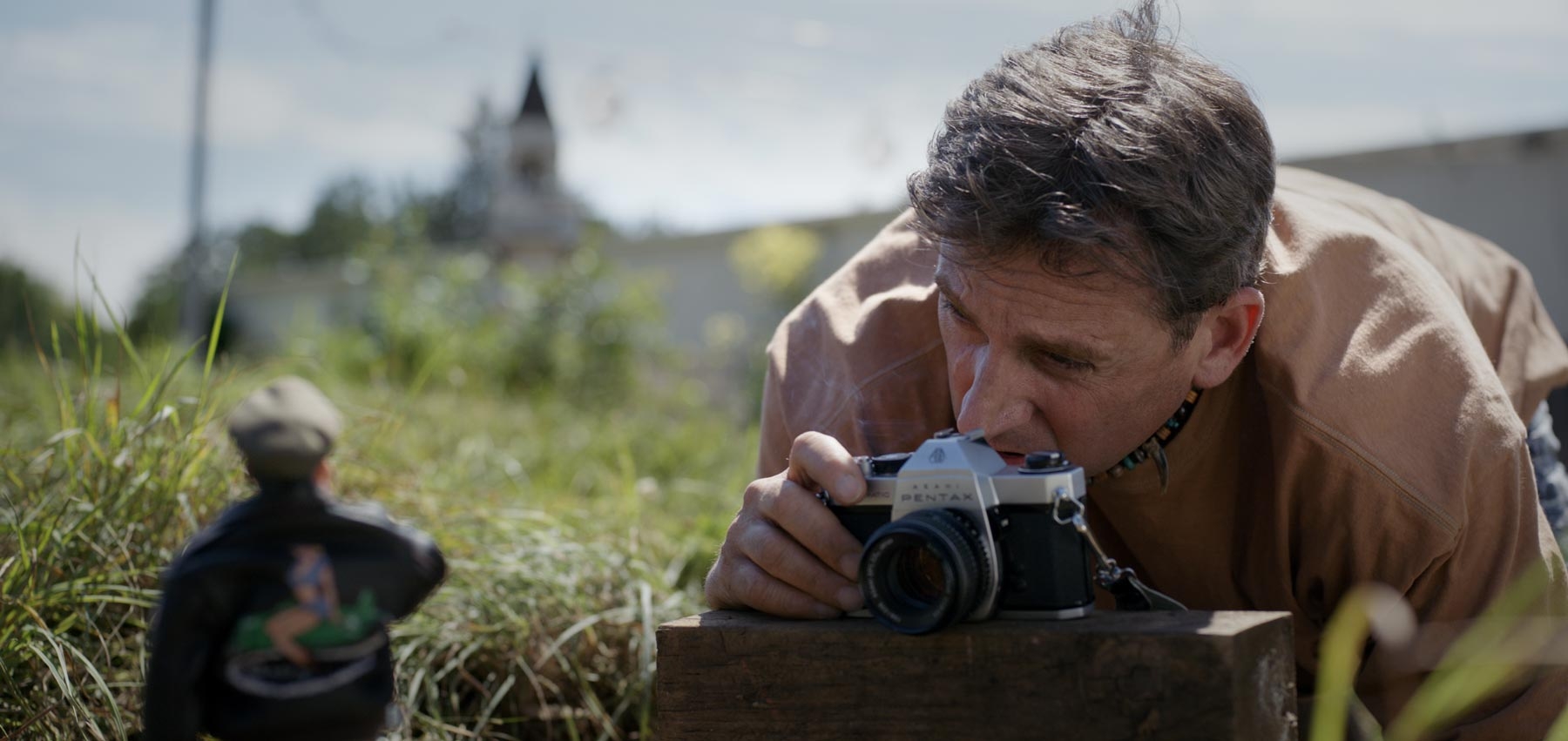
They say that truth is stranger than fiction, and that’s certainly the case with Mark Hogancamp, a man so violently assaulted that his attackers literally “kicked the memory” out of him. In creating the fictional village of Marwen, Hogancamp gave himself a way back to “normality”, even if it was through the use of an alternate, fantasy world populated by revamped Barbie dolls and Nazi soldiers who never die. It’s this aspect of the movie, with its model sets and plastic toy figures and props that makes the most impression, and Zemeckis – no stranger to giving life to CGI characters based on real people and performances – gives these scenes an urgency and a vibrancy that makes Marwen the kind of place we’d all like to visit (even if we’re likely to be shot at by marauding Nazis). With a great deal of charm, and visual wit, Zemeckis and co-scripter Caroline Thompson have created a cinematic variation of Hogancamp’s imagination and story-telling that is in its own way, brave and affecting, and which touches on more serious themes such as gender identity, persistent emotional trauma, drug addiction, and social isolation. There’s plenty of humour here too, but it’s more knowing than it is overt, and there’s a sadness behind it that make it all the more effective.

But while the scenes with Cap’n Hogie and his female coterie are the backbone of the movie and its MVP, the rest of the movie feels more fanciful and fictitious than the idea of dolls toting sub-machine guns and wearing stilettoes during wartime (look it up). Hogancamp is portrayed as a lovable yet tormented man who is personable yet reserved, and socially awkward, yet the introduction of Nicol, whose character feels like a stock idea lifted wholesale from Screenplay 101, grates with every scene she appears in (despite the best efforts of both Carell and Mann), while Hogancamp’s PTSD is laid on with the thickest of dramatic trowels. Carell at least has the measure of the character, but is hampered by the script’s insistence on making him depth-free, and something of a perennial man-child. Elsewhere in the “real world”, there are a number of stodgy contrivances – Nicol’s ex-boyfriend and nasty piece of work, Kurt (Jackson), exists only so he can double for the chief Nazi in Marwen, Nicol is completely unfazed and unconcerned by Hogancamp’s liking for wearing women’s shoes – and after a while any excuse to return to Marwen is likely to be gratefully accepted by the viewer, because that’s where the movie’s true heart and soul resides.

Rating: 6/10 – immensely enjoyable when the action is based in and around Marwen, but stilted and perfunctory when set away from there, Welcome to Marwen is a movie that struggles to balance both halves of its necessarily fractured narrative; Zemeckis directs with his usual flair and gift for visual flamboyance (and gets to include a clever nod to Back to the Future), but is let down by his own decision to make the real world look and sound like a bad soap opera, and by making the dolls more human than the humans.

Share this:

  • Click to share on X (Opens in new window) X
  • Click to share on Facebook (Opens in new window) Facebook
  • More
  • Click to print (Opens in new window) Print
  • Click to email a link to a friend (Opens in new window) Email
Like Loading...

Leave No Trace (2018)

06 Friday Jul 2018

Posted by dullwood68 in Movies

≈ Leave a comment

Tags

Ben Foster, Debra Granik, Drama, Father/daughter relationship, Literary adaptation, My Abandonment, Oregon, PTSD, Review, Thomasin McKenzie

D: Debra Granik / 109m

Cast: Ben Foster, Thomasin McKenzie, Jeff Kober, Dale Dickey, Dana Millican, Isaiah Stone, David Pittman

In the forest outside Portland, Oregon, an Army veteran suffering from PTSD, Will (Foster), and his teenage daughter, Tom (McKenzie), live together in a makeshift encampment. Only venturing into the city to pick up supplies, the pair do their best to ensure they pass unnoticed. But when Tom is seen by a jogger, their peaceful existence is brought to an end. The authorities raid their camp, and they’re apprehended; as they learn, it’s not illegal to live in the forest per se, but it is when the forest is part of a state park. Placed with a farmer (Kober), Will remains uncomfortable being surrounded by four walls, while Tom begins to explore a wider world than the one she’s used to. It isn’t long before Will tells Tom they’re leaving, and they head off into the Oregon wilderness. It isn’t long before they’re lost, and in less than hospitable conditions, a situation that reinforces Tom’s awareness that the life they’ve been living isn’t the same one she wants to continue with…

Writer/director Granik’s follow up to Winter’s Bone (2010) (and only her third feature over all), Leave No Trace is a low-key experience, full of emotional and dramatic ellipses, and yet with a depth and a clarity of expression that seems at odds with the stripped back nature of the material. Adapted from the novel My Abandonment by Peter Rock, Leave No Trace explores the ways in which a mutually dependent relationship inevitably has to fracture when it’s exposed to outside influences. It’s also a deeply sincere look at how longing and individual need can set people in such a relationship on vastly different courses in life, and yet still be the best thing for both of them. Will is always unlikely to accept the “normal” life he and Tom are thrust into, while it’s equally likely that Tom will take to it with a greater appetite. But though all this is a given, it’s the quality of Granik and co-scripter Anne Rossellini’s screenplay that all this plays out with a great deal of compassion and understanding for both characters’ aspirations and needs. There’s not one false note to be found in the way that Will and Tom behave, or in the way that they interact with their surroundings, be it the forest or their temporary home on the farm.

The movie has a beautiful visual aesthetic too, the lush green vegetation of the forest feeling visceral and alive before giving way to the compromised homogeneity of the city, and then enveloping us again towards the end, wrapping Will and Tom (and the viewer) in a leafy embrace that’s heartening and threatening and exciting and reassuring all at the same time. Michael McDonough’s cinematography deftly switches from being an immersive, magnificent experience during its forest scenes to that of an impartial observer of Will and Tom’s emotional struggles, and back again with such authority that it’s breathtaking. Granik has also seen fit to employ a soundtrack that comprises much of the natural soundscape as its backdrop, adding to our sense of the time and place(s) that Will and Tom inhabit. Will and Tom are played to perfection by Foster and McKenzie, with Foster’s internalised, haunted performance a career best that’s matched – exceeded perhaps – by McKenzie’s beautifully nuanced portrayal of Tom. Their scenes together never feel strained or unconvincing, and Granik’s measured yet intuitive direction teases out every unspoken thought or feeling with a clarity that is unlikely to have been more impactful if they’d been uttered out loud.

Rating: 9/10 – tremendously moving and visually striking, Leave No Trace is a strong contender for Movie of the Year and easily one of the most impressive movies of the last few years; with faultless performances, inspired direction, a deceptively impassioned screenplay, and an abiding sense of hope for both its central characters, this is richly rewarding and an absolute must-see.

Share this:

  • Click to share on X (Opens in new window) X
  • Click to share on Facebook (Opens in new window) Facebook
  • More
  • Click to print (Opens in new window) Print
  • Click to email a link to a friend (Opens in new window) Email
Like Loading...

Disorder (2015)

26 Tuesday Jul 2016

Posted by dullwood68 in Movies

≈ 2 Comments

Tags

Alice Winocour, Bodyguard, Diane Kruger, Drama, French Riviera, Home invasion, Maryland, Matthias Schoenaerts, PTSD, Review, Thriller

Disorder

Original title: Maryland

D: Alice Winocour / 98m

Cast: Matthias Schoenaerts, Diane Kruger, Paul Hamy, Zaïd Errougui-Demonsant, Percy Kemp

Vincent (Schoenaerts) is a soldier suffering from post traumatic stress disorder following a tour in Afghanistan. A medical reveals a variety of associated problems, all of which mean he’s unable to remain in the army. Given a medical discharge, he goes back home but struggles to make sense out of being there. Soon, though, he accepts a job from his friend and ex-comrade, Denis (Hamy). Working as part of a security detail at a party held at a villa called Maryland on the French Riviera, Vincent’s suspicions about the host, Imad Whalid (Kemp), and at least one of his guests – allied with an interest in the host’s wife, Jessie (Kruger) – lead nowhere (albeit initially). It’s a surprise then that the next day, Denis advises Vincent that he’s been chosen to play bodyguard to Whalid’s wife and child, Ali (Errougui-Demonsant), while Whalid is away on business for a couple of days.

Vincent takes his new assignment seriously but finds Jessie barely acknowledges that he’s there. Ali seems more intrigued by Vincent’s presence but is a shy child who doesn’t say much. A trip to the beach passes without incident until the trio begin to make their way back to Maryland. Their car is rammed and masked men attempt to abduct Jessie. Vincent fights them off, killing one and wounding another before they take flight. Afterwards, at a police station, he and Jessie are both interviewed about the attack but Vincent is convinced by their line of questioning that the police are more interested in Whalid than they are in the attempted abduction. Back at the villa, he and Jessie find it’s been ransacked and the staff are no longer there.

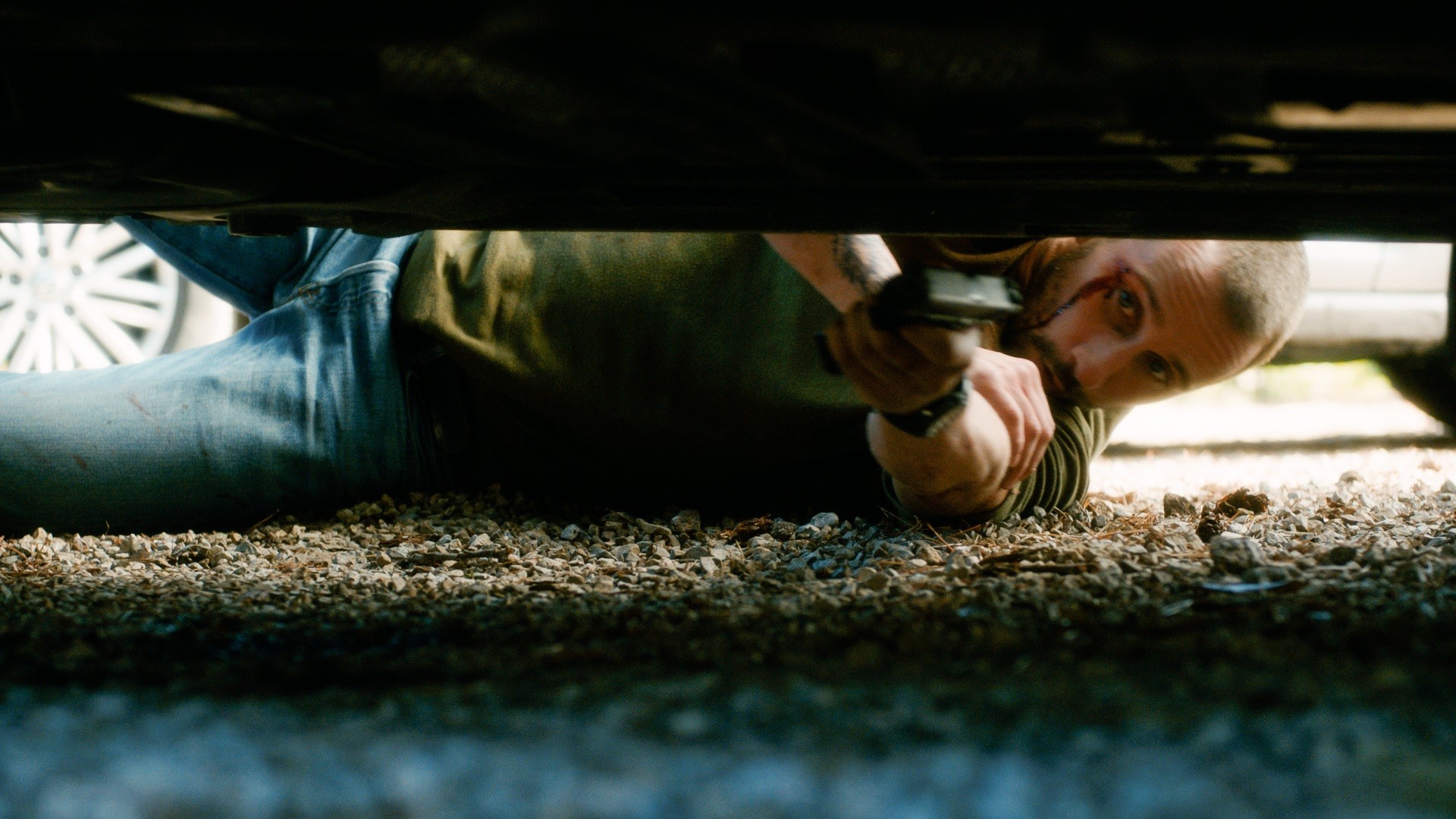
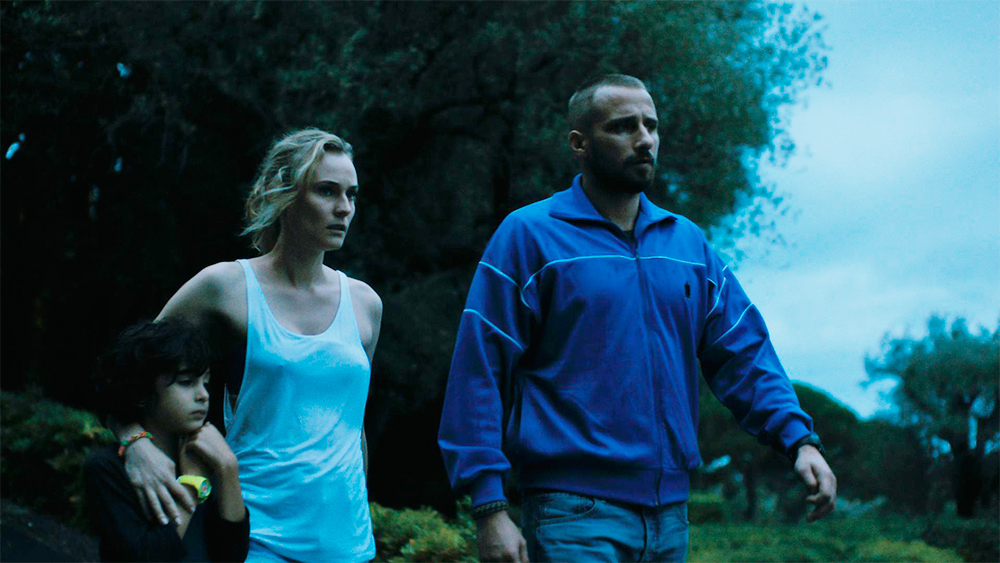
Disorder - scene2

Matters are made more complicated by the news that Whalid has been arrested. His lawyer advises Jessie to stay at the villa, but Vincent believes they should go somewhere else. Jessie overrules him, and even though the police have arranged for officers to keep watch outside the front gates, Vincent decides to call Denis and get him to come over. Feeling more confident with his old army buddy there, Vincent is still sure that the house will come under attack before long. And then the police detail is removed, and Vincent’s worst fears begin to come true…

Alice Winocour’s first (and previous) movie was the erotically charged Augustine (2012), based on the relationship between a pioneering 19th Century French neurologist and his star patient, a partially paralyzed kitchen maid. If bets had been taken as to the content of her follow-up feature, it’s unlikely anyone would have chosen this dour contemplation on the effects of PTSD on an already withdrawn ex-soldier. But thanks to a committed and largely internalised performance from Schoenaerts, the character of Vincent is dependable instead of unreliable, and focused on keeping his charges safe. Winocour and co-screenwriter Jean-Stéphane Bron have taken what seems to be an odd tack at first, using Vincent’s PTSD to define the character and set up audience expectations.

Disorder - scene1

But Winocour doesn’t allow Vincent to tread an obvious path in terms of how the narrative develops. As it becomes clear that he and Jessie, Ali and Denis are going to come under siege, Vincent’s paranoid suspicions prove all too real, enabling him to deal with the situation effectively and, at one point, quite brutally. That one moment of brutality aside, Vincent acts swiftly and purposefully, leading the viewer to realise that his PTSD is what is going to keep them all alive, and that without it he may not be as resolute as he needs to be. It’s an interesting approach to what is essentially a mental illness, and though both Winocour and Schoenaerts downplay this aspect of the material – and certainly it’s jettisoned once the police detail is called off – there are enough echoes and quietly realised moments to remind the viewer that Vincent is always going to be just that little bit “damaged”.

Ultimately, Disorder is a mix of European arthouse character study and recognisably French thriller tropes. As you might expect, Winocour employs lots of close ups to help establish Vincent’s thoughts and feelings, and Schoenaerts’ often blank expression is betrayed by what’s going on with his eyes. He’s the movie’s focus, and we learn everything we need to know from an assortment of frowns and glances. The camera records them all, and soon we have a visual lexicon to refer to, as Vincent reveals more and more of himself (and possibly without his being aware he’s doing so). It’s in these moments that Schoenaerts excels, combining his imposing physical presence with a complex, sympathetic portrait of a man struggling, and finding, a reason not to be defined by his illness.

Disorder - scene3

Opposite Schoenaerts, Kruger has much less to do, but this is due mainly to the script’s decision to focus on Vincent at the expense of the other characters. Jessie is a woman who turns a blind eye to her husband’s business activities, content to look after their child and reap the obvious benefits. When Vincent confronts her with the reality of Whalid’s occupation, her reaction is hardly any reaction at all, and Vincent’s distaste washes over her with little effect. Kruger handles this convenient apathy with ease, but still manages to retain the audience’s sympathy for the situation she finds herself in. The actress has made some great choices in recent years – her performance in The Better Angels (2014) is a good example – and this is another quietly impressive portrayal from someone who could so easily have remained typecast because of her looks.

It’s also good to report that the thriller elements of Disorder are also well executed, particularly the attack on the car, which is filmed for the most part from within the car and which has an immediacy and an urgency that a lot of so-called out-and-out thrillers fail to achieve. While Vincent, Jessie, Ali and Denis wait in the villa for something to happen, the script allows them a brief interlude for laughter, but even then there’s a sense of foreboding, a certainty that the home invasion we all know is coming could happen right then and there. Again, Winocour shows a confidence in the material that for once doesn’t rely heavily on the same old tired thriller elements (even though she can’t resist having one of the intruders pass by in the background at one point), and there’s an understated tension to the final half an hour that’s maintained with a great deal of patience and aplomb.

Rating: 8/10 – part character study, part taut thriller, Disorder manages to unite both elements to impressive effect, and features a superb, well-modulated performance from Schoenaerts; a little slow to start with, but full of clever touches that enhance the material, the movie is both conventional and surprisingly unconventional at the same time, a rare feat these days and a very welcome one at that.

Share this:

  • Click to share on X (Opens in new window) X
  • Click to share on Facebook (Opens in new window) Facebook
  • More
  • Click to print (Opens in new window) Print
  • Click to email a link to a friend (Opens in new window) Email
Like Loading...

Blog Stats

  • 486,528 hits

Recent Posts

  • 10 Reasons to Remember Bibi Andersson (1935-2019)
  • Fantasia (1940)
  • Dances With Wolves (1990) – The Special Edition
  • Kiss of the Spider Woman (1985)
  • The Three Musketeers (1973)

Top Posts & Pages

  • Lost for Life (2013) - Another Look
    Lost for Life (2013) - Another Look
  • Lost for Life (2013)
    Lost for Life (2013)
  • About
    About
  • Mr. Topaze (1961)
    Mr. Topaze (1961)
  • Billy Lynn's Long Halftime Walk (2016)
    Billy Lynn's Long Halftime Walk (2016)
  • Winter's Tale (2014)
    Winter's Tale (2014)
  • The Hitman's Bodyguard (2017)
    The Hitman's Bodyguard (2017)
  • 5 Famous Movie Roles That Nearly Went to Someone Else
    5 Famous Movie Roles That Nearly Went to Someone Else
  • The Layover (2017)
    The Layover (2017)
  • Transcendence (2014)
    Transcendence (2014)
Follow thedullwoodexperiment on WordPress.com

Blogs I Follow

  • Rubbish Talk
  • Film 4 Fan
  • Fast Film Reviews
  • The Film Blog
  • All Things Movies UK
  • Interpreting the Stars
  • Let's Go To The Movies
  • Movie Reviews 101
  • TMI News
  • Dan the Man's Movie Reviews
  • Film History
  • Jordan and Eddie (The Movie Guys)

Archives

  • April 2019 (13)
  • March 2019 (28)
  • February 2019 (28)
  • January 2019 (32)
  • December 2018 (28)
  • November 2018 (30)
  • October 2018 (29)
  • September 2018 (29)
  • August 2018 (29)
  • July 2018 (30)
  • June 2018 (28)
  • May 2018 (24)
  • April 2018 (21)
  • March 2018 (31)
  • February 2018 (25)
  • January 2018 (30)
  • December 2017 (30)
  • November 2017 (27)
  • October 2017 (27)
  • September 2017 (26)
  • August 2017 (32)
  • July 2017 (32)
  • June 2017 (30)
  • May 2017 (29)
  • April 2017 (29)
  • March 2017 (30)
  • February 2017 (27)
  • January 2017 (32)
  • December 2016 (30)
  • November 2016 (28)
  • October 2016 (30)
  • September 2016 (27)
  • August 2016 (30)
  • July 2016 (30)
  • June 2016 (31)
  • May 2016 (34)
  • April 2016 (30)
  • March 2016 (30)
  • February 2016 (28)
  • January 2016 (35)
  • December 2015 (34)
  • November 2015 (31)
  • October 2015 (31)
  • September 2015 (34)
  • August 2015 (31)
  • July 2015 (33)
  • June 2015 (12)
  • May 2015 (31)
  • April 2015 (32)
  • March 2015 (30)
  • February 2015 (37)
  • January 2015 (39)
  • December 2014 (34)
  • November 2014 (34)
  • October 2014 (36)
  • September 2014 (25)
  • August 2014 (29)
  • July 2014 (29)
  • June 2014 (28)
  • May 2014 (23)
  • April 2014 (21)
  • March 2014 (42)
  • February 2014 (38)
  • January 2014 (29)
  • December 2013 (28)
  • November 2013 (34)
  • October 2013 (4)

Blog at WordPress.com.

Rubbish Talk

Film 4 Fan

A Movie Blog

Fast Film Reviews

The Film Blog

The official blog of everything in film

All Things Movies UK

Movie Reviews and Original Articles

Interpreting the Stars

Dave Examines Movies

Let's Go To The Movies

Film and Theatre Lover!

Movie Reviews 101

Daily Movie Reviews

TMI News

Latest weather, crime and breaking news

Dan the Man's Movie Reviews

All my aimless thoughts, ideas, and ramblings, all packed into one site!

Film History

Telling the story of film

Jordan and Eddie (The Movie Guys)

Movie Reviews & Ramblings from an Australian Based Film Fan

Privacy & Cookies: This site uses cookies. By continuing to use this website, you agree to their use.
To find out more, including how to control cookies, see here: Cookie Policy
  • Subscribe Subscribed
    • thedullwoodexperiment
    • Join 481 other subscribers
    • Already have a WordPress.com account? Log in now.
    • thedullwoodexperiment
    • Subscribe Subscribed
    • Sign up
    • Log in
    • Report this content
    • View site in Reader
    • Manage subscriptions
    • Collapse this bar
 

Loading Comments...
 

    %d