• 10 Reasons to Remember…
  • A Brief Word About…
  • About
  • For One Week Only
  • Happy Birthday
  • Monthly Roundup
  • Old-Time Crime
  • Other Posts
  • Poster of the Week
  • Question of the Week
  • Reviews
  • Trailers

thedullwoodexperiment

~ Viewing movies in a different light

thedullwoodexperiment

Tag Archives: Teresa Palmer

2:22 (2017)

24 Friday Nov 2017

Posted by dullwood68 in Movies

≈ Leave a comment

Tags

Cosmic event, Drama, Grand Central Station, Michiel Huisman, Murder, Paul Currie, Review, Sam Reid, Sci-fi, Teresa Palmer, Thriller

D: Paul Currie / 99m

Cast: Teresa Palmer, Michiel Huisman, Sam Reid, Maeve Dermody, Remy Hii, Simone Kessell, John Waters, Richard Davies, Kerry Armstrong

When a movie provides the viewer with an intriguing concept (and does so early on) it sets itself something of a problem: namely, how to maintain that sense of intrigue the longer the movie goes on, and the more that has to be explained. There are plenty of movies where that intriguing concept flounders soon after being introduced, and plenty more where it doesn’t go anywhere at all. And then there are the movies that keep that concept evolving and expanding, and in doing so, keep the viewer engaged and entertained throughout. But these movies aren’t as prevalent as we might like, and though it does its best to join that elusive and elite group, 2:22 has a basic flaw that stops it from gaining a place at the table: it never decides to settle for one cause out of three or four for the events that take place.

Dylan Branson (Huisman) is an air traffic controller living in New York. He has the ability to see patterns in all things, which makes it easy for him to make predictions out of what appear to be random variables. It also means that some of the flights under his control can sometimes take off and land within yards of each other, something that, frighteningly, his boss and his colleagues treat as more of a trick to be bet on than as an inappropriate way of dealing with hundreds of lives each time. But when a cosmic event – the shock waves from the collapse of a star in space from thirty years before – has an effect on the Earth, Dylan’s attention becomes focused on the patterns that are revealed through the waves, and he is lucky to avoid the deaths of around nine hundred people when this occurs. Rightly suspended, Dylan still goes about his daily routine, but soon begins to notice that the same things keep happening each day, and at the same times. However, it’s a fascination with Grand Central Station, and the time of 2:22pm, that he’s unable to shake.
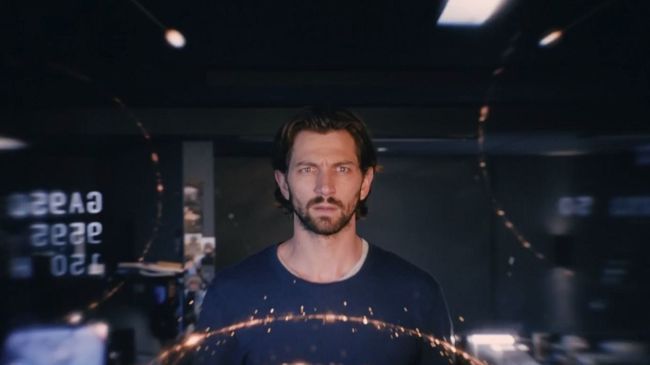
As the patterns and repetitions become more and more ingrained, Dylan finds himself drawn into the story of three deaths that occurred thirty years before on the concourse at Grand Central. A love triangle that ended in tragedy, it saw a singer and her boyfriend, and a cop, all shot and killed. Dylan becomes obsessed with finding out why he’s seeing all this within the patterns, and why from so long ago. And when he meets Sarah (Palmer), an art gallery manager, he begins to realise that their relationship is in some way connected to the events of the past. What this all means is what Dylan feels compelled to work out, but at first it frightens Sarah, and she distances herself from him, but as their story begins to dovetail with the story from 1985, and too many coincidences occur to dispute what seems to be happening, Dylan tries to ensure that there isn’t a repeat of the concourse tragedy, and that he and Sarah can make it past 2:22pm.

There’s not exactly a glut of intelligent, well thought out science fiction movies available to audiences these days, and 2:22 clearly has ambitions to fulfill that particular requirement, but while it begins well – and with a couple of airport runway scenes that should have even the most blasé of frequent fliers gripping their upright tray tables – it’s not long before it gets bogged down in an unwieldy narrative, and it starts tripping over itself in its attempts to provide a coherent, viable framework for the mystery of thirty years ago and its relevance to what’s happening around Dylan today. At first, it’s clever, but then the movie tries to be too clever, and before long it has Dylan sounding like he’s in need of some serious medication. Sarah avoids him because he sounds crazy, the truth of the past reveals itself piece by piece, and it’s all done in such a way that makes it confusing as to whether or not it’s all in Dylan’s head, or the result of this strange cosmic event, or some kind of reincarnation version of history repeating itself. As to which one of those is the actual reason for Dylan’s visions of the past, the viewer is free to take a guess.

It may be that there is one true answer, but the screenplay by Todd Stein and Nathan Parker (from a story by Stein) is too respectful of its muddled internal logic to settle for a definitive solution. Instead it piles erratic images and mismatched scenes on top of one another, and as if it needs to add a sense of confusion to proceedings, when it does attempt to explain matters, it falls just shy of being convincing (which unfortunately leaves Michiel Huisman holding the exposition bag quite awkwardly a lot of the time). It’s obvious that the movie doesn’t want to come across as a sci-fi variation of Groundhog Day (1993), and so it throws too many extra elements into the mix, but without testing first to see if they match the level of intrigue required, and/or the details. Currie orchestrates matters with an eye for a compelling image at times, but on other occasions, there’s a pedestrian vibe to many of the scenes early on that aren’t exactly involving; thankfully, as the narrative speeds up, Currie’s confidence in his handling of the material increases also.

The well chosen cast do as well as can be expected with some of Stein and Parker’s more utilitarian dialogue, and overall Huisman and Palmer make for an interesting pairing, their characters not quite the star-crossed lovers they’re made out to be, but competently played nevertheless. By the end though, the sci-fi elements have been shoved aside so that the thriller elements can be pushed to the fore, and there’s a stretch where the familiarity of the narrative – or the obvious nature of it – casts a pall over proceedings as the screenplay manipulates the story into getting Dylan and Sarah, and her jealous ex-boyfriend, Jonas (Reid), to the station on time for the 2:22 deadline. Faced with these strong-arm tactics, the movie has no choice but to go along for the ride and hope that the drily philosophical dictum quoted at the end, “A star shines brightest right before it dies”, strikes the viewer as poignant instead of ironic.

Rating: 6/10 – narrative trips and tumbles aside, 2:22 is a modest sci-fi thriller with modest ambitions, but ones that should be applauded nevertheless; that it doesn’t work entirely is down to the lack of focus in the storyline, and some occasionally lazy “hey, kids, let’s connect the dots for the viewer” decision making, but though it’s very rough around the edges, you could do a lot worse, sci-fi wise, than to give this “out of its comfort zone” movie a chance.
Share this:

  • Click to share on X (Opens in new window) X
  • Click to share on Facebook (Opens in new window) Facebook
  • More
  • Click to print (Opens in new window) Print
  • Click to email a link to a friend (Opens in new window) Email
Like Loading...

Hacksaw Ridge (2016)

06 Monday Feb 2017

Posted by dullwood68 in Movies

≈ 5 Comments

Tags

Andrew Garfield, Biography, Conscientious objector, Desmond Doss, Drama, Hugo Weaving, Mel Gibson, Review, Sam Worthington, Teresa Palmer, True story, Vince Vaughn, World War II

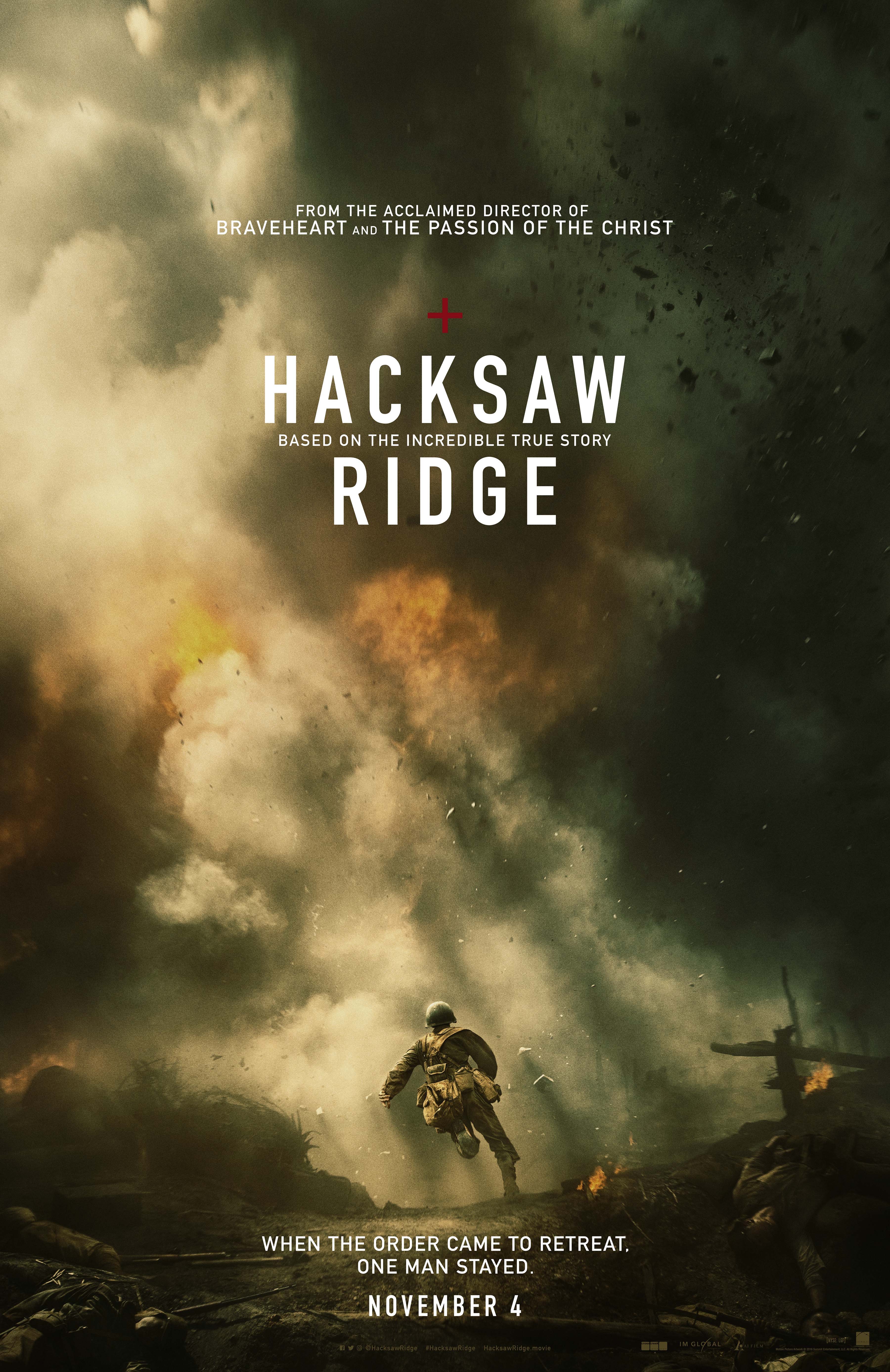
hacksaw-ridge-poster

D: Mel Gibson / 139m

Cast: Andrew Garfield, Sam Worthington, Teresa Palmer, Vince Vaughn, Luke Bracey, Hugo Weaving, Rachel Griffiths, Luke Pegler, Ben Mingay, Firass Dirani, Michael Sheasby, Nico Cortez, Goran D. Kleut, Richard Roxburgh, Ori Pfeffer

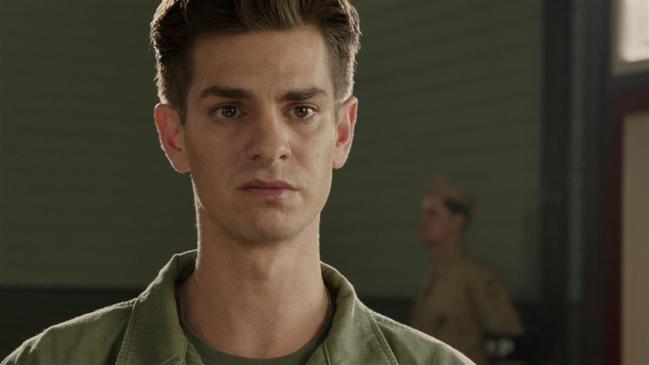
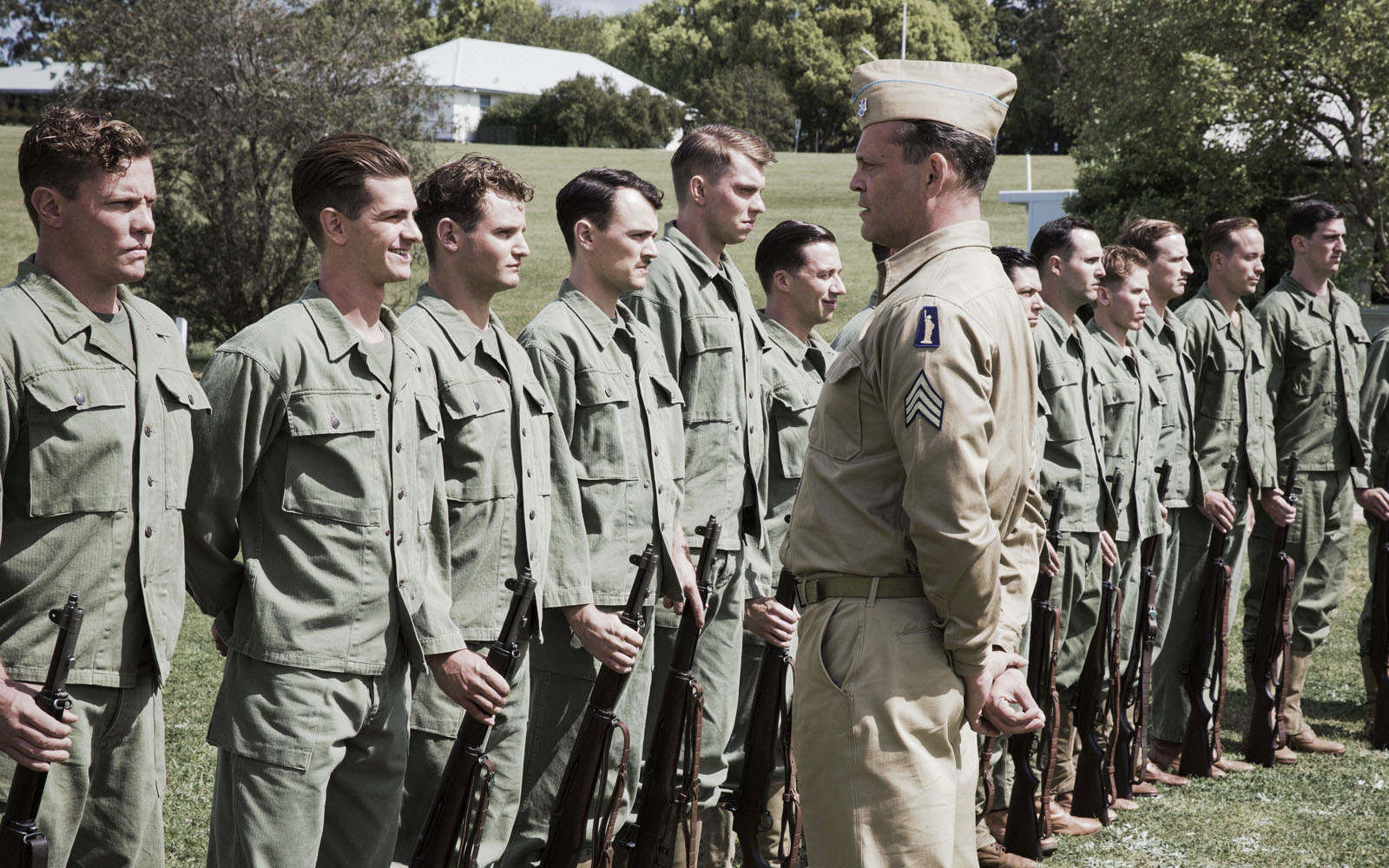
The story of Desmond T. Doss (Garfield) is one of those stories that seems tailor made for a big screen adaptation. After a childhood incident where he nearly kills his older brother, Desmond takes the sixth commandment, thou shalt not kill, very much to heart. When the US enters the Second World War, and pretty much every other young man has enlisted, Desmond enlists as well, and is sent to Fort Jackson in South Carolina for his basic training, he immediately upsets the normal order of things by refusing to touch a rifle… or indeed, any weapon. Naturally this antagonises his fellow trainees, and they make life difficult for him, as does his instructor, Sergeant Howell (Vaughn), and commanding officer, Captain Glover (Worthington), who want to see the back of Doss and his religious beliefs (he’s also a Seventh Day Adventist).

But Doss endures everything the army can throw at him, and begins to earn the respect of his comrades. However, when he’s given a direct order to pick up a gun and he refuses, he finds himself facing a court-martial. Luckily, a last-minute intervention by his father (Weaving), sees Doss allowed to take part in the war as a medic and without having to carry a rifle. Soon, Glover’s men, including Doss, are shipped out to the Pacific, and specifically, the island of Okinawa, where they are tasked with climbing the cliff face of the Maeda Escarpment – otherwise known as Hacksaw Ridge – and take on the Japanese forces that are dug in there. Their first attack is unsuccessful and they’re forced to take shelter on the ridge overnight. The next day they’re driven back down the Escarpment, leaving dozens of injured and wounded men behind.

hacksaw-ridge-2

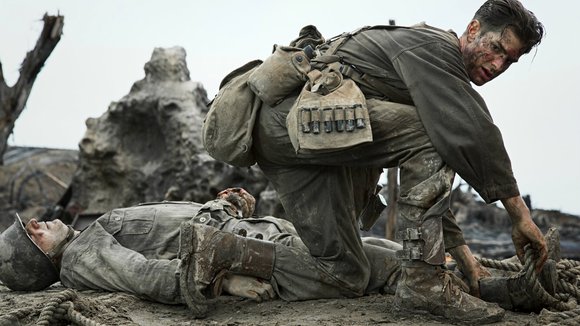
Doss, however, refuses to leave them there. Over the next twenty-four hours he rescues seventy-five men, keeping them safe from Japanese patrols and when it’s safe to do so, lowering them down the cliff face to the amazement of the US soldiers below. Doss’ last rescue saves the life of Sergeant Howell, and he and an equally chastened Captain Glover, admit how wrong they’ve been about Doss and the courage he’s shown in sticking to his beliefs, and in saving so many men. The next day, another assault is launched. This time it’s Doss who is injured, and this time it’s his fellow soldiers who have to take care of him.

Doss’s heroism – and rescue of so many men – is told in a straightforward, linear fashion (its prologue aside), and is respectful of the man and his beliefs to such a degree that there’s a danger of his being a symbol rather than a fully fledged character. But thanks to a combination of Robert Schenkkan and Andrew Knight’s moving screenplay, Andrew Garfield’s impressive performance as Doss, and Mel Gibson’s equally impressive directing turn, Hacksaw Ridge never lionises Doss to the extent where he’s portrayed as an above average human being doing something extraordinary. Instead, Doss’s humility and keen sense of purpose keep him grounded firmly and effectively, and his sincerity is never doubted. He’s exactly the kind of man you want fighting alongside you in battle. Garfield – on somewhat of a religious roll with this and Silence (2016) – expresses Doss’s beliefs with a keen sense of how important his faith is to him, and gives a performance that is subtly nuanced, honest, and hugely sympathetic. When he’s saying to God, “Help me to get one more”, there’s no other line of dialogue in the movie that so perfectly encapsulates Doss’s character and personality, or his sense of personal responsibility.

external

Garfield is helped and surrounded by a terrific supporting cast, from Weaving as Doss’s sad, alcoholic father, to Palmer’s girl-next-door who he falls in love with at first glance, and on to Bracey’s gung-ho soldier who accuses Doss of cowardice. Vaughn, who rarely strays from his comedy man-child persona, here does some of his best work in years as the gruff Sergeant Howell, berating his men in a toned-down version of R. Lee Ermey’s Sergeant Hartman in Full Metal Jacket (1987), and doing so with a thinly disguised layer of affection. On the home front, Palmer is suitably fresh and enticing as the love of Doss’s life, and Griffiths is appropriately supportive as his mother. Only Worthington, saddled with a stock character and some clumsy dialogue, fails to make an immediate impression (though once he’s on Doss’s side it’s easier for the viewer to be on his side too).

But overall, this is Gibson’s triumph through and through, a powerful, riveting war movie that features some of the most exhilarating and, at the same time, exhausting battle sequences since Saving Private Ryan (1998). But where Spielberg’s ground-breaking recreation of the Normandy landings was brutal and uncompromising, and featured someone – Tom Hanks’ Captain Miller – that the viewer could relate to during all the carnage, here Gibson switches perspectives between the US and Japanese soldiers almost at will, and in doing so, captures some of the true, overwhelming nature of hand-to-hand combat (while also seeming a little too pre-occupied with setting men on fire, images of which crop up time and again).

hacksaw-ridge-20160349

But while the fierce exchanges at Hacksaw Ridge are given their due, Gibson is on equally solid ground during the sequences set in Doss’s home town of Lynchburg, Virginia, and at Fort Jackson, imbuing the Lynchburg scenes with a rosy, yet melancholy feeling, and then beginning to make things seem a little darker at Fort Jackson. By the time Doss reaches Okinawa, the viewer is left in no doubt that what follows will make Doss’s childhood trauma and boot camp humiliations seem like a walk in the park. It’s a slow build up as well, allowing the audience to get better acquainted with the men who’ll go into battle with Doss (and maybe not return), and to fully understand the dynamic between Doss and his father, and the bond between Doss and his fiancée, Dorothy.

Tales of heroism are often about the act or acts themselves, but here it’s “Doss the coward” (as he’s referred to) who is the focus. His determination, and over-riding desire to save life while everyone else is taking it, is embodied by Garfield’s praiseworthy performance, and further endorsed by the movie’s gung-ho, populist rhetoric. If it strays a little too close to feeling like a soap opera at times (especially in its scenes at Lynchburg), or unintentional melodrama, then Gibson is astute enough to bring it back from the brink. All of which makes Hacksaw Ridge one of the most “authentic-looking” war movies ever made, as well as being a fine tribute to the exploits of a man whose beliefs are truly inspirational.

Rating: 8/10 – bolstered by Simon Duggan’s bold cinematography, and Barry Robison’s exemplary production design, Hacksaw Ridge sees Gibson the director on fine form, and making one of the most impressive war movies of recent years; harrowing, visceral, and yet uplifting at the same time, the battle sequences are the movie’s main draw, though the earlier scenes contain enough emotional clout as well to balance things out, all of which provides viewers with one of the most fearless and potent true stories of 2016.

Share this:

  • Click to share on X (Opens in new window) X
  • Click to share on Facebook (Opens in new window) Facebook
  • More
  • Click to print (Opens in new window) Print
  • Click to email a link to a friend (Opens in new window) Email
Like Loading...

Oh! the Horror! – The Darkness (2016) and Lights Out (2016)

04 Tuesday Oct 2016

Posted by dullwood68 in Movies

≈ 2 Comments

Tags

Anasazi, David F. Sandberg, Diana, Drama, Grand Canyon, Greg McLean, Horror, Kevin Bacon, Maria Bello, Radha Mitchell, Review, Teresa Palmer, Thriller

the-darkness

The Darkness (2016) / D: Greg McLean / 92m

Cast: Kevin Bacon, Radha Mitchell, David Mazouz, Lucy Fry, Matt Walsh, Jennifer Morrison, Parker Mack, Paul Reiser, Ming-Na Wen

In The Darkness, a family returns home from a trip to the Grand Canyon, unaware that their autistic son has released an ancient supernatural force that had been imprisoned in a secret Anasazi location. Once the feuding Taylors – dad Peter (Bacon), mum Bronny (Mitchell), teenage daughter Stephanie (Fry), and son Michael (Mazouz) – get settled back into the routine of sniping at each other and generally ignoring the fact that their combined behaviours are slowly tearing the family apart, the inevitable strange things start to happen. First, the taps in the kitchen turn on by themselves…

… and with that, any aspirations to be or do anything different for the remainder of the movie goes so far out of the window you’re not even sure if it’s landed anywhere. The Darkness is a shockingly bad amalgam of horror tropes and the supposed best bits from other horror movies. But in the main it’s Poltergeist (1982) that gets ripped off the most here, from the American Indian connection to the spiritual healer recommended to Peter by his boss (Reiser), and all the way to the portal that opens up in Michael’s bedroom.

the-darkness-scene

With the script having been cobbled together by director Greg McLean, Shayne Armstrong and Shane Krause, the movie ambles along on creative life support before it reaches the end and gives up the ghost entirely. Along the way it attempts to add depth by giving the Taylors their own personal demons to face as well as the ones formerly held at bay by Anasazi rituals. Peter once had an affair (though of course it didn’t mean anything), Bronny has a history of alcohol abuse, and Stephanie is bulimic (though one trip to the doctor’s seems to sort that one out). Personal demons, supernatural demons – what has this poor misguided family done to deserve all this? (What’s that? The supernatural demons are metaphors? Oh, right…)

There’s no shortage of cringeworthy moments in The Darkness (though the demons going by the collective name of Jenny is probably the best/worst), and the cast appear to have given up quite early on – Bacon in particular looks like he’s wondering if he could drop a few scenes and thereby lessen his involvement – but it’s McLean’s lack of focus on both the performances and the material that hurts the movie the most. With the script on only nudging terms with credibility – and yes, this is a horror movie, and yes, credibility is often the first thing to go when one is being made – it still needed a firmer hand at the controls, but McLean, now a long, long way from the glory days of Wolf Creek (2005) just lets the movie drift to a unsatisfactory finish that is at least in keeping with how unsatisfactory the rest of the movie has been.

Rating: 3/10 – meh horror that lacks commitment from all concerned, and offers nothing new… at all; daft, confusing, muddled, and dramatically inert for long stretches, The Darkness will make you feel uneasy – but, sadly, not for the right reasons.


lights-out

Lights Out (2016) / D: David F. Sandberg / 81m

Cast: Teresa Palmer, Gabriel Bateman, Alexander DiPersia, Maria Bello, Billy Burke, Alicia Vela-Bailey, Andi Osho

Martin (Bateman) is a young boy whose stepfather is killed in a very violent fashion. His mother, Sophie (Bello), already on medication for depression, is acting strangely. She talks to someone called Diana (Vela-Bailey) who doesn’t appear to be real. But one night Martin sees the hand of an unnatural figure in his mother’s room. Scared, he finds it difficult to sleep properly, and instead, falls asleep at school. When this happens for a third time, and the school can’t get hold of Sophie, they contact his older sister, Rebecca (Palmer). Rebecca left home years before, shortly after her father (Sophie’s first husband) decided to leave for good himself. Rebecca looks after Martin, but thanks to the intervention of Child Services, isn’t allowed to do so full-time.

With the aid of her would-be boyfriend Bret (DiPersia), Rebecca finds herself quickly coming to terms with the fact that Diana is real – desite having died many years before – and needing to do something about the wraith’s deadly attacks on Martin and herself.  Armed with the knowledge that Diana’s attacks only take place in the dark thanks to the extreme heliophobia she suffered from when she was alive, Rebecca and Martin take steps to protect themselves, and to get Sophie to admit that her childhood friendship with Diana is allowing the spectre to exist. But Diana has other plans…

lights-out-scene

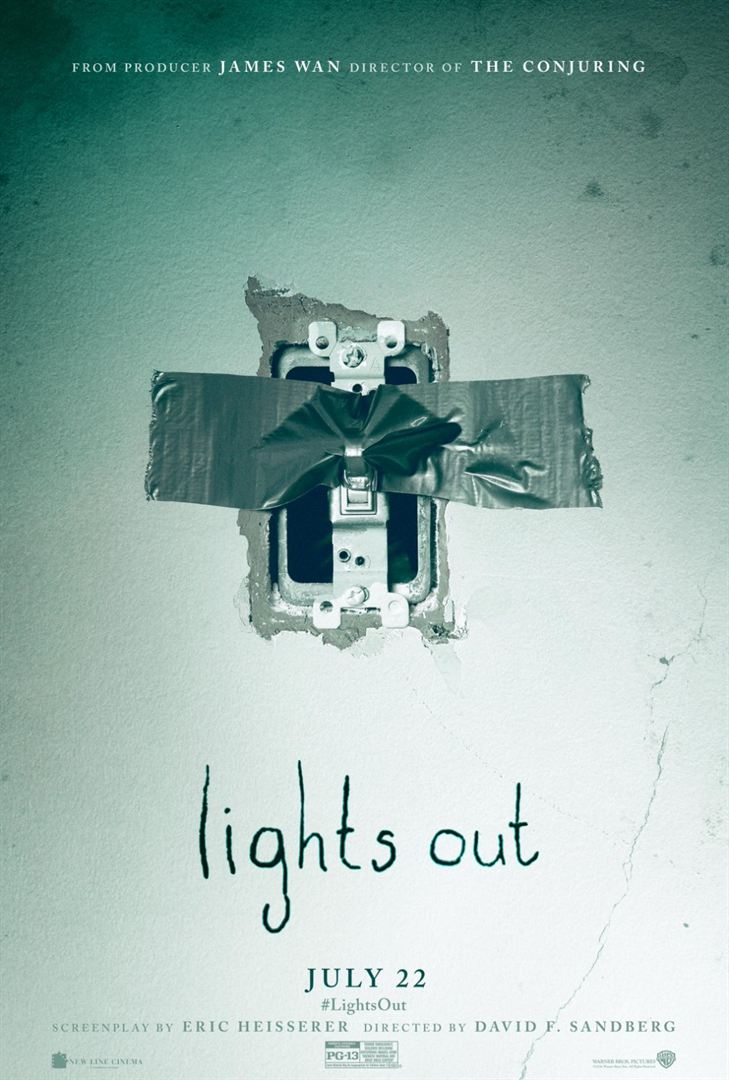
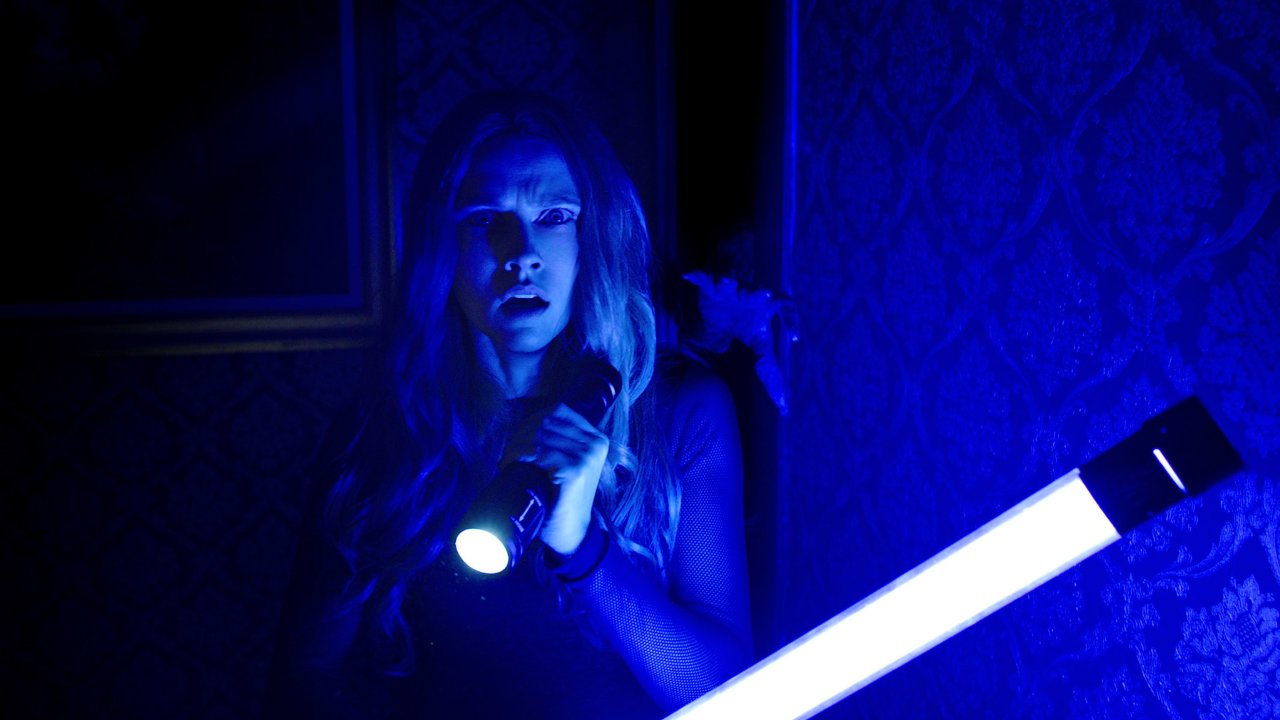
Expanded on from his 2013 short movie of the same name, David F. Sandberg’s Lights Out is an efficient, no-nonsense horror thriller that takes its basic premise – lights on: no ghost, lights off: there it is – and finds various clever ways of keeping the central conceit from getting too stale too quickly, even at eighty-one minutes. While Diana’s back story only partially explains her reason for haunting Sophie and her family, and Diana herself isn’t quite as frightening as she’s meant to be, nevertheless, Sandberg succeeds in making her as credible a character (in the circumstances) as can be, and manages to achieve the same success with Sophie, Martin and Rebecca. Sandberg is helped by strong performances all round – Palmer is particularly good as Rebecca – and  a script by Eric Heisserer that does its best in avoiding the pitfalls of dishing up too many horror movie clichés (though it does serve up two unsuspecting police officers as victims of Diana’s wrath, just to keep the momentum going).

The movie is strong on atmosphere, with certain scenes having a clammy, claustrophobic feel to them that isn’t entirely to do with the characters being in confined spaces, and Marc Spicer’s cinematography makes the darkness that surrounds the characters for most of the movie as threatening as possible thanks to some very good lighting choices and some expert framing. The look of the movie is of primary importance in how scary it is, and Sandberg provides viewers with a mix of generic visuals and heightened situations that is surprisingly uncomfortable to watch at times. It’s not entirely successful – Bret is a seriously one-note character, the basement of Sophie’s house conveniently reveals a secret that otherwise would never have been known, a confrontation with Sophie about Diana (and her death) features some very stilted and ill-chosen dialogue – but on the whole it’s a far better movie than expected.

Rating: 7/10 – a horror movie that dares to be different, and succeeds for the most part, Lights Out has a creepy central premise that’s handled well and makes for some effective jump scares (for a change); inevitably, a sequel has already been greenlit, but this is an effective, self-contained movie that stands on its own and proves that intelligence and horror can go hand in hand, and not just wave to each other in passing.

Share this:

  • Click to share on X (Opens in new window) X
  • Click to share on Facebook (Opens in new window) Facebook
  • More
  • Click to print (Opens in new window) Print
  • Click to email a link to a friend (Opens in new window) Email
Like Loading...

Cut Bank (2014)

12 Tuesday May 2015

Posted by dullwood68 in Movies

≈ Leave a comment

Tags

Billy Bob Thornton, Bruce Dern, Crime, Drama, John Malkovich, Liam Hemsworth, Matt Shakman, Michael Stuhlbarg, Miss Cut Bank pageant, Montana, Movie reviews, Murder, Postman, Review, Reward money, Teresa Palmer, Thriller

Cut Bank

D: Matt Shakman / 93m

Cast: Liam Hemsworth, Teresa Palmer, John Malkovich, Billy Bob Thornton, Bruce Dern, Michael Stuhlbarg, Oliver Platt, Sonya Salomaa, David Burke, Denis O’Hare

In the small town of Cut Bank, Montana, car mechanic Dwayne McLaren (Hemsworth) dreams of leaving town with his girlfriend Cassandra (Palmer), but he hasn’t got any money and he has to look after his disabled father (O’Hare). While spending time together on the outskirts of town, Dwayne inadvertently films the murder of local postman Georgie Witts (Dern). He takes the footage to Cassandra’s father, car dealer Big Stan Steeley (Thornton), who calls in the sheriff, Roland Vogel (Malkovich). The sheriff watches the footage and declares it’s the town’s first murder.

With the community in shock over Georgie’s death and the disappearance of the mail van he was driving, Vogel begins his investigation. At the same time, a loner with a strong interest in taxidermy named Derby Milton (Stuhlbarg) comes looking for a parcel he was expecting (and which was in the mail van). Where Vogel looks for a vehicle with a particular set of tyres, Milton looks for a boot with a particular sole. He finds out that a Native American named Match (Burke) bought a pair a few months before.

Meanwhile, Dwayne applies for a reward due for evidence relating to the death of a member of the postal service. The reward – $100,000 – will allow Dwayne to find alternative care for his father, and give him and Cassandra the chance to start a new life together in California. But when the Postal Inspector (Platt) arrives to confirm the reward, there’s only one snag: he needs to see the body, which so far hasn’t been found as it was taken with the mail van.

Matters escalate when Big Stan makes a discovery at his spare parts yard, a discovery that sees him brutally attacked. However, Milton – still looking for his parcel and unwilling to forget about it – makes the same discovery, but with a different outcome, one that implicates Dwayne. With the reward money not being paid out for a few months, it’s down to Cassandra to win the upcoming Miss Cut Bank pageant and its first prize of $5,000, and thereby give them enough money to leave town for good. But Milton has other ideas, and the sheriff is beginning to put all the pieces together surrounding Georgie’s death…

Cut Bank - scene

Watching Cut Bank, the obvious comparison is with Fargo (1996), but while that movie is still highly regarded as a classic nearly twenty years on, it’s hard to believe that Cut Bank will be looked on in the same way, or remembered at all. While it does its best to look and feel as moody as many other small-town crime dramas, it’s the quality of the story that lets it down. There are too many occasions where the story is driven forward by the messiest of contrivances, or characters behave in ways that contradict their previous attitudes. For the viewer it means a suspension of disbelief that is needed on several occasions, and for which the movie makes no apologies, as it just carries on digging a bigger and bigger hole for itself.

Indeed, it’s the script by Roberto Patino, and as directed by Shakman, that proves the movie’s downfall, causing as it does a loss of faith almost from the beginning. It plods through its twists and turns with all the authority of a movie that doesn’t know where it’s going or why – and which winds things up with one of the worst, most nonsensical outcomes that anyone could possibly imagine (except Patino). To say that it defies belief would be to suggest that the viewer might actually have some by this point. And as for some of the dialogue, the script aims for clever and insightful, but succeeds in being arch and unimportant. Only the running gag, “I thought you were dead” works as well as it should, and at one point it receives a great pay-off, but it’s the only aspect of the script that really hits home.

With the script being so derivative and uneven, the movie suffers and so too does its more than talented cast. Hemsworth proves once more that he’s the blandest of the Hemsworth brothers, and still has trouble being convincing as any character in any movie, while Palmer has an embarrassing pageant song to sing and dance to but very little else. Thornton portrays Big Stan as the same kind of no-nonsense bully he’s played so often before, and Malkovich gives possibly the best performance as the sheriff who looks to be so out of his depth that he can’t see the bottom. Of the rest of the cast, Dern is great but not well-used, and Stuhlbarg is given a monologue that attempts to explain his behaviour but which actually proves too confusing to be much of an explanation. And Platt breezes through his scenes with all the bluster that he’s employed elsewhere, but here, it’s all to no effect, and his character adds nothing to the mix.

Shakman orchestrates the various plot strands and characters with the confidence of a director who doesn’t quite know what to do with the material – which is strange as he directed two episodes of the TV version of Fargo (2014) – but again it’s the quality of the material that hampers him. He does display an appreciation for widescreen composition, but he never seems comfortable presenting any close ups, and appears content to work with medium or long-range shots instead. This creates a distancing effect between the audience and the characters, and before long, the viewer has lost all interest in what’s happening, or how important it might all be. This applies particularly to Milton’s basement “secret”, which, when it’s revealed, is never adequately explained (though an attempt is made with Milton’s monologue). It’s the movie’s one true moment where it pulls something out of the bag that’s different and entirely unexpected.

In failing to live up to its potential, and by wasting the talents of its cast, Cut Bank stalls and stutters so often, and finds it so difficult to maintain a convincing approach that in the end it becomes too frustrating to watch, and is so undermined by its cavalier attitude to law enforcement and guilt, that it never recovers. The plot lacks originality, and the characters lack any appreciable depth, often doing things without any clear motivation. That said, there’s supportive and beautiful cinematography by Ben Richardson, and while some scenes appear to run on too long, the editing by Carol Littleton is sharp and keeps things moving (when they should be stalling).

Rating: 4/10 – with a script that tries to be clever and ingenious, but falls short on both counts, Cut Bank is left to founder in almost every area; one to avoid unless the idea of a murder mystery that leaves out the mystery is an attractive one that you can’t pass up.

NOTE: The trailer contains a few spoilers that aren’t included in the above synopsis, so if you watch it, please bear this in mind.

Share this:

  • Click to share on X (Opens in new window) X
  • Click to share on Facebook (Opens in new window) Facebook
  • More
  • Click to print (Opens in new window) Print
  • Click to email a link to a friend (Opens in new window) Email
Like Loading...

Kill Me Three Times (2014)

19 Sunday Oct 2014

Posted by dullwood68 in Movies

≈ 1 Comment

Tags

Alice Braga, Australia, Black comedy, Blackmail, Bryan Brown, Crime, Drama, Eagle's Nest, Insurance fraud, Kriv Stenders, Murder, Review, Simon Pegg, Sullivan Stapleton, Teresa Palmer, Thriller

Kill Me Three Times

D: Kriv Stenders / 90m

Cast: Simon Pegg, Sullivan Stapleton, Alice Braga, Teresa Palmer, Callan Mulvey, Bryan Brown, Luke Hemsworth

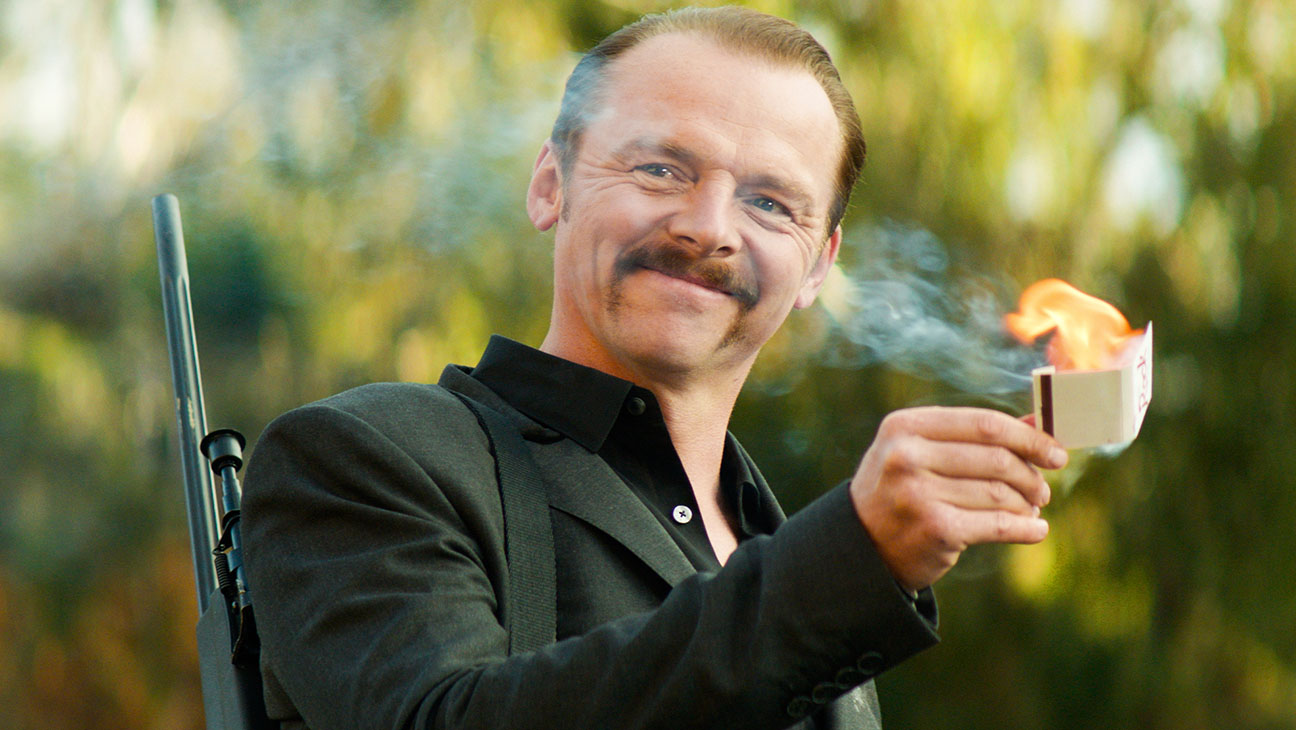
In the small Western Australian town of Eagle’s Nest, bar owner Jack (Mulvey) suspects his wife, Alice (Braga), is having an affair.  He’s a jealous man, and hires a “consultant”, Charlie Wolfe (Pegg), to find out if his suspicions are true.  Meanwhile, Alice has been chosen by dentist Nathan Webb (Stapleton) and his wife Lucy (Palmer) to be the substitute corpse in their plan to fake Lucy’s death and claim on her life insurance (Nathan has huge gambling debts that he needs to clear as quickly as possible).  When Wolfe provides proof of Alice’s infidelity – with garage owner Dylan (Hemsworth) who she plans to run away with – Jack wants her dead and asks Wolfe to take care of it.

Alice books an appointment with Nathan for later that day, and the Webbs decide it’s the perfect opportunity to put their plan into action.  When Alice arrives, she’s drugged  and put into the boot of Nathan’s car.  Lucy drives Alice’s car to a nearby quarry while Nathan heads there in his car, though he has to stop off at Dylan’s garage for some petrol first.  At the quarry, a mishap with Alice’s car sees it still end up in the water as planned, and the Webbs head back to the main road where, despite an attempt by Alice to get away, they put her in Lucy’s car, douse it in petrol and set light to it, and send it over the cliff edge.

Unknown to the Webbs, Wolfe has been following and taking photos of them.  When they reach a local beach house where the owners are away travelling (and where Lucy will hide out until the insurance money comes through), Wolfe sends Nathan an e-mail containing some of the photos he’s taken and demanding $250,000.  As if that wasn’t bad enough, local bent cop Bruce Jones (Brown), having seen Lucy’s car in flames at the bottom of the cliff has put two and two together and believes Nathan has actually killed her for the insurance money.  He blackmails Nathan for half the insurance money.

Back at the bar, Wolfe tells Jack that Alice is dead (though he keeps quiet about the details) and asks for his money.  It’s now that Jack discovers Alice has robbed him over three hundred thousand dollars he had in his safe.  He manages to put off paying Wolfe until the next day, but finds himself in even more trouble when Dylan turns up demanding to know where Alice is and what he’s done to her.  And while all that’s happening, Nathan agrees to meet Wolfe at the quarry to pay the blackmail demand…

Kill Me Three Times - scene

What follows on is an increasingly maze-like series of twists and turns and counter-twists that make Kill Me Three Times a hugely enjoyable and darkly comic thriller that picks up momentum after a slow start, and gleefully begins killing off its cast in ever more violent ways.  It’s a fine balancing act, mixing traditional thriller elements with a more extravagant comic sensibility, but without letting either ingredient overwhelm the other.  It’s the kind of off-kilter movie the Australians do so well and here, under the auspices of director Stenders, proves that they’re still more than capable of making this kind of movie and instilling it with originality and verve.

The movie’s chief asset is the script by first-timer James McFarland.  Structured in three parts – part one focuses on Alice’s murder by the Webbs, part two on the various back stories and how things move forward following Alice’s death, while part three ties things up neatly and in a nice big bloodstained bow – Kill Me Three Times avoids any potential pitfalls in its narrative by making its characters’ motivations quite clearcut and even relatable (whether you like them or not).  With such an investment made in the characters, the story is that much easier to accept and go along with, and despite an opening half hour where everything is established (and is necessarily slower than the rest of the movie), once all that is dispensed with, the movie becomes faster, funnier and more engrossing.

Behind the camera, Stenders – who made the criminally under seen Red Dog (2011) – shows a keen understanding and appreciation for the impulses driving the characters and elicits great performances from all concerned.  He’s also got a great eye for composition, highlighting the natural beauty of the Western Australia landscape and shoreline, and framing each shot with skill and conviction.  As a result the movie is often stunning to look at, his collaboration with very talented DoP Geoffrey Simpson paying off in dividends.

As the amoral psychopath Charlie Wolfe, Pegg is on fine form, inhabiting him with a carefree exuberance and just the right amount of bemused mirth.  As the observer of all the machinations and double-crosses and manipulations and blackmail going on, Wolfe is our eyes and ears, allowing us to see just how awful these people are – Alice and Dylan aside, though they’re not entirely innocent.  In a sense, his lack of artifice and straightforward approach to matters makes him seem less “evil” and more of an anti-hero.  Whichever way you view it, it’s still one of Pegg’s more enjoyable performances (and he gets the movie’s best line).

In support, Stapleton is great as the nervous, weak-minded Nathan (a million miles away from his turn as Themistocles in this year’s 300: Rise of an Empire), Palmer is suitably abrasive as his Lady Macbeth-like wife, and Braga earns the audience’s sympathy and support by virtue of being entirely likeable as the put-upon Alice.  Brown does glib menace with aplomb, Hemsworth makes dumb seem appealing, and Mulvey broods as if Jack’s life depends on it (which, actually, it does).  It’s a great ensemble cast, and you can see the fun everyone had making the movie coming out in the spirited and enthusiastic performances.

Kill Me Three Times won’t change anyone’s life, or inspire people to go on to do great things, but it is an entertaining and rewarding way to spend an hour and a half, and if it does so by shamelessly drawing in the viewer and keeping them hooked on what’s going to happen next, then that’s no bad thing, even if things do get (very) nasty and violent.

Rating: 8/10 – a hugely enjoyable romp that takes itself just seriously enough to make the thriller elements bitingly effective, Kill Me Three Times is at times happily “wrong” in all the right ways; with beautiful locations and a great cast clearly having a blast, this is strong, confident stuff that’s definitely worth seeking out.

Share this:

  • Click to share on X (Opens in new window) X
  • Click to share on Facebook (Opens in new window) Facebook
  • More
  • Click to print (Opens in new window) Print
  • Click to email a link to a friend (Opens in new window) Email
Like Loading...

Blog Stats

  • 486,528 hits

Recent Posts

  • 10 Reasons to Remember Bibi Andersson (1935-2019)
  • Fantasia (1940)
  • Dances With Wolves (1990) – The Special Edition
  • Kiss of the Spider Woman (1985)
  • The Three Musketeers (1973)

Top Posts & Pages

  • Lost for Life (2013) - Another Look
    Lost for Life (2013) - Another Look
  • Lost for Life (2013)
    Lost for Life (2013)
  • About
    About
  • Mr. Topaze (1961)
    Mr. Topaze (1961)
  • Billy Lynn's Long Halftime Walk (2016)
    Billy Lynn's Long Halftime Walk (2016)
  • Winter's Tale (2014)
    Winter's Tale (2014)
  • The Hitman's Bodyguard (2017)
    The Hitman's Bodyguard (2017)
  • 5 Famous Movie Roles That Nearly Went to Someone Else
    5 Famous Movie Roles That Nearly Went to Someone Else
  • The Layover (2017)
    The Layover (2017)
  • Transcendence (2014)
    Transcendence (2014)
Follow thedullwoodexperiment on WordPress.com

Blogs I Follow

  • Rubbish Talk
  • Film 4 Fan
  • Fast Film Reviews
  • The Film Blog
  • All Things Movies UK
  • Interpreting the Stars
  • Let's Go To The Movies
  • Movie Reviews 101
  • TMI News
  • Dan the Man's Movie Reviews
  • Film History
  • Jordan and Eddie (The Movie Guys)

Archives

  • April 2019 (13)
  • March 2019 (28)
  • February 2019 (28)
  • January 2019 (32)
  • December 2018 (28)
  • November 2018 (30)
  • October 2018 (29)
  • September 2018 (29)
  • August 2018 (29)
  • July 2018 (30)
  • June 2018 (28)
  • May 2018 (24)
  • April 2018 (21)
  • March 2018 (31)
  • February 2018 (25)
  • January 2018 (30)
  • December 2017 (30)
  • November 2017 (27)
  • October 2017 (27)
  • September 2017 (26)
  • August 2017 (32)
  • July 2017 (32)
  • June 2017 (30)
  • May 2017 (29)
  • April 2017 (29)
  • March 2017 (30)
  • February 2017 (27)
  • January 2017 (32)
  • December 2016 (30)
  • November 2016 (28)
  • October 2016 (30)
  • September 2016 (27)
  • August 2016 (30)
  • July 2016 (30)
  • June 2016 (31)
  • May 2016 (34)
  • April 2016 (30)
  • March 2016 (30)
  • February 2016 (28)
  • January 2016 (35)
  • December 2015 (34)
  • November 2015 (31)
  • October 2015 (31)
  • September 2015 (34)
  • August 2015 (31)
  • July 2015 (33)
  • June 2015 (12)
  • May 2015 (31)
  • April 2015 (32)
  • March 2015 (30)
  • February 2015 (37)
  • January 2015 (39)
  • December 2014 (34)
  • November 2014 (34)
  • October 2014 (36)
  • September 2014 (25)
  • August 2014 (29)
  • July 2014 (29)
  • June 2014 (28)
  • May 2014 (23)
  • April 2014 (21)
  • March 2014 (42)
  • February 2014 (38)
  • January 2014 (29)
  • December 2013 (28)
  • November 2013 (34)
  • October 2013 (4)

Blog at WordPress.com.

Rubbish Talk

Film 4 Fan

A Movie Blog

Fast Film Reviews

The Film Blog

The official blog of everything in film

All Things Movies UK

Movie Reviews and Original Articles

Interpreting the Stars

Dave Examines Movies

Let's Go To The Movies

Film and Theatre Lover!

Movie Reviews 101

Daily Movie Reviews

TMI News

Latest weather, crime and breaking news

Dan the Man's Movie Reviews

All my aimless thoughts, ideas, and ramblings, all packed into one site!

Film History

Telling the story of film

Jordan and Eddie (The Movie Guys)

Movie Reviews & Ramblings from an Australian Based Film Fan

Privacy & Cookies: This site uses cookies. By continuing to use this website, you agree to their use.
To find out more, including how to control cookies, see here: Cookie Policy
  • Subscribe Subscribed
    • thedullwoodexperiment
    • Join 481 other subscribers
    • Already have a WordPress.com account? Log in now.
    • thedullwoodexperiment
    • Subscribe Subscribed
    • Sign up
    • Log in
    • Report this content
    • View site in Reader
    • Manage subscriptions
    • Collapse this bar
 

Loading Comments...
 

    %d