• 10 Reasons to Remember…
  • A Brief Word About…
  • About
  • For One Week Only
  • Happy Birthday
  • Monthly Roundup
  • Old-Time Crime
  • Other Posts
  • Poster of the Week
  • Question of the Week
  • Reviews
  • Trailers

thedullwoodexperiment

~ Viewing movies in a different light

thedullwoodexperiment

Tag Archives: Terrence Howard

Cardboard Boxer (2016)

18 Friday Nov 2016

Posted by dullwood68 in Movies

≈ Leave a comment

Tags

Boyd Holbrook, Diary, Drama, Fighting, Homelessness, Knate Lee, Review, Terrence Howard, Thomas Haden Church
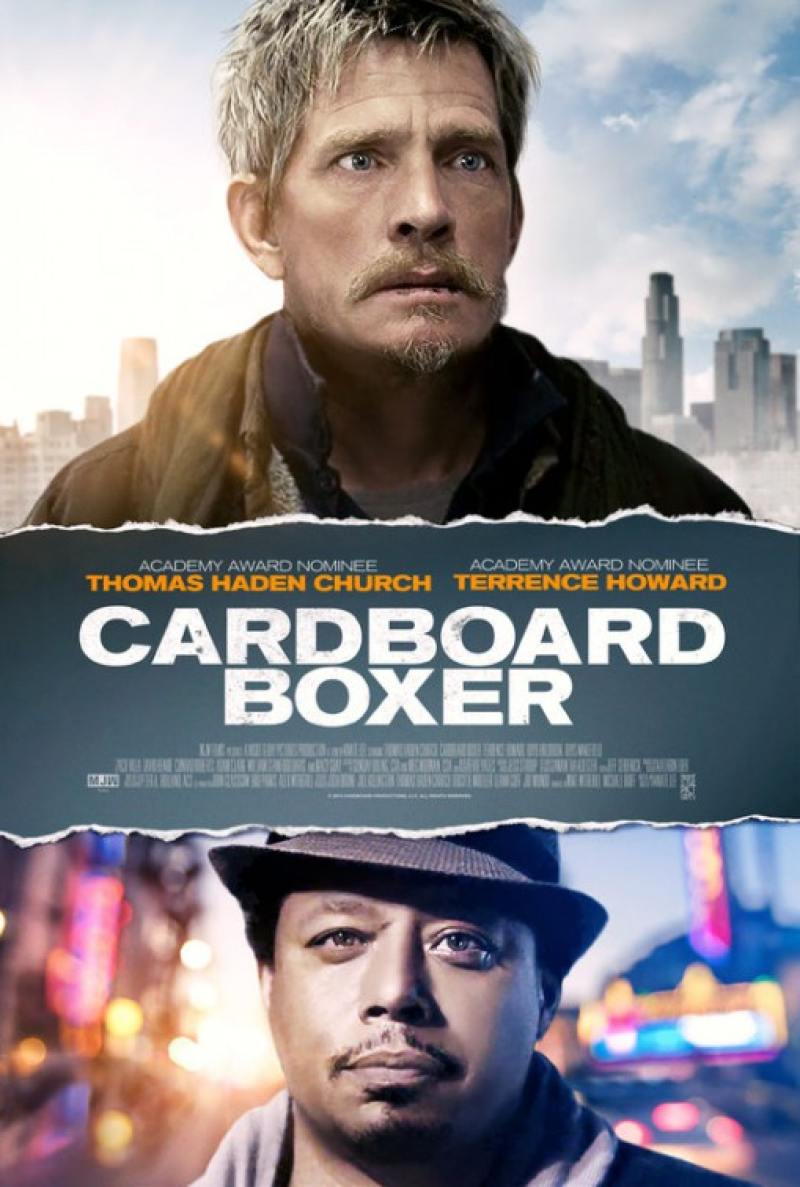
cardboard-boxer_poster

D: Knate Lee / 88m

Cast: Thomas Haden Church, Terrence Howard, Boyd Holbrook, Rhys Wakefield, Zach Villa, William Stanford Davies, Macy Gray, Carlton Byrd, David Henrie, Conrad Roberts, Adam Clark

Willie (Church) is a homeless man who sleeps in a cardboard box at night, and who wanders the streets by day looking for food wherever he can find it (even if it’s not exactly fresh), and hoping to score money from passersby. He lives a lonely existence, keeping himself to himself and spending a considerable amount of his “downtime” on a rooftop that affords him a panoramic view of the city where he lives. Down at ground level, home is a place on a back street with a group of other homeless people.

Willie doesn’t engage with other people. He keeps himself to himself, and tries not to get in anybody else’s way, including a local man (Clark) who carries a skillet and threatens to hurt anyone in the homeless group who aggravates him. Fortunately, while his approach to the group is antagonistic, there’s a taxi driver everyone calls The Pope (Howard) who is supportive; he provides blankets and food when he can. Willie and The Pope have a grudging respect for each other, but there are also clear boundaries that The Pope keeps in place.

cardboard-boxer-600x306

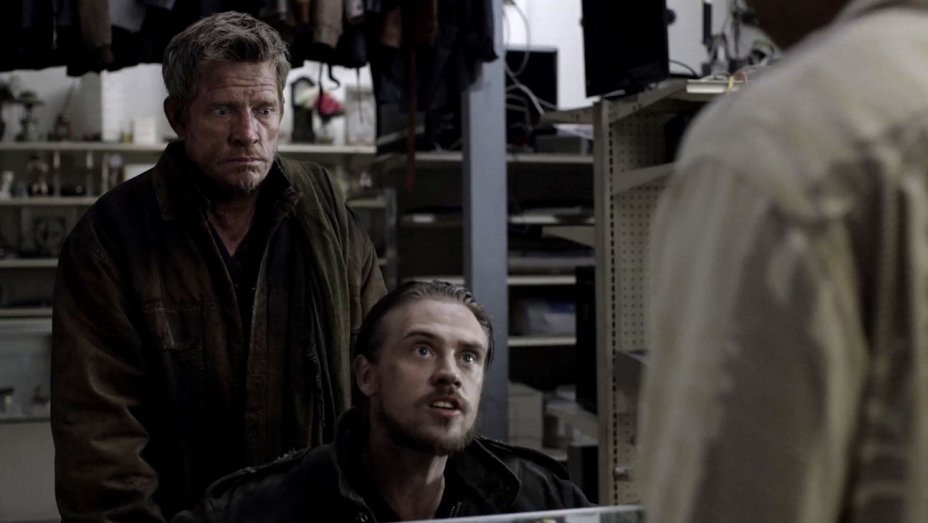
One day, Willie finds a little girl’s diary in a rubbish container. It’s burnt around the edges, like the other stuff there, but curious, he begins to read it. He learns at the beginning that the little girl has started the diary after her mother has died. Finding himself affected by her story he attempts to continue reading it, but is defeated by its being in cursive (basically joined-up writing). He begins to ask others in the homeless group if they’ll read it for him but he’s rebuffed at every turn. It’s not until he helps a war veteran, a man named Pinky (Holbrook), that he finds someone willing to read the rest of the diary to him (though he does learn to read cursive as well).

Some time later, two young men, JJ (Wakefield) and Tyler (Villa), appear in the homeless group’s back street and, for fun, challenge skillet man to fight someone for fifty dollars. Willie just happens to be in the wrong place at the wrong time, and is attacked by skillet man. However, Willie defends himself and beats the man unconscious. JJ is impressed, and starts calling Willie his friend, something that makes Willie proud and self-conscious at the same time. But JJ has an ulterior motive: using Willie to curry favour with his friends, he persuades him to fight other homeless men for money while he makes even more money via side betting. But things begin to get out of hand when skillet man makes a return appearance…

cardboard-boxer

If there’s one thing that tales of the down-and-out and the dispossessed always do, is to inform the viewer just why the main character(s) are down-and-out or dispossessed. It’s like a courtesy feature. Here’s a man (or a woman) who’s down on their luck, and here’s the reason why. Except in Cardboard Boxer, the viewer has to make his or her own mind up about why Willie is homeless, and it’s not an easy thing to decipher, because writer/director Knate Lee isn’t about to tell you. That said, it’s not too diffcult, given Willie’s skill as a fighter – well, brawler might be a better term – that his slow-witted nature could have been caused by one too many blows to the head, but even that interpretation lacks confirmation. Here, Willie is extra handy with his fists, and that’s all you need to know.

Except it really isn’t. Willie isn’t exactly an ordinary character, despite his doing ordinary stuff and trying to fit in as an ordinary human being, his emotional attachment to a war veteran whose legs are missing below each knee, and a little girl whose name he doesn’t even know show a need to connect, and it surprises him as much as it does us. But as he works his way through the diary, and begins to express his need for human contact, Willie doesn’t become any more sympathetic, or any more likeable. This is someone who’ll batter a fellow homeless person for money and the apparent “respect” of a young man well over twenty years his junior. And he’s not looking to find a way out of his “predicament”. Instead, and despite sums of money coming his way that could begin to make a difference, Willie shows no sign of wanting to improve his life, even when he has enough money to do so. Sure, he rents a hotel room and takes a shower and eats snacks while watching TV, but this is literally the best that he can come up with. His life literally doesn’t get any better than that.

And so, the movie falls back on the little girl’s diary, with Knate Lee’s script painting a picture of abuse and despair that compliments Willie’s own life – or at least it would do if we ever knew what caused his fall through the cracks of society in the first place. In the end, Lee’s script is a bleak portrait of a disconnected man’s empty life and his belated attempts to give it meaning, even if his methods – fighting for money, treating his fellow down-and-outs with disrespect, latching onto a possibly dead girl’s memory – aren’t exactly forgivable. It all makes for a dour, miserable movie that relies too heavily on Church’s distracted, almost there performance, and which features way too many shots of Willie standing on his favourite rooftop, or on a street corner, or just trudging round the city aimlessly. His life lacks purpose, but that’s an easy call; unfortunately, writer/director Lee feels the need to remind us of this constantly. Take away all those “blank stare” moments and the movie would run at least twenty minutes shorter.
thc_bh_pawn-h_2016

Despite being on board as an executive producer, Church’s involvement doesn’t do anything to elevate or improve the material, and he does little to convince the viewer that there’s an interior life going on behind the placid-featured façade he adopts for the most part. Howard is stuck with a supporting role that probably didn’t require him to be on set for more than a few days, while Holbrook’s turn as the disabled war veteran Pinky is yet another in a long line of indistinguishable disabled roles that movie makers believe audiences still have a lot of time for. And as for Wakefield, well, JJ is a caricature role that follows a predictable arc that’s married to a predictable portrayal.

The movie has been shot in a nondescript, visually unappealing style by Peter Holland that is no doubt meant to be a reflection of the lack of glamour inherent in Willie’s life, but it’s too obvious a choice and feels like a better effort couldn’t be decided on or made. And under Lee’s guidance, Jeff Seibenick’s editing leaves several scenes feeling as if there should be more to them, or in a weird contradiction, that they should be shorter and more punchy – but the material won’t allow it. This is Lee’s feature debut, and it shows, the choices he makes as a director showing a lack of imagination and confidence. And this is borne out by the movie’s conclusion, a fairytale ending that is both unnecessarily mawkish and dramatically inept given what’s gone before. But at least it’s not as downbeat as the rest of the movie.

Rating: 4/10 – a lumbering attempt to find grace and purpose even amongst homeless people, Cardboard Boxer lacks depth and a sense of purpose, and a central character the audience can get behind; while it merrily (and that’s still not the best word) goes about telling its largely redundant, determinedly non-complex tale, viewers will be wondering when and if the movie’s ever going to grow and stretch into something more affecting and worthwhile.
 

//ws-eu.amazon-adsystem.com/widgets/q?ServiceVersion=20070822&OneJS=1&Operation=GetAdHtml&MarketPlace=GB&source=ss&ref=as_ss_li_til&ad_type=product_link&tracking_id=thedullwoodex-21&marketplace=amazon&region=GB&placement=B01KWN1ZOE&asins=B01KWN1ZOE&linkId=d46234aee881214ec33cc823ecd6f62b&show_border=true&link_opens_in_new_window=true

Share this:

  • Click to share on X (Opens in new window) X
  • Click to share on Facebook (Opens in new window) Facebook
  • More
  • Click to print (Opens in new window) Print
  • Click to email a link to a friend (Opens in new window) Email
Like Loading...

St. Vincent (2014)

22 Saturday Nov 2014

Posted by dullwood68 in Movies

≈ Leave a comment

Tags

Bill Murray, Bullying, Chris O'Dowd, Comedy, Drama, Gambling, Jaeden Lieberher, Loan shark, Melissa McCarthy, Naomi Watts, Neighbour, Pregnant stripper, Relationships, Review, Terrence Howard, Theodore Melfi

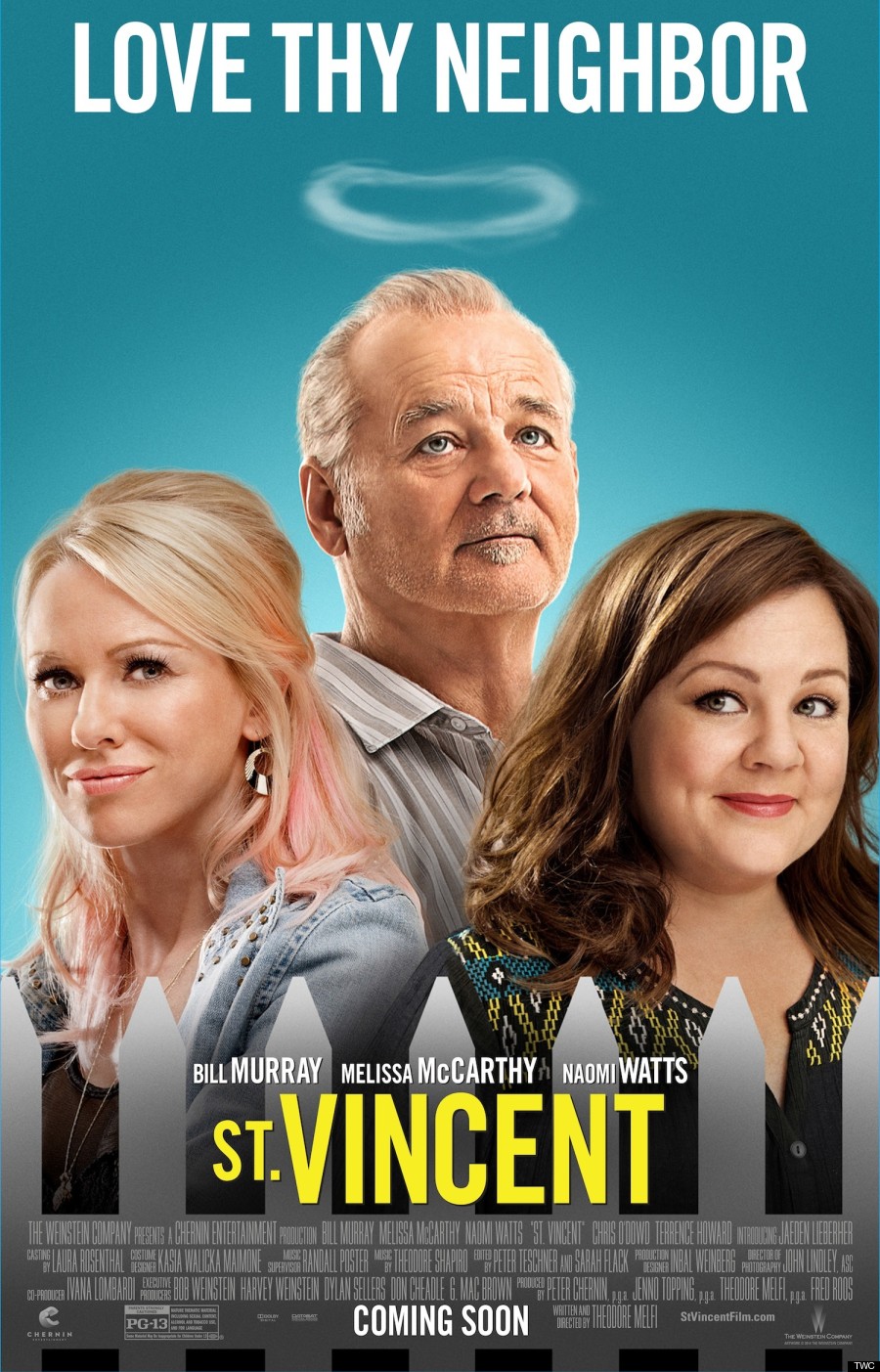
St. Vincent

D: Theodore Melfi / 102m

Cast: Bill Murray, Melissa McCarthy, Naomi Watts, Jaeden Lieberher, Chris O’Dowd, Terrence Howard, Kimberly Quinn, Donna Mitchell, Dario Barosso

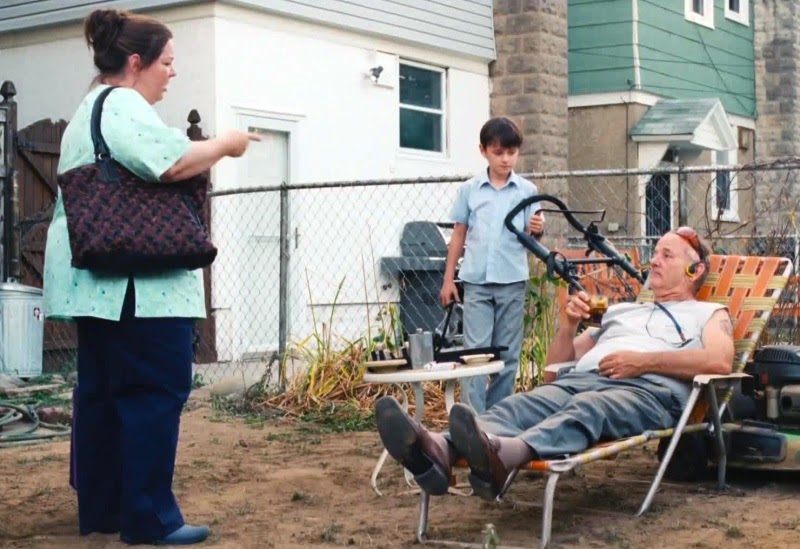
Vincent McKenna (Murray) is the kind of curmudgeonly old man it’s best to steer clear of. He drinks to excess, gambles too much, and is about as sociable as a dose of the clap; in short, he’s the kind of you’d cross the street to avoid. When new neighbours Maggie (McCarthy) and her son Oliver (Lieberher) move in next door, relations are initially frosty as the removals van causes damage to Vincent’s car. On Oliver’s first day at his new school he falls foul of bully Ocinski (Barosso) and has his keys, wallet and phone stolen. He manages to get home but with his mother at work and no other way of getting in, he calls on Vincent to use his phone to call his mother. Vincent isn’t best pleased but agrees nevertheless and Oliver stays with him until Maggie can get home from work – but not before he’s agreed a babysitting rate with her.

The money is important as Vincent’s terrible luck at gambling has left him very short of money. He can’t get a loan from the bank, he owes too much money to loan shark Zucko (Howard), and he’s behind on payments to the care home that looks after his wife Sandy (Mitchell). With Maggie working late more and more, he and Oliver spend more and more time together. Vincent teaches Oliver to defend himself from bullies such as Ocinski, and takes him to the race track where Oliver learns how to bet. He also bonds with the old man, becoming the only friend Vincent really has, unless you count pregnant stripper Daka (Watts), who has a fondness for the old man that she plays down at every opportunity.

When Vincent and Oliver win big at the race track, it’s potentially the beginning of a big change in Vincent’s life, but he still avoids paying Zucko. Meanwhile, Maggie’s husband begins a custody battle for Oliver, leading to an awkward court appearance where the depth of her son’s relationship with Vincent is revealed, and with less than perfect consequences. And matters are made worse when Zucko pays Vincent a surprise visit at home.

St. Vincent - scene

If you’re looking to make a movie where the main character is a caustic, mean-spirited, emotionally withdrawn malcontent, well, in the words of one of his earlier movies, “Who ya gonna call?” The obvious answer is Bill Murray, the one actor who does “grumpy” better than anyone else on the planet, and for whom the art of being a killjoy seems like second nature. He’s the perfect choice to play Vincent, and it’s a good job writer/director Melfi was able to get him to commit to the movie because without him, St. Vincent may not have turned out to be as enjoyable as it actually is.

It’s a particular kind of actor who can pull off such a deceptively difficult role, for while Vincent is outwardly abrasive, there’s a grudging kindness and likeability buried below the surface that is reserved for the people he cares about. As he becomes more and more enamoured of Oliver and Maggie, it’s good to see that the script doesn’t do the one thing that most movies of this kind do without fail: have the main character renounce his mordant ways and become more agreeable. Here, Vincent remains unlikeable to pretty much everyone for the entire movie, allowing Murray to paint a convincing portrait of a man continually at war with a world that kicks the rug out from under him at nearly every opportunity. His antipathy towards the world is entirely understandable, but it’s his willingness to let some people in, while retaining that antipathy, that saves the character from being entirely one note.

Murray grabs the character of Vincent and gives the kind of assured, entirely believable performance that only he can pull off, making the old man by turns acerbically funny, justly melancholy, disappointingly selfish, and unsurprisingly reticent. It’s a virtuoso performance, one that lifts the movie up and out of the rut of its less than original plotting and straightforward storylines. Aside from a couple of instances that don’t turn out in just the way the viewer might expect – the result of the custody hearing, the outcome of Zucko’s home visit – Melfi, making his feature debut as writer/director, has assembled an old-fashioned drama with over-familiar characters we’ve all seen at least a dozen times before, added the kind of spiteful humour that modern audiences appreciate, and has made his movie seem fresh and unconventional.

He’s also procured a raft of excellent performances, and not just from Murray. Leaving behind the forced hilarity of movies such as The Heat (2013) and Tammy (2014), McCarthy excels as Oliver’s mother, playing her with an honesty and put-upon vulnerability that works effectively against Murray’s obnoxious grouch. Watts is equally as good as the pregnant Daka, her hard-boiled exterior the perfect foil for Vincent’s ingrained irascibility; when they spar it’s like watching an old married couple, and the fondness that builds up in such a relationship. Howard, sadly, has little to do but appear menacing in a couple of scenes, and O’Dowd works his magic as Oliver’s home room teacher, a priest with very relaxed ideas about prayer. But the real revelation here is Lieberher as Oliver – like Melfi, making his feature debut – giving the role a delicate, yet simple touch that dispels the idea early on that Oliver is going to be one of those precious and precocious kids that Hollywood is so fond of putting on screen. He’s a natural, comfortable with his dialogue and able to hold his own with Murray (it really feels like he’s been doing this for a lot longer).

With its deft one-liners and subtle nuances, Melfi’s script makes the occasional stumble – Zucko disappears completely after he visits Vincent, Oliver and Ocinski become friends a little too easily (you’ll understand why when you see the movie), and the sub-plot involving Vincent’s wife adds little to the mix – but all in all this is a solid, hugely enjoyable movie that features some terrific performances, a great score by Theodore Shapiro, and enough charm to melt a dozen icebergs.

Rating: 8/10 – a great first feature from Melfi – who’s now one to watch out for – St. Vincent is a breath of fresh air, and rarely puts a foot wrong with its main characters; Murray carries the movie with ease, and the movie’s indie sensibility isn’t allowed to overwhelm the material, making for a very good time to be had by all.

Share this:

  • Click to share on X (Opens in new window) X
  • Click to share on Facebook (Opens in new window) Facebook
  • More
  • Click to print (Opens in new window) Print
  • Click to email a link to a friend (Opens in new window) Email
Like Loading...

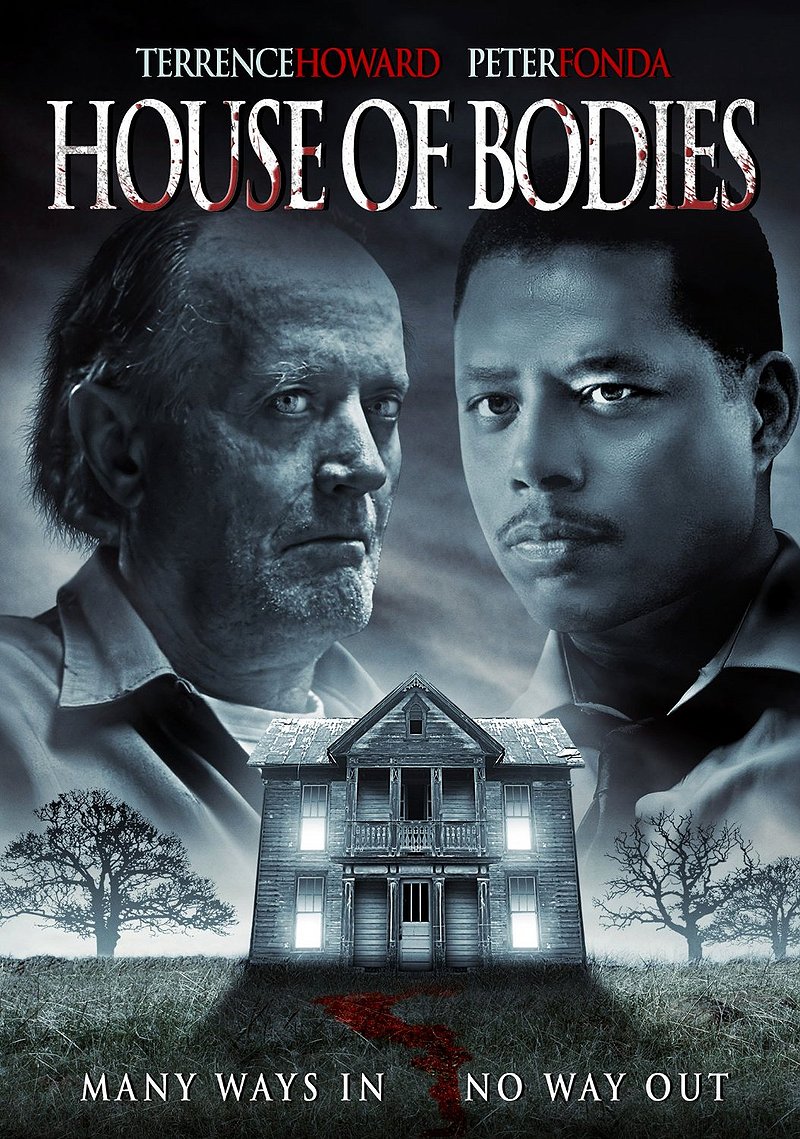
Mini-Review: House of Bodies (2013)

20 Thursday Feb 2014

Posted by dullwood68 in Movies

≈ Leave a comment

Tags

Alex Merkin, Deaf teenager, Horror, Internet site, Murder investigation, Peter Fonda, Queen Latifah, Review, Serial killings, Terrence Howard, Thriller

House of Bodies

D: Alex Merkin / 78m

Cast: Terrence Howard, Peter Fonda, Alexz Johnson, Harry Zittel, George Katt, Queen Latifah, Francisco A. Pino, Juliana Harkavy, Elizabeth Brissenden, Karlee Eldridge

Alternating between a police interview with convicted serial killer, Henry Lee Bishop (Fonda) and events taking place in the house he used to live in, House of Bodies plays with notions of what is real and what isn’t and does it in quite a clever manner.  While the interview, carried out by Detective Starks (Howard) moves on, it becomes clear that events in the house are taking place before the interview so we’re treated to a framing device around an ongoing series of flashbacks.  It’s an awkward structure at times, with initial scenes appearing disjointed and confusing.  Once the movie hits its stride though, things become more clearcut, and the reason for the interview is brought into sharper relief.

Bishop’s house is being used as an internet site where members can log on and see recreations of Bishop’s original killings.  Run by Tracy (Brissenden), she employs three other girls, Kelli, Tisha and Ambra (Johnson, Harkavy and Eldridge) to play the victims and Ambra’s boyfriend Darryl (Pino) to play Bishop.  With each murder room set up with a video link and the requisite props, Tracy hopes to make a killing of her own.  On Kelli’s first night it becomes clear someone else is in the house with them; watching online is deaf teenager Kyle (Zittel).  He strikes up an unlikely relationship with Kelli and when he sees what’s happening (by hacking into the live feed – as all teenagers could), he tries to warn her.

House of Bodies - scene

House of Bodies has a neat premise but for a horror movie that sets up its serial killer as a particularly bloodthirsty monster, it’s quite tame when the killings are shown.  There’s very little tension during these sequences, and too much time is spent with Kelli and Kyle while the murders are taking place.  As an executive producer, Latifah adds another string to her bow by popping up a couple of times as Kyle’s online support worker, while Howard and Fonda give the movie a boost by making some very clunky dialogue sound better than it is.  Johnson and Zittel give it their best, but sadly the rest of the cast all seem on auto-pilot.  Merkin directs the interview scenes with confidence but lets himself down when things switch to the house, leaving the viewer stranded and waiting for the interview to resume.

Rating: 5/10 – a movie of two parts, with the worst part taking up too much of the (admittedly) short running time; if you’re new to the horror genre you might enjoy this, but if you’re not, you’ll be quickly disappointed.

Share this:

  • Click to share on X (Opens in new window) X
  • Click to share on Facebook (Opens in new window) Facebook
  • More
  • Click to print (Opens in new window) Print
  • Click to email a link to a friend (Opens in new window) Email
Like Loading...

Blog Stats

  • 486,954 hits

Recent Posts

  • 10 Reasons to Remember Bibi Andersson (1935-2019)
  • Fantasia (1940)
  • Dances With Wolves (1990) – The Special Edition
  • Kiss of the Spider Woman (1985)
  • The Three Musketeers (1973)

Top Posts & Pages

  • Lost for Life (2013) - Another Look
    Lost for Life (2013) - Another Look
  • Lost for Life (2013)
    Lost for Life (2013)
  • About
    About
  • Irrational Man (2015)
    Irrational Man (2015)
  • Pixels (2015)
    Pixels (2015)
  • The Rider (2017)
    The Rider (2017)
  • Cardboard Boxer (2016)
    Cardboard Boxer (2016)
  • The Better Angels (2014)
    The Better Angels (2014)
  • Homefront (2013)
    Homefront (2013)
  • Mini-Review: Knock Knock (2015)
    Mini-Review: Knock Knock (2015)
Follow thedullwoodexperiment on WordPress.com

Blogs I Follow

  • Rubbish Talk
  • Film 4 Fan
  • Fast Film Reviews
  • The Film Blog
  • All Things Movies UK
  • Interpreting the Stars
  • Let's Go To The Movies
  • Movie Reviews 101
  • TMI News
  • Dan the Man's Movie Reviews
  • Film History
  • Jordan and Eddie (The Movie Guys)

Archives

  • April 2019 (13)
  • March 2019 (28)
  • February 2019 (28)
  • January 2019 (32)
  • December 2018 (28)
  • November 2018 (30)
  • October 2018 (29)
  • September 2018 (29)
  • August 2018 (29)
  • July 2018 (30)
  • June 2018 (28)
  • May 2018 (24)
  • April 2018 (21)
  • March 2018 (31)
  • February 2018 (25)
  • January 2018 (30)
  • December 2017 (30)
  • November 2017 (27)
  • October 2017 (27)
  • September 2017 (26)
  • August 2017 (32)
  • July 2017 (32)
  • June 2017 (30)
  • May 2017 (29)
  • April 2017 (29)
  • March 2017 (30)
  • February 2017 (27)
  • January 2017 (32)
  • December 2016 (30)
  • November 2016 (28)
  • October 2016 (30)
  • September 2016 (27)
  • August 2016 (30)
  • July 2016 (30)
  • June 2016 (31)
  • May 2016 (34)
  • April 2016 (30)
  • March 2016 (30)
  • February 2016 (28)
  • January 2016 (35)
  • December 2015 (34)
  • November 2015 (31)
  • October 2015 (31)
  • September 2015 (34)
  • August 2015 (31)
  • July 2015 (33)
  • June 2015 (12)
  • May 2015 (31)
  • April 2015 (32)
  • March 2015 (30)
  • February 2015 (37)
  • January 2015 (39)
  • December 2014 (34)
  • November 2014 (34)
  • October 2014 (36)
  • September 2014 (25)
  • August 2014 (29)
  • July 2014 (29)
  • June 2014 (28)
  • May 2014 (23)
  • April 2014 (21)
  • March 2014 (42)
  • February 2014 (38)
  • January 2014 (29)
  • December 2013 (28)
  • November 2013 (34)
  • October 2013 (4)

Create a free website or blog at WordPress.com.

Rubbish Talk

Film 4 Fan

A Movie Blog

Fast Film Reviews

The Film Blog

The official blog of everything in film

All Things Movies UK

Movie Reviews and Original Articles

Interpreting the Stars

Dave Examines Movies

Let's Go To The Movies

Film and Theatre Lover!

Movie Reviews 101

Daily Movie Reviews

TMI News

Latest weather, crime and breaking news

Dan the Man's Movie Reviews

All my aimless thoughts, ideas, and ramblings, all packed into one site!

Film History

Telling the story of film

Jordan and Eddie (The Movie Guys)

Movie Reviews & Ramblings from an Australian Based Film Fan

Privacy & Cookies: This site uses cookies. By continuing to use this website, you agree to their use.
To find out more, including how to control cookies, see here: Cookie Policy
  • Subscribe Subscribed
    • thedullwoodexperiment
    • Join 481 other subscribers
    • Already have a WordPress.com account? Log in now.
    • thedullwoodexperiment
    • Subscribe Subscribed
    • Sign up
    • Log in
    • Report this content
    • View site in Reader
    • Manage subscriptions
    • Collapse this bar
 

Loading Comments...
 

    %d