• 10 Reasons to Remember…
  • A Brief Word About…
  • About
  • For One Week Only
  • Happy Birthday
  • Monthly Roundup
  • Old-Time Crime
  • Other Posts
  • Poster of the Week
  • Question of the Week
  • Reviews
  • Trailers

thedullwoodexperiment

~ Viewing movies in a different light

thedullwoodexperiment

Tag Archives: Wes Bentley

Monthly Roundup – November 2015

01 Tuesday Dec 2015

Posted by dullwood68 in Movies

≈ Leave a comment

Tags

A Close Call for Boston Blackie, Alien abduction, Blackmail, Boston Blackie, Brittany Allen, Chester Morris, Christmas Icetastrophe, Cory Monteith, Crime, Criminal, David Morse, Detective, Disaster, DJ, Drama, Emily Ratajkowski, Extraterrestrial, Flash freeze, Freddie Stroma, Friendships, Horror, Jennifer Spence, Jonathan Winfrey, Josh C. Waller, Lew Landers, Lynn Merrick, Max Joseph, McCanick, Meteor, Mike Vogel, Murder, Review, Sheriff, SyFy, The Vicious Brothers, Victor Webster, We Are Your Friends, Wes Bentley, Zac Efron

Extraterrestrial (2014) / D: The Vicious Brothers / 101m

Cast: Brittany Allen, Freddie Stroma, Melanie Papalia, Jesse Moss, Anja Savcic, Gil Bellows, Michael Ironside, Sean Rogerson, Emily Perkins
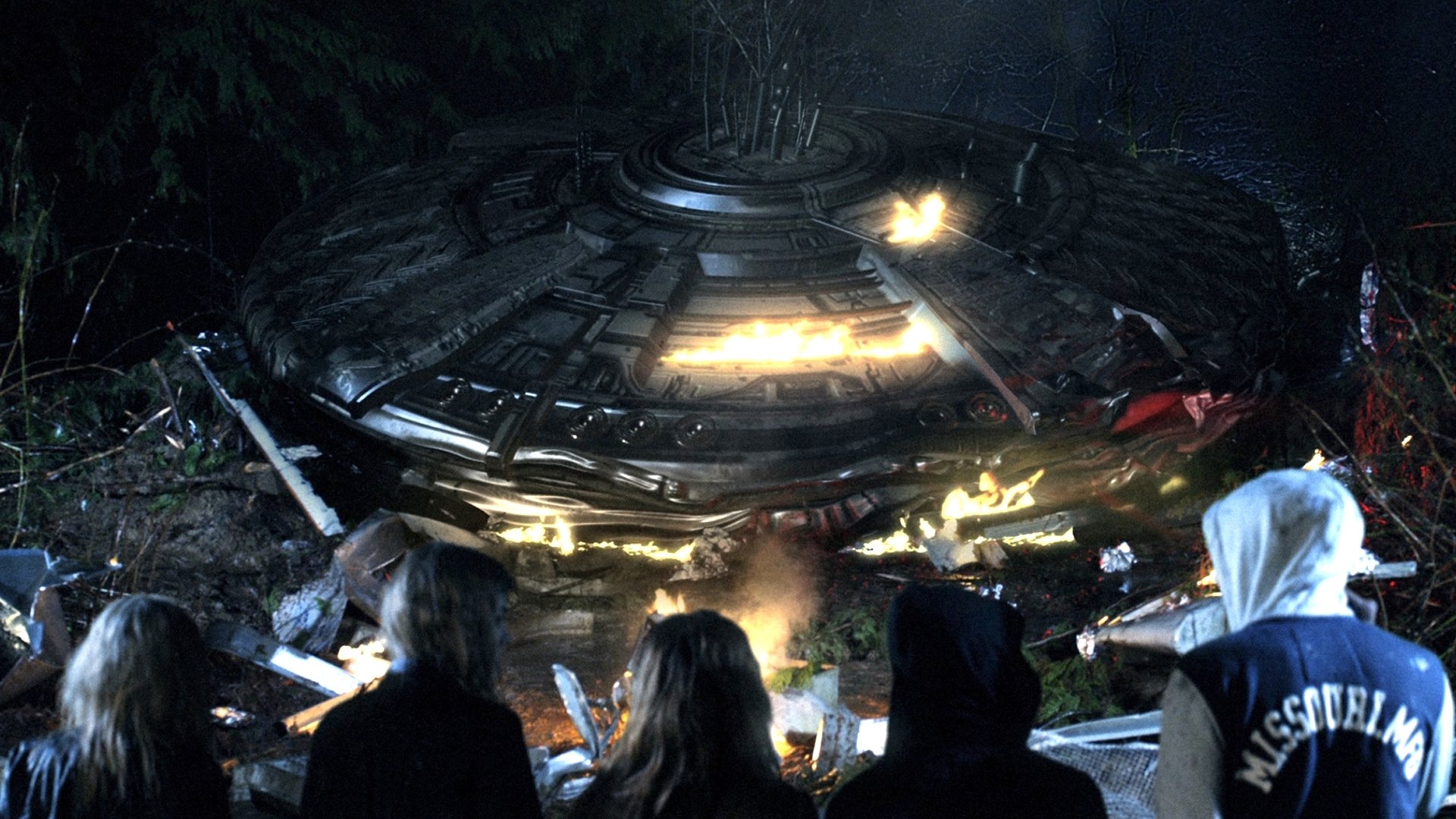
Extraterrestrial

Rating: 4/10 – Teens in a remote cabin discover a crash-landed UFO, and soon learn that this isn’t an isolated incident, and that aliens have been abducting people for some time; yet another tired, gloomy-looking sci-fi/horror that starts promisingly and soon runs out of steam, Extraterrestrial aims to be edgy but is compromised by a convoluted narrative and some frustratingly poor performances.

A Close Call for Boston Blackie (1946) / D: Lew Landers / 60m

aka Lady of Mystery

Cast: Chester Morris, Lynn Merrick, Richard Lane, Frank Sully, George E. Stone, Claire Carleton, Erik Rolf, Mark Roberts, Russell Hicks

A Close Call for Boston Blackie

Rating: 6/10 – Private detective Boston Blackie (Morris) becomes embroiled in a scam involving a missing baby and an old flame, and finds himself accused of murder; one of the better entries in the series, A Close Call for Boston Blackie sees Morris having a ball as Blackie and the movie as a whole is a lot of fun, the simple, fast-paced approach to the material making the whole thing enjoyable even if you’re not a fan.

Christmas Icetastrophe (2014) / D: Jonathan Winfrey / 87m

Cast: Victor Webster, Jennifer Spence, Richard Harmon, Tiera Skovbye, Mike Dopud, Johannah Newmarch, Andrew Francis, Ben Cotton, Boti Bliss

Christmas Icetastophe

Rating: 4/10 – A meteorite splits in two in the Earth’s atmosphere, and one half crashes to earth in the small mountain town of Lennox causing everything in the area to flash-freeze; another slice of sci-fi hokum from the SyFy channel, Christmas Icetastrophe narrowly avoids being complete rubbish thanks to some good location work and a sense of its own absurdity, but when all’s said and done, it’s still rubbish.

McCanick (2013) / D: Josh C. Waller / 96m

Cast: David Morse, Cory Monteith, Mike Vogel, Ciarán Hinds, Rachel Nichols, Trevor Morgan, Tracie Thoms, Aaron Yoo

McCanick

Rating: 6/10 – Veteran detective Eugene McCanick (Morse) goes after a small-time crook (Monteith), but not for the reason everyone around him thinks; a feature role for the ever-reliable Morse is set in psychological thriller territory and gives the actor plenty of room and time to play “disturbed”, but Waller’s sterile direction lets him and the movie down, and McCanick becomes disturbing for all the wrong reasons.

We Are Your Friends (2015) / D: Max Joseph / 96m

Cast: Zac Efron, Wes Bentley, Emily Ratajkowski, Jonny Weston, Shiloh Fernandez, Alex Schaffer, Jon Bernthal
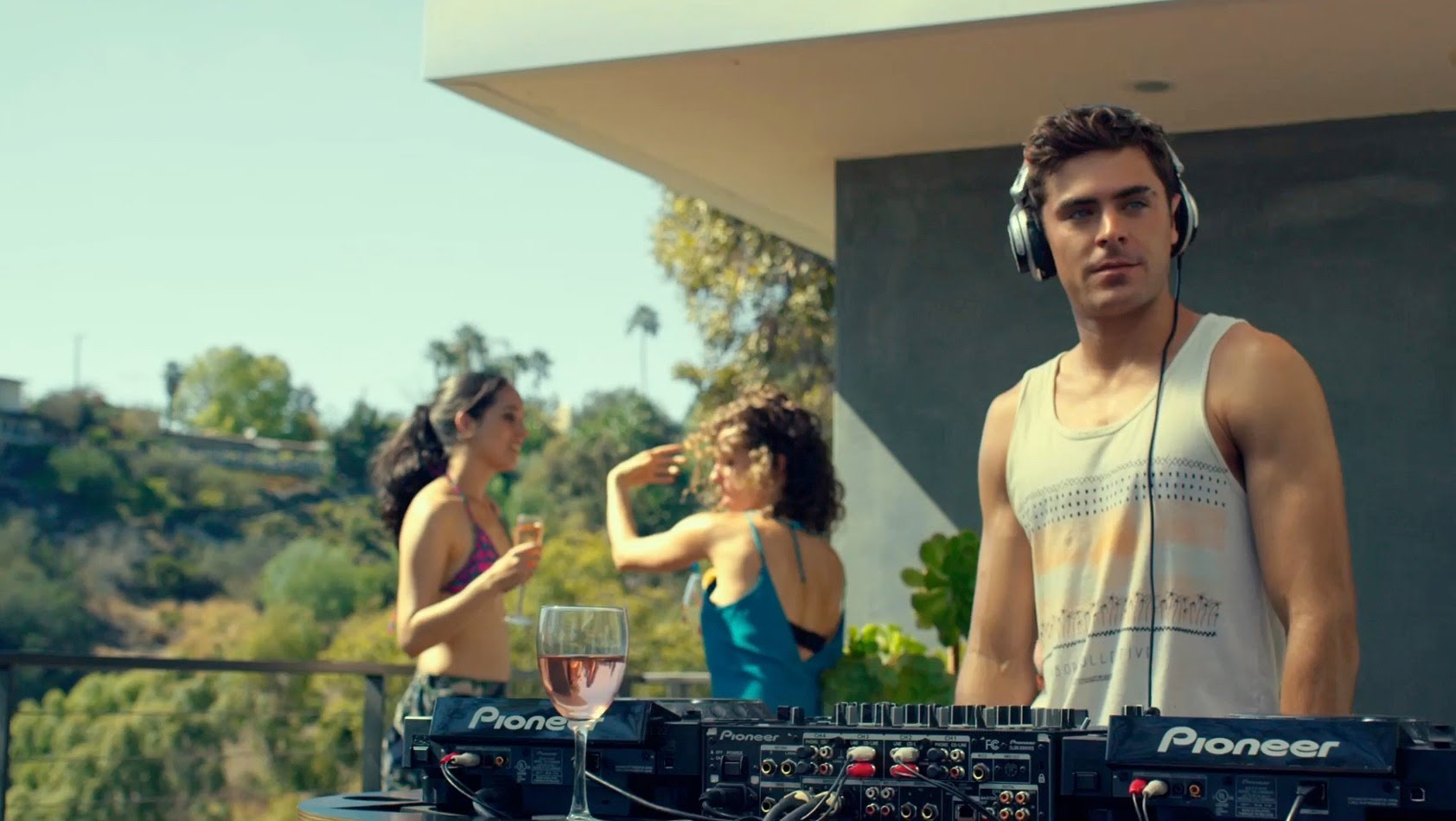
We Are Your Friends

Rating: 6/10 – An aspiring DJ (Efron) finds the road to fame and fortune paved with obstacles: the friends who are unwittingly holding him back, the girl who can’t fully commit, and the mentor who may or may not help him fulfill his dream; a surprisingly aimless movie with little actual drama to sustain its running time, We Are Your Friends is too lightweight in its execution to make much of an impact, and as a result, never gets off the ground.

Share this:

  • Click to share on X (Opens in new window) X
  • Click to share on Facebook (Opens in new window) Facebook
  • More
  • Click to print (Opens in new window) Print
  • Click to email a link to a friend (Opens in new window) Email
Like Loading...

Mini-Review: Final Girl (2015)

30 Wednesday Sep 2015

Posted by dullwood68 in Movies

≈ Leave a comment

Tags

Abigail Breslin, Alexander Ludwig, Drama, Hunt, Murders, Review, Thriller, Tyler Shields, Wes Bentley, Woods

Final Girl

D: Tyler Shields / 84m

Cast: Abigail Breslin, Wes Bentley, Alexander Ludwig, Logan Huffman, Cameron Bright, Reece Thompson, Emma Paetz

Following the death of her parents at a young age, Veronica (Breslin) grows up in the care of William (Bentley), who trains her to become an assassin. Years later as a teenager, she’s told about a group of four young men whose idea of fun is to take young women out into the woods and hunt them before killing them. The group is led by Jameson (Ludwig); at the diner where the four meet, Veronica attracts his attention and he insists she meet him there the following Saturday night. Before he meets her he picks up his friends, Shane (Bright), Nelson (Thompson) and Danny (Huffman).

The group take Veronica out to the woods where at first they play a game of truth or dare. When she mentions the name of their last victim, they start to become suspicious, and it leads to a dare called Die. Jameson explains that Veronica will be given a five-minute head start, and then she’ll be hunted down and killed. As she heads off into the woods they’re unaware that the tables will soon be turned on them, and the kind of prey you’re used to hunting will prove to be more than a match for all of them.

Final Girl - scene

With so much unexplained or explored, Final Girl could well be the most frustrating movie of 2015. A degree of mystery is fine in any movie, but here it’s taken to extremes, with motivations, actions and the reasons for certain decisions left out altogether; all any viewer can hope for is that it all makes sense in the end. Sadly, thanks to Adam Prince’s poorly constructed screenplay, it doesn’t, and ends with a scene that adds preposterousness to an already ridiculous mix (the inclusion of some hallucinations doesn’t help either). We never learn why William takes Veronica under his wing, or why he trains her to be an assassin, or why the group do what they do, or how they’ve managed to kill twenty blonde young women and gotten away with it for so long in what appears to be a very small town.

The movie isn’t helped by a visual style that relies on spot lighting to make the woods look like a fairground (at night), and a wintry aesthetic that adds to the movie’s unappealing plot. With its Red Riding Hood overtones and cod-indie dialogue allied to a  hunt sequence that is anything but a hunt sequence, the movie becomes buried under the weight of its ill-conceived storyline(s) and never manages to dig its way out. Breslin is miscast, while Bentley’s efforts to be taciturn and remote seem more of a reflection of his wondering why he agreed to take part, and Ludwig doesn’t even try to make his character anything more than cruelly manipulative (which only goes so far). Shields, making his first feature, is out of his depth, and unable to make more of the script’s shortcomings, leaving the viewer stranded with no lifeline to cling onto. By the movie’s end, all you can hope for is that there won’t be any more of Veronica’s “assignments” in the future.

Rating: 3/10 – to paraphrase a popular saying, “awful is as awful does”, and Final Girl is pretty awful; seriously underwritten, and with the barest connection to credibility, the movie tries to be a psychological thriller without having the remotest idea of how to combine the two elements and make them work.

Share this:

  • Click to share on X (Opens in new window) X
  • Click to share on Facebook (Opens in new window) Facebook
  • More
  • Click to print (Opens in new window) Print
  • Click to email a link to a friend (Opens in new window) Email
Like Loading...

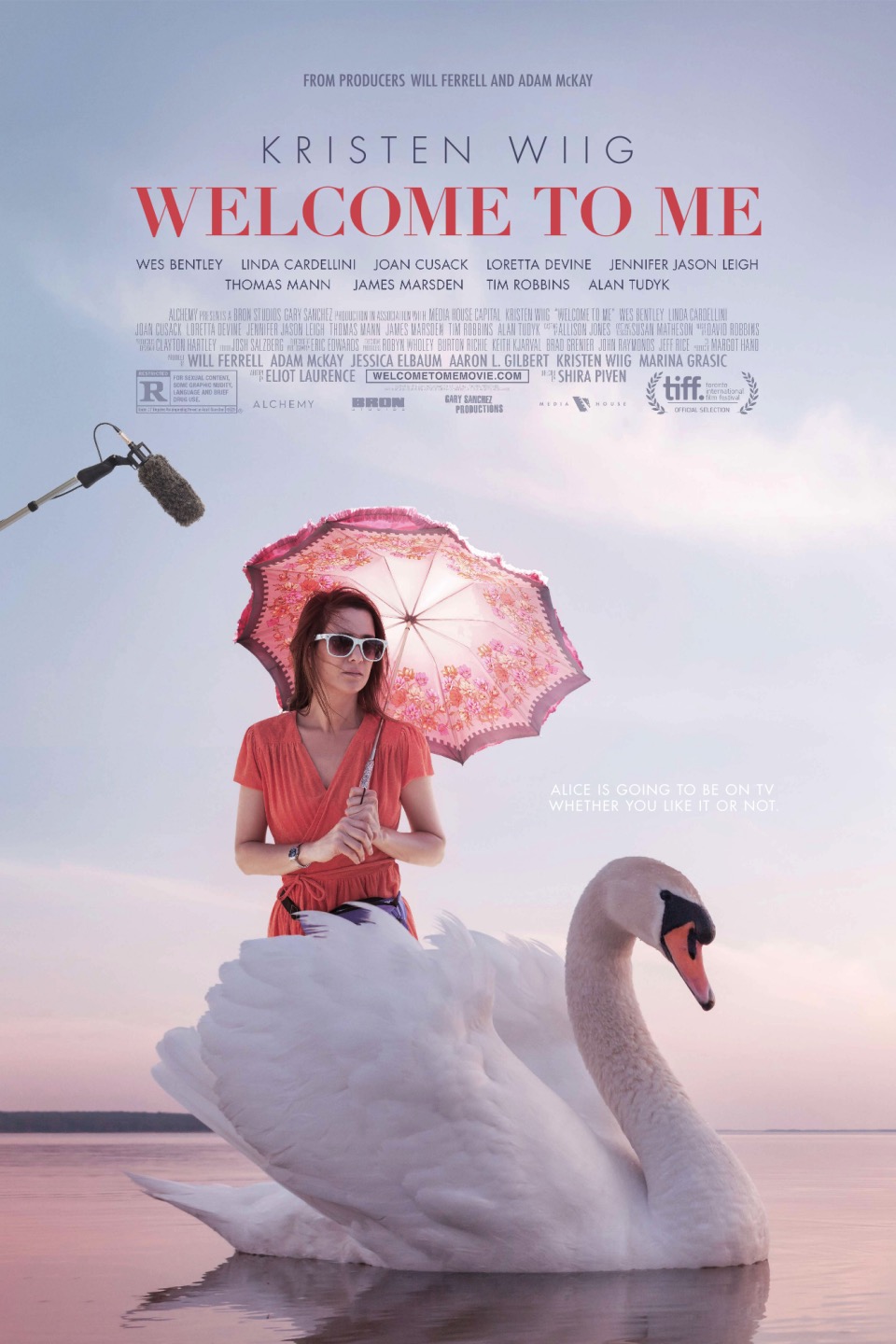
Welcome to Me (2014)

19 Tuesday May 2015

Posted by dullwood68 in Movies

≈ 1 Comment

Tags

$86m, Borderline Personality Disorder, Comedy, Drama, James Marsden, Joan Cusack, Kristen Wiig, Linda Cardellini, Lottery win, Mental health, Review, Shira Piven, Swan boat, Tim Robbins, TV show, Wes Bentley

Welcome to Me

D: Shira Piven / 105m

Cast: Kristen Wiig, Wes Bentley, Linda Cardellini, Joan Cusack, Loretta Devine, Jennifer Jason Leigh, Thomas Mann, James Marsden, Tim Robbins, Alan Tudyk

Alice Klieg (Wiig) suffers from borderline personality disorder and lives off of benefits. She doesn’t have a job, but she is on medication and she sees a psychiatrist, Dr Daryl Moffet (Robbins). She plays the California state lottery each week; when she wins $86 million, Alice decides she wants to regain the life she had before she was diagnosed. She stops taking her medication and tells Dr Moffet that she no longer wishes to see him. She also moves out of her apartment and goes to stay in a casino hotel.

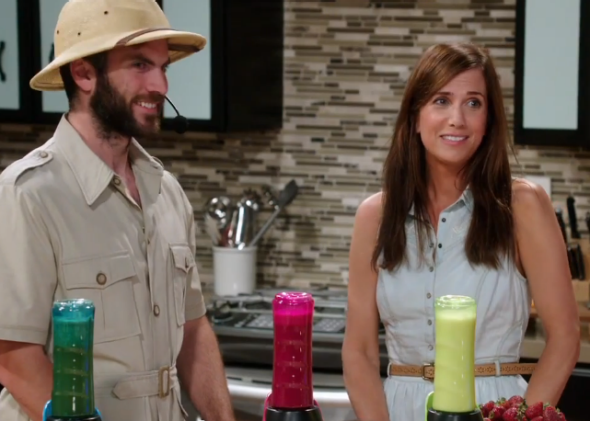
An avid TV watcher, Alice becomes enamoured of a show hosted by Gabe Ruskin (Bentley). She is in the audience one day when a volunteer is needed; Alice rushes to the stage. What follows attracts the attention of Gabe’s brother, Rich (Marsden), his producer and with Gabe co-owner of the production company that airs the show. Alice takes the opportunity to request a show of her own that she wants to call Welcome to Me. When she pays for a hundred two-hour shows upfront, Rich agrees to her suggestion – though the rest of the production team aren’t so sold on the idea. The first show airs and is a disaster, but instead of being put off, Alice invests more money into the show, thus making it look more professional.

She and Gabe begin a relationship, and the show slowly gains in popularity thanks to Alice’s confessional approach to the show’s content, and re-enactments of key scenes from her past. However, as she becomes more and more fixated on the show, her family and her closest friend, Gina (Cardellini) are largely forgotten about. She has a brief fling with a college reporter (Mann); when Gabe learns about it on one of Alice’s shows he’s visibly upset and angry. And when Alice accidentally spills hot chili on herself, burning her chest and upper arms, he reassessment of what the show needs leads to her carrying out live neutering of dogs and cats.

Things come to a head when Gabe quits and Rich learns that, thanks to Alice’s slanderous statements about people on her show, the company is facing a number of lawsuits. Rich confronts Alice live on air and tells her she needs to change her ideas about the show and fast. This causes Alice to halt the show and return to the casino hotel where in the days that follow she suffers a nervous breakdown. While she’s in hospital – and back on her medication – Alice begins to think of a way in which she can make it up to all the people she’s let down.

Welcome to Me - scene

Treading a very fine line between being sympathetic (mostly) and exploitative (occasionally), Welcome to Me is an odd movie that appears to go to some lengths to make its audience uncomfortable while watching it. We’ve had movies that feature characters with mental health problems many, many, many times before, but none that have placed them in a world where their private fantasies have been given such a free rein, and so easily.

The problem with the movie’s treatment of Alice is that it wants you to believe that she has a plan when in fact she really doesn’t. It also wants you to believe that a television production company would let Alice on the air without first vetting her and putting any relevant checks and balances in place. This isn’t public service broadcasting, and the speed and the convenience of Alice’s show hitting the airwaves (and making it onto the ratings) makes for an unconvincing development. And it’s during these segments that it becomes clear the script – by Eliot Laurence – doesn’t really know what to do with Alice, or how to explore the traumatic experiences that have triggered Alice’s disorder.

It’s a shame as it takes the edge off of Wiig’s inspired performance – possibly her best to date – and saddles the movie with several tiresome stretches that fail to engage as effectively as when the action happens away from the studio. Laurence and director Piven (sister of Jeremy, and wife of co-producer Adam McKay) invest a lot of time and effort in making Alice such a credible, fully believable character, and then place her in a milieu that doesn’t even bother to reflect on the vagaries of being a celebrity with mental health problems. It does touch on the way in which fame can isolate celebrities from the “normal” people around them, but in Alice’s case she’s already isolated, so where is the drama? And it doesn’t help that the characters surrounding Alice aren’t as sufficiently well drawn as she is, leaving cast members such as Marsden and Bentley struggling to make much of an impact (Marsden is particularly ill-served).

With all the focus and attention going on Alice, it’s to Wiig’s credit that she inhabits the role so completely and confidently that she carries the movie effortlessly, making up for the shortfall elsewhere. In fact, it’s such a strong, emotive performance that the movie loses its footing on the rare occasions she’s not on screen. Emotionally adrift yet  bound up in her own unresolved feelings of anger and rejection, Alice is a role that suits Wiig’s ability to “blank face” to a tee; you can see Alice looking out at you and seeing right through you at the same time.

Elsewhere, Clayton Hartley’s production design (reflecting the chaotic nature of Alice’s mind at home and in the studio), and David Robbins’ score (providing clever emotional cues for Alice’s behaviour) work to the movie’s advantage, while the script’s attempts at quirky, indie sensibility humour work with more of a success rate than the drama does.

Rating: 6/10 – a decent idea but lacking a through follow through, Welcome to Me ultimately has little to say about mental illness or the perils of being a modern day celebrity; relenting when it should be biting, this is saved (constantly) by Wiig’s ambitious and exhilarating performance.

Share this:

  • Click to share on X (Opens in new window) X
  • Click to share on Facebook (Opens in new window) Facebook
  • More
  • Click to print (Opens in new window) Print
  • Click to email a link to a friend (Opens in new window) Email
Like Loading...

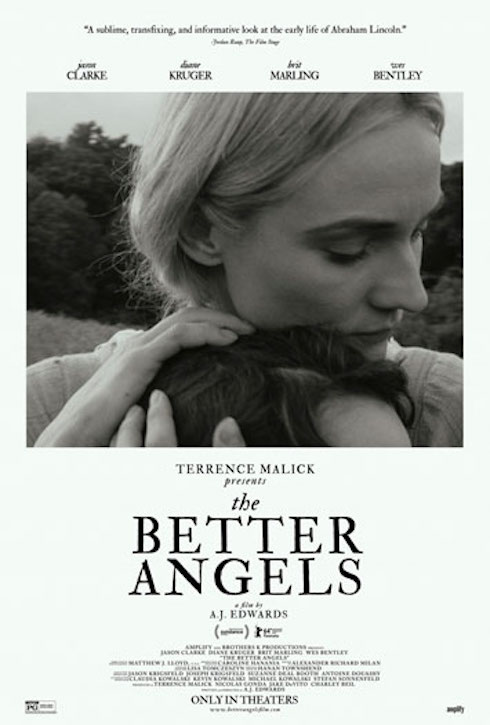
The Better Angels (2014)

16 Monday Mar 2015

Posted by dullwood68 in Movies

≈ 4 Comments

Tags

A.J. Edwards, Abraham Lincoln, Biography, Braydon Denney, Brit Marling, Diane Kruger, Drama, History, Indiana, Jason Clarke, Review, True story, Wes Bentley

Better Angels, The

D: A.J. Edwards / 95m

Cast: Jason Clarke, Diane Kruger, Braydon Denney, Brit Marling, Wes Bentley, Cameron  Mitchell Williams, McKenzie Blankenship

Indiana, 1817. Eight year old Abe Lincoln (Denney) lives with his father Tom (Clarke), mother Nancy (Marling), and younger sister Sarah (Blankenship) in an area of “unbroken forest”. They are joined by Nancy’s orphaned cousin, Dennis Hanks (Williams) who becomes an older brother to Abe. Abe’s father works as a farmer and a carpenter; he’s a taciturn man who doesn’t drink alcohol, gamble or curse, but he is a harsh disciplinarian, and Abe often finds himself being punished for some misbehaviour or minor infraction.

Abe has a better relationship with his mother, who is kind-hearted and supportive of his attempts to educate himself. She is a nurturing influence, one he thrives under, and the time he spends with her helps offset the onerous chores he has to do on the farm. But Abe is left adrift when Nancy contracts milk sickness and dies. His father tries to carry on but it doesn’t last long. He leaves Abe, Sarah and Dennis to manage the farm while he goes off to find another wife. When his father returns, it is with a new bride, Sarah “Sally” Bush Johnston (Kruger), a widow from Kentucky who has three children of her own. In her own way she proves as supportive and nurturing of Abe as Nancy was, and despite some initial reservations, Abe warms to her.

As their relationship deepens and strengthens, Abe’s relationship with his father remains the same, with an added emphasis on Abe’s “toughening up”. It’s around this time that Abe’s honesty becomes more noticeable (even if it leads to his being caned by his father), and his education receives a boost from the attention of local schoolteacher Mr Crawford (Bentley). Crawford seeks Tom’s permission to provide Abe with extra tutoring; as he tells Sally, Abe won’t be a backwoodsman for very much longer. Tom agrees, and Abe is set on the path to securing his future.

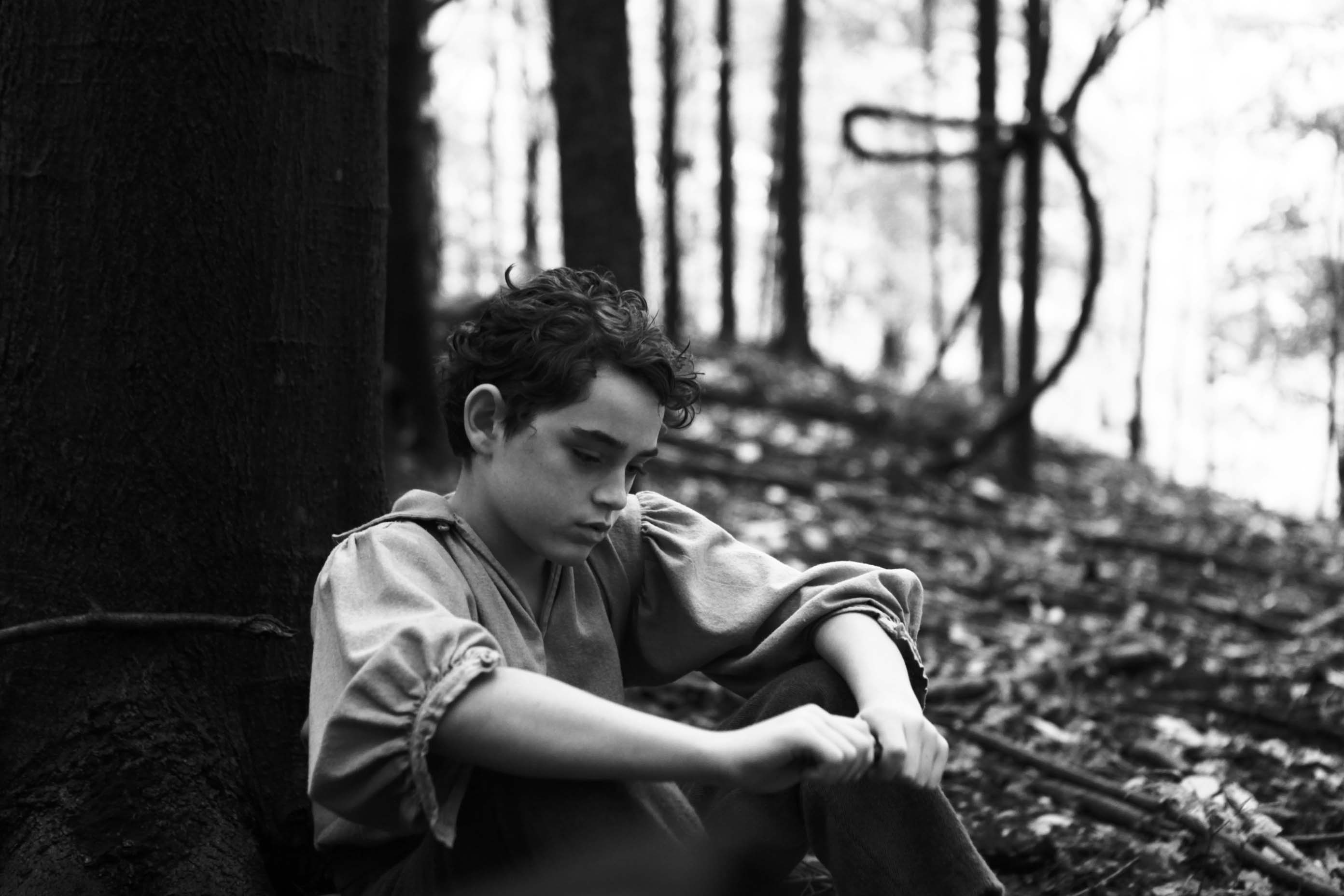
Better Angels, The - scene

An idyllic looking reminiscence on the early life of Abraham Lincoln, The Better Angels is a deliberately slow-paced meditation on the influences that helped the young Lincoln grow up to be the man he became. Taking as its focus the period of his life when he lost and gained a mother, the movie is a studied, thoughtful examination of the trials and joys of growing up in a wooded wilderness.

Shot in glorious, lustrous black and white, the movie paints a compelling portrait of a time and a place where life was certainly difficult, and sometimes harsh: the family’s cows get sick and die from eating poisonous weeds, and Nancy dies as a result of drinking their infected milk. When Tom Lincoln goes off to find a wife, it seems uncaring and thoughtless to leave his children and Dennis to cope until he returns, but this was part and parcel of life in America during that period, where a normal childhood had to be grabbed whenever possible. It’s to Edwards’ credit that he’s able to show that the young Lincoln was able to be a child as well as a farm labourer, and that he was able to find beauty in his surroundings, both in his two mothers and via the ever-changing natural habitat he was a part of.

Abe’s relationships with Nancy and Sarah are the heart and soul of the movie, delicate and affectionate and heartfelt, with both Marling and Kruger providing very different, yet very intuitive performances. Marling behaves almost like a wood nymph, her love of nature and the way in which she embraces it allowing Abe’s mind to embrace it too. Kruger is equally effective, imbuing Sarah with a quiet determination that Abe will realise his full potential, and unsupportive of her new husband’s strict approach to parenting. (It could be argued that without these two women in his life at such a formative time, then Abraham Lincoln’s future would have been entirely different.) As his stern, reticent father, Clarke is a stoic figure seemingly bereft of feeling and only able to connect with his son when correcting him. Indeed, the nearest he gets to showing any tenderness is when he’s teaching Abe how to wrestle, but it’s an awkward tenderness and borders on uncomfortable – for both of them.

The young Abe is played with quiet composure and assurance by Denney (making his movie debut), and he’s a great find, matching his adult co-stars for sincerity and skill. He has a natural ability that allows the viewer to engage and understand Abe instantly. Nancy mentions at one point that Abe is asking her questions she can’t answer; looking at Denney you can believe it. He’s also effective in scenes where he and his mothers bond through learning and their mutual appreciation of nature, his expressions of curiosity and understanding perfectly shaped and naturalistic. It’s a tremendous performance, and anchors the movie superbly.

With a quartet of understated yet superb performances at its centre, The Better Angels‘ glowing black and white cinematography emphasises the poetry and the beauty of the seasons, and is exhilarating to experience. Edwards’ use of shade and light, executed with tremendous precision by DoP Matthew J. Lloyd, is hugely impressive, immersing the viewer in shots of extraordinary seductiveness. Rarely has unspoilt countryside looked so alluring or captivating, and rarely has it looked so beautiful as it does here, in black and white. With every scene captured with breathtaking attention to period detail and highlighted by some of the most exquisite framing and composition seen in recent years, the movie is a visual treat par excellence.

Rating: 9/10 – some viewers may bemoan the slow pace and emphasis on recurring shots of natural beauty, but The Better Angels presents a fully realised world that is immersive and often deeply profound; with Edwards in full control of both the script and the world he’s recreating, this is a movie that resonates long after it’s been seen.

Share this:

  • Click to share on X (Opens in new window) X
  • Click to share on Facebook (Opens in new window) Facebook
  • More
  • Click to print (Opens in new window) Print
  • Click to email a link to a friend (Opens in new window) Email
Like Loading...

Blog Stats

  • 486,647 hits

Recent Posts

  • 10 Reasons to Remember Bibi Andersson (1935-2019)
  • Fantasia (1940)
  • Dances With Wolves (1990) – The Special Edition
  • Kiss of the Spider Woman (1985)
  • The Three Musketeers (1973)

Top Posts & Pages

  • Lost for Life (2013) - Another Look
    Lost for Life (2013) - Another Look
  • Lost for Life (2013)
    Lost for Life (2013)
  • About
    About
  • BFI London Film Festival 2015
    BFI London Film Festival 2015
  • Mr. Topaze (1961)
    Mr. Topaze (1961)
  • Shock and Awe (2017)
    Shock and Awe (2017)
  • Hunt for the Wilderpeople (2016)
    Hunt for the Wilderpeople (2016)
  • Cardboard Boxer (2016)
    Cardboard Boxer (2016)
  • Billy Lynn's Long Halftime Walk (2016)
    Billy Lynn's Long Halftime Walk (2016)
  • Winter's Tale (2014)
    Winter's Tale (2014)
Follow thedullwoodexperiment on WordPress.com

Blogs I Follow

  • Rubbish Talk
  • Film 4 Fan
  • Fast Film Reviews
  • The Film Blog
  • All Things Movies UK
  • Interpreting the Stars
  • Let's Go To The Movies
  • Movie Reviews 101
  • TMI News
  • Dan the Man's Movie Reviews
  • Film History
  • Jordan and Eddie (The Movie Guys)

Archives

  • April 2019 (13)
  • March 2019 (28)
  • February 2019 (28)
  • January 2019 (32)
  • December 2018 (28)
  • November 2018 (30)
  • October 2018 (29)
  • September 2018 (29)
  • August 2018 (29)
  • July 2018 (30)
  • June 2018 (28)
  • May 2018 (24)
  • April 2018 (21)
  • March 2018 (31)
  • February 2018 (25)
  • January 2018 (30)
  • December 2017 (30)
  • November 2017 (27)
  • October 2017 (27)
  • September 2017 (26)
  • August 2017 (32)
  • July 2017 (32)
  • June 2017 (30)
  • May 2017 (29)
  • April 2017 (29)
  • March 2017 (30)
  • February 2017 (27)
  • January 2017 (32)
  • December 2016 (30)
  • November 2016 (28)
  • October 2016 (30)
  • September 2016 (27)
  • August 2016 (30)
  • July 2016 (30)
  • June 2016 (31)
  • May 2016 (34)
  • April 2016 (30)
  • March 2016 (30)
  • February 2016 (28)
  • January 2016 (35)
  • December 2015 (34)
  • November 2015 (31)
  • October 2015 (31)
  • September 2015 (34)
  • August 2015 (31)
  • July 2015 (33)
  • June 2015 (12)
  • May 2015 (31)
  • April 2015 (32)
  • March 2015 (30)
  • February 2015 (37)
  • January 2015 (39)
  • December 2014 (34)
  • November 2014 (34)
  • October 2014 (36)
  • September 2014 (25)
  • August 2014 (29)
  • July 2014 (29)
  • June 2014 (28)
  • May 2014 (23)
  • April 2014 (21)
  • March 2014 (42)
  • February 2014 (38)
  • January 2014 (29)
  • December 2013 (28)
  • November 2013 (34)
  • October 2013 (4)

Create a free website or blog at WordPress.com.

Rubbish Talk

Film 4 Fan

A Movie Blog

Fast Film Reviews

The Film Blog

The official blog of everything in film

All Things Movies UK

Movie Reviews and Original Articles

Interpreting the Stars

Dave Examines Movies

Let's Go To The Movies

Film and Theatre Lover!

Movie Reviews 101

Daily Movie Reviews

TMI News

Latest weather, crime and breaking news

Dan the Man's Movie Reviews

All my aimless thoughts, ideas, and ramblings, all packed into one site!

Film History

Telling the story of film

Jordan and Eddie (The Movie Guys)

Movie Reviews & Ramblings from an Australian Based Film Fan

Privacy & Cookies: This site uses cookies. By continuing to use this website, you agree to their use.
To find out more, including how to control cookies, see here: Cookie Policy
  • Subscribe Subscribed
    • thedullwoodexperiment
    • Join 481 other subscribers
    • Already have a WordPress.com account? Log in now.
    • thedullwoodexperiment
    • Subscribe Subscribed
    • Sign up
    • Log in
    • Report this content
    • View site in Reader
    • Manage subscriptions
    • Collapse this bar
 

Loading Comments...
 

    %d