Cast: James Belushi, Juno Temple, Justin Timberlake, Kate Winslet, Max Casella, Jack Gore, David Krumholtz
At one point in Wonder Wheel, Mickey (Timberlake), a lifeguard at Coney Island (and the movie’s narrator), gives Ginny (Winslet), the married woman he’s having an affair with, a book of plays by Eugene O’Neill for her birthday. Once upon a time, Ginny was an aspiring actress, until she met and married a drummer. That relationship ended when she had an affair, and now she’s in the process of cheating on her second husband, ‘Humpty’ (Belushi), a carousel operator. Ginny works as a waitress in a restaurant on the boardwalk; she’s already unhappy in her marriage, and has a young son from her first marriage, Richie (Gore), who likes to set fires. She’s struggling to hold onto her hopes and dreams, and Mickey’s attentions are a way for her to do that. Fast approaching forty, and trapped in a marriage of convenience, Ginny is desperately looking for happiness. But a book of O’Neill’s plays? How much more of a clue as to whether or not Ginny will find the happiness she seeks does an audience need?
Woody Allen’s latest is one of his serious movies, a drama that starts off by showing the surface glamour of Coney Island in the 1950’s, before quickly going behind the scenes and revealing the hardships and the despair that exist just a short distance from the lights and the attractions. ‘Humpty’ has a daughter, Carolina (Temple), who left home five years before to marry a gangster. Now she’s back, having left him but also having been “marked”; she’s hoping her established estrangement from her father will mean no one will look for her there. But when Carolina meets Mickey, Ginny sees her chance for happiness coming under threat. Ginny’s desperation increases, and her behaviour becomes more erratic than usual. Unable to help herself, Ginny begins to alienate everyone around her, and when the opportunity arises to do the right thing, the decision she makes has profound, and irreversible, consequences. It’s a simple premise, confidently set up and handled by Allen, but also one that feels more like an abandoned stage play than an original screenplay. This also means the movie has the look of a theatrical production at times, and Vittorio Storaro’s cinematography stutters back and forth between interior and exterior scenes with all the dexterity of an artist who can’t decide on natural or artificial light.
But production issues aside, this is Winslet’s movie through and through. Ginny is an emotional trainwreck, only taking responsibility for her actions when it will bring her sympathy, and defending herself by attacking others. She’s an ersatz Blanche DuBois, hurting instead of loving, and Winslet gives a driving, intense performance that is in many ways out of place within the movie because it overhadows everything else that Allen comes up with. And Winslet is on such tremendous form that her co-stars have no choice but to run to keep up. Belushi and Temple are good in roles that aren’t quite as well developed as Winslet’s, but Timberlake is the odd man out as Mickey. He never looks comfortable in the role, and in his scenes with Winslet, the gulf between them is highlighted every time. In the end, Allen elects to leave many of the sub-plots and storylines unresolved, especially the one involving Richie, which goes nowhere and seems included just to pad out the running time. Otherwise, the movie’s open-endedness proves unexpectedly satisfying, and though this may not be a prime example of Allen’s more recent output, thanks to Winslet’s superb performance, it’s a movie that deserves a look, if for no other reason than that.
Rating: 7/10 – featuring Winslet on incredible form, Wonder Wheel tells its story as if it had been written in the 1950’s but has been given a modern day makeover; the milieu has been lovingly recreated by production designer Santo Loquasto, Allen remains a dependable if unexciting visual artist, and for once the romance doesn’t have such a pronounced age gap.
Cast: Denzel Washington, Viola Davis, Stephen McKinley Henderson, Jovan Adepo, Russell Hornsby, Mykelti Williamson, Saniyya Sidney
Movie adaptations of stage productions, especially hugely successful stage productions, don’t come along too often. The two mediums don’t always make for good bedfellows, with one medium’s strengths rarely translating well to the other. For every Casablanca (1943), there’s a Boom! (1968); conversely, for every Hairspray (1988) there’s an Evil Dead: The Musical (2003). But sometimes a stage-to-screen adaptation comes along that has a built-in advantage, a guarantee of quality that ensures it’s going to be as impressive on screen as it was on stage. And Fences is such an adaptation.
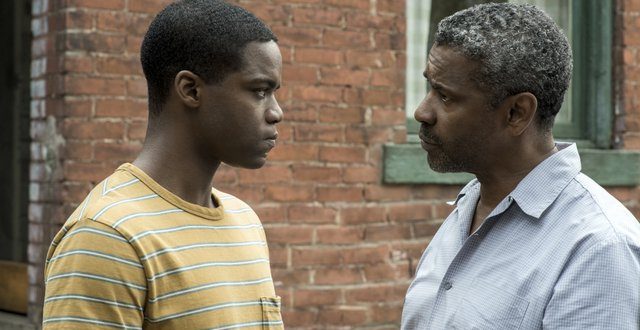
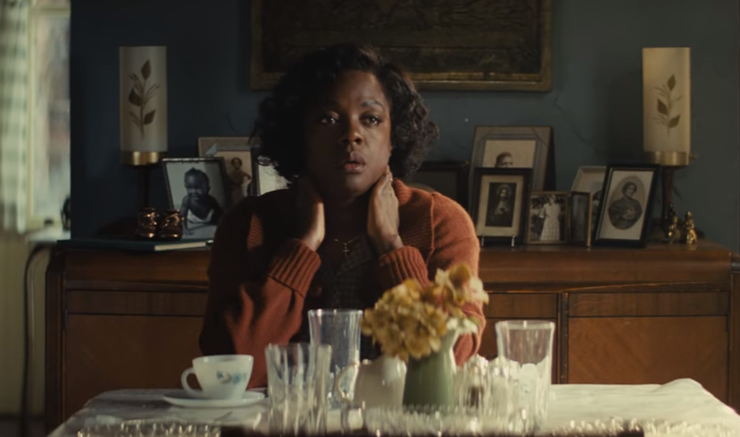
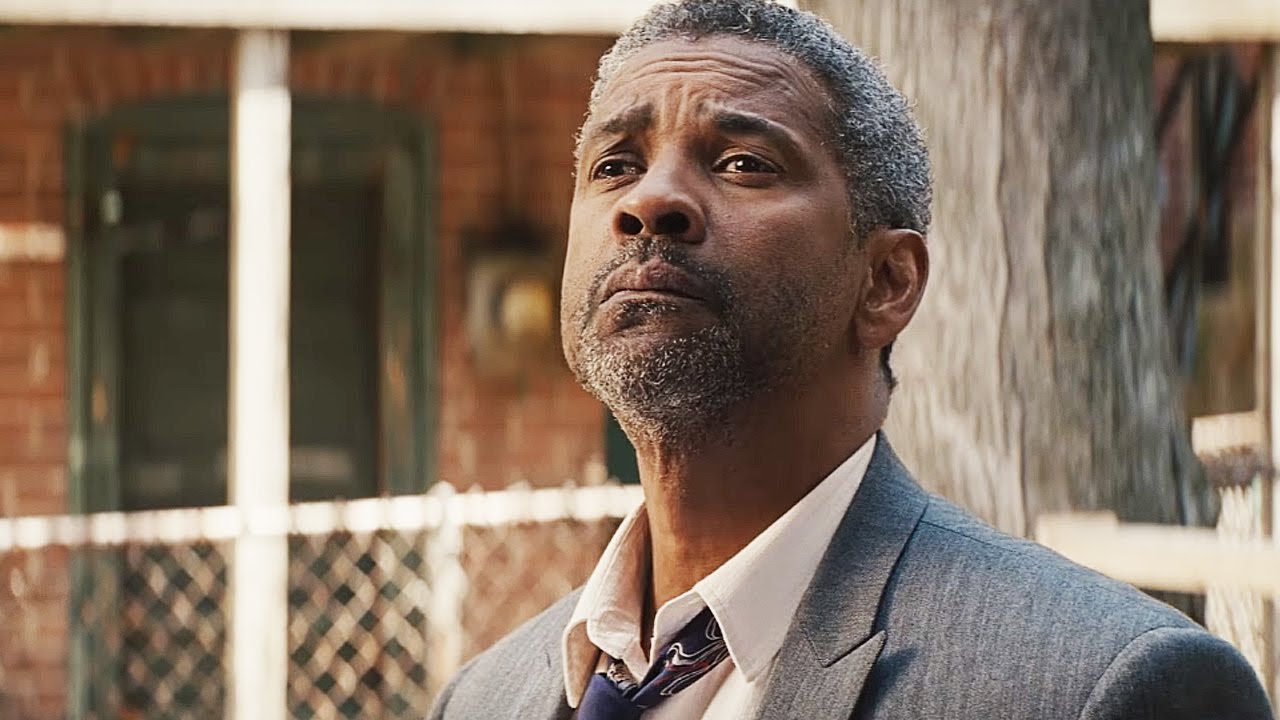
Set in 1950’s Pittsburgh, the movie opens with best friends Troy Maxson (Washington) and Jim Bono (Henderson) working as refuse collectors for the city. Troy is facing the possibility of losing his job because he’s challenging the idea that only white men can drive the garbage trucks. But Troy is unperturbed; he reckons he has right on his side, and that’s all he needs. They also talk about a woman that Troy has been spending time with, Alberta. Troy denies there’s anything wrong in what he’s doing, but Bono remains unconvinced. At Troy’s home, Bono and Troy’s wife Rose (Davis), listen to Troy relive a time when he almost died from pneumonia. He tells them he fought the Devil and beat him while he was sick, and he’s ready to take him on again. Rose and Bono laugh at his bluster, and so does Troy, but there’s a distinct feeling that he believes what he’s saying.
Troy has two sons: one, Lyons (Hornsby), from a previous relationship, and Cory (Adepo), whose mother is Rose. Lyons is in his thirties, an aspiring musician who only visits when he needs money. Cory is a teenager who wants to play football, but when Troy finds out he’s not working after school as agreed, but is going to football practice, Troy rails against it. Convinced that his own career in baseball was cut short by racial prejudice (and not his age at the time), and that the same will happen to his son, Troy refuses to support Cory’s ambitions. Meanwhile, Troy’s younger brother, Gabriel (Williamson), who has a metal plate in his head from serving in World War II and is mentally impaired, talks about knowing St Peter and needing to be ready when the Gates of Heaven will be opened.
Troy and Cory fight over Cory’s ambition to play football, while Rose takes her son’s side. But Troy is adamant, and when he learns that Cory isn’t working at all, he refuses point blank to sign any permission documents. Their animosity over the issue also leads Troy to visit the school and get Cory kicked off the team. With tensions flaring between the two, Troy’s inability to read or write backfires on him when he has to sign papers that leave Gabriel institutionalised. Fate takes further aim at him when Bono confronts him over his now having an affair with Alberta. Urged by Bono to do something about it, Troy has to face up to Rose and tell her the truth – not only about the affair, but that he’s going to be a father again…
Fences, first performed on stage in 1983, was revived on Broadway in 2010 to major acclaim and won a stack load of awards. It starred Denzel Washington and Viola Davis (who both won Tony’s for their performances), and also featured Henderson, Williamson and Hornsby in the roles they would eventually reprise on screen. With its creator, August Wilson, having passed away in 2005, a movie version rested on one proviso: that the director be an African-American. Step forward Washington, who took a script that August had prepared, and remained faithful to every word of it. There’s a quote from Shakespeare, “the play’s the thing”, and in Washington’s, and Davis’s, and everyone else’s more than capable hands, Fences is a perfect example of that quote.
The problem with a lot of stage to screen adaptations is the dialogue. There’s just too much of it, and while monologues and lengthy speeches are the lifeblood of many a theatrical production, on screen it’s a vastly different matter. Movies are a visual medium, and who wants to watch a bunch of people standing or sitting around talking to each other the whole time? But Fences is, to borrow from the movie’s vernacular, a whole different ball game. Wilson has created such a distinct, precise, rhythmic way of speaking for his characters that it also becomes poetry when listened to long enough. It flows and eddies in ways that ordinary speech never quite manages, but on stage or screen alike, this is dialogue that captivates and mesmerises, and keeps you hanging on every word. Wilson’s dialogue has weight, and a depth that carries such levels of meaning that you could spend hours dissecting each line and find new aspects of it every time. Washington the director knows this, and his fidelity to the words each character speaks is one of the reasons the movie works. They’re simply so well crafted that nobody else could improve on them.
With the dialogue locked in, the performances follow. The cast know their characters inside out, and it shows. Washington is on superb form as Troy, angry and bitter at the way his life has worked out, and unable to see that the respect he demands from his family is given out of intimidation and fear. Troy isn’t anywhere near likeable for the most part, and Washington isn’t afraid to show just how selfish and controlling he is, daring his wife and sons to challenge him at every turn, a bullish man whose arrogance wears down everyone around him. But if Washington is superb, what can be said about Davis’s performance? Amazingly, she’s on a whole different level. In any two-hander with Washington, it’s Davis that the viewer will be focused on. She gives meaning to Rose’s sacrifice and wounded pride and makes her the strongest character in the whole movie. At one point, Troy asks her to do something that you hope will see Rose turn on him, a final straw for all the pain he’s caused her. But she doesn’t, and her change of heart is both achingly sad and completely understandable all at the same time. Davis is winning lots of awards for her performance, but they’re all justified; she’s simply that good.
The rest of the cast, including newcomers Adepo and Sidney, all add to the acting masterclass that Washington has created, and though some of the staginess of the original is inevitably present, thanks to some careful framing and the editing skills of Hughes Winborne, the movie soon becomes its own thing. Ultimately, Fences is about people – these people – and we learn more and more about them as time goes on, and through the outside influences that have an effect on all of them. Troy talks a lot about duty and responsibility, but these are issues that have affected him, and driven his life for too long, until now he feels trapped. Rose has stood by him, realising that neither will achieve their dreams but counting on their love to help them get by. And Cory is his father’s son, a younger version of Troy who wants his own life and not his father’s, just as Troy tried to emerge from under the shadow of his own father. Emotions run high, battles are fought, and lives are changed. It’s all there in Wilson’s fastidious dialogue, impeccably drawn out and presented by Washington, and all ending on a moment of magical realism that offers a surprisingly positive, and yet apt conclusion to a tale that isn’t afraid to show people at their most vulnerable, and how the notion of family can be both fluid and rigid at the same time.
Rating: 9/10 – a powerhouse of a movie, Fences is emotionally draining for long stretches, and thanks to Washington and Davis, a must-see for anyone even remotely interested in seeing raw, sincere emotions depicted honestly and realistically; naturally the fences of the title are allegorical, but it’s easy to see the boundaries enforced by Troy against the people around him, and though he’s ultimately a tragic figure, one truth the movie espouses is that, within the four walls of his home, he’s not alone.
Cast: Cate Blanchett, Rooney Mara, Kyle Chandler, Sarah Paulson, Jake Lacy, Nik Pajic, John Magaro, Cory Michael Smith, Carrie Brownstein
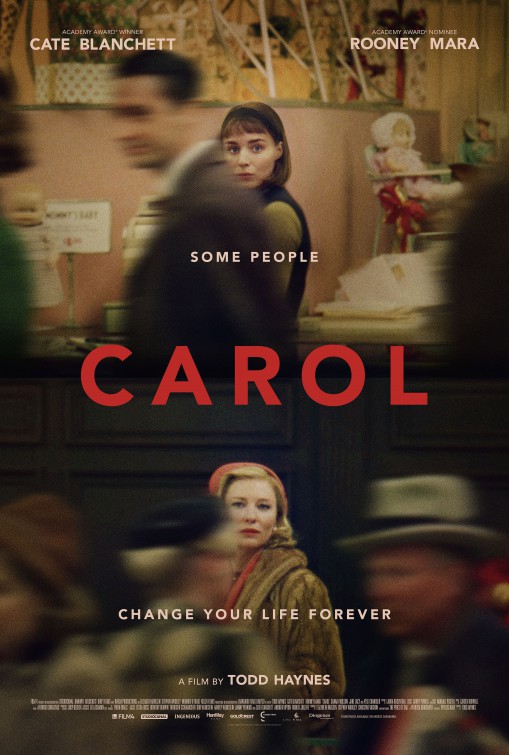
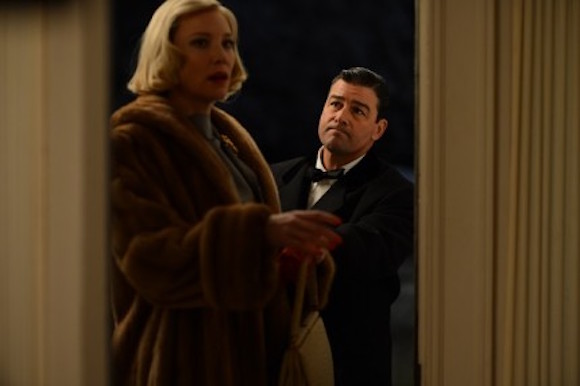
Therese (pronounced Ter-rez) Belivet (Mara) is young, has a devoted boyfriend, Richard (Lacy), works in a department store, but is unsure of her future. One day a female customer in the store engages her in conversation, and even though the customer makes mention of being married with a young child, it’s clear to Therese that there’s a mutual attraction. When the woman leaves her gloves behind, Therese goes to the effort of finding the woman’s address and sending them to her. This act of kindness leads to the woman, whose name is Carol Aird (Blanchett), inviting Therese to lunch. They meet, and a friendship begins, one that starts to cause problems between Therese and Richard, as she begins to lose interest in a planned trip to Europe with him, and spends more time with Carol.
Unbeknownst to Therese, Carol and her husband, Harge (Chandler) have separated due to his awareness that his wife has had an affair with her best friend, Abby (Paulson). Willing to overlook this “indiscretion” if she stays with him, Harge warns her that if she doesn’t then he’ll seek sole custody of their little girl, Rindy. With Xmas approaching, he takes Rindy to his parents for the holiday period; Carol decides to invite Therese to come stay with her. Although nothing happens, Harge returns home unexpectedly and sees them together. Fearing that Carol is embarking on another lesbian relationship, he files for divorce and sole custody of Rindy. Unable to see her child until the custody hearing, which will take two or three months to happen, Carol invites Therese on a road trip, where they can spend some time together, and where Harge can’t find them.
They stay in a succession of motel rooms, at first staying in separate rooms. At one particular motel they stay in the Presidential suite; the next morning, Therese gets to talking with a travelling salesman called Tommy (Smith). Although he tries to sell them something from his sales kit, he has no joy, though Therese wishes him well in the future. At the next motel, she and Carol finally make love. But a telegram Carol receives the next morning reveals Harge’s awareness of where she is, and the fact that she and Therese are now lovers. Unable to risk the now serious possibility of losing the custody hearing, Carol decides she has to return home to face Harge, and sends Abby in her place to see Therese gets home safely. But for both women, returning to their old lives proves unsatisfactory…
There’s a moment in Todd Haynes’ beautifully crafted Carol, an adaptation of Patricia Highsmith’s novel The Price of Salt, when it looks certain that the title character and Therese will make love for the first time. It’s a moment that the movie is clearly heading toward, and it’s a moment that audiences will be expecting, but Haynes, along with screenwriter Patricia Nagy, holds off from that first time and maintains the sense of anticipation that both characters (and viewers) must be feeling. For the audience, it’s also a moment – among many others – that shows just how much control Haynes has over both the material and its emotional centre, and how finely calibrated it all is, for Carol is without a doubt, one of 2015’s finest movies.
Of course, with previous projects such as Far from Heaven (2002) and the TV version of Mildred Pierce (2011), Haynes has already shown an affinity for what used to be termed “women’s pictures”, but here his immersion in a time – the 1950’s – when lesbianism was still something to be kept hidden, and where male attitudes towards the issue were still highly aggressive, feels also like a snapshot of an era where female empowerment was beginning to gain the upper hand, despite the so-called Lavender Scare that was prevalent at the time. Through Carol’s determination not to be defined by her sexuality, we get to see an example of what, in historical terms, was a turning of the tide, and also a love story that is simply that: a love story.
This simplicity is at the heart of Haynes’ confident handling of the story, and it shows in every scene, with every look and every gesture, and in the way that he brings Carol and Therese together within the frame – these moments where they’re “close but not touching” are so charged with pent-up emotion and increasing desire that the idea that they might be kept apart by Harge’s machinations becomes intolerable. These scenes are so expertly handled, with repressed longing so forcefully expressed, that the viewer is swept along with the characters’ desire to live freely and without sanction. Haynes makes great use of the era’s sense of propriety, using it as a touchstone against which Carol and Therese’s affair can be measured in both intensity and necessity. Therese quizzes Richard about same sex relationships but he has no point of reference, and has no understanding of why they occur; he loves her unequivocally but can’t see that two women – or two men for that matter – might feel the same way about each other as he does about Therese. It’s another of those moments where the audience can see just how difficult it was to live a life outside the (perceived) norm.
With the historical and social background of the story firmly in place, and with Nagy’s script making it clear that lesbians were expected to pretend to be happy in heterosexual relationships or face the social consequences, the movie paints an honest portrait of two women, both of whom gain increased confidence in themselves through their relationship, who come together at a point in both their lives where they’re looking for a way to find future happiness. That they find it in each other, if only briefly, and with such passion, gives value to the idea that any relationship is worth pursuing or fighting for. And even though Carol leaves Therese to fight for custody of her child, it’s not the end of their affair, but rather an interruption (albeit for Therese an unexpected one), and even though the younger woman is upset by it, her feelings remain, and though the movie tries for an air of ambiguity in its final scene, viewers won’t be fooled at where Carol and Therese’s relationship is likely to find itself.
The difference in ages might feel like it should be an issue but it’s left unexplored, and with good reason: it doesn’t matter. Love is love, and though an argument could be made that Therese is looking for a guide or a mentor first and foremost, it’s not the role Carol adopts in their relationship. As the “older woman”, Blanchett gives yet another astonishing, awards-worthy performance, striking the right balance between heartfelt longing for an honest life and acknowledging the difficulties that longing entails. Her brittle, striking features show the pain of Carol’s situation without too much need of more overt playing, but in those moments when overt emotion is required, Carol’s fears and hopes are etched indelibly on those striking features. It’s a magnificent performance, sincere, heartbreaking at times, and riveting.
She’s matched by Mara, whose portrayal of the unmoored, ingenuous Therese is so finely tuned that watching her blossom, however slowly, into a stronger, more confident young woman is like watching a flower grow out of the shadows to its full height. There are moments where the camera focuses on her smooth, unlined features and the only expression is there in the eyes, but Mara uses this approach to such good effect that the viewer is never in doubt as to what Therese is thinking or feeling. And as the movie progresses, Mara subtly shifts the weight of Therese’s longing for love so that it becomes a part of her, and not the whole, leaving her a character as strong in her own right as Carol is in hers.
With two such commanding performances, it would be a shame if the supporting cast were overshadowed, but Chandler, in what is superficially the “villain” role, brings out Harge’s pain and sense of loss over Carol with such force that his actions are less stereotypical than expected and driven more by his own deep love for her. In the same way that society says Carol can’t have Therese (in public at least), it also says that Harge can’t have Carol because of her “sexual impropriety”. Both characters are in danger of losing what they want most, and both are suffering as a result. Chandler is unexpectedly moving in the role, and his scenes with Blanchett are so emotionally charged it’s like an intense version of force majeure. Meanwhile, Paulson comes late to matters as Abby, but gives a brief but potent performance as Carol’s longtime friend, confidant and ex-lover, filling in the gaps of Therese’s knowledge about Carol, and providing further context for Carol’s emotional and sexual desires.
It’s all beautifully filmed by Edward Lachman, with lots of bright primary colours mixed in with rich earthy tones, making the period seem so alive as to be almost intoxicating, and acting as a dynamic background to the impassioned nature of Carol and Therese’s relationship. There’s some equally impressive attention to historical detail, and Haynes makes the era come alive as a result; this is a fully realised world, even if it does appear at first to be bathed in nostalgia (the scenes in the department store appear right out of a Fifities child’s fantasy of what such a store should look like), but in many ways it was a simpler time, and the script reflects this with aplomb. And the whole thing is embraced by a smoothly nonchalant yet spirited score by Carter Burwell that complements the on-screen proceedings with well orchestrated brio.
Rating: 9/10 – a firm contender for Movie of the Year, Carol is a masterpiece of mood and repressed emotional yearning, with two outstanding performances, and a director on the absolute top of his form; a model of period movie making, and rewarding in every department you can possibly think of, this is a movie that should go to the top of everyone’s must-see list.
You’ve got to hand it to the Coen Brothers, they sure know how to make a period movie shine. Watching the trailer for their latest movie is like opening a window onto an older but seemingly more vibrant time, with the colour design and the lighting making the whole thing look lit up from within. Even if the story isn’t up to much – and who am I kidding? – Hail, Caesar! looks certain to be one of 2016’s most beautifully lensed movies (thanks to the estimable Roger Deakins), uproariously funny, and with its affectionate recreation of Hollywood in the 1950’s, looks certain to be in the running for an Oscar or two come 2017. And if you think the cast highlighted in the trailer is pretty good, that’s without Dolph Lundgren, David Krumholtz, Clancy Brown, Christopher Lambert, Fred Melamed, and Robert Picardo being included as well.
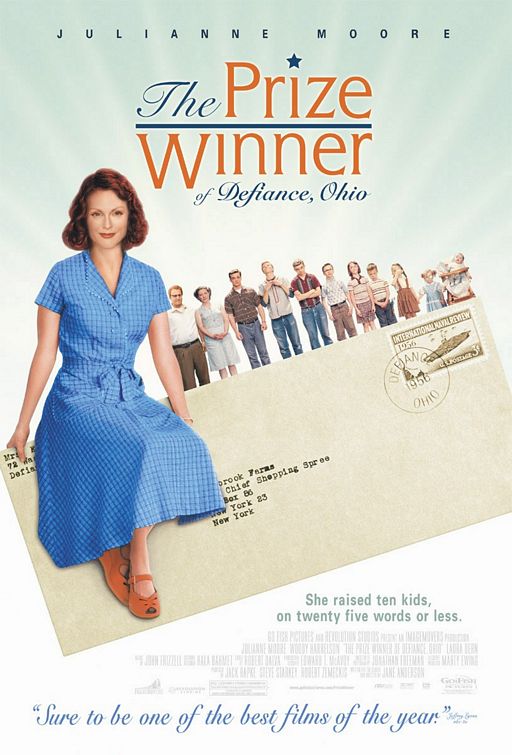
Cast: Julianne Moore, Woody Harrelson, Trevor Morgan, Ellary Porterfield, Laura Dern, Simon Reynolds, Martin Doyle, David Gardner
In the Fifties, hard-working mother of twelve, Evelyn Ryan (Moore) is a champion contester, winning prizes ranging from a couple of dollars to bicycles to washing machines, and sometimes, larger cash prizes. But with her husband Kelly (Harrelson) drinking away his wages, these prizes often serve as ways to prevent or avoid financial hardship from overwhelming the family entirely.
Raising ten kids, Evelyn often has to find creative ways of managing their finances, and while some of her wins help keep things going, she finds Kelly’s self-loathing and violent outbursts always stop them from having to stave off creditors such as the milkman, Ray (Reynolds) and the bank. Their family life is a mix of minor crises – one of her sons is arrested for theft, their car breaks down when Evelyn and daughter Tuff (Porterfield) take a trip – and major ones – Kelly remortgages their home without telling anyone, Evelyn suffers a fall and cuts her wrists on broken glass.
As the children grow up and begin to leave home, in the Sixties, Evelyn is contacted by Dortha Schaefer (Dern), a fellow contester who invites her to join a select group of women called the Affadaisies. All are contest winners several times over and all live similar lives of domestic drudgery enlivened by their successes. Her first trip to meet the group (where the car breaks down), leads to her being late home, and scares Kelly into thinking that Evelyn has left him. The ensuing confrontation sees Evelyn standing her ground for the first time.
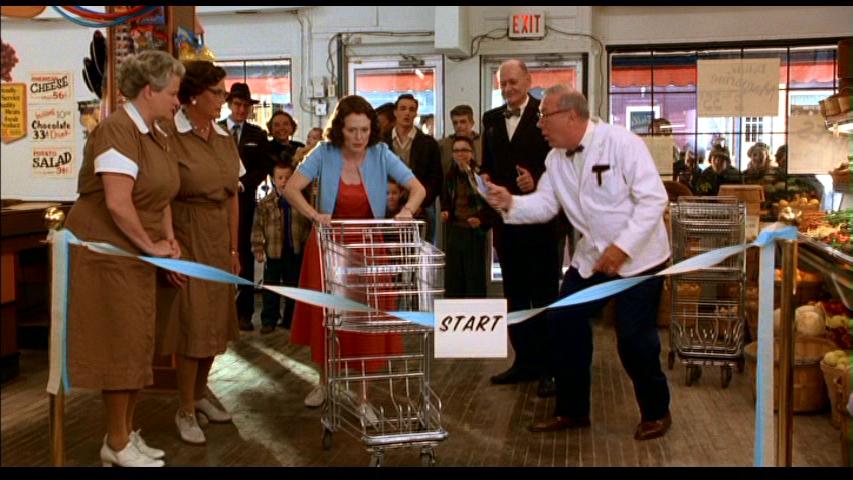
But when she discovers that Kelly hasn’t repaid the mortgage he took out without her knowing, Evelyn has to fall back on winning a major contest sponsored by Dr Pepper. If she can win, then it will mean their being able to keep their home, and the family, together.
An adaptation of the memoir by Terry “Tuff” Ryan, and with a screenplay by her, The Prize Winner of Defiance, Ohio is an overly saccharine but enjoyable distraction from the usual dramatics of real life stories, and features yet another effortless performance from Moore. On the surface, Evelyn is a recognisable fixture of the Fifties: the outwardly downtrodden housewife who’s a lot more clued-in than people think. Moore had already portrayed a more dramatic version of the role in Todd Haynes’ Far from Heaven (2002), but here she accentuates the nicer, more even-tempered qualities of her character, while retaining an inner steeliness that is more than a match for the violent paroxysms displayed by Harrelson’s Kelly.
As befitting an actress of Moore’s stature and skill, Evelyn Ryan isn’t just a perma-grinned caricature of a Fifties housewife, and nor is she written that way, but Anderson’s only-just-dialled-down-from-day-glo approach to the material often gets in the way, making Evelyn seem impossibly irrepressible despite endless provocation. But Moore shows the character’s strength and determination to keep her family together, and the willingness to make sacrifices to achieve that aim, in such a way that the viewer can only admire Evelyn and the efforts she goes to to ensure everyone is cared for and supported. She’s selfless beyond the call of duty, and Moore inhabits the role in such a way that you never question her motives or her view of the world around her.
Against this, Harrelson has his work cut out for him, as Kelly does appear – initially at least – to be the very embodiment of an emasculated man, his deep-rooted anger at the way his life has turned out eating him from within and spilling out in booze-fuelled rages. But Harrelson shows how hard Kelly is trying to be better, even if he can’t quite achieve it with any consistency, and the scene where Evelyn returns home from visiting the Affadaisies, and Kelly is mad with panic, shows a man who is terrified of being left alone with his demons. In a separate scene we learn the reason for his frustration and anger, and when it’s revealed, the level of Harrelson’s empathy for the character becomes apparent. Always hovering in the background, afraid and uncertain as to how to engage with his children, Kelly is the alcoholic elephant in the room, and Harrelson imbues him with a desperate, overwhelming neediness that makes him surprisingly sympathetic.
Covering over ten years, the movie does tend towards the repetitive in terms of its depiction of Evelyn’s success with contests, presenting as it does a parade of problems that are resolved by the acquisition of an appropriately helpful item (and culminating in the Dr Pepper contest), but there’s enough incident in-between times to make up for the feeling that it’s all been done before, and will be again. The sexual politics of the time are held up for scrutiny, with Doyle’s oily bank manager downplaying Evelyn’s role in financial matters, and Gardner’s blatantly unhelpful priest who exhorts her to “try a little harder” in her marriage.
Away from the performances, it’s the recreation of the Fifties and the early Sixties (in many ways a simpler time for the average American family) that most impresses, with Edward T. McAvoy’s production design, matched by Clive Thomasson’s set decoration, providing the movie with a look and a sheen that DoP Jonathan Freeman exploits at every opportunity. And Terry Ryan’s script is often at its most enjoyable when reprising Evelyn’s abilities at coming up with winning slogans and rhymes, their hokey cleverness a perfect summation of Evelyn’s own outlook on life: cheery, slightly folksy, and always optimistic.
Rating: 8/10 – some may find Evelyn Ryan’s unremittingly cheerful attitude to life a little too much to stomach, but to do so would be to miss the point of Moore’s performance and Terry Ryan’s reminiscences of her mother: that she viewed life as an adventure, whatever the circumstances; as such, The Prize Winner of Defiance, Ohio scores heavily and brightly as a tribute to a woman whose unwavering attitude can – and should be – looked upon as inspiration for us all.






 thedullwoodexperiment