• 10 Reasons to Remember…
  • A Brief Word About…
  • About
  • For One Week Only
  • Happy Birthday
  • Monthly Roundup
  • Old-Time Crime
  • Other Posts
  • Poster of the Week
  • Question of the Week
  • Reviews
  • Trailers

thedullwoodexperiment

~ Viewing movies in a different light

thedullwoodexperiment

Tag Archives: 1974

Christine (2016)

20 Thursday Apr 2017

Posted by dullwood68 in Movies

≈ 1 Comment

Tags

1974, Antonio Campos, Biography, Christine Chubbuck, Drama, Michael C. Hall, Rebecca Hall, Review, Sarasota, Tracy Letts, True story, TV News, WXLT
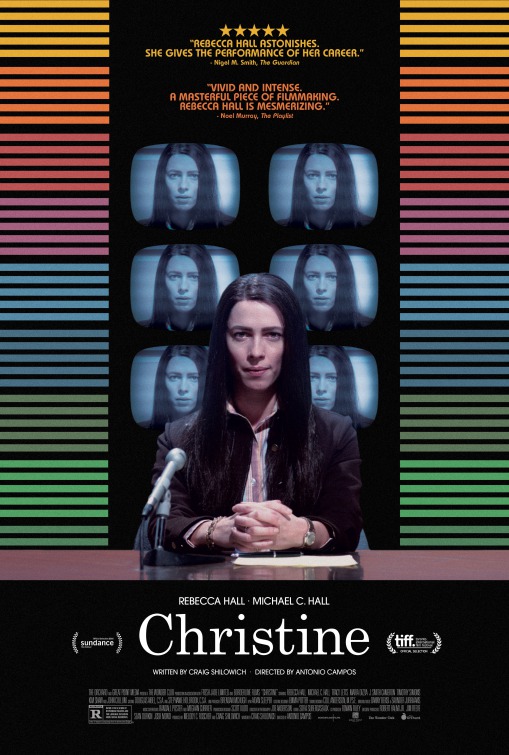
D: Antonio Campos / 119m

Cast: Rebecca Hall, Michael C. Hall, Tracy Letts, Maria Dizzia, J. Smith-Cameron, Timothy Simons, Kim Shaw, John Cullum

In the Spring of 1974, Christine Chubbuck (Hall) was a twenty-nine year old news reporter working for Channel WXLT in Sarasota, Florida. She was single, she lived with her mother, Peg (Smith-Cameron), and she had been given her own talk show on WXLT called Suncoast Digest, in which she would focus on local people and community activities. But Christine also suffered from depression, and could be up one moment and down the next (nowadays she would likely be diagnosed as having bi-polar disorder). Her depression could lead to extreme mood swings, and she would often push people away even though the few friendships she had were very important to her. And she regularly complained that the news stories she, and the station, were covering weren’t interesting enough, and that the station should focus more on regular people’s lives and what those lives were really like.

This kept her at odds with news director Mike Simmons (Letts), and the two would have regular run-ins as Christine tried to emphasise the various ways she felt the station wasn’t living up to its potential. Simmons wanted “juicier” stories about murder and other crimes; Christine felt the station should focus more on local people and the drama inherent in their lives. Simmons didn’t. Also at this time, the owner of WXLT, Bob Anderson (Cullum), was looking for two of the news team to transfer to Baltimore to a new station he’d recently purchased. Lead anchor George Peter Ryan (Hall) was a likely candidate, but Christine felt that she could be the other person Anderson was looking for.

Christine’s determination to be that other person led her to make some questionable decisions in relation to her work, and she came close to alienating Simmons for good. When she discovered that she wouldn’t be going to Baltimore (even after speaking directly to Anderson), Christine’s depression seemed to be under control. Her mood swings disappeared, she was more agreeable to her fellow co-workers, and she apologised to Simmons. She also asked to helm a Suncoast Digest piece direct to camera, something she’d never done before. Simmons agreed, and on the morning of 15 July 1974, Christine became a news story herself…

In telling the last few months in the life of Christine Chubbuck, Antonio Campos and screenwriter Craig Shilowich have fashioned the kind of Seventies-based journalistic enquiry that wouldn’t look out of place when compared to similar movies made at the time. With its drab Seventies decor and often drabber costume design (brown was definitely the colour back then), Christine pays homage to an era when news reporting in the US was heavily community-based – parochial even – and sensationalism was just beginning to take hold (when one of Christine’s reports is bumped in favour of a murder outside their area, she’s informed it’s because it’s what the viewers want to see). The movie eloquently and confidently recreates the period (in all its dreary glory), and provides a perfect backdrop for its tale of a real-life news reporter who could never understand why her work wasn’t as well-regarded as she expected.

Christine’s issues at work were exacerbated by her mental health issues, and the movie spends a lot of time reinforcing the idea that she was unwell. There are references to a previous “episode” that occurred before she and her mother moved to Sarasota; Christine herself acknowledges at times her own inability to connect with the people around her (she seems more confident with strangers, something that’s noted but not examined too closely); and her continual on-again, off-again reactions to her colleagues speak effectively of someone struggling to make sense of her place in the harried world of news journalism.

That Christine Chubbuck suffered from a variety of mental health issues is clear from Shilowich’s sympathetic and engrossing screenplay, and Hall gives a bravura performance, imbuing the troubled newswoman’s lack of social skills, and her off-kilter idea of professional balance with a scary, aggressive approach that initially makes her a hard character to like. But with the knowledge that she is ill, the movie is able to provide a sympathetic hook for the audience to hold on to, even when Christine is being manipulative and horrible to her mother, berating Simmons for treating her badly, or when she mistreats her best friend and colleague, Jean (Dizzia).Through all this and more, Hall never loses sight of the woman who is trapped behind the cold veneer of mental illness, and whose sense of self-worth is only as strong as the approbation she receives from the people around her (and which she then refutes). It’s an often distressing performance, and one that’s tempered by a refusal to soften the blow of certain scenes and images (it also makes you wonder how on earth Meryl Streep could have received an Oscar nomination for Florence Foster Jenkins when Hall’s portrayal is on another level entirely).

Other aspects of Christine’s personality, character and history are explored, such as the work she did with children with intellectual disabilities, adopting a puppet show approach to teaching them life skills. The movie uses these shows to explore the depth of Christine’s own feelings about various topics, and they retain an added poignancy thanks to the knowledge that though Christine is passing on sound advice, the viewer is aware that it’s advice she herself won’t be able to follow. In a scene where Ryan takes her to a trancendental analysis meeting, Christine expresses all the things that are wrong with her life, including the lack of a partner and/or children. This is the crux of the matter: she doesn’t want to be alone anymore. She’s fast approaching thirty, is to all intents and purposes alone in her life, can’t see a way forward, and decides on a course of action that will deal with everything that contributes to her being depressed.

Anyone aware of Christine Chubbuck and what she did that baleful July morning in 1974, will already know the movie’s outcome, but what’s remarkable about the period before that day, and the way that both Shilowich and Campos treat it, is that it’s not until the last ten or twelve minutes that Christine’s fate is sealed. There are a couple of foreshadowings that viewers who are “in the dark” may well pick up on, but as well as its self-destructive mental health theme, this is the story of a woman fighting for recognition in an industry that was inherently sexist, and which was on the verge of becoming less conventional and more exploitative. This subplot is given enough screen time that it adds to the sense of Christine being beleaguered from all sides, and her efforts to break free and get to Baltimore all the more understandable. But it’s also Christine’s last chance to salvage something from her time at WXLT, and it’s only then that her “solution” presents itself. With both her personal and professional lives coming to a standstill, her decision has an inevitability about it that the movie has avoided delving into up until then.

Throughout, Campos’ direction is solid, sympathetic and invigorating. He wisely keeps the focus on Hall, while giving the likes of Letts and Michael C. Hall plenty of room to flesh out their characters and make them as credible as they can (in reality, neither Ryan nor Simmons had as much involvement in Christine’s life as they do here, and sometimes it shows). The hustle and bustle of the newsroom is downplayed in favour of effective character beats, while Joe Anderson’s muted yet moody cinematography is a perfect match for the emotional troubles Christine experiences. There’s a whole lot of heart and craft here, and as an examination of one person’s bitter disappointment with the hand Life has dealt her, it’s also painfully affecting.

Rating: 8/10 – with a mesmerising and compelling performance from Hall (a career best in fact), and a wealth of sincerity and compassion when it comes to its central character, Christine is a remarkable movie let down only by its lack of back story, and some repetition in Christine’s dealings with Simmons; absorbing and vivid, and with a sly streak of humour running throughout, it’s also a movie that refuses to pass judgment on her, and which does its best to honour her memory without sensationalising it, something she would most likely have approved of.
Share this:

  • Click to share on X (Opens in new window) X
  • Click to share on Facebook (Opens in new window) Facebook
  • More
  • Click to print (Opens in new window) Print
  • Click to email a link to a friend (Opens in new window) Email
Like Loading...

10 Movies That Are 40 Years Old This Year – 2014

22 Wednesday Oct 2014

Posted by dullwood68 in Movies

≈ 1 Comment

Tags

1974, A Woman Under the Influence, Al Pacino, Biography, Bob Fosse, Chinatown, Comedy, Crime, Drama, Dustin Hoffman, Fear Eats the Soul, Francis Ford Coppola, Gena Rowlands, Gene Hackman, Gene Wilder, Gunnar Hansen, Horror, John Cassavetes, Lenny, Luis Buñuel, Mel Brooks, Movies, Rainer Werner Fassbinder, Reviews, Robert De Niro, Roman Polanski, The Conversation, The Godfather Part II, The Phantom of Liberty, The Taking of Pelham One Two Three, The Texas Chain Saw Massacre, Walter Matthau, Young Frankenstein

Pick any year and you’re likely to find ten really good films that were released during that year, but 1974 is a year when there were ten really great films released.  It’s not a year that stands out when first thought about, but upon closer inspection it seems like a banner year, when movie makers pulled out all the stops and gave us a succession of impressive movies that even now, still resonate and attract viewers in high numbers.  (And if truth be told, this list could have been stretched a little further, but 13 Movies That Are 40 Years Old This Year didn’t sound right.)  So, in no particular order, here are those ten movies we’re all still talking about.

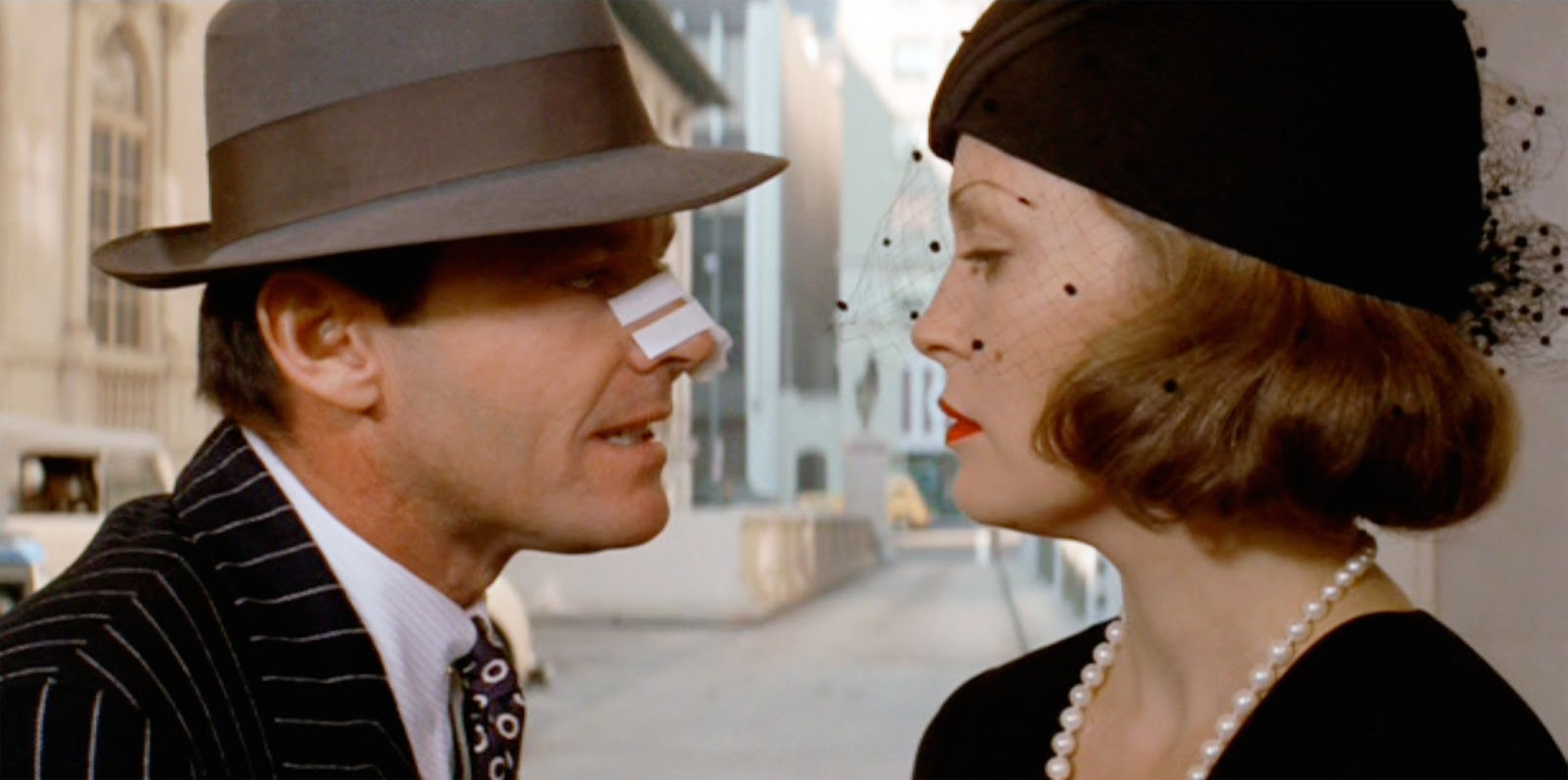
1) Chinatown – Roman Polanski’s stunning neo-noir thriller transformed Jack Nicholson into a superstar and made Robert Towne’s elaborate, gripping screenplay – one of the most compelling, intelligent screenplays ever written – the main reason for seeing the movie.  With superb performances from Faye Dunaway and John Huston, this incredible movie still has the power to unnerve and startle with its story of corruption and greed in 40’s Los Angeles, and that tragic revelation.

Chinatown - scene

2) Lenny – Revisiting the life of counter-culture, angst-ridden comic Lenny Bruce was always going to depend on the actor playing him, but Dustin Hoffman turns in an amazing, detailed performance that is possibly his best ever.  With a career best turn from Valerie Perrine, deft, sympathetic direction from Bob Fosse, and a grimy, authentic recreation of the clubs where Bruce vented his anger at the hypocrisies of society, Lenny still has the potential to shock and surprise, and takes no prisoners (just like Bruce himself).

3) Fear Eats the Soul – German auteur Rainer Werner Fassbinder had made a number of excursions into movies for TV before he wrote and directed this vital, important tale of the relationship between a Moroccan migrant worker (the soulful El Hadi ben Salem) and a German woman in her mid-sixties (the affecting Brigitte Mira). Ageism and racism are given short shrift by Fassbinder’s script, and the growing relationship is portrayed naturally and with little sentiment.  It’s a dour movie, to be sure, but uplifting at the same time.

4) The Godfather Part II – The crowning glory of Francis Ford Coppola’s career and a movie that’s nigh on faultless, The Godfather Part II is the classic example of a sequel that is better than its predecessor… so, so much better.  Even Brando’s presence isn’t missed.  With its flashback sequences detailing the origin of Vito Corleone’s role as Godfather conflated with the inexorable rise of his son Michael to the same position, this has tragedy and triumph in equal measure, and features astonishing achievements in directing, scripting, acting, cinematography, sound, editing, costumes, art direction, and set design.  In short, it’s a masterpiece.

Godfather Part II, The - scene

5) The Texas Chain Saw Massacre – With its fierce, tension-wringing set up and feral, nightmarish family of cannibals, Tobe Hooper’s second feature still has the power to shock, and leave audiences feeling drained by the end.  The iconic image of Gunnar Hansen with a literal “face”-mask and revving a chainsaw – once seen, never forgotten – sums up the movie’s terrifying approach to its subject matter, and confirms (if anyone needed reminding) that low budget horror can be startling, original and a once in a lifetime experience.

6) A Woman Under the Influence – Possibly the finest examination of mental illness within the family, John Cassavetes’ stinging, heart-rending drama features a tour-de-force performance from Gena Rowlands as the emotionally downtrodden Mabel, a woman whose ill treatment by her husband and children leads her to suppress any positive feelings for fear of being judged as “unbalanced”.  Not a movie for everyone but one that isn’t afraid to confront a complex, contentious issue with poise and a piercing intelligence.

7) The Phantom of Liberty – If you like your movies chock-full of symbolism, surrealism and absurdist humour, then Luis Buñuel’s collection of barely connected episodes will capture your attention and never let go.  It’s a modern masterpiece of (mis)direction and subversive behaviour, and features a seasoned cast that includes Jean Rochefort, Monica Vitti and Adolfo Celi, all of whom enter into the spirit of things with undisguised gusto.

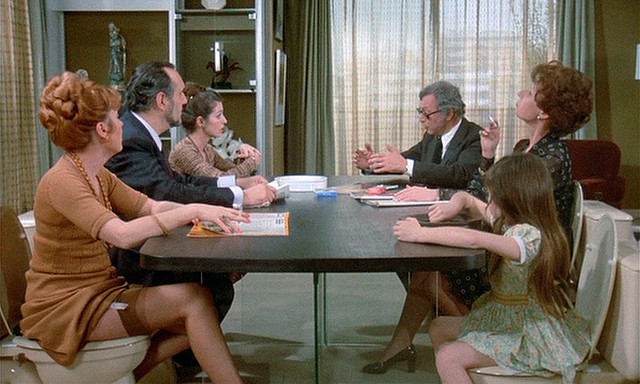
Phantom of Liberty, The - scene

8) The Conversation – It’s that man Coppola again, this time with an introspective low-key look at the self-contained life of a surveillance expert (the superb Gene Hackman) who finds himself drawn – against his better judgment – into a perfectly weighted mystery.  The chilly, withdrawn mise-en-scene is expertly crafted, and Coppola’s script delivers more and more as the movie heads toward its incredible denouement.  To release both this and The Godfather Part II in the same year – well, that’s just insane.

9) Young Frankenstein – Mel Brooks’ finest hour, even though Blazing Saddles was also released in ’74, this grand homage to the Universal horrors of the 30’s and 40’s is an undeniable treat, full of terrific one-liners – “To the lumber yard!” – and wonderful visual flourishes.  Co-writers Brooks and Gene Wilder are on top form, and their affection for the Fronkensteen movies made by Universal adds to the joy of watching Mary Shelley’s classic tale unfold in its own, very unique manner.  And the “Puttin’ on the Ritz” sequence is just inspired.

10) The Taking of Pelham One Two Three – Ignore the turgid remake with Denzel Washington and John Travolta, this is ten times as good and ten times as gripping.  Walter Matthau is the grizzled cop engaged in a battle of wits with train hijacker Robert Shaw, and as the movie ratchets up the tension, audiences are treated to one of the finest thrillers ever made.  Bravura movie making from all concerned but anchored by a fantastic job of direction by the underrated Joseph Sargent.

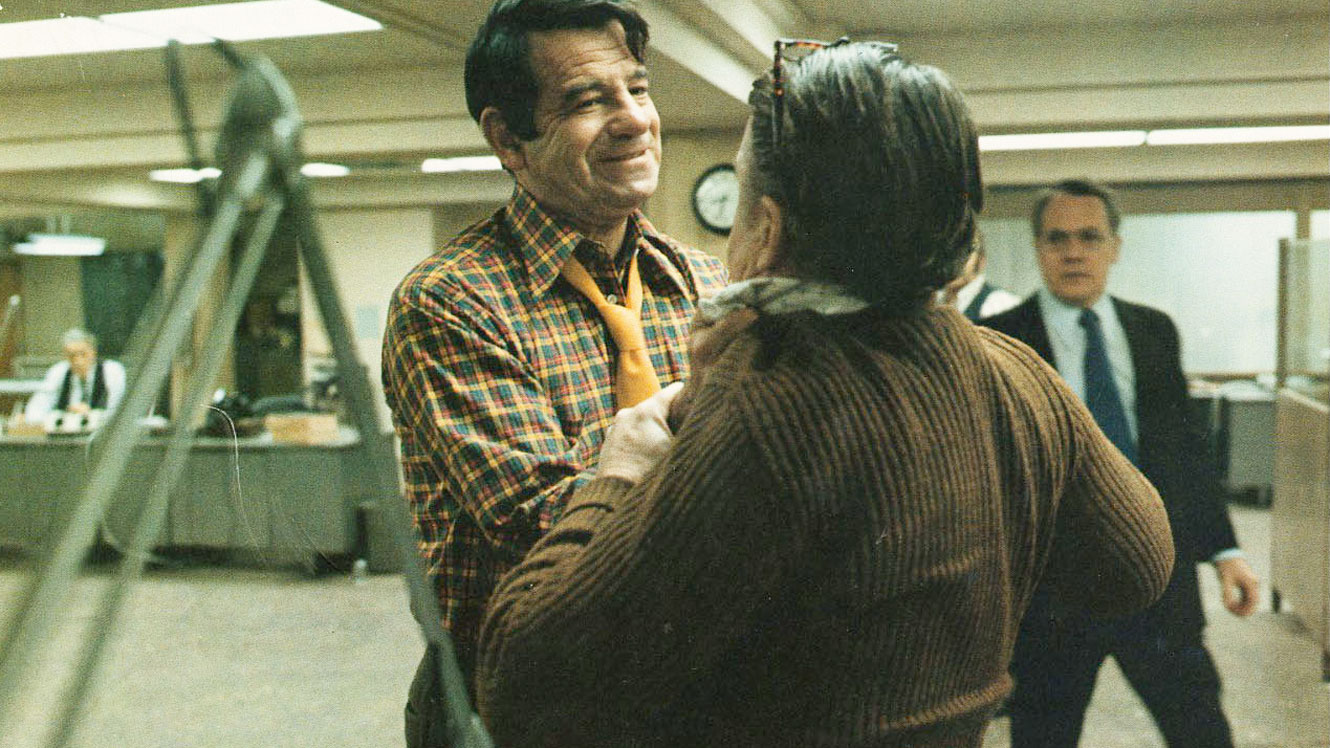
Taking of Pelham One Two Three, The - scene

If you agree or disagree with my choices, feel free to let me know.  And if there’s another year with an equally brilliant selection of movies released, feel free to let me know as well.  But more importantly, if you haven’t seen some or all of the movies listed above, then what are you doing reading this?  Get out there and watch them!

Share this:

  • Click to share on X (Opens in new window) X
  • Click to share on Facebook (Opens in new window) Facebook
  • More
  • Click to print (Opens in new window) Print
  • Click to email a link to a friend (Opens in new window) Email
Like Loading...

Blog Stats

  • 486,528 hits

Recent Posts

  • 10 Reasons to Remember Bibi Andersson (1935-2019)
  • Fantasia (1940)
  • Dances With Wolves (1990) – The Special Edition
  • Kiss of the Spider Woman (1985)
  • The Three Musketeers (1973)

Top Posts & Pages

  • Lost for Life (2013) - Another Look
    Lost for Life (2013) - Another Look
  • Lost for Life (2013)
    Lost for Life (2013)
  • About
    About
  • Mr. Topaze (1961)
    Mr. Topaze (1961)
  • Billy Lynn's Long Halftime Walk (2016)
    Billy Lynn's Long Halftime Walk (2016)
  • Winter's Tale (2014)
    Winter's Tale (2014)
  • The Hitman's Bodyguard (2017)
    The Hitman's Bodyguard (2017)
  • 5 Famous Movie Roles That Nearly Went to Someone Else
    5 Famous Movie Roles That Nearly Went to Someone Else
  • The Layover (2017)
    The Layover (2017)
  • Transcendence (2014)
    Transcendence (2014)
Follow thedullwoodexperiment on WordPress.com

Blogs I Follow

  • Rubbish Talk
  • Film 4 Fan
  • Fast Film Reviews
  • The Film Blog
  • All Things Movies UK
  • Interpreting the Stars
  • Let's Go To The Movies
  • Movie Reviews 101
  • TMI News
  • Dan the Man's Movie Reviews
  • Film History
  • Jordan and Eddie (The Movie Guys)

Archives

  • April 2019 (13)
  • March 2019 (28)
  • February 2019 (28)
  • January 2019 (32)
  • December 2018 (28)
  • November 2018 (30)
  • October 2018 (29)
  • September 2018 (29)
  • August 2018 (29)
  • July 2018 (30)
  • June 2018 (28)
  • May 2018 (24)
  • April 2018 (21)
  • March 2018 (31)
  • February 2018 (25)
  • January 2018 (30)
  • December 2017 (30)
  • November 2017 (27)
  • October 2017 (27)
  • September 2017 (26)
  • August 2017 (32)
  • July 2017 (32)
  • June 2017 (30)
  • May 2017 (29)
  • April 2017 (29)
  • March 2017 (30)
  • February 2017 (27)
  • January 2017 (32)
  • December 2016 (30)
  • November 2016 (28)
  • October 2016 (30)
  • September 2016 (27)
  • August 2016 (30)
  • July 2016 (30)
  • June 2016 (31)
  • May 2016 (34)
  • April 2016 (30)
  • March 2016 (30)
  • February 2016 (28)
  • January 2016 (35)
  • December 2015 (34)
  • November 2015 (31)
  • October 2015 (31)
  • September 2015 (34)
  • August 2015 (31)
  • July 2015 (33)
  • June 2015 (12)
  • May 2015 (31)
  • April 2015 (32)
  • March 2015 (30)
  • February 2015 (37)
  • January 2015 (39)
  • December 2014 (34)
  • November 2014 (34)
  • October 2014 (36)
  • September 2014 (25)
  • August 2014 (29)
  • July 2014 (29)
  • June 2014 (28)
  • May 2014 (23)
  • April 2014 (21)
  • March 2014 (42)
  • February 2014 (38)
  • January 2014 (29)
  • December 2013 (28)
  • November 2013 (34)
  • October 2013 (4)

Create a free website or blog at WordPress.com.

Rubbish Talk

Film 4 Fan

A Movie Blog

Fast Film Reviews

The Film Blog

The official blog of everything in film

All Things Movies UK

Movie Reviews and Original Articles

Interpreting the Stars

Dave Examines Movies

Let's Go To The Movies

Film and Theatre Lover!

Movie Reviews 101

Daily Movie Reviews

TMI News

Latest weather, crime and breaking news

Dan the Man's Movie Reviews

All my aimless thoughts, ideas, and ramblings, all packed into one site!

Film History

Telling the story of film

Jordan and Eddie (The Movie Guys)

Movie Reviews & Ramblings from an Australian Based Film Fan

Privacy & Cookies: This site uses cookies. By continuing to use this website, you agree to their use.
To find out more, including how to control cookies, see here: Cookie Policy
  • Subscribe Subscribed
    • thedullwoodexperiment
    • Join 481 other subscribers
    • Already have a WordPress.com account? Log in now.
    • thedullwoodexperiment
    • Subscribe Subscribed
    • Sign up
    • Log in
    • Report this content
    • View site in Reader
    • Manage subscriptions
    • Collapse this bar
 

Loading Comments...
 

    %d