• 10 Reasons to Remember…
  • A Brief Word About…
  • About
  • For One Week Only
  • Happy Birthday
  • Monthly Roundup
  • Old-Time Crime
  • Other Posts
  • Poster of the Week
  • Question of the Week
  • Reviews
  • Trailers

thedullwoodexperiment

~ Viewing movies in a different light

thedullwoodexperiment

Tag Archives: Archival footage

They Shall Not Grow Old (2018)

16 Tuesday Oct 2018

Posted by dullwood68 in Movies

≈ Leave a comment

Tags

14-18-Now, 3D, Archival footage, Colourisation, Documentary, Imperial War Museum, Peter Jackson, Restoration, Review, World War I
D: Peter Jackson / 99m

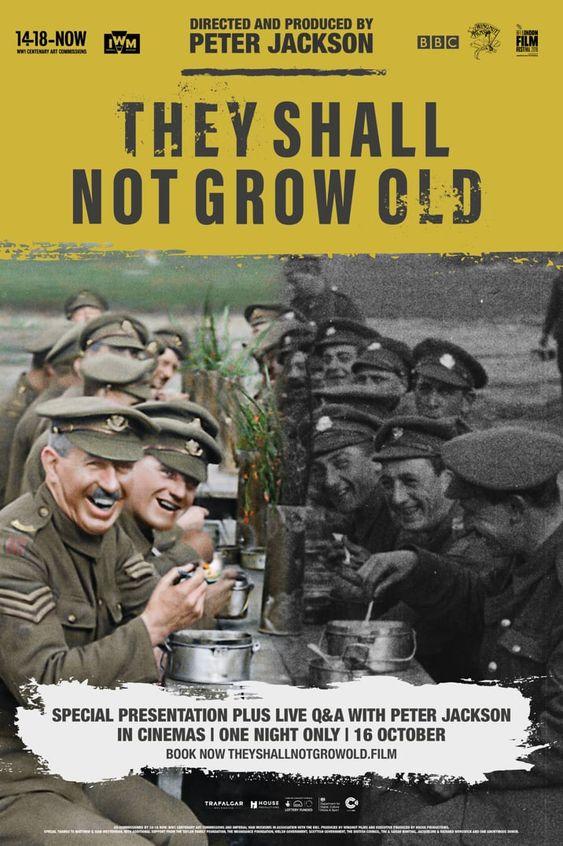
Four years ago, Peter Jackson was approached by the 14-18-Now organisation to make a thirty minute documentary on the First World War to mark its hundredth anniversary. The only proviso was that he use archival footage held at London’s Imperial War Museum. Jackson readily agreed but realised that the surviving footage would need to be restored in order to present the best possible version of the movie he was going to make. In the end this meant a long, painstaking process that involved cleaning up the material, correcting a variety of frame rates to today’s standard of twenty-four frames a second, and then both colourising it and converting it into 3D. With recordings of World War I veterans conducted by the BBC during the Sixties making up the soundtrack, They Shall Not Grow Old (a transposition of the quote by Laurence Binyan), is a stunningly immersive and emotive experience that brings the so-called “Great War” to life in a way that has never been seen before. The application of modern technology gives the documentary an immediacy that’s both powerful and, in places, quite profound. And thankfully, what was meant to be a thirty minute piece, has been expanded to nearly a hundred minutes; and Jackson doesn’t waste a single one of them.
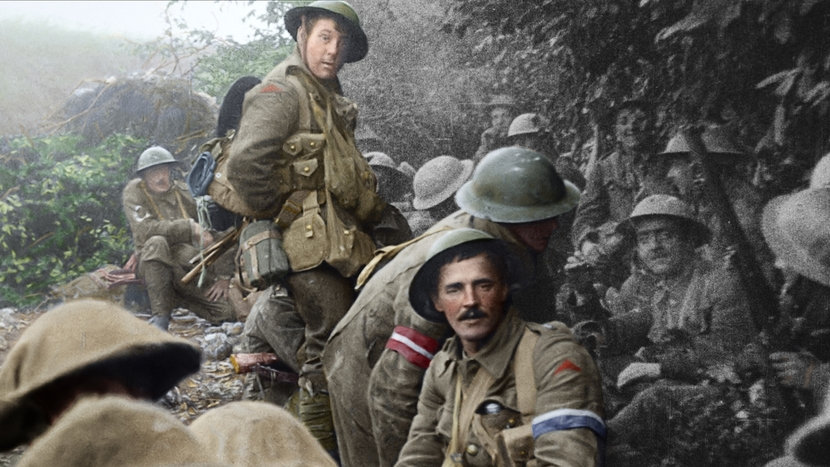
The movie doesn’t begin with this new, remastered footage. Instead, we see old, damaged images of servicemen walking past a static camera, and it’s a little jerky, and either a little faded or too bright, but it’s what we’re used to seeing. But as the movie progresses, the images begin to improve. Black and white gives way to colour, the 3D becomes sharper and more pronounced (though without becoming distracting), and the footage itself takes on more and more detail. What emerges is a compelling visual exploration of a serviceman’s life on the battlefield, when fighting and at rest, and from the time war was declared and men – and especially teenagers – rushed to take up arms, to the Armistice and the problems they faced when they returned home. Jackson tells the story of the war from the perspective of the British (naturally), but also makes room for the Germans, and the similarities between the men who fought on both sides. There’s footage of British and German medics working side by side to save the injured and the dying, and examples of the lack of ill will shown to German captives. Jackson makes the point very succinctly: neither side knew why they were fighting, and were sympathetic towards, and respectful of, each other.
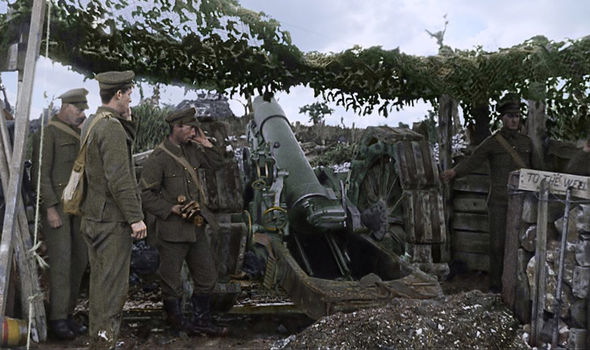
But while the visuals are the movie’s “main attraction” as it were (and rightly so), where Jackson truly excels is in the decision to use those recordings from the BBC. So much detail is present in these remembrances that almost every single one of them sheds light on the emotions and feelings and opinions of those who fought. These voices from the past vividly illustrate the hopes and fears that were felt at the time, and they remind us that initially, many thought the war would be an adventure. There’s humour too, a reminder that these men couldn’t allow themselves to be overwhelmed by the nature of their situation in the trenches. And then, as if these recollections aren’t enough, Jackson goes one step further: he gives voices to the men in the archival footage through the use of lip reading experts who examined the footage and worked out what was being said. Now this footage comes complete with an audio track that would never have been heard otherwise. It’s disorientating at first, but the effect is incredible: combined with the colour and the increased detail of the image, it’s as if we’re seeing contemporary footage, and not imagery that’s a hundred years old. Jackson has done something extraordinary: he’s made the past look and sound as real as the present.

Rating: 9/10 – for some, this may prove to be Peter Jackson’s finest work (yes, even better than The Lord of the Rings trilogy), and on many levels it is; a triumph of technology plus a philosophical approach to the material that focuses on the men who fought rather than the reasons for their fighting, this is hugely impressive, and a powerful reminder of the human ability to endure and/or overcome the worst of adversities.


Share this:

  • Click to share on X (Opens in new window) X
  • Click to share on Facebook (Opens in new window) Facebook
  • More
  • Click to print (Opens in new window) Print
  • Click to email a link to a friend (Opens in new window) Email
Like Loading...

Amy (2015)

24 Sunday Jan 2016

Posted by dullwood68 in Movies

≈ Leave a comment

Tags

Alcohol, Amy Winehouse, Archival footage, Asif Kapadia, Back to Black, Blake Fielder-Civil, Career, Documentary, Drugs, Frank, Grammy's, Mitch Winehouse, Review, Singer, Tony Bennett

Amy

D: Asif Kapadia / 128m

With: Amy Winehouse, Juliette Ashby, Nick Shymansky, Mitch Winehouse, Blake Fielder-Civil, Lauren Gilbert, Sam Beste, Raye Cosbert, Andrew Morris, Lucian Grainge, Tyler James, Yasiin Bey

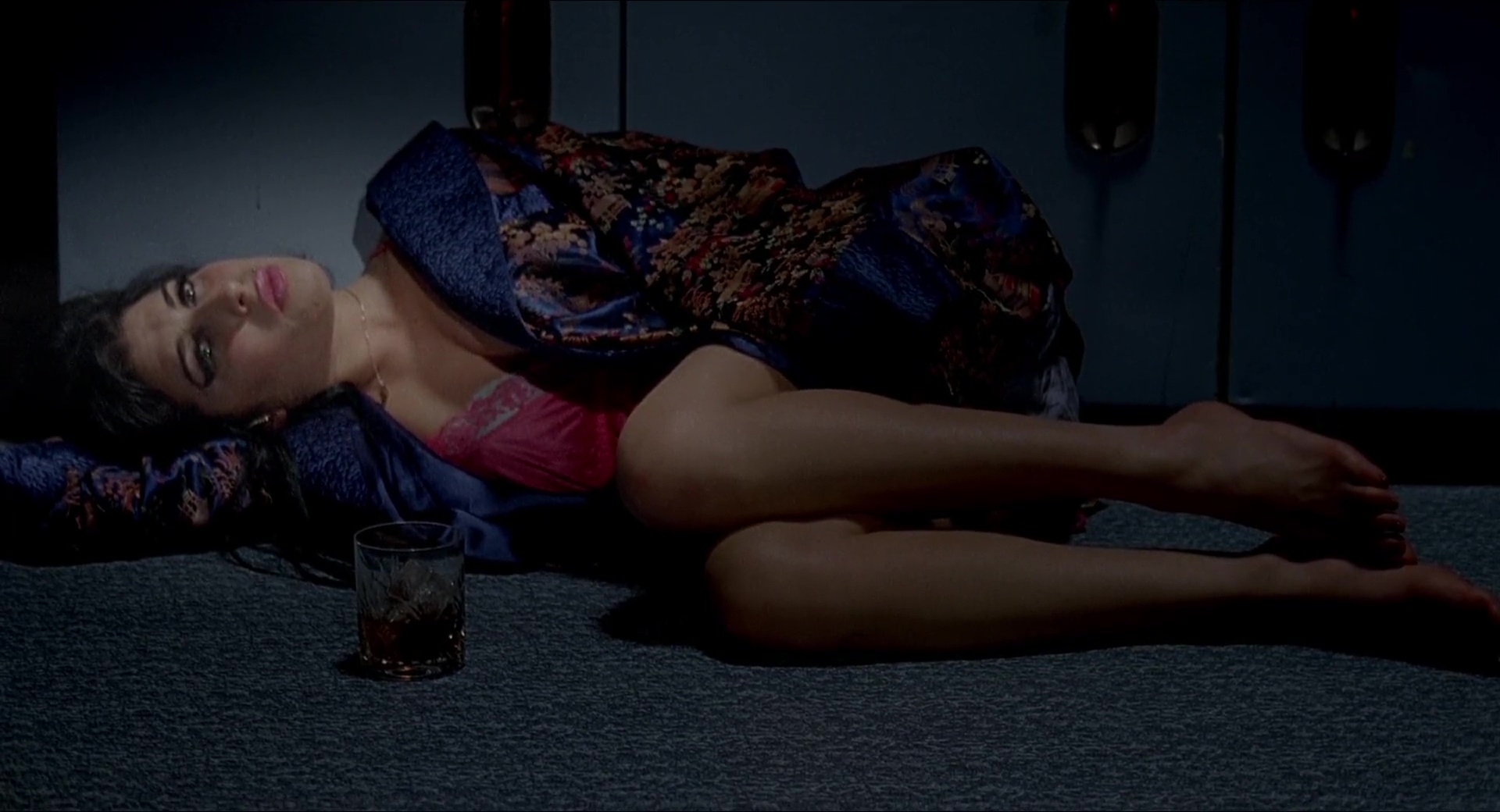
One of the most talented singers of her generation, Amy Winehouse “arrived” on the music scene in 2003 with the release of her first album, Frank. Eight years later she was dead from alcohol poisoning. She was in the public eye so often, and so often for the wrong reasons, that a lot of people felt they knew her. Unable to deal with the fame and fortune she so justly deserved, she retreated into a life of alcohol and drug addiction and repeated, unsuccessful attempts to throw off the demons that plagued her. One of her idols, Tony Bennett, said of her, “she was the only singer that really sang what I call ‘the right way’ because she was a great jazz-pop singer”. But why did she die at the age of twenty-seven, alone and with only her bodyguard checking on her occasionally?

Sadly, Amy doesn’t provide any answers. Nor does it probe too deeply into why the singer had such an addictive personality, or why she had been bulimic for most of her life (a topic which is mentioned partway through then dropped as a point of fact that needs no further investigation). It also fails to explore the differences between Amy Winehouse the world-famous singer/celebrity, and Amy Winehouse the private person. While there are times when her friends and family comment on her behaviour, and there’s a large amount of regret that can be felt, no one seems to have really known what made Amy tick during those brief eight years when she was so well known and so highly regarded.

Amy - scene3

The reason that Amy fails to do this is partly due to the very cleverly constructed way in which it recounts Amy’s life, charting her teenage home life and early success with Frank, through to her increasing use of drugs and her alcohol dependency before the further success of Back to Black. From there the pressures associated with such an unexpected and meteoric rise were compounded by her poor choice of partner – step forward, Blake Fielder-Civil – and the lack of support gained from her family, in particular her father, Mitch, whose lack of empathy for his daughter is incredible to witness. All this led to repeated, and entirely predictable relapses following stays in various rehab clinics. With no one attempting to deal with her bulimia – or get her to – Amy’s health was so compromised by 2011 that those close enough to her knew that her drinking would eventually kill her.

But Amy is effectively reportage, a trawl through the singer’s life that relies on a great deal of archival footage of Amy and her friends, Amy and her working relationships, Amy on stage, Amy in the public eye, and the contributions of many of the people who knew her personally and worked with her professionally. And while some of the early, pre-Frank footage is beguiling to watch, and fascinating in a morbid way (knowing how she would look in later life), the later footage, once her demons have made themselves felt, leads the movie into darker, more disturbing territory. It’s at this point that Amy moves away from bittersweet reflection and becomes a rehash of the public and private life we all saw develop over those eight years. We see the public appearances where she seems overawed and/or overwhelmed, the sight of someone with the light in their eyes slowly dying out, and we gain the sad realisation that this person’s life can only end in tragedy.

Amy - scene2

Did we always know this? Certainly Amy’s friends knew this, and it’s likely that her colleagues in the music industry knew this, and the movie, while not pointing any fingers directly (or with any intention of doing so), does however make one thing clear: no one did enough to stop it. Her friends stepped away because they couldn’t bear to watch her destroy herself, and her record company wouldn’t work with her unless she was clean (reasonable in itself but for Amy an ultimatum she was never going to achieve, not in the long-term). In the end, that’s why Amy died alone and with only her bodyguard occasionally checking in on her: she had nobody she could rely on to protect her.

The sadness and the largely unavoidable tragedy of all this is brought out by Kapadia’s firm control over the movie’s content, and while some people, particularly Mitch Winehouse, have subsequently decried Amy as having produced “an inaccurate narrative of Amy’s story”, there’s little doubt that in the last three years of her life, when her problems became insurmountable, that she was desperately unhappy and struggling to find direction in her life. You can see this illustrated best when she’s seen recording a duet with Tony Bennett, one of her life-long idols. The confidence that has seen her give outstanding vocal performances time and time again has deserted her; she keeps apologising for getting things wrong. Bennett continually reassures her but you can see from her eyes that Amy isn’t convinced; when the session is done, you can see how relieved she is that she’s got through it all. It’s moments like these, when she clearly wants to be at her best, but her best is too far away for her to grasp, that prove the most disturbing and the most upsetting.

Amy - scene1

Could Amy Winehouse have conquered her demons and still be making great records today? We’ll never know, but one thing we can be sure of: her short career gave us many wonderful recordings, and it’s these lasting treasures by which we should remember her, not as the drunk, confrontational, tragically lost figure she was in her last few years. She was talented, incredibly so, and Amy reminds us of that constantly, even as it charts her downward spiral. She was always about the music, always about the irresistable pull of it, and thanks to Kapadia’s inclusion of several of her most iconic and meaningful songs, Amy is still a reminder of just how talented she was, and how much she will be missed.

Rating: 8/10 – a fascinating documentary that tells a fascinating story, even if we think we’ve seen it all before, Amy mixes archival footage of the singer along with candid commentaries from the people who knew and worked with her to create a devastatingly human story of tragedy borne out of success; that it doesn’t make judgments (except very cleverly) or arrive at any conclusions are the only things that stop this from being any better than it already is.

Share this:

  • Click to share on X (Opens in new window) X
  • Click to share on Facebook (Opens in new window) Facebook
  • More
  • Click to print (Opens in new window) Print
  • Click to email a link to a friend (Opens in new window) Email
Like Loading...

Blog Stats

  • 486,528 hits

Recent Posts

  • 10 Reasons to Remember Bibi Andersson (1935-2019)
  • Fantasia (1940)
  • Dances With Wolves (1990) – The Special Edition
  • Kiss of the Spider Woman (1985)
  • The Three Musketeers (1973)

Top Posts & Pages

  • Lost for Life (2013) - Another Look
    Lost for Life (2013) - Another Look
  • Lost for Life (2013)
    Lost for Life (2013)
  • About
    About
  • Mr. Topaze (1961)
    Mr. Topaze (1961)
  • Billy Lynn's Long Halftime Walk (2016)
    Billy Lynn's Long Halftime Walk (2016)
  • Winter's Tale (2014)
    Winter's Tale (2014)
  • The Hitman's Bodyguard (2017)
    The Hitman's Bodyguard (2017)
  • 5 Famous Movie Roles That Nearly Went to Someone Else
    5 Famous Movie Roles That Nearly Went to Someone Else
  • The Layover (2017)
    The Layover (2017)
  • Transcendence (2014)
    Transcendence (2014)
Follow thedullwoodexperiment on WordPress.com

Blogs I Follow

  • Rubbish Talk
  • Film 4 Fan
  • Fast Film Reviews
  • The Film Blog
  • All Things Movies UK
  • Interpreting the Stars
  • Let's Go To The Movies
  • Movie Reviews 101
  • TMI News
  • Dan the Man's Movie Reviews
  • Film History
  • Jordan and Eddie (The Movie Guys)

Archives

  • April 2019 (13)
  • March 2019 (28)
  • February 2019 (28)
  • January 2019 (32)
  • December 2018 (28)
  • November 2018 (30)
  • October 2018 (29)
  • September 2018 (29)
  • August 2018 (29)
  • July 2018 (30)
  • June 2018 (28)
  • May 2018 (24)
  • April 2018 (21)
  • March 2018 (31)
  • February 2018 (25)
  • January 2018 (30)
  • December 2017 (30)
  • November 2017 (27)
  • October 2017 (27)
  • September 2017 (26)
  • August 2017 (32)
  • July 2017 (32)
  • June 2017 (30)
  • May 2017 (29)
  • April 2017 (29)
  • March 2017 (30)
  • February 2017 (27)
  • January 2017 (32)
  • December 2016 (30)
  • November 2016 (28)
  • October 2016 (30)
  • September 2016 (27)
  • August 2016 (30)
  • July 2016 (30)
  • June 2016 (31)
  • May 2016 (34)
  • April 2016 (30)
  • March 2016 (30)
  • February 2016 (28)
  • January 2016 (35)
  • December 2015 (34)
  • November 2015 (31)
  • October 2015 (31)
  • September 2015 (34)
  • August 2015 (31)
  • July 2015 (33)
  • June 2015 (12)
  • May 2015 (31)
  • April 2015 (32)
  • March 2015 (30)
  • February 2015 (37)
  • January 2015 (39)
  • December 2014 (34)
  • November 2014 (34)
  • October 2014 (36)
  • September 2014 (25)
  • August 2014 (29)
  • July 2014 (29)
  • June 2014 (28)
  • May 2014 (23)
  • April 2014 (21)
  • March 2014 (42)
  • February 2014 (38)
  • January 2014 (29)
  • December 2013 (28)
  • November 2013 (34)
  • October 2013 (4)

Create a free website or blog at WordPress.com.

Rubbish Talk

Film 4 Fan

A Movie Blog

Fast Film Reviews

The Film Blog

The official blog of everything in film

All Things Movies UK

Movie Reviews and Original Articles

Interpreting the Stars

Dave Examines Movies

Let's Go To The Movies

Film and Theatre Lover!

Movie Reviews 101

Daily Movie Reviews

TMI News

Latest weather, crime and breaking news

Dan the Man's Movie Reviews

All my aimless thoughts, ideas, and ramblings, all packed into one site!

Film History

Telling the story of film

Jordan and Eddie (The Movie Guys)

Movie Reviews & Ramblings from an Australian Based Film Fan

Privacy & Cookies: This site uses cookies. By continuing to use this website, you agree to their use.
To find out more, including how to control cookies, see here: Cookie Policy
  • Subscribe Subscribed
    • thedullwoodexperiment
    • Join 481 other subscribers
    • Already have a WordPress.com account? Log in now.
    • thedullwoodexperiment
    • Subscribe Subscribed
    • Sign up
    • Log in
    • Report this content
    • View site in Reader
    • Manage subscriptions
    • Collapse this bar
 

Loading Comments...
 

    %d