• 10 Reasons to Remember…
  • A Brief Word About…
  • About
  • For One Week Only
  • Happy Birthday
  • Monthly Roundup
  • Old-Time Crime
  • Other Posts
  • Poster of the Week
  • Question of the Week
  • Reviews
  • Trailers

thedullwoodexperiment

~ Viewing movies in a different light

thedullwoodexperiment

Tag Archives: Ben Whishaw

Monthly Roundup – July 2016

31 Sunday Jul 2016

Posted by dullwood68 in Movies

≈ Leave a comment

Tags

Action, Apache War Smoke, Apaches, Australia, Bank robbers, Banshee Chapter, Ben Whishaw, Benjamin Walker, Blair Erickson, Brendan Gleeson, Cambodia, Chris Hemsworth, Cillian Murphy, Crawl, Daniel Zirilli, Drama, Gena Rowlands, George Shevtsov, Georgina Haig, Gilbert Roland, Glenda Farrell, Harold F. Kress, Herman Melville, Historical drama, Hitman, Home invasion, Horror, In the Heart of the Sea, James Garner, Katia Winter, Literary adaptation, Moby Dick, Nantucket, Nicholas Sparks, Nick Cassavetes, Numbers stations, Offshore Grounds, Online journalist, Paul China, Paul Holmes, Project MK Ultra, Rachel McAdams, Reviews, Robert Horton, Romance, Ron Howard, Ryan Gosling, Steven Seagal, Ted Levine, Thailand, The Asian Connection, The Essex, The Notebook, Thriller, Tom Holland, Tonto Valley Station, True love, True story, Wells Fargo, Western, Whales

Crawl (2011) / D: Paul China / 80m

Cast: George Shevtsov, Georgina Haig, Paul Holmes, Lauren Dillon, Catherine Miller, Bob Newman, Andy Barclay, Lynda Stoner

Crawl

Rating: 7/10 – a hitman (Shevtsov) hired by an unscrupulous bar owner (Holmes) winds up injured while trying to leave town, and ends up playing a deadly game of cat-and-mouse with a waitress (Haig) when he seeks refuge in her home; a slow-burn thriller that takes its time and relies on tension and atmosphere to keep the viewer hooked, Crawl often belies its low budget, and features terrific performances from Shevtsov (in a role written expressly for him) and Haig, but stops short of being completely effective thanks to some awkward narrative choices and first-timer China’s lack of experience as a director.

The Asian Connection (2016) / D: Daniel Zirilli / 91m

Cast: John Edward Lee, Pim Bubear, Steven Seagal, Sahajak Boonthanakit, Byron Gibson, Byron Bishop, Eoin O’Brien, Michael Jai White

The Asian Connection

Rating: 3/10 – career criminal Jack Elwell (Lee) meets the love of his life, Avalon (Bubear), and decides that robbing a bank is the way to a financially stable relationship, but unfortunately the money he steals belongs to crime boss Gan Sirankiri (Seagal), and soon Jack is being coerced into robbing more of Sirankiri’s banks when one of his men (Boonthanakit) threatens to expose him; what could have been a moderately entertaining action thriller is let down by some atrocious acting (and not just from Seagal), some equally atrocious camerawork, editing that looks like it was done with a hatchet, and the kind of direction that gives “point and shoot” a bad name, all of which leaves The Asian Connection looking like something to be avoided at all costs.

Banshee Chapter (2013) / D: Blair Erickson / 87m

Cast: Katia Winter, Ted Levine, Michael McMillian, Corey Moosa, Monique Candelaria, Jenny Gabrielle, Vivian Nesbitt, Chad Brummett, William Sterchi

Banshee Chapter

Rating: 3/10 – a journalist (Winter) looks into the disappearance of a friend, and discovers a secret world of government experiments that are linked to strange radio broadcasts and the discredited MK Ultra program from the Sixties; a paranoid thriller with supernatural overtones, Banshee Chapter tries extra hard to be unsettling and creepy – much of it takes place at night and has been shot using low light – but fails to make its story of any interest to anyone watching, which means that Winter and Levine put a lot of effort into their roles but are let down by the tortuous script and Erickson’s wayward direction.

In the Heart of the Sea (2015) / D: Ron Howard / 122m

Cast: Chris Hemsworth, Benjamin Walker, Cillian Murphy, Tom Holland, Ben Whishaw, Brendan Gleeson, Michelle Fairley, Paul Anderson, Frank Dillane, Joseph Mawle, Charlotte Riley

In the Heart of the Sea

Rating: 5/10 – the writer, Herman Melville (Whishaw), convinces retired sailor Tom Nickerson (Gleeson) to talk about his experiences as a young boy at sea, and in particular his time aboard the Essex, a whaling ship that encountered a creature Melville will call Moby Dick; based on the true story of the Essex, and the voyage that saw it sunk by an enormous whale, In the Heart of the Sea is technically well made but lacks anyone to care about, avoids providing a true sense of the enormity of what happened, sees Ron Howard directing on auto-pilot, and leaves Hemsworth and Walker struggling to make amends for characters who are paper-thin to the point of being caricatures (or worse still, carbon copies of Fletcher Christian and William Bligh from Mutiny on the Bounty).

The Notebook (2004) / D: Nick Cassavetes / 123m

Cast: Ryan Gosling, Rachel McAdams, James Garner, Gena Rowlands, Sam Shepard, David Thornton, Joan Allen, James Marsden

The Notebook

Rating: 7/10 – in the late Thirties, a young man, Noah (Gosling), sets his cap for the girl of his dreams, Allie (McAdams), and though they fall in love, social conventions keep them apart, while in the modern day their story is told by an old man (Garner) to a woman with dementia (Rowlands); handsomely mounted and told with a genuine feel for the central characters and their travails, Nicholas Sparks’ The Notebook is an old-fashioned romantic drama that could have been made in the time period it covers, and which is bolstered by the performances of its four stars, as well as Cassavetes’ (son of Rowlands) sure-footed direction, glorious cinematography by Robert Fraisse, and a sense of inevitable tragedy that permeates the narrative to very good effect indeed.

Apache War Smoke (1952) / D: Harold F. Kress / 67m

Cast: Gilbert Roland, Glenda Farrell, Robert Horton, Barbara Ruick, Gene Lockhart, Harry Morgan, Patricia Tiernan, Hank Worden, Myron Healey
Apache War Smoke

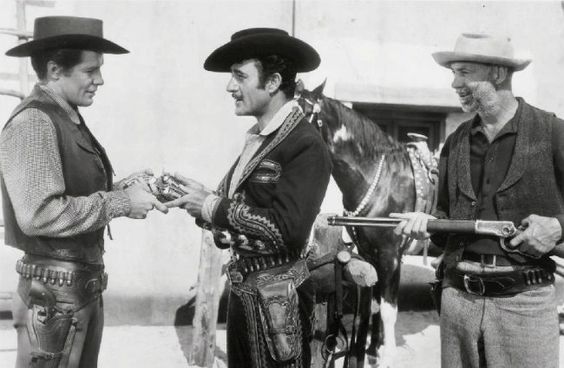
Rating: 6/10 – a stagecoach station finds itself under attack from angry Apaches after a white man kills several of their tribe – and the evidence points to the station agent’s father, a wanted outlaw (Roland), as the killer; a compact, fast-paced Western, Apache War Smoke zips by in low-budget style thanks to the efforts of two-time Oscar winner Kress – editing awards for How the West Was Won (1962) and The Towering Inferno (1974) – and a cast who enter willingly into the spirit of things, making this studio-made Western set in Tonto Valley Station(!) a surprising treat.

Share this:

  • Click to share on X (Opens in new window) X
  • Click to share on Facebook (Opens in new window) Facebook
  • More
  • Click to print (Opens in new window) Print
  • Click to email a link to a friend (Opens in new window) Email
Like Loading...

Suffragette (2015)

26 Saturday Mar 2016

Posted by dullwood68 in Movies

≈ Leave a comment

Tags

Anne-Marie Duff, Ben Whishaw, Brendan Gleeson, Carey Mulligan, David Lloyd George, Derby Day, Drama, Emmeline Pankhurst, Equality, Helena Bonham Carter, Historical drama, Laundry worker, Meryl Streep, Panks, Review, Sarah Gavron, True story, Voting rights, Women's rights

Suffragette

D: Sarah Gavron / 106m

Cast: Carey Mulligan, Helena Bonham Carter, Anne-Marie Duff, Brendan Gleeson, Ben Whishaw, Romola Garai, Natalie Press, Geoff Bell, Samuel West, Finbar Lynch, Adrian Schiller, Meryl Streep

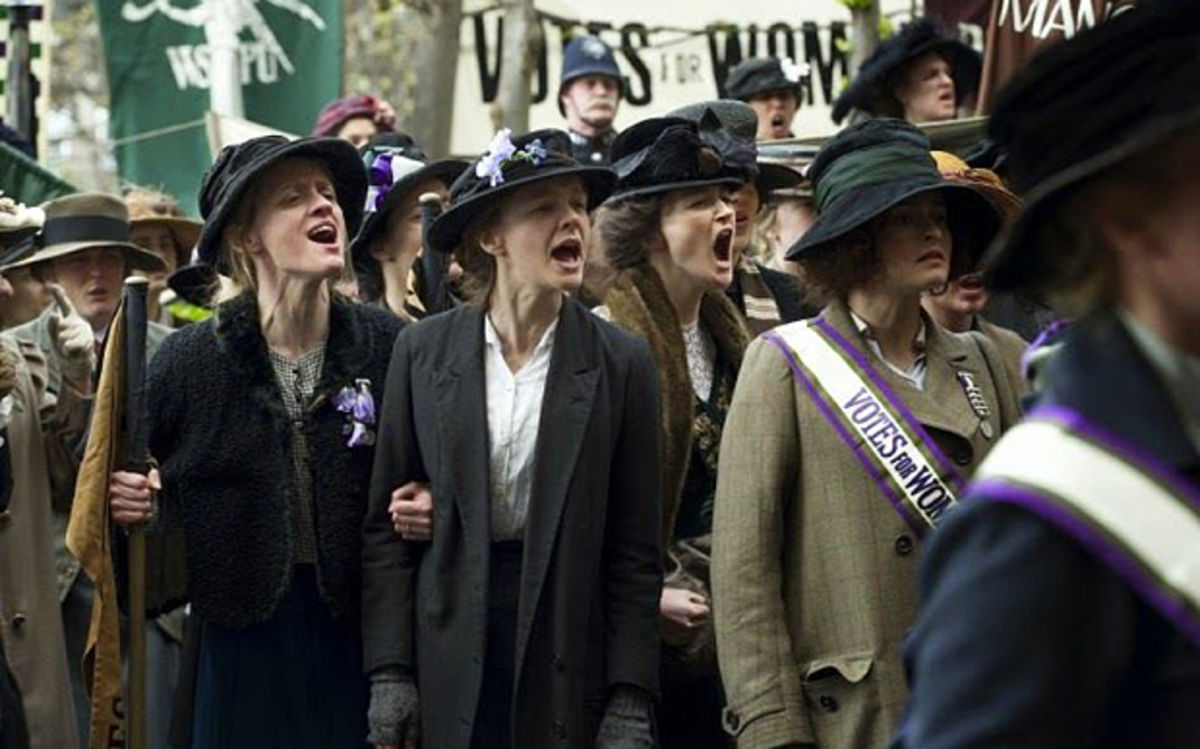
If you were to ask a hundred people, what was the Women’s Social and Political Union, and what was its purpose, most, if not all, wouldn’t be able to tell you. And yet the WSPU is perhaps one of the most important organisations in British history. Without its members and their tireless work, often in the face of police brutality and political intransigence, it’s very likely that women in the UK would not have been given the right to vote as early as they were (and even then it wasn’t until 1928). Suffragette, which looks at the Union’s activities in the run up to World War I, makes clear the level of sacrifice some of its members had to make in order to change the British political system for the better.

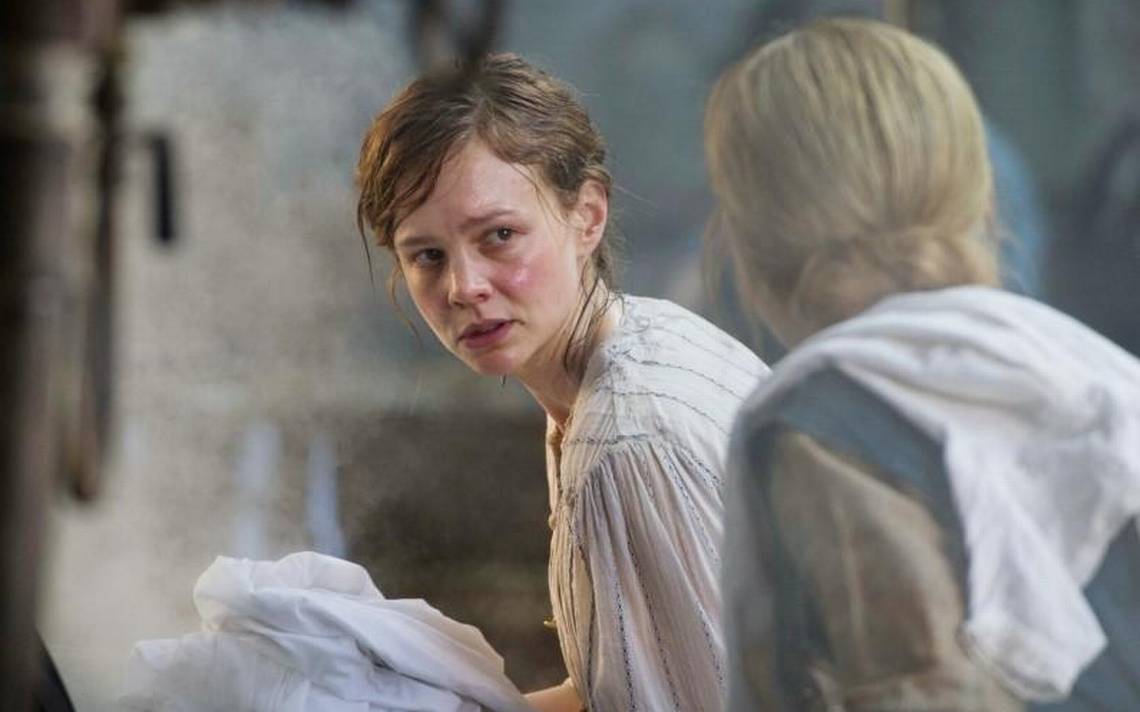
The struggle is seen through the eyes of laundry worker Maud Watts (Mulligan), wife of Sonny (Whishaw) and mother of their son, George. Maud is hardworking, has gained a certain degree of respect in the workplace, but at twenty-four has little future beyond what she’s already achieved. She appears to be accepting of her lot in life, but when a co-worker, Violet Miller (Duff), falls foul of their boss, Norman Taylor (Bell), Maud comes to her rescue and the two women strike up a friendship. Maud learns that Violet is a supporter of the women’s movement, and while she admires Violet’s courage and determination, she has no intention of becoming a suffragette.

Suffragette - scene2

An invitation to speak before then Chancellor of the Exchequer, David Lloyd George (Schiller), is arranged for Violet, but she is unable to speak. Maud stands in for her, and is invited to tell her story. Lloyd George is clearly sympathetic, but when an announcement is made some time later, the law remains unchanged. Caught up in the violent struggle that ensues, Maud is arrested. She is questioned by Inspector Arthur Steed (Gleeson), who has been tasked with rounding up the Union’s ringleaders, including its head, Emmeline Pankhurst (Streep). Maud denies being a suffragette, but when she’s released a week later, it’s obvious that people think she is. Sonny is upset by her involvement, and she promises to stay away from the WSPU and its members. But when a secret meeting, to be addressed by Emmeline Pankhurst is arranged, Maud can’t help but attend.

From there, along with Violet and a local pharmacist, Edith Ellyn (Carter), Maud becomes more and more involved in the WSPU and its plans. Unable to deal with her increasing involvement, Sonny kicks her out, and refuses to let her see George. In the meantime, she leaves the laundry as well, and devotes her time to the Union. She takes part in the destruction of postboxes and telephone lines, and other acts of civil disobedience. She’s arrested again, and Steed offers her a choice: inform on the Union’s activities, or face longer spells in jail. With the women under both suspicion and surveillance, and with Pankhurst exhorting them to increase their attacks on the establishment, Maud has to decide if her future resides with the WSPU.

Suffragette wears its heart on its sleeve right from the start. As a movie about the struggle of women to gain the right to vote it takes an earnest, pragmatic approach, and while it often strays from the truth in its efforts to shoehorn Maud into the events that did happen (particularly in the scenes set at Epsom on Derby Day, when Emily Wilding Davison was run down by the King’s horse), it also narrows its focus too much in its efforts to tell its story.

Suffragette - scene3

By choosing to tell the story of the WSPU’s struggle through the eyes of Maud, a neophyte in terms of the political landscape of the times, Abi Morgan’s script reduces the efforts and the sacrifices made by the real-life women of the time to the stuff of soap opera. From the disapproving looks of her neighbours as Maud walks home, to the reaction of Sonny after she goes back on her word, and even to the moment when she takes her long awaited “revenge” on Taylor for his bullying, rapacious behaviour, Maud’s journey from reluctant laundry worker to political activist is dealt with in such a clichéd, tick-box way that it robs the movie of any real drama. Indeed, the only time the movie achieves any kind of dramatic focus is when it opts to have Maud force-fed (something that happened to Davison forty-nine times; ironically, force-feeding was introduced after fellow suffragette Marion Wallace Dunlop was released from prison after being on hunger strike for ninety-one days).

With the politics of the time reduced to the simplest level possible, and the history of the struggle barely referred to, the movie operates in a kind of historical vacuum. And worst of all, it lacks passion. With everything that happens (and was happening at the time), Suffragette lacks a true sense of the anger and frustration that women must have felt back then. Morgan’s script shows the determination they had, but between that and Gavron’s emphasis on making sure that each scene moves on to the next as quickly as possible, any potential exploration of what women truly felt about their social and political situation back in the pre-War years is avoided. Instead, Maud is used as a kind of generic marker; if it happens to her then it happened to every woman, and that was very bad indeed (that sounds very simplistic, but then so is the movie).

Suffragette - scene1

On the performance side, Mulligan is dependable but is often asked to stand around observing while the likes of Duff and Carter do the heavy lifting. Gleeson does well as the Voice of Authority until a late script decision undoes all the good work he’s put in ’til then, Whishaw is the generally supportive husband who soon turns horrible simply because the movie needs him to, Garai is lost in a supporting role that keeps her on the edge of things throughout, Bell is once again called upon to be unconscionably malevolent, and Streep’s cameo lacks the gravitas it needs to be effective.

With radicalisation currently a hot topic, it would have been good to see Maud’s joining the WSPU in terms of indoctrination; after all, with their civil disobedience stretching to blowing up Lloyd George’s country home, it’s likely that they would have been described as terrorists if the word had existed in that context back then. But it’s an idea that’s never taken up, and like so many other areas where the movie could have gained some much needed depth, the need to keep it simple overrides all other considerations.

Rating: 5/10 – a so-so retelling of events leading up to 1914 and the outbreak of World War I (which really helped the suffragettes and their cause), Suffragette adopts a pedestrian approach to events of the time, and never comes alive in the way its makers probably intended; it’s ironic then, that in attempting to highlight the suffragettes’ fight for equality, the movie ends up portraying that fight in less than heroic terms.

Share this:

  • Click to share on X (Opens in new window) X
  • Click to share on Facebook (Opens in new window) Facebook
  • More
  • Click to print (Opens in new window) Print
  • Click to email a link to a friend (Opens in new window) Email
Like Loading...

The Danish Girl (2015)

17 Sunday Jan 2016

Posted by dullwood68 in Movies

≈ Leave a comment

Tags

1926, Alicia Vikander, Amber Heard, Artists, Ben Whishaw, Copenhagen, Denmark, Drama, Eddie Redmayne, Einar Wegener, Gerda Wegener, Lili Elbe, Literary adaptation, Matthias Schoenaerts, Painting, Sex change, Tom Hooper, Transgender, True story

The Danish Girl

D: Tom Hooper / 119m

Cast: Eddie Redmayne, Alicia Vikander, Matthias Schoenaerts, Ben Whishaw, Sebastian Koch, Amber Heard, Adrian Schiller, Pip Torrens

Copenhagen, 1926. Einar Wegener (Redmayne) is a celebrated painter and husband to fellow painter Gerda (Vikander). They live in a big house by a canal and appear to be blissfully happy together, despite Gerda’s work being passed over by the local art dealer (Schiller), and despite not having had a child together in the six years they’ve been married. They are well regarded amongst their friends and contemporaries, including Ulla (Heard), a dancer who Gerda has agreed to paint a portrait of. One day Ulla is late for her sitting and Gerda asks Einar to take her place. He puts on stockings and shoes and covers himself with a dress; the effect of having the dress next to him reawakens old feelings from his childhood. When Ulla does arrive she’s delighted to see her “substitute” and tells Einar he should be known as Lili.

Later, Gerda discovers Einar is wearing one of her nightgowns under his clothes. She accepts this and the next morning while he sleeps she sketches him, giving him an androgynous look. When Einar refuses to attend an artist’s ball, Gerda prompts him to attend in disguise, as his “cousin” Lili. She intends it to be a game while Einar is secretly pleased to be able to dress as a woman. At the ball, Lili attracts the attention of Henrik (Whishaw) who engineers a situation where he kisses her. This initially confuses Einar but the urge to continue as Lili is stronger and he continues to see Henrik secretly.

TDG - scene1

When their relationship ends, Einar makes the decision to be Lili most of the time. Out of this, Gerda finds her muse, and her paintings of Lili begin to gain attention. When her work is noticed by art dealers in Paris, she takes the opportunity to go there, and succeeds in persuading Einar to come with her. It’s good timing, as Einar has been seeking treatment for what he believes is a condition that can be resolved, but most doctors believe he is either insane or perverted and want to see him committed. In Paris, Gerda contacts Einar’s childhood friend and art dealer Hans Axgil (Schoenaerts), but when she brings Hans back to their apartment, they find Lili there instead of Einar.

At this time Einar and Gerda hear about a German doctor who is interested in people like Einar who feel like they are a woman trapped inside a man’s body. The doctor, called Warnekros (Koch), is trying to pioneer the kind of surgery that will allow a man to become a woman, complete with female genitals. Einar agrees to undergo the procedures necessary as he feels this is his best chance of becoming the person he really is – Lili. Meanwhile, Gerda’s conflicting emotions about her husband lead her to skirt perilously close to having an affair with Hans.

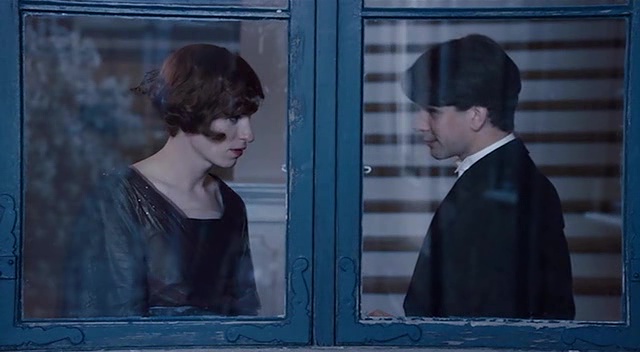
At one point in The Danish Girl, Einar Wegener visits a Paris brothel and watches through a window as a young woman sensuously caresses herself. He mimics her movements, and in doing so, has an orgasm. It’s a telling moment, as Einar’s need to be a woman finds expression in a moment of heightened sexuality. It’s also the point at which the movie makes it clear to the audience that Einar’s condition isn’t the result of some mental incapacity, or a chemical imbalance. This is where Einar truly becomes Lili, even if he still has to dress as a man on certain occasions.

TDG - scene3

Lili’s story has been told in her own words in the book, Man into Woman: The First Sex Change, published in 1933, and drawn largely from the diary entries she wrote while undergoing her sex change procedure. The Danish Girl takes the book as a starting point and tells Lili’s story with a stately precision that both heightens the drama and allows room for Hooper to delve deeply into the relationship between Einar and Gerda and Lili herself. For this to work, the movie needed two actors capable of navigating the intricacies of gender confusion and emotional displacement, as Einar embarks on his all-consuming journey to become Lili, and Gerda tries to come to terms with losing the only man she’s ever loved. Fortunately, the movie has Redmayne and Vikander in it, and these two amazingly versatile actors keep the movie from being as dreary and confined as the movie’s backdrop (the movie is a triumph of muted colours and dull settings).

Redmayne is on superb form here, portraying Einar’s transformation from tormented man to blissfully happy woman with so much tenderness and understanding of the mixed emotions both Einar and Lili must have felt that it’s impossible to detect a false note anywhere in his performance. It’s hard to think of another actor who could have portrayed the two roles so effectively. And he’s matched by Vikander, an actress who goes from strength to strength in every movie she makes (even if it’s The Man from U.N.C.L.E.). She takes what could have been a secondary character and imbues her with a clear-sighted intelligence and emotional resilience that complements Redmayne’s performance and ensures that Gerda’s part in all this isn’t forgotten or given less importance. Their scenes together have such a charge that some of them leave the viewer on the edge of their seat, poised to see how their relationship will develop and how much their love for each other will see them through.

TDG - scene2

As mentioned above, Hooper directs in a stately manner he seems to have picked up from watching too many heritage movies, and while this doesn’t disadvantage the movie completely, it does lead to moments where the passage of time – on screen at least – seems slower than it actually is (the events here take place over four years, but you wouldn’t know it otherwise). Some viewers may find their patience tested on these occasions but this is a movie that draws you in with its performances and proves compelling because of them. Few movies take the time to examine in detail how their characters feel, and why, but The Danish Girl – thanks to Lucinda Coxon’s screenplay – does it throughout and with an honesty that uplifts what could have been an entirely depressing story. But then again, this is a movie about courage and determination against the odds, and at a time when transgender issues were only just beginning to be addressed by the medical community. And the movie tackles these issues with a tremendous amount of sympathy and compassion.

The movie has another distinguished, evocative score courtesy of Alexandre Desplat, and is beautifully framed and shot by Danny Cohen (though again, Hooper’s choice of muted colours remains an issue). And Melanie Oliver’s editing is another strength, her ability to utilise a combination of static shots and measured cutting helping to improve the visual style. Away from the main story, the movie drops the ball on only two occasions: with the subplot involving Gerda’s attraction to Hans, which is unnecessary and would seem more relevant if this were a soap opera; and Lili’s relationship with Henrik, which isn’t explored fully, and which adds confusion to the already confused state she’s in at the time (just what is their relationship about?). But these issues aside, the movie is the kind of intelligent, clearly defined movie making that doesn’t come along very often, and which does enormous justice to its central characters.

Rating: 8/10 – with a virtuoso performance from Redmayne, and an equally impressive turn from Vikander, The Danish Girl is a riveting true story about the recipient of the world’s first sex change operation; impressively mounted, and with an honesty that permeates every scene, this is a movie well worth investing the time with, and which rewards on almost every level.

Share this:

  • Click to share on X (Opens in new window) X
  • Click to share on Facebook (Opens in new window) Facebook
  • More
  • Click to print (Opens in new window) Print
  • Click to email a link to a friend (Opens in new window) Email
Like Loading...

Spectre (2015)

10 Tuesday Nov 2015

Posted by dullwood68 in Movies

≈ Leave a comment

Tags

007, Action, Adventure, Andrew Scott, Ben Whishaw, Christoph Waltz, Daniel Craig, Dave Bautista, Eon Productions, Franchise, Ian Fleming, James Bond, Jesper Christensen, Léa Seydoux, M, MI5, Miss Moneypenny, Monica Bellucci, Mr Hinx, Mr White, Naomie Harris, Q, Ralph Fiennes, Sam Mendes, Sequel, Thriller

Spectre

D: Sam Mendes / 148m

Cast: Daniel Craig, Christoph Waltz, Léa Seydoux, Ralph Fiennes, Ben Whishaw, Naomie Harris, Monica Bellucci, Dave Bautista, Andrew Scott, Rory Kinnear, Jesper Christensen, Alessandro Cremona

And so, here we are again, back in familiar territory: after a run of three movies with a new actor playing James Bond, and with the material getting worse and worse, we arrive at a fourth movie that neither grips or excites, boasts a decent script or direction, and which labours through its extended running time like an asthmatic running a half-marathon. We could be talking about Die Another Day (2002), but instead we’re talking about Spectre, the latest in the oft-rebooted franchise, and possibly Daniel Craig’s last outing as Bond (he may do one more but nothing’s definite yet).

It’s been a relatively short nine years since Casino Royale exploded onto our screens in a welter of frenzied, punishing action sequences, and one of the best Bond scripts ever. It was everything you could ever hope for from a Bond movie, and then some, and for many fans it went straight to the top of their favourite Bond movie list. There were some psychological aspects to it in terms of Bond’s behaviour, the best Bond villain for an age, and as an “origin story” it worked much better than most. But most of all it was fun with a capital F.

And then there came the inevitable stumble with Quantum of Solace (2008). A straight-out revenge flick but with James Bond as the central character, it was basically a direct follow-up to Casino Royale that suffered from a weak villain and a mid-section that dragged as if the writers had lost focus on the story they were telling. But it did have some great action sequences, just as tough and brutal as before, and a great performance from Craig. (If you watch it back to back with Casino Royale as a four hour movie it plays a lot better than on its own.)

Spectre - scene2

Now at this stage, the producers brought on board Sam Mendes to helm the third outing for Craig, and he delivered the most successful Bond movie to date: Skyfall (2012). But while critics and fans heaped praise on the first Bond movie to make over a billion dollars at the box office, less easily swayed viewers could see the cracks starting to show as the writers tried to include a mystery relating to Bond’s past. And there were problems elsewhere, where the script showed signs of laziness (the train crash – how could Silva have “known” that he and Bond would meet at that particular place and time for the train to come crashing through the ceiling?).

That laziness has been extended to Spectre, with its tired action sequences (only the fight on the train between Bond and Mr Hinx has any energy or verve about it), eggshell thin characterisations (why does it seem as if Vesper Lynd is the only female character in the Bond franchise with any depth?), nonsensical reason for the villain’s actions (whatever happened to blackmailing the world’s leaders into not killing them with hijacked nukes?), and nods to previous entries in the franchise that only serve to remind audiences of the good old days when Bond just got on with the job and didn’t have to deal with questions about his lifestyle or any emotional scarring arising out of his childhood.

There’s also the absurd plot about linking all the world’s security systems under one (though it looks as if Waltz’s character is already doing that anyway), and then there’s Christoph Waltz’s ersatz-Blofeld scampering around like an escaped inmate from Bellevue, and providing none of the menace required to make his character a match for Bond’s determination and drive; in fact, he has more in common with Elliot Carver, Jonathan Pryce’s crazed media tycoon in Tomorrow Never Dies (1997) (but that’s still not a recommendation). Waltz is a good actor, but he’s all too often an actor making his own decisions about playing a role, and without, it seems, much instruction from the director. Here he tries the playful über-villain too often for comfort, and for the head of an organisation that included Le Chiffre and Raoul Silva as mere agents, looks entirely like someone’s younger brother who finally gets to play with his bigger brother’s toys.

Spectre - scene

Once again, the female characters are there for decoration, with Seydoux going to sleep in a hotel room fully clothed and then waking up some time later in her slip, and Bellucci wasted as the wife of a man Bond kills in the opening sequence. Harris though, does get more to do as Miss Moneypenny (we even get a glimpse of her home life), but beyond that it’s business as usual, with no other female roles of note, and the focus firmly on the macho posturing that occurs elsewhere throughout (even Whishaw gets a moment out in the field where he encounters some danger). Fiennes is a grumpy-looking M (though he does get the movie’s best line), Scott is a slimy-looking C, and Bautista is all the more imposing for being dressed in bespoke tailoring throughout. The returning Christensen is a welcome sight but he’s only there to reiterate what he said in Quantum of Solace (though “we have people everywhere” now becomes “he’s everywhere”), and his one scene is over far too quickly.

Returning as well, of course, is Mendes, whose handling of Skyfall meant he was always going to be asked to return, but perhaps it would have been better to go with someone who could inject some much needed energy into proceedings. Mendes is good at the MI6 stuff, prowling the corridors of power and highlighting the power games surrounding the shake up of the security services that serves as the political backdrop for the movie, but “out in the field” he’s less confident, and on this evidence, less engaged. There are too many scenes that go by without making much of an impact, and too many scenes that could have been more judiciously pruned in the editing suite. Instead, Mendes does just enough to make Spectre a facsimile of Skyfall, but without the emotional ending (here Bond rides off into the sunset with Seydoux’s character, but you know she won’t be back for the next movie).

If Craig decides not to play Bond one more time then the producers will need to go back to square one and start afresh – again. If they do, then let’s hope this whole let’s-give-Bond-an-origin-story-he-doesn’t-need angle is dropped in favour of seeing him do what he does best: being a one-man wrecking crew with no time for niceties. In many ways, Ian Fleming’s creation is a “sexist, misogynist dinosaur”, but it’s what we’ve loved about him for over fifty years now, and in their efforts to give us a “new” Bond for contemporary times, the producers have lost sight of what makes him truly Bond: he doesn’t do introspection or guilt, and because of that he’s good at his job. (And if a reboot is in order, then let’s get Martin Campbell back in the director’s chair – he seems to know what he’s doing.)

Rating: 5/10 – not a complete stinker – it’s production values, along with Craig’s still committed performace see to that – but not the best Bond outing you’re likely to see either, and proof that the series, in this stretch at least, is heading downhill fast; when even the action sequences in Spectre feel tired and lacklustre, then it’s time for the producers to take a step back and work out where they really want to take Bond next, because right now, it doesn’t look as if they know.

Share this:

  • Click to share on X (Opens in new window) X
  • Click to share on Facebook (Opens in new window) Facebook
  • More
  • Click to print (Opens in new window) Print
  • Click to email a link to a friend (Opens in new window) Email
Like Loading...

Blog Stats

  • 486,705 hits

Recent Posts

  • 10 Reasons to Remember Bibi Andersson (1935-2019)
  • Fantasia (1940)
  • Dances With Wolves (1990) – The Special Edition
  • Kiss of the Spider Woman (1985)
  • The Three Musketeers (1973)

Top Posts & Pages

  • Lost for Life (2013) - Another Look
    Lost for Life (2013) - Another Look
  • Lost for Life (2013)
    Lost for Life (2013)
  • About
    About
  • Exposed (2016)
    Exposed (2016)
  • Cardboard Boxer (2016)
    Cardboard Boxer (2016)
  • A Brief Word About La La Land (2016)
    A Brief Word About La La Land (2016)
  • My Top 10 Guilty Pleasures
    My Top 10 Guilty Pleasures
  • The Monuments Men (2014)
    The Monuments Men (2014)
  • Removal (2010)
    Removal (2010)
  • BFI London Film Festival 2015
    BFI London Film Festival 2015
Follow thedullwoodexperiment on WordPress.com

Blogs I Follow

  • Rubbish Talk
  • Film 4 Fan
  • Fast Film Reviews
  • The Film Blog
  • All Things Movies UK
  • Interpreting the Stars
  • Let's Go To The Movies
  • Movie Reviews 101
  • TMI News
  • Dan the Man's Movie Reviews
  • Film History
  • Jordan and Eddie (The Movie Guys)

Archives

  • April 2019 (13)
  • March 2019 (28)
  • February 2019 (28)
  • January 2019 (32)
  • December 2018 (28)
  • November 2018 (30)
  • October 2018 (29)
  • September 2018 (29)
  • August 2018 (29)
  • July 2018 (30)
  • June 2018 (28)
  • May 2018 (24)
  • April 2018 (21)
  • March 2018 (31)
  • February 2018 (25)
  • January 2018 (30)
  • December 2017 (30)
  • November 2017 (27)
  • October 2017 (27)
  • September 2017 (26)
  • August 2017 (32)
  • July 2017 (32)
  • June 2017 (30)
  • May 2017 (29)
  • April 2017 (29)
  • March 2017 (30)
  • February 2017 (27)
  • January 2017 (32)
  • December 2016 (30)
  • November 2016 (28)
  • October 2016 (30)
  • September 2016 (27)
  • August 2016 (30)
  • July 2016 (30)
  • June 2016 (31)
  • May 2016 (34)
  • April 2016 (30)
  • March 2016 (30)
  • February 2016 (28)
  • January 2016 (35)
  • December 2015 (34)
  • November 2015 (31)
  • October 2015 (31)
  • September 2015 (34)
  • August 2015 (31)
  • July 2015 (33)
  • June 2015 (12)
  • May 2015 (31)
  • April 2015 (32)
  • March 2015 (30)
  • February 2015 (37)
  • January 2015 (39)
  • December 2014 (34)
  • November 2014 (34)
  • October 2014 (36)
  • September 2014 (25)
  • August 2014 (29)
  • July 2014 (29)
  • June 2014 (28)
  • May 2014 (23)
  • April 2014 (21)
  • March 2014 (42)
  • February 2014 (38)
  • January 2014 (29)
  • December 2013 (28)
  • November 2013 (34)
  • October 2013 (4)

Blog at WordPress.com.

Rubbish Talk

Film 4 Fan

A Movie Blog

Fast Film Reviews

The Film Blog

The official blog of everything in film

All Things Movies UK

Movie Reviews and Original Articles

Interpreting the Stars

Dave Examines Movies

Let's Go To The Movies

Film and Theatre Lover!

Movie Reviews 101

Daily Movie Reviews

TMI News

Latest weather, crime and breaking news

Dan the Man's Movie Reviews

All my aimless thoughts, ideas, and ramblings, all packed into one site!

Film History

Telling the story of film

Jordan and Eddie (The Movie Guys)

Movie Reviews & Ramblings from an Australian Based Film Fan

Privacy & Cookies: This site uses cookies. By continuing to use this website, you agree to their use.
To find out more, including how to control cookies, see here: Cookie Policy
  • Subscribe Subscribed
    • thedullwoodexperiment
    • Join 481 other subscribers
    • Already have a WordPress.com account? Log in now.
    • thedullwoodexperiment
    • Subscribe Subscribed
    • Sign up
    • Log in
    • Report this content
    • View site in Reader
    • Manage subscriptions
    • Collapse this bar
 

Loading Comments...
 

    %d