• 10 Reasons to Remember…
  • A Brief Word About…
  • About
  • For One Week Only
  • Happy Birthday
  • Monthly Roundup
  • Old-Time Crime
  • Other Posts
  • Poster of the Week
  • Question of the Week
  • Reviews
  • Trailers

thedullwoodexperiment

~ Viewing movies in a different light

thedullwoodexperiment

Tag Archives: Brendan Gleeson

Hampstead (2017)

03 Friday Nov 2017

Posted by dullwood68 in Movies

≈ Leave a comment

Tags

Brendan Gleeson, Comedy, Diane Keaton, Drama, Hampstead Heath, Harry Hallowes, Joel Hopkins, Lesley Manville, Review, Romance, Squatter, True story
D: Joel Hopkins / 103m

Cast: Diane Keaton, Brendan Gleeson, Lesley Manville, Jason Watkins, James Norton, Simon Callow, Adeel Akhtar, Alistair Petrie, Hugh Skinner, Will Smith, Brian Protheroe, Rosalind Ayres, Deborah Findlay, Peter Singh, Phil Davis

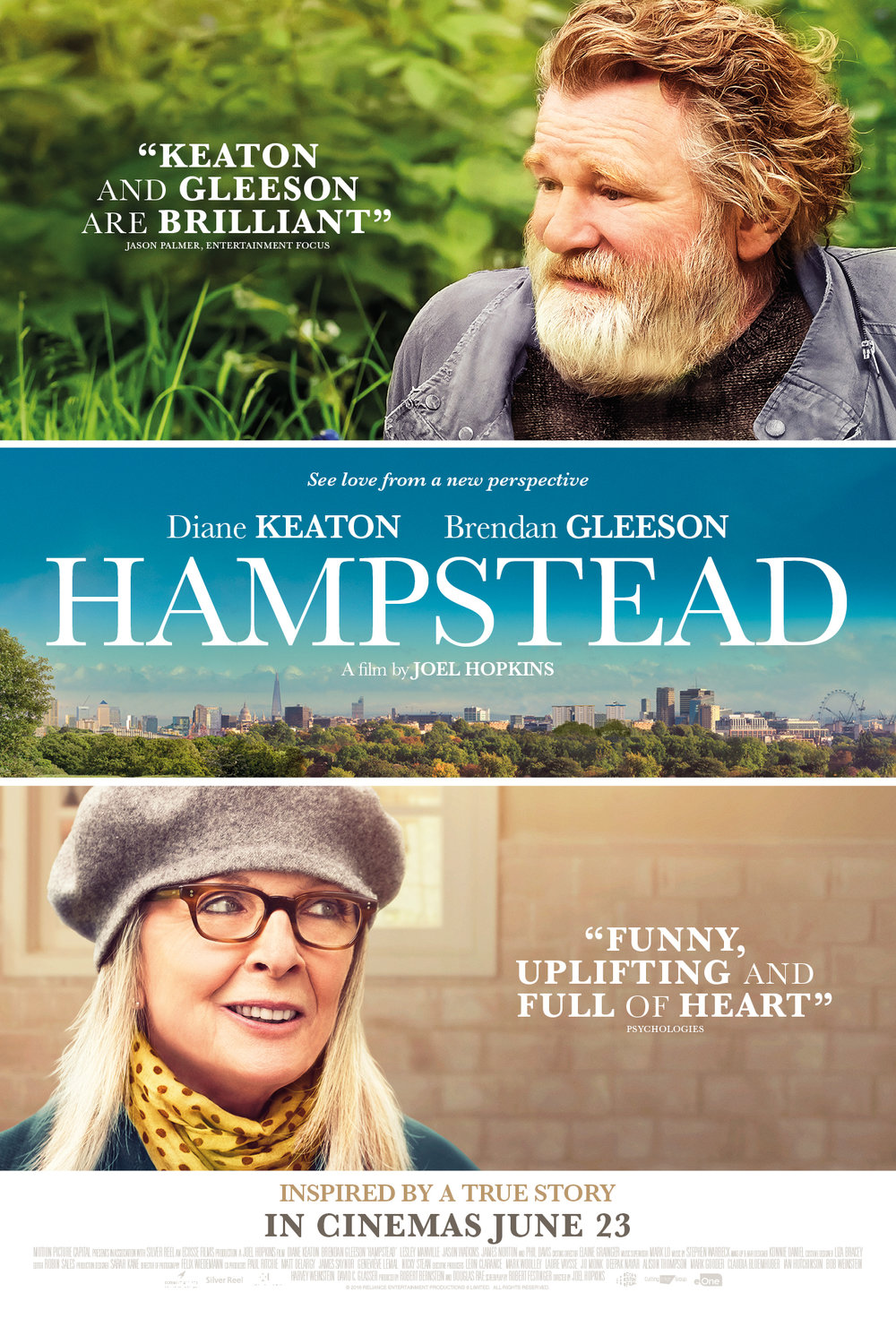
Hampstead is a curious movie, one that’s inspired by a true story, but structured in such a way that it seems to be deliberately insulting the memory of the real-life person that Brendan Gleeson’s character is based on. That man was called Harry Hallowes, an Irishman who was evicted from his flat in Highgate, London in 1987 and who built a makeshift home for himself in a corner of Hampstead Heath. When property developers tried to evict him, the case went to court and he was able to claim squatter’s rights because he had been “resident there” for over twelve years. In 2007 he was awarded the deed to the half-acre of land on which he was living; it was worth over £2 million. Hampstead takes that story and makes it into a lightweight romantic comedy that flits along unobtrusively and in banal fashion while making it more about Diane Keaton’s American widow in London, Emily Walters, than it does the movie’s fictional Harry Hallowes, Donald Horner.

Emily lives in an apartment building overlooking Hampstead Heath. Her husband has died leaving her in financial difficulties that she’s doing her best to ignore. She works part-time in a charity shop, but otherwise is fairly aimless, and spends much of her spare time trying to avoid her friend, Fiona (Manville), who also lives in the building and who is doing her best to set up Emily with a new man. One day, while looking through her husband’s things in the attic room she finds a pair of binoculars and uses them to look out over the heath. She spots Horner’s makeshift home, and becomes intrigued enough to continue spying on it, and eventually him. When she sees him being attacked, she calls the police, but doesn’t come forward until a few days later when she sees him in Highgate Cemetery. They become uneasy friends at first, then a romance develops, but it’s when Emily learns about the efforts to evict Donald that she finds a new purpose in her life and determines to help Donald whether he likes it or not.
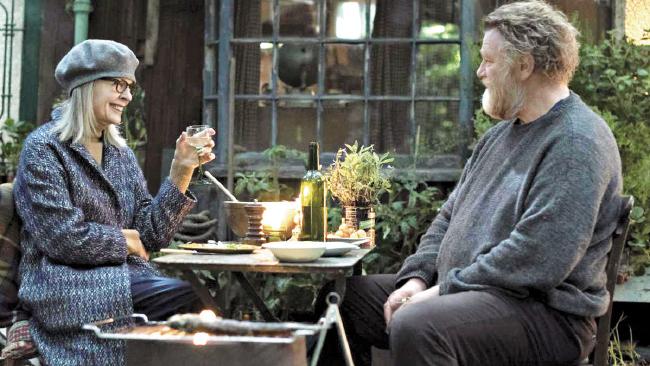
It’s a measure of Robert Festinger’s underwhelming screenplay that Donald’s plight can only be addressed through the intervention of a woman who’s looking for some meaning in her life. That she takes on his cause for herself is both selfish and self-serving, but the script ignores this in its efforts to make Emily appear selfless instead. As a result, she isn’t quite as sympathetic a character as perhaps was intended, and she comes across as a busybody with good intentions rather than the supportive friend (and eventual lover) that she’s meant to be. It makes watching long stretches of the movie difficult as Emily, under the guise of making a difference, does so in order to make herself feel better about her life. In other movies this might be acceptable – it’s a standard character arc, after all – but when this is in service to someone else’s story, someone who actually existed, then it comes across as insensitive and inconsiderate. Was Hallowes’ story so undramatic that it needed a fictional character, and a self-centred character at that, to give it relevance and/or meaning?

The answer is obviously No, but still, it’s the path the movie has chosen to take in its efforts to tell a version of Hallowes’ story. On that basis though, the movie is still unsuccessful in its aims as it tries to create a romance out of convenience, and a drama out of necessity (there’s broad humour in there too but it’s not the movie’s strongest suit). The movie ambles along during its first half, building the relationship between Emily and Donald, and making it all so innocuous and inoffensive that when they eventually sleep together, it’s hard to actually believe that they did anything more than just sleep together. In this particular rendition of “normal life”, sex is something to be referenced but not explored, or regarded as believable. This further undermines the credibility of the relationship between Emily and Donald, and makes it seem even more artificial than Festinger and director Joel Hopkins would like.

With the central relationship so hamstrung by the needs of the script, and with Hopkins unable to make more of it than there is on the page, it’s left to Keaton and Gleeson to do what they can with the material and hopefully flesh it out. But neither of them is able to do much more than provide the odd frisson to their roles, and despite their best efforts, both Emily and Donald remain as insubstantial at the end as they were at the beginning. Character traits are embedded from the word go, and they remain firmly in place throughout. Emily may appear emotionally tougher by the end, but it’s not because of her time with Donald, but because she has no choice in the matter; she either toughens up or goes under, and the script naturally chooses the former for her. Donald though, remains the same throughout, and in a chauvinistic approach that the movies love to continue peddling, gives Emily no choice in how their relationship will continue after the court case (it also makes Emily look as if she hasn’t been paying attention to anything Donald has told her about his lifestyle, and why he lives the way he does).

In the end, Hampstead doesn’t have enough substance and/or depth to make it all work, and the movie ambles along quite predictably and with a soupçon of charm to help guide it over the rough spots. The courtroom scenes are played for humour rather than the drama that’s required, the supporting cast all meld into one with the exception of Manville’s deliberately obtuse friend and Watkins’ would-be Romeo to Emily’s Juliet, and there are too many occasions where the movie is trying way too hard to appear whimsical or poignant. Felix Wiedemann’s cinematography is a welcome bonus, as is Stephen Warbeck’s score, both elements helping to give the movie a boost from the obvious nature of the material, but when all’s said and done, this is a movie that takes a remarkable story and uses it as a backdrop in order to tell an unremarkable story that, sadly, we’ve seen hundreds of times before.

Rating: 4/10 – amiable, and watchable enough if you approach it with few expectations, Hampstead rarely gets out of first gear, and when it does it’s only to slip into neutral, where it stays out of being comfortable; Keaton and Gleeson’s performances are undermined by the paucity of the material (and Hopkins’ static direction), and the extraordinary circumstances surrounding the real-life Harry the Hermit are given less than their due, something that should have been addressed before even the first draft was considered.
Share this:

  • Click to share on X (Opens in new window) X
  • Click to share on Facebook (Opens in new window) Facebook
  • More
  • Click to print (Opens in new window) Print
  • Click to email a link to a friend (Opens in new window) Email
Like Loading...

Trespass Against Us (2016)

21 Saturday Jan 2017

Posted by dullwood68 in Movies

≈ Leave a comment

Tags

Adam Smith, Brendan Gleeson, Crime, Drama, Father/son relationship, Lyndsey Marshal, Michael Fassbender, Review, Rory Kinnear, Travellers

94_tau_la_web

D: Adam Smith / 99m

Cast: Michael Fassbender, Brendan Gleeson, Lyndsey Marshal, Georgie Smith, Rory Kinnear, Killian Scott, Sean Harris, Gerard Kearns, Tony Way, Kingsley Ben-Adir, Barry Keoghan, Kacie Anderson, Peter Wight, Alan Williams, Anna Calder-Marshall, Mark Lewis Jones

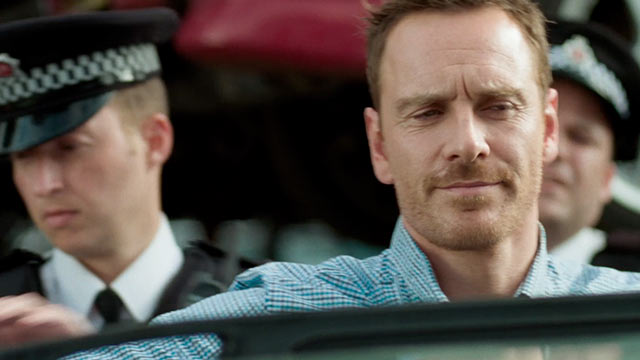
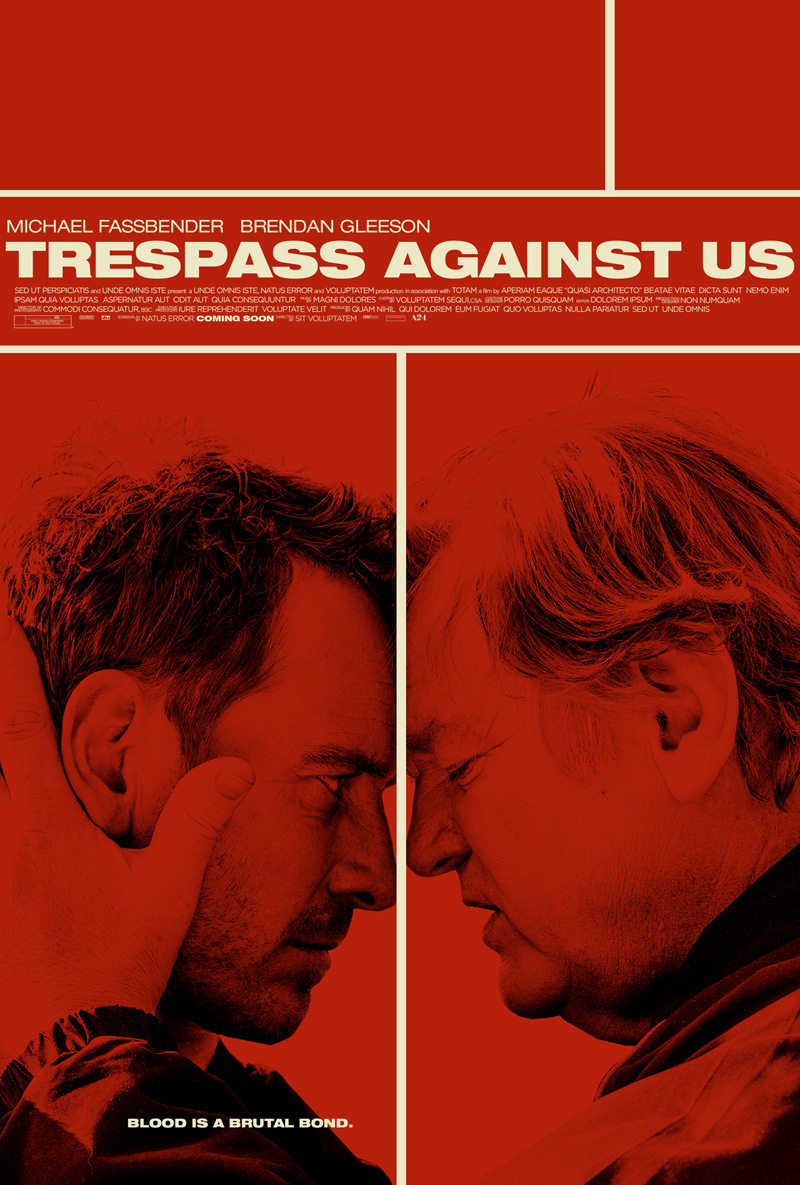
Chad Cutler (Fassbender) is part of a Travellers community whose patriarch is his father, Colby (Gleeson). Chad doesn’t know how to read or write, but he does know how to drive a car, especially if that car is being pursued by the police and it needs not to be caught. He’s also married, to Kelly (Marshal), and has two children, Tyson (Smith) and Mini (Anderson). Kelly wants more for their children than living in a caravan in a field, and though they go to a local school, it’s the only aspect of “normal” life they’re familiar with. Kelly wants them to move into a proper home – a house – and Chad is in agreement with her: he doesn’t want his children growing up in the same environment he did, and settling for less. But there’s a problem. If Colby finds out what they’re planning, he’ll never agree to it, and he’ll make sure they don’t leave.

While Chad sources a home for them nearby, Colby insists on his involvement in the robbery of a large house that proves to be the home of the Lord Lieutenant for the county. Though the robbery is successful, and Chad evades capture by the police – led by PC Lovage (Kinnear) – he’s not “out of the woods” just yet. Lovage is determined to arrest Chad, but if he can’t do it by fair means then he’ll twist the rules to suit his own agenda. This involves raiding the Travellers’ camp, and intimidating them as well as Chad and Kelly. When Chad learns that his father has intimidated the owner of the home he and his family were going to move into, and it’s no longer on offer, a showdown looms between Chad and Colby, one that Colby wins.

nintchdbpict000269236886-e1474642448269

In the meantime, Tyson and Mini go missing from the school. Chad searches for them, but it’s not until Kelly goes to the police that anyone knows the children are with them, and not actually missing or lost. Lovage tries to use their presence at the station as leverage in getting Chad or Kelly to admit his involvement in the robbery, but it doesn’t work. It’s not until Chad, attempting to buy a puppy as a birthday present for Tyson, is refused due to who he is that circumstances conspire to fix the issue of his family’s future once and for all.

Stories about the Travelling community are relatively thin on the ground, which makes Trespass Against Us all the more welcome. Highlighting the darker side of a life that most people will only know about from TV reality shows such as My Big Fat Gypsy Wedding, Adam Smith’s directorial debut is keen to show how hierarchy and loyalty play very important roles in the lives of Travellers, and how aspirations, no matter how much they may be needed, go against the established order of things. Whether or not Chad is a typical example of a “new generation” that sees the traditions of the Travelling community as old-fashioned or no longer socially relevant, isn’t addressed directly by Smith and screenwriter Alistair Siddons, but it certainly fuels the story of Chad’s “defection”.

trespass-against-us-trailer-still

Played with grit and determination by an on-form Fassbender, Chad is aware of his limitations and the possibilities available to his children, but he’s fighting a losing battle against his father. Colby asserts an unhealthy authority over his grandchildren, and at times is far more of an authority figure to them than Chad is. He tells Tyson to ignore what his teacher tells him at school, and looks to reinforce the sense of being part of a tight-knit community that keeps its own counsel (or particularly, Colby’s). Chad has no immediate answer to his father’s belligerence, and is too scared to challenge him openly. Chad and Kelly may want better lives for their children, but Colby doesn’t even see it as an issue; he believes the life they all lead is the right one for them, and any other opinion is a betrayal. As Colby, Gleeson delivers the kind of intense, brooding performance he’s so good at, and he shows Colby’s anger at being challenged in a way that mixes resigned authority and the enjoyment he derives from being a bully.

But while the family dynamic, and the battle, between Chad and Colby forms the central storyline, other aspects of the script lack the same intensity or fail to engage the audience as effectively. Kinnear has the thankless task of making PC Lovage anything more than a pasty-faced thug in a police uniform, his determination to arrest Chad made into an obsession that causes him to behave in ways that steer away from credibility at every turn. Likewise, Harris is back playing the kind of role that casting directors seem eager to offer him. Gordon Bennett – yes, really – sports a close-cropped scalp and rat’s-tail extensions, and looks as if he hasn’t had a bath in weeks. He’s the community halfwit, protected by Colby, derided by Chad and the others, and capable of acts of unwitting cruelty. Harris is a very good actor, but Gordon as written adds little to the narrative, and the script uses him on occasion to move things along, but he’s often a distracting presence, and an unnecessary one at that.

thumbnail_24947

The twin themes of community and tradition are given enough space and time to be explored with a fair degree of depth, and though in truth, this is a story that could have been applied to any number of other, different family units, Smith and Siddons do their best to show how relevant these themes are in Traveller life. The austerity of tradition is touched on to good effect, but the reasoning behind continuing such traditions isn’t explored at all, leaving the viewer to wonder just why living in a field – no matter how much it keeps society away from the Travellers in general – is so preferable to the alternative. It’s an exclusionist stance that needed referencing, if only to provide viewers with a broader perspective.

As a drama, Trespass Against Us sometimes feels forced, as events drift into melodrama and Chad’s dream of emancipation from his father drifts further and further away. By the end, and the unlikely convergence of people and circumstance that provides Chad with a solution, some viewers may well be experiencing a kind of emotional ennui. There’s no payoff, or distinct resolution to Chad’s plight, only a hope that the decision he makes will have the required effect, and allow Kelly and the children to escape Colby’s clutches. But it’s a puzzling conclusion to a story that starts off well, includes a couple of impressively mounted car chases, but which soon loses dramatic focus and traction, and in doing so, looks and feels as if it’s lost sight of that very same story it started off with.

Rating: 7/10 – a mixed bag in terms of drama and the overall material, Trespass Against Us never quite scales the heights of its own ambitions, but it does feature two commanding performances from Fassbender and Gleeson, and a refreshing mise-en-scéne; let down by its own inconsistencies, it’s nevertheless a movie that shouldn’t be avoided, and which may in time, find itself ripe for reassessment.

Share this:

  • Click to share on X (Opens in new window) X
  • Click to share on Facebook (Opens in new window) Facebook
  • More
  • Click to print (Opens in new window) Print
  • Click to email a link to a friend (Opens in new window) Email
Like Loading...

Mini-Review: Live by Night (2016)

21 Saturday Jan 2017

Posted by dullwood68 in Movies

≈ Leave a comment

Tags

Ben Affleck, Brendan Gleeson, Crime, Dennis Lehane, Drama, Elle Fanning, Gangsters, Ku Klux Klan, Literary adaptation, Prohibition, Review, Sienna Miller, Thriller, Ybor City, Zoe Saldana

live-by-night-poster

D: Ben Affleck / 128m

Cast: Ben Affleck, Elle Fanning, Remo Girone, Brendan Gleeson, Chris Messina, Matthew Maher, Sienna Miller, Zoe Saldana, Robert Glenister, Chris Cooper, Miguel J. Pimentel, Titus Welliver, Max Casella

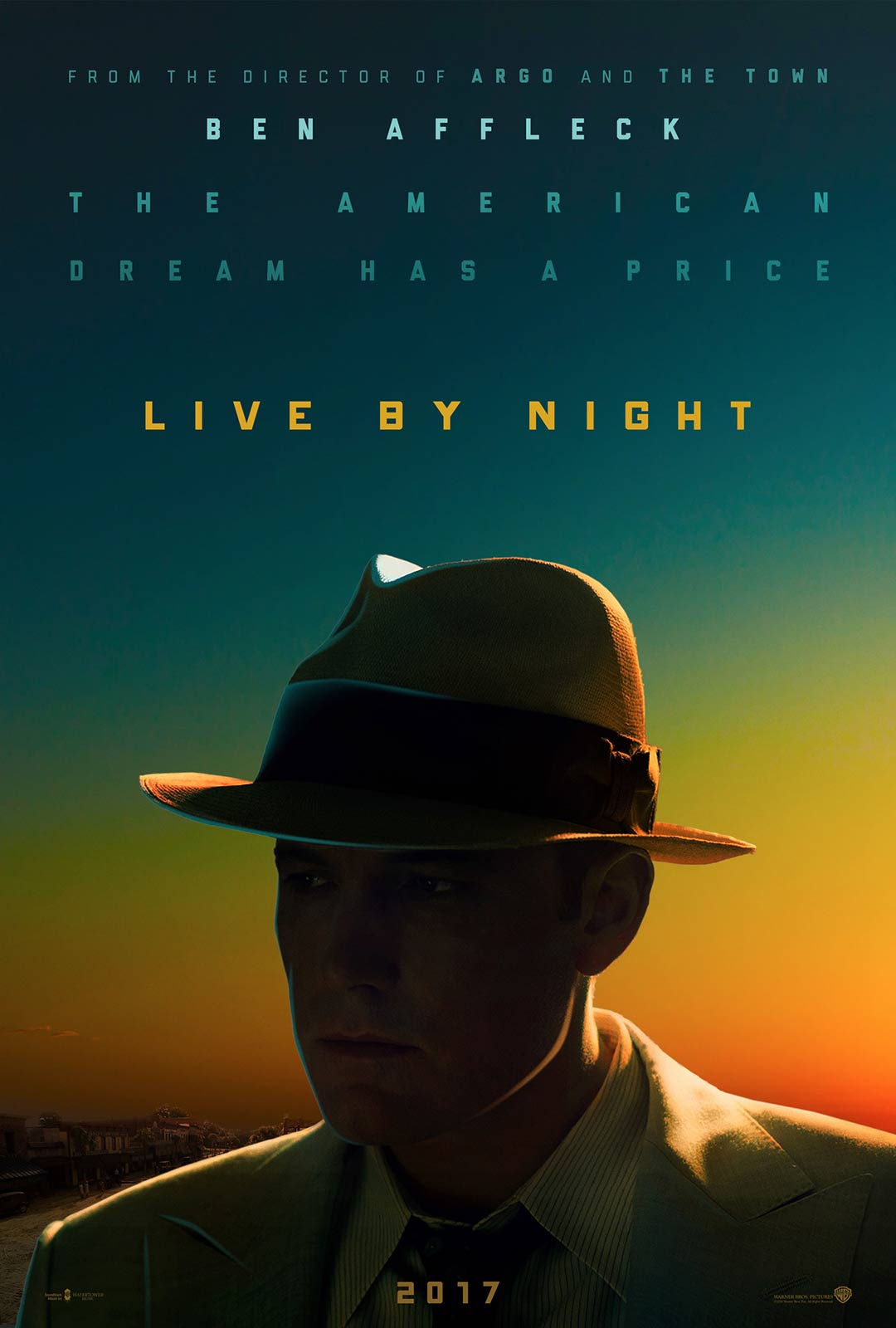
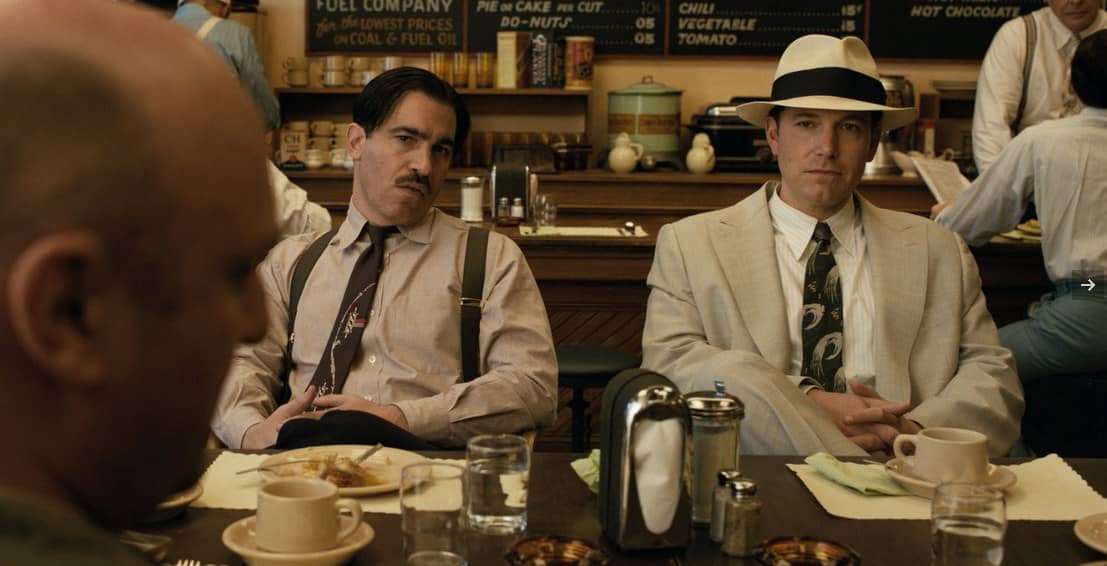
Undermined by a leaden script, Live by Night is writer/director/actor Ben Affleck’s third movie as a multi-hyphenate, but after the successes of Argo (2012) and The Town (2010), his latest project is a plodding affair that looks good thanks to Robert Richardson’s usual exemplary cinematography, but otherwise remains remote and uninvolving. The tale of a small-time Boston crook, Joe Coughlin (Affleck), who finds himself at odds with Irish gangster Albert White (Glenister) through his relationship with White’s girlfriend, Emma Gould (Miller), this adaptation of the novel by Dennis Lehane starts off well but soon gets bogged down by messy plotting and too many characters who randomly come and go.

Coughlin’s romance with Emma ends badly, leading him to offer his “services” to White’s rival, Maso Pescatore (Girone). Pescatore sends Coughlin down to Florida, to Ybor City, with instructions to take control of his rum-running operation and ensure that White’s activities in the area are curtailed. Once there, Coughlin, aided by trusted friend Dion (Messina), soon streamlines Pescatore’s operation and squeezes out all the competition. In the process he establishes a business relationship with a Cuban family, and begins an affair with the sister, Graciela (Saldana). Things run smoothly until Coughlin’s working with the Cubans as well as a group of local Negroes, attracts the ire of the Ku Klux Klan. Coughlin tries to come to an amicable arrangement with them, but the Klan’s leader, RD Pruitt (Maher) refuses to play ball, leading Coughlin to make an arrangement with Pruitt’s brother-in-law, Chief Figgis (Cooper) that has unforeseen consequences.

610279809

The Chief’s daughter, Loretta (Fanning), begins making evangelical protests against a casino that Coughlin is building in anticipation of Prohibition being repealed. Her protests lead to the project stalling, which makes Pescatore angry enough to forget all the money Coughlin has made for him, and travel down to Florida to oversee matters for himself, a development that leaves Coughlin vulnerable, and his future in doubt.

For all the convincing period detail and the impressive production design, Live by Night is let down by Affleck’s inability to craft a cohesive screenplay from Lehane’s novel. While Coughlin’s story is told against a backdrop of violence and betrayal, the movie remains a staid, pedestrian affair that moves at a steady pace despite Affleck’s best efforts to inject some energy and verve into proceedings. Part of the problem is the number of characters that appear for a short time then disappear or pop up again for another short period. Despite the cast’s best efforts, they’re let down by Affleck’s script, which uses each character to advance the narrative, but without investing in them to any great degree. This leaves actors of the calibre of Gleeson, Saldana and Glenister stranded for the most part, with only Miller and Fanning making much of an impression. It doesn’t help that Affleck’s portrayal of Coughlin also lacks range or depth, leaving the viewer hoping that things will improve over time, and that a way in to the material with eventually arise, something that, unfortunately, never happens.

Rating: 6/10 – curiously turgid and flat, Live by Night has clear aspirations to be a crime drama with operatic overtones, but instead, remains resolutely commonplace; with too many strands that make for a stop-start narrative, and characters that aren’t allowed to make much of an impact, the movie keeps its audience at a distance, and never looks as if it will close the gap at any point throughout.

Share this:

  • Click to share on X (Opens in new window) X
  • Click to share on Facebook (Opens in new window) Facebook
  • More
  • Click to print (Opens in new window) Print
  • Click to email a link to a friend (Opens in new window) Email
Like Loading...

Monthly Roundup – July 2016

31 Sunday Jul 2016

Posted by dullwood68 in Movies

≈ Leave a comment

Tags

Action, Apache War Smoke, Apaches, Australia, Bank robbers, Banshee Chapter, Ben Whishaw, Benjamin Walker, Blair Erickson, Brendan Gleeson, Cambodia, Chris Hemsworth, Cillian Murphy, Crawl, Daniel Zirilli, Drama, Gena Rowlands, George Shevtsov, Georgina Haig, Gilbert Roland, Glenda Farrell, Harold F. Kress, Herman Melville, Historical drama, Hitman, Home invasion, Horror, In the Heart of the Sea, James Garner, Katia Winter, Literary adaptation, Moby Dick, Nantucket, Nicholas Sparks, Nick Cassavetes, Numbers stations, Offshore Grounds, Online journalist, Paul China, Paul Holmes, Project MK Ultra, Rachel McAdams, Reviews, Robert Horton, Romance, Ron Howard, Ryan Gosling, Steven Seagal, Ted Levine, Thailand, The Asian Connection, The Essex, The Notebook, Thriller, Tom Holland, Tonto Valley Station, True love, True story, Wells Fargo, Western, Whales

Crawl (2011) / D: Paul China / 80m

Cast: George Shevtsov, Georgina Haig, Paul Holmes, Lauren Dillon, Catherine Miller, Bob Newman, Andy Barclay, Lynda Stoner

Crawl

Rating: 7/10 – a hitman (Shevtsov) hired by an unscrupulous bar owner (Holmes) winds up injured while trying to leave town, and ends up playing a deadly game of cat-and-mouse with a waitress (Haig) when he seeks refuge in her home; a slow-burn thriller that takes its time and relies on tension and atmosphere to keep the viewer hooked, Crawl often belies its low budget, and features terrific performances from Shevtsov (in a role written expressly for him) and Haig, but stops short of being completely effective thanks to some awkward narrative choices and first-timer China’s lack of experience as a director.

The Asian Connection (2016) / D: Daniel Zirilli / 91m

Cast: John Edward Lee, Pim Bubear, Steven Seagal, Sahajak Boonthanakit, Byron Gibson, Byron Bishop, Eoin O’Brien, Michael Jai White

The Asian Connection

Rating: 3/10 – career criminal Jack Elwell (Lee) meets the love of his life, Avalon (Bubear), and decides that robbing a bank is the way to a financially stable relationship, but unfortunately the money he steals belongs to crime boss Gan Sirankiri (Seagal), and soon Jack is being coerced into robbing more of Sirankiri’s banks when one of his men (Boonthanakit) threatens to expose him; what could have been a moderately entertaining action thriller is let down by some atrocious acting (and not just from Seagal), some equally atrocious camerawork, editing that looks like it was done with a hatchet, and the kind of direction that gives “point and shoot” a bad name, all of which leaves The Asian Connection looking like something to be avoided at all costs.

Banshee Chapter (2013) / D: Blair Erickson / 87m

Cast: Katia Winter, Ted Levine, Michael McMillian, Corey Moosa, Monique Candelaria, Jenny Gabrielle, Vivian Nesbitt, Chad Brummett, William Sterchi

Banshee Chapter

Rating: 3/10 – a journalist (Winter) looks into the disappearance of a friend, and discovers a secret world of government experiments that are linked to strange radio broadcasts and the discredited MK Ultra program from the Sixties; a paranoid thriller with supernatural overtones, Banshee Chapter tries extra hard to be unsettling and creepy – much of it takes place at night and has been shot using low light – but fails to make its story of any interest to anyone watching, which means that Winter and Levine put a lot of effort into their roles but are let down by the tortuous script and Erickson’s wayward direction.

In the Heart of the Sea (2015) / D: Ron Howard / 122m

Cast: Chris Hemsworth, Benjamin Walker, Cillian Murphy, Tom Holland, Ben Whishaw, Brendan Gleeson, Michelle Fairley, Paul Anderson, Frank Dillane, Joseph Mawle, Charlotte Riley

In the Heart of the Sea

Rating: 5/10 – the writer, Herman Melville (Whishaw), convinces retired sailor Tom Nickerson (Gleeson) to talk about his experiences as a young boy at sea, and in particular his time aboard the Essex, a whaling ship that encountered a creature Melville will call Moby Dick; based on the true story of the Essex, and the voyage that saw it sunk by an enormous whale, In the Heart of the Sea is technically well made but lacks anyone to care about, avoids providing a true sense of the enormity of what happened, sees Ron Howard directing on auto-pilot, and leaves Hemsworth and Walker struggling to make amends for characters who are paper-thin to the point of being caricatures (or worse still, carbon copies of Fletcher Christian and William Bligh from Mutiny on the Bounty).

The Notebook (2004) / D: Nick Cassavetes / 123m

Cast: Ryan Gosling, Rachel McAdams, James Garner, Gena Rowlands, Sam Shepard, David Thornton, Joan Allen, James Marsden

The Notebook

Rating: 7/10 – in the late Thirties, a young man, Noah (Gosling), sets his cap for the girl of his dreams, Allie (McAdams), and though they fall in love, social conventions keep them apart, while in the modern day their story is told by an old man (Garner) to a woman with dementia (Rowlands); handsomely mounted and told with a genuine feel for the central characters and their travails, Nicholas Sparks’ The Notebook is an old-fashioned romantic drama that could have been made in the time period it covers, and which is bolstered by the performances of its four stars, as well as Cassavetes’ (son of Rowlands) sure-footed direction, glorious cinematography by Robert Fraisse, and a sense of inevitable tragedy that permeates the narrative to very good effect indeed.

Apache War Smoke (1952) / D: Harold F. Kress / 67m

Cast: Gilbert Roland, Glenda Farrell, Robert Horton, Barbara Ruick, Gene Lockhart, Harry Morgan, Patricia Tiernan, Hank Worden, Myron Healey

Apache War Smoke

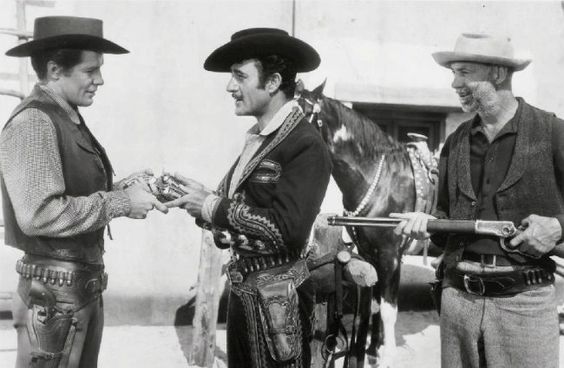
Rating: 6/10 – a stagecoach station finds itself under attack from angry Apaches after a white man kills several of their tribe – and the evidence points to the station agent’s father, a wanted outlaw (Roland), as the killer; a compact, fast-paced Western, Apache War Smoke zips by in low-budget style thanks to the efforts of two-time Oscar winner Kress – editing awards for How the West Was Won (1962) and The Towering Inferno (1974) – and a cast who enter willingly into the spirit of things, making this studio-made Western set in Tonto Valley Station(!) a surprising treat.

Share this:

  • Click to share on X (Opens in new window) X
  • Click to share on Facebook (Opens in new window) Facebook
  • More
  • Click to print (Opens in new window) Print
  • Click to email a link to a friend (Opens in new window) Email
Like Loading...

Suffragette (2015)

26 Saturday Mar 2016

Posted by dullwood68 in Movies

≈ Leave a comment

Tags

Anne-Marie Duff, Ben Whishaw, Brendan Gleeson, Carey Mulligan, David Lloyd George, Derby Day, Drama, Emmeline Pankhurst, Equality, Helena Bonham Carter, Historical drama, Laundry worker, Meryl Streep, Panks, Review, Sarah Gavron, True story, Voting rights, Women's rights

Suffragette

D: Sarah Gavron / 106m

Cast: Carey Mulligan, Helena Bonham Carter, Anne-Marie Duff, Brendan Gleeson, Ben Whishaw, Romola Garai, Natalie Press, Geoff Bell, Samuel West, Finbar Lynch, Adrian Schiller, Meryl Streep

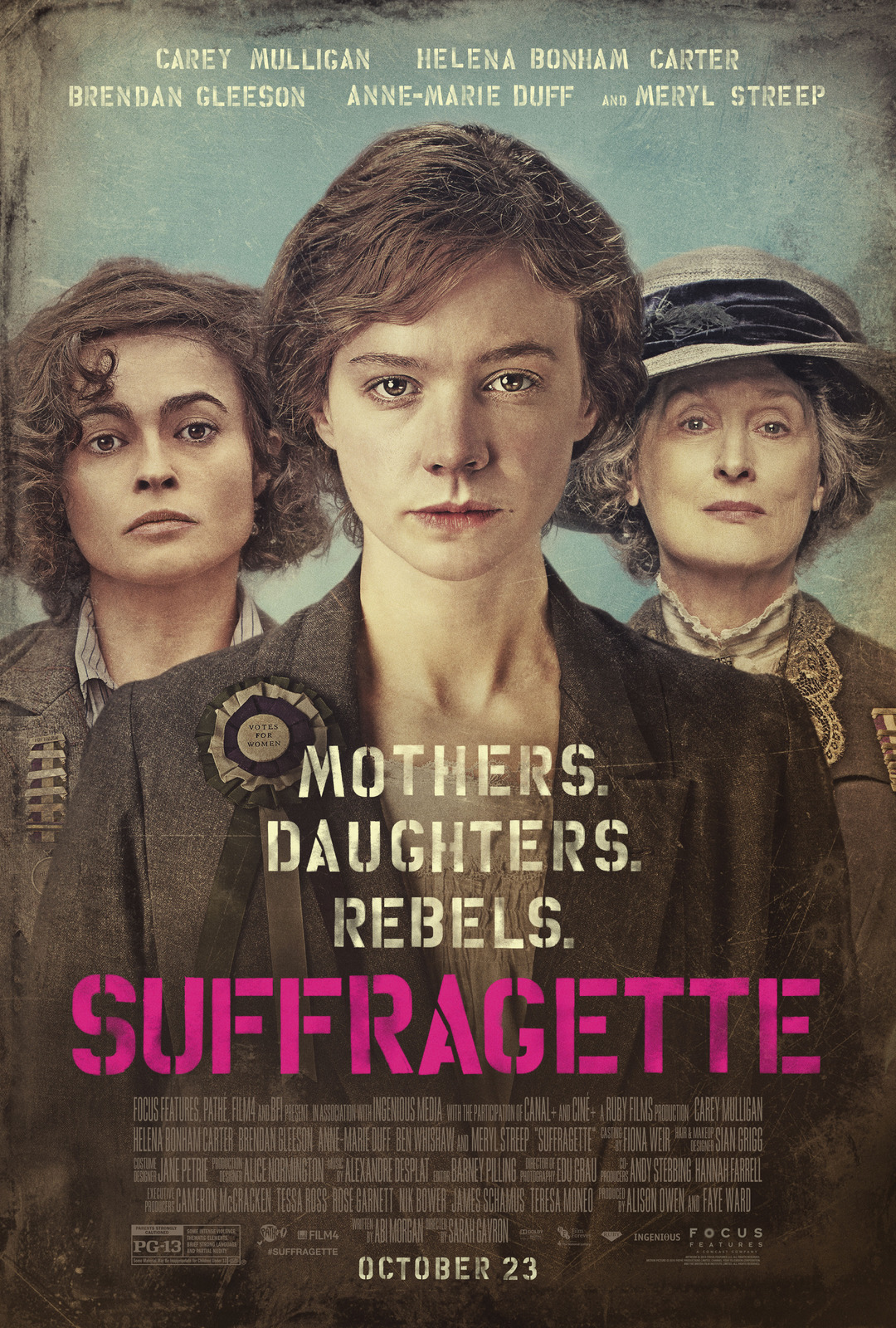
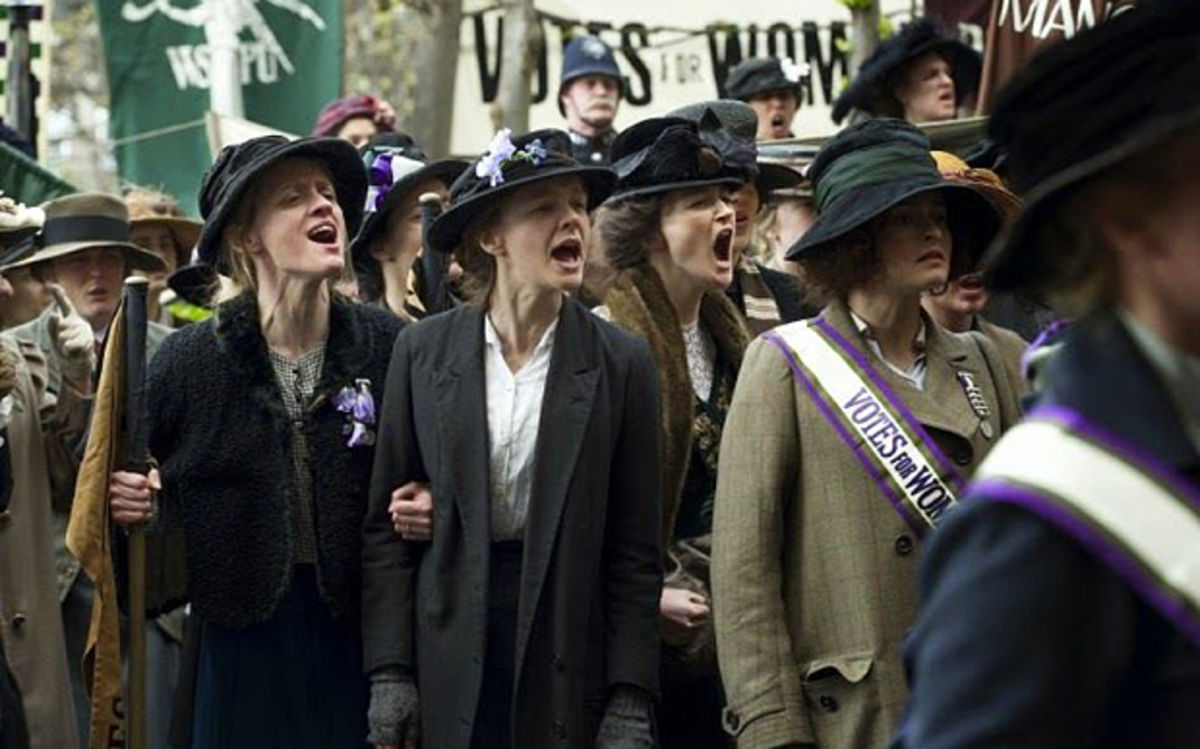
If you were to ask a hundred people, what was the Women’s Social and Political Union, and what was its purpose, most, if not all, wouldn’t be able to tell you. And yet the WSPU is perhaps one of the most important organisations in British history. Without its members and their tireless work, often in the face of police brutality and political intransigence, it’s very likely that women in the UK would not have been given the right to vote as early as they were (and even then it wasn’t until 1928). Suffragette, which looks at the Union’s activities in the run up to World War I, makes clear the level of sacrifice some of its members had to make in order to change the British political system for the better.

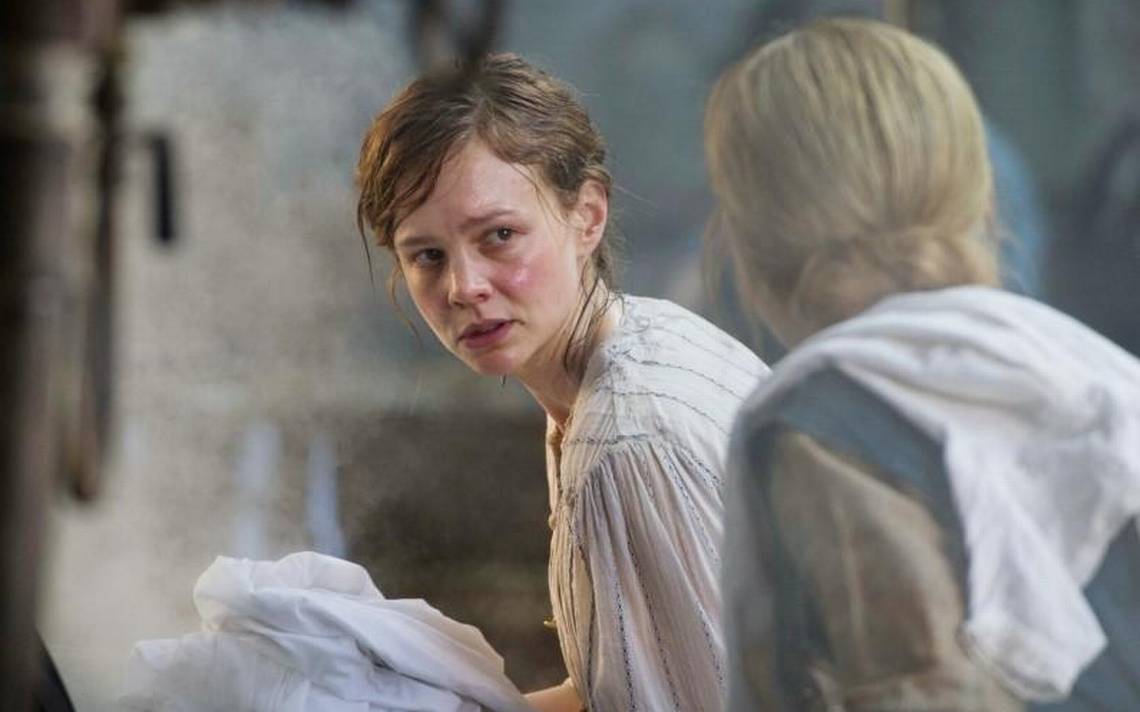
The struggle is seen through the eyes of laundry worker Maud Watts (Mulligan), wife of Sonny (Whishaw) and mother of their son, George. Maud is hardworking, has gained a certain degree of respect in the workplace, but at twenty-four has little future beyond what she’s already achieved. She appears to be accepting of her lot in life, but when a co-worker, Violet Miller (Duff), falls foul of their boss, Norman Taylor (Bell), Maud comes to her rescue and the two women strike up a friendship. Maud learns that Violet is a supporter of the women’s movement, and while she admires Violet’s courage and determination, she has no intention of becoming a suffragette.

Suffragette - scene2

An invitation to speak before then Chancellor of the Exchequer, David Lloyd George (Schiller), is arranged for Violet, but she is unable to speak. Maud stands in for her, and is invited to tell her story. Lloyd George is clearly sympathetic, but when an announcement is made some time later, the law remains unchanged. Caught up in the violent struggle that ensues, Maud is arrested. She is questioned by Inspector Arthur Steed (Gleeson), who has been tasked with rounding up the Union’s ringleaders, including its head, Emmeline Pankhurst (Streep). Maud denies being a suffragette, but when she’s released a week later, it’s obvious that people think she is. Sonny is upset by her involvement, and she promises to stay away from the WSPU and its members. But when a secret meeting, to be addressed by Emmeline Pankhurst is arranged, Maud can’t help but attend.

From there, along with Violet and a local pharmacist, Edith Ellyn (Carter), Maud becomes more and more involved in the WSPU and its plans. Unable to deal with her increasing involvement, Sonny kicks her out, and refuses to let her see George. In the meantime, she leaves the laundry as well, and devotes her time to the Union. She takes part in the destruction of postboxes and telephone lines, and other acts of civil disobedience. She’s arrested again, and Steed offers her a choice: inform on the Union’s activities, or face longer spells in jail. With the women under both suspicion and surveillance, and with Pankhurst exhorting them to increase their attacks on the establishment, Maud has to decide if her future resides with the WSPU.

Suffragette wears its heart on its sleeve right from the start. As a movie about the struggle of women to gain the right to vote it takes an earnest, pragmatic approach, and while it often strays from the truth in its efforts to shoehorn Maud into the events that did happen (particularly in the scenes set at Epsom on Derby Day, when Emily Wilding Davison was run down by the King’s horse), it also narrows its focus too much in its efforts to tell its story.

Suffragette - scene3

By choosing to tell the story of the WSPU’s struggle through the eyes of Maud, a neophyte in terms of the political landscape of the times, Abi Morgan’s script reduces the efforts and the sacrifices made by the real-life women of the time to the stuff of soap opera. From the disapproving looks of her neighbours as Maud walks home, to the reaction of Sonny after she goes back on her word, and even to the moment when she takes her long awaited “revenge” on Taylor for his bullying, rapacious behaviour, Maud’s journey from reluctant laundry worker to political activist is dealt with in such a clichéd, tick-box way that it robs the movie of any real drama. Indeed, the only time the movie achieves any kind of dramatic focus is when it opts to have Maud force-fed (something that happened to Davison forty-nine times; ironically, force-feeding was introduced after fellow suffragette Marion Wallace Dunlop was released from prison after being on hunger strike for ninety-one days).

With the politics of the time reduced to the simplest level possible, and the history of the struggle barely referred to, the movie operates in a kind of historical vacuum. And worst of all, it lacks passion. With everything that happens (and was happening at the time), Suffragette lacks a true sense of the anger and frustration that women must have felt back then. Morgan’s script shows the determination they had, but between that and Gavron’s emphasis on making sure that each scene moves on to the next as quickly as possible, any potential exploration of what women truly felt about their social and political situation back in the pre-War years is avoided. Instead, Maud is used as a kind of generic marker; if it happens to her then it happened to every woman, and that was very bad indeed (that sounds very simplistic, but then so is the movie).

Suffragette - scene1

On the performance side, Mulligan is dependable but is often asked to stand around observing while the likes of Duff and Carter do the heavy lifting. Gleeson does well as the Voice of Authority until a late script decision undoes all the good work he’s put in ’til then, Whishaw is the generally supportive husband who soon turns horrible simply because the movie needs him to, Garai is lost in a supporting role that keeps her on the edge of things throughout, Bell is once again called upon to be unconscionably malevolent, and Streep’s cameo lacks the gravitas it needs to be effective.

With radicalisation currently a hot topic, it would have been good to see Maud’s joining the WSPU in terms of indoctrination; after all, with their civil disobedience stretching to blowing up Lloyd George’s country home, it’s likely that they would have been described as terrorists if the word had existed in that context back then. But it’s an idea that’s never taken up, and like so many other areas where the movie could have gained some much needed depth, the need to keep it simple overrides all other considerations.

Rating: 5/10 – a so-so retelling of events leading up to 1914 and the outbreak of World War I (which really helped the suffragettes and their cause), Suffragette adopts a pedestrian approach to events of the time, and never comes alive in the way its makers probably intended; it’s ironic then, that in attempting to highlight the suffragettes’ fight for equality, the movie ends up portraying that fight in less than heroic terms.

Share this:

  • Click to share on X (Opens in new window) X
  • Click to share on Facebook (Opens in new window) Facebook
  • More
  • Click to print (Opens in new window) Print
  • Click to email a link to a friend (Opens in new window) Email
Like Loading...

The Grand Seduction (2013)

21 Tuesday Oct 2014

Posted by dullwood68 in Movies

≈ Leave a comment

Tags

Brendan Gleeson, Comedy, Don McKellar, Gordon Pinsent, Newfoundland, Recycling plant, Remake, Review, Taylor Kitsch, Ticklehead

Grand Seduction, The

D: Don McKellar / 113m

Cast: Brendan Gleeson, Taylor Kitsch, Gordon Pinsent, Mark Critch, Liane Balaban, Cathy Jones

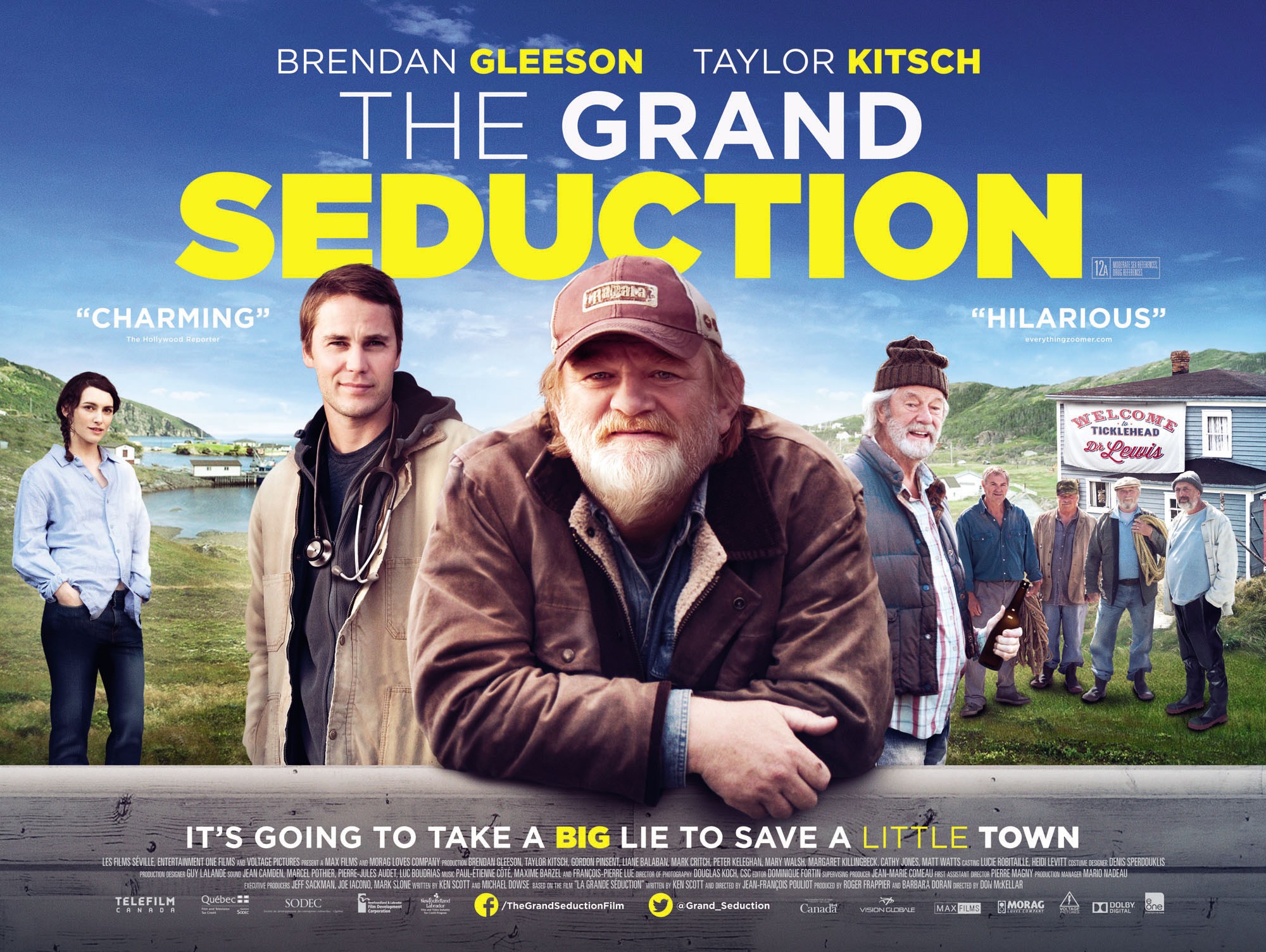
After eight years of surviving on state benefits, the inhabitants of a tiny harbour in Newfoundland called Ticklehead, are given a potential lifeline when a multi-national company plans to build a chemical waste recycling plant there, and provide full employment for the community.  The catch?  Unless they have a resident doctor, the plans will fall through.  The stroke of luck?  A doctor, Paul Lewis (Kitsch) caught at an airport with cocaine and sentenced to a month’s community service as Ticklehead’s temporary medic.  When the locals, headed by Murray French (Gleeson) learn of his imminent arrival, they decide to spend the ensuing month doing their best to get him to stay full time and save their community.

To help with this, and because Lewis likes cricket, the villagers build a cricket pitch and pretend to be huge fans of the sport.  They also leave Canadian bills of increasing value where Lewis will find them, and on the understanding that if he feels lucky in Ticklehead he won’t want to move on.  By selling themselves and the harbour, the people of Ticklehead aim to make Lewis feel like an important and much needed part of the village.  They also monitor the phone calls he makes to his girlfriend, Helen, looking for clues about the things he likes so they can make his stay all the more amenable.  Murray even tries to get the local post office-cum-general store assistant, Kathleen (Balaban), to flirt with Lewis but she won’t do it.

As their plan begins to pay off, problems arise with the siting of the plant.  A “bribe” of $100,000 needed to cement the deal, and which human ATM Henry Tilley (Critch) attempts to raise by means of a loan, eludes them.  And the boss of the multi-national company decides to visit Ticklehead and see for himself that they have the required one hundred and seventy inhabitants needed to see the plant manned efficiently.  And Lewis’s relationship with Helen begins to unravel, as his enthusiasm for the harbour goes unreciprocated until he learns an unpalatable truth.  Murray and the rest of the villagers are overjoyed: now Lewis doesn’t have any ties.  But as ever, things don’t work out in quite the way they’d planned.

Grand Seduction, The - scene

A remake of Seducing Doctor Lewis (2003), The Grand Seduction is a great big, fluffy cardigan of a movie, a warm confection that elicits good-natured smiles from the viewer at practically every turn.  There is absolutely nothing new here and yet as is so often the case when something so familiar is performed with such confidence and affection, the experience is rewarding beyond any and all expectation.

And so it proves here, with Gleeson leading a cast that wouldn’t have been amiss in an Ealing comedy, and proving once again that ensemble casts representing a small community rarely ever disappoint.  If it reminds viewers of Local Hero (1983), then that’s no bad thing (and that movie carried the blueprint of Whisky Galore! (1949) firmly clutched to its chest).  It’s a fish-out-of-water movie too, with Kitsch’s bemused, deceived plastic surgeon all adrift at first, but finding his feet with ever-increasing confidence, and gaining a sense of purpose he didn’t have before.  Kitsch is better known for his action/fantasy roles but here he dials back the heroics to play a normal nice guy who may well have appeared colourless on the page, but who proves to be more sensitive than he seems in the beginning.

With the likes of Pinsent and Critch providing solid support – and a large portion of the laughs – it’s left to the ever dependable Gleeson to provide the movie’s dramatic backbone, imbuing Murray with the kind of rugged, roguish charm that wins over both Lewis and the rest of the villagers (even when they know he’s ‘playing’ them).  It’s the kind of role Gleeson could probably do in his sleep but he’s so effortlessly impressive it’s like observing a masterclass; he doesn’t put a foot wrong throughout.  He and the rest of the cast all help to elevate the material, making the slightness of it so trivial it’s barely worth mentioning.

As directed by McKellar, The Grand Seduction is an appealing piece of cinematic confectionery, its picture postcard locations photographed in all their roughhewn glory, and its (admittedly) lightweight construction proving a plus rather than the expected minus.  McKellar has the sense to go with the flow rather than try to make something different out of Ken Scott’s original screenplay (here adapted by Michael Dowse), and infuses even the smallest of scenes with both a painterly eye and a generous amount of good-natured, but not overwhelming sentiment.  It’s often a delicate balancing act, but McKellar demonstrates in scene after scene that he’s more than up to the task.  As a result, the movie never falters in its ability to entertain.

Rating: 8/10 – the kind of movie that makes a mockery of the phrase, “familiarity breeds contempt”, The Grand Seduction is a minor gem, and a movie that deserves as wide an audience as it can achieve; it may appear too whimsical for some, but that would be doing the movie a major disservice.

Share this:

  • Click to share on X (Opens in new window) X
  • Click to share on Facebook (Opens in new window) Facebook
  • More
  • Click to print (Opens in new window) Print
  • Click to email a link to a friend (Opens in new window) Email
Like Loading...

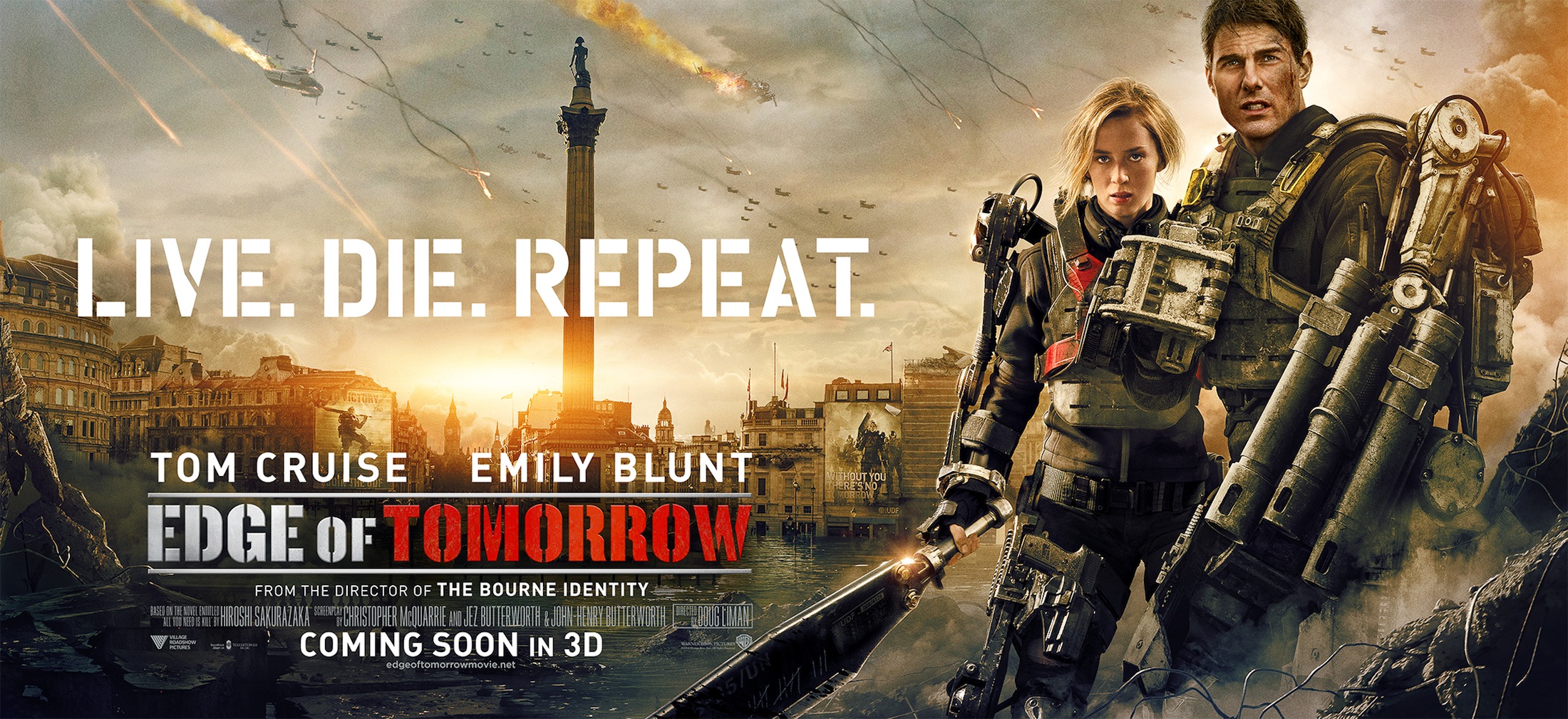
Edge of Tomorrow (2014)

01 Sunday Jun 2014

Posted by dullwood68 in Movies

≈ 2 Comments

Tags

Action, Aliens, Bill Paxton, Brendan Gleeson, Doug Liman, Emily Blunt, Exo-skeleton, Live Die Repeat, Mimics, Review, Sci-fi, The Louvre, Tom Cruise

Edge of Tomorrow

D: Doug Liman / 113m

Cast: Tom Cruise, Emily Blunt, Brendan Gleeson, Bill Paxton, Noah Taylor, Kick Gurry, Jonas Armstrong, Charlotte Riley, Tony Way, Franz Drameh, Dragomir Mrsic, Masayoshi Haneda

Sometime in the near future, a meteor crashes to earth in Europe, bringing with it an alien race called Mimics.  The Mimics set about taking over the planet, swiftly conquering Europe, with the UK next in line.  Military forces under the command of General Brigham (Gleeson) are preparing for a full-scale counter attack on French soil.  When Lt. Col. Bill Cage (Cruise) arrives in London to continue the PR drive he’s orchestrated from the US, he’s shocked to find he’s expected to do so from the Front and will be going in with the first wave of the attack.  His attempts to avoid this end up with him being busted down to private and made to join J Squad, under the auspices of Master Sergeant Farell (Paxton).  With no combat training or experience, Cage has a crash course in using the exo-skeletons the military provides and finds himself in a troop carrier the very next morning.  The attack is ambushed by the Mimics; Cage survives for a few minutes before he’s confronted by an Alpha Mimic.  He manages to kill the Alpha, getting the alien’s blood on him in the process.  Instead of dying as well, Cage wakes up back at the base in the UK on the day before the attack and has to relive the exact same experience all over again.

Despite still getting killed again and again, Cage does learn to anticipate events on the battlefield.  When he saves the life of Sergeant Rita Vrataski, the military’s poster girl and with more Mimic kills than any other soldier, Vrataski is obviously shocked and tells him to find her when he wakes up.  When he does, Cage learns that what is happening to him happened to Vrataski but she lost the ability after receiving a blood transfusion.  He also learns that the reason the Mimics have been so successful in conquering Europe is due to their ability to reset time; they are a hive race controlled by what is described as an Omega creature, like a queen.  Thanks to the Alpha’s blood, Cage is linked to the aliens, and Vrataski sees a chance for them to be defeated, using their ability to reset time to anticipate their actions and change the outcome of the attack.  But Cage’s continuous efforts prove fruitless; no matter how hard he trains with Vrataski or memorises the details of what happens during the attack, he still dies.

When Dr Carter (Taylor) tells Cage and Vrataski they need to find and eliminate the Omega alien, they realise they have to get away from the battle and track it down.  This proves harder than expected, but eventually they trace the Omega to the sub-cellars of the Louvre.  With the aid of J Squad, Cage and Vrataski mount an attack on the alien hideout.

Edge of Tomorrow - scene

A mash-up of Groundhog Day (1993), D-Day the Sixth of June (1956) and Starship Troopers (1997), Edge of Tomorrow is by no means an original concept, but thanks to a whip-smart script by Christopher McQuarrie and Jez and John-Henry Butterworth, it’s easily one of the more enjoyable sci-fi movies of recent years.  There are some inconsistencies – it’s never made clear exactly why Cage is reliving the same day over and over again when the Omega appears to reset time only when necessary – but this is such a gung-ho ride that it doesn’t matter.  From the moment Cage tries to blackmail Brigham into getting out of going with the first wave (with Cruise’s cowardly efforts proving no match for Gleeson’s blank-faced indifference), Edge of Tomorrow sweeps up the viewer and doesn’t let them down until the movie’s satisfying, if slightly corny, ending.

A lot of this is down to Cruise and Blunt, who make a great team.  Cruise is in his element, all cocky charm and mega-wattage smile at the beginning, then increasingly serious as the movie progresses, his physicality predominant in the action scenes, and his generosity as an actor evident in his scenes with Blunt and the rest of the cast.  (Cruise may have his detractors but even they should find little to confirm their doubts about him here.)  It’s a well-rounded performance, giving Cruise a chance to display a variety of moods and emotions, some that rarely get a look in during big budget sci-fi spectaculars.  There are a couple of quiet moments where it’s just him and Blunt, and the warmth of those scenes makes their characters’ relationship all the more credible, and shows two actors elevating what could have been just a couple of moments where the movie slows down to take a breather.  Blunt is just as good, taking a straightforward, no-nonsense soldier and giving her an emotional strength that strikes a necessary balance with her obvious physical strength (and she must have had fun killing Cruise over and over again).  In addition, Blunt may not be everyone’s idea of a bad ass, but she’s very convincing, and if the casting director on the upcoming female Expendables movie is still looking for some cast members, well, they need to sign up Blunt right away.

As marshalled by a reinvigorated Liman – after the twin disappointments of Jumper (2008) and Fair Game (2010) – the production is handsomely mounted with some of the most effective use of London locations this side of 28 Days Later… (2002) (and those of us in the UK will know just how much was filmed on Saturday and Sunday mornings, as well as how under-developed Heathrow is).  The hardware is a credible mix of low-tech – the exo-skeletons still shoot live rounds – and high-tech – the troop carriers – while communications in London are still carried out largely by telephone (a nice touch), and the colour scheme is a steely blue/grey mix that suits the mood entirely.  The Mimics are mostly a rapid blur and all the more scary for it, and the replayed scenes are given enough of a visual spin – different camera angles, close ups etc. – that they never become tiresome.  There’s plenty of wry humour to be had, as well as a couple of laugh-out-loud moments on the battlefield that should feel incongruous but aren’t, and Cruise displays a knack for comic timing that might surprise some people.  The action sequences are inventive and  well-staged, and the special effects are impressive throughout.

What makes Edge of Tomorrow so effective in the long run though is its ability to take elements from various other movies and sources and meld them into an action-packed, exhilarating fun ride of a movie that is as broadly entertaining as any other big budget mainstream movie, and adds a generous dash of heart and soul to the mix as well.  It’s an accomplished piece of movie-making and an early highlight in a (so far) largely disappointing year.

Rating: 8/10 – a must-see on the big screen (and even better in IMAX 3D), Edge of Tomorrow has all the ingredients of a smart, self-aware movie designed to entertain at maximum levels; a couple of dodgy plot twists aside, this is exhilarating stuff and an almost perfect way to spend a couple of hours.


Share this:

  • Click to share on X (Opens in new window) X
  • Click to share on Facebook (Opens in new window) Facebook
  • More
  • Click to print (Opens in new window) Print
  • Click to email a link to a friend (Opens in new window) Email
Like Loading...

Calvary (2014)

26 Saturday Apr 2014

Posted by dullwood68 in Movies

≈ 1 Comment

Tags

Abuse, Atonement, Attempted suicide, Brendan Gleeson, Chris O'Dowd, Guilt, John Michael McDonagh, Kelly Reilly, Murder, Priesthood, Review

Calvary

D: John Michael McDonagh / 100m

Cast: Brendan Gleeson, Chris O’Dowd, Kelly Reilly, Aiden Gillen, Dylan Moran, Isaach De Bankolé, M. Emmet Walsh, Marie-Josée Croze, Domhnall Gleeson, David Wilmot, Pat Shortt, Gary Lydon, Killian Scott, Orla O’Rourke, Leo Sharpe

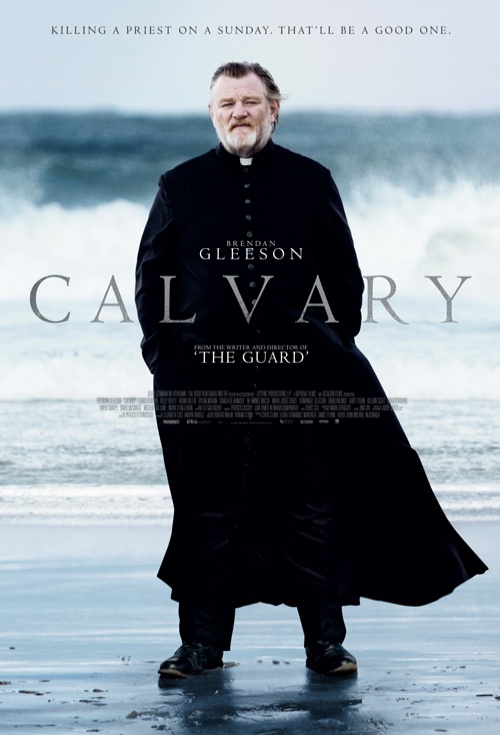
Calvary opens with a confession, not of sins committed, but of a sin to be carried out.  The priest hearing the confession, Father Lavelle (Gleeson), is flippant at first, then astounded as the proposed sin is murder, and the victim will be himself.  The parishioner was abused as a child by another priest (now dead) and wants his revenge; what better way to offend God than to kill a good priest, rather than a bad one?  It’s a powerful opening, and one that is bookended by an equally powerful conclusion.  What occurs in between, in the week leading up to the proposed murder, is often wryly humorous, sometimes emotionally uplifting, occasionally absurd, but alas, rarely convincing.

The main problem Calvary has is what to do with Father Lavelle once his death sentence is announced.  His superior, Bishop Montgomery (David McSavage), offers no real support or advice, and the priest he shares duties with, Father Leary (Wilmot), is so ineffectual he eventually leaves the parish.  A visit from his daughter, Fiona (Reilly), reveals his inadequacy a a biological father – she’s recovering from a suicide attempt and has been estranged from him since the death of her mother – and while some inroads are made in their relationship, his interaction with the rest of the village is less successful.  As he alienates more and more people, his intended murderer’s assertion that he’s a good priest becomes more and more untenable, and his failings as a man and a priest are increasingly highlighted.  This is a man whose own demons, once banished, are coming back to claim him.  (There’s an argument here that the man planning to kill him would know all this, making his choice of Lavelle as a “good priest” less a case of conviction, and more likely, of convenience.)

Calvary - scene

But while Father Lavelle continually fails to understand or support his parishioners – wife-beater and butcher Jack (O”Dowd), his errant wife Veronica (O’Rourke) and her lover Simon (De Bankolé), local businessman Fitzgerald (Moran), angry doctor Frank Harte (Gillen), local policeman Inspector Stanton (Lydon) and his rent boy lover Leo (Sharpe) – the audience is left wondering just how he managed to become a priest in the first place.  The number of ways in which he misunderstands the villagers is increasingly impressive, but becomes tiring after a (very short) while, so when he comforts the widow (Croze) of a French tourist who’s been killed in a car accident, it’s great to find he can be appropriately sympathetic and contrite (the movie has several quiet moments like this one, but it’s by far the most effective).

As events conspire to push Lavelle closer to the edge of a breakdown, and violence becomes a bitter factor in his involvement with the village, Calvary becomes a much darker movie and one that seems determined to offer no ray of hope for its embattled cleric.  Gleeson is a perfect choice for the dour, embittered character he portrays, a man who has come late to the priesthood, and now finds himself the target of someone’s hatred of the institution he represents.  In the hands of director and screenwriter McDonagh, this premise should have been the basis for a trenchant examination of faith, responsibility and social exclusion.  What it serves up instead is a treatise on bad decisions and atonement, with unresolved guilt as a side order.  Aside from the village’s odd assortment of inhabitants, there’s little in terms of the drama taking place that we haven’t seen before (and with more sharply defined characters).  It’s not that Calvary is a bad film per se, just that it promises much more than it delivers.

Rating: 7/10 – strong performances and beautiful location photography side, Calvary doesn’t quite draw the audience in as planned; still worth watching though as there are few movies out there that take these kind of risks with both the material and its performances.

Share this:

  • Click to share on X (Opens in new window) X
  • Click to share on Facebook (Opens in new window) Facebook
  • More
  • Click to print (Opens in new window) Print
  • Click to email a link to a friend (Opens in new window) Email
Like Loading...

Blog Stats

  • 453,661 hits

Recent Posts

  • 10 Reasons to Remember Bibi Andersson (1935-2019)
  • Fantasia (1940)
  • Dances With Wolves (1990) – The Special Edition
  • Kiss of the Spider Woman (1985)
  • The Three Musketeers (1973)

Top Posts & Pages

  • Removal (2010)
    Removal (2010)
  • Cardboard Boxer (2016)
    Cardboard Boxer (2016)
  • Bastards (2013)
    Bastards (2013)
  • Two Shorts by François Ozon: A Summer Dress (1996) and X2000 (1998)
    Two Shorts by François Ozon: A Summer Dress (1996) and X2000 (1998)
  • Cold Lunch (2008)
    Cold Lunch (2008)
  • Lost for Life (2013) - Another Look
    Lost for Life (2013) - Another Look
  • Poster of the Week - For a Few Dollars More (1965)
    Poster of the Week - For a Few Dollars More (1965)
  • Mayhem (2017)
    Mayhem (2017)
  • Blue Jay (2016)
    Blue Jay (2016)
  • The LEGO Movie (2014)
    The LEGO Movie (2014)
Follow thedullwoodexperiment on WordPress.com

Blogs I Follow

  • Rubbish Talk
  • Film 4 Fan
  • Fast Film Reviews
  • The Film Blog
  • All Things Movies UK
  • Interpreting the Stars
  • Let's Go To The Movies
  • Movie Reviews 101
  • TMI News
  • Dan the Man's Movie Reviews
  • Film History
  • Jordan and Eddie (The Movie Guys)

Archives

  • April 2019 (13)
  • March 2019 (28)
  • February 2019 (28)
  • January 2019 (32)
  • December 2018 (28)
  • November 2018 (30)
  • October 2018 (29)
  • September 2018 (29)
  • August 2018 (29)
  • July 2018 (30)
  • June 2018 (28)
  • May 2018 (24)
  • April 2018 (21)
  • March 2018 (31)
  • February 2018 (25)
  • January 2018 (30)
  • December 2017 (30)
  • November 2017 (27)
  • October 2017 (27)
  • September 2017 (26)
  • August 2017 (32)
  • July 2017 (32)
  • June 2017 (30)
  • May 2017 (29)
  • April 2017 (29)
  • March 2017 (30)
  • February 2017 (27)
  • January 2017 (32)
  • December 2016 (30)
  • November 2016 (28)
  • October 2016 (30)
  • September 2016 (27)
  • August 2016 (30)
  • July 2016 (30)
  • June 2016 (31)
  • May 2016 (34)
  • April 2016 (30)
  • March 2016 (30)
  • February 2016 (28)
  • January 2016 (35)
  • December 2015 (34)
  • November 2015 (31)
  • October 2015 (31)
  • September 2015 (34)
  • August 2015 (31)
  • July 2015 (33)
  • June 2015 (12)
  • May 2015 (31)
  • April 2015 (32)
  • March 2015 (30)
  • February 2015 (37)
  • January 2015 (39)
  • December 2014 (34)
  • November 2014 (34)
  • October 2014 (36)
  • September 2014 (25)
  • August 2014 (29)
  • July 2014 (29)
  • June 2014 (28)
  • May 2014 (23)
  • April 2014 (21)
  • March 2014 (42)
  • February 2014 (38)
  • January 2014 (29)
  • December 2013 (28)
  • November 2013 (34)
  • October 2013 (4)

Blog at WordPress.com.

Rubbish Talk

Film 4 Fan

A Movie Blog

Fast Film Reviews

The Film Blog

The official blog of everything in film

All Things Movies UK

Movie Reviews and Original Articles

Interpreting the Stars

Dave Examines Movies

Let's Go To The Movies

Film and Theatre Lover!

Movie Reviews 101

Daily Movie Reviews

TMI News

Latest weather, crime and breaking news

Dan the Man's Movie Reviews

All my aimless thoughts, ideas, and ramblings, all packed into one site!

Film History

Telling the story of film

Jordan and Eddie (The Movie Guys)

Movie Reviews & Ramblings from an Australian Based Film Fan

Privacy & Cookies: This site uses cookies. By continuing to use this website, you agree to their use.
To find out more, including how to control cookies, see here: Cookie Policy
  • Subscribe Subscribed
    • thedullwoodexperiment
    • Join 481 other subscribers
    • Already have a WordPress.com account? Log in now.
    • thedullwoodexperiment
    • Subscribe Subscribed
    • Sign up
    • Log in
    • Report this content
    • View site in Reader
    • Manage subscriptions
    • Collapse this bar
 

Loading Comments...
 

    %d