In what sounds like the reaction of a spoilt child when told by its parents that it can only have one slice of birthday cake and not the whole thing, Netflix is threatening to pull five of its movies from this year’s Cannes Film Festival. Cannes has decided that only movies that receive a theatrical release in France will be eligible for entry to the prestigious Official Competition. The five movies are: Alfonso Cuarón’s Roma, Jeremy Saulnier’s Hold the Dark, Paul Greengrass’s Norway, and two Orson Welles related features, Morgan Neville’s documentary, They’ll Love Me When I’m Dead, and The Other Side of the Wind, Welles’s own movie that has recently been completed after being believed lost.
Cannes have apparently changed the rules in relation to the Official Competition, and it’s this that Netflix are protesting against. While many see it as a snub by the Old Guard – Cannes is seventy-one this year – against the new kids on the block, this is actually a clash of “business models”. Cannes believes it’s important that movies be seen on a big screen, in cinemas, as part of a shared cultural experience. The festival also highlights the range and diversity of cinema from around the world, and despite its elitist standing, always seeks to present what would be regarded as more mainstream movies throughout its yearly run. Already confirmed this year is the latest Star Wars offshoot, Solo, and when the full line up is revealed on 12 April, there’s little doubt that other more mainstream movies will be present.
Netflix, however, have no interest in releasing its movies in cinemas. It’s not their distribution model, and they’re just as inflexible in their approach as Cannes is. Some people are saying that Netflix and their streaming services are the future of movies, that home viewing, whether on sixty-inch plus TV screens, or computer monitors, or tablets, will see an end to theatrical distribution. Perhaps. But if television, once heralded as the inevitable cause of the demise of movie-going, hasn’t done the job after all this time, then Netflix isn’t going to make a difference either. And while it’s true that people want a wider choice of access based on their own terms and needs, the shared experience of a visit to the cinema is still the way to see a movie. As the makers of Godzilla (1998) put it, Size Does Matter.
But should this divide between Cannes and Netflix be considered as anything more than a falling out amongst uneasy friends? Possibly, but in the end it’s unlikely to affect the potential success or failure of any of the movies being withheld, and Cannes and Netflix will continue to prosper in their own unique ways. And as long as that continues, then we, the audience, will continue to be well served by both organisations.
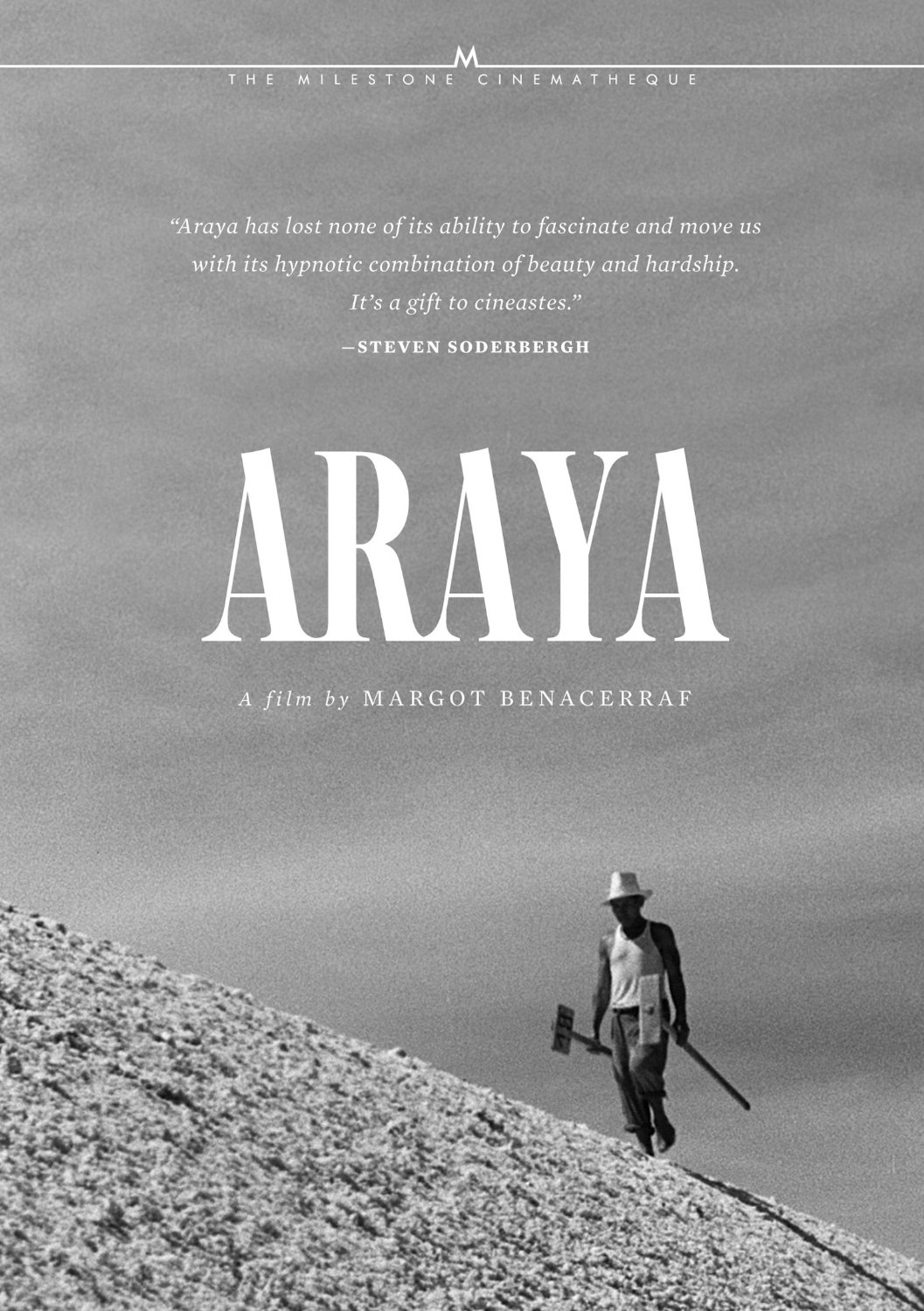
In northeastern Venezuela there is a barren, largely inhospitable peninsula called Araya. Home to a vast salt deposit, the area is harsh and uninviting, but it’s also home to various families that work the salt flats or fish the nearby sea. From the villages of Manicuare and El Rincón, they make a life for themselves that revolves around the collection of salt and fish each and every day, the two items that provide the basis for their community and their reason for being there. It’s hard, labour intensive work that offers little in the way of reward, but has become a generational necessity: for these Venezuelans there’s simply nowhere else to go.
Araya follows three families through the course of an average day. The Salazar family are salineros – salt marsh workers. Their day begins at six in the morning as they take the salt that has been selected overnight and pile it up into huge pyramid-like piles. It’s punishing work that has to be done so early in the day because of how high the temperature rises later. Even so, it’s hot work and the salt crystals can be damaging to the workers’ skin, causing ulcers and open sores. By late morning their work is done and the Salazar family can return home, making the six mile journey to Manicuare on foot beneath the blazing sun. Once there they can tend to work needed to be done at home before going to sleep.
Further along the coastline, the Ortiz family come down to the shoreline to cast their nets out into the sea. Even their youngest, Carmen, has work to do: she collects coral and shells. Once the nets have been retrieved, the fish that has been caught is divided up and some of it is taken to El Rincón and Manicuare for sale to the villagers. The fish is the main ingredient in everyone’s diet, and is rarely passed up.
At night the men of the Pereda family toil in the salt marshes, selecting and cutting blocks of salt for the Salazars and the other salineros to process the next day. Again, it’s hard work as they push their boats through the shallow waters and haul the blocks of salt onto them. And each family repeats the same actions the next day, and the day after that… until industrialisation reaches them, and their skills – handed down from generation to generation – become superseded by machines.
Although it has the look and feel of a documentary, Araya is intended to be viewed as a tone poem, Cabrujas’ narration deliberately written to evince a feeling not often associated with this type of “exposé” – an appreciation of the lyrical beauty that underpins the lives of the people who live in such a barren corner of the world. As such, and with the benefit of seeing the movie over sixty-five years since it was made, it’s fair to say that Araya works as both a tone poem and a documentary, and is successful whichever way it’s approached.
Part of the movie’s appeal, and one of its main strengths, is that while it celebrates the hard life these families lead, it also presents their lives in such a matter-of-fact way that there’s no room for pity or sentimentality; these people lead their lives in the way that’s portrayed, and they don’t complain about it. Benacerraf is also wise enough to avoid interviewing anyone, and by doing so, she gains more “mileage” out of being an observer than perhaps she would have done by asking a lot of pointed questions. The viewer can see all he or she needs to know about the inhabitants of Araya, as well as the obvious pride they take in the work that they do. As the movie shows more and more of the structured, unchanging lifestyle they lead, it shows how simple and uncomplicated that lifestyle is, and how suited they are to it.
Benacerraf – an acclaimed feminist filmmaker and founder of Venezuela’s Cineteca Nacional, and Fundavisual Latina – also delves into the history of the area, revealing the existence of a 17th century fortress that overlooks the area (but which is now a ruin), and which was built to provide security for the various traders whose cargoes of salt were prey to pirates. It’s difficult to see now just how busy the peninsula must have been despite its unforgiving nature, especially when the viewer sees the nearby wood, where the trees are so denuded that their branches look like withered bones. It’s images such as these, beautifully filmed by Giuseppe Nisoli beneath the blazing, cloud-free canopy of the sky, that highlights the stark, natural beauty of the peninsula.
Whether the camera is following a salinero carrying a basket full of salt on his head, or a member of the Ortiz family sorting through the hundreds of fish that have been caught, or the arrival in El Rincón of the water truck – 1,850 gallons to be shared amongst sixty houses – or the member of the Salazar family, Luisa, who makes clay pots without the benefit of a wheel, Araya is a visual feast, fascinating and poignant and continually astonishing in the way in which the peninsula’s inhabitants have carved out a rewarding way of life for themselves.
When the movie was first shown at the Cannes Film Festival in 1959, it shared the Cannes International Critics Prize with Alain Resnais’s Hiroshima, mon amour. And yet it was never picked up for widespread or international distribution, an outcome that seems ludicrous now that Araya has been restored and can be seen for the breathtaking experience it actually is. That it took fifty years for the movie to be recognised for its tremendous accomplishments just goes to show how wrong the movie business can be sometimes. Thank the deity of your choice then that it’s been rescued from obscurity, and can take us back to a time and a place where life – hard, exacting, rewarding life – was lived each day by a group of Venezuelans who were probably unknown to the rest of their country.
Rating: 9/10 – hypnotic, engaging, rich in detail, affecting, beautifully shot, powerful in its simplicity – Araya is all these things and much more beside; with its poetic leanings enhancing the visuals, the movie works on several levels and succeeds on all of them.
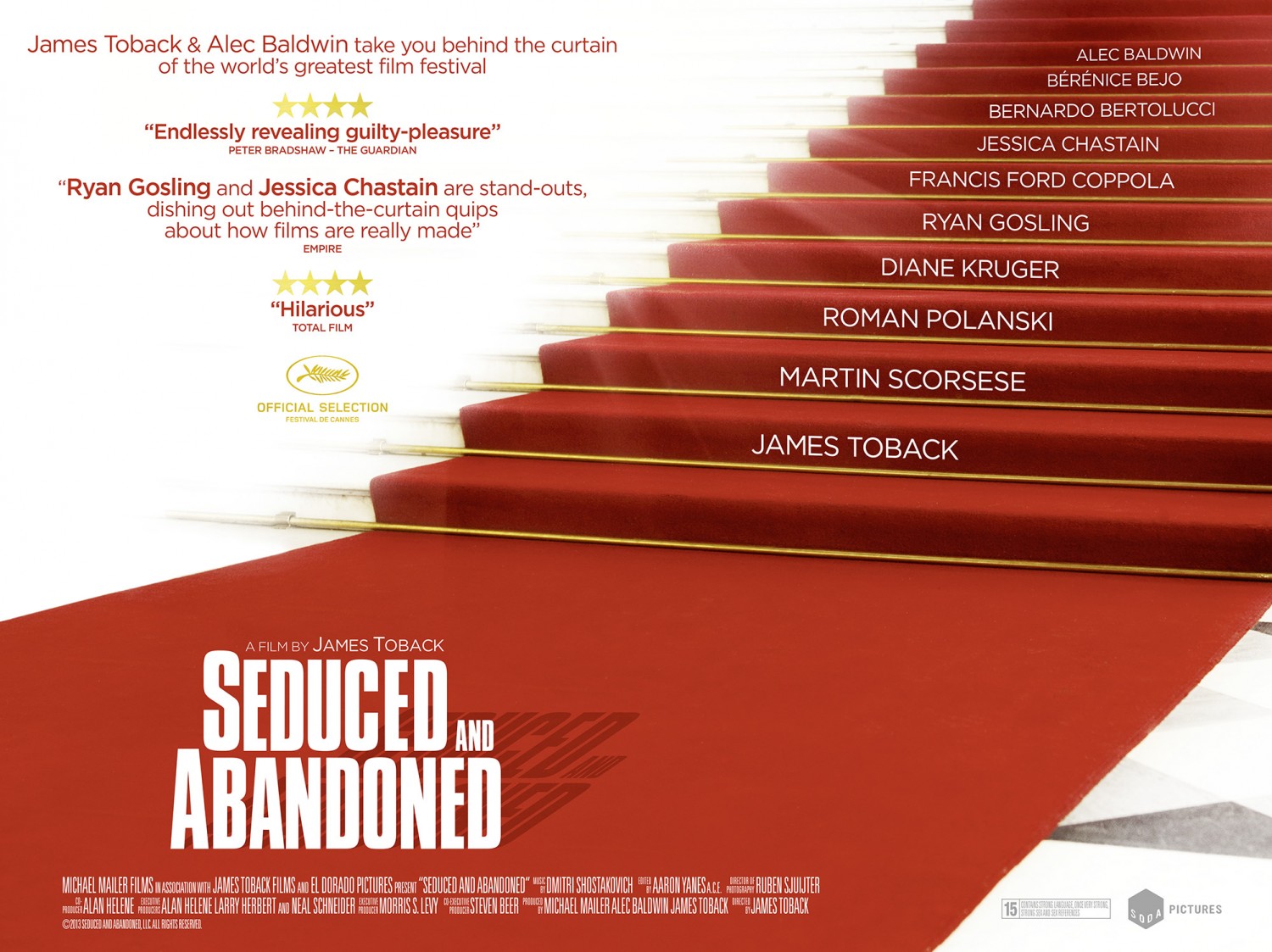
Alec Baldwin, James Toback, Bernardo Bertolucci, Martin Scorsese, Francis Ford Coppola, Roman Polanski, Bérénice Bejo, Diane Kruger, Ryan Gosling, Jessica Chastain, Neve Campbell, James Caan, Mark Damon, Avi Lerner, Ashok Amritraj
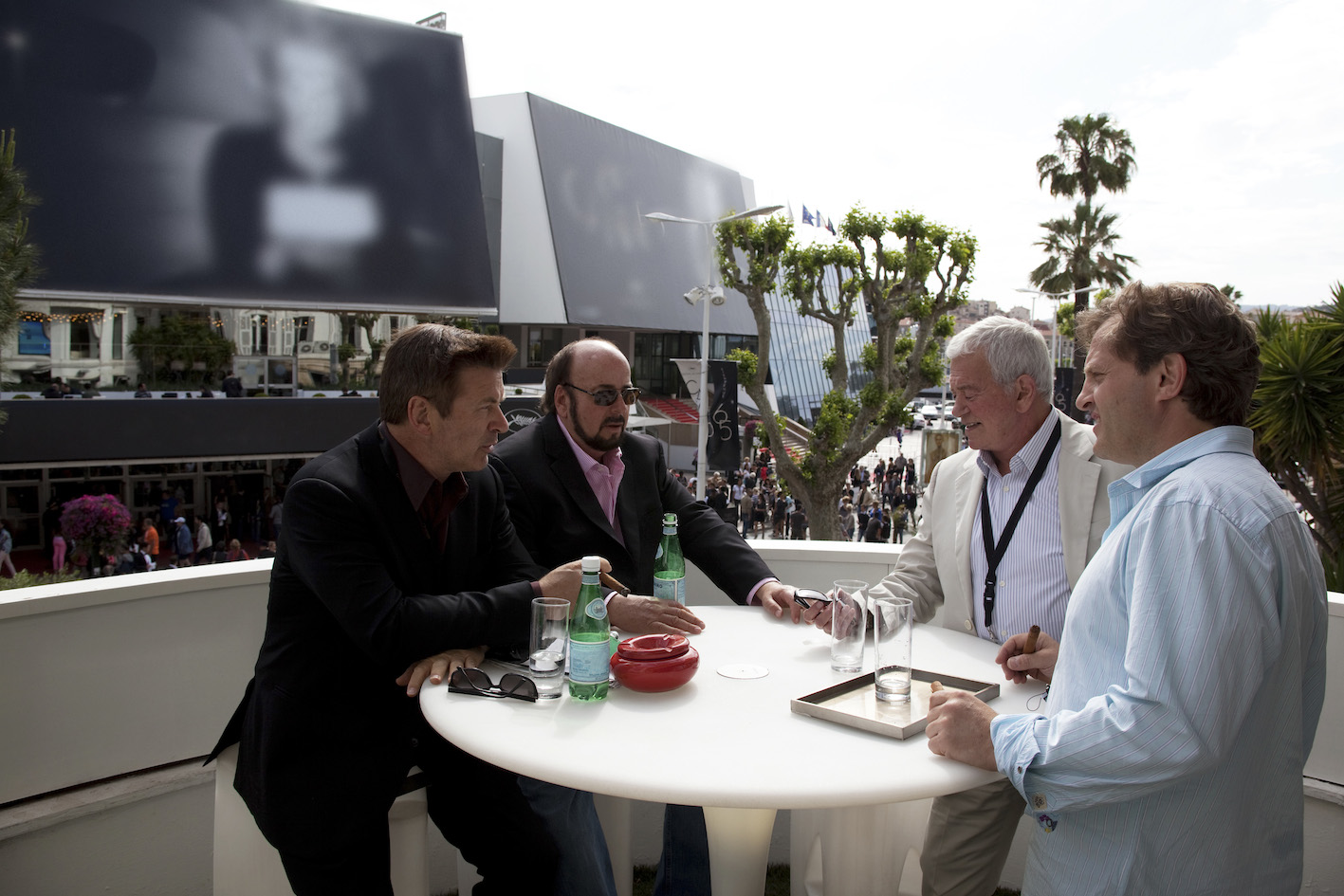
Deciding to make a movie together, director James Toback and actor Alec Baldwin first work out the kind of movie they want to make – a Last Tango in Paris-style project set in Iraq – and who they want to co-star with Baldwin, namely, Neve Campbell. Then, they take their idea to the 2012 Cannes Film Festival in the hope of securing the financing needed to get the movie made. Along the way they speak to various people about the difficulties of getting movies made, the challenges in persuading potential investors to part with their money, and how easier/harder it was back in the Seventies to get a project off the ground.
The search for investors leads to meditations on money, fame, acting, glamour, even death, as Toback and Baldwin look at the wider aspects of movie making, and the constraints that stop some movies from being made as their makers intended. The movie also looks at the industry from both a creative and a financial standpoint, and features interviews with the likes of Martin Scorsese and Francis Ford Coppola, and their own experiences of funding and making movies.
Opening with a quote from Orson Welles – “I look back on my life and it’s 95% running around trying to raise money to make movies and 5% actually making them. It’s no way to live.” – Seduced and Abandoned is an often hilarious, witty and insightful look at contemporary movie making, made by a director whose own career has seen him struggle to get movies made, and an actor whose career resurgence since The Aviator (2004) has propelled him to the lower reaches of the ‘A’ List. Together, they take the viewer on a tour of the highs and lows of movie making, and even when they’re coming up against closed door after closed door, still manage to stay positive.
In fact, it’s sometimes difficult to discern if this apparent by-product documentary is the real movie or not, or just some idea they had on the back of trying to make their version of what Baldwin refers to as Last Tango in Tikrit. Although the pair are seen in several meetings pitching their ideas for the movie, they never seem entirely convincing that this is a legitimate project that they’re trying to get off the ground; they don’t even have a script yet, nor anything approaching a synopsis. (Asked point blank if she’d appear in the movie, Diane Kruger blanches and then falls back on the tried and trusted, “If I can see a script I’ll consider it” answer.) Matters aren’t helped by Baldwin’s continual references to the sex scenes the movie would include, making it seem like some weird, sexual fantasy of his own that he’s trying to get off the ground.
However unlikely the premise, though, we all know there are movies out there that have been made out of worse ideas – Teenage Mutant Ninja Turtles (2014), anyone? – but the reactions of veteran producers/distributors Avi Lerner and Ashok Amritraj provide a short, predatory lesson in how to get a movie made: always bear in mind the profits. Toback is told in no uncertain terms that with Campbell aboard he won’t get the $15-$20m he wants to make the movie; instead he’ll only get $4-$5m. Only in those circumstances will producers or investors feel comfortable that they’ll get their money back. It’s a harsh reality, and one that shouldn’t come as a surprise, but it’s so casually discussed that it’s like a slap in the face.
The case for Last Tango in Tikrit being entirely a fabrication is given further credence by Toback’s almost slavish reactions to suggestions for changes to the plot and the story, and the casting. He agrees to almost all of them, seemingly eager – maybe too eager – to please his potential investors in order to secure the financing he needs. In moments such as these, Toback seems uncomfortably close to abandoning the whole concept of the movie, just as long as he gets the money to make a movie, if not the one he’s there to try and get made. (It’s a shame no one asks him to replace Baldwin with a bigger name actor; it would have been interesting to see his reaction to that.)
With Toback and Baldwin being rebuffed at every turn, and to ensure that the movie runs for more than half an hour, there are plenty of interviews with industry notables such as Martin Scorsese, who recounts some of the issues that came up when he was making Mean Streets (1973); Bernardo Bertolucci, who talks about working with Brando on Last Tango in Paris (1972); Francis Ford Coppola, who conveys his dismay at making two Godfather movies and then not being able to get backing for a movie of his own; and Ryan Gosling, whose reaction to an airplane emergency isn’t quite what you’d expect.
The movie’s sly wit and acerbic humour help to keep things interesting, and it’s a good thing as Seduced and Abandoned is a documentary that will remain largely of interest to movie buffs and/or anyone trying to get their own project off the ground. The movie does assume a degree of awareness of what goes on at Cannes, and there’s also an assumption that viewers will be up to speed on the way in which movies are financed, but the lay person may well struggle, or find it less than fascinating. And Toback doesn’t always maintain a linear focus, letting the movie wander from one meeting to another but without any clear context (and reinforcing the idea that the movie is the movie, whatever Toback and Baldwin might say).
Rating: 7/10 – with its two “leads” obviously having a whale of a time, Seduced and Abandoned comes across more as a bit of a jolly boys’ outing to Cannes rather than a properly realised documentary; as a result it lacks focus and doesn’t entirely convince, instead making it seem like a huge in-joke that Toback and Baldwin have concocted for their own amusement.





 thedullwoodexperiment