• 10 Reasons to Remember…
  • A Brief Word About…
  • About
  • For One Week Only
  • Happy Birthday
  • Monthly Roundup
  • Old-Time Crime
  • Other Posts
  • Poster of the Week
  • Question of the Week
  • Reviews
  • Trailers

thedullwoodexperiment

~ Viewing movies in a different light

thedullwoodexperiment

Tag Archives: Charles Dickens

Xmas Classics – A Christmas Carol (1914)

23 Friday Dec 2016

Posted by dullwood68 in Movies

≈ Leave a comment

Tags

Bob Cratchit, Charles Dickens, Charles Rock, Drama, Ebenezer Scrooge, George Bellamy, Harold M. Shaw, Jacob Marley, Literary adaptation, Review, Silent Era, Three Ghosts, Xmas
screen-shot-2016-12-23-at-23-55-01

D: Harold M. Shaw / 23m

Cast: Charles Rock, George Bellamy, Mary Brough, Edna Flugrath, Franklyn Bellamy, Edward O’Neill, Arthur M. Cullin, Wyndham Guise, H. Ashton Tonge

The third movie adaptation of Charles Dickens’ classic tale – after versions released in 1908 and 1910 – Harold M. Shaw’s masterful retelling remains a must-see for fans of the original story, and for fans of silent cinema as well. Shaw’s interpretation retains most of the key elements and scenes from Dickens’ novella, and thanks to a roster of good performances, brings them to life with a minimum of frenzied arm waving or histrionic face-pulling.

The story begins as ever in the counting house of Ebenezer Scrooge (Rock). His lowly clerk, Bob Cratchit (G. Bellamy), makes the mistake of lighting a piece of coal in the fireplace in an effort to keep warm. Enter Scrooge, aghast at Cratchit’s nerve, removing the coal, and throwing a couple of sprigs of holly down onto the floor for good measure. Not even a visit from his nephew, Fred (F. Bellamy) and his niece, Belle (Flugrath) with an invitation to join them at Xmas, can overcome his mean-spirited mood. And as if that wasn’t enough, he has to contend with a visit from two charity workers looking for donations. What’s a miser to do with all these demands on his time and his money?

promo230919576_2-1000x563

The answer is make no changes whatsoever. At the end of the day, Scrooge visits a local tavern; even there his attitude spoils the evening for the other patrons. Meanwhile, Cratchit has returned home to the bosom of his family, and with his wife (Brough) and children – including poor old Tiny Tim – is able to be happy and carefree. Scrooge arrives home, but is startled to see the face of his old business partner, Jacob Marley (O’Neill), appear in place of the door-knocker. Scrooge, rattled by this, retires to bed but is soon visited by Marley’s ghost, who warns the old skinflint that he’ll be visited in turn by three ghosts.

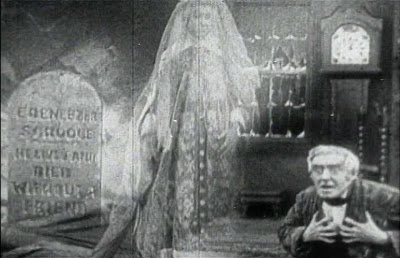
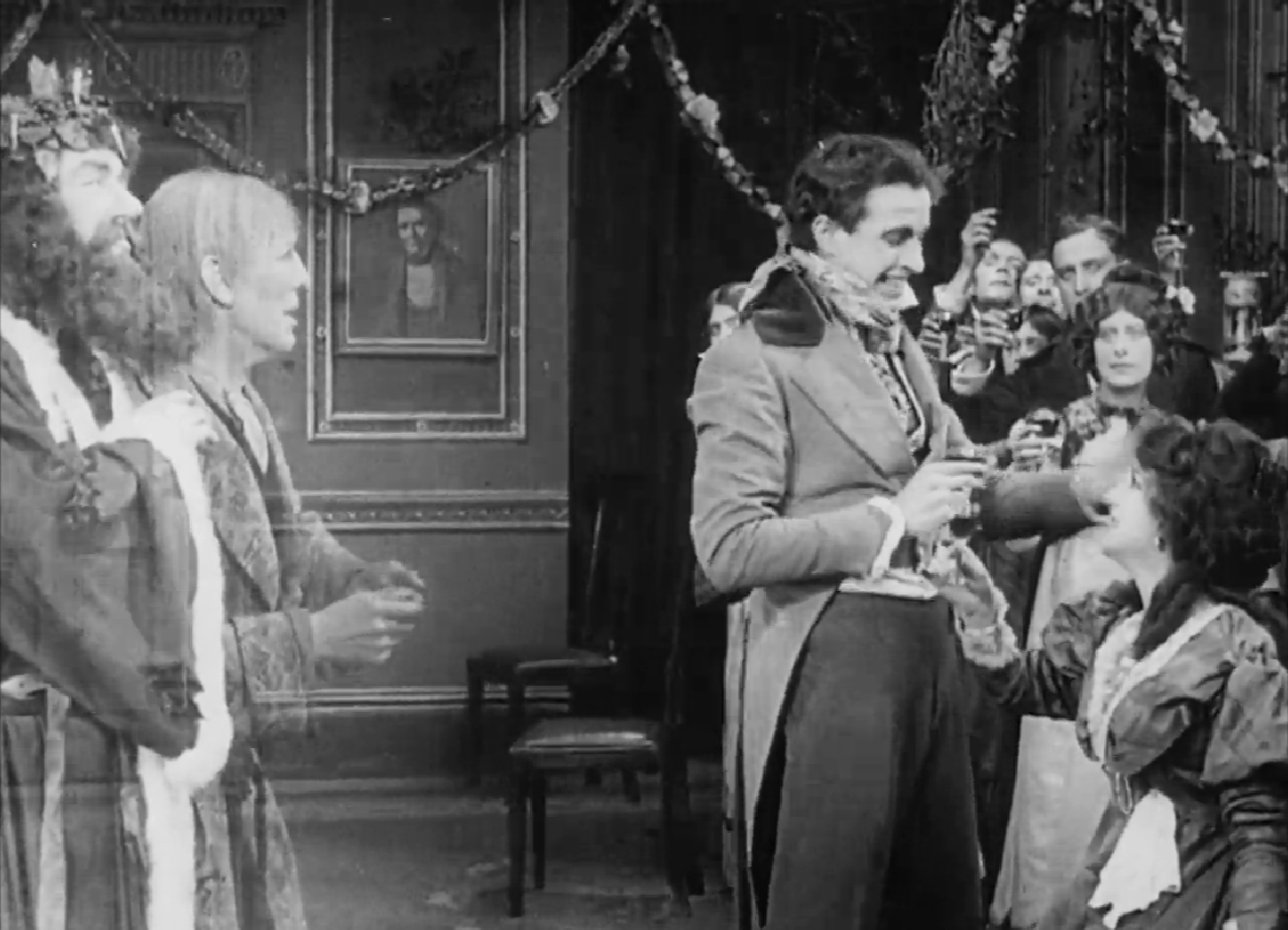
The first, the Ghost of Christmas Past (Cullin), is a jolly, holly-bedecked phantom who takes Scrooge firmly by the wrist and drags him away back into Scrooge’s childhood, back when he was a much happier person than he is now. Reminded of better times makes Scrooge upset. The Ghost of Christmas Present (Guise) shows him how he’s regarded by others, from Bob Cratchit and his family, and his nephew Fred’s family and friends, and he learns that his manner has alienated him from them. The third ghost, that of Christmas Yet to Come (Tonge), shows Scrooge his tombstone, the blunt summation of his life. Returned to his bedroom, Scrooge wakes the next morning, determined to make amends…
screen-shot-2014-12-13-at-08-00-03

This is a fine, straightforward adaptation that tells a very familiar story with a great deal of invention and, on occasion, wit. That it’s very faithful to its source is another aspect that helps the movie provide an entertaining experience, and Shaw handles the various scenes where Scrooge behaves atrociously with a restraint and a purpose that rescinds any idea that he wants to make an out-and-out melodrama. With his cast restricted from making too many broad, sweeping gestures with their arms – a staple of early movie making – or wild, gurning faces, Shaw ensures that, by playing it as naturally as possible, the audience reaps the reward of seeing more genuine feelings and emotions than would have been the norm back in 1914. Of course, there’s still the odd moment where this still happens, but they don’t detract from the overall effect.

Another plus is the decision to make Scrooge’s experiences with Marley and the three Ghosts a matter of his viewing things and events as seemingly a ghost himself. Using the simple technique of super-imposition, Shaw has Scrooge appearing as transparent as the Ghosts are themselves, a trick that reinforces the lack of control Scrooge has over these ghostly ministrations, and makes for some interesting scene transitions. If you look carefully as the Ghost of Christmas Past takes Scrooge away from the “safety” of his bedroom, you’ll see the old miser begin to dematerialise slowly as they leave the room. It’s not a flashy effect, by any means, but it is a neat little touch that adds greatly to the effectiveness of the scene.

hqdefault

Again, Shaw is helped greatly by his cast, who all portray their roles with a credibility that anchors the story, and stops it from becoming just another costume drama, albeit one derived from a much-loved classic of literature. Rock is a convincing miser, but is most effective when realising the error of his ways, his despair and dismay written plainly on his face; when Scrooge is confronted with his tombstone, a moment that could have provoked an excessive amount of gesticulating and wild expressions, Rock conveys his character’s shock and horror with a minimum of fuss, and still manages to convey the utter terror that has been instilled in him.

As Bob Cratchit, George Bellamy provides a more mirthful performance, his wide-eyed surprise at his employer’s behaviour always a pleasure to witness lurking in the background, and balanced by the mournful look he gives when he donates what little money he has to the charity workers. It’s a moment that perfectly encapsulates the difference between the two characters, and also the reason why Cratchit has no qualms about drinking a toast to Scrooge at Xmas-time: he’s too good at heart not to. Elsewhere, O’Neill is a suitably mournful Jacob Marley, Brough is an amiable presence as Mrs Cratchit, and each of the Ghosts is presented (mostly) in the way that Dickens originally conceived them (seeing Tonge’s face does let the side down, though).

Rating: 8/10 – an atmospheric, sensitively handled version of Dickens’ classic tale, A Christmas Carol proves that silent era movies weren’t all about the “grand gesture” but could be considered, thoughtful, and emotionally astute; it’s all too easy to overlook silent movies that adapt literary successes, but when one is as successful at condensing the material as well as this movie does, then it shows that anything is possible – just like a committed miser having a change of heart.

NOTE: Unsurprisingly, there is no trailer for this movie.
Share this:

  • Click to share on X (Opens in new window) X
  • Click to share on Facebook (Opens in new window) Facebook
  • More
  • Click to print (Opens in new window) Print
  • Click to email a link to a friend (Opens in new window) Email
Like Loading...

Olivia Twist (2014)

04 Sunday Oct 2015

Posted by dullwood68 in Movies

≈ Leave a comment

Tags

Adoption, Arno Hazebroek, British Youth Film Academy, Charles Dickens, Drama, Ellie Mahyoub, Fagin, James Francis, Literary adaptation, Oliver Twist, Review, Robbery, Stealing, Stoke-on-Trent

Olivia Twist

D: Arno Hazebroek / 74m

Cast: Ellie Mahyoub, James Francis, Martin Alcock, Junior Daws, Angela Fleming, Teague Davis, Kimberley Windsor, Matthew Mellalieu, Darren Smallridge, Chris Salisbury, Rachel Grainger, Armani Katija

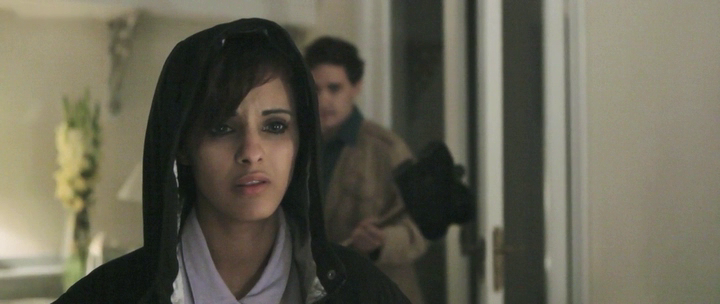
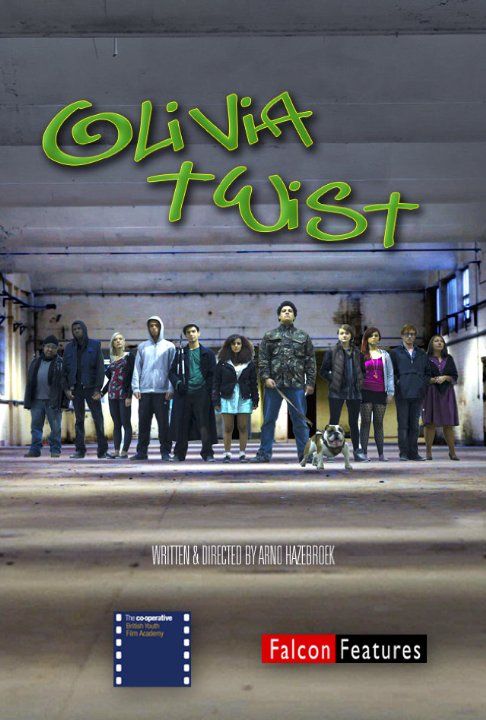
A young, heavily pregnant woman collapses outside her house. She later dies in childbirth, but her child, a daughter, survives. The daughter is adopted by the Twists, and is raised by them in Stoke-on-Trent. The marriage is cut short by Mrs Twist’s death and Olivia is left in the care of her father, Barry (Smallridge), but their relationship has become a distant one. At school it’s little better, though she does have a close friend, Dick (Davis) and they support each other against a group of bullies. When Olivia punches one of them for saying nasty things about her mother, she is meant to see the headmistress, Miss Corney (Windsor), but she ducks out of school and heads home instead. There, an unexpected discovery makes her leave home for good.

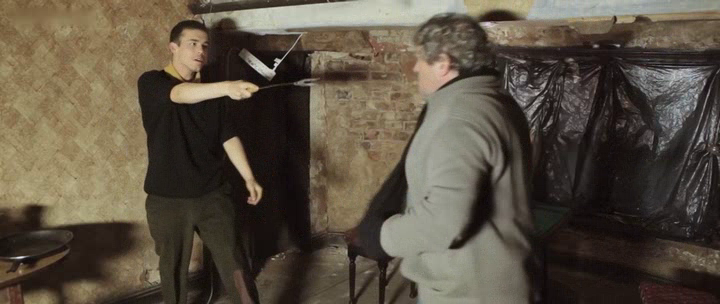
She wanders aimlessly and spends the night in a barn. The next day she comes across a group of youths who are mugging an old man (Salisbury). The police arrive and Olivia runs off; when the coast is clear she encounters a young man who introduces himself as Jack Dawkins (Francis). He takes her under his wing and tells her there’s a place she can go where she’ll be looked after, run by a man called Fagin (Alcock) who looks after waifs and strays. At Fagin’s it soon becomes clear that the other teenagers there are part of a gang of pickpockets and thieves, and that Fagin runs things. In return for looking after her, Olivia is expected to become a part of the gang but she’s resistant to the idea. When a criminal acquaintance of Fagin’s, Bill Sykes (Daws), is looking for a small child to help rob a house, Olivia’s slight frame makes her the ideal candidate. But when she gets inside the house, she’s knocked unconsciousness before she can let Sykes in.

Much later, Olivia wakes to find herself in a nice bed and still at the house, which is owned by Mrs Maylie (Grainger). With the aid of an Afghani girl called Aziza (Katija), Mrs Maylie explains that Olivia is safe there for as long as she wants to be. Meanwhile, Sykes is worried that Olivia may have talked about his and Fagin’s “business dealings”; they hatch a plan to get her back in their clutches. They get a message to her that’s apparently from Jack, and she agrees to meet “him”. With a riot going on in the city, Fagin and Sykes reckon the police will be too busy to worry about them, but when the pub that Fagin operates out of is raided, Olivia is given a chance to escape her captors for good.

Olivia Twist - scene

Since 2006, the British Youth Film Academy has allowed students to work on (and appear in) some seventeen movies and two television series, and in the process gain the experience necessary for these students to go on and work in the industry. It’s a great initiative, and t’s equally good to see that there’s a structured, sustainable annual programme where budding movie makers can learn skills in a variety of departments, decide on which area they want to concentrate on, and build a career for themselves. In the past, the BYFA has made quite a few movies based on the works of a certain William Shakespeare, but this is their first attempt at adapting Charles Dickens, and while the attempt is to be applauded, the final result is less heartening.

By updating Dickens’ tale to the modern day, and playing it against a background of social and industrial unrest, Olivia Twist seeks to ground itself, and make it sound and feel more relevant to contemporary audiences. On the face of it, it’s a solid idea, and rich with possibilities, but thanks to budgetary constraints and the random nature of director/writer Arno Hazebroek’s screenplay, the movie never really feels relevant or too up-to-date. At one point, Jack Dawkins uses a huge dollop of irony to praise the less-than-attractive area of Stoke-on-Trent that he and Olivia find themselves in, but this is less a comment on the grim functionality of industrial buildings than a clumsy reminder that this is a movie about fateful circumstances and where they can lead you. Stoke-on-Trent is clearly meant to be as much a character as any of the human ones, but a couple of references like Jack’s isn’t enough to elevate the decaying environment to better effect.

The dialogue is another, huge, problem. It’s a curiously uneven, patchwork combination of prose from Dickens’ novel, less obviously archaic forms of speech, and odd snatches of modern day vernacular. This leads to various members of the cast having difficulty sounding confident about what they’re saying, and the meaning of some lines is lost altogether as they sprint through them (and finish with a sense of relief). Unfortunately, this also leads to the drama inherent in the story often losing traction, and there’s an air of some scenes having been included purely to connect one scene to the next as a formality rather than in any organic way.

As a consequence the performances vary wildly in quality, with Mahyoub given the unenviable task of looking worried/perturbed/annoyed/miserable/scared depending on what scene she’s in, and the awkward requirement of reciting the novel’s most famous line at an entirely unconvincing moment in the school cafeteria. Francis fares better than most, and injects a much needed sense of humour into his portrayal of the Artful Dodger figure, while Alcock plays Fagin as an avuncular gang leader who doesn’t quite seem to have the smarts necessary to run such an outfit. Of the rest of the cast, Fleming is perhaps the only member who navigates her role and the dialogue without sounding arch or false. It’s noticeable that other members of the cast look decidedly uncomfortable throughout, and the attendant awkwardness borne out of Hazebroek’s approach to the material only confirms that this is a movie that would have benefitted from more time, more money, and more attention to detail.

Olivia Twist - scene2

It’s a dour movie as well, with a depressing visual style that is no doubt meant to highlight/complement the idea that Olivia’s journey and circumstances are less than desirable. The drabness of the locations used doesn’t help either, though the daytime interiors have a brightness to them that feels like the lighting was designed to compensate for the exteriors (and yet this in its way proves distracting). And yet, with all this detracting from the overall experience, and proving frustrating to watch, the movie does have a certain appeal, and one that allows the viewer to keep watching even though they might be wondering why. The relationship between Olivia and Jack is unexpectedly sweet and believable, and there’s a wonderful transformation at the end that sees Fagin in a jail cell morph from human being to Victorian illustration. It’s moments and flourishes like these that show just how good the movie could have been, and bodes well for future adaptations, but only if more care and attention is made in the process.

Rating: 4/10 – disappointing on so many levels but with an obvious intention to be as good as possible with limited resources, Olivia Twist stumbles and falls far more often than it runs unimpeded; however, it’s still a movie that shouldn’t be overlooked or disparaged too much as this is a first-time effort for most of the crew and within the constraints imposed upon them, they’ve not disgraced themselves.

Share this:

  • Click to share on X (Opens in new window) X
  • Click to share on Facebook (Opens in new window) Facebook
  • More
  • Click to print (Opens in new window) Print
  • Click to email a link to a friend (Opens in new window) Email
Like Loading...

A Christmas Carol (1910)

25 Thursday Dec 2014

Posted by dullwood68 in Movies

≈ 1 Comment

Tags

Charles Dickens, Charles Ogle, Christmas, Drama, Ghost, J. Searle Dawley, Jacob Marley, Literary adaptation, Marc McDermott, Review, Scrooge

Christmas Carol, A (1910)

D: J. Searle Dawley, Charles Kent, Ashley Miller / 11m

Cast: Marc McDermott, Charles Ogle, William Bechtel, Viola Dana, Carey Lee, Shirley Mason

Ebenezer Scrooge (McDermott) is a businessman with no time for pleasantries or charitable endeavours. He rebuffs three men looking for aid, and when paid a visit by his nephew Fred (Bechtel), spurns him also. Later, Scrooge arrives at his home and sees the face of his deceased partner, Jacob Marley, on the door knocker. Marley visits Scrooge in his bedroom, warning him of the arrival of a ghost who will show Scrooge the error of his ways.

The ghost appears and shows Scrooge scenes from his youth, including his time at boarding school, working at Fezzywig’s, and his relationship with a young woman whom he rejects. Then the ghost shows him a scene from the present, at the home of Scrooge’s assistant, Bob Cratchit (Ogle), where a party is under full swing and everyone is enjoying themselves.

Then the ghost shows him scenes from the future. Scrooge sees himself die, followed by his headstone, which reads, “Ebenezer Scrooge – he lived and died without a friend”. He also sees his nephew’s fianceé reject him for want of money. Scrooge attempts to help his nephew but of course it’s only a vision.

The next morning, Scrooge awakes to find himself alive and with sufficient motivation to put things right in his life. He makes a donation to the charity fund, makes Fred his partner (thus ensuring his future marriage), and visits the Cratchits accompanied by his nephew and his fianceé and a huge goose for their dinner.

Christmas Carol, A (1910) - scene

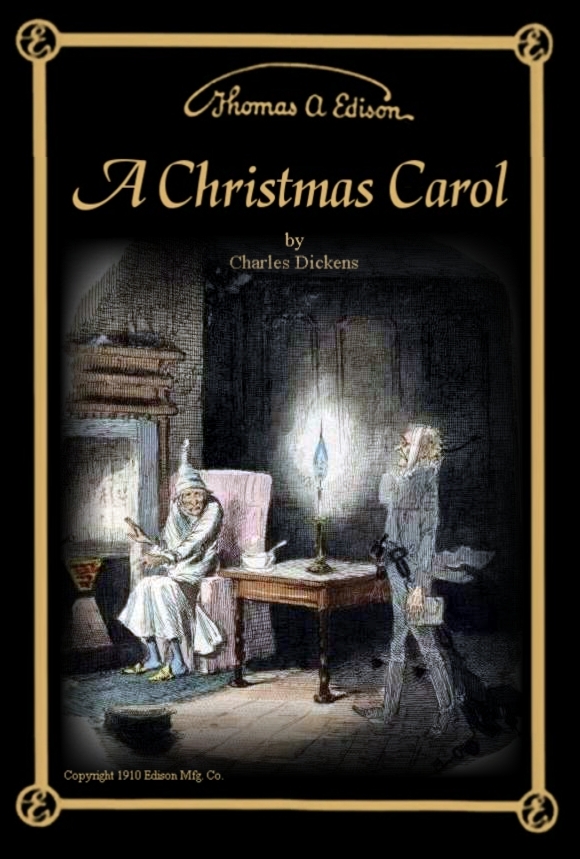
If the above synopsis seems a little too detailed given our familiarity with A Christmas Carol, it’s intended to show just how much of Dickens’ classic tale can be crammed into such a short running time – and still prove effective (even with a few minor adjustments). This version – there’s an earlier adaptation from 1901 but it’s no longer complete – is a marvel of economy, getting to the heart of the story with a minimum of fuss and a maximum of style.

Made by the quaintly named Edison Manufacturing Company, and one of dozens of literary adaptations they released around the time, A Christmas Carol is a great example of how silent cinema condensed often complex novels and plays into one-reel wonders. Using the audience’s awareness of the tale, A Christmas Carol dispenses with title cards and focuses instead on getting the story across by making the visual content as clear and precise as possible (a restored version from 2010 contains title cards but they add little to the movie other than to confirm what we already know). There’s never any doubt as to what’s happening, even when some aspects have been altered to suit the running time. A good example is Scrooge seeing himself die, a much better way of discovering his fate than learning of it by overhearing the conversations of others (and being more difficult to film).

With a variety of different sets, and quite a big cast, the movie appears to have benefited from a larger budget than usual, and under the auspices of Dawley (assisted by Kent and Miller) proves engrossing to watch. As the highlights of the story are ticked off one by one, the movie becomes more and more enjoyable to watch, its depictions of past, present and future presented with an artistry and a skill that even modern audiences can appreciate. As the mean-spirited old miser, McDermott – at the time only twenty-nine years old – plays Scrooge with a great deal of verve, making his transformation from pinchfist to philanthropist with sincerity and conviction. It’s a performance that tones down the usual elaborate theatrical flourishes of the time, and is more measured and realistic.

The special effects employed to show the various scenes from Scrooge’s life – double exposures for the most part – are well done, and the scene where Marley sits opposite Scrooge (prompting him to pass his hand through him) is one of the better examples, and may well have appeared astonishing at the time. Scrooge’s reactions to these images, and the timing of them, are also well realised, adding to the overall effectiveness of the movie, and reinforcing the effect these visions are having on Scrooge’s character.

It’s always interesting to look back and see how movie makers adapted novels in the early silent era, particularly in terms of what they leave out or add in. Here there’s no Tiny Tim and only one ghost to represent the usual three spirits, while the addition of Fred’s less than supportive fianceé is a subtle reflection on the loss of romance in Scrooge’s life. But again, with such a familiar story, these are minor changes that don’t detract in any way, and show Dawley and co working with a greater degree of finesse than might be expected. It all helps to make this version of A Christmas Carol a joy to watch, and a fine example of silent era, one-reel movie making.

Rating: 8/10 – far more subtle and expressive than some of its more expanded successors, A Christmas Carol is a well-conceived and executed version of a classic Christmas tale; “God bless us, everyone!” indeed for such a masterful adaptation.

Share this:

  • Click to share on X (Opens in new window) X
  • Click to share on Facebook (Opens in new window) Facebook
  • More
  • Click to print (Opens in new window) Print
  • Click to email a link to a friend (Opens in new window) Email
Like Loading...

Blog Stats

  • 491,450 hits

Recent Posts

  • 10 Reasons to Remember Bibi Andersson (1935-2019)
  • Fantasia (1940)
  • Dances With Wolves (1990) – The Special Edition
  • Kiss of the Spider Woman (1985)
  • The Three Musketeers (1973)

Top Posts & Pages

  • Cardboard Boxer (2016)
    Cardboard Boxer (2016)
  • I Origins (2014)
    I Origins (2014)
  • Carrie (2013)
    Carrie (2013)
  • Hickey (2016)
    Hickey (2016)
  • Logan (2017)
    Logan (2017)
  • The Inner Circle (1946)
    The Inner Circle (1946)
  • Death in High Heels (1947)
    Death in High Heels (1947)
  • Speak (2004)
    Speak (2004)
  • Poster of the Week - For a Few Dollars More (1965)
    Poster of the Week - For a Few Dollars More (1965)
  • Jaws of Justice (1933)
    Jaws of Justice (1933)
Follow thedullwoodexperiment on WordPress.com

Blogs I Follow

  • Rubbish Talk
  • Film 4 Fan
  • Fast Film Reviews
  • The Film Blog
  • All Things Movies UK
  • Interpreting the Stars
  • Let's Go To The Movies
  • Movie Reviews 101
  • TMI News
  • Dan the Man's Movie Reviews
  • Film History
  • Jordan and Eddie (The Movie Guys)

Archives

  • April 2019 (13)
  • March 2019 (28)
  • February 2019 (28)
  • January 2019 (32)
  • December 2018 (28)
  • November 2018 (30)
  • October 2018 (29)
  • September 2018 (29)
  • August 2018 (29)
  • July 2018 (30)
  • June 2018 (28)
  • May 2018 (24)
  • April 2018 (21)
  • March 2018 (31)
  • February 2018 (25)
  • January 2018 (30)
  • December 2017 (30)
  • November 2017 (27)
  • October 2017 (27)
  • September 2017 (26)
  • August 2017 (32)
  • July 2017 (32)
  • June 2017 (30)
  • May 2017 (29)
  • April 2017 (29)
  • March 2017 (30)
  • February 2017 (27)
  • January 2017 (32)
  • December 2016 (30)
  • November 2016 (28)
  • October 2016 (30)
  • September 2016 (27)
  • August 2016 (30)
  • July 2016 (30)
  • June 2016 (31)
  • May 2016 (34)
  • April 2016 (30)
  • March 2016 (30)
  • February 2016 (28)
  • January 2016 (35)
  • December 2015 (34)
  • November 2015 (31)
  • October 2015 (31)
  • September 2015 (34)
  • August 2015 (31)
  • July 2015 (33)
  • June 2015 (12)
  • May 2015 (31)
  • April 2015 (32)
  • March 2015 (30)
  • February 2015 (37)
  • January 2015 (39)
  • December 2014 (34)
  • November 2014 (34)
  • October 2014 (36)
  • September 2014 (25)
  • August 2014 (29)
  • July 2014 (29)
  • June 2014 (28)
  • May 2014 (23)
  • April 2014 (21)
  • March 2014 (42)
  • February 2014 (38)
  • January 2014 (29)
  • December 2013 (28)
  • November 2013 (34)
  • October 2013 (4)

Create a free website or blog at WordPress.com.

Rubbish Talk

Film 4 Fan

A Movie Blog

Fast Film Reviews

The Film Blog

The official blog of everything in film

All Things Movies UK

Movie Reviews and Original Articles

Interpreting the Stars

Dave Examines Movies

Let's Go To The Movies

Film and Theatre Lover!

Movie Reviews 101

Daily Movie Reviews

TMI News

Latest weather, crime and breaking news

Dan the Man's Movie Reviews

All my aimless thoughts, ideas, and ramblings, all packed into one site!

Film History

Telling the story of film

Jordan and Eddie (The Movie Guys)

Movie Reviews & Ramblings from an Australian Based Film Fan

Privacy & Cookies: This site uses cookies. By continuing to use this website, you agree to their use.
To find out more, including how to control cookies, see here: Cookie Policy
  • Subscribe Subscribed
    • thedullwoodexperiment
    • Join 481 other subscribers
    • Already have a WordPress.com account? Log in now.
    • thedullwoodexperiment
    • Subscribe Subscribed
    • Sign up
    • Log in
    • Report this content
    • View site in Reader
    • Manage subscriptions
    • Collapse this bar
 

Loading Comments...
 

    %d