• 10 Reasons to Remember…
  • A Brief Word About…
  • About
  • For One Week Only
  • Happy Birthday
  • Monthly Roundup
  • Old-Time Crime
  • Other Posts
  • Poster of the Week
  • Question of the Week
  • Reviews
  • Trailers

thedullwoodexperiment

~ Viewing movies in a different light

thedullwoodexperiment

Tag Archives: Charlotte Le Bon

Iris (2016)

18 Thursday May 2017

Posted by dullwood68 in Movies

≈ Leave a comment

Tags

Charlotte Le Bon, Crime, Drama, Jalil Lespert, Kidnapping, Mechanic, Ransom, Review, Romain Duris, Thriller

aka In the Shadow of Iris

D: Jalil Lespert / 99m

Cast: Romain Duris, Charlotte Le Bon, JaliL Lespert, Camille Cottin, Adel Bencherif, Sophie Verbeeck, Hélène Barbry, Jalis Laleg

Maxim Lopez (Duris) is a car mechanic with an ex-wife, Nina (Verbeeck) and young son, Eli (Laleg). He is way behind on his mortgage payments and his work as a mechanic doesn’t bring in enough money to allow him to clear the debt anytime soon. He keeps promising Nina he’ll deal with it, but it’s unlikely he’ll ever be able to. Antoine Doriot (Lespert) is the owner of the bank that holds Maxim’s mortgage. He has an attractive wife, Iris (Barbry), and appears to have it all. But one day, after he and his wife have had lunch together, she disappears. Later on that day, Doriot receives a telephone call. The caller is a man, and he informs Doriot that Iris has been kidnapped. Unless Doriot pays €500,000 for her release, then she’ll be killed.

Despite being warned not to, Doriot contacts the police. Capitaines Nathalie Vasseur (Cottin) and Malek Ziani (Bencherif) are assigned to the case, and immediately suspect someone who holds a grudge against the bank. A list of people who have made complaints contains Maxim’s name. Before they can get around to speaking with him, a ransom drop is arranged at a railway station. Doriot is required to board a particular train but at the last moment he remains on the platform. Vasseur and Ziani continue to work their way through the list until they reach Maxim. They ask him what he was doing the afternoon Iris disappeared but he has an alibi that’s supported by his ex-wife.

The police decide that the kidnapping should be made public. What they don’t know is that by doing so, what seems to have been a straightforward kidnapping will turn into something far more dramatic and deadly. Unknown to them, Iris has faked her own abduction with the aid of Maxim, but when news of the kidnapping is released to the media, Maxim makes a discovery that turns everything he knows upside down, and puts both his life and his continued liberty at risk, and from an entirely unexpected source. Forced to put a plan of his own into action, Maxim must stay one step ahead of his adversary, and hope that everything will work out as Iris originally planned.

Originally planned as a US production, but eventually ending up in France – naturellement – Iris arrives with little fanfare and no shortage of problems in the script department, which is a surprise as the screenplay is by Andrew Bovell, whose credits include Strictly Ballroom (1992), Lantana (2001), and Edge of Darkness (2010). But it’s likely that Bovell’s script lost and gained things in translation, as this is very definitely a Gallic interpretation of what is otherwise a typical neo-noir. Once the police are introduced, the movie’s well constructed and intriguing beginning soon gives way under a welter of dramatic inconsistencies and dubious narrative decisions. There’s a good movie here somewhere, but under Lespert’s guidance, it only gets to shine on occasion, and remains an inconsistent, frustrating piece throughout.
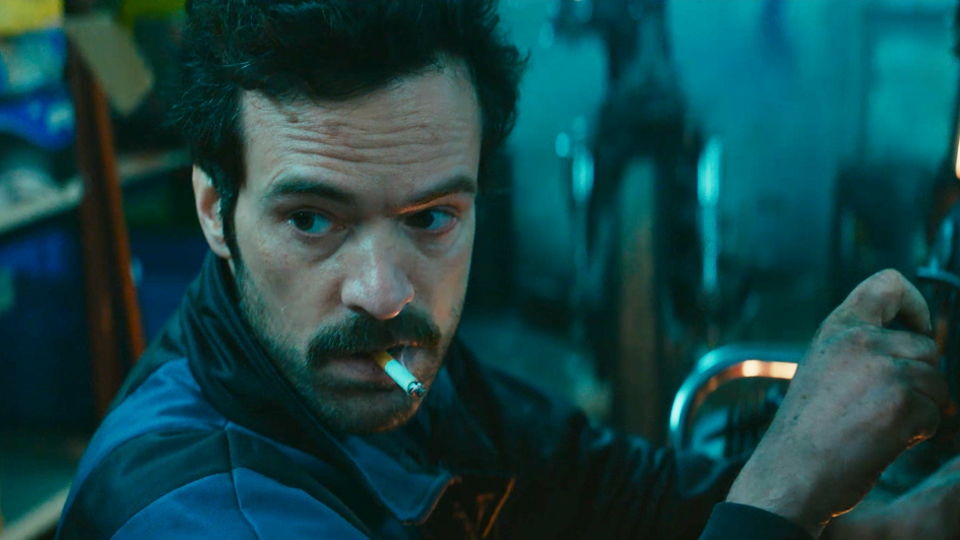
Inevitably with a movie that stands or falls on the quality of its main “twist”, Iris relies on a piece of sleight-of-hand involving Iris herself that should immediately set viewers’ alarm bells ringing (it’s also the point where more experienced viewers will be nodding to themselves wisely and saying “Ah-ha!”). But the movie continues as if no one will have noticed what’s going on and then falls promptly on its sword by introducing Vasseur and Ziani. Ultimately it’s their involvement that ruins the whole tone of the movie, as their attempt at investigating Iris’s kidnapping proves to be both foolish and inane. The French may well be an idiosyncratic race, but it’s unlikely that their police detectives reveal intimate details of their sex lives when interviewing suspects (as they do with Doriot). And you’d certainly hope that if a kidnapper got in touch by mobile phone that they’d try to track him down by tracing his number – not here, though.

There are other instances of police stupidity on display including a dawn raid on Maxim’s workshop-cum-home where they haven’t bothered to check if he’s even there in the first place, and these instances take up too much of the movie’s running time. But even away from all that, things speed up and unravel at such a pace that there’s no time to wonder how all of it is happening, and without the principal characters – let’s leave the police out of all this – knowing about it. It all narrows down to Maxim and Doriot, and what each will do to get what they want. This leaves Iris as a pawn in both their games, but a pawn who has the capacity to ruin either one of them.
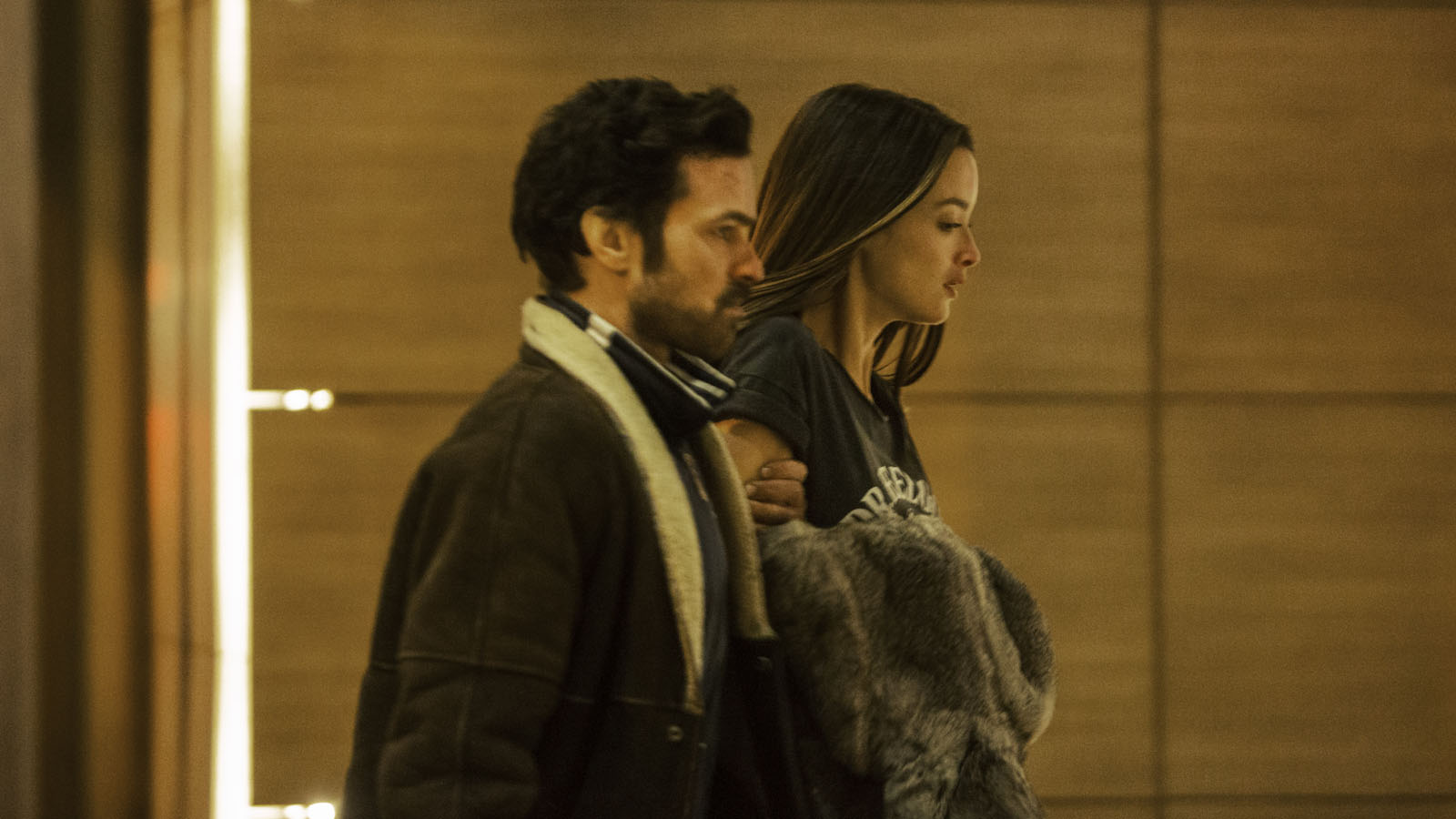
On the whole, Iris has the appearance of a thriller that’s been well thought out, but only to a point. Despite some appropriately moody camera work courtesy of Pierre-Yves Bastard, and a plaintive, melancholy score by ambient duo A Winged Victory for the Sullen, Lespert’s approach to the material remains scattershot and lacking in focus. Too many scenes seem to have been included at random, or for no appreciable reason, and too many dialogue scenes serve only to reinforce what’s already happened rather than to drive the story forward. The cast are often left stranded by the demands of the script, with Duris called upon to grimace his way through Maxim’s domestic crises (which have no bearing on anything else that happens), and Lespert himself prone to playing scenes where he stares off into space as if these moments will add depth to both the character (it doesn’t) and the scene (ditto).

The movie adds another couple of twists into the mix late on, but by then it’s too late, and most viewers will have worked out where it’s all going anyway. There’s also time for a fairly gratuitous and unnecessary sex scene, and the kind of denouement that aims for a combination of psychological integrity and emotional intensity, but instead falls well short of achieving both. The movie weaves various flashbacks into the narrative in an effort to explain certain things that have happened, but even with that clarity it doesn’t help the movie feel any less muddled or ill defined. As thrillers go it’s quite mundane, and plays out with a noticeable lack of energy – which could be forgiven if Lespert had opted for a more considered approach to the material.

Rating: 5/10 – despite a number of narrative and directorial flaws that hamper the flow of the movie, Iris takes its place amongst the movies that have aimed high, and without any clear sense of how those aims should play out; determinedly Gallic in tone but unable to offer anything new, it’s a movie that plays out favourably enough, but without being too memorable.

Share this:

  • Click to share on X (Opens in new window) X
  • Click to share on Facebook (Opens in new window) Facebook
  • More
  • Click to print (Opens in new window) Print
  • Click to email a link to a friend (Opens in new window) Email
Like Loading...

Bastille Day (2016)

05 Monday Sep 2016

Posted by dullwood68 in Movies

≈ 5 Comments

Tags

Action, Bombing, Charlotte Le Bon, CIA, Crime, Drama, Idris Elba, James Watkins, José Garcia, Kelly Reilly, Paris, RAPID, Review, Richard Madden, Thriller

Bastille Day

D: James Watkins / 92m

Cast: Idris Elba, Richard Madden, Charlotte Le Bon, Kelly Reilly, José Garcia, Thierry Godard, Anatol Yusef

Meh (see also Mechanic: Resurrection).

Rating: 3/10 – uninspired, heavy-handed, preposterous, and as dead on arrival as the four victims of its fictional bombing, Bastille Day limps along from one turgid, barely credible scene to another with all the panache and style of a boxer who’s on the ropes and seeing double of everything; not even Elba’s stoic presence can save this Euro-mess of a movie, an action thriller that insults its audience at every turn, plays fast and loose with its own narrative, and which flags up every single plot development with all the subtlety of a punch in the face.

Share this:

  • Click to share on X (Opens in new window) X
  • Click to share on Facebook (Opens in new window) Facebook
  • More
  • Click to print (Opens in new window) Print
  • Click to email a link to a friend (Opens in new window) Email
Like Loading...

The Walk (2015)

14 Wednesday Oct 2015

Posted by dullwood68 in Movies

≈ 1 Comment

Tags

Ben Kingsley, Charlotte Le Bon, Drama, High wire, James Badge Dale, Joseph-Gordon-Levitt, Literary adaptation, Philippe Petit, Review, Robert Zemeckis, Tightrope, True story, Twin Towers, World Trade Center

Walk, The

D: Robert Zemeckis / 123m

Cast: Joseph Gordon-Levitt, Ben Kingsley, Charlotte Le Bon, James Badge Dale, Clément Sibony, César Domboy, Steve Valentine, Ben Schwartz, Benedict Samuel

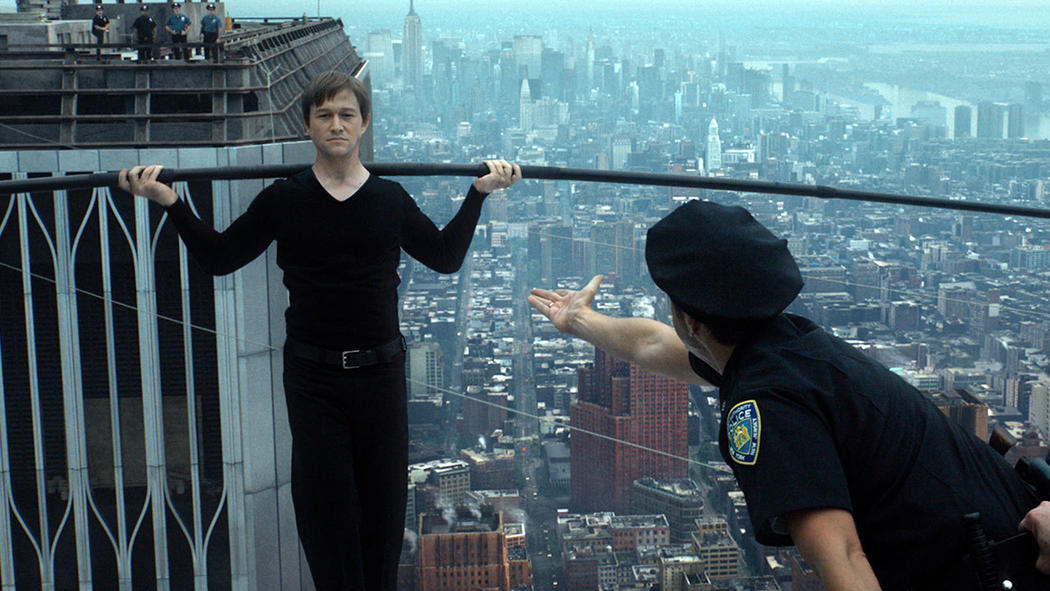
1973. Philippe Petit (Gordon-Levitt) is a street entertainer in Paris, France, who includes some wire work in his act, usually strung between two trees and without the benefit of having a permit. One day he accepts a gobstopper from a young girl in his audience, but when he bites into it, it causes a painful problem that he goes straight to the dentist with. While in the waiting-room he sees a magazine article on New York’s Twin Towers. Straightaway, Petit knows what he has to do: he has to learn the intricacies of high wire work, and from the acknowledged master, Papa Rudy (Kingsley), in order that he can fulfil his dream of walking between the Twin Towers on just a length of cable. Rudy agrees to teach him. Aided by his girlfriend, Annie (Le Bon), and mutual friend, Jean-Louis (Sibony), Petit determines to travel to New York and carry out his dream.

Once there, Petit enlists the aid of further “accomplices”, such as J.P. (Dale) and Barry Greenhouse (Valentine), who works in the South Tower. Several visits to the site are made in an effort to discover the best time for stringing the cable between the two buildings, and more importantly, when Petit should make the crossing. Petit, though, steps on a nail and injures his right foot, but won’t hear of cancelling or postponing the high wire walk (which has been set for 6 August 1974, and is called The Coup). Aided by Jean-Francois (aka Jeff) (Domboy) and two others recruited by J.P., Petit forges ahead with his plan and they manage to sneak all the relevant equipment into both buildings. But on the night of the 5th, with Petit planning to commence his walk across “the Void” at 6am, the presence of a night guard, and some unexpected problems with the cable and the lines used to stop it from wobbling, throw the endeavour off schedule. Eventually, with Jeff to help him, and Jean-Louis on the other tower, and with Annie, J.P. and Barry watching from the street, Petit takes his first steps out onto the wire…

Walk, The - scene

James Marsh’s documentary on Philippe Petit, Man on Wire (2008), won the Best Documentary Feature Oscar in 2009, as well as a whole raft of other awards from around the world. The one criticism that can be levelled against what is otherwise a very good examination of Petit’s particular brand of “artistic madness”, is that there’s no footage of Petit walking between the Twin Towers. In the hands of Robert Zemeckis, The Walk seeks to remedy this by putting the audience up there with Petit, and by showing just how dangerous it was. However, the key phrase here is “seeks to remedy”, as by and large, Zemeckis takes his cue from Petit himself and dismisses any attempt to instil any fear or heart-pounding terror into the walk itself. While it may well be true that Petit was confident of his abilities, and that the walk – or walks: he traversed the wire several times – was easier than he’d expected, but once he’s out there, the tension that Zemeckis and co-screenwriter Christopher Browne have so successfully created in the movie’s third act (of four) swiftly evaporates.

The movie takes an odd approach to the material, and feels schizophrenic as a result, with a first half that concentrates, in a very old-fashioned Hollywood way, on Petit as a young man just starting out as a street performer, before becoming inspired to walk between the towers. It has the look and feel of a regular biography, with key moments ticked off against a list, and with any potential spontaneity halted before it’s given a chance to start (there’s even a scene where Petit and Annie are getting to know each other by romantic candlelight). And if truth be told, these scenes aren’t even that interesting, delaying as they do the central focus of the movie, namely that walk. Petit shows off his arrogance, Annie melts under his charm too quickly, and things happen with a convenience and disregard for clarity that it’s easier just to go along with it all and wait for the movie to pick up by itself.

Which it does once Petit and friends start “casing the joint” and begin installing the equipment they need. This stretch of the movie contains the most tension and is easily the most compelling, as obstacles need to be overcome and the Coup becomes in danger of being cancelled indefinitely. As the fiercely determined Petit, Gordon-Levitt holds it all together, and if his accent slips from time to time, it’s not the end of the world. He channels Petit’s passion for high wire work with aplomb, even if the character – as written – isn’t as socially aloof or as difficult to work with as Man on Wire revealed. Gordon-Levitt also proves to be a proficient high wire walker, having spent time learning how to do it for real. It’s this level of commitment that helps the movie overcome the weakness inherent in the narrative, the one that doesn’t allow the other characters to be as fleshed out as Petit.

Annie (Charlotte Le Bon) and Philippe Petit (Joseph Gordon-Levitt) in TriStar Pictures' THE WALK.

While people like Le Bon, Valentine, and Dale left to stand on the sidewalk and stare at proceedings through binoculars, it’s left to Gordon-Levitt and Domboy to ratchet up the tension, especially Domboy, whose character Jeff, is terrified of heights. Kingsley floats in and out of the narrative and acts purely as a mine of information or encouraging mentor. But while the main performances, however truncated by the need to fit as much in as possible, are comfortably undemanding of the cast, don’t let them die.

Another issue is the unconvincing CGI work carried out once Petit and Jeff are on the roof of the South Tower. The backdrops are impressively detailed, but it’s not enough to allow them to look any better. They stand out against their surroundings, and unfortunately, it’s distracting, as well as a shock to see that an innovator like Zemeckis can’t overcome the lighting issues that have caused this effect. And even more unfortunately, when the camera swings or pans its way over and around Petit’s head when he’s on the wire, there’s no real sense of depth to the image, no sense that this is a very long way down (or somewhere very high up). Petit’s own storytelling image, the emphasis he puts on the danger, and the awkward position it puts him in with the authorities is nicely handled but it’s all too little, too late. And the decision to have Petit holding forth on his exploits from the top of the Statue of Liberty may have semed like a good idea at the time, but in actuality it’s off-putting and makes for dramatically turgid viewing.

The movie does benefit from a classy, contemporary score by the ever reliable Alan Silvestri, while the movie – on the ground, at least – offers some superb visuals courtesy of Dariusz Wolski. If the movie tries to include too much of Petit’s history for its own good, then the end result is a little uneven, and still very ragged in places, but overall the movie does have its charms, and some viewers may yet find themselves overcome by some of the aerial shots

Rating: 6/10 – too uneven and too much like a soap opera in the first half, The Walk treads the Hollywood line once too often to create a movie no one will be able to remember even when they’re buying it; a disappointment then (even in IMAX 3D), and not as gripping as it should have been, it’s still a much more attractive proposition than most movies that are out at the moment.

Share this:

  • Click to share on X (Opens in new window) X
  • Click to share on Facebook (Opens in new window) Facebook
  • More
  • Click to print (Opens in new window) Print
  • Click to email a link to a friend (Opens in new window) Email
Like Loading...

The Hundred-Foot Journey (2014)

24 Saturday Jan 2015

Posted by dullwood68 in Movies

≈ Leave a comment

Tags

Charlotte Le Bon, Drama, France, French cuisine, Helen Mirren, Indian cuisine, Lasse Hallström, Le Saule Pleureur, Maison Mumbai, Manish Dayal, Om Puri, Review, Romance

Hundred-Foot Journey, The

D: Lasse Hallström / 122m

Cast: Helen Mirren, Om Puri, Manish Dayal, Charlotte Le Bon, Amit Shah, Farzana Dua Elahe, Dillon Mitra, Aria Pandya, Michel Blanc, Clément Sibony

Fleeing Mumbai after the loss of their restaurant in a fire that also claimed the life of their matriarch, the Kadam family – Papa (Puri), sons Mansur (Shah), Hassan (Dayal), and Mukhtar (Mitra), and daughters Mahira (Elahe) and Aisha (Panda) – first seek asylum in England but find their new home unsuitable for running a restaurant. They head for Europe, and while travelling through Europe, find themselves stranded in a small French village, Saint-Antonin-Noble-Val, when their van breaks down. Helped by Marguerite (Le Bon), one of the locals, they spend the night there. In the morning, Papa notices an abandoned building that’s up for sale. A quick look at the premises reveals the perfect site for a restaurant.

However, the site is directly opposite Le Saule Pieureur (the Weeping Willow), a Michelin star restaurant owned and run by Madame Mallory (Mirren). She is less than happy to see the Kadam’s open their own restaurant, and does all she can to sabotage their efforts to make Maison Mumbai a success, including buying all their menu’s main ingredients at the local market. This leads to a culinary war of attrition between Madame Mallory and Papa as they try to outdo each other. But Maison Mumbai flourishes, thanks to Hassan who has the makings of a great chef. He begins a romance with Marguerite and starts to learn how to cook French cuisine, albeit with infusions of spices and different flavours.

One night, Maison Mumbai has graffiti sprayed on its outer wall and its interior is fire-bombed. Hassan chases off the culprits but suffers burns to his hands and legs. Madame Mallory fires her chef (who was responsible for the attack) and voluntarily cleans the graffiti; this leads to a rapprochement between her and Papa. Hassan sees a chance to put his culinary skills to the test and “auditions” for Madame Mallory by getting her to make an omelette under his instruction (Hassan has learnt from Marguerite that this is the way Madame Mallory tests any potential new chefs). She recognises his skill and he accepts a job in her kitchen. Papa is dismayed by this turn of events, but not as much as Marguerite, who cools toward Hassan and their relationship becomes more adversarial than romantic. Hassan’s food is a success and with it comes the possibility that, thirty years after gaining her Michelin star, Madame Mallory will attain her second.

THE HUNDRED-FOOT JOURNEY

Adapted by Steven Knight – writer/director of Locke (2013) and Hummingbird (2013) – from the novel by Richard C. Morais, The Hundred-Foot Journey is a feelgood movie that ticks all the boxes on its way to a predictably life-affirming finale, but which remains entirely likeable thanks to the breeziness of its set up, a handful of pleasing performances, and the sure hand of Hallström at the tiller. It’s not a movie to change the way anyone sees the world (though it might inspire some budding chefs out there), but rather is the cinematic equivalent of a comforting three-course meal.

Movies about the importance of food and how it can bring people together occupy a distinct dramatic sub-genre, and The Hundred-Foot Journey (the distance between both restaurants) is just as aware of its responsibilities to the audience as any other culinary-based drama. So we have lots of lovingly filmed shots of food being prepared, tasted and eaten, along with satisfied grins and knowing smiles (though thankfully no one actually rubs or pats their belly). This movie’s own particular hook, the fusion of French and Indian cuisines, isn’t focused on as much as you might expect. It’s a bit of a one-way street, with French dishes being given the upgrade treatment, as if they’re on the way to becoming moribund. At one point, Hassan adds spices to a recipe that’s two hundred years old and when Madame Mallory challenges him, his reply is to imply that perhaps it’s about time the recipe should be changed. And yet there’s no attempt to take Indian cuisine and introduce any French influences. (It’s a brave movie that is willing to say that classic French cuisine needs shaking up.)

The various relationships are handled with an appropriately genial approach, the initial animosity between Madame Mallory and Papa leading to mutual respect which in turn leads to their dancing together (and we all know what that leads to). Mirren is haughty and imperious, and pulls off a passable French accent, though it’s like watching her as the Queen but in charge of a restaurant instead of a country. Puri is as curmudgeonly as ever, but with a big heart beneath all the business bluster; it’s a softer version of his role in East Is East (1999), and like Mirren he goes along with the tried-and-trusted nature of the material. As the ever-experimenting Hassan, Dayal imbues the character with an earnest, willing-to-please demeanour that doesn’t quite gel with his desire to succeed. It’s an agreeable performance that again meets the needs of the movie, but could have been beefed up (excuse the pun). Le Bon at least gets the chance to act against expectations, Marguerite’s antipathy towards Hassan’s success being the only example of a character not behaving as anticipated.

Hallström assembles all the various ingredients with his usual lightness of touch and keeps things from becoming too sentimental (though there’s a liberal amount of sugar sprinkled throughout). The drama is affected as a result – Hassan’s burnt hands and his quick, virtually pain-free recovery become almost incidental to what follows, the clash of cultures barely resonates – and remains superficial from start to finish, the various setbacks and problems the characters have to deal with proving too easy to overcome on every occasion. The movie is beautifully lensed by Linus Sandgren (though some of the matte effects are a little too obvious for comfort), and the French locations provide the perfect backdrop for the action (viewers with a good memory will recognise Saint-Antonin-Noble-Val from 2001’s Charlotte Gray). And A.R. Rahman’s score adds energy to the proceedings, but isn’t enough to offset the dependable nature of the story.

Rating: 5/10 – there are other, better culinary dramas out there – Babette’s Feast (1987), The Secret of the Grain (2007) – but The Hundred-Foot Journey doesn’t aim as high as those movies and treads a more predictable, well-worn path instead; everyone does just enough to make it entertaining but by the end you’ll be wanting more than it’s menu is able to provide.

Share this:

  • Click to share on X (Opens in new window) X
  • Click to share on Facebook (Opens in new window) Facebook
  • More
  • Click to print (Opens in new window) Print
  • Click to email a link to a friend (Opens in new window) Email
Like Loading...

Blog Stats

  • 486,528 hits

Recent Posts

  • 10 Reasons to Remember Bibi Andersson (1935-2019)
  • Fantasia (1940)
  • Dances With Wolves (1990) – The Special Edition
  • Kiss of the Spider Woman (1985)
  • The Three Musketeers (1973)

Top Posts & Pages

  • Lost for Life (2013) - Another Look
    Lost for Life (2013) - Another Look
  • Lost for Life (2013)
    Lost for Life (2013)
  • About
    About
  • Mr. Topaze (1961)
    Mr. Topaze (1961)
  • Winter's Tale (2014)
    Winter's Tale (2014)
  • Billy Lynn's Long Halftime Walk (2016)
    Billy Lynn's Long Halftime Walk (2016)
  • The Hitman's Bodyguard (2017)
    The Hitman's Bodyguard (2017)
  • Shock and Awe (2017)
    Shock and Awe (2017)
  • 5 Famous Movie Roles That Nearly Went to Someone Else
    5 Famous Movie Roles That Nearly Went to Someone Else
  • The Layover (2017)
    The Layover (2017)
Follow thedullwoodexperiment on WordPress.com

Blogs I Follow

  • Rubbish Talk
  • Film 4 Fan
  • Fast Film Reviews
  • The Film Blog
  • All Things Movies UK
  • Interpreting the Stars
  • Let's Go To The Movies
  • Movie Reviews 101
  • TMI News
  • Dan the Man's Movie Reviews
  • Film History
  • Jordan and Eddie (The Movie Guys)

Archives

  • April 2019 (13)
  • March 2019 (28)
  • February 2019 (28)
  • January 2019 (32)
  • December 2018 (28)
  • November 2018 (30)
  • October 2018 (29)
  • September 2018 (29)
  • August 2018 (29)
  • July 2018 (30)
  • June 2018 (28)
  • May 2018 (24)
  • April 2018 (21)
  • March 2018 (31)
  • February 2018 (25)
  • January 2018 (30)
  • December 2017 (30)
  • November 2017 (27)
  • October 2017 (27)
  • September 2017 (26)
  • August 2017 (32)
  • July 2017 (32)
  • June 2017 (30)
  • May 2017 (29)
  • April 2017 (29)
  • March 2017 (30)
  • February 2017 (27)
  • January 2017 (32)
  • December 2016 (30)
  • November 2016 (28)
  • October 2016 (30)
  • September 2016 (27)
  • August 2016 (30)
  • July 2016 (30)
  • June 2016 (31)
  • May 2016 (34)
  • April 2016 (30)
  • March 2016 (30)
  • February 2016 (28)
  • January 2016 (35)
  • December 2015 (34)
  • November 2015 (31)
  • October 2015 (31)
  • September 2015 (34)
  • August 2015 (31)
  • July 2015 (33)
  • June 2015 (12)
  • May 2015 (31)
  • April 2015 (32)
  • March 2015 (30)
  • February 2015 (37)
  • January 2015 (39)
  • December 2014 (34)
  • November 2014 (34)
  • October 2014 (36)
  • September 2014 (25)
  • August 2014 (29)
  • July 2014 (29)
  • June 2014 (28)
  • May 2014 (23)
  • April 2014 (21)
  • March 2014 (42)
  • February 2014 (38)
  • January 2014 (29)
  • December 2013 (28)
  • November 2013 (34)
  • October 2013 (4)

Blog at WordPress.com.

Rubbish Talk

Film 4 Fan

A Movie Blog

Fast Film Reviews

The Film Blog

The official blog of everything in film

All Things Movies UK

Movie Reviews and Original Articles

Interpreting the Stars

Dave Examines Movies

Let's Go To The Movies

Film and Theatre Lover!

Movie Reviews 101

Daily Movie Reviews

TMI News

Latest weather, crime and breaking news

Dan the Man's Movie Reviews

All my aimless thoughts, ideas, and ramblings, all packed into one site!

Film History

Telling the story of film

Jordan and Eddie (The Movie Guys)

Movie Reviews & Ramblings from an Australian Based Film Fan

Privacy & Cookies: This site uses cookies. By continuing to use this website, you agree to their use.
To find out more, including how to control cookies, see here: Cookie Policy
  • Subscribe Subscribed
    • thedullwoodexperiment
    • Join 481 other subscribers
    • Already have a WordPress.com account? Log in now.
    • thedullwoodexperiment
    • Subscribe Subscribed
    • Sign up
    • Log in
    • Report this content
    • View site in Reader
    • Manage subscriptions
    • Collapse this bar
 

Loading Comments...
 

    %d