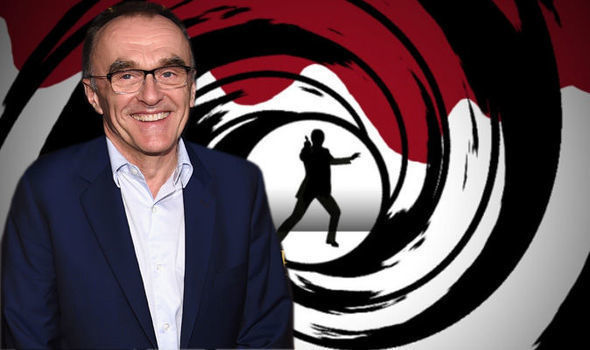
Yesterday, it all ended with a tweet: “Michael G. Wilson, Barbara Broccoli and Daniel Craig today announced that due to creative differences Danny Boyle has decided to no longer direct Bond 25.” And with that simple admission, the possibility that the Bond franchise, already on a creative downward spiral again – is it really twelve years since Casino Royale? – might find a way out of its self-imposed doldrums vanished completely. Say what you like about Boyle and his movies, but even his misfires are still more interesting than the successes of many of his contemporaries. Boyle at the helm of a Bond movie, even one with the increasingly uninterested Craig in the lead role, was an exciting prospect. But “creative differences” have reared their ugly head (again), and the chance to see what the idiosyncratic director would have made of his first proper action movie has fallen by the wayside.
There has been talk of a falling out over the casting of the movie’s chief villain, with Craig putting his foot down over Boyle’s choice of Polish actor Tomasz Kot (Craig apparently also has the final say over the casting of the female lead – what’s that about?). If this is true, then it raises a larger question: why on earth would Eon Productions have hired Boyle in the first place, someone who has made a number of disparate yet successful movies that carry his own unmistakable stamp on them, and ask him to direct their latest mega-budget installment? Why ask someone who has a clear vision in regard to the movies he makes to come on board as a director for hire? And leading on from that, what was Boyle thinking? Here’s something he said in an interview just last year: “I love scale and I love films that will play for everyone, and those are the films I like watching more than anything, so James Cameron – I bow down in front of him, absolutely. But I can’t handle those kind of budgets; I like having a much lower ceiling that you’re constantly battling.”
Perhaps then it’s all for the best. If Eon can’t let a director of Boyle’s calibre make basic decisions relating to casting, then what is he there for? And what hope now for Bond 25?
Cast: Ewen McGregor, Ewen Bremner, Robert Carlyle, Jonny Lee Miller, Anjela Nedyalkova, Kelly Macdonald, James Cosmo, Shirley Henderson, Pauline Turner, Scot Greenan, Kyle Fitzpatrick, Gordon Kennedy, Irvine Welsh
Choose life, choose four characters who have led miserable lives for the past twenty years and can’t overcome their failings. Choose redemption if only because it sounds good and it might make you feel better. Choose old friends, however much they might hate you, because making new ones is too difficult. Choose Scotland. Choose to make amends. Choose the past over the future because it’s safer. Choose remorse. Choose anger at seeing your dreams go unfulfilled, and try to make new dreams to stop yourself from feeling angry. Choose revenge if remorse won’t work. Choose life over a slow, drawn-out, painful trudge towards non-existence. Choose drugs to soothe or melt away the pain of choosing life. And choose the path of least resistence so that choices become easy. Choose football, music, sex, anything to make the emptiness inside you feel less overwhelming. But above all, choose life, and live it with everything you’ve got, even when you feel that you don’t have anything to offer, and if you did, that no one would want it.
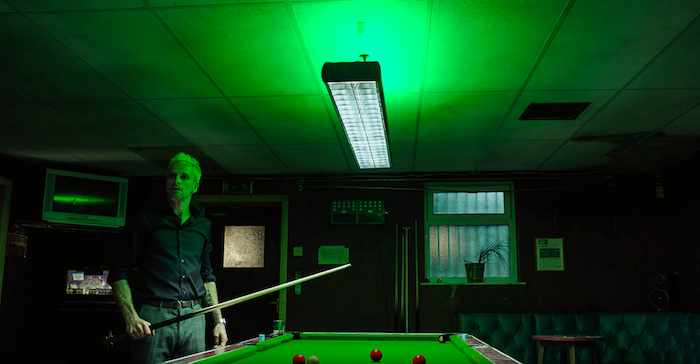
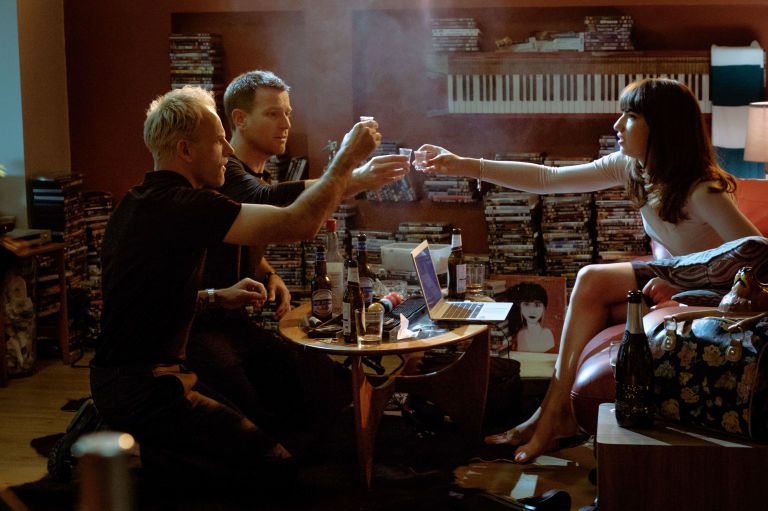
Twenty-one years on from the events depicted in Trainspotting (1996), we finally have the sequel that’s been mooted for so long (Danny Boyle first voiced the idea back in January 2009). Back then, the original movie ended with Renton (McGregor) stealing the proceeds of a drug deal – £16,000 – from his friends, Simon aka Sick Boy (Miller), Spud (Bremner) and Begbie (Carlyle), and heading off to live a normal life. But that “normal” life, which included living in Amsterdam and being married, has fallen apart, and now Renton is back in Edinburgh. His mother has died, he’s staying with his dad (Cosmo), and looking to hook up with his old friends – if they’ll let him. He visits Spud first, only to find him trying to asphyxiate himself with a plastic bag. Saving an initially ungrateful Spud, Renton learns that Begbie is in jail serving a twenty-five year sentence, Simon is the landlord of a rundown pub that an aunt has left him, and Spud himself is a drug addict.
Renton reconnects with Simon, but Simon holds too much enmity towards his old friend because of the money from the drug deal. Along with his business partner, Veronika (Nedyalkova), Simon offers Renton the chance to become part of a scam to acquire European development funds that Simon can use to open a “leisure” club above the pub. Renton agrees, and ropes in Spud to help design the club and oversee its construction once the funds are awarded. Meanwhile, Begbie finds a way out of prison and back home to his wife, June (Turner), and teenage son, Frank Jr (Greenan). Begbie takes his son with him when he burgles properties, but is sidetracked from his endeavours when he learns from Simon that Renton is back in Edinburgh. Begbie’s thirst for revenge is exploited by Simon, and a chance encounter at a nightclub between the AWOL gaolbird and Renton leads to a showdown above the pub, and the chance to settle old scores the hard way.
If you enjoyed Trainspotting, then T2 Trainspotting is likely to make you feel all warm and fuzzy inside. Laced with affectionate nostalgia and perceptive notions of what it is to be middle-aged and treading water, this looked-for sequel isn’t as iconic as its predecessor – and to be fair, it was never likely to be – but it does have an erstwhile melancholy feel to it that accurately reflects the regrets of its four main characters. Like everyone else, Renton is the architect of his own downfall: drug-free but without any purpose in life, he’s come home because he’s not been able to make a go of it in Amsterdam; he’s adrift in his own life, and lacking ambition. Conversely, Simon has nothing but ambition, a drive to better himself financially, but he lacks foresight and cohesive thinking; his plans always backfire as a result. Spud is an addict who wants to swap his drug habit for something more meaningful, another addiction preferably, but one that has a positive effect on his life; writing down stories from twenty years ago helps him on this path. And Begbie – well, Begbie’s only regret is that he’s only just now got out of prison.
With the characters locked in place, John Hodge’s screenplay is free to explore themes of personal responsibility, misplaced nostalgia, revenge, deceit, and compromised friendships. It looks back further than Trainspotting itself, to when all four friends were much younger, pre-teens with the whole world ahead of them, and all the promise that entailed. It provides flashbacks to the first movie, and reintroduces other characters from twenty years before, such as Renton’s girlfriend, Diane (Macdonald), now a successful solicitor. And it shows how stagnant each of the main characters’ lives have become, how mired in mediocrity they are thanks to emotional malaise and impulsive behaviour. There’s little in the way of meaningful progress for any of them, just a desire to lead brighter, better lives that is slipping away from them with every passing year.
This gloomy, regret-laden approach could have made the movie too depressing or downbeat for audiences unfamiliar with the original (which was itself a frank, unapologetic examination of the joys and horrors inherent in taking drugs), but there’s too much mordaunt humour and scabrous comedy on display, and Hodge and returning director Danny Boyle have made a movie that connects on various, different levels, and which does so with Boyle’s trademark visual stylings. This is still a movie that fizzes with invention, from its seemingly scattershot, haphazard camera angles, complex yet rewarding editing rhythms, exceptionally well chosen soundtrack, and emphatic performances, and all the way down to the integration of “old’ footage with new, including a recreation of that classic moment from the original where Renton is almost knocked down by a car – and then stops to revel in the moment.
It’s a Danny Boyle movie through and through, with several moments where the semi-linear narrative seems unlikely to knit together into a satisfying whole, until by the end, everything has been explained and the various strands all neatly tied up. And there are fitting outcomes for all the characters, with all bar one back on the road to self-respect and potential absolution. In bringing back the original cast, and at a point where their own ages reflect the passing of time more effectively than if it had been achieved through make up, the movie offers a kind of shorthand for new viewers, introducing each character they play with an economy of purpose that’s admirable and effective. McGregor still retains some of that boyish charm that made the younger Renton so attractive to watch, while Miller takes glowering to new heights, his features displaying the frustration of Simon’s life with an icy conviction. Carlyle is still effortlessly frightening as Begbie, a man who may not be as comfortable in his own skin as we thought, but who can still inject menace and venom into the most unremarkable line of dialogue.
But if there’s one performance that stands out from the rest, and unexpectedly so, it’s that of Bremner as Spud. Spud is the eternal fuck-up, the addict with the unenviable ability to still feel deeply and profoundly despite the mental numbing he endures, and Bremner is simply superb in the role. Spud is the only character that the viewer can sympathise with, as his motives are selfless, and focused (as best he can) on providing for his partner, Gail (Henderson), and son, Fergus (Fitzpatrick). There’s an innate bravery about Spud that Bremner underplays with skill, making the moment where his writing skills are acknowledged by Veronika, a touching and heartfelt one. Through Veronika’s eyes we see Spud as more than just an addict, and unlike his friends, he can be cheered on with affectionate glee. But friendship is still the key ingredient in what makes these four people tick, even if they’re at odds with each other over past indiscretions. And some bonds, however stretched or damaged they may have become, will, as the movie tells us, withstand much more besides, and still prove beneficial to everyone concerned, no matter how much life has battered them.
Rating: 8/10 – an invigorating if pensive look at middle-aged bitterness wrapped up in a blanket of repentance, T2 Trainspotting doesn’t match the heights of its predecessor, but in fairness, it never actually tries; as much a product of its time as the first movie, there’s a heartache about this movie that is genuinely affecting, and which allows new viewers to see Renton et al as far more than cyphers in a movie about trying not to let the past inform and dictate the future.
Cast: Michael Fassbender, Kate Winslet, Seth Rogen, Jeff Daniels, Michael Stuhlbarg, Katherine Waterston, Ripley Sobo, Makenzie Moss, Perla Haney-Jardine, Sarah Snook, John Ortiz
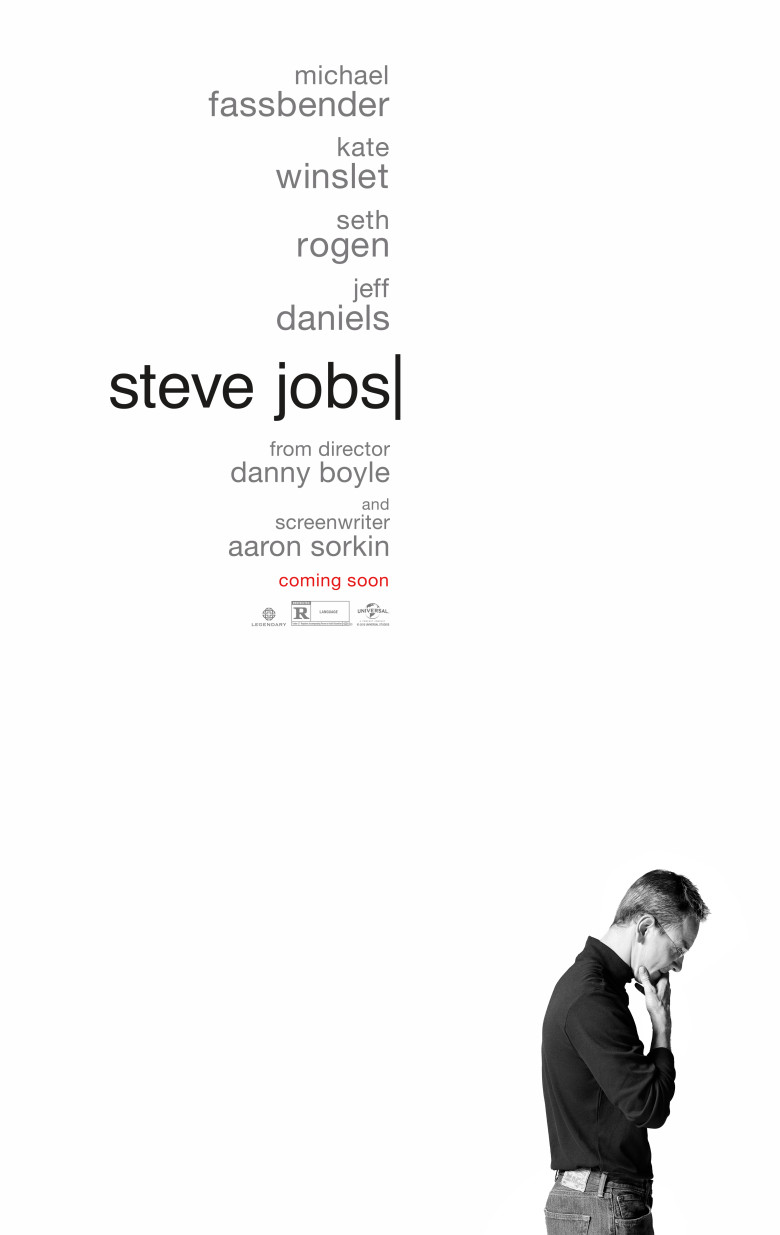
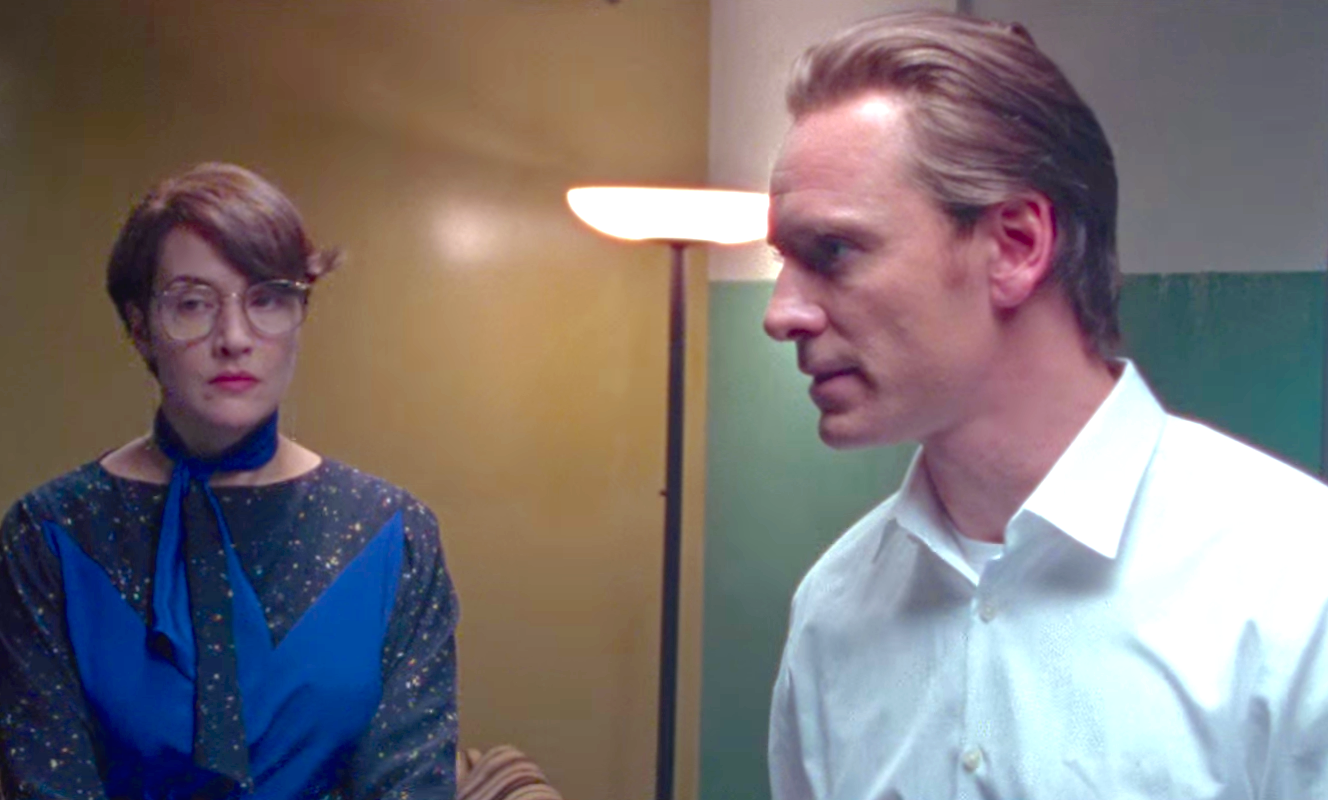
Steve Jobs – maverick genius, arrogant manipulator, or indifferent human being? In Danny Boyle’s latest movie we get to learn that the late founder and CEO of Apple was all three, which shouldn’t be a surprise as each description isn’t exclusive of itself. But where Aaron Sorkin’s script, adapted from Walter Isaacson’s book, impresses most is when we see Jobs being all three at the same time.
The structure of the movie allows us to see Jobs at three separate points in his life, and each time in the immediate lead up to a product launch. So in 1984 we see him trying to launch the Macintosh, Apple’s first new product in seven years since the Apple II. In 1988 he’s on his own, attempting to impress everyone with the NeXT computer, an item that is doomed to failure. And we end on a high note in 1998 with the launch of the first iMac and Jobs’ ensuring he would never be forgotten. It’s like a crazy rollercoaster ride, as the advances in computer innovation are revealed to be less important than marketing and design. As Jobs so aptly puts it, “They won’t know what they’re looking at or why they like it but they’ll know they want it”.
By telling Jobs’ story in three distinct episodes, Boyle and Sorkin, with the aid of a very talented cast, reveal how Jobs started with an idea and kept pursuing it for over fifteen years. That idea may have gone through some variations in all that time, but the movie paints a very convincing portrait of a man driven by the need to do things differently and in a way that’s at odds with everyone around him. In his pursuit of excellence in home computing, Jobs brooked very little compromise, and we see this in the meticulous nature of his product launches, where even the Exit signs have to be switched off so that the visual presentation can have the most impact. Jobs doesn’t compromise, and he doesn’t recognise the value and support of the people around him, including his old friend and co-creator of the Macintosh, Steve Wozniak (Rogen), and his long-suffering personal assistant Joanna Hoffman (Winslet).
Each launch brings its own set of issues and problems for Jobs to overcome, from the first Macintosh’s failure to say “hello”, to the NeXT computer’s lack of an operating system, to Wozniak’s public insistence that the iMac launch should include an acknowledgment of the work put in by the team who made Apple II so successful. Jobs refuses to accept that any of these will interfere with his plans for success, and he drives the people around him with a fierce determination that is both alienating and patronising. The movie keeps Jobs focused and uncompromising in his self-belief, right until the end, and as an anti-hero he fits the bill entirely.
But while the behind the scenes manoeuvrings that show how each phase of Jobs’ career were a necessary, evolutionary step (for him and his computers) all make for compelling viewing, the movie is less successful with its three act structure than it realises. Each section relies on a lot of repetition, as encounters and personal problems are examined each time, albeit from slightly different angles. Jobs’ condescending treatment of Wozniak is a case in point, as is his dismissive treatment of computer engineer Andy Hertzfeld (Stuhlbarg). And then there’s Lisa, the daughter he tried to deny having.
Jobs’ relationship with Lisa is one of the bigger subplots in the movie, and as an attempt by Boyle and Sorkin to show the man’s more “human” side, it’s nevertheless quite clumsy and unconvincing in its execution. At the first launch, Lisa is five years old; up until she uses a Macintosh to draw a picture, Jobs is distant toward her, and to her mother, Chrisann (Waterston). But the picture changes his feelings about her, and in the other two acts we see the same sort of thing happen again, as Jobs begins to treat Lisa as a person and not a Court-confirmed inconvenience (Jobs was so arrogant that upon learning that a paternity test showed it was 94% certain he was Lisa’s father, he came up with an algorithm that counter-claimed that the 6% difference meant Chrisann could have slept with any one of twenty-eight million men and the result would have been the same). While it’s a creditable attempt to humanise Jobs, it’s these scenes that carry the least weight, and the least credibility. By the time Lisa is nineteen and on the verge of wanting nothing to do with him, all it takes is for Jobs to say he was “poorly made” and she forgives him just like that (as well as a hastily improvised bribe that promises she’ll have one of the first iPods).
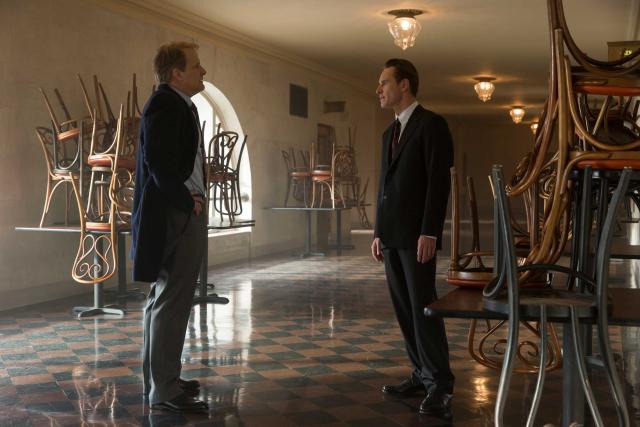
More potent is the relationship Jobs has with John Sculley (Daniels), the CEO he poached from Pepsi to run Apple in the Eighties. It was Sculley who had Jobs ousted from Apple following the disastrous sales of the Macintosh, and Sorkin’s script soars whenever it focuses on the pair’s uneasy relationship. There’s a bravura scene where Jobs confronts Sculley over what he sees as the CEO’s betrayal of him, and Boyle intercuts with flashbacks that show the depth of Jobs’ own complicity, giving the audience a balanced view of what happened and why. Both Fassbender and Daniels are superb in these scenes, and the movie has a fire and an energy that it lacks elsewhere.
As expected, Boyle elicits strong performances from his cast, with Fassbender giving a superb performance as the empathy-lite Jobs, and Winslet stealing the movie out from under him as Joanna. Winslet is simply in a class of her own, adding subtlety and shading to a role that would otherwise have been quite bland. When she confronts Jobs over his treatment of Lisa before the ’98 launch, the pent-up emotions she releases are as liberating for the viewer as they are for Joanna. In support, Rogen shows fleeting glimpses of the actor he can be when he’s not channelling Seth Rogen, and Daniels is magnificent as Sculley.
Jobs is frequently challenged as to what he can actually do, and at one point he tells Wozniak that “musicians play their instruments. I play the orchestra”. With Jobs, Boyle shows himself to be a great conductor as well, but thanks to some uncomfortable narrative decisions borne out of Sorkin’s script, this isn’t as rewarding as some of his other movies, and his control over the material, while evident throughout, isn’t enough to overcome the movie’s built-in deficiencies. That said, and as with all of Boyle’s movies, it’s visually stimulating and in tandem with editor Elliot Graham, he maintains a pace and a rhythm that propel the viewer along effortlessly.
Rating: 7/10 – slickly, professionally made with Boyle firmly in charge and full of impressive performances, Jobs is nevertheless a movie that fails to do full justice to its central character; as a result Jobs the human being proves less interesting than Jobs the arrogant perfectionist, and any insights into the man that can be gleaned are at the expense of soap opera elements that, unfortunately, compromise his more acerbic nature.
Yesterday was Danny Boyle’s birthday. The director is 59 years old, and over the course of his career has been quoted on a variety of matters to do with movie making, both in general and specifically. He once said: “I learned that what I’m better at is making stuff lower down the radar. Actually, ideally not on the radar at all.” It’s a great quote and one that shows the man doesn’t take himself too seriously. Here then are ten more great quotes by ten more directors, all of whom don’t take themselves – or the industry – too seriously either.
David Lean – “I wouldn’t take the advice of a lot of so-called critics on how to shoot a close-up of a teapot.”
William Wyler – “It’s a miserable life in Hollywood. You’re up at five or six o’clock in the morning to be ready to start shooting at nine. The working hours aren’t arranged to suit the artists and the directors; they’re for the convenience of the technicians. If you go to a party at night, you’ll never find anyone there who’s shooting a picture; they’re all home in bed.”
David Fincher – “People always ask why I don’t make independent movies. I do make independent movies – I just make them at Sony and Paramount.”
Clint Eastwood – “When I was doing The Bridges of Madison County (1995), I said to myself, “This romantic stuff is really tough. I can’t wait to get back to shooting and killing.”
Milos Forman – “It all begins in the script. If what’s happening is interesting, it doesn’t matter where you shoot from, people will be interested to watch. If you write something boring, you can film from mosquitoes’ underpants and it will still be boring.”
Steven Soderbergh – (on his retirement) “Cinema, as I define it and as something that inspired me, is under assault by the studios and, from what I can tell, with the full support of the audience.”
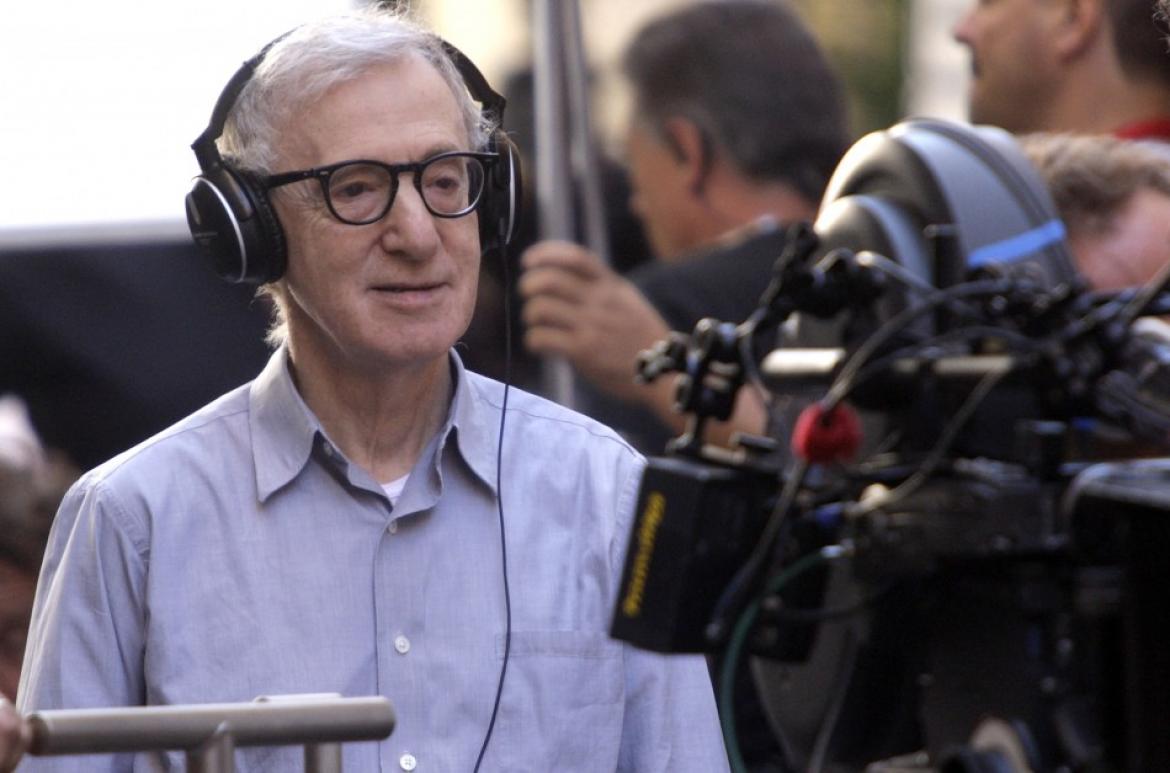
Woody Allen – “[The French] think I’m an intellectual because I wear these glasses, and they think I’m an artist because my films lose money.”
Federico Fellini – “Even if I set out to make a film about a fillet of sole, it would be about me.”
Martin Scorsese – “I’m not a Hollywood director. I’m an in-spite-of-Hollywood director.”
Paul Thomas Anderson – “Well I’d really love to work with Robert De Niro, because he’s still the most talented actor out there. Maybe he makes some bad choices, which can be frustrating. On the one hand, you want to say, ‘What the fuck’s going on?’ On the other, you can’t get mad at him for wanting to work, because most actors would be murderers if they weren’t working.”






 thedullwoodexperiment