• 10 Reasons to Remember…
  • A Brief Word About…
  • About
  • For One Week Only
  • Happy Birthday
  • Monthly Roundup
  • Old-Time Crime
  • Other Posts
  • Poster of the Week
  • Question of the Week
  • Reviews
  • Trailers

thedullwoodexperiment

~ Viewing movies in a different light

thedullwoodexperiment

Tag Archives: David Dencik

Regression (2015)

28 Thursday Apr 2016

Posted by dullwood68 in Movies

≈ Leave a comment

Tags

1990, Alejandro Amenábar, David Dencik, David Thewlis, Drama, Emma Watson, Ethan Hawke, Hallucinations, Horror, Hypnosis, Minnesota, Regression therapy, Review, Ritual Satanic Abuse, Satanism, Thriller

Regression

D: Alejandro Amenábar / 106m

Cast: Ethan Hawke, Emma Watson, David Thewlis, Lothaire Bluteau, Dale Dickey, David Dencik, Devon Bostick, Aaron Ashmore, Peter MacNeill

Minnesota, 1990. Farmer John Gray (Dencik) confesses to molesting his seventeen year old daughter, Angela (Watson) – but there’s a catch: even though Angela has made an accusation, Gray can’t remember doing anything of the sort, and is confessing purely because Angela has never lied to him, so in his mind it must be true. Detective Bruce Kenner (Hawke) is assigned to the case, and while Gray languishes in prison awaiting a trial date, he begins to look into the matter. It’s not long though before Kenner begins to find that the case isn’t as straightforward as his boss, Chief Cleveland (O”Neill), would like.

With the help of Professor Kenneth Raines (Thewlis), Kenner learns through Raines’ use of regression therapy techniques that Gray wasn’t alone when his abuse of Angela was supposed to have happened. When the other person present is revealed to be a fellow police officer, George Nesbitt (Ashmore), that revelation opens up another can of worms altogether: that Nesbitt, along with an unwitting Gray, are members of a satanic cult. With the rest of the police force treating the idea of a satanic cult as a joke, and Gray’s family proving resentful of Kenner’s investigation, it’s not until he gets to meet Angela that Kenner begins to believe that there might actually be something in what her father has remembered.

Regression - scene2

Kenner remains sceptical but insists on keeping an open mind, and begins looking into the possibility that a cult is operating in the local area. A second meeting with Angela has him believing more and more, and even more so when he begins to have strange dreams, some where he appears to be involved in the blood sacrifice of a newborn baby (and which echoes what Angela has told him of her own experiences). Kenner becomes paranoid, and his relationships with those around him begin to deteriorate. When Nesbitt is released for lack of evidence, Kenner believes he has to risk everything in order to keep Angela safe, but if the cult is for real, will he be able to?

The period setting of Regression is deliberate. In the US in 1980, a book was published called Michelle Remembers, and it was written by Michelle Smith and her future husband Lawrence Pazder (who was then her psychiatrist). In it, Smith recounted – through Pazder’s use of hypnotherapy – alleged memories of what became known as Ritual Satanic Abuse (RSA). These memories related to abuse supposed to have been perpetrated by Michelle’s mother in the mid-Fifties when Michelle was five. The book proved to be a starting point for allegations of widespread satanic activity within the US (and further afield), and although skepticism of Smith and Pazder’s book was equally widespread, as the Eighties progressed, the idea of satanic cults prospered, and the book, and Pazder’s “expertise” on the subject, were used as a guide for prosecutors preparing cases against individuals accused of satanic practices.

Set against the backdrop of this developing fear and paranoia, Regression touches on several attendant topics – the (mis)use of regressive therapy, the impact of such allegations on closed communities, individual feelings of guilt and/or responsibility, the ease with which unsubstantiated rumour becomes accepted fact – but it does so in such an awkward, hamfisted way that any dramatic emphasis is reduced by the way in which Amenábar’s script fails to follow through on these topics. The end result is a movie that has a lot going on but little of it that makes consistent sense.

Regression - scene1

Worrying aspects crop up almost from the start, with a very clumsily inserted “clue” that Nesbitt is more involved than is initially apparent, and this is followed by the way in which Detective Kenner commits himself so unreservedly, leaving the viewer to wonder just what it is that drives him (a question the movie avoids answering). Raines’ involvement so soon into the investigation, and the way in which he’s allowed to take the lead on so many interviews is concerning in terms of likelihood (it doesn’t help that Raines is often unnecessarily aggressive as well), and a sequence where Kenner “sees” the events described to him by Angela is another cause for concern, as it comes across as a stylistic exercise rather than a character trait.

Kenner is the viewer’s guide through the events of the movie but he proves an unreliable guide, prone to making schoolboy errors in terms of the investigation, and behaving unprofessionally with Angela. The movie doesn’t give any real reason for the waywardness of his behaviour, and as the mystery deepens his growing paranoia (and belief) that the satanic cult is real causes him to behave so irrationally that the extent of it becomes unconvincing. With Gray already acting strangely, and with most of the local community seemingly in thrall to the cult that no one can identify, Amenábar’s decision to have Kenner become a victim as well becomes exasperating rather than effective in terms of the drama.

Regression - scene3

Viewers should be able to determine the movie’s outcome without too much trouble, but once they do, and once the movie reaches that point, the whole thing collapses in on itself and the last fifteen minutes feel like a compromise instead of a conclusion decided on from the start. Amenábar does his best, but even with the support of Hawke and Watson, he doesn’t appear to be fully in control of his own narrative or where it’s going. Scenes feel divorced from each other, and too often, characters act oddly because the script needs them to.

The performances are committed at least, with Hawke giving his all in yet another not-fully-realised horror thriller, and Watson putting Hermione Granger firmly behind her as the victim(?) whose safety becomes Kenner’s primary concern. Thewlis and his character are abandoned by Amenábar two thirds of the way through, while the rest of the supporting cast (save Dencik) do what they can in respect of filling in the blanks. In the end, Regression is a movie where the characters exist to service the plot, and at no point do any of them feel organic, leaving the cast to try and work out what’s the best approach for each one. It leads to a clash of acting styles in some scenes, and a lack of cohesion in others. Amenábar at least keeps things visually interesting, albeit in a dour, dark-hued way, and the sequences of satanic worship and sacrifice are well shot and edited together, but all in all this needed a tighter script and a better ending to be anywhere near successful.

Rating: 5/10 – though Regression is based around real events that occurred over a period of time, it never really offers a cohesive or credible story to match its general assumptions about what was happening at the time; not as scary or effective as it would like to be, the movie winds up playing it safe instead of giving the viewer any real food for thought.
Share this:

  • Click to share on X (Opens in new window) X
  • Click to share on Facebook (Opens in new window) Facebook
  • More
  • Click to print (Opens in new window) Print
  • Click to email a link to a friend (Opens in new window) Email
Like Loading...

The Absent One (2014)

06 Monday Jul 2015

Posted by dullwood68 in Movies

≈ 1 Comment

Tags

Boarding school, Cold cases, Conspiracy, Crime, David Dencik, Denmark, Department Q, Drama, Fares Fares, Jussi Adler-Olsen, Literary adaptation, Mikkel Nørgaard, Murder, Nikolaj Lie Kaas, Pilou Asbæk, Review, Sequel, Thriller

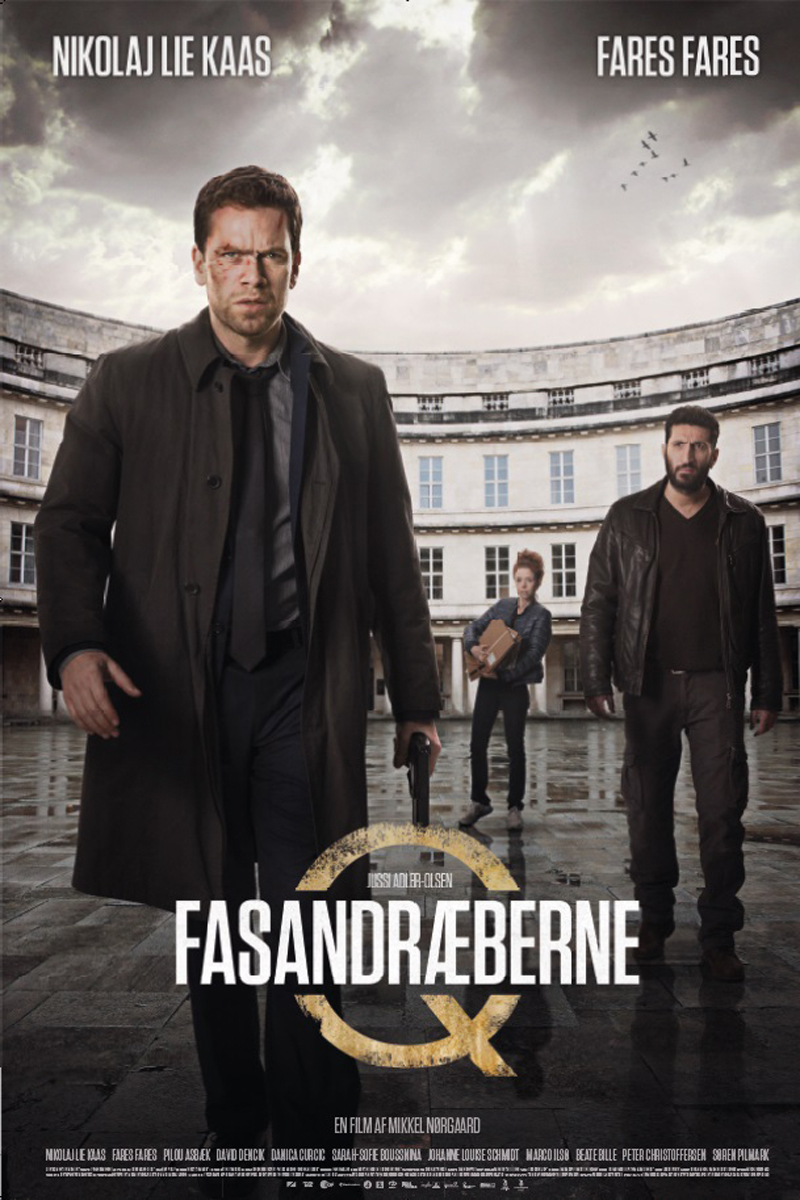
Fasandraeberne

Original title: Fasandræberne

D: Mikkel Nørgaard / 119m

Cast Nikolaj Lie Kaas, Fares Fares, Pilou Asbæk, David Dencik, Sarah-Sofie Boussnina, Danica Curcic, Nikolaj Groth, Søren Pilmark, Beate Bille, Marco Ilsø, Philip Stilling, Kristian Høgh Jeppesen, Johanne Louise Schmidt, Hans Henrik Clemensen, Peter Christoffersen, Katrine Rosenthal

At a police awards ceremony, cold case investigator Carl Mørck (Kaas) is accosted by a retired policeman who begs him to look into the case of his two children who were both killed in 1994. Mørck refuses, and later the man commits suicide, prompting Mørck, supported by his partner Assad (Fares) to look into the case. They learn that the siblings both attended the same boarding school, and that there was a call to the police – made by a young woman – alerting them to the crime. With this as their only clue, Mørck and Assad visit the school where they learn that the young woman was probably Kimmie Lassen (Boussnina); but unfortunately for them she hasn’t been seen in twenty years.

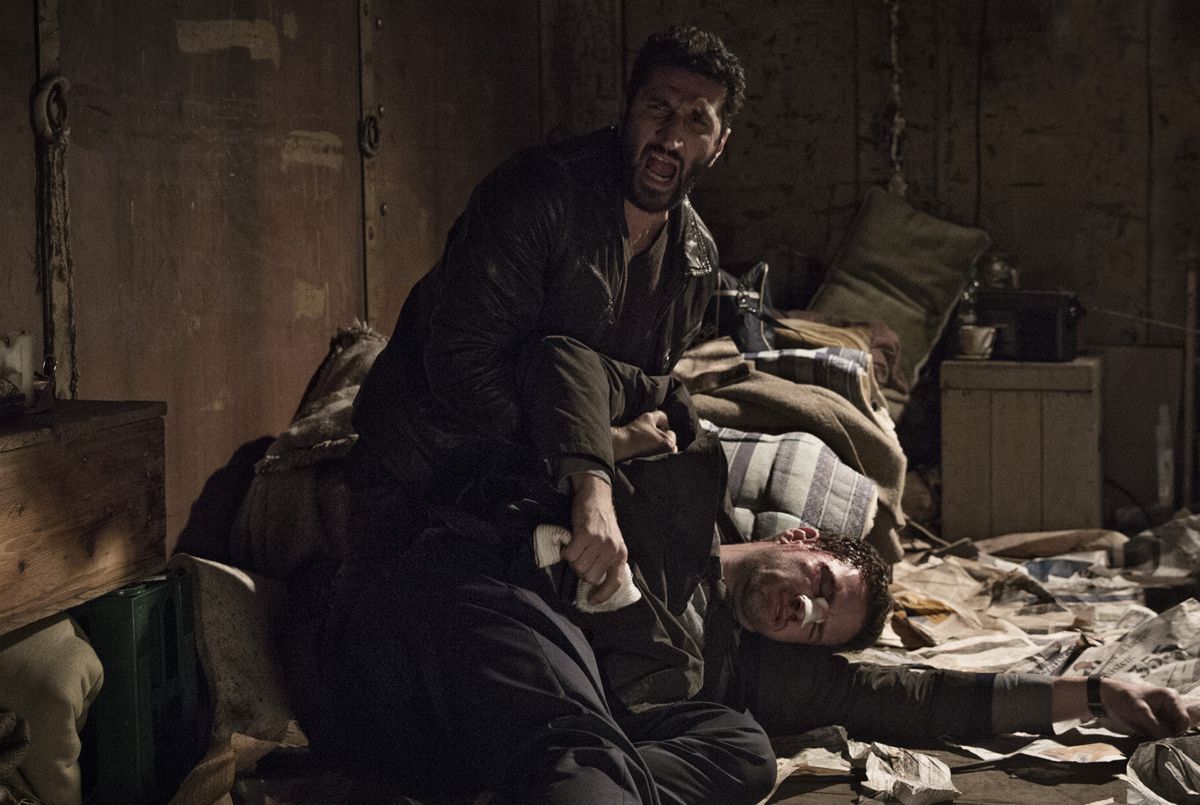
Learning also that Kimmie’s friends at the time included now reputable businessmen Ditlev Pram (Asbæk) and Ulrik Dybbøl (Dencik), and that the man who confessed to the crime, Bjarne Thøgersen (Jeppesen), was represented by the best criminal lawyer in Denmark, Bent Krum (Clemensen), and only served three years in prison, Mørck and Assad sense a conspiracy. They visit Thøgersen who alerts Pram to the new interest in the deaths. Pram hires a man named Albjerg (Christofferson) to look for Kimmie, while Mørck endeavours to find her first. But an older Kimmie (Curcic) is also a very wary Kimmie, and with the help of her friend, Tine (Rosenthal), she manages to stay one step ahead of everyone when she becomes aware that people are looking for her. But Albjerg tracks her down, and though she gets away, she also has a run in with Mørck that leaves him bruised and battered.

Meanwhile, Pram and Dybbøl use their political contacts to put pressure on senior police in an effort to get Mørck and Assad taken off the case. Furious, Mørck confronts his immediate boss (Pilmark) and makes enough of a case from the evidence that he’s amassed to show that it should be pursued further, and that Kimmie Lassen holds the key to what happened twenty years ago. When she is finally caught by the police, it seems that Pram and Dybbøl’s arrest is only a matter of time. But Kimmie has other ideas: she escapes and goes after them herself, as much to kill them first, and as much again to make up for her involvement in the deaths of the young brother and sister.

Fasandraeberne - scene

As much a riveting crime thriller as its predecessor, The Keeper of Lost Causes (2013), The Absent One is another triumphal adaptation of a novel by Jussi Adler-Olsen. With almost everyone involved in the first movie returning to make this one, the movie is like a seamless addition to what is an ongoing series. The tone, the feel, the pace, and the sensibility of The Absent One is such that anyone who has seen The Keeper of Lost Causes can slip into the series’ bleak, gloomy mise en scene with ease, sure in the knowledge that what follows will be of an equally high standard, and equally as satisfying (if not more so).

There are several reasons for this, not least the taut, gripping screenplay by Nikolaj Arcel and his writing partner Rasmus Heisterberg. In distilling Adler-Olsen’s novel they’ve kept the focus on the ripple effect the murders have had over the years, as well as Mørck’s inability to let something go once he’s got a grip on it. The detective’s persistence and dogged nature – which are pretty much all he has to keep him going – is beautifully expressed through Kaas’s beleaguered performance. This is a man who keeps his pain externalised to stop it from eating away at him inside, but the payoff is a lack of compassion and sympathy for others; he only takes on the case in the first place because he can’t deal with the guilt of refusing the retired policeman. Kaas gives a wonderfully fractured portrayal of Mørck, growing further into the character and inhabiting him completely.

Ably supported by Fares, whose Assad is never a foil for Mørck, Kaas heads up a cast that never puts a foot wrong, even in the smaller roles. The script supports them all the way, assembling the pieces of the plot with skill and precision, letting the viewer glimpse the events of twenty years ago without spoiling the true nature of the killings, and allowing the mystery surrounding those killings to remain in place almost until the very end. It’s a bold, confident approach, and allows the tension inherent in the story to build to a quietly devastating denouement (and which puts Mørck through the ringer once more – but then he probably wouldn’t have it any other way).

Retaining his place in the director’s chair, Nørgaard keeps things tightly focused and highlights the psychological toll felt by Kimmie over the course of twenty years (she has a terrible secret of her own that, when revealed, is the most upsetting thing seen in either movie). It’s to Nørgaard’s credit that Kimmie’s humanity is never downplayed,  and in the hands of Curcic, she’s a character so far removed from her younger self (also extremely well played by Boussnina) that the sadness of her situation is almost palpable. (In a better world, she and Mørck would make for an interesting couple.)

While the villains of the piece aren’t as effectively drawn, their callous natures are given plenty of screen time, as well as the slow disintegration of their self-confidence and eventual hubris. Asbæk and Dencik are appropriately cold and uncaring in their roles, revealing the innate hostility towards others that privilege has bestowed on them, and providing strong counterpoints to Mørck’s own disdain for others. It’s all reflected in the somber, unforgiving violence and shadowy dangers that permeate the movie and which help to make it such a rewarding (if slightly downbeat) experience.

Rating: 9/10 – a sequel that is as equally good as its forerunner, The Absent One is a dark, atmospheric thriller that is as uncompromising as it is compelling; with two further movies in the pipeline, let’s hope that the makers can maintain the quality shown so far.

Share this:

  • Click to share on X (Opens in new window) X
  • Click to share on Facebook (Opens in new window) Facebook
  • More
  • Click to print (Opens in new window) Print
  • Click to email a link to a friend (Opens in new window) Email
Like Loading...

Blog Stats

  • 491,423 hits

Recent Posts

  • 10 Reasons to Remember Bibi Andersson (1935-2019)
  • Fantasia (1940)
  • Dances With Wolves (1990) – The Special Edition
  • Kiss of the Spider Woman (1985)
  • The Three Musketeers (1973)

Top Posts & Pages

  • Cardboard Boxer (2016)
    Cardboard Boxer (2016)
  • I Origins (2014)
    I Origins (2014)
  • Hickey (2016)
    Hickey (2016)
  • Carrie (2013)
    Carrie (2013)
  • Jaws of Justice (1933)
    Jaws of Justice (1933)
  • Lone Survivor (2013)
    Lone Survivor (2013)
  • Iris (2016)
    Iris (2016)
  • Happy Hunting (2017)
    Happy Hunting (2017)
  • The Inner Circle (1946)
    The Inner Circle (1946)
  • Death in High Heels (1947)
    Death in High Heels (1947)
Follow thedullwoodexperiment on WordPress.com

Blogs I Follow

  • Rubbish Talk
  • Film 4 Fan
  • Fast Film Reviews
  • The Film Blog
  • All Things Movies UK
  • Interpreting the Stars
  • Let's Go To The Movies
  • Movie Reviews 101
  • TMI News
  • Dan the Man's Movie Reviews
  • Film History
  • Jordan and Eddie (The Movie Guys)

Archives

  • April 2019 (13)
  • March 2019 (28)
  • February 2019 (28)
  • January 2019 (32)
  • December 2018 (28)
  • November 2018 (30)
  • October 2018 (29)
  • September 2018 (29)
  • August 2018 (29)
  • July 2018 (30)
  • June 2018 (28)
  • May 2018 (24)
  • April 2018 (21)
  • March 2018 (31)
  • February 2018 (25)
  • January 2018 (30)
  • December 2017 (30)
  • November 2017 (27)
  • October 2017 (27)
  • September 2017 (26)
  • August 2017 (32)
  • July 2017 (32)
  • June 2017 (30)
  • May 2017 (29)
  • April 2017 (29)
  • March 2017 (30)
  • February 2017 (27)
  • January 2017 (32)
  • December 2016 (30)
  • November 2016 (28)
  • October 2016 (30)
  • September 2016 (27)
  • August 2016 (30)
  • July 2016 (30)
  • June 2016 (31)
  • May 2016 (34)
  • April 2016 (30)
  • March 2016 (30)
  • February 2016 (28)
  • January 2016 (35)
  • December 2015 (34)
  • November 2015 (31)
  • October 2015 (31)
  • September 2015 (34)
  • August 2015 (31)
  • July 2015 (33)
  • June 2015 (12)
  • May 2015 (31)
  • April 2015 (32)
  • March 2015 (30)
  • February 2015 (37)
  • January 2015 (39)
  • December 2014 (34)
  • November 2014 (34)
  • October 2014 (36)
  • September 2014 (25)
  • August 2014 (29)
  • July 2014 (29)
  • June 2014 (28)
  • May 2014 (23)
  • April 2014 (21)
  • March 2014 (42)
  • February 2014 (38)
  • January 2014 (29)
  • December 2013 (28)
  • November 2013 (34)
  • October 2013 (4)

Create a free website or blog at WordPress.com.

Rubbish Talk

Film 4 Fan

A Movie Blog

Fast Film Reviews

The Film Blog

The official blog of everything in film

All Things Movies UK

Movie Reviews and Original Articles

Interpreting the Stars

Dave Examines Movies

Let's Go To The Movies

Film and Theatre Lover!

Movie Reviews 101

Daily Movie Reviews

TMI News

Latest weather, crime and breaking news

Dan the Man's Movie Reviews

All my aimless thoughts, ideas, and ramblings, all packed into one site!

Film History

Telling the story of film

Jordan and Eddie (The Movie Guys)

Movie Reviews & Ramblings from an Australian Based Film Fan

Privacy & Cookies: This site uses cookies. By continuing to use this website, you agree to their use.
To find out more, including how to control cookies, see here: Cookie Policy
  • Subscribe Subscribed
    • thedullwoodexperiment
    • Join 481 other subscribers
    • Already have a WordPress.com account? Log in now.
    • thedullwoodexperiment
    • Subscribe Subscribed
    • Sign up
    • Log in
    • Report this content
    • View site in Reader
    • Manage subscriptions
    • Collapse this bar
 

Loading Comments...
 

    %d