• 10 Reasons to Remember…
  • A Brief Word About…
  • About
  • For One Week Only
  • Happy Birthday
  • Monthly Roundup
  • Old-Time Crime
  • Other Posts
  • Poster of the Week
  • Question of the Week
  • Reviews
  • Trailers

thedullwoodexperiment

~ Viewing movies in a different light

thedullwoodexperiment

Tag Archives: Department Q

A Conspiracy of Faith (2016)

16 Saturday Jul 2016

Posted by dullwood68 in Movies

≈ Leave a comment

Tags

Abduction, Children, Crime, Department Q, Drama, Fares Fares, Hans Petter Moland, Jakob Ulrik Lohmann, Jehovah's Witnesses, Jussi Adler-Olsen, Literary adaptation, Message in a bottle, Murder, Nikolaj Lie Kaas, Pål Sverre Hagen, Review, Thriller

A Conspiracy of Faith

Original title: Flaskepost fra P

D: Hans Petter Moland / 112m

Cast: Nikolaj Lie Kaas, Fares Fares, Pål Sverre Hagen, Jakob Ulrik Lohmann, Amanda Collin, Johanne Louise Schmidt, Jakob Oftebro, Signe Anastassia Mannov, Søren Pilmark, Olivia Terpet Gammelgaard, Jasper Møller Friis

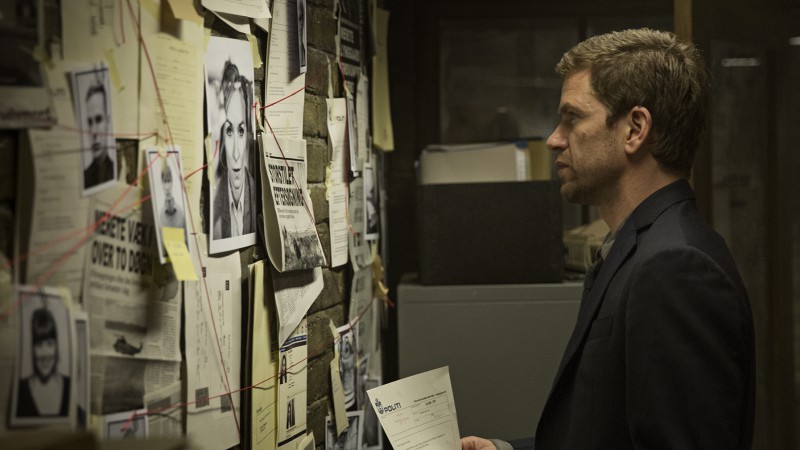
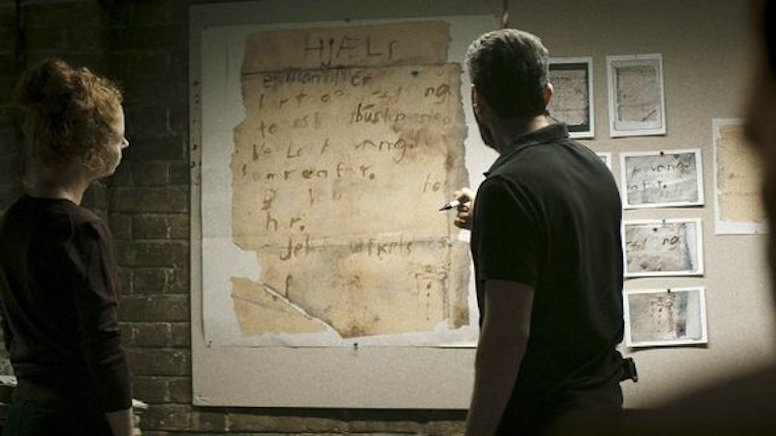
The third in the series of Department Q adaptations – from the novels of Jussi Adler-Olsen – sees the discovery of, literally, a message in a bottle being forwarded to said department in the hope that they can deduce if it’s some kind of prank or if the message is for real. With the head of Department Q, Carl Mørck (Kaas), still on sick leave following the events of the previous instalment, The Absent One (2014), his partner, Assad (Fares), and their assistant, Rose (Schmidt), begin to tease out the puzzle of the message, faded and corrupted as it is after being in the water for eight years. When Mørck does return to work he makes an important point: that there have been only two children reported missing in Sweden in the last ten years.

A name in the message – Poul – leads the team to looking at schools in the general area where the message was washed ashore. They discover that around seven years ago a boy named Poul and his brother Trygve were removed from a school by their parents, and were apparently sent to live with a relative. But when Mørck and Assad manage to track down Trygve he eventually tells them an entirely different story: that of being abducted by a man who ransomed the two boys, and who killed Poul. What also becomes clear is that the man who has done this was known to Trygve’s parents, and they said nothing at the time. Meanwhile, the man in question, known as Johannes (Hagen) and posing as a minister, meets with a couple, Elias (Lohmann) and Rakel (Collin), and their two children, Magdalena (Gammelgaard) and Samuel (Friis). Later, Johannes abducts the two children but is spotted doing so. Mørck and Assad are informed by a local police officer, Lisa (Mannov), and the three of them visit Elias and Rakel.
ACOF - scene3

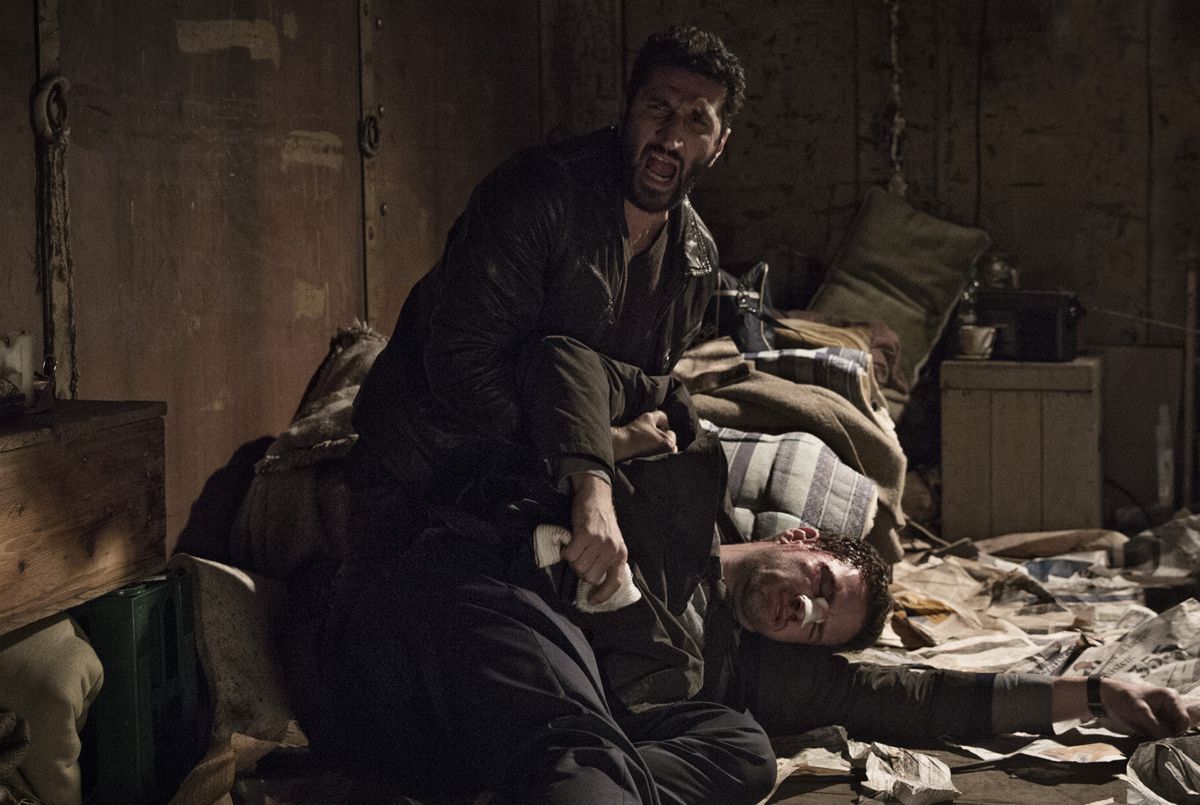
At first, Elias is defiant, and doesn’t want their help, but when Johannes demands Elias bring him the ransom, Mørck insists the police mount a large-scale operation designed to catch Johannes when he collects the money. With Elias tasked with taking a train until being given further instructions, when those instructions involve throwing the money off the train at a certain point, the anxious father does something no one could have expected: he jumps from the train. But in doing so, his attempt at confronting Johannes himself goes awry, and the hunted soon becomes the hunter as he learns of Mørck’s involvement, and decides to target the detective – and anyone who gets in his way.

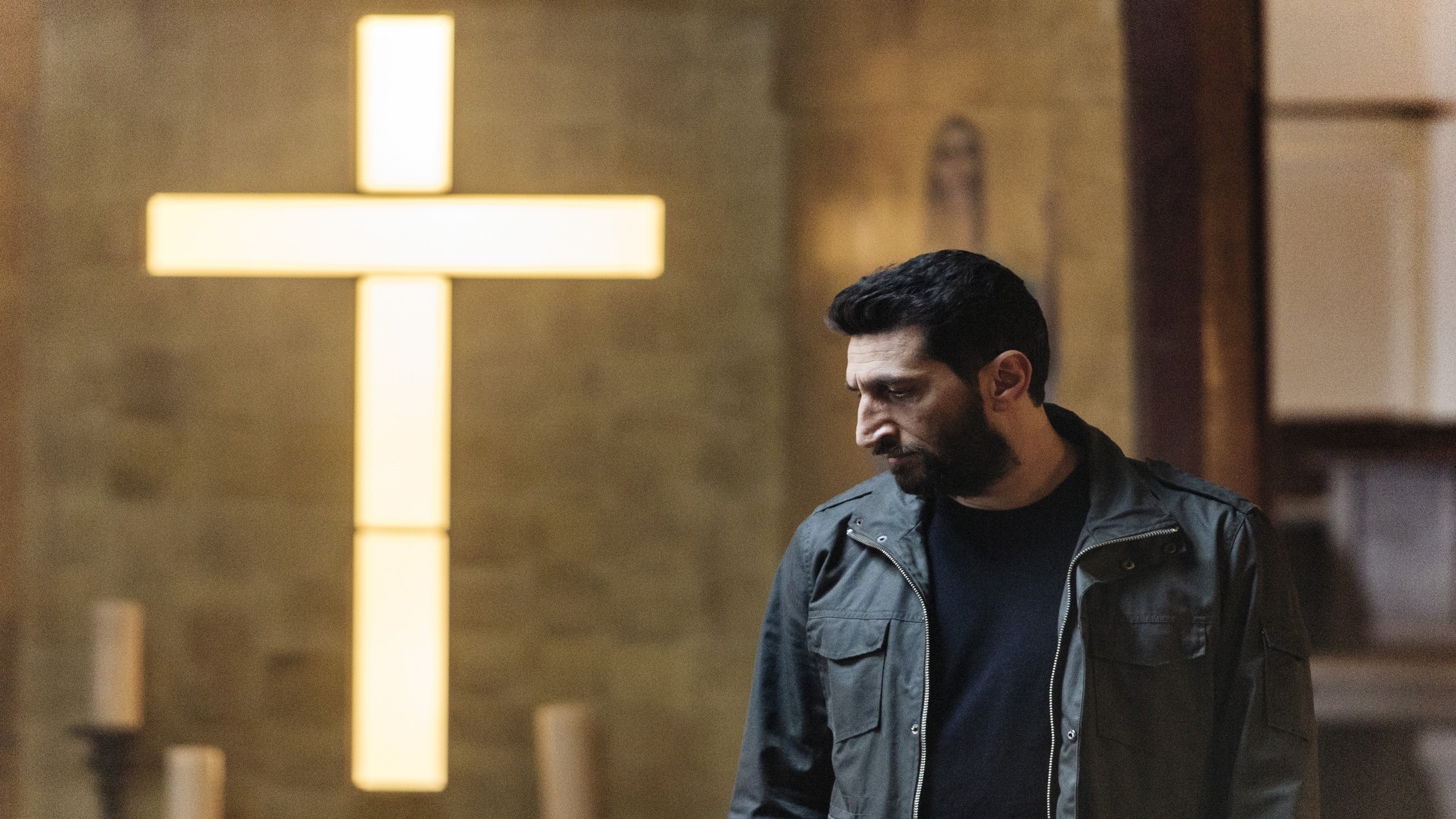
Three movies in and this adaptation of Jussi Adler-Olsen’s novel is still uniquely Scandinavian, and is still as gripping as its predecessors. This is a series that trades on the bleakness at the heart of its central character’s soul, so it’s fitting that A Conspiracy of Faith should challenge Mørck’s insistence that having faith in any kind of deity is “stupid” – even Assad is derided by his partner’s intransigence on the matter. But as anyone who’s been following the series since it began with The Keeper of Lost Causes (2013) can attest, Mørck does have faith, it’s just that it’s been damaged by the terrible things that have happened to him over the years. He’s out of touch with people and his surroundings – at the beginning of the movie, Assad finds Mørck dressed and ready to return to work but sitting motionless in his apartment as if he’s waiting for something to give him purpose. The message does this, but the nature of the case, and the realisation that the parents of previously abducted children kept quiet about what had happened and made up lies about it, merely serves to reinforce his view that religion has no place in the real world.
ACOF - scene2

By the movie’s end, Mørck may have had a revelation of his own, and he may have discovered a way to accept a degree of faith for himself, but the viewer will have to make up their own mind about that. Returning screenwriter Nikolaj Arcel is too clever to make such a consequence of Mørck’s involvement in the case so literal, but the clues are there, and it will be interesting to see where this takes the character in the next, and final, movie. With Mørck being so adamant about religion and worship, it’s good to see Assad take him to task over his own faith, and the way in which Mørck is disrespectful of him. Again, three movies in and Assad is a far cry from the slightly under-developed character he was in the first movie. Here his intelligence and leaps of, well – faith, help propel the investigation, and for much of the movie he’s the one in charge, not Mørck. It’s good to see that Assad has become such an integral part of the series, and not just the average sidekick who might get the odd moment to shine if the script allows it.

Both Kaas and Fares know their roles so well by now that they pick up where they left off without missing a beat. Returning minor characters Rose and Marcus Jacobsen (Pilmark) provide further links with the previous movies and are welcome aspects of the series’ continuity, while the various newcomers all do extremely well, from Lohmann’s prideful father, to Oftebro’s pretty boy police officer, and all the way to Hagen’s impressive turn as the murderous Johannes. Hagen is perhaps the series’ best adversary for Mørck and Assad, his passive face and physical stillness providing a keen counterpoint to the urgency that they bring to their roles, as inevitably, they encounter a race against time.

ACOF - scene1

The story does skim over the motivations of characters such as Elias, and the central sequence involving the train and the ransom drop looks too much like it’s been visually inspired by the climax of Mission: Impossible (1996) – without the helicopter in a tunnel, naturally – but these are minor issues in a movie that has a solid emotional base beneath all the thriller elements, and a movie that further confirms the producers decision to make four movies altogether was the right one (though they could adapt the other three Department Q novels Adler-Olsen has written – if they wanted to). Stepping into the director’s chair for the first time, Moland has made a fine job of seamlessly integrating this movie into the series as a whole, and along with DoP John Andreas Andersen and editors Olivier Bugge Coutté and Nicolaj Monberg, has retained the series’ beautifully dour visual style and narrative rhythms. With one more movie to go, let’s hope the producers can maintain the quality of the series so far, and bow out on a continuing high.

Rating: 8/10 – there’s much to admire (and enjoy) here, from some truly mordaunt humour to the creepy behavioural tics that Hagen brings to his role, but overall this is another fine instalment from a series that really, really needs a wider audience; by maintaining its focus on its lead character, and the problems that plague him, A Conspiracy of Faith avoids comparisons with any other crime thrillers out there, and confirms its place in modern cinema as a second sequel that works equally as well as the original.
Share this:

  • Click to share on X (Opens in new window) X
  • Click to share on Facebook (Opens in new window) Facebook
  • More
  • Click to print (Opens in new window) Print
  • Click to email a link to a friend (Opens in new window) Email
Like Loading...

The Absent One (2014)

06 Monday Jul 2015

Posted by dullwood68 in Movies

≈ 1 Comment

Tags

Boarding school, Cold cases, Conspiracy, Crime, David Dencik, Denmark, Department Q, Drama, Fares Fares, Jussi Adler-Olsen, Literary adaptation, Mikkel Nørgaard, Murder, Nikolaj Lie Kaas, Pilou Asbæk, Review, Sequel, Thriller

Fasandraeberne

Original title: Fasandræberne

D: Mikkel Nørgaard / 119m

Cast Nikolaj Lie Kaas, Fares Fares, Pilou Asbæk, David Dencik, Sarah-Sofie Boussnina, Danica Curcic, Nikolaj Groth, Søren Pilmark, Beate Bille, Marco Ilsø, Philip Stilling, Kristian Høgh Jeppesen, Johanne Louise Schmidt, Hans Henrik Clemensen, Peter Christoffersen, Katrine Rosenthal

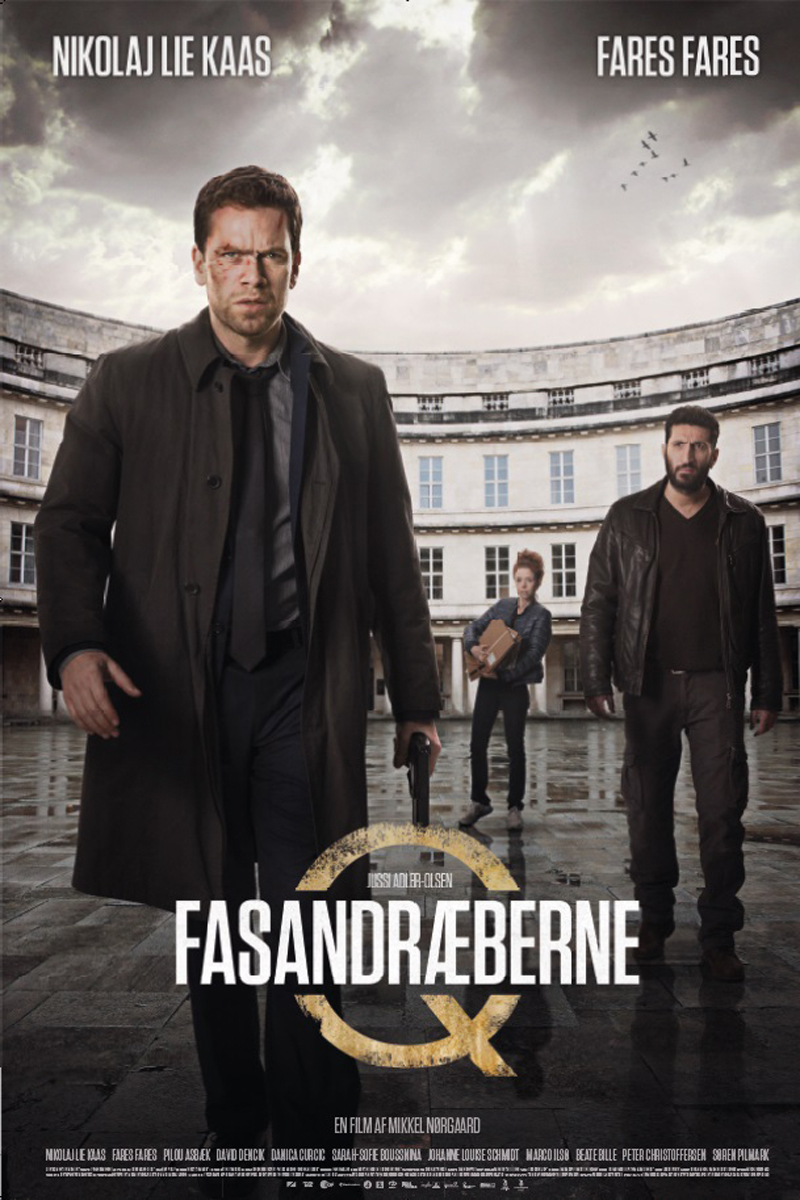
At a police awards ceremony, cold case investigator Carl Mørck (Kaas) is accosted by a retired policeman who begs him to look into the case of his two children who were both killed in 1994. Mørck refuses, and later the man commits suicide, prompting Mørck, supported by his partner Assad (Fares) to look into the case. They learn that the siblings both attended the same boarding school, and that there was a call to the police – made by a young woman – alerting them to the crime. With this as their only clue, Mørck and Assad visit the school where they learn that the young woman was probably Kimmie Lassen (Boussnina); but unfortunately for them she hasn’t been seen in twenty years.

Learning also that Kimmie’s friends at the time included now reputable businessmen Ditlev Pram (Asbæk) and Ulrik Dybbøl (Dencik), and that the man who confessed to the crime, Bjarne Thøgersen (Jeppesen), was represented by the best criminal lawyer in Denmark, Bent Krum (Clemensen), and only served three years in prison, Mørck and Assad sense a conspiracy. They visit Thøgersen who alerts Pram to the new interest in the deaths. Pram hires a man named Albjerg (Christofferson) to look for Kimmie, while Mørck endeavours to find her first. But an older Kimmie (Curcic) is also a very wary Kimmie, and with the help of her friend, Tine (Rosenthal), she manages to stay one step ahead of everyone when she becomes aware that people are looking for her. But Albjerg tracks her down, and though she gets away, she also has a run in with Mørck that leaves him bruised and battered.

Meanwhile, Pram and Dybbøl use their political contacts to put pressure on senior police in an effort to get Mørck and Assad taken off the case. Furious, Mørck confronts his immediate boss (Pilmark) and makes enough of a case from the evidence that he’s amassed to show that it should be pursued further, and that Kimmie Lassen holds the key to what happened twenty years ago. When she is finally caught by the police, it seems that Pram and Dybbøl’s arrest is only a matter of time. But Kimmie has other ideas: she escapes and goes after them herself, as much to kill them first, and as much again to make up for her involvement in the deaths of the young brother and sister.

Fasandraeberne - scene

As much a riveting crime thriller as its predecessor, The Keeper of Lost Causes (2013), The Absent One is another triumphal adaptation of a novel by Jussi Adler-Olsen. With almost everyone involved in the first movie returning to make this one, the movie is like a seamless addition to what is an ongoing series. The tone, the feel, the pace, and the sensibility of The Absent One is such that anyone who has seen The Keeper of Lost Causes can slip into the series’ bleak, gloomy mise en scene with ease, sure in the knowledge that what follows will be of an equally high standard, and equally as satisfying (if not more so).

There are several reasons for this, not least the taut, gripping screenplay by Nikolaj Arcel and his writing partner Rasmus Heisterberg. In distilling Adler-Olsen’s novel they’ve kept the focus on the ripple effect the murders have had over the years, as well as Mørck’s inability to let something go once he’s got a grip on it. The detective’s persistence and dogged nature – which are pretty much all he has to keep him going – is beautifully expressed through Kaas’s beleaguered performance. This is a man who keeps his pain externalised to stop it from eating away at him inside, but the payoff is a lack of compassion and sympathy for others; he only takes on the case in the first place because he can’t deal with the guilt of refusing the retired policeman. Kaas gives a wonderfully fractured portrayal of Mørck, growing further into the character and inhabiting him completely.

Ably supported by Fares, whose Assad is never a foil for Mørck, Kaas heads up a cast that never puts a foot wrong, even in the smaller roles. The script supports them all the way, assembling the pieces of the plot with skill and precision, letting the viewer glimpse the events of twenty years ago without spoiling the true nature of the killings, and allowing the mystery surrounding those killings to remain in place almost until the very end. It’s a bold, confident approach, and allows the tension inherent in the story to build to a quietly devastating denouement (and which puts Mørck through the ringer once more – but then he probably wouldn’t have it any other way).

Retaining his place in the director’s chair, Nørgaard keeps things tightly focused and highlights the psychological toll felt by Kimmie over the course of twenty years (she has a terrible secret of her own that, when revealed, is the most upsetting thing seen in either movie). It’s to Nørgaard’s credit that Kimmie’s humanity is never downplayed,  and in the hands of Curcic, she’s a character so far removed from her younger self (also extremely well played by Boussnina) that the sadness of her situation is almost palpable. (In a better world, she and Mørck would make for an interesting couple.)

While the villains of the piece aren’t as effectively drawn, their callous natures are given plenty of screen time, as well as the slow disintegration of their self-confidence and eventual hubris. Asbæk and Dencik are appropriately cold and uncaring in their roles, revealing the innate hostility towards others that privilege has bestowed on them, and providing strong counterpoints to Mørck’s own disdain for others. It’s all reflected in the somber, unforgiving violence and shadowy dangers that permeate the movie and which help to make it such a rewarding (if slightly downbeat) experience.

Rating: 9/10 – a sequel that is as equally good as its forerunner, The Absent One is a dark, atmospheric thriller that is as uncompromising as it is compelling; with two further movies in the pipeline, let’s hope that the makers can maintain the quality shown so far.

Share this:

  • Click to share on X (Opens in new window) X
  • Click to share on Facebook (Opens in new window) Facebook
  • More
  • Click to print (Opens in new window) Print
  • Click to email a link to a friend (Opens in new window) Email
Like Loading...

The Keeper of Lost Causes (2013)

06 Monday Apr 2015

Posted by dullwood68 in Movies

≈ 3 Comments

Tags

Assad, Carl Mørck, Cold cases, Crime, Denmark, Department Q, Drama, Fares Fares, Jussi Adler-Olsen, Literary adaptation, Mikkel Nørgaard, Nicolaj Lie Kaas, Police, Review, Sonja Richter, Thriller

Keeper of Lost Causes, The

Original title: Kvinden i buret

aka The Woman in the Cage

D: Mikkel Nørgaard / 97m

Cast: Nikolaj Lie Kaas, Fares Fares, Sonja Richter, Peter Plaugborg, Søren Pilmark, Mikkel Boe Følsgaard, Troels Lyby

Following a police raid that leaves his partner, Hardy (Lyby) paralysed and another officer dead, detective Carl Mørck (Kaas) is transferred out of homicide and into Department Q, which deals exclusively with cold cases. His brief, along with his assistant, Assad (Fares), is to review the cases, submit a brief report and then close them. The first case he looks at concerns the apparent suicide of politician Merete Lynggaard (Richter) five years ago. Something about the case doesn’t make sense to Mørck and he reopens the investigation. He looks through the witness statements and finds that one statement wasn’t included in the final report: that Merete’s brother, Uffe (Følsgaard), who was with her on the ferry she is supposed to have jumped overboard from, was seen with a man in a raincoat.

Since Merete’s suicide, Uffe has resided in a home. Mørck and Assad visit him but his condition – brain damage from a car accident when he and Merete were children – prevents him from being of any help. A conversation with one of Merete’s colleagues reveals her liaison with a man at a conference shortly before she killed herself. Mørck gets hold of the list of attendees and photos that were taken at the conference. Suspecting that Uffe might recognise one of the men at the conference, they show him the various photos that show Merete and one of the male delegates. Uffe does recognise one of them, a man named Daniel Hale. With a solid lead to work with, Mørck’s investigation is brought up short by his boss, Marcus (Pilmark) following a complaint by the manager of the home and the original investigating officer. Unable to let things go, Mørck continues his investigation and travels to Sweden to speak to Hale.

When he and Assad get there, they discover that Hale died a few months after Merete’s suicide. They also discover that the man who attended the conference and was recognised by Uffe isn’t Daniel Hale. Learning that the man is likely to be a friend of Hale’s known as Lasse, the pair return to Denmark only to be suspended from duty. But again, Mørck can’t let things drop, and their investigation leads to an isolated farmhouse and a revelation involving the car accident that left Uffe in his current condition.

Keeper of Lost Causes, The - scene

The first of four movies adapted from Danish author Jussi Adler-Olsen’s Department Q novels – The Absent One (2014), A Conspiracy of Faith (2015), and The Purity of Vengeance (TBC) complete the quartet – The Keeper of Lost Causes is an efficient, gripping thriller that introduces possibly one of the dourest police detectives in recent cinema history. At one point, Assad remarks that he’s never seen Mørck smile. Mørck’s response? “My wife left me. My colleague’s dead, and my best friend’s a cripple … I don’t have a lot to smile about.” It’s a pithy, succinct summation of Mørck’s character, and while it seems in keeping with the recent trend in Scandinavian crime fiction and movies, the combination of Mørck’s gloomy outlook on life and Kaas’s glum demeanour raise this particular movie into the above average category.

With the central character so firmly established in the opening fifteen minutes, the movie is then free to concentrate on the mystery surrounding Merete’s apparent suicide. But as Mørck begins to piece together the clues that point to something more sinister, the script by Nikolaj Arcel takes a parallel line and shows the viewer what happened that day on the ferry. It’s a bold move, as the mystery elements inherent in the story are jettisoned in favour of a more cross-linear approach where the events of five years before run concurrently with the progress of Mørck’s investigation. This leaves the viewer with an entirely different type of crime drama than seems in play from the beginning, and while the villain of the piece enters the story quite late in the day, their appearance and the reason for their behaviour is cleverly revealed (even if what they actually do isn’t properly explained or feels credible).

The plot and various storylines play out with a surprising attention to detail, and Arcel’s adaptation does a good job of downplaying any implausibilities such as Mørck’s boss Marcus ignoring the progress he’s made in disputing the suicide theory. This aside, the movie is a solid, methodically paced crime drama that works best by keeping it simple, and Nørgaard’s unfussy, yet expressive direction is best exemplified by two moments of unexpected lyricism relating to Merete’s childhood. He’s good with the cast as well, eliciting strong, confident performances from all concerned. Kaas’s downbeat yet focused portrayal of Mørck is one of the things that makes the movie work so well; he’s completely credible as the impatient, disrespectful and arrogant ex-homicide detective who finds a new home in Department Q. And he’s matched for dedication and immersion in the role by Fares as Assad. Fares, who is Lebanese, spent two months learning Danish for the movie, but you wouldn’t know it. Assad is the sidekick role, but Fares brings a determination and an intelligence to the role that a lot of seasoned actors would have skirted past on their way to a more stereotypical portrayal.

Shot by DoP Eric Kress with an emphasis on dark, shadowy interiors and overcast, cloudy exteriors, the movie is recognisably part of the recent Nordic Noir genre that has spawned a myriad of similar tales both on the big screen and television. But thanks to a clever script, a director on top of his game, and a cast that brings credibility to (almost) every scene, The Keeper of Lost Causes is a terrific first movie in the series. If this outing is anything to go by, then the remaining three movies will definitely be ones to watch.

Rating: 8/10 – a well-paced, intelligent, and above all, absorbing crime thriller, The Keeper of Lost Causes is a testament to good story telling; quietly ambitious, the movie is a terrific example of how to maintain suspense without undermining either the plot or the characters.

Share this:

  • Click to share on X (Opens in new window) X
  • Click to share on Facebook (Opens in new window) Facebook
  • More
  • Click to print (Opens in new window) Print
  • Click to email a link to a friend (Opens in new window) Email
Like Loading...

Blog Stats

  • 486,528 hits

Recent Posts

  • 10 Reasons to Remember Bibi Andersson (1935-2019)
  • Fantasia (1940)
  • Dances With Wolves (1990) – The Special Edition
  • Kiss of the Spider Woman (1985)
  • The Three Musketeers (1973)

Top Posts & Pages

  • Lost for Life (2013) - Another Look
    Lost for Life (2013) - Another Look
  • Lost for Life (2013)
    Lost for Life (2013)
  • About
    About
  • Mr. Topaze (1961)
    Mr. Topaze (1961)
  • Billy Lynn's Long Halftime Walk (2016)
    Billy Lynn's Long Halftime Walk (2016)
  • Winter's Tale (2014)
    Winter's Tale (2014)
  • The Hitman's Bodyguard (2017)
    The Hitman's Bodyguard (2017)
  • 5 Famous Movie Roles That Nearly Went to Someone Else
    5 Famous Movie Roles That Nearly Went to Someone Else
  • The Layover (2017)
    The Layover (2017)
  • Transcendence (2014)
    Transcendence (2014)
Follow thedullwoodexperiment on WordPress.com

Blogs I Follow

  • Rubbish Talk
  • Film 4 Fan
  • Fast Film Reviews
  • The Film Blog
  • All Things Movies UK
  • Interpreting the Stars
  • Let's Go To The Movies
  • Movie Reviews 101
  • TMI News
  • Dan the Man's Movie Reviews
  • Film History
  • Jordan and Eddie (The Movie Guys)

Archives

  • April 2019 (13)
  • March 2019 (28)
  • February 2019 (28)
  • January 2019 (32)
  • December 2018 (28)
  • November 2018 (30)
  • October 2018 (29)
  • September 2018 (29)
  • August 2018 (29)
  • July 2018 (30)
  • June 2018 (28)
  • May 2018 (24)
  • April 2018 (21)
  • March 2018 (31)
  • February 2018 (25)
  • January 2018 (30)
  • December 2017 (30)
  • November 2017 (27)
  • October 2017 (27)
  • September 2017 (26)
  • August 2017 (32)
  • July 2017 (32)
  • June 2017 (30)
  • May 2017 (29)
  • April 2017 (29)
  • March 2017 (30)
  • February 2017 (27)
  • January 2017 (32)
  • December 2016 (30)
  • November 2016 (28)
  • October 2016 (30)
  • September 2016 (27)
  • August 2016 (30)
  • July 2016 (30)
  • June 2016 (31)
  • May 2016 (34)
  • April 2016 (30)
  • March 2016 (30)
  • February 2016 (28)
  • January 2016 (35)
  • December 2015 (34)
  • November 2015 (31)
  • October 2015 (31)
  • September 2015 (34)
  • August 2015 (31)
  • July 2015 (33)
  • June 2015 (12)
  • May 2015 (31)
  • April 2015 (32)
  • March 2015 (30)
  • February 2015 (37)
  • January 2015 (39)
  • December 2014 (34)
  • November 2014 (34)
  • October 2014 (36)
  • September 2014 (25)
  • August 2014 (29)
  • July 2014 (29)
  • June 2014 (28)
  • May 2014 (23)
  • April 2014 (21)
  • March 2014 (42)
  • February 2014 (38)
  • January 2014 (29)
  • December 2013 (28)
  • November 2013 (34)
  • October 2013 (4)

Create a free website or blog at WordPress.com.

Rubbish Talk

Film 4 Fan

A Movie Blog

Fast Film Reviews

The Film Blog

The official blog of everything in film

All Things Movies UK

Movie Reviews and Original Articles

Interpreting the Stars

Dave Examines Movies

Let's Go To The Movies

Film and Theatre Lover!

Movie Reviews 101

Daily Movie Reviews

TMI News

Latest weather, crime and breaking news

Dan the Man's Movie Reviews

All my aimless thoughts, ideas, and ramblings, all packed into one site!

Film History

Telling the story of film

Jordan and Eddie (The Movie Guys)

Movie Reviews & Ramblings from an Australian Based Film Fan

Privacy & Cookies: This site uses cookies. By continuing to use this website, you agree to their use.
To find out more, including how to control cookies, see here: Cookie Policy
  • Subscribe Subscribed
    • thedullwoodexperiment
    • Join 481 other subscribers
    • Already have a WordPress.com account? Log in now.
    • thedullwoodexperiment
    • Subscribe Subscribed
    • Sign up
    • Log in
    • Report this content
    • View site in Reader
    • Manage subscriptions
    • Collapse this bar
 

Loading Comments...
 

    %d