• 10 Reasons to Remember…
  • A Brief Word About…
  • About
  • For One Week Only
  • Happy Birthday
  • Monthly Roundup
  • Old-Time Crime
  • Other Posts
  • Poster of the Week
  • Question of the Week
  • Reviews
  • Trailers

thedullwoodexperiment

~ Viewing movies in a different light

thedullwoodexperiment

Tag Archives: Elijah Wood

I Don’t Feel at Home in This World Anymore. (2017)

01 Saturday Sep 2018

Posted by dullwood68 in Movies

≈ 3 Comments

Tags

Burglary, Comedy, David Yow, Devon Graye, Drama, Elijah Wood, Indie movie, Macon Blair, Melanie Lynskey, Review
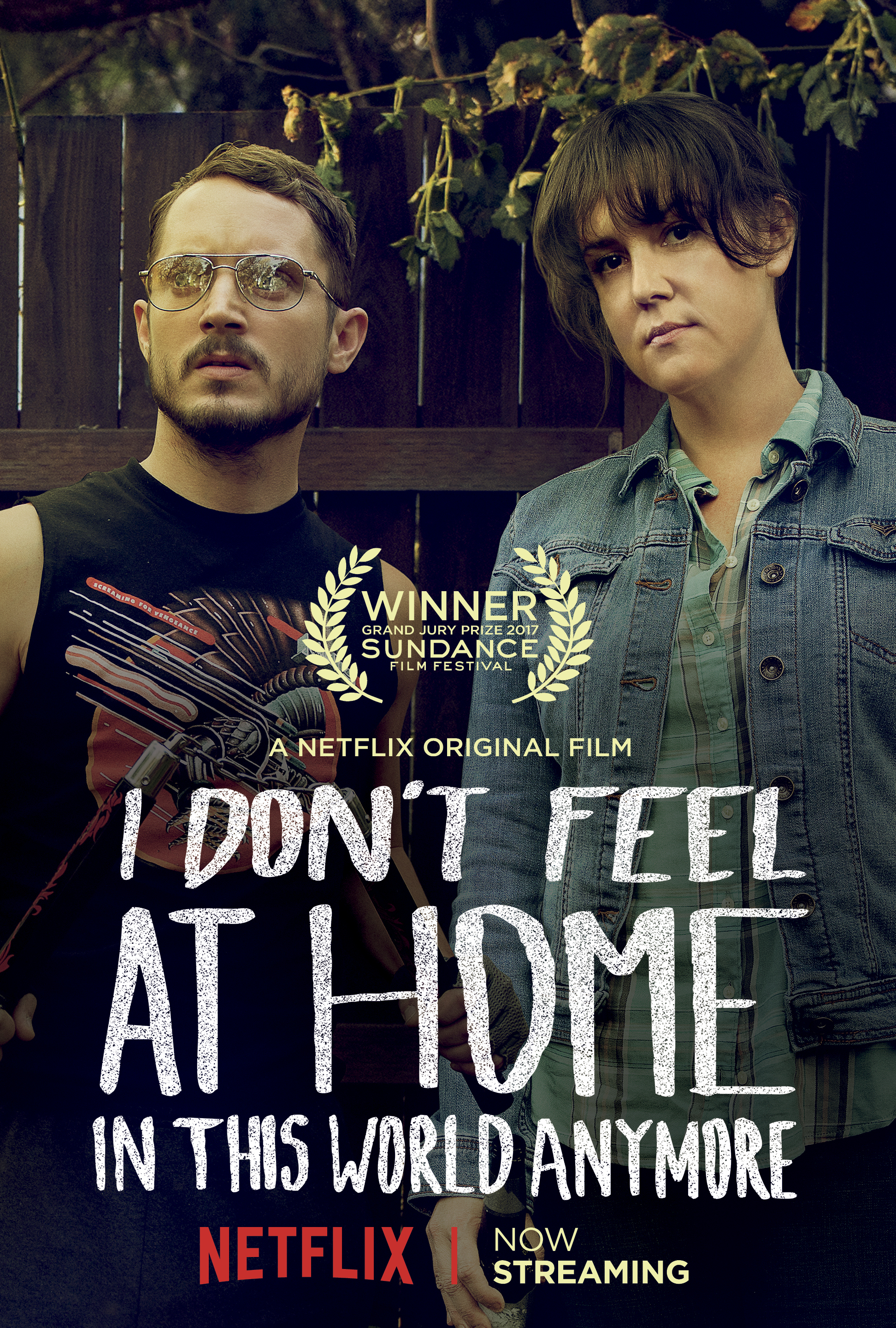
D: Macon Blair / 93m

Cast: Melanie Lynskey, Elijah Wood, David Yow, Devon Graye, Jane Levy, Gary Anthony Williams, Myron Natwick, Christine Woods, Robert Longstreet

Ruth (Lynskey) is a nursing assistant who is continually annoyed by the thoughtlessness of others. When she comes home from work one day to find that she’s been burgled and the thief has stolen her laptop, grandmother’s silverware and some prescription medication, her day is made even worse when the investigating detective, Bendix (Williams), chides her for leaving her back door unlocked. Later, as she goes door to door to see if anyone saw anything, she meets Tony (Wood) who becomes violently outraged at what has happened. Ruth discovers evidence in her backyard – a conspicuous shoeprint in the mud – and when she uses a phone app to track her laptop, and discovers its location, Bendix is uninterested. Needing someone to go with her to retrieve her laptop, Ruth asks Tony, who’s only too keen to do so. When they get it back, they learn it was bought from a resale shop. There, Ruth discovers her grandmother’s silverware, and as she tries to sneak it out, she also discovers a young man (Graye) at the counter wearing a shoe that’s a match for the print in her garden…
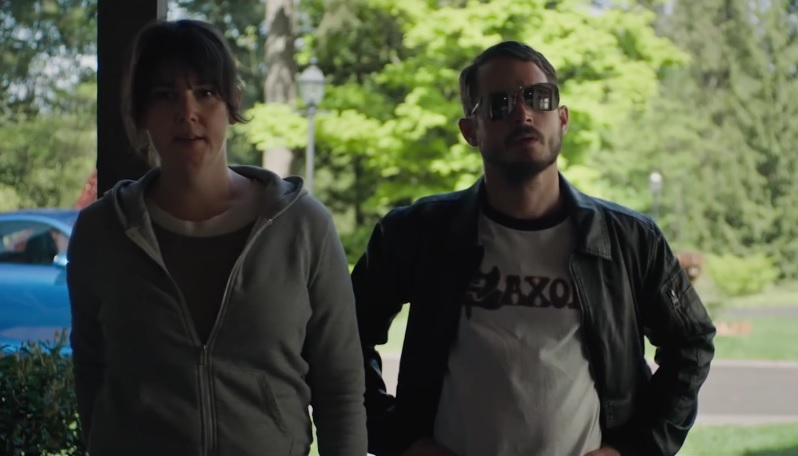
The words ‘quirky’ and ‘unconventional’ seem tailor-made for I Don’t Feel at Home in This World Anymore., Macon Blair’s feature debut as a writer/director. You could add ‘wacky’ and ‘peculiar’, and they wouldn’t be too far off the mark either. But while there are plenty of other low budget indie movies that fit those descriptions quite easily, what Blair has achieved here is something a little more rarefied. In Ruth, there’s a temptation to view this as a “worm has turned” story, but that would be to cast a superficial eye over both the material and Ruth herself. Ruth may be one of Life’s minor victims, and she may appear to be a bystander in her own life, but she has an innate strength of character that just needs the right stimulus to bring her into her own. Being robbed does just that, and by aligning herself with Tony – who has a number of his own issues – Ruth becomes empowered in a way she’s unfamiliar with. It’s a step in the right direction, but Blair is confident enough in his screenplay to ensure that Ruth’s journey doesn’t change her completely. By the end, she’s more positive, but she’s still finding herself.

By making Ruth’s journey one that is affectionately handled and which resonates far more than expected, Blair has gifted Lynskey with yet another terrific role for the actress to make her own. Whether she’s sipping beer from a bottle out of habit, or being instinctively happy when she finds others are reading the same book she is, Ruth is a wonderful creation. Blair is equally on form with the rest of the characters, with Wood’s NWBHM-loving Tony prone to inappropriate violent outbursts, and Graye’s troubled teen burglar, Christian, having a back story that takes the material into unforeseen territory. In amongst the millennial concerns and suburban drama there’s a great deal of comedy, from Ruth’s look when asked the last words of a deceased patient, to a lovely visual gag involving Tony’s dog, Kevin, and the reaction of Christian’s stepmother (Woods) when asked why she’s speaking to two fake cops (that she knows are fake cops). Blair’s ‘quirky’ sensibility ensures the movie is always interesting for what’s going to happen next, and there’s first-rate cinematography from Larkin Seiple that paints Ruth’s particular part of suburbia as a bright yet deceptively unstable place to live.

Rating: 8/10 – another wonderful performance from the always reliable Lynskey anchors I Don’t Feel at Home in This World Anymore., and makes it one of the more enjoyable indie movies of recent years; with such a good meld of drama and comedy, and a cruel streak to keep things ‘unconventional’, Blair’s directorial debut is so good that his next movie can’t come quickly enough.

Share this:

  • Click to share on X (Opens in new window) X
  • Click to share on Facebook (Opens in new window) Facebook
  • More
  • Click to print (Opens in new window) Print
  • Click to email a link to a friend (Opens in new window) Email
Like Loading...

The Bumblebee Flies Anyway (1999)

04 Tuesday Jul 2017

Posted by dullwood68 in Movies

≈ Leave a comment

Tags

Car crash, Catch Up movie, Drama, Elijah Wood, Janeane Garofalo, Literary adaptation, Martin Duffy, Memory loss, Rachael Leigh Cook, Review, Roger Rees, Terminal cancer

D: Martin Duffy / 96m

Cast: Elijah Wood, Janeane Garofalo, Roger Rees, Joe Perrino, George Gore II, Rachael Leigh Cook, Jeffrey Force, Oni Faida Lampley

In pretty much every actor’s filmography there’s usually at least one movie that hardly anyone ever sees, and slips past audiences like a whisper in the night. These movies are often ones that have been made quickly and cheaply, with mid-range stars either on their way up the Ladder of Stardom, or heading back down it. Sometimes they’re movies that have been made for an international market, with said mid-range stars heading up a European or African or Far Eastern cast, and sometimes only appearing for maybe a third of the movie’s running time. And sometimes, those mid-range stars have taken part as a favour to the director, or a producer, or someone else attached to the project. In essence, they’re jobbing gigs, a somewhat easy payday for the actor(s) concerned, and one that they’ll look back on only if pressed.

It’s hard to determine if there really is a market for these kinds of movies. There are enough of them out there to prove that people are willing to invest in them, but often it’s hard to determine who is the target audience (aside from any fans of the stars that appear in them). And one such movie is The Bumblebee Flies Anyway, a feature that appeared at the Deauville Film Festival in September 1999, opened briefly in the US in January 2000, and hasn’t been seen in cinemas anywhere in the world since. If you’re one of the few people who saw it way back then, then you probably already know the reason why it had such a limited exposure. And that’s because it’s bad, so very, very bad.

Adapted from the novel of the same name by Robert Cormier, The Bumblebee Flies Anyway has all the appeal of the kind of car crash it opens with (or actually, that it doesn’t open with; there isn’t the budget to stage a proper car crash). Poorly staged and leaden-footed throughout, the movie is achingly stilted, with careless attempts at characterisations, and a set up that nearly disappears under the weight of its own inconsequence. This is an adaptation that makes less and less sense the longer it goes on, and Jennifer Sarja’s screenplay sacrifices dramatic tension in favour of soap opera theatrics at nearly every opportunity, while also leaving the cast stranded on a desert island of inane dialogue. (This is Sarja’s only credited screenplay, and it’s not difficult to work out why.)

The story itself is puzzlingly obscure, with Elijah Wood’s car crash amnesiac, Barney Snow (no, really) taking part in a medical experiment designed to help him deal with his involvement in the crash and move on with his life. But he’s receiving his treatment in a medical facility for terminal cancer patients, all of whom are teenagers or younger (well, all actually means three). Barney is kept on medication (or “the merchandise” as he keeps calling it for no apparent reason), and is sedated every now and again and taken to a basement room where he undergoes some form of regressive hypnotherapy (which he doesn’t know about). Meanwhile he makes friends with bone cancer sufferer Mazzo (Perrino), kidney cancer victim Billy (Gore II), and undisclosed cancer patient Allie (Force). The movie tries to present their respective illnesses with as much poignancy as it can, particularly Mazzo’s, but does so in a way that makes Billy and Allie look like poster boys for cancer remission. As Mazzo gets worse and worse, he receives a visit from his twin sister, Cassie (Cook). Concerned about her brother she naturally turns to Barney for comfort and they begin a tentative romance (well, what else are they likely to do?).

But Barney has his own problems. He has a memory of the car crash and a woman stepping out in front of his car that just won’t go away. He thinks the woman is his mother but he can’t remember her name. When he does he persuades Billy to help him locate her address, and gets Cassie to drive him there. The visit doesn’t go as planned, and subsequent treatments by Barney’s doctors, Harriman (Garofalo) and Croft (Rees), cause further memories to surface, and in them, Barney learns about the basement room and the inherent contradiction that exists at the heart of his treatment. Soon he has a difficult choice to make, one that will have far-reaching consequences whichever way he decides. But before then he makes another difficult choice, and this time it’s one with the potential to affect everyone around him.

Everything about Barney’s predicament and the so-called medical facility that he resides at is so ridiculous it’s hard to take any of it seriously. Garofalo’s caring doctor advises Barney not to get attached to Mazzo et al, but he finds himself drawn into their worlds almost against his will, and not caring about them doesn’t become an option. None of it however, is compelling or dramatic enough to make the unsuspecting viewer care about any of them, and the cast find themselves endlessly bogged down in scenes that should be affecting but which are so flatly directed by Duffy that they inspire ennui instead. Indeed, the combination of Duffy’s pedestrian direction and Sarja’s lumbering screenplay leaves Wood and his co-stars struggling to inject any purpose into their performances, and any meaningful exchanges between the characters are undermined before they’ve even begun. It all leads to a rooftop “showdown” that is laughable instead of sincere, and insufferably trite instead of emotionally haunting. Not the best outcome for a movie that already has enough strikes against it to warrant an enquiry into just how it received a showing at Deauville in the first place.

Rating: 3/10 – a perfect example of why some movies get the barest of releases, The Bumblebee Flies Anyway is dramatically inert from start to finish and offers proof (if any were needed) that the presence of a “name” actor is no guarantee of quality; shoddy in every department, and with platitudes masquerading as dialogue, it’s not even fascinating in an “oh no they didn’t” kind of way (which might at least make it halfway bearable to watch). (4/31)

Share this:

  • Click to share on X (Opens in new window) X
  • Click to share on Facebook (Opens in new window) Facebook
  • More
  • Click to print (Opens in new window) Print
  • Click to email a link to a friend (Opens in new window) Email
Like Loading...

The Trust (2016)

22 Friday Apr 2016

Posted by dullwood68 in Movies

≈ Leave a comment

Tags

Action, Alex Brewer, Benjamin Brewer, Crime, Drama, Drug dealers, Drugs, Elijah Wood, Hidden vault, Jerry Lewis, Las Vegas, LVPD, Nicolas Cage, Review, Robbery, Sky Ferreira, Thriller

The Trust

D: Alex Brewer, Benjamin Brewer / 93m

Cast: Nicolas Cage, Elijah Wood, Sky Ferreira, Ethan Suplee, Eric Heister, Kenna James, Keston John, Steven Williams, Jerry Lewis

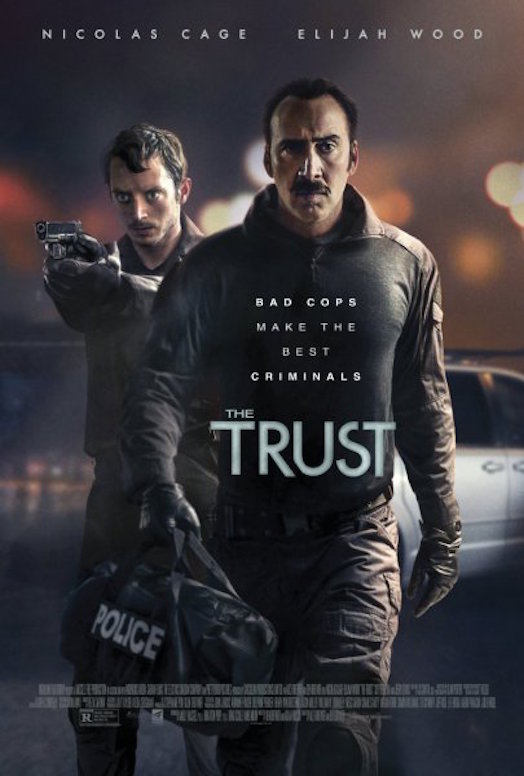
When you’re watching The Trust, the latest no-brainer, substance-lite thriller starring Nicolas Cage, spare a thought for Jerry Lewis (yes, the Jerry Lewis). Urged by Cage to appear as his on-screen dad, Lewis appears in three scenes and amasses roughly a minute of screen time. What, you may be asking, was the point? In fairness, Lewis is ninety, so he may have worked to his potential, but it’s the kind of unkind cameo that will either have audiences, a) wondering if it’s really him, or b) asking themselves, isn’t he dead? The answers (already established) are yes it is, and no he’s not. The better question is, was he so bored that he didn’t have something, anything, better to do?

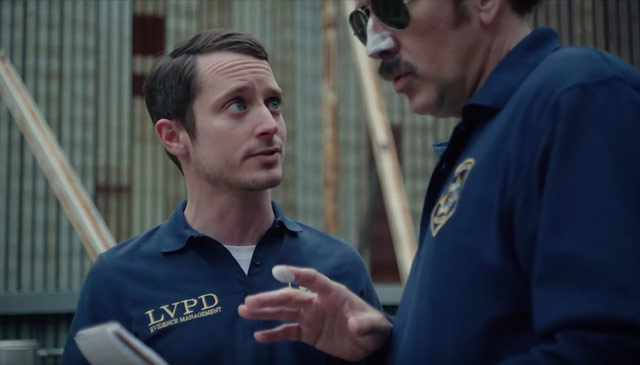
As it turns out, Lewis gets off lightly, sharing his scenes with Cage and Wood, while the two lead actors get to spar with each other for almost the rest of the movie. Cage is Jim Stone, an evidence technician for the Las Vegas Police Department, stifled by his bosses lack of vision when it comes to his ideas for gathering evidence more efficiently, and treated like a nuisance caller who makes the mistake of giving his name every time. Also working as an evidence technician for the LVPD is Wood’s character, David Waters. Waters is good at his job but he’s too fond of a joke, and smoking weed, to be as uptight as Stone; he’s coasting along, none too ambitious but clearly lacking the wherewithal to make his life better.

The Trust - scene2

At an auction of property seized by the LVPD, Stone is shown one clever way that drugs have been transported. Looking through the paperwork that went with the bust, Stone spots an anomaly: the guy who was caught was a low-level criminal and yet his $200,000 bail was paid quickly and without fuss. Wondering why someone so inconsequential would have that kind of support, Stone begins to follow him to see who he’s affiliated with. What Stone discovers is a hidden vault located in back of a laundry. But what is actually in the vault? Stone, along with Waters’ help, determines to find out.

Viewers of The Trust – should anyone take such an ill-advised step – will find themselves unsurprised at the dearth of reasonable ideas, the lack of credibility, and the complete absence of tension or drama. They’ll be equally unsurprised at the way in which the narrative unfolds with all the urgency of someone with crippling arthritis trying to navigate a particularly steep set of stairs. In the hands of its directors, the movie stumbles around looking for reasons to keep Stone and Waters together, while ignoring the plain and simple fact that despite the “best” efforts of Cage and Wood, the movie can’t come up with any reason they would ever team up in the first place. It’s the elephant in the room: why would Waters go along with Stone’s plan when there’s so much they don’t know, and so much that could go wrong?

The Trust - scene3

But hey, this is the movies, and people do the funniest things in the movies, like purchase expensive drilling equipment from a German manufacturer because it’ll be harder to trace (really?), or let a hostage make a phone call during the middle of a heist (that won’t come back to haunt anyone, surely?). It’s a truism that the cleverer the concept the sillier the execution, and The Trust is no different in its attention to making things look and sound absurd. From the now traditional discussion where one person outlines their criminal plan to another in a public place (a Vegas casino bar on this occasion), to Stone and Waters being able to just drop their day job and concentrate on breaking into the vault, the script by co-director Benjamin Brewer and Adam Hirsch cuts narrative corners as if it’s de rigeuer for this sort of movie, and never once gives the viewer the sense that this is all happening in a world anyone could recognise.

And it’s yet another movie that features a performance from Nicolas Cage that has little to offer other than the actor’s trademark tics and quirky line deliveries. It seems incredible that you have to go back to 2013 to find a Cage performance worthy of his talent, but that’s how long it’s been (it was a banner year for Cage, with roles in Joe, The Frozen Ground, and The Croods all reminding us of just how good he can be). Here he looks tired, not quite going through the motions but perilously close to it, his mannerisms and reactions just a touch off from what they would be if he were fully engaged with the material. It’s a shame to see Cage at such a remove from what he can achieve as an actor; perhaps his upcoming turn in Oliver Stone’s Snowden will help turn things around.

The Trust - scene1

Playing opposite him, Wood does his best but may now be wishing that original choice Jack Huston had been able to play Waters. It’s the “anxious partner” role, the doubting Thomas who sees the potential for disaster at every turn, and who’s proved right (and suffers for it). Since playing a certain Hobbit back at the turn of the century, Wood’s career has been a varied one, but mostly played out in shorts and TV shows. Here he’s competent enough, but like Cage he can’t wrestle anything from the script that will allow him to improve on what he’s been given to work with. As a result, it’s to Wood’s chagrin perhaps that, on occasion, he looks like he’s lost.

Rating: 4/10 – with the narrative proving only occasionally interesting or absorbing, and with the actual vault break-in taking up far too much of the running time, The Trust is more laborious than it needs to be; tedious then, and a waste of both Cage and Wood, and punctuated by unnecessary bursts of violence, it’s a movie that never settles for, or decides on, a consistent tone to help tell its story.

Share this:

  • Click to share on X (Opens in new window) X
  • Click to share on Facebook (Opens in new window) Facebook
  • More
  • Click to print (Opens in new window) Print
  • Click to email a link to a friend (Opens in new window) Email
Like Loading...

The Last Witch Hunter (2015)

02 Monday Nov 2015

Posted by dullwood68 in Movies

≈ 1 Comment

Tags

Breck Eisner, Curse, Drama, Elijah Wood, Fantasy, Horror, Immortal, Magic, Michael Caine, Review, Rose Leslie, Thriller, Vin Diesel, Witch Queen, Witches

Last Witch Hunter, The

D: Breck Eisner / 106m

Cast: Vin Diesel, Rose Leslie, Elijah Wood, Ólafur Darri Ólafsson, Michael Caine, Julie Engelbrecht, Joseph Gilgun, Isaach De Bankolé, Rena Owen

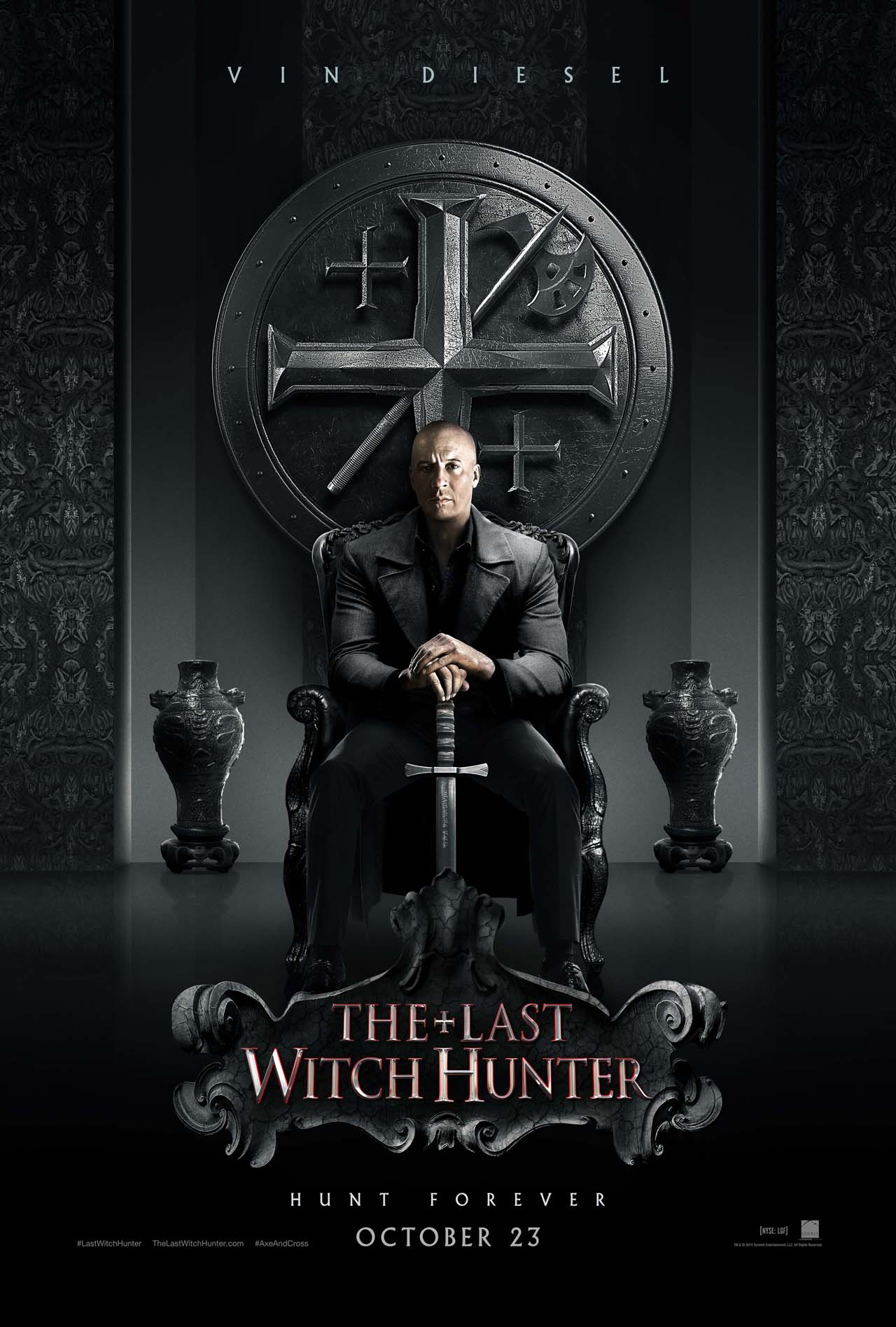
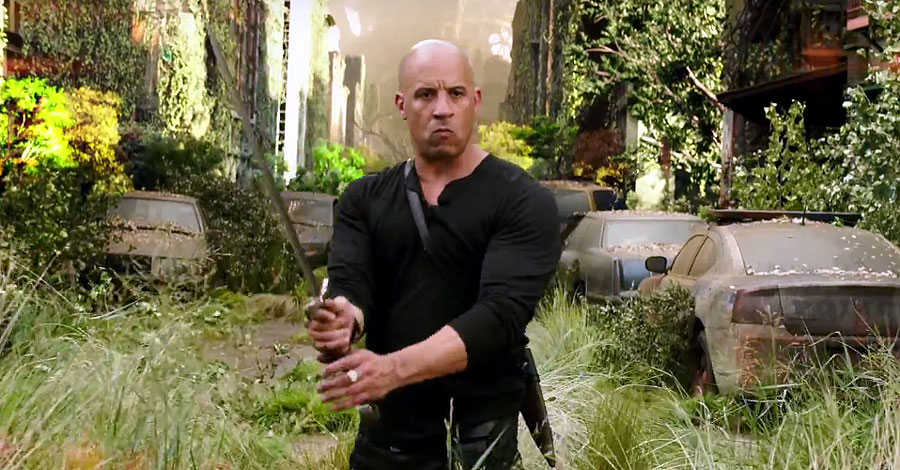
The fantasy-horror movie has been less than entertaining in recent years, what with Van Helsing (2004), the Underworld series (2003-2012), and I, Frankenstein (2014) showing just how it shouldn’t be done. And yet despite these weary efforts we now have The Last Witch Hunter, a movie that remains as jumbled and ineffectual as its genre predecessors. It’s a project that began life as a featured screenplay in the 2010 Blacklist, and was originally set to be directed by Timur Bekmambetov back in 2012. But those plans fell through, and with the project being championed by Vin Diesel (an avid fan of fantasy role playing games), it made it into production once its star was free after the interrupted filming of Furious 7 (2015).

If the movie proves anything, it’s that scripts on the Blacklist aren’t always filmed as written – the original script by Cory Goodman was rewritten by Dante Harper and Melissa Walack before Matt Sazama and Burk Sharpless finally ended up with the on-screen credit. Well, gentlemen, don’t be so proud, because if Goodman’s original script was really that good, then let’s make it clear: you guys went and ruined it.

It’s a movie that remains frustratingly remote from its audience throughout, and which fails to make its witchcraft-plunging-the-world-into-darkness storyline and plot even halfway exciting or dramatic. It’s a lot more serious than most, and not as po-faced as some of its competitors, but aside from one terrific joke involving a selfie, this is dour stuff that takes the end of the world as we know it and manages to make it about as threatening as flipping a pancake. And no matter how much Diesel glowers and frets, and no matter how much Ólafsson speaks of the world swallowed up by doom, we all know that whatever happens, Leslie is probably going to be the best bet for helping Kaulder – Diesel’s character – as he fights to discover who tried to kill his mentor and friend Father Dolan (Caine). (Oh, and we can be fairly certain that one character will prove to be less than they appear.)

Last Witch Hunter, The - scene

Fantasy movies have a tough time now, what with the likes of Game of Thrones showing just how it can, and should, be done, and Diesel’s pet project suffers in much the same way as others of its ilk have done: in trying to set their bizarre plots and outlandish characters against the recognisable backdrop of modern times, they then go and wilfully ignore that backdrop in favour of elaborate special effects sequences where anything goes, and where any carefully established grounding in the here and now is catapulted right out of the narrative. If you’re going to have a showdown between good and evil, don’t hide it away in dingy basements or abandoned churches, where the viewer can ogle the impressive art direction or set design, but have it right out in the open: make magic a shocking, but real part of our daily existence (part of the fun of Ghost Busters (1984) is that everyone in New York sees the Stay-Puft Man).

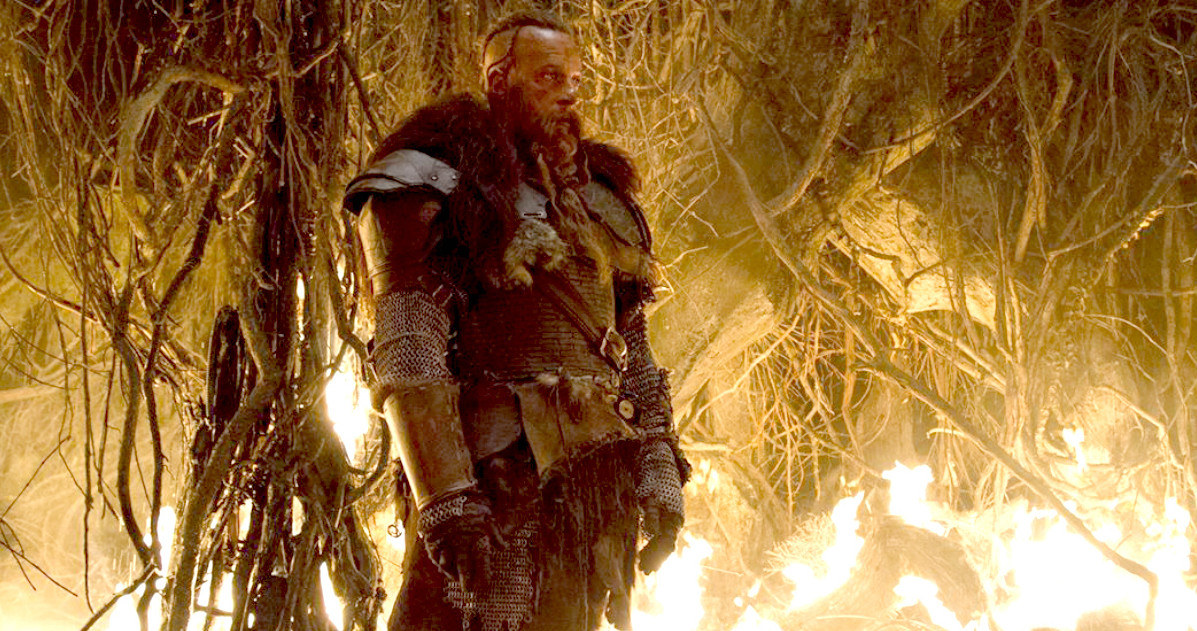
And then there’s the plot itself, which sees Diesel’s barbarian warrior and his pals take on the Witch Queen (Engelbrecht) in pre-medieval times, only for them to fall one by one until it’s left to Kaulder to save the day. But in doing so she curses him to immortality – and provides a handy way for her to be resurrected in the future. And therein lies the movie’s first problem: Kaulder isn’t the last witch hunter, he’s the only witch hunter. But put that aside and then we have another problem: why is it that it always takes so long for the villain of the piece to be able to make a comeback? Here it’s eight hundred years, during which time Kaulder has played policeman in the witch community, and everything is predictably hunky dory (it all has something to do with the Witch Queen’s heart, which apparently, can still beat long after she’s dead – obviously).

Last Witch Hunter, The - scene2

Tasked to “Remember your death” by Father Dolan in the form of a handy clue made while he was being killed, Kaulder can’t just cast his mind back and remember it for himself. Instead he has to enlist the aid of a witch, the conveniently to hand Chloe (Leslie) who has to concoct a potion that will allow him to re-experience that fateful moment. Only that just leads to the next problem: he didn’t die, so why all this rigmarole? Could it be that old screenwriter’s fallback, padding? Or is it just a poorly conceived idea that nobody could fix during shooting (or wanted to)? There’s lots more that doesn’t add up or make sense, and it all goes to reinforce the idea that when it comes to fantasy, as long as the movie looks good – and The Last Witch Hunter does look good – then the story and the dialogue can be as ridiculous as it wants.

With a sequel already in pre-production, and despite a lukewarm reception at the box office, it’s clear that this is an attempt by Diesel to kick-start another franchise he can head up. But while he may be committed to telling further tales as Kaulder, he might just find, based on this “opener”, that not everyone will be as willing to follow him on that particular journey as they are when he gets behind a muscle car and trades macho stares with Dwayne Johnson.

Rating: 5/10 – genre conventions abound in this absurdly watchable yet majorly disappointing piece of fantasy, that at least sees its star smile more in one movie than he’s done in five (and a bit) Fast & Furious outings; derivative and lacking in real purpose, The Last Witch Hunter has neither the style nor the wit to help itself stand out from an already dispiriting crowd.

Share this:

  • Click to share on X (Opens in new window) X
  • Click to share on Facebook (Opens in new window) Facebook
  • More
  • Click to print (Opens in new window) Print
  • Click to email a link to a friend (Opens in new window) Email
Like Loading...

Cooties (2014)

22 Tuesday Sep 2015

Posted by dullwood68 in Movies

≈ 1 Comment

Tags

4th grade, Alison Pill, Cary Murnion, Comedy, Drama, Elijah Wood, Fort Chicken, Horror, Infected meat, Jonathan Milott, Leigh Whannell, Pupils, Rainn Wilson, Review, Teachers, Virus, Zombies

Cooties

D: Jonathan Milott, Cary Murnion / 88m

Cast: Elijah Wood, Rainn Wilson, Alison Pill, Jack McBrayer, Leigh Whannell, Nasim Predad, Ian Brennan, Jorge Garcia, Cooper Roth, Miles Elliot, Morgan Lily, Sunny May Allison, Armani Jackson, Peter Kwong

Clint Hadson (Wood) is a would-be writer who finds himself back in his home town of Fort Chicken and making ends meet as a substitute teacher at the same elementary school he attended fifteen years ago. On his first day he finds the teachers are an odd mix, while the pupils in his class, particularly Patriot (Roth), are an unruly bunch who give him a hard time. Another of the pupils in his class, Shelly (Allison), is being bullied by Patriot but when he tugs at a ponytail and it comes off in his hand leaving a raw open wound where it was attached only seconds before, he finds himself being attacked by Shelly and having a chunk taken out of his cheek. Shelly runs off after the attack, while Clint takes Patriot to the nurse’s station.

Talking about it afterwards in the teachers’ lounge with Lucy McCormick (Pill), who was at school with Clint at the same time, they are oblivious to the situation that’s developing outside in the playground, as Shelly infects Patriot’s friend, Dink (Elliot), and he in turn begins infecting the other children. As the children’s behaviour turns savage, some of the teachers try to intervene but they’re quickly overwhelmed… and eaten. At the same time, PE teacher Wade Johnson (Wilson) – who’s shooting hoops in a corner of the playground – and the rest of the staff who are watching from the teachers’ lounge, begin to realise that what they’re seeing is an outbreak of zombie children.

Wade makes it back inside the school building, but the now ravenous pupils soon find their way in, and the remaining teaching staff hole up in the music room for safety; along the way they find Calvin (Jackson) who is unaffected. Wade is all for making a dash for his truck, while Clint thinks they should try and get help from the outside. But Lucy has a better idea: they should wait until 3pm when the parents arrive to pick up their children, and signal to them from the roof. But when the time comes only one parent arrives and she’s despatched as quickly as she arrived. Clint and the rest now head down to the hall where they find another unaffected child, Tamra (Lily). And when the hall is overrun, it’s the janitor, Mr Hatachi (Kwong), who comes to their rescue. Now barricaded in the basement, and with no choice but to find a way out, Clint and Wade come up with an idea between them that, if all goes well, will see them free of the school and its murderous pupils.

Cooties - scene

These days, zombie movies are a dime a dozen, and most are instantly forgettable, so any movie using them as the central protagonists really needs to bring something new and/or different to the table. And thanks to Leigh Whannell, creator of the Saw and Insidious franchises, Cooties certainly fits the bill, taking the (accepted) innocence of youth and destroying it with unrestrained malice. The idea of feral kids isn’t a new one, but here it’s taken to the extreme, with teachers being torn limb from limb, and entrails spread about with gory abandon. It’s a bloody exercise that’s reminiscent of the inmates taking over the asylum, but done here with a layer of crass humour to offset the blood spatters.

Be warned though: the movie isn’t as polished, or as funny as the trailer makes out, thanks largely to the script’s decision to keep the teachers moving from one breachable room to another, and by some poor choices when it comes to some of the characters’ quirks and foibles (Pedrad’s angry feminist practically accuses Clint of being a potential rapist without being properly introduced, while Tracy (McBrayer) talks about his partner’s lovely balls – his tennis partner that is). When the movie attempts to subvert the genre it’s on firmer ground, as when Whannell’s scientifically knowledgeable Doug announces he’s discovered the cause of the outbreak to be a virus, and has done so by rooting around in Clint’s vomit and “anal leakage”; when the rest of the staff voice their disgust he rebukes them by saying he wore gloves – and holds up his hands which are clearly glove-free.

Making children into zombies turns out to be a whole lot of fun by itself, and the young cast are clearly having fun with it all, especially Roth and Allison who are the Adam and Eve of the zombie outbreak. The kids aren’t funny at all (which is a relief), and their ferocity is well-gauged, leaving the humour to the adults, and in particular to Wilson, whose bullish PE teacher is ill-equipped to deal with the finer emotions such as love and trust, and who finds it impossible to say “dual rear wheels” (one of the movie’s funnier moments). There’s a great deal of physical humour too – Lucy whacking one of the kids with a plastic umbrella, Wade constructing a weapon out of a tennis ball launcher – as well as a couple of inspired visual gags. It all works intermittently, but still has enough energy and verve to see it through, despite the obvious low budget and presumably short shooting period.

The performances are engaging, with Wood evincing wide-eyed surprise at the sudden, horrific turn of events, while Wilson plays Wade as a stubborn jackass who comes good in the end, and Pill does perky and bubbly before having a Rambo moment that leaves Wilson, for once, upstaged and put in his place. Garcia is the pot-smoking school guard who can’t believe what he’s seeing from the safety of his van, and Kwong is the fierce Oriental janitor who wants to tell the story of the caterpillar and the frog (you have to wait until after the end credits to hear the end of the story). In the directors’ chairs, Milott and Murnion keep things moving but don’t always get the rhythm right, and some scenes are shot with a flatness of style that hurts the movie by virtue of standing out so easily.

Rating: 6/10 – enjoyable hokum that fans of the comedy-horror genre will lap up, Cooties still struggles to maintain a clear focus, and rarely feels as confident as it should do; that said, it is good fun, and has a winning approach that does let some level of disappointment to be overlooked, but in the end, the chase elements are wearying, and there’s not enough balance in the way the differing components are assembled.

Share this:

  • Click to share on X (Opens in new window) X
  • Click to share on Facebook (Opens in new window) Facebook
  • More
  • Click to print (Opens in new window) Print
  • Click to email a link to a friend (Opens in new window) Email
Like Loading...

Grand Piano (2013)

20 Thursday Feb 2014

Posted by dullwood68 in Movies

≈ 2 Comments

Tags

Alex Winter, Classical concert, Elijah Wood, Eugenio Mira, John Cusack, Missing fortune, Pianist, Review, Sniper, Thriller

Grand Piano

D: Eugenio Mira / 90m

Cast: Elijah Wood, John Cusack, Kerry Bishé, Tamsin Egerton, Allen Leech, Don McManus, Alex Winter

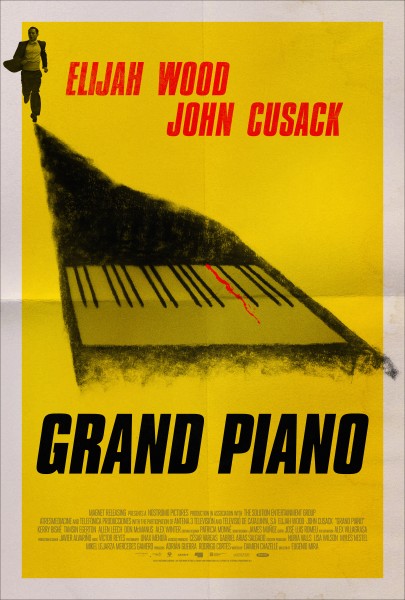
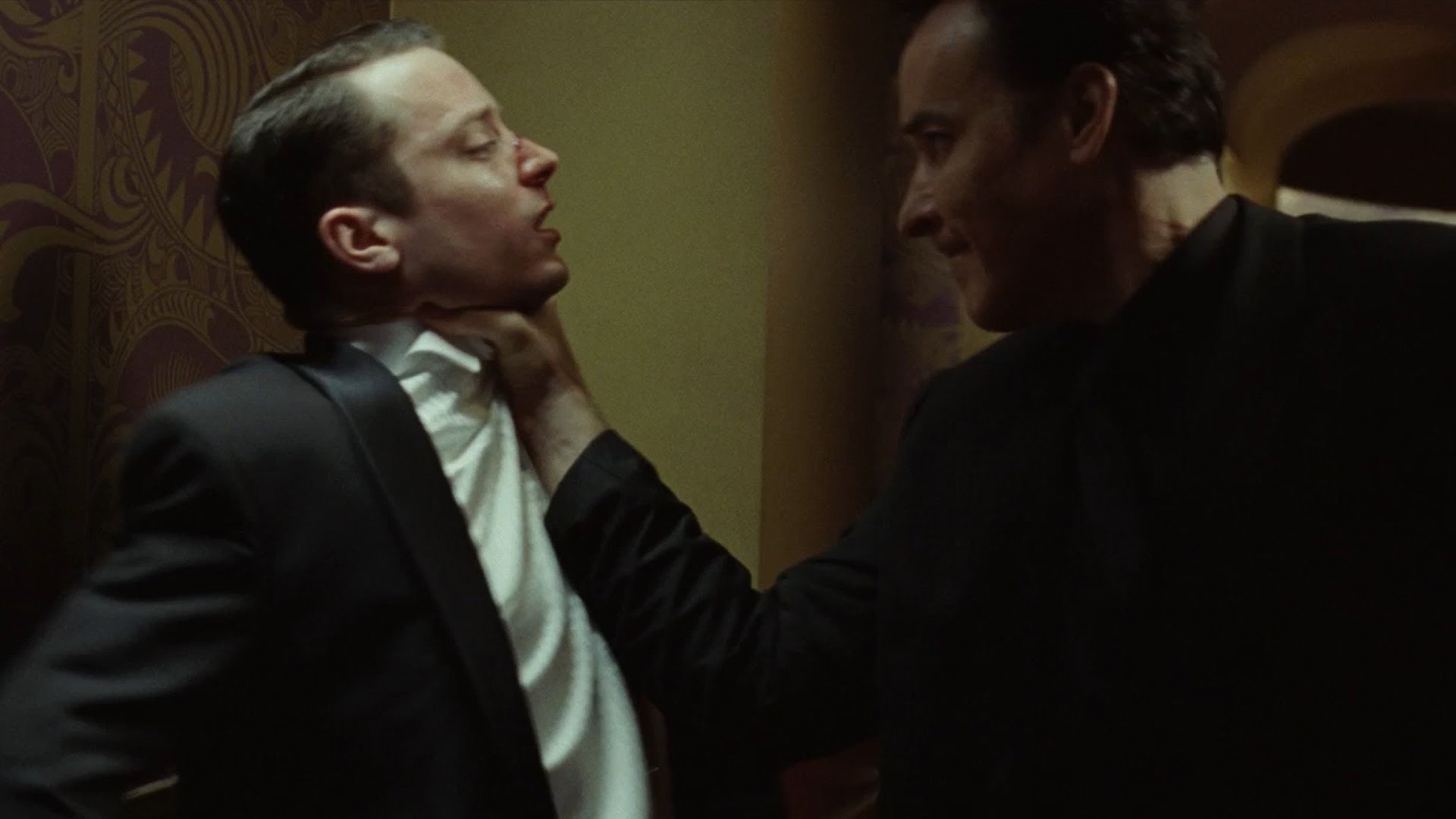
A Hitchcockian thriller with a preposterous MacGuffin at its centre, Grand Piano is set at a classical concert that sees the return to the stage after five years of pianist Tom Selznick (Wood).  Selznick hasn’t played in all that time because he choked at his last recital, failing to complete a piece by his mentor Patrick Godureaux called La Cinquette.  Now, having been persuaded to return by his actress wife Emma (Bishé), Tom has to face both his fears about playing, and once he’s begun playing, a sniper hidden somewhere in the building.  The sniper, Clem (Cusack), wants Tom to play every note of the concert perfectly or he will kill Emma; in particular he wants Tom to play the same piece he couldn’t complete five years before.

The reason for Clem wanting Tom to play that particular piece is revealed at around the halfway mark, and has the potential to make some viewers give up there and then.  Up until that point, the script has made a good job of keeping both Tom and the audience in the dark about Clem’s intentions and the reasons why he’s doing it all.  It’s also done a good job of slowly increasing the tension as Tom tries to find a way of stopping Clem while keeping both himself and Emma alive, and still completing the concert.  Depending on your response to Clem’s motive – and this reviewer found it to be too complicated for its own good – the inherent implausibility in the whole endeavour will either cause you to say au revoir to Tom’s predicament, or keep going out of curiosity as to how everything will be resolved.

Grand Piano - scene

My advice, though, is to stick with it.  Grand Piano is one of those thrillers where the very unlikelihood of what’s transpiring is irrelevant (Speed anyone?).  Thanks to some inspired direction by Mira and a wonderfully nervy performance by Wood, Grand Piano succeeds where perhaps it shouldn’t.  From the moment where Tom finds notes from Clem written on his score sheets, the movie shifts up a gear, tightening the screws (or should that be piano strings?) with each new twist and turn.  Mira proves himself a supremely confident director, orchestrating the action with style and not a little panache.  He knows when to keep the camera moving, even if some of his pans are a little dizzying, but he’s more effective when he keeps the camera static; he makes a virtue of it when Tom begins to play La Cinquette, keeping the camera at a respectful distance and allowing Wood to show off his moves for a good two minutes.  It’s a bold move, holding up the action for a solo piano piece, but it works; you’re waiting for the moment where Tom froze last time, hoping the difficulty of the piece won’t trip him up again.

Mira also fares well with his cast, eliciting strong performances from all concerned.  As mentioned already Wood puts in a great performance, his initial stage fright giving way to panic and then to desperate resistance before finding a way out of his predicament. When he finally confronts Clem, the script is clever enough not to make him into an instant action hero, and his solution to their fight is entirely credible.  As the villain of the piece, Cusack’s performance is mostly a vocal one, as for most of the movie he’s just a disembodied voice in the earpiece he makes Tom wear.  Despite this restriction Cusack is more effective under these circumstances than he is when he finally confronts Tom; somehow his physical presence in the movie – while entirely necessary – still feels like a bit of a letdown.  It’s not Cusack’s fault, and yet given how good he is as just a threatening voice, maybe it is.

Of the supporting characters, most are underwritten in comparison with Tom and Clem, but they’re there to serve the story’s momentum rather than stand out.  Ashley (Egerton) and Wayne (Leech), as friends of Emma are annoying and dim in equal measure, while Emma herself is required to do little more than look constantly worried about her husband.  More interesting, and given better motivation and dialogue are Tom’s friend and conductor Norman (McManus) and Tom’s assistant (Winter).  Norman is larger than life and shows more faith in Tom than Tom does himself.  It’s a small part but McManus plays him with just the right amount of brio and concern.  As Tom’s assistant, Winter has a larger role than at first expected, but shows what a talented actor he is, keeping his character’s motives and actions pleasantly off-kilter.

The script, by Damien Chazelle, has its flaws, not least that McGuffin, but it’s structure is sound and it keeps the viewer wanting to know what’s next.  There’s some florid dialogue in there on occasion but the cast handle it well, and there’s a satisfying conclusion.  But ultimately this is Mora’s picture, and if it wasn’t his guiding hand on the baton, then this could have turned out a lot, lot worse.

Rating: 8/10 – a bravura piece of filmmaking that has a hypnotic effect on its audience; thrilling and exciting in equal measure, Wood’s convincing performance adds greatly to why the movie works so well.

Share this:

  • Click to share on X (Opens in new window) X
  • Click to share on Facebook (Opens in new window) Facebook
  • More
  • Click to print (Opens in new window) Print
  • Click to email a link to a friend (Opens in new window) Email
Like Loading...

My Top 10 Movies – Part Six

25 Saturday Jan 2014

Posted by dullwood68 in Movies

≈ Leave a comment

Tags

Elijah Wood, Frodo Baggins, Gandalf, Gollum, Helm's Deep, Hobbits, Ian McKellen, J.R.R. Tolkien, Literary adaptation, Middle Earth, New Zealand, Peter Jackson, Ralph Bakshi, Review, Sam Gamgee, Sauron, Sean Astin, The Hobbit, The Lord of the Rings, The Silmarillion, Viggo Mortensen

The Lord of the Rings (2001-2003)

Lord of the Rings Trilogy, The

D: Peter Jackson / 558 mins

Cast: Elijah Wood, Ian McKellen, Viggo Mortensen, Sean Astin, Billy Boyd, Dominic Monaghan, Orlando Bloom, John Rhys-Davies, Sean Bean, Liv Tyler, Christopher Lee, Cate Blanchett, Hugo Weaving, Andy Serkis, Karl Urban, John Noble, David Wenham, Miranda Otto, Bernard Hill, Brad Dourif, Ian Holm

I know, I know, this is a bit of a cheat, three movies for the price of one and all that, but how can you possibly separate the greatest trilogy ever made?

There have been enough superlatives heaped on Peter Jackson’s finest hour(s), and while I’m tempted to add to the pile, I’m going to restrain myself and keep to the personal aspect that makes these movies mean so much to me.  And besides, everyone already knows how brilliant they are (sorry, couldn’t help it).

My first encounter with J.R.R. Tolkien wasn’t via The Lord of the Rings or even The Hobbit.  It was through a friend of mine who was into fantasy art; at his home one day he showed me a picture he’d drawn of a wizard (you can guess which one).  He told me the wizard was one of the main characters in a book he’d read.  He handed me a battered copy of The Hobbit and advised me that if I was going to read it I ought to be prepared for it to be a bit child-oriented.  And me, being a 14-year-old with ideas of being older in my outlook, declined his kind offer and went home instead with the first issue of a new sci-fi magazine called Starburst.

A year later, Ralph Bakshi’s version of The Lord of the Rings was released but I didn’t see it.  My friend the artist did and he thought it was quite good but he also mentioned it wasn’t the whole story.  I thought, “what’s the point of that?” (not knowing then of Bakshi’s plan to finish the tale in a second movie).

And then, in 1981, two things happened that brought me into the fold, so to speak.  My girlfriend at the time was reading The Lord of the Rings and would spend whole evenings working through it; she thought it was “the best book” she’d ever read.  She asked me to read it but I was still hesitant (I was working my way through Dickens at the time and fantasy fiction wasn’t high on my (slightly pretentious) list of genres to  read).  And then on March 8 (a Sunday) the BBC began broadcasting a radio adaptation of Tolkien’s novel in thirty minute episodes that had me glued to my stereo every Sunday for the next twenty-five weeks.  I read the book in between episodes, keeping up with the adaptation.  By the time the broadcasts ended on 30 August I was a Tolkien fanatic.  Now I read The Hobbit, and The Silmarillion.  I raved about the books to anyone who might listen, and later tracked down Bakshi’s movie on video (not as bad as I thought it was going to be; the live-action based animation is actually quite visually arresting).

I re-read the books, revisited the radio adaptation when it was re-broadcast in hour-long episodes in 1982, and generally looked upon the whole mythology that Tolkien had created as being one of the most incredible literary works I’d (eventually) come across.

Lord of the Rings Trilogy, The - scene

When it became clear in the late Nineties that a large-budget adaptation of The Lord of the Rings was being planned, with Peter Jackson at the helm, I felt a mixture of anticipation and trepidation.  First of all, it was going to be a live action adaptation, and even though Jackson’s Heavenly Creatures (1994) had proved he could direct something with a bit more depth than say, Braindead (1992), I still had my doubts.  As the scope of the project became known, the more I wondered if, and how, Jackson was going to pull it off.  And over three movies!

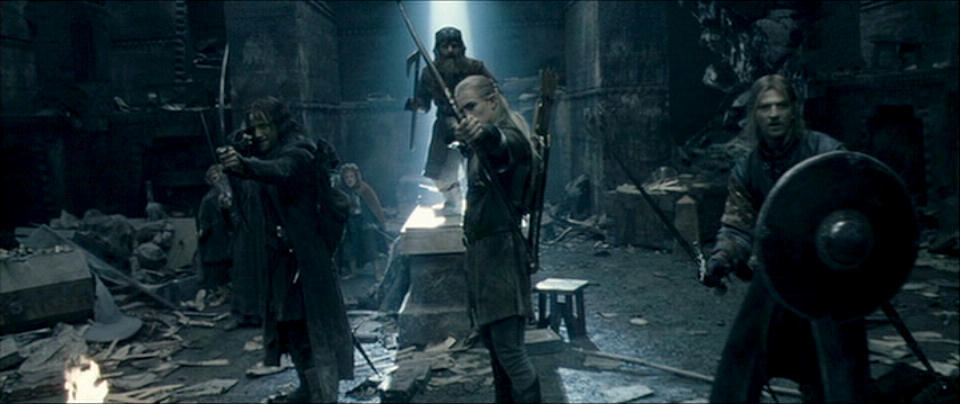
Now, thirteen years on, and with Jackson giving us The Hobbit as well, we all know I needn’t have worried.  The Fellowship of the Ring was like the best Xmas present anyone could have.  Its mix of the intimate and the grandeur of Middle Earth, and the level of detail, along with the sheer excitement of the action sequences made for one of the most rewarding cinematic experiences of my whole movie-going life.  In the first two weeks of its release in the UK I saw the movie three times.  When The Two Towers was released a year later, I was itching to see it, especially after watching Fellowship‘s extended version the day before (Jackson’s idea to give us longer versions of each movie on home video was a stroke of genius).  I came out of seeing The Two Towers overwhelmed and buoyed up by the emotional depth that infused the movie, and by the sheer spectacle of the Battle of Helm’s Deep (I couldn’t see how the Battle of the Pelennor Fields could be any better or more exciting; what did I know?).  The following year passed too slowly, waiting for The Return of the King to be released.  When it finally did, I can remember hearing the opening music and feeling a shiver run through me.  Please, Mr Jackson, please, I remember thinking, please have got this right.  And did he.  The Return of the King was an incredible achievement, a massive undertaking in its own right, and the culmination of a saga that had built to this monumental, emotionally-charged conclusion with barely a (hobbit) foot out of step along the way.  (And to those people who feel the movie should have ended with the coronation of Aragorn, the movies have always been about the characters and their journeys; to not see them make their farewells and re-take up their lives would have been a disservice to both them and the audience.)

The Lord of the Rings trilogy remains a phenomenal achievement, with stand-out performances – who can forget Gollum’s schizophrenic argument with himself in The Two Towers? – stunning location photography; a script that never lost sight of the emotional cores of its characters; confident, breathtaking direction from Peter Jackson; special effects that served the story and didn’t overwhelm things; and most of all, the creation of a wholly believable world where all this could happen.  But again, it’s the emotional element that makes the trilogy work, that keeps all of us who fell in love with the movies coming back time and time again, to revisit Middle Earth in all its glory and grandeur.  For many years, a friend and myself would take a day out to watch the extended versions right through, revelling in being able to spend time again with old friends such as Samwise Gamgee and Gimli, son of Glóin.  This trend has (sadly) lapsed in the last few years, but as an added memory to the original, wonderful experience of seeing the trilogy unfold over three magical Xmas’s, it’s easily the next best thing.  Going back to Middle Earth is, in its own way, a little bit like going back home after a long journey away…and what would Frodo and Sam say to that?

Rating: 9/10 – a stupendously impressive piece of filmmaking, bold, inventive, gripping, and with an emotional intensity few fantasy movies ever manage; just as there is only One Ring, Jackson’s enduring achievement means there is only One Trilogy.

Share this:

  • Click to share on X (Opens in new window) X
  • Click to share on Facebook (Opens in new window) Facebook
  • More
  • Click to print (Opens in new window) Print
  • Click to email a link to a friend (Opens in new window) Email
Like Loading...

Blog Stats

  • 486,563 hits

Recent Posts

  • 10 Reasons to Remember Bibi Andersson (1935-2019)
  • Fantasia (1940)
  • Dances With Wolves (1990) – The Special Edition
  • Kiss of the Spider Woman (1985)
  • The Three Musketeers (1973)

Top Posts & Pages

  • Lost for Life (2013) - Another Look
    Lost for Life (2013) - Another Look
  • Lost for Life (2013)
    Lost for Life (2013)
  • About
    About
  • Mr. Topaze (1961)
    Mr. Topaze (1961)
  • Winter's Tale (2014)
    Winter's Tale (2014)
  • Hunt for the Wilderpeople (2016)
    Hunt for the Wilderpeople (2016)
  • Shock and Awe (2017)
    Shock and Awe (2017)
  • Billy Lynn's Long Halftime Walk (2016)
    Billy Lynn's Long Halftime Walk (2016)
  • Exposed (2016)
    Exposed (2016)
  • 5 Famous Movie Roles That Nearly Went to Someone Else
    5 Famous Movie Roles That Nearly Went to Someone Else
Follow thedullwoodexperiment on WordPress.com

Blogs I Follow

  • Rubbish Talk
  • Film 4 Fan
  • Fast Film Reviews
  • The Film Blog
  • All Things Movies UK
  • Interpreting the Stars
  • Let's Go To The Movies
  • Movie Reviews 101
  • TMI News
  • Dan the Man's Movie Reviews
  • Film History
  • Jordan and Eddie (The Movie Guys)

Archives

  • April 2019 (13)
  • March 2019 (28)
  • February 2019 (28)
  • January 2019 (32)
  • December 2018 (28)
  • November 2018 (30)
  • October 2018 (29)
  • September 2018 (29)
  • August 2018 (29)
  • July 2018 (30)
  • June 2018 (28)
  • May 2018 (24)
  • April 2018 (21)
  • March 2018 (31)
  • February 2018 (25)
  • January 2018 (30)
  • December 2017 (30)
  • November 2017 (27)
  • October 2017 (27)
  • September 2017 (26)
  • August 2017 (32)
  • July 2017 (32)
  • June 2017 (30)
  • May 2017 (29)
  • April 2017 (29)
  • March 2017 (30)
  • February 2017 (27)
  • January 2017 (32)
  • December 2016 (30)
  • November 2016 (28)
  • October 2016 (30)
  • September 2016 (27)
  • August 2016 (30)
  • July 2016 (30)
  • June 2016 (31)
  • May 2016 (34)
  • April 2016 (30)
  • March 2016 (30)
  • February 2016 (28)
  • January 2016 (35)
  • December 2015 (34)
  • November 2015 (31)
  • October 2015 (31)
  • September 2015 (34)
  • August 2015 (31)
  • July 2015 (33)
  • June 2015 (12)
  • May 2015 (31)
  • April 2015 (32)
  • March 2015 (30)
  • February 2015 (37)
  • January 2015 (39)
  • December 2014 (34)
  • November 2014 (34)
  • October 2014 (36)
  • September 2014 (25)
  • August 2014 (29)
  • July 2014 (29)
  • June 2014 (28)
  • May 2014 (23)
  • April 2014 (21)
  • March 2014 (42)
  • February 2014 (38)
  • January 2014 (29)
  • December 2013 (28)
  • November 2013 (34)
  • October 2013 (4)

Create a free website or blog at WordPress.com.

Rubbish Talk

Film 4 Fan

A Movie Blog

Fast Film Reviews

The Film Blog

The official blog of everything in film

All Things Movies UK

Movie Reviews and Original Articles

Interpreting the Stars

Dave Examines Movies

Let's Go To The Movies

Film and Theatre Lover!

Movie Reviews 101

Daily Movie Reviews

TMI News

Latest weather, crime and breaking news

Dan the Man's Movie Reviews

All my aimless thoughts, ideas, and ramblings, all packed into one site!

Film History

Telling the story of film

Jordan and Eddie (The Movie Guys)

Movie Reviews & Ramblings from an Australian Based Film Fan

Privacy & Cookies: This site uses cookies. By continuing to use this website, you agree to their use.
To find out more, including how to control cookies, see here: Cookie Policy
  • Subscribe Subscribed
    • thedullwoodexperiment
    • Join 481 other subscribers
    • Already have a WordPress.com account? Log in now.
    • thedullwoodexperiment
    • Subscribe Subscribed
    • Sign up
    • Log in
    • Report this content
    • View site in Reader
    • Manage subscriptions
    • Collapse this bar
 

Loading Comments...
 

    %d